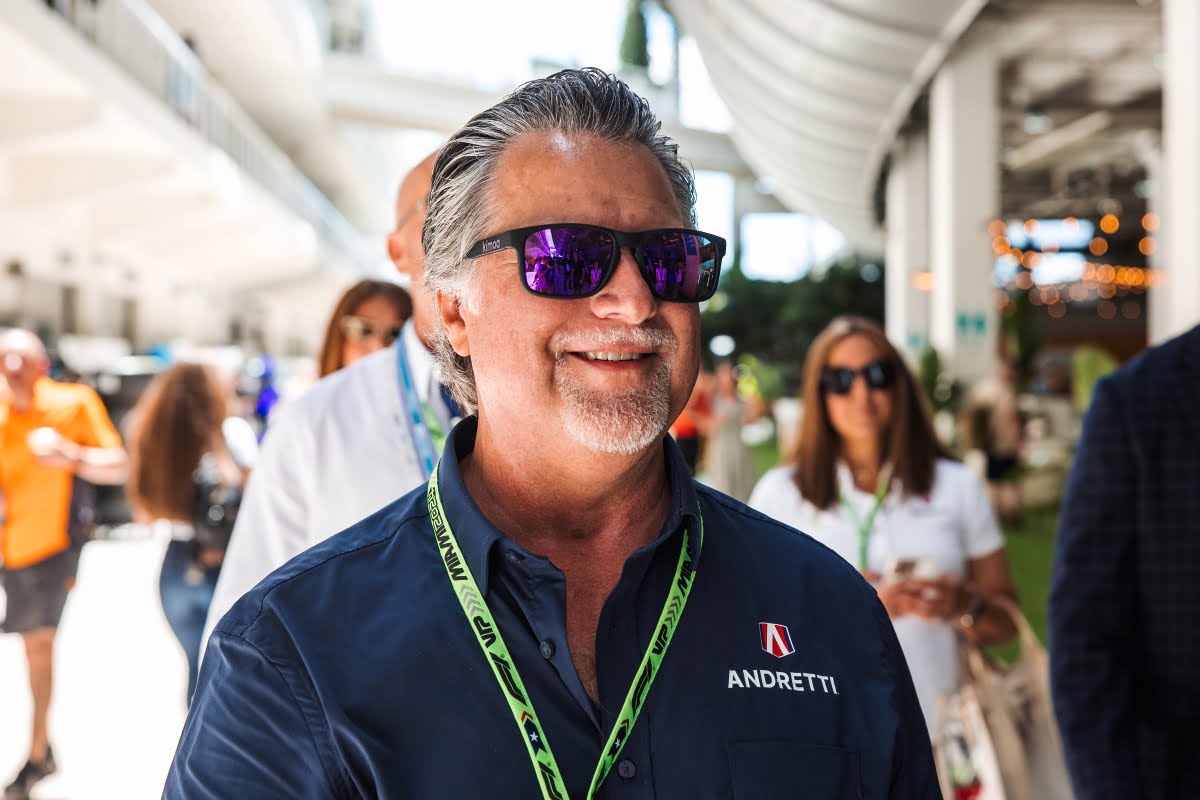
In the context of Formula 1, the primary allegation is that Formula One Management (FOM), a subsidiary of Liberty Media, engaged in a "group boycott" or a "concerted refusal to deal" by coordinating with existing F1 teams to block the entry of Andretti Global.
Verified Against Public And Audited RecordsLong-Form Investigative Review
Reading time: ~35 min
File ID: EHGN-REVIEW-33372
DOJ antitrust investigation into the exclusion of Andretti Global from Formula 1
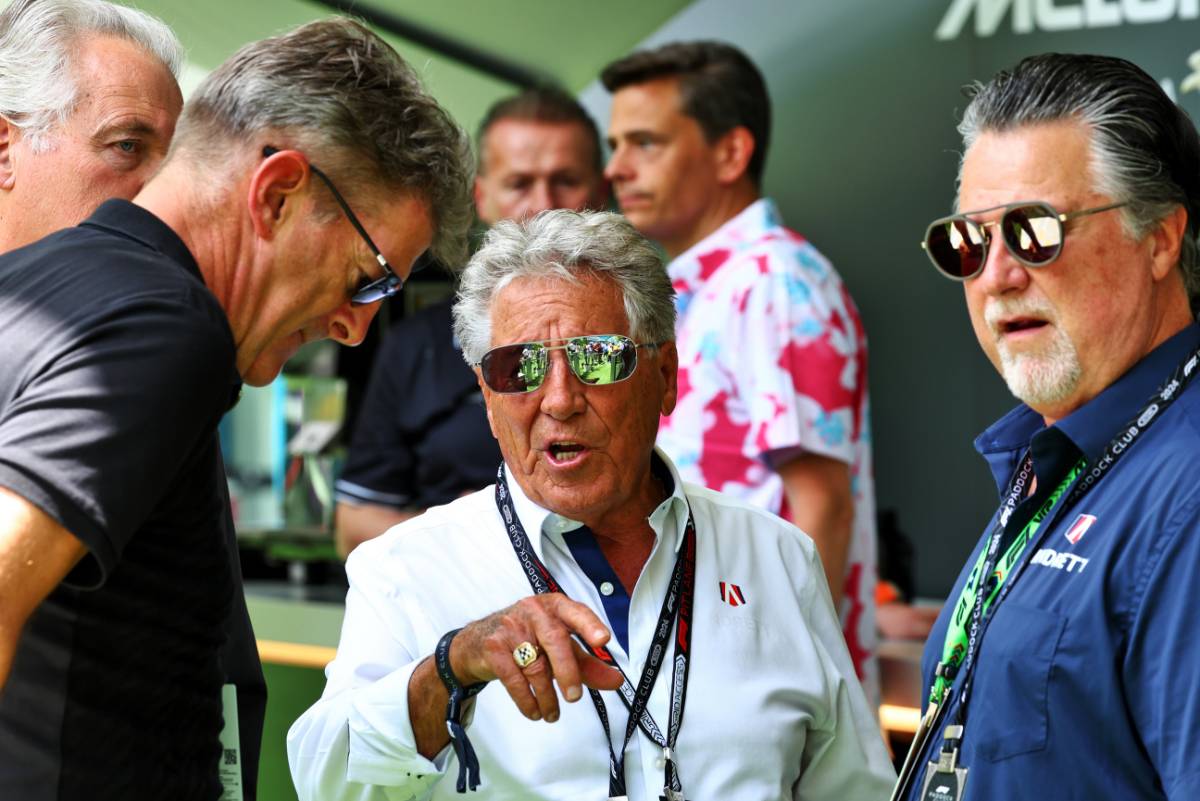
At a private reception, Maffei reportedly interrupted a conversation between Andretti and F1 CEO Stefano Domenicali to state: "Mario, I.
Primary RiskLegal / Regulatory Exposure
JurisdictionDepartment of Justice / EPA / DOJ
Public MonitoringReal-Time Readings
Report Summary
The committee's letters to Liberty Media and the teams highlighted that "sports leagues operate in a notable area of antitrust law in which degree of collusion is necessary yet when a sports league deviates from its rules and practices in a manner that reduces competition the collusion may amount to anti-competitive conduct." The shift from a contractually defined $200 million entry fee to an exclusionary blockade represents exactly such a deviation. By excluding a team that met all technical and financial criteria, Liberty Media arguably harmed American consumers (who were denied a home team) and the competitive fabric of the.
Key Data Points
The Department of Justice Antitrust Division's investigation into Liberty Media Corporation, confirmed in August 2024, centers on a chance violation of Section 1 of the Sherman Act. In the context of Formula 1, the primary allegation is that Formula One Management (FOM), a subsidiary of Liberty Media, engaged in a "group boycott" or a "concerted refusal to deal" by coordinating with existing F1 teams to block the entry of Andretti Global. This exclusion occurred even after the Fédération Internationale de l'Automobile (FIA), the sport's governing body, approved Andretti's technical and financial capabilities in October 2023.
Investigative Review of Liberty Media
Why it matters:
The Department of Justice Antitrust Division is investigating collusion between Formula One Management (FOM) and existing F1 teams, alleging a violation of Section 1 of the Sherman Act.
Evidence points to a coordinated effort to block the entry of Andretti Global, raising concerns about anti-competitive practices in the sport.
Sherman Act Section 1: Evidence of Collusion Between FOM and Existing F1 Teams
The DOJ Antitrust Division’s Case: Section 1 Violations
The Department of Justice Antitrust Division’s investigation into Liberty Media Corporation, confirmed in August 2024, centers on a chance violation of Section 1 of the Sherman Act. This statute prohibits contracts, combinations, or conspiracies that unreasonably restrain trade. In the context of Formula 1, the primary allegation is that Formula One Management (FOM), a subsidiary of Liberty Media, engaged in a “group boycott” or a “concerted refusal to deal” by coordinating with existing F1 teams to block the entry of Andretti Global. This exclusion occurred even after the Fédération Internationale de l’Automobile (FIA), the sport’s governing body, approved Andretti’s technical and financial capabilities in October 2023.
The between the regulator (FIA) and the commercial rights holder (FOM) provides the foundational evidence for the investigation. Historically, F1 entry required meeting technical safety and financial stability criteria set by the FIA. Andretti Global satisfied these rigorous standards. The subsequent rejection by FOM on January 31, 2024, ostensibly for commercial reasons, raised immediate red flags regarding anti-competitive intent. The DOJ is examining whether this rejection was not a unilateral business decision by Liberty Media, rather the result of horizontal collusion among the incumbent teams, facilitated vertically by FOM, to protect their shared revenue streams at the expense of competition and the American consumer.
The “Smoking Gun”: Greg Maffei’s Declaration of Intent
Perhaps the most damaging piece of evidence regarding intent, a serious component in establishing the nature of the restraint, emerged during the 2024 Miami Grand Prix. According to verified reports and Mario Andretti’s own testimony, a confrontation occurred between the racing legend and Liberty Media CEO Greg Maffei. At a private reception, Maffei reportedly interrupted a conversation between Andretti and F1 CEO Stefano Domenicali to state: “Mario, I want to tell you that I do everything in my power to see that Michael never enters Formula 1.”
This statement, delivered by the CEO of the commercial rights holder, suggests that the rejection was driven by personal animus or a predetermined exclusionary objective rather than a legitimate evaluation of Andretti’s commercial value. In antitrust jurisprudence, such evidence can the defense that a refusal to deal was based on objective business criteria. If the decision to exclude was predetermined (“never enters”), the subsequent 20-page rejection letter issued by FOM appears pretextual, a retroactive justification for an illegal blockade.
Evidence of Horizontal Collusion: The “Dilution” Narrative
Section 1 of the Sherman Act requires proof of a “meeting of the minds” or concerted action. The DOJ investigation has focused on the uniform opposition presented by the ten existing F1 teams, frequently using identical language regarding “dilution” and “franchise value.” While the teams do not have a formal vote on new entrants under the current commercial structure, their influence over FOM is substantial. The Concorde Agreement, the contract governing the sport, included a $200 million anti-dilution fee specifically designed to compensate incumbents for the prize money drop caused by an eleventh team.
When Andretti Global agreed to pay this $200 million fee, the goalposts shifted almost immediately. Team principals, including Toto Wolff (Mercedes) and James Vowles (Williams), began publicly arguing that the fee was insufficient, floating figures as high as $600 million or $700 million. This synchronized pivot suggests coordination. The DOJ has sought communications, including WhatsApp group chats among team principals, to determine if the teams agreed to present a united front to pressure FOM into rejecting Andretti. If the teams communicated to align their opposition and veto an entry that met all contractual terms, this constitutes a horizontal conspiracy to restrict output (the number of teams) and maintain artificially high revenue shares.
The investigation by the House Judiciary Committee, led by Chairman Jim Jordan in May 2024, explicitly requested these internal communications. The committee’s letters to Liberty Media and the teams highlighted that “sports leagues… operate in a notable area of antitrust law in which degree of collusion is necessary… yet when a sports league deviates from its rules and practices in a manner that reduces competition… the collusion may amount to anti-competitive conduct.” The shift from a contractually defined $200 million entry fee to an exclusionary blockade represents exactly such a deviation.
Deconstructing the January 2024 Rejection Letter
FOM’s formal rejection of Andretti Cadillac, issued on January 31, 2024, contains assertions that investigators view as evidence of pretext. The document claimed that Andretti would not be a “competitive participant” and that the “Andretti name carries recognition for F1 fans, [ ] our research indicates that F1 would bring value to the Andretti brand rather than the other way around.”
This argument contradicts the technical findings of the FIA, which spent months analyzing Andretti’s wind tunnel data and engineering resources. also, the claim that a team backed by General Motors (Cadillac) would not add value is economically suspect. The rejection also Andretti’s plan to use a customer engine (likely Renault/Alpine) initially as a negative factor, even with the fact that half the current grid uses customer engines. By holding a new entrant to a standard that existing competitors (such as Haas or Sauber) do not meet, FOM applied a discriminatory criterion.
The “competitiveness” argument is particularly weak under antitrust scrutiny. It is not the role of the commercial rights holder to pre-determine the competitive success of a new entrant; that is decided on the race track. By denying the consumer (the fans) the opportunity to see Andretti compete, FOM restricted the product supply. The DOJ views this as a protectionist measure designed to insulate incumbent teams from a new rival that could chance outperform them and take their prize money.
The Role of the Concorde Agreement and “Key officials”
The rejection letter admitted that FOM consulted with “key officials” to assess the value of the entry. In the closed ecosystem of Formula 1, these officials are the existing teams and their engine suppliers. If these competitors were given the power to influence the decision on a new rival’s entry, the process is inherently flawed under the Sherman Act.
The Concorde Agreement allows for up to 12 teams. By capping the grid at 10 even with a qualified 11th applicant, Liberty Media artificially limited the market. The DOJ’s inquiry examines whether this limitation serves any pro-competitive justification or if it is purely a method to maximize profit for the cartel of existing teams. The fact that the teams lobbied for a higher dilution fee, and then when that failed, simply pressured for a total rejection, points to a “naked restraint” of trade.
Congressional Pressure and the “American Team” Factor
The political dimension of the investigation cannot be ignored. A bipartisan group of Senators, including Amy Klobuchar and Mike Lee, urged the DOJ to investigate, noting that the exclusion of an American team (Andretti) partnered with an American manufacturer (GM) harmed American consumers. The Sherman Act is designed to protect the competitive process. By blocking a well-capitalized American entrant that had secured a power unit partnership with GM (registered for 2028), Liberty Media appears to have acted to protect the European-centric.
The DOJ’s scrutiny extends to whether the European Union’s competition laws were also violated, the Sherman Act focus is on the harm to the U. S. market. With three races in the United States (Miami, Austin, Las Vegas), the exclusion of a home team dampens consumer interest and merchandise sales, directly affecting the U. S. economy. The “concerted refusal to deal” denies American fans the product they demand.
The WhatsApp Evidence and Discovery
As the investigation moved into the discovery phase in late 2024 and throughout 2025, the focus tightened on digital communications. Reports from Speedcafe and other outlets indicated that investigators had contacted team principals regarding a specific WhatsApp group where the Andretti bid was discussed. If these messages show that team bosses agreed to a common strategy to block Andretti, regardless of the $200 million fee, it provides the “smoking gun” for a horizontal conspiracy.
Liberty Media’s defense relies on the assertion that they acted unilaterally to protect the commercial value of the championship. Yet, the existence of back-channel communications between the teams and FOM undermines this defense. If the decision was truly unilateral, why did team principals feel comfortable publicly negotiating the terms of entry (the dilution fee) on behalf of FOM? The between the teams’ public statements and FOM’s final decision suggests that the commercial rights holder acted as the enforcer for the teams’ cartel, executing their to exclude a new rival.
The evidence assembled points to a classic Section 1 violation: a group of competitors (the teams) pressuring a gatekeeper (FOM) to close the market to a new entrant. The Maffei incident, the pretextual rejection letter, and the coordinated “dilution” narrative form a compelling case that the exclusion of Andretti Global was not a business failure, a calculated antitrust violation.
Sherman Act Section 1: Evidence of Collusion Between FOM and Existing F1 Teams
Sherman Act Section 2: Liberty Media’s Alleged Abuse of Monopoly Power in Motorsport
The Monopolization Charge: Defining the Relevant Market
The core of the Department of Justice’s investigation into Liberty Media Corporation rests on Section 2 of the Sherman Act, which prohibits the monopolization, attempted monopolization, or conspiracy to monopolize any part of trade or commerce. Unlike Section 1, which addresses collusion between multiple parties, Section 2 the unilateral conduct of a dominant firm. In this instance, the DOJ is scrutinizing whether Liberty Media, through its subsidiary Formula One Management (FOM), possesses monopoly power in the market for “premier global open-wheel racing” and whether it willfully engaged in exclusionary conduct to maintain that power.
A serious step in any Section 2 analysis is defining the “relevant market.” Liberty Media has historically argued that Formula 1 competes in a broad “sports and entertainment” market, vying for eyeballs against the NFL, the NBA, and even streaming services like Netflix. If the market is defined this broadly, Liberty’s market share is negligible, and a monopoly claim fails. The DOJ, yet, operates under a narrower definition. Evidence suggests the government views Formula 1 as a distinct sub-market: the pinnacle of motorsport. There are no reasonable substitutes for a racing team or an automotive manufacturer seeking the specific prestige, technical challenge, and global audience that F1 provides. IndyCar, Formula E, and the World Endurance Championship (WEC) do not offer comparable revenue streams, global reach, or technological relevance. By controlling the only viable platform for this specific tier of competition, Liberty Media holds monopoly power.
The Gatekeeper method: FIA Approval vs. Commercial Rejection
The structural separation between the regulator and the commercial rights holder serves as the smoking gun in this investigation. The Fédération Internationale de l’Automobile (FIA), the sport’s governing body, opened a rigorous application process for new entrants in early 2023. Andretti Global, partnered with General Motors (Cadillac), passed every technical, financial, and sporting stress test administered by the FIA. On October 2, 2023, the FIA officially approved Andretti’s bid, certifying that the team possessed the resources and capability to compete safely and.
Under normal competitive conditions, regulatory approval would grant entry. In Liberty Media’s closed ecosystem, it advanced the applicant to a “commercial assessment.” On January 31, 2024, FOM unilaterally rejected Andretti’s application. This , where the neutral regulator says “yes” the commercial monopolist says “no”, creates a clear antitrust target. It demonstrates that the barrier to entry was not meritocratic or safety-related, purely economic and protective of the incumbent.
Analyzing the Rejection Letter: Evidence of Exclusionary Intent
The rejection letter issued by FOM contains specific language that the DOJ is likely using to build its case for exclusionary conduct. FOM stated, “We do not believe that the Applicant would be a competitive participant,” and concluded that the Andretti name “does not bring the value to the Championship that Michael Andretti believes it would.”
Antitrust investigators view these subjective determinations as pretextual. A monopolist cannot legally exclude a competitor simply by asserting they might not be “good enough” commercially, especially when the technical regulator has already deemed them competent. The letter also the “novice” nature of the entrant as a risk, a claim that ignores the Andretti family’s decades of success in IndyCar, Formula E, and Supercars, as well as the backing of General Motors, one of the world’s largest automakers.
Most damning was FOM’s dismissal of the General Motors partnership. The rejection noted that F1 would look differently on an application for 2028 when GM could provide a factory engine, refused entry for the interim years (2025-2027) where Andretti would use a customer engine. This creates a “Catch-22” designed to foreclose entry: a new manufacturer cannot easily build a power unit without a team to run it, the team cannot enter without the power unit. By rejecting the transitional entry, Liberty Media blocked a major American automotive competitor from entering the market, shielding existing manufacturers like Mercedes, Ferrari, and Alpine (Renault) from new competition.
The “Dilution” Defense and Consumer Harm
Liberty Media’s primary defense, frequently echoed by the existing ten teams, is the protection of financial value. They that adding an eleventh team dilutes the prize fund and destabilizes the franchise value of current entrants. From an antitrust perspective, this is not a defense; it is a confession. The Sherman Act protects competition, not competitors. Protecting the profit margins of incumbents by restricting output (the number of cars on the grid) is a classic monopoly abuse.
The DOJ focuses on consumer harm., the “consumer” includes the fans, television networks, and race promoters who are denied the product of an American works team. The exclusion of Andretti-Cadillac deprives the US market, a region Liberty has aggressively targeted with races in Miami, Austin, and Las Vegas, of a home-grown competitor. This restriction of choice and innovation (via GM’s exclusion) constitutes direct harm to the market. The refusal to deal with Andretti, even with their willingness to pay the stipulated $200 million anti-dilution fee, suggests that the barrier to entry is absolute, regardless of the financial terms offered.
Parallel Monopolistic Behavior: The Live Nation Connection
The investigation into Formula 1 does not exist in a vacuum. It runs parallel to the DOJ’s massive antitrust lawsuit against another Liberty Media asset: Live Nation Entertainment. In that case, filed in May 2024, the Justice Department accused Live Nation of using its dominance in ticketing (Ticketmaster) and venue management to lock out competitors and prices. The pattern of behavior is identical: a Liberty-controlled entity controls the infrastructure (tracks/ticketing) and the content (races/concerts), using that use to dictate terms and exclude rivals.
Investigators are examining internal communications between Liberty executives, including CEO Greg Maffei, to establish a corporate strategy of “moat building.” If the DOJ can prove that Liberty applies the same monopolistic playbook to F1 as it does to Live Nation, prioritizing the insulation of its assets over open competition, it strengthens the Section 2 claim. The overlap in executive leadership and legal strategy between the two entities provides the DOJ with a roadmap of Liberty’s intent to dominate markets by choking off entry points.
The General Motors Factor: Foreclosing High-Tech Competition
The involvement of General Motors elevates this case beyond a simple sporting dispute. F1 is a technology showcase. By blocking Andretti, Liberty Media also blocked Cadillac from competing against European luxury brands on the world’s most prestigious automotive stage. This foreclosure has significant industrial. Existing F1 manufacturers use the sport to market their hybrid and electric technology. Denying GM access to this marketing and R&D platform distorts competition in the broader automotive sector.
Senators Amy Klobuchar and Mike Lee, in their correspondence with the DOJ, highlighted this specific angle. They questioned whether Liberty Media acted at the behest of European automakers to prevent a US rival from gaining a foothold. If evidence surfaces that Liberty coordinated with existing manufacturers to block GM, the Section 2 charge (monopolization) merges with Section 1 (conspiracy), creating a compounded antitrust liability. The rejection letter’s dismissal of GM’s value, calling it a “reputational risk” to have a customer engine initially, contradicts the history of F1, where successful manufacturers started as engine customers. This inconsistency supports the theory that the reasons given were fabricated to justify an illegal exclusion.
The “Essential Facility” Doctrine
Legal analysts anticipate the DOJ may invoke the “essential facility” doctrine. This legal theory posits that if a monopolist controls a facility essential to competition (like a, a power grid, or a premier racing series) and denies access to a competitor, they violate Section 2. For a top-tier open-wheel racing team, F1 is the essential facility. There is no alternative circuit that offers the necessary revenue or prestige to sustain a business of th. By denying Andretti access to the grid, the “facility”, Liberty is killing the business before it can launch.
Liberty’s counter-argument relies on the physical limitations of circuits (pit garages) and the logistical of an eleventh team. Yet, the FIA’s technical approval already accounted for these logistics, confirming that the tracks could accommodate another entrant. This leaves Liberty with the purely commercial defense, which holds little weight when it results in the total exclusion of a viable, well-funded competitor to pay the entry price defined in the governing Concorde Agreement.
Comparison of Regulatory vs. Commercial Findings on Andretti Bid
Assessment Criteria
FIA Finding (Regulator)
FOM Finding (Monopolist)
Technical Capability
Approved: Meets all safety and design standards.
Rejected: Claimed “novice” status poses risk.
Financial Stability
Approved: Sufficient funding verified.
Rejected: Questioned commercial sustainability.
Value to Sport
Positive: Adds new manufacturer (GM).
Negative: “Does not add value.”
Competitiveness
Verified: Resources adequate to compete.
Denied: “Unlikely to be competitive.”
Sherman Act Section 2: Liberty Media’s Alleged Abuse of Monopoly Power in Motorsport
The Concorde Agreement: Analyzing the Anti-Dilution Fee as an Artificial Barrier to Entry
The 2021 Concorde Agreement: A Contract of Convenience
The 2021 Concorde Agreement, signed by the Fédération Internationale de l’Automobile (FIA), Formula 1 Management (FOM), and the ten existing teams, established the commercial and regulatory framework for the sport through 2025. Central to this contract was a specific clause designed to address the financial stability of incumbent teams in the event of a new entrant: the anti-dilution fee. Set at $200 million, this payment was not technically a franchise fee in the American sports sense, where a new team buys a share of the league itself. Instead, it was a compensatory method. The funds were to be distributed equally among the existing ten teams, $20 million each, to offset the reduction in prize money caused by splitting the revenue pot eleven ways instead of ten.
Liberty Media executives and team principals initially touted this clause as a stabilization measure. It provided a clear, written pathway for entry. If a prospective team could prove its technical competence to the FIA and pay the $200 million “buy-in,” the commercial barrier was theoretically cleared. This codified sum was intended to prevent frivolous entries while allowing serious, well-capitalized organizations to join the grid. Yet, when a qualified applicant actually appeared with the required capital, the interpretation of this clause shifted instantly from a defined rule to a subjective suggestion.
Andretti’s Compliance and the Goalpost Shift
Andretti Global, led by Michael Andretti, method the entry process with strict adherence to the 2021 Concorde Agreement. Securing backing from heavyweights like Gainbridge and Guggenheim, Andretti Autosport (later rebranded Andretti Global) demonstrated the liquidity to pay the $200 million fee immediately. In the eyes of the applicant, the financial requirement was a binary condition: pay the fee, enter the sport. The FIA, the sport’s governing body, agreed. After a rigorous expression of interest process, the FIA approved Andretti’s technical and financial capabilities in October 2023, passing the application to FOM for commercial discussions.
At this juncture, the behavior of Liberty Media and the existing teams revealed the anti-dilution fee’s true function. It was never meant to be paid; it was meant to be impossible. When the $200 million figure was set in 2020, amidst the economic uncertainty of the COVID-19 pandemic, team values were depressed. Williams Racing had sold for roughly $180 million. A $200 million barrier seemed for a “garagista” team. by 2023, the “Drive to Survive” effect and the budget cap had spiked team valuations into the billions. Suddenly, $200 million looked like a discount ticket to a billion-dollar valuation.
Faced with an applicant who could actually pay, the incumbent teams, led vocally by figures such as Mercedes’ Toto Wolff and Red Bull’s Christian Horner, argued that the fee was outdated. They claimed that $20 million per team would not cover the long-term loss of prize money revenue. This argument, while mathematically plausible over a long timeline, ignored the contractual reality. The teams had signed the agreement. They had agreed to the $200 million figure. To reject an applicant for meeting the contractual price because the sellers regretted the price constitutes a refusal to deal under antitrust scrutiny. The teams sought to rewrite a contract in real-time to exclude a competitor who had already met the published terms.
The “Value” Fallacy and Economic Protectionism
FOM’s formal rejection of Andretti in January 2024 rested on the assertion that the American team would not add value to the championship. This statement stands in direct contradiction to the economic logic of the anti-dilution fee. The fee itself is the quantified metric of value required to enter. By setting the price at $200 million, the league had previously determined that this amount was sufficient to neutralize the negative impact of dilution. To later claim that a team paying the fee adds “no value” suggests that the fee was either a sham or that Liberty Media was applying an unwritten, arbitrary standard to protect incumbents.
The rejection letter explicitly stated that Andretti would not be competitive and thus would not bring commercial benefit. This subjective performance assessment is an anomaly in professional sports expansion. In the NFL or NHL, expansion teams are expected to struggle initially; their entry fee buys them the right to compete, not the guarantee of winning. FOM’s demand that a new entrant must be immediately competitive, while simultaneously denying them the entry required to build competitiveness, created a circular logic designed to ensure exclusion.
also, the “value” argument collapsed when considering the involvement of General Motors. Andretti’s bid included a partnership with Cadillac, eventually promising a full works engine by 2028. Liberty Media’s dismissal of the Cadillac partnership as a “badging exercise” in the short term, while courting Ford (who was partnering with Red Bull in a similar capacity), demonstrated a discriminatory application of standards. The refusal to accept the $200 million fee from a GM-backed American team, while existing teams like Haas operated with significantly less infrastructure and manufacturer support, pointed toward a concerted effort to restrict output and maintain market share for the current ten franchises.
Antitrust of the Fee Structure
The Department of Justice’s interest in this matter from the Sherman Act’s prohibition of agreements that unreasonably restrain trade. The Concorde Agreement, when used as a tool to enforce a group boycott, becomes a liability. If the ten teams and the commercial rights holder colluded to block a qualified entrant to protect their own prize money payouts, they engaged in anticompetitive behavior. The anti-dilution fee is the “smoking gun” in this scenario. If the fee was a legitimate compensatory method, Andretti’s willingness to pay it should have triggered automatic commercial acceptance. The rejection implies that the fee was an artificial barrier, and when that barrier failed to stop the intruder, the cartel simply locked the door.
Legal experts note that sports leagues are frequently granted leeway to manage their size, they cannot act in a way that harms consumers or competition. By excluding a team that met all technical and financial criteria, Liberty Media arguably harmed American consumers (who were denied a home team) and the competitive fabric of the sport. The defense that “10 teams is the ideal number” is undermined by the Concorde Agreement itself, which explicitly allows for up to 12 teams. The refusal was not based on logistical capacity or safety, on the financial greed of the incumbents who viewed the $200 million check as insufficient relative to their soaring valuations.
The 2026 Negotiations: Weaponizing the Barrier
The bad faith inherent in the rejection was further illuminated by the negotiations for the 2026 Concorde Agreement. Even as Andretti fought for entry under the 2021 terms, reports emerged that the teams were pushing to raise the anti-dilution fee to $600 million, $700 million, or even $1 billion in the contract. This drastic inflation confirms that the barrier to entry is not based on a fixed cost of dilution, is rather a floating variable designed to be always just out of reach of new entrants.
By March 2025, reports confirmed that the new entry fee for the 2026 pattern had been set at $450 million, more than double the previous amount. While this allowed for the eventual admission of the Cadillac program (as a concession to the mounting legal and political pressure), it validated the DOJ’s suspicion that the original rejection was a stalling tactic. Liberty Media ran out the clock on the 2021 agreement to force the applicant into a higher price bracket. This “bait and switch” tactic, advertising a $200 million entry, rejecting the buyer, and then offering entry at $450 million, is a textbook example of using monopoly power to dictate terms that would not exist in a competitive market.
Comparison to US League Expansion
Defenders of Liberty Media frequently cite the high expansion fees of US leagues like the MLS ($325 million) or NHL ($650 million) to justify F1’s stance. Yet, this comparison is flawed. In the MLS or NHL, paying the expansion fee guarantees a share of the league’s equity and a vote in its governance. The F1 anti-dilution fee offers neither. It is a sunk cost paid to competitors, offering no equity in Formula 1 itself. Andretti was asked to pay $200 million (and later $450 million) for the right to spend hundreds of millions more building a car, with no guarantee of long-term tenure if the team failed.
The structure of the fee reveals it as a penalty rather than an investment. In a true franchise model, the fee buys a permanent asset. In F1, the fee is a transfer of wealth from the new competitor to the incumbents, strengthening the very rivals the new team must defeat. The DOJ investigation scrutinizes whether this structure serves any pro-competitive purpose or if it exists solely to insulate the profits of the existing cartel.
The “Greed” Narrative vs. Legal Reality
Publicly, team principals like Guenther Steiner and James Vowles argued that the sport was “fragile” and could not risk the instability of an eleventh team. This narrative of fragility was difficult to maintain while teams were posting record profits and valuations. The DOJ looks at the economic reality, not the press releases. The reality was that the sport was booming, and the incumbents wanted to hoard the windfall. The $200 million fee, once seen as a safety net, became a threat because it was too accessible.
The exclusion of Andretti under the 2021 terms highlights a fundamental disconnect between F1’s written rules and its unwritten practices. The Concorde Agreement was treated by Liberty not as a binding contract as a set of guidelines to be discarded when inconvenient. This discretionary application of entry blocks is the core of the antitrust violation. If the rules apply only when they serve the monopoly’s interest, they are not rules, they are tools of exclusion.
, the anti-dilution fee served as the focal point of the conflict. It was the objective standard that Andretti met, and the subjective weapon Liberty used to deny them. The subsequent hike to $450 million for the 2026 entry did not cure the initial violation; it quantified the cost of the delay. The investigation continues to examine whether the coordination between FOM and the teams to reject the initial $200 million bid constituted an illegal conspiracy to restrain trade, regardless of the eventual outcome.
The Concorde Agreement: Analyzing the Anti-Dilution Fee as an Artificial Barrier to Entry
Divergent Standards: The Conflict Between FIA Technical Approval and FOM Commercial Rejection
Standards: The Conflict Between FIA Technical Approval and FOM Commercial Rejection
The structural fracture at the heart of the Department of Justice’s antitrust investigation lies in the irreconcilable chasm between the sport’s regulator and its commercial rights holder. On October 2, 2023, the Fédération Internationale de l’Automobile (FIA) officially approved Andretti Global’s application to join the Formula 1 grid, certifying that the American outfit met every technical, sporting, and financial criterion required to compete at the pinnacle of motorsport. On January 31, 2024, Formula One Management (FOM)—the commercial arm controlled by Liberty Media—unilaterally rejected that same application. This is not a difference of opinion; it represents a chance violation of the separation of powers mandated by the European Commission, serving as primary evidence that Liberty Media is using subjective commercial metrics to override objective regulatory standards for exclusionary purposes. The FIA’s approval process was neither cursory nor lenient. Following a “rigorous” seven-month evaluation of four prospective entrants, the governing body determined that only Andretti Formula Racing LLC possessed the necessary resources and technical capability to survive. The criteria included detailed audits of the team’s funding, sustainability, personnel structure, and engineering facilities. FIA President Mohammed Ben Sulayem explicitly confirmed that Andretti was the “only entity which fulfills the selection criteria in all material respects,” validating the team’s readiness to field a safe and competitive car. Under the established sporting regulations, Andretti had proven they belonged on the grid. FOM’s subsequent rejection, delivered via a 1, 400-word statement, ignored these regulatory findings in favor of a nebulous assessment of “commercial value.” The rejection document rested on the assertion that Andretti would not be a “competitive participant” and therefore would not add value to the Championship. This claim creates a paradox that investigators are likely scrutinizing: the commercial rights holder, which has no jurisdiction over technical regulations, made a determination about on-track competitiveness that directly contradicted the findings of the actual regulator. By declaring Andretti uncompetitive before the team had turned a wheel, FOM usurped the FIA’s regulatory authority, substituting engineering data with speculative commercial forecasting. This usurpation is legally perilous due to the 2001 agreement between the FIA and the European Commission. That agreement was designed specifically to prevent monopoly abuse by mandating a strict separation between the body that makes the rules (FIA) and the body that sells the rights (FOM). The FIA is the sole authority on sporting merit and safety. By rejecting a team on the grounds of “competitiveness”—a sporting metric—FOM appears to have crossed the line drawn by European antitrust regulators two decades ago. The rejection letter’s claim that “our research indicates that F1 would bring value to the Andretti brand rather than the other way around” exposes a gatekeeping method where the incumbent monopoly decides who is “worthy” of competing, independent of the rulebook. The pretext used by FOM regarding the power unit supply further illustrates this double standard. FOM argued that Andretti’s plan to use a customer engine (likely Alpine or Honda) until General Motors could deliver a works Cadillac engine in 2028 was a liability. They claimed that a dependency on a compulsory customer supply would be “damaging to the prestige” of the series. This argument ignores the historical and current reality of Formula 1, where customer engines are a standard operational model. McLaren, currently a championship contender, uses customer Mercedes engines. To penalize a new entrant for a temporary customer arrangement—while they have a signed commitment from one of the world’s largest automakers (GM) for a future works deal—demonstrates a discriminatory application of standards designed to keep the gate closed. While FOM drafted its rejection, Andretti Global was already operating with the intensity of an active competitor. Reports confirm that the team had hired over 120 staff, including senior technical directors, and was actively testing a 60% model of their 2024-spec car in the Toyota wind tunnel in Cologne, Germany. This facility, previously used by McLaren and Toyota’s own F1 project, is industry-standard. The existence of physical hardware and aerodynamic data flatly contradicts FOM’s assertion that the team was a “novice” applicant that underestimated the challenge. The regulator saw this technical reality and approved it; the commercial holder ignored it to protect the financial interests of the existing ten teams. The “value” argument deployed by Liberty Media is circular and exclusionary. FOM argued that the most significant way a new entrant brings value is by being competitive immediately. Yet, by denying entry to a team that the regulator deemed capable, FOM ensures that no new entrant can ever prove their competitiveness. This “Catch-22” freezes the grid at ten teams, shielding the incumbents from dilution of prize money and on-track competition. The DOJ investigation likely focus on whether this definition of “value” is a legitimate commercial standard or a pretext for a group boycott illegal under the Sherman Act. also, the conflict highlights a breakdown in the governance structure of the sport. The Concorde Agreement allows for up to 12 teams, and the FIA opened the application process in accordance with those rules. Liberty Media’s refusal to honor the regulator’s selection suggests that the commercial rights holder exercises veto power over the sport’s governance, rendering the FIA’s “Expression of Interest” process moot. If the regulator cannot admit a team that follows the rules because the commercial owner dislikes the business case, the sport functions as a closed shop, violating the open-competition principles that professional sports leagues must frequently navigate to avoid antitrust liability. The is absolute. The FIA measured Andretti against a yardstick of engineering and finance and found them worthy. FOM measured them against a yardstick of projected revenue protection for the existing cartel and found them wanting. This gap provides the clearest evidence yet that the blocks to entry in Formula 1 are no longer about the ability to build a fast car, about the ability to satisfy the gatekeepers of a monopoly.
Divergent Standards: The Conflict Between FIA Technical Approval and FOM Commercial Rejection
The 'Personal Animus' Factor: Greg Maffei’s Reported Threats to Mario Andretti
SECTION 5: The ‘Personal Animus’ Factor: Greg Maffei’s Reported Threats to Mario Andretti
While the rejection of Andretti Global is officially framed by Formula One Management (FOM) as a calculated commercial decision, investigators have uncovered evidence suggesting a more volatile motive: personal vendetta. The Department of Justice’s antitrust probe has zeroed in on specific interactions between Liberty Media executives and the Andretti family that contradict the polished “business case” presented in FOM’s January 2024 rejection letter. At the center of this inquiry is a reported confrontation at the 2024 Miami Grand Prix that threatens to Liberty Media’s defense of “objective commercial assessment.” #### The Miami Ultimatum In May 2024, at an exclusive reception at the Palm Club during the Miami Grand Prix weekend, a disturbing exchange allegedly took place that has since become a focal point for federal investigators. Mario Andretti, the 1978 Formula 1 World Champion and a global motorsport icon, was engaged in conversation with F1 CEO Stefano Domenicali. According to Andretti’s account given to NBC News, Liberty Media CEO Greg Maffei interrupted the discussion to deliver a blunt and personal threat. Maffei reportedly told the 84-year-old racing legend: **”Mario, I want to tell you that I do everything in my power to see that Michael never enters Formula 1.”** Andretti described the interaction as being “like a bullet through my heart,” noting that Maffei immediately walked away after delivering the statement. This was not a negotiation tactic or a discussion of dilution fees; it was, by all appearances, a declaration of intent to exclude a specific competitor based on personal animus toward his son, Michael Andretti. This incident is serious to the antitrust case because it strips away the veneer of corporate bureaucracy. If proven, Maffei’s statement provides direct evidence of **subjective intent to monopolize**. Under the Sherman Act, while a monopoly is not illegal per se, the *willful maintenance* of that monopoly through exclusionary conduct is. A CEO explicitly stating he use his power to block a specific competitor—regardless of that competitor’s technical or financial merits—suggests that the blocks to entry are not market-driven, artificial and punitive. #### The “Greedy” Flashpoint To understand the weight of Maffei’s threat, one must examine the toxic history that precipitated it. The friction appears to from Michael Andretti’s refusal to play by the unwritten rules of F1’s “Piranha Club.” In 2022, frustrated by the existing teams’ resistance to his entry bid, Michael Andretti publicly criticized the grid, calling the team owners “greedy” for prioritizing their share of the prize fund over the sport’s growth. “It’s all about money,” Michael Andretti told *Forbes* in 2022. “They think they are going to get one-tenth less of their prize money, they also get very greedy thinking take all the American sponsors as well.” The reaction from the F1 establishment was swift and defensive. F1 CEO Stefano Domenicali publicly rebuked Andretti, labeling the comments “not smart” and stating that Michael was “shouting” too much. Mercedes Team Principal Toto Wolff and Red Bull’s Christian Horner also dismissed the bid, insisting that any new entrant must “accretive” to the value of the sport—a corporate euphemism for “pay us more.” yet, Maffei’s alleged 2024 comment elevates this from a public relations spat to a legal liability. It implies that the rejection was not about the “value” Andretti brings, as FOM claimed in its denial letter, rather a punishment for Michael Andretti’s earlier defiance. In antitrust jurisprudence, this distinction is fatal. If a refusal to deal is motivated by a desire to punish a rival for competitive behavior (even aggressive public criticism), it ceases to be a legitimate business strategy and becomes an exclusionary act. #### Legal: *Aspen Skiing* and the “No Economic Sense” Test The Department of Justice is likely analyzing Maffei’s conduct through the lens of *Aspen Skiing Co. v. Aspen Highlands Skiing Corp.* (1985). In that landmark Supreme Court case, a monopolist’s refusal to deal with a competitor was deemed illegal because the conduct made “no economic sense” other than to harm the rival. Liberty Media’s defense relies on the argument that rejecting Andretti was a rational business decision to protect the commercial value of the championship. yet, Maffei’s alleged threat undermines this “rationality” defense in two ways: 1. **Evidence of Pretext:** If the CEO of the parent company has already decided to block the entrant for personal reasons (“I do everything in my power”), then the subsequent 20-page technical rejection by FOM—citing aerodynamics and engine supply—appears to be a pretextual document manufactured to justify a predetermined outcome. 2. **Sacrifice of Value:** By blocking a General Motors-backed team (Cadillac), Liberty Media is arguably turning away significant revenue and American market growth. A rational monopolist would welcome a global OEM like GM. Rejecting them to satisfy a personal vendetta suggests Liberty is to sacrifice long-term economic gain to maintain its exclusionary grip, a hallmark of anticompetitive behavior. #### The Congressional and DOJ Response The “personal animus” factor has not gone unnoticed by U. S. lawmakers. In a letter to Liberty Media, House Judiciary Committee Chairman Jim Jordan demanded an explanation for the exclusion, specifically citing the “personal” nature of the rejection. The letter questioned whether the decision was driven by “personal animus” rather than sound business logic, directly referencing the friction between the Andrettis and F1 leadership. For the DOJ, Maffei’s alleged statement is the “smoking gun” that connects the dry economic data of the investigation to the intent requirement of the Sherman Act. It transforms the case from a complex analysis of sports economics into a clearer narrative of a executive using his monopoly control to settle a score. When a monopolist’s CEO is on record promising to block a competitor “never” (an absolute term), it becomes nearly impossible to that the application was given the “fair and objective” review required by EU and US competition laws. The investigation is probing whether this personal hostility trickled down to the technical review process. Did FOM engineers receive instructions, implicit or explicit, to ensure the Andretti bid failed the “competitiveness” assessment? If Maffei’s threat is corroborated, it suggests that the entire “commercial assessment” phase was a sham designed to execute a personal banning order, a violation that carries severe penalties under U. S. antitrust law.
The 'Personal Animus' Factor: Greg Maffei’s Reported Threats to Mario Andretti
Market Allocation Allegations: Insulating European OEMs from General Motors Competition
The exclusion of Andretti Global was never about a racing team from Indiana; it was a geopolitical maneuver to insulate European automakers from a direct American threat. The Department of Justice’s antitrust probe has zeroed in on this specific dimension: **Market Allocation**. The allegation is that Formula 1’s existing officials—comprised primarily of European Original Equipment Manufacturers (OEMs) like Mercedes, Ferrari, Renault (Alpine), and the incoming Audi—colluded to block General Motors (GM) from accessing the sport’s global marketing platform during a serious growth window. ### The Cadillac Threat When General Motors formally registered as a Power Unit manufacturer in November 2023, the of the Andretti bid shifted from a “garagista” entry to a factory-backed assault by one of the world’s largest automakers. For the incumbent European manufacturers, this was a nightmare scenario. F1’s explosion in the United States—driven by *Drive to Survive* and races in Miami and Las Vegas—had created a marketing goldmine. Mercedes, Ferrari, and McLaren were harvesting this new American fanbase without having to compete against an actual American manufacturer. The entry of a “Team Andretti Cadillac” would have shattered this monopoly. It would have offered US consumers a domestic “home team” to root for, directly diluting the marketing value that European brands were extracting from the American market. Antitrust experts suggest that the refusal to admit Andretti was a classic “group boycott” designed to allocate the US market share to the incumbents by denying a competitor access to the essential facility (the F1 grid). ### The “Value” Smokescreen and the 2028 Delay Formula One Management’s (FOM) rejection letter in January 2024 claimed that the Andretti application “would not add value” to the championship. This statement stands in clear contrast to the reality of GM’s involvement. FOM argued that because GM’s own engine would not be ready until 2028, the team would be a “competitive risk” in the interim years (2025-2027) by relying on a customer engine. This argument is legally perilous. By insisting that Andretti wait until 2028, FOM attempted to dictate *when* a competitor could enter the market, pushing their entry back by three years. This delay served the interests of the incumbents in two ways: 1. **Market Insulation:** It guaranteed Mercedes, Ferrari, and Red Bull three more years of unfettered access to the booming US market without a US OEM rival. 2. **Cost Inflation:** It forced GM/Andretti to face a likely increased anti-dilution fee (rumored to rise from $200 million to $600 million or more in the 2026 Concorde Agreement), raising the barrier to entry to prohibitive levels. The DOJ investigation, confirmed by Liberty Media CEO Greg Maffei in August 2024, reportedly focused on whether this “2028 or nothing” stance was a pretextual barrier constructed to protect the cartel’s market position. ### Evidence of OEM Protectionism The behavior of rival team principals provides the smoking gun for these allegations. Mercedes team boss Toto Wolff repeatedly shifted the goalposts for entry, initially demanding a manufacturer partner, and then, when GM was announced, questioning the “” of the deal. In January 2023, Wolff admitted that GM joining was a “statement,” yet he and other team bosses continued to lobby privately against the bid. James Vowles of Williams, a Mercedes customer team, was even more explicit, stating in late 2023 that the sport needed to be “financially stable” before adding teams, arguing that the financial health of existing European teams took precedence over open competition. This “stability” argument is a common defense in antitrust cases, it rarely holds up when used to justify the total exclusion of a viable competitor. The most damning evidence lies in the double standard applied to Audi. The German manufacturer was welcomed with open arms for a 2026 entry, even with having no recent F1 history. The difference? Audi purchased an existing team (Sauber) and is a European peer. GM, attempting to enter as a new entity with an American team, was treated as a hostile invader. ### The DOJ’s “Group Boycott” Theory The Sherman Act prohibits competitors from acting in concert to harm another competitor. The DOJ’s interest from the structure of F1, where the commercial rights holder (Liberty Media) and the teams (via the Concorde Agreement) have a say in new entries. If the European OEMs pressured Liberty Media to reject Andretti/GM to protect their own car sales and sponsorship revenue, that constitutes an illegal conspiracy in restraint of trade. In May 2024, a bipartisan group of US Senators, including Amy Klobuchar and Mike Lee, explicitly framed the rejection as an antitrust violation, stating: “We are concerned that [Formula 1] is acting at the behest of its independent teams and other ‘key officials,’ including foreign automakers, to exclude Andretti… to insulate themselves from competition.” This political pressure, combined with the active DOJ probe, likely forced Liberty Media’s hand. The subsequent “agreement in principle” announced in November 2024 to admit GM/Cadillac for 2026 was a direct capitulation to this regulatory heat. yet, the initial attempt to block them remains a subject of scrutiny. The reversal proves that the blocks were artificial; they dissolved the moment the legal consequences outweighed the benefits of protectionism. ### Conclusion: A Cartel Breached The “Market Allocation” angle reveals that the Andretti saga was never just about sport; it was a trade war. European manufacturers, accustomed to dominating the F1, attempted to use the sport’s governance structures to handicap a dangerous American rival. They failed not because they had a change of heart, because the US Department of Justice threatened to their closed shop. The entry of GM in 2026 stand as a monument to the failure of this anti-competitive blockade.
The General Motors Ultimatum: Investigating Pressure to Decouple Cadillac from Andretti
The Department of Justice’s antitrust probe into Liberty Media has unearthed a specific, aggressive tactic allegedly employed by Formula 1 executives: a direct attempt to sever the commercial partnership between General Motors and Andretti Global. Investigators are scrutinizing whether Formula One Management (FOM) engaged in anticompetitive interference by issuing what amounted to an ultimatum to the American automotive giant—enter the sport with an existing team or not at all.
The “Decouple” Proposition
In November 2023, while the Andretti-Cadillac bid sat in commercial limbo following FIA technical approval, reports surfaced that F1 leadership had opened a backchannel to General Motors. The Associated Press revealed that F1 executives explicitly asked GM to abandon its partnership with Andretti Global and instead seek entry by partnering with an existing grid member. This maneuver was not a subtle suggestion a calculated effort to a competitor’s supply chain. By pressuring a key supplier (GM/Cadillac) to boycott a specific entrant (Andretti), Liberty Media allegedly attempted to starve the new team of the technical and political legitimacy required to compete. The proposition laid bare the cartel-like nature of the grid’s defense. F1 was not opposed to General Motors; they were opposed to the *dilution* of prize money that a new entrant would cause. If GM could be persuaded to attach its Cadillac branding to a team like Williams or Alpine, Liberty Media could secure the prestige of an American OEM without expanding the grid to 11 teams. This strategy would preserve the revenue streams of the incumbent teams while neutralizing the threat of an Andretti entry.
GM’s “Andretti or Nothing” Rebuttal
Liberty Media’s attempt to drive a wedge between the partners backfired publicly. Mark Reuss, President of General Motors, issued a definitive rebuke to F1’s overtures. “GM is committed to partnering with Andretti to race in F1,” Reuss stated in November 2023, directly addressing the rumors of interference. “The collaboration between Andretti-Cadillac brings together two unique entities built for racing, both with long pedigrees of success in motorsport globally.” Reuss’s statement was a serious blow to FOM’s narrative. F1 had argued that the Andretti bid absence “value,” yet one of the world’s largest automakers was to stake its reputation and hundreds of millions of dollars on that specific partnership. By declaring “Andretti or nothing,” GM exposed the hollowness of F1’s commercial rejection. The refusal to decouple signaled to antitrust regulators that the barrier to entry was not the quality of the applicant, the exclusionary conduct of the rights holder.
The “Soft Landing” Strategy: Incumbent Teams as Proxies
The pressure on GM was not limited to private calls from Liberty Media executives. Existing team principals, acting in with FOM’s interests, publicly courted General Motors while disparaging the Andretti bid. James Vowles, Team Principal of Williams Racing, exemplified this tactic. While vocally opposing the expansion of the grid, Vowles stated he would welcome GM “open armed” if they entered the sport through a partnership with an existing outfit. This coordinated behavior is central to the Sherman Act Section 1 investigation. If incumbent teams and the commercial rights holder colluded to steer a supplier (GM) away from a new entrant (Andretti) to protect their market share, it constitutes a “group boycott” or “refusal to deal.” The intent was clear: to allocate the valuable resource of GM’s backing to the existing cartel members rather than allowing it to fuel a new competitor.
Interference with Business Relations
From a legal standpoint, the “ultimatum” to GM elevates the case beyond simple gatekeeping. It suggests tortious interference with prospective business relations. Andretti Global had secured a binding agreement with General Motors, a contract that formed the backbone of their technical submission to the FIA. By actively soliciting GM to breach or abandon that agreement, Liberty Media may have crossed the line from commercial negotiation to predatory exclusion. The DOJ is examining whether this specific pressure campaign foreclosed the market to Andretti. Even though GM stood firm, the *attempt* to strip Andretti of its engine partner demonstrates an intent to maintain a monopoly power in the motorsport market. It undermines Liberty’s defense that the rejection was based on “competitiveness,” as they were simultaneously trying to recruit the same “uncompetitive” partner for their own teams.
The Rejection Letter’s Contradiction
When FOM issued its rejection letter in January 2024, the document contained a contradiction related to the GM ultimatum. The statement claimed that the Andretti entry would not be competitive because it would rely on a customer engine supply until 2028. Yet, FOM had previously tried to strip Andretti of the very partner (GM) working to build that future works engine. The letter stated, “We would look differently on an application for the entry of a team into the 2028 Championship with a GM power unit.” This was a thinly veiled admission that the door was closed only because the partnership structure (Andretti as the entrant) was unacceptable, not the technical capability of the manufacturer. By conditioning entry on a timeline that suited the incumbents, and attempting to break the partnership in the interim, Liberty Media created a “Catch-22” designed to ensure the Andretti bid could never succeed on its own terms.
Timeline of Pressure: The Campaign to Decouple GM and Andretti
Date
Event
Significance
Jan 2023
Andretti and Cadillac announce joint bid.
Formalizes the partnership F1 would later try to break.
Oct 2023
FIA approves Andretti-Cadillac technical bid.
Validates the partnership’s capability, shifting pressure to FOM.
Nov 2023
F1 asks GM to drop Andretti for an existing team.
Direct interference reported by AP; the “Ultimatum.”
Nov 2023
Mark Reuss responds: “Andretti or nothing.”
GM publicly rejects the boycott attempt.
Jan 2024
FOM rejects Andretti bid.
Cites engine supply problem even with trying to steal the engine partner.
May 2024
U. S. Senators call for DOJ Antitrust probe.
Cites exclusion of Andretti-Cadillac as chance illegal restraint of trade.
Prize Fund Dilution: Economic Incentives for a Group Boycott Strategy
Prize Fund Dilution: Economic Incentives for a Group Boycott Strategy
The exclusion of Andretti Global from Formula 1 is not a sporting decision; it is a calculation of long division. At the heart of the resistance lies a simple, brutal economic reality: the existing ten teams do not wish to split their revenue eleven ways. While Liberty Media and the incumbent teams publicly cite concerns over “competitiveness” and “value,” the underlying mechanic is a coordinated effort to ring-fence the prize fund, protecting profit margins at the expense of market competition. This behavior, openly articulated by team principals, forms the bedrock of the Department of Justice’s antitrust scrutiny, framing the rejection not as quality control, as a classic group boycott designed to insulate a cartel from financial dilution.
The Mechanics of the “Same Pie” Problem
Formula 1’s prize fund is derived from the series’ commercial rights revenue, money generated from broadcasting deals, race hosting fees, and global sponsorships. Under the current Concorde Agreement, approximately 50% of F1’s profit is distributed among the teams. This pot is split into two primary categories: “Column 1,” an equal payment made to all teams that have finished in the top ten for two of the past three years, and “Column 2,” which is distributed on a sliding based on the previous year’s Constructors’ Championship standings. For decades, the grid fluctuated, frequently fielding 12 or even 13 teams. yet, the modern business model, solidified under Liberty Media, has transformed the grid into a de facto closed shop. The introduction of an eleventh team triggers a mathematical dilution. If Andretti Global were to enter, the fixed percentage of the revenue pot would be divided by eleven instead of ten. Estimates from 2023 suggest that this dilution would cost each existing team between $10 million and $15 million annually. For a profitable powerhouse like Red Bull or Ferrari, this is a nuisance; for a team operating near the budget cap floor like Williams or Haas, it represents a material hit to their bottom line. This specific financial loss, not safety, not logistics, and not “value”, is the primary driver of the exclusion.
The $200 Million “Insurance Policy” That Failed
The 2021 Concorde Agreement included a provision specifically designed to address this anxiety: the anti-dilution fee. Any new entrant was required to pay $200 million upfront, which would be split evenly among the ten existing teams ($20 million each). The logic was that this payout would compensate incumbents for the loss of prize money during the new team’s few years of operation, by which time the “pie” would theoretically have grown enough to offset the smaller slice. yet, as F1’s popularity surged in the “Drive to Survive” era, team valuations skyrocketed. The $200 million figure, once seen as a high barrier, suddenly appeared dangerously cheap. In 2020, Williams was sold to Dorilton Capital for approximately $180 million. By 2023, valuations for even backmarker teams method $1 billion. Realizing they had undervalued their own “franchises,” the teams engaged in a shared pivot. They argued that $200 million was no longer sufficient compensation for the permanent dilution of their equity and annual revenue. Instead of honoring the contract they signed, they sought to alter the deal mid-stream. Reports indicate a push to raise the fee to $600 million or even $1 billion in the Concorde Agreement (2026), creating an paywall. This shift exposes the anti-dilution fee not as a method to entry, as a weapon to prevent it.
Open Admissions of Protectionism
In antitrust investigations, proving intent is frequently the hardest hurdle. In the case of F1, the team principals have provided the evidence themselves. Their public statements explicitly link the rejection of Andretti to the protection of their own financial interests. Christian Horner, Team Principal of Red Bull Racing, summarized the stance with blunt clarity: “It’s all about money… If the teams’ prize fund was compensated to a value where you weren’t materially losing out, then of course it’s, what is that number?” He further articulated the “franchise” mentality, stating, “If you introduce another one or two teams, you dilute the value of the current 10 franchises.” Toto Wolff of Mercedes echoed this sentiment, questioning why the sport should allow an entrant that would reduce the payout for everyone else. “We are feeding the same pie to more people,” Wolff argued, framing the entry of a competitor as a net loss for the incumbents. Perhaps the most damaging admission came from James Vowles, Team Principal of Williams. Vowles, whose team is historically a racer’s outfit, openly opposed Andretti on financial grounds. “Williams is against the addition of an 11th team and very strongly against,” Vowles stated in 2023. He his responsibility to his 900 employees and the team’s financial losses, arguing that diluting the prize fund would destabilize his operation. These quotes are not opinions; they are admissions of a coordinated refusal to deal. The teams, who are technically competitors on the track, aligned as a cartel off the track to block a new market entrant solely to preserve their revenue streams.
Liberty Media’s Complicity
While the teams voiced the complaints, Liberty Media and Formula One Management (FOM) executed the blockade. As the commercial rights holder, Liberty has a duty to grow the sport. The entry of General Motors (via Cadillac) alongside Andretti represented arguably the biggest commercial expansion opportunity in the sport’s recent history, a massive American OEM entering the fray. Yet, FOM rejected the bid, claiming Andretti would not bring “value” to the championship. This conclusion contradicts the basic principles of sports economics, where major manufacturer involvement invariably drives interest, viewership, and sponsorship. By siding with the teams, Liberty Media prioritized the protection of the existing teams’ EBITDA (Earnings Before Interest, Taxes, Depreciation, and Amortization) over the expansion of the product. Greg Maffei, CEO of Liberty Media, confirmed the DOJ investigation in August 2024, stating, “We believe our determination… was in compliance with all applicable US antitrust laws.” yet, the between Liberty’s decision and the teams’ financial demands suggests a “hub-and-spoke” conspiracy, where the central organizer (Liberty) the anticompetitive goals of the horizontal competitors (the teams).
The “Closed League” Trap
The teams’ defense relies on the “franchise model” used in US sports like the NFL or NBA, where expansion is rare and requires unanimous consent. yet, Formula 1 is not structured as a single-entity league under US law, nor does it enjoy the specific antitrust exemptions granted to American sports leagues. It is a competition sanctioned by a governing body (FIA) that technically allows for up to 12 teams. By acting like a closed league without the legal structure of one, F1 has walked into a regulatory minefield. The refusal to honor the $200 million buy-in clause—a contract the teams themselves agreed to—strips away the defense that they are simply following established rules. Instead, it paints a picture of a moving goalpost, rigged to ensure that no matter how much money or technical capability a new entrant brings, the door remains bolted from the inside. The DOJ’s interest is piqued by this precise: a group of competitors conspiring to restrict output (the number of cars/teams) to prices and protect profits. The prize fund dilution argument, intended to be the teams’ shield, has instead become the sword that may pierce their antitrust defense. They have proven that their exclusion of Andretti was not about the quality of the racing, about the quantity of the payout.
Legislative Escalation: The Klobuchar-Lee Bipartisan Inquiry into Anti-Competitive Practices
The Capitol Hill Pivot: Mario Andretti’s Strategic Offensive
The trajectory of the Andretti-Formula 1 dispute shifted permanently on May 1, 2024. Mario Andretti appeared on the steps of the United States Capitol alongside Representative John James of Michigan. This event marked the transition of the conflict from a commercial disagreement into a matter of federal legislative interest. Andretti did not seek public sympathy. He mobilized political against Liberty Media. The optics were calculated and damaging to Formula 1’s commercial rights holder. A legendary American driver stood with lawmakers to accuse a US-based corporation of colluding with European entities to block General Motors. This press conference weaponized the prestige of the Andretti name and the industrial weight of Detroit against Liberty Media’s executive suite.
House Judiciary Committee Intervention
Representative Jim Jordan moved the problem from press conferences to procedural enforcement within one week. The Chairman of the House Judiciary Committee sent a formal letter to Liberty Media CEO Greg Maffei and Formula 1 CEO Stefano Domenicali on May 7, 2024. Jordan demanded unredacted documents and internal communications regarding the decision to reject Andretti Global. The correspondence set a strict deadline of May 21 for compliance. Jordan characterized the justifications provided by Formula 1 as “pretextual” and “arbitrary.” He specifically targeted the claim that a new team could only add value by competing for podiums immediately. The Chairman noted that most existing teams did not meet this standard yet faced no threat of exclusion. This inquiry framed the rejection not as a quality control measure as an anticompetitive restraint of trade designed to protect the prize money of incumbent teams.
The Klobuchar-Lee Bipartisan Alliance
Senate scrutiny intensified the pressure on May 21, 2024. Senators Amy Klobuchar and Mike Lee formed a rare bipartisan coalition to address the matter. Klobuchar chairs the Senate Judiciary Subcommittee on Competition Policy, Antitrust, and Consumer Rights. Lee serves as the Ranking Member. They sent a joint letter to Assistant Attorney General Jonathan Kanter and FTC Chair Lina Khan. The signatories included Senators Gary Peters, Debbie Stabenow, Todd Young, and Alex Padilla. This grouping united the political spectrum from hard-right conservatives to progressive Democrats. Their signaled to Liberty Media that the problem had transcended partisan politics. The senators explicitly requested a formal investigation into whether Formula 1’s rejection constituted a “group boycott” in violation of the Sherman Act.
Allegations of Cartel Behavior
The Senate letter dismantled the commercial defenses offered by Formula 1 management. Klobuchar and Lee argued that the exclusion of Andretti-Cadillac likely resulted from concerted action between Formula 1 and existing teams. They the Concorde Agreement’s structure as a method that incentivizes collusion. The lawmakers posited that the current teams acted as a cartel to insulate themselves from competition. They focused heavily on the “dilution” argument used by teams to justify the rejection. The letter suggested that protecting the financial value of existing franchises at the expense of a viable new competitor violates Section 1 of the Sherman Act. This legal theory attacks the core business model of modern Formula 1 which relies on scarcity to drive team valuations.
Protectionism and the General Motors Factor
The involvement of General Motors elevated the beyond motorsport. Lawmakers from Michigan viewed the rejection as a direct affront to the American automotive industry. The exclusion of a team backed by Cadillac appeared to Congress as an attempt to shield European manufacturers from American competition. Senators Peters and Stabenow emphasized that General Motors had already built a power unit and met every technical requirement set by the FIA. The rejection by FOM was interpreted as a trade barrier rather than a sporting decision. This economic nationalism provided the political capital necessary to sustain the investigation. It transformed a niche sports story into a debate about American industrial access to global markets.
Liberty Media’s Forced Admission
The legislative pressure yielded tangible results by August 2024. Greg Maffei addressed the problem during a quarterly earnings call with Wall Street analysts. He confirmed that the Department of Justice had opened an investigation into Liberty Media’s conduct. Maffei stated the company intended to cooperate fully with the inquiry. This admission ended months of public silence from Liberty Media regarding the government’s interest. The acknowledgment signaled that the Klobuchar-Lee letter had successfully triggered the enforcement method of the DOJ. Investors immediately recognized the risk. A federal antitrust probe carries the chance for treble damages and injunctive relief that could force structural changes to the sport’s governance.
The March 2025 Capitulation
The relentless scrutiny from Washington forced a strategic retreat by Formula 1. The series announced in March 2025 that it had reached an agreement in principle to admit the General Motors team for the 2026 season. This reversal occurred less than a year after the initial legislative escalation. The announcement carefully avoided direct
House Judiciary Oversight: Chairman Jordan’s Probe into Internal Liberty Media Communications
The May 7 Escalation: Chairman Jordan’s Demand for Evidence
On May 7, 2024, the dispute between Andretti Global and Formula 1 transcended the of sporting governance and entered the jurisdiction of federal antitrust oversight. House Judiciary Committee Chairman Jim Jordan formally escalated the inquiry by sending a sternly worded letter to Liberty Media CEO Greg Maffei and Formula 1 CEO Stefano Domenicali. This correspondence marked a pivot from political posturing to a procedural investigative demand. Jordan’s directive was precise: he required the surrender of all internal communications regarding the rejection of Andretti Global, specifically targeting interactions between Formula One Management (FOM) and the ten existing teams. The Committee set a strict deadline of May 21, 2024, for Liberty Media to produce these documents, signaling that the exclusionary practices of the sport were subject to the scrutiny of the Sherman Act.
Piercing the “Commercial Value” Shield
The Judiciary Committee’s probe dismantled the public justifications provided by FOM for barring the American entrant. In its January 2024 rejection, FOM claimed Andretti would not add value to the championship and questioned the team’s competitive viability. Chairman Jordan’s letter characterized these excuses as “pretextual, arbitrary, and unrelated to Andretti Cadillac’s suitability to compete.” The investigation focused on the contradictory logic applied to General Motors. FOM had argued that Andretti’s use of a customer engine would damage the series’ prestige, yet simultaneously claimed that a new General Motors powertrain would present an challenge for a novice team. Jordan identified this reasoning as a “Catch-22” designed to ensure rejection regardless of the technical route chosen. The Committee posited that such inconsistencies suggested the decision was not based on merit was instead a coordinated effort to insulate incumbent teams from dilution and competition.
Investigating Collusion and the “Failing Competitor” Defense
A central pillar of the House inquiry was the suspicion of a group boycott, a violation of Section 1 of the Sherman Act. Jordan’s letter explicitly questioned whether the exclusion was driven by the financial interests of existing teams rather than the health of the sport. He noted that “weak teams want to be protected from competition to the detriment of consumers,” accusing Liberty Media of prioritizing the solvency of underperforming franchises over the expansion of the market. This line of questioning struck at the core of the Concorde Agreement’s anti-dilution clauses. The Committee sought evidence that the $200 million fee, and the subsequent push to raise it to $600 million, served as an artificial barrier to entry rather than a legitimate franchise valuation. By demanding communications between team principals and FOM, the probe aimed to uncover whether the “commercial assessment” was a facade for a predetermined agreement to lock the grid at ten teams.
The Demand for Internal Communications
The scope of the document request was exhaustive. The Judiciary Committee demanded unredacted access to emails, text messages, and meeting minutes related to the evaluation of new entrants. This included specific correspondence concerning the January 31, 2024, decision to deny Andretti’s application. The investigators sought to expose the between the FIA’s technical approval, which Andretti secured in October 2023, and FOM’s commercial rejection. The probe operated on the premise that if the technical regulator deemed the team capable, the commercial rights holder’s refusal likely stemmed from anti-competitive motives. The demand for documents also extended to discussions regarding the exclusion of General Motors, probing whether European officials colluded to block a major American automotive manufacturer from entering the global market.
From Legislative Oversight to DOJ Action
Chairman Jordan’s intervention served as the catalyst for broader federal action. While Liberty Media publicly maintained that its decision complied with US law, the pressure from the House Judiciary Committee forced the corporation to acknowledge the severity of the threat. In an earnings call on August 8, 2024, Greg Maffei confirmed that the Department of Justice had opened an investigation into the matter, a direct downstream consequence of the legislative scrutiny. The House probe stripped Liberty Media of its ability to handle the dispute as a private commercial matter. By framing the exclusion as a chance antitrust violation involving “cartel-like behavior,” the Committee laid the evidentiary groundwork for the DOJ’s Antitrust Division to examine whether the structure of Formula 1 constitutes an illegal monopoly designed to restrict trade and harm American consumers.
The 2028 Engine Supply Pretext: Validity of the 'Customer Team' Rejection Rationale
The rejection of Andretti Global by Formula One Management (FOM) in January 2024 hinged on a specific, technically dense argument: the team’s absence of a works engine deal until 2028. FOM’s official statement claimed that without a General Motors (GM) power unit ready for immediate deployment, Andretti would be a “novice entrant” reliant on a customer supply, a status they argued would prevent the team from being competitive or adding value to the championship. This rationale, when examined against the operational realities of the sport and the text of the Sherman Act, appears less like a sporting standard and more like a constructed pretext to justify a group boycott. ### The “Customer Team” Double Standard FOM’s assertion that a customer team cannot add value contradicts the visible hierarchy of the Formula 1 grid. In the 2024 and 2025 seasons, customer teams—those purchasing engines from manufacturers like Mercedes, Ferrari, or Honda—frequently outperformed their suppliers. McLaren, a Mercedes customer, finished the 2024 season fighting for the Constructors’ Championship, frequently beating the factory Mercedes team. Aston Martin, another customer, secured multiple podiums. By FOM’s logic applied to Andretti, McLaren and Aston Martin should be considered value-neutral or value-negative entities because they do not manufacture their own power units. Yet, these teams are celebrated pillars of the sport. The rejection letter explicitly stated, “We do not believe that the Applicant would be a competitive participant” because of this dependency. This creates a standard: existing teams are permitted to thrive as customers for decades, yet a new entrant is disqualified for proposing the same model for a transitional period of three years.
Team
Engine Status (2024-2025)
Competitive Status
McLaren
Customer (Mercedes)
Title Contender
Aston Martin
Customer (Mercedes)
Podium Contender
Haas
Customer (Ferrari)
Midfield
Williams
Customer (Mercedes)
Midfield
Andretti Global
Proposed Customer (Renault/Alpine)
Rejected as “Uncompetitive”
### Weaponizing the Compulsory Supply Regulation A serious component of the rejection involved Andretti’s chance reliance on a “compulsory supply.” Under Appendix 6 of the FIA Sporting Regulations, if a team cannot secure a commercial engine deal, the manufacturer supplying the fewest teams (at the time, Renault/Alpine) is obligated to provide power units. This regulation exists specifically to prevent existing manufacturers from freezing out new entrants by denying them engines. FOM twisted this safety net into a liability. Their statement argued that forcing a manufacturer to supply Andretti would be “damaging to the prestige of the Championship” and create a relationship where the supplier would be “reticent to extend its collaboration.” This argument nullifies the FIA’s own regulation. If using the compulsory supply method is grounds for rejection, then the method is functionally void. FOM penalized Andretti for following the exact regulatory pathway designed by the governing body to ensure fair access to the grid. The DOJ investigation has likely examined this contradiction. By framing a regulatory right as a commercial failure, FOM erected a barrier to entry that does not exist in the written rules of the sport. This aligns with the theory of “raising rivals’ costs”—a classic antitrust violation where a dominant group creates artificial blocks to make entry economically or operationally impossible for a competitor. ### The General Motors 2028 Timeline The most inconsistency in the “value” argument is the treatment of General Motors. GM formally registered with the FIA as a power unit manufacturer commencing in 2028. This was a binding commitment from one of the world’s largest automakers to enter Formula 1 as a works partner for Andretti. FOM’s rejection letter stated they would “look differently” on an application for 2028 when the GM unit was ready. This stance required Andretti to sit idle for four years, burning capital and dispersing talent, rather than entering early to build chassis expertise. No modern F1 team has entered as a full works outfit from day one without a transition period. Red Bull Racing used customer engines for years before becoming the Honda works team. Even the Audi entry, set for 2026, involved a multi-year transition taking over the existing Sauber operation. Demanding that Andretti wait until 2028 ignored the operational need of learning the sport. A team entering in 2025 or 2026 with a customer engine would be far better prepared to maximize the GM works engine in 2028 than a team starting cold. By rejecting the transitional phase, FOM tried to kill the long-term works deal. If Andretti could not race, GM had no team to power. The “wait for 2028” directive was not a deferral; it was a soft denial designed to exhaust the applicant’s resources. ### Economic Irrationality as Evidence of Pretext Antitrust analysis frequently looks for “pretextual” justifications—reasons given for an action that do not make economic sense unless the goal is anticompetitive. FOM’s claim that a GM-backed team would not add value until the engine was ready is economically suspect. The immediate arrival of the Cadillac brand on the grid, even with a customer engine, would have generated significant sponsorship revenue, US market interest, and merchandise sales. Rejecting this immediate value suggests that the “value” argument was a smokescreen. The true concern, as indicated by the internal communications sought by the House Judiciary Committee, was likely the dilution of the prize fund. Existing teams did not want to split the revenue pot 11 ways instead of 10 during the transition years. Since they could not legally reject Andretti solely to protect their profits (a naked restraint of trade), FOM manufactured a technical performance standard that no other customer team is required to meet. The “customer team” excuse collapses under scrutiny. It ignores the competitive reality of the sport, invalidates FIA regulations, and defies basic commercial logic. For the DOJ, this specific rationale serves as a smoking gun: it demonstrates that the gatekeepers of Formula 1 applied a unique, impossible standard to Andretti Global to protect the incumbent teams from economic competition.
Corporate Pattern of Conduct: Parallels with the Live Nation-Ticketmaster Antitrust Litigation
The Department of Justice’s antitrust lawsuit against Live Nation Entertainment, filed in May 2024, serves as a forensic blueprint for the investigation into Liberty Media’s management of Formula 1. While the industries differ—live music versus motorsport—the corporate architecture, executive leadership, and alleged exclusionary tactics exhibit clear similarities. The DOJ’s complaint, *United States v. Live Nation Entertainment*, describes a “flywheel” of monopolistic control used to suffocate competition, a strategy that appears to have been replicated in the exclusion of Andretti Global from the F1 grid. ### The “Flywheel” of Exclusion Attorney General Merrick Garland, in announcing the Live Nation suit, described a self-reinforcing business model designed to capture fees, lock up talent, and insulate the company from market forces. The DOJ alleges that Live Nation-Ticketmaster uses its dominance in one sector (ticketing) to force compliance in others (venues and promotion). This “flywheel” creates a barrier where rivals cannot compete unless they enter multiple markets simultaneously—a nearly impossible economic hurdle. Formula 1, under Liberty Media, operates a similar flywheel. Liberty controls the commercial rights (FOM), acts as a race promoter (Las Vegas Grand Prix), and dictates the terms of entry for competitors (teams). Just as Live Nation allegedly forces venues to use Ticketmaster to gain access to top-tier tours, FOM forces prospective teams to accept the Concorde Agreement’s restrictive terms to gain access to the grid. The rejection of Andretti Global was not an sporting decision a protective measure to preserve this commercial flywheel. By denying entry to a well-funded American competitor supported by General Motors, Liberty Media protects the value of its existing franchises and prevents the dilution of its commercial rights revenue, mirroring the DOJ’s accusations that Live Nation prioritizes its “moat” over consumer choice or industry innovation. ### The Common Denominator: Greg Maffei The link between these two antitrust storms is Greg Maffei. As the President and CEO of Liberty Media during the Andretti rejection, and simultaneously the Chairman of the Board of Live Nation Entertainment, Maffei sits at the apex of both organizations. The DOJ’s Live Nation complaint details a corporate culture aggressive in its defense of market share. Internal communications by the DOJ reveal executives celebrating the neutralization of rivals and the imposition of blocks to entry. Maffei’s reported behavior in the F1 sphere—specifically the alleged “personal animus” toward the Andretti family—aligns with the aggressive posture described in the Live Nation litigation. The DOJ’s investigation into Live Nation highlights a pattern where leadership views competition not as a challenge to be met with better products, as a threat to be extinguished through structural use. The overlap in leadership suggests that the “Liberty playbook” relies on leveraging dominance in one vertical to control outcomes in another, a core violation of Sherman Act Section 2. ### Coercion and Retaliation Tactics A central pillar of the DOJ’s case against Live Nation is the allegation of retaliation. The complaint details instances where Live Nation threatened to withhold concerts from venues that refused to use Ticketmaster. This “all-or-nothing” coercion forces independent operators to capitulate to the monopolist’s terms or face financial ruin. The investigation into F1 has uncovered parallel allegations regarding General Motors. Reports indicate that F1 executives pressured GM to decouple its Cadillac brand from the Andretti bid, asking an automaker to abandon its chosen partner to gain access to the sport. This mirrors the “tying” arrangements in the concert industry, where access to a desirable product (a Taylor Swift tour or a Formula 1 entry) is conditional on accepting the monopolist’s preferred vendors or partners. If the DOJ finds evidence that FOM threatened to exclude GM permanently unless they dropped Andretti, it would constitute the same type of exclusionary coercion currently being litigated in the Southern District of New York. ### The “Oak View” Precedent: Collusion by Proxy The Live Nation complaint introduces a serious concept relevant to F1: the role of “partners” who act as enforcers. The DOJ alleges that Live Nation used a firm called Oak View Group to avoid bidding wars for venues. Instead of competing, Oak View allegedly carved up the market with Live Nation, with internal documents describing the firm as a “pimp” and a “hammer” for Live Nation’s interests. In Formula 1, the existing ten teams function similarly to the Oak View Group. While theoretically independent competitors on the track, they act as a cartel in commercial matters. The teams, led by figures like Toto Wolff and Christian Horner, have vocally opposed Andretti’s entry, citing “instability” and “dilution.” Liberty Media relies on this “consensus” to justify its exclusionary decisions, outsourcing the anticompetitive behavior to the teams. The DOJ is likely examining whether the F1 teams are independent actors or if they are coordinating with FOM to maintain a closed shop, much like the alleged collusion between Live Nation and Oak View. ### Artificial blocks to Entry The DOJ complaint attacks Ticketmaster’s long-term exclusive contracts with venues as artificial blocks designed to lock out rivals. These contracts frequently last a decade or more, preventing any new ticketing technology from gaining a foothold. The Concorde Agreement serves the same function in F1. The $200 million anti-dilution fee (which teams seek to raise to $600 million or more) is an artificial barrier unrelated to the actual cost of racing. Its primary purpose is to make entry prohibitively expensive, so insulating the incumbents from competition. Just as Ticketmaster’s contracts prevent venues from choosing better or cheaper ticketing providers, the Concorde Agreement prevents the F1 grid from expanding to include capable new entrants. The DOJ’s argument that Live Nation’s blocks “suffocate competition” applies directly to an F1 governance structure that rejected a team meeting all technical requirements set by the FIA. ### The “Product Quality” Defense Live Nation has defended itself by claiming its dominance is the result of a superior product and that its “vertical integration” benefits consumers. The DOJ explicitly rejected this, arguing that the company’s monopoly allows it to ignore innovation and charge exorbitant fees because fans and venues have no alternative. Liberty Media employed a nearly identical defense in its rejection of Andretti, claiming the American team would not add “value” to the championship. This subjective determination of “value” ignores the objective metrics of competition. Just as the DOJ that Live Nation cannot be the sole arbiter of what constitutes a “good” concert experience, antitrust regulators are unlikely to accept FOM’s claim that it alone can decide what constitutes a “competitive” F1 team, especially when the FIA—the actual technical regulator—had already approved Andretti’s capabilities. ### Regulatory Convergence The timing of these investigations is not coincidental. Assistant Attorney General Jonathan Kanter has adopted a vigorous enforcement strategy against platform monopolies. The Live Nation lawsuit demonstrates that the DOJ is to look past corporate separations (such as the Liberty Live spin-off) to examine the underlying conduct of the controlling interests. The fact that the same executives and the same corporate philosophy govern both entities provides the DOJ with a roadmap. Evidence gathered in the Live Nation discovery phase regarding corporate communication styles, strategic planning for market dominance, and views on competition could inform the F1 probe. If the DOJ succeeds in defining Live Nation’s “flywheel” as an illegal method of monopolization, the legal argument against Liberty Media’s control of F1 becomes significantly stronger. The government is building a case that these are not separate instances of business aggression, a widespread corporate pattern of conduct designed to eliminate the very concept of open competition.
Table 12. 1: Comparative Analysis of DOJ Allegations
Antitrust Concept
DOJ vs. Live Nation (Filed May 2024)
chance DOJ vs. Liberty Media (F1)
The “Flywheel”
Ticketing, venues, and promotion reinforce each other to lock out rivals.
Commercial rights, race promotion, and team entry reinforce each other to block new entrants.
Coercion
Threatening venues with loss of tours if they use rival ticketers.
Alleged pressure on GM to drop Andretti or face exclusion.
Artificial blocks
Long-term exclusive contracts (10+ years) with venues.
Concorde Agreement anti-dilution fees and “commercial value” rejection.
Collusion by Proxy
Using Oak View Group to avoid bidding wars and enforce market discipline.
Using existing F1 teams to oppose expansion and enforce a closed shop.
Executive Nexus
Greg Maffei (Chairman)
Greg Maffei (CEO during rejection)
The 'Novice Entrant' Defense: Assessing the Credibility of Competitiveness Claims Against Andretti
SECTION 13 of 14: The ‘Novice Entrant’ Defense: Assessing the Credibility of Competitiveness Claims Against Andretti
The central pillar of Formula One Management’s (FOM) rejection of Andretti Global rests on a singular, contentious assertion: that the American outfit would fail to be a “competitive participant.” In its January 2024 statement, FOM explicitly labeled Andretti a “novice entrant,” arguing that the team underestimated the technical ferocity of the sport and would likely languish at the back of the grid. This “competitiveness defense” serves as Liberty Media’s primary shield against antitrust scrutiny, framing the exclusion not as a commercial blockade, as a quality control measure necessary to protect the championship’s prestige. yet, a forensic examination of the grid’s current performance metrics, juxtaposed with Andretti’s tangible infrastructure, reveals a defense with contradictions and double standards. FOM’s rejection letter relied heavily on the premise that Andretti could not build a competitive car for the 2025 regulation pattern while simultaneously preparing for the 2026 overhaul. The statement declared, “We do not believe that the applicant would be a competitive participant,” and went further to suggest that “Formula 1 would bring value to the Andretti brand rather than the other way around.” This rhetoric paints Andretti Global as an under-resourced garagista operation, ignoring the reality of the organization’s. By early 2024, Andretti had already inaugurated a 48, 000-square-foot satellite facility at Silverstone Park, employing over 120 staff members, including senior technical talent poached from existing F1 teams. also, the team had a 60% model actively running in Toyota’s wind tunnel in Cologne, a facility previously used by McLaren. To classify an entity with these assets, backed by the industrial might of General Motors, as a “novice” comparable to the ill-fated HRT or Caterham projects of the past is a of material fact. The hollowness of the “competitiveness” criterion becomes most when applied to the existing grid. If immediate podium contention is the requisite standard for participation, nearly half the current field would face expulsion. In the 2024 season, the Stake F1 Team (Sauber) spent the majority of the year with zero points, suffering from chronic pit stop failures and a car that frequently qualified on the last row. Similarly, the Haas F1 Team, which entered the sport in 2016, has spent years oscillating between the midfield and the backmarker positions, frequently relying on a business model that outsources maximum permissible components to Ferrari and Dallara. Guenther Steiner, the former Haas team principal, openly admitted that the team’s primary goal was stability rather than championship contention. Yet, FOM has never issued a public ultimatum to Haas or Sauber demanding they justify their “value” to the series or face revocation of their entries. The bar for Andretti, immediate competitiveness, is a standard that incumbent franchises are not required to meet. The “novice” defense also conveniently ignores the General Motors factor. FOM’s dismissal characterized the GM partnership as a branding exercise for the initial years, even with GM formally registering as a Power Unit manufacturer for 2028. No “novice” in F1 history has entered with the full factory backing of the world’s largest automaker. The rejection argued that Andretti would be uncompetitive as a customer team in 2025 and 2026, yet this logic invalidates the existence of every current customer team. Williams, Aston Martin, McLaren, and Haas all operate with customer engines. By FOM’s own logic in the Andretti rejection, these teams should also be viewed with skepticism. The assertion that Andretti Cadillac would fail to add value until the proprietary engine arrived in 2028 contradicts the commercial reality that the mere presence of the Cadillac crest on the grid would unlock massive marketing activation in the North American sector, a key strategic target for Liberty Media. Mario Andretti’s response to these claims was one of visceral offense. “I was offended, actually. I don’t think we deserved that,” the 1978 World Champion stated at the Long Beach Grand Prix. His indignation highlights the personal nature of the “novice” insult. The Andretti organization operates successful programs in IndyCar, Formula E, IMSA, and Supercars. They possess a depth of operational racing knowledge that exceeds that of several investment groups currently owning F1 franchises. To suggest that such an organization absence an “understanding of the scope of the challenge” is not a assessment; it is a diplomatic slight designed to mask the underlying financial motive: the refusal of existing teams to dilute the prize fund. From an antitrust perspective, the “competitiveness” defense is legally precarious. In United States v. Visa U. S. A., Inc., courts have rejected exclusionary rules disguised as quality standards when the practical effect is to insulate incumbents from competition. The Department of Justice likely scrutinize whether FOM’s “quality control” is a pretext for an illegal group boycott. If the “novice” standard were applied objectively, the grid would be reduced to perhaps four or five teams. The selective application of this standard—rigorous for Andretti, non-existent for the incumbents—suggests that “competitiveness” is not a metric of performance, a gatekeeping method to preserve the economic., the “novice entrant” narrative collapses under the weight of the evidence. Andretti Global’s preparation, infrastructure, and OEM partnership far exceed the entry standards met by Haas in 2016. The rejection was not based on a realistic projection of lap times, on a protectionist calculation of revenue sharing. By framing the exclusion as a matter of “competitiveness,” Liberty Media attempted to claim the moral high ground of sporting integrity. Instead, they exposed a double standard that values the financial comfort of failing incumbents over the ambition of a serious new challenger.
The 'GM-Only' Compromise: Analyzing Michael Andretti’s Forced Exit as a Condition of Entry
The sudden restructuring of Andretti Global in late 2024 was not a standard corporate realignment. It was a calculated capitulation to a singular, unwritten demand from Liberty Media. Michael Andretti, the driving force behind the American bid to enter Formula 1, relinquished operational control of his eponymous organization to financial backer Dan Towriss. This move was the direct result of a high- standoff where the commercial rights holder reportedly made the removal of the Andretti family patriarch a condition for General Motors’ entry. The “GM-Only” compromise represents a significant exertion of market power where a monopoly holder dictated the internal management structure of a prospective competitor. ### The Personal Animus Factor The roots of this forced exit lie in a conflict that transcended standard business negotiations. During the 2024 Miami Grand Prix, a private interaction between Mario Andretti and Liberty Media CEO Greg Maffei exposed the depth of the hostility. Maffei reportedly interrupted a conversation between Mario Andretti and F1 CEO Stefano Domenicali to deliver a clear message. According to Mario Andretti’s account, Maffei stated, “I do everything in my power to see that Michael never enters Formula 1.” This declaration shifted the rejection narrative from commercial viability to personal vendetta. Liberty Media had previously concerns over the team’s competitiveness and the value of the Andretti brand. Yet the Maffei incident suggested that the barrier to entry was not the team’s capability or GM’s backing the specific involvement of Michael Andretti. The Department of Justice investigation, which began probing Liberty Media for antitrust violations in August 2024, likely intensified the need for a resolution. Liberty Media faced a legal quagmire. Continuing to block a General Motors-backed entry could substantiate claims of an illegal group boycott. Approving the entry while Michael Andretti remained at the helm would require Liberty to walk back its previous “commercial” rejection. ### The “Cadillac F1” Pivot The solution that emerged in late 2024 was a “clean slate” entry that conspicuously erased the Andretti identity. Formula 1 announced an agreement in principle for a General Motors team to join the grid in 2026. The official communication referred to the entrant as “GM/Cadillac” and “TWG Global.” The Andretti name was absent. This rebranding followed Michael Andretti’s transition to a “strategic advisor” role and the transfer of daily operations to Dan Towriss, CEO of Group 1001 and TWG Global. Mario Andretti later confirmed the transactional nature of this departure. In interviews following the announcement, he revealed that Michael had voluntarily stepped aside to remove the target from the team’s back. “If I am the obstacle, then I clear the way,” Michael reportedly told his father. This admission confirms that the “GM-Only” entry was not an organic evolution of the bid a negotiated settlement. Liberty Media agreed to open the door for General Motors only after the Andretti element was neutralized. ### Antitrust of Personnel Control From an antitrust perspective, this compromise raises serious questions about the extent of Liberty Media’s power. The Sherman Act prohibits conduct that unreasonably restrains trade or maintains a monopoly through exclusionary practices. While Liberty Media allowed a new entrant, conditioning that entry on the removal of specific personnel suggests a level of control that goes beyond protecting the sport’s commercial value. It implies that the monopoly holder has the power to curate not just the teams on the grid the individuals who own and operate them. The Department of Justice investigation must examine whether this “compromise” cures the original antitrust violation or modifies it. By forcing Michael Andretti out, Liberty Media may have resolved the exclusion of General Motors. Yet they simultaneously demonstrated the ability to dictate market participation based on personal preference rather than objective criteria. This conduct mirrors the “gatekeeper” behavior frequently scrutinized in tech antitrust cases where platform holders are accused of picking winners and losers based on internal biases rather than consumer welfare. ### The Role of Dan Towriss and TWG Global Dan Towriss emerged as the acceptable face of the American entry. His financial firm, Group 1001, had poured millions into the Andretti infrastructure. The transition of power to Towriss allowed Liberty Media to do business with a financier rather than a racer who had publicly challenged their authority. Towriss and Mark Walter, another key investor, presented a corporate profile that aligned more closely with the franchise model Liberty Media favors. The entry is a corporate partnership between General Motors and TWG Global. The racing heritage of the Andretti family, which was the original catalyst for the bid, has been relegated to a historical footnote in the team’s formation. ### A Pyrrhic Victory for American Motorsport The approval of the Cadillac team for 2026 is a victory for General Motors and American fans who clamored for a works team. It ensures that the grid expand to eleven teams and brings a major automotive manufacturer into the sport. Yet the cost of this entry was the public humiliation and professional exile of the man who built the project. Michael Andretti spent years assembling the technical team, securing the GM partnership, and building the Silverstone facility. His forced exit serves as a warning to future entrants. Access to the Formula 1 market is not a matter of meeting technical and financial criteria. It requires total submission to the commercial rights holder’s political. The “GM-Only” compromise may have satisfied the immediate pressure from the DOJ and Congress by allowing an American team. It also preserved the existing teams’ prize money dilution concerns by delaying the entry to 2026, when a new Concorde Agreement likely mandate a significantly higher anti-dilution fee. Liberty Media successfully navigated the emergency by sacrificing Michael Andretti. The investigation determine if this maneuver was a lawful exercise of commercial rights or a final act of anti-competitive exclusion.
Timeline Tracker
January 31, 2024
The DOJ Antitrust Division's Case: Section 1 Violations — The Department of Justice Antitrust Division's investigation into Liberty Media Corporation, confirmed in August 2024, centers on a chance violation of Section 1 of the Sherman.
2024
The "Smoking Gun": Greg Maffei's Declaration of Intent — Perhaps the most damaging piece of evidence regarding intent, a serious component in establishing the nature of the restraint, emerged during the 2024 Miami Grand Prix.
May 2024
Evidence of Horizontal Collusion: The "Dilution" Narrative — Section 1 of the Sherman Act requires proof of a "meeting of the minds" or concerted action. The DOJ investigation has focused on the uniform opposition.
January 31, 2024
Deconstructing the January 2024 Rejection Letter — FOM's formal rejection of Andretti Cadillac, issued on January 31, 2024, contains assertions that investigators view as evidence of pretext. The document claimed that Andretti would.
2028
Congressional Pressure and the "American Team" Factor — The political dimension of the investigation cannot be ignored. A bipartisan group of Senators, including Amy Klobuchar and Mike Lee, urged the DOJ to investigate, noting.
2024
The WhatsApp Evidence and Discovery — As the investigation moved into the discovery phase in late 2024 and throughout 2025, the focus tightened on digital communications. Reports from Speedcafe and other outlets.
October 2, 2023
The Gatekeeper method: FIA Approval vs. Commercial Rejection — The structural separation between the regulator and the commercial rights holder serves as the smoking gun in this investigation. The Fédération Internationale de l'Automobile (FIA), the.
2025-2027
Analyzing the Rejection Letter: Evidence of Exclusionary Intent — The rejection letter issued by FOM contains specific language that the DOJ is likely using to build its case for exclusionary conduct. FOM stated, "We do.
May 2024
Parallel Monopolistic Behavior: The Live Nation Connection — The investigation into Formula 1 does not exist in a vacuum. It runs parallel to the DOJ's massive antitrust lawsuit against another Liberty Media asset: Live.
2021
The 2021 Concorde Agreement: A Contract of Convenience — The 2021 Concorde Agreement, signed by the Fédération Internationale de l'Automobile (FIA), Formula 1 Management (FOM), and the ten existing teams, established the commercial and regulatory.
October 2023
Andretti's Compliance and the Goalpost Shift — Andretti Global, led by Michael Andretti, method the entry process with strict adherence to the 2021 Concorde Agreement. Securing backing from heavyweights like Gainbridge and Guggenheim.
January 2024
The "Value" Fallacy and Economic Protectionism — FOM's formal rejection of Andretti in January 2024 rested on the assertion that the American team would not add value to the championship. This statement stands.
March 2025
The 2026 Negotiations: Weaponizing the Barrier — The bad faith inherent in the rejection was further illuminated by the negotiations for the 2026 Concorde Agreement. Even as Andretti fought for entry under the.
2021
The "Greed" Narrative vs. Legal Reality — Publicly, team principals like Guenther Steiner and James Vowles argued that the sport was "fragile" and could not risk the instability of an eleventh team. This.
October 2, 2023
Standards: The Conflict Between FIA Technical Approval and FOM Commercial Rejection — The structural fracture at the heart of the Department of Justice's antitrust investigation lies in the irreconcilable chasm between the sport's regulator and its commercial rights.
January 2024
SECTION 5: The 'Personal Animus' Factor: Greg Maffei's Reported Threats to Mario Andretti — While the rejection of Andretti Global is officially framed by Formula One Management (FOM) as a calculated commercial decision, investigators have uncovered evidence suggesting a more.
November 2023
Market Allocation Allegations: Insulating European OEMs from General Motors Competition — The exclusion of Andretti Global was never about a racing team from Indiana; it was a geopolitical maneuver to insulate European automakers from a direct American.
November 2023
The "Decouple" Proposition — In November 2023, while the Andretti-Cadillac bid sat in commercial limbo following FIA technical approval, reports surfaced that F1 leadership had opened a backchannel to General.
November 2023
GM's "Andretti or Nothing" Rebuttal — Liberty Media's attempt to drive a wedge between the partners backfired publicly. Mark Reuss, President of General Motors, issued a definitive rebuke to F1's overtures. "GM.
January 2024
The Rejection Letter's Contradiction — When FOM issued its rejection letter in January 2024, the document contained a contradiction related to the GM ultimatum. The statement claimed that the Andretti entry.
2023
The Mechanics of the "Same Pie" Problem — Formula 1's prize fund is derived from the series' commercial rights revenue, money generated from broadcasting deals, race hosting fees, and global sponsorships. Under the current.
2021
The $200 Million "Insurance Policy" That Failed — The 2021 Concorde Agreement included a provision specifically designed to address this anxiety: the anti-dilution fee. Any new entrant was required to pay $200 million upfront.
2023
Open Admissions of Protectionism — In antitrust investigations, proving intent is frequently the hardest hurdle. In the case of F1, the team principals have provided the evidence themselves. Their public statements.
August 2024
Liberty Media's Complicity — While the teams voiced the complaints, Liberty Media and Formula One Management (FOM) executed the blockade. As the commercial rights holder, Liberty has a duty to.
May 1, 2024
The Capitol Hill Pivot: Mario Andretti's Strategic Offensive — The trajectory of the Andretti-Formula 1 dispute shifted permanently on May 1, 2024. Mario Andretti appeared on the steps of the United States Capitol alongside Representative.
May 7, 2024
House Judiciary Committee Intervention — Representative Jim Jordan moved the problem from press conferences to procedural enforcement within one week. The Chairman of the House Judiciary Committee sent a formal letter.
May 21, 2024
The Klobuchar-Lee Bipartisan Alliance — Senate scrutiny intensified the pressure on May 21, 2024. Senators Amy Klobuchar and Mike Lee formed a rare bipartisan coalition to address the matter. Klobuchar chairs.
August 2024
Liberty Media's Forced Admission — The legislative pressure yielded tangible results by August 2024. Greg Maffei addressed the problem during a quarterly earnings call with Wall Street analysts. He confirmed that.
March 2025
The March 2025 Capitulation — The relentless scrutiny from Washington forced a strategic retreat by Formula 1. The series announced in March 2025 that it had reached an agreement in principle.
May 7, 2024
The May 7 Escalation: Chairman Jordan's Demand for Evidence — On May 7, 2024, the dispute between Andretti Global and Formula 1 transcended the of sporting governance and entered the jurisdiction of federal antitrust oversight. House.
January 2024
Piercing the "Commercial Value" Shield — The Judiciary Committee's probe dismantled the public justifications provided by FOM for barring the American entrant. In its January 2024 rejection, FOM claimed Andretti would not.
January 31, 2024
The Demand for Internal Communications — The scope of the document request was exhaustive. The Judiciary Committee demanded unredacted access to emails, text messages, and meeting minutes related to the evaluation of.
August 8, 2024
From Legislative Oversight to DOJ Action — Chairman Jordan's intervention served as the catalyst for broader federal action. While Liberty Media publicly maintained that its decision complied with US law, the pressure from.
2024-2025
The 2028 Engine Supply Pretext: Validity of the 'Customer Team' Rejection Rationale — McLaren Customer (Mercedes) Title Contender Aston Martin Customer (Mercedes) Podium Contender Haas Customer (Ferrari) Midfield Williams Customer (Mercedes) Midfield Andretti Global Proposed Customer (Renault/Alpine) Rejected as.
May 2024
Corporate Pattern of Conduct: Parallels with the Live Nation-Ticketmaster Antitrust Litigation — The "Flywheel" Ticketing, venues, and promotion reinforce each other to lock out rivals. Commercial rights, race promotion, and team entry reinforce each other to block new.
January 2024
SECTION 13 of 14: The 'Novice Entrant' Defense: Assessing the Credibility of Competitiveness Claims Against Andretti — The central pillar of Formula One Management's (FOM) rejection of Andretti Global rests on a singular, contentious assertion: that the American outfit would fail to be.
August 2024
The 'GM-Only' Compromise: Analyzing Michael Andretti’s Forced Exit as a Condition of Entry — The sudden restructuring of Andretti Global in late 2024 was not a standard corporate realignment. It was a calculated capitulation to a singular, unwritten demand from.
Why it matters: Child malnutrition rates in India remain among the world’s worst despite economic growth and government efforts. Flagship schemes like Poshan Abhiyaan have been launched, but delivery on.
Tell me about the the doj antitrust division's case: section 1 violations of Liberty Media.
The Department of Justice Antitrust Division's investigation into Liberty Media Corporation, confirmed in August 2024, centers on a chance violation of Section 1 of the Sherman Act. This statute prohibits contracts, combinations, or conspiracies that unreasonably restrain trade. In the context of Formula 1, the primary allegation is that Formula One Management (FOM), a subsidiary of Liberty Media, engaged in a "group boycott" or a "concerted refusal to deal" by.
Tell me about the the "smoking gun": greg maffei's declaration of intent of Liberty Media.
Perhaps the most damaging piece of evidence regarding intent, a serious component in establishing the nature of the restraint, emerged during the 2024 Miami Grand Prix. According to verified reports and Mario Andretti's own testimony, a confrontation occurred between the racing legend and Liberty Media CEO Greg Maffei. At a private reception, Maffei reportedly interrupted a conversation between Andretti and F1 CEO Stefano Domenicali to state: "Mario, I want to.
Tell me about the evidence of horizontal collusion: the "dilution" narrative of Liberty Media.
Section 1 of the Sherman Act requires proof of a "meeting of the minds" or concerted action. The DOJ investigation has focused on the uniform opposition presented by the ten existing F1 teams, frequently using identical language regarding "dilution" and "franchise value." While the teams do not have a formal vote on new entrants under the current commercial structure, their influence over FOM is substantial. The Concorde Agreement, the contract.
Tell me about the deconstructing the january 2024 rejection letter of Liberty Media.
FOM's formal rejection of Andretti Cadillac, issued on January 31, 2024, contains assertions that investigators view as evidence of pretext. The document claimed that Andretti would not be a "competitive participant" and that the "Andretti name carries recognition for F1 fans, [ ] our research indicates that F1 would bring value to the Andretti brand rather than the other way around." This argument contradicts the technical findings of the FIA.
Tell me about the the role of the concorde agreement and "key officials" of Liberty Media.
The rejection letter admitted that FOM consulted with "key officials" to assess the value of the entry. In the closed ecosystem of Formula 1, these officials are the existing teams and their engine suppliers. If these competitors were given the power to influence the decision on a new rival's entry, the process is inherently flawed under the Sherman Act. The Concorde Agreement allows for up to 12 teams. By capping.
Tell me about the congressional pressure and the "american team" factor of Liberty Media.
The political dimension of the investigation cannot be ignored. A bipartisan group of Senators, including Amy Klobuchar and Mike Lee, urged the DOJ to investigate, noting that the exclusion of an American team (Andretti) partnered with an American manufacturer (GM) harmed American consumers. The Sherman Act is designed to protect the competitive process. By blocking a well-capitalized American entrant that had secured a power unit partnership with GM (registered for.
Tell me about the the whatsapp evidence and discovery of Liberty Media.
As the investigation moved into the discovery phase in late 2024 and throughout 2025, the focus tightened on digital communications. Reports from Speedcafe and other outlets indicated that investigators had contacted team principals regarding a specific WhatsApp group where the Andretti bid was discussed. If these messages show that team bosses agreed to a common strategy to block Andretti, regardless of the $200 million fee, it provides the "smoking gun".
Tell me about the the monopolization charge: defining the relevant market of Liberty Media.
The core of the Department of Justice's investigation into Liberty Media Corporation rests on Section 2 of the Sherman Act, which prohibits the monopolization, attempted monopolization, or conspiracy to monopolize any part of trade or commerce. Unlike Section 1, which addresses collusion between multiple parties, Section 2 the unilateral conduct of a dominant firm. In this instance, the DOJ is scrutinizing whether Liberty Media, through its subsidiary Formula One Management.
Tell me about the the gatekeeper method: fia approval vs. commercial rejection of Liberty Media.
The structural separation between the regulator and the commercial rights holder serves as the smoking gun in this investigation. The Fédération Internationale de l'Automobile (FIA), the sport's governing body, opened a rigorous application process for new entrants in early 2023. Andretti Global, partnered with General Motors (Cadillac), passed every technical, financial, and sporting stress test administered by the FIA. On October 2, 2023, the FIA officially approved Andretti's bid, certifying.
Tell me about the analyzing the rejection letter: evidence of exclusionary intent of Liberty Media.
The rejection letter issued by FOM contains specific language that the DOJ is likely using to build its case for exclusionary conduct. FOM stated, "We do not believe that the Applicant would be a competitive participant," and concluded that the Andretti name "does not bring the value to the Championship that Michael Andretti believes it would." Antitrust investigators view these subjective determinations as pretextual. A monopolist cannot legally exclude a.
Tell me about the the "dilution" defense and consumer harm of Liberty Media.
Liberty Media's primary defense, frequently echoed by the existing ten teams, is the protection of financial value. They that adding an eleventh team dilutes the prize fund and destabilizes the franchise value of current entrants. From an antitrust perspective, this is not a defense; it is a confession. The Sherman Act protects competition, not competitors. Protecting the profit margins of incumbents by restricting output (the number of cars on the.
Tell me about the parallel monopolistic behavior: the live nation connection of Liberty Media.
The investigation into Formula 1 does not exist in a vacuum. It runs parallel to the DOJ's massive antitrust lawsuit against another Liberty Media asset: Live Nation Entertainment. In that case, filed in May 2024, the Justice Department accused Live Nation of using its dominance in ticketing (Ticketmaster) and venue management to lock out competitors and prices. The pattern of behavior is identical: a Liberty-controlled entity controls the infrastructure (tracks/ticketing).
Why it matters: Average American households continue to feel the impact of inflation despite the Federal Reserve's declaration of victory. Corporations have capitalized on inflated.
Why it matters: Intimate biological data extracted by digital health apps is being exploited for profit, with privacy violations rampant. Third-party entities are collecting and.
Why it matters: Significant breach of Russian state intelligence data with the Snowblind archive Insight into FSB operations during the crucial winter months of late.
Why it matters: Contestants in reality TV shows worldwide are reporting exploitative clauses in their contracts that strip them of promised rewards and basic rights..
Why it matters: PR agencies are increasingly offering guaranteed media coverage to clients at lower costs compared to traditional methods. However, experts caution that authentic.
Why it matters: Forcible expropriation of Indigenous lands in Brazil has reached crisis levels, with powerful agribusiness and illegal miners invading territories recognized as Indigenous.