In November 2021, Moderna publicly admitted in filings that while NIH scientists provided "input," the specific mRNA sequence was "selected exclusively" by Moderna scientists.
Verified Against Public And Audited RecordsLong-Form Investigative Review
If the patents are invalid for obviousness, the question of whether NIH scientists should be listed as co-inventors becomes moot.
Primary RiskLegal / Regulatory Exposure
JurisdictionEPA
Public MonitoringReal-Time Readings
Report Summary
Established players like Sanofi (which has its own mRNA program) could use a government license (via the NIH co-ownership precedent) to produce similar mRNA flu shots without bearing Moderna's R&D amortization costs, undercutting Moderna on price from day one. If Moderna loses the ability to exclude competitors from its core platform, the market re-rate the stock from a "technology platform" to a "manufacturing utility," permanently depressing the share price and increasing the cost of capital. , the NIH co-ownership claim is not a dispute over credit; it is a dispute over the economic rent-seeking ability of the entire mRNA platform.
Key Data Points
In the context of the mRNA-1273 dispute, Moderna's deliberate omission of National Institutes of Health (NIH) scientists from the principal patent applications (specifically the '127 patent family) provides competitors with a potent legal weapon to Moderna's monopoly. Under 35 U. C. § 262, any joint owner of a patent can license the invention to third parties without the consent of other owners. A patent examiner, aware of the NIH's co-inventorship claims and the collaborative history documented in the 2019 material transfer agreements, would have been required to scrutinize the inventorship listing. C. § 256. In patent litigation, the concept of.
Investigative Review of Moderna
Why it matters:
The dispute between Moderna and the National Institutes of Health (NIH) centers on the co-inventorship of the mRNA-1273 genetic sequence, raising questions about intellectual property and patent ownership.
Moderna's exclusion of NIH scientists as co-inventors in its patent application has led to public acrimony and potential legal action, highlighting the complex interplay between government funding, scientific collaboration, and pharmaceutical industry interests.
Investigation of NIH claims regarding co-inventorship of the mRNA-1273 genetic sequence
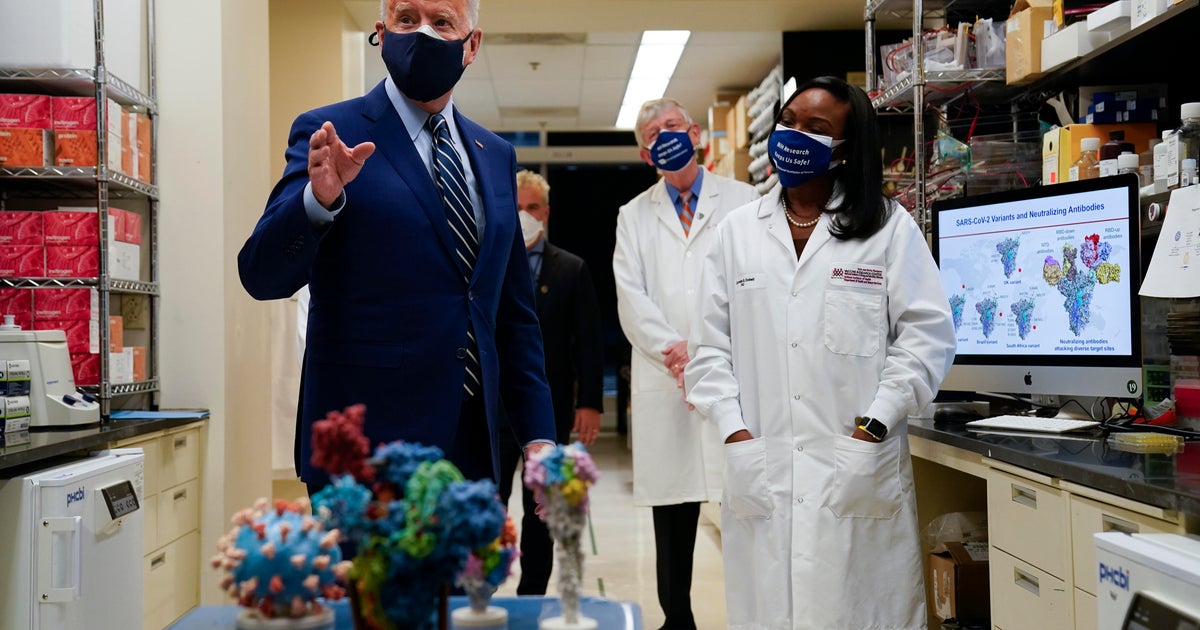
The dispute between Moderna and the National Institutes of Health (NIH) centers on a fundamental question of intellectual property: who truly designed the genetic payload of the mRNA-1273 vaccine? While Moderna has long positioned the vaccine as a triumph of its proprietary platform, federal scientists contend that the specific mRNA sequence—the “software” that instructs human cells to build the spike protein—was the product of a joint invention. This conflict is not academic; it carries for patent ownership, government use over drug pricing, and the historical record of the pandemic response. ### The Scientific Nexus: Prefusion Stabilization At the heart of the controversy lies the “2P” mutation, a molecular engineering technique developed years prior to the COVID-19 pandemic. NIH scientists, led by Dr. Barney Graham and Dr. Kizzmekia Corbett at the Vaccine Research Center (VRC), had previously discovered that coronaviruses could be neutralized more if their spike proteins were locked into a “prefusion” shape. By substituting two amino acids with prolines (the “2P” substitution), they prevented the spike protein from snapping into a post-fusion shape that the immune system fails to recognize. When the genetic sequence of SARS-CoV-2 was published by Chinese authorities in January 2020, the NIH and Moderna moved with extraordinary speed. Within 48 hours, the two teams had finalized the sequence for the vaccine candidate. The NIH maintains that this speed was possible only because federal scientists provided the specific coordinates for the stabilized spike protein. According to the agency, Dr. Graham and Dr. Corbett did not provide general guidance; they co-designed the specific genetic sequence that Moderna subsequently manufactured. ### The Exclusion of Federal Scientists even with this close collaboration, Moderna filed its principal patent application for the mRNA-1273 sequence (U. S. Patent Application No. 16/368, 270 and related filings) in July 2021 without listing the NIH scientists as co-inventors. In a filing with the U. S. Patent and Trademark Office (USPTO), Moderna stated it had reached a “good-faith determination” that its own scientists were the sole inventors of the specific mRNA sequence claimed in the patent. Moderna’s legal argument rested on a distinction between the *protein* and the *mRNA*. The company conceded that NIH scientists played a substantial role in developing the stabilized spike protein concept. yet, Moderna argued that the *patent claims* were directed at the specific mRNA sequence used to encode that protein. The company asserted that its scientists independently selected the mRNA sequence using their proprietary “codon optimization” algorithms, which determine the most way to write the genetic code for a human cell. By this logic, the NIH provided the architectural blueprint (the protein structure), Moderna wrote the code (the mRNA) to build it. ### The NIH Rebuttal and Public Acrimony The NIH rejected Moderna’s distinction, viewing it as a legal maneuver to cut the government out of ownership. If federal scientists were named as co-inventors, the U. S. government would jointly own the patent. This would grant the government the right to license the technology to other manufacturers without Moderna’s permission and chance exert greater influence over pricing—a power the pharmaceutical industry fiercely resists. Dr. Francis Collins, then-Director of the NIH, publicly stated that Moderna had made a “serious mistake” and that the agency would defend the contributions of its scientists. The dispute escalated in late 2021, with the NIH signaling it might pursue litigation to correct the inventorship record. The optics were particularly damaging for Moderna, given that the U. S. government had provided approximately $10 billion in taxpayer funding for the vaccine’s development, clinical trials, and procurement. ### The $400 Million Settlement and Licensing Deal In February 2023, the friction resulted in a significant financial concession, though it stopped short of admitting co-inventorship on the disputed mRNA sequence patent. Moderna agreed to pay the NIH $400 million as a “catch-up payment” and committed to future low single-digit royalties on COVID-19 vaccine sales. Crucially, this payment was structured as a license for a *different* set of patent rights—specifically, the foundational “2P” stabilization technique co-owned by the NIH, Dartmouth College, and Scripps Research Institute. By paying for this license, Moderna acknowledged it was using government-funded technology, it avoided explicitly conceding that NIH scientists co-invented the mRNA-1273 sequence itself. This legal two-step allowed Moderna to keep its principal mRNA patents clean of government ownership while compensating the agency for its underlying scientific contribution. ### 2025 Legal: The PTAB Invalidation The strategic importance of this dispute shifted dramatically in March 2025. In a separate legal challenge brought by competitors Pfizer and BioNTech, the Patent Trial and Appeal Board (PTAB) invalidated the key claims of Moderna’s “Betacoronavirus mRNA Vaccine” patents (U. S. Patent Nos. 10, 702, 600 and 10, 933, 127). The Board ruled that the claims were unpatentable due to prior art—essentially finding that the innovations Moderna claimed as exclusive were already obvious or known in the field. This ruling rendered the inventorship fight somewhat moot regarding those specific patents. If the patents are invalid, it matters little who is listed as the inventor. Yet, the episode remains a clear case study in the tension between public funding and private intellectual property. Moderna successfully delayed government co-ownership long enough to reap the primary windfall of the pandemic, only to see the patents themselves crumble under competitor scrutiny years later. ### Summary of Claims and Counter-Claims
Party
Core Argument
Key Evidence
NIH
Graham and Corbett co-invented the specific mRNA sequence by defining the stabilized spike protein structure.
Prior collaboration on MERS; rapid 48-hour sequence finalization in Jan 2020; transfer of materials to Moderna.
Moderna
Moderna scientists independently selected the mRNA sequence using proprietary optimization technology.
Patent claims focus on the mRNA molecule, not the protein; NIH scientists were not present for the specific sequence selection.
Outcome
Moderna paid $400M for a license to the underlying protein patent did not add NIH scientists to the mRNA patent.
Feb 2023 licensing agreement; March 2025 PTAB invalidation of the disputed patents.
Investigation of NIH claims regarding co-inventorship of the mRNA-1273 genetic sequence
Legal analysis of 'standing to sue' risks if NIH is deemed a co-owner of the '127 patent
The ‘Standing’ Precipice: STC. UNM and the Co-Ownership Trap
The most immediate existential threat to Moderna’s intellectual property enforcement campaign against Pfizer and BioNTech is not a finding of invalidity, a procedural guillotine known as “standing.” Under United States patent law, the right to sue for infringement is a substantive right held by the owner. When a patent is jointly owned, the legal requirements for enforcement become rigid and unforgiving. The controlling precedent, STC. UNM v. Intel Corp. (Fed. Cir. 2014), establishes a hardline rule: all co-owners of a patent must voluntarily join a lawsuit for the plaintiff to have standing. If even one co-owner refuses to join, the case must be dismissed. This doctrine creates a “tyranny of the minority” where a co-owner holding a 1% interest can veto the enforcement actions of the owner holding the other 99%. For Moderna, this legal mechanic represents a catastrophic vulnerability. The company’s infringement suit against Pfizer relies heavily on U. S. Patent No. 10, 933, 127 (the ‘127 patent) and related filings which claim the specific mRNA sequence used in Spikevax. Moderna lists only its own scientists as inventors. Yet, the National Institutes of Health (NIH) has maintained since 2021 that three of its government scientists, Dr. Barney Graham, Dr. Kizzmekia Corbett, and Dr. John Mascola, co-invented the genetic sequence during the frantic collaboration in early 2020. If a federal court determines that these NIH scientists contributed to the conception of the invention claimed in the ‘127 patent, the United States government automatically becomes a co-owner of the patent by operation of law.
The Pfizer Defense Strategy
Pfizer and BioNTech have weaponized this co-ownership dispute. In their defense filings, they that Moderna absence standing to sue because the true ownership of the patents includes the United States government, which is not a party to the lawsuit. This is not a technicality; it is a complete bar to litigation. If the court corrects the inventorship to include the NIH scientists, Moderna cannot proceed without the government’s participation. The strategic calculus shifts dramatically here because the United States government has almost zero incentive to join Moderna’s lawsuit. The Biden administration (and subsequent administrations) face conflicting interests., the government funded the development of the vaccines to end a pandemic, not to secure monopoly rents for a single contractor. Second, the government is a massive purchaser of Pfizer’s vaccine. Joining a lawsuit to force Pfizer to pay royalties would essentially mean the government is suing its own supplier to increase the cost of goods it purchases, a circular and politically toxic maneuver. Third, under 28 U. S. C. § 1498, the government has already assumed liability for patent infringement by its contractors during the pandemic response. If Moderna sues Pfizer, and the government joins, the government is suing to collect damages that it might have to pay itself.
The $400 Million Misconception
A common misunderstanding in financial reporting involves the $400 million payment Moderna agreed to make to the NIH in February 2023. Investors frequently conflate this payment with a resolution of the co-ownership dispute. They are distinct legal matters. The $400 million payment secured a non-exclusive license to the “2P” mutation patent (U. S. Patent No. 10, 960, 070), a foundational technology developed by NIH, Dartmouth, and Scripps Research Institute years prior to the COVID-19 pandemic. This license allows Moderna to use the stabilized spike protein structure. That payment did not resolve the dispute over the separate mRNA-1273 sequence patents (including the ‘127 patent). Moderna continues to assert sole inventorship over the specific genetic recipe used to instruct the body to make that protein. The NIH continues to assert that its scientists co-designed that recipe. Consequently, the $400 million license agreement does not cure the standing defect in the infringement litigation. In fact, the existence of a license for the 2P patent highlights the absence of a similar agreement for the sequence patent. If Moderna admits it needs a license for the 2P technology, refuses to acknowledge co-inventorship on the sequence patent, it leaves the door open for competitors to prove that the sequence patent is also joint property.
The Asymmetrical Risk of Section 102/103
Beyond standing, a finding of co-inventorship alters the prior art analysis. If NIH scientists are co-inventors, their own prior publications and presentations cannot be used against the patent as “prior art” under certain provisions of 35 U. S. C. § 102 (exceptions for inventor’s own work). Yet, if they are not listed as inventors, those same government publications, released rapidly in early 2020 to aid the global response, become chance invalidating prior art against Moderna’s claims. Moderna thus walks a razor’s edge. If they exclude the NIH scientists to maintain sole ownership and standing, they risk the patent being invalidated by the NIH’s own public disclosures. If they include the NIH scientists to avoid invalidity, they lose the ability to sue competitors without government consent. Pfizer’s legal team understands this dilemma perfectly. By pushing the co-inventorship narrative, they force Moderna to choose between invalidity (due to prior art) or unenforceability (due to absence of standing).
The “P2P” vs. “2P” Distinction
The technical granularity of this dispute centers on the distinction between the “2P” mutation (the protein structure) and the specific mRNA sequence encoding it. Moderna that while NIH provided the amino acid sequence (the protein), Moderna’s team independently engineered the mRNA sequence (the software) to optimize expression in human cells. This involves codon optimization and nucleoside modification. yet, internal NIH documents and email exchanges from January 2020 suggest a much more collaborative design process, where government scientists provided specific sequence data. If the court finds that the contribution of the NIH scientists was “not insignificant in quality, when that contribution is measured against the dimension of the full invention,” the legal standard for joint inventorship is met. The bar is relatively low; a co-inventor does not need to contribute to every claim, nor does the contribution need to be equal in quantity. They need to contribute to the conception of the invention. Given the integrated nature of the Vaccine Research Center’s work with Moderna, avoiding this finding requires Moderna to prove a strict compartmentalization of intellectual effort that contradicts the public narrative of a “direct” public-private partnership.
Litigation Outlook 2025-2026
As of early 2026, the standing defense remains a potent latent variable in the mRNA patent wars. While the District of Massachusetts and other venues process the infringement claims, the question of ownership hangs over the proceedings. If the court bifurcates the trial to address standing, Moderna could face a dismissal before a jury ever hears arguments about Pfizer’s alleged copying. also, the government’s silence is deafening. The Department of Justice has not intervened to assert ownership, likely preferring to let the private entities exhaust their resources. Yet, the government retains the right to assert its title at any time. Should the political winds shift, or should the administration decide that Moderna’s enforcement actions threaten public health objectives (such as the development of future pan-coronavirus vaccines), the NIH could formally assert its co-ownership interest. Such a move would instantly decapitate Moderna’s infringement lawsuits. The absence of a formal “covenant not to sue” from the government means Moderna is litigating on borrowed time, enforcing a patent that may legally belong, in part, to a silent partner who has no interest in the litigation’s success.
Legal analysis of 'standing to sue' risks if NIH is deemed a co-owner of the '127 patent
Risk of unilateral government licensing to competitors effectively neutralizing infringement suits
The Co-Ownership Nuclear Option: Ethicon and the Neutralization of Infringement Suits
The most severe intellectual property risk facing Moderna is not the payment of royalties to the National Institutes of Health (NIH), the existential threat that government co-ownership poses to its enforcement strategy against competitors. While the $400 million “catch-up” payment Moderna agreed to in early 2023 resolved the immediate financial dispute regarding the government’s contribution to the mRNA-1273 sequence, the underlying legal mechanics of patent co-ownership remain a loaded weapon in the hands of federal authorities. If the NIH is legally recognized as a co-owner of the core mRNA patents, specifically the ‘127 patent family covering the spike protein sequence, it possesses the unilateral power to immunize Moderna’s competitors against infringement lawsuits. This legal vulnerability from the Federal Circuit’s precedent in Ethicon, Inc. v. U. S. Surgical Corp. (1998). In that landmark case, the court established that a co-owner of a patent has the unrestricted right to license the invention to third parties without the consent of, or accounting to, the other co-owners. In the context of the mRNA wars, this means that if the NIH is deemed a co-inventor, it can grant a retroactive license to Pfizer and BioNTech. Such a license would not only authorize their future use of the technology decapitate Moderna’s ongoing infringement litigation. A license from one co-owner (NIH) serves as a complete defense against an infringement claim brought by another co-owner (Moderna). The strategic of this legal reality explain Moderna’s ferocious resistance to naming NIH scientists Kizzmekia Corbett, Barney Graham, and John Mascola as co-inventors. The company’s initial refusal was not simply a matter of prestige or scientific credit; it was a calculated maneuver to preserve the exclusivity of its intellectual property estate. By maintaining sole ownership, Moderna retained the ability to dictate licensing terms and sue competitors who encroached on its territory. Admitting government co-inventorship fractures this monopoly. It transforms the NIH from a passive funding agency into an active commercial player with the power to authorize widespread use of the technology, chance for low or zero royalties, so undercutting Moderna’s market position.
The Section 1498 Shield: Eminent Domain for Patents
Parallel to the co-ownership risk is the government’s authority under 28 U. S. C. § 1498, a statute frequently described as “eminent domain for intellectual property.” This law allows the U. S. government to use, or authorize others to use, any patented invention without the patent holder’s permission. The remedy for the patent owner is limited to “reasonable and entire compensation” in the Court of Federal Claims; they cannot seek an injunction to stop the production or sale of the infringing product. In the high- environment of pandemic response, Section 1498 offers the Biden administration, or any future administration, a method to bypass Moderna’s patent exclusivity entirely. If the government determines that Moderna’s pricing is too high, or that supply is insufficient, it can authorize Pfizer, BioNTech, or even generic manufacturers to produce the mRNA vaccine for government use. This authorization shields these third-party manufacturers from Moderna’s infringement lawsuits. Instead of suing Pfizer for billions in lost profits and seeking to block their sales, Moderna would be forced to sue the U. S. government for a judicially determined “reasonable royalty,” which is historically significantly lower than commercial rates. The invocation of Section 1498 is not a theoretical abstraction. During the 2001 anthrax scare, the threat of using this statute forced Bayer to drastically lower the price of Cipro. In the context of mRNA vaccines, the government’s heavy financial investment, billions in Operation Warp Speed funding, strengthens the political and legal argument for exercising these rights. If Moderna pushes its infringement claims against Pfizer too aggressively, it risks provoking a federal response that use Section 1498 to nationalize the technology for public health purposes. This creates a “ceiling” on Moderna’s litigation use; the company cannot demand royalties that exceed what the government would pay under a compulsory license scenario without risking total loss of control.
Litigation Realities: The Pfizer/BioNTech Defense Strategy
The specter of government licensing has already materialized in Moderna’s global litigation campaign. In August 2022, Moderna sued Pfizer and BioNTech in the U. S. District Court for the District of Massachusetts, alleging infringement of patents filed between 2010 and 2016. Pfizer’s defense strategy inevitably intersects with the government’s role. If Pfizer can demonstrate that its vaccine was produced “for the government” under the authorization of federal contracts, it can invoke Section 1498 to dismiss the lawsuit in district court, forcing Moderna to refile in the Court of Federal Claims. also, the “Ethicon” risk remains active as long as the inventorship status of the disputed patents is not cemented in Moderna’s favor. While the 2023 settlement involved a payment, the specific inventorship on the patents remains a point of vulnerability. If the USPTO or a court later corrects the inventorship to include NIH scientists, perhaps through a challenge initiated by a third party or the government itself, the NIH gains the keys to the kingdom. They could then problem a nunc pro tunc (retroactive) license to Pfizer. This would not only wipe out Moderna’s chance damages award could also render the company liable for the legal fees of its competitors. The July 2024 ruling by the UK High Court, which delivered a mixed verdict on Moderna’s patents (finding one valid and infringed, another invalid), illustrates the precarious nature of these IP battles. While that ruling did not directly involve U. S. government licensing, it weakened Moderna’s global enforcement posture. A similar loss of exclusivity in the U. S., driven by government intervention, would be catastrophic. The government’s power to license competitors acts as a “poison pill” in Moderna’s patent portfolio. It forces the company to tread carefully, balancing the need to enforce its rights against the risk of triggering a federal backlash that could its monopoly entirely.
The “March-In” Rights Distraction vs. Real Threats
Much public discourse focuses on the Bayh-Dole Act’s “march-in rights,” which allow the government to compel licensing of federally funded inventions if the patent holder fails to achieve practical application or satisfy health needs. Yet, legal analysis suggests that co-ownership and Section 1498 are the far more potent and immediate threats. March-in rights have never been successfully exercised in the history of the Act, and the administrative load to prove the criteria is high. In contrast, co-ownership requires no administrative process or finding of fault; it is a property right that exists automatically if inventorship is established. Similarly, Section 1498 is a sovereign power that requires only government authorization, not a complex regulatory hearing. For Moderna, the danger is not that the government “march in” after a lengthy hearing, that the government already owns the technology (via co-inventorship) or can simply take it (via Section 1498). The $400 million payment to the NIH should be viewed through this lens. It was likely a strategic premium paid by Moderna to maintain the and prevent the government from asserting its co-ownership rights aggressively. By paying the government, Moderna bought “peace” and the continued ability to present itself as the sole owner of the IP. Yet, this peace is fragile. The payment does not erase the scientific facts of contribution. If a court in the Pfizer litigation determines that the specific sequence used in Comirnaty (Pfizer’s vaccine) relies on the NIH-designed modifications, the question of co-inventorship could be reopened, bypassing the settlement Moderna reached with the agency.
Strategic Fragility of the IP Estate
The convergence of these risks paints a picture of an intellectual property estate that is far less secure than Moderna’s market valuation suggests. The company’s ability to extract rents from the mRNA ecosystem is contingent on the government’s continued restraint. Unlike a standard pharmaceutical patent dispute between two private entities, the presence of the U. S. government as a chance co-owner and sovereign user fundamentally alters the balance of power. Moderna’s enforcement actions are therefore played on a tilted board. Every lawsuit it files against a competitor carries the risk of inviting government intervention. If Moderna pushes Pfizer too hard, Pfizer has every incentive to lobby the NIH to assert its co-ownership rights or to petition the Department of Defense to invoke Section 1498. This creates a “mutually assured destruction” scenario where Moderna must accept the existence of competitors like Pfizer to avoid a government action that would open the floodgates to generic competition and zero-royalty licensing. The “monopoly” Moderna claims is, in reality, a government-subsidized oligopoly held together by fragile agreements and the constant threat of sovereign override.
Risk of unilateral government licensing to competitors effectively neutralizing infringement suits
Distinction between the $400M spike protein license payment and the unresolved mRNA sequence dispute
The December 2022 payment of $400 million from Moderna to the National Institute of Allergy and Infectious Diseases (NIAID) is frequently mischaracterized by market observers as a detailed settlement of the government’s intellectual property claims. This interpretation is factually incorrect and legally dangerous for investors relying on Moderna’s exclusivity. The payment, while substantial, purchased peace on only one specific front of the patent war: the chemical stabilization of the spike protein. It explicitly did not resolve the far more volatile dispute regarding the co-inventorship of the mRNA-1273 genetic sequence itself. Understanding the chasm between these two intellectual property assets—the “hardware” of the protein structure versus the “software” of the genetic code—is pivotal to assessing the company’s long-term litigation risk. ### The $400 Million “Catch-Up”: Paying for the Hinge, Not the Door The agreement announced in late 2022 was a “catch-up payment” covering the period from the vaccine’s launch through December 31, 2022. This payment, along with future “low single-digit royalties,” secured Moderna a non-exclusive license to the “2P” mutation technique. This technology, developed by Dr. Barney Graham and Dr. Kizzmekia Corbett at NIAID in collaboration with researchers from Dartmouth College and Scripps Research Institute, involves substituting two amino acids (prolines) at specific positions in the spike protein. This chemical modification locks the protein in its “pre-fusion” shape, preventing it from snapping shut before the immune system can analyze it. This “2P” technology is a foundational engineering tool. It is not specific to COVID-19; it was originally conceptualized for MERS and RSV vaccines and is broadly applicable to coronaviruses. By paying the $400 million, Moderna acknowledged that its vaccine uses this government-owned “hinge” method. The involvement of Dartmouth and Scripps in the payout confirms the scope of this license: these academic institutions are co-owners of the *stabilization* patent (the “McLellan patent”), they have no claim to the specific mRNA sequence used in Spikevax. The transaction was a standard licensing deal for a platform technology. It functions like a software company paying royalties for the use of a patented compression algorithm. It does not imply that the software company conceded ownership of its source code. For Moderna, this payment was a calculated liability cap, removing the unassailable “2P” patent from the litigation board while preserving its war chest for the battle over the drug’s genetic blueprint. ### The Unresolved War: Ownership of the Genetic Blueprint While the $400 million check cleared the ledger for the protein structure, it left the dispute over the mRNA-1273 sequence completely untouched. This distinction is legally. The sequence is the specific string of genetic instructions—the code—that tells the body how to manufacture the spike protein. NIH contends that its scientists, specifically Dr. Graham, Dr. Corbett, and Dr. John Mascola, did not provide the protein map actively co-invented the specific genetic sequence Moderna used. Moderna maintains that while it used the NIH’s protein structure (the “2P” design), its own scientists exclusively selected the specific mRNA coding sequence using proprietary optimization technology. This is not a trivial academic argument. If NIH scientists are legally deemed co-inventors of the sequence patent (U. S. Patent No. 10, 702, 600 and related applications), the U. S. government becomes a co-owner of the patent. Under U. S. patent law, a co-owner can license the invention to third parties without the consent of the other owners and without sharing the royalties. The $400 million license for the *spike protein* does not protect Moderna from this risk. If NIH wins co-ownership of the *sequence*, the agency could theoretically grant a license to Pfizer, BioNTech, or generic manufacturers to produce the exact same mRNA-1273 sequence. Moderna’s exclusivity would evaporate. The $400 million payment bought the right to use the *shape* of the protein, it did not buy exclusive rights to the *instruction manual* for building it. ### The “Abandonment” Tactic The separation between these two disputes is further evidenced by Moderna’s legal maneuvering at the United States Patent and Trademark Office (USPTO). In late 2021, facing intense pressure from the NIH to add government scientists to the core patent application (Application No. 16/966, 353), Moderna chose to abandon that specific application rather than concede co-inventorship. By letting the application die, Moderna avoided an immediate legal ruling that could have cemented the government’s co-ownership. The company then filed “continuation” applications—essentially restarting the examination process with slightly modified claims—to keep the patent family alive while delaying the inventorship adjudication. This tactical retreat demonstrates that the $400 million payment was not a settlement of the inventorship dispute. If the payment had resolved the sequence problem, Moderna would have simply amended the patent application to include the NIH scientists or signed a separate agreement defining the sequence ownership. Instead, the company paid for the spike license while continuing to fight the sequence battle in the shadows of the USPTO. ### Financial of the Distinction The financial between the two assets highlights the severity of the unresolved risk. The “2P” license commands “low single-digit royalties.” This is consistent with non-exclusive licenses for enabling technologies. In contrast, the mRNA sequence patent represents the product itself. If Moderna retains exclusive ownership, it captures 100% of the commercial margin (minus the spike royalty). If the government secures co-ownership, the value of that patent could drop to zero for Moderna licensing use, as the government could undercut them or license it broadly for public health reasons. Investors frequently conflate the “royalty-bearing license” announced in the 2022 earnings report with a “global patent peace.” This is a dangerous oversight. The license regularized Moderna’s use of a tool owned by the government. It did not secure the government’s agreement that Moderna is the sole inventor of the drug. ### The Dartmouth and Scripps Factor The distribution of the $400 million payment serves as the final proof of this distinction. The NIH shared the payment with Dartmouth College and the Scripps Research Institute. These institutions are co-owners of the *stabilized spike protein* patent (the “2P” invention). They are *not* claimants in the dispute over the mRNA-1273 sequence. Their receipt of funds confirms that the money was exclusively tied to the structural patent. If the payment had been intended to settle the sequence dispute, Dartmouth and Scripps would likely have no claim to that portion of the funds, as their scientists are not alleged to have written the mRNA code. The fact that the entire sum was treated as a royalty for the “2P” patent reinforces the reality that the sequence dispute remains a separate, unfunded liability. ### Conclusion of the Section The $400 million payment was a strategic decoupling. Moderna successfully the “2P” spike protein problem—where its legal position was weak and the patent was already issued—and paid to close that chapter. This allowed the company to focus its legal defenses on the far more consequential battle for the mRNA sequence. The market’s assumption that the government has been “paid off” is false. The government has been paid rent for the *design* of the lock, it is still litigating for ownership of the *key*. As long as the sequence inventorship dispute remains active or legally possible via continuation applications, Moderna’s monopoly on its flagship product rests on a fragile legal distinction that the $400 million payment did nothing to secure.
Table: Distinction Between the Two Key IP Assets
Feature
Stabilized Spike Protein (“2P”)
mRNA-1273 Genetic Sequence
Nature of Invention
Chemical structure (Hardware/Shape)
Genetic code (Software/Instructions)
Inventors
McLellan, Graham, Corbett (NIH/Dartmouth/Scripps)
Disputed: Moderna claims sole credit; NIH claims co-inventorship
Status
Licensed to Moderna (Dec 2022)
Unresolved / Litigated via Continuation Applications
Cost to Moderna
$400M catch-up + single-digit royalties
chance loss of exclusivity (Co-ownership risk)
Exclusivity
Non-exclusive (available to others)
Moderna seeks exclusivity; NIH seeks co-ownership
Distinction between the $400M spike protein license payment and the unresolved mRNA sequence dispute
Financial implications of the 'implied license' defense derived from the 2020 patent non-enforcement pledge
SECTION 5 of 14: Financial of the ‘implied license’ defense derived from the 2020 patent non-enforcement pledge
The Billion-Dollar Waiver: Anatomy of the October 2020 Pledge
Moderna’s decision on October 8, 2020, to problem a public covenant not to sue created a self-inflicted legal obstacle that threatens to severely cap chance infringement damages. In a statement titled “Statement by Moderna on Intellectual Property Matters during the COVID-19 Pandemic,” the company explicitly declared: “while the pandemic continues, Moderna not enforce our COVID-19 related patents against those making vaccines intended to combat the pandemic.” This voluntary commitment, intended to signal corporate altruism during a global emergency, has been weaponized by competitors as a potent legal shield. In high- litigation, defendants including Pfizer and BioNTech have successfully argued that this public statement constituted an “implied license” or an express waiver of patent rights. The financial consequence of this defense is the chance erasure of liability for infringement during the most lucrative period of the vaccine rollout.
The March 2022 Pivot and the Bifurcated Damages Window
The legal shifted on March 7, 2022, when Moderna updated its pledge. The company announced it would revoke the non-enforcement pledge for high-income countries, stating it “expected” companies such as Pfizer and BioNTech to respect its intellectual property. This bifurcation created two distinct temporal zones for financial liability:
Period
Legal Status of Pledge
Financial Implication for Moderna
Oct 8, 2020 , Mar 7, 2022
Active Non-Enforcement Pledge
High risk of zero damages due to “implied license” defense. This period covers the initial global vaccination drive and tens of billions in competitor revenue.
Mar 7, 2022 , Present
Revoked for High-Income Nations
Moderna asserts full patent rights. Competitors the pledge was irrevocable or lasted until the WHO declared the pandemic over (May 2023).
The financial of this temporal division are immense. Pfizer’s Comirnaty vaccine generated approximately $36. 7 billion in sales in 2021 alone. If courts uphold the implied license defense for the period prior to March 2022, Moderna is legally barred from seeking royalties or lost profits on this massive revenue tranche. The litigation becomes a battle over the “tail” of the pandemic revenue rather than the peak.
Judicial Validation of the Defense: The UK Precedent
The theoretical risk of the implied license defense materialized into concrete legal reality in July 2024. The High Court of Justice in London ruled in *Moderna v. Pfizer/BioNTech* that the October 2020 pledge did, in fact, provide consent for competitors to use Moderna’s technology. Justice Richards determined that the pledge amounted to a non-contractual consent that immunized Pfizer and BioNTech from infringement claims for the period between October 2020 and March 2022. This ruling serves as a serious bellwether for parallel litigation in the United States and Europe. The court rejected Moderna’s argument that the pledge was a statement of intent rather than a binding legal waiver. yet, the court also handed Moderna a partial victory by ruling that the pledge *was* revocable. Consequently, Pfizer and BioNTech could be held liable for infringement occurring after the March 2022 update. While this allows Moderna to pursue damages for sales from mid-2022 onward, the financial blow is substantial. The court wiped out chance royalties for the 17 months of the vaccine rollout, the period of highest demand and scarcity. If US courts follow this logic, applying the doctrine of equitable estoppel, Moderna’s recoverable damages could be reduced by billions of dollars.
The “Equitable Estoppel” Trap
In US litigation, the defense rests on the doctrine of equitable estoppel. Pfizer and BioNTech that they relied on Moderna’s public pledge when scaling up their own manufacturing and supply chains. Under this legal theory, a patent holder cannot induce reliance through a pledge of non-enforcement and then retroactively sue for damages once the defendant has invested heavily based on that pledge. Moderna attempts to counter this by arguing that its competitors were already developing their vaccines before the pledge was made, so negating the “reliance” element required for estoppel. yet, the breadth of the October 2020 statement, which did not impose conditions or exclusions based on development timelines, complicates this counter-argument. The pledge was absolute: “Moderna not enforce.” also, competitors that the “pandemic” condition in the original pledge referred to the World Health Organization’s definition. The WHO did not declare the end of the COVID-19 global health emergency until May 5, 2023. Defendants contend that Moderna’s unilateral decision to declare the pandemic “over” for commercial purposes in March 2022 contradicts the original terms of the pledge. If a court accepts the WHO date as the controlling timeframe, the damages window would remain closed for an additional 14 months beyond Moderna’s revocation date, further eroding the chance financial recovery.
Impact on Settlement use and Royalty Rates
The existence of a viable implied license defense fundamentally alters the use in settlement negotiations. In typical patent disputes, the threat of retrospective damages for the entire period of infringement drives defendants to the table. Here, the “safe harbor” created by the pledge significantly reduces the maximum financial exposure for competitors. Analysts estimate that a reasonable royalty rate for mRNA technology could range from 2% to 10% of net sales. Applied to Pfizer’s 2021 revenue of ~$37 billion, a 3% royalty would amount to over $1. 1 billion. The implied license defense places this specific sum in jeopardy. Moderna is forced to litigate primarily for forward-looking royalties or damages on post-2022 sales, which, while significant, represent a declining market as global demand for COVID-19 boosters wanes. The pledge also complicates Moderna’s ability to assert “willful infringement,” a classification that allows courts to triple damage awards. It is legally difficult to prove that a competitor acted with “willful” disregard for patent rights when the patent holder publicly stated those rights would not be enforced. This likely removes the threat of treble damages from the negotiation equation, further lowering the ceiling on Moderna’s chance financial windfall.
Impact of the UK High Court's July 2024 ruling limiting damages to the post-March 2022 period
The July 2, 2024, judgment delivered by the High Court of Justice in London stands as a defining moment in the global mRNA litigation wars, severing Moderna’s access to the most lucrative period of pandemic vaccine revenues. While Mr Justice Meade adjudicated the technical validity of the patents, a parallel and equally consequential ruling by Mr Justice Richards addressed the enforceability of Moderna’s October 2020 “Open Pledge.” The court held that Moderna’s public commitment not to enforce its intellectual property created a binding “non-contractual consent,” granting competitors a legal shield against infringement claims until Moderna formally revoked that consent on March 7, 2022. ### The Legal method of the “Pledge” Defense Mr Justice Richards’ ruling dismantled Moderna’s attempt to retroactively claim damages for the peak of the pandemic. The court examined the October 8, 2020, statement where Moderna declared, “while the pandemic continues, Moderna not enforce our COVID-19 related patents against those making vaccines intended to combat the pandemic.” Moderna argued this was a statement of intent or a “forward-looking statement” subject to change without notice. The court rejected this minimization. Instead, the High Court determined that the pledge functioned as a unilateral waiver of rights. By making such a definitive public assurance, Moderna provided consent for other entities—specifically Pfizer and BioNTech—to use its technology without fear of litigation. This “non-contractual consent” meant that any acts of manufacturing or selling the Comirnaty vaccine prior to the revocation date were not infringing acts under UK law. They were authorized. The court dismissed Pfizer’s more aggressive argument that the pledge should remain in force until the World Health Organization (WHO) officially declared the end of the emergency in May 2023. Mr Justice Richards ruled that Moderna retained the right to revoke its consent, which it did with its updated statement on March 7, 2022. This created a specific window of immunity: from October 8, 2020, to March 7, 2022. ### Financial Evaporation of the “Peak Pandemic” Window The financial of excising this seventeen-month period are catastrophic for Moderna’s damages model. The “pledge period” coincides almost perfectly with the highest volume of vaccine uptake and the highest pricing power in Western markets. By the time Moderna revoked the pledge in March 2022, the initial two-dose vaccination campaigns in the UK, Europe, and the US were largely complete, and the market had shifted toward lower-volume boosters. The following table illustrates the revenue between the protected “Pledge Period” and the actionable “Post-Revocation Period.”
Timeframe
Legal Status
Market Context
Damages Eligibility
Oct 2020 , Mar 6, 2022
Non-Contractual Consent (Pledge Active)
Peak global demand; primary vaccination series; highest revenue velocity for Pfizer/BioNTech.
BARRED (Zero recovery allowed)
Mar 7, 2022 , Present
Consent Revoked (Enforcement Active)
Market saturation; booster-only demand; declining government contracts; lower unit volumes.
ALLOWED (Subject to validity of EP 949)
Pfizer reported approximately $36. 7 billion in direct sales and alliance revenues for Comirnaty in 2021 alone. By limiting damages to the post-March 2022 era, the High Court immunized the vast majority of Pfizer’s pandemic windfall from Moderna’s grasp. The 2023 revenues for Comirnaty dropped to approximately $11. 2 billion, a fraction of the 2021-2022 peak. Moderna won the right to sue for crumbs after waiving its right to the feast. ### Validity vs. Enforceability: A Split Decision The complexity of the July 2024 verdict lies in the interplay between Mr Justice Meade’s technical findings and Mr Justice Richards’ contractual findings. Mr Justice Meade ruled that one of Moderna’s key patents, EP 3 590 949 (EP 949), which covers the specific chemical modification of mRNA (N1-methylpseudouridine) to prevent immune rejection, was valid and infringed. This was a significant technical victory, affirming that Pfizer’s Comirnaty falls within the scope of Moderna’s claims. Yet, this technical victory is hollowed out by the pledge ruling. Even though the patent is valid and infringed, the “consent” defense means Moderna cannot collect royalties for the infringement that occurred during the pledge window. The court also invalidated a second asserted patent, EP 3 718 565 (EP 565), which covered lipid nanoparticle (LNP) formulations, citing “added matter”—a procedural fatal flaw where the patent claims extend beyond the original application’s disclosure. The invalidation of EP 565 further reduces the chance royalty base, as Moderna cannot claim damages for LNP infringement at all. The surviving EP 949 patent is the sole tether for damages, and that tether only attaches to sales made after March 7, 2022. ### for US Litigation and the “Implied License” While the UK ruling is not binding on US courts, the legal reasoning provides a dangerous blueprint for defendants in the District of Massachusetts and the District of Delaware. The concept of “non-contractual consent” parallels the US legal doctrines of “equitable estoppel” and “implied license.” In the US proceedings, Pfizer and the US government (in the Court of Federal Claims) likely use the UK judgment to substantiate the argument that Moderna’s pledge was not public relations fluff a substantive legal waiver. If a US judge or jury finds that the October 2020 statement created a reasonable reliance that Moderna would not sue, the damages timeline in the US could suffer the same truncation as in the UK. This poses a specific risk regarding the NIH. If Moderna is found to have waived its enforcement rights generally during the pandemic, it cannot selectively enforce them against specific entities. The pledge was an “open” offer to the world. This weakens Moderna’s use in settlement negotiations with the US government. The government can that during the time it was procuring billions of doses, Moderna had explicitly promised not to enforce its patents, rendering any claim for “reasonable compensation” under Section 1498 null for that period. ### The March 2022 Pivot: A Failed Strategy? Moderna’s decision to update its pledge on March 7, 2022, was a calculated attempt to close the open door. The update stated that Moderna would never enforce patents in 92 low-and-middle-income countries (AMC 92) *would* expect commercial reasonableness in high-income countries. The UK court accepted this revocation as valid, rejecting Pfizer’s argument that the pledge was perpetual until the pandemic’s official end. This creates a “bifurcated” liability. For sales in high-income nations (like the UK, EU, and US) after March 2022, Moderna can sue. For sales in the AMC 92 nations, the pledge remains a permanent bar. The strategic failure lies in the timing. By waiting until March 2022 to revoke the pledge, Moderna allowed competitors to entrench their market positions and reap the primary financial rewards of the technology without IP overhead. Had Moderna revoked the pledge in early 2021, when vaccines received authorization, the damages calculation would look radically different. The delay, likely driven by public perception concerns during the height of the emergency, cost shareholders tens of billions in chance retrospective royalties. ### The “Goodwill” Trap The ruling exposes the tangible legal cost of corporate goodwill gestures. Moderna’s 2020 pledge was designed to deflect criticism that it was profiting from a global emergency and to stave off threats of compulsory licensing or IP waivers from the World Trade Organization (TRIPS waiver). While it may have bought political capital at the time, the UK High Court has converted that political capital into a hard financial cap. The court’s refusal to view the pledge as “non-binding” sends a stern warning to biotechnology executives: public statements regarding IP enforcement are not press releases; they are chance waivers of property rights. Mr Justice Richards noted that the pledge was intended to influence the commercial behavior of third parties and the government. Having achieved that influence, Moderna could not simply pretend the statement had no legal weight when it became convenient to sue. ### Impact on the NIH Co-Inventorship Narrative This limitation on damages also intersects with the NIH co-inventorship dispute. The NIH claims its scientists co-invented the sequence used in the mRNA-1273 vaccine (and by extension, the technology Moderna asserts against others). If Moderna cannot collect damages for the 2020-2022 period due to the pledge, the value of the NIH’s chance share of those damages also evaporates. yet, the ruling strengthens the government’s defensive position. If the NIH is sued by Moderna for using the technology (or authorizing others to use it), the government can cite the pledge as a primary defense for the 2020-2022 period. The government does not need to prove it is a co-owner to avoid liability if Moderna voluntarily waived its right to sue everyone during the relevant timeframe. The pledge neutralizes the infringement threat for the period when the government’s procurement activity was most intense. The July 2024 ruling forces Moderna into a defensive posture. They have established the validity of their core modification patent (EP 949), proving they *did* invent the fundamental technology. Yet, they have lost the ability to monetize that invention during its most serious commercial window. The victory validates their science liquidates their history.
Potential for 'inequitable conduct' defenses rendering patents unenforceable due to omitted inventors
The ‘Atomic Bomb’ of Patent Litigation: Inequitable Conduct Risks
The most severe threat to Moderna’s intellectual property portfolio lies not in the technical validity of its claims, in the ethical conduct of its patent prosecution. In patent law, the defense of “inequitable conduct” is frequently termed the “atomic bomb” because a successful finding does not invalidate a single claim; it renders the entire patent, and frequently related patents in the same family, unenforceable. This defense arises when a patent applicant violates their duty of candor to the United States Patent and Trademark Office (USPTO) by intentionally withholding material information or making false statements with the specific intent to deceive. In the context of the mRNA-1273 dispute, Moderna’s deliberate omission of National Institutes of Health (NIH) scientists from the principal patent applications (specifically the ‘127 patent family) provides competitors with a potent legal weapon to Moderna’s monopoly.
The Materiality of the Omitted Inventors
To establish inequitable conduct, a challenger must prove ” -for” materiality, meaning the USPTO would not have issued the patent, or would not have issued it in its current form, had the examiner known the truth. The omission of NIH scientists Barney Graham, Kizzmekia Corbett, and John Mascola is materially significant because it fundamentally alters the ownership structure of the invention. Under 35 U. S. C. § 262, any joint owner of a patent can license the invention to third parties without the consent of other owners. Had the NIH scientists been named as co-inventors on the original filings, the U. S. government would hold an undivided interest in the patent, possessing the unilateral power to license the mRNA technology to competitors like Pfizer, BioNTech, or generic manufacturers.
Moderna’s filing strategy concealed this ownership interest from the USPTO. By listing only Moderna employees (such as Sunny Himansu) as inventors, the company presented the application as the sole property of Moderna, so securing exclusive rights. A patent examiner, aware of the NIH’s co-inventorship claims and the collaborative history documented in the 2019 material transfer agreements, would have been required to scrutinize the inventorship listing. The exclusion of federal scientists was not a clerical error; it was a substantive assertion of sole ownership that directly affected the patent’s enforceability and the government’s rights.
Evidence of Specific Intent to Deceive
The legal standard set by the Federal Circuit in Therasense, Inc. v. Becton, Dickinson & Co. (2011) requires proof that the applicant acted with a “specific intent to deceive” the USPTO. Negligence or even gross negligence is insufficient. Challengers must show that Moderna knew the NIH scientists were inventors and deliberately chose to omit them to secure a strategic advantage. The public record offers substantial evidence to support this theory.
In November 2021, Moderna publicly admitted in filings that while NIH scientists provided “input,” the specific mRNA sequence was “selected exclusively” by Moderna scientists. Yet, this “selection” defense contradicts the collaborative reality. NIH Director Francis Collins and NIAID Director Anthony Fauci publicly rebuked this narrative, stating that the sequence design, specifically the 2P mutation stabilization, was a joint product of years of MERS research and the immediate January 2020 collaboration. The timeline shows that Moderna and NIH scientists exchanged data and designs in real-time between January 11 and January 13, 2020.
A litigant could that Moderna’s legal team understood the threshold for inventorship, contribution to the “conception” of the invention, and recognized that the NIH’s contribution met this standard. The decision to exclude them, therefore, appears calculated to avoid the consequences of government co-ownership. This calculation serves as the “smoking gun” for intent. If Moderna believed in good faith that the NIH scientists were not inventors, they would have had no reason to fear adding them, other than the loss of commercial exclusivity. The refusal to name them, maintained until late 2023 when Moderna partially capitulated on separate filings, suggests a strategic maneuver to deceive the patent office regarding the true genesis of the invention to protect commercial interests.
The “Unclean Hands” Doctrine and Portfolio Contagion
The consequences of a finding of inequitable conduct extend beyond the specific patent in dispute. The doctrine of “unclean hands” means that misconduct in the procurement of one patent can render related patents unenforceable if they belong to the same family and the misconduct “infects” the others. If a court determines that Moderna committed fraud on the USPTO regarding the inventorship of the mRNA-1273 sequence, this ruling could theoretically wipe out the enforceability of the entire patent family covering the vaccine.
This risk is particularly acute given the high-profile nature of the dispute. In typical patent cases, inventorship disputes are resolved by correcting the patent under 35 U. S. C. § 256. Yet, Section 256 allows correction only if the error arose “without any deceptive intention.” If a court finds that Moderna’s omission was deceptive, intended to cut the government out of the deal, the statutory remedy of correction is unavailable. The patent becomes permanently unenforceable.
Litigation Vulnerabilities in 2024-2026
As of 2026, competitors defending against Moderna’s infringement suits (such as Pfizer/BioNTech and GSK) are incentivized to depose the omitted NIH scientists. Testimony from Dr. Graham or Dr. Corbett stating that they explicitly designed the sequence and sent it to Moderna with the expectation of co-inventorship would be devastating. If internal Moderna emails reveal discussions about excluding NIH names to prevent government licensing, the “specific intent” prong of Therasense is satisfied.
also, the “inequitable conduct” defense allows the court to pierce the corporate veil and examine the conduct of the attorneys and executives involved in the filing. Unlike invalidity defenses, which focus on prior art, this defense puts the company’s ethics on trial. For a company that received billions in government funding, a judicial finding that it defrauded the government’s patent office to deny the government’s ownership rights would be a public relations and financial catastrophe. It would not only void the royalties Moderna seeks from competitors could also trigger “exceptional case” status, forcing Moderna to pay the legal fees of the defendants.
The decision to omit the NIH inventors was not a technical dispute over the definition of “conception”; it was a high- gamble on the enforceability of the company’s crown jewel assets. By prioritizing total control over the patent rights, Moderna exposed itself to the one legal defense that can invalidate a patent regardless of the invention’s technical merit.
Vulnerability of patents to invalidation based on NIH prior art if federal scientists are excluded
The Strategic Error: Turning Collaborators into Prior Art
Moderna’s decision to exclude National Institutes of Health (NIH) scientists, specifically Dr. Barney Graham, Dr. Kizzmekia Corbett, and Dr. John Mascola, from the inventorship of the mRNA-1273 sequence patents created a catastrophic legal vulnerability. By insisting on sole inventorship to avoid government co-ownership, Moderna inadvertently classified these federal researchers as “others” under patent law. This classification transformed the NIH scientists’ public disclosures, published papers, and presentations from protected “inventor activities” into invalidating “prior art.”
The Mechanics of 35 U. S. C. § 102(a)
The core of this vulnerability lies in 35 U. S. C. § 102(a)(1) of the America Invents Act (AIA). This statute dictates that a person is not entitled to a patent if the claimed invention was described in a printed publication, or otherwise available to the public, before the filing date of the claimed invention. A serious exception exists under § 102(b)(1)(A): a disclosure made one year or less before the filing date is not prior art if the disclosure was made by the inventor or a joint inventor. Because Moderna formally declared that Graham, Corbett, and Mascola were *not* joint inventors, the company stripped itself of the § 102(b)(1)(A) shield regarding NIH disclosures. Consequently, any presentation, paper, or sequence data released by the NIH team prior to Moderna’s filing date became chance evidence that the invention was already in the public domain.
The January 2020 Sequence Disclosure
The timeline of the SARS-CoV-2 sequence release illustrates this peril. On January 11, 2020, Chinese scientists published the genetic sequence of the coronavirus. Immediately, NIH researchers analyzed this data and identified the specific mutations required to stabilize the spike protein in its prefusion state, the “2P” mutation. NIH scientists communicated these findings and the specific sequence design to Moderna. If Graham and Corbett are co-inventors, their communication and subsequent public discussion of the 2P design constitute part of the inventive process. Since Moderna excludes them, the NIH’s independent discussion of the sequence design in early 2020 stands as a disclosure by a third party. Competitors like Pfizer and BioNTech have seized on this distinction, arguing that the specific mRNA sequence claimed in Moderna’s patents was “derived” from this external NIH work, or that the NIH work renders Moderna’s claims obvious.
The MERS-CoV Precedent as Statutory Prior Art
Beyond the immediate timeline of 2020, the NIH’s earlier work on Middle East Respiratory Syndrome (MERS) presents a formidable barrier to validity. In 2017, Dr. Barney Graham and colleagues published a seminal paper in *Proceedings of the National Academy of Sciences* (PNAS) detailing the use of the 2P mutation to stabilize coronavirus spike proteins. This publication occurred more than one year before the COVID-19 patent filings, placing it outside the one-year grace period regardless of inventorship status. This 2017 publication serves as § 102(b) statutory prior art. It taught the world that the 2P mutation stabilizes coronavirus spikes. When SARS-CoV-2 emerged, applying the known 2P mutation to the new virus’s spike protein was, according to challengers, an “obvious” step for any skilled virologist. Moderna’s defense relies on the assertion that the specific mRNA coding sequence, not just the protein structure, was the invention. Yet, the PTAB found this distinction insufficient to overcome the weight of prior disclosures.
The March 2025 PTAB Invalidation
The theoretical risk of invalidation materialized into a legal reality on March 5, 2025. The Patent Trial and Appeal Board (PTAB) issued a final written decision invalidating all challenged claims in Moderna’s two key patents: U. S. Patent Nos. 10, 702, 600 and 10, 933, 127. The Board ruled that the claims were unpatentable as “obvious” over prior art references, specifically the “Schrum” (U. S. Publication No. 2013/0266640) and “Geall” (WO 2012/006369) documents. While Schrum was a Moderna filing and Geall was a Novartis filing, the NIH dispute weakened Moderna’s ability to “secondary considerations of non-obviousness.”, a patent holder can save an “obvious” invention by proving it produced unexpected results or solved a long-standing problem. because the NIH had already solved the stabilization problem with the MERS 2P work, and publicly touted the “plug-and-play” nature of the technology, the PTAB found little evidence of a unique, non-obvious contribution by Moderna’s specific COVID-19 sequence.
The “Derived From” Exception Trap
Moderna attempted to navigate a narrow legal route by claiming they “derived” the invention from the NIH without naming NIH scientists as inventors. Under § 102(b)(1)(B), a disclosure by another is not prior art if the subject matter had been obtained from the inventor. This creates a logical paradox: 1. If Moderna obtained the sequence from NIH, then NIH scientists are likely co-inventors (destroying Moderna’s sole ownership). 2. If Moderna *did not* obtain it from NIH (independent invention), then NIH’s prior disclosures are independent prior art (destroying Moderna’s patent validity). Moderna tried to have it both ways, using NIH data while denying NIH inventorship. The PTAB and federal courts look unfavorably on such inconsistencies. By denying the inventorship claim, Moderna admitted that the NIH’s work was distinct, so cementing its status as invalidating prior art.
Weaponization by Competitors
Pfizer and BioNTech ruthlessly exploited this vulnerability in their Inter Partes Review (IPR) petitions filed in August 2023. They argued that the “2P” substitution was not a invention by Moderna in 2020 a well-known technique developed by the NIH years prior. They the 2017 Graham et al. paper and the 2013 Schrum application to demonstrate that a “person of ordinary skill in the art” (POSA) would have naturally combined mRNA delivery (Schrum) with the stabilized spike protein (Graham) to create the vaccine. The PTAB agreed. The Board’s decision in March 2025 noted that Moderna’s own FDA submissions the prior success of these platforms to prove safety, which contradicted their patent arguments that the technology was unpredictable and. This “litigation-driven one-eighty”, claiming predictability to the FDA unpredictability to the Patent Office, severely damaged Moderna’s credibility.
The “Pancoronavirus” Strategy Backfire
For years, the NIH pursued a “pancoronavirus” vaccine strategy, publishing data suggesting that the 2P mutation would work across different (SARS, MERS, HKU1). This public funding mandate required broad dissemination of knowledge. When Moderna filed for patents on the specific SARS-CoV-2 application of this general knowledge, they collided with the NIH’s mission of public disclosure. The NIH’s success in proving the universal applicability of the 2P mutation rendered specific applications of it “obvious to try,” a standard that frequently leads to patent invalidation.
Financial Consequences of Invalidation
The invalidation of the ‘600 and ‘127 patents strikes at the foundation of Moderna’s infringement lawsuits. Without valid claims covering the specific mRNA sequence and the method of administration, Moderna cannot collect royalties from Pfizer or BioNTech for the period after March 2022. While Moderna retains the right to appeal to the U. S. Court of Appeals for the Federal Circuit, the PTAB’s factual findings on obviousness are reviewed under a deferential “substantial evidence” standard, making reversal difficult. If the Federal Circuit upholds the PTAB’s March 2025 ruling, Moderna’s ability to monetize the intellectual property of the COVID-19 vaccine against competitors. The company would be left with a portfolio of invalidated patents, a direct result of the strategic gamble to exclude the very scientists who laid the groundwork for the invention. The refusal to share credit with the NIH did not secure a monopoly; it provided the ammunition to destroy it.
Analysis of the March 2025 PTAB decision invalidating claims in Moderna's '600 and '127 patents
The March 5, 2025, decision by the Patent Trial and Appeal Board (PTAB) stands as a definitive correction in the history of mRNA intellectual property. In a ruling that stripped Moderna of two foundational monopoly, the Board found all challenged claims in U. S. Patent Nos. 10, 702, 600 (the ‘600 patent) and 10, 933, 127 (the ‘127 patent) unpatentable. This outcome, resulting from Inter Partes Review (IPR) petitions filed by Pfizer and BioNTech in August 2023, neutralized Moderna’s ability to claim exclusive ownership over the basic concept of a betacoronavirus mRNA vaccine formulated in lipid nanoparticles. The decision did not invalidate legal claims; it exposed the fragility of patenting the application of established government science to a new viral. ### The Legal method of Invalidation The PTAB’s final written decision in proceedings IPR2023-01358 and IPR2023-01359 rested on the statutory ground of obviousness under 35 U. S. C. § 103. The Board determined that the “invention” claimed by Moderna—combining a known delivery system (lipid nanoparticles) with a known immunogen (the Spike protein of a betacoronavirus)—was a predictable step for any Person of Ordinary Skill in the Art (POSA), rather than a breakthrough. The invalidation relied on a “kill chain” of prior art
Compounding risks from parallel Arbutus and Genevant litigation over lipid nanoparticle (LNP) delivery systems
The Second Front: Arbutus, Genevant, and the LNP Stranglehold
While the National Institutes of Health (NIH) presses its claim over the mRNA sequence itself, a parallel and equally lethal legal threat the vehicle that delivers it. The litigation brought by Arbutus Biopharma and Genevant Sciences regarding lipid nanoparticle (LNP) delivery systems has evolved from a manageable corporate dispute into an existential emergency for Moderna. As of February 28, 2026, this “second front” has breached Moderna’s defensive perimeter, the financial and operational risks established by the government’s co-ownership claims.
The February 2026 “Star Trek” Ruling
On February 2, 2026, Judge Joshua D. Wolson of the U. S. District Court for the District of Delaware issued a summary judgment ruling that dismantled Moderna’s primary shield against liability. In a memorandum opinion that referenced the “Prime Directive” of patent law, “don’t copy other people’s inventions”, the court rejected Moderna’s attempt to invoke 28 U. S. C. § 1498 for the vast majority of its vaccine sales. Moderna had argued that its production of Spikevax was performed “for the government” under Operation Warp Speed, a defense that would have transferred liability for patent infringement to the U. S. taxpayer. Judge Wolson ruled that while the government contracted for the vaccines, the *beneficiaries* were the American public, not the government itself. Consequently, Moderna remains directly liable for damages on approximately $8 billion in government-purchased doses, to all commercial market sales. This ruling unlocks a damages model that plaintiffs estimate at over $5 billion, a sum that would be levied directly against Moderna’s cash reserves rather than the federal treasury.
The Literal Infringement Battlefield
The court’s decision was not a total victory for Arbutus, it clarified the lethal geometry of the upcoming trial, scheduled to begin on March 9, 2026. The judge ruled that Arbutus is estopped from arguing infringement under the “doctrine of equivalents” for certain claims due to concessions made during patent prosecution. Instead, Arbutus must prove “literal infringement”, meaning Moderna’s LNP formulation must match the specific molar ratios claimed in Arbutus’s patents (U. S. Patent Nos. 8, 058, 069; 8, 492, 359; and others) with exact precision. While this narrows the scope, it intensifies the technical risk. Arbutus and Genevant have amassed evidence suggesting that Moderna’s SM-102 lipid formulation falls squarely within the claimed ranges of the ‘069 patent, a foundational IP asset that survived multiple inter partes review (IPR) challenges by Moderna between 2018 and 2021. If a jury finds that Moderna’s specific lipid ratios, 40-50% ionizable lipid, for instance, mathematically align with Arbutus’s claims, the finding of infringement becomes binary and absolute. There is no “close enough” defense in literal infringement; the chemistry either matches the patent, or it does not.
International Encirclement Strategy
the domestic pressure, Arbutus and Genevant executed a coordinated international expansion of the litigation in March 2025. By filing five simultaneous infringement actions in Canada, Japan, Switzerland, and the Unified Patent Court (UPC) in Europe, the plaintiffs have encircled Moderna’s global revenue streams.
Table 1: International LNP Litigation Expansion (March 2025)
Jurisdiction
Targeted Patent
Strategic Implication
United States
‘069, ‘435, ‘378, ‘651
Direct damages on $30B+ historical revenue; trial set for March 2026.
Unified Patent Court (UPC)
EP 2 279 254
chance pan-European injunction affecting sales in 17+ EU countries.
Japan
JP 5, 475, 753
Threatens royalty stream from one of Moderna’s largest Asian markets.
Canada
CA 2, 721, 333
Attacks manufacturing supply chain and domestic sales.
This multi-jurisdictional method prevents Moderna from isolating its legal exposure to the United States. A loss in the UPC, for example, could theoretically lead to injunctive relief barring the sale of Spikevax across large swathes of Europe, forcing a settlement that would likely include a global royalty stack.
The Royalty Stack Nightmare
The convergence of the NIH and Arbutus litigations creates a “royalty stack” scenario that threatens to erase the profitability of Moderna’s mRNA platform. 1. **NIH Claim:** If the government succeeds in establishing co-ownership of the mRNA sequence (the “software”), it could demand a royalty rate consistent with federal technology transfer policies, or license the sequence to competitors. 2. **Arbutus/Genevant Claim:** If the plaintiffs prove infringement of the LNP delivery system (the “hardware”), they are entitled to a reasonable royalty on every dose sold, chance retroactive to 2020. Industry analysts project that a combined adverse outcome could result in a total royalty load exceeding 15-20% of net sales. For a low-margin product like a commoditized seasonal vaccine, such a load is economically unsustainable. also, because the LNP technology is platform-agnostic, a loss to Arbutus would infect Moderna’s entire pipeline, including its RSV (mRESVIA), flu, and cancer vaccine candidates. Every product using the SM-102 lipid system would carry the same infringement liability, taxing Moderna’s future innovation to pay for its past disputes.
Failed Invalidity Defenses
Moderna’s strategy of invalidating the underlying patents has largely failed. The Federal Circuit’s December 2021 affirmation of the PTAB’s decision to uphold the ‘069 patent remains the legal bedrock of the plaintiffs’ case. More, in the February 2026 summary judgment, Judge Wolson dismissed Moderna’s “obviousness” and “derivation” defenses, ruling that Moderna could not re-litigate arguments it had already lost at the patent office. This leaves Moderna with “enablement” as its sole remaining substantive defense—arguing that Arbutus’s patents did not sufficiently teach a skilled scientist how to make the invention. relying on a single, technical defense in a jury trial against a sympathetic plaintiff (a smaller innovator whose tech was allegedly taken by a giant) is a high-risk proposition. The timing is serious. With the trial commencing in less than two weeks, Moderna faces a binary event. A verdict for Arbutus would not only trigger billions in damages would also validate the narrative that Moderna built its empire on borrowed science—both from the government (NIH) and from early LNP pioneers (Arbutus). This dual validation would likely collapse investor confidence in the company’s claim to independent ownership of its core platform technology.
Strategic consequences of divergent international rulings in Germany, the Netherlands, and the UK
The fragmentation of Moderna’s European patent enforcement strategy became undeniable by late 2025, as courts in Germany, the Netherlands, and the United Kingdom issued contradictory rulings on the validity of the same core mRNA patents. While Moderna secured infringement verdicts in London and Düsseldorf, a rejection in The Hague created a geographic schism that complicates the company’s ability to extract uniform global royalties. This judicial incoherence exposes Moderna to serious strategic risks, particularly if the NIH successfully asserts co-ownership of the underlying technology, chance nullifying the company’s standing to sue in these jurisdictions retroactively.
The United Kingdom: A Pyrrhic Victory?
In London, the High Court’s July 2024 decision, later affirmed by the Court of Appeal in August 2025, delivered a mixed verdict that typifies Moderna’s precarious position. Justice Richard Meade ruled that European Patent (UK) 3 590 949 (EP ‘949), which covers the specific N1-methyl-pseudouridine modification essential for mRNA stability, was valid and infringed by the Pfizer/BioNTech Comirnaty vaccine. Yet, the court simultaneously invalidated EP 3 718 565 (EP ‘565), a broader patent covering respiratory virus vaccines, deeming it obvious of prior art. The damages portion of the UK ruling introduced a severe financial limitation. Justice Jonathan Richards adjudicated the “pledge trial,” determining that Moderna’s October 2020 public pledge not to enforce patents during the pandemic amounted to “non-contractual consent.” This consent shielded Pfizer and BioNTech from liability until March 7, 2022, when Moderna updated its pledge. Consequently, Moderna can only claim damages for sales occurring after this date, wiping out chance royalties from the peak revenue period of the global vaccination campaign.
Germany: Aggressive Enforcement in a Key Market
Contrastingly, the Düsseldorf Regional Court adopted a more favorable stance toward Moderna in its March 5, 2025 judgment. The German court found that Pfizer and BioNTech infringed EP ‘949 and ordered the defendants to pay “appropriate compensation” for sales post-dating March 2022. Unlike the UK, where EP ‘565 was invalidated, the status of ‘565 in Germany remained contentious following the European Patent Office’s (EPO) revocation of the patent in November 2023. The German ruling is significant because BioNTech is domiciled in Mainz, making Germany a primary jurisdiction for manufacturing and global distribution liability. The court rejected the argument that the pandemic pledge created a perpetual license, aligning with Moderna’s view that the waiver was temporary. This victory allows Moderna to pressure Pfizer/BioNTech in their home market, yet the enforceability of this judgment remains tethered to the final outcome of EPO appeals. If the EPO’s Board of Appeal confirms the revocation of ‘565 or reverses the maintenance of ‘949, the German damages award could evaporate.
The Netherlands and EPO: The Destabilizing Factor
The District Court of The Hague provided the sharpest from the German and British outcomes. In a ruling that undermines Moderna’s continental strategy, Dutch judges invalidated the Dutch portion of EP ‘949, the very patent upheld in London and Düsseldorf. This decision creates a “patent-free” zone in the Netherlands, a serious logistical hub for pharmaceutical logistics in Europe. The European Patent Office further complicated matters. While the Opposition Division upheld EP ‘949 with minor amendments in May 2024, it revoked EP ‘565 entirely in late 2023. These administrative decisions bind national courts in theory, yet the interpretative between German, Dutch, and UK judges regarding the *same* patent claims shows the fragility of Moderna’s intellectual property estate. A patent considered “inventive” in Germany “obvious” in the Netherlands suggests that the underlying technology, specifically the lipid nanoparticle and mRNA modification techniques, sits on a razor’s edge of validity.
Strategic of NIH Co-Ownership Risks
This chaotic international litigation environment faces an existential threat from the unresolved NIH co-inventorship dispute in the United States. Should the NIH prove that its scientists, specifically Dr. Barney Graham and Dr. Kizzmekia Corbett, co-invented the sequence used in mRNA-1273, the consequences would through these European cases. Under European patent law, entitlement to a patent is a matter of national law, frequently determined by the inventorship rules of the country where the invention occurred. If the invention is deemed to have occurred jointly with US federal scientists, the US government could claim co-ownership of the European patent counterparts.
Impact of chance NIH Co-Ownership on European Litigation
Jurisdiction
Current Status (2025)
Risk if NIH is Co-Owner
United Kingdom
EP ‘949 Valid & Infringed
Moderna may absence sole standing to sue; US Govt could retroactively license Pfizer.
Germany
Infringement Found; Damages Ordered
Damages award could be stayed or vacated if ownership title is defective.
Netherlands
EP ‘949 Invalidated
Reinforces invalidity; adds “absence of entitlement” to defense arguments.
EPO
EP ‘949 Upheld / ‘565 Revoked
US Govt could intervene in opposition proceedings, citing prior art by federal scientists.
The in rulings forces Moderna to fight a multi-front war where a loss in one jurisdiction (Netherlands) emboldens defendants in others. If the US government asserts its rights, it could theoretically grant a retroactive license to Pfizer and BioNTech for the European patents as well, arguing that the technology constitutes a joint invention. This would neutralize the German and UK infringement verdicts instantly. also, the “pledge” defense accepted by the UK court relies on Moderna’s unilateral conduct. If Moderna is not the sole owner, its ability to unilaterally pledge—or *revoke* a pledge—comes into question. A co-owner (the NIH) did not agree to revoke the pledge in March 2022. Pfizer could that without the consent of all co-owners, Moderna’s attempt to restart enforcement was legally void, chance extending the “non-contractual consent” period indefinitely. The current stalemate, with conflicting valid/invalid statuses across borders, drains resources and delays the finality of royalty streams. It also highlights the weakness of Moderna’s claim to exclusive control over the mRNA platform. The company is not fighting Pfizer; it is fighting to maintain a narrative of sole invention in the face of judicial skepticism and the looming specter of federal intervention.
Assessment of 'obviousness' arguments citing pre-pandemic NIH-Moderna collaborative publications
The ‘Obviousness’ Trap: Pre-Pandemic Publications as Prior Art
The strategic alliance between Moderna and the National Institutes of Health (NIH), initiated long before the emergence of SARS-CoV-2, has proven to be a double-edged sword for the biotechnology company’s intellectual property portfolio. While this partnership provided the scientific validation and speed necessary to deploy mRNA-1273 (Spikevax) in record time, the extensive trail of joint publications generated between 2015 and 2019 has supplied competitors with a potent legal arsenal. In patent litigation, the concept of “obviousness” under 35 U. S. C. § 103 serves as a formidable barrier to enforceability. If the differences between the claimed invention and the prior art are such that the invention would have been obvious to a “person having ordinary skill in the art” (PHOSITA), the patent is invalid. The March 2025 decision by the Patent Trial and Appeal Board (PTAB) to invalidate key claims in Moderna’s U. S. Patent Nos. 10, 933, 127 and 10, 702, 600 hinged precisely on this doctrine, using Moderna’s own collaborative history with the NIH to its exclusivity.
The MERS-CoV Precedent: Pallesen et al. (2017)
The central pillar of the obviousness argument rests on the specific scientific roadmap established by NIH scientists, particularly Dr. Barney Graham and Dr. Kizzmekia Corbett, in collaboration with Moderna researchers years prior to the COVID-19 pandemic. The most damaging piece of prior art is the 2017 paper titled “Immunogenicity and structures of a rationally designed prefusion MERS-CoV spike antigen,” published in the Proceedings of the National Academy of Sciences (PNAS). In this study, the joint team demonstrated that introducing two proline substitutions (the “2P” mutation) at the apex of the central helix of the MERS-CoV spike protein stabilized it in its prefusion conformation, drastically increasing its immunogenicity.
This publication explicitly detailed the method for stabilizing betacoronavirus spike proteins. Since SARS-CoV-2 is a betacoronavirus sharing significant structural homology with MERS-CoV and SARS-CoV-1, competitors like Pfizer and BioNTech successfully argued that applying the known 2P mutation to the new virus was not an act of invention, a routine step that any skilled virologist would take. The legal test for obviousness, refined by the Supreme Court in KSR International Co. v. Teleflex Inc., asks whether there was a “reasonable expectation of success” in combining prior art elements. The PNAS paper provided not just a suggestion, a blueprint. It showed that the 2P design was a generalizable solution for the coronavirus family. Consequently, when Moderna filed for patents claiming the specific mRNA sequence encoding the SARS-CoV-2 2P spike, the PTAB found that the “inventive step” was missing. The heavy lifting, the discovery of the stabilization method, had already been disclosed to the public by the NIH-Moderna team itself.
The “Plug-and-Play” Paradox
Moderna’s defense against these obviousness attacks was severely weakened by its own corporate narrative. For a decade, the company marketed its mRNA platform as an “operating system for life,” emphasizing the speed and predictability with which new vaccines could be generated once a genetic sequence was known. In investor presentations and media interviews, executives boasted that the design for mRNA-1273 was finalized within 48 hours of receiving the viral sequence from Chinese authorities. While this narrative served to attract venture capital and boost stock prices, it proved catastrophic in the courtroom.
In the BioNTech v. Moderna inter partes review (IPR), the petitioners used these statements to reinforce the obviousness claim. If the platform was truly “plug-and-play,” and the stabilization method was known prior art, then the generation of the specific vaccine candidate required no inventive leap. It was, in legal terms, “routine optimization.” The PTAB noted that Moderna could not simultaneously claim that its platform offered a predictable, rapid-response capability while arguing in patent prosecution that the application of that platform to SARS-CoV-2 was highly unpredictable and non-obvious. This contradiction allowed the Board to side with the challengers, ruling that a PHOSITA, armed with the 2017 MERS data and Moderna’s own prior disclosures (such as the Schrum 2013 patent application), would inevitably arrive at the mRNA-1273 design.
The “Pangenotype” Strategy as Prior Art
Further complicating Moderna’s position was the pre-existing “pangenotype” vaccine strategy developed by the NIH Vaccine Research Center (VRC). Internal documents and public presentations from 2018 and 2019 show that Dr. Graham and his colleagues were already working on a universal method to coronavirus preparedness. They had categorized the family of viruses and identified the spike protein as the universal target for intervention. The collaboration with Moderna was intended to prove this concept using MERS as a prototype, with the explicit understanding that the same method would be applied to “Disease X”, the coronavirus.
When SARS-CoV-2 emerged, it fit perfectly into the “Disease X” slot of the existing research protocol. Legal analysts note that this pre-planning rendered the 2020 “invention” a fulfillment of a pre-published prophecy. The “obvious to try” standard is particularly dangerous here because the finite number of identified solutions (stabilizing the spike) and the known problem (a new betacoronavirus) meant that the route to the vaccine was marked. The NIH’s involvement meant that the “conception” of the invention, the mental formation of the complete idea, occurred years before the specific sequence was printed. By excluding the NIH scientists who authored the roadmap from the patent applications, Moderna attempted to claim the execution of the plan as the invention itself, a distinction the courts have increasingly rejected.
Impact of the March 2025 PTAB Decision
The March 5, 2025, PTAB decision stands as a watershed moment in this litigation. By invalidating the broad claims of the ‘127 and ‘600 patents, the Board affirmed that the combination of the known lipid nanoparticle (LNP) delivery systems (disclosed in the Geall and Schrum references) and the known 2P spike stabilization (disclosed in the NIH-Moderna Pallesen paper) rendered the “new” COVID-19 vaccine claims obvious. The Board gave substantial weight to the fact that the Schrum reference, Moderna’s own earlier filing, encouraged the use of mRNA vaccines and incorporated by reference the LNP formulations that Moderna later tried to ring-fence as for COVID-19.
This ruling has for the “standing to sue” analysis. If the patents are invalid for obviousness, the question of whether NIH scientists should be listed as co-inventors becomes moot regarding those specific claims; there is no invention to co-own. yet, the finding of obviousness validates the NIH’s historical grievance: that the intellectual property resided in the foundational work funded by the taxpayers and published by federal scientists, not in the commercialization phase executed by Moderna. The decision strips Moderna of its ability to demand royalties from competitors like Pfizer and BioNTech for the core method of the vaccine, leaving it to rely on narrower, subsidiary patents that are harder to police and easier to design around.
The “Reasonable Expectation of Success”
A serious component of the obviousness inquiry is whether a scientist would have had a “reasonable expectation of success” in creating the vaccine. Moderna argued that mRNA technology was unproven and that the immune response to a virus was inherently unpredictable. They the failure of previous RSV and HIV vaccine attempts as evidence of the field’s uncertainty. yet, the specific success of the MERS-CoV collaboration worked against them. The 2017 data showed high neutralizing antibody titers in mice and non-human primates using the exact 2P design.
The PTAB found that this specific success with a closely related virus provided the necessary expectation. The law does not require absolute certainty of success, only a reasonable expectation. The close genetic similarity between MERS-CoV and SARS-CoV-2 meant that the 2P mutation was not a shot in the dark; it was the most logical, scientifically sound starting point. The fact that it worked exactly as predicted in 2020 confirmed the “obviousness” of the method rather than demonstrating unexpected results, which is the typical defense against such rejections.
Conclusion: The Cost of Public Science
The invalidation of these patents show a fundamental tension in public-private partnerships. The scientific ethos of the NIH, to publish, share, and disseminate knowledge for the public good, creates a repository of prior art that can prevent private partners from securing broad monopolies later. By publishing the 2P spike structure and the results of the MERS mRNA trials, the NIH donated the core technology to the public domain years before the pandemic. Moderna’s attempt to recapture this knowledge inside a proprietary patent shell failed because the “inventive step” required by patent law had already been taken, documented, and published by the very government scientists they sought to exclude. The “obviousness” verdict is not a dismissal of Moderna’s engineering achievement in manufacturing the vaccine, a legal recognition that the blueprint belonged to science, not a single corporation.
Evaluation of government 'march-in rights' under the Bayh-Dole Act as a leverage point
The evaluation of government “march-in rights” under the Bayh-Dole Act represents one of the most explosive, yet historically underused, use points in the intellectual property battle between Moderna and the federal government. While the National Institutes of Health (NIH) has pursued co-inventorship claims to secure a stake in the mRNA-1273 patents, the Bayh-Dole Act of 1980 offers a separate, statutory pathway for the government to assert control: the power to compel the licensing of federally funded inventions to third parties. For Moderna, the threat of march-in rights serves as a persistent existential risk to its monopoly pricing power, contingent on the political of the sitting administration to trigger a provision that has remained dormant for over four decades.
The Statutory method and the “Reasonable Terms” Debate
Under 35 U. S. C. § 203, the federal government retains the right to “march in” and grant licenses to applicants if the contractor (in this case, Moderna) fails to achieve “practical application” of the subject invention. The statute defines practical application as making the invention available to the public on “reasonable terms.” For years, legal scholars and consumer advocacy groups like Knowledge Ecology International (KEI) have argued that “reasonable terms” must encompass “reasonable pricing.” If a taxpayer-funded drug is sold at an exorbitant price, they, the contractor has failed to meet the statutory requirement, the funding agency to license the patent to generic competitors. Moderna’s vulnerability to this method from the volume of direct federal investment it received. The Biomedical Advanced Research and Development Authority (BARDA) committed approximately $2. 5 billion directly to Moderna’s vaccine development, while the broader federal ecosystem supported clinical trials and procurement totaling nearly $10 billion. Critics, including Senators Bernie Sanders and Elizabeth Warren, have repeatedly contended that a price point of $130 per dose, established after the government supply contracts ended, violates the spirit of the Bayh-Dole Act. They that the public, having acted as the primary risk investor, is being charged a monopoly premium for a product it already paid to develop.
The December 2023 Framework: A Shift in Policy
The risk profile for Moderna shifted dramatically in December 2023 when the Biden administration released the “Draft Interagency Guidance Framework for Considering the Exercise of March-In Rights.” For the time in history, the executive branch explicitly stated that price could be a factor in determining whether to exercise these rights. The framework directed agencies to consider if a contractor is “exploiting a health or safety need in order to set a product price that is extreme and unjustified.” This policy pivot was a direct challenge to the pharmaceutical industry’s long-standing interpretation that march-in rights were solely intended to address non-production or availability absence, not pricing. For Moderna, the framework materialized a theoretical legal risk into a concrete administrative threat. If the Department of Health and Human Services (HHS) determined that the $130 commercial price constituted an “extreme and unjustified” exploitation of the COVID-19 safety need, it could theoretically force Moderna to license its mRNA platform patents to other manufacturers, destroying the exclusivity that underpins its valuation.
The “Subject Invention” Defense and the Conception Timeline
Moderna has constructed a formidable legal defense against march-in petitions, centered on the definition of a “subject invention.” Under Bayh-Dole, the government’s rights extend only to inventions “conceived or actually reduced to practice” in the performance of work under a funding agreement. Moderna maintains that the core mRNA technology and the specific sequence for the COVID-19 vaccine were conceived *before* the execution of the massive BARDA contracts in 2020. The company that the federal funding paid for the *testing* and *manufacturing* -up (reduction to practice), not the *conception* of the intellectual property itself. If the patents cover inventions made prior to the funding agreement, they fall outside the scope of Bayh-Dole’s march-in provisions. This timeline defense creates a complex factual dispute. The government would need to prove that the specific claims in Moderna’s patents, such as the chemical modification of the mRNA or the lipid nanoparticle formulation, were not fully conceived until federal funds were applied. This defense faces scrutiny regarding the “reduction to practice” prong. Even if conceived earlier, if the invention was *actually reduced to practice* (i. e., made to work in a physical form) using BARDA funds, it becomes a subject invention. The accelerated timeline of the pandemic, where funding and development occurred simultaneously, blurs the lines Moderna seeks to draw.
The “Failure to Disclose” Investigation
A more immediate technical risk involves the reporting requirements of the Bayh-Dole Act. Contractors must disclose federal support in their patent applications. A failure to do so can result in the government taking *title* to the patent entirely, a penalty far more severe than march-in licensing. In 2020, the Defense Advanced Research Projects Agency (DARPA) opened an investigation into Moderna’s patent filings after KEI alleged the company failed to disclose DARPA funding received in 2013 for its underlying mRNA platform. While Moderna amended filings to acknowledge government support, the widespread absence of such acknowledgments in its primary COVID-19 patent portfolio exposes the company to litigation. If a court were to find that Moderna intentionally omitted federal funding citations to avoid Bayh-Dole obligations, the patents could be rendered unenforceable or ownership could revert to the government. This “nuclear option” remains a low-probability high-impact risk factor that complicates Moderna’s defense strategy.
Political Stagnation and the 2026 Outlook
The operational reality of march-in rights remains constrained by political friction. A Government Accountability Office (GAO) report released in February 2026 indicates that the aggressive framework proposed in 2023 has stalled. The report notes that following the change in administration in 2025, the National Institute of Standards and Technology (NIST) paused the finalization of the march-in guidance to align with new policy priorities. The “Trump administration’s policy priorities,” as in the 2026 analysis, favor a return to the pre-2023 interpretation, viewing strong patent exclusivity as essential for incentivizing private sector innovation. This political shift significantly reduces the immediate likelihood of a march-in action against Moderna based on price alone. The method, yet, retains its potency as a source of use. The *threat* of march-in rights forces pharmaceutical companies to negotiate. The mere existence of the draft framework in the federal register serves as a warning that future administrations could reactivate the pricing trigger without legislative action.
Strategic for Patent Value
The evaluation of march-in rights reveals a dichotomy in Moderna’s IP risk profile. Legally, the company possesses strong defenses regarding the timing of conception and the definition of subject inventions. Politically, the risk fluctuates with the occupant of the White House. The enduring danger for Moderna is not necessarily the direct seizure of patents, the of investor confidence caused by the government’s assertion of co-ownership and regulatory authority. If the government were to successfully assert that even one key patent in the mRNA-1273 portfolio is a “subject invention” liable to march-in, it would create a “hole” in Moderna’s patent thicket. Competitors could obtain a license for that specific component, rendering the surrounding proprietary technology less at blocking market entry. Consequently, the march-in provision acts as a latent destabilizer, preventing Moderna from exercising absolute control over the commercial destiny of its government-subsidized platform. The $400 million payment to the NIH for the spike protein license was a tactical retreat to resolve one specific claim, yet the broader Bayh-Dole sword of Damocles remains suspended over the mRNA platform itself, ready to fall if the political consensus on drug pricing shifts once more.
Long-term revenue erosion risks for the respiratory franchise if foundational mRNA IP is compromised
The chance compromise of Moderna’s foundational intellectual property—specifically the core mRNA-1273 sequence and lipid nanoparticle (LNP) delivery systems—presents a catastrophic long-term revenue risk that extends far beyond simple royalty payments. If the National Institutes of Health (NIH) successfully asserts co-ownership of the ‘127 patent family, or if parallel litigation by GSK and Arbutus invalidates Moderna’s exclusivity, the company’s respiratory franchise faces an existential transition from a high-margin monopoly to a commoditized, low-margin utility. This structural degradation threatens to eviscerate the revenue engine required to fund Moderna’s pivot into oncology and rare diseases.
The Mechanics of Commoditization: Unilateral Government Licensing
The most immediate and severe financial threat posed by NIH co-ownership is the government’s legal authority to unilaterally license the technology to competitors. Unlike standard patent disputes where a settlement involves a defined royalty rate paid to a single entity, co-ownership grants the NIH the power to license the foundational mRNA technology to third parties, such as Pfizer, BioNTech, Sanofi, or generic manufacturers, without Moderna’s consent.
This scenario neutralizes Moderna’s ability to exclude competitors from the market. In a co-ownership framework, the U. S. government could authorize low-cost licensing of the mRNA platform to ensure broad domestic supply, particularly for annual respiratory campaigns (COVID-19, Flu, RSV). This would the duopoly pricing structure Moderna currently enjoys with Pfizer. Instead of commanding premium pricing (e. g., $110, $130 per dose for commercial COVID boosters), Moderna would be forced to compete in a crowded market where prices drift toward the marginal cost of production. Financial modeling suggests that losing exclusivity could compress gross margins from the pandemic-era highs of 70-80% down to 15-20%, typical of the traditional flu vaccine market.
Royalty Stacking and Margin Compression
Even if Moderna retains form of exclusivity, the convergence of multiple IP disputes creates a “royalty stacking” emergency that directly net revenue. As of early 2026, Moderna is fighting a multi-front war: * **NIH Claims:** chance retroactive and future royalties for the use of the mRNA-1273 sequence. * **GSK Litigation:** A lawsuit filed in late 2024 seeking royalties on LNP technology used in both Spikevax and mRESVIA. * **Arbutus/Genevant:** A $5 billion claim proceeding to trial after Moderna lost key pre-trial defenses in early 2026.
Projected Revenue Impact of Royalty Stacking (2026-2030)
Litigation Source
chance Financial Liability
Impact on Respiratory Franchise
NIH (Sequence Co-ownership)
Unilateral licensing to competitors; loss of pricing power.
Commoditization of COVID/Flu/RSV portfolio; revenue declines of 40-60%.
GSK (LNP Patents)
3-5% royalty on gross sales + back damages.
Direct reduction in gross margin for mRESVIA and Spikevax.
Arbutus/Genevant
Lump sum damages ($1B+) + ongoing royalties.
Cash reserve depletion; reduced R&D funding for -gen combinations.
If these claims succeed simultaneously, Moderna could face a cumulative royalty load exceeding 15-20% of gross sales. For a company forecasting approximately $2 billion in 2026 revenue with a goal of cash breakeven by 2028, this additional cost structure makes profitability mathematically implausible. The “breakeven” target relies on high-margin respiratory sales subsidizing the pipeline; if those margins are devoured by royalties, the cash runway shortens dramatically.
of the Respiratory Franchise: A Product-by-Product Analysis
The compromise of foundational IP destabilizes the commercial viability of Moderna’s three core respiratory pillars.
1. COVID-19 (Spikevax)
Spikevax revenue has already normalized to an widespread baseline, it remains the company’s primary cash generator. If the NIH is deemed a co-inventor, the U. S. government could procure mRNA COVID vaccines from licensed third parties at a fraction of Moderna’s commercial rate. This would cap the upside of the private market, as commercial insurers would demand pricing parity with government contracts. The loss of exclusivity here removes the “cash cow” status of Spikevax, turning it into a low-growth commodity.
2. RSV (mRESVIA)
The launch of mRESVIA has been underwhelming, with analysts describing it as the “weakest option” among competitors due to efficacy perceptions and a “contraction” in the market. GSK’s lawsuit specifically the LNP technology used in mRESVIA. If Moderna is found to infringe on GSK’s patents, it may be forced to pay royalties to its direct competitor, subsidizing GSK’s market dominance. also, if the NIH sequence technology is found to be foundational to the platform, the co-ownership risk could bleed into this asset as well, deterring chance partners from signing long-term supply agreements due to legal uncertainty.
3. Seasonal Influenza (mRNA-1010)
The fragility of Moderna’s position was highlighted in February 2026. The FDA initially issued a “Refusal-to-File” letter for the mRNA-1010 flu vaccine, citing data problem, before reversing course days later to accept the application for review with an August 2026 decision date. This regulatory volatility, combined with IP vulnerability, is toxic. If Moderna launches mRNA-1010 into a market where it absence clear patent protection, it faces immediate generic-style competition. Established players like Sanofi (which has its own mRNA program) could use a government license (via the NIH co-ownership precedent) to produce similar mRNA flu shots without bearing Moderna’s R&D amortization costs, undercutting Moderna on price from day one.
Terminal Value Risk: The Pipeline Funding emergency
The most insidious risk of revenue in the respiratory franchise is the decoupling of Moderna’s current income from its future ambitions. The company’s valuation is predicated on the belief that respiratory vaccine profits fund the development of personalized cancer vaccines (INT) and rare disease therapeutics. If the respiratory franchise is compromised by IP litigation:
, the Cash Collapses. Moderna ended 2025 with ~$8 billion in cash, with a burn rate that requires high-margin product sales to sustain operations until 2028. A 20% reduction in respiratory revenue due to lost exclusivity or royalty payments would force the company to dilute shareholders or slash R&D spending, delaying the oncology pipeline.
Second, the Valuation Multiple Contracts. Biotech companies with exclusive IP trade at high multiples of future earnings. Companies selling commoditized generics trade at low multiples. If Moderna loses the ability to exclude competitors from its core platform, the market re-rate the stock from a “technology platform” to a “manufacturing utility,” permanently depressing the share price and increasing the cost of capital.
, the NIH co-ownership claim is not a dispute over credit; it is a dispute over the economic rent-seeking ability of the entire mRNA platform. A loss here, compounded by the GSK and Arbutus assaults, would strip Moderna of its monopoly premium, leaving it with a high-cost infrastructure in a low-price market.
Timeline Tracker
March 2025
Investigation of NIH claims regarding co-inventorship of the mRNA-1273 genetic sequence — NIH Graham and Corbett co-invented the specific mRNA sequence by defining the stabilized spike protein structure. Prior collaboration on MERS; rapid 48-hour sequence finalization in Jan.
2014
The 'Standing' Precipice: STC. UNM and the Co-Ownership Trap — The most immediate existential threat to Moderna's intellectual property enforcement campaign against Pfizer and BioNTech is not a finding of invalidity, a procedural guillotine known as.
February 2023
The $400 Million Misconception — A common misunderstanding in financial reporting involves the $400 million payment Moderna agreed to make to the NIH in February 2023. Investors frequently conflate this payment.
2020
The Asymmetrical Risk of Section 102/103 — Beyond standing, a finding of co-inventorship alters the prior art analysis. If NIH scientists are co-inventors, their own prior publications and presentations cannot be used against.
January 2020
The "P2P" vs. "2P" Distinction — The technical granularity of this dispute centers on the distinction between the "2P" mutation (the protein structure) and the specific mRNA sequence encoding it. Moderna that.
2025-2026
Litigation Outlook 2025-2026 — As of early 2026, the standing defense remains a potent latent variable in the mRNA patent wars. While the District of Massachusetts and other venues process.
2023
The Co-Ownership Nuclear Option: Ethicon and the Neutralization of Infringement Suits — The most severe intellectual property risk facing Moderna is not the payment of royalties to the National Institutes of Health (NIH), the existential threat that government.
2001
The Section 1498 Shield: Eminent Domain for Patents — Parallel to the co-ownership risk is the government's authority under 28 U. S. C. § 1498, a statute frequently described as "eminent domain for intellectual property.".
August 2022
Litigation Realities: The Pfizer/BioNTech Defense Strategy — The specter of government licensing has already materialized in Moderna's global litigation campaign. In August 2022, Moderna sued Pfizer and BioNTech in the U. S. District.
December 31, 2022
Distinction between the $400M spike protein license payment and the unresolved mRNA sequence dispute — The December 2022 payment of $400 million from Moderna to the National Institute of Allergy and Infectious Diseases (NIAID) is frequently mischaracterized by market observers as.
2022
Table: Distinction Between the Two Key IP Assets — Nature of Invention Chemical structure (Hardware/Shape) Genetic code (Software/Instructions) Inventors McLellan, Graham, Corbett (NIH/Dartmouth/Scripps) Disputed: Moderna claims sole credit; NIH claims co-inventorship Status Licensed to Moderna.
2020
Financial implications of the 'implied license' defense derived from the 2020 patent non-enforcement pledge — SECTION 5 of 14: Financial of the 'implied license' defense derived from the 2020 patent non-enforcement pledge.
October 8, 2020
The Billion-Dollar Waiver: Anatomy of the October 2020 Pledge — Moderna's decision on October 8, 2020, to problem a public covenant not to sue created a self-inflicted legal obstacle that threatens to severely cap chance infringement.
March 7, 2022
The March 2022 Pivot and the Bifurcated Damages Window — The legal shifted on March 7, 2022, when Moderna updated its pledge. The company announced it would revoke the non-enforcement pledge for high-income countries, stating it.
July 2024
Judicial Validation of the Defense: The UK Precedent — The theoretical risk of the implied license defense materialized into concrete legal reality in July 2024. The High Court of Justice in London ruled in *Moderna.
May 5, 2023
The "Equitable Estoppel" Trap — In US litigation, the defense rests on the doctrine of equitable estoppel. Pfizer and BioNTech that they relied on Moderna's public pledge when scaling up their.
2021
Impact on Settlement use and Royalty Rates — The existence of a viable implied license defense fundamentally alters the use in settlement negotiations. In typical patent disputes, the threat of retrospective damages for the.
July 2024
Impact of the UK High Court's July 2024 ruling limiting damages to the post-March 2022 period — Oct 2020 , Mar 6, 2022 Non-Contractual Consent (Pledge Active) Peak global demand; primary vaccination series; highest revenue velocity for Pfizer/BioNTech. BARRED(Zero recovery allowed) Mar 7.
2019
The Materiality of the Omitted Inventors — To establish inequitable conduct, a challenger must prove " -for" materiality, meaning the USPTO would not have issued the patent, or would not have issued it.
January 13, 2020
Evidence of Specific Intent to Deceive — The legal standard set by the Federal Circuit in Therasense, Inc. v. Becton, Dickinson & Co. (2011) requires proof that the applicant acted with a "specific.
2024-2026
Litigation Vulnerabilities in 2024-2026 — As of 2026, competitors defending against Moderna's infringement suits (such as Pfizer/BioNTech and GSK) are incentivized to depose the omitted NIH scientists. Testimony from Dr. Graham.
January 11, 2020
The January 2020 Sequence Disclosure — The timeline of the SARS-CoV-2 sequence release illustrates this peril. On January 11, 2020, Chinese scientists published the genetic sequence of the coronavirus. Immediately, NIH researchers.
2020
The MERS-CoV Precedent as Statutory Prior Art — Beyond the immediate timeline of 2020, the NIH's earlier work on Middle East Respiratory Syndrome (MERS) presents a formidable barrier to validity. In 2017, Dr. Barney.
March 5, 2025
The March 2025 PTAB Invalidation — The theoretical risk of invalidation materialized into a legal reality on March 5, 2025. The Patent Trial and Appeal Board (PTAB) issued a final written decision.
August 2023
Weaponization by Competitors — Pfizer and BioNTech ruthlessly exploited this vulnerability in their Inter Partes Review (IPR) petitions filed in August 2023. They argued that the "2P" substitution was not.
March 2022
Financial Consequences of Invalidation — The invalidation of the '600 and '127 patents strikes at the foundation of Moderna's infringement lawsuits. Without valid claims covering the specific mRNA sequence and the.
March 5, 2025
Analysis of the March 2025 PTAB decision invalidating claims in Moderna's '600 and '127 patents — The March 5, 2025, decision by the Patent Trial and Appeal Board (PTAB) stands as a definitive correction in the history of mRNA intellectual property. In.
February 28, 2026
The Second Front: Arbutus, Genevant, and the LNP Stranglehold — While the National Institutes of Health (NIH) presses its claim over the mRNA sequence itself, a parallel and equally lethal legal threat the vehicle that delivers.
February 2, 2026
The February 2026 "Star Trek" Ruling — On February 2, 2026, Judge Joshua D. Wolson of the U. S. District Court for the District of Delaware issued a summary judgment ruling that dismantled.
March 9, 2026
The Literal Infringement Battlefield — The court's decision was not a total victory for Arbutus, it clarified the lethal geometry of the upcoming trial, scheduled to begin on March 9, 2026.
March 2025
International Encirclement Strategy — the domestic pressure, Arbutus and Genevant executed a coordinated international expansion of the litigation in March 2025. By filing five simultaneous infringement actions in Canada, Japan.
2020
The Royalty Stack Nightmare — The convergence of the NIH and Arbutus litigations creates a "royalty stack" scenario that threatens to erase the profitability of Moderna's mRNA platform. 1. **NIH Claim:**.
December 2021
Failed Invalidity Defenses — Moderna's strategy of invalidating the underlying patents has largely failed. The Federal Circuit's December 2021 affirmation of the PTAB's decision to uphold the '069 patent remains.
2025
Strategic consequences of divergent international rulings in Germany, the Netherlands, and the UK — The fragmentation of Moderna's European patent enforcement strategy became undeniable by late 2025, as courts in Germany, the Netherlands, and the United Kingdom issued contradictory rulings.
March 7, 2022
The United Kingdom: A Pyrrhic Victory? — In London, the High Court's July 2024 decision, later affirmed by the Court of Appeal in August 2025, delivered a mixed verdict that typifies Moderna's precarious.
March 5, 2025
Germany: Aggressive Enforcement in a Key Market — Contrastingly, the Düsseldorf Regional Court adopted a more favorable stance toward Moderna in its March 5, 2025 judgment. The German court found that Pfizer and BioNTech.
May 2024
The Netherlands and EPO: The Destabilizing Factor — The District Court of The Hague provided the sharpest from the German and British outcomes. In a ruling that undermines Moderna's continental strategy, Dutch judges invalidated.
2025
Strategic of NIH Co-Ownership Risks — This chaotic international litigation environment faces an existential threat from the unresolved NIH co-inventorship dispute in the United States. Should the NIH prove that its scientists.
March 2025
The 'Obviousness' Trap: Pre-Pandemic Publications as Prior Art — The strategic alliance between Moderna and the National Institutes of Health (NIH), initiated long before the emergence of SARS-CoV-2, has proven to be a double-edged sword.
2017
The MERS-CoV Precedent: Pallesen et al. (2017) — The central pillar of the obviousness argument rests on the specific scientific roadmap established by NIH scientists, particularly Dr. Barney Graham and Dr. Kizzmekia Corbett, in.
2017
The "Plug-and-Play" Paradox — Moderna's defense against these obviousness attacks was severely weakened by its own corporate narrative. For a decade, the company marketed its mRNA platform as an "operating.
2018
The "Pangenotype" Strategy as Prior Art — Further complicating Moderna's position was the pre-existing "pangenotype" vaccine strategy developed by the NIH Vaccine Research Center (VRC). Internal documents and public presentations from 2018 and.
March 5, 2025
Impact of the March 2025 PTAB Decision — The March 5, 2025, PTAB decision stands as a watershed moment in this litigation. By invalidating the broad claims of the '127 and '600 patents, the.
2017
The "Reasonable Expectation of Success" — A serious component of the obviousness inquiry is whether a scientist would have had a "reasonable expectation of success" in creating the vaccine. Moderna argued that.
1980
Evaluation of government 'march-in rights' under the Bayh-Dole Act as a leverage point — The evaluation of government "march-in rights" under the Bayh-Dole Act represents one of the most explosive, yet historically underused, use points in the intellectual property battle.
December 2023
The December 2023 Framework: A Shift in Policy — The risk profile for Moderna shifted dramatically in December 2023 when the Biden administration released the "Draft Interagency Guidance Framework for Considering the Exercise of March-In.
2020
The "Subject Invention" Defense and the Conception Timeline — Moderna has constructed a formidable legal defense against march-in petitions, centered on the definition of a "subject invention." Under Bayh-Dole, the government's rights extend only to.
2020
The "Failure to Disclose" Investigation — A more immediate technical risk involves the reporting requirements of the Bayh-Dole Act. Contractors must disclose federal support in their patent applications. A failure to do.
February 2026
Political Stagnation and the 2026 Outlook — The operational reality of march-in rights remains constrained by political friction. A Government Accountability Office (GAO) report released in February 2026 indicates that the aggressive framework.
2026
Royalty Stacking and Margin Compression — Even if Moderna retains form of exclusivity, the convergence of multiple IP disputes creates a "royalty stacking" emergency that directly net revenue. As of early 2026.
February 2026
3. Seasonal Influenza (mRNA-1010) — The fragility of Moderna's position was highlighted in February 2026. The FDA initially issued a "Refusal-to-File" letter for the mRNA-1010 flu vaccine, citing data problem, before.
2025
Terminal Value Risk: The Pipeline Funding emergency — The most insidious risk of revenue in the respiratory franchise is the decoupling of Moderna's current income from its future ambitions. The company's valuation is predicated.
Why it matters: Control over the Mekong River's hydrology has shifted to China, impacting downstream nations and leading to a water rights dispute. The ecological consequences of China's upstream control.
Tell me about the investigation of nih claims regarding co-inventorship of the mrna-1273 genetic sequence of Moderna.
NIH Graham and Corbett co-invented the specific mRNA sequence by defining the stabilized spike protein structure. Prior collaboration on MERS; rapid 48-hour sequence finalization in Jan 2020; transfer of materials to Moderna. Moderna Moderna scientists independently selected the mRNA sequence using proprietary optimization technology. Patent claims focus on the mRNA molecule, not the protein; NIH scientists were not present for the specific sequence selection. Outcome Moderna paid $400M for a.
Tell me about the the 'standing' precipice: stc. unm and the co-ownership trap of Moderna.
The most immediate existential threat to Moderna's intellectual property enforcement campaign against Pfizer and BioNTech is not a finding of invalidity, a procedural guillotine known as "standing." Under United States patent law, the right to sue for infringement is a substantive right held by the owner. When a patent is jointly owned, the legal requirements for enforcement become rigid and unforgiving. The controlling precedent, STC. UNM v. Intel Corp. (Fed.
Tell me about the the pfizer defense strategy of Moderna.
Pfizer and BioNTech have weaponized this co-ownership dispute. In their defense filings, they that Moderna absence standing to sue because the true ownership of the patents includes the United States government, which is not a party to the lawsuit. This is not a technicality; it is a complete bar to litigation. If the court corrects the inventorship to include the NIH scientists, Moderna cannot proceed without the government's participation. The.
Tell me about the the $400 million misconception of Moderna.
A common misunderstanding in financial reporting involves the $400 million payment Moderna agreed to make to the NIH in February 2023. Investors frequently conflate this payment with a resolution of the co-ownership dispute. They are distinct legal matters. The $400 million payment secured a non-exclusive license to the "2P" mutation patent (U. S. Patent No. 10, 960, 070), a foundational technology developed by NIH, Dartmouth, and Scripps Research Institute years.
Tell me about the the asymmetrical risk of section 102/103 of Moderna.
Beyond standing, a finding of co-inventorship alters the prior art analysis. If NIH scientists are co-inventors, their own prior publications and presentations cannot be used against the patent as "prior art" under certain provisions of 35 U. S. C. § 102 (exceptions for inventor's own work). Yet, if they are not listed as inventors, those same government publications, released rapidly in early 2020 to aid the global response, become chance.
Tell me about the the "p2p" vs. "2p" distinction of Moderna.
The technical granularity of this dispute centers on the distinction between the "2P" mutation (the protein structure) and the specific mRNA sequence encoding it. Moderna that while NIH provided the amino acid sequence (the protein), Moderna's team independently engineered the mRNA sequence (the software) to optimize expression in human cells. This involves codon optimization and nucleoside modification. yet, internal NIH documents and email exchanges from January 2020 suggest a much.
Tell me about the litigation outlook 2025-2026 of Moderna.
As of early 2026, the standing defense remains a potent latent variable in the mRNA patent wars. While the District of Massachusetts and other venues process the infringement claims, the question of ownership hangs over the proceedings. If the court bifurcates the trial to address standing, Moderna could face a dismissal before a jury ever hears arguments about Pfizer's alleged copying. also, the government's silence is deafening. The Department of.
Tell me about the the co-ownership nuclear option: ethicon and the neutralization of infringement suits of Moderna.
The most severe intellectual property risk facing Moderna is not the payment of royalties to the National Institutes of Health (NIH), the existential threat that government co-ownership poses to its enforcement strategy against competitors. While the $400 million "catch-up" payment Moderna agreed to in early 2023 resolved the immediate financial dispute regarding the government's contribution to the mRNA-1273 sequence, the underlying legal mechanics of patent co-ownership remain a loaded weapon.
Tell me about the the section 1498 shield: eminent domain for patents of Moderna.
Parallel to the co-ownership risk is the government's authority under 28 U. S. C. § 1498, a statute frequently described as "eminent domain for intellectual property." This law allows the U. S. government to use, or authorize others to use, any patented invention without the patent holder's permission. The remedy for the patent owner is limited to "reasonable and entire compensation" in the Court of Federal Claims; they cannot seek.
Tell me about the litigation realities: the pfizer/biontech defense strategy of Moderna.
The specter of government licensing has already materialized in Moderna's global litigation campaign. In August 2022, Moderna sued Pfizer and BioNTech in the U. S. District Court for the District of Massachusetts, alleging infringement of patents filed between 2010 and 2016. Pfizer's defense strategy inevitably intersects with the government's role. If Pfizer can demonstrate that its vaccine was produced "for the government" under the authorization of federal contracts, it can.
Tell me about the the "march-in" rights distraction vs. real threats of Moderna.
Much public discourse focuses on the Bayh-Dole Act's "march-in rights," which allow the government to compel licensing of federally funded inventions if the patent holder fails to achieve practical application or satisfy health needs. Yet, legal analysis suggests that co-ownership and Section 1498 are the far more potent and immediate threats. March-in rights have never been successfully exercised in the history of the Act, and the administrative load to prove.
Tell me about the strategic fragility of the ip estate of Moderna.
The convergence of these risks paints a picture of an intellectual property estate that is far less secure than Moderna's market valuation suggests. The company's ability to extract rents from the mRNA ecosystem is contingent on the government's continued restraint. Unlike a standard pharmaceutical patent dispute between two private entities, the presence of the U. S. government as a chance co-owner and sovereign user fundamentally alters the balance of power.
Why it matters: The Belt and Road Initiative has shifted focus from physical infrastructure to digital projects like the Digital Silk Road. Investigative data reveals.
Why it matters: Municipal bonds are crucial debt securities issued by government entities to fund public projects. The tax-exempt status of municipal bonds makes them.
Why it matters: The explosion of online DIY home renovation content has led to a surge in amateur builders and decorators. Social media platforms often.
Why it matters: Youth unemployment globally is a growing concern, with many job programs being misused for political gain. This misuse not only wastes taxpayer.
Why it matters: Journalists Ben Greenberg and Sandra Chapman reopened cold cases from the civil rights era, shedding new light on unsolved killings of Black.