The Australian arm was forced to sell its government consulting business for one dollar, amputating the infected limb. the global body remained intact, its secrets buried under of legal privilege, leaving the Australian public with a sanitized narrative that the evidence in plain sight.
Verified Against Public And Audited RecordsLong-Form Investigative Review
Reading time: ~35 min
File ID: EHGN-REVIEW-32796
Misuse of confidential government tax data to advise corporate clients in Australia
It allowed the global firm to treat the widespread breach of government trust as a localized compliance failure, rather than.
Primary RiskLegal / Regulatory Exposure
JurisdictionDepartment of Justice / EPA
Public MonitoringPeter-John Collins stood at the apex of the Australian tax.
Report Summary
This time, the claim was that the report was legal advice provided to the global entity, not the Australian firm, and thus outside the jurisdiction of the Australian parliament. Facing an existential threat where the entire firm risked being blacklisted from Commonwealth contracts, PwC Australia agreed to sell its lucrative government consulting practice to private equity firm Allegro Funds for a single coin. They invoked Legal Professional Privilege (LPP), the same tactic used by the Australian firm to stonewall the Australian Taxation Office for years.
Key Data Points
This perception led the Department of Treasury to extend a prestigious invitation to Collins in 2013. He affixed his signature to the agreement on December 11 2013. He signed subsequent deeds in April 2016 and February 2018. The firm generated approximately 2. 5 million dollars in fees directly linked to this specific advice. He signed new confidentiality deeds in 2016 and 2018 while continuing to violate the previous ones. The release of the Switkowski Review in September 2023 provided a forensic accounting of the cultural rot that enabled the tax scandal. The of this deception was laid bare in the.
Investigative Review of PricewaterhouseCoopers
Why it matters:
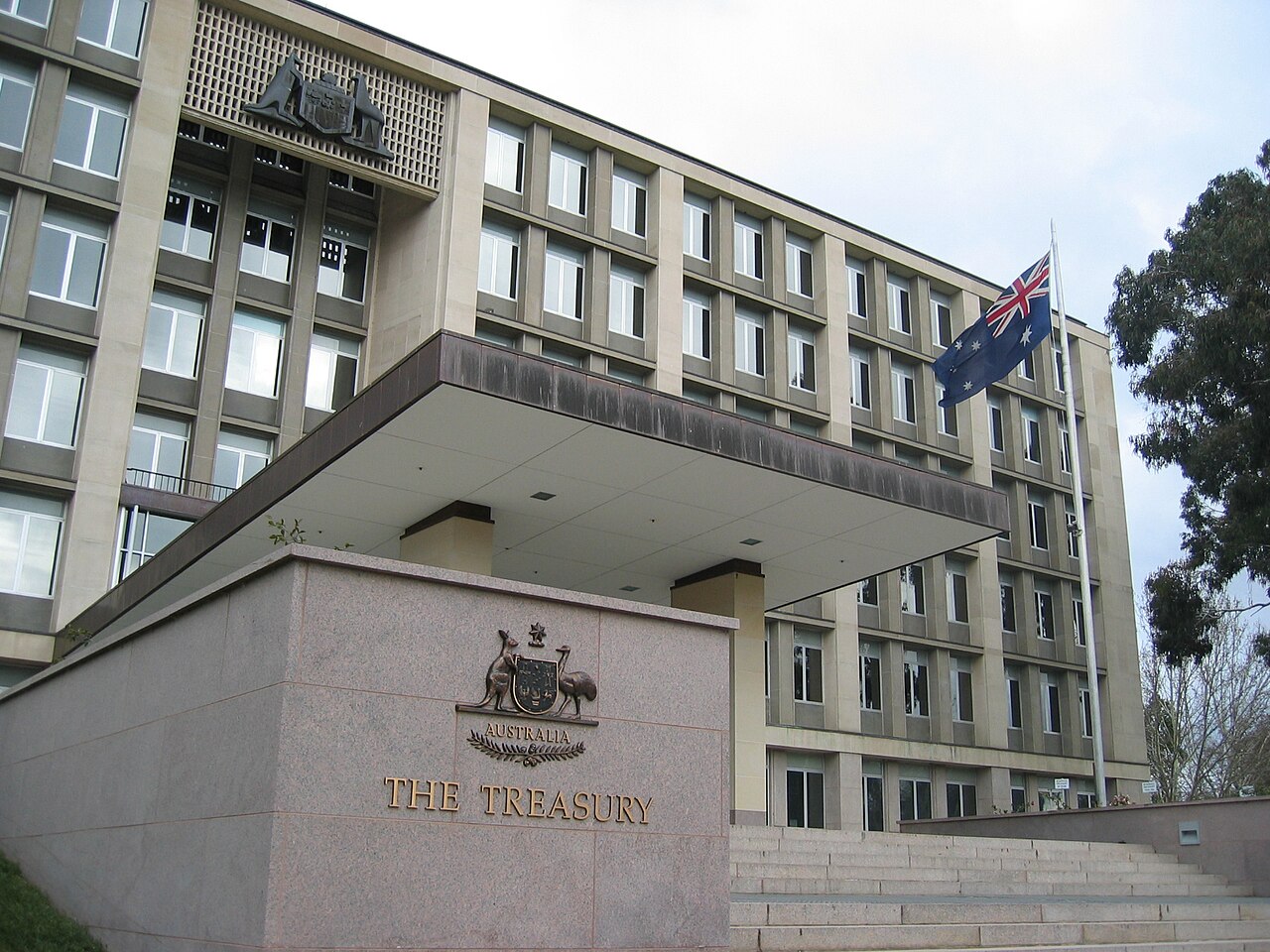
Peter-John Collins, a prominent figure in the Australian tax profession, breached confidentiality agreements with the Department of Treasury.
Collins systematically leaked confidential government information to his firm, PricewaterhouseCoopers, violating legal contracts and ethical boundaries.
Infiltration of Treasury: Peter Collins and the Breach of Confidentiality Deeds
The Architect of Betrayal
Peter-John Collins stood at the apex of the Australian tax profession. As the head of international tax for PricewaterhouseCoopers Australia he commanded a salary and reputation that few could rival. His influence extended far beyond the glass towers of the firm’s Barangaroo headquarters. The Australian government viewed him as a pillar of integrity and a necessary voice in the complex world of fiscal policy. This perception led the Department of Treasury to extend a prestigious invitation to Collins in 2013. They asked him to join a confidential consultation group tasked with drafting new laws to stop multinational corporations from avoiding tax. The government sought to use his expertise to close gaps. Collins used his position to widen them.
The global tax environment was shifting rapidly during this period. The Organization for Economic Cooperation and Development had launched the Base and Profit Shifting project. This initiative aimed to modernize international tax rules and force companies to pay their fair share in the jurisdictions where they earned profits. Australia took a leading role in this global effort. The Treasury required technical assistance to design the Multinational Anti-Avoidance Law. They needed to ensure the legislation was watertight. They brought Collins into the fold to stress-test the laws before they were enacted. This appointment gave him access to the inner sanctum of government decision-making. He saw the drafts. He saw the timelines. He saw the intent of the legislators.
The Legal Bind
Access to such sensitive information came with strict legal conditions. The Treasury required Collins to sign multiple confidentiality deeds. He affixed his signature to the agreement on December 11 2013. He signed subsequent deeds in April 2016 and February 2018. These documents were not mere formalities. They were binding legal contracts that explicitly prohibited the disclosure of the confidential information to any third party. The terms were clear. The information was for the purpose of advising the government. It was not for commercial gain. It was not for distribution to his partners. It was certainly not for the benefit of the very clients the laws were designed to tax.
The deeds created a firewall between Collins the advisor to the Crown and Collins the partner at PwC. A professional with a basic understanding of ethics would have respected this boundary. Collins obliterated it. The ink was barely dry on the agreements before he began to feed the information back to his firm. He did not do this inadvertently. He did not slip up in a casual conversation. He established a systematic pipeline of government secrets flowing directly from the Treasury to the commercial arm of PwC. He treated the confidentiality deeds as obstacles to be ignored rather than laws to be obeyed.
The method of the Leak
The method of the breach was documented in a trail of internal emails that would later shock the nation. Collins attended confidential Treasury meetings where officials discussed the nuances of the proposed legislation. He took detailed notes. He collected draft documents. He then returned to his office and circulated this intelligence to a select group of senior partners and staff. The distribution list included the leadership of the tax practice and key personnel in the transfer pricing division. He provided them with a play-by-play account of the government’s strategy.
The emails reveal a man fully aware of his transgression. Collins frequently marked his correspondence with warnings such as “for your eyes only” or “don’t circulate this.” He prefaced updates with phrases like “Treasury tells me” or “an early confidential draft.” These markers serve as proof of his intent. He knew the information was secret. He knew he was not authorized to share it. He shared it anyway. The recipients of these emails did not report him. They did not raise a red flag with the legal department. They did not contact the Treasury to confess the breach. They devoured the information and asked for more.
Project North America
The motive behind this betrayal was purely financial. PwC Australia saw the incoming tax laws not as a policy objective to support as a market disruption to exploit. The firm realized that if they knew the exact wording of the Multinational Anti-Avoidance Law before it was passed they could design structures to bypass it. They could sell these avoidance schemes to clients before the Australian Taxation Office even had a chance to enforce the new rules. This realization birthed a commercial initiative known internally as “Project North America.”
Project North America was a targeted campaign to sell tax avoidance strategies to US-based multinational technology companies. These were the exact entities the Australian government intended to tax. PwC used the stolen intelligence to create a sense of urgency and exclusivity in their sales pitch. They told chance clients that they had unique insights into the government’s thinking. They promised solutions that would inoculate these corporations against the new laws. The firm identified fourteen key clients for this project. They aggressively marketed their “solutions” to these tech giants. The pitch was successful. The firm generated approximately 2. 5 million dollars in fees directly linked to this specific advice. This figure pales in comparison to the tax revenue that was chance put at risk.
The Global Network
The breach was not contained within the borders of Australia. The emails show that Collins and his colleagues shared the confidential Treasury information with PwC partners in other jurisdictions. They sent the data to the United Kingdom. They sent it to the United States. They sent it to Ireland. The global PwC network used this Australian intelligence to advise their own clients on how to structure their global operations to minimize tax liabilities in Australia. The “Project North America” team collaborated with their international counterparts to ensure the avoidance structures were implemented direct across borders.
This international dimension elevated the scandal from a local misconduct case to a global failure of professional standards. The firm used its global reach to weaponize the secrets of a sovereign government against that same government. Partners in London and New York were privy to the legislative plans of the Australian Parliament before the Australian public knew them. They discussed the “intent” of the drafters. They analyzed the “timing” of the enactment. They treated the Australian Treasury as an unwitting research division for their global tax practice.
A Culture of Impunity
The duration of the breach proves that this was not an incident. Collins leaked information over a period of years. He signed new confidentiality deeds in 2016 and 2018 while continuing to violate the previous ones. The culture within PwC Australia protected him. The firm prioritized revenue growth above all else. The partners who received the leaks viewed Collins as a rainmaker. His access to Treasury was a competitive advantage. To question his methods would have been to question the revenue stream. The internal risk management systems failed completely. No one in the chain of command stopped the flow of information.
The Tax Practitioners Board eventually uncovered the truth. Their investigation found that Collins had failed to act with integrity. They found that he had abused his position of trust. The Board deregistered him as a tax agent. This administrative penalty was the crack in the dam. It exposed the reality that the largest professional services firm in the country had been operating a black market in government secrets. The breach of the confidentiality deeds was absolute. The betrayal of the public interest was total. Peter Collins signed his name to a pledge of silence and then sold his voice to the highest bidder.
The Treasury’s Blind Spot
The Treasury officials who invited Collins into the room acted on the assumption of professional honor. They believed that a partner at a Big Four firm would adhere to the ethical codes of his profession. They assumed that a legal deed had weight. This assumption proved to be a dangerous blind spot. The government had opened its doors to the very industry it sought to regulate. They allowed the fox to design the security system for the henhouse. Collins did not just steal data. He stole the government’s ability to legislate. He gave his clients a head start in the race to avoid tax. The laws were compromised before they were even printed.
The infiltration of the Treasury by Peter Collins stands as a historic example of corporate capture. It demonstrated that for PwC Australia the line between public duty and private profit did not exist. The confidentiality deeds were not shields to protect the nation. They were pieces of paper that Collins stepped over on his way to the bank. The breach set in motion a chain of events that would eventually tear the firm apart and force a reckoning in the global consulting industry. The secrets he leaked became the poison that infected the entire organization.
Infiltration of Treasury: Peter Collins and the Breach of Confidentiality Deeds
Project North America: The Strategic Monetization of Classified Tax Data
Project North America: The Strategic Monetization of Classified Tax Data
The Genesis of a Commercial Conspiracy
Project North America was not a vague concept or an ad-hoc series of conversations. It was a formal, documented business strategy designed with a singular, lucrative objective: to monetize confidential Australian government tax data by selling avoidance schemes to the world’s largest technology companies. The initiative represented the industrialization of insider trading, where the commodity was not stock tips the draft legislation of a sovereign nation. At its core, the project sought to circumvent the Multinational Anti-Avoidance Law (MAAL), a piece of legislation specifically drafted to ensure that global digital giants paid their fair share of tax on profits earned from Australian consumers. The architecture of this scheme relied entirely on the betrayal of public trust by Peter Collins, PwC’s head of international tax. Collins, who had signed multiple confidentiality deeds with the Australian Treasury, acted as a conduit for high-level intelligence. He did not provide general advice; he supplied his partners with the specific timing, scope, and technical triggers of the incoming laws. This allowed PwC to construct legal “workarounds” before the legislation was even public. The firm’s internal communications reveal a brazen confidence, with partners discussing how to use this privileged information to secure “brand-defining” clients in the United States. The goal was to reach these companies, armed with inside knowledge that no other firm possessed, and to implement restructuring plans that would render the new laws ineffective from the moment they came into force.
The Architects of Avoidance
While Collins provided the raw material, the execution of Project North America required a coordinated team of senior partners. The operation involved a “global team” that included key figures such as Tom Seymour, who would later become the firm’s CEO, and Neil Fuller, a senior tax partner who spearheaded the marketing offensive. Emails from September 2014 show partners explicitly discussing how to use the confidential data to gain a commercial advantage. The correspondence is marked by a chilling disregard for ethical boundaries, with warnings like “for your eyes only” appearing alongside detailed plans to exploit the very laws Collins was helping to write. Neil Fuller played a serious role in the operational phase of the project. In 2015, armed with the intelligence provided by Collins, Fuller embarked on a roadshow to the headquarters of major US technology companies. He visited the offices of digital behemoths, presenting them with “solutions” to the impending Australian tax crackdown. These were not generic advisories; they were bespoke restructuring plans designed to sidestep the specific “principal purpose” tests and “deemed permanent establishment” rules that the MAAL sought to enforce. Fuller’s pitch was compelling because it was based on certainty, PwC knew exactly what the law would say because their own partner was in the room where it was being written. Another serious figure identified in the scandal was Michael Bersten, a former tax partner and later a deputy chair of the Law Council of Australia’s Taxation Committee. Bersten’s involvement highlights the deep integration of the scheme within the firm’s senior leadership. The irony of his position was clear; while he was named as one of the partners involved in the misuse of confidential information, he was simultaneously delivering training courses on tax administration law to the Australian Taxation Office (ATO) and the Inspector-General of Taxation. This dual role, advising the tax collector while engineering schemes to defeat them, exemplifies the widespread conflict of interest that defined Project North America.
Targeting the Silicon Valley Giants
The client list for Project North America reads like a “who’s who” of the global digital economy. PwC targeted at least 14 to 23 major US technology companies, including industry titans such as Google, Facebook ( Meta), Uber, Microsoft, and Apple. The firm’s strategy was to method these companies with a ” -mover” advantage. By implementing new corporate structures before the MAAL’s start date of January 1, 2016, these clients could inoculate themselves against the new tax measures. For example, reports indicate that both Uber and Facebook established new company structures just weeks before the MAAL came into effect. These restructures were not coincidental; they were the direct result of the “early warning system” provided by Project North America. The specific method frequently involved complex partnership structures or the realignment of sales contracts to ensure that revenue continued to be booked in low-tax jurisdictions, so bypassing the new Australian requirements. In August 2015, a PwC partner emailed a Google employee to confirm the likely start date of the law, a piece of information that was still confidential at the time. This level of specific, actionable intelligence allowed these corporations to stay one step ahead of the regulator. The financial were. The Australian Taxation Office estimated that the schemes marketed under Project North America put approximately $180 million in annual tax revenue at risk. In contrast, PwC earned a relatively modest $2. 5 million in fees from the tranche of services provided to these 14 clients. This reveals a culture where “revenue is king,” regardless of the cost to the public purse. The firm was to compromise the integrity of the national tax system and the of hundreds of millions of dollars in public revenue to secure a few million in consulting fees.
The Mechanics of the “Workaround”
The technical sophistication of the avoidance schemes relied on a deep understanding of the MAAL’s draft provisions. The law was designed to catch foreign entities that supplied goods or services to Australian customers booked the revenue offshore to avoid Australian tax. It introduced a “principal purpose” test, which sought to identify arrangements entered into for the purpose of obtaining a tax benefit. PwC’s “workaround” involved restructuring the client’s operations so that they technically complied with the letter of the law while defeating its spirit. By altering the contractual relationships between the Australian subsidiary and the foreign parent, or by interposing specific partnership entities, the firm advised clients on how to that their structures did not meet the “principal purpose” threshold or did not create a “deemed permanent establishment” in Australia. Because Collins knew the precise wording of these tests before they were enacted, PwC could stress-test their schemes against the draft legislation, ensuring they would hold up against ATO scrutiny, or at least provide a defensible position to drag out legal disputes for years. This was not standard tax planning; it was the weaponization of legislative drafts. The firm used the government’s own confidential deliberations to build a against the government’s own laws. The “partnerships” structure, in particular, was a key component of this strategy, allowing multinational clients to maintain their aggressive tax positions even as the political environment shifted against them.
A Culture of Complicity
The execution of Project North America was not the work of a lone wolf. It required the complicity of a wide network of partners who prioritized profit over professional ethics. The email chains included dozens of senior staff, of whom praised Collins for the “competitive advantage” his leaks provided. There was no evidence of any partner raising ethical concerns or reporting the breach to the firm’s legal or compliance teams. Instead, the mood was one of celebration. The project was viewed as a masterstroke of business development, a way to cement PwC’s status as the premier advisor to the tech sector. Tom Seymour’s involvement is particularly damning. As the head of tax at the time, and later the CEO, he was privy to the email chains where the use of confidential information was discussed. His failure to stop the project, and his subsequent elevation to the top job, suggests that this behavior was not just tolerated rewarded. The firm’s internal culture incentivized aggressive monetization, creating an environment where a partner like Collins was seen as a hero for bringing in “brand-defining” work, rather than a liability for breaching the law. The “global team” aspect further illustrates the of the operation. The confidential information was not just kept within the Australian firm; it was shared with PwC partners in the United States, Singapore, the Netherlands, and Ireland. This international dissemination ensured that the tax avoidance strategies could be coordinated globally, allowing clients to implement direct structures that spanned multiple jurisdictions. The leak was not contained; it was broadcast to the firm’s global network to maximize its commercial value.
The Aftermath and the “Cover-Up”
The exposure of Project North America revealed a calculated strategy to conceal the breach for years. When the Tax Practitioners Board (TPB) and the ATO eventually began to investigate, PwC engaged in what a Senate committee later described as a “deliberate cover-up.” The firm employed aggressive legal tactics, claiming legal professional privilege over thousands of documents to prevent them from being scrutinized by regulators. This stonewalling delayed the investigation and allowed the firm to continue its operations unchecked for years. The involvement of Michael Bersten in training ATO officials even after the scandal began to unravel adds a of surrealism to the affair. It demonstrates the extent to which PwC was in the very institutions it was undermining. The firm was not just an external advisor; it was a part of the regulatory ecosystem, shaping the knowledge base of the tax office while simultaneously selling the keys to unlock its defenses. Project North America stands as a definitive example of the “consultocracy” in action. It shows how a major consulting firm can capture the policy-making process, turn it into a marketable product, and sell it to the highest bidder. The project was not a failure of controls; it was a success of a corrupt business model. The $2. 5 million in fees may seem small in hindsight, at the time, it represented the validation of a strategy that placed the firm’s interests above the law and the nation.
Project North America: Key Metrics & Timeline
Metric / Event
Details
Project Objective
Monetize confidential Treasury data to sell tax avoidance schemes to US tech giants.
Key Architects
Peter Collins (Source), Tom Seymour (Exec), Neil Fuller (Sales), Michael Bersten.
Target Clients
14-23 major US technology companies (e. g., Google, Uber, Facebook, Microsoft).
Revenue Generated
At least $2. 5 million in initial fees from the tranche of services.
Tax Revenue at Risk
Approximately $180 million per year (ATO estimate).
Key Timeline
Sept 2014: Initial planning emails. 2015: Neil Fuller’s US roadshow. Jan 2016: MAAL enactment (schemes already in place).
Avoidance method
Restructuring to bypass “principal purpose” tests and “deemed permanent establishment” rules.
The 'Google Tax' Loophole: Pre-empting the Multinational Anti-Avoidance Law
The Multinational Anti-Avoidance Law (MAAL), colloquially branded the “Google Tax,” was designed to be the Australian Treasury’s ironclad response to profit shifting. Announced in the May 2015 budget and enacted in December of that year, the legislation targeted global entities with revenues exceeding $1 billion. Its specific aim was to stop these corporations from artificially avoiding a taxable presence—or “permanent establishment”—in Australia. The law sought to capture revenue that tech giants booked in low-tax jurisdictions like Ireland or Singapore, even while their sales teams operated on the ground in Sydney and Melbourne. PwC did not wait for the law to pass before it. While the firm’s public face supported tax reform, its internal, fueled by Peter Collins’ confidential access to Treasury drafts, actively engineered method to render the MAAL obsolete before its commencement date of January 1, 2016. This was not reactive tax planning; it was a preemptive strike against the Commonwealth’s sovereignty, marketed under the banner of “Project North America.” The timeline reveals the precision of this subversion. On May 12, 2015, the night the federal budget announced the MAAL, PwC partners did not scramble to understand the new rules. They already knew them. Collins had provided the firm with the legislative blueprint months in advance. Within hours of the Treasurer’s speech, PwC initiated contact with 23 major US technology companies. The pitch was simple: the Australian government is building a trap, we have already constructed the exit. The specific “workarounds” PwC devised were technical, legalistic, and aggressive. The MAAL was drafted to catch foreign entities that made supplies to Australian customers while using local affiliates to support those sales. To circumvent this, PwC advised clients to fundamentally restructure their contractual relationships. One primary method involved the “distributor model” swap. In this arrangement, the Australian subsidiary—previously just a provider of marketing support—would be contractually redesignated as a “distributor” or “reseller” of the digital products. By papering the transaction so that the Australian entity appeared to be the principal supplier, the structure fell outside the MAAL’s definition of a “foreign entity” making supplies. Another sophisticated method involved the interposition of a partnership. PwC designed structures where a new partnership, frequently comprised of foreign group entities with a minority Australian corporate partner, would step in to act as the supplier. The firm argued that this partnership should be characterized as an “Australian entity” for legal purposes, so sidestepping the MAAL entirely. These structures were not designed to align with commercial reality were “artificial and contrived arrangements,” a description later used by a furious Australian Taxation Office (ATO). The speed of implementation was the smoking gun. By December 2015, weeks before the law came into force, major clients had already executed these restructures. Uber and Facebook ( Meta) were among those identified in later reports as having established new corporate structures in this serious window. Google, too, was linked to the scandal, with allegations that it received confidential information regarding the law’s start date as early as August 2015. This insider knowledge allowed these corporations to transition smoothly from one avoidance structure to another, ensuring that when the clock struck midnight on New Year’s Eve, the MAAL grasped at air. The ATO’s realization of this betrayal was delayed acute. In early 2016, tax officials expected to see multinationals registering a taxable presence. Instead, they encountered a wave of new, complex structures that claimed exemption from the law. The ATO was reportedly “shocked” by how quickly these companies had mobilized. The regulator was forced to problem a series of urgent Taxpayer Alerts in 2016 (TA 2016/2, TA 2016/8, and TA 2016/11), specifically warning against the exact schemes PwC had sold. These alerts described the arrangements as “interim” measures designed solely to avoid the MAAL, noting that they appeared to absence commercial substance. The financial of this operation was significant, not just in the fees PwC earned—approximately $2. 5 million for the specific MAAL advice— in the tax revenue it diverted from the Australian public. By advising at least 14 clients to adopt these structures, PwC inoculated billions of dollars in corporate revenue against Australian tax law. The firm monetized its betrayal of the Treasury, selling the government’s own confidential playbook to the very the government sought to tax. This episode exposed the hollowness of the “legal professional privilege” defense PwC later attempted to deploy. The advice provided was not legal counsel; it was a productized avoidance scheme based on stolen intelligence. The “Google Tax” loophole was not a flaw in the legislation’s drafting a breach in the integrity of the drafting process itself. Collins and his partners had turned the Treasury’s consultation room into a marketplace, selling the blueprints of the bank vault to the robbers before the cement had even dried. The ATO eventually identified 44 schemes that sought to circumvent the MAAL. A third of them were traced back to PwC. The regulator’s subsequent battle to unwind these structures took years, consuming vast public resources to enforce a law that had been sabotaged from the inside. The “Google Tax” affair stands as the definitive proof that PwC’s allegiance lay not with the rule of law, with the clients who paid to bypass it.
Internal Complicity: The Email Ring and Dissemination of State Secrets
The mechanics of the PwC tax leak were not the work of a rogue operative the function of a well-oiled intelligence network. Internal correspondence released by the Tax Practitioners Board (TPB) and the Australian Senate reveals a sophisticated “email ring” that operated with the efficiency of a news wire service, disseminating classified Treasury data to a select group of partners who could monetize it immediately. This was not water-cooler gossip; it was a structured, documented, and highly coordinated distribution of state secrets designed to circumvent the very laws the Australian government was drafting.
The Inner Sanctum
At the center of this network stood Peter Collins, he was the supplier. The distribution infrastructure relied on a cadre of senior partners who acted as amplifiers, turning raw intelligence into marketable products. Among the most active participants were Michael Bersten, a former partner and tax controversy leader; Neil Fuller, a senior partner who would later pitch these strategies to US tech giants; and Paul McNab, another high-ranking tax partner. These men formed the nucleus of an operation that treated confidential government briefings as proprietary market research. The scope of the infection was massive. While PwC initially attempted to frame the scandal as the fault of a single individual, the email trail exposed a different reality: at least 53 partners and staff were looped into the communications. This “inner sanctum” included the firm’s future CEO, Tom Seymour, who was then the head of tax. Far from being a passive recipient, the correspondence shows Seymour and others actively engaging with the stolen data, discussing its, and strategizing on how to deploy it for client gain. The emails demonstrate a culture where possession of “black market” regulatory data was viewed as a competitive advantage rather than an ethical breach.
The “For Your Eyes Only” Charade
The language within the emails betrays a clear consciousness of guilt. Collins and his colleagues frequently used prefatory warnings that functioned less as security measures and more as winks to the recipients. Subject lines and headers frequently screamed “For your eyes only,” “confidential,” or “off the record.” In one particularly damning exchange, Collins instructed his partners to treat the intelligence as “rumour and gossip” if asked about its source, a directive that explicitly encouraged the laundering of information. The emails detail a pattern of immediate dissemination. Minutes after confidential consultations with Treasury officials or the Board of Taxation, Collins would type up summaries of the government’s thinking, draft legislation, and expected timelines. These were not vague impressions; they were granular details about the Multinational Anti-Avoidance Law (MAAL) and the Diverted Profits Tax (DPT). One email from a partner warned recipients to be “discreet” because the information was obtained “off the record,” before immediately soliciting suggestions on how to “influence” the legislation or help clients “defer” its impact. The hypocrisy was clear: partners were warned of the data’s sensitivity in the same breath that they were asked to exploit it.
Project North America
The monetization of this intelligence was formalized under the internal code name “Project North America.” This initiative was not a vague business goal a targeted assault on the Australian tax base, using the stolen data to court US-based multinational corporations. The emails reveal that the firm identified a specific list of “brand-defining” clients, principally Silicon Valley tech giants, who would be most affected by the new laws. Neil Fuller and other partners used the inside track to secure meetings with these companies, offering them a ” mover” advantage that no other firm could legitimately provide. The correspondence shows partners boasting about their “aggressive” method in telling clients they needed to act early, a strategy that was “heavily helped by the accuracy of the intelligence that Peter Collins was able to supply.” The financial motive was explicit: one email projected that the stage of MAAL-related projects alone would generate approximately $2. 5 million in revenue. The “Project North America” emails serve as a smoking gun, proving that the breach was not an academic exercise a deliberate commercial strategy to sell tax avoidance schemes based on non-public government data.
Broadcasting the Breach
The dissemination of these secrets was not contained within Australian borders. The email ring functioned as a global broadcast system, exporting Australian state secrets to PwC offices in the United States, United Kingdom, Singapore, Ireland, and the Netherlands. The logic was simple: the clients most in need of this “advice” were global multinationals, and the partners managing those relationships sat in foreign offices. One email chain from 2016 shows Australian partners updating their international colleagues on how Treasury information was being used to secure work from US companies. Another from 2014 discusses a confidential draft OECD report, with the sender noting the document was provided to them and should be kept secret. This international collaboration turned a domestic breach into a global trade in regulatory arbitrage. Partners in London and New York were trading on insider information regarding Australian law, allowing them to restructure their clients’ affairs before the legislation was even made public. This global reach complicates the narrative of a “local” failure, implicating the broader PwC network in the consumption and use of illicitly obtained data.
The Leadership’s Knowledge
Perhaps the most corrosive element of the email ring was the involvement of the firm’s leadership. Tom Seymour, who would rise to become CEO, was a recipient of these communications. His presence on the “naughty email chain”—as it was later colloquially termed—shattered his initial defense that he was unaware of the breach. The emails place him in the room where the decisions were made, receiving updates on the “intel” and the commercial opportunities it presented. When the scandal broke, Seymour’s defense crumbled not because of external testimony, because his own inbox testified against him. The correspondence reveals a leadership team that was either complicit in the strategy or willfully blind to the source of the “accurate intelligence” fueling their revenue growth. There was no record of any partner on these chains raising a red flag, contacting legal counsel, or reporting the breach to the Treasury. Instead, the only concern expressed in the thousands of pages of documents was how to best package the stolen goods for sale. The silence of the leadership was not an omission; it was an endorsement.
The 'Rainmaker' Culture: How Profit Incentives Overrode Ethical Standards
The Cult of Revenue: Anatomy of a ‘Shadow’ Firm
The breach of Australian Treasury confidentiality by PwC was not an aberration committed by a rogue element. It was the predictable output of a compensation structure designed to prioritize revenue generation above legal adherence. Internal investigations and parliamentary inquiries have since established that the firm operated under a “shadow culture,” a term used by Dr. Ziggy Switkowski in his independent review, where the of profit systematically dismantled ethical boundaries. In this environment, the “Rainmaker”, a partner capable of bringing in millions of dollars in new business, held a status akin to a deity, immune from the compliance checks that governed the rank and file.
At the heart of this dysfunction was the partnership model itself. Unlike a traditional corporation with external shareholders and independent board oversight, PwC Australia operated as a closed loop where the partners were both the owners and the managers. The primary metric for success, and consequently for remuneration, was the “target.” Partners who exceeded their revenue were celebrated as “heroes,” while those who raised concerns about the methods used to achieve those were marginalized or exited. Peter Collins, the architect of the tax leak, was not hiding in the shadows; he was a celebrated leader within the firm precisely because he had found a new, lucrative product line: the monetization of government secrets.
The Switkowski Verdict: “Revenue is King”
The release of the Switkowski Review in September 2023 provided a forensic accounting of the cultural rot that enabled the tax scandal. Dr. Switkowski, a former Telstra CEO, was commissioned to examine the firm’s governance following the public explosion of the scandal. His findings were damning. The report detailed a “whatever it takes” attitude that permeated the upper echelons of the firm. Switkowski identified a distinct disconnect between the firm’s stated values, integrity, care, and working together, and the operational reality where “revenue is king.”
The review found that the CEO held “unchecked authority,” creating a presidential-style leadership structure that rendered the Board of Partners toothless. This concentration of power meant that the risk management functions, which should have served as a brake on aggressive monetization strategies, were subservient to the business lines. When the tax practice devised a plan to sell confidential Treasury data to multinational clients, there was no independent risk officer enough to stop it. The “shadow culture” dictated that if a practice area was generating high margins, its methods were not to be questioned. The report explicitly noted that “rainmakers” were treated as “untouchables,” creating a two-tier justice system within the firm where high earners operated with impunity.
The PwC “Shadow Culture” Matrix (Findings from Switkowski Review)
Stated Value
Operational Reality (“Shadow Culture”)
Outcome in Tax Leak Scandal
Integrity
“Revenue is King”
Confidential data treated as a commercial asset.
Care
“Whatever it takes”
Junior staff pressured to monetize secrets; dissent silenced.
Work Together
Protection of “Rainmakers”
High-earning partners shielded from compliance oversight.
Reimagine the Possible
Aggressive interpretation of law
Designing structures specifically to defeat new anti-avoidance laws.
The Sayers Era and the Growth Doctrine
To understand the elevation of profit over ethics, one must examine the leadership tenure of Luke Sayers, who served as CEO of PwC Australia from 2012 to 2020. This period coincides directly with the infiltration of the Treasury and the execution of Project North America. Sayers championed an aggressive growth strategy, aiming to transform PwC from a traditional accounting firm into a multidisciplinary consulting giant. Under his stewardship, the firm’s revenue soared, and the brand became ubiquitous in government corridors. Yet, this expansion came at a cost.
The “Sayers Doctrine” relied heavily on the commoditization of relationships and “.”, Peter Collins’ position as a confidential advisor to the government was not seen as a solemn civic duty as a competitive advantage to be leveraged. The culture during this era rewarded partners who could “unlock” value for clients by any means necessary. The internal emails revealed in the Senate inquiry show a leadership team that was not only aware of the aggressive tax marketing actively encouraged it. When concerns were raised about the legality or morality of certain tax structures, they were frequently dismissed as “noise” that threatened the growth trajectory.
The Remuneration Black Box
The method that enforced this culture was the partner remuneration system. While PwC publicly touted a “balanced scorecard” that ostensibly weighed ethical conduct and people management alongside financial performance, the reality was clear different. Income distribution was unclear, determined by a small circle of leadership who prioritized financial contribution above all else. A partner’s “units”, the currency determining their share of the profit pool, were allocated based on their ability to win work.
Peter Collins and his team in the international tax practice were highly remunerated because they were selling a premium product. The “Google Tax” loophole advice was not a low-margin audit service; it was high-value consulting that saved clients millions and generated massive fees for PwC. In the logic of the firm’s compensation structure, Collins was performing exactly as designed. To penalize him for ethical breaches would have been to penalize the firm’s bottom line. This financial created a disincentive for any partner to blow the whistle. Speaking up against a rainmaker did not just threaten the rainmaker’s career; it threatened the profit pool of every other partner in the firm.
Tom Seymour and the Failure of Containment
When Luke Sayers departed in 2020, he was succeeded by Tom Seymour, the former head of the Tax and Legal practice. Seymour’s elevation to CEO was the validation of the tax division’s aggressive tactics. As the leader of the division during the breach, Seymour was on the email chains where confidential Treasury information was discussed. His subsequent rise to the top job sent a clear message to the partnership: aggressive monetization of tax knowledge is the route to power.
Seymour’s tenure as CEO was defined by a desperate attempt to contain the of the breach while maintaining the firm’s revenue engine. Even as the Tax Practitioners Board (TPB) investigation closed in on Collins, the firm’s leadership attempted to ring-fence the problem, characterizing it as the action of a single partner. This defense collapsed in May 2023 when Seymour was forced to admit to the partnership that he had received the emails containing the leaked data. His resignation days later marked the end of the denial phase, yet it also revealed the depth of the complicity. The CEO himself was a product of the very culture that sanctioned the theft of state secrets.
The Fear of “Constructive Dissent”
A serious component of the “Rainmaker” culture was the suppression of dissent. The Switkowski review highlighted a “culture of fear” where junior partners and staff were terrified to challenge senior leaders. The hierarchical nature of the firm meant that a partner’s career progression was entirely dependent on the patronage of practice leaders. In the tax division, questioning the provenance of the insights provided by Collins would have been career suicide.
This silence was enforced through social conditioning and administrative maneuvering. Risk and quality teams were frequently bypassed or overruled. If a risk partner raised an objection to a lucrative proposal, the business leaders would escalate the matter to the executive board, where the revenue argument almost always won. This created a learned helplessness within the compliance functions. They existed to business, not to police it. The “Rainmaker” was the client, and the risk team was a service provider expected to find a way to say “yes.”
The Structural Inevitability of the Breach
The misuse of government data was not a failure of the system; it was the system working as intended. The firm selected partners who were aggressive, incentivized them to monetize every scrap of information they possessed, and promoted those who did so most to the highest offices. The “Rainmaker” culture did not just tolerate ethical lapses; it demanded them. To be a top-tier partner at PwC Australia during this period required a willingness to push boundaries until they broke. Peter Collins did not act alone. He was supported by a of analysts, legal reviewers, and business development teams, all marching to the beat of a remuneration drum that beat only for revenue. The breach was the logical conclusion of a decade-long experiment in unchecked capitalism within a professional services firm.
Weaponizing Privilege: The Systematic Misuse of Legal Professional Privilege
Weaponizing Privilege: The Systematic Misuse of Legal Professional Privilege
PricewaterhouseCoopers (PwC) did not advise clients on tax law; it marketed the law itself as a concealment method. The firm systematically weaponized Legal Professional Privilege (LPP), a doctrine designed to protect confidential communications between a lawyer and their client, to shield aggressive tax avoidance schemes from the Australian Taxation Office (ATO). By structuring commercial tax advice as “legal services,” PwC created a of secrecy around its operations, obstructing regulators and denying the public revenue to which it was entitled. This was not an incidental misuse of a legal right a calculated product offering, sold to multinational clients as an insurance policy against government scrutiny.
The JBS Case: A Blueprint for Obstruction
The of this deception was laid bare in the landmark Federal Court case Commissioner of Taxation v PricewaterhouseCoopers [2022] FCA 278. The proceedings centered on PwC’s work for the JBS global meat processing group, specifically its Australian subsidiary, Flora Green Pty Ltd. When the ATO launched an audit into JBS’s tax affairs, PwC refused to produce approximately 44, 000 documents, asserting they were protected by legal professional privilege. The ATO, suspecting a blanket attempt to hide evidence, disputed the claim over approximately 15, 500 of these documents.
The court’s findings dismantled PwC’s defense. Justice Mark Moshinsky reviewed a sample of 116 documents to test the validity of the firm’s claims. The results were damning: 61 documents, more than half of the sample, were found not to be privileged. Another six were only partially privileged. The court revealed that PwC had applied privilege to communications that were commercial in nature, not legal. In instances, non-lawyer partners led the work, with legal practitioners added to the email chain or engagement letter to “cloak” the advice in privilege. The strategy was explicit; internal documents showed PwC recommending that JBS structure the engagement as a legal one specifically so that “the Australian Tax Office should not be able to obtain copies of it in the event of any ATO review activity.”
The “Legal” Façade
PwC’s multidisciplinary structure allowed it to blur the lines between accounting and legal advice, a gray zone it exploited for profit. The firm’s internal encouraged partners to route tax advice through its legal arm, even when the dominant purpose of the communication was financial or commercial, not legal. This “pretextual” involvement of lawyers was a service feature. Clients were not just buying tax minimization strategies; they were buying the silence of the architect.
The ATO’s frustration with this tactic reached a breaking point. Second Commissioner Jeremy Hirschhorn publicly criticized the firm, noting that the Tax Office had been “disappointed” by the “baseless and blanket claims” of privilege used to frustrate audits. The regulator was forced to problem a new Legal Professional Privilege Protocol in 2022, a direct response to the industrial- abuse of the doctrine by firms like PwC. The protocol demanded stricter substantiation for privilege claims, signaling that the era of automatic deference to the “Big Four” legal letterhead was over.
The Linklaters Report: The Cover-Up Continues
The misuse of privilege is not a historical artifact; it remains a central pillar of PwC’s defense strategy in the ongoing tax leaks scandal. In 2023, as the Senate inquiry into the firm’s conduct intensified, PwC Global commissioned the law firm Linklaters to conduct an international review of the leaks. The objective was to determine how widely the confidential Treasury data had been disseminated across PwC’s global network. When the Senate Finance and Public Administration
The TPB Breakthrough: Unmasking the Leak Through Regulator Investigation
The Tax Practitioners Board (TPB), a relatively small and under-resourced regulator, succeeded where the Australian Federal Police (AFP) and the Australian Taxation Office (ATO) had stalled. While the AFP dropped its investigation in 2019 citing insufficient evidence, the TPB commenced its own inquiry in early 2021, focusing on the professional conduct of Peter Collins and the integrity of PricewaterhouseCoopers (PwC) as a registered tax agent. This investigation became the method that eventually exposed the firm’s internal operations to the public. The catalyst for this inquiry was a referral from the ATO on July 2, 2020. The tax office, having identified chance breaches of confidentiality during its own reviews, passed the matter to the TPB. Unlike criminal investigations which require proof beyond a reasonable doubt, the TPB operates under the *Tax Agent Services Act 2009* (TASA), which mandates that tax practitioners must act with honesty and integrity. This lower load of proof allowed TPB investigators, led by CEO Michael O’Neill, to examine the ethical failures that other agencies had dismissed as legally ambiguous. O’Neill’s team focused on the internal communications of Peter Collins. Over the course of a two-year investigation, they secured access to a trove of internal PwC emails that the firm had fought to keep hidden. These documents dismantled the “rogue actor” narrative PwC had constructed. The emails revealed that Collins did not act in isolation; he functioned as a central node in a distribution network that disseminated confidential Treasury data to dozens of partners and staff across Australia and the globe. The correspondence showed partners explicitly discussing how to monetize the intelligence, with one email describing the information as “rumour” or “gossip” to conceal its classified source. The investigation faced significant institutional friction. Reports indicate that tensions rose between the TPB and the ATO during this period. In a highly unusual move, the ATO lodged a formal complaint against O’Neill, alleging bullying and unreasonable demands for documents. An independent review later cleared O’Neill of these allegations, finding that his team had acted legally and within their authority. This episode suggests that the TPB’s aggressive of the truth unsettled the established order within the tax administration ecosystem, where the “Big Four” firms frequently enjoyed a collaborative, rather than adversarial, relationship with regulators. By late 2022, the TPB had reached its conclusion. The board found that Peter Collins had failed to act with integrity, a fundamental breach of his professional obligations. also, the investigation determined that PwC as a firm had failed to manage conflicts of interest adequately. The board’s findings were damning: PwC had monetized state secrets to help clients sidestep the very laws the government was drafting. On December 23, 2022, the TPB updated its public register with the sanctions. Peter Collins received a two-year suspension of his tax agent registration—a penalty that critics later argued was disproportionately light given the of the offense. PwC was ordered to improve its training on conflicts of interest. The decision was formally announced in January 2023. At the time, PwC attempted to contain the damage, issuing a statement that acknowledged the breach framed it as a historical problem involving a single partner who had already left the firm. This containment strategy failed. The TPB’s public findings provided the concrete evidence required for journalists and senators to escalate their inquiries. The specific details in the TPB’s report—referencing the internal sharing of confidential information—caught the attention of the *Australian Financial Review* and Senator Deborah O’Neill. The regulator’s work provided the factual bedrock for the Senate to demand the release of the underlying emails. Without the TPB’s persistence in finalizing this investigation and publishing the results, the internal communications that eventually incriminated the firm’s leadership would likely have remained buried in PwC’s archives. The TPB’s breakthrough demonstrated that the failure was not just individual organizational. The regulator’s findings established that PwC’s internal culture prioritized commercial gain over legal and ethical obligations to the Commonwealth. This investigation forced the crack in the wall of secrecy protecting the consulting industry, setting the stage for the parliamentary inquisitions that would follow.
TPB Investigation Timeline and Key Actions
Date
Event
Significance
July 2, 2020
ATO refers Peter Collins to TPB
Initiated the regulatory process after criminal avenues stalled.
January 11, 2021
TPB commences investigation into Collins
Formal inquiry begins into the individual conduct of the tax leader.
March 8, 2021
TPB commences investigation into PwC
Scope widens to include the firm’s failure to manage conflicts.
December 23, 2022
Sanctions applied
Collins suspended for 2 years; PwC ordered to improve processes.
January 2023
Public announcement of findings
The “breakthrough” that alerted the media and Senate to the breach.
Senate Inquisition: Senator O'Neill and the Exposure of the Cover-Up
The Failure of Containment: From Regulatory Blip to Political Firestorm
In early 2023, PricewaterhouseCoopers attempted to frame the Tax Practitioners Board (TPB) ruling against Peter Collins as an incident involving a single rogue partner. The firm’s strategy relied on the assumption that the technical details of tax regulation would fail to capture public attention. This calculation proved catastrophic. While the TPB had the authority to sanction Collins, it absence the platform to expose the widespread rot within the firm due to strict secrecy provisions in the Tax Agent Services Act 2009. The breach required a different venue to escape the confines of regulatory bureaucracy. That venue became the Australian Senate, and the catalyst was the Senate Finance and Public Administration
Executive Fallout: The Resignation of Tom Seymour and Leadership Purge
The Collapse of the Rogue Narrative
For months, the executive leadership of PwC Australia maintained a defensive perimeter around a single narrative: the breach of confidential Treasury data was the work of a “rogue” partner, Peter Collins. This containment strategy relied on the assertion that the firm’s wider leadership, particularly Chief Executive Officer Tom Seymour, operated in ignorance of the illicit intelligence flowing through the tax practice. This defense disintegrated on May 2, 2023, when the Senate Finance and Public Administration
The Scyne Advisory Spin-off: Divesting the Government Business for One Dollar
The Dollar Deal: A Fire Sale of State Secrets
In June 2023, the full of PricewaterhouseCoopers’ toxic standing in Canberra became quantifiable. The price was one Australian dollar. Facing an existential threat where the entire firm risked being blacklisted from Commonwealth contracts, PwC Australia agreed to sell its lucrative government consulting practice to private equity firm Allegro Funds for a single coin. This transaction, code-named “Project Bell,” was not a strategic pivot; it was an amputation. The firm surrendered a business unit generating approximately $680 million in annual revenue, roughly 20 percent of its total Australian income, to prevent the contagion of the tax leaks scandal from destroying its private sector operations.
The deal represented a desperate containment strategy. By mid-2023, the Department of Finance had frozen PwC out of new government work. The brand, once a gold standard for government advisory, had become radioactive. To salvage the value of the human capital within the government practice, comprising over 1, 400 staff and roughly 117 partners, PwC had to sever them completely from the partnership that had betrayed the Commonwealth. Allegro Funds, a specialist in turnaround and distressed assets, stepped in to acquire the division, rebranding it as “Scyne Advisory.”
The Phoenix Maneuver
Critics immediately labeled the spin-off a “phoenixing” operation, a corporate sleight of hand where the same operators re-emerge under a new banner to escape the liabilities of the old entity. Greens Senator Barbara Pocock, a central figure in the Senate inquiry, voiced sharp skepticism, questioning how a simple change of letterhead could erase a decade of ingrained cultural rot. The skepticism was well-founded; Scyne Advisory was staffed almost entirely by former PwC employees who, weeks prior, had operated under the profit-sharing incentives that fueled the scandal. The challenge for Allegro was to convince the Australian public that these consultants were victims of PwC’s leadership rather than complicit participants.
To counter the “phoenix” narrative, Scyne Advisory adopted a corporate structure distinct from the traditional partnership model. Unlike PwC, where partners are owners with limited external oversight, Scyne was established as a corporation with an independent board and shareholders. This structure aimed to break the “circular” governance model identified by Dr. Ziggy Switkowski in his review of PwC, where the CEO was beholden to the very partners they were supposed to regulate. Allegro committed over $100 million to capitalize the new firm, covering transition costs and the separation of IT systems to ensure no data, confidential or otherwise, continued to flow back to PwC.
Probity and the “Tainted” List
The Department of Finance held the keys to Scyne’s survival. For the sale to work, the Commonwealth had to agree to “novate” (transfer) existing contracts from PwC to Scyne. This approval was not automatic. The government demanded a rigorous probity check to ensure that no partner involved in the tax leak, or the subsequent cover-up, transferred to the new entity. This process involved a forensic examination of personnel files and internal communications.
Andrew Greenwood, a former Federal Court judge, was appointed as a non-executive director of Scyne to oversee this integrity screening. His role was to act as a firewall, vetting the 117 partners moving across. The process resulted in a “tainted list” of personnel who were barred from joining Scyne. In October 2023, it was revealed that 78 staff members originally slated to move were blocked or chose not to proceed, a reduction attributed to “changes in partner mix” and the need to establish a sustainable business model. The message was clear: Scyne could not afford even a whiff of the old regime’s ethical elasticity.
Outsourcing Conscience
In a move that drew ridicule for its irony, the Department of Finance engaged its own external consultant to advise on whether it could trust the new consultants. The department hired the Ethics Centre, led by Dr. Simon Longstaff, to assess Scyne’s ethical framework. Senator Pocock described the situation as “outsourcing conscience,” comparing it to a script from the satirical television series Utopia. The government paid $32, 000 for this ethical clearance, a sum that underscored the complete of trust. The public service no longer felt capable of assessing the integrity of its vendors without paying a third party to verify it.
even with the skepticism, the Department of Finance eventually granted Scyne the “all-clear” in October 2023. The department concluded that Scyne had the appropriate governance and accountability frameworks to resume contracting with the Commonwealth. This decision allowed the novation of contracts to proceed, officially launching Scyne as a “pure-play” public sector advisor, theoretically free from the conflicts of interest that plague the Big Four’s dual-service model of advising both government regulators and corporate tax avoiders.
The Financial Aftermath for PwC
For PwC Australia, the divestment was a financial catastrophe. The firm lost a reliable, recession-proof revenue stream that had anchored its growth for years. In its 2024 transparency report, PwC revealed a revenue drop of 26 percent, falling to $2. 35 billion, largely due to the excision of the government business. The firm also reported a profit decline of 24 percent. The $1 sale price meant there was no capital injection to buffer this loss; the “payment” was simply the removal of the liability.
The separation also forced a painful restructuring within PwC. With the government arm gone, the firm had to resize its shared services and support functions, leading to hundreds of redundancies. The remaining partners faced income cuts of up to 30 percent as the firm absorbed the costs of the scandal, legal fees, and the loss of the government subsidy. The “Rainmaker” culture that had prioritized profit above all else had cost the partners a fifth of their business.
A Fragile Independence
Scyne Advisory officially commenced independent operations in November 2023. While it secured the necessary government approvals, its position remains precarious. It operates on a 12-month probation period under close scrutiny from the Department of Finance. The firm must prove that its “clean skin” branding is more than just a marketing ploy. For the Australian taxpayer, the creation of Scyne raises a lingering question: If the same consultants are doing the same work for the same departments, has the widespread risk of outsourcing core government functions actually been addressed, or renamed?
The divestment successfully quarantined the government business from PwC’s immediate toxicity, yet it did not resolve the broader investigation into the individuals who orchestrated the breach. As Scyne attempts to build a new identity, the Australian Federal Police and the Tax Practitioners Board continue to examine the evidence left behind in the PwC servers, evidence that no amount of corporate restructuring can erase.
The Switkowski Report: A Forensic Audit of Governance and Cultural Failure
The Switkowski Report, released on September 27, 2023, stands as the definitive autopsy of PricewaterhouseCoopers Australia’s ethical collapse. Commissioned by the firm in a desperate bid to contain the from the tax leaks scandal, the independent review led by former Telstra CEO Dr. Ziggy Switkowski did not identify a few rogue actors. Instead, it exposed a widespread rot where profit accumulation systematically cannibalized professional standards. The report’s findings stripped away the firm’s carefully curated corporate image, revealing a “shadow culture” where revenue generation absolved partners of moral, legal, and ethical obligations.
The “Shadow Culture” of Impunity
Dr. Switkowski’s forensic examination uncovered a dual reality within the firm. While PwC publicly espoused values of integrity and trust, its internal operations were driven by a “whatever it takes” attitude. The review explicitly identified a culture where “revenue is king.” Partners who exceeded financial , known internally as “rainmakers”, were treated as “untouchables.” These high-performing individuals operated outside the standard rules of conduct, shielded by a leadership structure that prioritized financial growth above all else. The report detailed how this “growth at all costs” mentality created a hazardous environment. The aggressive of profit silenced dissent and discouraged junior staff from raising concerns. When employees did question the ethics of a project or the behavior of a partner, their voices were frequently ignored or suppressed. The “rainmaker” culture meant that a partner’s ability to bring in fees granted them immunity from the firm’s risk and compliance frameworks. This directly facilitated the environment in which Peter Collins and his colleagues could monetize confidential government data without fear of internal reprisal.
Governance as Theater
A central pillar of Switkowski’s findings was the complete failure of PwC’s governance structure. The report described the firm’s Board of Partners as “ceremonial” and “toothless,” absence the authority or independence to hold the CEO and senior leadership accountable. The CEO was elected by a popular vote of the partners, a process that turned the position into a popularity contest rather than a role of rigorous oversight. This structure created a CEO who was beholden to the very partners they were supposed to regulate, particularly the rainmakers who controlled the voting blocks. Switkowski noted that the CEO exercised excessive power, frequently operating with a “dominant voice” that went unchecked by the board. The board itself was comprised entirely of internal partners, meaning there were no independent, external voices to challenge groupthink or question risky strategies. This insular governance model created a “circularity” where the watchers were reporting to the watched. The absence of separation between management and oversight allowed the tax leak scandal to metastasize for years before being addressed.
The Structural
The review offered 23 specific recommendations, demanding a total reconstruction of the firm’s operating model. Switkowski argued that the partnership model, in its current form, was incompatible with the and complexity of a modern professional services firm. He called for the introduction of an independent Board of Partners, chaired by a non-executive director, a radical departure from the standard partnership structure where outsiders are rarely granted true power. Key recommendations included: * **Independent Oversight:** The appointment of at least three non-executive directors to the governance board, including an independent chair, to break the closed loop of partner self-regulation. * **CEO Appointment Reform:** Stripping the partnership of the right to elect the CEO by popular vote. Instead, the board would appoint the CEO, ensuring the leader is accountable to the governance body rather than the partner electorate. * **Financial Transparency:** The requirement for PwC Australia to publish audited financial statements, bringing its opacity in line with public company standards. * **ASX Principles:** The application of ASX Corporate Governance Principles and Recommendations, forcing the private partnership to adopt the rigor expected of publicly listed entities.
PwC’s “Commitments to Change”
In response to the damning report, PwC Australia released an “Action Plan” titled *Commitments to Change*. The firm accepted all 23 recommendations, admitting that “failures of leadership” had eroded trust and culture. CEO Kevin Burrowes, appointed by the global network to stabilize the Australian firm, publicly apologized, acknowledging that the “aggressive growth agenda” had come at the expense of the firm’s values. The release of the Switkowski Report marked the end of PwC Australia’s ability to self-regulate. It confirmed that the tax leaks were not an incident the inevitable result of a business model that incentivized greed over duty. The “shadow culture” Switkowski identified proved that for decades, the firm had operated not as a guardian of the financial system, as a mercenary operation where the only metric that truly mattered was the bottom line.
Global Containment: PwC International's Intervention and the Linklaters Review
The Global Takeover: Parachuting a Proconsul
By mid-2023, the containment lines holding the tax leak scandal within Australian borders had collapsed. The internal emails released by the Senate did not implicate local partners; they revealed a transnational operation. “Project North America” was not a rogue Australian initiative a coordinated global campaign involving partners in the United States, United Kingdom, Netherlands, and Singapore. Facing a contagion that threatened the network’s $53 billion global revenue, PwC International seized direct control of the Australian firm.
Global Chairman Bob Moritz moved swiftly to decapitate the local leadership. In a humiliation for the Australian partnership, which had long prided itself on autonomy, Moritz installed Kevin Burrowes, a Global Clients and Industries leader from the UK, as the new CEO of PwC Australia. Burrowes was not a reformer rising from the local ranks; he was a cleaner sent by the global executive. His mandate appeared twofold: stabilize the Australian revenue and, more importantly, firewall the global brand from the radioactive in Canberra.
The mechanics of this intervention later revealed a conflict of interest. While ostensibly leading the Australian firm, Burrowes received an undisclosed $1. 2 million annual top-up payment directly from the global network, specifically funnelled through a UK-linked entity. This secret arrangement, concealed from the Australian partners and the Senate for months, made Burrowes a servant of two masters. Senators later accused him of acting as a “puppet” for the global hierarchy, prioritizing the protection of the international network over the transparency required by the Australian parliament.
The Linklaters Review: A calculated Whitewash
To manage the narrative of international complicity, PwC International commissioned the law firm Linklaters to conduct a review. The scope was precise: determine if confidential Australian government information had been shared with or used by partners outside Australia. The were existential. If the review confirmed that US or UK partners had knowingly monetized stolen state secrets, the scandal would trigger investigations by the US Department of Justice and the UK’s Financial Reporting Council.
The findings, released in a sanitized summary in September 2023, were a masterclass in legalistic minimization. Linklaters concluded that while confidential information was indeed shared with overseas partners, there was “no evidence” it was used for commercial gain. The report conceded that six international partners “should have raised questions” about the data’s origin cleared them of professional misconduct.
This conclusion stood in direct contradiction to the documentary evidence held by the Australian Senate. The “Project North America” emails explicitly detailed how Australian partners fed intelligence to US counterparts to secure work from 14 massive technology companies. One email from a US partner even requested the “rumour” (code for confidential data) to help close a deal. The assertion that no commercial gain resulted from a project specifically designed to generate revenue was met with incredulity by Australian officials.
The Privilege Wall
When the Australian Senate demanded the full Linklaters report to verify these claims, PwC International refused. They invoked Legal Professional Privilege (LPP), the same tactic used by the Australian firm to stonewall the Australian Taxation Office for years. This time, the claim was that the report was legal advice provided to the global entity, not the Australian firm, and thus outside the jurisdiction of the Australian parliament.
The refusal ignited a firestorm. Senator Deborah O’Neill branded the move a “cover-up” and a “disdain of parliament.” The Tax Practitioners Board and the ATO also demanded the report, to no avail. Kevin Burrowes, caught in the middle, pleaded helplessness, telling the Senate he had asked his global bosses for the report was denied. This performance was undercut by the of his global pay packet; the man claiming he could not access the truth was on the payroll of the entity hiding it.
The strategy was clear: cauterize the wound. By withholding the report, PwC International accepted the reputational damage in Australia as a necessary cost to prevent the scandal from metastasizing into a global regulatory event. They sacrificed the credibility of the Australian firm to protect the licenses and revenues of the US and UK firms.
The “Six Partners” and the circle of Silence
The identity of the six international partners who “should have raised questions” remains one of the scandal’s most guarded secrets. even with repeated questioning, PwC refused to name them or their locations, referring only to “individuals outside Australia.” This anonymity fueled suspicions that the individuals were senior figures in the US or UK tax practices, people too to burn.
The Linklaters review served its primary purpose. It provided a rhetorical shield for the global network, allowing Bob Moritz to claim the problem was “contained” and that “appropriate action” had been taken, without ever specifying what that action was. It allowed the global firm to treat the widespread breach of government trust as a localized compliance failure, rather than a coordinated business strategy executed by the world’s most accounting network.
, the global intervention succeeded in its cynical aim. The Australian arm was forced to sell its government consulting business for one dollar, amputating the infected limb. the global body remained intact, its secrets buried under of legal privilege, leaving the Australian public with a sanitized narrative that the evidence in plain sight.
Criminal Referrals: The Australian Federal Police and Anti-Corruption Probes
The criminal investigation into the PwC tax leaks scandal, formally as **Operation Alesia**, represents one of the most complex white-collar crime probes in Australian history. Initiated following a referral from the Treasury on May 24, 2023, the investigation thrust the Australian Federal Police (AFP) into a high- conflict with the nation’s largest consulting firm. The probe centered on allegations that former PwC international tax head Peter Collins and chance other partners breached Section 70 of the *Crimes Act 1914*—a statute criminalizing the unauthorized disclosure of Commonwealth information by government officials and contractors.
Operation Alesia: The AFP Mobilizes
The referral from Treasury Secretary Steven Kennedy was explicit: the internal emails released by the Tax Practitioners Board (TPB) revealed a “significant extent of unauthorized disclosure” that warranted criminal scrutiny. The AFP’s response was the launch of Operation Alesia, a priority investigation tasked with determining whether the monetization of confidential tax data constituted a criminal offense. For over a year, the investigation operated largely out of the public eye, navigating a labyrinth of legal privilege claims and the “historic” nature of the offenses, which occurred between 2013 and 2018. The silence broke in November 2024, when AFP officers executed search warrants at PwC’s Sydney headquarters at Barangaroo. This raid marked a significant escalation, with investigators seizing digital devices and terabytes of data to reconstruct the internal conspiracy. Simultaneously, officers visited the residence of Peter Collins, signaling that the probe remained squarely focused on the individuals at the epicenter of the leak. By late 2025, AFP Acting Commissioner Ian McCartney confirmed to Senate Estimates that Operation Alesia had made “significant.” Investigators were examining the conduct of four former PwC partners, not just Collins. The scope of the inquiry had broadened to assess whether the dissemination of the confidential information to colleagues and clients constituted a conspiracy to defraud the Commonwealth, a charge that carries significantly heavier penalties than simple disclosure offenses.
The Legal Quagmire: Section 70 and Immunity
The prosecution faced a unique legal hurdle regarding the applicable law. Section 70 of the *Crimes Act 1914*, which was in force during the time of the leaks, was repealed and replaced by new secrecy offenses in the *Criminal Code* in 2018. Prosecutors were required to build their case based on the statute as it existed at the time of the offense. This “zombie law” provision required proving that Collins, as a signatory to confidentiality deeds, functioned as a “Commonwealth officer” for the purposes of the Act, a definition that had rarely been tested against private sector consultants in such a high-profile context. Further complicating the AFP’s task was the problem of “derivative use immunity.” Because evidence had been compelled by the TPB and parliamentary committees under powers that abrogate the right against self-incrimination, this specific testimony could not be used directly in a criminal trial. The AFP had to independently re-acquire evidence to ensure any future prosecution would not be tainted, a procedural need that added months to the investigative timeline.
The NACC: A Conspicuous Absence
Parallel to the police investigation, political pressure mounted for the newly established National Anti-Corruption Commission (NACC) to intervene. In July 2023, Greens Senator Barbara Pocock formally referred the PwC matter to the NACC, arguing that the scandal exposed widespread corruption at the intersection of government and the consulting industry. The public expectation was that the NACC, with its coercive powers to hold public hearings, would expose the “” of the firm’s influence peddling. yet, the NACC’s response was characterized by silence and jurisdictional caution. As of early 2026, the Commission had not launched a public inquiry into PwC. The NACC’s hesitation appeared to from the definition of “public official” and the fact that the AFP was already seized of the matter. This deferral drew sharp criticism from transparency advocates and parliamentarians, who viewed the NACC’s inaction as a failure to address the cultural rot that allowed the leaks to occur. While the NACC focused on other referrals, the PwC scandal remained a omission from its public docket, fueling perceptions that the “big end of town” was insulated from the same scrutiny applied to public servants.
International Repercussions and Regulatory Fines
While Australian criminal proceedings moved at a glacial pace, international regulators proved swifter in their punishment. In April 2024, the US Public Company Accounting Oversight Board (PCAOB) imposed a $600, 000 (USD) fine on PwC Australia. The US regulator found that the firm had failed to timely report the TPB’s investigation, a violation of its reporting obligations as a registered accounting firm. This penalty was the tangible “criminal” or quasi-criminal sanction levied against the firm outside of Australia. It highlighted the global exposure of the scandal; PwC’s failure to contain the radioactive information within Australian borders meant it had violated the trust of international markets. The PCAOB’s intervention served as a humiliating rebuke, contrasting the swift US regulatory action with the protracted Australian criminal process.
Key Legal and Investigative Milestones (2023, 2026)
Date
Event
Significance
May 24, 2023
Treasury Referral to AFP
Formal commencement of criminal investigation “Operation Alesia.”
July 2023
NACC Referral
Senator Pocock refers PwC to the National Anti-Corruption Commission.
April 2024
PCAOB Fine
US regulator fines PwC Australia $600, 000 for concealing the TPB probe.
November 2024
AFP Raids
Search warrants executed at PwC Sydney HQ and Peter Collins’ home.
Late 2025
AFP Status Update
Confirmation of “significant ” and focus on four former partners.
As the investigation entered 2026, the threat of criminal charges hung over the heads of the “PwC Four” like a sword of Damocles. The AFP’s meticulous reconstruction of the email chains and the monetization strategy aimed to prove that this was not a breach of contract, a calculated theft of state secrets for commercial gain. The outcome of Operation Alesia would determine whether the architects of this scheme would trade their corner offices for prison cells, setting a precedent for the accountability of consultants within the of government.
Eroding Public Trust: The Broader Impact on Government Outsourcing and Consulting
The PwC tax leak scandal did not expose a single firm’s ethical bankruptcy; it detonated the social license of the entire consulting industry in Australia. For decades, the “Big Four” had operated as a shadow public service, hollowing out government capacity while monetizing privileged access. The from the scandal forced a reckoning that went far beyond tax policy, triggering a widespread attempt to this dependency. yet, as the dust settles in 2026, the evidence suggests that while the of government has shifted, the deep-seated of public trust remains unhealed. The most immediate casualty of the scandal was the government’s laissez-faire method to outsourcing. In a direct response to the “shadow workforce” critique championed by the Community and Public Sector Union (CPSU) and the Greens, the Albanese government moved to reclaim core public sector functions. The establishment of the **Australian Centre for Evaluation (ACE)** in July 2023 marked a pivotal, if modest, attempt to rebuild internal intellectual muscle. With an initial $10 million budget, the ACE was tasked with embedding rigorous, evidence-based evaluation within the Treasury—work previously farmed out to the very firms designing the policies. Assistant Minister Andrew Leigh, a vocal “randomista,” championed the unit as a method to ensure taxpayer funds actually delivered results for the most, rather than just fees for partners. By 2025, the government’s in-house consultancy arm, **Australian Government Consulting (AGC)**, had begun to operationalize this shift. In the 2024–25 financial year alone, the AGC delivered 19 strategic projects across 11 agencies, including high- work on medical product absence and self-employment assistance. These were projects that, in the pre-scandal era, would have automatically flowed to a Big Four firm. The symbolism was potent: public servants were once again being trusted to solve public problems. Yet, the transition has been with contradictions that critics undermine the reformist narrative. While the government touted a reduction in Big Four spending—dropping by over $600 million in the immediate aftermath—the “shadow public service” did not; it shapeshifted. The divestment of PwC’s government business to **Scyne Advisory** for $1 created a new entity that, to observers, looked suspiciously like the old one in a fresh coat of paint. Scyne Advisory’s trajectory serves as a barometer for the government’s resolve. even with being “cleansed” of the tainted partners involved in the tax leak, Scyne struggled to shake the ghost of its parent. In 2024–25, the firm posted a net loss of $74. 5 million and slashed its workforce, a clear signal that the “rebranding” had not immediately restored market confidence. yet, the Department of Finance’s decision to greenlight Scyne for government contracts—such as the $1. 6 million engagement with the Independent Health and Aged Care Pricing Authority—sparked fierce backlash. Greens Senator Barbara Pocock and CPSU National Secretary Melissa Donnelly decried the move, framing it as a betrayal of the pledge to “kick the foxes out of the henhouse.” The optics of former PwC staff, under the Scyne banner, continuing to advise on sensitive government pricing models suggested to cynics that the “game of mates” was paused, not ended. The regulatory response, while extensive, further fueled skepticism. The Senate inquiry into consulting services delivered 12 hard-hitting recommendations in June 2024, calling for a “duty to act in the public interest” to be written into contracts and for the disclosure of partnership structures. The government’s response was tepid; it agreed to only three recommendations, “noting” the rest. This bureaucratic sleight of hand allowed the government to appear responsive while avoiding the structural separation of audit and consulting arms that experts argued was necessary to prevent future conflicts. also, the “revolving door” between government and the Big Four—a key method of influence—remained largely unsealed. While new procurement rules introduced in July 2024 mandated a Supplier Code of Conduct and set higher for SME participation, they stopped short of the draconian bans the public demanded. The in August 2025 that the Department of Finance had unlocked the door for PwC to return to tendering, provided they met certain “ethical soundness” criteria, was the final insult for. It reinforced a perception that the firms were too big to fail and too to be truly exiled. The broader impact is a lingering “emergency of trust” that statistics bear out. While trust in public services saw a slight statistical tick upward in 2025, the underlying sentiment toward the nexus of government and corporate consulting remains toxic. The scandal proved that the ” ” promised by outsourcing were frequently a mirage, concealing a culture where confidential data was a tradable commodity., the PwC scandal did not just expose a leak; it exposed a rot. The government’s efforts to build the ACE and AGC represent a genuine attempt to graft healthy tissue back onto the state. the survival of Scyne, the return of PwC to the fold, and the refusal to structurally break the Big Four’s dominance suggest that the parasite has not been removed—only managed. The public is left with a government that is slightly more capable, no less compromised.
Timeline Tracker
2013
The Architect of Betrayal — Peter-John Collins stood at the apex of the Australian tax profession. As the head of international tax for PricewaterhouseCoopers Australia he commanded a salary and reputation.
April 2016
The Legal Bind — Access to such sensitive information came with strict legal conditions. The Treasury required Collins to sign multiple confidentiality deeds. He affixed his signature to the agreement.
2016
A Culture of Impunity — The duration of the breach proves that this was not an incident. Collins leaked information over a period of years. He signed new confidentiality deeds in.
September 2014
The Architects of Avoidance — While Collins provided the raw material, the execution of Project North America required a coordinated team of senior partners. The operation involved a "global team" that.
January 1, 2016
Targeting the Silicon Valley Giants — The client list for Project North America reads like a "who's who" of the global digital economy. PwC targeted at least 14 to 23 major US.
2014
The Aftermath and the "Cover-Up" — The exposure of Project North America revealed a calculated strategy to conceal the breach for years. When the Tax Practitioners Board (TPB) and the ATO eventually.
January 1, 2016
The 'Google Tax' Loophole: Pre-empting the Multinational Anti-Avoidance Law — The Multinational Anti-Avoidance Law (MAAL), colloquially branded the "Google Tax," was designed to be the Australian Treasury's ironclad response to profit shifting. Announced in the May.
2016
Broadcasting the Breach — The dissemination of these secrets was not contained within Australian borders. The email ring functioned as a global broadcast system, exporting Australian state secrets to PwC.
September 2023
The Switkowski Verdict: "Revenue is King" — The release of the Switkowski Review in September 2023 provided a forensic accounting of the cultural rot that enabled the tax scandal. Dr. Switkowski, a former.
2012
The Sayers Era and the Growth Doctrine — To understand the elevation of profit over ethics, one must examine the leadership tenure of Luke Sayers, who served as CEO of PwC Australia from 2012.
May 2023
Tom Seymour and the Failure of Containment — When Luke Sayers departed in 2020, he was succeeded by Tom Seymour, the former head of the Tax and Legal practice. Seymour's elevation to CEO was.
2022
The JBS Case: A Blueprint for Obstruction — The of this deception was laid bare in the landmark Federal Court case Commissioner of Taxation v PricewaterhouseCoopers [2022] FCA 278. The proceedings centered on PwC's.
2022
The "Legal" Façade — PwC's multidisciplinary structure allowed it to blur the lines between accounting and legal advice, a gray zone it exploited for profit. The firm's internal encouraged partners.
2023
The Linklaters Report: The Cover-Up Continues — The misuse of privilege is not a historical artifact; it remains a central pillar of PwC's defense strategy in the ongoing tax leaks scandal. In 2023.
July 2, 2020
The TPB Breakthrough: Unmasking the Leak Through Regulator Investigation — July 2, 2020 ATO refers Peter Collins to TPB Initiated the regulatory process after criminal avenues stalled. January 11, 2021 TPB commences investigation into Collins Formal.
2023
The Failure of Containment: From Regulatory Blip to Political Firestorm — In early 2023, PricewaterhouseCoopers attempted to frame the Tax Practitioners Board (TPB) ruling against Peter Collins as an incident involving a single rogue partner. The firm's.
May 2, 2023
The Collapse of the Rogue Narrative — For months, the executive leadership of PwC Australia maintained a defensive perimeter around a single narrative: the breach of confidential Treasury data was the work of.
June 2023
The Dollar Deal: A Fire Sale of State Secrets — In June 2023, the full of PricewaterhouseCoopers' toxic standing in Canberra became quantifiable. The price was one Australian dollar. Facing an existential threat where the entire.
October 2023
Probity and the "Tainted" List — The Department of Finance held the keys to Scyne's survival. For the sale to work, the Commonwealth had to agree to "novate" (transfer) existing contracts from.
October 2023
Outsourcing Conscience — In a move that drew ridicule for its irony, the Department of Finance engaged its own external consultant to advise on whether it could trust the.
2024
The Financial Aftermath for PwC — For PwC Australia, the divestment was a financial catastrophe. The firm lost a reliable, recession-proof revenue stream that had anchored its growth for years. In its.
November 2023
A Fragile Independence — Scyne Advisory officially commenced independent operations in November 2023. While it secured the necessary government approvals, its position remains precarious. It operates on a 12-month probation.
September 27, 2023
The Switkowski Report: A Forensic Audit of Governance and Cultural Failure — The Switkowski Report, released on September 27, 2023, stands as the definitive autopsy of PricewaterhouseCoopers Australia's ethical collapse. Commissioned by the firm in a desperate bid.
2023
The Global Takeover: Parachuting a Proconsul — By mid-2023, the containment lines holding the tax leak scandal within Australian borders had collapsed. The internal emails released by the Senate did not implicate local.
September 2023
The Linklaters Review: A calculated Whitewash — To manage the narrative of international complicity, PwC International commissioned the law firm Linklaters to conduct a review. The scope was precise: determine if confidential Australian.
May 24, 2023
Criminal Referrals: The Australian Federal Police and Anti-Corruption Probes — The criminal investigation into the PwC tax leaks scandal, formally as **Operation Alesia**, represents one of the most complex white-collar crime probes in Australian history. Initiated.
November 2024
Operation Alesia: The AFP Mobilizes — The referral from Treasury Secretary Steven Kennedy was explicit: the internal emails released by the Tax Practitioners Board (TPB) revealed a "significant extent of unauthorized disclosure".
1914
The Legal Quagmire: Section 70 and Immunity — The prosecution faced a unique legal hurdle regarding the applicable law. Section 70 of the *Crimes Act 1914*, which was in force during the time of.
July 2023
The NACC: A Conspicuous Absence — Parallel to the police investigation, political pressure mounted for the newly established National Anti-Corruption Commission (NACC) to intervene. In July 2023, Greens Senator Barbara Pocock formally.
May 24, 2023
International Repercussions and Regulatory Fines — While Australian criminal proceedings moved at a glacial pace, international regulators proved swifter in their punishment. In April 2024, the US Public Company Accounting Oversight Board.
July 2023
Eroding Public Trust: The Broader Impact on Government Outsourcing and Consulting — The PwC tax leak scandal did not expose a single firm's ethical bankruptcy; it detonated the social license of the entire consulting industry in Australia. For.
Why it matters: Latin American governments are increasingly using digital platforms for citizen services, but an investigation reveals a troubling pattern of privacy abuses. Experts warn that weak legal frameworks.
Tell me about the the architect of betrayal of PricewaterhouseCoopers.
Peter-John Collins stood at the apex of the Australian tax profession. As the head of international tax for PricewaterhouseCoopers Australia he commanded a salary and reputation that few could rival. His influence extended far beyond the glass towers of the firm's Barangaroo headquarters. The Australian government viewed him as a pillar of integrity and a necessary voice in the complex world of fiscal policy. This perception led the Department of.
Tell me about the the legal bind of PricewaterhouseCoopers.
Access to such sensitive information came with strict legal conditions. The Treasury required Collins to sign multiple confidentiality deeds. He affixed his signature to the agreement on December 11 2013. He signed subsequent deeds in April 2016 and February 2018. These documents were not mere formalities. They were binding legal contracts that explicitly prohibited the disclosure of the confidential information to any third party. The terms were clear. The information.
Tell me about the the method of the leak of PricewaterhouseCoopers.
The method of the breach was documented in a trail of internal emails that would later shock the nation. Collins attended confidential Treasury meetings where officials discussed the nuances of the proposed legislation. He took detailed notes. He collected draft documents. He then returned to his office and circulated this intelligence to a select group of senior partners and staff. The distribution list included the leadership of the tax practice.
Tell me about the project north america of PricewaterhouseCoopers.
The motive behind this betrayal was purely financial. PwC Australia saw the incoming tax laws not as a policy objective to support as a market disruption to exploit. The firm realized that if they knew the exact wording of the Multinational Anti-Avoidance Law before it was passed they could design structures to bypass it. They could sell these avoidance schemes to clients before the Australian Taxation Office even had a.
Tell me about the the global network of PricewaterhouseCoopers.
The breach was not contained within the borders of Australia. The emails show that Collins and his colleagues shared the confidential Treasury information with PwC partners in other jurisdictions. They sent the data to the United Kingdom. They sent it to the United States. They sent it to Ireland. The global PwC network used this Australian intelligence to advise their own clients on how to structure their global operations to.
Tell me about the a culture of impunity of PricewaterhouseCoopers.
The duration of the breach proves that this was not an incident. Collins leaked information over a period of years. He signed new confidentiality deeds in 2016 and 2018 while continuing to violate the previous ones. The culture within PwC Australia protected him. The firm prioritized revenue growth above all else. The partners who received the leaks viewed Collins as a rainmaker. His access to Treasury was a competitive advantage.
Tell me about the the treasury's blind spot of PricewaterhouseCoopers.
The Treasury officials who invited Collins into the room acted on the assumption of professional honor. They believed that a partner at a Big Four firm would adhere to the ethical codes of his profession. They assumed that a legal deed had weight. This assumption proved to be a dangerous blind spot. The government had opened its doors to the very industry it sought to regulate. They allowed the fox.
Tell me about the project north america: the strategic monetization of classified tax data of PricewaterhouseCoopers.
Project North America: The Strategic Monetization of Classified Tax Data.
Tell me about the the genesis of a commercial conspiracy of PricewaterhouseCoopers.
Project North America was not a vague concept or an ad-hoc series of conversations. It was a formal, documented business strategy designed with a singular, lucrative objective: to monetize confidential Australian government tax data by selling avoidance schemes to the world's largest technology companies. The initiative represented the industrialization of insider trading, where the commodity was not stock tips the draft legislation of a sovereign nation. At its core, the.
Tell me about the the architects of avoidance of PricewaterhouseCoopers.
While Collins provided the raw material, the execution of Project North America required a coordinated team of senior partners. The operation involved a "global team" that included key figures such as Tom Seymour, who would later become the firm's CEO, and Neil Fuller, a senior tax partner who spearheaded the marketing offensive. Emails from September 2014 show partners explicitly discussing how to use the confidential data to gain a commercial.
Tell me about the targeting the silicon valley giants of PricewaterhouseCoopers.
The client list for Project North America reads like a "who's who" of the global digital economy. PwC targeted at least 14 to 23 major US technology companies, including industry titans such as Google, Facebook ( Meta), Uber, Microsoft, and Apple. The firm's strategy was to method these companies with a " -mover" advantage. By implementing new corporate structures before the MAAL's start date of January 1, 2016, these clients.
Tell me about the the mechanics of the "workaround" of PricewaterhouseCoopers.
The technical sophistication of the avoidance schemes relied on a deep understanding of the MAAL's draft provisions. The law was designed to catch foreign entities that supplied goods or services to Australian customers booked the revenue offshore to avoid Australian tax. It introduced a "principal purpose" test, which sought to identify arrangements entered into for the purpose of obtaining a tax benefit. PwC's "workaround" involved restructuring the client's operations so.
Why it matters: The regional theater sector is facing significant financial challenges, with 61% of U.S. theaters starting the fiscal year with negative assets. The.
Why it matters: A new model of "enclave sovereignty" has emerged in African mineral-rich regions, where private military companies (PMCs) and state-backed security firms administer.
Why it matters: The explosion of online DIY home renovation content has led to a surge in amateur builders and decorators. Social media platforms often.
Why it matters: Gender-based violence in post-conflict Africa is a silent emergency that often goes unnoticed. Survivors in war-torn regions like the DRC, South Sudan,.
Why it matters: A financial manager's brave act in South Africa uncovered a massive healthcare corruption scandal. An interim report revealed a staggering R2 billion.
Why it matters: Electoral bonds scheme transformed political fundraising in India, allowing anonymous donations of crores of rupees to political parties. Data reveals overwhelming flow.