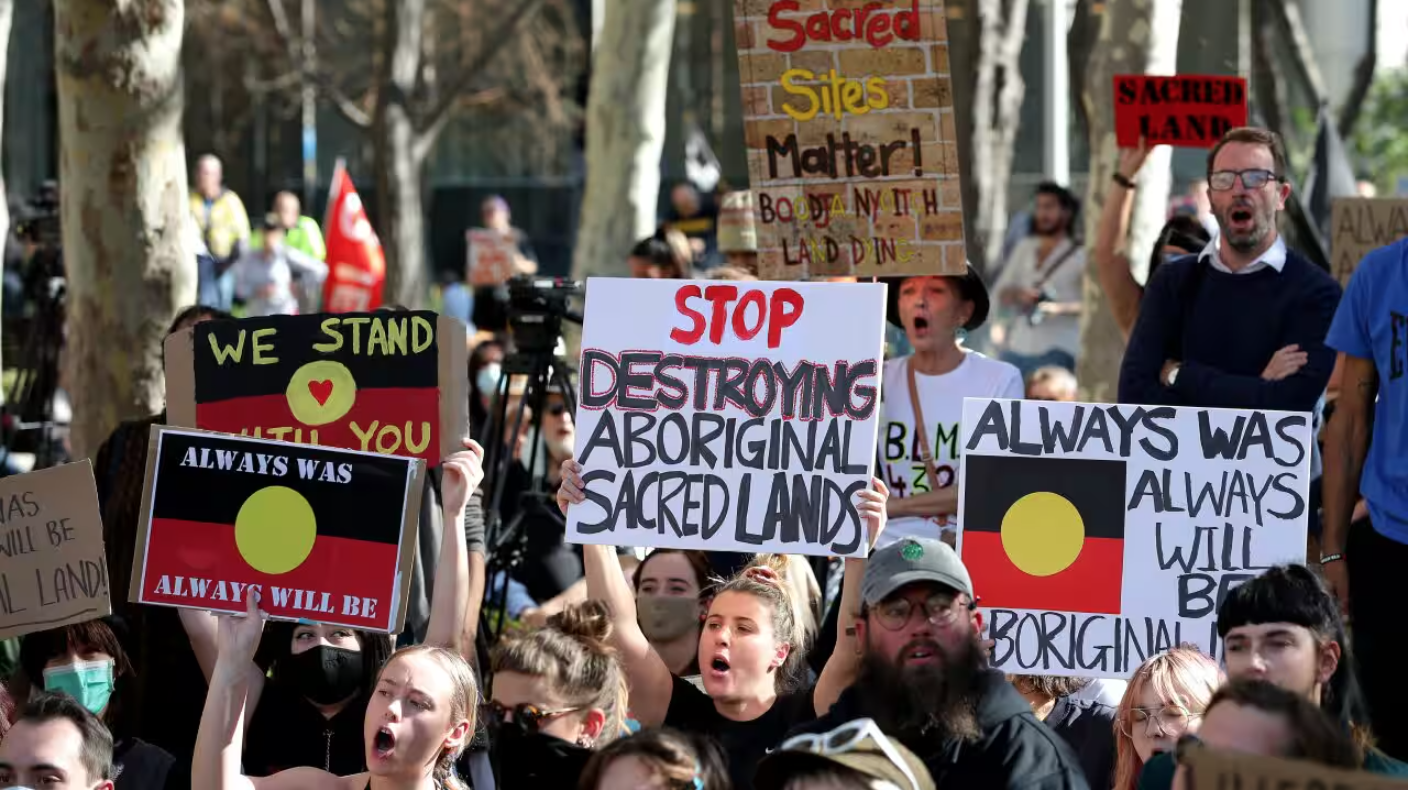
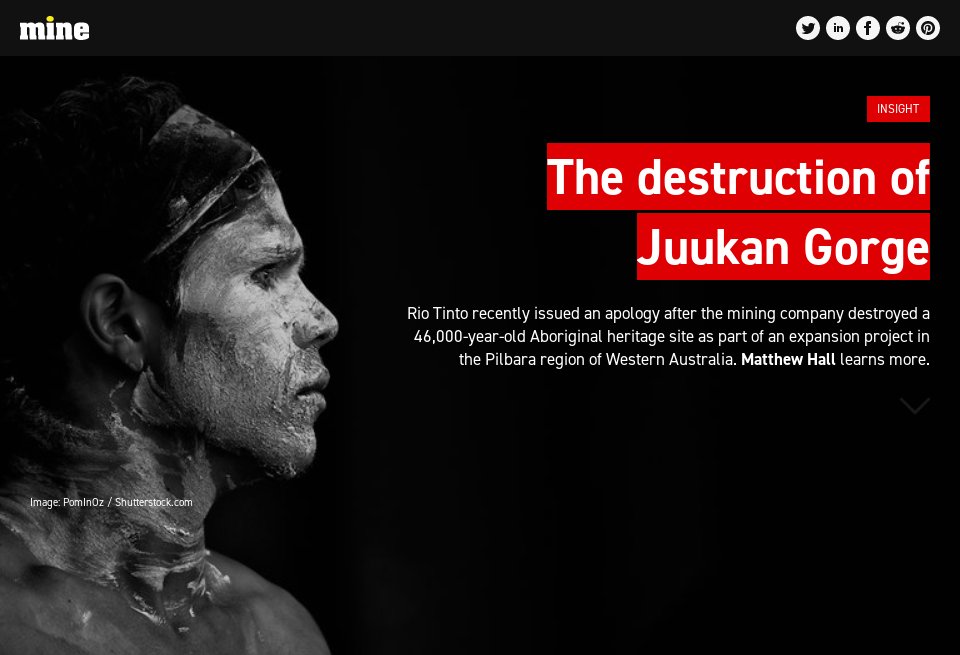
The Australian Council of Superannuation Investors (ACSI), representing the funds that own a significant chunk of Rio Tinto, declared that the review "does not deliver any meaningful accountability." Louise Davidson, ACSI's CEO, questioned whether the company believed £4 million was the "right price" for the destruction of such heritage.
Verified Against Public And Audited RecordsLong-Form Investigative Review
Reading time: ~35 min
File ID: EHGN-REVIEW-32295
Destruction of indigenous cultural heritage sites at Juukan Gorge
The report also emphasized the need of codifying the principle of "free, prior and informed consent" (FPIC) in national law.
Primary RiskLegal / Regulatory Exposure
JurisdictionEPA
Public MonitoringJuukan Gorge sat deep within the Hamersley Range of the.
Report Summary
On August 24, 2020, Rio Tinto released the findings of its internal board-led review into the destruction of the Juukan Gorge rock shelters. Rio Tinto has long prided itself on its safety culture, frequently citing low "Lost Time Injury" (LTI) rates as proof of its operational excellence. yet, the Broderick Review and the Juukan Gorge disaster exposed this as a hollow metric. Central to the 2025 agreement is the "Early Engagement Framework." In the lead-up to the 2020 blast, Rio Tinto's internal systems failed because heritage information was not escalated to the mine planners or the executive committee.
Key Data Points
The site consisted of two primary rock shelters known as Juukan 1 and Juukan 2. These formations offered protection to human inhabitants for over 46, 000 years. Excavations in 2014 revealed a discovery of global scientific importance. Radiocarbon dating placed the age of this artifact at 4, 000 years. Radiocarbon dating assigned an age of 28, 000 years to this object. The excavation team cataloged over 7, 000 artifacts. This data allowed scientists to reconstruct the climate history of the Pilbara over 40, 000 years. This marsupial has been extinct on the Australian mainland for approximately 3, 000 years. Scarp.
Investigative Review of Rio Tinto
Why it matters:
The Juukan Gorge rock shelters in Western Australia hold a 46,000-year-old archaeological record of immense value, offering insights into continuous human occupation and survival strategies.
Excavations revealed a 4,000-year-old hair belt that provided genetic evidence linking modern PKKP traditional owners to their ancient ancestors, showcasing a rare direct biological connection across millennia.
The 46,000-Year Legacy: Archaeological Significance of Juukan Gorge Rock Shelters
The Time Capsule of the Hamersley Range
Juukan Gorge sat deep within the Hamersley Range of the Pilbara region in Western Australia. This location held a geological and anthropological record of immense value. The site consisted of two primary rock shelters known as Juukan 1 and Juukan 2. These formations offered protection to human inhabitants for over 46, 000 years. This timeline extends back before the Last Glacial Maximum. The shelters provided a rare sequence of continuous human occupation. Few sites on the Australian continent possess such an unbroken chronology. The sediment within these caves preserved evidence of human life through extreme climatic shifts. This continuity allowed archaeologists to map the survival strategies of the Puutu Kunti Kurrama and Pinikura (PKKP) ancestors.
The physical structure of the gorge created a unique preservation environment. The caves remained dry and protected from the harsh Pilbara sun. This stability allowed organic material to survive for millennia. Most archaeological sites in the region lose such delicate items to decay or. Juukan Gorge acted as a secure repository. It held thousands of artifacts that detailed the daily lives of ancient people. The site was not a temporary camp. It served as a long-term sanctuary during the Ice Age. The depth of the deposits indicated repeated use over thousands of generations. This accumulation of history made the site a library of Indigenous knowledge.
The Living Genetic Link
Excavations in 2014 revealed a discovery of global scientific importance. Archaeologists recovered a plaited hair belt from the sediment. Radiocarbon dating placed the age of this artifact at 4, 000 years. The hair was preserved well enough to permit advanced genetic analysis. DNA testing compared the ancient strands with the genetic profiles of living PKKP traditional owners. The results confirmed a direct biological link. This finding proved that the people living in the area today are the descendants of those who occupied the caves four millennia ago. Such a direct genetic connection across such a vast timeframe is exceptionally rare in archaeology.
The hair belt represented more than just a physical object. It symbolized the enduring connection of the PKKP people to their country. The belt was made from the hair of several different individuals. a communal effort in its creation. It indicates a complex social structure and shared cultural practices. The preservation of this item required specific environmental conditions found only in the shelters. Its destruction severed a tangible line between the past and the present. The PKKP people viewed this artifact as proof of their custodial responsibility. It validated their oral histories and their status as the rightful protectors of the land.
Advanced Ancient Technology
The shelters contained evidence of sophisticated tool manufacturing. One specific artifact stood out among the thousands recovered. Archaeologists found a kangaroo leg bone that had been sharpened into a pointed tool. Radiocarbon dating assigned an age of 28, 000 years to this object. This makes it the oldest known bone tool discovered in Australia. The existence of this implement challenges previous assumptions about the development of bone technology on the continent. It shows that the inhabitants of Juukan Gorge possessed advanced crafting skills far earlier than previously believed.
Stone tools also appeared in high concentrations throughout the sediment. The excavation team cataloged over 7, 000 artifacts. These included grindstones used for processing seeds. The presence of these grinding tools indicates that the people here were utilizing plant resources in complex ways. They were not simply opportunistic foragers. They had developed specific technologies to harvest and prepare food from the surrounding vegetation. stone flakes showed residues of spinifex resin. This substance served as a adhesive. Its presence suggests the people used it to attach stone blades to wooden handles. This composite tool technology demonstrates a high level of ingenuity and adaptation.
The Ecological Archive
Juukan Gorge preserved more than just human artifacts. The floor of the caves held a detailed record of the environment itself. Pollen grains trapped in the soil provided a timeline of botanical changes. This data allowed scientists to reconstruct the climate history of the Pilbara over 40, 000 years. The pollen record showed the shift from a wetter tropical climate to the arid conditions seen today. It documented the changes in vegetation as the region dried out. This environmental archive is important for understanding how humans and animals adapted to climate change.
Faunal remains found in the caves added another to this ecological picture. The excavation recovered bones from various animal species. These included the remains of the Tasmanian Devil. This marsupial has been extinct on the Australian mainland for approximately 3, 000 years. Finding its remains at Juukan Gorge proved its historical range extended into the Pilbara. The site also contained bones of echidnas and kangaroos. of these bones showed burn marks or cut marks. This indicates they were cooked and eaten by the human inhabitants. The abundance of these remains provided data on the diet and hunting practices of the ancient people.
The 2014 Excavation and Report
Scarp Archaeology conducted the primary salvage excavation in 2014. Dr. Michael Slack led the team that investigated the site. The work was commissioned by Rio Tinto as part of their compliance requirements. The findings from this dig were immediate and startling. The team realized the site was far older and richer than initial surveys suggested. The density of artifacts was higher than almost any other site in the region. Dr. Slack described the site as being of the “highest archaeological significance” in Australia. His report detailed the immense value of the shelters.
The report produced by Scarp Archaeology was delivered to Rio Tinto. It stated the unique nature of Juukan 1 and Juukan 2. The document highlighted the age of the site and the rarity of the artifacts. It noted the presence of the hair belt and the bone tool. The report concluded that the significance of the site could not be overstated. It ranked Juukan Gorge among the most important heritage sites in the world. This information was in the possession of the mining company years before the destruction occurred. The data provided a clear warning about the irreplaceable loss that mining would cause.
Spiritual and Cultural Geography
The significance of Juukan Gorge extended beyond scientific metrics. The area held deep spiritual meaning for the PKKP people. The gorge is part of the Purlykuti Creek system. This waterway is associated with the Rainbow Serpent mythology. A rock pool within the gorge is shaped like the head of a snake. The PKKP believe this pool is the resting place of the serpent. The water in this pool was considered permanent and sacred. It even during droughts. This reliability made it a important resource and a spiritual anchor.
The caves themselves were seen as resting places for the spirits of the ancestors. The PKKP people maintained a strict set of cultural regarding the site. They visited the area to perform ceremonies and maintain their connection to the land. The destruction of the physical site also destroyed the spiritual geography of the area. The blasting obliterated the rock pool and the shelters. This action disrupted the songlines and the spiritual pathways that traverse the region. The loss is not just of stones and bones. It is a loss of the living spiritual practice that has continued for forty-six millennia.
A Library Burned
Experts have compared the destruction of Juukan Gorge to the burning of a library. Dr. Virginia Marshall noted that the world lost access to a vast body of knowledge. The site contained answers to questions about human history that we have not yet asked. The sediment held data that future technologies could have analyzed. The artifacts provided a window into the deep past of humanity. The destruction erased this chance forever. We can no longer test the soil for new types of micro-fossils. We can no longer analyze the spatial arrangement of the tools to understand social organization. The physical context is gone.
The tragedy lies in the finality of the act. A building can be rebuilt. A digital file can be restored. An archaeological site is a non-renewable resource. Once the context is destroyed by explosives it cannot be reconstructed. The rubble that remains at Juukan Gorge is a mix of ancient history and shattered rock. The sequence of is jumbled. The timeline is broken. The scientific value is reduced to the notes taken during the salvage dig. Those notes are the only record of a 46, 000-year legacy that survived the Ice Age could not survive modern mining.
The 46,000-Year Legacy: Archaeological Significance of Juukan Gorge Rock Shelters
Genetic Links and Sacred Objects: The 4,000-Year-Old Hair Belt Discovery
The Physical Manifestation of Lineage
In the dusty, iron-rich recesses of the Juukan 2 rock shelter, archaeologists unearthed an object that the typical detachment of deep-time study. It was not a stone tool or a fossilized bone, a length of plaited human hair, woven into a belt approximately 4, 000 years ago. This artifact, fragile yet miraculously preserved by the stable conditions of the cave, represented more than a relic of ancient craftsmanship. It served as a biological anchor, a physical remnant of a specific individual who lived, walked, and conducted ceremonies in the Pilbara millennia before the concept of a mining corporation existed. The hair belt was recovered during a salvage excavation commissioned by Rio Tinto in 2014, six years prior to the site’s destruction. The excavation, led by Scarp Archaeology, was intended to recover significant material before the mine expansion proceeded. The discovery of the belt was immediate cause for scientific excitement, yet its true power lay in the genetic information locked within its strands. Unlike stone, hair contains DNA. This organic material offered a rare opportunity to test the continuity of human occupation in the region, not through inference or cultural association, through the irrefutable precision of genetic sequencing.
The Genetic
Scientific analysis of the hair belt yielded results that are statistically rare in the field of archaeology. Geneticists successfully extracted mitochondrial DNA from the 4, 000-year-old strands. When this ancient genetic profile was compared against the DNA of living people, the results were definitive. The individual whose hair was woven into that belt is a direct ancestor of the Puutu Kunti Kurrama and Pinikura (PKKP) people living today. This finding dismantled any chance argument regarding population displacement or the interruption of lineage. In parts of the world, the people living near an ancient site today are not genetically related to the site’s original inhabitants due to migration, war, or disease over thousands of years. At Juukan Gorge, the science proved the opposite. The PKKP people are not the current custodians of the land; they are the biological descendants of the people who occupied those rock shelters four millennia ago. The hair belt provided a continuous, unbroken genetic line stretching back 4, 000 years, linking the modern Traditional Owners to the specific soil Rio Tinto intended to blast.
Rio Tinto’s Possession of the Facts
Rio Tinto possessed this information well before the explosives were loaded. The archaeological reports from the 2014 excavation, and the final report received in 2018, detailed the existence of the hair belt and the genetic results. The corporation knew that Juukan 2 was not simply a campsite; it was a genetic archive. The reports categorized the site as having “highest archaeological significance” in Australia. even with holding proof that the site contained the DNA of the people they were negotiating with, Rio Tinto executives did not reassess the mine plan. The genetic link, a discovery that would warrant immediate preservation status in any other jurisdiction, was treated as a data point in a salvage report. The company proceeded with the logic that removing the object saved the heritage, ignoring the reality that the object derived its meaning from its location. The belt was a product of that specific gorge, woven by people who lived in that specific shelter.
The 28, 000-Year-Old Bone Tool
While the hair belt provided the genetic link, other artifacts recovered from the site established the technological sophistication of the inhabitants. Among the 7, 000 items salvaged was a tool fashioned from the fibula of a macropod (kangaroo or wallaby). Radiocarbon dating placed this tool at approximately 28, 000 years old. The bone had been sharpened into a uni-facial point, indicating its use as a precision implement, possibly for working skins or piercing materials. Bone artifacts of this age are exceptionally rare in Australia due to the acidity of most soils, which dissolves organic material over time. The chemical environment of the Juukan rock shelters was unique, acting as a preservative vault that kept the bone intact through the Last Glacial Maximum. The presence of this tool demonstrated that the ancestors of the PKKP were not only present were utilizing complex bone technology tens of thousands of years ago, adapting their toolkit to the resources of the Pilbara.
Grinding Stones and the Bread of the Ice Age
The excavation also yielded grinding stones that rewrite the timeline of food processing in the region. These stones, used to grind seeds into flour, were found in dating back thousands of years, with evidence suggesting use as far back as the earliest occupation levels. This indicates that the people of Juukan Gorge were practicing seed grinding technologies long before such methods were adopted in other parts of the world. The presence of these stones suggests a stable, sophisticated economy where grain was harvested and processed. It counters the colonial narrative of opportunistic foraging. The residents of Juukan Gorge had a deep understanding of the flora, utilizing the shelter not just for protection, as a domestic hub where food was prepared and tools were maintained. The stones, heavy and frequently left in situ, imply that the people expected to return. The shelter was a permanent fixture in their seasonal movements, a home base maintained over millennia.
The Pollen Record and Faunal Remains
Beyond the artifacts made by human hands, the floor of the cave held a biological record of the climate itself. The sediment contained fossilized pollen and faunal remains that charted environmental changes over 46, 000 years. This included the jaw of a Tasmanian devil, an animal long extinct on the Australian mainland. The pollen data provided a sequence showing how the vegetation of the Pilbara shifted from the wetter periods to the arid conditions of the Ice Age and back again. This “museum of information” allowed scientists to reconstruct the world the PKKP ancestors lived in. It showed how they adapted to dramatic climate shifts, surviving the hyper-arid phases that depopulated other regions. By destroying the cave, Rio Tinto did not just destroy a human site; they destroyed a climatological archive that held answers to how humans survive extreme environmental change, data serious to understanding our future in a warming world.
The “Salvage” Fallacy
Rio Tinto’s defense frequently relied on the concept of “salvage.” The logic posits that if the portable objects are removed, the heritage is saved, and the rock shelter itself becomes expendable overburden. This view is a fundamental rejection of Indigenous cultural values. For the PKKP, the hair belt and the bone tool are not museum curiosities; they are sacred objects that belong to the *country*. Removing the hair belt from Juukan Gorge severed its spiritual connection. The artifact exists, it is a displaced orphan. The context of its deposition, where it was placed, why it was left there, and its relationship to the other objects in the cave, is lost forever. Archaeology is the study of context; an object without its provenance is scientifically mute. Culturally, the removal is a violation. The ancestors left those items in the cave for a reason. Stripping them out to the destruction of their resting place is an act of erasure, not preservation.
The Shipping Container Scandal
The indignity of the “salvage” operation was compounded by the storage conditions of the recovered items. Following the destruction of the gorge, it was revealed that the 4, 000-year-old hair belt and other sacred objects were not being housed in a climate-controlled laboratory or a museum. Instead, they were stored in a shipping container on the mine site. PKKP representatives expressed horror at this. In the harsh Pilbara heat, the internal temperature of a metal shipping container can fluctuate wildly, swinging from 7°C at night to over 60°C during the day. Such thermal shock is catastrophic for organic materials like human hair and ancient bone. The very objects Rio Tinto claimed to have “saved” were being subjected to conditions that accelerated their degradation. This negligence exposes the hollowness of the company’s claim that they value cultural heritage. They valued the *removal* of the heritage to clear the land for mining, they demonstrated zero regard for the long-term survival of the ancestors’ remains once they were out of the way of the drill rigs.
A Broken Link
The discovery of the hair belt should have been a moment of national pride and legal protection. It provided scientific validation of oral histories that speak of deep time connection to country. It proved that the PKKP are the people of the gorge, bound by blood to the soil for four millennia. Instead, the belt is a symbol of corporate ruthlessness. The genetic link it proved was ignored in favor of iron ore quotas. The cave that preserved it for 4, 000 years has been turned into rubble. The belt sits in a box, a piece of evidence in a crime against culture, separated from the land that gave it meaning. The science that should have saved Juukan Gorge became a footnote in a demolition order.
Genetic Links and Sacred Objects: The 4,000-Year-Old Hair Belt Discovery
Section 18 Approval: The 2013 Legal Loophole in the Aboriginal Heritage Act
The method of Erasure: Section 18 Defined
The destruction of Juukan Gorge was not an accident, nor was it a violation of Western Australian law at the time. It was the direct result of a specific legislative method designed to prioritize industrial development over cultural preservation: Section 18 of the Aboriginal Heritage Act 1972 (WA). While the Act’s title suggests a mandate to protect Indigenous history, Section 18 functioned as a sanctioned exemption, a bureaucratic permit that allowed landowners to commit what would otherwise be a criminal offence. Under Section 17 of the Act, destroying an Aboriginal site is illegal. Yet, Section 18 provided the escape hatch, stating that a landowner could apply for consent to use the land in a way that would breach Section 17. If the Minister for Aboriginal Affairs granted this consent, the destruction became entirely lawful.
This provision converted the protection of heritage into a discretionary administrative decision. The process required the landowner to submit a notice to the Aboriginal Cultural Material Committee (ACMC), an advisory body responsible for evaluating the significance of the site. The ACMC would then make a recommendation to the Minister. The Act explicitly directed the Minister to consider the “general interest of the community” when making a final ruling. In practice, successive state governments interpreted “general interest” as synonymous with economic revenue and mining royalties. Consequently, Section 18 became a rubber stamp for industry. By 2020, thousands of Section 18 approvals had been granted, with refusals being statistically negligible. The law did not function to save sites; it functioned to regulate their orderly removal.
The Statutory Inequality: A One-Sided Right of Appeal
The most egregious flaw in the 1972 Act, frequently by legal experts as a violation of racial discrimination conventions, was the asymmetry of appeal rights. The legislation created a system where the rights of the miner superseded the rights of the custodians. If the Minister for Aboriginal Affairs refused a Section 18 application, the landowner (in this case, Rio Tinto) held the statutory right to appeal that decision to the State Administrative Tribunal (SAT). They could that the economic value of the project outweighed the heritage value of the site and seek to have the Minister’s refusal overturned.
Traditional Owners faced a clear different reality. If the Minister granted approval to destroy a site, as happened at Juukan Gorge, the Aboriginal custodians had no corresponding right to appeal. The Act did not recognize them as a party with the standing to challenge the Minister’s consent in the tribunal. Once the Minister signed the Section 18 notice, the decision was final and the legal avenue for the Traditional Owners closed instantly. This statutory inequality meant that the system was rigged to favor development. A rejection could be fought; an approval was absolute. This legal architecture stripped the Puutu Kunti Kurrama and Pinikura (PKKP) people of any use to challenge the state’s decision in 2013, leaving them dependent on the goodwill of the mining company rather than the protection of the law.
The 2013 Approval: Bureaucratic indifference
In 2013, Rio Tinto sought to expand its Brockman 4 iron ore operation. To access the high-grade ore beneath the Juukan Gorge rock shelters, the company required a Section 18 consent. Rio Tinto submitted its application to the Department of Aboriginal Affairs, identifying the shelters as sites of interest. At this stage, the full archaeological significance of the caves, specifically the 46, 000-year continuous occupation sequence, had not yet been confirmed by the excavations that would occur in 2014. yet, the company and the ACMC were aware that the area held cultural value.
The ACMC met to consider the application. The committee’s recommendation process was notoriously unclear and frequently relied on summary information provided by the developer. In this instance, the ACMC recommended that the Minister grant consent to destroy the sites. The recommendation was forwarded to the Minister for Aboriginal Affairs, Peter Collier. On December 31, 2013, Minister Collier signed the Section 18 notice. With that signature, the legal protection for Juukan Gorge evaporated. The approval contained no conditions requiring the preservation of the rock shelters if they were later found to be of exceptional global significance. It was a blanket permission to disturb the land for mining purposes.
The timing and nature of this approval reveal the widespread failure of the regulatory regime. The decision was made based on the information available at the time, which was incomplete. Yet, the Act contained no “sunset clause” or method to revisit a Section 18 consent if new, earth-shattering evidence emerged. Once Minister Collier signed the document in 2013, the consent remained valid indefinitely. When the 2014 excavations revealed that Juukan Gorge was one of the most significant archaeological sites on the continent, the 2013 legal approval remained in force, an unchangeable mandate for destruction that ignored the new reality.
The Gag Clauses: Contractual Silence
The legal vulnerability of the PKKP was compounded by private contractual agreements that silenced them. In 2011, Rio Tinto and the PKKP signed a participation agreement, a standard industry practice designed to mining operations in exchange for financial compensation and other benefits. These agreements, yet, contained strict “non-objection” clauses, frequently referred to as “gag clauses.”
Under the terms of the 2011 agreement, the PKKP were contractually prohibited from objecting to Rio Tinto’s Section 18 applications. They had agreed, in writing, to support the company’s operational requirements. This meant that even if the PKKP wanted to raise a public alarm or lobby the government to reject the 2013 application, they were legally handcuffed by their own agreement. Breaching these clauses could result in financial penalties or the suspension of benefits under the contract. Rio Tinto used these agreements to ensure a regulatory route. The company could present the Section 18 application to the ACMC and the Minister with the assurance that the Traditional Owners would not, and could not, formally oppose it. The state government, fully aware of these industry-standard agreements, treated the absence of formal objection as tacit consent, further greasing the wheels of the approval process.
The Information Trap and the “Tick and Flick” Culture
The 2013 approval exemplifies the “tick and flick” culture that permeated the Western Australian Department of Aboriginal Affairs. The system prioritized speed and certainty for mining proponents over rigorous heritage assessment. The ACMC frequently assessed dozens of Section 18 applications in a single meeting, making it physically impossible to give each site the detailed consideration it required. The committee frequently absence adequate Aboriginal representation from the specific regions in question, meaning decisions were made by people with no cultural authority over the land being condemned.
also, the legislative framework created a dangerous information trap. Mining companies were incentivized to secure Section 18 approvals early in the project lifecycle, frequently before detailed archaeological excavations took place. Once the approval was in hand, the subsequent “salvage” excavations, which are intended to rescue artifacts before destruction, might reveal that the site is far more important than previously thought. This is exactly what happened at Juukan Gorge in 2014. because the Section 18 consent was already granted in 2013, the discovery of the site’s 46, 000-year history became legally irrelevant. The law provided no emergency brake. Rio Tinto held a valid permit to destroy the site, and the Act gave the Minister no power to unilaterally revoke that consent based on the new findings. The 2013 decision locked the fate of the gorge into a rigid legal trajectory that no amount of scientific discovery could alter under the existing statute.
The Failure of “Consent”
The term “consent” in the context of the 2013 Section 18 approval is a misnomer. It implies a voluntary agreement by the affected party. In reality, the consent was granted by a government Minister, not the Traditional Owners. The PKKP did not consent to the destruction of the rock shelters in 2013; they were maneuvered into a position where they could not stop it. The combination of the Aboriginal Heritage Act 1972 and the restrictive participation agreements created a pincer movement that stripped the PKKP of their voice. The state provided the legal weapon (Section 18), and the mining company used the contract to ensure no one could grab the handle. This of state power and corporate strategy rendered the cultural heritage of the Pilbara to administrative erasure, reducing sacred sites to obstacles on a mine plan that could be legally removed with a single signature.
Key Elements of the 2013 Legal Failure
Legal Element
Function in Juukan Gorge Destruction
Impact on Traditional Owners
Section 18 (AHA 1972)
Allowed landowner to apply for legal immunity to destroy sites.
Converted heritage protection into a discretionary ministerial decision.
Statutory Inequality
Miners could appeal refusals; Aboriginal people could not appeal approvals.
Denied PKKP legal standing to challenge the 2013 decision in court.
Gag Clauses (2011 Agreement)
Contractually prevented PKKP from objecting to Section 18 notices.
Silenced custodians before the government assessment even began.
Irrevocability
No legal method to revoke consent based on new information.
Rendered the 2014 discovery of 46, 000-year significance legally powerless to stop the blast.
Ignored Warnings: Rio Tinto’s Knowledge of Site Significance Prior to 2020
The destruction of Juukan Gorge was not a result of ignorance. It was a calculated decision made with full access to data that confirmed the site’s irreplaceable value. Rio Tinto possessed detailed archaeological reports years before the blast. These documents explicitly stated that the rock shelters contained evidence of 46, 000 years of continuous human occupation. The company commissioned these studies. They paid for the excavations. They held the findings in their own digital archives. Yet the of extraction continued to roll forward without pause. Dr. Michael Slack of Scarp Archaeology led the excavation teams that uncovered the site’s true depth. His team provided a preliminary report to Rio Tinto in 2014. This document identified Juukan 2 as one of the most archaeologically significant sites in Australia. The findings were not ambiguous. They included a 4, 000-year-old braided hair belt and faunal remains that showed a genetic link to the current Traditional Owners. A final report submitted in 2018 reinforced these conclusions. It stated that the significance of the site “cannot be overstated.” The report declared that Juukan 2 had the chance to radically change scientific understanding of the earliest human behavior in the continent. Rio Tinto received this document. It sat in their files while the blast date method. The corporate decision to destroy the shelters dates back to 2012 and 2013. Rio Tinto engineers evaluated four different mine pit designs for the Brockman 4 expansion. Three of these options would have avoided the Juukan Gorge rock shelters entirely or caused significantly less damage. The company chose the fourth option. This specific plan required the total destruction of the shelters to access an additional eight million tonnes of high-grade iron ore. Internal documents later revealed the value of this ore was approximately $135 million. Executives prioritized this revenue over the preservation of a site older than the last Ice Age. The Puutu Kunti Kurrama and Pinikura (PKKP) people were never informed that other options existed. Rio Tinto presented the destruction of the gorge as the only feasible route for the mine’s expansion. This omission denied the Traditional Owners the ability to provide free and informed consent. They could not advocate for the preservation of their heritage because they did not know preservation was an engineering possibility. The company secured Section 18 approval from the Western Australian government based on this singular presentation of facts. The approval process did not require Rio Tinto to disclose that they had rejected less destructive alternatives. Internal systems at Rio Tinto further compounded the failure. Once the Section 18 legal approval was granted in 2013 the site was marked as “cleared” in the company’s GIS database. This administrative tag erased the site’s significance from the view of operational teams. The electronic system treated the 46, 000-year-old sanctuary as just another patch of dirt ready for blasting. The 2014 and 2018 reports did not trigger a status update in this system. The “cleared” status remained even as the archaeological evidence of the site’s global importance grew stronger. This bureaucratic inertia ensured that the new findings never prompted a review of the mine plan. Warnings continued to arrive until months before the detonation. In October 2019 PKKP heritage manager Dr. Heather Builth visited the site with a Rio Tinto mine manager. She explicitly stated that the gorge was one of the “top five” most significant sites in the entire Pilbara region. The manager later claimed he was unsure which specific rock formation she was pointing to during the conversation. He did not seek clarification. He did not flag the comment to senior leadership. The operations team proceeded with the drilling and loading of explosives based on the outdated “cleared” status in their software. The final sequence of events in May 2020 exposes the rigidity of Rio Tinto’s operational timeline. PKKP representatives only learned of the imminent blast on May 15. This discovery happened by chance during a request to visit the site for an upcoming holiday. They immediately requested a halt to the operations. Rio Tinto responded that it was too late. The company claimed that 382 blast holes had already been drilled and loaded with explosives. They argued that removing the charges would be unsafe for their workers. This technical defense became the final justification for the destruction. The blast went ahead on May 24. Rio Tinto’s defense relied on the argument that information did not flow to the right decision-makers. The CEO and senior executives later claimed they were unaware of the specific significance of Juukan Gorge until days before the blast. This defense highlights a widespread failure rather than an excuse. The information was available within the company. It was documented in reports commissioned by the company. It was voiced by Traditional Owners during site visits. The structure of the organization was designed to filter out heritage concerns that might impede production. The data existed the corporate culture chose to ignore it. The 2018 Scarp Archaeology report was the most damning piece of ignored evidence. It provided a clear scientific mandate to protect the site. The report detailed the discovery of pollen records that charted thousands of years of environmental change. It described the unique stone tools found in the lower sediment. Any reasonable assessment of this report should have triggered an immediate halt to mining plans in the area. Rio Tinto did not pause. The report was filed away and the blast schedule remained unchanged. The company treated the archaeological work as a compliance box to be checked rather than a source of material risk or value. The destruction of Juukan Gorge was not an accident of timing. It was the result of a system that prioritized iron ore volume above all other metrics. The warnings were clear. The archaeological data was conclusive. The Traditional Owners were vocal about the site’s importance. Rio Tinto had the knowledge necessary to stop the blast years in advance. They chose not to use it. The decision to proceed with Option 4 in 2013 set the trajectory. The failure to revisit that decision in 2014 or 2018 sealed the fate of the shelters. The loss of 46, 000 years of history was the price paid for $135 million in revenue.
The 'Loaded' Decision: Timeline of Explosives Placement in May 2020
The timeline of the destruction of Juukan Gorge in May 2020 reveals a sequence of operational decisions that prioritized extraction schedules over cultural preservation, even after the specific threat to the site became undeniable. The destruction was not an instantaneous accident a cumulative result of actions taken over several weeks, with the most damning decisions occurring in the final days before the blast. ### The Drilling Phase: May 3–12, 2020 The physical preparation for the destruction began in early May. Between May 3 and May 12, Rio Tinto’s operational teams drilled 382 blast holes into the earth directly north of the Juukan 1 and Juukan 2 rock shelters. This drilling was part of the standard expansion sequence for the Brockman 4 mine, specifically targeting the high-grade iron ore located beneath and around the ancient gorges. At this stage, the site was coordinates on a mine plan, for clearance under the Section 18 consent granted seven years prior. The drilling rigs operated with mechanical efficiency, perforating the to prepare it for the explosives that would soon follow. ### The Loading Begins: May 13, 2020 On May 13, the “point of no return” narrative began to take physical form. Rio Tinto crews commenced the loading of the blast holes. On this single day, 226 holes were packed with ammonium nitrate fuel oil (ANFO) explosives. This action transformed the site from a planned extraction zone into a live munitions field. The decision to load these holes set the clock on the site’s destruction, creating a hazard that Rio Tinto would later cite as the primary reason the blast could not be aborted. The explosives, once in the ground, are subject to degradation and stability concerns, a fact the company would use to justify the inevitability of the detonation. ### The Notification and the “Loaded” Status: May 15, 2020 The disconnect between the indigenous owners and the mining operations became explicitly clear on May 15. The Puutu Kunti Kurrama and Pinikura (PKKP) people, unaware of the imminent blasting, contacted Rio Tinto to request access to the site for the upcoming NAIDOC week in July. They intended to visit the shelters, which they knew contained genetic material linking them directly to ancestors from 4, 000 years ago. Rio Tinto’s response was immediate and final: the area was “loaded.” The company informed the PKKP that the blast holes had been drilled and charged, and the detonation was scheduled for Sunday, May 17. This notification was the time the PKKP learned that the destruction of their most significant cultural site was days away. The realization triggered a frantic attempt by the PKKP to halt the operation, the operational momentum of the mine was already driving events forward. ### Continued Loading: May 16–19, 2020 The most contentious actions occurred in the days immediately following the PKKP’s objection. even with the PKKP raising the alarm on May 15 and explicitly stating the site’s supreme importance, Rio Tinto continued to load explosives into the remaining blast holes. * **May 16:** Crews loaded an additional 62 blast holes. * **May 17:** Crews loaded another 72 blast holes. * **May 19:** Crews loaded a final 22 blast holes. This continued loading occurred while the PKKP was desperately negotiating to save the site. Rio Tinto’s operational teams added 156 charged holes to the pattern *after* the traditional owners had expressed their distress and requested a halt. This fact the defense that the blast was entirely unavoidable due to actions taken before the objection. While the initial 226 holes loaded on May 13 presented a significant hurdle, the decision to continue charging the field for four more days demonstrated a refusal to pause operations even in the face of an escalating cultural heritage emergency. ### The “Safety” Defense and the Legal Scramble: May 20–22, 2020 By May 20, the blast had been briefly postponed from May 17 to May 24, the company maintained that the explosives could not be removed. Rio Tinto executives argued that attempting to unload the ANFO charges presented an unacceptable safety risk to their workers. They claimed the explosives had “slept” in the ground for too long, making them unstable and dangerous to extract. The PKKP sought emergency legal advice, preparing to file an injunction. Yet, they were cornered by Rio Tinto’s safety assessment. The company informed the PKKP that even if a legal injunction were granted, the safety risks meant the blast would likely have to proceed regardless. Faced with the assertion that the site was a ticking bomb that could not be defused, the PKKP was forced to abandon their legal bid. On May 21, Rio Tinto engaged an independent explosives expert to review the situation. The expert’s advice, received late that evening, corroborated the company’s internal assessment: it was unsafe to unload the *entire* blast pattern. This technical opinion sealed the fate of Juukan 1 and 2. ### The Contradiction: May 23, 2020 A contradiction in the “safety” argument emerged on May 23, one day before the blast. While Rio Tinto insisted it was impossible to save the main rock shelters due to the danger of removing explosives, they successfully deployed a suction truck to remove the charges from seven specific blast holes. These seven holes were not located near Juukan 1 or 2. They were situated near other heritage sites on the periphery of the blast zone—sites for which Rio Tinto did not have Section 18 legal approval to destroy. To avoid breaking the law regarding *those* specific sites, the company found a way to safely extract the explosives. This selective application of safety revealed that the “impossibility” of removing charges was not absolute conditional on legal liability. The company could and did remove explosives to protect itself from regulatory breach, yet maintained it could not do the same to protect the 46, 000-year-old shelters for which it held a valid destruction permit. ### The Detonation: May 24, 2020 On Sunday, May 24, the sequence concluded. The blast was initiated. The explosion collapsed the Juukan 1 and Juukan 2 rock shelters, sealing the 46, 000-year-old archaeological record under tons of iron ore rubble. The blast achieved its operational objective: fracturing the earth to access the high-grade ore body required to meet production. The timeline of May 2020 exposes a system where the momentum of extraction overpowered the pause method necessary for heritage protection. The loading of explosives continued for days after the alarm was raised, and the technical irreversibility of the blast was asserted selectively. The decision was not a single moment a series of daily affirmations to proceed, each one burying the opportunity to save the site under another of ammonium nitrate.
Daily Explosives Loading Sequence: May 2020
Date
Action Taken
Context
May 3, 12
382 blast holes drilled.
Preparation of the blast pattern north of Juukan 1 & 2.
May 13
226 holes loaded.
Initial charging. The “loaded” status begins.
May 15
PKKP requests access.
Rio Tinto informs PKKP the site is loaded and be destroyed.
May 16
62 holes loaded.
Loading continues even with PKKP objection.
May 17
72 holes loaded.
Loading continues. Original blast date (delayed).
May 18
SLT informed.
Senior Leadership Team briefed on site significance.
May 19
22 holes loaded.
Final charges placed.
May 23
7 holes unloaded.
Charges removed to protect other sites absence legal approval.
May 24
Blast executed.
Juukan 1 and 2 destroyed.
May 24, 2020: The Execution of the Blast on the Eve of Sorry Day
The Morning of May 24: A Silence Broken
On Sunday, May 24, 2020, the sun rose over the Hamersley Range in Western Australia’s Pilbara region, illuminating the red earth and the ancient gorges that had sheltered human life for 46, 000 years. For the Puutu Kunti Kurrama and Pinikura (PKKP) people, this specific Sunday was meant to be a time of reflection, falling just two days before National Sorry Day, a date dedicated to acknowledging the mistreatment of Aboriginal people and the trauma of the Stolen Generations. Instead, it became a day of irreversible loss. At the Brockman 4 mine, the of extraction was set in motion to execute a blast that would erase a history older than the pyramids, older than the ice age, and deeply woven into the genetic memory of the traditional owners.
The days leading up to this moment had been frantic. The PKKP had only learned of the impending destruction on May 15, nine days prior. They had issued urgent requests to halt the operation, pleading with Rio Tinto to spare the sacred sites known as Juukan 1 and Juukan 2. Rio Tinto executives, including those in London and Brisbane, had been alerted to the “exceptional archaeological and cultural significance” of the shelters. Yet, the corporate apparatus remained unmoved. The explosives were already loaded. The decision had been made. The “point of no return,” as Rio Tinto would later claim, had been passed not by geological need, by administrative choice.
The Execution
The blast itself was a precise, industrial act of violence. Rio Tinto’s technical teams detonated the charges packed into the drill holes that honeycombed the earth surrounding the gorge. In a matter of seconds, the rock shelters were reduced to rubble. Juukan 1 and Juukan 2, which had stood as sanctuaries through the last Ice Age, were obliterated. The explosion collapsed the roofs of the caves, burying the archaeological deposits that contained a 46, 000-year sequence of human occupation. The 4, 000-year-old hair belt, the 28, 000-year-old kangaroo bone tool, and the pollen records that charted millennia of environmental change, all the tangible evidence of a living culture, were either destroyed or permanently entombed under tons of waste rock.
The physical destruction was total. The blast did not just damage the site; it annihilated it. The gorge, once a narrow, shaded refuge with pools of water and evidence of continuous habitation, was transformed into a debris field. Rio Tinto had secured access to approximately 8 million tonnes of high-grade iron ore, valued at roughly $135 million. To access this ore, they sacrificed a site of immeasurable global heritage value. The dust settled over the Pilbara, marking the end of a 46, 000-year chapter and the beginning of a global scandal.
The Eve of Sorry Day
The timing of the blast added a of cruelty to the destruction. National Sorry Day, observed on May 26, is a solemn day in the Australian calendar. It is a time for the nation to reckon with its colonial history and the systematic erasure of Indigenous culture. For Rio Tinto to execute this blast on May 24, on the very eve of this observance, demonstrated a disconnect between their public rhetoric of “respect” and their operational reality. The irony was bitter and immediate. While the company prepared to release statements acknowledging the significance of Sorry Day, their operations team had just wiped out one of the most significant Aboriginal heritage sites on the continent.
This juxtaposition was not lost on the PKKP or the wider public. The destruction of Juukan Gorge became an instant, visceral symbol of the very disregard that Sorry Day seeks to address. It was not a relic of the past; it was a contemporary act of dispossession, carried out by a modern multinational corporation with full legal sanction zero moral license. The blast underscored that for all the corporate reconciliation action plans and glossy sustainability reports, the fundamental remained unchanged: Indigenous heritage was secondary to mineral extraction.
Immediate Aftermath and Reaction
The reaction from the PKKP people was one of “immense grief” and shock. Burchell Hayes, a PKKP traditional owner, described the event as “soul-destroying.” The community had been custodians of this land for tens of thousands of years, and in one afternoon, they watched a important piece of their identity. They were left to mourn not just a physical site, a spiritual anchor. The devastation was compounded by the knowledge that they had tried, until the very last moment, to save it.
Rio Tinto’s initial response was a masterclass in corporate evasion. On May 27, three days after the blast and one day after Sorry Day, the company issued a statement. It did not apologize for the destruction itself. Instead, it apologized for “the distress the event caused.” This non-apology, attributed to Iron Ore Chief Executive Chris Salisbury, attempted to frame the incident as a “misunderstanding.” The company claimed they believed they had the “shared understanding” of the PKKP, a narrative that was quickly dismantled by the documented record of the PKKP’s desperate last-minute objections. Rio Tinto’s attempt to spin the narrative only fueled the public outrage, transforming a local tragedy into a global reputational emergency that would eventually topple the company’s highest leadership.
Systemic Failures: Inside Rio Tinto’s Broken Cultural Heritage Management
The destruction of the Juukan Gorge rock shelters was not an accident, nor was it the result of a single rogue operator. It was the inevitable output of a corporate machine designed to prioritize extraction over preservation. The Rio Tinto Board Review, led by Michael L’Estrange, admitted as much in August 2020, concluding that the blast was the result of “a series of decisions, actions and omissions over an extended period.” This admission exposed a rot within the company’s organizational structure—a complex web of fractured reporting lines, binary data systems, and a compliance-obsessed culture that viewed indigenous heritage as a regulatory hurdle rather than a non-negotiable asset.
The 2016 Restructuring: Decoupling Heritage from Operations
A primary catalyst for the communication breakdown can be traced to the company’s 2016 organizational restructuring. Under the leadership of then-CEO Jean-Sébastien Jacques, the “Communities and Social Performance” (CSP) division was moved out of the direct operational line of the Iron Ore product group and into a centralized “Corporate Relations” function. This structural shift, intended to simplify global communications, had a catastrophic side effect: it severed the direct link between the people responsible for digging the ground and the people responsible for protecting it. Heritage advisors and archaeologists became a service function, reporting up through a chain of command focused on reputation and external affairs (led by Simone Niven in London), while mine planners and blast engineers reported to the Iron Ore chief executive (Chris Salisbury in Perth). This bifurcation created a “silo” effect where heritage concerns were handled in a separate vertical from mine production. The mine management team at Brockman 4 viewed the CSP team not as partners in mine design, as a box-ticking department whose primary utility was securing land access. Consequently, when the 2018 archaeological report revealed the site contained 7, 000 artifacts and a 4, 000-year-old hair belt with direct genetic links to the PKKP people, the information traveled up the Corporate Relations ladder failed to cross over to the Iron Ore executive team in a way that triggered a halt. The structural separation meant that “significance” did not equal “risk” in the eyes of the mine planners. To the operational side, the only relevant metric was legal access, which they had secured five years prior.
The “Cleared” Status: A Binary Failure of Data
The disconnect was codified in Rio Tinto’s internal data management systems. The company used a Geographic Information System (GIS) to map mine plans against heritage sites. This system relied on a binary classification for land access: an area was either “restricted” (no mining allowed) or “cleared” (mining approved). Once the Section 18 approval was granted by the Western Australian Minister for Aboriginal Affairs in 2013, the Juukan Gorge site was reclassified in the system from “restricted” to “cleared.” This digital status acted as a permanent green light. The system had no method to flag “cleared highly significant” or “cleared pending further review.” For the mine planners and engineers working on the Brockman 4 expansion, the screen showed the area as available for destruction. The 2014 and 2018 archaeological excavations, which fundamentally altered the understanding of the site’s importance, did not automatically revert the status to “restricted.” The data entry reflected the legal reality of 2013, not the archaeological reality of 2020. This administrative rigidity meant that the “Mine Technical Services” team could design a pit that consumed the shelters without a single red flag appearing on their monitors. The system was designed to production flow, not to pause for ethical reflection.
Option 4: The $135 Million Calculation
The prioritization of profit was explicit in the mine design choices. In the years leading up to the blast, the mine planning team evaluated four options for the Brockman 4 pit expansion. Three of these options would have avoided or minimized damage to the Juukan Gorge rock shelters. The fourth option, the one selected, drilled directly through the site. Internal documents reveal that “Option 4” was chosen because it allowed access to an additional 8 million tonnes of high-grade iron ore. At the time of the decision, this ore was valued at approximately $135 million. The decision-making matrix used by the mine planners weighted the financial value of the ore heavily against the “heritage constraints,” which were viewed as resolved due to the Section 18 approval. There is no evidence that the specific archaeological value of the shelters was weighed against this $135 million figure in a meaningful way by the executive leadership. The decision was driven by a volume-based incentive structure. Executives and mine managers were remunerated based on production and cost. Preserving the site would have meant leaving $135 million in the ground and complicating the mine plan. In the absence of a strong internal advocate for heritage with the power to stop production, the financial logic prevailed.
The “Fit In or F— Off” Culture
The Parliamentary Inquiry into the destruction highlighted a toxic culture within Rio Tinto, described by insiders as “fit in or f— off.” This aggressive operational mantra discouraged employees from raising concerns that might slow down production. Staff who might have questioned the wisdom of destroying a 46, 000-year-old site were disempowered by a hierarchy that rewarded compliance and speed. The Board Review found that the company had a “compliance-based” culture regarding heritage. If an action was legal, it was deemed permissible. This legalistic mindset blinded the leadership to the moral and reputational risks. The company believed that because they *could* legally destroy the site, they were immune to consequence. This arrogance ignored the shifting expectations of investors, the public, and the Traditional Owners. The “social license to operate” was treated as a static contract signed in 2013, rather than a relationship requiring ongoing maintenance.
Information Flow and Executive Blindness
A serious failure of the internal reporting method ensured that the executive leadership team remained ignorant, or willfully blind, to the impending disaster. The 2018 final archaeological report, which detailed the “highest archaeological significance” of the site, was never escalated to the Rio Tinto Executive Committee or the Board. The report sat within the heritage, environment, and mine planning teams, where it was filed away as a compliance document rather than a warning siren. The Board Review noted that “information was not escalated to a level where a decision could be made to change the mine plan.” This was not a case of a lost email; it was a structural filter. The organization was designed to filter out “noise” that did not impact production. Heritage data was considered noise. Even when the PKKP representatives raised urgent concerns in the days leading up to the blast, the response was sluggish. The “Iron Ore” division and the “Indigenous Affairs” teams were operating on different frequencies. The site team was loading explosives while the heritage team was still debating the significance of the location. By the time the magnitude of the error was realized by senior leadership, the charges were primed, and the company claimed it was unsafe to remove them.
The Failure of Oversight
The Board of Directors also failed in its oversight duties. The Board Review admitted that the Board had no visibility of the specific risks at Juukan Gorge. They relied on assurance reports that aggregated data, hiding specific high-risk incidents under broad “green” or “amber” status lights. There was no specific “Heritage Committee” at the board level to scrutinize these risks until after the destruction. The Board assumed that the “Communities and Social Performance” standards were being met because they were not told otherwise. This “don’t ask, don’t tell” regarding heritage management allowed the executive team to operate without accountability until the dust settled and the global outrage began.
The Disconnect: Operational Priorities vs. Heritage Reality
Operational Metric
Heritage Reality
Outcome
Legal Status
Section 18 Approval granted in 2013.
Site marked “Cleared” in GIS database.
Financial Value
$135 Million (8m tonnes iron ore).
Irreplaceable 46, 000-year-old history.
Option 4 selected to maximize revenue.
Data Input
Mine plan requires pit expansion.
2018 Report: 7, 000 artifacts found.
Report ignored; mine plan proceeded.
Reporting Line
Iron Ore (Production focused).
Corporate Relations (Reputation focused).
Siloed decision-making; no intervention.
The destruction of Juukan Gorge was the result of a corporate organism that functioned exactly as it was programmed. It was programmed to extract ore, maximize efficiency, and comply with the letter of the law. It was not programmed to value human history or respect indigenous culture beyond the minimum requirements of a contract. The “widespread failure” was that the system worked perfectly for its intended purpose—mining—at the expense of everything else.
"Fit In or F— Off": Examining the Toxic Internal Corporate Culture
The “Fit In or F— Off” Mandate
In February 2022, Rio Tinto released a report that shattered its carefully curated image of corporate responsibility. Titled Everyday Respect, the external review conducted by former Australian Sex Discrimination Commissioner Elizabeth Broderick exposed a workplace environment defined by widespread bullying, rampant sexual harassment, and normalized racism. The report contained a singular, devastating phrase that summarized the company’s internal social contract: “Fit in or f— off.” This was not a grievance from a disgruntled employee; it was the operating principle of a multi-billion dollar resource giant. This aggressive conformity enforced a silence that directly facilitated the destruction of the Juukan Gorge rock shelters. When a corporate culture demands absolute assimilation into a production- mindset, dissenting voices, whether they concern sexual safety or 46, 000-year-old heritage sites, are systematically crushed.
The timing of the report, released two years after the blast, provided the forensic psychological evidence necessary to understand how such a catastrophic decision could occur. The destruction of Juukan Gorge was not an administrative error or a momentary lapse in judgment. It was the logical output of an organization where empathy was viewed as a weakness and heritage protection was treated as an impediment to volume. The Broderick Review revealed that the same toxic power that allowed 21 reports of actual or attempted rape or sexual assault within a five-year period also allowed mine managers to bulldoze Indigenous history without hesitation. The culture of impunity was absolute.
Quantifying the Toxicity: The Broderick Findings
To understand the environment in which the Juukan Gorge decision was made, one must examine the raw data of Rio Tinto’s internal culture. The Everyday Respect report surveyed more than 10, 000 employees and provided a statistical backbone to the anecdotal horror stories emerging from the Pilbara. The figures paint a picture of a workforce under siege, not from external market forces, from its own management and peers.
Metric
Statistic (2022 Report)
Context within Operations
Bullying
48% of workforce
Nearly half of all employees reported experiencing bullying. In the Iron Ore division, where Juukan Gorge is located, rates were frequently higher, driven by intense pressure to meet tonnage.
Racism (Indigenous)
39% of Indigenous employees
Indigenous staff, the very people whose heritage Rio Tinto claimed to respect, faced the highest rates of racial discrimination. This creates a direct link between the devaluation of Indigenous colleagues and the devaluation of Indigenous sites.
Sexual Harassment
28% of women
Women in Fly-In-Fly-Out (FIFO) camps reported living in fear, with adopting extreme measures for personal safety, such as wedging furniture against door handles.
Sexual Assault
21 reports
The review identified 21 reports of actual or attempted rape or sexual assault over the preceding five years, indicating a near-total failure of duty of care.
These statistics reveal a broken moral compass. A company that cannot protect its own employees from physical and psychological violence inside its camps is structurally incapable of protecting the intangible cultural heritage of the land it mines. The high rate of racism experienced by Indigenous employees, 39 percent, is particularly damning. It suggests that the disregard for the Puutu Kunti Kurrama and Pinikura (PKKP) people’s wishes was not an external negotiation failure a reflection of an internal hierarchy that viewed Indigenous people as lesser. If Indigenous employees inside the company were silenced and abused, Indigenous officials outside the company stood little chance of being heard.
The Iron Ore Pressure Cooker
The “Iron Ore” product group, the division responsible for the Pilbara operations and the Juukan Gorge blast, was identified as a specific locus of toxicity. This division is the financial engine of Rio Tinto, frequently accounting for the vast majority of the company’s underlying earnings. Consequently, the pressure to deliver volume is immense. The parliamentary inquiry into the destruction, titled A Way Forward, found that this financial dominance created a “state within a state” mentality. The Iron Ore division operated with a degree of autonomy and arrogance that insulated it from broader corporate governance or ethical oversight.
Within this division, the hierarchy was rigid. Mine managers acted as feudal lords, with absolute authority over their domains. Heritage advisors, archaeologists, and environmental experts were viewed as service providers whose role was to, not regulate, production. In this “can-do” culture, a heritage advisor raising a red flag about a site of high significance was frequently seen as a problem to be managed rather than an expert to be heeded. The “fit in” mandate meant aligning with the goal of extracting iron ore; “f— off” was the implicit threat to anyone who prioritized preservation over profit. This explains why, even when the significance of Juukan Gorge became undeniable through the 2014 and 2018 reports, the of destruction continued to advance. To stop the blast was to the cultural imperative of the Iron Ore division.
Jean-Sébastien Jacques and the Cult of Efficiency
The cultural rot extended to the very top. CEO Jean-Sébastien Jacques, who led the company from 2016 until his resignation in the wake of the scandal, was known for a leadership style focused on centralization and financial efficiency. Jacques was celebrated by investors for removing over $6 billion in costs and generating record shareholder returns. Yet, this ruthless efficiency came at a severe non-financial cost. The centralization of power stripped autonomy from local engagement teams who had the relationships with Traditional Owners, while the cost-cutting measures hollowed out the heritage expertise within the business.
Jacques’ tenure was marked by a disconnect between the boardroom in London and the red dirt of the Pilbara. While he touted the company’s safety record, referring to physical injury rates, he presided over a culture where psychological safety was non-existent. The Everyday Respect report noted that employees did not report incidents because they feared retaliation or believed nothing would change. This silence is the serious method of failure at Juukan Gorge. Information about the site’s significance did not flow up the chain of command because the channels of communication were clogged by fear. Lower-level employees knew that delivering bad news, news that would delay a mine expansion, was a career-limiting move.
Racism as a Business Risk
The prevalence of racism within Rio Tinto is perhaps the most disturbing element connecting the workplace culture to the heritage destruction. The Broderick Review found that Indigenous employees were frequently subjected to “us and them” language, questioning of their competency, and overt exclusion. When a corporate culture tolerates racism against the living, it inevitably manifests as contempt for the history of the dead. The decision to load the blast holes at Juukan Gorge was made by individuals operating within a system that normalized the marginalization of Aboriginal people.
The parliamentary inquiry noted that Rio Tinto’s engagement with the PKKP was transactional rather than relational. This method mirrors the internal treatment of Indigenous staff: useful for specific metrics or “license to operate” requirements, not valued as genuine partners or equals. The “Fit In or F— Off” culture demanded that Indigenous employees assimilate into a white, colonial mining structure. Similarly, the company demanded that the PKKP assimilate their cultural heritage needs into the mine plan. When the heritage needs conflicted with the mine plan, the mine plan won, just as the white, male-dominated hierarchy won internally against women and minorities.
The Illusion of Safety
Rio Tinto has long prided itself on its safety culture, frequently citing low “Lost Time Injury” (LTI) rates as proof of its operational excellence. yet, the Broderick Review and the Juukan Gorge disaster exposed this as a hollow metric. The company had perfected the art of industrial safety, wearing high-vis gear, holding handrails, tagging out , while completely neglecting cultural and psychological safety. The obsession with LTI rates created a false sense of security. Executives believed that because fewer people were breaking bones, the company was well-managed. They failed to see that the organization was fracturing from the inside.
This bifurcation of safety allowed the company to operate with a cognitive dissonance. A mine manager could receive a bonus for a fatality-free year while simultaneously presiding over a site where sexual harassment was widespread and cultural heritage was being erased. The definition of “harm” was too narrow. Destroying a 46, 000-year-old site causes spiritual and psychological harm to Traditional Owners, a form of violence that Rio Tinto’s safety metrics were not designed to capture. The internal culture did not recognize cultural destruction as a safety incident, and thus, the rigorous applied to preventing a truck rollover were absent when it came to preventing the detonation of a sacred site.
widespread Silencing of Dissent
The failure at Juukan Gorge was a failure of voice. The Everyday Respect report emphasized that a culture of fear prevents the escalation of serious risks. In the days leading up to the blast, there were opportunities to pause. The draft Section 18 application had been identified as flawed; the archaeological significance was known. Yet, the “stop work” order was never given until it was too late. This hesitation is a direct symptom of the “Fit In or F— Off” environment. To speak up is to stand out, and to stand out in a toxic culture is to invite targetting.
The parliamentary inquiry found that the heritage function within Rio Tinto had been restructured and moved further away from key decision-makers. This was not accidental; it was a structural enforcement of the culture. By burying heritage advisors deep within the org chart, leadership ensured that “production serious” decisions would not be derailed by “soft” concerns. The silence of the heritage team was engineered by the organizational design and enforced by the bullying culture. The blast at Juukan Gorge was the sound of that silence breaking.
The Board-Led Review: Initial Findings of "No Single Root Cause"
The August 24 Verdict: A Diffusion of Blame
On August 24, 2020, Rio Tinto released the findings of its internal board-led review into the destruction of the Juukan Gorge rock shelters. Led by non-executive director Michael L’Estrange, a former Australian High Commissioner to the UK, the report was anticipated as the company’s definitive accounting of the disaster. Instead, it functioned as a bureaucratic shield. The review concluded that “no single root cause or error” was responsible for the blast. It attributed the catastrophe to a “series of decisions, actions and omissions over an extended period of time,” spreading the blame so thin that it evaporated upon contact with the boardroom.
The report’s language was careful, diplomatic, and deeply unsatisfying to those seeking accountability. By framing the destruction as a widespread failure rather than a result of specific executive choices, the board attempted to insulate its leadership from termination. The narrative suggested that the machine had malfunctioned, not the operators. This conclusion stood in clear contrast to the reality that specific individuals had received warnings, ignored archaeological reports, and authorized the loading of explosives. The “no single root cause” finding became an immediate flashpoint, interpreted by critics not as a diagnosis of complexity, as a refusal to identify the hands on the wheel.
The “Pocket Change” Penalties
While the review declined to fire any executives, it did impose financial sanctions. The board announced that three senior leaders would lose their performance-based bonuses for 2020. Chief Executive Jean-Sébastien Jacques was penalized approximately £2. 7 million (AUD $4. 9 million), including a reduction in his 2016 Long-Term Incentive Plan. Chris Salisbury, the Chief Executive of Iron Ore, lost roughly AUD $1. 1 million. Simone Niven, the Group Executive for Corporate Relations, forfeited approximately £525, 000. These figures, while objectively large, were quickly dismissed by shareholders and the public as trivial relative to the executives’ total compensation packages and the irreversible cultural loss they had overseen.
James Fitzgerald of the Australasian Centre for Corporate Responsibility (ACCR) characterized these fines as “pocket change for these highly paid executives.” The penalties amounted to a temporary pay cut for the destruction of a 46, 000-year-old site of global significance. The board’s calculation appeared to be that financial reprimands would satisfy the bloodlust of the market without destabilizing the company’s leadership structure. This calculation proved disastrously wrong. The decision to retain Jacques, Salisbury, and Niven sent a message that the destruction of Indigenous heritage was a manageable operational risk, punishable by a fine, rather than a fireable offense.
The “Systems Failure” Defense
The L’Estrange review leaned heavily on the concept of “systems failure” to explain away the disaster. It flaws in data sharing, poor engagement with the Puutu Kunti Kurrama and Pinikura (PKKP) people, and a absence of heritage priority within the Iron Ore division. The report described a corporate structure where information did not flow up to the executive committee, leaving leaders purportedly in the dark about the site’s “exceptional significance” until it was too late. This defense asked investors and the public to believe that the CEO of one of the world’s largest mining companies was unaware of a high-risk operation in his most profitable division.
This “systems” defense ignored the deliberate of the very safeguards that might have prevented the blast. As noted in earlier sections, the removal of anthropologists from decision-making roles and the centralization of power under Jacques were not accidents of the system; they were the system. The review’s focus on procedural gaps conveniently sidestepped the aggressive commercial culture that Jacques had instilled, a culture that prioritized volume and speed over social license. By blaming the process, the board attempted to exonerate the architects of that process.
Investor and Public Backlash
The reaction to the review was immediate and furious. The Australian Council of Superannuation Investors (ACSI), representing the funds that own a significant chunk of Rio Tinto, declared that the review “does not deliver any meaningful accountability.” Louise Davidson, ACSI’s CEO, questioned whether the company believed £4 million was the “right price” for the destruction of such heritage. The $52 billion super fund HESTA expressed similar dismay, signaling that major institutional investors were no longer to accept soft governance on environmental and social problem.
The backlash was not limited to financial circles. Indigenous leaders and civil society groups saw the review as a continuation of the colonial arrogance that led to the blast in the place. The apology offered by Chairman Simon Thompson, who initially defended the decision to keep the executives, rang hollow when accompanied by a refusal to remove those responsible. The board had misread the room entirely. They believed they were managing a PR emergency that could be smoothed over with a report and docked pay. In reality, they were facing a moral reckoning that demanded heads, not just bonuses.
The Failure of the “Civil Society” method
Michael L’Estrange’s background as a diplomat and academic likely influenced the review’s measured, exculpatory tone. The report read like a government white paper, thorough on process, light on culpability. It failed to grasp the raw emotional and reputational violence of the event. By treating the destruction of Juukan Gorge as a procedural error to be corrected with better governance charts, the board demonstrated a absence of understanding of the of their actions. This disconnect between the board’s bureaucratic logic and the public’s moral outrage created a vacuum of leadership that would soon be filled by external pressure.
The “no single root cause” verdict did more damage to Rio Tinto’s reputation than the silence that preceded it. It revealed a board that was either unable or unwilling to hold its CEO to account. It stripped away the veneer of “corporate responsibility” to reveal a protectionist core. Far from closing the chapter on Juukan Gorge, the August 24 review poured gasoline on the fire, ensuring that the tenure of Jacques, Salisbury, and Niven would not survive the coming weeks.
Executive Accountability: The Resignations of Jacques, Salisbury, and Niven
The Failure of the “Soft Touch”: The Board’s Initial Defense
The internal investigation released on August 24, 2020, was intended to close the chapter on Juukan Gorge. Led by non-executive director Michael L’Estrange, the board-led review concluded that “no single individual or error” was responsible for the destruction. Instead, the report blamed a series of widespread failures and data sharing errors over a decade. The board decided that the appropriate penalty for the catastrophe was financial. They cut the short-term bonuses of three key executives: CEO Jean-Sébastien Jacques, Iron Ore Chief Chris Salisbury, and Corporate Relations Executive Simone Niven.
The financial penalties appeared significant on paper yet failed to satisfy observers. Jacques lost approximately £2. 7 million ($4. 9 million AUD) in performance bonuses. Salisbury forfeited roughly $1. 1 million AUD. Niven lost about $700, 000 AUD. Chairman Simon Thompson attempted to defend this decision. He argued that retaining these executives was necessary to ensure stability and implement the required changes. The board prioritized continuity over accountability. They miscalculated the severity of the public and investor outrage.
The Investor Revolt
Institutional investors immediately rejected the board’s decision. They viewed the financial penalties as a “soft touch” that trivialized the destruction of 46, 000 years of human history. The Australian Council of Superannuation Investors (ACSI) described the review as an “empty gesture.” Louise Davidson, CEO of ACSI, stated publicly that the accountability measures were insufficient given the of the reputational damage. HESTA and AustralianSuper also demanded stronger action. These funds held billions in Rio Tinto stock and threatened to vote against the board if the executives remained.
The pressure was not limited to Australian funds. UK-based investors and proxy advisors joined the chorus. They argued that a company cannot destroy a site of global archaeological significance and allow the leadership team to remain in place. The ultimatum was clear. The executives had to go, or the board would face a shareholder revolt at the annual general meeting.
September 11: The Capitulation
On September 11, 2020, the board capitulated. Rio Tinto announced that Jacques, Salisbury, and Niven would leave the company “by mutual agreement.” The terms of their departure revealed the board’s reluctance to fire them outright. Jacques was permitted to stay in his role until March 31, 2021, or until a successor was appointed. This allowed him to serve another six months as CEO even with the scandal. Salisbury and Niven were scheduled to leave on December 31, 2020. The delayed exits allowed for a handover yet also extended the tenure of the individuals responsible for the disaster.
The “Golden Handshake”: Payouts vs. Penalties
The financial reality of these resignations contradicted the narrative of strict accountability. While the executives lost their short-term bonuses for 2020, they retained significant long-term incentives (LTIs). The company treated them as “good leavers” under their contract terms. This classification allowed them to keep unvested shares that would have been forfeited in a termination for cause. The 2020 annual report later revealed the true cost of their exit. Jean-Sébastien Jacques received a total remuneration of £13. 3 million in 2020. This represented a 20% increase from his 2019 pay. The rise in Rio Tinto’s share price and the vesting of previous stock awards dwarfed the £2. 7 million penalty.
2020 Executive Remuneration vs. Juukan Gorge Penalties
Executive
Role
“Penalty” (Bonus Cut)
Total 2020 Payout
Jean-Sébastien Jacques
CEO
~£2. 7 million
£13. 3 million ($18. 6m USD)
Chris Salisbury
Chief Executive, Iron Ore
~$1. 1 million AUD
~$6. 7 million USD
Simone Niven
Group Executive, Corporate Relations
~£525, 000
~£5. 1 million
The data shows that the financial consequences for the executives were negligible in the context of their total wealth. Jacques walked away with the highest pay packet of his career in the same year he oversaw the company’s worst reputational disaster. Salisbury and Niven also received millions in termination benefits and stock awards. Investors and governance experts criticized these payouts. They argued that the board failed to use its clawback provisions. The “accountability” resulted in the executives leaving with their fortunes intact.
The Fall of the Chairman
The resignations of the three executives did not end the leadership emergency. Chairman Simon Thompson faced intense scrutiny for his handling of the affair. His initial support for Jacques and his failure to recognize the of the event alienated officials. Thompson admitted in March 2021 that he was ” accountable” for the failings that led to the destruction. He announced he would not seek re-election and would step down. Non-executive director Michael L’Estrange also announced his retirement. The destruction of the rock shelters eventually claimed the jobs of the CEO, the division head, the corporate relations chief, and the Chairman of the Board. This total leadership purge shows the magnitude of the governance failure at Rio Tinto.
Investor Revolt: How HESTA and AustralianSuper Forced Board Action
The destruction of the Juukan Gorge rock shelters ignited a firestorm in the global investment community, transforming passive capital into a weapon of corporate accountability. For decades, institutional investors had largely deferred to mining executives on operational matters, prioritizing dividend yields over social governance. The events of May 2020 shattered this. When Rio Tinto’s board initially attempted to quell the outrage with financial penalties rather than leadership changes, they underestimated the resolve of their own shareholders. The subsequent revolt, led by Australian superannuation giants HESTA and AustralianSuper, marked a definitive shift in how capital markets police corporate ethics.
The Board’s Miscalculation: The August Review
On August 24, 2020, Rio Tinto released the findings of its board-led review into the blast. The review, while admitting to serious failures in communication and cultural heritage management, stopped short of firing the executives responsible. Instead, the board opted for financial sanctions. Chief Executive Jean-Sébastien Jacques lost £2. 7 million in bonuses. Iron Ore Chief Chris Salisbury and Corporate Relations Executive Simone Niven faced cuts of approximately £800, 000 and £700, 000 respectively. Chairman Simon Thompson attempted to sell this compromise to the market, stating that while the executives were responsible, they were the right people to lead the company’s recovery. This decision proved to be a catastrophic misreading of investor sentiment. To the major funds holding billions in Rio Tinto stock, the board’s response signaled that the destruction of 46, 000 years of human history was a mistake purchasable for a few million pounds. It implied that executive tenure superseded gross negligence.
The Australian Superannuation Funds Strike Back
The reaction from Australia’s largest investors was immediate and scathing. These funds, managing the retirement savings of millions of Australians, recognized that the destruction of Indigenous heritage posed a material risk to the mining sector’s social license to operate. **AustralianSuper**, the nation’s largest superannuation fund with a $1. 3 billion stake in Rio Tinto at the time, led the charge. Chief Executive Ian Silk did not mince words. He publicly declared that the board’s penalties fell “significantly short of appropriate accountability.” Silk demanded a meeting with Chairman Thompson, where he reportedly conveyed that the retention of Jacques and his deputies was untenable. His position was clear: a company cannot destroy a site of global archaeological significance and expect its leadership to survive with a mere pay cut. **HESTA**, a $52 billion fund representing health and community service workers, amplified this pressure. CEO Debby Blakey described the blast as a “wake-up call” for the industry. On August 26, 2020, HESTA wrote to the chairs of 14 major Australian mining and energy companies, demanding they explain their oversight of Indigenous heritage risks. Blakey’s intervention made it clear that Juukan Gorge was not an incident a symptom of a wider industry failure that investors would no longer tolerate. The **Australian Council of Superannuation Investors (ACSI)**, representing 37 asset owners with over $1 trillion in funds under management, coordinated the broader institutional response. ACSI CEO Louise Davidson argued that the board’s review failed to deliver meaningful accountability. She stated that the destruction of the caves resulted in a devastating cultural loss and that remuneration cuts alone were insufficient to address the widespread failures identified.
The Forced Resignations
The pressure intensified in the weeks following the board’s review. It was not just Australian funds; the United Kingdom’s **Local Authority Pension Fund Forum (LAPFF)** and other international investors joined the chorus of disapproval. The message to the board was consistent: if the executives did not go, the directors themselves would face a revolt at the Annual General Meeting (AGM). Faced with the prospect of a shareholder mutiny that could topple the entire board, the directors capitulated. On September 11, 2020, less than three weeks after the board expressed “full confidence” in its management team, Rio Tinto announced that Jacques, Salisbury, and Niven would resign “by mutual agreement.” This was a rare victory for shareholder activism. In the past, mining executives had survived environmental disasters and corruption scandals. The Juukan Gorge revolt demonstrated that investors were to exercise their power to enforce ethical standards, specifically regarding Indigenous rights. The resignation of a CEO of a top-tier global miner due to the destruction of a cultural site was a historic.
The 2021 AGM: The “Golden Handshake” Revolt
The anger did not dissipate with the resignation announcements. When the details of the executives’ exit packages emerged, investors were furious again. even with the “mutual agreement” to leave, the executives were contractually entitled to significant payouts. Jacques, for instance, kept his long-term incentive plans and received a substantial payout for his notice period. This culminated in a second wave of investor fury at the May 2021 AGM. Shareholders delivered a stinging rebuke to the board by voting overwhelmingly against the remuneration report. In the UK, over 60% of votes cast opposed the report, a record rebellion for a FTSE 100 company. In Australia, the vote against was similarly high, constituting a ” strike” under the Corporations Act. Investors were incensed that the executives who oversaw the destruction of the Juukan Gorge shelters were leaving with millions of dollars. The vote was symbolic, as it could not claw back the money already paid, yet it sent an unmistakable signal: the board had failed to align executive pay with the company’s stated values.
widespread Changes Driven by Capital
The investor revolt forced Rio Tinto to overhaul its entire method to cultural heritage. Under pressure from ACSI and HESTA, the company committed to modernizing its agreements with Traditional Owners, removing “gag clauses” that prevented Indigenous groups from objecting to mining operations. The appointment of Jakob Stausholm as the new CEO in January 2021 was directly influenced by the need to rebuild trust with these officials. Stausholm spent his months in the role visiting the Pilbara and apologizing personally to the PKKP people, a clear contrast to the distant, legalistic method of his predecessor. also, the investor action rippled across the entire sector. Competitors like BHP and Fortescue Metals Group faced immediate inquiries from their own shareholders regarding their heritage management practices. The “Juukan Gorge effect” meant that ignorance was no longer a valid defense for boards; investors demanded proof that companies understood the cultural terrain they operated on.
Key Investor Actions Timeline (2020-2021)
Date
Entity
Action
Impact
August 24, 2020
Rio Tinto Board
Releases review; cuts bonuses retains executives.
Ignites investor outrage.
August 25, 2020
AustralianSuper
Ian Silk calls penalties “insufficient” and demands meeting.
Signals major shareholder dissent.
August 26, 2020
HESTA
Writes to 14 mining companies; calls blast a “wake-up call.”
Broadens scope to industry-wide risk.
September 11, 2020
Rio Tinto Board
Announces resignations of Jacques, Salisbury, Niven.
Direct result of investor pressure.
May 6, 2021
Shareholders
61% vote against Remuneration Report at AGM.
Record protest against exit payouts.
The intervention of HESTA, AustralianSuper, and ACSI proved that financial institutions possess the use to force ethical compliance when boards fail to do so. They exposed the hollowness of Rio Tinto’s initial internal discipline and compelled the company to accept that the destruction of Indigenous heritage carries a price that cannot be paid from a bonus pool. The removal of the company’s top leadership stands as a permanent warning to the extractive industries: the protection of cultural heritage is a non-negotiable condition of investment.
"Never Again": Key Findings from the Joint Standing Committee Inquiry
The Inquiry’s Genesis and the “Never Again” Mandate
In the immediate aftermath of the Juukan Gorge destruction, the Australian Parliament moved with rare bipartisan urgency to establish an inquiry into the catastrophe. The Joint Standing Committee on Northern Australia (JSCNA), chaired by Liberal MP Warren Entsch, was tasked with investigating how a global mining giant could legally annihilate a site of such immense global significance. The inquiry’s interim report, titled Never Again and released in December 2020, served as a blistering indictment of Rio Tinto’s operational arrogance and the legislative vacuum that permitted the blast. The report did not mince words, declaring the destruction “inexcusable” and rejecting Rio Tinto’s initial defense of administrative error.
The Committee’s investigation revealed that the devastation was not an unfortunate accident the predictable result of a corporate culture that marginalized Indigenous heritage in favor of mine expansion. Warren Entsch stated plainly that the neglect of the Puutu Kunti Kurrama and Pinikura (PKKP) people “stops here,” framing the report as a definitive line in the sand for the resource sector. The inquiry received hundreds of submissions, its primary focus remained on dissecting the specific failures within Rio Tinto that allowed the explosives to be loaded and detonated even with clear knowledge of the site’s archaeological value.
A Verdict on Corporate Deception
One of the most damaging findings in the Never Again report was the Committee’s conclusion that Rio Tinto had misled the inquiry. Early testimony from Rio Tinto executives suggested that the company was unaware of the rock shelters’ full significance until it was too late to stop the blast. The Committee found this claim to be demonstrably false. Evidence presented to the inquiry showed that Rio Tinto had possessed reports detailing the site’s high archaeological value since the early 2000s. The company had even funded a documentary featuring the PKKP people that highlighted the sacred nature of the gorge.
Chair Warren Entsch publicly stated that Rio Tinto’s version of events “beggars belief,” noting that it was “hard to that we have not been misled” given the documentary evidence. The report exposed a disturbing disconnect between Rio Tinto’s public image as a leader in corporate social responsibility and its internal operational reality. The Committee found that the company’s structure silenced heritage advisors, ensuring that production consistently overrode cultural protection concerns. This widespread suppression of internal warnings was identified as a primary driver of the disaster.
The “Perfect Storm” of Legislative Failure
While Rio Tinto bore the primary responsibility for the blast, the inquiry also directed severe criticism at the regulatory framework governing Aboriginal heritage. The report described the situation facing the PKKP as a “perfect storm” where every level of protection failed. The Western Australian Aboriginal Heritage Act 1972 was singled out for its obsolescence, particularly Section 18, which granted mining companies permission to destroy sites with no statutory right of appeal for Traditional Owners. The Committee found that this legislation was “heavily weighted” against Indigenous people, rendering their objections moot once a Section 18 approval was granted.
The inquiry also highlighted the failure of the Commonwealth’s Native Title Act 1993 to provide a safety net. The report noted that the “future act” regime within the Native Title system placed Traditional Owners in a position of weakness, frequently forcing them to sign agreements that traded away their right to object to destruction in exchange for minor royalties. The Committee concluded that the legal system had not only failed to protect Juukan Gorge had actively facilitated its destruction by prioritizing the rights of the proponent over the rights of the custodians.
Demands for Restitution and Reform
The Never Again report issued a series of specific, hard-hitting recommendations aimed at Rio Tinto. The Committee demanded that the company negotiate a detailed restitution package with the PKKP, which included the funding of a “keeping place” for the salvaged artefacts. Most controversially, the report called for the full reconstruction of the rock shelters, a recommendation that underscored the severity of the loss even if physical restoration faced significant technical blocks. The Committee also insisted on a permanent moratorium on mining in the Juukan Gorge area, ensuring that no further damage would occur to the surrounding.
Beyond the immediate site, the inquiry called for a voluntary moratorium on all existing Section 18 permissions held by Rio Tinto and other mining companies in the Pilbara. This recommendation froze the, preventing other miners from acting on old approvals that might threaten other significant sites. The Committee urged the mining industry to adopt a “modernization” process for all agreements with Traditional Owners, removing “gag clauses” that prevented Indigenous groups from speaking publicly about heritage concerns.
“A Way Forward”: The Final Report’s National Ambition
Following the interim findings, the Committee released its final report, A Way Forward, in October 2021. This document expanded the scope of the inquiry to address the national emergency in heritage protection. The final report concluded that the states had failed to protect Indigenous heritage and that a new national legislative framework was required. The Committee recommended that the Australian Government legislate a new framework for cultural heritage protection, co-designed with Aboriginal and Torres Strait Islander people, to set minimum standards across all jurisdictions.
A key recommendation was the transfer of responsibility for Aboriginal cultural heritage from the Environment Minister to the Minister for Indigenous Australians. This shift was intended to reframe heritage protection as a human rights matter rather than a mere environmental compliance problem. The report also emphasized the need of codifying the principle of “free, prior and informed consent” (FPIC) in national law, ensuring that Indigenous groups have the right to say no to the destruction of their sacred sites, a right that was conspicuously absent in the lead-up to the Juukan Gorge blast.
Legacy of the Inquiry
The Joint Standing Committee’s work stands as a watershed moment in Australian corporate and political history. The Never Again and A Way Forward reports dismantled the “social license” of the mining industry, exposing the hollowness of voluntary best-practice codes. By placing the testimony of the PKKP people at the center of the parliamentary record, the inquiry validated their grief and transformed a local tragedy into a national mandate for change. The findings made it clear that the destruction of Juukan Gorge was not an anomaly a widespread inevitability under the existing laws, and that without radical legislative and corporate reform, history was destined to repeat itself.
Legislative Fallout: The Repeal and Confusion of WA’s Heritage Laws
The Five-Week Law: A Failed Revolution
The legislative response to the destruction of Juukan Gorge stands as a testament to political cowardice and administrative incompetence. For three years, the Western Australian government promised a legal framework that would ensure a tragedy of such magnitude could never happen again. The result was the Aboriginal Cultural Heritage Act 2021 (ACH Act), a piece of legislation intended to replace the outdated 1972 laws that Rio Tinto had used to legally sanitize the demolition of the rock shelters. Yet, within five weeks of its implementation on July 1, 2023, the Act was dead, scrapped by the very government that championed it, following a ferocious lobbying campaign by farmers and pastoralists. The repeal left the protection of Indigenous heritage in a state of chaotic regression, reverting the state to the 1972 framework with only minor amendments.
The 2021 Act was designed to abolish the infamous Section 18 approval process, which gave the Minister for Aboriginal Affairs the final say on destroying heritage sites. In its place, the new law introduced a tiered system of due diligence. “Tier 1” activities, such as light gardening or maintaining existing fences, required no approval. “Tier 2” and “Tier 3” activities, involving moderate to high ground disturbance, required varying levels of surveys and management plans agreed upon with Traditional Owners. The objective was to shift the power, forcing land users to consult Indigenous custodians before breaking ground.
yet, the rollout was a disaster. The Department of Planning, Lands and Heritage failed to educate the public, creating a vacuum of information that was quickly filled by hysteria. Pastoralists, fearing they would need expensive heritage surveys to plant a tree or repair a fence, revolted. The opposition was led by the Pastoralists and Graziers Association (PGA) and its president, Tony Seabrook, who framed the legislation as an attack on property rights and a bureaucratic stranglehold on agriculture. A petition to delay the laws garnered over 30, 000 signatures in days. The narrative shifted rapidly from protecting 46, 000-year-old history to the chance inconvenience of suburban landowners, even with government assurances that residential properties under 1, 100 square meters were exempt.
The “Backyard BBQ” Panic and Political Capitulation
The opposition campaign weaponized confusion. Media outlets ran stories suggesting that backyard barbecues and fence-post digging would be criminalized without Indigenous consultation. While the government insisted these claims were myths, the complexity of the regulations, spanning hundreds of pages, made them difficult to refute in soundbites. The timing was also politically toxic; the debate over the ACH Act became conflated with the upcoming federal Voice to Parliament referendum. Opponents of the Voice used the WA heritage laws as a “preview” of what Indigenous advisory bodies might impose, spooking the federal Labor government.
On August 8, 2023, just 39 days after the laws went live, WA Premier Roger Cook and Aboriginal Affairs Minister Tony Buti announced a total repeal. It was a humiliation without precedent in modern Australian political history. Premier Cook apologized, not to the Traditional Owners whose heritage remained at risk, to the landowners. “The laws went too far, were too prescriptive, too complicated, and placed unnecessary load on everyday Western Australian property owners,” Cook stated. “We got the balance wrong.”
The apology was a bitter pill for the Puutu Kunti Kurrama and Pinikura (PKKP) people. They had spent years negotiating the new framework, believing it was the state’s penance for Juukan Gorge. Jordan Ralph, the PKKP’s land and heritage manager, described the repeal as a “kneejerk reaction” to bad press. “We are back to square one,” Ralph said. “The government has bowed to the loudest voice, not the most.” The decision signaled that when the economic convenience of the agricultural sector clashed with the protection of Indigenous culture, the government would choose the former.
Return of the Zombie: Section 18 Reinstated
The repeal meant a reversion to the Aboriginal Heritage Act 1972, the very legislation the parliamentary inquiry had labeled “unfit for purpose.” The government rushed through the Aboriginal Heritage Legislation Amendment and Repeal Bill 2023 in November, attempting to patch the old boat they had just un-sunk. The “new” 1972 Act retained the Section 18 process, meaning the Minister for Aboriginal Affairs once again holds the power to authorize the destruction of sacred sites for mining and development.
There were, yet, specific amendments designed to prevent a literal repeat of Juukan Gorge. The most significant change was the introduction of a right of appeal for Native Title parties. Under the old 1972 regime, only the proponent (the miner) could appeal a Minister’s decision; Indigenous groups had no legal recourse if the Minister approved the destruction of their sites. The 2023 amendments granted Traditional Owners the same right to challenge Section 18 approvals in the State Administrative Tribunal. also, the amendments prohibited “gag clauses” in agreements, ensuring that mining companies could no longer contractually silence Traditional Owners from objecting to heritage destruction, a tactic Rio Tinto had used for decades.
Another serious addition was the “new information” provision. This clause requires proponents to notify the Minister if new archaeological or ethnographic information comes to light after a Section 18 approval has been granted. This was a direct response to the Juukan scenario, where the genetic link and 4, 000-year-old hair belt were discovered after the 2013 approval before the 2020 blast. Under the amended law, such discoveries would trigger a review of the consent.
Rio Tinto and the Vacuum of Regulation
For Rio Tinto, the legislative chaos created a strange paradox. The company had spent the years since the blast overhauling its internal standards to exceed the requirements of the 1972 Act. When the 2021 Act was introduced, Rio Tinto, along with BHP and Fortescue, had largely supported it. The major miners preferred the certainty of a strict, clear law over the reputational risk of a weak one. They had the resources to conduct the surveys and manage the “Tier 3” requirements that terrified the farmers.
When the repeal was announced, Rio Tinto found itself in the position of having higher internal standards than the state law required. In a letter to Traditional Owners obtained by The West Australian, Rio Tinto executive Cecile Thaxter attempted to quell the anxiety of Indigenous groups. “Whatever direction is taken,” she wrote, “Rio Tinto’s commitment to managing and protecting the cultural heritage of the lands on which we operate… remains.”
This creates a dangerous reliance on corporate benevolence. While Rio Tinto is currently on its “best behavior” due to intense global scrutiny, the reverted 1972 Act sets a low bar for the rest of the industry. Smaller miners, prospectors, and developers, who do not face the same shareholder pressure as Rio Tinto, are subject to a regulatory framework that is only marginally stronger than the one that allowed the Juukan blast. The “social license” dictates Rio’s actions, not the hard letter of the law.
The Betrayal of “Never Again”
The legislative of Juukan Gorge is a story of failure. The Joint Standing Committee’s report was titled A Way Forward, yet the state government chose a way backward. The 2021 Act, for all its bureaucratic flaws, attempted to recognize Indigenous cultural heritage as a matter of paramount importance. Its repeal re-established the primacy of land use over heritage protection. The “confusion” by the government was a failure of implementation, not intent, yet the baby was thrown out with the bathwater.
The PKKP and other Native Title groups operate in a system where their protection relies heavily on the “new information” clause and the right of appeal, method that are reactive rather than proactive. They must wait for a miner to apply for a Section 18, then fight it, rather than being equal partners in the initial land-use assessment. The load of protecting heritage has shifted back onto the shoulders of those who have the fewest resources to carry it.
, the repeal proved that the political capital required to enforce strict heritage protection evaporates when it threatens the comfort of the voting majority. The destruction of Juukan Gorge was a global scandal, the legislative fix was a local inconvenience. In the calculus of Western Australian politics, the inconvenience to farmers outweighed the destruction of 46, 000 years of history. The laws that govern the Pilbara today are not the ” ” protections promised in 2020; they are a patched-up relic of the assimilation era, kept alive by a government that blinked when the pressure mounted.
Comparison of WA Heritage Legislative Frameworks
Feature
Original 1972 Act (Pre-Juukan)
ACH Act 2021 (Repealed)
Amended 1972 Act (Current)
Destruction Approval
Section 18 (Minister decides)
Tiered Permits (ACH Council/Minister)
Section 18 (Minister decides)
Appeal Rights
Proponent only (Miners)
Both parties (via SAT)
Both parties (via SAT)
Consultation
Minimal/None required by law
Mandatory “Due Diligence”
Consultation required for Section 18
Gag Clauses
Permitted (Standard practice)
Prohibited
Prohibited
New Information
No legal trigger to stop work
Stop work orders available
Mandatory notification to Minister
load of Proof
On TOs to prove significance
On Proponent to prove no harm
On TOs to prove significance
Rebuilding Trust: The Co-Management Agreement with PKKP Aboriginal Corporation
The Long Road to Paper: From Destruction to Contract
The blast that destroyed the Juukan Gorge rock shelters in May 2020 lasted only seconds, the legal and relational required half a decade to stabilize. Following the immediate public outcry and the subsequent executive purge, Rio Tinto and the Puutu Kunti Kurrama and Pinikura (PKKP) Aboriginal Corporation entered a protracted negotiation phase. This process was not about compensation; it was a struggle to redefine the power between a global mining giant and the Traditional Owners whose land they exploited. The result was a two-stage legal framework: the Remedy Agreement of late 2022 and the Co-Management Agreement of June 2025.
These agreements represent the operational cost of Rio Tinto’s negligence. They are not gifts or acts of corporate benevolence. They are binding legal instruments designed to prevent the company from ever again prioritizing iron ore tonnage over 46, 000 years of human history. The negotiations were characterized by PKKP leadership as painful necessary, a sentiment articulated by Corporation Chairperson Burchell Hayes, who noted that while the sorrow remains, the focus had to shift toward securing an “outcome-orientated legacy.”
The 2022 Remedy Agreement and the Legacy Foundation
In November 2022, two and a half years after the detonation, Rio Tinto and the PKKP signed the Remedy Agreement. This contract addressed the retrospective damage, the “sorry” money and the structural restitution for the loss of the caves. While the specific financial terms remain confidential at the request of the PKKP, the agreement mandated the creation of the Juukan Gorge Legacy Foundation (JGLF).
The Foundation serves as the primary vehicle for the social and economic rehabilitation of the PKKP people. Unlike previous “benefit sharing” models which frequently amounted to passive royalty checks, the JGLF is designed for active capacity building. It focuses on education, training, and the preservation of remaining cultural assets. The structure ensures that the funds provided by Rio Tinto are controlled directly by Traditional Owners, removing the mining company from the decision-making loop regarding how the compensation is used.
The Remedy Agreement also formalized the “remediation” of the physical site. This is a forensic and sombre undertaking. Rio Tinto committed to retrieving the debris of the rock shelters, the very stones they , and attempting to reconstruct the site to the extent possible. This process involves 3D mapping and the careful manual sorting of blast material to recover sacred objects and genetic material that may have survived the explosion. It is a project of atonement, acknowledging that while the site can never be fully restored, the debris itself holds sacred value.
The 2025 Co-Management Agreement: A New Operational Reality
If the Remedy Agreement addressed the past, the Co-Management Agreement signed in June 2025 addressed the future. This document, finalized five years after the incident, fundamentally alters how Rio Tinto operates on PKKP country. It replaces the “consultation” model, which allowed Rio Tinto to tick boxes and ignore warnings, with a “co-management” model.
The distinction is legal and operational. Under the previous Section 18 regime, Rio Tinto held the final authority to destroy sites once government approval was granted. The new agreement installs a “knowledge-sharing and joint design” protocol. This means PKKP representatives are involved in the mine planning lifecycle from the exploration phase, not just at the final approval stage. The agreement covers all of Rio Tinto’s iron ore operations on PKKP land, creating a standardized protocol for heritage protection.
Component
Pre-2020 Status
2025 Co-Management Status
Decision Power
Rio Tinto (Unilateral after Section 18)
Joint Decision Making / PKKP Consent
Mine Planning
Heritage teams excluded from “mine plan”
Joint design integrated into mine lifecycle
Information Flow
Siloed; warnings ignored
Mandatory knowledge sharing
Exclusion Zones
Flexible; removed from maps
Fixed and binding
Terry Drage, the Pinikura Traditional Owner and PKKP Chairperson at the time of signing, described the deal as providing “certainty.” For the PKKP, it guarantees that specific high-value cultural zones are strictly off-limits. For Rio Tinto, it provides clarity on where they can mine without triggering another global emergency. This pragmatic trade-off admits a harsh reality: mining continue, the “sterile” zones where heritage exists are legally fortified against the drill and blast crews.
The Early Engagement Framework
Central to the 2025 agreement is the “Early Engagement Framework.” In the lead-up to the 2020 blast, Rio Tinto’s internal systems failed because heritage information was not escalated to the mine planners or the executive committee. The new framework mandates that heritage surveys and Traditional Owner feedback occur before the mine pits are designed. This reverses the previous workflow, where heritage management was frequently treated as a compliance hurdle to be cleared after the economic value of the pit had already been calculated.
This framework also addresses the “gag clauses” that previously plagued agreements between miners and Indigenous groups. The PKKP retains the right to speak publicly if they believe their heritage is under threat, removing the silence that allowed Rio Tinto to operate without scrutiny for years. The power of the press release has been restored to the Traditional Owners, serving as an external check on the internal co-management committees.
Verification and Skepticism
even with the signatures on parchment, trust remains a scarce resource. The PKKP leadership has maintained a stance of “trust verify.” The trauma of May 2020, where Rio Tinto executives offered reassurances while the explosives were already loaded, has created a permanent skepticism. Burchell Hayes has frequently reminded the public that no agreement can replace what was lost. The success of the co-management model depends entirely on the people enforcing it. As personnel change and the corporate memory of the Juukan scandal fades, the rigid legal structures of the 2025 agreement be the only line of defense.
Rio Tinto’s leadership, including Iron Ore CEO Simon Trott, has publicly tied the company’s future social license to the success of this partnership. Trott admitted that the company “failed to uphold our values” and that the agreement was necessary to “re-chart our partnership.” yet, industry observers note that Rio Tinto’s compliance is also driven by the cold logic of risk management. The destruction of Juukan Gorge cost the company millions in executive payouts, legal fees, and reputational damage, alongside the chance loss of investor capital from ESG-focused funds. The Co-Management Agreement is, in this light, an insurance policy against future incompetence.
The Final Verdict: A Scar on the Pilbara
The destruction of the Juukan Gorge rock shelters stands as the definitive case study of corporate hubris in the 21st century resource sector. It revealed how a company could possess technical expertise yet function with total cultural blindness. The blast erased 46, 000 years of continuity, severing a genetic and spiritual link that can never be fully re-welded.
The agreements signed in 2022 and 2025 are the wreckage salvage. They represent a significant evolution in Australian land use agreements, setting a new benchmark that other miners like BHP and Fortescue must match. Yet, they are monuments to failure. They exist only because Rio Tinto failed to listen when it mattered most. The PKKP have secured a stronger future for their remaining heritage, the price was the sacrifice of their most significant sanctuary. The legacy of Juukan Gorge is not the ore extracted, the emptiness left behind, and the legal paper shield raised to protect what remains.
Timeline Tracker
2014
The Living Genetic Link — Excavations in 2014 revealed a discovery of global scientific importance. Archaeologists recovered a plaited hair belt from the sediment. Radiocarbon dating placed the age of this.
2014
The 2014 Excavation and Report — Scarp Archaeology conducted the primary salvage excavation in 2014. Dr. Michael Slack led the team that investigated the site. The work was commissioned by Rio Tinto.
2014
The Physical Manifestation of Lineage — In the dusty, iron-rich recesses of the Juukan 2 rock shelter, archaeologists unearthed an object that the typical detachment of deep-time study. It was not a.
2014
Rio Tinto's Possession of the Facts — Rio Tinto possessed this information well before the explosives were loaded. The archaeological reports from the 2014 excavation, and the final report received in 2018, detailed.
2013
Section 18 Approval: The 2013 Legal Loophole in the Aboriginal Heritage Act —
1972
The method of Erasure: Section 18 Defined — The destruction of Juukan Gorge was not an accident, nor was it a violation of Western Australian law at the time. It was the direct result.
1972
The Statutory Inequality: A One-Sided Right of Appeal — The most egregious flaw in the 1972 Act, frequently by legal experts as a violation of racial discrimination conventions, was the asymmetry of appeal rights. The.
December 31, 2013
The 2013 Approval: Bureaucratic indifference — In 2013, Rio Tinto sought to expand its Brockman 4 iron ore operation. To access the high-grade ore beneath the Juukan Gorge rock shelters, the company.
2011
The Gag Clauses: Contractual Silence — The legal vulnerability of the PKKP was compounded by private contractual agreements that silenced them. In 2011, Rio Tinto and the PKKP signed a participation agreement.
2013
The Information Trap and the "Tick and Flick" Culture — The 2013 approval exemplifies the "tick and flick" culture that permeated the Western Australian Department of Aboriginal Affairs. The system prioritized speed and certainty for mining.
2013
The Failure of "Consent" — The term "consent" in the context of the 2013 Section 18 approval is a misnomer. It implies a voluntary agreement by the affected party. In reality.
October 2019
Ignored Warnings: Rio Tinto’s Knowledge of Site Significance Prior to 2020 — The destruction of Juukan Gorge was not a result of ignorance. It was a calculated decision made with full access to data that confirmed the site's.
May 2020
The 'Loaded' Decision: Timeline of Explosives Placement in May 2020 — May 3, 12 382 blast holes drilled. Preparation of the blast pattern north of Juukan 1 & 2. May 13 226 holes loaded. Initial charging. The.
May 24, 2020
May 24, 2020: The Execution of the Blast on the Eve of Sorry Day —
May 24, 2020
The Morning of May 24: A Silence Broken — On Sunday, May 24, 2020, the sun rose over the Hamersley Range in Western Australia's Pilbara region, illuminating the red earth and the ancient gorges that.
August 2020
Systemic Failures: Inside Rio Tinto’s Broken Cultural Heritage Management — The destruction of the Juukan Gorge rock shelters was not an accident, nor was it the result of a single rogue operator. It was the inevitable.
2016
The 2016 Restructuring: Decoupling Heritage from Operations — A primary catalyst for the communication breakdown can be traced to the company's 2016 organizational restructuring. Under the leadership of then-CEO Jean-Sébastien Jacques, the "Communities and.
2013
The "Cleared" Status: A Binary Failure of Data — The disconnect was codified in Rio Tinto's internal data management systems. The company used a Geographic Information System (GIS) to map mine plans against heritage sites.
2013
The "Fit In or F--- Off" Culture — The Parliamentary Inquiry into the destruction highlighted a toxic culture within Rio Tinto, described by insiders as "fit in or f--- off." This aggressive operational mantra.
2018
Information Flow and Executive Blindness — A serious failure of the internal reporting method ensured that the executive leadership team remained ignorant, or willfully blind, to the impending disaster. The 2018 final.
2013
The Failure of Oversight — The Board of Directors also failed in its oversight duties. The Board Review admitted that the Board had no visibility of the specific risks at Juukan.
February 2022
The "Fit In or F--- Off" Mandate — In February 2022, Rio Tinto released a report that shattered its carefully curated image of corporate responsibility. Titled Everyday Respect, the external review conducted by former.
2022
Quantifying the Toxicity: The Broderick Findings — To understand the environment in which the Juukan Gorge decision was made, one must examine the raw data of Rio Tinto's internal culture. The Everyday Respect.
2014
The Iron Ore Pressure Cooker — The "Iron Ore" product group, the division responsible for the Pilbara operations and the Juukan Gorge blast, was identified as a specific locus of toxicity. This.
2016
Jean-Sébastien Jacques and the Cult of Efficiency — The cultural rot extended to the very top. CEO Jean-Sébastien Jacques, who led the company from 2016 until his resignation in the wake of the scandal.
August 24, 2020
The August 24 Verdict: A Diffusion of Blame — On August 24, 2020, Rio Tinto released the findings of its internal board-led review into the destruction of the Juukan Gorge rock shelters. Led by non-executive.
2020
The "Pocket Change" Penalties — While the review declined to fire any executives, it did impose financial sanctions. The board announced that three senior leaders would lose their performance-based bonuses for.
August 24, 2020
The Failure of the "Soft Touch": The Board's Initial Defense — The internal investigation released on August 24, 2020, was intended to close the chapter on Juukan Gorge. Led by non-executive director Michael L'Estrange, the board-led review.
September 11, 2020
September 11: The Capitulation — On September 11, 2020, the board capitulated. Rio Tinto announced that Jacques, Salisbury, and Niven would leave the company "by mutual agreement." The terms of their.
2020
The "Golden Handshake": Payouts vs. Penalties — The financial reality of these resignations contradicted the narrative of strict accountability. While the executives lost their short-term bonuses for 2020, they retained significant long-term incentives.
March 2021
The Fall of the Chairman — The resignations of the three executives did not end the leadership emergency. Chairman Simon Thompson faced intense scrutiny for his handling of the affair. His initial.
May 2020
Investor Revolt: How HESTA and AustralianSuper Forced Board Action — The destruction of the Juukan Gorge rock shelters ignited a firestorm in the global investment community, transforming passive capital into a weapon of corporate accountability. For.
August 24, 2020
The Board's Miscalculation: The August Review — On August 24, 2020, Rio Tinto released the findings of its board-led review into the blast. The review, while admitting to serious failures in communication and.
August 26, 2020
The Australian Superannuation Funds Strike Back — The reaction from Australia's largest investors was immediate and scathing. These funds, managing the retirement savings of millions of Australians, recognized that the destruction of Indigenous.
September 11, 2020
The Forced Resignations — The pressure intensified in the weeks following the board's review. It was not just Australian funds; the United Kingdom's **Local Authority Pension Fund Forum (LAPFF)** and.
May 2021
The 2021 AGM: The "Golden Handshake" Revolt — The anger did not dissipate with the resignation announcements. When the details of the executives' exit packages emerged, investors were furious again. even with the "mutual.
August 24, 2020
widespread Changes Driven by Capital — The investor revolt forced Rio Tinto to overhaul its entire method to cultural heritage. Under pressure from ACSI and HESTA, the company committed to modernizing its.
December 2020
The Inquiry's Genesis and the "Never Again" Mandate — In the immediate aftermath of the Juukan Gorge destruction, the Australian Parliament moved with rare bipartisan urgency to establish an inquiry into the catastrophe. The Joint.
1972
The "Perfect Storm" of Legislative Failure — While Rio Tinto bore the primary responsibility for the blast, the inquiry also directed severe criticism at the regulatory framework governing Aboriginal heritage. The report described.
October 2021
"A Way Forward": The Final Report's National Ambition — Following the interim findings, the Committee released its final report, A Way Forward, in October 2021. This document expanded the scope of the inquiry to address.
July 1, 2023
The Five-Week Law: A Failed Revolution — The legislative response to the destruction of Juukan Gorge stands as a testament to political cowardice and administrative incompetence. For three years, the Western Australian government.
August 8, 2023
The "Backyard BBQ" Panic and Political Capitulation — The opposition campaign weaponized confusion. Media outlets ran stories suggesting that backyard barbecues and fence-post digging would be criminalized without Indigenous consultation. While the government insisted.
1972
Return of the Zombie: Section 18 Reinstated — The repeal meant a reversion to the Aboriginal Heritage Act 1972, the very legislation the parliamentary inquiry had labeled "unfit for purpose." The government rushed through.
1972
Rio Tinto and the Vacuum of Regulation — For Rio Tinto, the legislative chaos created a strange paradox. The company had spent the years since the blast overhauling its internal standards to exceed the.
2021
The Betrayal of "Never Again" — The legislative of Juukan Gorge is a story of failure. The Joint Standing Committee's report was titled A Way Forward, yet the state government chose a.
May 2020
The Long Road to Paper: From Destruction to Contract — The blast that destroyed the Juukan Gorge rock shelters in May 2020 lasted only seconds, the legal and relational required half a decade to stabilize. Following.
November 2022
The 2022 Remedy Agreement and the Legacy Foundation — In November 2022, two and a half years after the detonation, Rio Tinto and the PKKP signed the Remedy Agreement. This contract addressed the retrospective damage.
June 2025
The 2025 Co-Management Agreement: A New Operational Reality — If the Remedy Agreement addressed the past, the Co-Management Agreement signed in June 2025 addressed the future. This document, finalized five years after the incident, fundamentally.
2025
The Early Engagement Framework — Central to the 2025 agreement is the "Early Engagement Framework." In the lead-up to the 2020 blast, Rio Tinto's internal systems failed because heritage information was.
May 2020
Verification and Skepticism — even with the signatures on parchment, trust remains a scarce resource. The PKKP leadership has maintained a stance of "trust verify." The trauma of May 2020.
2022
The Final Verdict: A Scar on the Pilbara — The destruction of the Juukan Gorge rock shelters stands as the definitive case study of corporate hubris in the 21st century resource sector. It revealed how.
Why it matters: Wage theft in franchises, involving illegal practices like unpaid overtime and minimum wage violations, raises complex issues of legal responsibility between franchisors and franchisees. The Fair Labor.
Tell me about the the time capsule of the hamersley range of Rio Tinto.
Juukan Gorge sat deep within the Hamersley Range of the Pilbara region in Western Australia. This location held a geological and anthropological record of immense value. The site consisted of two primary rock shelters known as Juukan 1 and Juukan 2. These formations offered protection to human inhabitants for over 46, 000 years. This timeline extends back before the Last Glacial Maximum. The shelters provided a rare sequence of continuous.
Tell me about the the living genetic link of Rio Tinto.
Excavations in 2014 revealed a discovery of global scientific importance. Archaeologists recovered a plaited hair belt from the sediment. Radiocarbon dating placed the age of this artifact at 4, 000 years. The hair was preserved well enough to permit advanced genetic analysis. DNA testing compared the ancient strands with the genetic profiles of living PKKP traditional owners. The results confirmed a direct biological link. This finding proved that the people.
Tell me about the advanced ancient technology of Rio Tinto.
The shelters contained evidence of sophisticated tool manufacturing. One specific artifact stood out among the thousands recovered. Archaeologists found a kangaroo leg bone that had been sharpened into a pointed tool. Radiocarbon dating assigned an age of 28, 000 years to this object. This makes it the oldest known bone tool discovered in Australia. The existence of this implement challenges previous assumptions about the development of bone technology on the.
Tell me about the the ecological archive of Rio Tinto.
Juukan Gorge preserved more than just human artifacts. The floor of the caves held a detailed record of the environment itself. Pollen grains trapped in the soil provided a timeline of botanical changes. This data allowed scientists to reconstruct the climate history of the Pilbara over 40, 000 years. The pollen record showed the shift from a wetter tropical climate to the arid conditions seen today. It documented the changes.
Tell me about the the 2014 excavation and report of Rio Tinto.
Scarp Archaeology conducted the primary salvage excavation in 2014. Dr. Michael Slack led the team that investigated the site. The work was commissioned by Rio Tinto as part of their compliance requirements. The findings from this dig were immediate and startling. The team realized the site was far older and richer than initial surveys suggested. The density of artifacts was higher than almost any other site in the region. Dr.
Tell me about the spiritual and cultural geography of Rio Tinto.
The significance of Juukan Gorge extended beyond scientific metrics. The area held deep spiritual meaning for the PKKP people. The gorge is part of the Purlykuti Creek system. This waterway is associated with the Rainbow Serpent mythology. A rock pool within the gorge is shaped like the head of a snake. The PKKP believe this pool is the resting place of the serpent. The water in this pool was considered.
Tell me about the a library burned of Rio Tinto.
Experts have compared the destruction of Juukan Gorge to the burning of a library. Dr. Virginia Marshall noted that the world lost access to a vast body of knowledge. The site contained answers to questions about human history that we have not yet asked. The sediment held data that future technologies could have analyzed. The artifacts provided a window into the deep past of humanity. The destruction erased this chance.
Tell me about the the physical manifestation of lineage of Rio Tinto.
In the dusty, iron-rich recesses of the Juukan 2 rock shelter, archaeologists unearthed an object that the typical detachment of deep-time study. It was not a stone tool or a fossilized bone, a length of plaited human hair, woven into a belt approximately 4, 000 years ago. This artifact, fragile yet miraculously preserved by the stable conditions of the cave, represented more than a relic of ancient craftsmanship. It served.
Tell me about the the genetic of Rio Tinto.
Scientific analysis of the hair belt yielded results that are statistically rare in the field of archaeology. Geneticists successfully extracted mitochondrial DNA from the 4, 000-year-old strands. When this ancient genetic profile was compared against the DNA of living people, the results were definitive. The individual whose hair was woven into that belt is a direct ancestor of the Puutu Kunti Kurrama and Pinikura (PKKP) people living today. This finding.
Tell me about the rio tinto's possession of the facts of Rio Tinto.
Rio Tinto possessed this information well before the explosives were loaded. The archaeological reports from the 2014 excavation, and the final report received in 2018, detailed the existence of the hair belt and the genetic results. The corporation knew that Juukan 2 was not simply a campsite; it was a genetic archive. The reports categorized the site as having "highest archaeological significance" in Australia. even with holding proof that the.
Tell me about the the 28, 000-year-old bone tool of Rio Tinto.
While the hair belt provided the genetic link, other artifacts recovered from the site established the technological sophistication of the inhabitants. Among the 7, 000 items salvaged was a tool fashioned from the fibula of a macropod (kangaroo or wallaby). Radiocarbon dating placed this tool at approximately 28, 000 years old. The bone had been sharpened into a uni-facial point, indicating its use as a precision implement, possibly for working.
Tell me about the grinding stones and the bread of the ice age of Rio Tinto.
The excavation also yielded grinding stones that rewrite the timeline of food processing in the region. These stones, used to grind seeds into flour, were found in dating back thousands of years, with evidence suggesting use as far back as the earliest occupation levels. This indicates that the people of Juukan Gorge were practicing seed grinding technologies long before such methods were adopted in other parts of the world. The.
Why it matters: Fossil fuel industry's financial influence on Australian Federal Election 2025 Impact of donations on energy and economic policies The 2025 Australian Federal.
Why it matters: Resource-backed loans are a significant financial mechanism in developing countries, involving pledging future resource revenues as collateral. While offering immediate financial relief,.
Why it matters: Financial burden of wildfire management shifting from utilities to consumers Escalating costs due to climate change, development in fire-prone areas, and aging.
Why it matters: Indigenous communities in Africa are facing systematic displacement through corporate land acquisitions. Foreign corporations, with the backing of African governments, have seized.
Why it matters: Caste-based violence persists in India despite legal protections. Low conviction rates and systemic failures hinder justice for Dalit communities. Despite the implementation.