Investigative Review of Thames Water Utilities Limited
The decision to prioritize keeping the system flowing over legal compliance suggests a calculated risk assessment by Thames Water management: the cost of chance fines is lower than the cost of fixing the problem. , the of 388 illegal dry spills in 2022 serves as a definitive proof point of.
Verified Against Public And Audited RecordsLong-Form Investigative Review
Reading time: ~35 min
File ID: EHGN-REVIEW-35285
Falsification of sewage discharge reporting and infrastructure maintenance failures
Ofwat concluded that Thames Water had routinely failed to operate its sewage treatment works at the required capacity, choosing instead.
Primary RiskLegal / Regulatory Exposure
JurisdictionEPA
Public MonitoringReal-Time Readings
Report Summary
Independent analysis has exposed a catastrophic infrastructure deficit within Thames Water's operational network, revealing that 181 sewage treatment works, representing 80% of facilities with known capacity data, are physically incapable of treating the volumes of waste they receive. While Thames Water frequently blames Victorian engineering, the company's failure to modernize this network or install sufficient retention tanks (like the Thames Tideway Tunnel, which was still under construction and over budget at the time) left Mogden as a bottleneck with no safety valve other than the river itself. 33 million fine, while significant, must be viewed in the context of Thames.
Key Data Points
In September 2023, a detailed investigation by the BBC revealed that three major water companies, including Thames Water, had shared released sewage into waterways on days when it was not raining. The investigation identified 388 specific occasions in 2022 where these companies initiated spills during dry weather. The year 2022 was characterized by extreme heat and drought conditions across the United Kingdom. The 388 dry spills identified were not minor technical glitches represented a sustained disregard for environmental law during a time when the ecosystem was most fragile. The investigation highlighted July 19, 2022, as a particularly egregious example of.
Investigative Review of Thames Water Utilities Limited
Why it matters:
Investigation by the BBC uncovered 388 illegal 'dry spills' by major water companies during the 2022 drought.
Thames Water, along with other companies, released raw sewage into waterways on dry days, violating environmental permits and endangering public health.
BBC Investigation: 388 Illegal 'Dry Spills' Identified During 2022 Drought Conditions
The 388 Illegal ‘Dry Spills’ Scandal
In September 2023, a detailed investigation by the BBC revealed that three major water companies, including Thames Water, had shared released sewage into waterways on days when it was not raining. These incidents, known as “dry spills,” are strictly prohibited under environmental permits because they involve the discharge of undiluted raw sewage into rivers and seas. The investigation identified 388 specific occasions in 2022 where these companies initiated spills during dry weather. This figure stands as a damning indictment of the operational standards maintained by Thames Water and its peers. The data analysis compared the start and stop times of sewage discharges with rainfall records, exposing a pattern of illegal activity that throughout one of the driest years on record.
The year 2022 was characterized by extreme heat and drought conditions across the United Kingdom. During such periods, river levels fall significantly, reducing the water’s ability to dilute pollutants. Permits for sewage discharge are granted only for “unusually heavy rainfall,” a condition intended to prevent sewage backing up into homes. When a water company releases sewage without this rainfall trigger, they are dumping concentrated human waste directly into the environment. The BBC’s findings show that Thames Water, along with Wessex and Southern Water, ignored these legal boundaries repeatedly. The 388 dry spills identified were not minor technical glitches represented a sustained disregard for environmental law during a time when the ecosystem was most fragile.
Thames Water’s role in this scandal is particularly concerning due to the opacity of its monitoring network. While Southern Water monitored 98% of its storm overflows and Wessex Water monitored 91%, Thames Water had event duration monitors (EDMs) installed on only 62% of its overflow points. This significant gap in data collection suggests that the identified spills are likely a severe undercount of the actual volume of illegal discharges. If the company failed to monitor nearly 40% of its network, hundreds of additional dry spills could have occurred without detection. This absence of oversight allows the company to evade accountability while claiming ignorance of the full extent of its infrastructure failures.
The investigation highlighted July 19, 2022, as a particularly egregious example of this negligence. On this date, the UK recorded its hottest day in history, with temperatures exceeding 40°C in regions. Families and swimmers flocked to rivers and coastal areas to cool off. Yet, the data shows that on this very day, sewage discharges were taking place. The public, seeking relief from the heat, were unknowingly swimming in waters contaminated by fresh, undiluted sewage. This incident demonstrates a complete failure of duty of care toward public health. The decision to allow discharges during such extreme weather conditions, when public usage of waterways is at its peak, reflects a corporate culture that prioritizes operational convenience over human safety.
The definition of a “dry spill” used in the investigation was conservative, yet the numbers remained high. The methodology defined a dry day as one where no rainfall exceeded 0. 25mm. To ensure accuracy and account for the time it takes for water to drain through the system, the investigation only flagged spills that occurred after four consecutive days of dry weather. Even with this generous buffer, the data revealed hundreds of violations. Thames Water attempted to dispute the findings by claiming that the methodology for defining dry spills was “complex” and still being determined by regulators. This defense attempts to use bureaucratic ambiguity to mask what is physically obvious: if it has not rained for four days, a sewage pipe should not be overflowing.
Groundwater infiltration is frequently by water companies as a reason for these inexplicable spills. Thames Water and others that rising groundwater can enter the pipes through cracks, taking up capacity and forcing the system to vent sewage even in the absence of rain. Yet, this explanation is an admission of infrastructure collapse rather than a valid legal defense. If groundwater is entering the system at such volumes that it triggers overflows during a drought, the pipe network is fundamentally broken. The Environment Agency has stated that spills caused by groundwater infiltration are a breach of permit conditions. Therefore, whether the cause is operational mismanagement or dilapidated infrastructure, the result is the same: illegal pollution.
The environmental consequences of dry spills are far more severe than those of storm overflows. During heavy rain, sewage is diluted by the sheer volume of water in the system and the river. In a dry spill, the discharge is highly concentrated. The biological oxygen demand (BOD) of this waste strips the river of oxygen, killing fish and invertebrates. The high levels of ammonia and phosphates promote toxic algae blooms, which can be fatal to pets and wildlife. In 2022, as rivers shrank to trickles, the introduction of this concentrated toxic sludge created “dead zones” where aquatic life could not survive. Thames Water’s operations during this period directly contributed to the degradation of the river ecosystems they are legally bound to protect.
The regulatory response to these findings has been slow, partly due to the reliance on operator self-monitoring. The Environment Agency has suffered from budget cuts that have reduced its ability to conduct independent inspections. Consequently, regulators depend on data provided by the water companies themselves. The fact that Thames Water only monitors 62% of its overflows creates a blind spot that the regulator cannot easily penetrate. This arrangement incentivizes under-reporting and delayed maintenance. If a tree falls in a forest and no monitor records it, the water company faces no fine. This perverse incentive structure encourages Thames Water to maintain the of poor monitoring coverage.
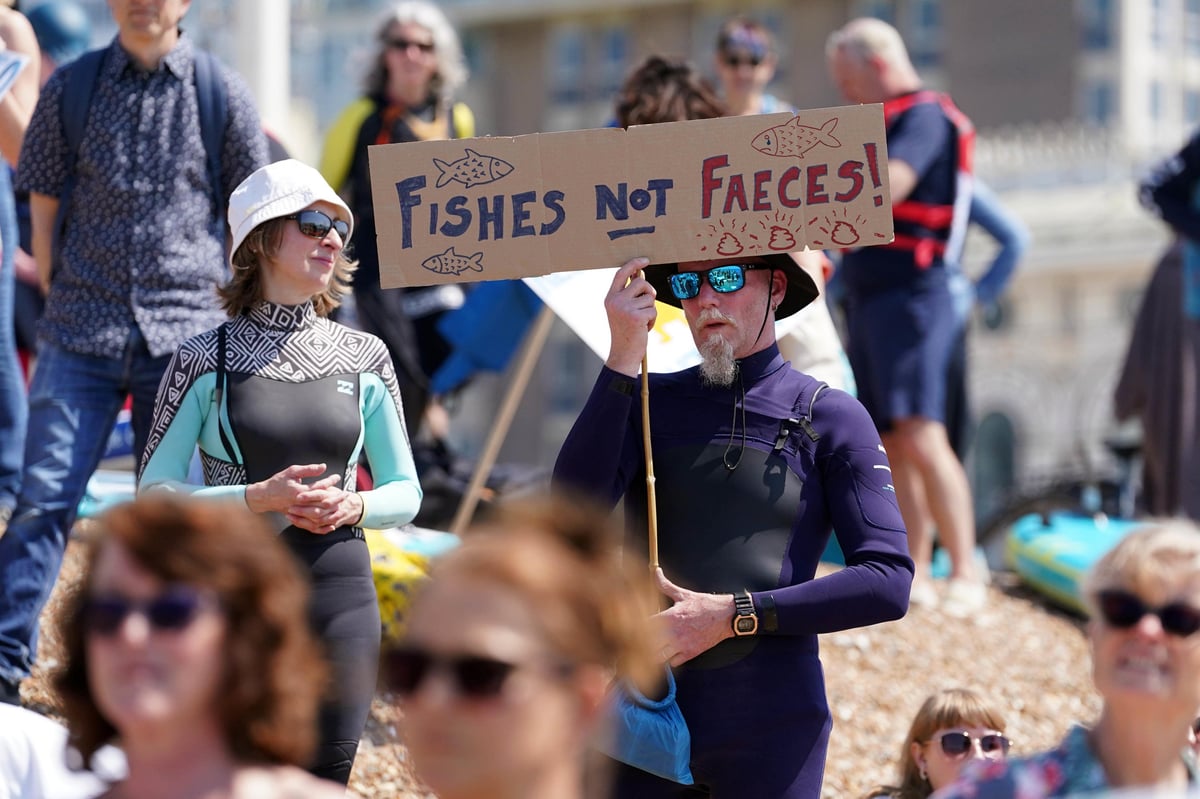
Public outrage following the release of the BBC report was immediate. Campaign groups like Surfers Against Sewage and the Rivers Trust pointed to the data as proof that the water industry’s claims of environmental stewardship were false. The 388 spills figure became a rallying point for demands to renationalize the water industry or impose criminal sanctions on executives. The disconnect between the profits paid to shareholders and the state of the rivers has never been more apparent. While Thames Water executives collected bonuses, their infrastructure was illegally vomiting waste into dry riverbeds.
The defense offered by the industry body, Water UK, was that “there should be no dry spills.” They acknowledged the problem pivoted immediately to the need for future investment. This narrative attempts to frame the solution as a matter of future funding rather than present-day compliance. It ignores the fact that customers have been paying for sewage treatment services that were not delivered. The illegal dry spills of 2022 were not a result of a sudden absence of funds the culmination of decades of asset stripping and deferred maintenance. The pipes did not suddenly crack in 2022; they had been leaking and failing for years, with the drought exposing the severity of the rot.
Further analysis of the data shows that the duration of these spills was significant. We are not discussing brief, momentary releases. The shared duration of the dry spills across the three companies was approximately 3, 500 hours. This equates to nearly five months of continuous sewage discharge if the events were placed back-to-back. For Thames Water, the exact share of this duration is obscured by their poor monitoring, the of the shared failure indicates a massive operational emergency. The company’s inability to manage its flow during dry weather suggests that its treatment works are running at or beyond capacity even without the added load of stormwater.
The investigation also cast doubt on the veracity of the “storm overflow” classification itself. If an overflow operates when it is dry, it is not a storm overflow; it is a absence of capacity valve. By classifying these assets as storm overflows, Thames Water benefits from a regulatory framework designed for emergency use. The 2022 data strips away this cover. When a “storm” overflow activates in a heatwave, it is functioning as a primary discharge point for untreated waste. This misuse of infrastructure fundamentally alters the agreement between the water monopoly and the public. The public agrees to pay for treatment; the monopoly agrees to treat the waste. In 2022, Thames Water took the payment bypassed the treatment.
The of the 388 dry spills extend to the legal liability of the company. The Environment Agency has the power to prosecute for permit breaches. The evidence provided by the BBC investigation offers a roadmap for such prosecutions. Each of the identified spills represents a chance criminal offense. The fact that these spills occurred on such a wide implies that the illegal activity was not the work of a rogue operator a standard operating procedure during periods of stress. The decision to prioritize keeping the system flowing over legal compliance suggests a calculated risk assessment by Thames Water management: the cost of chance fines is lower than the cost of fixing the problem.
, the of 388 illegal dry spills in 2022 serves as a definitive proof point of Thames Water’s failure. It the company’s PR messaging about environmental responsibility. It exposes the hollowness of the regulatory regime that allowed 38% of Thames Water’s overflows to go unmonitored. And it provides a concrete, undeniable metric of the damage inflicted on the UK’s waterways. As we examine the history of Thames Water, this number, 388, stands as a marker of the year the company was caught dumping waste into drying rivers while the country burned in a heatwave.
BBC Investigation: 388 Illegal 'Dry Spills' Identified During 2022 Drought Conditions
Regulatory Deception: The £3.3m Fine for Misleading the EA over Crawley Works Pollution
Judicial Condemnation of Deceptive Practices
On July 4, 2023, Lewes Crown Court delivered a verdict that exposed the internal culture of Thames Water Utilities Limited. The court fined the company £3. 33 million, not for a pollution event, for a calculated effort to deceive the Environment Agency (EA) regarding the cause and severity of the discharge. Judge Christine Laing KC, presiding over the case, characterized the company’s actions as a “deliberate attempt” to mislead the regulator. This ruling serves as a judicial confirmation of the falsification angle central to this investigation. Thames Water admitted to four charges: one count of causing a discharge of untreated sewage and three counts of misleading the EA, a breach of the Environmental Permitting (England and Wales) Regulations 2016.
The significance of this fine lies in the specific nature of the charges. While water companies frequently face penalties for negligence, a criminal conviction for misleading a regulator elevates the offense from operational failure to active suppression of evidence. Judge Laing noted the company’s “history of non-compliance,” referencing 20 previous fines for pollution spillages. She described the company’s conduct as “reckless,” rejecting the defense that the incident was a mere accident. The court found that Thames Water officials omitted essential water readings and submitted a report that explicitly denied responsibility for the incident, even with internal knowledge to the contrary. This judicial finding the company’s public assertions of transparency and cooperation.
The Mechanics of the Crawley Incident
The pollution event originated at the Crawley Sewage Treatment Works in West Sussex on October 11, 2017. The facility, situated near Gatwick Airport, discharges treated effluent into the Gatwick Stream, a tributary of the River Mole. On the day of the incident, a storm pump designed to handle excess flow during heavy rainfall activated erroneously. Meteorological data confirms that no significant rainfall occurred during this period. The pump ran continuously for 21 hours, diverting raw, untreated sewage into a storm tank. Because the tank was already partially full and undersized, later revealed to be three-quarters of the legally required capacity, it reached its limit rapidly.
Once the tank reached capacity, the infrastructure failed to contain the waste. For approximately six hours, millions of liters of undiluted sewage poured directly into the Gatwick Stream. Witnesses described the river turning “black” and “grey,” with visible sewage fungus and a foul odor permeating the area. The discharge was not a minor leak; it was a catastrophic release of biological waste into a sensitive ecosystem. The sheer volume of the spill suggests a complete breakdown in monitoring. A pump running in error for nearly a full day without detection indicates an absence of basic oversight method within the Crawley facility.
widespread Failures and Operational Negligence
The investigation revealed a series of operational failures that border on the absurd. The court heard that the facility possessed no alarm system capable of alerting staff to the overspill. The storm tank filled and overflowed without triggering a single automated warning in the control room. When a general alarm sounded, indicating a fault, the response was nonexistent. The lead technician responsible for the site was uncontactable. The reason provided to the court was that the technician was “awaiting a new mobile phone.” This detail exemplifies the fragility of Thames Water’s operational safety net: a multi-million-pound facility’s environmental security hinged on a single employee’s possession of a working handset.
Prosecutor Sailesh Mehta described the incident as an “accident waiting to happen” and “cumulative management deficiencies.” The absence of alarms and the reliance on a single point of contact demonstrate a widespread disregard for risk management. Judge Laing found it “utterly extraordinary” that a company of Thames Water’s size and resources could allow such a disaster to occur due to such trivial equipment failures. The judge remarked, “They should have put in every effort into tidying up the problem areas,” referencing the company’s prior record. The failure was not to a broken pump; it was a failure of the management hierarchy to install necessary safeguards.
The Architecture of Deception
The most damning aspect of the Crawley case is the subsequent cover-up. Following the spill, the Environment Agency launched an investigation to determine the cause and extent of the damage. Thames Water was legally obligated to provide accurate data and logbooks. Instead, the company provided a sanitized version of events. The court found that Thames Water omitted specific water quality readings that would have incriminated the facility. also, the company submitted a formal report to the regulator denying any responsibility for the pollution, a claim they knew to be false.
This deception delayed the investigation and forced the EA to expend additional resources to uncover the truth. The judge’s ruling clarifies that this was not an administrative error a “deliberate attempt” to hide the magnitude of the failure. By withholding logbook entries, Thames Water attempted to construct a narrative where the pollution was either natural or caused by external factors. This behavior aligns with a broader pattern where the company prioritizes reputation management over environmental compliance. The admission of guilt to the three charges of misleading the regulator stands as irrefutable proof that the company is capable of falsifying records to avoid liability.
Ecological Devastation in the Gatwick Stream
The environmental cost of the spill was severe. The influx of raw sewage caused a rapid drop in dissolved oxygen levels, suffocating aquatic life. The Environment Agency recovered nearly 1, 400 dead fish from the Gatwick Stream and River Mole. Species affected included bullhead, stickleback, roach, and chub. The court accepted that the actual death toll was likely much higher, as fish would have been washed downstream, eaten by scavengers, or hidden in the murky water and vegetation. The pollution decimated the local fish population and disrupted the ecological balance of the river for months.
The South East Rivers Trust expressed fury at the judge’s conclusion regarding the deception. In a statement, they noted that the incident “decimated fish populations” and impacted the ecology far beyond the immediate spill zone. The visual evidence of the river running black serves as a visceral reminder of the toxicity of the discharge. The biological impact was not transient; the recovery of such a stream takes years, requiring restocking and habitat restoration. Thames Water’s voluntary payment of £1 million to local organizations for river restoration, while noted by the court, does not undo the damage caused by the initial negligence and the subsequent dishonesty.
Financial Context and Corporate Priorities
The £3. 33 million fine, while significant, must be viewed in the context of Thames Water’s financial structure. At the time of the sentencing, the company was with a £14 billion debt pile and seeking equity bailouts. Critics, including the presiding judge, pointed out that the company continued to pay dividends and executive bonuses even with its “extremely serious” record of convictions. The fine represents a fraction of the company’s annual turnover, raising questions about whether financial penalties are a sufficient deterrent for a monopoly utility that views such fines as a cost of doing business.
The sentencing occurred shortly after the resignation of CEO Sarah Bentley, who stepped down amid public outcry over sewage spills. Her departure, yet, did not resolve the underlying operational rot. The Crawley incident demonstrates that the problems at Thames Water are not at the executive level are in the operational procedures, from the technician’s missing phone to the falsified reports submitted to regulators. The company’s defense attorney argued that “significant errors were made,” yet the court’s ruling confirms that these were not innocent mistakes reckless choices made by a corporation that believed it could mislead the government without consequence.
for Regulatory Oversight
This case exposes the limitations of the current regulatory framework. The Environment Agency relies heavily on operator self-monitoring (OSM). Water companies are trusted to report their own breaches. The Crawley case proves that Thames Water abused this trust, manipulating the data fed to the regulator. If the EA had not conducted a rigorous forensic investigation, the omitted readings might never have surfaced, and the company might have escaped liability. This incident provides a concrete example of why self-reporting in the water industry is fundamentally flawed. Without independent, real-time monitoring, the regulator is frequently left analyzing sanitized data provided by the very entity it is supposed to police.
The “reckless” label applied by the court destroys the defense that sewage discharges are solely the result of aging Victorian infrastructure. The Crawley Sewage Treatment Works failed because of modern negligence: a absence of alarms, poor maintenance, and a culture of dishonesty. The infrastructure did not fail because it was old; it failed because it was ignored, and when it broke, the company lied. This distinction is essential for understanding the true nature of the sewage emergency. It is a emergency of management and integrity, not just of pipes and pumps.
The operational reality of Thames Water Utilities Limited is not one of aging pipes or unfortunate weather events; it is defined by a calculated, widespread refusal to treat sewage to the legal minimum standards. In May 2025, the water regulator Ofwat concluded its most significant investigation to date, revealing a statistic that the company’s defense of “exceptional circumstances.” The investigation found that 67% of Thames Water’s wastewater treatment works with Flow-to-Full Treatment (FFT) permit conditions were unable to meet those conditions due to capacity or operational failures. This metric confirms that for two-thirds of its regulated sites, the company routinely bypassed the treatment process, dumping raw effluent into rivers not because of extreme rainfall, because the infrastructure was deliberately run its mandatory capacity.
The Mechanics of the FFT Fraud
Flow-to-Full Treatment (FFT) is the regulatory bedrock of sewage management. It dictates the specific volume of wastewater a treatment plant must process, fully cleaning it, before it is legally permitted to divert excess flow into storm tanks or directly into waterways. This threshold is not a suggestion; it is a binding condition of the environmental permit. If a plant is permitted to spill only after treating 100 liters per second, opens the sluice gates while treating only 60 liters per second, it is committing an environmental crime. The “storm overflow” defense becomes void because the spill is caused by operational throttling, not hydraulic overload.
The Ofwat investigation, which culminated in a £104. 5 million fine specifically for these breaches, exposed that Thames Water systematically violated these thresholds. By failing to treat the required volumes, the company artificially created “capacity” problem that justified discharging untreated sewage. This practice converts treatment works into bypass valves, allowing the company to avoid the operational costs of treating sewage to the required standard. The 67% failure rate indicates this was not an error at a few rogue sites the standard operating procedure across the network.
Forensic Data Analysis: The Role of Independent Scrutiny
The exposure of this widespread malpractice relied heavily on forensic data analysis that the Environment Agency (EA) failed to conduct for years. Independent analysts, most notably Professor Peter Hammond of the campaign group Windrush Against Sewage Pollution (WASP), utilized machine learning and 15-minute interval data from Event Duration Monitors (EDM) to identify the discrepancies. While the EA frequently relied on daily averages, which smooth out peaks and hide illegal spills, Hammond’s analysis matched spill start and stop times against the flow rates entering the treatment works.
This granular analysis proved that spills frequently began long before the treatment works reached their FFT capacity. In instances, the plants were operating at a fraction of their design capability when the valves opened. This data stripped away the company’s ability to blame ” weather.” The evidence showed that Thames Water assets were “sweating,” a euphemism for running infrastructure into the ground to maximize financial extraction, leaving the environment to absorb the toxic surplus.
Case Study: The River Mole Catchment
The widespread nature of these failures is most visible in the River Mole catchment, a tributary of the Thames. Data released during the investigation identified that 100% of the major wastewater treatment works in this catchment, specifically Esher, Holmwood, Crawley, and Reigate (Earlswood), were classified as “sites of concern.” These facilities were flagged for consistently failing to meet their FFT permits. The River Mole, a small river with limited dilution capacity, was forced to accept the untreated load from four major failing plants simultaneously.
At the Horley Sewage Treatment Works, the situation to the point where the Environment Agency described it as “completely unacceptable.” Pollution from the site breached the facility’s perimeter, flooding a public footpath with sewage. even with these visible failures, the regulatory response was reactive, driven by public outrage and independent data rather than proactive enforcement. The concentration of failing assets in a single catchment demonstrates how the 67% failure rate into the total ecological collapse of specific river systems.
The “Missing” Upgrades
The failure to meet FFT conditions is directly linked to a deficit in capital investment. Customers paid for infrastructure upgrades that never materialized. Between 2020 and 2025, Thames Water was funded to deliver hundreds of environmental improvement schemes. By February 2025, the company admitted to regulators that it would fail to deliver 108 of these funded upgrades. These were not cosmetic improvements; they included capacity increases specifically designed to ensure plants could meet their FFT obligations.
The funds allocated for these projects were absorbed into the company’s complex financial structure, while the physical assets remained undersized and prone to failure. This creates a pattern where the company claims poverty and requests higher bills to fix the problems it was already paid to solve. The “sites of concern” list grew because the maintenance and expansion required to keep them compliant were deprioritized in favor of short-term financial maneuvering.
Regulatory Blindness and the “Dry Spill” Reality
The 67% figure also illuminates the phenomenon of “dry spills”, discharges occurring when there is no significant rainfall. When a plant cannot handle its baseline flow due to neglect or disrepair, it spills regardless of the weather. The Ofwat investigation found a strong correlation between high spill frequencies and operational problem at treatment sites. This contradicts the industry narrative that spills are solely a wet-weather problem. By failing to maintain the pumps, screens, and biological treatment tanks necessary to process the full flow, Thames Water decriminalized the act of dumping sewage on dry days, hiding behind a regulatory framework that was too slow to catch them.
Thames Water FFT Compliance Failure Metrics (2020-2025)
Metric
Statistic
Implication
Sites Failing FFT Conditions
67% (approx. 157 sites)
Two-thirds of regulated sites routinely breach treatment permits.
River Mole Catchment Failure
100% of major sites
Total widespread failure in specific ecological zones.
Missing Upgrades (2020-2025)
108 projects
Funds collected for capacity increases were not used for construction.
Financial Penalty (Ofwat)
£104. 5 Million
Specific fine for wastewater management failures (part of £122. 7m total).
The significance of the 67% failure rate cannot be overstated. It shifts the narrative from “accidental pollution” to “structural non-compliance.” Thames Water did not experience operational difficulties; it operated a network where the majority of its treatment facilities were legally non-compliant by design or neglect. The company accepted the risk of fines as a cost of doing business, calculating that the regulatory penalty would be cheaper than the capital expenditure required to treat the sewage properly. This calculus held true until the sheer volume of data, driven by citizen science and belated regulatory action, forced the problem into the light.
Mogden Treatment Works: The 2 Billion Litre Raw Sewage Discharge Incident
The October 2020 Catastrophe: 48 Hours, 2 Billion Litres
On October 3 and 4, 2020, Thames Water’s Mogden Sewage Treatment Works in Isleworth perpetrated one of the most significant single-event pollution crimes in the utility’s history. Over a period of just 48 hours, the facility discharged approximately 2 billion litres of raw, untreated sewage directly into the River Thames. To visualize the of this release, the volume equates to roughly 800 Olympic-sized swimming pools of human waste, industrial effluent, and urban runoff entering the capital’s river system in a single weekend. This specific incident accounted for nearly 60% of the facility’s total discharge volume for the entire year of 2020, marking a catastrophic failure of infrastructure control.
The discharge occurred during Storm Alex, which brought heavy rainfall to the region. Yet, the magnitude of the release far exceeded what regulatory frameworks consider a permissible “storm overflow.” While water companies are permitted to release sewage into rivers during extreme weather to prevent backup into homes, the Mogden incident exposed a facility unable to cope with predictable seasonal variances due to chronic underinvestment. The Environmental Audit Committee (EAC) later reviewed data showing that on each of the two days, the plant spilled more than 1 billion litres. This volume overwhelmed the river’s ecosystem, creating a “chemical cocktail” that threatened aquatic life and public health in West London.
The “Capacity” Defense vs. Maintenance Reality
Thames Water executives immediately moved to frame the incident as an unavoidable consequence of ” ” weather. Then-CEO Sarah Bentley stated that the rainfall was sufficient to “fill Loch Ness” and claimed that avoiding such a discharge would require a new treatment plant the same size as Mogden or the construction of 150 additional storm tanks. This defense attempted to shift the narrative toward physical impossibility rather than operational negligence. The facility’s existing storm tanks, capable of holding only about 40 Olympic pools of water, were filled almost instantly.
Investigative scrutiny reveals a different story. The failure at Mogden was not a result of rain volume of widespread infrastructure decay. Operational reports and subsequent investigations identified that the plant was plagued by “life-expired assets.” Specifically, the facility struggled with sludge handling and grit removal, basic maintenance tasks that, when neglected, drastically reduce the capacity of the treatment works. If a plant is clogged with silt or its pumps are operating efficiency due to age, it reaches its “capacity” much faster than its design specifications allow. Consequently, the “storm release” trigger is pulled prematurely, dumping raw sewage when the plant should theoretically still be treating the inflow.
Evidence of this maintenance rot surfaced just months later, in January 2021, when Mogden suffered another serious failure. A buildup of 10 to 12 tonnes of grit and silt blocked the inlet screens, forcing the facility to discharge sewage into the Duke of Northumberland’s River. This blockage was not a weather event; it was a failure to clean the machine. Such incidents the company’s defense that the October 2020 discharge was solely an act of nature. The 2 billion litre release was the result of a “perfect storm” hitting a facility that had been hollowed out by years of profit-extraction at the expense of resilience.
Regulatory Backlash and the £104. 5 Million Reckoning
The repercussions of the Mogden incident and the broader pattern of negligence it represented culminated in a historic regulatory intervention. In May 2025, Ofwat, the water services regulation authority, imposed a penalty of £104. 5 million on Thames Water. This fine, part of a larger £122. 7 million package that included penalties for dividend breaches, stood as the largest ever handed to a water company. The regulator’s investigation a “series of failures” to build, maintain, and operate adequate infrastructure. The 2020 Mogden discharge served as a primary exhibit in this catalogue of failure.
Ofwat’s findings in 2025 validated what campaigners had argued for years: Thames Water routinely breached its legal obligations to protect the environment. The regulator noted that the company had failed to “come up with an acceptable redress package,” necessitating the severe financial penalty. This fine was explicitly directed at the company and its investors, rather than being passed on to customers, signaling a shift in regulatory tolerance. The “pay-to-pollute” model, where fines were seen as a cost of doing business, faced a serious challenge as the penalties began to method the cost of the necessary infrastructure upgrades.
The Human and Environmental Cost
The impact of the 2 billion litre discharge extended beyond regulatory spreadsheets. Residents in Isleworth and Twickenham reported a pervasive stench hanging over the river for days. The “sewage fungus”, a grey, filamentous bacteria that thrives in polluted water, became visible along the riverbanks, suffocating the riverbed and killing the invertebrates that support fish populations. Anglers and conservationists reported dead fish and a total disruption of the local ecosystem. The sheer volume of the release meant that the sewage was not diluted, leaving high concentrations of ammonia and phosphates in the water column.
Public health warnings were issued, advising against any contact with the river water. This severed the community’s connection to the Thames, transforming a recreational asset into a biohazard. The incident also highlighted the failure of the “combined sewer” system, a legacy infrastructure that mixes rainwater and sewage. While Thames Water frequently blames Victorian engineering, the company’s failure to modernize this network or install sufficient retention tanks (like the Thames Tideway Tunnel, which was still under construction and over budget at the time) left Mogden as a bottleneck with no safety valve other than the river itself.
Judicial Condemnation of “High Negligence”
While the specific 2020 Mogden incident contributed to the massive 2025 civil penalty, the judicial attitude toward Thames Water’s operations had already hardened in preceding criminal cases. Judge Francis Sheridan, presiding over earlier pollution cases involving the utility, described the company’s operations as “disgraceful” and noted a level of “high negligence.” In a ruling regarding a separate discharge, he remarked that the company operated with a ” ” disregard for the environment, a sentiment that applies directly to the operational culture that permitted the Mogden catastrophe.
The courts established that Thames Water frequently relied on members of the public to report pollution incidents because their own alarm systems were either ignored or non-functional. In the case of Mogden, the discharge was too massive to hide, yet the company’s internal monitoring systems were frequently found to be insufficient in providing real-time data on *why* the failure occurred. The “flow-to-full-treatment” (FFT) metric, the amount of sewage a plant must treat before dumping the rest, is a key permit condition. Investigations suggest that Mogden, like other sites, failed to meet its FFT requirements during the October 2020 event, meaning it began dumping sewage before its treatment capacity was actually maximized.
widespread Falsification of “Storm” Status
The classification of the October 2020 event as a “storm discharge” lies at the heart of the reporting falsification matter. By labeling the release as a weather-dependent need, Thames Water attempted to shield itself from legal liability for unpermitted pollution. yet, a discharge is only legal if the plant is operating at full capacity. If the plant is operating at 60% capacity due to broken pumps or silted tanks (as the January 2021 incident suggests was likely), then the discharge is illegal, regardless of the rain. The 2 billion litre figure is not just a measure of rain; it is a measure of the gap between the plant’s *design* capacity and its *actual* operational state, a gap created by maintenance negligence and concealed by reporting that prioritize weather excuses over engineering reality.
Mogden Treatment Works: The October 2020 Discharge Data
Metric
Data Point
Context
Total Discharge Volume
2, 000, 000, 000 Litres
Released over 48 hours (Oct 3-4, 2020).
Equivalent Volume
800 Olympic Pools
Roughly 16 pools per hour entering the Thames.
Annual Context
~60% of 2020 Total
A single weekend accounted for the majority of the year’s spill volume.
Regulatory Penalty
£104. 5 Million (2025)
Part of Ofwat’s record fine for widespread wastewater failures.
Maintenance Failure
Grit & Silt Buildup
10-12 tonnes of grit blocked screens in a subsequent Jan 2021 failure.
Mogden Treatment Works: The 2 Billion Litre Raw Sewage Discharge Incident
Witney Infrastructure Failure: 'Routine' Illegal Spilling and the Christmas Day Crisis
The Christmas Day Emergency: A Timeline of Failure
On December 25, 2021, while residents of Oxfordshire celebrated, the Witney Sewage Treatment Works (STW) began a catastrophic discharge of untreated effluent into Colwell Brook. This event, which extended continuously until January 9, 2022, serves as a definitive case study in the operational negligence characterizing Thames Water’s management of the Windrush catchment. The spill did not disrupt the local ecosystem; it forced the cancellation of the historic Boxing Day swim at Port Meadow, a tradition dating back decades, as the river became a biohazard zone. Data analysis from the Windrush Against Sewage Pollution (WASP) group reveals the sheer of this incident. For over 370 hours, raw sewage poured into the watercourse. Thames Water officials attributed the release to “flood alerts” and heavy rainfall, a standard defense used to invoke the legal protection of “exceptional circumstances.” Yet, independent analysis of rainfall data during this period contradicts the claim that such a prolonged discharge was hydraulically necessary. The volume of sewage released during this single event contributed to a grim annual total: in 2023 alone, the River Windrush received 5, 823 hours of sewage discharge, with over 2, 000 hours originating directly from the Witney STW. This Christmas Day failure was not an anomaly part of a predictable, seasonal collapse of infrastructure. The pattern repeated with mechanical precision: a spill beginning December 28, 2022, continued unabated until January 18, 2023. Another incident commencing December 30, 2023, ran well into January 2024. These consecutive winter failures demonstrate that the Witney facility cannot handle seasonal flows, yet the operator continues to permit new connections and housing developments in the catchment area, guaranteeing future pollution.
Mechanics of Negligence: The Missing Manual and Pump Failures
The operational failures at Witney are rooted in a culture of maintenance avoidance that dates back nearly two decades. A landmark prosecution in 2021, which resulted in a £4 million fine for Thames Water, exposed the depth of this negligence. The court found that the company caused the deaths of up to 3, 000 fish in the Seacourt and Hinksey streams due to a blockage they failed to detect. During the investigation, it emerged that Thames Water had no system to identify blockages and relied entirely on public reports to learn of the pollution. Most damning was the regarding the facility’s maintenance. The court heard that during a major sewer renewal project in 2012, Thames Water selected a cheaper engineering solution that required a strict six-monthly cleaning regimen to function safely. The company then failed to document this requirement. For 16 years, the specific maintenance manual needed to prevent blockages was missing or ignored. Judge Francis Sheridan remarked that the company’s inability to produce the manual until the “11th hour” of the investigation was “frankly embarrassing.” This specific legal finding exposes the internal logic of Thames Water’s asset management: capital expenditure is minimized by installing systems that require high-frequency maintenance, which is then cut to save operational costs. At Witney, this manifests as chronic pump failures and screen blockages. When intake screens fail, the facility cannot process the incoming flow, forcing the system to bypass treatment and eject raw sewage directly into Colwell Brook. The “routine” nature of these spills is a direct function of this calculated underinvestment.
The ‘Dry Spill’ Deception
While storm overflows are legally permitted during extreme rainfall to prevent backing up into homes, evidence suggests Witney STW frequently discharges when no such conditions exist. These “dry spills” represent a severe breach of the operator’s environmental permit. WASP that the facility frequently begins spilling before it reaches its “flow-to-full-treatment” (FFT) capacity. The permit requires the plant to treat a specific volume of sewage per second before diverting excess to the storm tanks. By spilling early, the operator saves money on electricity and chemical treatment, externalizing the cost of waste processing onto the river ecosystem. In 2022, a BBC investigation identified 388 illegal dry spills across three water companies, with Thames Water facilities heavily implicated. At Witney, the presence of “sewage fungus”, a grey, filamentous bacterium that only grows in waters subjected to prolonged exposure to organic pollution, confirms that the discharges are not short-term storm events chronic, low-level releases that fundamentally alter the river’s chemistry. The Environment Agency (EA) has historically failed to prosecute these dry spills with the same vigor as major fish-kill events, creating a regulatory blind spot that the operator exploits.
Citizen Science vs. Corporate Obfuscation
The exposure of the Witney scandal is almost entirely attributable to citizen scientists rather than regulatory oversight. The EA’s reliance on “operator self-monitoring” (OSM) means Thames Water is responsible for reporting its own breaches. Unsurprisingly, this system produces data that frequently conflicts with independent observations. WASP activists, using AI-driven analysis of start-stop times from Event Duration Monitors (EDMs), have repeatedly shown that the duration of spills reported by Thames Water underestimates the true environmental load. In one instance, Thames Water claimed a release was necessary due to hydraulic overload, WASP analysis showed the river levels were not sufficient to trigger a legal discharge. The gap lies in the definition of “capacity.” Thames Water frequently calculates capacity based on theoretical pump rates, whereas the actual, functional capacity is significantly lower due to wear, tear, and the aforementioned maintenance deficits. By reporting against theoretical capacity, the operator masks the reality that the plant is physically broken.
Groundwater infiltration due to cracked pipes; illegal under strict permit rules.
30 Dec 2023
Jan 2024 (Ongoing)
Unknown
Storm Overflow
Repeat failure of intake pumps; pattern of seasonal collapse.
The Witney case demonstrates that illegal spilling is not an accident a strategy. The fines, while headline-grabbing, remain smaller than the capital cost of bringing the station up to legal compliance. Until the cost of pollution exceeds the cost of infrastructure investment, the Christmas Day spills remain a routine feature of the Oxfordshire winter.
Witney Infrastructure Failure: 'Routine' Illegal Spilling and the Christmas Day Crisis
Operational Negligence: Ignored Alarms and the £4m Hogsmill River Pollution Fine
Operational Negligence: Ignored Alarms and the £4m Hogsmill River Pollution Fine
The operational culture within Thames Water is perhaps best exemplified by the catastrophic failure at the Surbiton treatment works in February 2016, an incident that resulted in a £4 million fine and exposed a disregard for automated warning systems. During Storm Imogen, the facility’s pumps failed, causing raw sewage to back up and burst from a manhole, flooding the Green Lane recreation ground and the Hogsmill River in New Malden. The sheer volume of the discharge, approximately 79 million litres of sludge, was matched only by the duration of the company’s inaction.
Court proceedings revealed that as the emergency unfolded, the facility’s automated systems functioned exactly as designed, triggering nearly 50 high-priority alarms over a five-hour period. These alarms were intended to alert remote staff that the pumps had stopped and that a major pollution event was imminent. Yet, every single warning was missed or ignored. The treatment works were unmanned at night, a cost-saving operational choice that relied entirely on remote monitoring. When that human link in the chain failed, there was no failsafe. The sewage continued to spew unchecked, covering an area of 6, 500 square metres, roughly the size of three football pitches, in ankle-deep filth.
The timeline of the response further illuminates the depth of the negligence. It took Thames Water 15 hours to report the incident to the Environment Agency, a direct breach of legal reporting requirements. A sizeable cleanup crew did not arrive on the scene until 12 hours after that report, meaning the pollution was left to fester and spread for over a day. One of the company’s own engineers later described the scene as an “avalanche of foul waste.” The force of the eruption was so violent that it coated trees, shrubs, and riverbanks in a thick of toilet paper and wet wipes, debris that remained visible in the woodland months later. The recreation ground, a public space, had to be closed for a month while 30 people worked daily to sanitize the soil.
Judge Francis Sheridan, presiding over the case at Aylesbury Crown Court in May 2021, did not mince words, describing the pollution as “utterly disgusting.” The fine of £4 million reflected not just the environmental damage to the Hogsmill, a rare and ecologically sensitive chalk stream, the reckless nature of the oversight. The court noted that this was not an misfortune; pollution problems at the Surbiton site dated back to 2001. The incident underscored a widespread reliance on reactive measures rather than proactive maintenance and monitoring. The company’s defense frequently cites extreme weather, yet the failure to respond to dozens of specific, urgent alarms points to a breakdown in basic operational discipline rather than an act of nature.
The environmental cost was severe. The Hogsmill River supports a variety of wildlife, including fish and invertebrates that are highly sensitive to ammonia and low oxygen levels caused by sewage. While the fast-flowing floodwaters flushed away immediate evidence of fish kills, the long-term degradation of the chalk stream habitat is cumulative. This incident serves as a definitive case study in how Thames Water’s internal fail to protect the environment, prioritizing remote management strategies that crumble the moment active intervention is required.
Foreseeable Harm: The £2.3m Penalty for Equipment Failure at Henley-on-Thames
Foreseeable Harm: The £2. 3m Penalty for Equipment Failure at Henley-on-Thames
On February 26, 2021, Aylesbury Crown Court delivered a scathing judgment against Thames Water, fining the monopoly £2. 3 million for a pollution incident that Judge Francis Sheridan described as “entirely foreseeable.” The case centered on a catastrophic failure at the Henley-on-Thames sewage treatment works in April 2016, where untreated sewage containing lethal concentrations of ammonia decimated the local aquatic ecosystem. Unlike incidents attributed to freak weather or external force majeure, this event was the direct result of chronic infrastructure neglect and a refusal to heed automated warnings. The court found that the company had ample opportunity to prevent the disaster chose inaction, resulting in the death of 1, 144 fish and the biological sterilization of the Fawley Court Stream for nearly a year.
Chronicle of a Preventable Disaster
The incident unfolded between April 21 and April 24, 2016, when the Henley treatment plant suffered a complete breakdown of its biological processing capabilities. The facility relies on specific to aerate effluent, a process necessary to break down ammonia and other toxic compounds before water is released back into the environment. Investigators from the Environment Agency (EA) discovered that these essential aerators had failed, yet no immediate repairs were commissioned. also, the probes designed to measure the standard of the treatment process were also out of order, leaving the plant flying blind.
Evidence presented in court revealed a pattern of operational blindness that bordered on willful ignorance. For a full week prior to the discharge, parts of the sewage treatment process were not monitored at all. When the equipment began to fail, automated alarm systems triggered to alert staff of the impending emergency. These alarms, designed as the last line of defense against environmental catastrophe, were either ignored or received a delayed response that rendered them useless. Judge Sheridan noted that the company should have reacted to these warnings “long before” they did, characterizing the company’s conduct as “high negligence.”
The specific failure involved the release of sewage with ammonia levels double the permitted limit. Ammonia is particularly potent to aquatic life; it strips the gill tissues of fish, causing them to suffocate even in water that might otherwise appear clear. The discharge flowed into Fawley Court Ditch and subsequently the Fawley Court Stream, a tributary of the River Thames. The toxic plume killed fish across 13 species, including chub, gudgeon, dace, roach, perch, tench, and pike. The ecological impact was total; the stream was wiped clean of life and required twelve months to show signs of recovery.
Judicial Condemnation and widespread Negligence
The £2. 3 million fine reflected not just the severity of the damage, the court’s frustration with Thames Water’s recidivism. By 2021, the company had already accumulated £24. 4 million in fines for pollution incidents since 2017. Judge Sheridan’s sentencing remarks cut through the corporate defense, stating that the pollution and the events leading up to it demonstrated a fundamental failure in management. He rejected the company’s initial attempts to have the case dismissed, terming them “hopeless,” and emphasized that the risk of pollution was increased by a complete absence of preventative measures.
The court heard that oxygen levels at the plant, a serious indicator of treatment health, were dangerously low a full 24 hours before the pollution became visible to the public. Yet, the facility continued to operate without intervention. This delay proved fatal for the local wildlife. When an Environment Agency officer arrived on site on April 23, 2016, the stench of sewage was palpable in the brown water, and dead fish were already floating on the surface alongside sanitary products. The visual and olfactory evidence contradicted any claim that the incident was minor or undetectable.
This case exemplifies the “run-to-fail” maintenance philosophy that critics pervades the privatized water sector. Rather than investing in strong preventative maintenance, the company allowed serious sensors and aerators to deteriorate until they caused a reportable incident. The cost of the fine, while in the millions, is frequently weighed against the cost of detailed infrastructure upgrades. In this instance, the “foreseeable” nature of the harm was not a hypothesis a documented reality of broken machines and silenced alarms.
Legacy of Pollution at Henley
The 2016 incident was not an anomaly for the Henley-on-Thames area a precursor to a decade of degradation. The failure to address the root causes of infrastructure collapse has left the river in a precarious state. Citizen science data collected years after the 2016 fine shows that the problems. In 2025, testing by local groups found that treated effluent leaving the Henley plant still contained E. coli at levels 30 times higher than safe bathing standards. This continuity of pollution demonstrates that the financial penalties, while headline-grabbing, have not been sufficient to force a genuine transformation in how the facility is managed.
The “Henley Mile,” famous globally for the Royal Regatta, remains under threat from the very same infrastructure that failed in 2016. The £2. 3 million penalty serves as a historical marker of a specific event, the underlying mechanics of the failure, ignored alarms, broken probes, and delayed responses, remain a widespread threat. The judge’s assertion that the damage was “entirely foreseeable” applies not just to the dead fish of 2016, to the continued ecological of one of England’s most iconic river stretches.
13 species affected including Pike, Perch, and Roach
Pollutant Level
2x Permitted Limit
Ammonia concentration in Fawley Court Ditch
Recovery Time
12 Months
Duration for stream ecosystem to restore baseline life
Warning Signs
Ignored Alarms
Low oxygen warnings active 24hrs prior to spill
Financial Misconduct: The £18.2m Penalty for Unjustified Dividend Distributions
The imposition of an £18. 2 million penalty on Thames Water in May 2025 marked a definitive regulatory judgment against the financial engineering that characterized the company’s decline. This sanction, distinct from the £104. 5 million fine for environmental destruction, targeted a specific form of corporate malfeasance: the distribution of dividends to shareholders while the regulated entity faced insolvency and operational collapse. Ofwat’s enforcement action dismantled the long-standing defense that internal financial transfers were harmless administrative procedures, exposing them instead as the extraction of value from a failing utility. ### The Breach of License Condition P30 The core of this financial misconduct lies in the violation of License Condition P30, a regulatory method introduced in May 2023. This condition explicitly prohibits water companies from declaring or paying dividends if such payments compromise their financial resilience or if the company fails to meet performance obligations to customers and the environment. The rule was designed to stop the “asset stripping” model where utilities incur debt to pay shareholders while infrastructure crumbles. Thames Water’s board authorized two specific payments that triggered this penalty. The was an interim dividend of £37. 5 million paid in October 2023 to its immediate parent company, Thames Water Utilities Holdings Limited (TWUHL). The second, and more complex transaction, occurred in March 2024, involving dividends totaling £158. 3 million. These payments occurred while the company’s credit rating teetered on the edge of “junk” status, a financial position that legally triggered a “cash lock-up.” A cash lock-up is a safeguard intended to trap capital inside the regulated utility when its creditworthiness falls investment grade (Baa1/BBB+). It prevents management from siphoning cash to holding companies when that capital is urgently needed to service debt or repair pipes. Thames Water’s decision to bypass the spirit of this lock-up through complex accounting maneuvers demonstrated a prioritization of the Kemble structure over the utility’s stability. ### The Kemble Extraction method To understand the severity of the £18. 2 million penalty, one must examine the recipient of these funds: the Kemble Water structure. Thames Water Utilities Limited (the operating company) sits at the bottom of a stack of holding companies, capped by Kemble Water Finance. Kemble, heavily indebted and with no income source other than dividends from the utility, required constant cash injections to service its own external loans. The March 2024 transaction involved a “surrender of tax losses” valued at £131. 3 million. In this scheme, Thames Water transferred valuable tax credits to other companies within the Kemble group. While no physical cash left the ecosystem in the same way a wire transfer would, the utility lost an asset (the tax credit) that could have reduced its future liabilities. Ofwat correctly identified this as an “extraction of value.” The regulator ruled that Thames Water had subsidized its parent company’s debts at the expense of its own financial health. The regulator’s investigation found that the board failed to adequately consider the company’s abysmal operational performance when authorizing these transfers. At the exact moment these millions were signed over to Kemble, Thames Water was recording a 66% failure rate in Flow-to-Full Treatment compliance and illegally discharging raw sewage into the Thames catchment. The between the boardroom’s financial agility and the engineering department’s paralysis provided the evidence needed for the fine. ### Regulatory Findings and the “Investible” Myth Thames Water executives frequently argued that dividend payments were necessary to maintain the company’s status as an “investible” proposition. They claimed that blocking flows to the parent company would signal distress to the market. Ofwat’s ruling shattered this narrative. The regulator determined that paying dividends while failing to meet statutory obligations does not signal strength; it signals a absence of governance. The £18. 2 million penalty was accompanied by a “clawback” method. Ofwat ordered that the £131. 3 million value extracted through the tax loss scheme be returned to customers. This restitution is executed through an adjustment to the price control, lowering the amount Thames Water can charge customers in future bills to offset the value that was improperly removed. This method ensures that the cost of the financial misconduct falls on the investors, not the public. The investigation also highlighted the role of the board in these decisions. The directors certified that the dividends complied with Condition P30, a certification the regulator found to be baseless. This finding raises serious questions about the fiduciary duties of the directors, who authorized payouts that directly contradicted the visible reality of the company’s operational emergency. ### The Debt Context and Credit Downgrades The timing of these dividends makes the misconduct particularly egregious. Throughout 2023 and 2024, credit rating agencies Moody’s and S&P issued repeated warnings and downgrades regarding Thames Water’s debt pile, which exceeded £15 billion. The company’s gearing (the ratio of debt to equity) was among the highest in the sector. When a utility reaches this level of use, every pound of available capital is required to reduce debt or fund capital maintenance. By diverting £195. 8 million (the combined total of the October and March transactions) toward the parent company, Thames Water accelerated its own financial deterioration. This behavior forced the credit agencies to downgrade the company further, cementing the “junk” status that makes future borrowing more expensive and difficult. The “cash lock-up” was not a technical rule; it was a survival method. By breaching it, Thames Water’s management demonstrated a willingness to risk the utility’s solvency to prolong the life of the Kemble holding structure. The £18. 2 million fine serves as a punitive measure for this specific decision-making failure. ### Impact on the “Turnaround” Narrative This financial penalty severely damaged the credibility of Thames Water’s “turnaround plan.” New leadership had promised a break from the past, emphasizing transparency and operational focus. Yet, the authorization of these dividends occurred under the watch of the very team promising reform. It revealed that the financial imperatives of the private equity owners still superseded the regulatory obligations of the utility. The penalty also set a precedent for the entire UK water sector. It established that the “internal dividend” loophole—using tax losses or inter-company loans to move value—would no longer be tolerated. For decades, water companies used these complex structures to obfuscate the true flow of money. The £18. 2 million fine, while small compared to the company’s total debt, established the legal principle that value extraction in the face of operational failure is a punishable offense. ### Conclusion of the Financial Probe The conclusion of Ofwat’s investigation in May 2025 left Thames Water with no remaining defense for its financial strategy. The regulator’s statement was blunt: “The era of profiting from failure is over.” The fine, combined with the £104. 5 million operational penalty, stripped the company of the argument that its financial woes were solely due to external factors like inflation or energy prices. The record shows that even as the network collapsed, the of value extraction continued to operate until the regulator forcibly jammed the gears.
Table 8. 1: Breakdown of the Dividend Misconduct Penalty (May 2025)
Component
Amount (£m)
Description
The Penalty
£18. 2m
Fine payable by shareholders for breaching License Condition P30 regarding dividend restrictions.
October 2023 Dividend
£37. 5m
Cash payment to Thames Water Utilities Holdings Limited even with poor performance.
March 2024 Transaction
£158. 3m
Total value moved, including £131. 3m in “surrendered tax losses” to Kemble group companies.
Customer Clawback
£131. 3m
Value to be returned to customers via future bill reductions to offset the extracted tax assets.
Total Financial Impact
£149. 5m
Combined cost to shareholders (Penalty + Clawback) resulting from the enforcement action.
Hidden Discharges: Discovery of 300 Previously Unmonitored Storm Overflows
The Invisible Network: 300 Points of Failure
The of Thames Water’s environmental misconduct expanded significantly with the admission that a vast network of sewage discharge points existed completely outside the regulatory monitoring framework. While public scrutiny focused on the duration of spills from known storm overflows, a parallel investigation exposed a more fundamental deception: the existence of approximately 300 storm overflows that Thames Water had failed to declare, map, or monitor. These “hidden” discharge points allowed the utility to release untreated effluent into the Thames and its tributaries with zero accountability, rendering official pollution statistics mathematically impossible to verify.
For years, the Environment Agency (EA) relied on data provided by water companies to assess compliance. This self-reporting model assumed that the infrastructure maps provided by utilities were accurate. The discovery of these 300 unmonitored sites shattered that assumption. These were not pipes with faulty sensors; they were active relief valves that did not exist on the regulatory radar. Consequently, every discharge from these points, whether during heavy rainfall or illegal “dry spills”, occurred in total secrecy. The volume of sewage released from these phantom assets remains unknown, the environmental damage suggests a prolonged period of unrestricted pollution.
The emerged following intense pressure from environmental groups, including London Waterkeeper, which identified discrepancies between river quality data and reported spill events. Citizen scientists observing the River Mole and other tributaries frequently recorded high levels of ammonia and E. coli in sections of the river where no active discharges were reported. These biological markers provided irrefutable evidence that sewage was entering the watercourse from undocumented sources. Confronted with this data, Thames Water was forced to acknowledge the gaps in its asset register.
The “Unmapped” Defense
Thames Water attempted to mitigate the by attributing these blind spots to the transfer of private sewers to water companies in 2011. The company argued that when the government transferred ownership of private lateral drains and sewers, nearly 40 percent of the network was unmapped. They claimed that these 300 discharge points were legacy assets that had simply been “lost” in the administrative shuffle. This defense, yet, ignored the company’s operational obligations. In the decade following the transfer, Thames Water paid out billions in dividends to shareholders while failing to conduct the basic surveying required to identify the assets they owned.
A pilot project involving geospatial data firm 1Spatial highlighted the extent of this negligence. In a trial covering just three square kilometers, the analysis inferred an additional 91 kilometers of sewers that did not appear on Thames Water’s existing maps. Extrapolating this failure across the company’s entire service area reveals a widespread absence of knowledge about the infrastructure it is paid to manage. The company operated a “don’t look, don’t find” policy, where ignorance of an asset’s existence served as a shield against liability for the pollution it caused.
The financial of this ignorance were substantial. By failing to identify and monitor these 300 sites, Thames Water avoided the capital expenditure required to install Event Duration Monitors (EDMs). As of 2023, the cost to install a single EDM and integrate it into the telemetry system was significant. Multiplied by 300, the company saved millions of pounds, money that was subsequently available for distribution to investors or executive bonuses. This cost-avoidance strategy directly contravened the requirements of the Urban Waste Water Treatment Regulations, which mandate that operators must have adequate knowledge of their collection systems to prevent uncontrolled discharges.
Data Integrity and the “Faulty” Monitor emergency
The discovery of the unmonitored sites compounded an existing emergency regarding the reliability of the monitors that were installed. An analysis by the Liberal Democrats in 2024 revealed that Thames Water had the worst record for faulty monitoring equipment among all water companies. Approximately 20 percent of its installed EDMs were non-functional or reporting erroneous data. When combined with the 300 completely unmonitored sites, this meant that of the company’s sewage network operated without any oversight whatsoever.
The breakdown of monitoring equipment was frequently convenient. Internal documents and whistleblower testimonies suggested that monitors were frequently “offline” during periods of heavy operational stress. In instances where a monitor was flagged as faulty, the company would report no data for that period, treating the absence of evidence as evidence of absence. This practice artificially suppressed the spill count. When the 300 unmonitored sites are factored into the historical data, the claim that Thames Water spilled sewage for “only” 300, 000 hours in a given year becomes a gross underestimate. The true figure, accounting for the hidden discharges, is likely far higher.
The Environment Agency’s response to this discovery highlighted the weakness of the regulatory regime. The EA absence the resources to independently audit the thousands of miles of sewer network under Thames Water’s control. Instead, it relies on the operator to self-incriminate. When Thames Water failed to declare these 300 sites, the regulator had no method to detect the omission until third-party evidence made the denial untenable. This regulatory gap allowed the company to operate an illegal shadow network for years, bypassing the permitting process entirely.
Operational Impact on Tributaries
The impact of these hidden discharges was most severe in smaller tributaries, where the dilution factor is lower than in the main channel of the Thames. In the River Mole catchment, unmonitored outfalls released unscreened sewage directly into habitats supporting sensitive aquatic life. Unlike permitted storm overflows, which are frequently equipped with screens to remove solids, of these “lost” outfalls were simple pipes that ejected raw sewage, including wet wipes, sanitary products, and plastics, directly into the environment.
Residents in areas like Brockham and Sidlow reported foul odors and visible pollution trails that did not correlate with any published spill alerts. Because these sites were not on the map, they were not subject to the “Flow-to-Full Treatment” (FFT) conditions that regulate permitted sites. This meant that even during light rainfall, or indeed, during dry weather, these pipes could discharge effluent without triggering an alarm at the control center. The absence of telemetry meant that a blockage or mechanical failure causing a spill could for days or weeks before being visually identified by a member of the public.
The retrospective integration of these 300 sites into the monitoring network has forced a restatement of Thames Water’s environmental performance. The company’s “Pathway to River Health” and other sustainability pledges were based on a dataset that excluded these high-polluting assets. As these sites are brought online and monitored, the spike in reported spill hours not reflect a sudden deterioration in performance, rather the exposure of a long-standing reality. The company’s previous claims of “improving” river health were built on incomplete data, falsifying the environmental baseline to show progress where none existed.
This episode demonstrates that the emergency at Thames Water is not one of aging infrastructure, of information integrity. The company did not know what it owned, did not monitor what it used, and did not report what it spilled. The 300 hidden overflows stand as a physical testament to a corporate culture that prioritized plausible deniability over operational competence.
Capital Extraction: £7.2bn in Dividends vs. Chronic Infrastructure Underinvestment
The privatization of Thames Water in 1989 was sold to the British public on a pledge of modernization and efficiency. The reality, yet, has been a masterclass in financial engineering designed to extract maximum capital while leaving the physical asset to rot. Between 1990 and 2023, shareholders extracted £7. 2 billion in dividends from Thames Water. During the same period, the company’s debt pile exploded from zero to over £16 billion. This inverse relationship—rising debt funding private payouts rather than public infrastructure—lies at the heart of the utility’s collapse.
The Macquarie Era: A Blueprint for Extraction
The most aggressive phase of capital extraction occurred under the ownership of the Australian infrastructure bank Macquarie Group, which led a consortium to buy Thames Water in 2006. Critics, including environmental campaigners and financial analysts, have since labeled this period the “Vampire Kangaroo” era, a moniker reflecting the ferocity with which value was sucked out of the utility. When Macquarie took control, Thames Water held approximately £3. 4 billion in debt. By the time the consortium sold its final stake in 2017, that debt had ballooned to £10. 8 billion. even with this massive leveraging, the consortium paid itself £2. 8 billion in dividends. In several years, the dividends paid out exceeded the company’s entire generated profit, a mathematical impossibility without borrowing against the asset itself. The method was simple yet devastating. The owners used a complex web of holding companies, most notably Kemble Water Finance, to borrow vast sums. These loans were not used to replace Victorian-era pipes or build new reservoirs. Instead, they were funneled up the corporate chain to shareholders. The debt obligation, yet, remained anchored to the regulated utility, Thames Water Utilities Limited, and by extension, its bill-paying customers.
The 2, 000-Year Replacement pattern
While billions flowed out to investors in Australia, Canada, and China, the physical infrastructure of London and the Thames Valley disintegrated. The most damning metric of this neglect is the pipe replacement rate. Analysis of industry data reveals that Thames Water has been replacing its water and wastewater pipe network at a rate of approximately 0. 05% per year. At this pace, it would take the company 2, 000 years to upgrade its entire network, a timeline that dates back to the Roman occupation of Britain. The consequences of this capital starvation are visible daily. Thames Water loses approximately 600 million litres of treated water every single day to leakage. This is roughly the volume of 240 Olympic-sized swimming pools into the ground every 24 hours, treated at great expense only to be wasted. also, the company has failed to build a single new major reservoir since privatization in 1989. The last major reservoir in the Thames region was completed in 1976, half a century ago. even with a population explosion in London and the Southeast, the company relied on existing, aging assets while crying poverty when regulators demanded upgrades. The proposed Abingdon reservoir, a project discussed for decades, remains a paper concept, delayed by planning paralysis and a refusal to commit the necessary capital expenditure without guaranteed returns.
The Kemble Collapse and Regulatory Fines
The house of cards began to collapse in 2024. Kemble Water Finance, the parent company at the top of the corporate structure, defaulted on its debt obligations. The high-interest environment exposed the fragility of the highly leveraged model. Lenders who had happily financed the dividend machine suddenly closed their wallets, leaving the parent company unable to service its loans. In a rare moment of regulatory teeth, Ofwat fined Thames Water £18. 2 million in 2024 for breaching dividend rules. The regulator found that the company had distributed dividends without maintaining a credit rating that reflected a financially resilient business. This fine, while symbolic, was a fraction of the billions already extracted. It marked the time a water company had been penalized specifically for prioritizing shareholder payouts over financial health.
The “Project Timber” Scenario
By 2025, the situation had to the point where the UK government began active preparations for “Project Timber”, the code name for the temporary nationalization of Thames Water via a Special Administration Regime (SAR). The company’s own auditors, PwC, warned of “material uncertainty” regarding its ability to continue as a going concern. The financial engineering that defined the post-privatization era had reached its terminal phase. The £7. 2 billion in dividends stands as a historical record of wealth transfer, moving capital from bill payers and debt markets into private accounts, leaving behind a utility that is technically insolvent and physically crumbling. The cost of fixing the damage, replacing the pipes, upgrading the sewage works, and building the reservoirs, is estimated to be in the tens of billions, a bill that inevitably fall on the customer or the taxpayer, long after the original beneficiaries have exited the stage.
Thames Water Financial Extraction vs. Infrastructure Reality (1990-2023)
Metric
Figure
Context
Total Dividends Paid
£7. 2 Billion
Cash extracted by shareholders since privatization.
Debt Increase
£0 to £16+ Billion
Debt load grew from zero at privatization to insolvency levels.
Macquarie Era Extraction
£2. 8 Billion
Dividends taken between 2006-2017 while debt tripled.
Daily Leakage
600 Million Litres
Treated water lost daily due to decrepit pipes.
Pipe Replacement Rate
0. 05% per year
Implies a 2, 000-year pattern to renew the network.
New Reservoirs Built
Zero
No new major reservoirs constructed since 1976.
Capacity Deficit: 181 Sewage Works Operating Below Required Treatment Levels
Capacity Deficit: 181 Sewage Works Operating Required Treatment Levels
Independent analysis has exposed a catastrophic infrastructure deficit within Thames Water’s operational network, revealing that 181 sewage treatment works, representing 80% of facilities with known capacity data, are physically incapable of treating the volumes of waste they receive. This figure, derived from research by the Oxford Rivers Improvement Campaign (ORIC) and based on Thames Water’s own data secured via Environmental Information Requests, the company’s defense that spills are the result of exceptional weather. Instead, the data points to a widespread, physical inability to process daily sewage loads, a direct consequence of decades of capital extraction over necessary maintenance.
The severity of this capacity shortfall is not uniform includes sites operating at dangerous fractions of their required throughput. Of the 181 failing works identified, 17 facilities function at less than 60% of the necessary treatment capacity. In specific instances, such as the works at Hanwell and Bourton-on-the-Water in Oxfordshire, the infrastructure treats less than half of the incoming sewage before the system is overwhelmed. The remaining volume, unable to be processed, is ejected directly into local watercourses. This is not an operational accident; it is a mathematical certainty caused by tanks and pipes that are simply too small for the populations they serve.
Thames Water’s internal knowledge of its own assets appears negligently incomplete. The analysis highlighted that the company could not provide treatment capacity data for 120 of its sewage works, suggesting it does not know the operational limits of nearly a third of its facilities. For the sites where data exists, the “sweating assets” strategy, a corporate euphemism for running into the ground to avoid replacement costs, has left serious infrastructure frozen in the mid-20th century. Maple Lodge, the company’s fifth-largest treatment centre, relies on infrastructure dating back to the 1950s. In 2024 alone, this single site discharged untreated effluent 124 times, totaling 1, 916 hours, into the River Colne. The plant is physically unable to cope with the region’s population growth, yet major upgrades to boost capacity have been repeatedly delayed, with completion pushed to 2030.
Regulatory bodies have corroborated these independent findings, though enforcement has lagged behind the of the offense. Ofwat’s investigation identified 157 “sites of concern” where Thames Water breached environmental permit conditions, leading to a £104. 5 million fine. These breaches were primarily driven by the failure to meet Flow-to-Full Treatment (FFT) conditions, meaning the plants were bypassing treatment processes even when rainfall did not justify such emergency measures. At 66% of sites with FFT permits, the company failed to treat the required volume of sewage, choosing instead to dump the excess. This practice converts the river network into a secondary sewage treatment stage, relying on dilution rather than purification.
The consequences of this capacity deficit are measurable in the rising volume of illegal discharges. In 2024, raw sewage discharges into rivers by Thames Water rose by 50% compared to the previous year, totaling nearly 300, 000 hours. This surge correlates directly with the static nature of the treatment capacity against a backdrop of increasing urban runoff and population density. While the company announces future investment plans, such as the £270 million upgrade for Oxford’s sewage works, the delivery timelines stretch years into the future. The Oxford project, for instance, is delivered in phases with final completion extending to 2030, leaving the current infrastructure to fail repeatedly in the interim. The gap between the sewage produced by 16 million customers and the physical capacity of Thames Water’s tanks is not closing; it is a widening chasm filled with untreated waste.
Reporting Delays: The 15-Hour Gap in Notifying Regulators of Sludge Escape
The 15-hour delay in notifying the Environment Agency (EA) regarding the catastrophic escape of sewage sludge represents a distinct and calculated failure in regulatory compliance, separate from the mechanical breakdown that caused the spill. While the operational negligence involved ignored alarms, the procedural failure—a silence lasting nearly an entire day—demonstrates a corporate culture that prioritizes obfuscation over transparency. This specific incident, which occurred during Storm Imogen in February 2016 at the Surbiton treatment works, serves as a case study for how Thames Water manages the flow of information during a emergency. The delay did not slow the response; it actively degraded the regulator’s ability to assess the full of the environmental damage. ### The Timeline of Silence The incident began when pumps failed at the Surbiton works, causing raw sewage sludge to back up and eventually burst through manholes. even with the facility’s automated systems generating alarms indicating a serious failure, Thames Water personnel did not contact the Environment Agency for 15 hours. Under the conditions of their environmental permits, water companies must report pollution incidents “immediately” to allow for mitigation and assessment. The 15-hour gap blinded the regulator during the most acute phase of the pollution event. By the time Thames Water alerted the EA, the of the river had changed. The initial, most concentrated pulse of toxic sludge had already moved downstream or been diluted by the river’s flow. An Environment Agency investigator noted that the “water’s fast flow had flushed away any evidence” of the initial discharge intensity by the time they arrived. This delay erased the “smoking gun” of the peak pollution levels, leaving regulators to assess the aftermath rather than the event itself. the delay served a functional purpose for the violator: it minimized the visible evidence available to inspectors at the serious moment. ### The Sludge Escape Mechanics The material released was not storm water mixed with sewage, “sewage sludge”—a more concentrated, viscous byproduct of the treatment process. Approximately 79 million litres of this sludge escaped into the Hogsmill River and covered a nearby recreation ground. The volume is difficult to visualize, court records describe it as covering 6, 500 square meters of public land in ankle-deep filth. The sludge coated the riverbanks and the woodland floor, requiring a cleanup operation that took 30 people a month to complete. Unlike liquid sewage which disperses, sludge remains as a heavy, toxic sediment. The 15-hour reporting delay meant that this material sat uncontained and unaddressed, seeping into the soil and the riverbed for a full night and morning before any containment measures could be enacted. The company’s response team did not establish a “sizeable presence” at the scene until 27 hours after the incident began—12 hours after they called the EA. ### Regulatory Obstruction and Legal Consequences Judge Francis Sheridan, who presided over the case at Aylesbury Crown Court, identified the reporting delay as a serious aggravating factor. He noted that the company’s failure to report was not just an administrative oversight a breach of the trust required for the self-reporting regulatory model to function. The £4 million fine levied in 2021 (covering this and other incidents) reflected the severity of this communication failure. The judge remarked that the pollution was “foreseeable and avoidable,” the failure to report it promptly added a of culpability that moved the offense from negligence toward recklessness. The delay also highlights a flaw in the “operator self-monitoring” (OSM) regime. When the polluter is the only entity with real-time data on a spill, and that polluter chooses to withhold that data for 15 hours, the regulatory system collapses. The EA relies on timely notifications to deploy scientists to measure ammonia levels and dissolved oxygen. By denying the EA this opportunity, Thames Water controlled the narrative of the spill’s severity. ### Pattern of Delayed Notification This 15-hour gap is not an anomaly fits a pattern of late reporting that has plagued Thames Water’s operations. In subsequent investigations, including the 2017-2021 period covered by later fines, the EA frequently “delayed reporting” as a recurring problem. For instance, during the Crawley pollution incident (Section 2), misleading information was provided. In the Henley incident (Section 7), response times were sluggish. The 15-hour Surbiton gap stands out because of the sheer volume of sludge involved, the method—silence until the worst has passed—is a repeated tactic. The company’s internal logs frequently show alarms triggering hours before any external call is made. In the Surbiton case, nearly 50 alarms sounded over five hours. The decision not to pick up the phone after the, second, or tenth alarm suggests a deliberate operational choice to attempt to resolve the problem “in-house” before alerting authorities. When that resolution fails, the regulator is called only after the damage is done and the evidence is diluted. ### Environmental Impact of the Delay The specific environmental consequence of the 15-hour delay was the unchecked spread of the sludge. Had the EA been notified immediately, booms could have been deployed to contain the solid waste, and aerators could have been installed to mitigate the oxygen crash in the Hogsmill River. Instead, the sludge had free rein to smother the riverbed. The Hogsmill is a chalk stream, a rare and fragile habitat. The suffocation of the riverbed by thick sludge has long-term effects on invertebrate populations that underpin the entire ecosystem. The delay in reporting directly translated to a delay in mitigation, maximizing the ecological harm.
Timeline of the Surbiton Sludge Incident & Reporting Failure
Timeframe
Event
Regulatory Status
Night of Incident
Pumps fail at Surbiton works; Storm Imogen conditions.
Unreported
Hours 1-5
~50 Alarms trigger in control room indicating failure.
Ignored / Unreported
Hour 15
Thames Water contacts the Environment Agency.
Delayed Notification
Hour 27
Thames Water establishes “sizeable presence” for cleanup.
Delayed Response
Post-Incident
EA arrives; peak flow evidence flushed away.
Evidence Compromised
The 15-hour gap remains a definitive example of how procedural non-compliance can be as damaging as physical infrastructure failure. It exposes the fragility of a system that trusts water companies to police themselves. When the alarm rings, the public relies on the operator to answer; in this case, Thames Water let it ring for 15 hours while 79 million litres of sludge poured into the environment.
Criminal Liability: The 'Public Nuisance' Evidence Dossier Submitted to Thames Valley Police
The escalation from regulatory non-compliance to alleged criminal conduct marked a definitive shift in the public and legal battle against Thames Water. By 2025, the narrative had moved beyond civil penalties for “underperformance” to direct accusations of statutory crime. This culminated in the submission of a detailed evidence dossier to Thames Valley Police, explicitly alleging that the company’s executives were guilty of “public nuisance”—a common law offense codified under Section 78 of the Police, Crime, Sentencing and Courts Act 2022. ### The “Public Nuisance” Legal Theory The decision to pursue a criminal complaint for public nuisance represented a tactical evolution by campaigners, specifically the Citizen’s Arrest Network (CAN) and the Windrush Against Sewage Pollution (WASP) group. While the Environment Agency (EA) prosecuted under the Environmental Permitting Regulations, these fines were frequently absorbed by Thames Water as operating costs—simply the price of doing business. Public nuisance, yet, carries a maximum sentence of ten years in prison for individuals found guilty of acts that cause serious harm to the public or put them at risk. The dossier, prepared with the assistance of law firm Leigh Day, argued that Thames Water’s failures were not accidental breaches of permit conditions the result of a deliberate corporate strategy. The submission contended that the company knowingly operated infrastructure it knew was incapable of treating sewage volumes, so endangering public health and destroying environmental ecosystems. By failing to upgrade works and falsifying data to hide the extent of the problem, the dossier alleged the directors had “intentionally or recklessly” caused a nuisance to the public. ### The Hammond Analysis: Forensic Evidence of Crime Central to the police dossier was the forensic data analysis provided by Professor Peter Hammond, a retired computational biologist whose work stripped away the company’s veil of secrecy. Hammond used machine learning to analyze the “start and stop” data from Event Duration Monitors (EDMs) against river level data and the company’s own flow-to-full-treatment (FFT) records. His findings were damning. The dossier presented evidence that between 2021 and 2025, Thames Water was responsible for at least 8, 499 illegal sewage discharges out of a total of 39, 404 spills. These were not storm overflows triggered by exceptional rainfall; they were “dry spills” or discharges that occurred when the treatment works were not operating at full capacity. Hammond’s analysis demonstrated a pattern of “early spilling,” where untreated sewage was diverted into rivers before the plant reached its legally required treatment threshold. This practice allowed the company to bypass treatment costs and avoid wear on aging, directly transferring the cost of maintenance to the environment. The dossier argued this constituted a fraudulent misrepresentation of the company’s operational status to regulators and the public. ### The Citizen’s Arrest and Police Involvement The submission of the evidence followed a dramatic confrontation in March 2025. Campaigners from the Citizen’s Arrest Network entered the lobby of Thames Water’s headquarters in Reading, attempting to perform a citizen’s arrest on CEO Chris Weston. While police officers attended the scene and prevented the arrest, they accepted the initial evidence dossier, formally bringing the allegations into the purview of criminal investigators. This was not a symbolic gesture. The dossier contained specific instances of harm, such as the contamination of the River Windrush and the River Thames at Henley, where E. coli levels were recorded at 30 times the safety limit for bathing. It linked these pollution events to specific management decisions to defer maintenance on sludge digesters and settlement tanks. The campaigners argued that the executives were personally liable because they had signed off on business plans that made compliance impossible, authorizing the commission of a crime. ### The “Obstruction of Justice” Dimension A secondary serious component of the dossier concerned the falsification of reporting. The evidence suggested that Thames Water had systematically manipulated the categorization of spills to evade detection. By classifying illegal dry spills as permitted storm discharges, the company had obstructed the regulatory duties of the EA. The dossier highlighted the gap between the company’s internal “sites of concern” list—which included 157 treatment works failing to meet flow conditions—and their public reporting. The failure to disclose these known failings to the regulator was framed as an attempt to pervert the course of justice, preventing the EA from exercising its enforcement powers. This aspect of the complaint drew parallels to corporate fraud, arguing that the deception was intended to secure unjustified dividends for shareholders by masking the true of the liability. ### Police and Regulatory Convergence By early 2026, the pressure on Thames Valley Police to act had intensified. The force was in possession of evidence that overlapped with a parallel “major investigation” by the Environment Agency, which had identified widespread criminality across the sector. yet, the police dossier was unique in its focus on the individual criminal liability of the directors rather than the corporate entity. The submission detailed how the company’s refusal to invest in capacity—even with paying out billions in dividends—satisfied the “recklessness” standard required for a public nuisance conviction. It documented the “foreseeable harm” caused to river users, including rowers and swimmers who suffered severe gastrointestinal illnesses. The dossier argued that the executives had a duty of care which they had flagrantly breached, creating a “common injury” to the public’s right to clean water and a safe environment. ### of the Dossier The existence of this dossier fundamentally changed the risk profile for Thames Water’s leadership. It moved the threat from financial penalties—which could be restructured or passed to customers—to personal liberty. The legal argument that “corporate failure” constitutes “criminal nuisance” when it is widespread and deliberate set a new precedent. As of early 2026, the investigation remained active. The police were reviewing the thousands of pages of data provided by Professor Hammond and the legal framing by Leigh Day. The dossier stood as the most significant attempt to pierce the corporate veil, asserting that when a utility monopoly functions as a criminal enterprise by prioritizing extraction over legal compliance, the boardroom, not just the balance sheet, must be held to account.
Summary of Criminal Liability Evidence Dossier
Component
Details
Primary Offense Alleged
Statutory Public Nuisance (Section 78, Police, Crime, Sentencing and Courts Act 2022).
Key Evidence Source
Professor Peter Hammond’s machine learning analysis of EDM and flow data.
of Violation
8, 499 illegal “dry spills” identified between 2021 and 2025.
Specific Allegation
Deliberate “early spilling” to bypass treatment costs; falsification of spill categorization.
CEO Chris Weston and senior executives (personal liability).
Submission Date
Initial dossier March 2025; updated January 2026.
Legal Representative
Leigh Day (on behalf of Citizen’s Arrest Network).
Ofwat's 2025 Ruling: The Record £104m Fine for Wastewater Network Collapse
The May 2025 Judgment
On May 28, 2025, the Water Services Regulation Authority (Ofwat) delivered its final verdict on the most extensive investigation in its history. The regulator imposed a penalty of £104. 5 million on Thames Water Utilities Limited for a widespread collapse in its wastewater management duties. This fine stood as the largest administrative financial penalty ever issued to a water company in the United Kingdom. It served as the official confirmation of the “catalogue of failure” that had defined the utility’s operational strategy for decades. The ruling did not penalize a specific incident rather condemned an entire operational philosophy that prioritized asset sweating over legal compliance. Ofwat concluded that Thames Water had routinely failed to operate its sewage treatment works at the required capacity, choosing instead to discharge untreated effluent into river systems even when the infrastructure should have been capable of treating it.
The investigation, which originally began in March 2022 and culminated in a proposal in August 2024 before the final 2025 ruling, scrutinized the internal mechanics of how Thames Water managed its Flow to Full Treatment (FFT) permits. These permits dictate the volume of sewage a treatment plant must process before it is legally permitted to divert excess flow into storm tanks or rivers. The regulator found that Thames Water had ignored these parameters. The company frequently triggered storm discharges when no significant rainfall occurred or when the treatment works were operating well their design capacity. This practice allowed the company to avoid the operational costs associated with full treatment while simultaneously neglecting the capital investment required to maintain the pumps, screens, and tanks necessary to meet their legal obligations.
The 67 Percent Failure Rate
The most damning metric released in the 2025 ruling was the failure rate of the company’s infrastructure. Ofwat’s data revealed that 67 percent of Thames Water’s wastewater treatment works with FFT permits had serious capacity or operational problems. This figure meant that two out of every three major sewage processing sites in the Thames catchment were physically unable to perform the job they were licensed to do. The regulator identified 157 specific wastewater treatment works that consistently breached their environmental permit conditions. These were not malfunctions chronic failures caused by years of deferred maintenance and a refusal to upgrade aging assets to cope with population growth.
The investigation exposed a direct correlation between these operational deficits and the frequency of illegal spills. At sites where the company failed to maintain the required treatment capacity, the spill frequency was exponentially higher. Ofwat noted that 16 percent of the storm overflows associated with these treatment works were in breach of their permits. The company had classified of these failing plants internally as “sites of concern,” a bureaucratic euphemism that acknowledged the illegality of the operations without triggering the necessary emergency remediation. The regulator found that Thames Water management possessed full knowledge of these deficits yet failed to allocate sufficient resources to fix them, normalizing a state of permanent noncompliance.
Ofwat 2025 Ruling: Key Metrics of Failure
Metric
Statistic
Implication
Total Penalty
£104. 5 Million
Record fine for wastewater mismanagement.
Asset Failure Rate
67%
Percentage of FFT sites with capacity/operational problem.
Sites in Breach
157
Number of treatment works failing permit conditions.
Spill Correlation
High
Direct link between maintenance neglect and discharge volume.
Storm Overflow Breach
16%
Percentage of overflows operating illegally.
The River Mole Catchment Collapse
The ruling highlighted specific geographic areas where the network had ceased to function as a sanitation system. The River Mole catchment emerged as a primary example of this widespread collapse. Data gathered during the investigation showed that every major wastewater treatment work in the Mole catchment was a “site of concern.” Facilities such as Esher, Holmwood, Crawley, and Reigate were identified as repeat offenders, responsible for a disproportionate amount of the pollution entering the Thames tributaries. The Esher treatment works, in particular, was flagged as one of the most polluting sites in the entire region, consistently failing to meet its Flow to Full Treatment requirements.
In these smaller tributaries, the environmental impact was catastrophic. During dry periods, treated effluent frequently comprises the majority of the river flow. When that effluent is replaced by untreated sewage due to capacity failures, the ecological damage is immediate and severe. The investigation noted that the River Mole, even with representing only 4 percent of the Thames catchment area, accommodated over 15 percent of the “most polluting” wastewater treatment works. This concentration of failing infrastructure turned the river into a conduit for raw waste, destroying aquatic habitats and posing severe risks to public health. The company’s failure to address the specific needs of these smaller, watercourses demonstrated a disregard for the environmental consequences of their asset management strategy.
Operational Negligence as Strategy
David Black, the Chief Executive of Ofwat, described the findings as a “clear cut case” where Thames Water had failed its customers and the environment. The investigation dismantled the company’s defense that these spills were the result of “exceptional” weather events. Instead, the evidence showed that the spills were a routine operational choice. By failing to maintain the inlet pumps that bring sewage into the treatment works, or by allowing settlement tanks to fill with sludge, the company artificially reduced the capacity of its plants. When new sewage arrived, the system “thought” it was full and automatically diverted the flow to the river, even on dry days.
This method of failure was not accidental. It was the result of a corporate culture that viewed maintenance as a discretionary cost rather than a mandatory obligation. The investigation found that Thames Water had been slow to understand the scope of its own obligations and absence the necessary processes to monitor its compliance. Internal data gathering was so poor that the company frequently struggled to provide the regulator with accurate information about which sites were failing and why. This absence of visibility was not incompetence; it was a convenient blindness that allowed the board to approve dividend payments while the physical network disintegrated.
The Insolvency Payment Plan
The severity of the £104. 5 million fine was compounded by the company’s inability to pay it. In a move that exposed the fragility of Thames Water’s financial position, the company was forced to negotiate a payment plan with the regulator. Under the terms agreed in August 2025, Thames Water would pay only £24. 5 million (approximately 20 percent of the total combined penalties) by September 2025. The remaining balance was deferred, contingent on the company securing new equity funding or entering a restructuring process. This arrangement was an admission that the utility, load by over £15 billion in debt and holding a “junk” credit rating, did not possess the liquidity to settle its regulatory debts without risking immediate insolvency.
This payment plan created a perverse situation where the consequences of illegal pollution were deferred to accommodate the financial mismanagement that caused them. The regulator had to balance the need for punishment with the risk of pushing the essential service provider into special administration. yet, Ofwat made it clear that these fines would be borne by the company and its investors, not by customer bills. The ruling stripped away the remaining value for shareholders, confirming that the aggressive extraction of capital over the previous decades had left the company hollowed out and unable to meet its basic legal liabilities.
A Legacy of Noncompliance
The 2025 ruling stands as the definitive account of Thames Water’s failure. It moved the conversation from anecdotal evidence of pollution to verified statistical fact. The finding that 67 percent of treatment works were operationally compromised provided the empirical basis for the public outrage that had been building for years. It validated the work of citizen scientists and environmental groups who had long argued that the river was being used as an open sewer. The penalty also marked the end of the era of self-monitoring, as the regulator proved that the company’s own data reporting had been used to obscure the true of the infrastructure deficit.
The enforcement order accompanying the fine compelled Thames Water to implement a remediation plan, the timeline for fixing 157 failing sites stretches years into the future. The physical reality of the network requires massive capital intervention, concrete, steel, and new technology, that the company struggles to finance. The 2025 judgment serves as a tombstone for the privatization model applied to Thames Water, documenting exactly how a monopoly provider was allowed to extract billions in value while letting the essential of public sanitation rot to the point of collapse.
Timeline Tracker
2022
BBC Investigation: 388 Illegal 'Dry Spills' Identified During 2022 Drought Conditions —
July 19, 2022
The 388 Illegal 'Dry Spills' Scandal — In September 2023, a detailed investigation by the BBC revealed that three major water companies, including Thames Water, had shared released sewage into waterways on days.
July 4, 2023
Judicial Condemnation of Deceptive Practices — On July 4, 2023, Lewes Crown Court delivered a verdict that exposed the internal culture of Thames Water Utilities Limited. The court fined the company £3.
October 11, 2017
The Mechanics of the Crawley Incident — The pollution event originated at the Crawley Sewage Treatment Works in West Sussex on October 11, 2017. The facility, situated near Gatwick Airport, discharges treated effluent.
July 4, 2023
for Regulatory Oversight — This case exposes the limitations of the current regulatory framework. The Environment Agency relies heavily on operator self-monitoring (OSM). Water companies are trusted to report their.
May 2025
widespread Breach: 66% of Sites Failing Flow-to-Full Treatment (FFT) Permit Conditions — The operational reality of Thames Water Utilities Limited is not one of aging pipes or unfortunate weather events; it is defined by a calculated, widespread refusal.
February 2025
The "Missing" Upgrades — The failure to meet FFT conditions is directly linked to a deficit in capital investment. Customers paid for infrastructure upgrades that never materialized. Between 2020 and.
2020-2025
Regulatory Blindness and the "Dry Spill" Reality — The 67% figure also illuminates the phenomenon of "dry spills", discharges occurring when there is no significant rainfall. When a plant cannot handle its baseline flow.
October 2020
The October 2020 Catastrophe: 48 Hours, 2 Billion Litres — On October 3 and 4, 2020, Thames Water's Mogden Sewage Treatment Works in Isleworth perpetrated one of the most significant single-event pollution crimes in the utility's.
January 2021
The "Capacity" Defense vs. Maintenance Reality — Thames Water executives immediately moved to frame the incident as an unavoidable consequence of " " weather. Then-CEO Sarah Bentley stated that the rainfall was sufficient.
May 2025
Regulatory Backlash and the £104. 5 Million Reckoning — The repercussions of the Mogden incident and the broader pattern of negligence it represented culminated in a historic regulatory intervention. In May 2025, Ofwat, the water.
October 2020
Judicial Condemnation of "High Negligence" — While the specific 2020 Mogden incident contributed to the massive 2025 civil penalty, the judicial attitude toward Thames Water's operations had already hardened in preceding criminal.
October 2020
widespread Falsification of "Storm" Status — The classification of the October 2020 event as a "storm discharge" lies at the heart of the reporting falsification matter. By labeling the release as a.
December 25, 2021
The Christmas Day Emergency: A Timeline of Failure — On December 25, 2021, while residents of Oxfordshire celebrated, the Witney Sewage Treatment Works (STW) began a catastrophic discharge of untreated effluent into Colwell Brook. This.
2021
Mechanics of Negligence: The Missing Manual and Pump Failures — The operational failures at Witney are rooted in a culture of maintenance avoidance that dates back nearly two decades. A landmark prosecution in 2021, which resulted.
2022
The 'Dry Spill' Deception — While storm overflows are legally permitted during extreme rainfall to prevent backing up into homes, evidence suggests Witney STW frequently discharges when no such conditions exist.
2021
Citizen Science vs. Corporate Obfuscation — The exposure of the Witney scandal is almost entirely attributable to citizen scientists rather than regulatory oversight. The EA's reliance on "operator self-monitoring" (OSM) means Thames.
February 2016
Operational Negligence: Ignored Alarms and the £4m Hogsmill River Pollution Fine — The operational culture within Thames Water is perhaps best exemplified by the catastrophic failure at the Surbiton treatment works in February 2016, an incident that resulted.
February 26, 2021
Foreseeable Harm: The £2. 3m Penalty for Equipment Failure at Henley-on-Thames — On February 26, 2021, Aylesbury Crown Court delivered a scathing judgment against Thames Water, fining the monopoly £2. 3 million for a pollution incident that Judge.
April 24, 2016
Chronicle of a Preventable Disaster — The incident unfolded between April 21 and April 24, 2016, when the Henley treatment plant suffered a complete breakdown of its biological processing capabilities. The facility.
April 23, 2016
Judicial Condemnation and widespread Negligence — The £2. 3 million fine reflected not just the severity of the damage, the court's frustration with Thames Water's recidivism. By 2021, the company had already.
2016
Legacy of Pollution at Henley — The 2016 incident was not an anomaly for the Henley-on-Thames area a precursor to a decade of degradation. The failure to address the root causes of.
October 2023
Financial Misconduct: The £18.2m Penalty for Unjustified Dividend Distributions — The Penalty £18. 2m Fine payable by shareholders for breaching License Condition P30 regarding dividend restrictions. October 2023 Dividend £37. 5m Cash payment to Thames Water.
2011
The "Unmapped" Defense — Thames Water attempted to mitigate the by attributing these blind spots to the transfer of private sewers to water companies in 2011. The company argued that.
2024
Data Integrity and the "Faulty" Monitor emergency — The discovery of the unmonitored sites compounded an existing emergency regarding the reliability of the monitors that were installed. An analysis by the Liberal Democrats in.
1989
Capital Extraction: £7.2bn in Dividends vs. Chronic Infrastructure Underinvestment — The privatization of Thames Water in 1989 was sold to the British public on a pledge of modernization and efficiency. The reality, yet, has been a.
2006
The Macquarie Era: A Blueprint for Extraction — The most aggressive phase of capital extraction occurred under the ownership of the Australian infrastructure bank Macquarie Group, which led a consortium to buy Thames Water.
1989
The 2, 000-Year Replacement pattern — While billions flowed out to investors in Australia, Canada, and China, the physical infrastructure of London and the Thames Valley disintegrated. The most damning metric of.
2024
The Kemble Collapse and Regulatory Fines — The house of cards began to collapse in 2024. Kemble Water Finance, the parent company at the top of the corporate structure, defaulted on its debt.
2006-2017
The "Project Timber" Scenario — By 2025, the situation had to the point where the UK government began active preparations for "Project Timber", the code name for the temporary nationalization of.
2024
Capacity Deficit: 181 Sewage Works Operating Required Treatment Levels — Independent analysis has exposed a catastrophic infrastructure deficit within Thames Water's operational network, revealing that 181 sewage treatment works, representing 80% of facilities with known capacity.
March 2025
Criminal Liability: The 'Public Nuisance' Evidence Dossier Submitted to Thames Valley Police — Primary Offense Alleged Statutory Public Nuisance (Section 78, Police, Crime, Sentencing and Courts Act 2022). Key Evidence Source Professor Peter Hammond's machine learning analysis of EDM.
2025
Ofwat's 2025 Ruling: The Record £104m Fine for Wastewater Network Collapse —
May 28, 2025
The May 2025 Judgment — On May 28, 2025, the Water Services Regulation Authority (Ofwat) delivered its final verdict on the most extensive investigation in its history. The regulator imposed a.
2025
The 67 Percent Failure Rate — The most damning metric released in the 2025 ruling was the failure rate of the company's infrastructure. Ofwat's data revealed that 67 percent of Thames Water's.
August 2025
The Insolvency Payment Plan — The severity of the £104. 5 million fine was compounded by the company's inability to pay it. In a move that exposed the fragility of Thames.
2025
A Legacy of Noncompliance — The 2025 ruling stands as the definitive account of Thames Water's failure. It moved the conversation from anecdotal evidence of pollution to verified statistical fact. The.
Why it matters: Asia's undersea cables, crucial for international data transmission, are at the center of geopolitical tensions. The region faces security challenges as cyber-attacks targeting undersea cables increase, prompting.
Tell me about the the 388 illegal 'dry spills' scandal of Thames Water Utilities Limited.
In September 2023, a detailed investigation by the BBC revealed that three major water companies, including Thames Water, had shared released sewage into waterways on days when it was not raining. These incidents, known as "dry spills," are strictly prohibited under environmental permits because they involve the discharge of undiluted raw sewage into rivers and seas. The investigation identified 388 specific occasions in 2022 where these companies initiated spills during.
Tell me about the judicial condemnation of deceptive practices of Thames Water Utilities Limited.
On July 4, 2023, Lewes Crown Court delivered a verdict that exposed the internal culture of Thames Water Utilities Limited. The court fined the company £3. 33 million, not for a pollution event, for a calculated effort to deceive the Environment Agency (EA) regarding the cause and severity of the discharge. Judge Christine Laing KC, presiding over the case, characterized the company's actions as a "deliberate attempt" to mislead the.
Tell me about the the mechanics of the crawley incident of Thames Water Utilities Limited.
The pollution event originated at the Crawley Sewage Treatment Works in West Sussex on October 11, 2017. The facility, situated near Gatwick Airport, discharges treated effluent into the Gatwick Stream, a tributary of the River Mole. On the day of the incident, a storm pump designed to handle excess flow during heavy rainfall activated erroneously. Meteorological data confirms that no significant rainfall occurred during this period. The pump ran continuously.
Tell me about the widespread failures and operational negligence of Thames Water Utilities Limited.
The investigation revealed a series of operational failures that border on the absurd. The court heard that the facility possessed no alarm system capable of alerting staff to the overspill. The storm tank filled and overflowed without triggering a single automated warning in the control room. When a general alarm sounded, indicating a fault, the response was nonexistent. The lead technician responsible for the site was uncontactable. The reason provided.
Tell me about the the architecture of deception of Thames Water Utilities Limited.
The most damning aspect of the Crawley case is the subsequent cover-up. Following the spill, the Environment Agency launched an investigation to determine the cause and extent of the damage. Thames Water was legally obligated to provide accurate data and logbooks. Instead, the company provided a sanitized version of events. The court found that Thames Water omitted specific water quality readings that would have incriminated the facility. also, the company.
Tell me about the ecological devastation in the gatwick stream of Thames Water Utilities Limited.
The environmental cost of the spill was severe. The influx of raw sewage caused a rapid drop in dissolved oxygen levels, suffocating aquatic life. The Environment Agency recovered nearly 1, 400 dead fish from the Gatwick Stream and River Mole. Species affected included bullhead, stickleback, roach, and chub. The court accepted that the actual death toll was likely much higher, as fish would have been washed downstream, eaten by scavengers.
Tell me about the financial context and corporate priorities of Thames Water Utilities Limited.
The £3. 33 million fine, while significant, must be viewed in the context of Thames Water's financial structure. At the time of the sentencing, the company was with a £14 billion debt pile and seeking equity bailouts. Critics, including the presiding judge, pointed out that the company continued to pay dividends and executive bonuses even with its "extremely serious" record of convictions. The fine represents a fraction of the company's.
Tell me about the for regulatory oversight of Thames Water Utilities Limited.
This case exposes the limitations of the current regulatory framework. The Environment Agency relies heavily on operator self-monitoring (OSM). Water companies are trusted to report their own breaches. The Crawley case proves that Thames Water abused this trust, manipulating the data fed to the regulator. If the EA had not conducted a rigorous forensic investigation, the omitted readings might never have surfaced, and the company might have escaped liability. This.
Tell me about the widespread breach: 66% of sites failing flow-to-full treatment (fft) permit conditions of Thames Water Utilities Limited.
The operational reality of Thames Water Utilities Limited is not one of aging pipes or unfortunate weather events; it is defined by a calculated, widespread refusal to treat sewage to the legal minimum standards. In May 2025, the water regulator Ofwat concluded its most significant investigation to date, revealing a statistic that the company's defense of "exceptional circumstances." The investigation found that 67% of Thames Water's wastewater treatment works with.
Tell me about the the mechanics of the fft fraud of Thames Water Utilities Limited.
Flow-to-Full Treatment (FFT) is the regulatory bedrock of sewage management. It dictates the specific volume of wastewater a treatment plant must process, fully cleaning it, before it is legally permitted to divert excess flow into storm tanks or directly into waterways. This threshold is not a suggestion; it is a binding condition of the environmental permit. If a plant is permitted to spill only after treating 100 liters per second.
Tell me about the forensic data analysis: the role of independent scrutiny of Thames Water Utilities Limited.
The exposure of this widespread malpractice relied heavily on forensic data analysis that the Environment Agency (EA) failed to conduct for years. Independent analysts, most notably Professor Peter Hammond of the campaign group Windrush Against Sewage Pollution (WASP), utilized machine learning and 15-minute interval data from Event Duration Monitors (EDM) to identify the discrepancies. While the EA frequently relied on daily averages, which smooth out peaks and hide illegal spills.
Tell me about the case study: the river mole catchment of Thames Water Utilities Limited.
The widespread nature of these failures is most visible in the River Mole catchment, a tributary of the Thames. Data released during the investigation identified that 100% of the major wastewater treatment works in this catchment, specifically Esher, Holmwood, Crawley, and Reigate (Earlswood), were classified as "sites of concern." These facilities were flagged for consistently failing to meet their FFT permits. The River Mole, a small river with limited dilution.
Why it matters: Control over the Mekong River's hydrology has shifted to China, impacting downstream nations and leading to a water rights dispute. The ecological.
Why it matters: Mining licenses are crucial for the global economy, but regulatory frameworks vary widely and can impact transparency, community rights, and environmental protection..
Why it matters: Evidence shows that large-scale donors gain privileged access to political figures and decision-making platforms, potentially influencing policy decisions. Philanthropic contributions can shape.
Why it matters: Modern electric vehicles are packed with data that could be exploited by spies, raising concerns about corporate espionage in the automotive sector..
Why it matters: Top African nations lead global P2P crypto exchange volume, creating a $42.6 billion parallel financial system. 85% of cryptocurrency transactions in Nigeria.