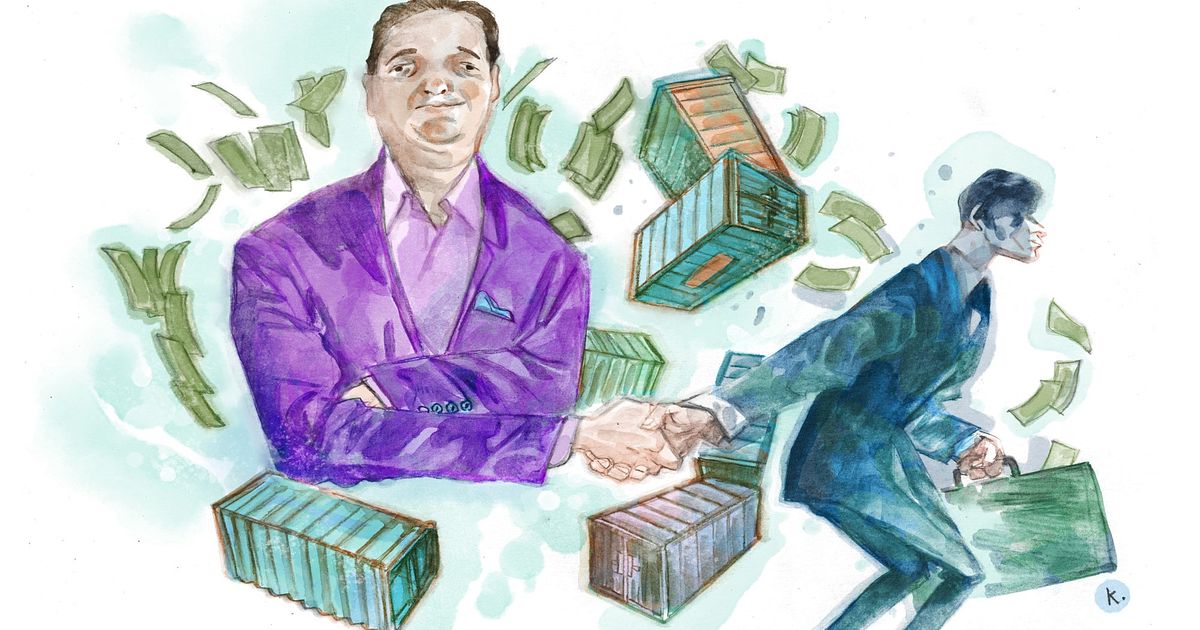
The specific method used was "transit finance." This structure allowed Trafigura to buy nickel cargoes from Gupta's companies and simultaneously agree to sell them back to Gupta or his nominees at a future date.
Verified Against Public And Audited RecordsLong-Form Investigative Review
Reading time: ~35 min
File ID: EHGN-REVIEW-32889
Internal control failures leading to $500 million nickel cargo fraud
Trafigura would purchase cargoes of nickel from Gupta's companies (TMT Metals or UD Trading) while the metal was ostensibly on.
Primary RiskLegal / Regulatory Exposure
JurisdictionEPA
Public MonitoringThe catastrophic loss of over $500 million by Trafigura Group.
Report Summary
Gupta's defense team alleged in court filings that Trafigura executives explicitly sought to increase volumes to 50, 000 tonnes a year to "dominate" the nickel market. Yet, by the time Trafigura ramped up its exposure to Gupta's network of shell companies, primarily TMT Metals and UD Trading, the warning signs were not visible; they were, public, and repeated. Oikonomou, known for his ambitious drive to make Trafigura a dominant player in the nickel market, pushed to increase volumes with Gupta significantly starting in 2019.
Key Data Points
The catastrophic loss of over $500 million by Trafigura Group Pte. The central figure, Prateek Gupta, was not an unknown entity when Trafigura began trading with him around 2014 or 2015. Ushdev International, once a market darling, spiraled into insolvency proceedings in India by 2018. TransAsia Private Capital, a trade finance fund, was embroiled in a bitter legal dispute with UD Trading over unpaid debts, eventually winning a $63 million judgment in Singapore. Oikonomou, known for his ambitious drive to make Trafigura a dominant player in the nickel market, pushed to increase volumes with Gupta significantly starting in 2019.
Investigative Review of Trafigura
Why it matters:
Trafigura's nickel operations collapsed due to exploiting a circular trading structure known as the "buyback transaction."
The scheme involved Trafigura buying nickel from companies controlled by Prateek Gupta, only to sell the same cargoes back to them later, resulting in a loss of over $500 million.
The Buyback Loophole: Exploiting Circular Trading Structures
SECTION 1 of 13: The Buyback Loophole: Exploiting Circular Trading Structures The disintegration of Trafigura’s nickel operations in 2023 stands as a monument to the perils of financial engineering masquerading as physical trade. At the center of this half-billion-dollar collapse was a method known as the “buyback transaction,” a circular trading structure that allowed the commodities giant to finance a phantom fleet of nickel cargoes. For years, Trafigura engaged in a repetitive pattern of buying metal from companies controlled by Indian businessman Prateek Gupta, only to sell the same cargoes back to them at a later date. This arrangement, ostensibly designed to provide working capital to a counterparty, mutated into a vacuum that sucked in over $500 million of Trafigura’s funds, leaving the trader holding certificates for worthless scrap. The mechanics of these deals were deceptively simple yet fatally flawed. Trafigura would purchase nickel from Gupta’s entities, such as TMT Metals or UD Trading Group, while the metal was purportedly in transit. The trader would hold title to the goods during their voyage, acting as a bank by extending credit to the seller. Once the shipment reached its destination, or after a set period, Gupta’s companies were contractually obligated to repurchase the metal at the original price plus an interest margin. In industry parlance, this is “transit finance.” It generates profit through interest differentials rather than market speculation. For Trafigura, the allure was steady, low-risk returns. Yet, the risk was only low if the underlying asset actually existed. Between 2019 and 2022, this loop spun with increasing velocity. The volume of nickel supposedly moving between the two parties grew to levels that market logic. By the time the scheme unraveled, the paperwork described enough nickel to fill more than half of a standard industrial container ship, a quantity that should have triggered immediate skepticism. The “buyback” nature of the agreements meant that Trafigura rarely, if ever, needed to take physical possession or inspect the goods. The metal was a line item on a ledger, a theoretical collateral backing a very real cash outflow. As long as Gupta’s companies paid the interest and repurchased the documents on time, the carousel continued to turn, and the containers remained sealed. This reliance on paper over physical verification created the perfect blind spot. The fraud exploited the time lag inherent in global shipping. Cargoes could theoretically float on the oceans for weeks or months, during which time they served as the basis for millions of dollars in financing. In this specific case, the “nickel” was frequently just carbon steel, jagged rocks, or other low-value scrap materials, substituted to match the weight of genuine nickel briquettes. The Bills of Lading and certificates of analysis were forged or manipulated to sustain the illusion of high-grade metal. Because the end buyer was the same as the original seller, no third party ever opened the boxes to complain about the quality. The loop was closed, and the secret remained locked inside the shipping containers. The of the exposure was magnified by the involvement of external banking partners. Citibank had extended an $850 million credit line to Trafigura specifically to finance these types of trades. This external capital acted as fuel for the fire, allowing the trading desk to expand the volume of transactions with Gupta without depleting Trafigura’s own cash reserves initially. The bank’s involvement also provided a false sense of security; the assumption was that if a major financial institution was clearing the trades, the due diligence must be sufficient. This proved to be a dangerous fallacy. When the music stopped, it was not the bank Trafigura that bore the primary liability for the missing metal. The rupture occurred when macro-economic forces exerted pressure on the system. Following Russia’s invasion of Ukraine in early 2022, nickel prices on the London Metal Exchange (LME) went vertical, creating a chaotic market environment. The value of the alleged cargoes skyrocketed on paper, prompting Citibank to scrutinize the exposure more closely. The bank noticed the unusual duration of the voyages and the sheer magnitude of the positions held with a single counterparty group. When Citibank pulled its credit line in late 2022, Trafigura was forced to step in and finance the cargoes directly from its own balance sheet to prevent a default. This transfer of liability stripped away the external buffer and left the trader fully exposed to the rot within the deals. It was only when Trafigura attempted to enforce the repurchase agreements that the reality surfaced. Gupta’s companies began requesting extensions, citing various logistical and financial blocks. The buybacks stopped. Left with hundreds of containers that the counterparty could not or would not redeem, Trafigura ordered physical inspections in Rotterdam and other ports. The results were catastrophic. Inspectors opened container after container to find not high-purity nickel, bags of rubble and scrap steel worth a fraction of the invoice value. The $500 million asset on the books was a mirage. The High Court in London, in its January 2026 ruling, confirmed the extent of the deception. The court found Prateek Gupta personally liable for what the judge termed a “fraud on a grand.” The judgment detailed how the circularity of the trades was not an incidental feature the core method of the fraud. By controlling both the sale and the repurchase, Gupta—or those directing the scheme—could ensure that Trafigura remained a passive financier rather than an active trader. The “buyback” clause was the lock that kept the containers shut. Internal documents revealed during the trial showed that red flags were ignored in favor of commercial expediency. Traders on the nickel desk were incentivized by volume and profit margins, metrics that the Gupta deals padded handsomely. The circular nature of the trades meant they were recorded as successful completed transactions, boosting the desk’s performance statistics. Questions about why a single trader would need to finance such vast quantities of nickel, or why the cargoes spent so much time at sea, were suppressed or rationalized away. The “buyback” structure, intended to mitigate risk by ensuring a guaranteed buyer, instead concentrated risk by tethering Trafigura to a single, fraudulent entity. The failure here was not just one of individual oversight of structural design. Trafigura’s internal controls were calibrated for standard linear trades—buy from Producer A, sell to Consumer B. in those scenarios, the counterparty risk is distributed, and the physical product undergoes inspection upon transfer. In a buyback loop, the counterparty risk is absolute. If the other side of the circle collapses, the holder of the goods is left with the collateral. When that collateral is fake, the loss is total. The company’s systems failed to detect that the “collateral” had never existed in the form claimed. This episode exposes a serious weakness in the commodities trading sector’s reliance on documentary trade. The industry operates on a foundation of trust and paper: bills of lading, warehouse receipts, and quality certificates. When these documents are weaponized within a closed loop, the standard checks and balances dissolve. Trafigura’s acceptance of the buyback model with TMT Metals allowed the fraud to metastasize over years, shielded by the very contracts meant to secure the deal. The $500 million loss is not a financial penalty; it is the price of mistaking a circular financial arrangement for a genuine physical trade. The buyback loophole did not just let money leak out; it allowed a half-billion-dollar lie to move in.
The Buyback Loophole: Exploiting Circular Trading Structures
Vetting Prateek Gupta: Due Diligence Gaps in Counterparty Onboarding
The Illusion of Legitimacy: Onboarding a “Golden Boy”
The catastrophic loss of over $500 million by Trafigura Group Pte. Ltd. did not from a sudden, sophisticated external attack. It was the result of a decade-long relationship characterized by willful blindness and a widespread failure to perform basic due diligence on a counterparty that the rest of the market had long since marked as toxic. The central figure, Prateek Gupta, was not an unknown entity when Trafigura began trading with him around 2014 or 2015. He was the scion of Ushdev International, an Indian steel trading empire founded by his father, Vijay Gupta. Yet, by the time Trafigura ramped up its exposure to Gupta’s network of shell companies, primarily TMT Metals and UD Trading, the warning signs were not visible; they were, public, and repeated.
Trafigura’s onboarding process, theoretically designed to filter out high-risk actors, failed to account for the collapse of Gupta’s legacy business. Ushdev International, once a market darling, spiraled into insolvency proceedings in India by 2018. While Trafigura’s traders in Geneva and Mumbai were busy expanding their nickel volumes with Gupta, Indian authorities were his family’s business reputation. The Central Bureau of Investigation (CBI) in India eventually launched raids and registered cases against Gupta and his mother, Suman Gupta, for alleged fraud involving the State Bank of India. A simple, low-cost background check would have revealed that the man Trafigura was trusting with half a billion dollars was simultaneously fighting allegations of cheating public sector banks in his home country.
The “Transit Finance” Trap
The method that allowed Gupta to defraud Trafigura was not a standard physical trade a financial product disguised as one. Known internally as “transit finance,” the arrangement functioned as a revolving credit facility. Trafigura would purchase cargoes of nickel from Gupta’s companies (TMT Metals or UD Trading) while the metal was ostensibly on a ship. The agreement stipulated that Gupta’s entities would buy the cargo back at a later date for the original price plus an interest-like margin. This structure allowed Gupta to obtain immediate liquidity, cash up front, while Trafigura booked a “risk-free” profit based on the interest spread.
This structure contained a fatal flaw: it relied entirely on the authenticity of the shipping documents. Because the cargo was “in transit” and destined to be repurchased by the seller, Trafigura’s physical inspection were bypassed. The commodity trader became an unsecured lender, advancing hundreds of millions of dollars against Bills of Lading (BLs) that were later proven to be worthless forgeries. The cargo inside the containers was not high-grade nickel cheap carbon steel, iron, and other low-value metals. The “buyback” loop meant Trafigura rarely, if ever, took physical possession or inspected the goods, creating a perfect blind spot for fraud.
Ignoring the Pariah Status
Trafigura’s persistence in trading with Gupta is particularly damning when contrasted with the actions of its competitors. Major trading houses and financial institutions had already severed ties with Gupta’s network years prior. Gunvor Group, a direct rival, had previously lost money in dealings with Gupta’s companies and exited the relationship. TransAsia Private Capital, a trade finance fund, was embroiled in a bitter legal dispute with UD Trading over unpaid debts, eventually winning a $63 million judgment in Singapore. These were not secret backroom whispers; they were matters of public record and litigation.
Market participants frequently described Gupta’s companies as “radioactive.” Yet, Trafigura’s compliance department either missed these signals or was overruled by a commercial division hungry for volume. The isolation of Gupta by other banks and traders should have been the red flag. Instead, Trafigura stepped into the vacuum, becoming the primary source of liquidity for a network of companies that could no longer borrow from legitimate banks. Thibaut Barthelme, Trafigura’s then-head of trade finance for refined metals, captured the reality of the situation in a September 2020 email, stating, “We have become the bank of this company.” This admission shows that internal teams recognized the abnormal dependency failed to halt the exposure.
The “Socrates” Ambition
The failure to vet Gupta was not just an administrative oversight; it was driven by aggressive commercial. Court filings and internal investigations point to the role of Sokratis Oikonomou, Trafigura’s head of nickel trading at the time. Oikonomou, known for his ambitious drive to make Trafigura a dominant player in the nickel market, pushed to increase volumes with Gupta significantly starting in 2019. The “transit finance” deals were an easy way to trading volumes and book paper profits without the logistical heavy lifting of moving physical metal to end consumers.
Gupta later alleged in court documents that Oikonomou and other Trafigura insiders were complicit, suggesting they knew the cargoes were phantom and used the scheme to manipulate volume metrics. While Trafigura vehemently denied these allegations and a UK High Court judge later ruled that Trafigura employees were not complicit, the internal culture prioritized volume over verification. The pressure to expand the nickel book created an environment where compliance checks were viewed as blocks rather than safeguards. The “Golden Boy” status afforded to Gupta allowed him to bypass the scrutiny that would have been applied to a smaller, less profitable counterparty.
The 95-Day Transit Anomaly
Perhaps the most egregious failure of internal control was the inability to question logistical impossibilities. As the scheme grew, Gupta needed to keep the “nickel” on the water for longer periods to delay the buyback and maintain his financing. This led to shipping documents showing transit times that geography and logic. In one instance flagged by a junior analyst, a cargo shipment from Taiwan to China, a journey that takes three to four days, was listed with a transit time of 95 days.
Dayansh Jain, a Trafigura operations analyst in Mumbai, noted this absurdity in a January 2022 email to Gupta’s team, writing, “Banks do not find it logical to accept a Taiwan to China BL with 95 days transit.” Jain added, “Luckily Citi accepted this one, with little suspicion, we might not get as lucky in the future.” This correspondence reveals two serious failures:, that operational staff saw the fraud indicators treated them as administrative nuisances rather than existential threats; and second, that Trafigura was actively managing the “red flags” to ensure their external financier, Citibank, did not reject the trades. The focus was on keeping the credit line open, not on verifying the cargo.
Citi Exits, Trafigura Stays
The final and most damning indictment of Trafigura’s vetting process occurred in late 2022. Citibank, which had been financing the nickel trades, lost patience. The bank’s risk systems flagged the excessive transit times and the concentration of risk with Gupta. In October 2022, Citi pulled its credit lines, refusing to finance any further trades with TMT Metals or UD Trading. In a functioning risk management ecosystem, a major global bank withdrawing support for a specific counterparty is an immediate “stop-loss” signal. It triggers an automatic suspension of trading.
Trafigura did the opposite. When Citi stepped back, Trafigura used its own balance sheet to continue financing Gupta. The trader doubled down on a position that its primary lender had deemed too toxic to touch. This decision was not negligent; it was reckless. It exposed Trafigura’s shareholders to the full force of the $500 million loss when the containers were opened in Rotterdam and found to contain worthless steel. The refusal to follow Citi’s lead suggests a hubris within Trafigura’s metals division, a belief that they understood the counterparty better than the bank did. In reality, they were the mark.
widespread Blindness
The vetting failure regarding Prateek Gupta was total. It spanned the initial onboarding, where family history and insolvency were ignored; the operational phase, where impossible shipping routes were rationalized; and the emergency phase, where bank withdrawals were disregarded. The “Know Your Counterparty” (KYC) at Trafigura were reduced to a paper-pushing exercise, easily circumvented by a charismatic fraudster offering high volumes and easy margins. The company’s internal controls were not defeated by a master criminal; they were dismantled from the inside by a culture that refused to look at what was plainly in front of it.
Table 2. 1: Key Red Flags Ignored by Trafigura Compliance
Red Flag Category
Specific Indicator
Timeline
Trafigura Action
Legal History
Ushdev International (Gupta family firm) insolvency and CBI fraud investigation in India.
2018, 2022
Ignored; relationship expanded.
Market Reputation
Gunvor and TransAsia cease trading/sue Gupta entities for fraud and non-payment.
Pre-2019
Ignored; Trafigura became primary financier.
Logistical Logic
Bills of Lading showing 90-180 day transit times for short regional routes (e. g., Taiwan to China).
2021, 2022
Noted by analysts rationalized to maintain credit lines.
Credit Risk
Citibank withdraws credit facility for Gupta trades due to risk concerns.
Vetting Prateek Gupta: Due Diligence Gaps in Counterparty Onboarding
The 2020 Warning: Ignored Red Flags from Trade Finance
The 2020 Warning: Ignored Red Flags from Trade Finance In September 2020, a definitive internal alert signaled that Trafigura’s nickel trading operations had drifted into dangerous territory. Thibaut Barthelme, the company’s head of trade finance for refined metals, sent a pointed email to his superiors, including Stephen Jansma, then the global head of structured and trade finance. Barthelme characterized the dealings with Prateek Gupta’s companies as a “strange business” and warned that the trading house had mutated into a lender of last resort. “We have become the bank of this company,” he wrote, explicitly noting that if Trafigura ceased its support, Gupta’s entities would have no other means to finance their operations. This communication was not a vague expression of unease a detailed enumeration of structural anomalies that commercial logic. Barthelme highlighted that the “voyage time” for the nickel cargoes was inexplicably long, ranging from three to six months. In legitimate commodities trade, a shipment from Asia to Europe or within Asia concludes in weeks. The extended duration was achieved by discharging and reloading material at various ports, a tactic that served no logistical purpose was essential for a circular financing scheme. These delays allowed the cargoes to remain “in transit” on paper, so keeping the credit lines open for longer periods than standard trade finance would permit. The warning also identified that major financial institutions had already severed ties with Gupta. Barthelme noted that Credit Suisse and Deutsche Bank had “refused any payments” involving Gupta’s companies, a development that should have triggered an immediate freeze on credit limits. When top-tier banks exit a relationship due to compliance or credit risks, it creates a “negative selection” environment where only less risk-averse actors remain. By stepping into the void left by these banks, Trafigura absorbed 100% of the counterparty risk that regulated lenders had deemed unacceptable. even with the clarity of these red flags, the commercial desk, led by head nickel trader Sokratis Oikonomou, did not retract. Instead, the volume of trade with Gupta’s network expanded aggressively. Court documents reveal that by 2021, the annual trading volume with Gupta had surged to approximately 70, 000 tons, valued at roughly $1. 2 billion. The internal friction between the trade finance team—tasked with risk mitigation—and the commercial traders—incentivized by volume and profit—resulted in a complete override of safety. The “transit financing” model became a profit center in itself, as Gupta’s companies were to pay above-market interest rates in the buyback prices. This yield blinded the commercial team to the underlying reality that the “nickel” serving as collateral might not exist or was vastly overvalued. The mechanics of the scheme relied on a specific loophole in how transit times were monitored. In a standard transaction, a bank like Citi—which provided a credit line of approximately $850 million for these trades—would flag cargoes that remained afloat for more than 180 days. To circumvent this, the trade structure involved “juggling” cargoes. Evidence presented in later litigation suggested that Trafigura traders, including India-based Harshdeep Bhatia, were aware of the need to manage these timelines to prevent external audits. In one exchange, Bhatia noted that the team was doing “good response work to avoid any red flags” from the financing bank. This indicates that the internal warnings from 2020 did not lead to a cleanup of the portfolio rather to a more sophisticated concealment of the risk factors. The failure to act on the 2020 warning represents a catastrophic breakdown in the “three lines of defense” risk management model. The line (commercial traders) was compromised by profit motives. The second line (trade finance and risk control) raised the alarm was powerless to enforce a stop. The decision to proceed even with the exit of other banks and the “strange” shipping patterns suggests that senior management prioritized the immediate P&L gains from the high-interest “financing” trades over the existential risk of fraud. By the time Citi withdrew its support in October 2022, the exposure had ballooned to over $500 million, a loss directly traceable to the decision to ignore the explicit warnings filed two years prior.
Key Red Flags Identified in September 2020
Red Flag Category
Specific Anomaly Observed
Standard Industry Practice
Voyage Duration
3 to 6 months (90-180 days)
20 to 40 days for intra-Asia/Europe routes
Banking Relationships
Credit Suisse & Deutsche Bank refused payments
Banks maintain relationships with solvent traders
Role of Trader
“We have become the bank of this company”
Trader acts as intermediary, not sole financier
Interest Willingness
Counterparty accepted above-market rates
Traders negotiate tight spreads to maximize margin
The 2020 Warning: Ignored Red Flags from Trade Finance
Phantom Cargoes: Failures in Bill of Lading Verification
The fraud did not rely on complex digital hacking on a centuries-old vulnerability in maritime trade: the Bill of Lading (BoL). For nearly a year, Trafigura traded paper rather than metal, exchanging hundreds of millions of dollars for documents that claimed to represent high-grade nickel backed nothing more than cheap carbon steel and iron. The failure was not just in the physical inspection of goods in the verification of the documents themselves, a process that collapsed under the weight of volume and negligence.
The Forgery Factory
At the center of the document manipulation stood Techies Logistics (S) Pte Ltd, a Singapore-based freight forwarder. Court findings later identified Techies as the “common thread” in the creation of fraudulent shipping documents. Acting on instructions from Prateek Gupta’s network, this small logistics firm issued Bills of Lading that bore the hallmarks of legitimacy were fundamentally compromised. In instances, Techies issued “duplicate” bills, multiple sets of title documents for the same cargo, allowing Gupta’s companies to finance the same containers twice or sell non-existent goods to different buyers. Trafigura’s internal controls failed to flag the concentration of high-value nickel shipments moving through a minor logistics player. While major trading houses prefer established global forwarders for high-value metals, Trafigura accepted documents generated by Techies without rigorous cross-referencing. The documents frequently contained subtle red flags, such as incorrect HS codes (Harmonized System codes used for customs) or the absence of standard certificates of analysis, yet the trading desk processed them. The reliance on the legal phrase “said to contain”, standard in shipping weaponized here, allowed the fraud to. Gupta’s defense later argued that because the documents only stated the containers were “said to contain” nickel, no fraudulent representation was technically made, a legalistic shield for a physical lie.
The Verification Void
The primary failure lay in Trafigura’s refusal to verify the BoLs with the shipping lines. A simple check with the carrier, such as Orient Overseas Container Line (OOCL), would have revealed discrepancies immediately. When Hyphen Trading Ltd, a company owned by the billionaire Reuben brothers, later attempted to claim a cargo purchased from Trafigura, OOCL rejected their Bill of Lading as “not genuine.” The shipping line’s system showed Techies Logistics as the forwarding agent, while Hyphen’s document listed Trafigura as the shipper. This mismatch proved that the paper trail had been bifurcated: one set of documents for the shipping line (reflecting reality or low-value cargo) and another, forged set for the traders and banks (reflecting high-grade nickel). Trafigura’s operations team did not use the International Maritime Bureau (IMB) or similar verification services to authenticate the BoLs before releasing funds. Instead, they relied on the circular nature of the “buyback” trades. Since Trafigura expected to sell the cargoes back to Gupta’s entities, the physical location and validity of the containers were treated as secondary to the financial transaction. The documents became currency, traded for their face value, while the physical containers became “phantom cargoes”, irrelevant boxes moving slowly across the ocean.
The “In Transit” Illusion
To prevent inspection, the scheme relied on keeping the containers in a state of perpetual transit. Gupta’s network organized shipment routes that were unnecessarily long or involved transshipment points that delayed arrival. By extending the “float”, the time cargo spends at sea, Gupta ensured that the containers remained sealed and inaccessible. Trafigura financed these “in transit” inventories, paying out cash while the metal was supposedly on the water. When Citi pulled its financing in October 2022, the music stopped. The bank’s refusal to fund new trades forced Trafigura to inspect the collateral it supposedly owned. The illusion crumbled in Rotterdam in November 2022. Trafigura inspectors, breaking the seals on containers that had been traded on paper for months, found them filled with carbon steel, worth approximately one-twentieth the value of nickel. Other containers held iron briquettes or were simply filled with materials to match the weight of nickel.
Collateral Contamination
The failure to verify BoLs contaminated the wider market. Trafigura had unwittingly sold of these phantom cargoes to third parties, including Hyphen Trading. When the fraud surfaced, Trafigura faced the humiliation of having sold fake documents to other traders. Hyphen paid $8. 4 million for a cargo that OOCL refused to release, leading to a lawsuit where Hyphen accused Trafigura of stonewalling inspections. The “chain of title”—the sacred trust of commodities trading—was broken. Trafigura had not just lost its own money; it had injected toxic assets into the global metal trade, all because it accepted a piece of paper as proof of metal without asking the ship’s captain what was actually on board.
Phantom Cargoes: Failures in Bill of Lading Verification
The Substitution Ruse: How Carbon Steel Replaced Nickel
The Rotterdam inspection on November 9, 2022, shattered the illusion of Trafigura’s nickel book. When inspectors cracked the seals on containers that were contractually obligated to hold high-grade nickel cathodes, they did not find the shiny, silver-white metal essential for electric vehicle batteries. Instead, they found carbon steel, iron briquettes, and white sacks filled with brown rubble. The cargo, which Trafigura had financed for nearly half a billion dollars, was industrial waste.
The Mechanics of Weight-Matching
The fraud was not a paper crime; it required a physical component to bypass basic logistics checks. To generate valid bills of lading, the shipping documents that trigger payment in trade finance, Gupta’s network had to ship *something*. Empty containers would have been flagged immediately at the port of origin due to weight discrepancies. Nickel is heavy, and shipping lines weigh containers to ensure vessel stability. Gupta’s companies, including TMT Metals and UD Trading, filled the containers with low-value ferrous metals that mimicked the density and weight of nickel. Carbon steel and iron products were loaded into the containers to match the gross mass declared on the shipping manifests. This physical substitution allowed the cargo to pass through port weighbridges without triggering alarms. The shipping lines, paid to transport goods from point A to point B, had no obligation to verify the *value* or *chemical composition* of the metal, only its weight and safety. By satisfying the weight requirement, the fraudsters secured the “clean” bills of lading needed to unlock payment from Trafigura.
The Valuation Gap
The financial devastation lay in the extreme price between the declared cargo and the actual contents. At the time of the fraud, high-purity nickel traded at approximately $20, 000 to $30, 000 per metric ton, with prices spiking even higher during the market chaos of 2022. Carbon steel and scrap iron, by contrast, traded for roughly $500 per ton, less than 2% of nickel’s value. For every container Trafigura financed, they paid out hundreds of thousands of dollars based on the nickel price, while holding collateral worth only a few thousand dollars. When the containers were opened, the “nickel” inventory was revealed to be worth a fraction of the debt it secured. The total exposure was estimated at $577 million, yet the physical assets in the containers were worth practically nothing in comparison. The “rubble” and “brown lumps” found in containers had zero commercial value, rendering the collateral completely worthless.
The Missing Certificates of Analysis
The success of this substitution ruse relied heavily on a specific internal control failure at Trafigura: the absence of Certificates of Analysis (CoA). In standard metals trading, a CoA is a serious document issued by an independent laboratory that verifies the chemical composition of the cargo. It proves that the metal is 99. 8% pure nickel and not 98% nickel alloy or, in this case, scrap steel. Court documents and internal reviews revealed that Trafigura traders and operations staff frequently proceeded without these certificates. The “transit finance” nature of the deal, where Trafigura bought the metal from Gupta and intended to sell it back to him, created a culture of complacency. Because the metal was never intended for a third-party consumer, the operations team treated the documentation as a formality rather than a safeguard. They accepted the bills of lading as proof of existence and ignored the absence of quality verification. Had Trafigura insisted on a CoA from a reputable inspection agency like SGS or Bureau Veritas at the port of loading, the fraud would have been impossible to execute. The inspectors would have opened the containers, tested the metal, and the ruse would have collapsed instantly.
The “Transit” Trap
The substitution was further concealed by the perpetual motion of the cargo. The containers were kept on long, circuitous shipping routes, sometimes taking up to 300 days to reach their destination. This “floating inventory” strategy served two purposes: it maximized the financing period (allowing Gupta’s companies to use Trafigura’s cash for longer) and it kept the containers sealed and away from inspection. Trafigura’s systems were designed to track financial exposure, not physical reality. As long as the buyback payments came in (which they did, for years, using funds from new loans in a Ponzi-like structure), the physical location and condition of the cargo were secondary. The containers sat in Rotterdam or traveled between Asian ports, never being opened because they were technically “sold” back to Gupta before they needed to be unloaded. It was only when Citi pulled its credit line in October 2022, forcing Trafigura to inspect the collateral it was stuck with, that the physical reality caught up with the financial fiction.
Evidence of Deception
The intent to deceive was documented in “doctored” spreadsheets later uncovered during legal proceedings. Internal files from Gupta’s companies showed that the cargo was correctly identified as “carbon steel” or “nickel alloy” in their own records altered to read “nickel cathodes” before being sent to Trafigura. This gap proved that the substitution was not an accidental mix-up by a supplier a calculated switch. The fraudsters knew exactly what they were shipping and exactly what Trafigura needed to see on paper to authorize the funds. The discovery in Rotterdam was the terminal blow. It transformed a credit risk problem into a criminal fraud case. Trafigura was left holding over 1, 000 containers of scrap metal, paid for at the price of premium nickel, exposing a catastrophic disconnect between their financial trading desk and their physical logistics controls.
The Substitution Ruse: How Carbon Steel Replaced Nickel
Blind Trust: Systemic Lapses in Physical Cargo Inspection
SECTION 6 of 13: Blind Trust: widespread Lapses in Physical Cargo Inspection The physical reality of Trafigura’s nickel trade with Prateek Gupta existed only on paper. For months, the trading giant financed the movement of approximately 1, 100 shipping containers purportedly filled with high-grade nickel, valued at over $500 million. In truth, the containers held cheap carbon steel, worth roughly 5% of the invoice price. This gap remained because Trafigura’s internal controls for physical verification collapsed under the weight of commercial expediency. The firm traded vast quantities of metal it never saw, touched, or tested, relying instead on a “long-standing relationship” that bypassed standard inspection. ### The “Transit” Mirage The primary method enabling this oversight was the “goods in transit” status. In a typical commodity transaction, a buyer inspects the cargo upon arrival at a destination port. The Gupta trades, yet, were structured as circular buybacks. Trafigura would buy the nickel from Gupta’s companies—such as TMT Metals or UIL Singapore—and sell it back to them or their affiliates while the cargo was still at sea. This structure meant the metal rarely, if ever, needed to be offloaded or delivered to a third-party end-user who might demand a quality check. By keeping the cargo perpetually “in transit,” Gupta’s network avoided the physical scrutiny that accompanies final delivery. Voyage times were abnormally long, sometimes stretching three to six months, as cargoes were shunted between ports or sat in transshipment hubs. Trafigura’s operations team, conditioned to view these trades as purely financial arbitrage, failed to question why high-value metal was floating aimlessly around the globe. The cargo became a theoretical asset, a line item on a spreadsheet backed by bills of lading rather than a physical commodity subject to verification. ### Paperwork Over Reality Trafigura’s reliance on documentation over physical proof reached negligent levels. Standard industry practice for high-value metals requires Certificates of Analysis (COA) from reputable assayers to verify purity. In the Gupta trades, these certificates were frequently missing or forged. Internal emails revealed that the operations team flagged the absence of COAs were overruled or ignored by traders prioritizing volume. The fraud also exploited the documentation process itself. Evidence presented in the 2026 High Court judgment showed that Gupta’s companies issued duplicate bills of lading for the same cargo, selling the same containers to multiple financiers. Trafigura accepted these documents without cross-referencing them against shipping logs or demanding independent confirmation of the container seals. The system was designed to process paperwork, not to detect when that paperwork described a fiction. ### The “Friendly” Surveyor When pressure from financiers like Citi forced Trafigura to demand inspections in late 2022, the fragility of their oversight became undeniable. In October 2022, as Citi raised alarms about the ballooning exposure, Trafigura signaled an intent to inspect cargoes arriving in Rotterdam. Gupta’s response was to steer the traders toward a “friendly” inspection agency. Emails show that Gupta’s head of trading, Girdhar Rathi, nominated Trans Border Safety Control Services LLC to perform the checks. This entity had been de-listed by Indian authorities years earlier for misdeclaring cargo contents. While Trafigura’s operations team eventually rejected this nomination and insisted on their own approved surveyor, the attempt to manipulate the inspection process was a red flag. It suggested that Gupta believed he could dictate *who* looked inside the boxes, a liberty no rigorous compliance department should ever permit. ### The Rotterdam Discovery The unraveling occurred at the Port of Rotterdam on November 9, 2022. Sokratis Oikonomou, Trafigura’s head of nickel trading, had ordered a physical inspection of containers that had just arrived. In a desperate bid to stall, Gupta sent a WhatsApp message to Oikonomou two days prior, claiming he had suffered a heart attack and was in the hospital. He pleaded for a delay, offering a “large reduction” in exposure if Trafigura held off. Oikonomou refused the request. Inspectors cut the seals on the containers, expecting to find nickel briquettes or cathodes. Instead, they found stacks of carbon steel and other low-value ferrous scrap. The material was carefully packed to mimic the weight distribution of nickel, the visual difference was immediate. Of the 156 containers checked, not a single one contained nickel. The “heart attack” was a fabrication, a final stall tactic in a scheme that had relied on Trafigura’s blindness for years. ### widespread Failure The discovery in Rotterdam was not a triumph of internal controls a confirmation of their total failure. The inspection happened only because an external financier, Citi, pulled its credit line, forcing Trafigura’s hand. Had Citi not intervened, the circular trade might have continued, with Trafigura financing steel as nickel indefinitely. The firm’s risk management systems, designed to monitor market price and credit limits, were completely blind to the physical reality of the underlying asset. They had allowed a single counterparty to dictate the terms of inspection, opting out of the “trust verify” doctrine that underpins physical commodity trading.
Comparison of Standard vs. Trafigura Inspection (2022)
Protocol Step
Industry Standard
Trafigura (Gupta Trades)
Certificate of Analysis
Mandatory from approved assayer
Frequently missing or ignored
Transit Inspection
Randomized checks at transshipment
None; relied on “transit” status
Surveyor Selection
Buyer appoints independent agent
Counterparty suggested “friendly” agents
Bill of Lading Check
Cross-referenced with carrier logs
Accepted at face value; duplicates missed
gap Action
Immediate freeze and inspect
Commercial team overruled operations
Financing the Fraud: Unchecked Credit Exposure to TMT Metals
SECTION 7 of 13: Financing the Fraud: Unchecked Credit Exposure to TMT Metals The financial architecture that enabled Prateek Gupta’s $500 million fraud against Trafigura was not a sophisticated new derivative or a hidden offshore vehicle. It was a simple, blunt instrument of trade finance known as the “buyback” transaction, weaponized to exploit Trafigura’s hunger for volume and market dominance. For years, the trading house acted as an unsecured lender to Gupta’s network of companies, financing phantom cargoes of nickel that spent months at sea—or nowhere at all—while collecting interest disguised as trading margins. This arrangement, which bypassed standard banking safeguards and ignored screaming red flags from internal risk teams, reveals a catastrophic breakdown in credit control where commercial ambition silenced prudent risk management. ### The Buyback method: A Loan in Disguise At the core of the fraud lay a circular trading structure that functioned less like a commodity trade and more like a revolving credit facility. In these “buyback” deals, Trafigura would purchase cargoes of high-grade nickel from Gupta’s entities—primarily TMT Metals and UD Trading—at a specified price. yet, instead of delivering the metal to an end consumer, Trafigura held title to the goods while they were ostensibly in transit. The agreement stipulated that Gupta’s companies would repurchase the same cargoes upon their arrival at a destination port, paying Trafigura the original price plus a “premium.” This premium was, in economic reality, an interest payment. Trafigura was lending Gupta capital using the nickel cargoes as collateral. The “transit time”—frequently stretching to extraordinary lengths of 180 days or more—served as the loan term. For Gupta, this provided immediate liquidity; he received cash upfront from Trafigura against shipping documents for metal that,, did not exist or was worthless scrap. For Trafigura’s metals desk, led by Socrates Oikonomou, the arrangement generated steady, low-risk “trading” profits that boosted volume metrics without the logistical headache of finding real buyers. The of this financing was immense. By 2022, Trafigura’s exposure to Gupta’s companies had ballooned to over $500 million. To fund these purchases, Trafigura relied on an $850 million credit line provided by Citibank. The bank, yet, viewed these transactions through a strictly documentary lens, financing the trades based on the presentation of Bills of Lading and other shipping papers. As long as the paperwork appeared in order, the money flowed. This reliance on paper over physical verification created the perfect blind spot for Gupta to exploit. ### The “Transit Finance” Trap The specific vulnerability in this model was “transit finance.” In standard commodity trading, goods move from point A to point B in a predictable timeframe— 30 to 60 days for most relevant routes. Payment is frequently secured by Letters of Credit (LCs) which offer bank-mediated protection. yet, the dealings with TMT Metals frequently utilized open account terms or direct financing where Trafigura paid Gupta’s companies almost immediately upon receipt of shipping documents. Crucially, the “voyage times” for these nickel cargoes began to drift far beyond industry norms. Shipments that should have taken weeks were recorded as being in transit for three, four, or even six months. Thibaut Barthelme, Trafigura’s head of trade finance for refined metals, identified this anomaly as early as September 2020. In an internal email to senior management, including then-global head of structured trade finance Stephen Jansma, Barthelme explicitly flagged the relationship as a “strange business.” He noted that Trafigura had become “the bank of this company” and questioned why Gupta’s entities were to pay such high interest costs rather than selling the goods quickly to end customers. Barthelme’s warning was precise and prescient. He highlighted that the cargoes were being discharged and re-loaded at various ports, extending the “transit” period artificially. This delay was not a logistical failure a financial need for the fraud; it extended the duration of the “loan,” allowing Gupta to use the funds for longer periods before needing to “repurchase” the metal—or, more likely, to use funds from new fraudulent trades to pay off old ones in a classic Ponzi-like rotation. ### Overriding Risk: The Commercial Power even with these clear warnings from the trade finance desk, the commercial side of the business, driven by Oikonomou and senior trader Harshdeep Bhatia, continued to expand the relationship. The internal culture at Trafigura, like aggressive trading houses, prioritized commercial profit centers over back-office control functions. When risk or operations teams raised concerns about the absence of Certificates of Analysis (COAs) or the unusual shipping routes, they were frequently overruled or ignored by the trading desk, which argued that the relationship was profitable and that Gupta was a long-standing, trusted counterparty. Evidence presented in later court proceedings showed that Oikonomou and Bhatia were “aggressive” in their of market share. They viewed the TMT relationship as a key driver of volume, aiming to trade up to 50, 000 metric tons of nickel annually. This ambition blinded them to the credit reality: they were extending half a billion dollars of unsecured credit to a counterparty with a checkered financial history, including prior insolvencies of related entities. The “buyback” structure meant that Trafigura’s actual counterparty risk was not the nickel market, Prateek Gupta himself. If he failed to buy back the cargoes, Trafigura would be left holding the metal. And if the metal was fake, Trafigura held nothing. The failure was not just individual widespread. Trafigura’s credit committees and risk limits, designed to prevent exactly this kind of concentrated exposure, failed to function. The “transit finance” classification likely allowed these trades to be treated as secured, low-risk commodity transactions rather than high-risk unsecured loans. This misclassification meant that the exposure did not trigger the same level of scrutiny that a direct $500 million loan to a mid-sized Indian metal trader would have demanded. ### The Citibank Withdrawal and the Fatal Pivot The house of cards began to collapse in late 2022, not because of Trafigura’s internal controls, because of external pressure. Citibank, growing increasingly uncomfortable with the red flags—specifically the extended transit times and the absence of physical verification—decided to pull its $850 million credit line. The bank demanded that Trafigura inspect the containers to verify the existence and quality of the nickel. Faced with the withdrawal of external financing, Trafigura made a fatal decision. Instead of pausing to investigate why a major global bank was exiting the trade, the trading desk decided to self-finance the positions. Trafigura used its own balance sheet to pay off Citibank and keep the “buyback” pattern alive. This decision transferred 100% of the credit risk from the bank to Trafigura’s shareholders. It was a move born of hubris and a desperate desire to protect the relationship and the volume metrics. This pivot to self-financing removed the last external check on the fraud. Banks, for all their faults, frequently act as a brake on trading excesses because their credit committees are independent of the trading profit motive. By removing the bank, Trafigura removed the brake. It was only after taking the full exposure onto its own books that the company attempted to inspect the cargoes in Rotterdam, discovering that the “nickel” was carbon steel, scrap, and other worthless materials. ### Table: The Escalation of Unchecked Exposure The following table illustrates how the credit exposure and warning signs escalated over time, contrasting the commercial desk’s actions with the risk team’s unheeded warnings.
Trafigura self-finances the trades, taking 100% risk onto own balance sheet.
Nov-Dec 2022
Trafigura attempts to inspect cargoes in Rotterdam.
Fraud discovered. “Nickel” found to be carbon steel and scrap.
$577 million impairment charge recorded.
### The Cost of “Blind Trust” Financing The financing of the TMT fraud highlights a serious flaw in the commodity trading business model: the conflict of interest between volume-driven trading desks and risk-averse credit functions. In this case, the “buyback” structure was not a trade; it was a regulatory arbitrage that allowed Trafigura to act as an unregulated bank. By disguising loans as physical trades, the company bypassed the rigorous credit analysis that would normally accompany a half-billion-dollar lending facility. The “transit finance” loophole allowed the fraud to metastasize. If Trafigura had enforced a strict policy of “payment upon arrival and inspection” rather than “payment against documents,” the scheme would have failed immediately. Instead, the allure of easy interest income—disguised as trading margin—led the company to finance its own robbery. The fact that junior staff identified the problem two years prior, only to be silenced by the commercial imperative, serves as a clear indictment of a corporate culture where the deal always came, and the details were left for later—until it was too late.
Transit Times as Red Flags: Ignoring Extended Shipping Durations
The shipping industry operates on precision. In the high-volume world of commodities trading, a vessel’s schedule is a rigid mathematical constant, calculated to the hour to minimize demurrage and maximize capital turnover. For nickel cargoes moving between Asian ports, transit times are standardized: Taiwan to China takes three to five days; India to East Asia, perhaps two weeks. Yet, within Trafigura’s nickel book, these physical realities were suspended. By 2022, cargoes ostensibly carrying Prateek Gupta’s metal were logging transit durations of 90, 180, and eventually over 300 days. These were not shipping delays; they were statistical impossibilities that signaled the cargo did not exist.
The 300-Day Voyage
The most red flag in the Gupta fraud was the sheer duration of the voyages. Under the guise of “transit finance,” Trafigura purchased nickel from Gupta’s entities, TMT Metals and UD Trading, while the metal was supposedly on the water, with an agreement that Gupta would repurchase it upon arrival. This structure converted the trading house into a lender, with the cargo serving as collateral. For the collateral to remain valid, it had to be in transit. Once it arrived, the game ended, and inspection became inevitable. To perpetuate the scheme, the transit times were artificially elongated. Internal records show that by late 2021, specific shipments were recorded as being “in transit” for durations that geography. A voyage from Taiwan to China, a route that commercial freighters cover in less than a week, was logged at 95 days. This anomaly was not a clerical error a necessary feature of the fraud; as long as the metal was “moving,” no one looked inside the containers.
Internal Alerts and Operational Blindness
Trafigura’s internal systems did generate warnings, they were systematically overridden or ignored by the trading desk. On January 26, 2022, Dayansh Jain, an operations analyst at Trafigura in Mumbai, flagged a specific absurdity to Girdhar Rathi, Gupta’s head of trading. Jain noted that a bill of lading showing a 95-day transit for a Taiwan-to-China route was illogical. “Banks do not find it logical to accept a Taiwan to China BL with 95 days transit,” Jain wrote. This email proves that operational staff identified the gap. The failure was not in detection, in enforcement. Instead of halting the trade, the desk accepted the explanation that these were “customary” delays or logistical shuffles, allowing the financing to continue. The trading team, led by Socrates Economou and Harshdeep Bhatia, continued to expand the book even with these operational protests. In a June 2021 WhatsApp message, Bhatia wrote, “Team has been doing good response work to avoid any red flags,” suggesting a culture where compliance alerts were obstacles to be navigated rather than hard stops.
The Role of Techies Logistics
To sustain the illusion of perpetual transit, the fraud relied on compromised paperwork. The investigation revealed that a Singapore-based freight forwarder, Techies Logistics (S) Pte Ltd, played a central role in generating the documentation that made these long voyages appear legitimate on paper. Techies Logistics issued duplicate and fraudulent bills of lading that allowed the same “cargo” to be financed multiple times or to appear as if it were moving between ports when it was likely sitting stationary or did not exist at all. The High Court in London later identified Techies Logistics as the “common thread” in the web of deceit. By manipulating the shipping dates and routes on the bills of lading, the forwarder provided the cover Gupta needed to keep the credit lines open. Trafigura’s vetting processes failed to scrutinize this small, obscure logistics provider, accepting its paperwork as gospel even when it contradicted maritime tracking data.
Citi’s Withdrawal: A missed Signal
The indictment of Trafigura’s internal controls is that their primary lender, Citigroup, identified the risk before the trading house’s own leadership did. By October 2022, Citi had ceased financing new trades with Gupta. The bank’s risk algorithms and credit officers balked at the combination of massive volume, enough to fill half a container ship, and the inexplicable extended travel times. Citi demanded inspections. They recognized that “transit finance” had mutated into an unsecured loan facility backed by phantom collateral. When Citi pulled its support, Trafigura did not pause to investigate *why* its banker was exiting. Instead, the trading desk used Trafigura’s own balance sheet to self-finance the positions, doubling down on the fraud just as the external validator fled the scene. This decision to self-fund the “floating” cargoes exposed the company to the full $577 million loss.
The “Limit” Breach
The scheme also violated Trafigura’s own risk limits regarding cargo aging. Standard risk dictate that aged inventory, cargo held longer than a specific threshold, 90 or 180 days, must be written down or inspected. Gupta was aware of this constraint. In affidavits, he claimed that Trafigura traders actively managed the book to “juggle” trades, repurchasing older cargoes and immediately selling back “new” ones to reset the clock. This churning laundered the age of the inventory. A container that had been on the books for 179 days would be “sold” back to TMT Metals and immediately “bought” again as a fresh shipment, resetting the transit timer to zero in the risk management system. This manipulation blinded the central risk function in Geneva, which saw a healthy flow of new deals rather than a stagnant pile of rotting, non-existent metal.
Transit Time Anomalies: Standard vs. Fraudulent Durations
Route
Standard Commercial Transit
Recorded Fraudulent Transit
gap Factor
Taiwan to China
3, 5 Days
95 Days
19x, 31x
India to Hong Kong
12, 15 Days
180+ Days
12x
Global Average (Nickel)
30, 45 Days
300+ Days
6x, 10x
The acceptance of these transit times required a suspension of disbelief that permeates the entire scandal. For a commodity trader, time is money. Cargo sitting on water incurs interest, insurance, and opportunity costs. No legitimate trader accepts a 300-day delay on a high-value metal shipment without screaming for an insurance claim or a legal remedy. The silence from the nickel desk in the face of these delays was the loudest signal that the trades were not genuine commercial transactions, financial fabrications designed to harvest the spread between the buy and sell price, regardless of the physical reality of the goods.
Siloed Risk Management: Communication Failures Between Desks
SECTION 9 of 13: Siloed Risk Management: Communication Failures Between Desks
The $500 million loss Trafigura suffered at the hands of Prateek Gupta was not a failure of external vetting; it was the catastrophic result of internal structural paralysis. While the trading giant possessed sophisticated risk management systems capable of tracking global exposure to the cent, these tools were rendered useless by a corporate architecture that segregated serious intelligence. The fraud thrived in the silence between departments. Information held by the trade finance team never triggered alarms on the metals desk, and shipping anomalies noticed by operations staff failed to reach the credit committee. This section examines how Trafigura’s siloed risk management culture allowed a half-billion-dollar Ponzi scheme to metastasize in plain sight.
The September 2020 Warning: A muffled Alarm
The most damning evidence of Trafigura’s internal communication failure is the existence of a prescient warning that went unheeded. As early as September 2020, Trafigura’s own risk management department identified a serious “dependency relationship” developing between the firm and Gupta’s companies. Internal assessments flagged that Trafigura had become the primary financing source for Gupta’s operations, a structural vulnerability that demands immediate exposure reduction. In a functional control environment, this finding would have triggered a mandatory freeze on new credit lines. At Trafigura, it resulted in the opposite. Between the issuance of that internal warning and the fraud’s exposure in late 2022, trading volumes with Gupta’s entities did not contract; they exploded, reaching $1. 2 billion annually. The risk department had the data, the commercial desk held the power. The warning was treated as a bureaucratic footnote rather than a stop-loss order, illustrating a fatal hierarchy where revenue generation systematically outranked risk mitigation.
The Autonomy of Profit Centers
The root of this dysfunction lay in the aggressive autonomy granted to individual trading desks. In the high- environment of commodities trading, the metals desk operated as a fiefdom, insulated from the “interference” of back-office control functions. Senior traders like Socrates Economou, the head of nickel trading, operated with a mandate to maximize volume and arbitrage opportunities. This culture created a where the credit and compliance teams were viewed not as guardians of the firm’s capital, as service providers to the commercial units. When credit officers raised concerns about the circular nature of the trades or the concentration of risk with TMT Metals, they were frequently overruled by commercial executives citing long-standing relationships and the “profitability” of the account. The risk team’s role was reduced to managing the optics of exposure rather than challenging the validity of the underlying business.
Fragmented Intelligence: The Puzzle No One Solved
The fraud relied on a complex web of deception that no single department could see in its entirety because they were not looking at the same picture. Each desk held one piece of the puzzle, structural silos prevented them from assembling the image of a systematic theft.
Department
The “Red Flag” They Saw
Why It Was Ignored
Trade Finance
Saw payment delays and requests for extended credit terms from Gupta’s entities.
Viewed as standard liquidity management for a large client; assumed the physical cargo was secure collateral.
Shipping / Operations
Noticed transit times of 300+ days for cargoes that should take weeks.
Treated as a logistical quirk or “floating storage” play; not their job to question the commercial logic.
Metals Trading Desk
Saw consistent, high-volume “buyback” trades with guaranteed margins.
Blinded by the easy profit; assumed Finance and Ops had verified the logistics and creditworthiness.
Credit Risk
Identified heavy concentration and dependency on a single counterparty group.
Overruled by the commercial desk’s insistence on the client’s reliability and historical performance.
This fragmentation allowed Gupta to exploit the gaps between desks. When the finance team asked for payment, Gupta could delay by claiming logistical problem to the operations team. When operations queried the shipping delays, he could claim commercial reasons to the trading desk. Because these teams did not cross-reference their anomalies in real-time, Gupta played them against each other, maintaining the illusion of a legitimate operation long after the reality had rotted away.
The “Box-Ticking” Compliance Trap
Trafigura’s reliance on formalistic, rather than substantive, risk controls further exacerbated the isolation of its teams. The firm’s “Know Your Counterparty” (KYC) and credit processes became exercises in box-ticking. Once Gupta was onboarded and approved, the system defaulted to a “green light” status. The risk management framework was designed to catch new, unknown threats, not to re-evaluate trusted partners who were slowly hollowing out the firm’s balance sheet. The credit committee’s failure to demand a review of the Gupta account, combining shipping logs, payment histories, and market analysis, meant that the “risk” was calculated on theoretical models rather than operational reality. They measured the *financial* risk of a default assuming the nickel existed, failed to measure the *fraud* risk that the nickel was never there. The assumption that “someone else checked the cargo” became a shared delusion shared by every desk, absolving each of individual responsibility.
Conclusion: The Cost of Disconnected Governance
The $500 million loss was not the result of a single rogue trader or a sophisticated cyber-attack; it was the price of organizational incoherence. Trafigura’s internal controls failed because they were designed to operate in parallel, not in concert. The risk team’s warnings from 2020 were valid, the operations team’s data on transit times was accurate, and the finance team’s records of payment delays were correct. Yet, because these data points were never synthesized into a single threat assessment, the fraud continued unchecked. The catastrophe proved that in modern commodities trading, a risk management system is only as strong as the communication lines that connect it to the trading floor.
Volume vs. Value: Incentives Driving the 'Merry-Go-Round'
The Volume Trap: Metrics Over Verification
The trading floor at Trafigura operated on a compensation structure that ruthlessly prioritized volume and profit and loss (P&L) over physical verification. Traders are paid based on the deals they book and the margins they secure. In the case of the nickel fraud, the incentive method was not just a passive contributor to the loss. It was the primary engine that drove the desk to ignore red flags. The dealings with Prateek Gupta and his associated entities, including TMT Metals and UD Trading, offered the nickel desk a seductive proposition. These transactions provided a steady stream of high-volume deals with a locked-in profit margin. On paper, these trades appeared to be risk-free arbitrage. In reality, they were unsecured loans disguised as physical commodity flows.
The specific method used was “transit finance.” This structure allowed Trafigura to buy nickel cargoes from Gupta’s companies and simultaneously agree to sell them back to Gupta or his nominees at a future date. The difference between the purchase price and the sale price represented a fixed fee. This fee equated to an interest rate of 4% to 6%. For the traders, this was free money. They did not need to find a final buyer in the open market. They did not need to worry about the nickel price crashing because the buyback price was fixed. The only requirement was that the metal existed. The desk assumed it did. They failed to verify it because verification would have stopped the flow of easy profits.
The “Merry-Go-Round” method
Defense lawyers for Prateek Gupta later characterized this arrangement as a “merry-go-round.” The term accurately describes the circular nature of the trades. Cargoes were bought, sold, and bought again, frequently without the metal ever leaving the containers or the port terminals. For Trafigura’s nickel desk, this circularity was a feature, not a bug. It allowed them to their trading volumes artificially. Court documents reveal that trading volumes with Gupta’s companies soared from approximately 17, 500 tonnes in 2017 to nearly 70, 000 tonnes by 2021. This exponential growth helped the desk meet internal volume and justified larger bonuses.
The “merry-go-round” also served a financial engineering purpose. By classifying these transactions as physical trades rather than loans, the desk could bypass the strict credit limits imposed by the company’s finance department. A direct loan of hundreds of millions of dollars to a mid-tier trader like Gupta would have required rigorous credit committee approval. It would have faced scrutiny regarding collateral and repayment capacity. A physical trade, by contrast, is viewed as an asset-backed transaction. The risk management systems assumed that Trafigura owned the underlying nickel. This classification error meant that the exposure to Gupta was calculated based on the value of the metal, not the creditworthiness of Gupta’s shell companies. When the metal turned out to be carbon steel and iron, the collateral value evaporated, leaving Trafigura with a massive unsecured loss.
Interest Rate Arbitrage and the Citi Exit
The incentive to maintain this scheme deepened when external banks began to withdraw. For years, Trafigura financed these trades using credit lines from Citigroup. The bank provided the capital to buy the cargoes, and Trafigura pocketed the spread between the rate they paid Citi and the higher rate they charged Gupta. This was a classic interest rate arbitrage. The traders were acting as an unlicensed bank, lending Citi’s money to Gupta and keeping the difference. This arrangement generated millions in “risk-free” P&L for the desk.
A serious turning point occurred when Citigroup decided to stop financing these specific trades. The bank’s withdrawal should have been a terminal warning signal. If a major global bank deems a counterparty or a trade structure too risky, a trading house should immediately pause and investigate. Trafigura did the opposite. To keep the “merry-go-round” spinning, the nickel desk shifted the financing from Citigroup to Trafigura’s own balance sheet. They began using the company’s own cash to pay Gupta. This decision was catastrophic. It transferred 100% of the risk from the bank to Trafigura shareholders. The traders made this switch because stopping the trades would have meant admitting the volume was gone. It would have forced them to unwind positions and chance realize losses on the books. The incentive to protect the P&L and the relationship with Gupta outweighed the prudent decision to exit.
Socrates Oikonomou and the “Dominance” Narrative
Socrates Oikonomou, the head of nickel trading, stood at the center of this volume expansion. While Oikonomou has steadfastly denied any knowledge of the fraud or complicity in it, the strategy pursued under his leadership prioritized market share and aggressive growth. Gupta’s defense team alleged in court filings that Trafigura executives explicitly sought to increase volumes to 50, 000 tonnes a year to “dominate” the nickel market. Whether or not this specific conversation happened as Gupta claims, the trading data supports the narrative of aggressive expansion. The desk was hungry for volume. In the commodities trading world, volume equals relevance. A desk that trades 70, 000 tonnes has more market power, better information flow, and higher status than a desk trading 20, 000 tonnes.
The internal control failure here lies in the misalignment of incentives between the head of the desk and the risk management function. The head trader is incentivized to grow the book. The risk manager is incentivized to protect the firm. In this case, the risk function failed to challenge the commercial logic of the trades. They accepted the “transit finance” explanation without asking why a counterparty would need to buy and sell back the same material repeatedly for years. They failed to ask why the transit times were extending to unreasonable lengths. The commercial success of the desk silenced the risk controllers. As long as the “interest” payments from Gupta arrived on time, the system marked the trades as performing. The profits were booked, bonuses were accrued, and the underlying rot went.
The Cost of “Paper” Trading
Modern commodity trading frequently suffers from a detachment from physical reality. Traders sit in Geneva or Singapore, moving electronic documents that represent physical goods. The Trafigura fraud highlights the extreme danger of this “paper trading” mentality. The traders were trading Bills of Lading and warehouse receipts. They were not trading metal. They assumed the paperwork was the reality. This cognitive dissonance allowed them to ignore the physical impossibility of the flows. They did not verify the weight, the quality, or even the existence of the nickel because the paperwork said it was there. The system rewarded them for processing the paperwork, not for interrogating it.
The between the fees earned and the capital at risk was. Trafigura was earning a margin of perhaps $10 million to $20 million annually on these trades. To earn that fee, they put over $500 million of principal capital at risk. This is a risk-reward ratio that makes no sense for a physical trader. It is the risk profile of a distressed debt lender. Yet, because the internal accounting treated it as “trading volume,” the asymmetry was ignored. The traders were picking up pennies in front of a steamroller. When the steamroller arrived in the form of the fraud, it crushed the desk’s P&L for the entire year.
The Failure of Profit Attribution Analysis
A strong internal control system includes profit attribution analysis. This process asks: “Where is the money coming from?” If a trading desk shows consistent, volatility-free profits from a single counterparty that exceed market norms, it is a red flag. Legitimate physical trading is messy. It involves logistical delays, price hedges that don’t perfectly correlate, and quality disputes. The Gupta book was too clean. It generated a steady, bond-like yield in a volatile commodity market. A competent product control team should have flagged this anomaly. They should have asked why a nickel trader was generating fixed-income returns.
The absence of such questioning suggests that Trafigura’s middle office was either under-resourced or culturally subservient to the front office. The “star trader” culture frequently prevents back-office staff from questioning the sources of profit. If a desk is making money, questions are unwelcome. This culture of silence allowed the “merry-go-round” to spin faster and faster, accumulating more toxic assets with every rotation. The incentive to believe the lie was shared by everyone who benefited from the desk’s reported profitability.
The “Sunk Cost” Trap
By 2022, the exposure to Gupta had grown so large that it likely created a psychological “sunk cost” trap for the traders involved. Even if they began to harbor doubts, the cost of stopping was too high. Calling in the inspectors would risk collapsing the deal flow and revealing the exposure. The extended transit times, containers taking months to reach destinations that should take weeks, were rationalized away to avoid the confrontation. The traders became unwitting accomplices to the delay tactics because the alternative was a write-down that would destroy their year’s performance. The fraud not just because Gupta was clever, because Trafigura’s internal incentive structure made it painful for anyone to pull the emergency brake.
The $500 million loss is a price tag on a failed incentive structure. It represents the cost of prioritizing volume over value, paperwork over physical inspection, and commercial relationships over risk management rigor. The “merry-go-round” did not spin itself. It was powered by the desire for easy metrics and the widespread failure to ask the hard questions that stop the music.
The Citi Trigger: External Liquidity Crunch Exposing Internal Flaws
The collapse of Trafigura’s $500 million nickel scheme did not begin with an internal audit or a compliance breakthrough. It began when Citigroup, the primary financier of these trades, stopped the money. For years, the trading house relied on an $850 million credit line from the US bank to fund its dealings with Prateek Gupta’s TMT Metals. This external liquidity kept the circular trading structure alive, allowing Trafigura to pay off old debts with new borrowing. When Citi withdrew this support in October 2022, the music stopped, and the silence exposed a serious absence of internal oversight. ### The $850 Million Lifeline Trafigura used a transactional finance facility with Citi to manage the capital-intensive nature of its nickel trades. Under this arrangement, the bank provided the cash to purchase cargoes from Gupta’s companies, holding the bills of lading as collateral until the metal was sold back to Gupta or a third party. This setup allowed Trafigura to move massive volumes of metal without tying up its own working capital. By mid-2022, the volume of these trades had swelled to levels that market logic. The global nickel market was tight following the Russian invasion of Ukraine, yet Trafigura’s books showed it moving thousands of containers of high-grade nickel. Citi’s risk department, unlike Trafigura’s, began to question the basic economics of these deals. The bank noticed that the transit times for these cargoes were expanding far beyond standard shipping durations.
Red Flag
Citi’s Observation
Trafigura’s Internal Response
Transit Times
Cargoes took 90-180 days for short routes (e. g., Taiwan to China).
Traders joked about “lucky” approvals and sought to “maintain credibility.”
Volume Anomalies
Trade volumes exceeded typical market availability for specific routes.
Desks continued to book deals to maximize volume bonuses.
Credit Exposure
Exposure to Gupta’s entities hit $850 million limit.
Ignored concentration limits until external funding ceased.
### The October Withdrawal On October 27, 2022, Citi informed Trafigura that it would no longer finance new trades with TMT Metals. The bank also demanded that Trafigura reduce its existing exposure. This decision was not a random administrative change; it was a calculated risk mitigation move triggered by the anomalies in shipping data. Citi specifically flagged a shipment purportedly traveling from Taiwan to China that had been “in transit” for 95 days—a voyage that takes less than a week. The withdrawal of the credit line acted as an immediate stress test on Trafigura’s internal controls. Without Citi’s cash to fund the buybacks, Trafigura had to use its own balance sheet to finance the cargoes. This shift transferred the full weight of the credit risk from the bank to the trading house. Senior management, previously content with the profits generated by the desk, suddenly faced a direct hit to their own liquidity. ### Internal Panic and Complicity The reaction within Trafigura’s nickel desk was not one of surprise at the fraud, panic at the scrutiny. Internal communications revealed in later court proceedings show that traders were aware of the need to manage Citi’s perceptions. In one exchange, a Trafigura operations analyst noted that banks would not find the extended transit times logical. The response from the desk was to ensure they “maintained a minimum of credibility” to keep the credit line open. This behavior points to a culture where the primary goal was to secure financing, not to verify the underlying asset. The traders viewed Citi’s risk controls as an obstacle to be navigated rather than a valid check on their activities. When Citi pulled the plug, the traders could no longer hide the reality of the “phantom” cargoes. They were forced to confront Gupta, who initially claimed a heart attack to delay inspections. ### The Inspection That Changed Everything With Citi out of the picture, Trafigura’s own finance department demanded a physical verification of the assets they were funding directly. This request, which should have been standard procedure years earlier, led to the inspection at the port of Rotterdam in November 2022. Inspectors opened the containers expecting to find high-grade nickel briquettes. Instead, they found carbon steel and other low-value materials. The fraud was simple: heavy, cheap metal replaced the expensive nickel to match the weight on the bills of lading. The scheme relied entirely on the fact that no one—neither the bank nor the trader—had physically checked the boxes as long as the paper trail looked correct and the financing flowed. ### External Vigilance vs. Internal Blindness The fact that an external lender identified the fraud indicators before Trafigura’s own risk management team is a damning indictment of the company’s internal control environment. Citi had no access to Trafigura’s internal emails or the direct relationship with Gupta, yet the bank’s remote monitoring of shipping data proved more than Trafigura’s direct oversight. Trafigura’s systems failed to flag the same anomalies that Citi caught. The trading house had access to the same bills of lading, the same transit logs, and the same market data. Yet, the incentive structure within the firm prioritized volume and financing turnover over asset verification. The “buyback” nature of the trades meant that as long as Gupta repurchased the cargo, Trafigura booked a profit without ever needing to touch the metal. Citi’s exit shattered this illusion. The liquidity crunch caused by Citi’s withdrawal forced Trafigura to look inside the box. It revealed that the company had been financing a hollow trade for years, exposing a $500 million hole in its balance sheet. The external trigger did what internal compliance could not: it stopped the merry-go-round and forced the firm to face the reality of its own negligence.
The Rotterdam Revelation: Delayed Discovery of Worthless Containers
The Rotterdam: Delayed Discovery of Worthless Containers The unraveling of the $500 million fraud did not begin with a sophisticated forensic audit or a whistleblower’s tip. It began with a simple, long-overdue physical inspection that Trafigura had avoided for years. By late 2022, the “merry-go-round” of circular trading had spun so fast that the centrifugal force broke the system. The catalyst was not internal vigilance, external pressure from Citibank. In October 2022, the bank, alarmed by the ballooning volume and extended transit times of the nickel cargoes it was financing, pulled its credit line. Citibank’s withdrawal stripped away the financial insulation that had allowed Trafigura’s metals desk to operate in a state of willful blindness. forced to self-finance the repurchasing of these cargoes, Trafigura’s exposure skyrocketed. With the bank no longer acting as a buffer, the trading house could no longer justify leaving the containers sealed. The procedural inertia that had characterized the relationship with Prateek Gupta’s TMT Metals gave way to operational need. On November 9, 2022, Trafigura investigators arrived at the Port of Rotterdam to perform what should have been a routine quality check. The target was a series of shipping containers that, according to the accompanying bills of lading and certificates of analysis, held high-grade nickel cathodes. These documents, stamped and processed by Trafigura’s back office without verification, claimed the cargo was worth millions. When the inspection team cracked the seals and opened the steel doors, the “Rotterdam ” was immediate and absolute. There was no nickel. Inside the containers, instead of the valuable silvery-white metal essential for electric vehicle batteries and stainless steel production, investigators found stacks of carbon steel, aluminum, and bags of iron briquettes. The materials were essentially industrial junk, worth a fraction of the nickel Trafigura had paid for. The gap was not a minor quality problem; it was a total fabrication of the cargo’s identity. The carbon steel and iron found in the containers had a market value of approximately 5% of the nickel they replaced. The containers were dead weight, shipped around the world solely to generate paper trails for financing. The discovery in Rotterdam triggered a panicked retrospective analysis of the internal controls that had failed to detect the substitution earlier. It revealed a desperate last-minute attempt by Gupta’s network to maintain the charade. Just weeks prior, as Trafigura prepared for the inspection, Girdhar Rathi, a head trader at Gupta’s UIL Singapore, had urgently emailed Trafigura’s operations team. Rathi attempted to steer the inspection toward a specific third-party surveyor, “Trans Border Safety Control Services.” Trafigura’s operations officer, Dayansh Jain, rejected the request, insisting on using the company’s appointed inspection agency. This refusal was one of the few instances where internal protocol functioned correctly, yet it came far too late. Subsequent investigations revealed that Trans Border Safety Control Services had been de-listed by Indian authorities in 2016 for misdeclaring cargo contents. Gupta’s network had relied on “friendly” inspectors to rubber-stamp the fraudulent cargoes for years, a fact that Trafigura’s due diligence teams had missed entirely during the onboarding and ongoing monitoring of the counterparty. The Rotterdam inspection was the domino. As news of the worthless cargo reached Geneva, the trading house scrambled to inspect other containers in transit. The results were consistent and devastating. Of the 1, 100 containers supposedly carrying nickel, fewer than 10% contained the genuine metal. The vast majority were filled with low-value filler material. The fraud was not an incident a widespread substitution that had likely been occurring for months, if not years, right under the nose of the metals desk. The financial implication was instantaneous. Trafigura faced a chance loss of $577 million, a figure that would later be adjusted as more containers were opened and the full scope of the “Ponzi scheme” became clear. The sheer of the loss exposed the hollowness of the company’s risk management framework. The system had been designed to verify paper, not product. As long as the documents matched—the bills of lading, the invoices, the customs declarations—the internal controls signaled “green,” even as the physical reality in the containers was “red.” The within Trafigura’s hierarchy was swift. Socrates Economou, the Head of Nickel and Cobalt Trading, resigned from the company. While Trafigura stated there was no evidence of internal complicity, the departure signaled accountability for the catastrophic oversight. The failure to inspect the cargo physically, even with the red flags of extended transit times and the counterparty’s erratic behavior, was a dereliction of trading discipline that cost the firm half a billion dollars. Legal filings submitted to the High Court in London in early 2023 detailed the extent of the deception. Trafigura’s lawyers described a “systematic fraud” where the containers were used as props in a financial theater. The “Rotterdam ” proved that the commodities trader had been financing a phantom fleet. The cargo was irrelevant; the fraud relied entirely on the exploitation of trust and the failure of verification. The Rotterdam discovery also highlighted a serious flaw in the reliance on bills of lading as proof of ownership and value. In the absence of physical inspection, a bill of lading is a claim, not a fact. Trafigura had treated these documents as equivalent to the metal itself, trading and financing them with the assumption that the physical underlying asset existed. The carbon steel sitting in the Rotterdam port was a physical rebuke to that assumption. By January 2026, the legal battles resulting from this discovery had concluded with a judgment in Trafigura’s favor, awarding the firm approximately $500 million. Yet, the victory was pyrrhic. The judgment confirmed that the fraud was “grand ” and “systematic,” it also cemented the fact that one of the world’s largest commodity traders had been duped by a simple substitution trick that could have been detected by opening a single door years earlier. The Rotterdam containers stand as a monument to the cost of prioritizing transaction speed over physical verification.
Aftermath and Accountability: Restructuring Compliance Frameworks
Aftermath and Accountability: Restructuring Compliance Frameworks
The resolution of the nickel fraud scandal did not end with the discovery of worthless cargoes in Rotterdam; it catalyzed a sweeping overhaul of Trafigura’s internal governance, legal strategies, and risk management. The $500 million loss, while financially absorbable for a company of Trafigura’s, shattered the perception that top-tier commodity traders were immune to rudimentary physical fraud. In the years following the 2023, the company aggressively pursued legal recourse while simultaneously and rebuilding the compliance structures that had allowed the fraud to metastasize.
Legal Resolution and Financial Recovery
The legal battle against Prateek Gupta and his associated companies culminated in a decisive victory for Trafigura in January 2026. The London High Court ruled in favor of the commodities giant, finding Gupta personally liable for a “fraud on a grand.” The judgment, worth approximately $500 million, vindicated Trafigura’s assertion that it was the victim of a systematic deceit rather than a complicit partner in a scheme to trading volumes. Judge Pushpinder Saini rejected Gupta’s defense, which claimed Trafigura executives had masterminded the plan, labeling it a “fiction conceived after the event.” even with the courtroom win, the route to actual financial recovery remained arduous. Trafigura had already recorded a $577 million impairment charge in the half of 2023, a write-down that, while significant, did not derail the company’s broader profitability. The firm reported record equity growth during this period, driven by volatility in energy markets that offset the metals division’s losses. yet, the reputational cost required immediate damage control. The settlement of a separate lawsuit with the Reuben brothers’ Hyphen Trading in 2024, regarding a fraudulent cargo sold by Trafigura, further underscored the need to close the chapter on the scandal and restore counterparty confidence.
Executive Shake-up and Personnel
The fraud exposed deep fissures in the oversight of the metals division, leading to high-profile departures. Socrates Economou, the Head of Nickel and Cobalt Trading, left the company shortly after the fraud came to light. While the court explicitly cleared him of complicity, ruling he was a “victim” of Gupta’s deception, his exit signaled a failure of supervisory responsibility at the desk level. Harshdeep Bhatia, the Mumbai-based trader who served as the primary point of contact for Gupta’s companies, also departed. These exits were the precursor to a broader restructuring of Trafigura’s executive leadership. By 2024 and 2025, the company had installed a new C-suite lineup, including a new Chief Financial Officer, Chief Operating Officer, and Chief Risk Officer. Richard Holtum’s ascension to CEO in January 2025 marked a definitive shift in leadership style, with a mandate to professionalize internal controls and shed the “cowboy” image frequently associated with physical commodities trading. The creation of a dedicated “Risk Technology” function and the elevation of the Chief Risk Officer to a direct report of the CEO demonstrated a structural shift: risk management was no longer a back-office support function a core pillar of executive strategy.
Overhauling the “Documentation-Verification Gap”
The core failure in the nickel fraud was the “documentation-verification gap”, the lag between paying for shipping documents and physically inspecting the cargo. Trafigura’s post-mortem analysis identified this window as the primary vulnerability exploited by Gupta. In response, the company implemented a rigorous new framework for transit financing and physical verification. **Enhanced Physical Inspections:** The era of “blind trust” in bills of lading ended. Trafigura mandated stricter for physical inspections at load and discharge ports, reducing reliance on third-party certificates that could be easily forged. The company began deploying independent surveyors with greater frequency, particularly for high-value cargoes originating from jurisdictions or counterparties deemed “elevated risk.” **Digital Trade and Blockchain Integration:** Recognizing that paper-based trade documentation was an archaic liability, Trafigura accelerated its adoption of digital trade solutions. The company moved to integrate electronic bills of lading (eBLs) and blockchain-based tracking systems where possible. These technologies create an immutable audit trail, making it significantly harder for fraudsters to create “ghost cargoes” or duplicate financing documents. While not a panacea, the digitization of trade documents added a of cryptographic security that paper files absence. **Counterparty Vetting 2. 0:** The vetting process for new trading partners underwent a “major internal audit.” The loose onboarding that allowed Gupta, a figure with a known history of legal disputes, to become a major counterparty was replaced by a forensic due diligence model. This new method integrated “distributed industry intelligence,” meaning risk teams were no longer siloed from market rumors or red flags raised by other banks and traders. If a counterparty had a history of “technical” defaults or shipping delays, as Gupta did, the system would trigger an automatic freeze on credit limits.
The “Mongolia Effect”: Proof of Heightened Scrutiny
The effectiveness of these new controls was paradoxically proven by the discovery of *another* fraud. In late 2023 and 2024, Trafigura’s enhanced internal audit teams uncovered a separate, unrelated scheme within its Mongolian oil products division. This fraud, involving data manipulation and concealed debts, resulted in a $1. 1 billion loss. While financially painful, the fact that Trafigura’s own internal controls detected the irregularity, rather than it being exposed by an external collapse, validated the new, aggressive stance on internal policing. The company this discovery as evidence that its ” control framework” was functioning as intended, catching rot that had previously gone unnoticed.
Industry-Wide
Trafigura’s restructuring forced a reckoning across the commodities sector. Banks, already wary after a string of scandals, tightened their lending criteria, demanding that traders demonstrate “fraud-proof” logistics chains. The “Trafigura standard” for verification—requiring proof of physical cargo existence before financing—began to permeate the market. The scandal killed the “volume-at-all-costs” culture that had allowed circular trading schemes to flourish. In its place emerged a more disciplined, albeit slower, trading environment where the physical reality of the commodity took precedence over the financial engineering of the deal. The nickel fraud was a $500 million tuition fee for a lesson in modern risk management. Trafigura emerged from the emergency not just with a court judgment, with a fundamentally different operating DNA—one where the trust- -verify maxim was replaced by a regime of verify-then-trust.
Timeline Tracker
January 2026
The Buyback Loophole: Exploiting Circular Trading Structures — SECTION 1 of 13: The Buyback Loophole: Exploiting Circular Trading Structures The disintegration of Trafigura's nickel operations in 2023 stands as a monument to the perils.
2014
The Illusion of Legitimacy: Onboarding a "Golden Boy" — The catastrophic loss of over $500 million by Trafigura Group Pte. Ltd. did not from a sudden, sophisticated external attack. It was the result of a.
September 2020
Ignoring the Pariah Status — Trafigura's persistence in trading with Gupta is particularly damning when contrasted with the actions of its competitors. Major trading houses and financial institutions had already severed.
2019
The "Socrates" Ambition — The failure to vet Gupta was not just an administrative oversight; it was driven by aggressive commercial. Court filings and internal investigations point to the role.
January 2022
The 95-Day Transit Anomaly — Perhaps the most egregious failure of internal control was the inability to question logistical impossibilities. As the scheme grew, Gupta needed to keep the "nickel" on.
October 2022
Citi Exits, Trafigura Stays — The final and most damning indictment of Trafigura's vetting process occurred in late 2022. Citibank, which had been financing the nickel trades, lost patience. The bank's.
2018
widespread Blindness — The vetting failure regarding Prateek Gupta was total. It spanned the initial onboarding, where family history and insolvency were ignored; the operational phase, where impossible shipping.
September 2020
The 2020 Warning: Ignored Red Flags from Trade Finance — The 2020 Warning: Ignored Red Flags from Trade Finance In September 2020, a definitive internal alert signaled that Trafigura's nickel trading operations had drifted into dangerous.
September 2020
Key Red Flags Identified in September 2020 — Voyage Duration 3 to 6 months (90-180 days) 20 to 40 days for intra-Asia/Europe routes Banking Relationships Credit Suisse & Deutsche Bank refused payments Banks maintain.
October 2022
The "In Transit" Illusion — To prevent inspection, the scheme relied on keeping the containers in a state of perpetual transit. Gupta's network organized shipment routes that were unnecessarily long or.
November 9, 2022
The Substitution Ruse: How Carbon Steel Replaced Nickel — The Rotterdam inspection on November 9, 2022, shattered the illusion of Trafigura's nickel book. When inspectors cracked the seals on containers that were contractually obligated to.
2022
The Valuation Gap — The financial devastation lay in the extreme price between the declared cargo and the actual contents. At the time of the fraud, high-purity nickel traded at.
October 2022
The "Transit" Trap — The substitution was further concealed by the perpetual motion of the cargo. The containers were kept on long, circuitous shipping routes, sometimes taking up to 300.
2019-2020
Financing the Fraud: Unchecked Credit Exposure to TMT Metals — 2019-2020 Expansion of "buyback" volumes with TMT Metals. Sep 2020: Thibaut Barthelme flags "strange business" and "bank-like" exposure. Notes 3-6 month voyage times. Warnings ignored. Trading.
2022
Transit Times as Red Flags: Ignoring Extended Shipping Durations — The shipping industry operates on precision. In the high-volume world of commodities trading, a vessel's schedule is a rigid mathematical constant, calculated to the hour to.
2021
The 300-Day Voyage — The most red flag in the Gupta fraud was the sheer duration of the voyages. Under the guise of "transit finance," Trafigura purchased nickel from Gupta's.
January 26, 2022
Internal Alerts and Operational Blindness — Trafigura's internal systems did generate warnings, they were systematically overridden or ignored by the trading desk. On January 26, 2022, Dayansh Jain, an operations analyst at.
October 2022
Citi's Withdrawal: A missed Signal — The indictment of Trafigura's internal controls is that their primary lender, Citigroup, identified the risk before the trading house's own leadership did. By October 2022, Citi.
September 2020
The September 2020 Warning: A muffled Alarm — The most damning evidence of Trafigura's internal communication failure is the existence of a prescient warning that went unheeded. As early as September 2020, Trafigura's own.
2020
Conclusion: The Cost of Disconnected Governance — The $500 million loss was not the result of a single rogue trader or a sophisticated cyber-attack; it was the price of organizational incoherence. Trafigura's internal.
2017
The "Merry-Go-Round" method — Defense lawyers for Prateek Gupta later characterized this arrangement as a "merry-go-round." The term accurately describes the circular nature of the trades. Cargoes were bought, sold.
2022
The "Sunk Cost" Trap — By 2022, the exposure to Gupta had grown so large that it likely created a psychological "sunk cost" trap for the traders involved. Even if they.
November 9, 2022
The Rotterdam Revelation: Delayed Discovery of Worthless Containers — The Rotterdam: Delayed Discovery of Worthless Containers The unraveling of the $500 million fraud did not begin with a sophisticated forensic audit or a whistleblower's tip.
2023
Aftermath and Accountability: Restructuring Compliance Frameworks — The resolution of the nickel fraud scandal did not end with the discovery of worthless cargoes in Rotterdam; it catalyzed a sweeping overhaul of Trafigura's internal.
January 2026
Legal Resolution and Financial Recovery — The legal battle against Prateek Gupta and his associated companies culminated in a decisive victory for Trafigura in January 2026. The London High Court ruled in.
January 2025
Executive Shake-up and Personnel — The fraud exposed deep fissures in the oversight of the metals division, leading to high-profile departures. Socrates Economou, the Head of Nickel and Cobalt Trading, left.
2023
The "Mongolia Effect": Proof of Heightened Scrutiny — The effectiveness of these new controls was paradoxically proven by the discovery of *another* fraud. In late 2023 and 2024, Trafigura's enhanced internal audit teams uncovered.
Why it matters: Global press freedom faces unprecedented challenges, with a significant decline in safety and economic security for journalists. Journalist killings, state-sponsored censorship through imprisonments, and economic pressures are.
Tell me about the the buyback loophole: exploiting circular trading structures of Trafigura.
SECTION 1 of 13: The Buyback Loophole: Exploiting Circular Trading Structures The disintegration of Trafigura's nickel operations in 2023 stands as a monument to the perils of financial engineering masquerading as physical trade. At the center of this half-billion-dollar collapse was a method known as the "buyback transaction," a circular trading structure that allowed the commodities giant to finance a phantom fleet of nickel cargoes. For years, Trafigura engaged in.
Tell me about the the illusion of legitimacy: onboarding a "golden boy" of Trafigura.
The catastrophic loss of over $500 million by Trafigura Group Pte. Ltd. did not from a sudden, sophisticated external attack. It was the result of a decade-long relationship characterized by willful blindness and a widespread failure to perform basic due diligence on a counterparty that the rest of the market had long since marked as toxic. The central figure, Prateek Gupta, was not an unknown entity when Trafigura began trading.
Tell me about the the "transit finance" trap of Trafigura.
The method that allowed Gupta to defraud Trafigura was not a standard physical trade a financial product disguised as one. Known internally as "transit finance," the arrangement functioned as a revolving credit facility. Trafigura would purchase cargoes of nickel from Gupta's companies (TMT Metals or UD Trading) while the metal was ostensibly on a ship. The agreement stipulated that Gupta's entities would buy the cargo back at a later date.
Tell me about the ignoring the pariah status of Trafigura.
Trafigura's persistence in trading with Gupta is particularly damning when contrasted with the actions of its competitors. Major trading houses and financial institutions had already severed ties with Gupta's network years prior. Gunvor Group, a direct rival, had previously lost money in dealings with Gupta's companies and exited the relationship. TransAsia Private Capital, a trade finance fund, was embroiled in a bitter legal dispute with UD Trading over unpaid debts.
Tell me about the the "socrates" ambition of Trafigura.
The failure to vet Gupta was not just an administrative oversight; it was driven by aggressive commercial. Court filings and internal investigations point to the role of Sokratis Oikonomou, Trafigura's head of nickel trading at the time. Oikonomou, known for his ambitious drive to make Trafigura a dominant player in the nickel market, pushed to increase volumes with Gupta significantly starting in 2019. The "transit finance" deals were an easy.
Tell me about the the 95-day transit anomaly of Trafigura.
Perhaps the most egregious failure of internal control was the inability to question logistical impossibilities. As the scheme grew, Gupta needed to keep the "nickel" on the water for longer periods to delay the buyback and maintain his financing. This led to shipping documents showing transit times that geography and logic. In one instance flagged by a junior analyst, a cargo shipment from Taiwan to China, a journey that takes.
Tell me about the citi exits, trafigura stays of Trafigura.
The final and most damning indictment of Trafigura's vetting process occurred in late 2022. Citibank, which had been financing the nickel trades, lost patience. The bank's risk systems flagged the excessive transit times and the concentration of risk with Gupta. In October 2022, Citi pulled its credit lines, refusing to finance any further trades with TMT Metals or UD Trading. In a functioning risk management ecosystem, a major global bank.
Tell me about the widespread blindness of Trafigura.
The vetting failure regarding Prateek Gupta was total. It spanned the initial onboarding, where family history and insolvency were ignored; the operational phase, where impossible shipping routes were rationalized; and the emergency phase, where bank withdrawals were disregarded. The "Know Your Counterparty" (KYC) at Trafigura were reduced to a paper-pushing exercise, easily circumvented by a charismatic fraudster offering high volumes and easy margins. The company's internal controls were not defeated.
Tell me about the the 2020 warning: ignored red flags from trade finance of Trafigura.
The 2020 Warning: Ignored Red Flags from Trade Finance In September 2020, a definitive internal alert signaled that Trafigura's nickel trading operations had drifted into dangerous territory. Thibaut Barthelme, the company's head of trade finance for refined metals, sent a pointed email to his superiors, including Stephen Jansma, then the global head of structured and trade finance. Barthelme characterized the dealings with Prateek Gupta's companies as a "strange business" and.
Tell me about the key red flags identified in september 2020 of Trafigura.
Voyage Duration 3 to 6 months (90-180 days) 20 to 40 days for intra-Asia/Europe routes Banking Relationships Credit Suisse & Deutsche Bank refused payments Banks maintain relationships with solvent traders Role of Trader "We have become the bank of this company" Trader acts as intermediary, not sole financier Interest Willingness Counterparty accepted above-market rates Traders negotiate tight spreads to maximize margin Red Flag Category Specific Anomaly Observed Standard Industry Practice.
Tell me about the phantom cargoes: failures in bill of lading verification of Trafigura.
The fraud did not rely on complex digital hacking on a centuries-old vulnerability in maritime trade: the Bill of Lading (BoL). For nearly a year, Trafigura traded paper rather than metal, exchanging hundreds of millions of dollars for documents that claimed to represent high-grade nickel backed nothing more than cheap carbon steel and iron. The failure was not just in the physical inspection of goods in the verification of the.
Tell me about the the forgery factory of Trafigura.
At the center of the document manipulation stood Techies Logistics (S) Pte Ltd, a Singapore-based freight forwarder. Court findings later identified Techies as the "common thread" in the creation of fraudulent shipping documents. Acting on instructions from Prateek Gupta's network, this small logistics firm issued Bills of Lading that bore the hallmarks of legitimacy were fundamentally compromised. In instances, Techies issued "duplicate" bills, multiple sets of title documents for the.
Why it matters: Resource-backed loans are a significant financial mechanism in developing countries, involving pledging future resource revenues as collateral. While offering immediate financial relief,.
Why it matters: Rollout of 5G networks in Asia-Pacific holds economic promise but also risks of corruption. Investigations reveal allegations of malpractice in 5G spectrum.
Why it matters: African cultural treasures looted during colonial times fuel a modern multi-billion-dollar black market. Despite efforts by scholars and governments to address the.
Why it matters: India's Hindi Imposition Controversy continues to be a contentious issue even after 78 years of independence. The push for Hindi supremacy in.
Why it matters: The Indian Supreme Court strikes down the electoral bonds scheme, requiring public disclosure of all funds donated through the program. Investigative reporters.