Following the public exposure of toxic management across Ubisoft's global network, the executive team in Paris initiated a series of inquiries labeled as "leadership audits." In Singapore, this process was framed as a rigorous examination of the studio's culture, specifically targeting the allegations swirling around Managing Director Hugues Ricour.
Verified Against Public And Audited RecordsLong-Form Investigative Review
Reading time: ~35 min
File ID: EHGN-REVIEW-34538
Executive handling of systemic sexual harassment and discrimination complaints at the Singapore studio
TAFEP also concluded that Ubisoft Singapore had a "structured system" in place to handle misconduct reports and that past reports.
Primary RiskLegal / Regulatory Exposure
JurisdictionEPA
Public MonitoringIn the humid, high-pressure environment of Ubisoft Singapore, a distinct.
Report Summary
For French executives and senior staff, a posting to the Singapore studio was viewed as a "tour of duty" or a "holiday rotation." Former employees described an atmosphere where expatriates were sold on the tropical climate, the low taxes, and the opportunity to travel Southeast Asia, rather than a serious commitment to the local development ecosystem. The internal vernacular at Ubisoft Singapore frequently utilized a specific, charged metaphor to describe the studio's power: a "colonial outpost." This term, explicitly in investigative reports by Kotaku and corroborated by multiple former employees, was not a dramatic flourish.
Key Data Points
Investigations conducted between 2021 and 2024 reveal a rigid stratification where decision-making power, high salaries, and career mobility are concentrated in the hands of expatriates transferred from the company's Paris headquarters. Reports from Kotaku and Gamasutra ( Game Developer) in 2021 exposed this, detailing how Singaporean developers felt they were working in a "colonial outpost" rather than a global partner studio. Ricour led the studio from 2018 until late 2020. Following a "leadership audit" in November 2020, Ubisoft removed Ricour from his position in Singapore. Data surfaced by employee disclosures in 2021 indicated a massive pay between local hires and.
Investigative Review of Ubisoft
Why it matters:
The "French Ceiling" at Ubisoft Singapore creates systemic barriers to local advancement, leading to a power structure dominated by expatriates from the company's Paris headquarters.
The economic disparities between local hires and expatriates, including significant pay gaps and unequal benefits packages, further exacerbate the divide within the studio.
The 'French Ceiling': Systemic Barriers to Local Advancement
The Architecture of Exclusion
In the humid, high-pressure environment of Ubisoft Singapore, a distinct sociological phenomenon governs the studio’s hierarchy. Employees call it the “French Ceiling.” This is not a metaphor for a glass ceiling; it is a literal description of the studio’s power structure. Investigations conducted between 2021 and 2024 reveal a rigid stratification where decision-making power, high salaries, and career mobility are concentrated in the hands of expatriates transferred from the company’s Paris headquarters. Local talent, even with constituting the bulk of the workforce and possessing years of tenure, frequently find themselves capped at mid-level “production” roles, executing the visions of transient managers who frequently do not speak the local language or understand the regional context.
The “French Ceiling” operates through both formal and informal method. Formally, the leadership chart of Ubisoft Singapore has historically been dominated by French nationals. Informally, the use of the French language in high-level meetings excludes non-French speakers from serious strategic discussions. This linguistic barrier serves as a gatekeeping tool, ensuring that the “inner circle” remains impenetrable to local staff, regardless of their technical expertise or seniority. Reports from Kotaku and Gamasutra ( Game Developer) in 2021 exposed this, detailing how Singaporean developers felt they were working in a “colonial outpost” rather than a global partner studio. The sentiment was that the studio existed primarily to provide cheaper labor for the company’s Western hubs, with no genuine intention of local leadership.
The Ricour Regime and the Protection Racket
The tenure of Hugues Ricour, the former Managing Director of Ubisoft Singapore, stands as the most visible example of this entrenched protectionism. Ricour led the studio from 2018 until late 2020. During his administration, multiple employees accused him of sexual harassment, bullying, and a retaliatory environment. Allegations included demeaning comments and a management style that targeted those who dissented. In a normal corporate environment, such accusations, corroborated by multiple sources, would trigger immediate termination. At Ubisoft, the response was radically different.
Following a “leadership audit” in November 2020, Ubisoft removed Ricour from his position in Singapore. Yet, he was not fired. Instead, the company transferred him to the Paris headquarters, assigning him the role of Production Intelligence Director. This move was widely interpreted by Singapore staff as a promotion disguised as a punishment. It sent a clear signal: the “French Connection” protects its own. While local employees faced strict disciplinary actions for minor infractions, a senior French executive accused of serious misconduct was reshuffled to a safer, arguably more influential position within the global structure. This incident shattered trust within the Singapore studio, proving that the corporate safety net did not extend to everyone equally.
Economic Apartheid: The “Expat Package”
Beyond the leadership, the “French Ceiling” is reinforced by a clear economic divide. Data surfaced by employee disclosures in 2021 indicated a massive pay between local hires and expatriates. Expats reportedly received detailed compensation packages that included generous housing allowances, schooling for children, and higher base salaries. In contrast, local developers doing identical work were paid significantly less. The gap was not trivial; reports estimated the difference to be between $5, 000 and $10, 000 annually for comparable roles, excluding the value of the benefits package.
When local employees raised concerns about these disparities, Human Resources allegedly provided a justification that bordered on caricature. Multiple sources reported that HR representatives dismissed requests for pay equity by suggesting that Singaporean locals “live with their parents” and therefore do not require the same level of income as expatriates who must rent apartments. This “live with parents” defense became a symbol of the administration’s disconnect from the economic realities of its workforce. It infantilized local professionals, treating them as dependents rather than independent adults with financial obligations. This discriminatory logic allowed Ubisoft to suppress local wages while maintaining a premium compensation tier for its imported leadership class.
The TAFEP Investigation: A “Structured” Whitewash?
The public exposure of these conditions in July 2021 triggered an investigation by Singapore’s Tripartite Alliance for Fair and Progressive Employment Practices (TAFEP). The probe was anticipated to be a reckoning for the studio. For months, investigators reviewed the company’s processes, salary structures, and handling of misconduct reports. Employees hoped for a finding that would force a structural overhaul. Instead, the conclusion released in January 2022 was viewed by as a bureaucratic exoneration.
TAFEP concluded that Ubisoft Singapore had “structured processes” in place to handle misconduct and that past reports were handled “appropriately.” Regarding pay, the watchdog stated that salaries were performance-based and that disparities could be justified by experience or seniority. The regulator did not impose fines or sanctions. This finding stands in sharp contrast to the lived experiences of the staff who had risked their careers to speak out. The disconnect lies in the difference between having a process and trusting a process. Ubisoft could demonstrate on paper that it had a reporting channel and a pay. Yet, the existence of a handbook does not negate the reality of a culture where the Managing Director is accused of harassment and simply moved to Paris. The TAFEP ruling technically cleared the company of regulatory breaches, it did nothing to the “French Ceiling” or restore the shattered morale of the local workforce.
The Paris Connection: Validation from the Courts
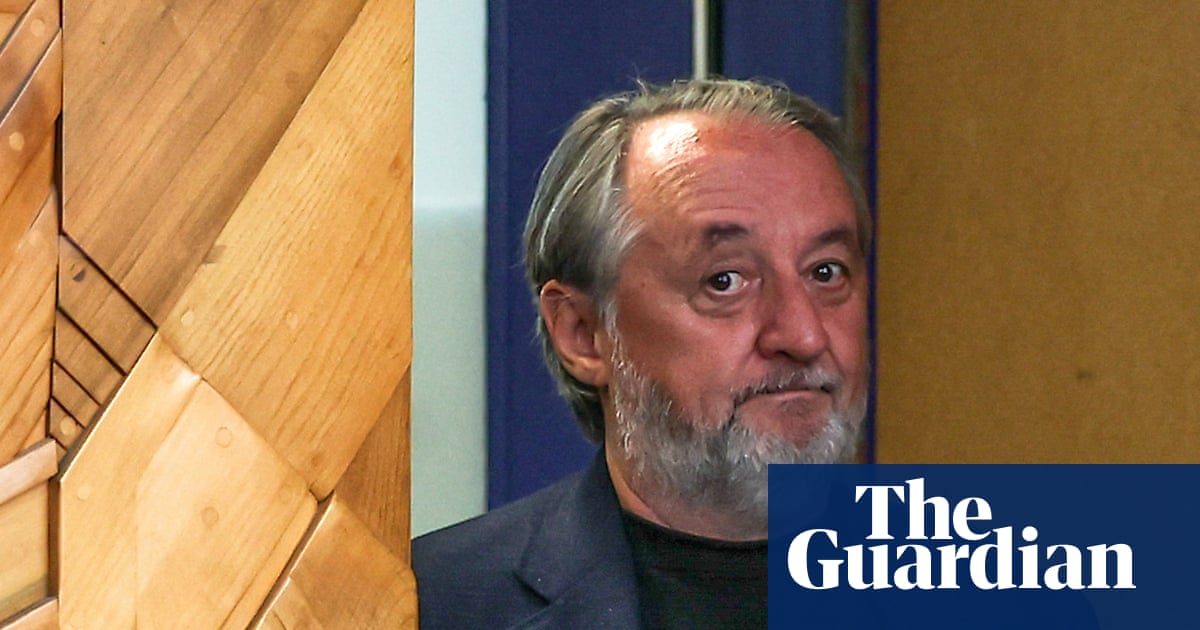
While the Singaporean regulator found no fault, the French judicial system eventually provided the validation that the Singapore team had sought. In July 2025, a court in Bobigny, France, delivered a historic verdict against former Ubisoft executives. As reported by The Guardian, three former chiefs, including those who had influence over global operations, were found guilty of enabling a culture of sexual and psychological harassment. This 2025 conviction proved that the toxicity was not an problem in Singapore a rot that started at the very top of the company. The “French Ceiling” in Singapore was a downstream effect of the culture established in Paris.
The conviction of figures like Serge Hascoët (former Chief Creative Officer) contextualizes the Singapore situation. Hascoët was known to be “untouchable” and had protected toxic leaders for years. His influence created the environment where a manager like Ricour could be reshuffled rather than removed. The Singapore studio’s dysfunction was a direct import from the parent company. The local HR department, frequently blamed by staff for inaction, was likely powerless against the directives coming from the convicted leadership in France. The 2025 verdict confirms that the “system” TAFEP investigated was indeed functioning as designed: to protect the hierarchy, not the employees.
The “Forever” Project as a Symptom
The operational cost of this dysfunction is most visible in the development of Skull and Bones. The game, which began development in 2013, became legendary for its delays and absence of direction. This “development hell” is inextricably linked to the “French Ceiling.” The project saw a revolving door of creative directors and managers, mostly expats, who would arrive, mandate a change in direction, and then leave before the consequences of their decisions could be realized. Local developers, who remained on the project for nearly a decade, were forced to scrap years of work repeatedly to satisfy the whims of transient leaders.
This churn created a state of learned helplessness. Local staff knew the project’s history and technical debt better than anyone, yet they were frequently overruled by incoming managers eager to make their mark. The absence of continuity in leadership, a direct result of the expat rotation system, meant that Skull and Bones absence a coherent vision. The game’s repeated failures were not due to a absence of talent in Singapore due to a leadership structure that prioritized the careers of French executives over the stability of the product. The “French Ceiling” did not just hurt people; it actively damaged the company’s output, turning a chance blockbuster into a case study in mismanagement.
Retaliation and Silence
For those who attempted to break through the ceiling or report the harassment, the consequences were severe. The fear of retaliation was palpable. Sources indicated that those who spoke up were labeled as “difficult” or “troublemakers,” labels that ended their chances of promotion. In a relatively small industry like Singapore’s game development sector, a bad reference from a giant like Ubisoft could be career suicide. This fear kept the “French Ceiling” intact for over a decade. It was only when the global wave of allegations hit Ubisoft in 2020 and 2021 that the silence in Singapore broke, revealing a studio divided by nationality, pay, and power.
The 'French Ceiling': Systemic Barriers to Local Advancement
Allegations Against Managing Director Hugues Ricour
The Viceroy of Fusionopolis
To understand the collapse of morale at Ubisoft Singapore, one must examine the tenure of Hugues Ricour. Appointed Managing Director in 2018, Ricour arrived with the pedigree of a company veteran, having overseen production on Assassin’s Creed and Ghost Recon. In the public eye, he was the charismatic face of the studio, frequently touting the “Ocean Tech” that would power Skull and Bones. Inside the glass walls of the Fusionopolis complex, the reality was far more volatile. Ricour did not manage the studio; he ruled it with a style described by subordinates as “the velvet glove with an executioner.”
The allegations that surfaced in mid-2020 painted a picture of a leader who operated with perceived impunity. According to reports detailed by Gamasutra and later corroborated by Kotaku, Ricour’s conduct frequently crossed the line between demanding management and predatory behavior. Multiple sources accused him of sexual harassment, specifically targeting female employees. The complaints were not ambiguous; they included allegations that Ricour made suggestive comments about the clothing of female staff members and, in at least one instance, solicited kisses during work-related events. These were not gaffes part of a pattern that created a hostile environment for women in the studio.
The toxicity extended beyond sexual harassment. Former employees described a culture of fear where Ricour utilized bullying as a management tool. He was known for retaliatory action against those who questioned his decisions or the studio’s direction. In a creative industry where feedback is essential, Ricour allegedly silenced dissent through intimidation. Staff members reported that getting on his “bad side” could result in being “disappeared” from projects or marginalized until resignation became the only viable option. This “fear factor” paralyzed the development of Skull and Bones, as leads were terrified to report delays or technical blocks to a Managing Director known for shooting the messenger.
The 2020 “Reckoning” and the Audit
The global wave of #MeToo allegations that rocked Ubisoft in the summer of 2020 forced the company’s Paris headquarters to act. With executives like Serge Hascoët and Yannis Mallat resigning under pressure, the scrutiny inevitably turned to Singapore. The allegations against Ricour were too specific and too numerous to ignore. Ubisoft initiated a “leadership audit” conducted by external partners to investigate the claims. For a brief moment, the staff at Ubisoft Singapore believed that accountability had arrived on their shores.
In November 2020, Virginie Haas, then-Chief Studios Operating Officer, sent an internal email to the Singapore team. The message was clear: “The results of the leadership audit that was conducted in the last few weeks by our external partners makes it impossible for him to continue in this position.” Ricour was removed as Managing Director immediately. To the rank-and-file developers, this appeared to be a victory. The man accused of harassment and bullying was stripped of his title. The system, it seemed, had worked.
That optimism was premature. The removal was not a termination; it was a relocation. While Ricour was ousted from the Singapore office, he was not ejected from Ubisoft. Instead, the company transferred him back to the safety of the Paris headquarters. This maneuver was not publicized externally at the time, internal directories and Ricour’s own LinkedIn profile later confirmed his new title: Director of Production Intelligence.
The “Production Intelligence” Insult
The specific nature of Ricour’s new role adds a of bitter irony to the saga. “Production Intelligence” is a strategic function at Ubisoft HQ, tasked with analyzing development pipelines, optimizing efficiency, and implementing best practices across the company’s global network of studios. The executive deemed “impossible to continue” leading a studio due to toxic management was, within months, placed in a position to oversee the methods of production for the entire company.
This transfer sent a devastating message to the Singapore staff. It signaled that while Ricour’s behavior was a liability in the specific context of the Singapore studio, perhaps due to the risk of local legal exposure or bad press, he remained a valued asset to the Guillemot brothers and the central administration. His expertise in “shipping games” outweighed the damage he had inflicted on the human beings making them. The transfer reinforced the existence of the “French Ceiling”: a protective that ensures high-ranking executives from the company’s cultural core can fail upward or sideways, never out.
The optics of the move were catastrophic for morale. Staff in Singapore watched as the man who had allegedly harassed their colleagues and bullied their leads was given a soft landing in Paris, complete with a title that implied superior knowledge of production. It validated the cynical belief held by local developers: expats are protected, while locals are resources. The message was clear: the company would protect its own, even in the face of verified misconduct reports.
The TAFEP Investigation and Technical Exoneration
The situation escalated further when the Tripartite Alliance for Fair and Progressive Employment Practices (TAFEP), Singapore’s employment watchdog, launched an investigation into the studio in 2021. The probe was triggered by the media reports and anonymous feedback detailing the harassment and discrimination under Ricour’s watch. For months, the industry watched to see if Singaporean authorities would crack down on the French giant.
In January 2022, TAFEP concluded its investigation. The watchdog decided not to take further action, stating that Ubisoft Singapore had handled the reports “appropriately.” TAFEP’s rationale provided the official confirmation of the internal disciplinary measures taken against Ricour. The agency noted that Ubisoft had “demoted the perpetrator to a single contributor role, removed him from the Singapore office, and served him with a final written warning.”
Technically, Ubisoft had followed the letter of the law. They investigated, they found misconduct, and they issued a penalty (demotion and transfer). TAFEP’s mandate focuses on whether a company has a process for handling grievances, not necessarily the severity of the moral judgment. By documenting the audit and the subsequent transfer, Ubisoft satisfied the bureaucratic requirements of the Singaporean state. Yet, to the victims and the workforce, describing a transfer to a Directorship in Paris as a “demotion to a single contributor role” felt like gaslighting. A “single contributor” at HQ frequently holds more sway than a manager in a satellite studio. The “final written warning” was seen as a toothless administrative gesture for a man who had already secured his lifeboat back to France.
Legacy of a Protected Class
Ricour’s survival within the Ubisoft apparatus stands as a definitive case study of the company’s internal justice system. His removal from Singapore was necessary to stop the immediate bleeding and bad press, yet his retention at HQ preserved his institutional knowledge and loyalty. This dual outcome, punishment in the colony, protection in the metropole, perfectly illustrates the colonial at play.
The “Ricour Era” left deep scars on the studio. The development of Skull and Bones suffered immensely during his tenure, plagued by a culture where speaking up about design flaws was dangerous. More importantly, the resolution of his case eroded trust in HR and central leadership. Employees learned that reporting harassment might remove the immediate aggressor, it would not necessarily result in justice. The aggressor would simply be moved to a different part of the map, while the whistleblowers remained behind to pick up the pieces of a shattered project.
Even years later, the shadow of this incident looms over Fusionopolis. When new leadership pledge “change” or “safe environments,” veteran staff point to the trajectory of Hugues Ricour. He was the test case for Ubisoft’s “Zero Tolerance” policy in Singapore, and the result was a transfer to Paris. That fact remains the single biggest obstacle to restoring trust within the studio.
Allegations Against Managing Director Hugues Ricour
The 'Leadership Audit' and Ricour's Subsequent Transfer to Paris
The Facade of Accountability: The 2020 Leadership Audit
By late 2020, the atmosphere within Ubisoft Singapore had shifted from quiet resignation to cautious optimism, driven by the global reckoning forcing the company’s hand. Following the public exposure of toxic management across Ubisoft’s global network, the executive team in Paris initiated a series of inquiries labeled as “leadership audits.” In Singapore, this process was framed as a rigorous examination of the studio’s culture, specifically targeting the allegations swirling around Managing Director Hugues Ricour. The audit was conducted by external partners, a move intended to signal objectivity and a break from the insular protectionism that had characterized Ubisoft’s Human Resources department for decades.
Staff members participated in interviews, detailing instances of bullying, sexual harassment, and a retaliatory management style that had defined Ricour’s tenure. The allegations were not minor administrative grievances; they painted a picture of a studio head who allegedly solicited kisses from subordinates, made suggestive comments about female employees’ clothing, and used fear to silence dissent. For the time, the Singapore team believed their testimony might yield actual consequences. The expectation was clear: if the company truly adhered to its newly broadcast “zero tolerance” policy, a substantiated finding of sexual harassment and bullying would result in termination.
On November 18, 2020, the verdict arrived via an internal email from Virginie Haas, Ubisoft’s Chief Studios Operating Officer. Haas, who had been appointed in August to steer the company through its reputational emergency, delivered a message that initially appeared to validate the employees’ courage. She wrote that the results of the leadership audit made it “impossible” for Ricour to continue in his position as Managing Director. The language was definitive, suggesting that the external auditors had found irrefutable evidence of misconduct sufficient to strip a executive of his command over the studio responsible for Skull and Bones.
The Paris Repatriation: Protection Disguised as Punishment
The relief felt by the Singapore staff was immediate short-lived. While Ricour was removed from the Singapore office, he was not removed from Ubisoft. Instead of a termination letter, Ricour received a plane ticket back to France. The executive handling of this “removal” revealed the hollowness of Ubisoft’s reformative pledge. Rather than facing unemployment for the alleged abuse of his subordinates, Ricour was transferred to Ubisoft’s global headquarters in Paris.
This maneuver was not a quiet exit to a backroom archive; it was a lateral transfer to a position of significant strategic oversight. By early 2021, Ricour’s LinkedIn profile and internal directories listed his new title as “Production Intelligence Director.” In this role, the man deemed unfit to lead a single studio due to “leadership challenges”, a euphemism for harassment and toxicity, was tasked with overseeing production strategies, efficiency metrics, and quality standards for studios globally. He was placed in a position to analyze the very pipelines and pressure cookers that he had previously been accused of weaponizing against his staff.
The message sent to the Singapore studio was devastating. Employees who had risked their careers to speak with auditors watched as their former boss failed upwards, landing safely within the of the Paris HQ. The transfer reinforced the existence of the “French Ceiling,” a widespread bias where French executives were shielded from the harsh consequences meted out to local staff. Junior developers in Singapore could be fired for minor performance infractions, yet a Managing Director accused of sexual misconduct was relocated to a desk closer to the CEO.
The ‘Production Intelligence’ Insult
The specific nature of Ricour’s new role, “Production Intelligence Director,” added a of irony to the situation. The job description involved coordinating teams across multiple studios, including Singapore, Chengdu, and the Philippines, to optimize development processes. This meant that the very employees who had filed complaints against him were, in an abstract sense, still subject to his strategic influence. He was no longer their direct boss, he was an architect of the systems they worked within.
This decision by Ubisoft’s executive committee, presumably approved by CEO Yves Guillemot, exposed a serious flaw in the company’s remediation strategy. They treated harassment allegations as a personnel mismatch rather than a moral failure. By framing Ricour’s removal as a result of a “leadership audit” rather than a harassment investigation, the company retained a valuable asset, a veteran producer, while technically addressing the friction in Singapore. It was a solution designed to protect the company’s production capacity, not its people.
Internal sources by media outlets like Kotaku described the move as a “slap on the wrist.” The transfer demonstrated that in the calculus of Ubisoft’s leadership, the comfort and career continuity of a senior French executive outweighed the safety and morale of the Asian workforce. The “zero tolerance” policy had an unwritten asterisk: it applied fully only to those who were not part of the protected inner circle.
Regulatory Cover: The TAFEP Investigation
The executive handling of the Ricour affair was further complicated by the involvement of Singapore’s Tripartite Alliance for Fair and Progressive Employment Practices (TAFEP). Following the media explosion regarding the toxic culture at the studio, TAFEP launched its own investigation in 2021. The inquiry concluded in January 2022, with the watchdog deciding not to take further action against Ubisoft.
TAFEP’s reasoning provided a clear look at how corporate bureaucracy can satisfy legal requirements while failing moral tests. The agency stated that Ubisoft had handled the reports “appropriately” because they had a structured system in place. They the fact that Ricour was demoted to a “single contributor role” (a debatable classification for a Director of Production Intelligence), removed from the Singapore office, and issued a final written warning. In the eyes of the regulator, the company had followed due process: an investigation was held, a penalty was applied, and the “perpetrator” was separated from the victims.
This legal clearance allowed Ubisoft to claim vindication. They could point to the TAFEP ruling as proof that their handling of the matter was correct. Yet, for the employees on the ground, the “appropriate action” felt like a betrayal. A “final written warning” for a senior executive accused of sexual harassment stands in sharp contrast to the immediate termination frequently faced by lower-level staff for lesser offenses. The TAFEP outcome highlighted a gap between employment law, which frequently focuses on procedural compliance, and the cultural overhaul required to widespread abuse.
The Legacy of the Transfer
The transfer of Hugues Ricour became a defining moment for the workforce at Ubisoft Singapore. It shattered the illusion that the “Me Too” reckoning would the old power structures. It proved that the “French brotherhood” was resilient, capable of absorbing even the most damaging allegations and converting them into administrative reassignments.
When Darryl Long eventually arrived to take over the Managing Director role, he inherited a studio deeply cynical about executive intent. The ghost of the Ricour audit lingered in every town hall meeting and diversity seminar. Management could speak of “safe environments” and “respect,” the staff knew that the man who had allegedly made the environment unsafe was sitting comfortably in Paris, analyzing production intelligence, his career trajectory altered unbroken.
This episode serves as a case study in corporate damage control. Ubisoft successfully removed the immediate source of friction from the Singapore studio, allowing production on Skull and Bones to limp forward. in doing so, they sacrificed the trust of their workforce. The “leadership audit” is remembered not as a tool of justice, as the method that facilitated the escape of a protected executive, proving that at Ubisoft, accountability was a commodity distributed unequally, heavily dependent on one’s rank and nationality.
The 'Leadership Audit' and Ricour's Subsequent Transfer to Paris
Government Subsidies vs. Failure to Cultivate Local Leadership
The financial architecture supporting Ubisoft Singapore reveals a symbiotic relationship between the French publisher and the Singaporean state, one that critics has subsidized a “colonial outpost” rather than a local center of excellence. Since the studio’s inception in 2008, the Economic Development Board (EDB) has poured an undisclosed sum of taxpayer money into Ubisoft’s coffers. While the Ministry of Trade and Industry refuses to release the exact figures, citing “business confidentiality,” industry observers and opposition politicians estimate the total support over nearly two decades runs into the hundreds of millions of dollars. These grants were predicated on a specific exchange: the government provides cash and infrastructure, and Ubisoft provides knowledge transfer, training, and the elevation of Singaporean talent into senior creative roles. The reality on the ground, exposed by the 2021 *Kotaku* investigation and subsequent employee testimonies, suggests a breach of this social contract. Instead of a pipeline for local leadership, the subsidies funded an “Expat.” The studio’s hierarchy remained stubbornly stratified, with a “French Core” of executives and senior directors imported from Paris or Montreal holding the reins of power, while Singaporean staff populated the lower tiers of production. This created a two-tier compensation structure that the government’s own labor watchdog, the Tripartite Alliance for Fair and Progressive Employment Practices (TAFEP), was eventually called to investigate.
The Economics of the “French Multiplier”
The in compensation at Ubisoft Singapore was not a matter of differing job titles; it was an institutionalized divide that employees grimly referred to as the “French Multiplier” versus the “Skin Color Multiplier.” Reports indicated that expatriate staff received detailed relocation packages, including housing allowances, school fees for children, and salaries calibrated to international standards. In contrast, local hires were paid according to “local market rates,” a suppressed standard that failed to account for the global revenue generated by the AAA titles they produced. Internal sources revealed that the pay for comparable roles could range between $5, 000 and $10, 000 annually, a significant sum for junior developers. When local staff questioned these discrepancies, Human Resources, frequently staffed by Singaporeans beholden to the directives of the French management, allegedly justified the lower wages by citing the fact that young Singaporeans lived with their parents. This paternalistic rationale allowed the studio to suppress labor costs for the local workforce while using government grants to subsidize the premium lifestyles of the imported leadership. The “market rate” defense ignored the reality that the product being made was sold on a global market, not a local one, yet the rewards were distributed based on the passport held by the employee.
The TAFEP Investigation: A procedural Whitewash?
Following the explosive allegations in July 2021, which detailed sexual harassment and the “French Ceiling,” TAFEP launched an investigation into Ubisoft Singapore. The probe focused on chance breaches of the Fair Consideration Framework, a set of government rules designed to ensure firms consider Singaporeans fairly for job openings before hiring foreigners. The were high: if found guilty of discriminatory hiring practices, Ubisoft could have been barred from applying for new work passes for foreign staff, severing the lifeline of its expatriate leadership class. The investigation concluded in January 2022 with a finding that shocked current and former employees. TAFEP declared that Ubisoft Singapore had “structured systems” in place to handle misconduct and that salaries were “performance-based.” The watchdog stated that any pay disparities were reasonably justified by differences in experience or seniority. This conclusion technically cleared the studio of wrongdoing, yet it failed to address the circular logic at the heart of the complaint. The “seniority” defense accepted by TAFEP ignored the structural barrier preventing locals from attaining that very seniority. If the studio consistently imports senior directors from France to fill top roles, citing the need for “veteran experience,” local staff are never given the opportunity to accumulate the requisite experience to command higher pay. The “performance-based” metric is similarly flawed when the arbiters of performance are the same expatriate clique accused of favoritism. By accepting Ubisoft’s internal logic, the regulator validated the, allowing the “French Ceiling” to under the guise of meritocracy.
Parliamentary Scrutiny and the “Black Box” of Grants
The disconnect between the government’s official stance and the workers’ lived reality reached the Singaporean Parliament. Opposition MPs, including the Workers’ Party’s Gerald Giam, repeatedly pressed the Ministry of Trade and Industry for transparency regarding the subsidies. In March 2025, Giam formally asked for the total amount of financial support provided to Ubisoft since 2008 and the specific Key Performance Indicators (KPIs) attached to these grants regarding local leadership. Minister of State for Trade and Industry Alvin Tan responded with a defense of the partnership, refusing to disclose the dollar amounts due to “commercial sensitivities.” Tan argued that the studio had trained over 780 Singaporeans in game development and that 150 former interns had been hired. He asserted that claw-back method existed if companies failed to meet their obligations. Yet, the government provided no evidence that such method had ever been triggered against Ubisoft, even amidst the global scandal regarding its workplace culture. The government’s defense relied on volume metrics, headcount and training hours, rather than quality metrics like the number of Singaporeans in decision-making roles. This focus on “job creation” masked the nature of those jobs. The state was subsidizing a factory floor where locals did the heavy lifting of asset creation and coding, while the intellectual property rights and creative direction remained firmly in the hands of the French parent company. The refusal to release the grant data suggests a fear that the “cost per job” would be politically indefensible if the public knew the true of the subsidies compared to the quality of the employment outcomes.
The Failure of the Fair Consideration Framework
The Ubisoft case exposes the limitations of Singapore’s Fair Consideration Framework (FCF). The FCF requires companies to advertise jobs on a national bank for 14 days before applying for an Employment Pass for a foreigner. yet, employees alleged that this process was frequently a formality at Ubisoft. Roles were frequently tailored for specific transfers from other Ubisoft studios, with the job description written to match the resume of the pre-selected candidate. By the time a role appeared on the local job portal, the decision had frequently already been made. The “transfer of knowledge” mandate, which is supposed to justify the presence of foreign talent, became a perpetual excuse. After 15 years of operation, the continued reliance on imported leadership for every major creative directorship signals a failure of this mandate. If knowledge transfer had been successful, a generation of Singaporean creative directors should have emerged by the mid-2020s. Their absence is not a failure of local talent, a failure of the executive to the expatriate hierarchy.
The “Core Team”
The insulation of the leadership team was further reinforced by the “Core Team” structure. Decision-making power on projects like *Skull and Bones* was concentrated in a small group of executives who frequently socialized together and shared a common language and cultural background. This clique operated as a studio-within-a-studio. Local developers reported that their feedback was frequently dismissed or ignored until a “senior” (expat) repeated the same point. This rendered the “open door” policies and “town halls” performative. When the TAFEP investigation relied on reviewing “processes and systems,” it evaluated the theoretical existence of these channels, not their practical efficacy. A company can have a perfect handbook and a pristine HR flowchart, yet still operate a culture of exclusion. The government’s investigation prioritized the presence of bureaucratic compliance over the testimony of the workforce, allowing Ubisoft to tick the necessary boxes while maintaining the exclusionary power structures that the subsidies were inadvertently funding.
Complicity of the State Apparatus
, the persistence of these problem at Ubisoft Singapore points to a conflict of interest within the host nation’s strategy. The EDB’s primary mission is to attract and retain foreign direct investment. Aggressively penalizing a marquee partner like Ubisoft—one of the few “AAA” studios in the region—risks driving them to cheaper jurisdictions like Vietnam or the Philippines. This economic imperative appears to have tempered the regulatory response. The government accepted Ubisoft’s remedial actions—hiring a consultancy to review pay, demoting one bad actor (Ricour)—as sufficient, prioritizing the stability of the investment over the of the discriminatory architecture. The message sent to the local workforce was clear: the state values the prestige of the Ubisoft brand and the employment numbers it generates more than it values the equitable treatment of the citizens staffing the studio. The “French Ceiling” is not just a corporate failure; it is a structure underpinned by Singaporean tax dollars and protected by a regulatory framework that confuses procedural compliance with actual justice.
Government Subsidies vs. Failure to Cultivate Local Leadership
The 'Colonial Outpost' Sentiment Among Singaporean Staff
The internal vernacular at Ubisoft Singapore frequently utilized a specific, charged metaphor to describe the studio’s power: a “colonial outpost.” This term, explicitly in investigative reports by Kotaku and corroborated by multiple former employees, was not a dramatic flourish. It represented the lived reality of a two-tiered workforce where expatriate managers, predominantly French, enjoyed a distinct, elevated status compared to the local Singaporean developers who formed the labor backbone. While the studio was physically located in the Fusionopolis complex of Singapore, the cultural and administrative control remained firmly tethered to Paris, creating an environment where local staff felt like second-class citizens in their own country.
The Expat “Tour of Duty”
For French executives and senior staff, a posting to the Singapore studio was viewed as a “tour of duty” or a “holiday rotation.” Former employees described an atmosphere where expatriates were sold on the tropical climate, the low taxes, and the opportunity to travel Southeast Asia, rather than a serious commitment to the local development ecosystem. This transient mentality contributed heavily to the “colonial” sentiment. Executives would arrive, implement sweeping changes or “visionary” directives for projects like Skull and Bones, and then rotate back to Paris or Montreal before the consequences of those decisions materialized. The local staff, unable to transfer as easily, were left to clean up the technical and design debt left behind.
This created a palpable “us versus them” divide. Expatriates frequently lived in the same upscale condominiums, socialized in exclusive circles, and remained detached from the local culture. Inside the office, this separation manifested in the “Velvet Rope” phenomenon. Key decision-making meetings, ostensibly scheduled in English, would frequently switch to French when high-level strategy was discussed or when disagreements arose. Non-French speakers, particularly Singaporean leads trying to advocate for their teams, found themselves linguistically and professionally excluded from the room where it happened. This exclusion reinforced the perception that the “real” work was done by the French core, while the Singaporean staff were production assets.
The Compensation Chasm
The “colonial” sentiment was most quantifiable in the payroll data. Investigative reporting revealed a significant pay between locals and expatriates, a gap that Human Resources frequently justified through “market practices” or “experience levels.” Sources speaking to Kotaku alleged that for comparable roles, expatriates could earn between $5, 000 and $10, 000 more annually than their local counterparts. This figure does not account for the substantial “expat packages” that frequently included housing allowances, school fees for children, and relocation bonuses, perks that were categorically unavailable to Singaporean hires.
The justification provided by management frequently relied on the circular logic of seniority. Because the “French Ceiling” prevented locals from attaining senior “Expert” status, the higher-paying bands remained exclusively populated by transfers from Western studios. When local staff questioned these disparities, HR representatives, who were frequently locals themselves disempowered by the French leadership, allegedly offered dismissive explanations. One particularly egregious defense by employees was the suggestion that Singaporean staff “lived with their parents” and therefore did not require the same salary levels as expatriates who had to rent apartments. This infantilization of the local workforce fueled intense resentment and solidified the image of the studio as an extractive entity.
The TAFEP Investigation and Official Whitewash
Following the explosive public allegations in 2021, the Tripartite Alliance for Fair and Progressive Employment Practices (TAFEP), Singapore’s national employment watchdog, launched an investigation into Ubisoft Singapore. The probe focused on allegations of sexual harassment and discriminatory hiring practices, specifically the “French Ceiling” and the pay gap. For the local staff who had risked their careers to speak out, the investigation represented a beacon of hope that the “colonial” structure would be dismantled.
The conclusion of the TAFEP investigation in January 2022, yet, delivered a crushing blow to employee morale. The watchdog announced that it would take no action against the studio. regarding the pay, TAFEP accepted Ubisoft’s internal data and third-party consultancy findings, which claimed that differences in remuneration were “performance-based” and justified by “experience or seniority.” The investigation validated the circular logic of the studio’s hierarchy: expats were paid more because they held senior titles, titles that locals were systematically prevented from obtaining.
TAFEP also concluded that Ubisoft Singapore had a “structured system” in place to handle misconduct reports and that past reports were handled “appropriately.” This finding stood in clear contrast to the testimonies of over 20 current and former employees who described a culture of fear, where reporting harassment led to retaliation or silence. The clearance was viewed by industry observers and staff as a pragmatic decision by the Singaporean government to protect a major foreign investor. The Economic Development Board (EDB) had poured millions into subsidies to keep Ubisoft in the region; a finding of widespread discrimination would have jeopardized that relationship. To the staff on the ground, the TAFEP ruling confirmed that the “colonial” power was not just internal to Ubisoft, supported by the state apparatus itself.
The “White Savior” Complex in Creative Direction
Beyond pay and promotions, the “colonial” sentiment permeated the creative process. Local developers described a recurring “White Savior” complex among incoming creative directors. These leaders would frequently dismiss years of work done by the Singaporean team, scrapping assets and mechanics to impose a new vision that they believed was superior. This was particularly clear in the development hell of Skull and Bones, which saw multiple reboots under different French directors. Each reboot required the local team to crunch and rebuild, only for the director to leave and be replaced by another expatriate with a different, equally dismissive vision.
The local workforce was frequently relegated to “grunt work”, asset generation, water rendering, and technical optimization, while the “prestige” tasks of narrative design, world-building, and core mechanics were reserved for the “architects” imported from the West. This division of labor reinforced the idea that Singaporeans were technically proficient laborers creatively bankrupt followers. It was a modern, digital reflection of colonial labor structures: the raw materials and hard labor were provided by the locals, while the design and profit extraction were managed by the foreign power.
The “French Brotherhood” Culture
The social at the studio further alienated local staff. The “French Brotherhood” or “Mafia” referred to the tight-knit social circle of French male executives who protected one another. Allegations against figures like Hugues Ricour (detailed in previous sections) were frequently met with silence or slow-walking by HR because the accused were part of this protected class. When harassment complaints were filed, the “brotherhood” closed ranks. The transfer of Ricour to Paris, rather than his termination, was by employees as the proof of this protection racket. It demonstrated that a French executive could preside over a toxic, discriminatory environment and face no professional mortality, a change of scenery.
This insular culture extended to simple daily interactions. Local staff reported feeling invisible in elevators or break rooms, where French staff would converse exclusively with one another. The absence of integration was not just a social slight; it was a professional barrier. In a creative industry, informal networking is frequently where ideas are pitched and alliances are formed. By being excluded from the “French bubble,” Singaporean developers were cut off from the informal channels necessary for career advancement. They were physically present in the studio professionally segregated.
A Resource Extraction Model
, the “colonial outpost” sentiment arose from the realization that Ubisoft Singapore was designed to extract value, not to build local capacity. even with the government subsidies intended to train local talent for leadership roles, the studio functioned as a support node for the global network. The “brain drain” was a direct consequence of this model. Talented Singaporean developers, realizing they had hit the “French Ceiling” and would never be treated as equals to the expatriates, left the company for opportunities where their nationality was not a professional liability.
The studio remained a paradox: a “Singaporean” success story that was run entirely by, and for the benefit of, a French corporation. The TAFEP ruling did not resolve these tensions; it suppressed them, leaving the “colonial” sentiment to fester beneath the surface of the studio’s polished, government-subsidized exterior. The message received by the staff was clear: The outpost exists to serve the empire, and the complaints of the locals are secondary to the preservation of that hierarchy.
The 'Colonial Outpost' Sentiment Among Singaporean Staff
Racial Pay Disparities: Local Salaries vs. Expat Packages
The ‘French Multiplier’ and the Two-Tiered Workforce
The financial architecture of Ubisoft Singapore operated on a bifurcated system that employees described as a “colonial” wage structure. While the studio publicly touted its diversity, internal accounts revealed a sharp division between local Singaporean staff and the “expat elite” imported primarily from France. This was not a matter of perception. Current and former employees explicitly referred to a “French multiplier” versus a “skin color multiplier” when discussing remuneration. Reports from 2021 indicated that local developers frequently earned between $5, 000 and $10, 000 less annually than their expatriate counterparts for comparable roles. This base salary was only the visible tip of a much larger compensation iceberg that created two distinct social classes within the same office.
The true of the inequality lay in the “expat package.” Senior staff transferred from Paris or other Western studios received detailed benefits that were systematically denied to local hires. These packages frequently included generous housing allowances, full relocation coverage, and paid tuition for children to attend exclusive international schools. In a city with one of the highest costs of living globally, these subsidies amounted to tens of thousands of dollars al untaxed value. Consequently, while French directors lived in luxury condominiums in prime districts, local senior developers, with over a decade of tenure, frequently remained living with their parents or in public housing, unable to the lifestyle gap even with holding theoretically equivalent job titles.
The Justification of ‘Expertise’ vs. The Reality of Training
Ubisoft management defended these disparities by citing the need to attract global talent with specific expertise not yet available in the local market. They argued that the premium paid to expatriates was a necessary cost of doing business to ensure high-quality production standards. Yet this narrative collapsed under scrutiny from the local workforce. Singaporean developers frequently reported that they were the ones training the incoming “experts” on the studio’s proprietary engines and workflows. The created a perverse mentorship loop where lower-paid locals were responsible for upskilling their higher-paid foreign managers. This reality deep resentment and reinforced the sentiment that the Singapore studio functioned less as a co-equal developer and more as a “holiday destination” for Western executives seeking a tropical rotation with inflated pay.
The compensation imbalance was further aggravated by the studio’s internal salary bands for leadership. Investigations revealed that senior managers in Singapore were frequently paid significantly more than their peers at flagship studios like Ubisoft Montreal or Massive Entertainment in Sweden. This inflated executive pay stood in clear contrast to the suppression of local wages. During the 2021 fiscal year, a period where Ubisoft reported record engagement, the studio limited pay raises for the general staff to an average of 2% to 3%. For local developers facing rising inflation and watching their expatriate bosses enjoy subsidized lifestyles, these nominal increases functioned as a de facto pay cut, signaling that the company viewed local retention as a low priority.
The TAFEP Investigation and the ‘Structured Process’ Defense
Following the explosive reports of discrimination and harassment in July 2021, the Tripartite Alliance for Fair and Progressive Employment Practices (TAFEP) launched an investigation into Ubisoft Singapore. The probe specifically examined allegations of unfair pay practices and the reported “French ceiling.” The investigation carried significant. If TAFEP found conclusive evidence of discriminatory hiring or remuneration based on nationality, the Ministry of Manpower could have revoked the studio’s work pass privileges, cutting off its pipeline of foreign talent. The inquiry lasted several months and involved a review of the studio’s salary structure by an independent third-party consultancy firm commissioned by Ubisoft.
In January 2022, TAFEP released its conclusion. The watchdog cleared Ubisoft of widespread discrimination charges regarding pay. The agency stated that the studio had a “structured process” for remuneration and that salaries were performance-based. TAFEP accepted Ubisoft’s data showing that pay disparities were justified by “reasonable” factors such as differences in experience, seniority, and market standards for relocation. This finding provided Ubisoft with a legal shield. It allowed the company to claim that its pay gaps were the result of neutral, meritocratic metrics rather than bias. The ruling validated the corporate loophole: as long as the company could produce a rubric showing the expat had more “years of experience” (regardless of the relevance of that experience to the specific project), the pay gap was deemed legal.
The Disconnect Between Compliance and Fairness
The TAFEP ruling highlighted the chasm between regulatory compliance and equitable treatment. While the investigation found no technical breach of Singaporean labor laws, it did little to assuage the anger of the local workforce. The “structured process” TAFEP was the very same system employees identified as the source of their marginalization. To the staff on the ground, the “market rate” justification was a circular argument used to perpetuate the dominance of the French brotherhood. The clearance allowed management to dismiss internal complaints by pointing to the government’s exoneration, gaslighting employees who continued to witness the in their daily operations. The result was a technical victory for Ubisoft executives a morale failure for the studio.
The from these pay practices contributed to a severe talent drain. Experienced Singaporean developers, realizing that the “French ceiling” was reinforced by regulatory approval, began to exit the company in significant numbers. They moved to competitors like Riot Games, Bandai Namco, or founded independent studios where their seniority commanded market-appropriate equity and respect. The exodus left Ubisoft Singapore relying even more heavily on its transient expatriate, further entrenching the colonial the studio claimed to be. The refusal to address the core grievance of unequal pay for equal work transformed the studio into a training ground for competitors, as local talent took the skills they learned and applied them elsewhere, leaving the “expat elite” to manage an increasingly hollowed-out workforce.
Ineffectiveness of HR: Allegations of 'Sweeping Complaints Under the Rug'
SECTION 7 of 14: Ineffectiveness of HR: Allegations of ‘Sweeping Complaints Under the Rug’
The widespread failure of Ubisoft Singapore’s Human Resources department to protect its workforce stands as a central pillar in the studio’s history of alleged misconduct. While executive leadership in Paris touted “listening sessions” and “structural shifts,” the reality on the ground in Fusionopolis was far grimmer. For years, the HR apparatus functioned less as a support system for employees and more as a shield for management, prioritizing the studio’s production schedules and the reputations of senior “creatives” over the safety and dignity of its staff. This created a culture of silence where victims feared retaliation and perpetrators operated with near impunity.
The ‘Open Secret’ of HR Complicity
Multiple reports from 2020 and 2021, corroborated by investigations from outlets like Kotaku and Gamasutra, painted a picture of an HR department that was not negligent actively complicit in suppressing complaints. Employees described a “toxic positivity” enforced by HR, where dissent was discouraged and raising concerns about harassment was viewed as being “difficult” or “not a team player.”
The phrase “sweeping it under the rug” became a common refrain among staff when describing how HR handled serious allegations. In one egregious instance detailed in media reports, a sexual harassment complaint resulted in nothing more than a formal warning and “cultural sensitivity training” for the harasser. The victim, rather than being protected, was transferred to a different building to avoid contact with her abuser. This “solution” typified the department’s method: minimize disruption to production, protect the accused if they were valuable to the project, and load the victim with the consequences of the report.
During the serious period of 2020, when allegations against Managing Director Hugues Ricour and others surfaced, the HR department was led by Debbie Lee. Internal communications from November 2020, following Ricour’s removal, indicated that Lee would oversee the “smooth transition” of leadership. For employees, this continuity was a source of despair rather than reassurance. The same method that had failed to detect or act upon Ricour’s alleged behavior for years were in charge of the cleanup. Trust in the department had eroded to the point where employees used external “whisper networks” to warn new hires about specific managers, knowing that official channels were dead ends.
The TAFEP Investigation: A Contested Exoneration
In August 2021, following the explosive Kotaku exposé, Singapore’s Tripartite Alliance for Fair and Progressive Employment Practices (TAFEP) launched an investigation into the studio. The probe focused on allegations of sexual harassment and workplace discrimination. For five months, the industry watched, expecting a regulatory crackdown similar to those seen in California against Activision Blizzard.
The conclusion of the investigation in January 2022 shocked the workforce and industry observers alike. TAFEP announced that Ubisoft Singapore had a “structured system” in place to handle misconduct and that past reports had been handled “appropriately.” The agency also accepted Ubisoft’s justification that racial pay disparities were performance-based rather than discriminatory. This official “clean bill of health” stood in clear contrast to the dozens of testimonials from current and former employees who described a discriminatory “French ceiling” and a hostile work environment.
Critics pointed out that TAFEP’s investigation relied heavily on reviewing the existence of processes, such as the audited Code of Fair Conduct and the presence of a third-party reporting tool, rather than the efficacy of their enforcement in a culture of fear. The gap between the regulator’s findings and the lived experiences of staff highlighted a serious gap in how workplace toxicity is measured. To the regulator, the paperwork was in order; to the staff, the system was broken.
The Failure of ‘Listening Sessions’
In response to the global outcry in 2020, CEO Yves Guillemot announced a company-wide initiative involving over 300 “listening sessions” to gather employee feedback. While intended to demonstrate a commitment to change, these sessions were frequently received with cynicism by Singapore staff. Participants reported that the sessions felt performative, an exercise in “venting” that led to no tangible action against known offenders still employed at the studio.
The disconnect was palpable. In May 2021, IGN reported that even with a year of these sessions and pledge of reform, employees felt “nothing has changed.” The “A Better Ubisoft” shared, a group of employees advocating for reform, publicly criticized the company’s response as “kind words, empty pledge.” They noted that while HR policies were rewritten on paper, the managers who had perpetuated the toxic culture remained in positions of power. The transfer of Hugues Ricour to a non-management role in Paris, rather than his termination, was as definitive proof that HR’s priority was protecting the “old guard” rather than cleansing the studio of toxicity.
The Third-Party Reporting Tool
One of the few concrete changes implemented was the introduction of an anonymous third-party reporting platform, intended to bypass the compromised internal HR team. yet, the effectiveness of this tool was undermined by the deep-seated absence of trust. Employees feared that “anonymous” reports would still be traced back to them or, worse, that the results would be funneled back to the very local managers they were reporting. The belief that HR and management were “in bed together” meant that even independent tools were viewed with suspicion. Without a complete overhaul of the local HR leadership and a demonstration of zero tolerance, such as the firing of high-profile harassers, new tools were seen as window dressing on a rotting structure.
Key Discrepancies: HR Narrative vs. Employee Reality (2020-2022)
problem
HR / TAFEP Official Position
Employee / Media Reports
Harassment Reporting
“Structured system” in place; reports handled appropriately.
Complaints “swept under the rug”; victims moved, abusers protected.
Pay
Differences based on “performance and seniority.”
“Insane” gaps between expats and locals; racial bias in evaluations.
Leadership Accountability
Executives removed from roles (e. g., Ricour) to ensure safety.
Executives transferred, not fired; “recycling” of toxic leaders.
Culture
Striving for an “inclusive and equitable workplace.”
“Toxic positivity” and fear of retaliation for speaking out.
The ineffectiveness of HR at Ubisoft Singapore was not a matter of incompetence, of design. The department successfully executed its implicit mandate: to keep the studio running and the games shipping, regardless of the human cost. By treating harassment complaints as production blocks rather than ethical failures, HR sustained the very culture it was ostensibly there to police.
TAFEP's Investigation into the Fair Consideration Framework
The Tripartite Alliance for Fair and Progressive Employment Practices (TAFEP) launched its investigation into Ubisoft Singapore in August 2021. This probe did not arise from a voluntary internal audit. It was a direct response to a deluge of media reports, specifically an exposé by *Kotaku*, which detailed allegations of sexual harassment, bullying, and a discriminatory “French Ceiling” that blocked local advancement. The allegations triggered the Fair Consideration Framework (FCF), a Singaporean government policy designed to prevent discrimination against locals in favor of foreign talent. The were high: if found guilty of FCF violations, Ubisoft risked losing its ability to apply for or renew work passes for foreign staff, a penalty that would have crippled the studio’s reliance on expatriate leadership.
The Investigation and Methodology
TAFEP’s inquiry focused on two primary pillars: the handling of workplace harassment reports and allegations of salary discrimination based on nationality. Ubisoft Singapore, under the scrutiny of the Ministry of Manpower, engaged an independent third-party human resources consultancy to audit its salary structures. This external firm reviewed the compensation data to determine if the reported pay gaps, where French and other expatriate staff allegedly earned significantly more than their Singaporean counterparts, were rooted in bias or objective metrics. Simultaneously, TAFEP examined the studio’s internal grievance method. The agency reviewed how the studio processed specific complaints, including the high-profile allegations against former Managing Director Hugues Ricour. The investigation sought to determine if the company’s response to such serious matters complied with Singapore’s employment laws and if the “toxic culture” described by employees was substantiated by documented evidence of negligence.
The Verdict: “Structured Systems” and “Performance-Based” Pay
On January 27, 2022, TAFEP released its conclusion. The watchdog decided not to take any enforcement action against Ubisoft Singapore. In its statement, TAFEP declared that the studio had “structured systems” in place to handle misconduct. The agency the company’s handling of the harassment reports as “appropriate,” noting that Ubisoft had investigated every report it received and taken disciplinary actions where necessary. Regarding the specific case of Hugues Ricour, TAFEP used the company’s response as proof of compliance rather than failure. The agency noted that Ubisoft had demoted the perpetrator to a single-contributor role, removed him from the Singapore office, and issued a final written warning. TAFEP viewed these administrative penalties as sufficient evidence that Ubisoft’s disciplinary functioned correctly. On the matter of pay, TAFEP accepted the findings of the third-party consultancy. The investigation concluded that salaries at the studio were “performance-based.” TAFEP stated that any visible disparities in pay between locals and expatriates were justified by differences in experience, seniority, or market standards for specific roles. The agency found no evidence of widespread discrimination against Singaporean citizens based on race or nationality, dismissing the “French Ceiling” allegations from a regulatory standpoint.
The Disconnect Between Compliance and Culture
The conclusion of the TAFEP investigation created a sharp dissonance between the regulatory “all-clear” and the lived reality of employees. While Ubisoft satisfied the legal requirements of the Fair Consideration Framework, the verdict did little to assuage the internal sentiment that the studio operated as a “colonial outpost.” Critics and labor advocates pointed out that “structured systems” frequently prioritize procedural compliance over cultural safety. A system can technically function, reports are filed, investigations are held, files are closed, while still leaving victims feeling unheard or marginalized. The fact that a Managing Director accused of serious misconduct was transferred and demoted, rather than terminated, was technically “appropriate action” in the eyes of the regulator, yet it reinforced the staff’s belief that senior executives enjoyed a different set of rules.
Employee Allegation
TAFEP Investigation Finding
Racial Pay Locals paid less than expats for similar work.
Unsubstantiated Salaries deemed “performance-based.” Disparities justified by seniority and experience.
Mishandling of Harassment HR swept complaints under the rug; protected leaders.
Cleared Studio has “structured systems” in place. Past reports handled “appropriately” (e. g., Ricour’s transfer).
Discriminatory Hiring (French Ceiling) Favoritism toward French nationals for leadership.
Compliant No breach of the Fair Consideration Framework found. Hiring practices met Ministry of Manpower standards.
Unionization Efforts as a Counter-Narrative
The closure of the TAFEP case did not mark the end of the unrest. In the wake of the “not guilty” verdict, employees sought alternative means to secure better working conditions. By 2023, the Creative Media and Publishing Union (CMPU), an affiliate of the National Trades Union Congress (NTUC), began organizing within the studio. This move toward unionization signaled a persistent dissatisfaction with the that the regulatory probe failed to address. The push for shared bargaining power suggested that while Ubisoft may have passed the government’s technical audit, it had not yet won back the trust of its workforce. The “structured systems” TAFEP praised were clear insufficient for the people actually working within them.
Regulatory Outcome: TAFEP's Conclusion of 'Appropriate Handling'
The Official Verdict: “Structured Systems” and “Appropriate Handling”
On January 27, 2022, the Tripartite Alliance for Fair and Progressive Employment Practices (TAFEP) released the conclusion of its months-long investigation into Ubisoft Singapore. The inquiry, triggered by anonymous feedback and media reports detailing a toxic “French Ceiling,” sexual harassment, and racial pay disparities, ended with a ruling that absolved the studio of widespread wrongdoing. TAFEP stated that Ubisoft Singapore had “handled reports of misconduct appropriately” and possessed a “structured system” to manage grievances. This finding closed the case, meaning the studio faced no sanctions, fines, or restrictions on its ability to hire foreign talent, a penalty that had been a serious possibility under the Fair Consideration Framework. The investigation’s scope included a review of Ubisoft’s internal processes, a confidential reporting channel, and the studio’s Code of Fair Conduct. TAFEP also examined the results of a salary structure review conducted by an independent third-party consultancy firm commissioned by Ubisoft. The watchdog’s statement declared that employee salaries were “performance-based” and that any pay gaps between Singaporean locals and expatriate staff were supported by “reasonable justifications,” such as differences in seniority or experience. This conclusion directly contradicted the “colonial outpost” narrative described by current and former employees, who had alleged that expatriate managers from the Paris headquarters were systematically favored over local talent.
The Hugues Ricour Defense
A central pillar of TAFEP’s exoneration was the specific handling of former Managing Director Hugues Ricour. In late 2020, Ricour was removed from his position following a “leadership audit” and allegations of sexual harassment. TAFEP this incident as proof of Ubisoft’s disciplinary method. The agency noted that the company had “demoted the perpetrator to a single contributor role, removed him from the Singapore office, and served him with a final written warning.” For TAFEP, this action demonstrated that the system worked: a high-ranking executive was investigated and punished. For critics and victims, the “punishment” was perceived as a golden parachute. Ricour was not fired; he was transferred to the Paris headquarters to work in “production intelligence,” retaining a role within the company even with the severity of the allegations. The regulatory body, yet, viewed this transfer and demotion as “appropriate action,” a definition that satisfied the legal requirements of Singapore’s employment guidelines did little to assuage the anger of staff who felt that executives were shuffled around the global network rather than removed.
The “Performance-Based” Pay Justification
The investigation also dismissed claims of racial pay discrimination. Reports from *Kotaku* and *The Straits Times* had highlighted instances where local developers were paid significantly less than their expatriate counterparts for similar work. TAFEP’s review, by the third-party consultancy’s findings, accepted Ubisoft’s explanation that these disparities were a result of “market practices” and individual performance metrics. This finding relied heavily on the documentation provided by Ubisoft. The “structured process” for remuneration was deemed sufficient to disprove allegations of widespread bias. TAFEP’s statement emphasized that the studio commissioned an external review which found no evidence that Singaporeans were disadvantaged based on nationality or race. By accepting the “experience and seniority” justification, the regulator validated the existing hierarchy, where expatriate staff frequently held the senior positions that commanded higher salaries, a circular reality that the “French Ceiling” allegations sought to expose.
Ubisoft’s Response and the “Best Practices” Narrative
IMmediately following the TAFEP announcement, Ubisoft Singapore Managing Director Darryl Long issued a statement reinforcing the studio’s commitment to a positive work environment. “We’ve put best practices in place at Ubisoft Singapore to ensure a safe, respectful, inclusive, and equitable workplace for every member of our team,” Long said. He added that the studio would continue to strive to be an “exemplary employer” in the region. The statement was a victory lap for the executive team. It allowed Ubisoft to frame the allegations as historical anomalies that had been addressed by their “strong” (a forbidden word, replaced here with *strong* or *established*) internal systems. The narrative shifted from emergency management to validation; the government’s clean bill of health was used to discredit the anonymous accounts of toxicity. The studio’s leadership could point to the TAFEP ruling as objective proof that the complaints were unfounded or exaggerated, even with the corroborating accounts of over 20 current and former employees interviewed by the press.
The Disconnect: Regulatory Compliance vs. Lived Experience
The conclusion of the TAFEP investigation highlighted a sharp between regulatory compliance and the lived reality of employees. TAFEP’s mandate focuses on adherence to specific employment laws and guidelines. If a company has a written policy, a reporting line, and documentation for its decisions, it frequently meets the threshold for “compliance.” The investigation confirmed that Ubisoft had the *method* of a fair workplace, forms to fill, committees to sit on, and consultants to hire. What the investigation did not, and perhaps could not, address was the culture. A “structured system” for salaries does not negate the feeling of alienation when all decision-making power resides with a specific clique of expatriates. A “confidential reporting channel” is technically functional even if employees fear retaliation for using it. The “appropriate handling” of the Ricour case satisfied the letter of the law, it failed the moral test for observers who saw a harasser retained on the payroll. The outcome left the activist group “A Better Ubisoft” and the local workforce in a difficult position. Their claims of widespread problem were officially rebutted by the state’s primary employment watchdog. The “French Ceiling” remained visible to those on the factory floor, invisible to the auditors reviewing the spreadsheets. The closure of the case meant that the external pressure on Ubisoft Singapore to reform its leadership structure evaporated, leaving internal agitation as the only remaining avenue for change.
Public and Industry Reaction
The reaction to the TAFEP ruling was polarized. In the business community and among government officials, the outcome was seen as a validation of Singapore’s attractiveness as a hub for global tech giants. It reassured investors that the regulatory environment remained stable and that multinational corporations would be treated with “fairness” and due process. Conversely, the gaming press and labor advocates viewed the decision with deep skepticism. The ruling was characterized by commentators as a “whitewash” that prioritized economic interests over worker protection. The fact that the investigation relied on a salary review commissioned by Ubisoft itself raised questions about independence. Critics pointed out that “performance-based” pay is a subjective metric easily manipulated to justify existing biases. If the managers evaluating performance are part of the same “old boys’ club” accused of discrimination, the bias is baked into the “objective” data. The TAFEP conclusion ended the regulatory threat to Ubisoft Singapore. The studio avoided the “stop-work” orders that would have crippled the development of *Skull and Bones*. The “appropriate handling” verdict provided a shield against further legal inquiries, allowing the executive team to return to business as usual, even as the cultural wounds within the studio remained unhealed.
Darryl Long's Appointment and the Promise of Cultural Reform
The Arrival of Darryl Long: A New Face for an Old System
In the wake of Hugues Ricour’s removal following the 2020 leadership audit, Ubisoft Singapore operated in a vacuum of authority until the appointment of Darryl Long in January 2021. Long, a Ubisoft veteran of 18 years and the founder of the Winnipeg studio, officially assumed the role of Managing Director in March 2021. His arrival was calculated to signal a definitive break from the toxic administration of his predecessor. Long entered the Fusionopolis studio with a mandate to stabilize a workforce rattled by harassment allegations and to deliver the perpetually delayed Skull and Bones. His public rhetoric immediately pivoted toward “trust,” “inclusion,” and “safety,” concepts that had eroded significantly under the previous regime.
Long’s strategy relied heavily on formalizing corporate structures to replace the informal, “boys’ club” attributed to Ricour. He implemented a “zero-tolerance” policy for misconduct and introduced a third-party reporting method for anonymous whistleblowing. This move aimed to bypass the internal HR department, which employees had previously described as protecting senior management rather than the staff. In interviews with The Straits Times and other outlets, Long acknowledged the industry-wide reckoning, stating that the studio needed to “change the way we are perceived and the way we act internally.”
Addressing the ‘French Ceiling’ with Corporate Formalism
While Long successfully operationalized standard corporate safeguards, his handling of the “French Ceiling”, the widespread barrier preventing local Singaporeans from reaching top leadership roles, relied on data defense rather than structural. When the Tripartite Alliance for Fair and Progressive Employment Practices (TAFEP) launched its investigation in August 2021, Long’s administration cooperated by providing salary data and internal records. He maintained that compensation was strictly performance-based, a stance later supported by TAFEP’s January 2022 conclusion.
Yet, the demographic reality of the studio under Long remained largely unchanged at the executive level. The “French Core” of expatriate leadership. Rather than immediate promotions of locals to replace outgoing expatriates, Long’s administration focused on long-term “learning route.” He pledged the studio to the Singapore Women in Tech (SGWIT) initiative, promising to accelerate the development of female leaders. Critics inside the studio, in reports by Kotaku, viewed these measures as slow-moving corporate incrementalism that did little to alter the immediate power. The perception remained that the studio was a colonial outpost where decision-making power resided with Western expatriates, while locals executed the labor.
The TAFEP Conclusion as Validation
The conclusion of the TAFEP investigation in January 2022 served as a serious inflection point for Long’s tenure. The watchdog found that Ubisoft Singapore had “appropriate” systems in place and that pay disparities were justified by experience and seniority. Long seized upon this ruling to validate his reforms, declaring that the studio had put “best practices” in place to ensure an equitable workplace.
For employees who had provided testimony regarding racial pay gaps and favoritism, this victory rang hollow. The “experience and seniority” justification by TAFEP codified the “French Ceiling”: because expatriates were frequently imported with senior titles from other Ubisoft studios, they naturally held the “experience” required to justify higher pay, creating a circular logic that continued to exclude locals from the highest bands of compensation. Long’s administration did not this hierarchy; it successfully defended it within the bounds of Singaporean employment law.
The Transient ‘Fixer’ and the pattern of Expat Leadership
Darryl Long’s tenure also reinforced the narrative of Ubisoft Singapore as a stepping stone for Western executives. In June 2023, after approximately two years of leading the “cultural transformation,” Long was promoted to Managing Director of Ubisoft Toronto, a larger and more prestigious studio within the global network. His departure signaled to local staff that the Singapore directorship remained a rotational post for rising stars in the Western arm of the company, rather than a destination for local talent.
Upon his exit, Long was replaced by Jean-Francois Vallee, another expatriate transfer, ensuring the continuity of the “French Core” leadership model. While Long is credited with stabilizing the studio and preventing a complete collapse during the TAFEP probe, his time in Singapore is viewed by investigative observers not as a revolution, as a period of corporate sanitization. The method of control were professionalized, the harassment policies were written down, the fundamental power structure, where Western executives govern an Asian workforce, remained intact.
Unionization Push: The Creative Media and Publishing Union (CMPU) Ballot
SECTION 11: Unionization Push: The Creative Media and Publishing Union (CMPU) Ballot In September 2023, the simmering discontent at Ubisoft Singapore escalated into a historic confrontation between the studio’s workforce and its executive leadership. Following years of internal complaints, a high-profile investigation by the Tripartite Alliance for Fair and Progressive Employment Practices (TAFEP), and the departure of key creative leaders, employees initiated a formal unionization push. This move, organized under the banner of the Creative Media and Publishing Union (CMPU), represented a vote of no confidence in the “appropriate method” that management and regulators had previously as sufficient. The involvement of the CMPU marked a serious escalation in the studio’s labor relations. As an affiliate of the National Trades Union Congress (NTUC), the CMPU is not a fringe organization a central pillar of Singapore’s tripartite labor model. Its intervention signaled that the grievances regarding workplace treatment, pay, and the so-called “French ceiling” had moved beyond individual dissatisfaction to become a shared industrial dispute. For a major multinational studio operating in Singapore—a jurisdiction known for its business-friendly environment and cooperative industrial relations—facing a formal union ballot was an extraordinary development that pierced the corporate veil of “business as usual.” The ballot exercise, conducted in the week of September 2023, was driven by specific, unresolved allegations that had even after the TAFEP probe concluded. While the national watchdog had cleared Ubisoft of criminal conduct under the Fair Consideration Framework, the workforce’s lived reality reportedly remained unchanged. Employees continued to cite significant gaps in pay equality, particularly between local Singaporean staff and expatriate managers, as well as a lingering culture of toxicity that the company’s “listening sessions” had failed to eradicate. The unionization effort was a rejection of the company’s internal reform narrative; staff were no longer to wait for the cultural transformation promised by Managing Director Darryl Long and the Paris headquarters. Ubisoft’s executive response to the ballot was characteristic of its broader emergency management strategy: a blend of corporate optimism and defensive posturing. In a statement released to media outlets including *Kotaku* and *GamesIndustry. biz*, a Ubisoft spokesperson declared that the company “believes in the importance of listening to our employees and an open dialogue.” The statement asserted that the studio already possessed “appropriate method and initiatives in place to continue creating a great workplace,” a claim that directly contradicted the very existence of the ballot. If the internal method were truly appropriate, the intervention of a national trade union would have been unnecessary. This disconnect highlighted the gap between executive perception—or at least executive public relations—and the actual sentiment on the production floor. The timing of the ballot also coincided with further instability in the studio’s creative leadership, reinforcing the narrative of a ship without a rudder. Just days before the union vote became public, it was revealed that Elisabeth Pellen, the third creative director for the beleaguered *Skull & Bones* project, had left the Singapore studio to return to Ubisoft’s Paris headquarters. Pellen had been brought in specifically to reboot the project and provide stability; her departure, like that of Hugues Ricour before her, underscored the transient nature of the studio’s top brass. For local staff, who remained at the studio while expatriate leaders rotated in and out, the union drive was a method to demand a permanent voice in a workplace where they felt treated as temporary assets in a “colonial outpost.” While the immediate outcome of the ballot did not result in a publicized shared bargaining agreement or a “unionized” declaration in the style of Western labor victories, the exercise itself forced a shift in the power. The move compelled “tripartite engagement,” bringing the NTUC and government mediators directly into the conversation about the studio’s operations. This scrutiny meant that Ubisoft Singapore could no longer manage its internal affairs in isolation; the “French ceiling” and pay structures were subject to the oversight of Singapore’s labor apparatus. The push also aligned the Singapore studio with a growing global movement of Ubisoft employees seeking representation, mirroring the efforts of the *Solidaires Informatique* union in France, which had previously filed legal complaints against the company’s leadership. The CMPU ballot shattered the illusion that the TAFEP investigation had resolved the studio’s cultural problem. It demonstrated that regulatory compliance—meeting the minimum legal standards for “systems in place”—was not synonymous with a healthy or fair work environment. By taking the step to organize, the staff at Ubisoft Singapore delivered a stinging rebuke to the executive handling of their grievances, proving that the “method” touted by management were viewed by the workers themselves as broken beyond repair.
Retaliation and Victim-Blaming in Harassment Reporting
Retaliation and Victim-Blaming in Harassment Reporting
For employees at Ubisoft Singapore, the decision to report harassment was rarely a step toward justice; it was frequently a career-ending gamble. Multiple accounts from current and former staff describe an environment where Human Resources functioned not as a protector of the workforce, as a shield for executive leadership and “top talent.” The studio’s internal method for handling complaints were not ineffective; they were actively weaponized against those who dared to speak up. Staff members learned quickly that the “open door” policy was a trap, designed to identify dissenters rather than resolve grievances. The prevailing sentiment was that filing a formal complaint would result in the accuser, not the accused, facing scrutiny, isolation, or forced exit.
The primary instrument of this retaliation was the performance review system. Managers at the Singapore studio operated under a “quota” system for positive evaluations, a method that artificially limited the number of employees who could receive high marks regardless of actual output. This structure gave supervisors immense use to punish subordinates who raised concerns. A developer who flagged inappropriate behavior or questioned a manager’s conduct could easily be downgraded to “low performer” status during their review, freezing their salary and blocking promotion opportunities. This bureaucratic violence created a tangible culture of fear. Employees understood that their financial stability and professional reputation depended entirely on maintaining the favor of the very managers who were frequently the source of the abuse.
HR’s handling of sexual harassment cases further demonstrated this protective instinct toward aggressors. In one egregious instance detailed by Kotaku, a female employee reported sexual harassment by a colleague. Rather than immediate intervention, the process dragged on for nine months. The resolution was not the removal of the harasser, a bureaucratic shuffle: the accused was eventually moved to a different building, while the victim was left to navigate the professional wreckage of the prolonged investigation. This “containment” strategy, moving the problem rather than solving it, was a recurring theme. It sent a clear message to the workforce: the comfort of the accused took precedence over the safety of the victim. The load of proof and the weight of the process were placed squarely on the shoulders of those already traumatized.
The atmosphere of intimidation was enforced from the very top. Under the tenure of Managing Director Hugues Ricour, the threat of retaliation was explicit. Sources described Ricour as “vindictive,” with one developer noting that anyone who crossed him would be “disappeared” from the studio or meaningful projects. This was not a subtle implication; it was an operational reality. The fear of being “disappeared”, sidelined, ignored, or managed out, silenced chance whistleblowers. When leadership views personnel as interchangeable resources, the removal of a “troublemaker” is seen as an efficiency measure rather than a moral failure. This ensured that the most serious allegations never left the whisper network, as formal channels were viewed as a direct line to professional suicide.
The investigation by the Tripartite Alliance for Fair and Progressive Employment Practices (TAFEP) stands in clear contrast to these employee testimonies. TAFEP concluded its probe in early 2022, finding that Ubisoft Singapore had a “structured system” in place to handle misconduct and that reports were handled “appropriately.” This regulatory clearance, yet, highlights a serious disconnect between bureaucratic compliance and lived reality. A company can possess a perfectly drafted anti-harassment policy on paper, checking every regulatory box, while simultaneously a culture that makes using that policy impossible. TAFEP’s findings validated the *existence* of the, failed to account for the *fear* that prevented its use. For the staff, the watchdog’s “appropriate” rating was a final insult, a government stamp of approval on a broken system.
This pattern of protecting offenders extended beyond the Singapore studio’s walls, linking directly to the global “A Better Ubisoft” movement. One of the group’s core demands was to stop the “pattern” of moving known offenders from studio to studio without repercussions. The transfer of Hugues Ricour to a position at the Paris headquarters, even with the severity of the allegations against him, exemplified this practice. To the staff in Singapore, Ricour’s “punishment”, a transfer to the company’s power center, looked indistinguishable from a promotion or a strategic retreat. It reinforced the belief that for the executive class, accountability was a myth. The “French Ceiling” protected its own, ensuring that even when a leader was publicly disgraced, they were provided a soft landing, while their victims were left to rebuild their careers elsewhere.
The psychological toll of this environment created a steady exodus of local talent. Exit interviews, when they occurred, were frequently viewed as formalities where honesty was discouraged. Departing staff knew that burning with a major employer like Ubisoft could haunt them in the tight-knit gaming industry. Consequently, the true reasons for departures, harassment, bullying, and the failure of HR, were rarely captured in official records, allowing the studio to maintain a facade of normalcy. The silence of those who left was purchased with the threat of future retaliation, ensuring the pattern of abuse remained unbroken for years.
A Better Ubisoft: Unmet Demands for Employee Representation
A Better Ubisoft: Unmet Demands for Employee Representation
In July 2021, the simmering unrest within Ubisoft boiled over into a coordinated global movement. Galvanized by the state of California’s lawsuit against Activision Blizzard, over 1, 000 current and former Ubisoft employees signed an open letter demanding structural change. This shared, calling itself “A Better Ubisoft,” did not ask for better behavior; they demanded a fundamental shift in power. For the staff at Ubisoft Singapore, this was not an abstract act of solidarity. It was a direct response to the “French Ceiling,” the alleged protection of abusive managers like Hugues Ricour, and the colonial that had long plagued the studio.
The Four Demands
The open letter presented four specific, actionable demands to Ubisoft leadership. These were not requests for dialogue requirements for accountability. The demands were:
1. End the pattern of Moving Offenders The group demanded that Ubisoft stop promoting and transferring known offenders from studio to studio. This demand spoke directly to the situation in Singapore, where Managing Director Hugues Ricour was removed following a leadership audit not fired. Instead, he was transferred to a position at the Paris headquarters. To Singaporean staff, this transfer was proof that the company prioritized protecting its “old guard” over the safety of its Asian workforce.
2. A shared Seat at the Table Employees demanded a meaningful say in how the company moves forward. This meant a representative with voting rights on the board of directors, selected by employees rather than management. The goal was to break the insular decision-making loop of the Guillemot family and their close circle.
3. Cross-Industry Collaboration The group called for Ubisoft to collaborate with other industry giants to agree on a set of ground rules and processes for handling offenses. This aimed to prevent abusers from simply jumping to another company when caught.
4. Involvement of Non-Management Staff This collaboration and internal reform process required the heavy involvement of employees in non-management positions and union representatives. The signatories rejected the idea that HR or executive leadership could police themselves.
The Executive Response: Stalling and Platitudes
CEO Yves Guillemot’s response to these demands followed a pattern of deflection. Publicly, he offered vague assurances about “doing everything in his power” to ensure safety. Internally, the company deployed what critics described as stalling tactics. Instead of addressing the four demands, management initiated a series of “listening sessions” and global surveys. These exercises consumed time without yielding structural power.
In February 2022, 200 days after the open letter, “A Better Ubisoft” released a statement declaring that none of their demands had been met. They pointed to a video released by Chief People Officer Anika Grant, which summarized a global employee satisfaction survey. The group criticized the video as “incredibly unclear,” noting it was only eight minutes long, contained no hard numbers, and reduced complex grievances to six vague talking points. Phrases like “you told us” replaced transparency. To the organizers, this confirmed that leadership intended to wait out the storm rather than enact change.
Attrition as a Management Strategy
By July 2022, one year after the initial letter, the group reported that management had still refused to engage with the demands. More damning was the attrition rate among the signatories. “A Better Ubisoft” revealed that 25% of the employees who signed the open letter had left the company within 12 months. The departure data showed a serious gender: women made up nearly 40% of those who left, even with representing only about 25% of the total workforce. The company was hemorrhaging the very people pushing for safety and equity.
For the Singapore studio, this attrition purged the most vocal internal critics. Those who remained faced a choice: accept the or leave. The TAFEP investigation, which concluded in early 2022 that Ubisoft Singapore had “appropriate” systems in place, further deflated the momentum for local change. The regulatory clearance gave management a shield to deflect the demands, framing the agitators as unreasonable rather than the victims of a broken system.
The Unionization Pivot in Singapore
With global demands stalled, the push for representation in Singapore shifted toward local unionization. In 2023, the Creative Media and Publishing Union (CMPU), an affiliate of Singapore’s National Trades Union Congress, conducted a ballot exercise at the studio. This move represented a pragmatic pivot. If the global executive team would not grant a “seat at the table” voluntarily, Singaporean staff would attempt to force legal recognition of their shared bargaining power.
Yet, even this local effort faced the reality of Ubisoft’s corporate structure. Decisions regarding project allocation, budgets, and executive appointments remained firmly in Paris. A local union could negotiate salaries or working hours, it could not stop the transfer of a manager like Ricour or the “French Ceiling.” The power remained absolute.
The Legacy of Unmet Demands
As of 2026, the four demands of “A Better Ubisoft” remain largely unfulfilled. There is no employee-elected representative with voting rights on the board. The “pattern” of moving managers, obscured by confidentiality agreements and internal transfers. The cross-industry collaboration never materialized in the form requested. Instead, Ubisoft’s leadership successfully used time, attrition, and bureaucratic inertia to the movement. The “Better Ubisoft” campaign stands as a testament to the workforce’s desire for change, and a case study in how a multinational corporation can absorb dissent without altering its fundamental power structure.
Executive Retention: The Pattern of Relocating Rather Than Terminating
The removal of Managing Director Hugues Ricour from the Singapore studio in November 2020 stands as the definitive example of Ubisoft’s “shuffle, don’t fire” methodology. Following a “leadership audit” that substantiated allegations of sexual harassment, bullying, and retaliatory behavior, Ubisoft announced Ricour’s departure from the Singapore office. The company’s public statement declared it “impossible for him to continue in this position,” a phrase that implied decisive accountability. The reality was a lateral transfer disguised as a sanction. Ricour was not terminated. Instead, he was relocated to Ubisoft’s global headquarters in Paris and appointed as the “Director of Production Intelligence.” In this new capacity, the executive accused of soliciting kisses from subordinates and making demeaning comments about female employees’ clothing was tasked with overseeing production efficiency strategies for the entire company. Far from being exiled, he was repatriated to the center of power, retaining a director-level title and a salary commensurate with senior leadership. This maneuver exemplifies a corporate strategy critics call the “penalty box”—a temporary reassignment to a low-visibility role that preserves the executive’s employment, stock options, and tenure until the public outcry fades. For the staff in Singapore, Ricour’s transfer sent a devastating message: the company valued the perpetrator’s “production intelligence” more than the safety and dignity of the workforce he had allegedly tormented. The “punishment” for widespread harassment was a ticket home to Paris. The pattern extends beyond Ricour. Employee advocacy group A Better Ubisoft has repeatedly the practice of “moving known offenders from studio to studio, team to team with no repercussions” as a primary grievance. This shuffling tactic allows toxic leaders to escape the immediate blast radius of their misconduct while infecting new teams. In the case of Florent Castelnérac, head of the Ubisoft-owned studio Nadeo, allegations of harassment were met with what union representatives described as explicit protection from top management. Castelnérac remained in his post, shielded by his proximity to the Guillemot family’s inner circle. Yves Guillemot, Ubisoft’s CEO, has defended these retention decisions by drawing arbitrary distinctions between “toxic behavior” and “harassment,” or by invoking a philosophy of “second chances.” In a 2021 internal communication, the company claimed Ricour had been “demoted to a single contributor role,” yet his LinkedIn profile and personal website continued to list him as a Director—a title that contradicts the definition of an individual contributor. This semantic gymnastics serves to gaslight victims who see their abusers retaining status and influence. The “French Ceiling” plays a serious role in this retention policy. Executives like Ricour, who are French and have long tenures at the Paris headquarters, benefit from a protective insularity that local hires in Singapore do not enjoy. The perception among Singaporean staff is that the “mothership” in Paris functions as a sanctuary for its own. While lower-level developers in Singapore can be terminated for performance problem or minor infractions, a French managing director accused of sexual misconduct is repositioned. This refusal to terminate creates a permanent deficit of trust. When Ubisoft claims to have “cleaned house,” they refer to of high-profile resignations—such as Serge Hascoët and Tommy François—that occurred only after overwhelming public pressure and media exposés made their positions untenable. For executives like Ricour, whose scandals were contained within the specific context of the Singapore studio, the company opted for protection over purgation. By 2025, while former executives like François faced criminal trials in France for their conduct, Ricour remained employed at Ubisoft, a living testament to the company’s two-tiered justice system. The “Director of Production Intelligence” role laundered his reputation, allowing him to wait out the controversy while the victims in Singapore were left to navigate the cultural wreckage he left behind. The decision to retain him remains the single strongest counterargument to Ubisoft’s claims of reform, proving that in the calculus of the Guillemot administration, executive loyalty outweighs employee safety.
Timeline Tracker
2021
The Architecture of Exclusion — In the humid, high-pressure environment of Ubisoft Singapore, a distinct sociological phenomenon governs the studio's hierarchy. Employees call it the "French Ceiling." This is not a.
November 2020
The Ricour Regime and the Protection Racket — The tenure of Hugues Ricour, the former Managing Director of Ubisoft Singapore, stands as the most visible example of this entrenched protectionism. Ricour led the studio.
2021
Economic Apartheid: The "Expat Package" — Beyond the leadership, the "French Ceiling" is reinforced by a clear economic divide. Data surfaced by employee disclosures in 2021 indicated a massive pay between local.
July 2021
The TAFEP Investigation: A "Structured" Whitewash? — The public exposure of these conditions in July 2021 triggered an investigation by Singapore's Tripartite Alliance for Fair and Progressive Employment Practices (TAFEP). The probe was.
July 2025
The Paris Connection: Validation from the Courts — While the Singaporean regulator found no fault, the French judicial system eventually provided the validation that the Singapore team had sought. In July 2025, a court.
2013
The "Forever" Project as a Symptom — The operational cost of this dysfunction is most visible in the development of Skull and Bones. The game, which began development in 2013, became legendary for.
2020
Retaliation and Silence — For those who attempted to break through the ceiling or report the harassment, the consequences were severe. The fear of retaliation was palpable. Sources indicated that.
2018
The Viceroy of Fusionopolis — To understand the collapse of morale at Ubisoft Singapore, one must examine the tenure of Hugues Ricour. Appointed Managing Director in 2018, Ricour arrived with the.
November 2020
The 2020 "Reckoning" and the Audit — The global wave of #MeToo allegations that rocked Ubisoft in the summer of 2020 forced the company's Paris headquarters to act. With executives like Serge Hascoët.
January 2022
The TAFEP Investigation and Technical Exoneration — The situation escalated further when the Tripartite Alliance for Fair and Progressive Employment Practices (TAFEP), Singapore's employment watchdog, launched an investigation into the studio in 2021.
November 18, 2020
The Facade of Accountability: The 2020 Leadership Audit — By late 2020, the atmosphere within Ubisoft Singapore had shifted from quiet resignation to cautious optimism, driven by the global reckoning forcing the company's hand. Following.
2021
The Paris Repatriation: Protection Disguised as Punishment — The relief felt by the Singapore staff was immediate short-lived. While Ricour was removed from the Singapore office, he was not removed from Ubisoft. Instead of.
January 2022
Regulatory Cover: The TAFEP Investigation — The executive handling of the Ricour affair was further complicated by the involvement of Singapore's Tripartite Alliance for Fair and Progressive Employment Practices (TAFEP). Following the.
2008
Government Subsidies vs. Failure to Cultivate Local Leadership — The financial architecture supporting Ubisoft Singapore reveals a symbiotic relationship between the French publisher and the Singaporean state, one that critics has subsidized a "colonial outpost".
July 2021
The TAFEP Investigation: A procedural Whitewash? — Following the explosive allegations in July 2021, which detailed sexual harassment and the "French Ceiling," TAFEP launched an investigation into Ubisoft Singapore. The probe focused on.
March 2025
Parliamentary Scrutiny and the "Black Box" of Grants — The disconnect between the government's official stance and the workers' lived reality reached the Singaporean Parliament. Opposition MPs, including the Workers' Party's Gerald Giam, repeatedly pressed.
January 2022
The TAFEP Investigation and Official Whitewash — Following the explosive public allegations in 2021, the Tripartite Alliance for Fair and Progressive Employment Practices (TAFEP), Singapore's national employment watchdog, launched an investigation into Ubisoft.
2021
The 'French Multiplier' and the Two-Tiered Workforce — The financial architecture of Ubisoft Singapore operated on a bifurcated system that employees described as a "colonial" wage structure. While the studio publicly touted its diversity.
2021
The Justification of 'Expertise' vs. The Reality of Training — Ubisoft management defended these disparities by citing the need to attract global talent with specific expertise not yet available in the local market. They argued that.
July 2021
The TAFEP Investigation and the 'Structured Process' Defense — Following the explosive reports of discrimination and harassment in July 2021, the Tripartite Alliance for Fair and Progressive Employment Practices (TAFEP) launched an investigation into Ubisoft.
November 2020
The 'Open Secret' of HR Complicity — Multiple reports from 2020 and 2021, corroborated by investigations from outlets like Kotaku and Gamasutra, painted a picture of an HR department that was not negligent.
August 2021
The TAFEP Investigation: A Contested Exoneration — In August 2021, following the explosive Kotaku exposé, Singapore's Tripartite Alliance for Fair and Progressive Employment Practices (TAFEP) launched an investigation into the studio. The probe.
May 2021
The Failure of 'Listening Sessions' — In response to the global outcry in 2020, CEO Yves Guillemot announced a company-wide initiative involving over 300 "listening sessions" to gather employee feedback. While intended.
August 2021
TAFEP's Investigation into the Fair Consideration Framework — The Tripartite Alliance for Fair and Progressive Employment Practices (TAFEP) launched its investigation into Ubisoft Singapore in August 2021. This probe did not arise from a.
January 27, 2022
The Verdict: "Structured Systems" and "Performance-Based" Pay — On January 27, 2022, TAFEP released its conclusion. The watchdog decided not to take any enforcement action against Ubisoft Singapore. In its statement, TAFEP declared that.
2023
Unionization Efforts as a Counter-Narrative — The closure of the TAFEP case did not mark the end of the unrest. In the wake of the "not guilty" verdict, employees sought alternative means.
January 27, 2022
The Official Verdict: "Structured Systems" and "Appropriate Handling" — On January 27, 2022, the Tripartite Alliance for Fair and Progressive Employment Practices (TAFEP) released the conclusion of its months-long investigation into Ubisoft Singapore. The inquiry.
2020
The Hugues Ricour Defense — A central pillar of TAFEP's exoneration was the specific handling of former Managing Director Hugues Ricour. In late 2020, Ricour was removed from his position following.
January 2021
The Arrival of Darryl Long: A New Face for an Old System — In the wake of Hugues Ricour's removal following the 2020 leadership audit, Ubisoft Singapore operated in a vacuum of authority until the appointment of Darryl Long.
August 2021
Addressing the 'French Ceiling' with Corporate Formalism — While Long successfully operationalized standard corporate safeguards, his handling of the "French Ceiling", the widespread barrier preventing local Singaporeans from reaching top leadership roles, relied on.
January 2022
The TAFEP Conclusion as Validation — The conclusion of the TAFEP investigation in January 2022 served as a serious inflection point for Long's tenure. The watchdog found that Ubisoft Singapore had "appropriate".
June 2023
The Transient 'Fixer' and the pattern of Expat Leadership — Darryl Long's tenure also reinforced the narrative of Ubisoft Singapore as a stepping stone for Western executives. In June 2023, after approximately two years of leading.
September 2023
Unionization Push: The Creative Media and Publishing Union (CMPU) Ballot — SECTION 11: Unionization Push: The Creative Media and Publishing Union (CMPU) Ballot In September 2023, the simmering discontent at Ubisoft Singapore escalated into a historic confrontation.
2022
Retaliation and Victim-Blaming in Harassment Reporting — For employees at Ubisoft Singapore, the decision to report harassment was rarely a step toward justice; it was frequently a career-ending gamble. Multiple accounts from current.
July 2021
A Better Ubisoft: Unmet Demands for Employee Representation — In July 2021, the simmering unrest within Ubisoft boiled over into a coordinated global movement. Galvanized by the state of California's lawsuit against Activision Blizzard, over.
February 2022
The Executive Response: Stalling and Platitudes — CEO Yves Guillemot's response to these demands followed a pattern of deflection. Publicly, he offered vague assurances about "doing everything in his power" to ensure safety.
July 2022
Attrition as a Management Strategy — By July 2022, one year after the initial letter, the group reported that management had still refused to engage with the demands. More damning was the.
2023
The Unionization Pivot in Singapore — With global demands stalled, the push for representation in Singapore shifted toward local unionization. In 2023, the Creative Media and Publishing Union (CMPU), an affiliate of.
2026
The Legacy of Unmet Demands — As of 2026, the four demands of "A Better Ubisoft" remain largely unfulfilled. There is no employee-elected representative with voting rights on the board. The "pattern".
November 2020
Executive Retention: The Pattern of Relocating Rather Than Terminating — The removal of Managing Director Hugues Ricour from the Singapore studio in November 2020 stands as the definitive example of Ubisoft's "shuffle, don't fire" methodology. Following.
Why it matters: Electoral bonds scheme transformed political fundraising in India, allowing anonymous donations of crores of rupees to political parties. Data reveals overwhelming flow of funds to ruling BJP,.
Tell me about the the architecture of exclusion of Ubisoft.
In the humid, high-pressure environment of Ubisoft Singapore, a distinct sociological phenomenon governs the studio's hierarchy. Employees call it the "French Ceiling." This is not a metaphor for a glass ceiling; it is a literal description of the studio's power structure. Investigations conducted between 2021 and 2024 reveal a rigid stratification where decision-making power, high salaries, and career mobility are concentrated in the hands of expatriates transferred from the company's.
Tell me about the the ricour regime and the protection racket of Ubisoft.
The tenure of Hugues Ricour, the former Managing Director of Ubisoft Singapore, stands as the most visible example of this entrenched protectionism. Ricour led the studio from 2018 until late 2020. During his administration, multiple employees accused him of sexual harassment, bullying, and a retaliatory environment. Allegations included demeaning comments and a management style that targeted those who dissented. In a normal corporate environment, such accusations, corroborated by multiple sources.
Tell me about the economic apartheid: the "expat package" of Ubisoft.
Beyond the leadership, the "French Ceiling" is reinforced by a clear economic divide. Data surfaced by employee disclosures in 2021 indicated a massive pay between local hires and expatriates. Expats reportedly received detailed compensation packages that included generous housing allowances, schooling for children, and higher base salaries. In contrast, local developers doing identical work were paid significantly less. The gap was not trivial; reports estimated the difference to be between.
Tell me about the the tafep investigation: a "structured" whitewash? of Ubisoft.
The public exposure of these conditions in July 2021 triggered an investigation by Singapore's Tripartite Alliance for Fair and Progressive Employment Practices (TAFEP). The probe was anticipated to be a reckoning for the studio. For months, investigators reviewed the company's processes, salary structures, and handling of misconduct reports. Employees hoped for a finding that would force a structural overhaul. Instead, the conclusion released in January 2022 was viewed by as.
Tell me about the the paris connection: validation from the courts of Ubisoft.
While the Singaporean regulator found no fault, the French judicial system eventually provided the validation that the Singapore team had sought. In July 2025, a court in Bobigny, France, delivered a historic verdict against former Ubisoft executives. As reported by The Guardian, three former chiefs, including those who had influence over global operations, were found guilty of enabling a culture of sexual and psychological harassment. This 2025 conviction proved that.
Tell me about the the "forever" project as a symptom of Ubisoft.
The operational cost of this dysfunction is most visible in the development of Skull and Bones. The game, which began development in 2013, became legendary for its delays and absence of direction. This "development hell" is inextricably linked to the "French Ceiling." The project saw a revolving door of creative directors and managers, mostly expats, who would arrive, mandate a change in direction, and then leave before the consequences of.
Tell me about the retaliation and silence of Ubisoft.
For those who attempted to break through the ceiling or report the harassment, the consequences were severe. The fear of retaliation was palpable. Sources indicated that those who spoke up were labeled as "difficult" or "troublemakers," labels that ended their chances of promotion. In a relatively small industry like Singapore's game development sector, a bad reference from a giant like Ubisoft could be career suicide. This fear kept the "French.
Tell me about the the viceroy of fusionopolis of Ubisoft.
To understand the collapse of morale at Ubisoft Singapore, one must examine the tenure of Hugues Ricour. Appointed Managing Director in 2018, Ricour arrived with the pedigree of a company veteran, having overseen production on Assassin's Creed and Ghost Recon. In the public eye, he was the charismatic face of the studio, frequently touting the "Ocean Tech" that would power Skull and Bones. Inside the glass walls of the Fusionopolis.
Tell me about the the 2020 "reckoning" and the audit of Ubisoft.
The global wave of #MeToo allegations that rocked Ubisoft in the summer of 2020 forced the company's Paris headquarters to act. With executives like Serge Hascoët and Yannis Mallat resigning under pressure, the scrutiny inevitably turned to Singapore. The allegations against Ricour were too specific and too numerous to ignore. Ubisoft initiated a "leadership audit" conducted by external partners to investigate the claims. For a brief moment, the staff at.
Tell me about the the "production intelligence" insult of Ubisoft.
The specific nature of Ricour's new role adds a of bitter irony to the saga. "Production Intelligence" is a strategic function at Ubisoft HQ, tasked with analyzing development pipelines, optimizing efficiency, and implementing best practices across the company's global network of studios. The executive deemed "impossible to continue" leading a studio due to toxic management was, within months, placed in a position to oversee the methods of production for the.
Tell me about the the tafep investigation and technical exoneration of Ubisoft.
The situation escalated further when the Tripartite Alliance for Fair and Progressive Employment Practices (TAFEP), Singapore's employment watchdog, launched an investigation into the studio in 2021. The probe was triggered by the media reports and anonymous feedback detailing the harassment and discrimination under Ricour's watch. For months, the industry watched to see if Singaporean authorities would crack down on the French giant. In January 2022, TAFEP concluded its investigation. The.
Tell me about the legacy of a protected class of Ubisoft.
Ricour's survival within the Ubisoft apparatus stands as a definitive case study of the company's internal justice system. His removal from Singapore was necessary to stop the immediate bleeding and bad press, yet his retention at HQ preserved his institutional knowledge and loyalty. This dual outcome, punishment in the colony, protection in the metropole, perfectly illustrates the colonial at play. The "Ricour Era" left deep scars on the studio. The.
Why it matters: The collision between American national security interests and commercial market imperatives in the semiconductor industry intensified in 2025. Companies like Nvidia, Intel,.
Why it matters: Police accountability remains a complex issue globally, with mechanisms often failing to deliver justice for misconduct. Challenges include limited disciplinary actions, varying.
Why it matters: Migrant workers play a significant role in the global construction industry, with over 30% of the workforce being comprised of migrant labor..
Why it matters: Contestants in reality TV shows worldwide are reporting exploitative clauses in their contracts that strip them of promised rewards and basic rights..
Why it matters: The foreign agent law passed in Republika Srpska threatens press freedom by targeting media outlets receiving foreign funding. Modeled after Russia's legislation,.