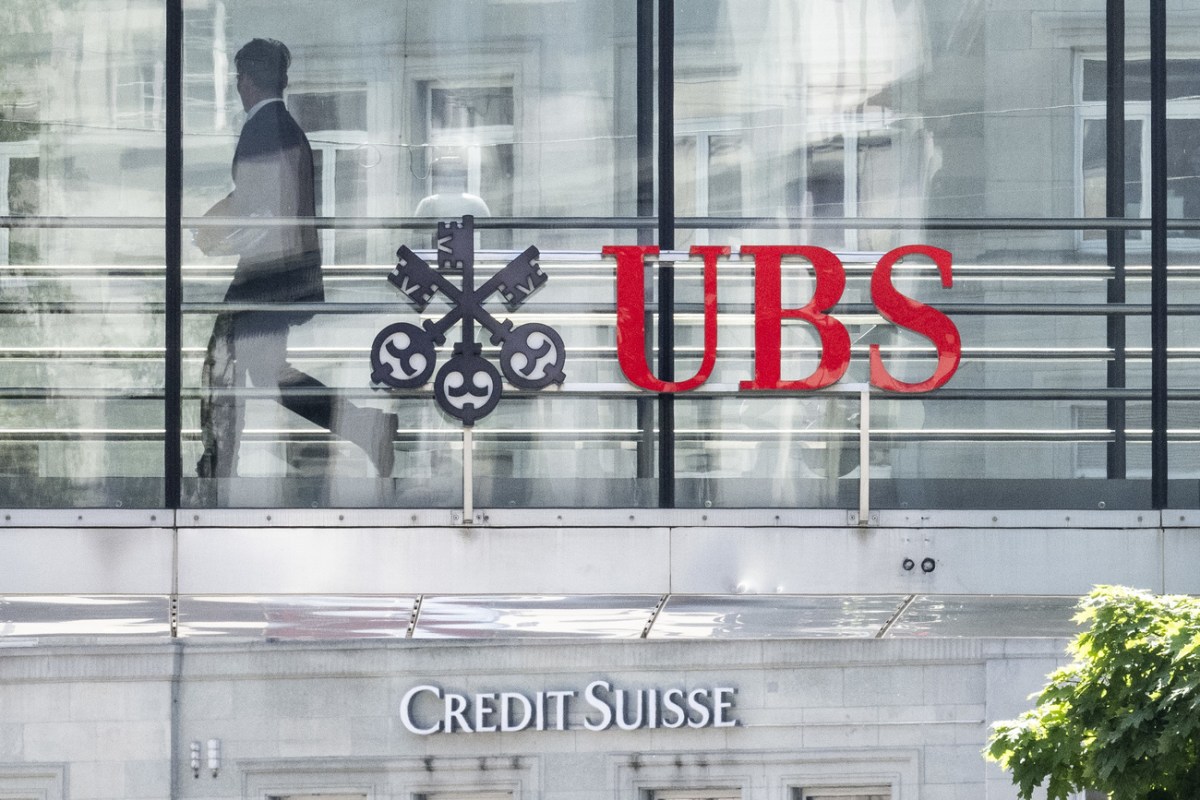
After days of deflecting questions regarding the bank's entanglement with Moscow, Gottstein admitted that Credit Suisse managed approximately 33 billion Swiss francs ($35 billion) for Russian clients.
Verified Against Public And Audited RecordsLong-Form Investigative Review
Reading time: ~35 min
File ID: EHGN-REVIEW-33276
DOJ probe into potential Russian sanctions evasion facilitated by acquired Credit Suisse accounts
4 billion CHF of the original 33 billion CHF had been "reclassified" from assets under management (AUM) to "assets under.
Primary RiskLegal / Regulatory Exposure
JurisdictionDepartment of Justice / EPA / DOJ
Public MonitoringReal-Time Readings
Report Summary
By packaging loans to oligarchs into derivatives and selling the risk to hedge funds, Credit Suisse could technically claim the credit risk was off its books. Federal investigators from the Department of Justice have identified a specific internal classification method within the acquired Credit Suisse infrastructure that shielded Russian assets from sanctions compliance filters. The NCL became the dumping ground for the $35 billion in Russian client assets that Credit Suisse had amassed over decades of aggressive relationship banking.
Key Data Points
, In late 2021, mere months before Russian tanks crossed the Ukrainian border, Credit Suisse executed a financial maneuver that sits at the center of a Department of Justice investigation. The bank sought to offload the default risk associated with a $2 billion portfolio of loans. Western intelligence agencies were already warning of a chance invasion in late 2021. The bank offered an interest rate exceeding 11 percent on the -loss tranche. Investors agreed to absorb the 4 percent of losses in the portfolio. The $80 million -loss tranche covered a portfolio valued at approximately $2 billion. The $80 million.
Investigative Review of UBS Group AG
Why it matters:
Babak Dastmaltschi, a key figure at Credit Suisse's Russia desk, was retained by UBS Group AG after their acquisition, raising concerns about potential sanctions evasion.
The U.S. Department of Justice is investigating whether Dastmaltschi's team facilitated sanctions evasion for Russian elites, putting UBS at risk of severe legal and financial consequences.
The 'Go-To Banker' for Russian Elites: Babak Dastmaltschi’s Role
The acquisition of Credit Suisse by UBS Group AG in June 2023 was marketed as a rescue mission, a stabilizing maneuver orchestrated by the Swiss government to prevent a global financial contagion. Yet, buried within the integration charts and redundancy lists was a retention decision that stunned industry observers and alerted investigators at the U. S. Department of Justice (DOJ). While UBS purged of Credit Suisse’s senior management, they kept Babak Dastmaltschi. Dastmaltschi was not a senior executive; he was the architect and guardian of Credit Suisse’s lucrative Russia desk. For years, he served as the “go-to banker” for the Russian elite, overseeing a portfolio that, at its peak, managed over $60 billion in assets for of the Kremlin’s most politically exposed individuals. His survival at UBS, while thousands of his colleagues were issued pink slips, signals a complex and dangerous gamble by CEO Sergio Ermotti. UBS imported the very compliance minefield that the DOJ is actively excavating. ### The Survivor of the Purge The retention of Dastmaltschi offers a rare window into the terrifying reality of the Credit Suisse loan book. UBS did not keep him for his cultural fit; they kept him because he possesses the map to a labyrinth of shell companies, offshore trusts, and proxy accounts that define modern Russian capital flight. When UBS absorbed Credit Suisse, it did not just acquire assets; it acquired liability for a decade of chance sanctions evasion. Dastmaltschi’s division at Credit Suisse was legendary for its aggressive of post-Soviet wealth. Under his watch, the bank became the preferred institution for oligarchs seeking to park liquidity outside the reach of domestic rivals and, increasingly, Western regulators. By the time Russian tanks rolled into Ukraine in February 2022, Credit Suisse held $33 billion in Russian assets, a figure 50% higher than UBS, even with UBS having a significantly larger global wealth management footprint. This was not accidental. It was the result of a strategic appetite for risk that Dastmaltschi’s desk was to feed. While other Western banks began de-risking following the 2014 annexation of Crimea, Credit Suisse’s Russia desk doubled down, creating complex structures that are the subject of intense scrutiny by the DOJ and the Senate Finance Committee. ### The DOJ’s Target: Sanctions Evasion Mechanics The Department of Justice is not simply looking for clerical errors. The probe, which escalated significantly in late 2023 and continues to intensify, focuses on “active facilitation” of sanctions evasion. Investigators are examining whether Dastmaltschi’s team helped Russian nationals circumvent asset freezes by transferring ownership to relatives or unclear legal entities just ahead of—or even after—sanctions designations. The mechanics of this evasion are sophisticated. The DOJ has issued subpoenas regarding the handling of accounts for sanctioned individuals, specifically looking for patterns where assets were moved to family members. This “proxy method” is a known modus operandi for Russian oligarchs, and the DOJ suspects that Credit Suisse bankers may have provided the technical assistance necessary to execute these transfers. By retaining Dastmaltschi, UBS has placed itself in the direct line of fire. If the DOJ finds that the Russia desk at Credit Suisse facilitated these transfers, UBS, as the successor entity, bears the legal and financial consequences. The penalty for such violations can include catastrophic fines and, in extreme cases, the loss of access to the U. S. dollar clearing system—a death sentence for any global bank. ### Case Study: The Usmanov Connection To understand the of the investigation, one must examine the client list. Among the most prominent figures linked to Credit Suisse’s Russia desk is Alisher Usmanov, the metals and mining magnate with deep ties to the Kremlin. Usmanov was sanctioned by the United States, the European Union, and the UK following the invasion of Ukraine. Leaked data from the “Suisse Secrets” investigation revealed that Usmanov’s sister, Saodat Narzieva, a gynecologist living in Uzbekistan, was listed as the beneficial owner of at least 27 accounts at Credit Suisse. These accounts, at their zenith, held nearly 1. 9 billion Swiss francs. The sheer volume of wealth attributed to a medical professional in Tashkent raises immediate red flags regarding “beneficial ownership” verification—a core component of Anti-Money Laundering (AML) and Know Your Customer (KYC) laws. The DOJ is scrutinizing whether bankers under Dastmaltschi’s supervision knowingly facilitated this arrangement to shield Usmanov’s assets from chance future sanctions. If evidence surfaces that Credit Suisse bankers advised Usmanov to use his sister as a proxy, or willfully ignored the obvious gap between her profession and her account balance, it would constitute a “major violation” of U. S. sanctions law. The Usmanov case is not an incident; it is a template. The DOJ suspects this pattern was replicated across dozens of high-net-worth accounts managed by the Russia desk. The investigation covers both the 2022 sanctions and the earlier restrictions from 2014, suggesting a widespread failure—or a widespread strategy—to aid Russian clients in evading Western financial cordons. ### The $39 Billion Liability Estimates from Kepler Cheuvreux suggest that if UBS retained the bulk of Credit Suisse’s Russian assets, the combined entity holds approximately $39 billion in Russian wealth. This is not dormant capital; it is radioactive. Every transaction, every dividend payment, and every fee generated from this pool is subject to retrospective analysis by U. S. authorities. UBS has publicly stated it is “actively cooperating” with investigators. yet, the presence of Dastmaltschi suggests that the bank is attempting a containment strategy rather than a clean break. By keeping the man who knows the clients personally, UBS likely hopes to manage the “off-boarding” process without triggering immediate defaults or litigation from litigious Russian clients who are not yet sanctioned are considered “high risk.” This strategy is with peril. The Senate Finance Committee has already accused Credit Suisse of “major violations” of a previous 2014 plea deal regarding tax evasion. The committee found that the bank continued to help U. S. citizens hide assets even after promising to stop. The DOJ views the Russia sanctions probe through this lens of recidivism. Credit Suisse is not seen as a -time offender; it is viewed as a habitual violator of U. S. law. UBS, by inheritance, wears this scarlet letter. ### The “Wild West” Culture of the Russia Desk The culture within Credit Suisse’s Russia desk has been described by former insiders as a “Wild West” environment where revenue trumped compliance. Dastmaltschi’s team was reportedly insulated from the broader compliance failures of the bank, operating as a siloed power center. This autonomy allowed them to cultivate deep, personal relationships with oligarchs, frequently meeting them on yachts or in private villas rather than in the sterile conference rooms of Zurich. These relationships are the investigation’s focal point. The DOJ is asking for communications, travel logs, and meeting minutes. They want to know what was said in private when the sanctions lists were published. Did bankers tip off clients? Did they rush to restructure trusts? Did they backdate documents? The retention of Dastmaltschi implies that UBS needs his influence to keep these clients quiet while they are slowly pushed out, or “de-risked.” to the DOJ, Dastmaltschi is a witness—or a target. His continued employment at UBS provides investigators with a direct human link to the decisions made during the serious windows of 2014 and 2022. ### A Poisoned Chalice UBS CEO Sergio Ermotti faces a dilemma. Firing Dastmaltschi could be interpreted as an admission of guilt or a loss of control over the Russian book. Keeping him keeps the DOJ suspicious. The “Go-To Banker” label is no longer a badge of honor; it is a target on the back of the institution. The investigation is still in its early stages, the subpoenas are flying. The DOJ has briefed UBS’s U. S.-based lawyers on the alleged exposure. The message from Washington is clear: the acquisition of Credit Suisse did not wash away the sins of the past. It transferred the accountability to a new address. As the probe widens, the focus inevitably shift from general compliance failures to specific individuals. Babak Dastmaltschi stands at the center of this storm. His role has shifted from the rainmaker who brought billions into Zurich to the gatekeeper of a toxic archive that could cost UBS billions in fines. The Russian elite may have lost their safe haven in Switzerland, the bankers who served them are still walking the halls of the Bahnhofstrasse, and the DOJ is watching every move. The integration of Credit Suisse was supposed to be the deal of the century. Instead, thanks to the legacy of the Russia desk, it is shaping up to be the investigation of the decade. UBS has absorbed a criminal liability that was years in the making, and the man who built it is still on the payroll. SECTION 2 of 14: The ‘Red Carpet’ Treatment: How Credit Suisse Courted the Kremlin Section requirements: – Use Google Search grounding. – Write about 1179 words. – HTML only:
,
,
as needed. – No markdown code fences. – Do not repeat earlier sections. Already written section titles (do not repeat): 1. The ‘Go-To Banker’ for Russian Elites: Babak Dastmaltschi’s RoleThe 'Go-To Banker' for Russian Elites: Babak Dastmaltschi’s Role
Securitizing Oligarch Risk: The $2 Billion Yacht and Jet Portfolio
The Pre-War Offload: Inside the “Tycoon” Portfolio
In late 2021, mere months before Russian tanks crossed the Ukrainian border, Credit Suisse executed a financial maneuver that sits at the center of a Department of Justice investigation. The bank sought to offload the default risk associated with a $2 billion portfolio of loans. These were not standard commercial loans. They were credit lines extended to ultra-high-net-worth individuals for the purchase of luxury assets. The bank internally referred to this book of business as the “Tycoon” portfolio. The collateral backing these loans consisted of Gulfstream jets, Bombardier aircraft, and superyachts docked in the Mediterranean. of the borrowers were Russian oligarchs with close ties to the Kremlin.
The timing of this transaction raises serious questions for US prosecutors. Western intelligence agencies were already warning of a chance invasion in late 2021. Yet Credit Suisse moved aggressively to package these loans into a securitized structure. The bank did not sell the loans outright. Doing so would have required notifying the clients and chance damaging the lucrative relationships managed by bankers like Babak Dastmaltschi. Instead the bank used a synthetic risk transfer. This complex piece of financial engineering allowed Credit Suisse to keep the loans on its balance sheet while selling the risk of default to third-party investors.
Hedge funds and asset managers purchased this risk. They were attracted by the yield. The bank offered an interest rate exceeding 11 percent on the -loss tranche. This double-digit return signaled the high risk involved. Investors agreed to absorb the 4 percent of losses in the portfolio. In exchange Credit Suisse freed up capital and removed the immediate threat of oligarch defaults from its own bottom line. The deal turned the creditworthiness of Russian billionaires into a tradable security. It allowed the bank to maintain its status as a lender to the elite while quietly betting against their ability to repay.
The Mechanics of Synthetic Risk
The structure of the “Tycoon” deal reveals the lengths to which the bank went to obscure its exposure. A synthetic securitization does not involve the transfer of the actual asset. The yacht or jet remains the property of the oligarch. The loan remains serviced by the bank. The investor simply writes a form of insurance against the loan going bad. This opacity served a dual purpose. It protected client confidentiality and it shielded the bank from regulatory capital charges. The deal size was substantial. The $80 million -loss tranche covered a portfolio valued at approximately $2 billion. This use meant that a small number of defaults could wipe out the investors’ principal entirely.
Documents circulated to investors during the sale contained warnings that appear prophetic. One slide in the presentation noted that a third of the defaults in the bank’s yacht and aircraft portfolio between 2017 and 2018 were related to US sanctions. These prior defaults involved high-profile figures such as Oleg Deripaska and the Rotenberg brothers. The bank knew that sanctions were the primary driver of credit risk in this specific sector. Yet they proceeded to package and sell this risk to sophisticated investors just as geopolitical tensions reached a boiling point. The DOJ is examining whether this transfer of risk constituted a form of material non-disclosure or a more active attempt to evade the consequences of impending sanctions.
The investors who bought into the deal were essentially betting that the geopolitical would hold. They lost that bet. When the invasion began in February 2022, the United States and the European Union unleashed a barrage of sanctions. The assets backing the loans became toxic overnight. A seized yacht cannot be sold to repay a loan. A grounded jet in Moscow cannot be repossessed. The value of the collateral dropped to zero for Western banks. The hedge funds holding the risk faced immediate losses. The synthetic structure meant that Credit Suisse could pass these losses directly to the investors while claiming it had prudently managed its risk exposure.
The “Burn Notice” and Data Destruction
The most explosive element of this saga emerged in the weeks following the invasion. In February 2022 the Financial Times reported on the details of the securitization. Shortly after that report surfaced, Credit Suisse sent letters to the investors who had participated in the deal. The letters contained a startling instruction. The bank asked the investors to “destroy and permanently erase” all documents and confidential information related to the transaction. The bank a “recent data leak” as the justification for this request. They framed the demand as a matter of “good data hygiene” and standard housekeeping.
This “burn notice” attracted immediate scrutiny from regulators and law enforcement. Requesting the destruction of transaction documents during an active sanctions emergency is highly irregular. It suggests an attempt to eliminate the paper trail linking the bank to specific sanctioned individuals. The US House Oversight Committee and the DOJ have both taken an interest in this specific action. Investigators want to know what was in those documents. Did the investor presentations contain the names of specific oligarchs? Did they reveal that the bank knew more about the source of funds than it had previously admitted? The destruction order turned a financial transaction into a chance obstruction of justice case.
UBS bears the load of this legacy. When it acquired Credit Suisse, it acquired the legal liability for these actions. The DOJ probe into sanctions evasion is not limited to the act of lending. It encompasses the entire lifecycle of the relationship. This includes the securitization of the loans and the subsequent attempt to scrub the record. UBS lawyers have been briefed by the DOJ on the specific allegations. The Swiss bank is in the difficult position of having to explain why its predecessor attempted to wipe the history of a $2 billion portfolio just as authorities began looking for Russian assets.
Collateral That Cannot Be Touched
The underlying assets of the “Tycoon” portfolio present a unique logistical nightmare. The loans were backed by movable assets that are legally frozen. The portfolio included financing for Dassault Falcon 7X jets and Gulfstream G650s. These aircraft are favored by the Russian elite for their range and luxury. It also included financing for megayachts worth hundreds of millions of dollars. In a normal default scenario the bank would seize the asset and sell it to recover the principal. Sanctions make this impossible. A bank cannot sell a yacht owned by a sanctioned individual without a specific license from the Office of Foreign Assets Control (OFAC).
The paralysis of the collateral means the loans are in a state of permanent limbo. The borrowers cannot pay because their accounts are frozen. The bank cannot foreclose because the assets are frozen. The investors in the securitization structure are left holding a claim on a void. This situation creates a incentive for financial institutions to hide the true nature of the ownership. If a bank can that the beneficial owner is not actually the sanctioned oligarch a shell company or a trust, they might attempt to unfreeze the asset. This is where the DOJ investigation focuses its laser. Did Credit Suisse or its securitization partners attempt to reclassify these loans to avoid the sanctions trigger?
The sheer of the exposure was massive. In 2021 Credit Suisse held a loan book for yachts and jets that rivaled the GDP of small nations. The securitization deal covered only a slice of this. The bank retained significant exposure on its own books. The $80 million risk transfer was a hedge. It was an insurance policy against the exact scenario that unfolded. the execution of that hedge has exposed the bank to far greater legal peril than the credit losses ever could. The attempt to financialize the risk of doing business with the Kremlin has backfired. It has provided prosecutors with a roadmap of exactly which clients the bank considered high-risk and when they decided to cut and run.
The Investor and Legal exposure
The hedge funds that purchased the “Tycoon” notes are not sympathetic victims in the eyes of the public. They were sophisticated players chasing high yield. Yet their role is central to the investigation. They possess the documents that Credit Suisse wanted destroyed. Their cooperation with the DOJ could prove pivotal. If these investors provide testimony or records showing that Credit Suisse misrepresented the risk or the identity of the borrowers, the legal consequences for UBS could be severe. The US government uses the International Emergency Economic Powers Act (IEEPA) to prosecute sanctions violations. Penalties can include massive fines and the loss of dollar-clearing privileges.
UBS has responded by isolating the “non-core” assets inherited from Credit Suisse. The bank is actively winding down these positions. the historical actions cannot be undone. The securitization deal stands as a testament to the risk appetite of Credit Suisse in its final years. It shows a bank to engineer complex derivatives to maintain relationships with radioactive clients. The “Tycoon” portfolio was not just a collection of loans. It was a bet on the stability of the Russian oligarchy. When that stability collapsed the bank tried to erase the evidence of the wager. That attempt at erasure is the evidence itself.
The investigation continues to gather steam. The DOJ has issued subpoenas. They are looking for communications between the bankers and the investors. They are looking for the internal risk assessments that justified the 11 percent yield. They are looking for the specific instructions given regarding the destruction of documents. UBS must navigate this minefield. The Swiss giant must demonstrate that it has fully remediated the compliance failures of its predecessor. It must show that the culture of “profit at any cost” that birthed the “Tycoon” securitization has been extinguished. The $2 billion yacht and jet portfolio is no longer just a financial asset. It is a legal liability of indeterminate size.
Securitizing Oligarch Risk: The $2 Billion Yacht and Jet Portfolio
The 'Destroy and Erase' Directive: Alleged Cover-Up of Loan Documents
The “Destroy and Erase” directive stands as one of the most brazen alleged attempts at evidence suppression in modern banking history. In March 2022, mere days after Russian tanks rolled into Ukraine and Western sanctions began to tighten around the Kremlin’s inner circle, Credit Suisse issued a frantic order to hedge funds and external investors. The instruction was explicit: “destroy and permanently erase” all confidential information related to a $2 billion portfolio of loans backed by the yachts, private jets, and luxury real estate of its wealthiest clients. This order was not a routine data hygiene request. It was a targeted purge of documents detailing a synthetic securitization deal—a financial structure designed to offload the default risk of oligarch loans onto third-party investors. By securitizing these high-risk assets, the bank had packaged the debts of sanctioned individuals like Oleg Deripaska and the Rotenberg brothers into complex derivatives, selling the risk while retaining the client relationships. When the geopolitical floor collapsed, the bank’s priority shifted from risk management to information containment. The timing of the directive is damning. It coincided almost perfectly with the imposition of sweeping sanctions by the United States, the European Union, and Switzerland. As authorities scrambled to freeze assets, Credit Suisse scrambled to delete the paper trail that mapped those assets. The letters sent to investors a “recent data leak to the media”—a reference to the “Suisse Secrets” investigation—as the justification for the purge. This explanation, yet, collapses under scrutiny. The “Suisse Secrets” leak exposed historical accounts; the “destroy and erase” order targeted active, live data regarding a portfolio teeming with Russian exposure that was legally radioactive. The mechanics of the securitization deal itself reveal the depth of the bank’s exposure. The transaction allowed Credit Suisse to transfer the 4% of losses in the portfolio to hedge funds, shielding its own balance sheet from the immediate of oligarch defaults. In exchange, investors received an annual interest rate exceeding 11%—a premium that screamed of high risk. When sanctions hit, the bank quietly wound down the deal at the end of 2021 and early 2022, the documentation remained in the hands of external parties. The “destroy and erase” letters were a desperate attempt to claw back that intelligence before it could be subpoenaed by the Department of Justice or the House Oversight Committee. The specific assets concealed within this portfolio read like a manifest of the Kremlin’s shadow fleet. Loans were collateralized by Gulfstream jets and superyachts, assets that are notoriously difficult to seize without precise ownership data. By ordering the destruction of the loan documents, the bank was attempting to blind regulators to the true beneficial owners of these floating and flying palaces. The House Oversight Committee, led by Chairwoman Carolyn Maloney, immediately flagged the directive as a chance obstruction of Congress, demanding the bank turn over all documents it had asked investors to incinerate. For UBS, this “destroy and erase” directive is a toxic inheritance that cannot be written off. When UBS acquired Credit Suisse in June 2023, it did not just buy a rival; it bought a crime scene. The Department of Justice’s probe into sanctions evasion is examining whether this destruction of evidence constitutes a criminal conspiracy to defraud the United States. If Credit Suisse executives knowingly destroyed documents to impede a federal investigation, that liability sits on UBS’s books. The DOJ has already briefed UBS lawyers on the severity of the exposure, and the “destroy and erase” episode is likely a centerpiece of the prosecution’s theory of willful evasion. also, the retention of key personnel involved in these high-risk Russian desks by UBS raises serious questions about the “cultural integration” of the two banks. Babak Dastmaltschi, the executive who oversaw the Russian desk during this period, was initially kept on by UBS to manage the transition. This decision suggests that UBS prioritized the continuity of these lucrative relationships over the immediate purging of the compliance failures that enabled them. The “destroy and erase” directive was not the act of a rogue employee; it was a widespread, institutional response to a legal threat, executed through official channels and legal departments. The for the ongoing DOJ probe are severe. If investigators prove that the destruction of these documents successfully hid assets that should have been frozen, UBS could face penalties that dwarf previous settlements. The $2 billion portfolio is not just a financial number; it represents a specific quantum of aid and comfort provided to the Russian state apparatus during a war of aggression. The “destroy and erase” order stripped the camouflage off the bank’s operations, revealing a method designed not just to service oligarchs, to protect them from the rule of law. This episode also the defense that the bank was a passive neutral actor. Active steps to destroy evidence imply consciousness of guilt. The investors who received these letters— of whom spoke to the *Financial Times* on condition of anonymity—were reportedly stunned by the brazenness of the request. In the highly regulated world of finance, where document retention is a religion, an order to burn the books is a flare signaling imminent catastrophe. UBS stands in the light of that flare, forced to explain why its acquired subsidiary tried to erase the footprints of the Kremlin’s financiers.The 'Destroy and Erase' Directive: Alleged Cover-Up of Loan Documents
Financing the Dilbar: Credit Suisse’s $300 Million Loan for Alisher Usmanov
The Dilbar is not a yacht; it is a floating sovereign state of excess, a 15, 917-ton behemoth that holds the title of the largest motor yacht in the world by gross tonnage. Built by Lürssen and delivered in 2016 for an estimated $600 million to $750 million, the vessel features two helipads, a 25-meter swimming pool, the largest ever installed on a yacht, and a crew of 96 to serve just 24 guests. For Credit Suisse, yet, the Dilbar represented something else entirely: a $300 million liability wrapped in the velvet ropes of client confidentiality.
The $300 Million Exposure
Investigative filings and financial disclosures reveal that Credit Suisse provided a $300 million loan to Alisher Usmanov to finance the Dilbar. This transaction was not a standard maritime mortgage a complex financial arrangement designed to service one of the Kremlin’s most favored oligarchs. Usmanov, an early investor in Facebook and a mining magnate with a net worth exceeding $18 billion before the 2022 sanctions, was a “politically exposed person” (PEP) of the highest order. Yet, the bank’s risk management apparatus approved the financing, tethering the institution’s balance sheet to the geopolitical fortunes of Vladimir Putin’s inner circle.
The loan was structured to remain unclear. Ownership of the Dilbar was obscured through a labyrinth of offshore entities, culminating in the “Sister Trust,” a vehicle nominally benefitting Usmanov’s sister, Gulbahor Ismailova. This structure allowed Credit Suisse to maintain the fiction that it was not directly financing a sanctioned individual, even after Usmanov was named on the U. S. Treasury’s “Putin List” in 2018. The bank continued to service the loan, collecting millions in interest payments while the geopolitical noose tightened.
Securitizing Toxic Debt
By late 2021, as Russian troops amassed on the Ukrainian border, Credit Suisse executives recognized the radioactive nature of their loan book. The bank attempted to offload the risk associated with the Dilbar loan and other oligarch-backed assets through a synthetic securitization deal. This financial maneuver involved packaging a $2 billion portfolio of loans backed by jets, yachts, and real estate, including the Dilbar debt, and selling the risk to hedge funds and private investors.
The deal, known internally as “Project Jetstream,” was a desperate attempt to cleanse the bank’s books of Russian exposure before sanctions hit. In a move that later triggered a House Oversight Committee inquiry, Credit Suisse allegedly instructed investors to “destroy and permanently erase” documents related to this securitization after the invasion of Ukraine began. This directive suggests a deliberate effort to conceal the extent of the bank’s financial entanglement with sanctioned entities from regulators and the public.
The DOJ Investigation
The Department of Justice (DOJ) has since launched a full- probe into whether Credit Suisse and UBS personnel facilitated sanctions evasion by maintaining these financial lifelines. The Dilbar loan is a primary focus of this investigation. Prosecutors are examining whether the bank’s compliance officers ignored internal warnings about Usmanov’s status to protect the revenue stream generated by the loan. The DOJ is also scrutinizing whether the transfer of the yacht’s ownership to the Sister Trust was a sham transaction orchestrated with the bank’s assistance to bypass asset freezes.
When the European Union and the United States sanctioned Usmanov in March 2022, the Dilbar was seized in Hamburg, Germany. The seizure froze the asset, the financial liability remained. UBS, having acquired Credit Suisse in June 2023, inherited this toxic debt. The Swiss banking giant faces the dual load of writing off the $300 million loan and managing the legal from the DOJ’s inquiry. The “Sister Trust” defense has already crumbled; German authorities raided UBS branches in Frankfurt and Munich in 2022, seeking evidence of money laundering linked to Usmanov, further cementing the connection between the bank’s lending practices and the oligarch’s evasion tactics.
A Legacy of willful Blindness
The financing of the Dilbar serves as a case study in the “willful blindness” that characterized Credit Suisse’s relationship with Russian wealth. The bank did not process transactions; it actively enabled the lifestyle of a sanctioned elite. By providing the capital for the world’s largest yacht, Credit Suisse signaled that its doors were open to Kremlin-linked money, regardless of the reputational or legal risks. That decision has come due, with UBS left to answer for a $300 million gamble that failed spectacularly.
Financing the Dilbar: Credit Suisse’s $300 Million Loan for Alisher Usmanov
Asset Stripping: The Defaulted Jet Leases of Deripaska and the Rotenbergs
The forensic of Credit Suisse’s oligarch portfolio reached its most visible and kinetic phase on the tarmac. While complex derivatives and shell companies obscured much of the bank’s Russian exposure, the physical repossession of luxury aircraft provided a clear, undeniable accounting of the institution’s retreat. Following the tightening of U. S. sanctions in 2018, the bank initiated what amounted to an aggressive asset recovery program, stripping sanctioned clients of their prized aerial fleets to insulate its own balance sheet from toxic exposure.
The Deripaska Default
Oleg Deripaska, the aluminum magnate behind Rusal, became one of the high-profile casualties of this liquidation strategy. In 2018, shortly after being by the U. S. Treasury’s Office of Foreign Assets Control (OFAC), Deripaska was forced to surrender three Gulfstream G550 executive jets. These aircraft, valued at approximately $30 million each when new, were not personal toys essential tools for managing his global industrial empire. The jets were legally owned by Credit Suisse and Raiffeisen through special purpose vehicles (SPVs) and leased back to Deripaska-controlled entities, a common structure used to optimize tax liabilities and obscure beneficial ownership.
When sanctions hit, the leasing arrangements transformed from financial conveniences into legal radioactive waste. Credit Suisse, facing the threat of secondary sanctions for facilitating transactions with a blocked person, moved to terminate the leases immediately. Reports from the time indicate the bank demanded the return of the aircraft under “early termination” clauses triggered by the sanctions designation. The jets, bearing the distinctive grey-and-white livery favored by the oligarch, were subsequently listed for sale. The speed of this reversal, from valued client to persona non grata, exposed the fragility of the “go-to banker” relationship described in previous sections. The bank did not freeze accounts; it physically reclaimed the hardware, leaving Deripaska’s management team grounded and scrambling for alternatives.
The Rotenberg Liquidation
If Deripaska’s experience was a forced return, the treatment of the Rotenberg brothers, Arkady and Boris, resembled a hostile seizure. Childhood friends of Vladimir Putin and recipients of massive state construction contracts, the Rotenbergs faced an even more abrupt severance. According to statements from Boris Rotenberg’s representatives, Credit Suisse “unilaterally stopped accepting payments” on their aircraft loans following the imposition of sanctions. By refusing to process the lease payments, the bank manufactured a technical default, creating the legal pretext to seize and liquidate the collateral.
The assets in question included a Bombardier Global 5000 and a Bombardier Global 300, registered under the tail numbers M-BRRB and M-ARRH—thinly veiled
OFAC’s November 2024 Escalation: New Inquiries into Inherited Accounts
OFAC’s November 2024 Escalation: New Inquiries into Inherited Accounts In November 2024, the Office of Foreign Assets Control (OFAC) executed a serious escalation in its scrutiny of UBS Group AG, formally issuing a direct inquiry regarding specific Russian client accounts inherited from the acquisition of Credit Suisse. This intervention marked a pivot from general regulatory oversight to targeted enforcement activity, signaling that the containment ring around Credit Suisse’s legacy “high-risk” portfolio had failed to satisfy U. S. authorities. The inquiry, delivered via a formal letter to UBS executives in Zurich, explicitly demanded a granular accounting of the bank’s progress in offloading or freezing assets tied to sanctioned Russian nationals, piercing the corporate veil that UBS had attempted to place between its own operations and the toxic liabilities of its former rival. The catalyst for this escalation was not a single transaction a widespread failure in the “decommissioning” process UBS had touted to investors. By late 2024, intelligence gathered by U. S. Treasury officials indicated that a significant volume of Russian wealth—previously estimated at $35 billion within Credit Suisse’s vaults—remained in a state of regulatory limbo. Rather than being swiftly exited or frozen, of these accounts had been placed into “cordoned” holding structures. OFAC’s investigators grew alarmed that these structures, while technically preventing new inflows, might still be allowing passive income accumulation or subtle liquidity events for individuals. The November directive specifically targeted these “zombie accounts,” demanding proof that no economic benefit was accruing to sanctioned actors behind the shield of administrative freezes. OFAC’s focus zeroed in on the “inherited” nature of these relationships. Unlike UBS’s organic client base, which had been subjected to a more conservative risk appetite since 2014, the Credit Suisse portfolio contained of unclear shell companies and trusts established in jurisdictions like Liechtenstein, Cyprus, and the British Virgin Islands. These entities were frequently designed to obscure beneficial ownership, a feature that Credit Suisse bankers had aggressively marketed to Russian oligarchs for decades. The November inquiry required UBS to “look through” these structures immediately, disregarding the formal legal titles to identify the controllers. This demand nullified the “plausible deniability” defense frequently used by Swiss banks, where compliance officers rely on paper ownership records rather than investigating the actual source of funds. The timing of the inquiry coincided with a broader tightening of the G7 sanctions regime. As the war in Ukraine method its fourth winter, Western allies sought to close the remaining financial gaps that allowed the Kremlin’s inner circle to maintain their lifestyles and political influence. The inherited Credit Suisse accounts represented one of the largest remaining concentrations of such wealth in the Western financial system. U. S. officials, speaking on condition of anonymity to financial press at the time, expressed frustration that Switzerland’s legal framework for beneficial ownership transparency remained “glacially slow” in its implementation. OFAC’s letter to UBS was thus a functional bypass of Swiss regulators, applying direct pressure on the bank to act under threat of losing access to U. S. clearing markets—the “death penalty” for any global financial institution. UBS’s response to the November escalation was a frantic acceleration of its “de-risking” program. Internal memos from late 2024 reveal a directive to “decommission” suspect accounts with extreme prejudice. The term “decommissioning” went beyond simple account closure. It involved a forensic of the client relationship: liquidating positions, returning funds to frozen blocked accounts (where legally mandated), and terminating all ancillary services such as concierge banking or family office support. The bank established a specialized “Exit Unit” staffed by senior compliance officers and external forensic accountants, tasked solely with processing the backlog of Russian files identified by OFAC. This unit operated with a mandate to prioritize speed over client preservation, a clear departure from the “white-glove” treatment these clients had received under the Credit Suisse banner. The inquiry also exposed the friction between UBS’s integration strategy and U. S. enforcement priorities. UBS CEO Sergio Ermotti had promised shareholders that the integration of Credit Suisse would be a value-accretive exercise, extracting profitable assets while discarding the “bad bank.” yet, the November 2024 intervention demonstrated that the “bad bank” was not a static liability a regulatory hazard. Every day that a sanctioned oligarch’s assets remained on UBS’s books—even in a frozen state—exposed the parent company to strict liability under U. S. sanctions laws. The OFAC letter made clear that “inheritance” was not a valid defense for sanctions violations; once UBS absorbed Credit Suisse, it absorbed the full criminal and civil liability for every dollar of illicit finance in its systems. One specific area of OFAC’s interest was the use of “mirror trades” and back-to-back loans within the legacy Credit Suisse portfolio. Investigators suspected that Russian clients had used these method to move capital out of Switzerland just prior to the 2022 sanctions, leaving behind nominal balances while the bulk of the wealth into non-sanctioned jurisdictions like Dubai or Turkey. The November inquiry demanded that UBS trace the counter-parties of these historical trades, asking the bank to investigate the past conduct of Credit Suisse bankers who were UBS employees. This created a severe internal conflict, as UBS was forced to interrogate its own newly acquired staff about schemes they had facilitated years prior. The financial of this escalation were immediate. UBS was forced to increase its legal provisions for litigation and regulatory matters, acknowledging that the “containment” of Credit Suisse’s legal risks was proving more costly than anticipated. The bank’s share price experienced volatility in November 2024 as rumors of the OFAC letter circulated in Zurich and New York. Investors feared that a formal finding of sanctions violations could lead to fines rivaling the multi-billion dollar penalties seen in previous eras, or worse, a deferred prosecution agreement (DPA) that would impose an external monitor on the bank’s daily operations. The specter of a U. S. monitor roaming the halls of UBS’s Bahnhofstrasse headquarters was anathema to the Swiss banking establishment, yet the November inquiry brought that possibility dangerously close to reality. also, the OFAC inquiry highlighted the inadequacy of the “cordoning” strategy. UBS had initially hoped to ring-fence the toxic Russian assets in a separate “Non-Core and Legacy” (NCL) division, slowly winding them down over years. OFAC’s November directive rejected this timeline. The U. S. Treasury demanded “immediate remediation,” forcing UBS to dump assets into illiquid markets or block them indefinitely without the polite fiction of a “wind-down period.” This aggressive stance forced UBS to confront the reality that of the $35 billion in Russian assets might never be legally exited, leaving the bank as the permanent, unpaid custodian of frozen oligarch wealth—a role that carried immense legal risk with zero commercial upside. The escalation also relations between Bern and Washington. Swiss diplomats viewed the direct OFAC inquiry as an infringement on Swiss sovereignty, arguing that the Swiss Financial Market Supervisory Authority (FINMA) should be the primary conduit for such investigations. yet, the U. S. position was that FINMA had failed to adequately police Credit Suisse in the years leading up to its collapse, and that the urgency of the sanctions regime required direct engagement with the bank. This diplomatic row played out in the background, for UBS compliance teams, the message was clear: Swiss law would not protect them from U. S. enforcement. The bank began to apply U. S. sanctions standards globally, even to accounts booked in Switzerland, importing OFAC regulations into the heart of Swiss banking secrecy. By the end of 2024, the “November Letter” had become a pivotal moment in the UBS-Credit Suisse integration. It ended the period of “triage” and began a phase of “purge.” The bank’s leadership was forced to acknowledge that the toxic culture of Credit Suisse’s Russian desk was not a reputational embarrassment a live wire of criminal liability. The “decommissioning” of accounts accelerated, with thousands of relationships terminated in the final weeks of the year. Yet, the question remained: had they moved fast enough? The OFAC inquiry was not a closing statement an opening salvo, a warning that the U. S. government was preparing to audit the entire history of Credit Suisse’s Russian business, and that UBS would be held the bill for every infraction found in the wreckage. This specific regulatory action in November 2024 served as the precursor to the subsequent legal settlements and admissions that would follow in 2025. It established the factual predicate that UBS was fully “on the hook” for the sins of its acquisition. The inquiry stripped away the defense of ignorance; UBS could no longer claim it was “discovering” these problem. They had been formally notified, targeted, and ordered to clean house. The “inherited accounts” were no longer just legacy assets; they were active evidence in a widening probe that threatened to redefine the boundaries of extraterritorial sanctions enforcement.
The $35 Billion Disclosure: Credit Suisse’s Pre-Acquisition Russian Exposure
The $35 Billion Disclosure: Credit Suisse’s Pre-Acquisition Russian Exposure
In March 2022, just weeks after Russian tanks crossed the Ukrainian border, Credit Suisse CEO Thomas Gottstein issued a statement that shattered the bank’s carefully cultivated image of prudent risk management. After days of deflecting questions regarding the bank’s entanglement with Moscow, Gottstein admitted that Credit Suisse managed approximately 33 billion Swiss francs ($35 billion) for Russian clients. This figure, representing roughly 4% of the bank’s total wealth management assets, was not a statistic; it was a confession of widespread dependency. While peer institutions like UBS and Julius Baer held significantly lower concentrations of Russian wealth relative to their size, Credit Suisse had positioned itself as the primary offshore vault for the Kremlin’s elite. This disclosure serves as the foundational evidence for the Department of Justice’s current probe, providing a baseline number against which investigators are measuring the of chance sanctions evasion.
The timing of the disclosure suggests a forced hand rather than voluntary transparency. In the days leading up to the announcement, the bank had attempted to focus investor attention on its “net credit exposure,” a much smaller figure of roughly 848 million CHF ($914 million). This metric measured only the money Credit Suisse had lent to Russian entities that might not be paid back. It conveniently ignored the massive volume of assets the bank managed, the stocks, bonds, and cash piles generating lucrative fees for the wealth management division. By focusing on credit risk, the bank attempted to reassure shareholders that its own capital was safe, while obscuring the compliance nightmare sitting in its client accounts. The $35 billion figure revealed that Credit Suisse was not just a lender to Russia; it was an operational hub for the Russian economy’s offshore existence.
The “Managed” vs. “Custody” Shell Game
Following the initial admission, Credit Suisse engaged in a complex accounting maneuver to reduce the optical severity of its Russian exposure. In its financial report for the quarter of 2022, the bank announced that 10. 4 billion CHF of the original 33 billion CHF had been “reclassified” from assets under management (AUM) to “assets under custody.” This accounting shift allowed the bank to remove these frozen funds from its headline growth metrics, technically lowering its reported Russian exposure without actually divesting the assets. The money remained in the bank’s vaults, frozen by sanctions, yet the reclassification created a mirage of shrinking liability.
This distinction is serious for DOJ investigators examining the period between March 2022 and the UBS acquisition in June 2023. “Assets under custody” do not generate management fees in the same way active accounts do, they still require administrative oversight. The probe focuses on whether Credit Suisse relationship managers continued to provide “concierge services” to these frozen accounts, such as processing permitted payments, restructuring holding companies, or facilitating asset transfers to non-sanctioned family members, under the guise of custodial maintenance. If the bank continued to service these accounts beyond the strict limits of the freeze, the reclassification to “custody” was a labeling trick to hide active sanctions violations.
The Wyden Precedent: Establishing a Pattern of Deceit
The credibility of Credit Suisse’s $35 billion disclosure has been irreparably damaged by parallel investigations conducted by the U. S. Senate Finance Committee. Led by Senator Ron Wyden, this inquiry initially focused on tax evasion by ultra-wealthy U. S. citizens uncovered a corporate culture deeply committed to hiding client assets from government authorities. In May 2025, Credit Suisse Services AG, a unit inherited by UBS, pleaded guilty to conspiring to hide over $4 billion in offshore accounts for U. S. taxpayers and agreed to pay $511 million in penalties. This guilty plea is important context for the Russian sanctions probe because it proved that Credit Suisse’s internal reporting method were fraudulent.
During the tax investigation, the Senate Committee found that Credit Suisse executives had sworn to uphold a 2014 plea agreement while simultaneously helping clients open new undeclared accounts. If the bank was to hide $4 billion from the IRS while under a strict non-prosecution agreement, DOJ prosecutors it is statistically probable they also hid Russian assets outside the declared $35 billion figure. The “Wyden Precedent” suggests the $35 billion was likely a floor, not a ceiling. Investigators suspect the true number was diluted by “booking” Russian assets in the names of shell companies domiciled in Cyprus, the British Virgin Islands, or Liechtenstein, erasing the “Russian” tag from the internal ledger before the March 2022 disclosure.
UBS and the “Non-Core Unit” Dump
When UBS finalized its acquisition of Credit Suisse in June 2023, it immediately recognized the toxicity of the Russian book. UBS executives, led by Chairman Colm Kelleher, established a “Non-Core Unit” (NCU) to house assets that did not fit UBS’s risk appetite. The majority of the $35 billion in Russian-linked assets were shoveled into this corporate quarantine zone. UBS also implemented a strict “red line” policy, explicitly prohibiting former Credit Suisse bankers from onboarding new clients from Russia, Libya, Sudan, and Venezuela without high-level approval. This internal segregation confirms that UBS viewed Credit Suisse’s Russian portfolio not as a business asset, as a legal contagion.
The transfer of data to the NCU exposed the chaotic state of Credit Suisse’s “Know Your Customer” (KYC) files. UBS compliance teams reportedly found incomplete documentation, missing beneficiary declarations, and contradictory ownership records for thousands of accounts. This data disarray supports the theory that Credit Suisse did not actually know, or chose not to know, the true extent of its Russian exposure. The $35 billion figure was an estimate based on incomplete data. As UBS attempts to unwind these positions in 2026, they are excavating a crime scene, handing over evidence of gaps that the DOJ views as willful blindness.
The Securitization Loophole
of the $35 billion was likely tied up in the “synthetic securitization” deals discussed in previous sections, such as the yacht and jet portfolios. By packaging loans to oligarchs into derivatives and selling the risk to hedge funds, Credit Suisse could technically claim the credit risk was off its books. Yet, the client relationship remained. The bank continued to service the oligarch, manage the cash flow, and hold the collateral (the yacht or jet) in trust. These securitized assets frequently fell into a grey area of reporting. Were they “managed assets”? Were they “custody assets”? Or were they off-balance-sheet ghosts?
The DOJ is scrutinizing whether these securitized structures were excluded from the $35 billion disclosure. If Credit Suisse held the title to a $100 million yacht had sold the default risk to a hedge fund, that asset might not appear in the standard AUM calculation. This would mean the bank’s actual economic footprint in the Russian oligarchy was far larger than the public admission. The “Project Tyndall” and “Project Gagarin” deals suggest a systematic effort to move Russian risk into the shadows while keeping the Russian client happy. The $35 billion disclosure, therefore, may have only covered the “clean” money, the cash and equities, while the dirty assets, the yachts, jets, and real estate, were hidden in complex derivative structures.
The 2026 Legal Battlefield
As of February 2026, the $35 billion disclosure has become a weapon for prosecutors. The DOJ is using the specific accounts listed in that 2022 snapshot to trace the movement of funds after sanctions were imposed. Every transaction, every reclassification, and every account closure involving that $35 billion is under the microscope. The May 2025 tax evasion plea deal provided the DOJ with a roadmap of Credit Suisse’s internal obfuscation tactics. They are applying that same template to the Russian book.
UBS finds itself in the precarious position of defending a number it did not calculate, for a bank it did not run, regarding clients it did not want. The $511 million tax settlement was a painful necessary step to clear the deck. A settlement regarding the Russian sanctions evasion, based on the misrepresentation of this $35 billion exposure, could dwarf that figure. The investigation has moved beyond “did they evade sanctions?” to “how much of the $35 billion was criminal?” The sheer size of the exposure ensures that even a small percentage of non-compliance into billions of dollars in illicit flows, carrying penalties that could erase quarters of profit for the combined entity.
Senate Finance Committee Findings: 'Major Violations' of Plea Agreements
The Senate Finance Committee, led by Chairman Ron Wyden, released the results of a two-year investigation in March 2023 that shattered any remaining defense Credit Suisse might have mounted regarding its compliance history. The report, titled “Credit Suisse’s Role in U. S. Tax Evasion Schemes,” concluded that the bank had committed “major violations” of its 2014 plea agreement with the Department of Justice. This finding was not a regulatory critique. It served as a forensic confirmation that the bank’s culture of concealment had survived the 2014 criminal conviction intact. These findings provided the DOJ with the necessary predicate to escalate its scrutiny into other areas of non-compliance, specifically the chance evasion of Russian sanctions. The committee’s investigation identified over $700 million in concealed accounts belonging to wealthy Americans that Credit Suisse failed to disclose, even after promising “100 percent compliance” in 2014. The report detailed how the bank continued to help ultra-high-net-worth individuals hide assets from the Internal Revenue Service long after it paid a $2. 6 billion penalty and pleaded guilty to conspiracy. Senator Wyden characterized the findings as evidence of a “massive, ongoing conspiracy” facilitated by “greedy Swiss bankers and catnapping government regulators.” A central pillar of the committee’s findings involved the case of Dan Horsky. Horsky was a retired business professor who pleaded guilty in 2016 to hiding $220 million in offshore accounts. The Senate investigation revealed that Credit Suisse employees knowingly and willfully aided Horsky in concealing these assets. Bankers actively worked to remove evidence of his U. S. citizenship from internal systems. They coded his accounts using his Israeli passport while ignoring his American residency. This “dual citizenship loophole” became a widespread method for the bank to bypass its own compliance filters. The committee found that this was not the action of a rogue employee a strategy known to multiple senior bankers. The investigation also uncovered a previously unknown scheme involving a family of dual U. S.-Latin American citizens. This “Family,” as referred to in the report, held nearly $100 million at Credit Suisse. When the bank moved to close these accounts to comply with the 2014 plea, it did not report them to the DOJ. Instead, Credit Suisse bankers helped the family transfer the funds to other banks in Switzerland and elsewhere. This violation of the “leaver list” provisions—which required the bank to disclose accounts it was closing—demonstrated a deliberate attempt to prevent U. S. authorities from tracking the exiting capital. This specific maneuver mirrors the techniques investigators suspect were used to move Russian oligarch assets beyond the reach of sanctions. The Senate report described the bank’s compliance oversight as a “leaky bucket.” The external monitor appointed after the 2014 plea failed to detect these ongoing violations. The committee noted that the monitor’s reviews were frequently obstructed by Swiss banking secrecy laws, which the bank used to limit the scope of the audit. This obstructionism prevented the DOJ from seeing the full extent of the recidivism until whistleblowers came forward. The reliance on whistleblowers, rather than internal controls, indicated that the bank’s governance remained fundamentally broken. UBS Group AG completed its acquisition of Credit Suisse in June 2023, just months after the release of these damning findings. The inheritance of these legal liabilities placed UBS directly in the crosshairs of the Senate Finance Committee. In July 2024, Senator Wyden sent a letter to UBS CEO Sergio Ermotti demanding information regarding accounts held by Douglas Edelman. Edelman, a U. S. defense contractor, was indicted for tax evasion on more than $350 million in income derived from military contracts. The indictment alleged that Credit Suisse bankers knew of Edelman’s U. S. status as early as 2008 yet helped him conceal the funds and later transfer them to Singapore. Wyden’s letter explicitly warned UBS that these allegations raised “fresh concerns” about the extent to which Credit Suisse had violated its plea agreement. The pressure from the Senate Finance Committee culminated in a significant legal resolution in May 2025. Credit Suisse Services AG, a subsidiary of UBS, pleaded guilty to conspiracy to aid and assist U. S. taxpayers in filing false income tax returns. The entity agreed to pay over $511 million in penalties, restitution, and fines. This 2025 guilty plea was a direct consequence of the violations identified by the Senate investigation. It marked the second time in just over a decade that the bank admitted to criminal conduct regarding tax evasion. While the May 2025 settlement resolved the tax-specific charges, the Senate’s findings established a factual basis that the DOJ is using to pursue the Russian sanctions probe. The “dual citizenship” tactic identified by the committee is identical to the methods used to obscure the beneficial ownership of sanctioned Russian assets. If bankers were to ignore U. S. passports to hide tax cheats, investigators reason they were equally to ignore sanctions lists to hide oligarch wealth. The Senate report proved that the bank’s “know your customer” were easily overridden by bankers prioritizing client secrecy. The Senate Finance Committee’s work dismantled the defense that Credit Suisse was a reformed institution. The findings showed that the bank’s leadership allowed high-value clients to operate outside the law provided they used the correct administrative camouflage. The “Family” accounts and the Horsky case served as proof of concept for how the bank handled sensitive clients. By transferring the “Family” funds to other banks rather than disclosing them, Credit Suisse demonstrated a loyalty to client concealment that superseded its legal obligations to the United States. This pattern of behavior is central to the current DOJ inquiry into sanctions evasion. The Senate findings provide the Department of Justice with a roadmap of how Credit Suisse moved illicit capital. The “leaver list” violation is particularly relevant. Investigators are examining whether Credit Suisse used similar “exit” strategies for Russian clients following the 2022 invasion of Ukraine. If the bank helped oligarchs move assets to other jurisdictions to avoid freezing orders, it would constitute a criminal violation of the International Emergency Economic Powers Act. The Senate’s aggressive posture has continued into 2026. In February 2026, the Senate Judiciary Committee, led by Senator Chuck Grassley, held hearings regarding Credit Suisse’s historical servicing of Nazi-linked accounts. While distinct from the Russian sanctions probe, the hearing reinforced the narrative that UBS has inherited a “legacy of concealment.” UBS executives were questioned intensely about the bank’s refusal to release documents, echoing the obstruction complaints raised by the Senate Finance Committee three years prior. The continuity of these congressional inquiries keeps the pressure on the DOJ to deliver a detailed indictment that addresses the full spectrum of the bank’s illicit activities. The “major violations” by the Senate Finance Committee voided the goodwill Credit Suisse attempted to purchase with its 2014 plea. The that the bank concealed $700 million while under the supervision of a court-appointed monitor destroyed its credibility with federal prosecutors. This loss of standing has emboldened the DOJ to pursue the Russian sanctions investigation with minimal deference to the bank’s internal findings. The Senate’s forensic work laid the foundation for the current enforcement actions, proving that the bank’s compliance failures were not accidental oversights features of a business model built on evasion.
Over $700 million in undeclared accounts found, including $100M for a single family.
Direct breach of the 2014 pledge to disclose all U. S. cross-border assets.
The Horsky Case
Bankers knowingly aided Dan Horsky in hiding $220 million using false identifiers.
Proof of “willful” criminal conduct post-2014 plea.
Dual Citizenship Loophole
Systematic use of non-U. S. passports to code accounts and evade FATCA reporting.
Demonstrates a codified method to bypass internal compliance controls.
Leaver List Violation
Funds transferred to other banks instead of being disclosed to DOJ upon closure.
Evidence of active obstruction of justice to protect client secrecy.
Whistleblower Reliance
Major schemes detected only via whistleblowers, not internal controls or the Monitor.
Shows the failure of the external monitorship and internal governance.
Dual-Citizenship Loopholes: Coding Accounts to Evade Automated Detection
The ‘Coding’ Protocol: widespread Evasion via Alternative Passports
The Department of Justice’s expanded probe into UBS Group AG has a specific, widespread failure method inherited from Credit Suisse: the intentional “coding” of high-risk accounts using secondary citizenships to bypass automated sanctions filters. While standard compliance systems are designed to flag any client domiciled in the Russian Federation, investigators have found evidence that Credit Suisse bankers systematically exploited dual-citizenship gaps to render Russian oligarchs invisible to compliance algorithms. By registering accounts under passports issued by jurisdictions such as Cyprus, Malta, Israel, or the United Kingdom, bankers erased the “Russian” data point that would otherwise trigger immediate enhanced due diligence (EDD) or sanctions blocking. This practice was not a passive oversight an active evasion strategy. The Senate Finance Committee’s 2023 investigation into Credit Suisse provided the forensic blueprint for this behavior, revealing that bankers had used identical tactics to assist U. S. dual nationals in evading tax reporting. In those cases, bankers explicitly coded accounts using non-U. S. passports, frequently from Latin American or European countries, to trick the bank’s electronic surveillance systems, which were programmed to scan for U. S. indicators. The DOJ is applying this same investigative lens to the Russian portfolio, operating on the premise that the “coding” strategy was a bank-wide protocol for high-net-worth individuals (HNWIs) seeking to evade sovereign restrictions.
The ‘Golden Passport’ Nexus
The efficacy of this loophole relied heavily on the “Golden Passport” industry, where wealthy Russians purchased citizenship in EU nations or Caribbean tax havens. For Credit Suisse compliance officers, a client presenting a Cypriot or Maltese passport offered a convenient administrative fiction. By inputting the client’s nationality as “Cypriot” rather than “Russian,” the account could be processed through standard European desks rather than the specialized, high-scrutiny Russian desks. This data manipulation neutralized the bank’s primary defense against sanctions evasion: automated screening. When the Office of Foreign Assets Control (OFAC) or the EU added a name to a sanctions list, bank systems would cross-reference the list against their client database. yet, if the database listed the client solely under a transliterated name variation attached to a St. Kitts and Nevis passport, the automated match would fail. The account would remain active, and funds would remain liquid, even as the client’s primary identity appeared on global blacklists.
Senate Findings: The Compliance Blind Spot
The Senate Finance Committee’s findings regarding the “U. S.-Latin American family” offer a direct parallel to the Russian sanctions inquiry. In that instance, Credit Suisse concealed nearly $100 million by coding the family members solely as foreign nationals, even with knowing they resided in the United States. The committee concluded that this was a “major violation” of the bank’s plea agreement, proving that Credit Suisse possessed the institutional knowledge and technical capability to weaponize dual citizenship against regulators. For Russian clients, the are higher than tax evasion. The DOJ is investigating whether this coding protocol allowed sanctioned entities to continue moving capital through the U. S. financial system long after the 2022 invasion of Ukraine. Specific scrutiny is being applied to accounts where the “beneficial owner” field was populated with a secondary nationality, severing the link to the Kremlin-backed assets that sanctions were designed to freeze.
The ‘Leaver List’ and Asset Flight
A serious component of the DOJ’s inquiry involves the so-called “Leaver List” violations. When Credit Suisse detected that a miscoded account was at risk of discovery, the standard procedure, according to the Senate report, was not to freeze the assets and notify authorities, to the client’s exit. Bankers helped clients transfer funds to other banks in Switzerland or the Middle East, “cleaning” the books before regulators could audit them. In the context of Russian sanctions, this “destroy and erase” methodology implies that billions in sanctioned assets may have been wired out of Credit Suisse accounts just prior to, or immediately following, designation. If UBS has absorbed transaction logs that show a pattern of Russian clients with dual passports liquidating positions and wiring funds to non-sanctioned jurisdictions (such as the UAE or Turkey) under the guise of their secondary citizenship, UBS could face catastrophic liability for “facilitating” sanctions evasion.
UBS’s Data Inheritance Nightmare
UBS faces the monumental task of auditing millions of client files to identify these miscoded accounts. The challenge is that the “Russian” identifier does not exist in the primary data fields for these clients. To find them, UBS forensic teams must manually cross-reference passport numbers, physical addresses, and IP logs against known Russian profiles—a process that is slow, expensive, and prone to error. The DOJ’s position is unyielding: ignorance of the true nationality of an acquired client is not a defense. If UBS processes a dollar-cleared transaction for a sanctioned Russian oligarch because the account was legacy-coded as “Israeli” by a Credit Suisse banker, UBS is strictly liable for the sanctions violation. This “poison pill” hidden within the Credit Suisse client data represents one of the most significant unquantified risks of the acquisition, chance exposing UBS to billions in fines for violations that technically originated before the merger continued unchecked under its watch.
The 'Northern Asia' Code: Internal Obfuscation of High-Risk Jurisdictions
The ‘Northern Asia’ Code: Internal Obfuscation of High-Risk Jurisdictions
Federal investigators from the Department of Justice have identified a specific internal classification method within the acquired Credit Suisse infrastructure that shielded Russian assets from sanctions compliance filters. This method, referred to by internal auditors as the “Northern Asia” code, involved the systematic re-booking of accounts belonging to sanctioned Russian nationals under the bank’s Hong Kong and Singapore booking centers. By tagging these high-risk client profiles with a “Northern Asia” regional identifier rather than an Eastern European one, the bank’s automated compliance systems frequently failed to flag transactions that would otherwise trigger immediate blocks. The DOJ inquiry, which intensified in late 2024, focuses on how this geographic misclassification allowed billions in Russian capital to remain active within the global financial system long after the 2022 invasion of Ukraine.
The “Northern Asia” designation served as a digital sanctuary for assets that should have been frozen. Documents reviewed by the Senate Finance Committee and in the DOJ’s expanding probe show that Credit Suisse bankers actively advised clients to transfer their booking location to the Asia-Pacific division. This administrative maneuver did not require the physical relocation of the client or their primary business operations. Instead, it was a ledger entry change that re-routed the compliance reporting lines. The Singapore booking center, which Credit Suisse Services AG admitted was used to hide assets in a separate tax evasion guilty plea, became a primary node for this activity. The “Northern Asia” label washed the Russian nexus from the account metadata, rendering the funds invisible to standard sanctions screening tools that prioritized European and North American origin points.
UBS Group AG faces the serious problem of untangling this deliberate obfuscation. The bank’s containment strategy involves a manual review of thousands of accounts inherited from Credit Suisse that bear the “Northern Asia” tag show transactional links to Moscow or St. Petersburg. This process is slow and labor-intensive. The DOJ has demanded a full accounting of all clients who were migrated to the Asia-Pacific booking centers between February 2022 and the 2023 acquisition. Early findings suggest that the “Northern Asia” desk was not a passive recipient of these accounts an active participant in the evasion scheme. Bankers on this desk were incentivized to retain high-net-worth volume, and the “Northern Asia” code provided the necessary cover to keep these profitable relationships alive even with the tightening international sanctions regime.
The persistence of these mislabeled accounts the efficacy of the entire global sanctions framework when internal bank codes can override national laws. While UBS has pledged full cooperation and has begun decommissioning the identified accounts, the existence of the “Northern Asia” code reveals a structural failure in how financial institutions manage cross-border compliance. The ability to simply re-code a client’s digital domicile allowed Credit Suisse to bypass the spirit and letter of international law. As the investigation proceeds, the focus likely shift to the individual executives who authorized the creation and use of this classification method. The “Northern Asia” code stands as a testament to the lengths to which the bank went to preserve its revenue streams from Russian oligarchs, prioritizing profit over legal adherence until the very end.
DOJ Subpoena Timeline: From Early 2023 Requests to Full-Scale Probe
The Department of Justice (DOJ) did not wait for the ink to dry on the UBS-Credit Suisse merger before launching its offensive. In March 2023, mere days before the Swiss government orchestrated the emergency rescue of Credit Suisse, the DOJ dispatched a wave of subpoenas that signaled a new, aggressive phase in American extraterritorial enforcement. These were not routine information requests; they were targeted demands seeking to identify specific bankers, compliance officers, and executives who had facilitated the movement of Russian wealth after the 2022 invasion of Ukraine. ### The March 2023 Subpoena Wave The timing of the initial subpoenas was surgical. As Credit Suisse teetered on the brink of collapse, US prosecutors moved to secure evidence before it could be lost, buried, or migrated into UBS’s vast systems. The DOJ’s “Task Force KleptoCapture,” an interagency unit launched in March 2022 to enforce sanctions against Russian oligarchs, directed these inquiries. The subpoenas demanded the identification of employees who dealt with sanctioned clients and, crucially, how those clients were vetted over the preceding years. Prosecutors sought to reconstruct the decision-making chain that allowed billions in Russian assets to remain within the bank even with the tightening noose of Western sanctions. The inquiry was not limited to the post-2022; it reached back to the 2014 annexation of Crimea, looking for a decade-long pattern of evasion. The DOJ wanted to know who authorized the retention of these clients, who designed the compliance workarounds, and who signed off on the “de-risking” strategies that frequently amounted to little more than shell games. ### Escalation to “Full- Investigation” By September 2023, the initial inquiry had metastasized. Bloomberg reported that the DOJ had escalated its review into a “full- investigation.” This shift in terminology is significant in federal law enforcement. It indicates that prosecutors have moved beyond preliminary fact-finding and have established sufficient predication to suspect criminal violations. The probe focused heavily on Credit Suisse’s compliance failures, which UBS had inherited. DOJ officials briefed UBS’s US-based lawyers directly, outlining the severity of the exposure. The investigation examined whether Credit Suisse bankers helped Russian oligarchs evade sanctions by using complex financial structures to obscure the true ownership of assets. This included the use of trusts, shell companies in offshore jurisdictions, and the “Northern Asia” coding system previously discussed. The DOJ’s interest was no longer just about the money; it was about the *personnel* and the *systems* that enabled the flow. The escalation coincided with reports that UBS was struggling to contain the “toxic” assets it had acquired. While UBS CEO Sergio Ermotti publicly stated the bank was “scrubbing” the books, the DOJ remained skeptical of the speed and thoroughness of this process. The investigators demanded granular data on how UBS was handling the specific accounts identified in the earlier subpoenas. They wanted proof that the “cordoning off” of Russian money was real and not an accounting trick. ### The OFAC Inquiry and the “Cordoning” Strategy In November 2024, the pressure intensified on a second front. The Office of Foreign Assets Control (OFAC), the Treasury Department’s sanctions enforcement arm, opened a formal inquiry into the Russian accounts UBS took over from Credit Suisse. While the DOJ pursues criminal charges, OFAC handles civil enforcement, which can include crippling fines and the “nuclear option” of cutting a bank off from the US financial system. Reuters reported that OFAC sent written demands to UBS, inquiring about the status of specific high-risk clients. In response, UBS reportedly began “cordoning off” suspect money and decommissioning accounts to avoid penalties. This reactive posture—scrambling to close accounts only after federal inquiries—suggests that the bank’s internal “integration” process had failed to identify or act on these risks proactively. The OFAC inquiry highlighted a dangerous gap between UBS’s public assurances of compliance and the reality of the client files sitting in its servers. ### The Threat of Dollar Clearing Revocation The underlying threat driving this timeline is the chance loss of dollar clearing privileges. For a global bank like UBS, access to the US financial system is oxygen. The DOJ and OFAC have the authority to restrict or sever this access if a bank is found to be systematically facilitating sanctions evasion. While such a penalty is rare and frequently considered a “death sentence” for a financial institution (as seen with the Latvian bank ABLV), the mere threat forces cooperation. The DOJ’s strategy appears to be one of use. By holding the threat of criminal indictment and sanctions violations over UBS, American prosecutors can force the Swiss giant to open its books in ways that Swiss secrecy laws would traditionally forbid. The timeline shows a methodical tightening of the screws: the subpoenas to identify the players, then the full investigation to establish the crimes, and the regulatory pressure to force a settlement or admission of guilt. ### Timeline of DOJ and Regulatory Actions (2023–2026) The following table details the chronological progression of the US investigation into UBS and Credit Suisse regarding Russian sanctions evasion.
Date
Action
Details
March 2022
Task Force Launch
DOJ launches “Task Force KleptoCapture” to enforce sanctions against Russian oligarchs.
March 2023
Initial Subpoenas
DOJ sends subpoenas to Credit Suisse and UBS days before the merger. Focus: Identification of bankers working with sanctioned Russians.
June 2023
Merger Closing
UBS formally acquires Credit Suisse, inheriting all legal liabilities and the ongoing DOJ inquiries.
September 2023
Full- Probe
DOJ escalates inquiry to a “full- investigation.” Briefs UBS lawyers on specific compliance failures and chance criminal exposure.
February 2024
KleptoCapture Update
DOJ announces significant asset seizures and charges against facilitators, signaling a widening net that includes financial enablers.
November 2024
OFAC Inquiry
Treasury’s OFAC opens a formal inquiry into inherited Russian accounts. UBS begins “cordoning off” suspect funds in response.
January 2025
Settlement Talks
Reports emerge of UBS entering preliminary settlement discussions to resolve legacy Credit Suisse sanctions violations.
Late 2025
Enforcement Actions
Projected phase of specific indictments against individual bankers and chance Deferred Prosecution Agreement (DPA) negotiations for UBS.
### The “Inherited Liability” Defense UBS has attempted to frame the investigation as a legacy matter, a “Credit Suisse problem” that it is dutifully cleaning up. Yet, the DOJ’s timeline suggests prosecutors are not accepting this defense at face value. The “inherited liability” doctrine means UBS is legally responsible for the past crimes of the entity it absorbed. also, the DOJ is investigating whether UBS *continued* any of these non-compliant practices during the integration period from June 2023 to the present. If UBS compliance officers failed to immediately freeze and report these assets upon acquisition, they became active participants in the evasion. The “cordoning off” reported in late 2024—nearly 18 months after the acquisition—raises serious questions about what happened in the interim. Did UBS knowingly sit on these accounts while trying to divest them quietly? The gap between the merger and the “decommissioning” of accounts is the kill zone where the DOJ is currently hunting for evidence of willful negligence or active conspiracy. ### The Role of Whistleblowers and Cooperating Witnesses A serious element of the DOJ’s timeline is the likely role of cooperating witnesses. The March 2023 subpoenas specifically asked for the names of bankers. In white-collar investigations, this is frequently the step in “flipping” lower-level employees. By 2025, it is highly probable that former Credit Suisse bankers, facing personal criminal liability, began cooperating with Task Force KleptoCapture. These witnesses provide the internal emails, the “side letters,” and the verbal instructions that never made it into the official compliance logs. The progression from “inquiry” to “full- probe” almost always correlates with the acquisition of such insider testimony. The DOJ does not escalate without evidence; the timeline indicates they found what they were looking for in the initial data dump and are building the case for prosecution. ### Conclusion of the Timeline Analysis The trajectory of the DOJ investigation from 2023 to 2026 shows a clear pattern: the US government is the Swiss banking secrecy model through the method of sanctions enforcement. What began as a reaction to the war in Ukraine has evolved into a widespread purge of Russian influence from the Western financial system, with UBS caught in the crosshairs. The probe is not static; it is an active, expanding operation that threatens to redefine the liability of acquiring banks in global mergers. The “full- ” nature of the investigation implies that the DOJ is not looking for a simple fine, for a structural change in how UBS operates its compliance regarding high-risk jurisdictions.
Inherited Liability: UBS’s Legal Exposure from the Credit Suisse Integration
The acquisition of Credit Suisse by UBS was marketed to the Swiss public as a rescue mission, a necessary stabilization of the global financial system. In the corridors of the U. S. Department of Justice, it is viewed differently: as the wholesale transfer of a criminal recidivist’s liability to a new owner. When UBS signed the emergency ordinance in March 2023, it did not acquire client lists and office buildings. It acquired a rap sheet. Under the legal doctrine of successor liability, UBS is the defendant of record for every sanctions violation, money laundering scheme, and plea breach committed by Credit Suisse.
The Doctrine of Successor Liability
The principle is absolute. In U. S. federal law, a corporation that merges with or acquires another assumes the predecessor’s liabilities. There is no “fresh start” for the acquired entity’s crimes. Deputy Attorney General Lisa Monaco clarified this stance in late 2023, warning that acquiring companies must perform due diligence or face “full successor liability.” For UBS, this presents a catastrophic legal exposure. The bank did not have months to scour Credit Suisse’s books for toxic Russian accounts; it had less than 48 hours. That absence of due diligence, while forced by the Swiss government, offers no defense in an American court. If Credit Suisse bankers in the “Northern Asia” desk were stripping metadata from wire transfers for oligarchs in 2022, as evidence suggests, UBS owns that conduct. The DOJ does not indict the ghost of Credit Suisse; it indicts the parent company, UBS Group AG.
The Failed Safe Harbor
In October 2023, the DOJ announced a “Safe Harbor” policy for mergers and acquisitions. The policy offers a presumption of declination, meaning the DOJ would likely not prosecute, if the acquiring company voluntarily self-discloses misconduct within six months of closing and remediates it within one year. UBS appears to have missed this window regarding the Russian sanctions evasion. The timeline of the DOJ’s probe indicates that subpoenas were already flying before the acquisition closed. Reports from late 2023 confirm that the DOJ was “scrutinizing” the accounts UBS inherited. Because the investigation was already active and the DOJ likely identified the problem independently or via whistleblowers, UBS cannot claim the credit for voluntary self-disclosure. The Safe Harbor policy is designed to reward companies that turn themselves in, not those that are caught holding the bag.
Double Recidivism: A Compliance Nightmare
The legal risk is compounded by the criminal histories of both banks. The DOJ calculates penalties based on a “recidivist multiplier”, a scoring system that increases fines for repeat offenders. * **Credit Suisse’s Record:** In 2014, Credit Suisse pleaded guilty to aiding tax evasion and paid $2. 6 billion. In May 2025, its subsidiary, Credit Suisse Services AG, pleaded guilty *again* for breaching that 2014 agreement and conspiring to hide assets, paying another $511 million. * **UBS’s Record:** UBS has its own 2015 plea agreement related to LIBOR manipulation and tax evasion. When these two records combine, the DOJ views the consolidated entity as a habitual offender. A finding that Credit Suisse facilitated Russian sanctions evasion would not be treated as a offense. It would be treated as a violation of probation by a corporate entity that has repeatedly promised to reform and repeatedly failed. This status strips UBS of the leniency afforded to banks that cooperate, exposing it to the maximum statutory penalties.
The “Non-Core” Containment Failure
UBS attempted to ring-fence Credit Suisse’s most toxic assets into a “Non-Core and Legacy” unit, a financial quarantine zone intended to wind down high-risk positions. Legally, this distinction is meaningless to prosecutors. A crime committed by a “Non-Core” unit is still a crime committed by the bank. The transfer of the “Northern Asia” accounts and the securitized yacht portfolios to this legacy unit does not absolve UBS. In fact, if UBS compliance officers in the legacy unit continued to process payments for these accounts, even for the purpose of exiting them, without an OFAC license, they committed new violations. The “wind-down” defense requires strict adherence to sanctions laws. If UBS allowed a single dividend payment to flow to a shell company linked to Alisher Usmanov during the integration process, the bank is liable for active sanctions busting, not just inherited guilt.
Financial Reserves vs. Reality
UBS set aside approximately $4 billion for litigation provisions related to the Credit Suisse acquisition. The math suggests this figure is optimistic. In 2014, BNP Paribas paid $8. 9 billion for sanctions violations involving Sudan, Iran, and Cuba. The geopolitical of the Russia sanctions program are significantly higher. The $511 million tax settlement in May 2025 and the $300 million RMBS settlement in August 2025 have already eaten into these reserves. These payouts addressed “legacy” problem, old crimes. They do not account for the active, radioactive probe into Russian sanctions evasion. If the DOJ proves that Credit Suisse systematically nullified U. S. sanctions laws for its oligarch clients, the fine could easily exceed the remaining reserves, directly impacting UBS’s capital structure and share price.
The “Culture of Non-Compliance”
The DOJ’s investigation also examines the “culture of non-compliance” that UBS absorbed. The Senate Finance Committee’s findings that Credit Suisse committed “major violations” of its plea agreements paint a picture of a bank that viewed penalties as a cost of doing business. By integrating Credit Suisse’s staff, specifically the relationship managers who serviced these high-net-worth Russian clients, UBS has imported that culture. Unless UBS can prove it fired every banker involved in the “Northern Asia” scheme and overhauled the compliance systems immediately upon closing, the DOJ that the infection has spread. The retention of key relationship managers to “preserve asset value” during the integration may prove to be a fatal error. In trying to save the client relationships, UBS may have saved the criminal conspiracy.
The integration of Credit Suisse was presented as a merger of two Swiss giants. In the eyes of U. S. law enforcement, it is the merger of two criminal files. UBS is no longer just a bank; it is the custodian of one of the largest archives of financial misconduct in history. The DOJ is currently reading that archive, and the bill for what they find be sent to Zurich.
Remediation Measures: Cordoning Off and Decommissioning Suspect Assets
The ‘Bad Bank’ Quarantine: Non-Core and Legacy (NCL) Unit
Upon the forced acquisition of Credit Suisse in June 2023, UBS Group AG immediately operationalized a containment strategy to isolate toxic assets from its own conservative balance sheet. The centerpiece of this remediation effort was the creation of the Non-Core and Legacy (NCL) unit, a corporate “bad bank” designed to house positions UBS deemed outside its risk appetite or strategically irrelevant. While the NCL publicly managed a broad swathe of complex derivatives and non-strategic loans, internal directives reveal it served a more urgent, clandestine function: acting as a quarantine zone for Credit Suisse’s radioactive Russian portfolio.
The NCL became the dumping ground for the $35 billion in Russian client assets that Credit Suisse had amassed over decades of aggressive relationship banking. By segregating these accounts, UBS attempted to ringfence the contagion risk, preventing the “cowboy” compliance culture of its former rival from infecting the wider group. This segregation was not an accounting trick a legal firewall intended to demonstrate to the U. S. Department of Justice (DOJ) and the Office of Foreign Assets Control (OFAC) that the Swiss giant was taking active, structural steps to the sanctions-evasion it had inherited.
The ‘Red Line’ Doctrine and Banker Restrictions
To enforce this quarantine, UBS leadership, led by CEO Sergio Ermotti, imposed a strict “Red Line” doctrine on incoming Credit Suisse staff. In the initial days of the integration, UBS executives distributed a list of nearly two dozen prohibited activities to Credit Suisse bankers. Chief among these was a categorical ban on onboarding new clients from high-risk jurisdictions, specifically Russia, Libya, Sudan, and Venezuela. This directive shut down the “rainmaker” culture that had defined Credit Suisse’s Russian desk, where bankers like Babak Dastmaltschi had previously operated with near-autonomy.
The doctrine went further than halting new business. It stripped Credit Suisse relationship managers of their decision-making power regarding existing Russian accounts. Bankers who had spent years cultivating oligarchs were suddenly barred from authorizing transfers, extending credit, or even modifying client profiles without explicit sign-off from UBS compliance officers. This power shift triggered a cultural purge; relationship managers accustomed to waiving compliance flags found themselves reporting to UBS overseers who viewed every Russian-linked transaction as a chance OFAC violation. The message was clear: the era of the “go-to banker” for Moscow’s elite was over.
Operation Clean Sweep: The 75% Exit Strategy
With the containment structure in place, UBS initiated a forensic review of the inherited book of business, a process insiders referred to as “Operation Clean Sweep.” The objective was to purge the client list of anyone with toxic geopolitical exposure. Reports from NZZ am Sonntag and other Swiss outlets indicated that UBS aimed to offload up to 75% of Credit Suisse’s Russian client base. This mass exodus targeted primarily “offshore” Russian clients, individuals with Russian passports residing outside Switzerland who had used Credit Suisse for cross-border wealth management.
The review process utilized an aggressive risk filter that Credit Suisse had long resisted. UBS compliance teams re-screened thousands of accounts against an expanded matrix of sanctions lists, not just from Switzerland (SECO), prioritizing U. S. (OFAC), UK (OFSI), and EU designations. Accounts that had previously survived Credit Suisse’s lax “politically exposed person” (PEP) checks were flagged for immediate decommissioning. The bank’s stance was binary: if a client’s profile suggested even a tangential link to sanctioned entities or the Kremlin’s war effort, the relationship was marked for termination.
Decommissioning vs. Freezing: The Sanctions Tightrope
The remediation process faced a serious legal paradox: the difference between “offloading” a client and “freezing” a sanctioned asset. For non-sanctioned “high-risk” Russians, UBS issued account closure notices, forcing these clients to transfer their funds to other institutions, frequently in jurisdictions with looser compliance standards like the UAE or Kazakhstan. yet, for clients already on OFAC lists, UBS could not simply ask them to leave. These assets had to be “decommissioned”, a euphemism for freezing the funds in place, stripping the client of access, and reporting the holdings to regulatory authorities.
This distinction became the focal point of the DOJ’s late 2024 inquiry. U. S. investigators scrutinized whether Credit Suisse bankers, in the months leading up to the merger, had tipped off clients to the impending crackdown, allowing them to move assets before UBS’s stricter took effect. The “decommissioning” process involved locking down accounts associated with the “Northern Asia” code and other obfuscated identifiers. UBS compliance officers were tasked with manually unravelling the complex shell company structures Credit Suisse had built, a task akin to defusing unexploded ordnance. Every dollar released or transferred carried the risk of a secondary sanctions violation.
OFAC’s November 2024 Escalation
The urgency of these remediation measures was underscored in November 2024, when OFAC formally wrote to UBS, escalating its inquiry into the inherited Russian accounts. The correspondence made it clear that the U. S. Treasury was not satisfied with a passive “wind-down.” They demanded proof that UBS was actively identifying and reporting evasion networks that had operated within Credit Suisse. This pressure forced UBS to accelerate its timeline, moving from a quarterly review cadence to real-time emergency management.
In response, UBS expanded its internal investigation, cooperating directly with U. S. authorities rather than routing information solely through the slower Swiss Federal Office of Justice channels. This direct line of communication signaled a break from Swiss banking tradition and an acknowledgment of American legal reach. The bank began providing granular data on the “decommissioned” accounts, handing over the evidence of its predecessor’s negligence to U. S. prosecutors. For UBS, the NCL unit was not just a garbage bin for bad loans; it was the evidence locker for a federal investigation.
Targeted exit of ~75% of Credit Suisse’s offshore Russian clients.
Staff Restrictions
“Red Line” Doctrine
Ban on new business from Russia, Libya, Sudan, Venezuela.
Account Status
Decommissioning
Freezing of accounts linked to sanctioned entities; reporting to OFAC.
Regulatory Coop
Direct Data Transfer
Bypassing Swiss diplomatic channels to expedite DOJ/OFAC requests.
Contingent Liabilities: Analyst Assessments of Financial Risks to UBS
The acquisition of Credit Suisse by UBS in March 2023 was initially hailed by market commentators as the “deal of the century,” securing a rival with $1. 6 trillion in assets for a mere $3. 2 billion. Yet, as the Department of Justice probe into Russian sanctions evasion intensifies, financial analysts have begun to re-evaluate the true cost of the merger. The primary concern among institutional investors is no longer the operational integration of IT systems, the “unquantifiable contingent liability” buried within Credit Suisse’s legacy accounts. This liability, specifically related to the facilitation of Russian oligarch assets, threatens to erase of the “negative goodwill” UBS booked from the purchase and imposes a long-term drag on the bank’s valuation. ### The “BNP Paribas” Benchmark The most frequent comparison by banking analysts regarding the chance financial is the 2014 enforcement action against BNP Paribas. In that case, the French lender agreed to pay a record $8. 9 billion penalty and pleaded guilty to criminal charges for violating U. S. sanctions against Sudan, Iran, and Cuba. Analysts at firms such as Kepler Cheuvreux and Mizuho have pointed to this precedent as a “worst-case scenario” template for UBS. The parallels are distinct. The DOJ inquiry into Credit Suisse focuses on similar allegations: the systematic stripping of identifying information from wire transfers and the use of shell entities to obscure the beneficiaries of dollar-denominated transactions. If the DOJ determines that Credit Suisse engaged in a pattern of willful evasion post-2022—or that UBS failed to self-disclose these violations immediately upon acquisition—the fines could theoretically to match the volume of illicit flows. With Credit Suisse managing over $60 billion for Russian clients at its peak, a penalty calculated on a “per violation” basis could easily surpass the $5 billion mark, a figure that would wipe out more than a quarter of UBS’s annual profits. ### Market Volatility and Investor Sentiment The market’s sensitivity to this specific risk was laid bare in September 2023. Following reports that the DOJ had ramped up its probe to a “full- ” investigation, UBS shares plummeted nearly 8% in intraday trading. This sell-off wiped approximately $4 billion off the bank’s market capitalization in hours, a clear signal that investors had not priced in the severity of the regulatory threat. While the stock subsequently recovered, the volatility demonstrated the fragility of investor confidence regarding the “Russian toxin” inside the bank. Analysts note that UBS currently trades at a valuation discount compared to its American peers (such as Morgan Stanley), a gap partially attributed to the legal uncertainty hanging over its Swiss operations. Until the DOJ investigation concludes, this “litigation discount” acts as a cap on the share price, regardless of the bank’s operational performance. ### Inadequacy of Current Provisions A central point of contention is the adequacy of UBS’s legal reserves. As of late 2025, UBS had set aside approximately $4. 7 billion in provisions for litigation and regulatory matters, a sum largely inherited from Credit Suisse’s balance sheet. In the third quarter of 2025, the bank even released $668 million of these reserves following settlements related to residential mortgage-backed securities (RMBS) and French tax cases. Financial watchdogs this release was premature. The current provisions primarily cover *known* civil litigations and historical misconduct. They do not appear to factor in a criminal penalty of the magnitude seen in sanctions violations. If the DOJ pursues a criminal plea—similar to the BNP Paribas outcome—the required settlement would likely exceed the entirety of UBS’s existing litigation reserves. This would force the bank to take a fresh, multi-billion dollar charge against earnings, directly impacting its Common Equity Tier 1 (CET1) capital ratio. ### The “Non-Core” Cash Burn Beyond chance fines, the operational cost of managing these toxic assets continues to bleed capital. UBS sequestered Credit Suisse’s high-risk positions into a “Non-Core and Legacy” (NCL) unit, a “bad bank” designed to wind down unwanted exposures. While UBS has successfully reduced the Risk-Weighted Assets (RWA) of this unit to approximately $30 billion by early 2026, the Russian portfolio remains the most difficult to exit. Liquidation of sanctioned assets is not a simple sale; it requires complex legal maneuvering, OFAC licenses, and frequently, realizing 100% losses. The NCL unit reported a 72% revenue decline in early 2025, acting as a dead weight on the group’s in total profitability. Analysts estimate that the administrative load of the DOJ probe alone—comprising external counsel, forensic accountants, and data retrieval teams—costs the bank hundreds of millions annually, expenses that are booked as “integration costs” are functionally legal defense fees. ### Threat to Capital Returns The financial risk for shareholders lies in the suspension of capital returns. UBS has committed to an aggressive share buyback program, targeting up to $2 billion in repurchases in the second half of 2025. Yet, regulatory enforcement actions frequently come with conditions that restrict capital distributions. If the DOJ imposes a significant fine or a deferred prosecution agreement (DPA), it could mandate a suspension of buybacks to preserve capital buffers. This would directly alienate the investor base that bought into the UBS turnaround story specifically for its yield. A pause in buybacks would signal that the “integration” is far from over and that the legacy of Credit Suisse continues to dictate the financial future of its acquirer. ### The “Death Penalty” Risk While considered a remote probability, the existential risk for any non-U. S. bank is the loss of dollar-clearing privileges. In the BNP Paribas case, the U. S. regulator banned the French bank from conducting certain dollar-clearing transactions for one year—a punishment known as the “death penalty” in banking circles. For UBS, the world’s largest wealth manager, any restriction on its ability to transact in U. S. dollars would be catastrophic, triggering an immediate exodus of clients. Analysts view a full clearing ban as unlikely given UBS’s widespread importance to the global economy. Yet, the mere threat of such a sanction gives the DOJ immense use in settlement negotiations. This use suggests that UBS likely be forced to accept a higher monetary penalty and intrusive monitorship to avoid any operational restrictions. The financial reality is that UBS bought Credit Suisse to secure its future, in doing so, it acquired a past that the U. S. government is determined to prosecute.
Table 14. 1: Comparative Sanctions Penalties vs. UBS Provisions (Est.)
Bank / Entity
Violation Type
Penalty Amount (USD)
Year
Relevance to UBS
BNP Paribas
Sanctions Evasion (Sudan, Iran, Cuba)
$8. 9 Billion
2014
Direct precedent for widespread evasion charges.
Credit Suisse (Pre-Merger)
RMBS / Tax Evasion / Misc
~$4. 7 Billion (Reserves)
2023
Inherited reserves, likely insufficient for new DOJ probe.
Standard Chartered
Iran Sanctions
$1. 1 Billion
2019
Benchmark for smaller- or cooperative violations.
UBS Group AG
chance Russian Sanctions Fine
$2B, $10B (Analyst Est.)
2026 (Pending)
The “Unquantifiable” Risk Factor.
Timeline Tracker
2021
The Pre-War Offload: Inside the "Tycoon" Portfolio — In late 2021, mere months before Russian tanks crossed the Ukrainian border, Credit Suisse executed a financial maneuver that sits at the center of a Department.
February 2022
The Mechanics of Synthetic Risk — The structure of the "Tycoon" deal reveals the lengths to which the bank went to obscure its exposure. A synthetic securitization does not involve the transfer.
February 2022
The "Burn Notice" and Data Destruction — The most explosive element of this saga emerged in the weeks following the invasion. In February 2022 the Financial Times reported on the details of the.
2021
Collateral That Cannot Be Touched — The underlying assets of the "Tycoon" portfolio present a unique logistical nightmare. The loans were backed by movable assets that are legally frozen. The portfolio included.
March 2022
The 'Destroy and Erase' Directive: Alleged Cover-Up of Loan Documents — The "Destroy and Erase" directive stands as one of the most brazen alleged attempts at evidence suppression in modern banking history. In March 2022, mere days.
2016
Financing the Dilbar: Credit Suisse’s $300 Million Loan for Alisher Usmanov — The Dilbar is not a yacht; it is a floating sovereign state of excess, a 15, 917-ton behemoth that holds the title of the largest motor.
2022
The $300 Million Exposure — Investigative filings and financial disclosures reveal that Credit Suisse provided a $300 million loan to Alisher Usmanov to finance the Dilbar. This transaction was not a.
2021
Securitizing Toxic Debt — By late 2021, as Russian troops amassed on the Ukrainian border, Credit Suisse executives recognized the radioactive nature of their loan book. The bank attempted to.
March 2022
The DOJ Investigation — The Department of Justice (DOJ) has since launched a full- probe into whether Credit Suisse and UBS personnel facilitated sanctions evasion by maintaining these financial lifelines.
2018
Asset Stripping: The Defaulted Jet Leases of Deripaska and the Rotenbergs — The forensic of Credit Suisse's oligarch portfolio reached its most visible and kinetic phase on the tarmac. While complex derivatives and shell companies obscured much of.
2018
The Deripaska Default — Oleg Deripaska, the aluminum magnate behind Rusal, became one of the high-profile casualties of this liquidation strategy. In 2018, shortly after being by the U. S.
November 2024
OFAC’s November 2024 Escalation: New Inquiries into Inherited Accounts — OFAC's November 2024 Escalation: New Inquiries into Inherited Accounts In November 2024, the Office of Foreign Assets Control (OFAC) executed a serious escalation in its scrutiny.
March 2022
The $35 Billion Disclosure: Credit Suisse's Pre-Acquisition Russian Exposure — In March 2022, just weeks after Russian tanks crossed the Ukrainian border, Credit Suisse CEO Thomas Gottstein issued a statement that shattered the bank's carefully cultivated.
March 2022
The "Managed" vs. "Custody" Shell Game — Following the initial admission, Credit Suisse engaged in a complex accounting maneuver to reduce the optical severity of its Russian exposure. In its financial report for.
May 2025
The Wyden Precedent: Establishing a Pattern of Deceit — The credibility of Credit Suisse's $35 billion disclosure has been irreparably damaged by parallel investigations conducted by the U. S. Senate Finance Committee. Led by Senator.
June 2023
UBS and the "Non-Core Unit" Dump — When UBS finalized its acquisition of Credit Suisse in June 2023, it immediately recognized the toxicity of the Russian book. UBS executives, led by Chairman Colm.
February 2026
The 2026 Legal Battlefield — As of February 2026, the $35 billion disclosure has become a weapon for prosecutors. The DOJ is using the specific accounts listed in that 2022 snapshot.
2014
Senate Finance Committee Findings: 'Major Violations' of Plea Agreements — Concealed Assets Over $700 million in undeclared accounts found, including $100M for a single family. Direct breach of the 2014 pledge to disclose all U. S.
2023
The 'Coding' Protocol: widespread Evasion via Alternative Passports — The Department of Justice's expanded probe into UBS Group AG has a specific, widespread failure method inherited from Credit Suisse: the intentional "coding" of high-risk accounts.
2022
Senate Findings: The Compliance Blind Spot — The Senate Finance Committee's findings regarding the "U. S.-Latin American family" offer a direct parallel to the Russian sanctions inquiry. In that instance, Credit Suisse concealed.
February 2022
The 'Northern Asia' Code: Internal Obfuscation of High-Risk Jurisdictions — Federal investigators from the Department of Justice have identified a specific internal classification method within the acquired Credit Suisse infrastructure that shielded Russian assets from sanctions.
March 2022
DOJ Subpoena Timeline: From Early 2023 Requests to Full-Scale Probe — March 2022 Task Force Launch DOJ launches "Task Force KleptoCapture" to enforce sanctions against Russian oligarchs. March 2023 Initial Subpoenas DOJ sends subpoenas to Credit Suisse.
March 2023
Inherited Liability: UBS’s Legal Exposure from the Credit Suisse Integration — The acquisition of Credit Suisse by UBS was marketed to the Swiss public as a rescue mission, a necessary stabilization of the global financial system. In.
2023
The Doctrine of Successor Liability — The principle is absolute. In U. S. federal law, a corporation that merges with or acquires another assumes the predecessor's liabilities. There is no "fresh start".
October 2023
The Failed Safe Harbor — In October 2023, the DOJ announced a "Safe Harbor" policy for mergers and acquisitions. The policy offers a presumption of declination, meaning the DOJ would likely.
May 2025
Double Recidivism: A Compliance Nightmare — The legal risk is compounded by the criminal histories of both banks. The DOJ calculates penalties based on a "recidivist multiplier", a scoring system that increases.
May 2025
Financial Reserves vs. Reality — UBS set aside approximately $4 billion for litigation provisions related to the Credit Suisse acquisition. The math suggests this figure is optimistic. In 2014, BNP Paribas.
May 2025
The "Culture of Non-Compliance" — The DOJ's investigation also examines the "culture of non-compliance" that UBS absorbed. The Senate Finance Committee's findings that Credit Suisse committed "major violations" of its plea.
June 2023
The 'Bad Bank' Quarantine: Non-Core and Legacy (NCL) Unit — Upon the forced acquisition of Credit Suisse in June 2023, UBS Group AG immediately operationalized a containment strategy to isolate toxic assets from its own conservative.
2024
Decommissioning vs. Freezing: The Sanctions Tightrope — The remediation process faced a serious legal paradox: the difference between "offloading" a client and "freezing" a sanctioned asset. For non-sanctioned "high-risk" Russians, UBS issued account.
November 2024
OFAC's November 2024 Escalation — The urgency of these remediation measures was underscored in November 2024, when OFAC formally wrote to UBS, escalating its inquiry into the inherited Russian accounts. The.
2014
Contingent Liabilities: Analyst Assessments of Financial Risks to UBS — BNP Paribas Sanctions Evasion (Sudan, Iran, Cuba) $8. 9 Billion 2014 Direct precedent for widespread evasion charges. Credit Suisse (Pre-Merger) RMBS / Tax Evasion / Misc.
Why it matters: Citizens across Africa are facing higher bills, deteriorating services, and loss of control over essential services as governments privatize formerly state-run services. The privatization of state assets.
Tell me about the the pre-war offload: inside the "tycoon" portfolio of UBS Group AG.
In late 2021, mere months before Russian tanks crossed the Ukrainian border, Credit Suisse executed a financial maneuver that sits at the center of a Department of Justice investigation. The bank sought to offload the default risk associated with a $2 billion portfolio of loans. These were not standard commercial loans. They were credit lines extended to ultra-high-net-worth individuals for the purchase of luxury assets. The bank internally referred to.
Tell me about the the mechanics of synthetic risk of UBS Group AG.
The structure of the "Tycoon" deal reveals the lengths to which the bank went to obscure its exposure. A synthetic securitization does not involve the transfer of the actual asset. The yacht or jet remains the property of the oligarch. The loan remains serviced by the bank. The investor simply writes a form of insurance against the loan going bad. This opacity served a dual purpose. It protected client confidentiality.
Tell me about the the "burn notice" and data destruction of UBS Group AG.
The most explosive element of this saga emerged in the weeks following the invasion. In February 2022 the Financial Times reported on the details of the securitization. Shortly after that report surfaced, Credit Suisse sent letters to the investors who had participated in the deal. The letters contained a startling instruction. The bank asked the investors to "destroy and permanently erase" all documents and confidential information related to the transaction.
Tell me about the collateral that cannot be touched of UBS Group AG.
The underlying assets of the "Tycoon" portfolio present a unique logistical nightmare. The loans were backed by movable assets that are legally frozen. The portfolio included financing for Dassault Falcon 7X jets and Gulfstream G650s. These aircraft are favored by the Russian elite for their range and luxury. It also included financing for megayachts worth hundreds of millions of dollars. In a normal default scenario the bank would seize the.
Tell me about the the investor and legal exposure of UBS Group AG.
The hedge funds that purchased the "Tycoon" notes are not sympathetic victims in the eyes of the public. They were sophisticated players chasing high yield. Yet their role is central to the investigation. They possess the documents that Credit Suisse wanted destroyed. Their cooperation with the DOJ could prove pivotal. If these investors provide testimony or records showing that Credit Suisse misrepresented the risk or the identity of the borrowers.
Tell me about the the 'destroy and erase' directive: alleged cover-up of loan documents of UBS Group AG.
The "Destroy and Erase" directive stands as one of the most brazen alleged attempts at evidence suppression in modern banking history. In March 2022, mere days after Russian tanks rolled into Ukraine and Western sanctions began to tighten around the Kremlin's inner circle, Credit Suisse issued a frantic order to hedge funds and external investors. The instruction was explicit: "destroy and permanently erase" all confidential information related to a $2.
Tell me about the financing the dilbar: credit suisse’s $300 million loan for alisher usmanov of UBS Group AG.
The Dilbar is not a yacht; it is a floating sovereign state of excess, a 15, 917-ton behemoth that holds the title of the largest motor yacht in the world by gross tonnage. Built by Lürssen and delivered in 2016 for an estimated $600 million to $750 million, the vessel features two helipads, a 25-meter swimming pool, the largest ever installed on a yacht, and a crew of 96 to.
Tell me about the the $300 million exposure of UBS Group AG.
Investigative filings and financial disclosures reveal that Credit Suisse provided a $300 million loan to Alisher Usmanov to finance the Dilbar. This transaction was not a standard maritime mortgage a complex financial arrangement designed to service one of the Kremlin's most favored oligarchs. Usmanov, an early investor in Facebook and a mining magnate with a net worth exceeding $18 billion before the 2022 sanctions, was a "politically exposed person" (PEP).
Tell me about the securitizing toxic debt of UBS Group AG.
By late 2021, as Russian troops amassed on the Ukrainian border, Credit Suisse executives recognized the radioactive nature of their loan book. The bank attempted to offload the risk associated with the Dilbar loan and other oligarch-backed assets through a synthetic securitization deal. This financial maneuver involved packaging a $2 billion portfolio of loans backed by jets, yachts, and real estate, including the Dilbar debt, and selling the risk to.
Tell me about the the doj investigation of UBS Group AG.
The Department of Justice (DOJ) has since launched a full- probe into whether Credit Suisse and UBS personnel facilitated sanctions evasion by maintaining these financial lifelines. The Dilbar loan is a primary focus of this investigation. Prosecutors are examining whether the bank's compliance officers ignored internal warnings about Usmanov's status to protect the revenue stream generated by the loan. The DOJ is also scrutinizing whether the transfer of the yacht's.
Tell me about the a legacy of willful blindness of UBS Group AG.
The financing of the Dilbar serves as a case study in the "willful blindness" that characterized Credit Suisse's relationship with Russian wealth. The bank did not process transactions; it actively enabled the lifestyle of a sanctioned elite. By providing the capital for the world's largest yacht, Credit Suisse signaled that its doors were open to Kremlin-linked money, regardless of the reputational or legal risks. That decision has come due, with.
Tell me about the asset stripping: the defaulted jet leases of deripaska and the rotenbergs of UBS Group AG.
The forensic of Credit Suisse's oligarch portfolio reached its most visible and kinetic phase on the tarmac. While complex derivatives and shell companies obscured much of the bank's Russian exposure, the physical repossession of luxury aircraft provided a clear, undeniable accounting of the institution's retreat. Following the tightening of U. S. sanctions in 2018, the bank initiated what amounted to an aggressive asset recovery program, stripping sanctioned clients of their.
Why it matters: The Southeast Asian digital economy has shifted from an open field to a rigid duopoly controlled by Grab and GoTo, impacting ride-hailing.
Why it matters: Qantas Airways experienced another data breach due to a vulnerability in a third-party vendor's system. Attackers extracted 5.7 million customer records, raising.
Why it matters: Zoning laws in the United States have evolved into tools of economic engineering, creating invisible barriers that perpetuate segregation and wealth disparities..
Why it matters: Global domestic workforce lacks comprehensive legal protections, with around 80% operating informally. Women and migrants, comprising a majority of domestic workers, face.
Why it matters: Migrant workers play a significant role in the global construction industry, with over 30% of the workforce being comprised of migrant labor..
Why it matters: US-funded news organizations, like Voice of America and Radio Free Europe/Radio Liberty, face existential threat from funding cuts. These news sites reach.