While Vale executives publicly touted a "Mariana Never Again" policy, internal documentation from late 2018 reveals a clear different reality: the company possessed precise calculations showing the Córrego do Feijão dam was twice as likely to fail as international safety standards allowed.
Verified Against Public And Audited RecordsLong-Form Investigative Review
Reading time: ~35 min
File ID: EHGN-REVIEW-35380
Fraudulent stability certifications for tailings dams in Minas Gerais prior to collapse
The Commission alleged that from 2016 through January 2019, Vale manipulated dam safety audits, obtained fraudulent stability certificates, and regularly.
Primary RiskLegal / Regulatory Exposure
JurisdictionEPA
Public MonitoringReal-Time Readings
Report Summary
To justify the continued operation of a dam that was mathematically unstable, Vale relied heavily on the narrative of "drainage improvements." The company claimed that the installation of Deep Horizontal Drains (DHPs) would lower the phreatic surface (water table) within the dam, so increasing the Factor of Safety over time. S. regulatory chapter of the disaster, the facts laid out in the 76-page complaint remain a matter of public record: Vale removed auditors who refused to sign stability declarations and replaced them with compliant firms to secure the necessary paperwork for its annual reports.
Key Data Points
In early 2018, Vale employed Tractebel Engineering, a subsidiary of the French energy giant Engie, to assess the Córrego do Feijão dam. The pressure culminated in a meeting on May 14, 2018, a date that marks the definitive transition from negligence to criminal intent. Standard engineering practices require a Factor of Safety (FoS) of at least 1. 3 to consider a tailings dam stable. TÜV SÜD's own calculations, yet, showed the dam operating at a Factor of Safety of 1. 09. In geotechnical terms, a score of 1. 0 is the precipice of failure. A 1.
Investigative Review of Vale S.A.
Why it matters:
Fabio Schvartsman pledged "Mariana Never Again" after a dam collapse in 2015, but Vale continued risky practices.
Vale manipulated stability certifications for Dam I, leading to a disaster in Brumadinho.
The 'Mariana Never Again' Falsehood: Repeating History at Brumadinho
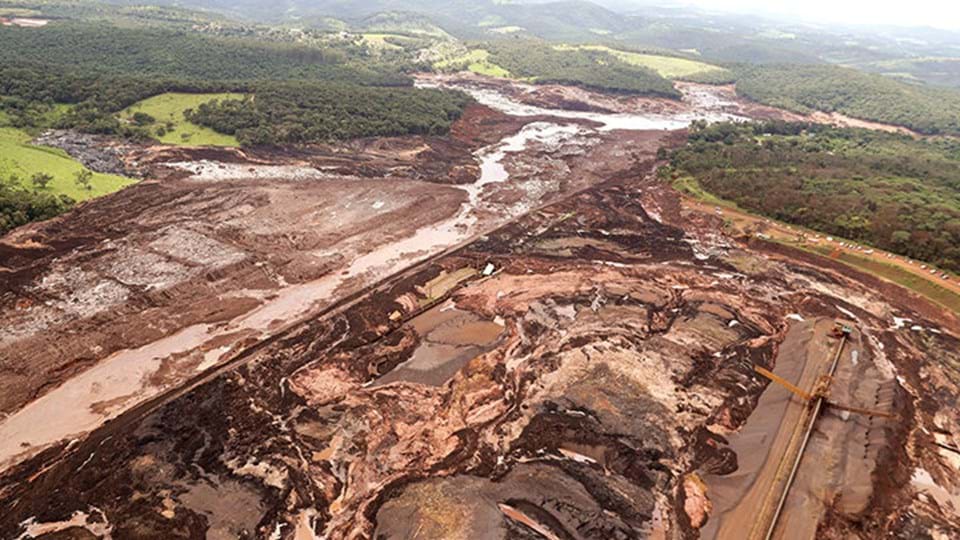
The tenure of Fabio Schvartsman as CEO of Vale S. A. began in 2017 with a singular, emphatic pledge. He adopted the slogan “Mariana Never Again.” This motto was a direct reference to the 2015 collapse of the Fundão dam. That disaster was operated by Samarco. Samarco is a joint venture between Vale and BHP Billiton. Schvartsman presented himself as a reformer. He claimed safety would take precedence over production metrics. The slogan appeared in corporate presentations. It appeared in sustainability reports. It was repeated to investors in New York and London. The executive leadership used this phrase to pacify regulators and reassure shareholders. They claimed the company had learned from the nineteen deaths at Mariana. The reality on the ground in Minas Gerais contradicted this public narrative. The Córrego do Feijão mine near Brumadinho operated under the same dangerous parameters that caused the Mariana disaster. The primary structure known as Dam I was an upstream tailings dam. This construction method is the cheapest available option for mining companies. It involves building the dam wall on top of the existing waste sludge. The stability of the wall depends entirely on the solidity of the waste beneath it. Engineers know this design is susceptible to water saturation. Excess water turns the solid base into a liquid suspension. This process is called liquefaction. The upstream method is banned in earthquake-prone countries like Chile. It remains common in Brazil due to lax regulatory enforcement and cost-cutting measures. Vale executives knew Dam I was unstable long before January 2019. The company engaged in a systematic process to secure fraudulent stability certifications. This process allowed operations to continue even with clear geotechnical warnings. The Brazilian regulatory framework requires mining companies to submit a Declaração de Condição de Estabilidade or DCE. This document certifies a dam is safe. It must be signed by an external auditor. The DCE is the legal shield that permits a mine to function. Without it the site must close. Evidence uncovered by prosecutors reveals that Vale manipulated this audit process. In 2018 the company initially hired Tractebel Engineering to inspect Dam I. Tractebel is a subsidiary of the French energy group Engie. The inspectors from Tractebel analyzed the structure. They found the factor of safety was well the required standards. The minimum acceptable factor of safety is 1. 3. Dam I registered a factor of 1. 09. This number indicates a structure on the brink of failure. Tractebel refused to sign the DCE. They would not certify the dam as stable. Vale did not close the mine. The company did not evacuate the cafeteria located directly in the flood route. The company instead fired Tractebel. They returned to TÜV SÜD. This German certification firm had a long commercial relationship with Vale. Internal emails seized by the Minas Gerais Public Prosecutor’s Office show the pressure applied to the auditors. TÜV SÜD employees feared losing the lucrative Vale contract if they did not provide the desired signature. The emails describe a “knife at the throat” scenario. TÜV SÜD assigned the certification to engineer Makoto Namba. Namba and his team knew the dam did not meet the safety factor of 1. 3. They knew the drainage systems were broken. They knew water levels inside the dam were rising. These are the classic precursors to liquefaction. Yet the auditors devised a workaround to justify the stability declaration. They adopted a set of “drained parameters” for their calculations. This assumption implies the soil is dry and water flows freely. The reality was the opposite. The soil was undrained and saturated. By using false input data the auditors artificially inflated the safety metrics. Namba signed the DCE in September 2018. This signature legally certified the dam as stable. It allowed Vale to keep the Córrego do Feijão mine operational. The certification was a fabrication. It contradicted the physical reality of the structure. The document served only to satisfy the bureaucracy of the National Mining Agency. It protected Vale’s revenue stream. The mine produced approximately one million dollars of iron ore per day. The cost of halting operations to fix the dam would have been substantial. The executives chose to gamble on the stability of the structure. The warning signs intensified in late 2018. Automated monitoring systems showed high water pressure readings. Piezometers installed in the dam wall recorded data that should have triggered an immediate emergency response. Vale technicians dismissed these readings as equipment errors. They did not order a manual verification. They did not sound the alarm. The corporate culture prioritized uninterrupted production. Safety were treated as obstacles to be managed rather than rules to be followed. The collapse occurred at 12: 28 PM on January 25 2019. The failure method was exactly what the Tractebel engineers had feared. The saturated tailings underwent static liquefaction. The solid mass turned into a heavy liquid in seconds. The transformation was so rapid that the dam crest did not slump gradually. It disintegrated instantly. A wave of twelve million cubic meters of toxic sludge erupted from the breach. The mudflow traveled at speeds reaching eighty kilometers per hour. The location of the administrative buildings maximized the death toll. Vale had built its cafeteria and offices directly the dam. This decision violated basic safety logic. The “Mariana Never Again” pledge implied that facilities would be moved out of the inundation zone. This never happened at Brumadinho. The siren system also failed. The speed of the collapse destroyed the alarm method before it could activate. The workers eating lunch had zero warning. The mud buried the facility in less than two minutes. The disaster killed 270 people. Rescuers found fragmented bodies for months afterward. The forensic identification process took years. The collapse was not an accident. It was the direct result of the fraudulent September 2018 certification. If TÜV SÜD had refused to sign the DCE the mine would have been forced to halt operations. The workers would have been evacuated. The dam might still have failed the human cost would have been minimal. The investigation proved that the “Mariana Never Again” slogan was a marketing tool. It was not an operational directive. The leadership of Vale understood the risks of upstream dams. They understood the specific fragility of Dam I. They chose to shop for a compliant auditor rather than address the structural defects. The replacement of Tractebel with TÜV SÜD demonstrates a clear intent to deceive regulators. This action moves the event beyond the of negligence. It enters the legal territory of *dolus eventualis*. The executives accepted the risk of mass death as the price of doing business. The aftermath revealed the depth of the collusion. TÜV SÜD auditors later admitted to police that they felt coerced. They the “political pressure” from Vale. The mining giant was their biggest client in Brazil. A refusal to certify Brumadinho would have jeopardized contracts at dozens of other sites. The auditors chose to protect their revenue rather than the lives of the miners. This transactional relationship between the regulated entity and the regulator is a widespread flaw in the mining industry. The company pays for its own inspection. The conflict of interest is absolute. The technical failure was absolute. The dam did not fail due to an earthquake. It did not fail due to extreme rainfall. It failed because it was a fragile structure pushed beyond its limits by a company that ignored the physics of soil mechanics. The liquefaction was triggered by the weight of the dam itself and the water trapped within it. The “safety factor” of 1. 09 was a mathematical scream for help. The engineers heard it. The executives heard it. They chose to silence the data with a fraudulent signature. The Brumadinho disaster destroyed the credibility of Vale’s safety commitments. It exposed the “Mariana Never Again” campaign as a lie. The company had not learned from history. It had learned how to better conceal the risks. The same upstream methods remained in use. The same pressure on auditors continued. The same disregard for human life. The mud that buried the Córrego do Feijão mine was the physical manifestation of a corporate strategy that placed profit above all else. The 270 dead were not victims of a natural disaster. They were victims of a bureaucratic fraud. The legal proceedings following the collapse focused heavily on the DCE. Prosecutors used the September 2018 document as the primary evidence of criminal liability. The signature of Makoto Namba became the focal point of the indictment. It represented the moment when the system failed by design. The document declared safety where there was danger. It declared stability where there was collapse. It was a lie printed on official letterhead. This lie killed hundreds of people. The tragedy at Brumadinho was not a repetition of history by chance. It was a repetition of history by choice. The choice was made in boardrooms and engineering offices long before the dam wall gave way. The “Mariana Never Again” falsehood stands as a testament to the lethality of corporate greenwashing. SECTION 1 of 14: The ‘Mariana Never Again’ Falsehood: Repeating History at Brumadinho. section: The Financial Architecture of Negligence: Cost-Cutting Measures Post-2015.The 'Mariana Never Again' Falsehood: Repeating History at Brumadinho
Systematic Use of Prohibited Upstream Tailings Dams for Cost Reduction
The upstream tailings dam design represents the intersection of engineering negligence and financial greed. In this method, the dam wall is constructed not on solid ground, on top of the settled, muddy waste (tailings) from the mine itself. It is the structural equivalent of building a skyscraper on a foundation of wet quicksand. For Vale S. A., this design was not an engineering need; it was a deliberate financial strategy. The upstream method is universally recognized as the cheapest way to contain mining waste, costing roughly half as much as the safer “downstream” or “centerline” methods. This cost differential drove Vale to maintain dozens of these ticking time bombs across Minas Gerais, prioritizing shareholder dividends over the stability of the terrain.
The Mechanics of the Upstream Method
The inherent instability of upstream dams lies in their reliance on the tailings themselves for support. As the mine produces more waste, the dam wall is raised by building inward, over the previously deposited slurry. This creates a structure that is highly susceptible to “liquefaction”, a phenomenon where the solid material suddenly behaves like a liquid under stress or water saturation. Once liquefaction triggers, the entire dam face can disintegrate in seconds, releasing a wave of mud. even with the known geological risks in Minas Gerais, a region prone to heavy rainfall which saturates these structures, Vale systematically employed this design. The Córrego do Feijão Dam I, which collapsed in Brumadinho, was a textbook upstream structure. Built in 1976 and raised repeatedly until 2013, it stood 86 meters high, holding 11. 7 million cubic meters of waste. Its stability depended entirely on the drainage of the underlying slime, a factor Vale knew was compromised years before the collapse.
Financial Motive Over Safety
The decision to use and maintain upstream dams was strictly economic. Safer alternatives, such as dry stacking (where water is removed from waste before storage) or downstream dams (where walls are built outward on solid ground), require significantly higher capital expenditure and operational costs. Dry stacking, for instance, involves expensive filtration and handling equipment. By sticking to wet, upstream containment, Vale avoided these costs, artificially inflating its profit margins.
Dam Construction Method
Cost Profile
Stability Risk
Vale’s Usage
Upstream (Montante)
Lowest (Base Material used for walls)
Extreme (Prone to liquefaction)
Systematic (Dam I, Fundão, etc.)
Centerline
Moderate
Moderate to High
Limited
Downstream (Jusante)
High (Requires massive fill material)
Low (Built on solid ground)
Avoided for older structures
Dry Stacking
Highest (Processing & Handling)
Minimal
Ignored until post-collapse
Ignoring the Warning Signs
The danger of upstream dams was not theoretical to Vale; it was a proven reality. In November 2015, the Fundão dam in Mariana, another upstream structure co-owned by Vale, collapsed, killing 19 people. This catastrophe should have been the end of upstream dams in Brazil. In 2016, a bill was proposed in the Minas Gerais state legislature to ban this specific construction method. yet, intense lobbying by the mining sector defeated the proposal, allowing Vale to continue operating its fleet of upstream dams, including the one at Brumadinho. Internal documents reveal that Vale was fully aware of the “imminent risk” posed by these structures. A 2018 internal risk assessment classified Dam I at Córrego do Feijão as having a probability of failure twice the maximum limit tolerated by the company’s own safety guidelines. Yet, decommissioning the dam, a process that involves carefully removing the waste and the structure, was deemed too expensive and disruptive to production. Instead, Vale chose to “manage” the risk with fraudulent stability reports, gambling that the dam would hold long enough to avoid impacting the quarterly bottom line.
The Cost of Negligence
The refusal to transition to safer storage methods was a calculated financial decision that backfired with catastrophic human consequences. Following the Brumadinho disaster, the Brazilian government enacted a federal ban on upstream dams in February 2019, ordering their decommissioning. Vale was forced to allocate over $4 billion for the “de-characterization” of its remaining upstream structures—a sum that dwarfs the initial savings they sought to protect. This massive liability proves that the upstream method was never truly cheaper; it simply deferred the cost to a future date, payable in human lives and environmental destruction. The systematic use of these prohibited structures demonstrates that Vale’s leadership viewed the safety of Minas Gerais residents as a line item on a balance sheet. They knew the dams were unsafe. They knew the technology was obsolete. They knew the specific dam at Brumadinho was serious. Yet, they, driven by a corporate culture that could not justify the expense of safety until the bodies were counted.
Systematic Use of Prohibited Upstream Tailings Dams for Cost Reduction
Coercion of TÜV SÜD Auditors to Fabricate Stability Declarations
The “Blackmail”: Corporate use Over Safety
The collapse of the Brumadinho dam was not an engineering failure; it was the direct result of a calculated campaign of coercion. Vale S. A. systematically dismantled the independence of its external auditors, transforming safety certification from a technical verification into a commercial transaction. The method of this control was simple yet devastating: the threat of financial ruin for any consultancy that dared to speak the truth. This created a “pay-to-play” environment where the price of admission was the fabrication of stability declarations (DCE) for structures known to be on the brink of failure.
The precedent for this coercion was set months before TÜV SÜD signed the fatal warrant. In early 2018, Vale employed Tractebel Engineering, a subsidiary of the French energy giant Engie, to assess the Córrego do Feijão dam. Tractebel’s engineers performed their duty with technical rigor. They identified serious instability indicators and refused to problem the DCE. Vale’s response was swift and punitive. The mining giant fired Tractebel, citing ” in criteria,” a euphemism for the auditor’s refusal to ignore physics. This termination sent a chilling message to the entire industry: certify the dam, or lose the contract.
The May 14, 2018 Meeting: A Gun to the Head
TÜV SÜD, a German firm with a reputation for technical excellence, stepped into this compromised position. They inherited a structure that had already failed the scrutiny of their peers. Internal communications and subsequent testimony reveal that TÜV SÜD’s auditors, specifically Makoto Namba and André Jum Yassuda, were acutely aware of the dam’s precarious state. Yet, they faced the same ultimatum that had removed Tractebel. The pressure culminated in a meeting on May 14, 2018, a date that marks the definitive transition from negligence to criminal intent.
During this meeting, Vale executives made their expectations explicit. They demanded the stability declaration, dismissing the technical data that screamed of danger. The threat was not subtle. Testimony from Makoto Namba to Brazilian prosecutors later revealed the “gun to the head” nature of these interactions. Namba admitted he felt “pressured” and believed that refusing to sign the DCE would result in TÜV SÜD losing not just the Brumadinho contract, all its business with Vale. The “As Is” contract, which covered inspections for multiple sites, was the use Vale used to force compliance. The auditors were not just engineers; they were hostages to their firm’s revenue stream.
Fabricating the Numbers: The 1. 09 Factor of Safety
The technical reality of Dam I was undeniable. Standard engineering practices require a Factor of Safety (FoS) of at least 1. 3 to consider a tailings dam stable. This metric provides a necessary buffer against uncertainties in soil behavior and loading conditions. TÜV SÜD’s own calculations, yet, showed the dam operating at a Factor of Safety of 1. 09. In geotechnical terms, a score of 1. 0 is the precipice of failure. A 1. 09 indicates a structure that is barely standing, held together by friction and luck, with zero margin for error.
To the gap between the terrifying reality of 1. 09 and the required 1. 3, TÜV SÜD auditors did not reinforce the dam. Instead, they reinforced the paperwork. Under intense pressure from Vale, they devised a “methodology” to justify the lower safety factor. This was not engineering; it was creative writing. They manipulated the parameters of the analysis to produce a result that Vale could use to satisfy regulators. This fabrication allowed Vale to report the dam as stable in its sustainability reports and to the National Mining Agency (ANM), while the physical structure continued to deteriorate.
The Emails: Evidence of Known Risk
The internal correspondence between TÜV SÜD and Vale provides a roadmap of this conspiracy. Emails seized by investigators show auditors discussing the need to “water down” their reports to avoid angering their client. In one exchange, they explicitly mentioned the risk of Vale using the contract as “blackmail.” These documents destroy any defense of ignorance. The auditors knew the dam was unsafe. They knew the liquefaction risk was high. They knew the drainage systems were failing. Yet, they prioritized the commercial relationship over human life.
One particularly damning email chain from May 2018 shows the auditors discussing the “political” need of signing the declaration. They recognized that the technical conditions for stability did not exist, the commercial conditions for refusal were impossible. They chose to sign. This decision was not a lapse in judgment; it was a calculated gamble. They bet that the dam would hold long enough for Vale to implement remedial measures, measures that were never realized before the collapse.
The Human Cost of Corporate bullying
The arrest of Namba and Yassuda in the days following the disaster brought the reality of this coercion into sharp focus. Their testimony stripped away the corporate veneer, revealing a system where engineers were reduced to rubber stamps. Vale’s management had successfully insulated themselves from the technical warnings by firing the messengers until they found ones who would submit. The 270 people who died on January 25, 2019, were not victims of a natural disaster. They were the collateral damage of a corporate strategy that treated safety certification as a bureaucratic hurdle rather than a moral imperative.
Auditor
Action Taken
Outcome
Tractebel Engineering
Refused to certify Dam I due to instability.
Fired by Vale; contract terminated.
TÜV SÜD (Namba/Yassuda)
Signed DCE even with FoS of 1. 09.
Retained contract; Dam I collapsed; 270 dead.
The coercion of TÜV SÜD auditors stands as a definitive proof of Vale’s culpability. It demonstrates that the company did not neglect safety; it actively suppressed it. By weaponizing its procurement power, Vale ensured that no independent voice could warn the public of the impending doom. The stability declaration of September 2018 was a lie, bought and paid for by a company that valued production over protection.
Coercion of TÜV SÜD Auditors to Fabricate Stability Declarations
Manipulation of Safety Factor Calculations to Evade Regulatory Action
The Mathematical Illusion: Engineering a False Reality
The collapse of the B1 dam at Córrego do Feijão was not a failure of earth and concrete; it was a failure of mathematics engineered to conceal a death sentence. Central to this deception was the manipulation of the Factor of Safety (FoS), a numerical index used by geotechnical engineers to quantify the stability of a slope. International standards and Brazilian regulations demand a FoS of 1. 5 for long-term stability, meaning the structure’s capacity to resist failure must be 50% greater than the forces driving it to collapse. For the B1 dam, yet, this safety margin did not exist. Instead of closing the mine, Vale executives and TÜV SÜD auditors engaged in a statistical sleight of hand, lowering the acceptable threshold to 1. 3 and then torturing the data until it confessed a passing grade.
Internal documents reveal that as early as 2016, the dam’s actual stability hovered dangerously close to 1. 0, the tipping point where overcomes friction and a structure gives way. A May 2016 analysis calculated a “peak undrained safety factor” of approximately 1. 04, a figure that signals imminent catastrophe. Faced with these terrifying numbers, Vale did not evacuate the cafeteria located directly in the flood route. Instead, the company discarded the laboratory data that produced these results, labeling the soil strength tests “unreliable” because they inconvenienced production. By rejecting the physical reality of the tailings’ brittleness, Vale created a vacuum that could be filled with more favorable, albeit fictitious, parameters.
Rigging the Liquefaction Analysis
The primary method of the B1 collapse was static liquefaction, a phenomenon where saturated, loose waste loses its structural integrity and behaves like a liquid. To prevent this, engineers must calculate the “liquefaction trigger,” determining how much stress the dam can handle before turning into a mudslide. The investigation uncovered that Vale and its auditors manipulated this analysis by cherry-picking input data. Specifically, they utilized “peak strength” parameters, assuming the tailings would hold their maximum resistance under stress, rather than “residual strength” parameters, which account for the material’s weakness after it begins to deform.
This methodological fraud erased the risk of liquefaction from the official reports submitted to the National Mining Agency (ANM). By modeling the dam as a solid block of drained earth rather than the fragile, water-logged slurry it actually was, the auditors produced a theoretical stability that bore no resemblance to the physical structure. This was not a calculation error; it was a decision to model a fantasy. When standard calculations failed to reach the arbitrary 1. 3 threshold, the parameters were adjusted again. Emails between TÜV SÜD engineers capture the desperation of this “back-calculation” process, with one engineer admitting, “Vale is going to push us to the wall,” forcing them to find a mathematical route to certification regardless of the geological truth.
The Drainage Deception and the DHP Myth
To justify the continued operation of a dam that was mathematically unstable, Vale relied heavily on the narrative of “drainage improvements.” The company claimed that the installation of Deep Horizontal Drains (DHPs) would lower the phreatic surface (water table) within the dam, so increasing the Factor of Safety over time. This pledge allowed them to certify the dam as “conditionally stable,” contingent on these drains working. In reality, the drains were largely ineffective, and the water levels within the dam remained serious high.
The deception reached its peak with the installation of DHP #15. Just days before the collapse, the drilling of this drain resulted in a flow of turbid water, a classic sign of internal or “piping,” where water washes away the soil particles holding the dam together. Instead of treating this as a red alert, the incident was downplayed. The mathematical models used to certify the dam assumed these drains were functioning perfectly, “drying out” the dam in the simulation while the real structure remained saturated and on the verge of failure. The certification was based on a future state of stability that the dam would never achieve, selling a safety margin that existed only in a computer model.
Silencing the Sensors: Ignoring Physical Evidence
While the mathematicians adjusted their spreadsheets, the dam itself was screaming. The structure was instrumented with 94 piezometers, devices designed to measure water pressure within the tailings. When these sensors began reporting high pressure readings that contradicted the “stable” narrative, the data was frequently dismissed. High readings were attributed to sensor malfunctions or calibration errors rather than being accepted as valid warnings of rising saturation. This systematic suppression of unfavorable data ensured that the official monitoring reports remained “green,” even as the hydraulic pressure inside the dam climbed toward the bursting point.
Radar interferometry, a technology used to detect minute surface movements, also provided warnings that were ignored. Deformation data showing movement in the dam’s slope was available was disconnected from the stability calculations. The “normalisation of deviance” became standard operating procedure: if the data didn’t fit the safety model, the data was wrong, not the model. This cognitive dissonance allowed the signatories of the stability declarations to ignore the physical symptoms of a dying dam, prioritizing the consistency of their paperwork over the volatility of the earth.
The Workshop of Fabrication
The pressure to certify the dam culminated in what can be described as a workshop of fabrication. When the standard limit equilibrium methods yielded safety factors 1. 3, the auditors did not refuse to sign. Instead, they engaged in a search for “alternative” calculation methods that would yield a higher number. This “results-oriented” engineering reversed the scientific method: the conclusion (stability) was decided, and the hypothesis (math) was constructed to support it.
This fraudulent certification process was the key that allowed Vale to evade the “immediate stoppage” required by Brazilian law for any dam with a Safety Factor 1. 3. By artificially inflating the number to 1. 3 or slightly above, Vale kept the Córrego do Feijão mine operational, protecting its revenue stream at the direct expense of human life. The certification was not a safety assessment; it was a regulatory shield, forged in bad faith and stamped with the seal of an international auditor to deflect scrutiny until the moment the mud wave buried the evidence.
Manipulation of Safety Factor Calculations to Evade Regulatory Action
Ignoring the 'Dams at Their Limit' Anonymous Executive Warning
Ignoring the ‘Dams at Their Limit’ Anonymous Executive Warning
Weeks before the Córrego do Feijão dam collapsed in January 2019, Vale S. A. Chief Executive Officer Fabio Schvartsman received an anonymous email that contained a specific and terrifying warning. The message explicitly stated that the company’s dams were “at their limit” and urged immediate attention to the structural integrity of these massive waste reservoirs. This communication did not come from an external activist appeared to originate from someone with intimate knowledge of the company’s internal operations. The sender bypassed lower management to alert the highest executive in the corporation directly. This act signaled a breakdown in the standard reporting lines and indicated that the normal safety had already failed to address the rising danger.
Schvartsman’s response to this direct plea for safety was not to order an emergency audit of the geotechnical data. Instead, Brazilian congressional reports and police investigations reveal that he directed subordinates to identify the whistleblower. Witnesses testified that the CEO took personal offense to the message and referred to the sender as a “cancer” within the organization. The executive team focused their resources on the source of the friction rather than investigating the stability of the dams. This reaction demonstrates a corporate culture that prioritized the suppression of dissent over the preservation of human life. The of the company turned inward to protect its reputation while the earthen wall holding back millions of tons of toxic sludge weakened further.
The anonymous warning was not an alarm a corroboration of hard data that Vale already possessed. Internal documents from October 2018 classified Dam 1 at Brumadinho as being two times more likely to fail than the maximum risk level tolerated by the company’s own safety policy. This internal classification placed the structure in a “attention zone” that required immediate intervention. Yet the company did not evacuate the cafeteria located directly in the flood route or warn the local community. The between the internal risk assessment and the public stance of stability suggests a deliberate concealment of the hazard. Management knew the metrics showed a high probability of liquefaction yet chose to maintain normal operations.
To maintain the façade of safety, Vale manipulated the external certification process. Prosecutors later charged that the company pressured inspectors from TÜV SÜD to sign off on the dam’s stability even when it violated technical specifications. Evidence surfaced that Vale had previously fired another auditing firm, Tractebel, after they refused to certify the unsafe structures. This created a coercive environment where auditors understood that retaining the lucrative Vale contract depended on providing favorable safety reports. TÜV SÜD employees reportedly expressed fears of losing the contract if they did not comply. This pressure resulted in the issuance of stability declarations that directly contradicted the physical reality of the deteriorating dam.
The decision to ignore the “dams at their limit” warning and suppress the internal risk data led directly to the homicide charges filed against Schvartsman and fifteen other executives. The collapse killed 270 people and released a toxic mudflow that devastated the region. The investigation concluded that the disaster was not an unpredictable accident a foreseeable outcome of specific management decisions. By treating the warning as a personnel problem rather than a geotechnical emergency, the leadership of Vale S. A. sealed the fate of hundreds of workers and residents. The anonymous email stands as a permanent record that the executives had the chance to act and chose to look away.
Ignoring the 'Dams at Their Limit' Anonymous Executive Warning
The 'Pay-to-Certify' Conflict: Auditor Dependence on Vale Contracts
The ‘Pay-to-Certify’ method: Buying Silence with Contracts
The collapse of the Córrego do Feijão dam was not an engineering failure; it was a transaction. At the heart of the disaster lay a procurement model that monetized silence and punished integrity. Vale S. A. did not pay auditors to verify safety; it paid them to manufacture it. This “pay-to-certify” system created a direct financial dependency that stripped external auditors of their independence, turning safety inspections into a negotiation where the currency was human life and the product was a signature on a stability declaration.
The structural flaw in Brazil’s regulatory framework allowed mining companies to select, hire, and remunerate the very firms responsible for policing them. Vale exploited this use to the fullest. In the months leading up to the collapse, the company’s relationship with its auditor, the German firm TÜV SÜD, devolved into a coercive where the renewal of lucrative contracts hinged on the certification of unstable structures. Federal investigations later revealed that TÜV SÜD executives feared that refusing to sign the stability declaration for Dam I would result in the termination of their commercial relationship with Vale, which included services for nearly 20 other dams.
The “Wall” Email: Documenting Coercion
The most damning evidence of this coercion emerged from the internal communications of TÜV SÜD engineers. On May 13, 2018, Makoto Namba, a senior engineer at TÜV SÜD, sent an email to his colleagues, including Arsênio Negro Júnior. In this correspondence, Namba explicitly acknowledged the physical reality of the dam, stating that “everything indicates it won’t pass” the required safety factor of 1. 3. He admitted that, strictly speaking, the firm could not sign the Stability Condition Declaration (DCE), a refusal that would trigger the immediate shutdown of the mine.
Namba’s email did not stop at technical analysis; it predicted Vale’s retaliation with chilling accuracy. He wrote: ” as always, Vale throw us against the wall and ask: ‘And if it doesn’t pass, you sign or not?'” This phrase, “throw us against the wall”, encapsulated the violent economic pressure exerted by the mining giant. The engineers knew that technical honesty would be met not with remediation, with an ultimatum. The prophecy was fulfilled days later during a meeting with Vale executive Alexandre Campanha. According to testimony given to the Federal Police, Campanha directly asked Namba if TÜV SÜD would sign the declaration, a question Namba interpreted as a veiled threat: sign the paper or lose the contract.
The Price of a Signature: €2. 4 Million
The motivation for TÜV SÜD to capitulate was quantifiable. At the time of the pressure, a new contract package was pending between the two companies. This agreement, valued at approximately €2. 4 million (roughly R$ 10 million), covered inspections for 18 other Vale dams. The refusal to certify Dam I at Córrego do Feijão would have jeopardized this revenue stream. Internal discussions at TÜV SÜD revealed a corporate prioritization of market share over safety standards. The auditors were aware that Vale had previously dismissed other firms, such as Tractebel, for refusing to certify unsafe structures. The message was clear: Vale required compliance, not verification.
To secure the contract, TÜV SÜD auditors engaged in “softgrading,” a practice where serious nonconformities are downgraded to minor observations to avoid regulatory alarms. even with the dam possessing a safety factor of only 1. 09, well the legal minimum of 1. 3, the auditors manipulated the data to justify a positive stability declaration. They adopted aggressive assumptions about the soil’s drainage capacity, ignoring the readings from piezometers that showed dangerous water pressure levels. This statistical manipulation allowed Vale to keep the mine operational while the auditors secured their financial future.
Regulatory Capture and the Failure of Oversight
This conflict of interest was enabled by the absence of independent oversight. The National Mining Agency (ANM) relied almost exclusively on these third-party certifications to monitor dam safety. By outsourcing the policing of its infrastructure to private contractors dependent on its payroll, Vale captured the regulatory process. The auditors, who should have served as the last line of defense for the community of Brumadinho, instead functioned as an extension of Vale’s legal department, providing the paperwork necessary to evade government intervention.
The “pay-to-certify” conflict turned the safety audit into a commodity. When Vale purchased a stability declaration, they were not buying assurance that the dam was safe; they were buying the legal right to continue dumping tailings. The transaction was successful for both parties until the moment the liquefaction process, ignored in the paperwork, asserted itself in reality. The €2. 4 million contract and the continued operation of the mine were secured at the cost of 272 lives, proving that in the calculus of Vale’s procurement department, the penalty for a collapse was considered less severe than the cost of a shutdown.
Retaliatory Removal of Independent Auditors Refusing to Sign Certifications
The method of Silence: Systematic Removal of Dissenting Auditors
The catastrophic failure of the Córrego do Feijão dam was not an engineering oversight; it was the direct result of a corporate strategy designed to silence dissent. Vale S. A. operated a systematic “auditor shopping” method, purging independent engineering firms that refused to lower safety standards to meet the company’s production goals. When rigorous technical analysis threatened to halt operations, Vale did not remediate the dams; they replaced the auditors. This retaliatory pattern ensured that only those to compromise their professional ethics remained on the payroll, creating a closed loop of fabricated stability that until the moment of collapse.
The Potamos Engenharia Refusal
Long before TÜV SÜD signed the fatal stability declarations, other engineering firms had sounded the alarm. Potamos Engenharia, a Brazilian firm specializing in geotechnics and water resources, was among the to identify the serious instability of Dam I. During the Parliamentary Commission of Inquiry (CPI), Maria Regina Moretti, an engineer for Potamos, provided damning testimony regarding their dismissal. Potamos had calculated the dam’s safety factor at 1. 09, a figure catastrophically lower than the international minimum standard of 1. 3 to 1. 5. A safety factor of 1. 09 indicates a structure on the brink of failure, where the resisting forces are barely holding back the driving forces of the liquefied waste.
When Potamos presented these findings, Vale executives did not order an evacuation or emergency reinforcement. Instead, they attacked the methodology. Moretti testified that Vale officials pressured the firm to alter its parameters to artificially the safety factor. When Potamos refused to manipulate the data to suit Vale’s operational needs, the firm was removed from the project. Vale characterized this dismissal as a technical, the intent was clear: the elimination of an auditor who prioritized physics over profit. The removal of Potamos was a calculated move to bury evidence of imminent liquefaction under a veneer of bureaucratic disagreement.
The Tractebel Ejection
The pattern of retaliation intensified in late 2018, just months before the disaster. Vale had engaged Tractebel Engineering, a subsidiary of the French energy giant Engie, to perform an independent safety audit. Tractebel’s inspectors, adhering to rigorous engineering standards, arrived at the same conclusion as Potamos: Dam I was unsafe. In September 2018, Tractebel explicitly refused to sign the Declaration of Stability Condition (DCE), a mandatory legal document required for the mine to continue operating.
Vale’s response was swift and punitive. Rather than addressing the structural deficiencies identified by Tractebel, Vale terminated the relationship. Internal documents later seized by prosecutors revealed that Vale ” in criteria” as the reason for the split, a euphemism for Tractebel’s refusal to certify a collapsing structure. By firing Tractebel, Vale removed the last remaining institutional barrier between the workers and the mud. The company then pivoted back to TÜV SÜD, a firm that had already demonstrated a willingness to prioritize commercial interests over technical reality. This switch was not a standard vendor rotation; it was the deliberate selection of a compliant partner to a crime.
The “Pay-to-Play” Coercion of TÜV SÜD
The dismissal of Potamos and Tractebel sent a chilling message to the remaining contractors: certify or be replaced. This coercive environment directly influenced the actions of TÜV SÜD. Internal emails and testimony from TÜV SÜD employees, including engineer Makoto Namba, reveal that the firm was acutely aware of the dam’s instability. Namba himself admitted to feeling “subtle pressure” from Vale executives, specifically mentioning Alexandre Campanha, a manager in Vale’s geotechnical division.
The was transactional. TÜV SÜD knew that refusing to sign the stability declaration would result in the loss of lucrative contracts, just as it had for their competitors. The “auditor shopping” strategy created a survival-of-the-fittest environment where “fitness” was defined by a absence of integrity. TÜV SÜD’s decision to sign the September 2018 and December 2018 reviews, even with knowing the safety factor was insufficient, was a direct consequence of witnessing Vale’s retaliation against Tractebel. The German firm agreed to gamble with human lives to secure its revenue stream, a gamble that Vale facilitated by removing anyone who tried to stop it.
Internal “Black Lists” and the Suppression of Risk
Prosecutors later uncovered what they termed “Vale’s black box”, a repository of internal communications and data that proved the company’s top executives were fully aware of the risks. Within this system, auditors who raised safety concerns were viewed not as assets for risk mitigation, as obstacles to production. The ” in criteria” excuse became a standard operating procedure for neutralizing technical dissent.
This systematic purging of honest auditors meant that by January 2019, the only voices left in the room were those to echo Vale’s false narrative of safety. The warnings from Potamos and Tractebel were erased from the official record, replaced by the fraudulent certifications of a compromised auditor. Had Vale listened to the refusal, the mine would have been closed, the siren systems activated, and the canteen relocated. Instead, the company chose to shop for a signature, buying a few more months of production at the cost of 272 lives.
Table 7. 1: Timeline of Auditor Retaliation and Replacement
Period
Auditing Firm
Action/Finding
Vale’s Response
Early 2018
Potamos Engenharia
Calculated Safety Factor at 1. 09 (Unsafe). Refused to alter parameters.
Contract terminated. Firm removed from Dam I analysis.
Retained as primary auditor even with internal warnings.
Sept 2018
Tractebel Engineering
Refused to sign Stability Condition Declaration (DCE) due to safety risks.
Fired for ” in criteria.” Replaced by TÜV SÜD.
Sept 2018
TÜV SÜD
Signed Stability Declaration immediately following Tractebel’s refusal.
Contract renewed and expanded.
Jan 2019
None (Collapse)
Dam I collapses, killing 272 people.
Claimed surprise and reliance on auditor certifications.
Concealment of Liquefaction Risks in Internal Safety Reports
The Hidden Probability: Suppressing the 1 in 5, 000 Risk
While Vale executives publicly touted a “Mariana Never Again” policy, internal documentation from late 2018 reveals a clear different reality: the company possessed precise calculations showing the Córrego do Feijão dam was twice as likely to fail as international safety standards allowed. An internal risk assessment report dated October 3, 2018, explicitly quantified the annual probability of collapse for Dam I at 1 in 5, 000. This figure far exceeded the maximum tolerable risk threshold of 1 in 10, 000 accepted in geotechnical engineering for structures of this consequence. Rather than triggering an immediate emergency response or evacuation, this data remained sequestered within Vale’s internal servers, while the company continued to certify the structure as stable to Brazilian authorities.
The concealment extended beyond mere probability statistics into the raw telemetry of the dam itself. The structure was outfitted with 94 piezometers, instruments designed to measure pore water pressure within the tailings stack, of which 46 were automated to provide real-time data. These sensors generated a stream of warnings indicating persistently high water levels, a primary precursor to liquefaction. Internal emails between Vale geotechnicians and TÜV SÜD auditors confirm that drainage problems were identified as early as March 2018. The automated system recorded water pressure levels that should have triggered a “Level 1” emergency alert, yet the to initiate such warnings were either ignored or deliberately overridden to avoid halting operations. The data showed the dam was a saturated sponge, losing the frictional strength required to hold back millions of tons of toxic sludge.
Static Liquefaction: The Known Phenomenon
The specific failure mode that destroyed Brumadinho, static liquefaction, was not a theoretical surprise a documented fear among Vale’s technical staff. Unlike a standard structural collapse caused by overtopping or external, static liquefaction occurs when solid, saturated soil instantly behaves like a liquid under stress. Vale’s own experts, in post-disaster analyses, admitted the tailings were “brittle,” “loose,” and “saturated,” the exact conditions required for this phenomenon. Internal communications from 2017 and 2018 show that the geotechnical team was actively discussing “static liquefaction” as a credible threat. even with this, the final stability reports submitted to the National Mining Agency (ANM) were sanitized of these specific warnings, presenting a facade of safety that contradicted the physics observed by the monitoring equipment.
The suppression of this technical reality was compounded by the manipulation of the “Safety Factor” calculations. To prevent the liquefaction risk from triggering a regulatory shutdown, the parameters used in stability modeling were adjusted. By altering the input data regarding the soil’s drainage capacity and strength, the calculated Safety Factor was artificially inflated to meet the minimum legal requirement of 1. 3. This mathematical sleight of hand allowed Vale to obtain the Stability Condition Declaration (DCE) in September 2018, just four months before the collapse. The gap between the raw piezometer readings, which showed a dam at its breaking point, and the polished reports filed with the government constitutes one of the most direct pieces of evidence regarding the fraudulent nature of the safety certifications.
The Trigger Event: Reckless Drilling
Perhaps the most damning evidence of negligence regarding liquefaction risks was the authorization of invasive vertical drilling on the dam face just days before the disaster. Federal Police investigations later concluded that this drilling, initiated five days prior to the rupture, likely acted as the trigger for the collapse. The procedure involved injecting fluids into the dam structure to install new monitoring devices, a paradoxical action that introduced additional pressure into an already serious saturated system. Performing such operations on a dam known to be susceptible to liquefaction demonstrates a disregard for the stability data Vale already possessed. The vibrations and hydraulic pressure from the drilling equipment provided the final shock needed to turn the solid tailings into a deadly wave.
This decision to drill was not made in a vacuum. It occurred while the automated monitoring system was screaming for attention. The refusal to acknowledge the piezometer warnings meant that the drilling crew was sent onto a structure that was a loaded weapon. The subsequent police report dismissed alternative theories, such as seismic activity or detonation from nearby mines, pinpointing the drilling and the internal water pressure as the definitive causes. By ignoring the “attention zone” status of the dam, a classification Vale internally assigned to structures with elevated risk, management authorized a procedure that violated basic geotechnical safety principles for upstream dams.
Sanitizing the Record
Evidence suggests a systematic effort to “clean” reports before they reached the eyes of external regulators or the public. Draft versions of safety audits frequently contained caveats and urgent recommendations that were removed or softened in the final deliverables. For instance, the requirement to install deep drainage systems to lower the water table was noted not treated as an immediate condition for stability certification. Instead, it was relegated to a list of future recommendations, allowing the dam to remain operational. This bureaucratic delay tactic decoupled the known physical risk from the legal status of the dam. The “impeccable” condition described by the CEO in April 2018 was a fabrication constructed by filtering out every data point that suggested otherwise.
The absence of an activated siren system on the day of the collapse further illustrates the depth of this concealment. Had the emergency levels been triggered honestly based on the piezometer data, the sirens would have sounded days or weeks in advance, prompting an evacuation of the canteen and administrative buildings located directly in the flood route. Instead, the refusal to classify the high water pressure as a formal emergency meant that the 270 victims were working in the shadow of a dam that Vale’s own internal risk matrix had already flagged as a ticking time bomb. The silence of the sirens was not a technical malfunction a direct result of the suppression of the liquefaction data.
Fraudulent ESG Disclosures: Misleading Investors on Dam Integrity
The SEC Complaint: Institutionalizing Deceit
The facade of corporate responsibility maintained by Vale S. A. crumbled not only under the weight of the toxic sludge at Brumadinho also under the scrutiny of the United States Securities and Exchange Commission (SEC). In April 2022, the SEC filed a complaint in the U. S. District Court for the Eastern District of New York, charging Vale with violating antifraud and reporting provisions of federal securities laws. The findings revealed that the mining giant did not suffer an industrial accident; it orchestrated a multi-year campaign of securities fraud. The Commission alleged that from 2016 through January 2019, Vale manipulated dam safety audits, obtained fraudulent stability certificates, and regularly misled investors about the safety of the Córrego do Feijão dam. This was not passive negligence. It was active, calculated deception designed to maintain the company’s stock price and credit rating while its infrastructure rotted from within.
The SEC investigation exposed a clear between Vale’s internal assessments and its external communications. While internal records classified Dam I as being at a “serious” safety level with a high probability of liquefaction, Vale’s public filings painted a picture of stability. The complaint detailed how Vale knowingly or recklessly obtained eight fraudulent stability declarations for the dam. These documents were not just bureaucratic paperwork; they were the foundation of Vale’s assurance to the global market that its operations were safe. By presenting these corrupted certificates as valid, Vale laundered the risk, converting known engineering risks into clean financial disclosures.
Weaponizing Sustainability Reports
The primary vehicle for this deception was Vale’s annual Sustainability Report, a document intended to demonstrate compliance with environmental, social, and governance (ESG) standards. In the 2016, 2017, and 2018 reports, Vale explicitly stated that 100 percent of its audited dams were certified to be in stable condition. These reports were distributed to shareholders, rating agencies, and the broader financial community as proof of the company’s post-Mariana reformation. The 2017 Sustainability Report, issued in April 2018, less than a year before the collapse, claimed the company adhered to the “strictest international practices” in dam safety management. This statement was a fabrication. At the exact moment this report was published, Vale’s geotechnical team was with data showing that Dam I did not meet even the minimum safety factors required by Brazilian law, let alone international best practices.
These reports served a dual purpose., they pacified regulators who were increasingly wary of mining operations following the 2015 Samarco disaster. Second, and perhaps more importantly for Vale’s executives, they secured the company’s position in lucrative ESG investment funds. Investors who prioritized ethical corporate behavior poured capital into Vale, relying on these certified assertions of safety. The SEC noted that investors view ESG disclosures as material information. By falsifying this data, Vale deprived shareholders of the ability to assess the catastrophic financial and reputational risks sitting in the Minas Gerais mountains. The “100% stable” claim was a quantifiable lie, repeated year after year, to mask the reality of a structure that was inching toward failure.
The “Mariana Never Again” Marketing Ploy
Following the 2015 collapse of the Fundão dam in Mariana, Vale launched an aggressive public relations campaign centered on the slogan “Mariana Never Again.” This phrase became a mantra in investor calls, annual general meetings, and press releases. It was presented as a solemn commitment to operational safety and a “zero harm” policy. The SEC investigation, yet, characterized this campaign as a tool for stock manipulation rather than a genuine operational directive. The “Mariana Never Again” narrative was used to reassure the market that the widespread failures leading to the 2015 disaster had been identified and eradicated. In reality, the same cost-cutting measures and upstream dam designs that caused Mariana were still present at Brumadinho.
This marketing strategy decoupled the company’s stock performance from its operational reality. During the period of the fraud, Vale raised nearly $1 billion in U. S. debt markets. These bonds were sold to investors who believed the company’s assertions that it had learned from its past mistakes. The “Mariana Never Again” pledge acted as a sedative for the market, lulling analysts into a false sense of security. When the Brumadinho dam collapsed, killing 270 people, the hollowness of this slogan became undeniably clear. The market reaction was swift: Vale’s American Depositary Shares (ADS) plummeted by nearly 25 percent, wiping out approximately $4. 4 billion in market capitalization. This financial destruction was the direct result of the market pricing in the truth that Vale had concealed for years.
Falsified 20-F Filings and the DJSI
Beyond marketing brochures, Vale’s deception extended to its Form 20-F filings, mandatory annual reports submitted to the SEC by foreign private issuers. These documents carry significant legal weight and require strict accuracy. In its 20-F filings for the years leading up to the collapse, Vale failed to disclose the known risks of liquefaction at Dam I. Instead, the company provided generic risk factors that obscured the specific, imminent threat identified by its own consultants. The filings omitted the fact that auditors had been coerced into signing stability declarations and that the dam’s safety factor was the statutory limit. By sanitizing these legal documents, Vale presented a fraudulent risk profile to the U. S. government and international investors.
This manipulation also allowed Vale to game the global ESG rating systems. The company was listed on the Dow Jones Sustainability Index (DJSI) Emerging Markets, a prestigious benchmark that signals corporate responsibility to the investment world. Inclusion in the DJSI is a badge of honor that attracts institutional capital from pension funds and asset managers mandated to invest responsibly. Vale’s presence on this list was predicated on the false data provided in its sustainability reports. The company monetized its deception, accessing capital at lower rates and boosting its share price by posing as a leader in safety and environmental stewardship. Following the collapse, Vale was removed from the index, the capital had already been raised, and the damage to investors had already been done.
The $55. 9 Million Settlement and Investor Class Actions
The consequences of this disclosure fraud culminated in a settlement with the SEC announced in March 2023. Vale agreed to pay $55. 9 million to resolve the charges that it made false and misleading statements about the safety of its dams. While the company did not admit or deny the SEC’s findings, the penalty served as a validation of the fraud allegations. The settlement included a $25 million civil penalty and $30. 9 million in disgorgement and prejudgment interest. Mark Cave, Associate Director of the SEC’s Division of Enforcement, stated that the action illustrated the interplay between sustainability reports and federal securities laws, showing that public companies would be held accountable for material misrepresentations in their ESG disclosures.
The SEC action was paralleled by private securities litigation. Investors filed class-action lawsuits alleging that they purchased Vale securities at artificially inflated prices due to the company’s misrepresentations. These lawsuits argued that if the truth about the dam’s instability had been known, the stock price would have been significantly lower, and investors would have avoided the massive losses incurred after the collapse. The legal battles highlighted the direct link between engineering fraud and securities fraud. By hiding the cracks in the dam, Vale was also hiding cracks in its balance sheet. The settlement of these cases further cemented the reality that Vale’s board and executives had prioritized short-term financial metrics over the long-term viability of the company and the lives of its neighbors.
The Executive Incentive Structure
A driving force behind these fraudulent disclosures was the executive compensation structure at Vale. Bonuses and remuneration for top leadership were frequently tied to safety metrics and sustainability. Admitting that a major dam was unstable would not only have incurred massive remediation costs would also have jeopardized the financial rewards of the executives responsible for the region. This created a perverse incentive to suppress negative data. The “green” image projected in the Sustainability Reports was directly linked to the personal wealth of the decision-makers. They were paid to present a clean operation, so they manufactured one on paper.
The SEC complaint noted that Vale’s management knew or was reckless in not knowing that the Brumadinho dam was unsafe. Yet, they continued to sign off on reports that declared “zero harm” as a corporate value. This misalignment of incentives meant that the method designed to ensure safety, audits, reports, and disclosures, were weaponized to protect executive bonuses. The investors who relied on these disclosures were funding a system that rewarded cover-ups. The collapse of the dam was the inevitable result of a corporate culture that valued the appearance of safety over the reality of engineering physics.
Homicide Charges Against CEO Schvartsman for Known Safety Failures
The Indictment: Qualified Homicide and Eventual Intent
In January 2020, Brazilian state prosecutors formally charged Fabio Schvartsman, the former CEO of Vale S. A., with 270 counts of qualified homicide. The indictment, which also targeted fifteen other individuals and the companies Vale and TÜV SÜD, marked a rare attempt to pierce the corporate veil and hold top-tier executives personally liable for industrial mass death. Prosecutors argued that Schvartsman did not preside over a negligent company; they alleged he possessed specific knowledge of the unacceptable risks at the Córrego do Feijão mine and chose to prioritize stock performance over human life. The legal theory underpinning these charges is dolo eventual (eventual intent), a concept in Brazilian law where the accused does not necessarily wish for the outcome accepts the risk of it occurring as a consequence of their actions or omissions.
The prosecution’s case rests on the assertion that Schvartsman created a “false impression of safety” to protect Vale’s market value following the 2015 Mariana disaster. Upon taking the helm in 2017, Schvartsman coined the motto “Mariana Never Again,” a slogan that prosecutors characterize as a calculated deception rather than a safety commitment. Evidence presented in the indictment suggests that while publicly projecting stability, the CEO established a rigid hierarchy that discouraged the upward flow of negative information. This structure allowed the company to conceal the “imminent risk” status of its upstream dams from investors and regulators, gambling with the lives of downstream communities to maintain production.
The “Cancer” Email and Suppression of Dissent
A central piece of evidence citing Schvartsman’s direct awareness of the danger is an anonymous email sent to Vale’s leadership just two weeks prior to the collapse. The message explicitly warned that the company’s dams were “at their limit” and on the verge of failure. Instead of ordering an immediate safety audit or halting operations, Schvartsman’s reaction was reportedly retaliatory. Police investigations and internal documents reveal that the CEO referred to the whistleblower as a “cancer” and demanded that subordinates identify the sender. This response demonstrates a command culture focused on silencing dissent rather than addressing the structural instability of the tailings facilities.
The indictment further details that Schvartsman received direct briefings regarding the precarious state of the dams. Prosecutors allege that he was aware of the “unacceptable risk” classification assigned to Dam I by internal geotechnical experts yet failed to authorize the necessary emergency measures. By treating safety warnings as reputational threats rather than operational risks, the CEO allegedly validated the fraudulent certification process. His refusal to act on specific intelligence regarding the dam’s liquefaction chance serves as the primary basis for the homicide charges, distinguishing his conduct from simple administrative oversight.
Jurisdictional Maneuvering and the TRF-6 Suspension
The legal trajectory of the case against Schvartsman has been defined by aggressive jurisdictional battles designed to delay or annul the proceedings. Initially filed in Minas Gerais state court, the defense successfully argued for the case to be transferred to federal jurisdiction, a move frequently associated with slower processing times and different evidentiary standards. In March 2024, the Federal Regional Court of the 6th Region (TRF-6) delivered a controversial ruling that suspended the criminal lawsuit against Schvartsman. The court granted a writ of habeas corpus, accepting the defense’s argument that the indictment absence sufficient evidence linking the CEO’s specific acts to the dam’s rupture.
This decision halted the trial for the man at the top of the command chain, while proceedings against lower-level engineers and auditors continued. The ruling sparked outrage among victim advocacy groups, who viewed it as a confirmation of the two-tiered justice system that shields executives from accountability. The suspension did not equate to an acquittal, yet it removed the immediate threat of imprisonment for Schvartsman, shifting the load back to prosecutors to provide “concrete proof” of his direct participation in the technical failures, a high bar for a CEO who operated through of delegated authority.
The STJ Appeal and the Fight for Reinstatement
As of March 2026, the battle to hold Schvartsman criminally liable has reached the Superior Court of Justice (STJ) in Brasília. The Federal Public Ministry (MPF) filed a special appeal to overturn the TRF-6 suspension, arguing that the lower court overstepped its bounds by analyzing the merits of the evidence in a habeas corpus proceeding, a phase reserved for procedural errors, not evidentiary review. The MPF contends that a jury, not a panel of appellate judges, should determine whether Schvartsman’s willful blindness constituted homicide.
Recent votes within the STJ’s 6th Panel indicate a chance reversal of the suspension. Two ministers have already voted to reopen the penal action, citing that the indictment sufficiently describes the nexus between the CEO’s directives and the disaster. They argued that a CEO who enforces cost-cutting measures on safety-serious infrastructure and retaliates against whistleblowers assumes the risk of the resulting catastrophe. If the STJ votes to reinstate the charges, Schvartsman once again face the prospect of a jury trial and a chance sentence of up to 30 years in prison. This pending decision remains the final hope for the families of the 272 victims who demand that the “Mariana Never Again” lie be punished with the full weight of criminal law.
Regulatory Acquittal vs. Criminal Liability
Parallel to the criminal proceedings, Schvartsman faced administrative judgment from the Brazilian Securities and Exchange Commission (CVM). In October 2024, the CVM acquitted Schvartsman of failing to fulfill his fiduciary duties, a decision that stands in clear contrast to the criminal allegations. The CVM directorate concluded that the CEO could not be expected to have technical mastery over specific dam engineering problem. This regulatory acquittal has been weaponized by the defense in the criminal arena to that Schvartsman acted within the standard scope of his role. Prosecutors, yet, maintain that the standards for capital market compliance differ fundamentally from the criminal liability of dolo eventual. While a CEO might satisfy a regulator by delegating tasks, criminal law asks whether he accepted the risk of death by a corporate environment where safety data was systematically suppressed to preserve profit.
Prioritizing Iron Ore Output Over Mandatory Safety Interventions
The Imperative of Volume: Financial Incentives Over Human Life
The collapse of Dam I at the Córrego do Feijão mine was not an unpredictable accident the direct result of a corporate culture that systematically placed iron ore production above human safety. In the years leading up to the disaster, Vale S. A. operated under a compensation structure that heavily incentivized volume. Executive and managerial bonuses were inextricably linked to meeting aggressive production quotas, creating a financial environment where halting operations for safety maintenance was viewed not as a need, as a revenue loss. In 2018, the “Southern System,” which included the Córrego do Feijão mine, was under immense pressure to maximize output to capitalize on rising iron ore prices. This drive for profit silenced internal safety that should have triggered an immediate cessation of activities.
Internal documents reveal that the decision to keep the mine running was made with full knowledge of the dam’s precarious state. The “Geotechnical Risk Management Results” report, dated October 3, 2018, explicitly classified Dam I in the “Attention Zone,” calculating its probability of failure at twice the maximum risk level tolerated by Vale’s own internal guidelines. A responsible operator, adhering to standard safety engineering principles, would have immediately evacuated the area and begun emergency decommissioning. Yet, Vale management chose to suppress this data. The mine continued to operate at full capacity, and the cafeteria, located directly in the inundation zone, remained open and busy, a decision that would seal the fate of hundreds of workers.
The June 2018 Warning: A Precursor Ignored
The most damning evidence of this prioritization occurred in June 2018, seven months before the collapse. Engineers attempted to install horizontal drains (DHPs) to lower the phreatic surface within the dam, a necessary intervention to reduce liquid saturation and improve stability. On June 11, during the installation of one such drain, the drilling crew struck a pocket of high pressure, causing a mixture of tailings and water to gush out in a phenomenon known as hydraulic fracturing. This was a serious structural failure, a clear signal that the dam was unstable and that the very act of drilling was dangerous.
Instead of interpreting this event as a “red alert” requiring an immediate halt to all operations and the evacuation of downstream facilities, Vale’s response was to suspend the drainage installation while continuing mining operations. The installation of these drains was mandatory for the dam’s long-term stability, yet the company chose to defer this essential maintenance rather than risk the disruption that a detailed safety intervention would entail. The failed drainage attempt left the dam in a state of “undrained brittle response,” meaning the structure was primed for liquefaction, waiting only for a trigger. By prioritizing the continuity of ore extraction over the immediate rectification of this hydraulic failure, Vale gambled with the stability of the entire structure.
Violating Certification Conditions: Heavy and Blasting
To secure the stability declarations required by Brazilian law, Vale relied on external auditors, specifically TÜV SÜD, who issued certifications that were contingent on strict operational restrictions. The September 2018 stability declaration was not unconditional; it explicitly stated that the dam’s safety factor was acceptable only if no heavy operated on the structure and no detonations occurred in the vicinity. These conditions were scientifically necessary because vibrations from heavy equipment or blasting can trigger liquefaction in saturated, upstream tailings dams.
Evidence collected by prosecutors and federal police shows that Vale flagrantly violated these conditions. Heavy continued to operate on and near the dam to maintain the flow of iron ore. also, the mine used explosives for extraction in nearby pits. The vibrations from these activities were transmitted through the ground to the saturated tailings, steadily increasing the pore water pressure within the dam. The decision to ignore the auditor’s restrictions was a calculated operational choice. Adhering to the “no vibration” rule would have severely restricted mining activities and reduced output. Consequently, the restrictions were treated as paper formalities rather than rigid safety boundaries, further degrading the dam’s already compromised integrity.
The “Configuration Error” Deception
The prioritization of production over safety extended to the monitoring systems intended to warn of imminent failure. Two weeks prior to the collapse, automated piezometers, instruments used to measure water pressure inside the dam, began transmitting worrying readings. These readings indicated a sharp rise in internal pressure, a precursor to liquefaction that should have triggered the Emergency Action Plan for Mining Dams (PAEBM). Activating this plan would have required evacuating the site and stopping production, a move that would have alerted authorities and investors to the severity of the situation.
Rather than acting on this data, Vale officials dismissed the readings as “configuration errors” or instrument malfunctions. This dismissal allowed operations to continue without interruption. Post-disaster analysis confirmed that the instruments were functioning correctly; they were accurately reporting the dam’s rapid deterioration. The refusal to accept these readings as valid reflects a confirmation bias born of production pressure: data that threatened operational continuity was rejected, while data that supported the was accepted. This willful blindness prevented the evacuation of the cafeteria and administrative buildings, directly contributing to the high death toll.
The Cost of Silence
The financial logic driving these decisions was clear. The Córrego do Feijão mine produced approximately 7. 8 million metric tons of high-grade iron ore annually. Shutting down the mine to address the stability problem identified in the October 2018 report or the June 2018 drainage failure would have cost Vale millions in lost revenue and chance stock devaluation. The bonus structures for executives were tied to these financial metrics, creating a direct conflict of interest between personal enrichment and industrial safety. The “Safety Factor” calculations were manipulated not just to satisfy regulators, to keep the ore the conveyor belts.
This operational ethos rendered the “safety ” slogans in Vale’s corporate literature entirely hollow. When faced with a choice between a definite financial loss from a shutdown and a probabilistic risk of collapse, Vale’s leadership consistently chose the latter. They wagered that the dam would hold, or that they could manage the risk while continuing to extract value. They lost that wager on January 25, 2019. The collapse was not a failure of engineering knowledge; it was a failure of moral prioritization, where the extraction of iron ore was deemed more urgent than the preservation of the lives of the men and women who mined it.
Regulatory Capture: Influence on Minas Gerais Mining Oversight
The Architecture of Impunity: State Complicity in the Brumadinho Disaster
The collapse of the Córrego do Feijão dam was not a failure of engineering or corporate governance. It was the direct result of a successful, decades-long campaign by Vale S. A. to, underfund, and capture the regulatory apparatus of Minas Gerais. The mining giant did not simply break the rules. They rewrote the rulebook to ensure their non-compliance would remain invisible to the public and the state. Through strategic campaign financing, the suppression of legislative reform, and the deliberate starvation of oversight agencies, Vale constructed a regulatory vacuum where profit maximization superseded human life. This widespread corruption reached its zenith on December 11, 2018. Just weeks before the catastrophe, the State Council for Environmental Policy (COPAM) approved an expansion of the very mine that was about to disintegrate.
The December 2018 COPAM Vote: A Death Sentence Signed in Triplicate
On December 11, 2018, the Chamber of Mining Activities (CMI) of COPAM convened to vote on the relicensing and expansion of the Córrego do Feijão and Jangada mines. The timing was ominous. The dam was already showing signs of distress. Internal readings indicated rising phreatic levels. Yet the state body responsible for environmental protection did not demand a rigorous safety audit. Instead, they expedited the approval process. The council voted 8 to 1 to grant the license. The approval was not for a standard permit. It was processed under a “simplified” licensing class known as LAC (Licenciamento Ambiental Concomitante). This administrative maneuver allowed Vale to obtain the Preliminary License, Installation License, and Operation License simultaneously. To qualify for this fast-track status, the state lowered the risk classification of the mine from Class 6, which indicates high chance for damage, to Class 4. This bureaucratic sleight of hand physical reality. The dam held millions of cubic meters of toxic sludge suspended above a populated valley. By reclassifying the risk, the state waived the oversight required for high-hazard structures. Maria Teresa Corujo, known as “Teka,” was the sole dissenter. Representing civil society, she argued vehemently against the expedited process. She questioned why a complex with such high chance for destruction was being treated with the administrative lightness of a small quarry. Her warnings were ignored. The other eight members, representing various government secretariats and industry interests, voted in favor of Vale. This vote stands as the definitive evidence of regulatory capture. The state agencies did not act as a shield for the population. They acted as a concierge service for the corporation.
The Defeat of the ‘Mar de Lama’ Bill
The political groundwork for this leniency was laid years prior. Following the 2015 Mariana disaster, which killed 19 people, there was a public outcry for stricter mining laws. A bill known as “Mar de Lama” (Sea of Mud) was introduced in the Minas Gerais Legislative Assembly (ALMG). The proposed legislation aimed to ban upstream tailings dams, the exact design used at both Mariana and Brumadinho, and to impose rigorous environmental bonds on mining companies. Vale and the mining lobby mobilized to kill the bill. Through the Federation of Industries of the State of Minas Gerais (FIEMG) and direct lobbying of state deputies, the industry argued that stricter regulations would strangle the economy. The bill was stalled in committee. It was down. It was delayed. The legislative assembly, heavily influenced by mining donations, failed to pass the safety measures that would have outlawed the Córrego do Feijão dam years before it collapsed. The influence of campaign finance played a central role in this legislative paralysis. In the 2014 election pattern, the last one before corporate donations were banned, Vale poured over R$ 80 million into political campaigns across Brazil. The Governor of Minas Gerais at the time, Fernando Pimentel, received millions in donations. This financial dependency created a political class unwilling to bite the hand that fed it. Even after the ban on corporate donations, the network of influence remained intact through personal donations from executives and the revolving door between regulatory agencies and mining consultancies.
Starving the Watchdog: The ANM Resource emergency
While the politicians were neutralized by donations, the technical regulators were neutralized by austerity. The National Mining Agency (ANM), formerly the DNPM, was kept in a state of chronic resource deprivation. At the time of the Brumadinho collapse, the agency responsible for overseeing thousands of dams across Brazil had fewer than 35 inspectors for the entire country. In Minas Gerais, the heart of the mining industry, the number of inspectors was in the single digits. This scarcity was not an accident. It was a policy choice. The federal government collected billions in royalties (CFEM) from mining companies like Vale. Yet only a fraction of these funds was reinvested into the regulatory agency. The ANM absence vehicles to visit mines. They absence computers enough to run complex stability simulations. They absence the budget to hire independent auditors. Vale was fully aware of this vacuum. They knew the ANM did not have the capacity to verify the complex geotechnical data presented in stability reports. The regulators relied entirely on the data provided by the miner. If Vale said the safety factor was 1. 3, the ANM had to accept it. They had no independent means of verification. This reliance on “self-declaratory” compliance turned the regulator into a filing cabinet. They did not inspect. They archived the fraudulent paperwork submitted by the company.
The Fallacy of Self-Regulation
The Brazilian mining code was structured around the principle of self-regulation. The law required companies to hire external auditors to certify the stability of their dams. On paper, this appeared to add a of safety. In practice, it created a conflict of interest that Vale exploited ruthlessly. The auditors, such as TÜV SÜD, were selected and paid by the mining company. If an auditor refused to sign a stability declaration, they could be fired and replaced by a more compliant firm. The state accepted these third-party certifications as absolute truth. There was no method for the state to audit the auditors. When TÜV SÜD certified the Córrego do Feijão dam as stable in September 2018, even with knowing the safety factor was the legal limit, the ANM accepted the document without question. The regulatory framework was designed to shield the state from liability rather than to protect the public from harm. By outsourcing the inspection process to private contractors paid by the mining companies, the state abdicated its primary duty of care.
The Revolving Door and Institutional Silence
The relationship between Vale and the state agencies was further cemented by the movement of personnel between the regulator and the regulated. Officials from the environmental secretariat (SEMAD) and the mining agency regularly moved to high-paying positions in the mining sector. This revolving door culture ensured that regulators were always thinking about their future employment prospects. A regulator who was too tough on Vale might find themselves blacklisted from the industry. This culture of complicity silenced internal dissent. Technicians within the environmental agencies who raised concerns about the “simplified” licensing for complex dams were overruled by political appointees. The pressure to maintain tax revenue and royalty payments from iron ore exports trumped all environmental concerns. The state of Minas Gerais, facing a deep fiscal emergency, was desperate for revenue. Vale used this use to demand faster permits and looser oversight. The government viewed the mining company not as a regulated entity as a strategic partner.
The Cost of Capture
The regulatory capture in Minas Gerais was total. The legislative branch killed safety laws. The executive branch starved the inspection agencies. The administrative councils expedited dangerous licenses. The result was a system where a dam could be on the brink of collapse, with liquefaction triggers active and safety factors failing, yet still possess a valid stability certificate and a fresh government license for expansion. The 272 people who died at Brumadinho were not just victims of a mudslide. They were victims of a state that had sold its authority. The government officials who voted to approve the mine expansion in December 2018, the legislators who blocked the dam ban in 2016, and the executives who engineered this capture bear a heavy load of responsibility. The mud that buried the canteen and the inn also buried the credibility of the institutions sworn to protect the citizens of Minas Gerais. The disaster proved that when the regulator becomes a partner to the industry, the public is left defenseless against the inevitable catastrophe.
The $55.9 Million SEC Settlement for Securities Fraud and Deceit
The $55. 9 Million SEC Settlement for Securities Fraud and Deceit
On March 28, 2023, the U. S. Securities and Exchange Commission (SEC) finalized a settlement with Vale S. A. requiring the mining giant to pay $55. 9 million to resolve charges of securities fraud. The settlement, filed in the U. S. District Court for the Eastern District of New York, concluded a legal battle in which the SEC accused Vale of systematically deceiving investors about the safety of its tailings dams prior to the Brumadinho collapse. While the financial penalty represents a fraction of the company’s annual revenue, the legal action confirmed that Vale’s “Sustainability Reports” and ESG disclosures served as instruments of corporate deceit rather than transparency.
The SEC complaint, originally filed in April 2022, detailed how Vale manipulated safety audits to support false claims in its financial filings. Between 2016 and 2019, while the company’s internal assessments showed the Brumadinho dam breached safety limits, Vale’s public filings assured shareholders that the structure adhered to the “strictest international practices.” The Commission charged that Vale knowingly or recklessly used fraudulent stability declarations, obtained through the coercion of TÜV SÜD auditors, to mislead the market. These declarations were not technical documents; they were the foundation for Vale’s ability to trade on the New York Stock Exchange and raise capital under false pretenses.
Monetizing the “Mariana Never Again” Falsehood
Central to the SEC’s case was Vale’s weaponization of the “Mariana Never Again” slogan. Following the 2015 Mariana disaster, which killed 19 people, Vale launched an aggressive public relations campaign promising “zero harm” and absolute dam integrity. The SEC alleged that this campaign was a calculated effort to stock value by concealing the reality of its upstream dams. By falsely claiming that 100 percent of its dams were certified as stable, Vale artificially propped up its reputation and share price. The complaint noted that during this period of active deception, Vale raised nearly $1 billion in U. S. debt markets, capitalizing on a safety record it knew to be a fabrication.
The between Vale’s internal knowledge and its external reporting was absolute. Internal communications by the SEC revealed that Vale executives knew the Brumadinho dam did not meet internationally recognized safety standards. Yet, the company’s 2017 and 2018 Sustainability Reports explicitly stated that all dams were subject to rigorous audits and were in stable condition. This specific contradiction formed the basis of the securities fraud charges: Vale did not just fail to prevent a disaster; it sold that failure to Wall Street as a success story.
The Financial Impact of Concealed Risk
The collapse of the Córrego do Feijão mine dam on January 25, 2019, caused immediate and catastrophic financial losses for investors who had relied on Vale’s fraudulent disclosures. In the aftermath of the disaster, Vale’s market capitalization evaporated by more than $4 billion. The company’s American Depositary Shares (ADS) plummeted by over 25 percent, and major credit rating agencies downgraded Vale’s corporate credit rating to junk status. The SEC argued that this financial destruction was a direct result of the company’s concealment of liquefaction risks. Had investors known the true state of the dam, that it was operating with a safety factor 1. 0 in certain sections, the market valuation would have adjusted long before the mudflow claimed 270 lives.
Mark Cave, Associate Director of the SEC’s Division of Enforcement, stated that the action illustrated the interplay between a company’s sustainability reports and its obligations under federal securities laws. The settlement marked the enforcement action brought by the SEC’s Climate and ESG Task Force, a unit created to identify material gaps and misstatements in issuers’ environmental, social, and governance disclosures. By targeting Vale, the regulator established that environmental lies carry tangible securities law consequences.
Settlement Terms and Legal
The $55. 9 million payment consisted of a $25 million civil penalty and $30. 9 million in disgorgement and prejudgment interest. As is standard in such settlements, Vale agreed to the payment without admitting or denying the SEC’s findings. Yet, the agreement included a permanent injunction restraining Vale from future violations of the Securities Act of 1933 and the Securities Exchange Act of 1934. The settlement closed the U. S. regulatory chapter of the disaster, the facts laid out in the 76-page complaint remain a matter of public record: Vale removed auditors who refused to sign stability declarations and replaced them with compliant firms to secure the necessary paperwork for its annual reports.
The SEC’s investigation exposed that the “stability declarations” filed with the National Mining Agency (ANM) in Brazil were not just regulatory formalities essential components of Vale’s financial strategy. Without these certificates, the company would have faced operational shutdowns that would have impacted production and revenue. To avoid this, Vale engaged in what the SEC described as a pattern of deceptive acts, including the use of unreliable laboratory data to artificially safety factor calculations. These manipulated figures were then fed into the company’s Form 20-F and other periodic filings, directly corrupting the information stream available to global investors.
Regulatory Capture as Securities Fraud
The case demonstrated that regulatory capture in Minas Gerais had morphed into international securities fraud. By controlling the local audit process, Vale believed it could control the global narrative. The SEC complaint highlighted that Vale “fraudulently assured investors” of its safety while simultaneously blackmailing auditors to bypass those very. This duality, operating a dangerous facility while marketing a safe one, violated the anti-fraud provisions of U. S. securities laws. Gurbir S. Grewal, Director of the SEC’s Division of Enforcement, noted that by manipulating these disclosures, Vale “compounded the social and environmental harm” of the tragedy and “undermined investors’ ability to evaluate the risks.”
The settlement serves as a financial footnote to the human tragedy, yet it documents the precise method of the fraud. Vale did not ignore safety warnings; it actively suppressed them to maintain its standing on the New York Stock Exchange. The $55. 9 million penalty, while negligible against Vale’s balance sheet, stands as a judicial confirmation that the company’s executive leadership presided over a regime of calculated dishonesty, trading the lives of its employees for the temporary stability of its stock price.
Failure to Implement 'Dam Break Analysis' Recommendations Pre-Collapse
Failure to Implement ‘Dam Break Analysis’ Recommendations Pre-Collapse
Vale S. A. possessed precise, simulations predicting the catastrophic loss of life at Brumadinho months before the January 2019 collapse. Internal documents confirm that the company’s own “Dam Break Analysis” explicitly modeled a rupture scenario where the flow of liquefied tailings would obliterate the mine’s administrative buildings and cafeteria within minutes. even with this knowledge, executives refused to relocate these facilities, positioning hundreds of workers in the direct route of a known, high-velocity kill zone. The company’s emergency planning relied on a “Self-Saving Zone” concept that was mathematically impossible to execute. The April 18, 2018, Emergency Action Plan (PAEBM) acknowledged that the speed of the mudflow—estimated at up to 80 km/h—would render audible sirens useless for anyone in the immediate vicinity. Yet, Vale maintained the cafeteria’s location and the siren system as primary safety measures. When the dam gave way, the mud hit the cafeteria at lunchtime, exactly as the ignored models had forecast, killing employees who had zero warning and no chance of escape. To maintain operations, Vale systematically bypassed safety that would have triggered an immediate evacuation. The company secured fraudulent Stability Condition Declarations (DCEs) from German auditor TÜV SÜD in June and September 2018. These certifications were issued even though the dam’s Factor of Safety (FS) was calculated at 1. 09, well the international minimum standard of 1. 5 and the Brazilian requirement of 1. 3. The U. S. Securities and Exchange Commission later charged that Vale obtained these certificates through “blackmail,” threatening to cut TÜV SÜD’s lucrative contracts if the auditors refused to sign off on the unstable structure. Technical recommendations to address the dam’s rising saturation levels were similarly discarded. Consultants had urged the installation of Deep Horizontal Drains (DHPs) to lower the water table within the tailings. During the attempted installation of DHP 15 in June 2018, the drill struck a pocket of pressurized mud, causing a hydraulic fracture. This was a serious sign of instability. Instead of reporting this “near-miss” to the National Mining Agency (ANM) as required by law, Vale halted the drainage project and suppressed the information. The company then attributed the rising pressure readings from automated piezometers to equipment configuration errors rather than acknowledging the imminent liquefaction risk. The decision to ignore these specific technical warnings was not a matter of negligence of calculation. By suppressing the DHP failure and bullying auditors into signing the DCEs, Vale avoided a mandatory shutdown that would have cost billions in lost iron ore production. The “Dam Break Analysis” was treated as a bureaucratic formality rather than a survival guide, resulting in a preventable massacre where the victims were killed in the exact location the company’s own software had marked for destruction.
Timeline Tracker
January 2019
The 'Mariana Never Again' Falsehood: Repeating History at Brumadinho — The tenure of Fabio Schvartsman as CEO of Vale S. A. began in 2017 with a singular, emphatic pledge. He adopted the slogan "Mariana Never Again.".
1976
The Mechanics of the Upstream Method — The inherent instability of upstream dams lies in their reliance on the tailings themselves for support. As the mine produces more waste, the dam wall is.
November 2015
Ignoring the Warning Signs — The danger of upstream dams was not theoretical to Vale; it was a proven reality. In November 2015, the Fundão dam in Mariana, another upstream structure.
February 2019
The Cost of Negligence — The refusal to transition to safer storage methods was a calculated financial decision that backfired with catastrophic human consequences. Following the Brumadinho disaster, the Brazilian government.
2018
The "Blackmail": Corporate use Over Safety — The collapse of the Brumadinho dam was not an engineering failure; it was the direct result of a calculated campaign of coercion. Vale S. A. systematically.
May 14, 2018
The May 14, 2018 Meeting: A Gun to the Head — TÜV SÜD, a German firm with a reputation for technical excellence, stepped into this compromised position. They inherited a structure that had already failed the scrutiny.
May 2018
The Emails: Evidence of Known Risk — The internal correspondence between TÜV SÜD and Vale provides a roadmap of this conspiracy. Emails seized by investigators show auditors discussing the need to "water down".
January 25, 2019
The Human Cost of Corporate bullying — The arrest of Namba and Yassuda in the days following the disaster brought the reality of this coercion into sharp focus. Their testimony stripped away the.
May 2016
The Mathematical Illusion: Engineering a False Reality — The collapse of the B1 dam at Córrego do Feijão was not a failure of earth and concrete; it was a failure of mathematics engineered to.
January 2019
Ignoring the 'Dams at Their Limit' Anonymous Executive Warning — Weeks before the Córrego do Feijão dam collapsed in January 2019, Vale S. A. Chief Executive Officer Fabio Schvartsman received an anonymous email that contained a.
May 13, 2018
The "Wall" Email: Documenting Coercion — The most damning evidence of this coercion emerged from the internal communications of TÜV SÜD engineers. On May 13, 2018, Makoto Namba, a senior engineer at.
September 2018
The Tractebel Ejection — The pattern of retaliation intensified in late 2018, just months before the disaster. Vale had engaged Tractebel Engineering, a subsidiary of the French energy giant Engie.
September 2018
The "Pay-to-Play" Coercion of TÜV SÜD — The dismissal of Potamos and Tractebel sent a chilling message to the remaining contractors: certify or be replaced. This coercive environment directly influenced the actions of.
January 2019
Internal "Black Lists" and the Suppression of Risk — Prosecutors later uncovered what they termed "Vale's black box", a repository of internal communications and data that proved the company's top executives were fully aware of.
October 3, 2018
The Hidden Probability: Suppressing the 1 in 5, 000 Risk — While Vale executives publicly touted a "Mariana Never Again" policy, internal documentation from late 2018 reveals a clear different reality: the company possessed precise calculations showing.
September 2018
Static Liquefaction: The Known Phenomenon — The specific failure mode that destroyed Brumadinho, static liquefaction, was not a theoretical surprise a documented fear among Vale's technical staff. Unlike a standard structural collapse.
April 2018
Sanitizing the Record — Evidence suggests a systematic effort to "clean" reports before they reached the eyes of external regulators or the public. Draft versions of safety audits frequently contained.
April 2022
The SEC Complaint: Institutionalizing Deceit — The facade of corporate responsibility maintained by Vale S. A. crumbled not only under the weight of the toxic sludge at Brumadinho also under the scrutiny.
April 2018
Weaponizing Sustainability Reports — The primary vehicle for this deception was Vale's annual Sustainability Report, a document intended to demonstrate compliance with environmental, social, and governance (ESG) standards. In the.
2015
The "Mariana Never Again" Marketing Ploy — Following the 2015 collapse of the Fundão dam in Mariana, Vale launched an aggressive public relations campaign centered on the slogan "Mariana Never Again." This phrase.
March 2023
The $55. 9 Million Settlement and Investor Class Actions — The consequences of this disclosure fraud culminated in a settlement with the SEC announced in March 2023. Vale agreed to pay $55. 9 million to resolve.
January 2020
The Indictment: Qualified Homicide and Eventual Intent — In January 2020, Brazilian state prosecutors formally charged Fabio Schvartsman, the former CEO of Vale S. A., with 270 counts of qualified homicide. The indictment, which.
March 2024
Jurisdictional Maneuvering and the TRF-6 Suspension — The legal trajectory of the case against Schvartsman has been defined by aggressive jurisdictional battles designed to delay or annul the proceedings. Initially filed in Minas.
March 2026
The STJ Appeal and the Fight for Reinstatement — As of March 2026, the battle to hold Schvartsman criminally liable has reached the Superior Court of Justice (STJ) in Brasília. The Federal Public Ministry (MPF).
October 2024
Regulatory Acquittal vs. Criminal Liability — Parallel to the criminal proceedings, Schvartsman faced administrative judgment from the Brazilian Securities and Exchange Commission (CVM). In October 2024, the CVM acquitted Schvartsman of failing.
October 3, 2018
The Imperative of Volume: Financial Incentives Over Human Life — The collapse of Dam I at the Córrego do Feijão mine was not an unpredictable accident the direct result of a corporate culture that systematically placed.
June 2018
The June 2018 Warning: A Precursor Ignored — The most damning evidence of this prioritization occurred in June 2018, seven months before the collapse. Engineers attempted to install horizontal drains (DHPs) to lower the.
September 2018
Violating Certification Conditions: Heavy and Blasting — To secure the stability declarations required by Brazilian law, Vale relied on external auditors, specifically TÜV SÜD, who issued certifications that were contingent on strict operational.
January 25, 2019
The Cost of Silence — The financial logic driving these decisions was clear. The Córrego do Feijão mine produced approximately 7. 8 million metric tons of high-grade iron ore annually. Shutting.
December 11, 2018
The Architecture of Impunity: State Complicity in the Brumadinho Disaster — The collapse of the Córrego do Feijão dam was not a failure of engineering or corporate governance. It was the direct result of a successful, decades-long.
December 11, 2018
The December 2018 COPAM Vote: A Death Sentence Signed in Triplicate — On December 11, 2018, the Chamber of Mining Activities (CMI) of COPAM convened to vote on the relicensing and expansion of the Córrego do Feijão and.
2015
The Defeat of the 'Mar de Lama' Bill — The political groundwork for this leniency was laid years prior. Following the 2015 Mariana disaster, which killed 19 people, there was a public outcry for stricter.
September 2018
The Fallacy of Self-Regulation — The Brazilian mining code was structured around the principle of self-regulation. The law required companies to hire external auditors to certify the stability of their dams.
December 2018
The Cost of Capture — The regulatory capture in Minas Gerais was total. The legislative branch killed safety laws. The executive branch starved the inspection agencies. The administrative councils expedited dangerous.
March 28, 2023
The $55. 9 Million SEC Settlement for Securities Fraud and Deceit — On March 28, 2023, the U. S. Securities and Exchange Commission (SEC) finalized a settlement with Vale S. A. requiring the mining giant to pay $55.
2015
Monetizing the "Mariana Never Again" Falsehood — Central to the SEC's case was Vale's weaponization of the "Mariana Never Again" slogan. Following the 2015 Mariana disaster, which killed 19 people, Vale launched an.
January 25, 2019
The Financial Impact of Concealed Risk — The collapse of the Córrego do Feijão mine dam on January 25, 2019, caused immediate and catastrophic financial losses for investors who had relied on Vale's.
1933
Settlement Terms and Legal — The $55. 9 million payment consisted of a $25 million civil penalty and $30. 9 million in disgorgement and prejudgment interest. As is standard in such.
April 18, 2018
Failure to Implement 'Dam Break Analysis' Recommendations Pre-Collapse — Vale S. A. possessed precise, simulations predicting the catastrophic loss of life at Brumadinho months before the January 2019 collapse. Internal documents confirm that the company's.
Why it matters: After the end of the Assad dynasty rule in Syria, a window of opportunity opened for investigations into crimes committed during the dictatorship and civil war. However,.
Tell me about the the 'mariana never again' falsehood: repeating history at brumadinho of Vale S.A..
The tenure of Fabio Schvartsman as CEO of Vale S. A. began in 2017 with a singular, emphatic pledge. He adopted the slogan "Mariana Never Again." This motto was a direct reference to the 2015 collapse of the Fundão dam. That disaster was operated by Samarco. Samarco is a joint venture between Vale and BHP Billiton. Schvartsman presented himself as a reformer. He claimed safety would take precedence over production.
Tell me about the systematic use of prohibited upstream tailings dams for cost reduction of Vale S.A..
The upstream tailings dam design represents the intersection of engineering negligence and financial greed. In this method, the dam wall is constructed not on solid ground, on top of the settled, muddy waste (tailings) from the mine itself. It is the structural equivalent of building a skyscraper on a foundation of wet quicksand. For Vale S. A., this design was not an engineering need; it was a deliberate financial strategy.
Tell me about the the mechanics of the upstream method of Vale S.A..
The inherent instability of upstream dams lies in their reliance on the tailings themselves for support. As the mine produces more waste, the dam wall is raised by building inward, over the previously deposited slurry. This creates a structure that is highly susceptible to "liquefaction", a phenomenon where the solid material suddenly behaves like a liquid under stress or water saturation. Once liquefaction triggers, the entire dam face can disintegrate.
Tell me about the financial motive over safety of Vale S.A..
The decision to use and maintain upstream dams was strictly economic. Safer alternatives, such as dry stacking (where water is removed from waste before storage) or downstream dams (where walls are built outward on solid ground), require significantly higher capital expenditure and operational costs. Dry stacking, for instance, involves expensive filtration and handling equipment. By sticking to wet, upstream containment, Vale avoided these costs, artificially inflating its profit margins. Upstream.
Tell me about the ignoring the warning signs of Vale S.A..
The danger of upstream dams was not theoretical to Vale; it was a proven reality. In November 2015, the Fundão dam in Mariana, another upstream structure co-owned by Vale, collapsed, killing 19 people. This catastrophe should have been the end of upstream dams in Brazil. In 2016, a bill was proposed in the Minas Gerais state legislature to ban this specific construction method. yet, intense lobbying by the mining sector.
Tell me about the the cost of negligence of Vale S.A..
The refusal to transition to safer storage methods was a calculated financial decision that backfired with catastrophic human consequences. Following the Brumadinho disaster, the Brazilian government enacted a federal ban on upstream dams in February 2019, ordering their decommissioning. Vale was forced to allocate over $4 billion for the "de-characterization" of its remaining upstream structures—a sum that dwarfs the initial savings they sought to protect. This massive liability proves that.
Tell me about the the "blackmail": corporate use over safety of Vale S.A..
The collapse of the Brumadinho dam was not an engineering failure; it was the direct result of a calculated campaign of coercion. Vale S. A. systematically dismantled the independence of its external auditors, transforming safety certification from a technical verification into a commercial transaction. The method of this control was simple yet devastating: the threat of financial ruin for any consultancy that dared to speak the truth. This created a.
Tell me about the the may 14, 2018 meeting: a gun to the head of Vale S.A..
TÜV SÜD, a German firm with a reputation for technical excellence, stepped into this compromised position. They inherited a structure that had already failed the scrutiny of their peers. Internal communications and subsequent testimony reveal that TÜV SÜD's auditors, specifically Makoto Namba and André Jum Yassuda, were acutely aware of the dam's precarious state. Yet, they faced the same ultimatum that had removed Tractebel. The pressure culminated in a meeting.
Tell me about the fabricating the numbers: the 1. 09 factor of safety of Vale S.A..
The technical reality of Dam I was undeniable. Standard engineering practices require a Factor of Safety (FoS) of at least 1. 3 to consider a tailings dam stable. This metric provides a necessary buffer against uncertainties in soil behavior and loading conditions. TÜV SÜD's own calculations, yet, showed the dam operating at a Factor of Safety of 1. 09. In geotechnical terms, a score of 1. 0 is the precipice.
Tell me about the the emails: evidence of known risk of Vale S.A..
The internal correspondence between TÜV SÜD and Vale provides a roadmap of this conspiracy. Emails seized by investigators show auditors discussing the need to "water down" their reports to avoid angering their client. In one exchange, they explicitly mentioned the risk of Vale using the contract as "blackmail." These documents destroy any defense of ignorance. The auditors knew the dam was unsafe. They knew the liquefaction risk was high. They.
Tell me about the the human cost of corporate bullying of Vale S.A..
The arrest of Namba and Yassuda in the days following the disaster brought the reality of this coercion into sharp focus. Their testimony stripped away the corporate veneer, revealing a system where engineers were reduced to rubber stamps. Vale's management had successfully insulated themselves from the technical warnings by firing the messengers until they found ones who would submit. The 270 people who died on January 25, 2019, were not.
Tell me about the the mathematical illusion: engineering a false reality of Vale S.A..
The collapse of the B1 dam at Córrego do Feijão was not a failure of earth and concrete; it was a failure of mathematics engineered to conceal a death sentence. Central to this deception was the manipulation of the Factor of Safety (FoS), a numerical index used by geotechnical engineers to quantify the stability of a slope. International standards and Brazilian regulations demand a FoS of 1. 5 for long-term.
Why it matters: Urban sprawl is not just an aesthetic issue but a quantifiable phenomenon measured by the Sprawl Index, impacting land use, infrastructure, and.
Why it matters: Provincial and municipal green bonds saw a surge in late 2025, attracting investors seeking high yields amidst a broader corporate slowdown. The.
Why it matters: Cyber threats have surged, with a 600% increase in malicious emails since the COVID-19 pandemic, but arrests of cybercriminals have not kept.
Why it matters: Fashion models in music video productions face unsafe conditions, pay abuses, and sexual assault. Models often lack power and protections, leading to.
Why it matters: Despite legal bans and judicial directives, manual scavenging continues in India, revealing a stark contrast between government denial and ground reality. The.
The big picture: States have rapidly implemented trigger laws and new bans post-Dobbs v. Jackson Women’s Health Organization, leading to significant disruptions in abortion access..