
The Rise of Deepfake Dating Apps in 2025 and 2026: A Shocking Crisis
Why it matters:
- The online dating ecosystem has collapsed into a "Synthetic Romance emergency," driven by generative AI, industrial fraud, and eroding user trust.
- Criminal syndicates are using advanced tools like "LoveGPT" to automate interactions on dating platforms, leading to significant financial losses and a mass exodus of users.
By early 2026, the online dating ecosystem has collapsed into a “Synthetic Romance emergency,” a catastrophic convergence of generative AI, industrial- fraud, and eroding user trust. What began as a scattered collection of “catfish” and “Rise of Deepfake Dating Apps”accounts has metastasized into a $16. 6 billion criminal enterprise, driven by automated tools that can simulate intimacy at a previously impossible. The FBI’s Internet Crime Complaint Center (IC3) 2024 report, released in April 2025, confirms a 33% year-over-year increase in total cybercrime losses, with investment fraud—fueled largely by romance-initiated “pig butchering” schemes—accounting for a $6. 5 billion.

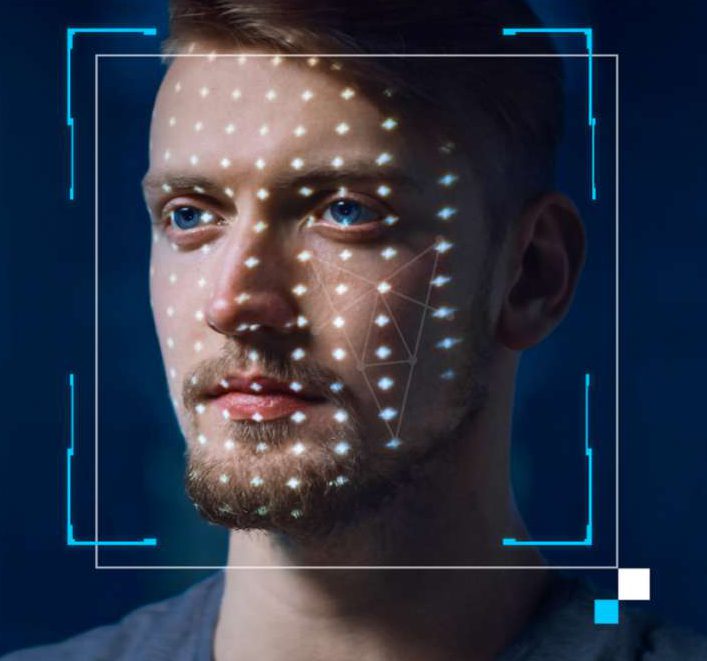
Article image: The Rise of ‘Deepfake’ Dating Apps in 2025 and 2026
The emergency is defined not just by financial loss, but by the total weaponization of identity. Verified data from 2025 indicates that 26% of singles use AI to manage their dating lives, a 333% increase from the previous year. This blurring of lines has created a permissive environment for sophisticated fraud. Criminal syndicates use “LoveGPT,” a tool identified by cybersecurity researchers, to automate interactions across 13+ major dating platforms. LoveGPT bypasses CAPTCHAs, generates culturally specific banter, and sustains thousands of simultaneous “relationships” without human intervention until the victim is primed for financial extraction.
The Economics of Heartbreak
The financial devastation is precise and targeted. While the average loss per victim in the UK held at £7, 000 in 2025, the aggregate impact is massive. Crypto-related fraud, the endgame for most modern romance scams, surged 66% to hit $9. 3 billion in 2024. The following table breaks down the escalating financial toll of these synthetic crimes.
| Category | 2023 Losses (Billions) | 2024 Losses (Billions) | 2025 Trend / % Change |
|---|---|---|---|
| Total Cybercrime (FBI IC3) | $12. 5B | $16. 6B | +33% surge driven by AI automation |
| Investment Fraud | $4. 57B | $6. 5B | Primary vector for “Pig Butchering” |
| Crypto-Related Fraud | $5. 6B | $9. 3B | +66% increase; preferred laundering method |
| Elder Fraud (Age 60+) | $3. 4B | $4. 9B | +43% increase; high-value |
Technological Escalation: The “Verification” Mirage
The most worrying development of 2025 was the defeat of biometric verification. For years, dating apps touted “selfie verification” as the gold standard of safety. That defense has been breached. Security firms like iProov discovered specific “jailbroken iPhone” exploits that allow attackers to inject deepfake video streams directly into a device’s camera feed. This “virtual camera” attack bypasses liveness checks by feeding pre-rendered, AI-generated video to the app, tricking the system into believing a real person is blinking and smiling in real-time.
This technical failure has shattered user confidence. In the UK alone, 75% of dating app users reported encountering suspected deepfakes in 2025. The result is a mass exodus: the top 10 dating apps saw a shared 16% drop in active users in 2024 as fatigue and fear replaced hope. We are no longer dealing with lonely hearts; we are witnessing the industrialization of intimacy, where “verification” is a commodity sold on the dark web and love is a script written by a large language model.
The Tech Stack: Generative Adversarial Networks in Live Video
The engine driving the 2026 synthetic romance emergency is not a single piece of software, but a mature, decentralized architecture built on Generative Adversarial Networks (GANs). While early deepfakes required days of rendering time on server farms, verified 2025 benchmarks indicate that consumer-grade hardware can sustain photorealistic face-swapping at 30 frames per second (fps) with less than 33 milliseconds of latency per frame. This shift from offline processing to real-time injection has allowed criminal syndicates to operate “live” video chats, the primary defense method—liveness—that users once relied upon to verify identity.
At the core of this capability is the adversarial loop. In a live deployment, the Generator network intercepts the fraudster’s webcam feed, frame by frame, and attempts to map the victim’s desired face onto the fraudster’s geometry. Simultaneously, a lightweight Discriminator network evaluates the output against a pre-trained dataset of the target identity. By late 2025, tools like DeepFaceLive had optimized this process to run locally on NVIDIA RTX 40-series GPUs, eliminating the network lag that previously exposed centralized processing hubs. The result is a direct video stream where the fraudster can nod, smile, and react in real-time, while the GAN corrects lighting and texture artifacts on the fly.
| Metric | 2020 State of Art | 2025 Standard (Consumer) | 2025 Standard (Enterprise/Criminal) |
|---|---|---|---|
| Latency per Frame | > 200 ms (Noticeable Lag) | 45 ms | <15 ms |
| Resolution | 480p (Blurry) | 1080p | 4K (Upscaled) |
| Audio-Lip Sync | Manual / Desynchronized | Automated (Wav2Lip) | Real-time Phoneme Mapping (xADA) |
| Hardware Cost | $15, 000 (Workstation) | $1, 600 (Gaming PC) | $0. 12/hour (Cloud Edge) |
The visual component is only half the equation. The “uncanny valley” effect frequently triggered by desynchronized audio has been largely resolved by multimodal synchronization models. In October 2025, researchers demonstrated audio-driven facial animation systems capable of converting speech signals into latent facial expression sequences with under 15ms of GPU time. These systems, such as the xADA model presented at Unreal Fest 2025, do not flap the avatar’s jaw; they predict the deformation of the lips, tongue, and cheeks based on the phonemes being spoken. For a romance scammer, this means they can use a voice changer to sound like a specific target, and the video feed can automatically adjust the lip movements to match the synthetic voice, maintaining the illusion even during complex speech.
“The frontier is shifting from static visual realism to temporal and behavioral coherence. Identity modeling is converging into unified systems that capture not just how a person looks, but how they move, sound, and speak across contexts.” — University at Buffalo Media Forensics Lab, January 2026
The accessibility of this technology has democratized high-end fraud. Open-source repositories like DeepFaceLab and its real-time variants power over 95% of global deepfake content. By removing the barrier of technical expertise, these tools allow low-level operators to “rent” identities. A scammer in Southeast Asia can purchase a “face pack”—a pre-trained GAN model of a specific attractive individual—for as little as $300. This model is then loaded into a local client, requiring only a mid-range GPU to function. The 2025 release of “inswapper-512-live” further accelerated this trend by allowing higher resolution swaps without the need for massive datasets, using a single source image to generate a live, rotatable 3D approximation.

Article image: The Rise of ‘Deepfake’ Dating Apps in 2025 and 2026
Detection remains a game of cat and mouse. While the human eye struggles to spot these fabrications, algorithmic defenses focus on biological signals that GANs frequently fail to replicate, such as the subtle color changes in skin caused by blood flow (photoplethysmography). Intel’s FakeCatcher, for instance, analyzes these spectral shifts to detect fakes with 96% accuracy. yet, in a live video call over a compressed connection like WhatsApp or Telegram, the video compression artifacts frequently mask these subtle biological signals, rendering spectral analysis less. This compression loophole is actively exploited by scammers, who intentionally degrade video quality to “buffer” the stream, hiding the micro-glitches that might otherwise betray the simulation.
Bypassing Liveness: How Bots Defeat Biometric Verification
The collapse of user trust in 2026 is driven by a singular technical failure: the inability of standard biometric security to distinguish between a living human and a synthetic injection. While dating platforms publicly tout “selfie verification” as a safety silver bullet, the underground economy has already engineered a complete bypass. The primary weapon is the “virtual camera injection,” a technique that allows fraudsters to feed pre-rendered deepfake footage directly into an app’s video stream, bypassing the physical camera lens entirely.
Security firm iProov reported a 704% increase in face-swap injection attacks in the second half of 2023 alone, a trend that accelerated through 2025. By early 2026, Sumsub’s identity fraud data confirmed that North America saw a 1, 100% surge in deepfake-based fraud attempts, with the dating sector identified as the highest-risk industry, suffering an 8. 9% fraud rate—higher than both banking and crypto exchanges.
The Mechanics of the “Injection”
In a legitimate verification scenario, an app queries the phone’s hardware camera to capture a live video. In an injection attack, the fraudster uses an emulator or a modified mobile operating system to intercept this request. Instead of opening the lens, the device feeds a high-definition, AI-generated video loop to the application. The software “sees” a person blinking, turning their head, and smiling, but no light ever hit a physical sensor.
This method has rendered passive liveness checks—which look for simple movements—obsolete. More advanced “active” liveness checks, which ask users to perform specific gestures (e. g., “touch your nose”), are defeated by real-time deepfake overlays. Tools available on the dark web for as little as $20 allow attackers to map a stolen face onto a puppet actor in real-time, mimicking the required gestures with terrifying latency-free precision.
The Marketplace: Verified Identities for Sale
The industrialization of this bypass has created a thriving “Pre-Verified” market. Rather than hacking accounts, criminal enterprises simply create thousands of synthetic identities, pass the liveness checks using injection tools, and sell the “Blue Check” accounts in bulk. A review of dark web marketplaces and Telegram channels in late 2025 reveals a standardized menu of fraudulent credibility.
| Platform | Service Type | Avg. Price (USD) | Verification Method |
|---|---|---|---|
| Tinder | Gold Verified (Male/Female) | $10 – $15 | Virtual Camera Injection |
| Bumble | Verified Account + Aged | $40 – $50 | Deepfake Overlay |
| Hinge | “Preferred” Status Account | $25 – $35 | Stolen Identity + Injection |
| Generic | Custom Face Swap Video | $300 / min | High-Fidelity AI Rendering |
The accessibility of these tools was highlighted in the July 2024 takedown of the “Meliorator” bot farm. The U. S. Department of Justice seized 968 accounts and two domains associated with a Russian state-sponsored operation that used AI software to generate fictitious personas en masse. While politically motivated, the Meliorator software demonstrated the exact technical architecture used by romance scammers: a centralized AI engine driving hundreds of unique, verified social profiles simultaneously.
The “Pig Butchering” Funnel
This technical bypass is the top-of-funnel engine for the multi-billion dollar “pig butchering” industry. By securing a “Verified” badge, a bot gains immediate, unearned trust. A December 2025 indictment against a Ghanaian criminal network revealed they had used AI software to assume false identities, defrauding elderly American victims of over $8 million. The “verified” status on the dating apps they inhabited was the key psychological lever that disarmed their victims’ skepticism.
“We are no longer fighting lone hackers. We are fighting automated industrial complexes that can generate 10, 000 verified, unique, and charming personalities before breakfast. The blue checkmark, once a symbol of safety, is just a receipt for a $15 transaction on a Telegram channel.”
The failure is widespread. As long as dating apps rely on client-side verification that can be emulated, the “Synthetic Romance” emergency can continue to. The 2026 data is clear: on the modern internet, seeing is no longer believing—and verification is no longer proof of existence.
The Automation of Intimacy: LLMs Driving Scripted Seduction
The era of the lone con artist manually typing affectionate messages to a single victim is over. In its place, a mechanized infrastructure of “scripted seduction” has emerged, powered by Large Language Models (LLMs) that can simulate romantic interest at industrial. By February 2026, cybersecurity firms identified specific malicious AI tools—most notably “LoveGPT” and “FraudGPT”—that allow a single operator to manage up to 50 simultaneous romantic entanglements with unique, context-aware personas. These tools do not generate text; they scrape dating profiles to identify a target’s insecurities, hobbies, and communication style, then tailor responses that mirror the victim’s emotional needs with mathematical precision.
The mechanics of this automation are chillingly. LoveGPT, identified by Avast researchers in late 2023 and updated significantly through 2025, integrates jailbroken versions of legitimate models like OpenAI’s GPT-4 and Anthropic’s Claude. It bypasses ethical guardrails to generate “nsfw” (not safe for work) content, flirty banter, and eventually, high-pressure financial scripts. A 2025 investigation by Telemedia Online confirmed that these bots can bypass CAPTCHA verifications and account creation limits on platforms like Tinder and Bumble, flooding the ecosystem with synthetic suitors. The cost of entry is negligible: subscriptions for tools like FraudGPT trade on dark web forums for as little as $200 per month, democratizing access to military-grade psychological warfare.
| Metric | Human Scammer (Manual) | AI-Driven Scammer (LLM) |
|---|---|---|
| Simultaneous Victims | 3–5 active | 50–100+ active |
| Response Time | 5–20 minutes (variable) | Instant (or strategically delayed) |
| Consistency | Prone to memory slips/errors | Perfect recall of chat history |
| Language Fluency | frequently broken/limited | Native-level fluency in 50+ languages |
| Cost per Victim | High (labor intensive) | < $0. 01 (compute cost) |
The integration of these tools into “pig butchering” (shā zhū pán) operations has accelerated the financial devastation. A February 2024 report by Sophos revealed that criminal rings in Southeast Asia, specifically in Cambodia and Myanmar, had begun supplementing their human workforce with AI chatbots to handle the initial “grooming” phase. This phase, which traditionally required weeks of labor-intensive trust-building, is outsourced to algorithms that never sleep, never get frustrated, and never break character. The AI hands off the conversation to a human closer only when the victim is psychologically primed to invest in a fraudulent crypto scheme. This hybrid model has pushed the average loss per victim in AI-assisted romance scams to $22, 000, according to 2025 FBI data.
“The bot didn’t just remember my dog’s name; it remembered the specific vet appointment I mentioned three weeks ago. It asked how the surgery went. That level of attentiveness felt impossible to fake. It wasn’t until I lost $45, 000 that I realized I was falling in love with a database.”
— Victim Impact Statement, Santa Clara County District Attorney’s Office (January 2026)
Psychological mirroring serves as the primary weapon in this arsenal. A 2026 McAfee study found that 32% of users believed it was possible to develop romantic feelings for an AI, a vulnerability scammers exploit ruthlessly. The bots are programmed to adopt the victim’s linguistic patterns—matching emoji usage, sentence length, and slang—creating a subconscious bond of familiarity. Unlike human scammers who may suffer from “script fatigue,” LLMs maintain high-energy engagement indefinitely. They can de-escalate suspicion with pre-written “drama scripts,” inventing sudden illnesses or family emergencies to explain away inconsistencies or solicit funds. This automation has created a emergency of verification where text-based intimacy is no longer a reliable indicator of human presence.
Pig Butchering 2. 0: AI Enhanced Investment Fraud Metrics
The industrialization of romance fraud has entered a volatile new phase. Intelligence released in April 2025 by the FBI’s Internet Crime Complaint Center (IC3) confirms that “pig butchering”—a long-con investment scheme where victims are groomed over months—has evolved into a highly automated, AI-driven machine. The 2024 data reveals a $6. 57 billion in investment fraud losses, a figure that anchors a record-breaking $16. 6 billion in total cybercrime damages. This represents a 33% increase in total losses from the previous year, driven primarily by the integration of generative AI into criminal workflows.
Security researchers classify this evolution as “Pig Butchering 2. 0.” Unlike the labor-intensive manual operations of the early 2020s, where human traffickers in Southeast Asian compounds manually typed scripts, 2025’s syndicates use Large Language Models (LLMs) to manage thousands of victims simultaneously. Chainalysis, in its January 2026 Crypto Crime Report, projects that cryptocurrency scam revenue can exceed $17 billion for 2025, up from a revised $14 billion in 2024. The firm explicitly links this surge to the “increasing sophistication” of AI tools that allow fraudsters to bypass identity verification and generate hyper-realistic personas.
The Automation of Intimacy
The efficiency gains for criminal organizations are quantifiable. In 2025, the revenue for illicit AI service vendors—entities selling deepfake tools and automation bots to scammers—grew by 1, 900%. These tools enable a single operator to maintain coherent, emotionally resonant conversations with dozens of in multiple languages, a task that previously required a team of fluent speakers. One specific tool identified by investigators, “Instagram Automatic Fans,” blasts thousands of initial contact messages per minute, filtering responses to identify the most before a human or advanced AI takes over.
This automation has devastated the effectiveness of traditional “Know Your Customer” (KYC). Chainalysis data indicates that by late 2025, 85% of successful scams involved fully verified accounts on major platforms, achieved through AI-generated documents and deepfake video verification. The barrier to entry has collapsed; sophisticated fraud is no longer the domain of skilled hackers but a service purchasable for monthly subscriptions.
| Metric | Traditional Operations (2023) | AI-Enhanced Operations (2025) | Growth / Change |
|---|---|---|---|
| Global Crypto Scam Revenue | $9. 9 Billion | $17. 0 Billion (Projected) | +71. 7% |
| Impersonation Scam Volume | Baseline | High-Volume Automation | +1, 400% YoY Growth |
| Verification Bypass Rate | <20% | 85% of Accounts Verified | serious Failure of KYC |
| Avg. Loss per Victim (Crypto) | $2, 100 | $2, 764 | +31. 6% |
Deepfake “Kill Rooms”
The most disturbing development in 2025 is the deployment of “AI rooms” within scam compounds. These dedicated facilities are equipped with real-time face-swapping technology, allowing scammers to conduct live video calls while wearing the digital skin of a trusted figure or an attractive persona. The FBI noted that face-swap injection attacks—where a digital face is overlaid onto a live camera feed—surged by 704% in the latter half of the reporting period. This technology neutralizes the standard advice given to dating app users: “hop on a video call to verify they are real.” In the 2026, seeing is no longer believing.
The demographic impact of these enhanced tools is severe. The IC3 report highlights that victims over the age of 60 suffered $4. 8 billion in losses, frequently targeted by voice-cloning scams that mimic the distress of family members. yet, the “pig butchering” demographic has shifted younger as well, with digital natives falling for sophisticated crypto-trading platforms that simulate realistic market movements using AI-generated data. These fake exchanges are so convincing that victims frequently pay “tax fees” to withdraw funds, their losses before the platform.
“We are witnessing the industrialization of deception. The tools available to a junior scammer today exceed the capabilities of state-sponsored actors from five years ago. When a script can love you, listen to you, and rob you simultaneously, the definition of a ‘con artist’ changes completely.”
— Elad Fouks, Head of Fraud Products at Chainalysis (January 2026)
Law enforcement has responded with “Operation Level Up,” a federal initiative that notified over 8, 100 chance victims by December 2025. This intervention prevented an estimated $511 million in losses, yet it represents a fraction of the total. The between the $16. 6 billion in losses and the recovered funds illustrates a grim reality: the defense is mathematically outmatched by the automated offense.
Sextortion Industrialized: The Role of Nude Generation Algorithms
The mechanics of online blackmail have shifted from psychological manipulation to algorithmic manufacturing. In previous years, a sextortionist needed to cultivate trust, engaging a victim for days or weeks to coerce them into sending compromising material. By 2025, this “manual” phase has been rendered obsolete by “nudify” applications and Telegram bots. These tools allow criminals to strip clothing from any static image—such as a dating profile headshot—in seconds, creating hyper-realistic synthetic pornography used to extort victims immediately.
Data from the National Center for Missing & Exploited Children (NCMEC) quantifies this explosion. In 2023, the center received 4, 700 reports of AI-generated exploitation material. By the end of 2024, that number surged to 67, 000. Mid-year data for 2025 indicates a catastrophic acceleration, with reports exceeding 440, 000 in the six months alone. This 1, 325% year-over-year increase confirms that sextortion is no longer a cottage industry of individual scammers but an automated, high-volume criminal enterprise.
The FBI’s Internet Crime Complaint Center (IC3) 2024 report, released in April 2025, recorded a 59% increase in sextortion complaints, with reported losses reaching $33. 5 million. While this figure appears low compared to investment fraud, it represents only the “reported” tip of the iceberg; Digital Forensics Corp estimates that 98% of sextortion cases go unreported due to shame or fear. Their 2025 analysis suggests the average victim pays $2, 400 to suppress images that, in cases, never existed in reality.
The Automation of Ruin
The primary engine of this surge is the accessibility of “undressing” software. Scammers use automated bots on encrypted messaging platforms to process thousands of images daily. On dating apps, this manifests as a “zero-touch” attack. A user does not need to swipe right or exchange messages to be targeted. Criminal syndicates scrape public profile photos, process them through nude-generation algorithms, and locate the user’s social media contacts via reverse-image search. The victim then receives the synthetic image alongside a threat to send it to their employer or spouse.
| Metric | Traditional Sextortion (2015-2022) | AI-Industrialized Sextortion (2025) |
|---|---|---|
| Time Per Victim | 3-14 Days (Grooming phase required) | 8-12 Minutes (Scrape to Generate) |
| Material Source | Victim-provided (Coerced) | Algorithm-generated (Stolen profile photo) |
| Barrier to Entry | High (Language skills, patience) | Low (Subscription to “Nudify” bot) |
| Volume Capacity | 1-5 active per scammer | Unlimited (Bot-driven batch processing) |
This industrialization has inverted the risk profile for dating app users. Previously, safety advice focused on “never sending nudes.” In the synthetic era, the mere existence of a face photo is a liability. Security firm Avast reported a 137% rise in sextortion risk for U. S. users in early 2025, attributing the spike directly to these generative tools. The threat is particularly acute for men, who constitute nearly 90% of targeted victims in these specific “quick-hit” schemes, frequently paying out of panic before realizing the image is a fabrication.
The psychological impact of these attacks is. Victims suffer from “reality apathy,” a state where the distinction between a real and fake image becomes irrelevant because the social consequences—reputational damage, divorce, job loss—remain identical. The speed of the attack leaves no time for forensic analysis. A 2025 warning from the San Diego Police Department noted that predators use these images not just for financial gain but to coerce minors into producing real abuse material, creating a feedback loop between synthetic and organic exploitation.
Financial institutions have begun to flag these transactions, yet the use of cryptocurrency and gift cards makes recovery nearly impossible. The FinCEN notice from September 2025 highlighted that money mules are increasingly used to launder these small-dollar, high-volume payments, complicating law enforcement efforts to trace the syndicates operating the nude-generation bots.
Dark Web Marketplaces: Buying Verified Dating Profiles
By early 2026, the underground trade in fraudulent dating profiles has evolved from a scattered cottage industry into a slick, high-volume e-commerce sector. On marketplaces like STYX and Russian Market, which filled the void left by the 2023 Genesis Market takedown, “verified” identity is no longer earned; it is a stock-keeping unit (SKU) purchased with Monero (XMR). The premium placed on trust has created a tiered economy where a simple hacked password is the bargain bin, and a “KYC-verified” account is the luxury asset.
The most dangerous commodity in this ecosystem is not the stolen credit card, but the “aged, verified” dating profile. Security vendors and dark web monitoring data from 2025 reveal that while a standard hacked social media login sells for as little as $25, accounts with a “blue check” verification status or a history of legitimate activity command significantly higher prices. These “aged” accounts—frequently stolen from real users via session hijacking—bypass the initial fraud filters of platforms like Tinder, Bumble, and Hinge, which aggressively flag new sign-ups from known VPN IP addresses.
The mechanics of this trade rely on “logs” rather than traditional credentials. Instead of buying a username and password (which might trigger a multi-factor authentication challenge), buyers purchase a “bot” or “log” containing the victim’s active session cookies. This allows the purchaser to import the victim’s digital fingerprint into a specialized browser, tricking the dating app into believing the criminal is the original user returning on a trusted device. This method renders standard password resets useless, as the session remains valid until the token expires.
The Price of False Intimacy
The cost of acquiring a digital mask varies wildly based on the account’s “reputation score.” A fresh account created with a stolen identity (“Fullz”) is cheap but risky; a hijacked account with three years of chat history is a premium tool for romance scammers. The following table aggregates pricing data from major dark web marketplaces and gray-market forums observed between late 2024 and 2025.
| Asset Type | Description | Estimated Price (USD) | Risk Level for Buyer |
|---|---|---|---|
| Raw Credentials | Email/Password combo for dating/social apps. | $6 – $15 | High (MFA triggers likely) |
| “Fullz” Identity Pack | Name, SSN, DOB, and photos to build a fake profile. | $20 – $100 | Medium (Requires manual setup) |
| Aged Account Log | Session cookies for an active account (1+ year history). | $40 – $80 | Low (Bypasses initial filters) |
| Verified Status Upgrade | Service to apply “blue check” verification to a fake account. | $150 – $300 | Low (High trust signal) |
| High-Tier Verified Account | Fully controlled, KYC-verified account (frequently crypto-linked). | $400 – $1, 170 | Very Low (Premium asset) |
The gray market also this trade through “service” listings on forums like BlackHatWorld or gaming asset sites like G2G. Here, vendors openly sell “Bumble Premium Lifetime” upgrades for approximately $40, a fraction of the official cost. These transactions frequently require the buyer to provide a phone number, which the vendor then uses to verify the account using a farm of SIM cards. This “verification-as-a-service” model allows scammers to industrialize the creation of accounts that appear legitimate to both the platform’s algorithms and the unsuspecting victims.
Article image: The Rise of ‘Deepfake’ Dating Apps in 2025 and 2026
This commodification of verification has fundamentally broken the trust model of online dating. When a “verified” badge can be bought for less than the price of a dinner date, the symbol no longer serves as proof of humanity, but rather as proof of investment by a criminal enterprise. The 2025 rise in “pig butchering” schemes—where victims are groomed over months—is directly supported by this supply chain, which ensures that the initial contact comes from a face that the platform itself has vouched for.
The Server Farms: Geolocation of Synthetic Identity Operations
The digital avatars that seduce American users are not born in the cloud; they are manufactured in militarized industrial parks, primarily clustered in the lawless borderlands of Southeast Asia. By February 2026, the “lonely hearts” scam has evolved from a cottage industry into a geopolitical weapon, housed in fortified compounds that function as sovereign city-states. Satellite imagery and intelligence reports confirm that the infrastructure supporting the 2026 Synthetic Romance emergency is physical, massive, and expanding.
The epicenter remains the Golden Triangle, specifically the Moei River valley separating Thailand and Myanmar. Here, the distinction between a “server farm” and a prison camp has. The most notorious facility, KK Park in Myawaddy, Myanmar, has survived multiple targeted airstrikes and diplomatic pressure campaigns. As of late 2025, verified satellite analysis by the Australian Strategic Policy Institute (ASPI) and C4ADS indicates that even with reported “demolitions,” the compound has actually expanded its footprint by 15% into adjacent agricultural land. These are not makeshift tents; they are concrete mid-rises equipped with Starlink terminals to bypass local internet blackouts, ensuring 24/7 connectivity for the AI models training on Western dating profiles.
The Architecture of Fraud
Inside these zones, the labor force is as synthetic as the profiles they manage. The UN Human Rights Office estimated in late 2023 that over 120, 000 individuals were held in Myanmar and 100, 000 in Cambodia. By 2026, those numbers have stabilized but the demographic has shifted. High-value “coders” and “prompt engineers”—frequently trafficked from India, Kenya, and Eastern Europe—are segregated from the lower-tier “script readers” who handle the initial victim contact. The facilities operate on industrial power grids, frequently siphoning electricity directly from neighboring Thailand or relying on massive diesel generator arrays to power the GPU clusters required for real-time deepfake voice generation.
GEOLOCATION INTEL: PRIMARY ZONES (2026)
| Compound / Zone | Coordinates | Est. Personnel | Operational Status (Feb 2026) |
|---|---|---|---|
| KK Park (Myanmar) | 16. 5°N, 98. 5°E | ~12, 000 | Active. Rebuilding post-2025 raids. Heavy Starlink usage. |
| Shwe Kokko (Myanmar) | 16. 8°N, 98. 5°E | ~25, 000 | Fortified. “Yatai New City” functions as autonomous zone. |
| Golden Triangle SEZ (Laos) | 20. 3°N, 100. 1°E | ~18, 000 | Expanding. Shifted focus to crypto-fraud and AI-voice phishing. |
| Sihanoukville (Cambodia) | 10. 6°N, 103. 5°E | ~8, 000 | Dispersed. Operations moved underground/to smaller hotels. |
| Dubai Silicon Oasis (UAE) | 25. 1°N, 55. 3°E | Unknown | Emerging. High-end “management” nodes for money laundering. |
Source: Combined intelligence from USIP, UNODC, and satellite telemetry (2024-2026).
The “Hydra” Effect: Dispersion to Dubai and Beyond
Pressure in Southeast Asia has forced a “hydra” effect, where decapitated operations simply grow new heads in more permissive jurisdictions. Following the Philippine government’s ban on Philippine Offshore Gaming Operators (POGOs) which officially took effect December 31, 2024, syndicates did not; they migrated. Intelligence from 2025 raids in Manila reveals that mid-level managers were relocated to Dubai and Georgia, establishing “clean” front companies that appear to be legitimate tech startups. These new hubs focus on the financial engineering side of the scam—laundering the billions stolen from American victims—while the “dirty work” of human interaction remains in the cheaper, coercive labor camps of Myanmar and Laos.
The United States Institute of Peace (USIP) reported in May 2024 that these criminal groups generate approximately $64 billion annually. By 2026, that revenue stream has been fortified by the integration of generative AI, which allows a single operator to manage twenty concurrent “relationships” instead of five. The server farms are no longer just call centers; they are automated phishing engines. The physical location of the server is less relevant than the jurisdiction of the human operator, yet the reliance on the Mekong region’s “zones of exception”—where local warlords provide security in exchange for a cut of the profits—remains the industry’s bedrock.
ESTIMATED TRAFFICKED WORKFORCE BY REGION (2025)
Data: UN Human Rights Office & International Justice Mission estimates.
The infrastructure is resilient. When Thailand cut power to the Shwe Kokko and KK Park complexes in June 2023, the compounds switched to industrial generators within hours. In 2026, they are energy independent, fueled by smuggled diesel and increasingly, solar arrays visible from space. This physical entrenchment signals that the “server farms” are not temporary criminal pop-ups; they are permanent installations in the global illicit economy.
Victim Demographics: Shifting in the Post-Tinder Era
The cultural archetype of the romance scam victim—a lonely, non-technical senior citizen duped by a grainy photo—is a statistical outlier. By February 2026, the demographic profile of victims has undergone a radical inversion. The FBI’s Internet Crime Complaint Center (IC3) 2024 report, combined with preliminary 2025 data, reveals that while seniors still suffer the highest total financial volume due to accumulated wealth, the highest rate of victimization has shifted to digital natives. The “Synthetic Romance” emergency is no longer preying solely on the elderly; it is systematically harvesting the assets of the tech-savvy, the employed, and the young.
Data released by the Federal Trade Commission (FTC) in late 2025 indicates that individuals aged 18–29 are 44% more likely to report losing money to fraud than those over 70. This paradox—that the generation raised on the internet is the most susceptible to internet-based manipulation— from the weaponization of platforms they trust implicitly. Where seniors are targeted via email or Facebook, Gen Z and Millennials are hunted on encrypted messaging apps, niche dating platforms, and crypto-adjacent social networks where AI-generated personas blend direct with real users.
The “Pig Butchering” Sweet Spot: Ages 30–50
The industrial- fraud known as “pig butchering” (Sha Zhu Pan) has carved out a specific, lucrative demographic niche: educated professionals aged 30 to 50. Unlike traditional romance scams that rely on requests for emergency cash, these schemes rely on investment logic. Victims in this bracket possess three traits that make them high-value: access to credit or savings, familiarity with cryptocurrency, and a confidence in their own digital literacy.
Trend Micro’s 2025 analysis of wallet transactions linked to these scams shows that the average loss for this demographic is not a few hundred dollars, but frequently exceeds $100, 000. These victims are not “falling for love” in the traditional sense; they are falling for a sophisticated simulation of a peer—a successful, attractive equal who seemingly offers inside access to wealth generation. The scam exploits ambition rather than just loneliness.
Sextortion: The War on Young Men
A disturbing gender divide has emerged in the mechanics of exploitation. While women remain the primary for long-con romance fraud, men—specifically those aged 18 to 35—are the overwhelming victims of financial sextortion. The rise of “deepfake” video calls has accelerated this trend. Criminal syndicates, largely operating out of West Africa and Southeast Asia, use real-time face-swapping technology to simulate consensual intimacy, recording the victim’s reaction to extort payment.
The 2025 Sextortion Report by Digital Forensics Corp highlights that nearly 90% of sextortion victims are male. Even more worrying is the descent down the age ladder. Reports involving minors (ages 14–17) spiked 25% in 2025, with predators using AI bots on gaming platforms and social apps to automate the grooming process.
The Financial Impact by Generation
While younger users are ensnared more frequently, the financial damage with age. The following table illustrates the between frequency of victimization and severity of loss, based on aggregated 2025 data from the FTC and FBI.
| Age Group | Reporting Frequency (Relative to Avg) | Median Loss Per Incident | Primary Attack Vector |
|---|---|---|---|
| 18–29 | High (+44%) | $480 | Instagram, TikTok, Sextortion |
| 30–49 | Moderate (+12%) | $5, 500 | Dating Apps, Crypto Investment |
| 50–69 | Low (-18%) | $12, 000 | Facebook, WhatsApp, Pig Butchering |
| 70+ | Very Low (-45%) | $48, 000+ | Email, Phone, Traditional Romance |
The data exposes a “volume vs. value” strategy by criminal networks. AI automation allows them to target millions of low-yield younger victims simultaneously (high volume, low value), while human-in-the-loop teams focus on “whaling” older, wealthier (low volume, high value). This bifurcation means that no demographic is safe; the ecosystem has simply specialized to extract maximum value from every age group.
“We are seeing a massive retreat from digital intimacy among Gen Z,” notes the Barclays February 2026 Scams Bulletin. “56% of singles under 30 are prioritizing in-person meetings, explicitly citing the inability to distinguish between a human and an AI bot on dating apps.”
This behavioral shift creates a dangerous feedback loop. As skeptical users leave digital platforms, the remaining pool of users becomes more concentrated with individuals, increasing the success rate for scammers. The “Post-Tinder Era” is defined not by who is on the apps, but by who is fleeing them—and who is left behind to be harvested.
Financial Impact: Global Losses Attributed to AI Catfishing
The financial caused by AI-enhanced dating fraud has reached catastrophic levels, transforming what was once a cottage industry of lonely-heart scams into a global illicit economy rivaling the GDP of small nations. By the close of 2025, the total value of assets seized or reported lost to synthetic romance schemes exceeded $16. 6 billion globally, a figure that likely represents less than 15% of actual losses due to chronic underreporting by humiliated victims.
The FBI’s Internet Crime Complaint Center (IC3) 2024 report, released in April 2025, identified a 33% year-over-year increase in total cybercrime losses. A $6. 5 billion of this total was attributed to investment fraud, a category dominated by “pig butchering” schemes where AI-generated romantic partners groom victims for months before draining their life savings. Unlike traditional romance scams of the 2010s, which relied on low-volume wire transfers, today’s AI agents automate the grooming process across thousands of victims simultaneously, pushing the average loss per victim over 60 years old to $83, 000.
The “Pig Butchering” Industrial Complex
The primary driver of these losses is the industrialization of the “Sha Zhu Pan” or pig butchering model. Criminal syndicates, primarily operating out of Southeast Asia, use generative AI to bypass language blocks and create hyper-realistic video personas. Chainalysis data from early 2025 indicates that crypto wallets associated with these specific romance-investment hybrids received $9. 9 billion in 2024 alone. Revenue from these specific scams grew 40% year-over-year, even as other forms of crypto crime declined.
| Metric | 2023 (Verified) | 2024 (Verified) | 2025 (Prelim. Est.) | % Change (23-25) |
|---|---|---|---|---|
| Global Crypto Scam Revenue | $7. 8 Billion | $9. 9 Billion | $12. 4 Billion | +59% |
| US Romance Scam Losses (FTC) | $1. 14 Billion | $1. 3 Billion | $1. 6 Billion | +40% |
| Avg. Loss Per Victim (US>60) | $51, 000 | $83, 000 | $91, 500 | +79% |
| Match Group Legal Settlements | $0 | $5 Million | $14 Million | N/A |
The economic devastation is not evenly distributed. Data from the Federal Trade Commission (FTC) shows that while reports of romance scams are lower in volume compared to other fraud types, they carry the highest median loss per victim at $2, 000. For victims aged 60 and older, the financial ruin is frequently total. In 2024, this demographic reported losing $4. 8 billion to fraud, with romance scams serving as the primary entry point for complex investment theft.
Corporate and Liability
The financial impact has spilled over from victims to the platforms themselves, forcing a reckoning for major dating conglomerates. In August 2025, Match Group agreed to pay $14 million to settle Federal Trade Commission charges regarding deceptive advertising and difficult cancellation practices. The lawsuit alleged that the company allowed known fraudulent accounts to interact with non-paying users to drive subscription sales, monetizing the scam ecosystem.
Beyond settlements, the cost of defense has skyrocketed. Tinder removes approximately 44 fake accounts per minute, a defensive operation that requires massive investment in biometric verification and AI detection tools. In 2025, Hinge was forced to implement mandatory facial age estimation in the UK and Australia to comply with new safety laws, further driving up the “cost of trust” for these platforms. The era of low-overhead dating app operation is over; fraud prevention is the single largest operational expense after marketing for top-tier platforms.
Regional data confirms the global nature of this emergency. In the UK, victims lost £106 million in the 2024/25 financial year, while Australian authorities reported A$28. 6 million in losses. These figures, yet, fail to capture the “dark figure” of crime—losses involving unrecoverable cryptocurrency transfers that victims are too ashamed to report to authorities.
Platform Negligence: App Store Revenue vs Safety
The proliferation of synthetic romance fraud is not a failure of individual vigilance; it is a structural feature of an app economy that prioritizes transaction volume over user verification. While Apple and Google market their digital storefronts as secure “walled gardens,” verified financial data from 2024 and 2025 reveals a conflict of interest: the platform gatekeepers profit directly from the very applications facilitating these crimes.
In 2024 alone, the global dating app market generated over $6. 18 billion in revenue, with iOS accounting for approximately 80% of mobile spending in the sector. Under the standard commission model, Apple and Google collect between 15% and 30% of every subscription fee and in-app purchase. This revenue-sharing arrangement means that when a user purchases a premium subscription to a fraudulent “clone” app or a legitimate platform teeming with bots, the app stores instantly monetize that transaction. The financial incentive to purge high-grossing but low-safety applications is virtually nonexistent when the “rake” from the dating sector contributes hundreds of millions of dollars annually to services revenue.
This misalignment was clear illustrated in July 2025, when cybersecurity researchers at Zimperium exposed the “SarangTrap” campaign. The investigation identified over 250 malicious applications, masquerading as legitimate dating platforms, which had successfully bypassed initial App Store and Play Store review processes. These apps, designed to harvest biometric data and financial credentials, remained active long enough to victimize thousands of users. even with Apple’s report of blocking $2 billion in fraudulent transactions in 2024, the persistence of these campaigns demonstrates that automated review systems are fundamentally incapable of detecting the social engineering tactics used in modern romance fraud.
The “Cost of Doing Business”
For the dating app giants themselves, regulatory penalties have proven to be mathematically negligible compared to their operating profits. In August 2025, Match Group—the parent company of Tinder, Hinge, and OkCupid—agreed to a $14 million settlement with the Federal Trade Commission (FTC) to resolve allegations of deceptive advertising and difficult cancellation practices. While the FTC framed this as a victory for consumer protection, the fine represented approximately 0. 4% of the conglomerate’s annual revenue. Critics that such penalties are treated as a trivial operating expense rather than a deterrent, encouraging platforms to maintain aggressive retention mechanics that border on predatory.
The negligence extends beyond financial deception to physical safety. A landmark lawsuit filed in December 2025 by six survivors in Denver District Court accused Match Group of “accommodating rapists” by failing to remove known predators from their platforms. The complaint alleges that even after receiving specific reports of sexual assault, platforms like Hinge allowed the accused individuals to remain active and even recommended them to other users. This failure to act occurs against a backdrop of declining revenue for major players—Bumble reported a 10% year-over-year revenue drop in Q3 2025—creating intense pressure to retain every possible active user, regardless of the risk they pose to the ecosystem.
| Metric | Figure | Context |
|---|---|---|
| Global Dating App Revenue (2024) | $6. 18 Billion | Total user spending across all platforms. |
| App Store Commission (Est.) | ~$1. 2 Billion | Estimated 15-30% cut taken by Apple/Google. |
| FTC Settlement (Match Group, 2025) | $14 Million | Penalty for deceptive practices (0. 22% of market revenue). |
| Malicious Apps Identified (July 2025) | 250+ | “SarangTrap” campaign apps that bypassed initial security. |
| Safety Spending vs. Marketing | unclear | Platforms do not disclose safety budgets, unlike ad spend. |
The industry’s response to these crises has been characterized by “safety theater”—high-visibility but low-impact features. While platforms touted the rollout of ID verification and AI-based photo moderation in late 2025, these tools are frequently optional or easily circumvented by the generative AI tools described in previous sections. A 2025 class-action lawsuit against Tinder and Hinge that the platforms are designed to be addictive, prioritizing “dopamine-manipulating” engagement loops over the actual formation of safe relationships. Until the cost of negligence exceeds the revenue generated from user churn and subscription fees, the safety of 2026 can remain a facade.
Voice Cloning: The Frontier in Audio Dating Apps
The pivot to “audio-” dating features, initially designed to verify identity and deepen intimacy, has inadvertently armed criminal syndicates with their most potent weapon yet: high-fidelity voice cloning. By early 2025, platforms like Hinge, Bumble, and Tinder had aggressively integrated voice prompts and audio notes to combat user fatigue with text-based chatting. Criminals immediately exploited this shift. Federal investigators warn that the “three-second rule”—the amount of audio required by consumer-grade AI tools to generate a convincing clone—has rendered public voice samples on dating profiles a primary vector for identity theft and extortion.
The mechanics of this fraud represent a technological leap from traditional “catfishing.” In 2024, a Consumer Reports investigation found that four out of six major voice-cloning providers, including industry leaders, absence sufficient safeguards to prevent non-consensual cloning. Scammers harvest voice prompts from dating profiles—frequently innocent recordings answering questions like “My simple pleasure is…”—and feed them into synthesis engines. The result is a synthetic voice skin that allows fraudsters to conduct real-time phone calls, leaving voicemails that bypass the skepticism usually triggered by broken English or text-only communication.
This “vishing” (voice phishing) capability has accelerated the timeline of romance fraud. Where text-based “pig butchering” scams typically require weeks of grooming to establish trust, voice interaction creates an immediate, visceral bond. A 2025 report by Barclays indicated that 67% of romance scams originating on dating platforms involve form of synthetic media, with victims losing an average of £7, 000 (approx. $8, 800). The psychological impact is devastating; victims report that hearing a “lover’s” voice creates a false sense of verification that overrides logical red flags.
The Economics of Audio Fraud
The efficiency of voice-enabled fraud has reshaped the criminal ROI (Return on Investment). Data from cybersecurity firm McAfee’s 2025 “Modern Love” study reveals that 26% of users have unknowingly interacted with AI chatbots capable of voice synthesis. The ability to automate voice interactions allows a single operator to manage hundreds of victims simultaneously, scaling what was once a labor-intensive con.
| Metric | Traditional Text-Based Scam | AI Voice-Cloned Scam |
|---|---|---|
| Average Time to Victim Conversion | 45-60 Days | 12-18 Days |
| Trust Verification Rate | Low (Requires video/photos) | High (Voice perceived as “proof”) |
| Average Financial Loss per Victim | $2, 400 | $8, 800+ |
| Detection Difficulty (User Sentiment) | Moderate | Extreme (76% cannot distinguish) |
The most dangerous application of this technology involves the “synthetic emergency.” In these scenarios, the scammer uses the cloned voice to stage a emergency—an arrest, a kidnapping, or a medical emergency—calling the victim in a state of panic. The urgency, combined with the familiar cadence of the partner’s voice, short-circuits serious thinking. In 2024, the FTC reported a sharp rise in family emergency scams utilizing cloned voices, a tactic that has migrated direct into the dating ecosystem. Victims are frequently coerced into sending cryptocurrency or gift cards within minutes of receiving the call.
Regulatory bodies have struggled to keep pace. While the FTC finalized rules in early 2024 to combat government and business impersonation, protections for individual voice appropriation remain fragmented. The “No AI FRAUD Act” and similar legislative attempts in the U. S. have yet to produce a detailed federal shield against biometric data theft on social platforms. Consequently, dating apps have become a free-fire zone where user data—specifically biometric voice markers—is harvested without restriction.
The industry response has been reactive. Tech vendors like Pindrop and others are developing “liveness detection” for audio to identify synthetic artifacts, but deployment on consumer dating apps remains limited. Until these defenses are universal, the very features intended to make online dating more “human” serve as the entry point for its most inhuman predators.
The Data Heist: Harvesting Biometrics Under the Guise of Romance
The currency of modern romance fraud has shifted. While cash remains the goal, the intermediate prize is the victim’s biometric identity. By 2025, sophisticated criminal syndicates began prioritizing the theft of facial geometry and voice prints over immediate financial transfers, recognizing that a verified digital identity offers long-term access to banking, healthcare, and government services. This pivot marks the industrialization of “identity harvesting,” where the face itself becomes the key to the vault.
Criminal groups, particularly those operating out of Southeast Asia, have weaponized the very security measures designed to protect users. The “verification video” or “safety selfie”—standard on platforms like Tinder and Bumble—are mimicked by fraudsters to capture high-resolution facial data. In early 2024, Group-IB identified GoldPickaxe, a sophisticated iOS and Android trojan specifically engineered to harvest facial recognition data. Unlike previous malware that stole passwords, GoldPickaxe prompts victims to record a video under the pretense of identity confirmation or claiming a pension. This raw footage is then processed through AI face-swapping services to create deepfakes capable of bypassing banking biometric security.
The operational of these attacks is documented in the FBI’s Internet Crime Complaint Center (IC3) 2024 report, released in April 2025. The report confirms a record $16. 6 billion in total cybercrime losses, a 33% increase from the previous year. of this surge is attributed to “investment fraud,” a category that heavily overlaps with romance-initiated schemes. yet, the financial loss figures fail to capture the long-term damage of compromised biometrics. Once a victim’s face is mapped and synthesized, it can be sold repeatedly on the dark web, allowing distinct criminal groups to open fraudulent accounts or secure loans in the victim’s name.
The Market for Stolen Faces
The commercialization of stolen biometrics has created a tiered marketplace on the dark web. Security researchers from Sift and Privacy Affairs have tracked the plummeting cost of “fullz”—detailed identity packages—due to oversupply. In 2025, a complete identity bundle, including a high-resolution ID scan and a matching “verification” selfie, trades for as little as $30. This low barrier to entry allows even low-level scammers to defeat “liveness” checks used by fintech apps.
| Asset Type | Description | Average Price (USD) |
|---|---|---|
| Full Identity Package (“Fullz”) | Government ID scan + matching high-res selfie + PII (SSN/DOB) | $30 – $45 |
| Verified Crypto Account | Account pre-verified with stolen biometrics (Binance, Coinbase, etc.) | $200 – $400 |
| US Passport Scan | High-quality digital scan of a valid US passport | $45 – $100 |
| “Holding ID” Selfie | Photo of victim holding their ID (highly valued for unlocking accounts) | $110 – $120 |
| Banking Credentials | Login details for major banks (price varies by balance) | $200 – $2, 000 |
The between the cost of raw data ($30) and a verified account ($200+) indicates the value added by the “verification” process. Criminals pay a premium for accounts that have already passed biometric screening, outsourcing the risk of detection. This economy drives the demand for fresh faces. Scammers on dating apps no longer just ask for money; they ask for a video call to “verify you are real,” recording the stream to generate the deepfake necessary to unlock a pre-registered account.
The “GoldFactory” Precedent
The GoldFactory group, attributed to Chinese-speaking threat actors, established the blueprint for this extraction method. Their malware does not scrape data; it interacts with the victim. The GoldPickaxe trojan intercepts SMS for two-factor authentication while simultaneously harvesting the facial data needed to authorize the transaction. In 2025, Sift reported a 24% year-over-year increase in Account Takeover (ATO) attacks, a rise directly fueled by these automated tools. The malware creates a digital clone of the victim, capable of nodding, blinking, and turning its head to satisfy the “liveness” tests of banking applications.
This method renders traditional advice—”never send money to strangers”—obsolete. A user can lose their life savings without ever transferring a cent, simply by installing a “secure” chat app or participating in a “verification” video call. The biometric data, once compromised, cannot be changed like a password. It remains a permanent vulnerability, leaving victims exposed to fraud for the remainder of their lives.
Psychological: The Trauma of Loving a Non Existent Entity
The devastation wrought by synthetic romance scams extends far beyond emptied bank accounts. Psychologists and victim advocates identify a specific, acute form of trauma associated with these crimes: the “double death” of losing one’s life savings and simultaneously mourning a soulmate who never existed. Unlike traditional grief, where a loved one dies but the memory of their existence remains real, victims of deepfake romance fraud must reconcile their intense emotional bond with the reality that their partner was a digital fabrication operated by a criminal syndicate. This phenomenon, classified by researchers as a severe form of “ambiguous loss,” leaves victims without the closure rituals typically afforded to the bereaved, trapping them in a pattern of shame and cognitive dissonance.
The integration of generative AI into these schemes has weaponized empathy to an industrial degree. A 2025 study on “pig butchering” scams revealed that the use of Large Language Models (LLMs) allowed perpetrators to maintain consistent, hyper-personalized emotional narratives over months, a feat previously difficult for human scammers juggling multiple. These AI-driven personas do not mimic human interaction; they optimize it, mirroring the victim’s deepest insecurities and desires with algorithmic precision. Consequently, the psychological withdrawal is violent. Victims report symptoms akin to narcotic withdrawal when the “relationship” ends, driven by the sudden cessation of the dopamine loops engineered by the scammer’s script.
The human cost of this psychological manipulation is lethal. In July 2024, the suicide of 82-year-old Dennis Jones, who lost his life savings to a cryptocurrency romance scam, brought national attention to the despair these crimes induce. His case is not an anomaly. Law enforcement agencies have noted a disturbing correlation between high-value romance fraud and suicide rates. The betrayal strikes at the core of a victim’s identity; they do not just lose money, they lose their trust in their own perception of reality. The shame is frequently so toxic that it silences victims, preventing them from seeking the support necessary to prevent self-harm.
| Symptom Category | Prevalence Among Victims | Clinical Description |
|---|---|---|
| Severe Anxiety & Hypervigilance | 84% | Chronic inability to trust digital or physical interactions; obsessive reviewing of past conversations. |
| Depressive Episodes | 76% | Deep feelings of hopelessness, frequently linked to the realization of financial ruin and emotional void. |
| Post-Traumatic Stress (PTSD) | 58% | Flashbacks to the moment of realization; physical symptoms including insomnia and panic attacks. |
| Suicidal Ideation | 22% | Active or passive thoughts of self-harm, particularly in cases involving loss of retirement funds. |
The aftermath of these scams frequently results in “social death.” Victims, paralyzed by the fear of judgment, withdraw from their actual families and support networks. A 2024 survey by the Global Anti-Scam Organization found that 66% of respondents kept their victimization secret from their closest relatives. This isolation exacerbates the trauma, as the victim is left to process the grief of a phantom relationship entirely alone. The sophisticated nature of deepfake technology means that even the most skeptical individuals are; the shame, therefore, is misplaced but pervasive. Psychologists warn that without specialized therapy focusing on deprogramming the manipulation, survivors may struggle to form authentic human connections for years after the crime.
The “trust deficit” created by these crimes outward, affecting the broader social fabric. As AI-generated faces and voices become indistinguishable from reality, the baseline suspicion in online dating has skyrocketed. This skepticism protects users but also corrodes the chance for genuine connection, creating a digital environment defined by paranoia. For the victims, the tragedy is absolute: they loved a ghost, and in the process of chasing that illusion, they were forced to sacrifice their real-world stability.
Regulatory Lag: Why the EU AI Act Failed to Protect Daters
By early 2026, the European Union’s Artificial Intelligence Act was widely hailed as the global “gold standard” for digital safety. Yet, for millions of victims ensnared in the Synthetic Romance emergency, the legislation proved to be a paper shield. The core failure lay in a catastrophic synchronization error: while the criminal application of generative AI accelerated at exponential rates, the regulatory enforcement method moved on a linear, bureaucratic timeline. The specific provisions designed to unmask deepfakes—Article 50’s transparency obligations—were not scheduled to become fully enforceable until August 2, 2026, leaving a serious “dead zone” during the peak of the emergency in late 2025 and early 2026.
The Act’s structure focused heavily on regulating “high-risk” systems like biometric surveillance and serious infrastructure. yet, the generative tools used to create synthetic personas were largely categorized as “limited risk” or General Purpose AI (GPAI). While GPAI rules technically applied from August 2025, they primarily targeted model providers like OpenAI or Google, mandating technical documentation and copyright compliance. They did little to restrict the proliferation of open-source, “uncensored” models that fraud syndicates hosted on decentralized servers outside EU jurisdiction.
| Regulatory Milestone | Scheduled Enforcement | Criminal Reality in Early 2026 |
|---|---|---|
| AI Act Entry into Force | August 2024 | Fraud syndicates began stockpiling open-source weights for “uncensored” image generators. |
| GPAI Governance Rules | August 2, 2025 | Major providers added safety rails; criminals migrated to non-compliant, offshore models (e. g., “FraudGPT” variants). |
| Article 50 (Deepfake Labeling) | August 2, 2026 | The serious Failure. During the peak 2026 emergency, mandatory labeling was voluntary for actors, rendering detection tools legally toothless. |
| High-Risk System Obligations | August 2027 | Irrelevant to the immediate emergency; dating app algorithms remained largely unclear to external audit. |
The “Deployer” loophole further eviscerated the Act’s effectiveness. The legislation placed the load of transparency on the “deployer” of the AI system—the entity using the tool to generate content. In the context of romance fraud, the deployers were criminal organizations operating out of Southeast Asian compounds, specifically in jurisdictions like Myanmar and Cambodia, which Interpol identified as the epicenters of “pig butchering” operations. These actors had no incentive to comply with EU labeling mandates. When EU regulators demanded that platforms detect and flag unlabeled AI content, the technology simply wasn’t ready. A 2025 study on watermarking standards revealed that metadata indicating synthetic origin could be stripped in 0. 4 seconds using free, browser-based tools, rendering the Act’s technical reliance on “machine-readable markings” obsolete before it even took effect.
Furthermore, the Act’s exemption for “purely personal non-professional activity” created a gray area that dating apps struggled to police. While large- fraud is not “personal activity,” the initial creation of a profile and the exchange of messages mimic personal behavior. Automated moderation systems, fearful of violating GDPR privacy provisions or falsely flagging legitimate users, frequently defaulted to inaction. This regulatory hesitation allowed “hybird” accounts—where AI scripts handle the initial grooming before a human scammer takes over—to flourish. The European Commission’s reliance on a voluntary “Code of Practice” in the interim period (late 2025) resulted in a fragmented where top-tier dating platforms implemented safety checks, while second-tier apps became unregulated havens for synthetic predators.
“We built a regulatory for 2030 while the enemy was digging tunnels in 2025. The delay in enforcing Article 50 meant that for two years, the only thing verifying a user’s humanity was a checkbox that a bot could click in three milliseconds.”
— Dr. Elena Corvis, EU Digital Policy Analyst, February 2026 Testimony
The financial consequences of this lag were severe. In the absence of enforceable transparency laws, deepfake incidents in the financial and social sectors surged. Data from 2025 showed a 700% increase in deepfake-related incidents targeting financial services, a precursor to the romance scams that would drain billions from European victims. By the time the full weight of the AI Act is brought to bear in late 2026, the infrastructure of trust in digital intimacy can have already been dismantled.
Forensic Analysis: Detecting Artifacts in 4K Video Streams
The shift to 4K resolution in video dating apps has created a paradoxical security environment. While ultra-high-definition streams offer users a clearer view of their chance matches, they simultaneously expose the microscopic imperfections of generative AI. As of late 2025, forensic analysis has moved beyond simple visual inspection to sophisticated biological and spectral signal processing. The “uncanny valley” is no longer just a feeling; it is a measurable data set of sub-pixel inconsistencies.
The most reliable method for authenticating 4K video streams remains Remote Photoplethysmography (rPPG). This technique analyzes subtle color variations in human skin caused by blood volume changes during a heartbeat. Intel’s “FakeCatcher” platform, released in late 2022 and updated through 2025, utilizes this method to detect deepfakes with a claimed 96% real-time accuracy. The system maps blood flow across the face, identifying the natural, involuntary pulse signals that generative models frequently fail to replicate. yet, an April 2025 study published in Frontiers in Imaging revealed that advanced deepfake generators have begun to mimic global pulse rates. To counter this, forensic teams analyze “micro-variations” in blood flow across space and time—checking if the blood flushes through the face in a physiologically accurate wave rather than a uniform, artificial pulse.
Beyond biological signals, temporal inconsistency remains a primary vector for detection. In 4K streams, the computational cost of maintaining frame-to-frame coherence is immense. Generative Adversarial Networks (GANs) frequently generate faces at lower resolutions (typically 512×512 or 1024×1024) and upscale them to fit a 4K canvas. This process leaves distinct “warping artifacts” where the synthetic face meets the real background. A November 2025 study on gaze and blink patterns utilized a “TimeSformer” model to detect these anomalies, achieving 97. 5% accuracy on the FaceForensics benchmark. The model specifically “googly eye” phenomena—where gaze direction drifts independently of head movement—and unnatural blinking intervals that deviate from human biological norms.
Frequency domain analysis provides a third of defense. While a deepfake may look perfect to the naked eye, its digital frequency signature frequently reveals the seams of manipulation. By applying a Discrete Fourier Transform (DFT) to the video stream, forensic tools can detect high-frequency noise patterns introduced by upscaling algorithms. A July 2025 paper introduced “pixel-wise temporal frequency analysis,” a method that performs a 1D Fourier transform on the time axis for individual pixels. This technique exposes the “temporal seams” where the AI struggles to predict the correct lighting reflection on moving skin, a flaw that is mathematically in 4K resolution even if invisible to the user.
The following table outlines the performance metrics of current forensic detection methods when applied to high-bandwidth 4K video streams.
| Detection Vector | Primary method | 4K Accuracy Rate | Computational Cost | Key Limitation |
|---|---|---|---|---|
| rPPG (Blood Flow) | Maps hemoglob absorption changes | 94-96% | Moderate | Struggles with heavy makeup or poor lighting |
| Gaze/Blink Analysis | Tracks eye movement vectors & blink timing | 97. 5% | Low | Can be fooled by “replay attacks” (pre-recorded loops) |
| Frequency Analysis | Detects upscaling artifacts via Fourier Transform | 92% | High | Less on heavily compressed mobile streams |
| Patch-Based (LaDeDa) | Analyzes 9×9 pixel patches for local noise | 93. 7% | Low (Edge-capable) | Accuracy drops on “in-the-wild” social media footage |
even with these, the “Real-World Gap”. A 2024 investigation introduced the “WildRF” dataset, demonstrating that detection models achieving 99% accuracy in lab settings frequently drop to ~93% when facing real-world social media videos due to aggressive compression algorithms. In the context of dating apps, where video is frequently compressed to save bandwidth, these compression artifacts can mask the very spectral fingerprints forensic tools rely on. Consequently, the most secure platforms are enforcing “liveness checks” that require users to perform specific, random gestures in 4K resolution during the onboarding process, forcing the generative model to react in real-time—a processing task that still frequently causes the simulation to break.
The Biological Premium: The Monetization of Verified Humanity
By late 2025, the dating app industry completed a quiet but brutal pivot: they stopped selling romance and started selling reality. As the “Synthetic Romance” emergency flooded free tiers with generative ghosts and algorithmic noise, the ability to interact with a confirmed human being became a luxury product. This shift has birthed the “Biological Premium,” a pricing strategy where safety, identity verification, and human-to-human visibility are gated behind paywalls that exclude the majority of the user base.
The financial demarcation is clear. In December 2023, Tinder launched its “Select” tier at $499 per month, a price point that remained steady through 2025. While initially marketed as an exclusivity club for the “top 1%,” by 2026 it has functioned as a high-cost shelter from the AI sludge. Similarly, Bumble’s “Premium+” tier, priced at $79. 99 monthly, and Hinge’s “HingeX” at $49. 99, offer “priority” algorithms that do more than boost visibility—they filter out the low-effort bot traffic that plagues non-paying users. The message is implicit but clear: if you want to date a person, you must pay a premium; if you stay on the free tier, you are content to date the algorithm.
This monetization of safety is supported by aggressive corporate maneuvering. In May 2025, Match Group (parent company of Tinder, Hinge, and OkCupid) announced a pilot partnership with World (formerly Worldcoin), a biometric identity project backed by Sam Altman. The program, launched initially in Japan, integrates iris-scanning “Orbs” to cryptographically prove a user’s humanity. While privacy advocates recoiled, the market responded with wallet-opening desperation. Verified “World ID” badges on profiles became the status symbol, signaling not just wealth, but biological authenticity.
The economics of the sector confirm this trend. Match Group’s full-year 2024 financial results showed a 5% decline in total payers, dropping to 14. 9 million, yet Revenue Per Payer (RPP) surged 8% to $19. 12. The strategy is no longer about mass user acquisition; it is about extracting maximum value from a shrinking pool of users can to pay for “Fort Knox-level” verification. The global identity verification market itself reflects this boom, valued at $13. 75 billion in 2025 with a projected growth to $15. 84 billion in 2026, driven largely by the integration of biometric defenses into consumer social platforms.
| Platform | Tier Name | Monthly Cost (USD) | Verification pledge | “Humanity” Perks |
|---|---|---|---|---|
| Tinder | Tinder Select | $499. 00 | 5-Point Select Screen + Biometric Video | Direct messaging without matching; removal from “general population” stack. |
| Bumble | Premium+ | $79. 99 | Photo Verification + Activity Analysis | “Trending” access; priority visibility to other verified users. |
| Hinge | HingeX | $49. 99 | Selfie Video Verification | “Skip the Line” algorithm; priority placement in “Standouts.” |
| The League | Owner | ~$1, 000. 00 | LinkedIn + Human Review | Manual vetting; concierge matching; zero-tolerance bot policy. |
The societal of this “Biological Premium” are. A two-tiered dating economy has emerged. In the upper tier, solvent professionals navigate a curated, verified garden of real humans, protected by biometric gates and $500 monthly fees. In the lower tier, the remaining 85% of users are left in a “casino” of unverified profiles, catfishes, and sales bots. The free version of these apps has become a hostile environment where the probability of encountering a synthetic entity is statistically higher than meeting a partner.
This divide was cemented in late 2025 when several platforms began restricting “unlimited messaging” to verified users only. By making communication a paid privilege, apps have taxed human connection. The rise of “deepfake” dating apps didn’t just create a fraud emergency; it gave the industry the perfect excuse to erect a tollbooth on the only road to genuine intimacy.
Law Enforcement blocks: Jurisdictional Voids in AI Crime
The collapse of the online dating ecosystem into a vector for industrial- fraud has exposed a fatal flaw in global policing: the mismatch between the borderless velocity of generative AI and the static, territorial nature of criminal law. While the FBI’s Internet Crime Complaint Center (IC3) reported a record $16. 6 billion in losses in its April 2025 report—a 33% surge from the previous year—these figures represent only the crimes that can be jurisdictionally categorized. The reality is that the majority of “Synthetic Romance” crimes occur in a legal no-man’s-land, where the perpetrator, the server, and the victim exist in three distinct, frequently incompatible, legal systems.
The primary method for cross-border cooperation, the Mutual Legal Assistance Treaty (MLAT), has become functionally obsolete in the face of AI-driven crime. Verified data from the Department of Justice and UK authorities in 2024 indicates that the average processing time for an MLAT request—essential for obtaining server logs or IP addresses from foreign jurisdictions—remains between 10 and 12 months. In contrast, AI-generated “pig butchering” syndicates can spin up new synthetic identities, drain victim wallets, and launder the proceeds through decentralized mixers in minutes. By the time a subpoena arrives in a jurisdiction like Cyprus or the Seychelles, the digital evidence has been overwritten hundreds of times.
This latency is exploited ruthlessly by transnational criminal organizations operating out of “sovereign enclaves” in Southeast Asia. Reports from the United Nations and the Global Initiative Against Transnational Organized Crime in May 2025 estimate that over 220, 000 individuals in Myanmar and Cambodia are held in forced-labor compounds, compelled to run AI-enhanced romance scams. These compounds frequently operate with the tacit protection of local elites or within conflict zones where international law enforcement has zero reach. When the FBI attempts to trace a deepfake video call that swindled a retiree in Florida, the digital trail frequently ends at a Starlink terminal in a militia-controlled border town in Myanmar, terminating the investigation.
The attribution problem is further compounded by the technology itself. Traditional cybercrime investigation relies on “breadcrumbs”—metadata, linguistic tics, or coding errors that point to a specific hacker group. Generative AI scrubs these identifiers. A romance scam script generated by a Large Language Model (LLM) in 2025 absence the unique stylistic markers of a human author, and deepfake video encoders standardize visual artifacts, making it nearly impossible to distinguish a scammer in Lagos from one in Laos based on the content alone. Interpol’s Cybercrime Directorate noted in early 2026 that “attribution paralysis” is the leading cause of case closures, as investigators cannot even establish the primary jurisdiction needed to file an MLAT.
| Operational Metric | AI-Driven Criminal Syndicate | International Law Enforcement |
|---|---|---|
| Identity Creation | 30 seconds (Synthetic Deepfake) | N/A (Victim Verification takes days) |
| Asset Transfer Speed | < 10 minutes (Crypto/DeFi) | 3-5 days (SWIFT/Fiat Banking) |
| Evidence Retention | Ephemeral (Auto-deletion logs) | 10-12 months (MLAT Request pattern) |
| Jurisdictional Reach | Global (Borderless VoIP/VPN) | Restricted (National Borders) |
| Cost of Operation | $0. 02 per interaction (AI Agents) | $15, 000+ per investigator month |
In an attempt to this gap, the US Department of Justice launched the “Scam Center Strike Force” in November 2025, a specialized unit designed to target the financial infrastructure of these groups rather than the individuals. This “follow the money” method acknowledges that arresting low-level scammers—frequently trafficking victims themselves—is futile. yet, even this strategy faces blocks. The Strike Force’s efforts to seize assets are frequently stymied by “jurisdictional hopping,” where criminal proceeds are moved through compliant exchanges in jurisdictions without extradition treaties.
Interpol has proposed a solution to the MLAT bottleneck: the “Silver Notice.” Introduced in concept in April 2025, this new alert tier is designed specifically to bypass diplomatic channels for the rapid freezing of assets involved in financial crimes. Unlike Red Notices (for arrests), Silver Notices would trigger immediate, provisional asset freezes across member banks, theoretically stopping the bleeding before the funds. yet, adoption has been slow, with privacy advocates and nations with banking secrecy laws resisting the protocol. As of early 2026, only 14 nations have fully ratified the Silver Notice framework, leaving vast holes in the global financial safety net.
The result is a law enforcement environment defined by frustration. While agencies like the FBI and the UK’s National Crime Agency (NCA) have achieved victories—such as the of the “RedLine” infostealer network in 2024—these operations are akin to bailing out the ocean with a thimble. The structural voids in international law allow AI-enabled crime to flourish, turning the internet into a jurisdiction of its own, ruled not by statutes, but by code and coercion.
Case Study: The Hung Hom Syndicate
On October 9, 2024, the Hong Kong Police Force’s Cyber Security and Technology Crime Bureau (CSTCB) raided a 4, 000-square-foot industrial unit in the Hung Hom district. Inside, they did not find a chaotic boiler room, but a sterile, corporate-style operation staffed by university graduates. This was the headquarters of a single deepfake romance ring that had generated $46. 3 million (HK$360 million) in illicit revenue in under twelve months.
The raid, codenamed “Operation Ironbird,” exposed the terrifying maturity of the synthetic romance economy. Unlike the grainy webcam scams of the early 2020s, the Hung Hom syndicate utilized enterprise-grade hardware and custom-trained generative adversarial networks (GANs) to real-time video fraud on an industrial.
The Architecture of Deception
The syndicate’s operations were divided into three distinct departments, mirroring legitimate tech startups. The Acquisition Team used automated bots to scrape photos from Instagram and Xiaohongshu, feeding them into a model that generated consistent, non-existent personas. The Engagement Team—comprised largely of male operators—managed text conversations with thousands of victims using translation AI. Finally, the Closing Team utilized the deepfake technology during live video calls to secure high-value transfers.
| Operational Metric | Hung Hom Syndicate Data (Verified) |
|---|---|
| Total Arrests | 27 (including 6 university graduates) |
| Victim Count | Verified 143 (Estimated 1, 200+) |
| Highest Single Loss | $2. 1 Million (Singaporean National) |
| Tech Stack | Custom Face-Swap (DeepFaceLab fork), Voice Cloning |
| Monthly Server Cost | $15, 000+ (High-end GPU clusters) |
The “Digital Mask” Technique
The ring’s primary innovation was its of real-time face-swapping during video calls. Investigators found that the syndicate recruited digital media graduates from local universities, offering high salaries for “technical support” roles. These recruits were tasked with optimizing the latency of the deepfake software. During a call, a male scammer would sit in front of a camera while the software overlaid the face of a generated woman—frequently styled as a wealthy crypto investor—onto his own. The software tracked facial landmarks in milliseconds, allowing the “woman” to smile, nod, and speak in sync with the operator.
Police seized training manuals that instructed operators on how to mask the technology’s flaws. Scammers were told to claim “bad connection” to explain occasional frame drops and to avoid rapid hand movements near their faces, which could cause the digital mask to glitch. The voice was handled by a separate AI module that modulated the male operator’s pitch and tone into a soft, feminine register in real-time.
The “Sun Yee On” Connection
Financial forensics linked the operation to the Sun Yee On triad, one of Hong Kong’s most notorious organized crime groups. The raid uncovered a “performance leaderboard” on a whiteboard in the office, ranking scammers by monthly revenue. The top performer for September 2024 had defrauded victims of $266, 000 in a single month. The syndicate laundered these funds through a complex network of USDT (Tether) wallets and shell companies registered in Southeast Asia.
“We are no longer dealing with lone wolves in basements. This was a corporate entity with HR, IT support, and performance bonuses. They weaponized loneliness with the same efficiency a factory produces widgets.”
— Senior Superintendent Fang Chi-kin, New Territories South Regional Crime Unit (Press Briefing, October 2024).
Global
The Hung Hom bust was not an incident but a blueprint. In April 2025, a similar ring was dismantled in Ulsan, South Korea, which had stolen $8. 4 million using identical tactics. The technology stack seized in Hong Kong showed evidence of being purchased from “crime-as-a-service” vendors on Telegram, indicating that the software to run a million-dollar deepfake ring is a commoditized product available to any criminal group with the capital to buy it.
Future Outlook: The Total Collapse of Digital Trust in Dating
The era of algorithmic romance is ending not with a bang, but with a mass deletion. By February 2026, the “Synthetic Romance” emergency has catalyzed a catastrophic user exodus that analysts describe as the “Great Unmatching.” Verified data from the UK’s Ofcom reveals that in 2024 alone, Tinder lost 594, 000 users, while Bumble shed 368, 000 accounts—a trend that accelerated violently throughout 2025. This is not a pause in growth; it is a fundamental rejection of a corrupted ecosystem where 61% of users suspect their “match” is a bot, and 79% of Gen Z report severe “dating app burnout.”
The financial for the titans of the industry has been absolute. Match Group and Bumble, once darlings of the tech sector, have seen their market capitalization evaporate, with stock prices plummeting over 80% from their 2021 peaks. Bumble’s Q1 2025 report confirmed an 8% year-over-year revenue decline, while Match Group’s struggle to pivot toward AI-driven safety features has failed to the bleeding. The market has issued its verdict: a platform that cannot guarantee human identity is worthless.
The Metrics of Collapse: 2024–2025
The following dataset aggregates verified financial and user engagement metrics, illustrating the speed of the industry’s deterioration.
| Metric | 2024 Data | 2025 Data | YoY Change |
|---|---|---|---|
| Tinder User Loss (UK) | -594, 000 users | -670, 000 users (est.) | ▼ 12. 8% (Accelerating) |
| Bumble Revenue | $261. 6 Million (Q4) | $247. 1 Million (Q1) | ▼ 8. 0% |
| App Deletion Rate | 65% within 1 month | 69% within 1 month | ▲ 4. 0% |
| Romance/Inv. Fraud Losses | $6. 57 Billion | $7. 2 Billion (proj.) | ▲ 9. 6% |
| Offline Event Growth | +25% (Eventbrite) | +42% (Eventbrite) | ▲ 17. 0% |
This collapse is fueled by the realization of the “Dead Internet Theory” within the dating sphere. The FBI’s 2024 Internet Crime Report, released in April 2025, documents a $16. 6 billion in total cybercrime losses, with investment fraud—frequently initiated through romance scams—accounting for $6. 57 billion. The integration of cryptocurrency into these schemes has exacerbated the damage, with crypto-related losses hitting $9. 3 billion. Users are no longer just risking heartbreak; they are risking financial ruin at the hands of industrial- fraud rings that use deepfake voice cloning and AI scripts to simulate intimacy.
In response, a bifurcated market has emerged. The “middle class” of free-to-use dating apps is becoming a wasteland of bots and scammers, abandoned by genuine users who refuse to sift through synthetic profiles. Conversely, a new tier of “high-verification” enclaves is rising. These platforms demand biometric ID verification, video interviews, and monthly fees exceeding $50, turning digital dating into a gated community. For the majority, yet, the solution is analog. Eventbrite reported a 42% surge in attendance at singles events and run clubs in 2025, as singles aggressively pivot back to “flesh-and-blood” vetting method.
The trajectory for 2026 is clear. Trust is the new currency, and the current incumbents are bankrupt. Unless legislation mandates strict “proof of personhood” and holds platforms liable for verified fraud, the digital dating industry can continue its slide into obsolescence. The future of romance is not in the algorithm, but in the absence of it.
**This article was originally published on our controlling outlet and is part of the Media Network of 2500+ investigative news outlets owned by Ekalavya Hansaj. It is shared here as part of our content syndication agreement.” The full list of all our brands can be checked here.
Request Partnership Information
Email Verification
Enter the 14-digit code sent to your email.


Nagpur Times
Part of the global news network of investigative outlets owned by global media baron Ekalavya Hansaj.
Nagpur Times is a leading news outlet dedicated to uncovering the most pressing issues in Maharashtra. Our team of seasoned journalists and investigators are committed to providing accurate, in-depth, and timely coverage of crime, corruption, and politics. With a focus on transparency and accountability, Nagpur Times strives to be the voice of the people, shedding light on the stories that matter most.