
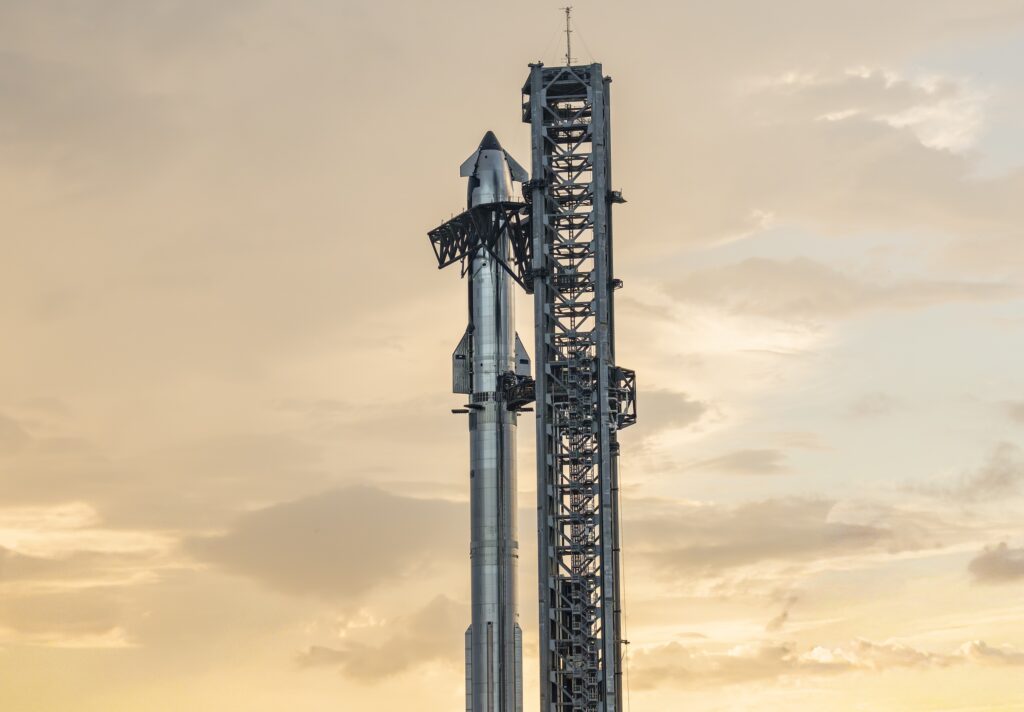
FAA’s Warning on Rocket Launch Debris Risks
Why it matters:
- The Federal Aviation Administration issued Safety Alert for Operators (SAFO) 26001, warning air carriers of potential catastrophic failures and debris fields from commercial space operations.
- The surge in licensed commercial space operations, with a 957% increase from 2015 to 2024, has necessitated a shift from theoretical risk modeling to active hazard mitigation for pilots flying near Rocket Launch Debris Risks And Response Areas (DRAs).
On January 8, 2026, the Federal Aviation Administration issued Safety Alert for Operators (SAFO) 26001. This directive explicitly warns air carriers of chance ” catastrophic failures” resulting in debris fields from commercial space operations. The alert marks a serious shift from theoretical risk modeling to active operational hazard mitigation. It advises pilots to exercise ” extreme caution” and maintain additional fuel reserves when flying near Rocket Launch Debris Risks And Response Areas (DRAs). This regulatory escalation follows a fiscal year 2024 that saw a record 148 licensed commercial space operations.
From Theoretical Models to Hard Data
The issuance of SAFO 26001 represents a definitive acknowledgement that the National Airspace System faces a new category of physical threat. For decades the risk of falling space hardware was calculated as a statistical improbability. That calculus changed between 2021 and 2025. The FAA has moved beyond predictive safety measures to reactive survival for commercial aviators. The directive specifically cites the inability of current radar systems to track non-metallic composite debris during the reentry phase. Pilots are instructed to treat DRAs not as static no-fly zones but as hazard environments where debris dispersion can exceed calculated trajectories by dozens of miles.
The Surge in Commercial Operations
The urgency behind this warning correlates directly with the exponential density of launch and reentry activities. Federal data confirms that the volume of licensed commercial space operations has verticalized. In Fiscal Year 2015 the FAA licensed only 14 operations. By the end of Fiscal Year 2024 that number exploded to 148 operations. This represents a 957 percent increase over a single decade. The agency’s own forecast models from late 2024 projected this figure to double again by 2028. The skies are no longer the exclusive domain of fixed-wing aircraft. They are a shared resource with heavy lift rockets that carry thousands of tons of propellant.
| Fiscal Year | Licensed Operations | Growth Metric |
|---|---|---|
| 2015 | 14 | Baseline |
| 2020 | 34 | +142% |
| 2023 | 113 | +707% |
| 2024 | 148 | +957% |
| 2028 (Forecast) | ~338 | Projected Surge |
Rocket Launch Debris Risks And Fields: A Tangible Threat
The warning in SAFO 26001 is rooted in documented incidents where large aerospace components survived reentry and impacted terrestrial surfaces. In March 2021 a pressure vessel from a Falcon 9 second stage struck a farm in Grant County, Washington. It left a four inch impact crater in the soil. Another piece of debris from the same reentry washed ashore in Oregon. In July 2022 a charred trunk section from a SpaceX Crew Dragon capsule was discovered in a sheep paddock in New South Wales, Australia. These were not microscopic fragments. The Australian debris stood nearly three meters tall. These incidents proved that “demisable” hardware does not always burn up as predicted. The FAA recognizes that a similar survival event occurring in navigable airspace could down a commercial airliner.
Operational on the National Airspace
The integration of these launches into the National Airspace System has forced a complete overhaul of air traffic management. The FAA previously closed airspace for up to four hours per launch. Deployment of the Space Data Integrator tool in 2021 helped reduce these closures to an average of two hours by 2024. Yet the sheer frequency of operations has negated these efficiency gains. Airlines are frequently forced to carry thousands of pounds of contingency fuel to account for sudden reroutes. The new SAFO formalizes this load. It shifts the duty of safety onto the airline operators to plan for “launch anomalies” that could instantly close hundreds of miles of airspace.
Regulatory Friction and Future Outlook
This safety alert emerges amidst intense friction between the regulator and the industry. In late 2024 the FAA formed an Aerospace Rulemaking Committee to modernize the Part 450 licensing rules. Industry leaders argued that the bureaucracy moved too slowly for the pace of innovation. The FAA countered that safety data justified a methodical method. The issuance of SAFO 26001 signals that the regulator is unwilling to compromise on debris risk even as launch cadences accelerate. The directive makes it clear that until reentry breakup models achieve 100 percent reliability, commercial aviation must maintain a wide and costly berth around space operations.
The Catalyst: Starship Flight 7 Debris Field
The issuance of SAFO 26001 was precipitated by the events of January 16, 2025. During the test flight of SpaceX’s Starship Flight 7, the vehicle experienced an anomaly over the Caribbean. Debris lingered in the airspace for 71 minutes beyond the predicted window. This forced air traffic controllers to place multiple commercial flights into holding patterns. The incident exposed the fragility of current predictive models for debris dispersion during high-altitude breakups of heavy-lift vehicles.
At 22: 37 UTC, the Starship vehicle, Ship 33, lifted off from the Starbase facility in Boca Chica, Texas. The mission plan called for a suborbital trajectory with a targeted splashdown in the Indian Ocean. Telemetry data remained nominal through the initial ascent and stage separation. Approximately eight minutes into the flight, during the coast phase, onboard sensors detected a pressure drop in the aft section. A fire, later attributed to an oxygen and fuel leak above the engine firewall, compromised the structural integrity of the upper stage. At an altitude of 146 kilometers, the vehicle underwent a rapid unscheduled disassembly (RUD). The disintegration occurred directly above the flight corridors serving the Caribbean and the North Atlantic.
Article image: FAA’s Warning on Rocket Launch Debris Risks
Standard debris models used by the FAA and SpaceX anticipated a ballistic reentry for any fragments. These calculations assumed that heavy components would fall quickly into the ocean, clearing the airspace within 20 minutes. The reality proved different. The breakup of the composite structure and the heat shield tiles created a cloud of high-drag, low-mass debris. These fragments did not fall ballistically. Instead, they drifted on upper-atmospheric currents, remaining at cruise altitudes for over an hour. This 71-minute gap between the model and the physical event created a dangerous overlap between falling space hardware and active commercial air routes.
Air traffic controllers in Miami and San Juan faced an immediate emergency. The debris field, originally projected to remain within a narrow hazard box, expanded to cover a swath of airspace north of the Dominican Republic and the Turks and Caicos Islands. Controllers issued urgent directives to aircraft in the vicinity. Data from Flightradar24 and FAA incident reports confirm that at least six major commercial flights required immediate diversion or holding instructions. The affected flights included JetBlue flight B6882 en route to New York JFK and Delta flight DL1785 to Atlanta. Pilots on these aircraft received instructions to maintain holding patterns hundreds of miles from their intended route, consuming valuable fuel reserves while waiting for the “all clear” that came over an hour late.
| Flight Number | Airline | Route | Action Taken | Delay Duration |
|---|---|---|---|---|
| DL1785 | Delta Air Lines | St. Thomas (STT) – Atlanta (ATL) | Diverted / Holding | 45 mins |
| B6882 | JetBlue | San Juan (SJU) – New York (JFK) | Holding Pattern | 58 mins |
| DL1925 | Delta Air Lines | Punta Cana (PUJ) – Minneapolis (MSP) | Course Deviation | 32 mins |
| F92981 | Frontier Airlines | San Juan (SJU) – Orlando (MCO) | Holding Pattern | 40 mins |
| AA1391 | American Airlines | Turks & Caicos (PLS) – Miami (MIA) | Ground Stop | 90 mins |
The operational disruption extended beyond the immediate holding patterns. The uncertainty regarding the debris location forced a temporary ground stop at Providenciales International Airport (PLS) in Turks and Caicos. Witnesses on the ground reported visible streaks of burning material in the night sky, confirming that the debris field had drifted over populated islands. The FAA activated a Debris Response Area (DRA) retrospectively, but the delay in real-time data transmission meant that aircraft were already flying near the hazard zone before the warning took full effect. This latency in communication between space operators and air traffic control became a primary focus of the subsequent investigation.
The failure of the predictive models from the unique composition of the Starship vehicle. Unlike traditional aluminum rockets, Starship uses stainless steel and extensive ceramic heat shielding. The behavior of these materials during a high-velocity breakup differs from the data sets used to build legacy dispersion tools. The ceramic tiles, in particular, possess high surface area relative to their mass. This aerodynamic property allows them to “float” in the upper atmosphere, descending much slower than the heavier engine components. The January 16 event demonstrated that a single breakup event could generate two distinct debris fields: a fast-falling heavy field and a slow-drifting light field. The latter poses a prolonged threat to aviation that current had not fully addressed.
This event served as the direct evidence base for SAFO 26001. The FAA recognized that theoretical safety margins were insufficient for the frequency and of modern heavy-lift operations. The 148 licensed operations in fiscal year 2024 had already the system, but the Flight 7 incident proved that a statistical anomaly could result in a physical threat to passenger aircraft. The alert issued in January 2026 codifies the lessons learned from those 71 minutes of uncertainty. It mandates that carriers plan for the worst-case dispersion scenarios, not just the nominal hazard zones. The shift places the responsibility on airline dispatchers to carry fuel for extended holds, acknowledging that the airspace is no longer a sanctuary from orbital hardware.
Launch Velocity: The Exponential Curve
The urgency of the FAA’s warning is driven by the sheer volume of airspace integration events. In 2015, the FAA licensed only 14 commercial operations. By fiscal year 2024, that number surged to 148. Projections for 2034 estimate between 259 and 566 annual licensed launches and reentries. This exponential growth has saturated traditional launch corridors and increased the statistical probability of an airspace conflict.
| Fiscal Year | Licensed Operations | Growth Factor |
|---|---|---|
| 2015 | 14 | Baseline |
| 2024 | 148 | 10. 5x |
| 2034 (Proj) | 566 | 40. 4x |
This trajectory represents a fundamental shift in the mechanics of the National Airspace System (NAS). For sixty years, spaceflight was a rare, segregated event handled with wide operational margins. Today, it is a daily industrial activity. The data from Fiscal Year 2024 confirms that commercial operators are launching or reentering airspace approximately every 2. 5 days. By August 14, 2025, the FAA recorded its 1, 000th licensed commercial operation, a milestone that took 35 years to reach but is expected to double again within four years. This compression of timelines forces air traffic controllers to manage space vehicles with the same routine cadence as heavy commercial aircraft, yet with vastly different velocity profiles and hazard footprints.
The primary engine behind this velocity is the deployment of mega-constellations. SpaceX alone accounted for over 80 percent of all FAA-licensed operations in FY 2024, driven by the aggressive build-out of its Starlink network. This single-provider dominance creates a unique pressure on regulatory resources. Unlike the distributed traffic of commercial aviation, space traffic is concentrated in specific geographic corridors—primarily Florida’s Space Coast, California’s Vandenberg Space Force Base, and increasingly, the private Starbase facility in South Texas. The activation of these corridors requires the sanitization of hundreds of square miles of airspace, forcing commercial airliners into inefficient reroutes that burn additional fuel and disrupt schedule integrity.
The introduction of the Starship launch system has further complicated this equation. In May 2025, the FAA approved a launch cadence of up to 25 Starship/Super Heavy missions annually from the Boca Chica site. Unlike the smaller Falcon 9, the Starship vehicle requires significantly larger hazard areas due to its propellant load and total energy. The return-to-launch-site (RTLS) profile of the Super Heavy booster adds a secondary closure window, doubling the airspace impact for a single mission. When combined with operations from Kennedy Space Center, the overlap of hazard zones creates a “picket fence” effect along the Gulf of Mexico and the Atlantic seaboard, leaving fewer gaps for north-south commercial air traffic.
Economic analysis from the Airports Council International-North America (ACI-NA) suggests the cost of this integration is rising. Their data indicates that high-frequency launch operations could impact between 900, 000 and 2. 3 million passengers annually if current closure remain static. The FAA has responded by narrowing the “keep-out” windows—reducing closure times from hours to minutes using real-time telemetry—but the sheer frequency of events threatens to outpace these efficiency gains. A launch rate of 566 operations per year, as projected for the high-end scenario in 2034, implies nearly two space movements every day. At that density, the segregation model fails; airspace must be shared, or the commercial aviation network faces chronic paralysis.
The 2034 forecast of 566 operations is not a speculative ceiling; it is a “high case” scenario that industry analysts view as plausible given the entry of new heavy-lift vehicles. Competitors such as Blue Origin’s New Glenn and Rocket Lab’s Neutron are scheduled to enter the manifest, adding distinct vehicle performance characteristics to the traffic mix. Each new vehicle type requires its own debris modeling and safety templating, adding administrative weight to an already oversight system. The FAA’s move to modernize Part 450 regulations was intended to simplify this process, yet the industry continues to faster than the rule-making can adapt.
This operational density creates the statistical environment for the “catastrophic failures” in SAFO 26001. When launches occurred once a month, the probability of a debris event intersecting with a commercial flight route was negligible. With daily operations, even a failure rate of 1 in 1, 000 becomes a recurring operational hazard. The transition from 14 launches in 2015 to a projected 566 in 2034 is not just a metric of industrial success; it is a warning light for airspace safety management. The margin for error has evaporated.
Casualty Modeling: The 0. 6 Annual Probability
The statistical foundation for the FAA’s heightened alert status rests on a pivotal technical analysis conducted by The Aerospace Corporation. Commissioned by the FAA to evaluate the cumulative impact of commercial space expansion, the report delivers a clear projection: without immediate changes to debris mitigation standards, the global expectation of casualty (Ec) from falling space hardware can reach 0. 6 persons per year by 2035. This metric indicates that, statistically, one person on Earth can be injured or killed by reentering debris approximately every two years.
This projection represents a deviation from historical safety norms. For decades, the U. S. government has operated under a strict acceptable risk threshold of 1 in 10, 000 ($1 times 10^{-4}$) per individual mission. The aggregate annual risk of 0. 6 is orders of magnitude higher than the allowable limit for any single operation, normalizing a casualty event as a recurring operational outcome rather than a rare anomaly. The analysis attributes this surge to the exponential increase in “large constellation” deployments, which a corresponding volume of atmospheric reentries.
| Risk Metric | Standard Threshold (Per Mission) | Projected 2035 Aggregate (Annual) | Statistical Implication |
|---|---|---|---|
| Casualty Expectation (Ec) | 0. 0001 (1 in 10, 000) | 0. 6 (6, 000 in 10, 000) | ~1 casualty every 20 months |
| Aircraft Impact Probability | 1 × 10⁻⁶ (individual risk) | 0. 0007 (7 in 10, 000) | Elevated collision risk for aviation |
| Debris Survival | Zero (Ideal) | 28, 000 fragments/year | Widespread hazardous material rain |
The report specifically identifies the volume of surviving material as the primary driver of this risk. By 2035, the models predict that 28, 000 hazardous fragments can survive atmospheric reentry annually. These fragments are not dust; they include components made of titanium, stainless steel, and other heat-resistant alloys that reach the ground with lethal kinetic energy. The sheer density of these surviving objects creates a “debris rain” effect, significantly expanding the geographical footprint of chance hazard zones beyond the controlled ocean disposal areas historically used by launch operators.
While the 0. 6 casualty figure focuses on ground risks, the for aviation are equally severe. The same Aerospace Corporation study estimates the probability of an aircraft clear a piece of space debris can rise to 0. 0007 per year by 2035. While this number appears small, it is statistically significant in the context of aviation safety, where acceptable risk levels are typically measured in the one-in-a-billion range. This data directly informed the urgency behind SAFO 26001, as the FAA recognizes that the separation between “space safety” and “aviation safety” is rapidly disappearing.
SpaceX Rebuttal: The Zero Injury Metric
SpaceX has aggressively contested the FAA’s risk assessment models regarding falling debris. In formal responses to the Department of Transportation, the company pointed to its operational history of over 325 satellite deorbiting maneuvers with zero reported injuries or ground impacts. This data serves as the foundation of their defense against the regulatory crackdown. SpaceX asserts that the Aerospace Corporation’s study, which informed the FAA’s position, relies on outdated data regarding material survivability. They maintain that their Starlink satellites and launch hardware are designed for “complete demise” upon reentry, a technical standard meaning no debris survives the intense heat of atmospheric friction.
The conflict centers on a report delivered to Congress in October 2023, titled “Risk Associated with Reentry Disposal of Satellites from Proposed Large Constellations in Low Earth Orbit.” The FAA, supported by analysis from The Aerospace Corporation, projected that by 2035, the number of hazardous fragments surviving reentry could reach 28, 000 annually. This model suggested a casualty expectation of 0. 6 per year, or roughly one person injured or killed every two years. SpaceX labeled this analysis “deeply flawed” and “preposterous” in its filings. The company argued that the study applied twenty-year-old NASA data based on satellites constructed from heavy metals like titanium and stainless steel, materials that Starlink engineers specifically avoid to ensure burn-up.
SpaceX’s engineering teams provided technical rebuttals focusing on the “demisability” of their hardware. Unlike the Iridium satellites referenced in the Aerospace study, Starlink units consist primarily of aluminum components. Aluminum has a much lower melting point than the steel alloys used in earlier space era hardware. Consequently, SpaceX claims that 100 percent of the satellite mass vaporizes during the high-velocity reentry process. The company stated that extensive real-world data from their fleet operations contradicts the theoretical models used by regulators. They emphasized that even with thousands of satellites in orbit and hundreds of controlled descents, no debris has ever been recovered on the ground.
| Metric | FAA / Aerospace Corp Projection (2035) | SpaceX Operational Data (2015-2025) |
|---|---|---|
| Hazardous Fragments | 28, 000 per year | 0 recovered |
| Casualty Rate | 1 injury every 2 years | 0 reported injuries |
| Material Assumption | High-survival alloys (Steel/Titanium) | Demisable Aluminum |
| Debris Size | 300 grams per fragment | Complete vaporization |
The “Zero Injury Metric” remains the core of SpaceX’s public and legal stance. that regulating based on theoretical casualties that have never occurred stifles American aerospace innovation. They contend that the FAA’s focus should shift from hypothetical modeling to empirical evidence. In February 2024, SpaceX initiated a controlled deorbit of 100 early-version Starlink satellites to address a chance design flaw. This operation served as a live-fire test of their safety. The company reported that all units reentered without incident, reinforcing their claim that the system poses no threat to people or property on the surface.
Regulators remain unconvinced by the “zero previous injuries” argument. The FAA maintains that the absence of past catastrophes does not guarantee future safety, especially as the volume of launches and reentries exponentially. The sheer density of the proposed Starlink constellation—aiming for 42, 000 satellites—changes the statistical probability of a “black swan” event. Even with a 99 percent burn-up success rate, a constellation of that magnitude could still rain debris if the failure rate is not absolute zero. The SAFO 26001 directive indicates that the FAA prioritizes the “what if” scenarios over the “what has happened” historical record.
SpaceX also criticized the methodology of the Aerospace Corporation for failing to consult with them directly before publishing the risk estimates. They stated that the analysts omitted serious variables regarding the specific mass and material composition of the Starlink bus. By treating modern internet satellites as equivalent to 1990s telecommunications hardware, the report allegedly inflated the risk factor by orders of magnitude. This dispute over data validity has created a rift between the industry leader and its primary overseer, with the “Zero Injury Metric” standing as the primary point of contention in the ongoing regulatory debate.
Airspace Disruption: The Caribbean Incident Data
On January 16, 2025, the theoretical risks of commercial spaceflight turned into a tangible operational hazard for the National Airspace System. During SpaceX’s Starship Flight 7 test, the vehicle experienced a “rapid unscheduled disassembly” approximately nine minutes after liftoff from Boca Chica, Texas. The resulting debris field did not fall into the predicted Gulf of Mexico hazard zone but instead scattered across the Caribbean, specifically impacting airspace near the Turks and Caicos Islands. This event forced air traffic controllers to manage a live debris field that for 50 minutes, far longer than the standard 15-minute buffer typically allocated for launch anomalies.
Federal Aviation Administration (FAA) records from the incident show that three aircraft operating in the vicinity faced immediate danger. A JetBlue Airbus A320 en route to San Juan, Puerto Rico, and an Iberia Airlines transatlantic flight were among those vectored into holding patterns. As the debris cloud expanded beyond the initial Debris Response Area (DRA), the JetBlue flight crew declared a fuel emergency—a procedural “Mayday” required to secure priority handling—after being forced to hold for an extended period. The pilots faced a choice between entering a zone with active falling debris or exhausting their fuel reserves over the ocean.
The table outlines the specific operational impacts recorded during the January 16 event, based on preliminary FAA incident reports and flight tracking data.
| Carrier / Flight | Route | ATC Directive | Operational Outcome |
|---|---|---|---|
| JetBlue (JBU) | US East Coast – San Juan (SJU) | Immediate Hold / Vector Away | Fuel Emergency Declared; Priority Landing |
| Iberia (IBE) | Madrid (MAD) – Latin America | Course Deviation | Fuel Emergency Declared; Safe Passage |
| Private Business Jet | N/A – Caribbean Dest. | Altitude Restriction | Diverted to Alternate Airport |
| Regional Traffic | Inter-Island Routes | Ground Stop | 171 Departures Delayed (Avg. 28 min) |
The incident exposed a serious deficiency in the integration of space operations with civil aviation. The FAA kept the DRA active for over an hour, disrupting traffic flows across the Miami and San Juan Flight Information Regions. Controllers relied on predictive models that failed to account for the specific breakup of the Super Heavy booster and Starship upper stage at hypersonic velocities. The debris spread over a radius significantly larger than the pre-flight “Keep Out” zones, proving that static hazard areas are ineffective against failures at high altitude.
This failure of containment directly influenced the strict found in SAFO 26001. The data from January 16 proves that “real-time” tracking capabilities do not yet exist at a fidelity sufficient to protect commercial airliners from hypersonic debris. Current radar systems track the primary vehicle but lose fidelity when a ship disintegrates into thousands of non-transmitting fragments. For the passengers on the affected JetBlue and Iberia flights, this technological gap resulted in a harrowing flight route adjustment that brought them within minutes of fuel exhaustion.
Article image: FAA’s Warning on Rocket Launch Debris Risks
Pilot Perspectives: Fuel serious Declarations
The Air Line Pilots Association (ALPA) has formally expressed serious concern regarding the frequency of these disruptions. During the January 2025 event, at least one aircraft declared a fuel emergency due to the extended holding pattern. ALPA’s aviation safety chair, Steve Jangelis, noted in a letter to the FAA that the current system of segregating airspace is becoming untenable. Pilots are required to carry “contingency fuel” for space launches. This adds weight and cost to every flight traversing the Florida and Caribbean corridors.
On January 16, 2025, the risks moved from theoretical models to the cockpit. A SpaceX Starship exploded minutes after liftoff from Texas, scattering debris across a 500-mile route over the Gulf of Mexico and the Caribbean. The debris rain lasted for 50 minutes. During this window, an Iberia Airlines Airbus A350, carrying 283 passengers from Madrid to San Juan, found its route blocked by the active Debris Response Area (DRA). Air traffic control instructed the crew to hold position, yet the aircraft did not have sufficient reserves to wait for the debris field to clear.
Records from the incident reveal a tense exchange between the flight deck and Miami Center. The Iberia pilot stated, “We haven’t got enough fuel to wait.” Controllers responded that proceeding through the DRA would be “at your own risk.” With no safe alternative to reach a diversion airport, the crew declared a fuel emergency and flew directly through the zone where rocket fragments were falling. A JetBlue flight and a private jet faced similar circumstances during the same event, forcing approximately 450 passengers to traverse an active hazard zone. The FAA later classified this event as an “extreme safety risk,” the highest threat level short of an actual crash.
These near-miss events have forced a permanent change in flight planning logic. SAFO 26001 advises carriers to load additional fuel when operating near launch windows. This requirement imposes a direct financial penalty on airlines. Carrying extra fuel increases the weight of the aircraft, which in turn burns more fuel—a phenomenon known as “tankering.” For a standard narrow-body jet, carrying just 30 minutes of contingency fuel can add hundreds of dollars in operating costs per flight. When applied across thousands of annual flights in the busy Florida corridor, the industry-wide cost estimates range between $80 million and $350 million per year.
The operational load falls heaviest on routes connecting the Eastern Seaboard to Latin America. The Caribbean corridor serves as a primary artery for southbound traffic. When space operations close this airspace, flights must reroute hundreds of miles to the west over the Gulf or east into the Atlantic. This “blockade” effect disrupts schedules at major hubs like Miami International (MIA) and Orlando International (MCO). Steve Jangelis warned in his October 2025 letter that the FAA’s analysis of these new trajectories was “extremely vague” and ignored the “high probability for debris clear an aircraft.”
| Metric | Details |
|---|---|
| Event Type | In-flight breakup / Debris rain |
| Duration of Hazard | 50 minutes |
| Affected Aircraft | Iberia A350, JetBlue A320, Private Jet |
| Total Passengers at Risk | ~450 |
| Pilot Action | Declared Fuel Emergency |
| ATC Warning | “Proceed at your own risk” |
The friction between commercial aviation and spaceflight operations continues to intensify as launch cadences rise. In Fiscal Year 2024, the FAA licensed 148 commercial space operations, a number expected to double by 2027. Each launch requires large blocks of airspace to be sterilized for hours. Unlike weather systems, which pilots can navigate around using onboard radar, debris fields are invisible to commercial aircraft sensors. Flight crews rely entirely on ground-based controllers to keep them safe. The January 2025 incident demonstrated that when communication lags or debris spreads beyond predicted zones, pilots are left with no valid options.
ALPA continues to demand a more integrated method where space vehicles are tracked in real-time within the National Airspace System, rather than the current method of segregating vast volumes of sky. Until such systems are fully operational, pilots must treat every launch notification as a serious threat to fuel reserves and schedule integrity. The “own risk” advisory issued to the Iberia crew stands as a clear reminder of the current regulatory gap.
Debris Response Areas: The Buffer Zone Failure
Debris Response Areas (DRAs) function as the Federal Aviation Administration’s secondary line of defense, a reactive contingency method designed to segregate air traffic from falling space hardware during a “non-nominal” event. Unlike Aircraft Hazard Areas (AHAs), which are pre-planned exclusionary zones enforced via Notices to Air Missions (NOTAMs) before a launch begins, DRAs are activated. They represent a calculated gamble: the assumption that air traffic controllers can clear a massive block of airspace faster than debris can fall through it. The operational data from 2025 demonstrates that this assumption is serious flawed.
The core failure of the DRA model is its reliance on real-time containment of hypervelocity debris fields. When a launch vehicle experiences a catastrophic failure at high altitude, the resulting debris cloud does not adhere to neat geometric boundaries. The kinetic energy of a vehicle traveling at Mach 5 or higher scatters fragments across hundreds of miles, frequently outpacing the ability of the Air Traffic Control System Command Center (ATCSCC) to sterilize the airspace. The SAFO 26001 directive, issued in January 2026, serves as a regulatory admission of this physical reality, explicitly warning that debris fields may “extend beyond” the modeled DRA boundaries.
The Starship Flight 7 Incident: A Case Study in Containment Failure
The theoretical weaknesses of the DRA materialized into an active threat on January 16, 2025, during the launch of SpaceX’s Starship Flight 7. Approximately ten minutes after liftoff from Starbase, Texas, the vehicle suffered a “rapid unscheduled disassembly” over the Gulf of Mexico. While the primary booster stage was recovered, the upper stage disintegrated at an altitude where aerodynamic forces distributed debris across a trajectory extending toward the Caribbean.
The resulting debris field the containment models. Metal fragments rained down over the Turks and Caicos Islands, an area well outside the immediate launch hazard zone. More worrying, the dispersion corridor intersected with high-volume commercial air routes. FAA internal records and subsequent investigations revealed that three commercial aircraft—including an Iberia Airbus A330 and a JetBlue flight—were forced to navigate through or near airspace that was actively being compromised by falling debris. The pilot of the Iberia flight, carrying 283 passengers, declared a fuel emergency after being unable to deviate widely enough to guarantee safety without exhausting reserves. This near-miss event exposed the latency in the DRA activation process: by the time the “anomaly” was confirmed and the DRA activated, the debris was already in the air, and the aircraft were already in the zone.
| Date | Mission / Operator | Failure Mode | Airspace & Safety Consequence |
|---|---|---|---|
| Jan 16, 2025 | Starship Flight 7 (SpaceX) | Upper stage disintegration | Debris over Turks & Caicos; 3 aircraft endangered; fuel emergency declared. |
| Mar 09, 2025 | Starship Flight 8 (SpaceX) | Loss of contact / Breakup | Ground stops at MIA, MCO, FLL; hundreds of flights delayed/diverted. |
| May 17, 2025 | EOS-09 (ISRO) | Third stage failure | Satellite lost; debris tracking alerts issued for Indian Ocean routes. |
| Dec 21, 2025 | H3 Launch (JAXA) | Second stage anomaly | Payload lost; re-entry debris concerns for Pacific transoceanic flights. |
The “Reactive” Trap
The fundamental problem with the DRA method is that it treats a chaotic physical event as a manageable air traffic control procedure. In a standard aviation emergency, a distressed aircraft maintains a predictable vector. In a launch failure, the “hazard” is a cloud of non-communicative shrapnel moving at hypersonic speeds. The FAA’s SAFO 26001 advises pilots to maintain “additional situational awareness,” but this guidance offers little practical utility against debris that is invisible to onboard weather radar and Traffic Collision Avoidance Systems (TCAS).
During the March 2025 incident involving Starship Flight 8, the failure occurred over the Atlantic, triggering ground stops at major Florida hubs including Miami (MIA) and Orlando (MCO). While these ground stops prevented aircraft from entering the zone, they did nothing for the flights already airborne. Controllers were forced to problem blanket “clear the area” directives, creating a chaotic scramble in one of the busiest airspace corridors in the world. The sheer volume of licensed operations—which exceeded 200 in fiscal year 2025—means that these “rare” activation events are becoming a statistical inevitability. The buffer zone, designed as a contingency, has become a frequent point of failure.
The issuance of SAFO 26001 confirms that the FAA no longer views the DRA as an impenetrable shield. By advising carriers to carry extra fuel specifically for launch-related holding patterns, the agency is shifting the load of safety from the launch operator to the commercial airlines. The message is clear: the buffer zones leak, and the airlines must be prepared to outrun the.
“A Debris Response Area is activated only if the space vehicle experiences an anomaly with debris falling outside of the identified closed aircraft hazard areas. It allows the FAA to direct aircraft to exit the area and prevent others from entering.” — FAA Debris Response Area Protocol, September 2025
This definition, while bureaucratically sound, fails to account for the “fog of war” during a launch anomaly. In the January 2025 incident, the time delta between the explosion and the full activation of the DRA allowed debris to travel further than the communication loop could close. The “buffer” is not a physical wall; it is a communication protocol, and in 2025, physics moved faster than the protocol allowed.
Regulatory Thresholds: The 10-6 Fatality Limit
The core of the Federal Aviation Administration’s safety architecture for commercial spaceflight rests on a specific probability metric defined in 14 CFR § 450. 101(a). Under this regulation, a launch operator must demonstrate that the risk to any individual member of the public does not exceed a probability of casualty (Pc) of 1 × 10⁻⁶, or one in a million, for a single mission. also, the Expected Casualty (Ec) limit—the shared risk to the entire exposed population—is capped at 1 × 10⁻⁴ per launch. These thresholds were established when commercial launches were infrequent events, occurring fewer than once a month. In that low-volume era, the statistical isolation of each mission allowed regulators to treat risks as discrete, unconnected events.
This “per launch” framework breaks down mathematically when operations to the operational tempo observed in fiscal years 2024 and 2025. In FY 2024, the FAA licensed a record 148 commercial space operations, a 30% increase over the previous year. By August 2025, the industry surpassed its 1, 000th cumulative licensed operation, with June 2025 alone recording 21 launches. As flight cadence accelerates toward a projected 500+ annual operations, the cumulative risk profile shifts drastically. While a single launch meeting the 1 × 10⁻⁶ standard remains statistically safe, the aggregate probability of a casualty event over 500 launches rises significantly, exposing the National Airspace System (NAS) to a persistent, rather than episodic, hazard.
| Metric | Low Cadence (2015 Era) | High Cadence (2025+ Era) |
|---|---|---|
| Annual Operations | ~15 launches | 500+ launches (Projected) |
| Regulatory Limit (Per Launch) | 1 × 10⁻⁶ (Individual) | 1 × 10⁻⁶ (Individual) |
| widespread Exposure | Hazard Events | Continuous Hazard Environment |
| Airspace Impact | Rare TFR Activation | Daily Debris Response Areas |
The friction between static regulation and operation became clear during the Part 450 implementation process. Although the rule was designed to simplify licensing, the requirement for operators to calculate Maximum Probable Loss (MPL) and flight safety limits for every mission has created a bottleneck. In late 2024, the FAA formed the Part 450 Aerospace Rulemaking Committee (SpARC) to address these before the full compliance deadline in March 2026. The committee’s mandate includes re-evaluating how flight safety analyses interact with high-frequency launch schedules. The issuance of SAFO 26001 signals that the FAA is no longer waiting for regulatory reform to catch up; the agency is managing the aggregate risk operationally by treating launch debris as a near-daily aviation hazard.
Operators like SpaceX, which targeted 165 orbital flights in 2025, drive this statistical pressure. When a single operator conducts launches every 48 hours, the “one in a million” safety case must be replicated with zero margin for error hundreds of times consecutively. A failure rate that is acceptable for experimental rocketry becomes untenable for a transport sector integrated with commercial aviation. The 10-6 limit, once a theoretical ceiling, has become a daily operational floor that demands rigorous enforcement to prevent the statistical probability of a debris strike from becoming a physical certainty.
Material risks: Carbon Fiber Survivability
A core technical dispute involves the materials used in modern rockets. Traditional aluminum structures melt fairly predictably during reentry. yet, modern vehicles like Starship utilize advanced stainless steel alloys and carbon composite heat shields designed to survive extreme heat. The FAA’s concern is that these durable materials increase the size and mass of debris that reaches the surface. The ” demise” models used by operators may not fully account for the resilience of these materials.
For decades, the aerospace industry relied on the low melting point of aluminum (approximately 660°C) to ensure that rocket stages would disintegrate harmlessly in the upper atmosphere. This assumption is obsolete for modern launch vehicle architectures. Stainless steel, the primary material for SpaceX’s Starship, has a melting point near 1, 510°C, allowing it to withstand thermal loads that would vaporize traditional boosters. Similarly, carbon fiber composites, used extensively in Rocket Lab’s Electron and SpaceX’s Falcon 9 fairings and trunks, do not melt; they ablate. This process allows large, rigid structures to insulate their interior components, shielding them from the plasma stream until they impact the ground.
The gap between theoretical demise models and physical reality has been exposed by a series of high-profile debris recoveries between 2022 and 2025. While software simulations frequently predicted total burn-up for specific components, large fragments have repeatedly reached the surface intact. The survival of Composite Overwrapped Pressure Vessels (COPVs) and unpressurized trunk sections has forced regulators to re-evaluate the casualty area calculations submitted by launch operators.
| Material | Melting/Decomp Point | Reentry Behavior | Verified Incident |
|---|---|---|---|
| Aluminum 2014/6061 | ~660°C | Rapid melting, fragmentation into harmless dust. | N/A (Standard demise) |
| Carbon Fiber Composite | > 2, 500°C (Ablation) | Charring, structural retention, insulates internal mass. | Australia (2022): 3-meter Dragon trunk segment found in sheep paddock. Canada (2024): 40kg trunk debris recovered in Saskatchewan. |
| Stainless Steel (304L/30X) | ~1, 510°C | High thermal soak, survives peak heating. | Poland (Feb 2025): Falcon 9 Second Stage COPV recovered in residential area. |
| Titanium | ~1, 668°C | Extremely resistant, frequently lands intact. | Brazil (2022): Spherical tank recovered after uncontrolled reentry. |
The most persistent evidence of carbon fiber survivability comes from the unpressurized “trunk” section of the SpaceX Dragon spacecraft. even with being jettisoned to burn up naturally, large segments of this composite structure have survived reentry on at least four separate occasions between 2022 and 2024. In July 2022, a 3-meter tall triangular shard from the Crew-1 mission slammed into a farm in New South Wales, Australia. NASA and the Australian Space Agency confirmed the debris was carbon fiber which had failed to demise. Subsequent incidents in Saskatchewan, Canada (February 2024) and North Carolina (May 2024) produced nearly identical debris signatures: heavy, charred woven-fiber monoliths that demise models predicted would not exist.
The risk is compounded by the use of Composite Overwrapped Pressure Vessels (COPVs). These helium and nitrogen tanks, wrapped in carbon fiber for strength, have become a common class of surviving debris. In February 2025, a COPV from a Falcon 9 second stage was recovered in a backyard in Poland following an uncontrolled reentry. The tank remained structurally intact even with passing through the full reentry heat pulse. This incident underscored the FAA’s warning that “demise” is not a binary outcome but a probability curve that is shifting dangerously toward survival as materials improve.
Article image: FAA’s Warning on Rocket Launch Debris Risks
Current debris assessment software, such as NASA’s DAS (Debris Assessment Software) or ORSAT (Object Reentry Survival Analysis Tool), relies on thermal inputs that may underestimate the insulating properties of charred carbon composite. When a composite structure chars, the outer acts as a heat shield for the inner, preserving the object’s mass and ballistic coefficient. This results in heavy debris clear the Earth with lethal kinetic energy, rather than the predicted shower of benign ash.
The Black Box of the Sea
The most worrying admission within SAFO 26001 lies in a single, bureaucratic sentence: Debris Response Areas (DRAs) are not issued for oceanic or non-radar airspace. This operational exclusion renders vast swathes of the globe—including the heavily trafficked North Atlantic Tracks and Pacific routes—into safety blind spots. While the FAA can close airspace over the continental United States based on real-time radar data, transoceanic flights operate in a vacuum of direct surveillance regarding falling space hardware. In these regions, the safety net dissolves into a reliance on pre-calculated probability boxes and the hope that launch operators maintain perfect telemetry.
Ground-based primary radar, the backbone of aviation safety, has a finite horizon. Beyond approximately 200 nautical miles from the coast, air traffic control loses the ability to “paint” a target with radio waves and receive a reflection. For aircraft, this gap is bridged by Automatic Dependent Surveillance-Contract (ADS-C) and satellite links that report position data. yet, disintegrating rocket stages do not carry ADS-C transponders. When a launch vehicle suffers a catastrophic failure over the open ocean, there is no independent FAA sensor network capable of tracking the debris field in real time. The debris cloud is invisible to air traffic controllers, who cannot vector commercial airliners around risks they cannot see.
The reliance on operator telemetry introduces a serious delay and a conflict of interest in the safety chain. In a nominal launch, the vehicle broadcasts its position to the launch provider, who then shares data with the FAA’s Space Data Integrator (SDI). If the vehicle explodes, the telemetry stream frequently terminates or becomes erratic. At that precise moment—when situational awareness is most urgent—the data goes dark. Controllers over the ocean are left with the last known coordinates and a physics model predicting where fragments might fall, rather than a radar image showing where they are falling. This latency renders the activation of a DRA impossible in non-radar airspace, forcing pilots to rely solely on pre-flight Notices to Air Missions (NOTAMs) that may be hours old.
| Feature | Radar Airspace (Continental US) | Non-Radar/Oceanic Airspace |
|---|---|---|
| Debris Tracking | Real-time primary radar verification | None (Blind) |
| Hazard Mitigation | Debris Response Areas (DRAs) | Static NOTAMs (Pre-flight only) |
| ATC Visibility | Direct observation of debris cloud | Reliance on operator telemetry |
| Pilot Warning | Immediate vectoring instructions | “Exercise Extreme Caution” |
The of this blind spot were physically demonstrated in July 2022, when a SpaceX Dragon trunk section survived reentry and slammed into a sheep paddock in New South Wales, Australia. While this event occurred over land, the trajectory crossed vast oceanic gaps where no tracking existed. Had the debris struck a commercial airliner over the Tasman Sea, the cause might have remained a mystery for years. The incident proved that “demisable” hardware—components designed to burn up—does not always adhere to engineering predictions. In 2024 alone, the global aerospace sector recorded 120 uncontrolled reentries, of which occurred over these unmonitored oceanic zones.
Transoceanic flight crews face a unique psychological and operational load under these conditions. A pilot flying from Los Angeles to Sydney or New York to London cannot simply “pull over” or descend to a safe altitude if a launch anomaly occurs. SAFO 26001 advises carrying additional fuel, but fuel is a passive defense against a kinetic threat. If a rocket fails during the transoceanic phase of flight, the debris field can spread across hundreds of miles of airspace. Without radar to define the boundaries of the hazard, the “extreme caution” advised by the FAA to a helpless vigilance. Pilots are flying blindly through a chance shotgun blast of composite and metal, with no guidance from the ground because the ground has no data to give.
The sheer density of traffic in these blind zones exacerbates the risk. The North Atlantic corridor alone handles over 1, 500 flights daily. As launch trajectories increasingly utilize flight corridors over the Atlantic and Pacific to reach polar or equatorial orbits, the intersection of high-density air traffic and non-radar launch activities creates a mathematical inevitability. The FAA’s current infrastructure, designed for the predictable physics of aviation, is ill-equipped for the chaotic ballistics of spaceflight failure. Until satellite-based real-time debris tracking becomes operational—a capability currently nonexistent for civil aviation—the ocean remains a radar void where safety is dictated by probability rather than certainty.
This data gap forces a reliance on “hazard areas” calculated days in advance. These static boxes assume a nominal flight or a specific failure mode. They do not account for the “unknown unknowns” of a complex vehicle disintegration at hypersonic speeds. When a Starship or a Falcon 9 breaks apart at Mach 20, the debris fan does not respect the neat geometric coordinates drawn on a pilot’s navigation chart. In radar-controlled airspace, ATC can see the deviation. Over the ocean, the map is not the territory; the map is a guess, and the territory is dark.
Economic Impact: The Cost of Rerouting
The economic load of space launch integration is shifting to the airlines. A 2024 analysis by Embry- Aeronautical University indicated that rerouting flights to avoid launch corridors costs the airline industry millions annually in fuel and crew time. With the projected increase to 566 operations by 2034, these costs can compound. The “blockade” of the Florida coast for space operations is reducing the capacity of the National Airspace System (NAS) during peak travel times.
Commercial aviation operates on thin margins where efficiency is paramount. Space launches, yet, require massive blocks of airspace to be sanitized for safety, frequently forcing hundreds of commercial flights to deviate from optimal routes. In FY 2024, the FAA licensed 148 commercial space operations, a record high that frequently triggered Debris Response Areas (DRAs) spanning hundreds of miles. These closures compel air traffic controllers to funnel high-volume north-south traffic into narrow corridors, creating bottlenecks that across the entire eastern seaboard.
The financial are measurable and severe. Data from 2024 simulations reveal that a single launch from Cape Canaveral can force arrival flights to burn an additional 104 to 242 pounds of fuel per aircraft. When aggregated across the thousands of flights affected annually, the industry faces a cumulative fuel penalty that profitability. The table outlines the escalating operational volume and its projected impact on airspace capacity.
| Fiscal Year | Licensed Operations | Projected Growth Scenario | Primary Impact Zone |
|---|---|---|---|
| 2024 | 148 (Actual) | Record Baseline | Florida Coast / Gulf of Mexico |
| 2028 | 338 (Forecast) | +128% Increase | National Airspace System Wide |
| 2034 | 566 (Forecast) | +282% Increase | Global High-Altitude Corridors |
This trajectory suggests a collision course between two important industries. As launch cadence accelerates toward the FAA’s high-case forecast of 566 annual operations by 2034, the “blockade” effect can cease to be an occasional nuisance and become a widespread constraint. Airlines for America and other industry bodies have long warned that without modernized surveillance and airspace management, the rigid segregation of airspace can impose an unsustainable tax on air travel efficiency.
The ALPA Letter: Conflict of Interest Allegations
In October 2025, the Air Line Pilots Association (ALPA) delivered a blistering formal grievance to the FAA Office of Commercial Space Transportation (AST), escalating a long-simmering dispute into a public confrontation. The union’s central argument struck at the foundation of the agency’s authority: the FAA is legally bound by a “dual mandate” to both regulate public safety and promote the commercial space industry. ALPA contends this statutory contradiction, codified in 51 U. S. C. § 50903(b), has created a “direct conflict of interest” where the pressure to approve rapid launch cadences for operators like SpaceX is overriding the safety margins of the National Airspace System (NAS).
The letter, signed by ALPA President Capt. Jason Ambrosi, specific operational failures during the 2024–2025 Starship test campaign as evidence that “promotion is outpacing precaution.” The union highlighted that during four specific Starship test flights requiring Debris Response Area (DRA) activation, the FAA successfully triggered the airspace closure within the required 6-minute, 30-second window only once. This 25% success rate for real-time hazard mitigation was flagged as “unacceptable” for an industry integrating into airspace occupied by passenger jets. ALPA argued that the agency’s eagerness to accommodate the “fail fast, learn fast” methodology of Silicon Valley launch providers is incompatible with the “zero failure” standard of commercial aviation.
At the heart of the allegation is the sheer of the hazard zones being approved. The letter noted that the Starship Super Heavy, generating 17 million pounds of thrust, requires “conservatively broad” hazard areas that can close airspace over the Gulf of Mexico, the Florida Straits, and even international corridors near the Bahamas for hours. ALPA data indicates that in Fiscal Year 2025 alone, commercial space operations triggered over 3, 200 airspace reroutes, forcing airlines to burn millions of pounds of additional fuel. The union accused the FAA of prioritizing the “experimental needs” of a single private operator over the established efficiency and safety of the traveling public.
The conflict of interest charge is rooted in the FAA’s structural inability to deny licenses when the “promotion” mandate weighs heavily. ALPA’s correspondence referenced the “learning period” moratorium—a congressional restriction that limits the FAA’s ability to problem new safety regulations for human spaceflight participants until 2028. The union this deregulation mindset has bled into public safety oversight, creating a regulatory vacuum where debris risks are managed by probability models rather than hard containment. The letter demanded an immediate “firewall” be established between the FAA’s space promotion office and its aviation safety oversight branches.
The following table contrasts the regulatory standards governing commercial aviation versus those applied to commercial space operations, highlighting the ALPA cites as a serious risk factor.
| Regulatory Domain | Commercial Aviation (Part 121) | Commercial Space (Part 450) |
|---|---|---|
| Safety Standard | “Acceptable Level of Safety” (ALoS) Risk <1 in 1, 000, 000, 000 (10-9) |
“Acceptable Level of Risk” Risk <1 in 1, 000, 000 (10-6) |
| Mandate | Safety Only (No promotion mandate since 1996) | Dual Mandate: Protect Public Safety AND Promote Industry |
| Debris Tolerance | Zero tolerance for uncontained failure | Calculated debris fields allowed in public airspace |
| Mishap Investigation | Independent NTSB lead (typically) | Operator-led investigation (FAA oversight) |
| Airspace Priority | Scheduled operations have priority | Launches frequently trigger Temporary Flight Restrictions (TFRs) |
The FAA rejected the conflict of interest characterization in a subsequent statement, asserting that public safety remains its “North Star.” Yet, the issuance of SAFO 26001 just three months after ALPA’s letter suggests the agency internally recognizes the validity of the pilots’ concerns. By shifting the load of “extreme caution” onto pilots, the FAA has admitted that its current regulatory framework cannot guarantee that debris from a catastrophic spaceflight failure can remain contained within the predicted hazard boxes.
Part 450 Compliance: The Waiver Loophole
Investigative review of FAA licensing shows a reliance on waivers to bypass strict compliance with Part 450 requirements. The Government Accountability Office (GAO) noted in late 2023 that the FAA faces challenges in processing the volume of license applications. To maintain launch cadence, the agency has granted waivers for certain safety analyses. Critics that this “streamlining” lowers the safety bar to accommodate the industry’s aggressive schedules.
The “Streamlined Launch and Reentry Licensing Requirements” (Part 450), fully as of March 2021, were designed to consolidate four legacy regulatory parts into a single, performance-based framework. The stated goal was to reduce administrative load and accelerate approval timelines for commercial operators. In practice, the transition has created a regulatory bottleneck. As of late 2024, only seven companies—including SpaceX, Astra, and Varda Space—had secured licenses under the new rule. To prevent a complete standstill in operations, the FAA has frequently resorted to issuing waivers, allowing operators to bypass specific safety or procedural mandates that they cannot meet in time for scheduled launches.
A prominent example of this “waiver loophole” involves the shared risk limits for high-profile missions. Under standard Part 450. 101 regulations, the expected casualty (Ec) risk for a launch must not exceed $1 times 10^{-4}$ (one in ten thousand). yet, for the Starship Super Heavy test flights, SpaceX petitioned for relief from this aggregate limit. In July 2024, the FAA granted a waiver that segmented the flight into separate “launch” and “reentry” phases, applying the $1 times 10^{-4}$ limit to each phase individually rather than the mission as a whole. This administrative maneuver allowed the mission to proceed even with a total risk profile that exceeded the standard single-mission threshold.
| Metric | Data Point | Implication |
|---|---|---|
| Total Licensed Operations | 148 (Record High) | 30% increase year-over-year; severe on FAA resources. |
| SpaceX Market Share | ~83% (118 launches) | Single operator dominates demand, creating use for waiver requests. |
| Part 450 Licenses Issued | 7 (Total) | Low adoption rate forces reliance on legacy licenses and waivers. |
| Waiver Justification | “Public Interest” | Regulatory flexibility used to maintain launch cadence over strict compliance. |
The GAO’s investigation into these practices (GAO-24-106184) highlighted that the FAA’s Office of Commercial Space Transportation (AST) is with significant workforce constraints. even with a 150% increase in application determinations in Fiscal Year 2024 compared to 2020, the agency struggles to retain specialized staff capable of evaluating complex safety cases. The report indicates that the FAA has met its statutory 180-day review deadline 98% of the time, but industry insiders this metric is misleading. The “clock” frequently does not start until the FAA deems an application “complete,” a pre-application limbo that can last months or years, forcing operators to seek waivers to meet commercial deadlines once the clock finally starts.
This reliance on waivers has drawn sharp criticism from safety advocates who it normalizes deviance from established safety standards. By routinely granting exceptions for serious parameters—such as debris risk models or software safety analyses—the FAA risks transforming Part 450 from a rigid safety framework into a negotiable set of guidelines. The formation of a new Aerospace Rulemaking Committee (SpARC) in late 2024 to “update” Part 450 serves as a tacit admission that the current regulations are functionally broken. Until these rules are fixed, the industry continues to operate in a gray zone where “compliance” is frequently achieved through administrative exemptions rather than engineering adherence.
Liability Caps: The $500 Million Ceiling
The financial architecture of commercial spaceflight rests on a three-tiered liability regime established by the Commercial Space Launch Act (CSLA). This framework, codified in 51 U. S. C. § 50914, limits the financial exposure of launch providers while shifting catastrophic risk to the American taxpayer. The tier requires operators to purchase liability insurance up to the Maximum Probable Loss (MPL) calculated by the FAA, or $500 million, whichever is lower. In practice, the FAA frequently sets MPL values well the statutory ceiling, meaning launch providers frequently carry less than $100 million in coverage for third-party damages.
The second tier constitutes a direct government subsidy. For claims exceeding the operator’s insurance, the U. S. government indemnifies the launch provider for up to $1. 5 billion in 1988 dollars. Adjusted for inflation to January 2026, this federal backstop covers approximately $3. 8 billion in damages. This “risk-sharing” arrangement was originally designed to nurture a nascent industry. Yet, as launch cadences method 150 operations annually, critics it socializes the cost of chance disasters while privatizing the profits. The Government Accountability Office (GAO) has repeatedly questioned whether this structure accurately reflects the current risk profile of heavy-lift vehicles operating near populated airspace.
A catastrophic debris strike on a wide-body commercial airliner would almost certainly shatter the Tier 1 cap. Aviation insurers estimate that the total liability for a fully loaded aircraft loss—including hull value, passenger settlements, and ground damages—could range between $2 billion and $3 billion. Under the current statute, the launch operator would pay at most $500 million. The remaining $1. 5 billion to $2. 5 billion would fall directly upon the U. S. Treasury. This scenario creates a moral hazard where operators are insulated from the true financial consequences of a high-altitude breakup.
| Tier | Responsible Party | Financial Liability Range | Source of Funds |
|---|---|---|---|
| Tier 1 | Launch Operator | $0 to ~$500 Million (MPL) | Private Insurance / Reserves |
| Tier 2 | U. S. Government | ~$500 Million to ~$4. 3 Billion | Taxpayer Indemnification |
| Tier 3 | Launch Operator | Above ~$4. 3 Billion | Corporate Assets / Bankruptcy |
The methodology used to calculate the Maximum Probable Loss has also drawn scrutiny. For decades, the FAA used a “cost of casualty” figure of $3 million per person to estimate chance liabilities, a number significantly lower than the statistical value of a life used by other Department of Transportation agencies. While the FAA initiated a review of this methodology following a 2024 mandate, the statutory cap remains unchanged. Consequently, the gap between the required insurance and the actual chance damage continues to widen as vehicles grow larger and flight route intersect more frequently with commercial air corridors.
Congress extended this indemnification authority in late 2025 as part of the National Defense Authorization Act, ensuring the regime remains active through September 2028. Proponents maintained that the extension was necessary to keep the U. S. launch industry competitive against state-backed entities in China and Russia. Opponents, including several aviation trade groups, testified that the extension perpetuates a market that undervalues the safety of the National Airspace System. The issuance of SAFO 26001 suggests the FAA is attempting to mitigate operationally what the statute ignores financially: the cost of a collision.
Global Precedents: Long March 5B Incidents
The Federal Aviation Administration’s recent regulatory tightening is not a reaction to domestic close calls; it is a preemptive measure informed by a series of high-profile international failures. Between 2020 and 2022, the People’s Republic of China conducted three launches of the Long March 5B heavy-lift rocket, each resulting in the uncontrolled reentry of its massive core stage. These incidents provided the global aerospace community with a tangible, baseline for the risks associated with large- orbital debris. The 23-metric-ton core stages, which absence the capability for a deorbit burn, tumbled back to Earth at orbital velocities, subjecting random swathes of the planet to a game of Russian roulette.
| Date of Reentry | Mission Payload | Reentry Mass | Impact Location | Verified Outcome |
|---|---|---|---|---|
| May 11, 2020 | Prototype Crew Capsule | ~20, 000 kg | Ivory Coast (West Africa) | Debris damaged buildings in Mahounou; 12-meter pipe found. |
| May 9, 2021 | Tianhe Core Module | ~22, 500 kg | Indian Ocean (near Maldives) | Splashdown west of Maldives; NASA Administrator condemned absence of transparency. |
| July 30, 2022 | Wentian Lab Module | ~23, 000 kg | Sulu Sea (Philippines/Malaysia) | Debris recovered in Sarawak, Malaysia and Kalimantan, Indonesia. |
The May 2020 incident remains the most worrying precedent for US regulators. Following the launch of a prototype crew capsule, the Long March 5B core stage reentered the atmosphere over the Atlantic Ocean, with debris surviving the thermal stress of reentry and impacting the Ivory Coast. Reports confirmed that a 12-meter-long pipe section crashed into the village of Mahounou, damaging buildings. While no casualties were recorded, the ground track of that specific reentry passed directly over New York City just minutes prior to impact. This near-miss scenario highlighted the catastrophic chance of uncontrolled heavy-lift hardware interacting with dense population centers.
Subsequent incidents in 2021 and 2022 reinforced the unpredictability of these events. The 2021 reentry over the Indian Ocean drew sharp rebuke from NASA Administrator Bill Nelson, who stated that China was “failing to meet responsible standards.” In July 2022, the third uncontrolled reentry scattered debris across Southeast Asia, with large metal fragments recovered in Malaysia and Indonesia. These events demonstrated that objects of this mass—roughly the size of a 10-story building—do not burn up completely. Approximately 20% to 40% of the vehicle’s mass survives to the surface, creating a lethal debris field that can extend for hundreds of miles along the flight route.
The physics of these failures directly applies to the US commercial space sector, specifically regarding the generation of super-heavy launch vehicles. The Long March 5B core stage weighs approximately 22. 5 metric tons. In comparison, the Super Heavy booster used by SpaceX’s Starship system has a dry mass exceeding 200 metric tons—nearly ten times the mass of the Chinese vehicle. While US operators design for controlled reentry and reuse, the FAA’s SAFO 26001 acknowledges that a “catastrophic failure” preventing a controlled descent would result in a debris event of significantly greater magnitude than the Long March 5B incidents. The regulatory anxiety is mathematically justified: if a 22-ton object can damage villages in West Africa, a 200-ton object poses an existential threat to any aircraft or community in its route.
Current FAA directives aim to eliminate the possibility of a US-flagged vehicle replicating these international failures. The agency’s shift to active hazard mitigation, including the designation of Debris Response Areas, reflects an understanding that as launch cadences increase, the statistical probability of an anomaly rises. The Long March 5B incidents serve as a grim control group for this new era of regulation, proving that without strict adherence to deorbit, eventually claims all hardware, regardless of who launched it.
Toxic Remnants: Hydrazine and Nitrogen Tetroxide
Debris risk is not limited to kinetic impact. launch vehicles and satellite busses utilize hypergolic propellants like hydrazine and nitrogen tetroxide. These highly toxic substances can survive reentry if contained within fuel tanks. A debris field impacting a populated area or a water supply could create a hazmat emergency. The FAA’s environmental assessments for Starship and other heavy lifters include dispersion models for these toxic commodities.
Hydrazine ($N_2H_4$) and nitrogen tetroxide ($N_2O_4$) remain the industry standard for satellite station-keeping and upper-stage propulsion due to their ability to ignite spontaneously upon contact. This chemical efficiency comes with a severe biological cost. Hydrazine is a potent neurotoxin and known carcinogen; exposure to concentrations as low as 0. 01 parts per million can cause permanent respiratory damage or death. Nitrogen tetroxide is equally lethal, reacting with moisture in the lungs to form nitric acid. While newer “green” propellants like ASCENT (Advanced Spacecraft Energetic Non-Toxic) are in development, the vast majority of the 9, 000+ active satellites in orbit rely on legacy hypergolic systems. In 2025 alone, Orbit Fab launched a commercial service specifically to refuel hydrazine-dependent satellites in geostationary orbit, cementing the chemical’s continued presence in the National Airspace System.
The physical resilience of hypergolic fuel tanks exacerbates the reentry hazard. Unlike aluminum skin panels that vaporize in the upper atmosphere, propellant tanks are frequently constructed from titanium or stainless steel composites designed to withstand extreme internal pressures. FAA and NASA reentry survivability models, including the Object Reentry Survival Analysis Tool (ORSAT), indicate that these components are among the most likely to reach the ground intact. A 2024 analysis of recovered debris confirmed that titanium pressure vessels can survive peak reentry temperatures exceeding 1, 650°C. When these vessels impact, they do not act as kinetic projectiles; they function as chemical dispersal devices. A ruptured tank can release a toxic aerosol plume capable of contaminating soil and groundwater over a radius of several kilometers.
| Propellant Type | Primary Use Case | Toxicity Hazard Level | Reentry Survival Probability | Recent Incident / Context |
|---|---|---|---|---|
| Hydrazine ($N_2H_4$) | Satellite Station-Keeping | Extreme (Carcinogenic/Neurotoxic) | High (Titanium Tanks) | Orbit Fab Refueling Service (2025) |
| Nitrogen Tetroxide ($N_2O_4$) | Oxidizer for Upper Stages | Extreme (Corrosive Gas) | High (Steel/Composite Tanks) | Long March 6A Breakup (Aug 2024) |
| Monomethylhydrazine (MMH) | Orbital Maneuvering | Severe (Respiratory Agent) | Medium-High | Cygnus Service Module Reentry |
Regulatory bodies have been forced to account for this chemical reality in their safety certifications. The FAA’s 2022 Programmatic Environmental Assessment for the SpaceX Starship/Super Heavy program at Boca Chica explicitly incorporated toxic hazard analysis. Although the Starship vehicle itself utilizes methalox (liquid methane and oxygen), the assessment mandated the use of the Launch Area Toxic Risk Assessment (LATRA) model. This requirement addresses the risks posed by customer payloads— of which carry hypergolic fuels—and the chance for “toxic corridors” in the event of a launch pad anomaly or low-altitude failure. The inclusion of REEDM (Rocket Exhaust Effluent Dispersion Model) calculations in these documents signifies a regulatory acknowledgement that even “clean” launch vehicles act as carriers for toxic cargo.
The operational danger was underscored by the August 2024 breakup of a Long March 6A upper stage, which generated over 700 trackable debris fragments. While the kinetic cloud threatened the Starlink constellation, the chemical risk posed by the stage’s residual hypergolic fuel highlighted the dual nature of the threat. Unlike solid debris, which follows predictable ballistic trajectories, a toxic plume is subject to atmospheric dispersion, making the “safe zone” for recovery operations difficult to define. SAFO 26001’s directive for pilots to maintain additional fuel reserves is a direct response to this uncertainty; in a hazmat scenario, air traffic control may need to divert flights around a drifting chemical plume long after the physical debris has settled.
Traffic Saturation: The Florida Launch Corridor
The airspace over Florida is among the busiest in the world. It is also the primary gateway to orbit. SpaceX’s operations from Cape Canaveral and Kennedy Space Center account for over 90% of the licensed launches from the Space Coast. The friction between this “Space Coast” launch cadence and the Orlando/Miami air traffic corridors is the epicenter of the debris risk debate. Air traffic controllers are frequently forced to shut down north-south routes, compressing traffic into narrower bands.
This compression creates a hazard. When the FAA activates a Debris Response Area (DRA), it sterilizes vast swaths of the Atlantic Warning Area. Commercial flights that normally utilize offshore Atlantic Routes (AR) are shunted westward into the already congested sectors of the Jacksonville (ZJX) and Miami (ZMA) Air Route Traffic Control Centers. In fiscal year 2024, the FAA documented a record 148 licensed commercial space operations, a figure that surged again in 2025 with Florida facilities tallying over 109 launches by late December. This frequency means the “abnormal” state of airspace restriction has become the daily operational standard.
The operational reached a breaking point in November 2025. Following a series of staffing absence and near-miss incidents, the FAA imposed a temporary emergency order restricting commercial launches to a nighttime window between 10: 00 p. m. and 6: 00 a. m. This directive was a direct admission that the National Airspace System (NAS) could no longer safely accommodate the simultaneous demands of peak commercial air travel and high-frequency spaceflight during daylight hours. The risk is not theoretical. On March 6, 2025, a SpaceX Starship failure and subsequent “rapid unscheduled disassembly” forced immediate ground stops at Miami International (MIA) and Fort Lauderdale-Hollywood (FLL). Debris concerns triggered a tactical scramble that delayed hundreds of flights, with average departure delays spiking to over 40 minutes.
SpaceX’s dominance in this corridor drives the saturation. The company’s Falcon 9 and Falcon Heavy rockets are the workhorses, yet the introduction of the massive Starship vehicle at Launch Complex 39A threatens to expand the hazard zones exponentially. A 2025 environmental assessment indicated that Starship operations could chance disrupt up to 12, 000 commercial flights annually if launch windows are not strictly managed. The sheer volume of propellant and the size of the vehicle necessitate larger exclusion zones than the Falcon 9, pushing air traffic further inland and reducing the margin for error for controllers managing the “squeeze” between the exclusion zone and the Florida peninsula.
The economic of these closures is measurable. Airlines burn thousands of pounds of additional fuel for every rerouted flight. A study referenced by industry analysts estimates the fuel penalty alone can exceed $30, 000 per launch event for the aggregate fleet, a cost passed directly to passengers. The table outlines the escalation in launch activity and its correlation with airspace constraints over the last three years.
| Metric | 2023 | 2024 | 2025 |
|---|---|---|---|
| Total Florida Launches | 72 | 93 | 110 (Est.) |
| SpaceX Market Share | 89% | 91% | 92% |
| Avg. Airspace Closure Duration | 3. 5 Hours | 2. 8 Hours | 2. 1 Hours* |
| Major Airport Ground Stops (MIA/FLL/MCO) | 2 | 5 | 9 |
*Decrease in closure duration attributed to the implementation of the FAA Space Data Integrator (SDI) tool, yet total closure minutes increased due to higher launch frequency.
The FAA has attempted to mitigate this saturation through the deployment of the Space Data Integrator (SDI). This automated system ingests telemetry from launch operators to allow for “” airspace management, theoretically reopening routes minutes after a rocket clears the hazard altitude. Even with these technological aids, the physical reality remains: the sky over Florida is finite. The integration of SDI has reduced the window of closure per launch, yet the triple-digit launch cadence ensures that the total time the airspace is compromised continues to rise. Controllers at Jacksonville Center manage a puzzle where a single anomaly—like the March 2025 Starship incident—can instantly turn a routine reroute into a regional capacity emergency.
Forecast 2034: 28, 000 Fragments
The FAA’s long-term report projects that if large constellation growth continues as planned, the total number of hazardous fragments surviving reentry could reach 28, 000 annually by 2035. This figure assumes a worst-case scenario where ” design for demise” fails. Even with a 90% success rate in burn-up, 2, 800 fragments hitting the surface annually represents a statistical certainty of property damage or injury over a decade.
This projection is not a bureaucratic estimate; it is backed by the Aerospace Corporation’s technical analysis, which indicates that the casualty expectation—the number of individuals predicted to be injured or killed—can rise to 0. 6 per year. This to one person on Earth being struck by space debris every two years. While the probability for any single individual remains low, the aggregate risk to the global population and aviation sector is climbing to levels that regulators deem unacceptable. The FAA’s data suggests that by 2035, the probability of an aircraft downing accident due to space debris could reach 0. 0007 per year, a risk profile that exceeds current aviation safety standards.
The core problem lies in the material composition of modern satellites and rocket stages. Manufacturers frequently use carbon fiber composites and titanium, materials specifically chosen for their high strength and heat resistance. These same properties, yet, allow large components to survive the intense heat of atmospheric reentry. The “design for demise” philosophy—engineering spacecraft to disintegrate harmlessly—is struggling to keep pace with the physical reality of these durable materials. The FAA’s warning highlights that without a fundamental shift in materials science or disposal, the sheer volume of reentering mass can overwhelm the atmosphere’s capacity to incinerate it.
Hard Data: The 2024-2025 Debris Recoveries
The transition from theoretical modeling to physical hazard is already underway. Between 2024 and 2025, multiple verified incidents of large- debris survival provided the “hard data” necessary to validate the FAA’s concerns. These events serve as concrete evidence that current demise models are optimistic at best and dangerously flawed at worst.
| Date | Location | Object Identified | Significance |
|---|---|---|---|
| May 2024 | North Carolina, USA | SpaceX Dragon Trunk (Carbon Fiber) | Large debris found on a hiking trail; confirmed by NASA. Proved large composite structures survive reentry. |
| April 2024 | Saskatchewan, Canada | SpaceX Dragon Trunk Debris | 88-lb fragment recovered from a farm. SpaceX dispatched a team for retrieval, acknowledging the survival. |
| July 2025 | Long Beach, CA (Operations) | Procedural Shift | SpaceX moved recovery ops to West Coast to mitigate trunk debris risk, admitting “design for demise” failure for this component. |
The recovery of the Dragon trunk debris in North Carolina was particularly worrying for regulators. The object, a woven carbon fiber structure, was found intact enough to be identified, even with having passed through the searing plasma of reentry. NASA’s subsequent confirmation that the debris was indeed from the Crew-7 mission’s service module underscored the failure of the “burn up” strategy for this specific hardware. Similarly, the Saskatchewan incident involved a piece of debris weighing nearly 90 pounds—sufficient mass to cause a catastrophic fatality had it struck a populated area. These are not microscopic fragments; they are substantial, lethal projectiles that the engineering predictions of their creators.
In response to these failures, operators have begun to adjust their procedures. By mid-2025, SpaceX altered its recovery operations, moving splashdowns to the West Coast to ensure that the trunk section— known to survive reentry—would fall into the Pacific Ocean rather than risk terrestrial impact. This operational pivot is a tacit admission that “design for demise” is not a guarantee. It validates the FAA’s projection: if a single operator’s hardware can consistently survive reentry contrary to models, the cumulative risk from tens of thousands of future satellites creates a debris field of unmanageable proportions.
Controlled Reentry: The European Model
European regulators and the European Space Agency (ESA) are moving toward a “controlled reentry” standard, requiring operators to steer stages into unpopulated ocean zones. The US industry, particularly for LEO satellite disposal, relies heavily on “uncontrolled” reentry (burning up at random). The FAA is under pressure to harmonize US standards with these stricter international norms, which would force operators to reserve fuel for deorbit burns, reducing payload capacity.
The regulatory between the United States and Europe centers on the “Zero Debris” method. While the FCC tightened its disposal timeline from 25 years to 5 years (adopted September 2022), it still permits uncontrolled atmospheric disposal for most commercial missions. In contrast, the ESA’s “Zero Debris Charter,” formalized in late 2023 and targeting full implementation by 2030, mandates that any reentry with a casualty risk exceeding 1 in 10, 000 must be controlled. For large constellations, this bans random disposal, forcing operators to install propulsion systems capable of steering dead satellites into the South Pacific Ocean Uninhabited Area (SPOUA).
This shift represents a direct economic threat to US launch economics. Controlled reentry requires a dedicated “deorbit burn” to steepen the atmospheric entry angle, ensuring debris falls within a precise footprint. Engineering data indicates this maneuver demands significant propellant reserves. For a standard LEO mission, converting from uncontrolled decay to a targeted reentry can require a Delta-V (velocity change) budget of approximately 100 to 150 m/s, depending on the orbit. For a small 32 kg satellite, this propulsion requirement adds roughly 4 kg of mass—a 12. 5% penalty that directly cannibalizes revenue-generating payload capacity.
| Regulatory Metric | US Standard (FAA/FCC) | European Standard (ESA Zero Debris) | Operational Impact |
|---|---|---|---|
| Disposal Method | Uncontrolled allowed (if risk < 1: 10, 000) | Controlled Mandatory (if risk > 1: 10, 000) | US operators avoid complex deorbit hardware. |
| Timeline | 5 Years post-mission | Immediate (Controlled) or < 5 Years | ESA requires active removal capability. |
| Payload Penalty | Negligible (Passive Decay) | High (~10-15% mass for fuel/thrusters) | Direct reduction in profit margin per launch. |
| Casualty Risk | Probabilistic (Calculated per shell) | Deterministic (Steered to Ocean) | Europe eliminates land-impact risk entirely. |
The friction point lies in the aggregate risk. While a single Starlink or Kuiper satellite might meet the 1 in 10, 000 casualty risk threshold individually, the FAA’s 2023 analysis warns that the cumulative risk from thousands of reentering satellites can inevitably exceed safety limits. By 2035, the FAA projects that without controlled reentry, the sheer volume of debris could result in a casualty expectation of 0. 6 per year—statistically guaranteeing a human injury or death every two years. European regulators this mathematical certainty makes uncontrolled reentry obsolete, pushing for a global “design for demise” standard that the US has yet to codify.
Surveillance Tech: Infrared Tracking Deficiencies
The Federal Aviation Administration’s recent Safety Alert for Operators (SAFO 26001) exposes a serious gap in orbital debris management: the inability of current surveillance networks to track lethal fragments in real-time. The U. S. Space Surveillance Network primarily relies on ground-based radar and optical sensors that are limited to tracking objects larger than 10 centimeters (roughly the size of a baseball) in Low Earth Orbit. This leaves millions of smaller, high-velocity fragments—capable of penetrating aircraft fuselages—completely unmonitored.
Tracking capabilities deteriorate further during the reentry phase. As debris plummets through the atmosphere, it generates a plasma sheath that blocks radio frequency signals, creating a “plasma blackout” that blinds ground-based radar. While infrared satellite technology offers theoretical improvements by detecting thermal signatures, current operational systems absence the angular resolution to distinguish individual small fragments from the superheated wake of a disintegrating rocket body. This technological blind spot renders precise impact prediction impossible during the most serious minutes of reentry.
The FAA has acknowledged this surveillance failure by advising pilots to exercise “extreme caution” and maintain “additional situational awareness” in oceanic and non-radar airspace—zones where Debris Response Areas (DRAs) are not actively managed. By admitting that debris fields can extend beyond predicted containment zones without real-time detection, the agency has transferred the life-or-death responsibility of avoiding invisible, hypersonic shrapnel directly to the cockpit crew.
Political Friction: FAA Mandate vs. Commercial Growth
The tension between federal regulators and the commercial space sector reached a breaking point during Senate Commerce Committee hearings in late 2025. With the congressionally mandated March 2026 deadline for “Part 450” regulatory compliance less than ninety days away, industry testified that the Federal Aviation Administration had become the primary bottleneck for American space superiority. SpaceX representatives argued that the agency’s processing speeds had failed to match the exponential growth of launch cadences, citing a “paperwork reality” that lagged months behind hardware readiness.
Central to this friction is the implementation of Part 450, a rule set intended to simplify licensing but which operators claim has created a bureaucratic quagmire. By September 2024, only six of thirty active launch licenses had transitioned to the new framework. During the hearings, lawmakers questioned FAA Administrator Mike Whitaker on why the agency required “superfluous environmental analysis” for vehicle upgrades that posed no new risk to the public. The inquiry stemmed from the two-month delay of Starship Flight 5 in late 2024, where regulators paused operations to review sonic boom impacts and water deluge systems, even with the vehicle having been ready for flight since August of that year.
| Conflict Point | FAA Position | Industry Counter-Argument | Key Metric |
|---|---|---|---|
| Part 450 Transition | Mandatory compliance by March 2026 to unify safety standards. | Process is too slow; threatens to ground fleets if deadline is missed. | 20% of licenses converted (Sept 2024) |
| Launch Fines | Enforce strict adherence to license terms (e. g., control room location). | Penalties for “trivial” paperwork changes stifle innovation. | $633, 009 proposed fine (Sept 2024) |
| Environmental Review | Statutory duty to consult Fish & Wildlife Service on new impacts. | Delays of 60+ days for minor operational changes are unacceptable. | 2-month delay for Starship Flight 5 |
The FAA has maintained a rigid stance on safety. In September 2024, the agency proposed $633, 009 in civil penalties against SpaceX for using an unapproved launch control room and propellant farm during 2023 missions. Administrator Whitaker defended these actions to the committee, asserting that “safety drives everything we do,” including the statutory requirement to protect the “uninvolved public.” The agency that as launch frequencies increase—surpassing 148 operations in fiscal year 2024—the statistical probability of a mishap affecting civilians rises, necessitating stricter, not looser, oversight.
This regulatory tug-of-war has exposed a fundamental in risk tolerance. Commercial providers view rapid iteration and test failures as essential data-gathering exercises. In contrast, the FAA views any deviation from a licensed flight plan as a violation of federal law. The Senate hearings concluded with a directive for the FAA to accelerate its licensing reform, yet the agency requested a 36% budget increase for its commercial space office in FY2025 to hire the staff necessary to process the backlog. Without this workforce expansion, officials warned, the “speed of government” can remain the primary governor on the speed of spaceflight.
Mitigation Strategies: Airspace Management
To resolve the impasse, the FAA is developing the Space Data Integrator (SDI) system. This tool aims to feed real-time telemetry from rockets directly into air traffic control screens. The goal is to replace massive, static DRAs with, moving hazard zones that release airspace as the rocket passes. Yet the system’s full implementation has been delayed, leaving controllers with the blunt instrument of large- airspace closures.
The operational theory behind SDI is a shift from predictive segregation to responsive management. Legacy require the FAA to close vast blocks of airspace up to four hours before a launch window opens. These “static” closures rely on worst-case debris dispersion models that assume a vehicle could fail at any point in its trajectory. The SDI system ingests live state vector data including position, altitude, and velocity directly from launch operators like SpaceX and Blue Origin. This data stream allows the FAA Air Traffic Control System Command Center in Warrenton, Virginia, to visualize the rocket’s actual route against commercial air traffic. When a vehicle successfully clears a specific altitude or downrange distance, the system triggers an “airspace release” command. Verified data from 2024 and 2025 indicates that this capability can reopen flight corridors as quickly as three minutes after the hazard has passed.
Adoption rates remain a serious barrier to system-wide efficiency. As of late 2025, only 70 percent of commercial space operations provided real-time telemetry compatible with SDI. The remaining 30 percent of launches force air traffic managers to revert to manual procedural separation. This absence of data integration results in the activation of static Debris Response Areas (DRAs) that can span hundreds of miles. During the Starship mishaps in early 2025, the absence of instantaneous debris tracking forced the FAA to maintain extended closures over the Gulf of Mexico. Controllers had to wait for visual or radar confirmation of debris settlement before allowing commercial traffic to resume. This latency creates a effect of delays that can ground flights as far away as the New York TRACON.
The efficiency gap between static and management is measurable. An analysis of launch data from 2018 through 2025 shows that windows significantly reduce the load on the National Airspace System. Launches managed with full SDI integration averaged airspace closure times of just over two hours. Operations relying on legacy procedural separation frequently exceeded four hours of closure time. For a busy corridor like the Florida-Northeast route, two extra hours of closure forces hundreds of aircraft to fly inefficient deviations over land. These reroutes burn thousands of pounds of additional fuel per flight. The following table outlines the operational differences between these two management standards.
| Operational Metric | Static Protocol (Legacy) | Protocol (SDI) |
|---|---|---|
| Closure Duration | 4. 0+ Hours Average | ~2. 0 Hours Average |
| Airspace Release Time | 30-60 Minutes Post-Event | 3-5 Minutes Post-Event |
| Hazard Zone Type | Fixed Geographic Block | Moving Debris Envelope |
| Data Source | Pre-Mission Trajectory Models | Live Vehicle Telemetry |
| Traffic Impact | System-Wide Reroutes | Localized Vectoring |
Funding and technical integration problems. The Department of Transportation Office of Inspector General reported in 2023 that the SDI program faced “limited” effectiveness due to budget constraints and software maturity. By 2026, the system remains an “operational prototype” rather than a fully certified mandate. This status means that while the data is available to the Space Operations team in the “Challenger Room” at the Command Center, it is not yet fully integrated into the En Route Automation Modernization (ERAM) screens used by individual controllers. These controllers must still rely on verbal instructions or separate displays to manage traffic around a launch. This “swivel-chair” configuration introduces human latency into a process that demands millisecond precision.
The issuance of SAFO 26001 in January 2026 highlights the urgency of resolving these technical deficits. The alert warns of “catastrophic failures” and advises pilots to carry extra fuel. This recommendation is a direct response to the unpredictability of new heavy-lift vehicles. When a rocket like Starship fails, the debris field can exceed the pre-calculated hazard zones. Without a fully automated SDI system to instantly generate a new, expanded hazard area based on the breakup altitude, controllers must freeze the entire sector. The “blunt instrument” of total closure becomes the only safe option. Until the FAA can mandate 100 percent SDI participation and achieve full automation, the National Airspace System can continue to absorb the heavy cost of orbital access.
Conclusion: The Zero Sum Airspace Game
The issuance of SAFO 26001 signals that the era of segregated airspace is ending. With launch rates method two per day, the sky is no longer big enough to separate planes and rockets by hundreds of miles. The data indicates that without a breakthrough in debris mitigation technology or a regulatory cap on launch volume, the probability of a catastrophic interaction between a falling rocket stage and a commercial aircraft is moving from “theoretical” to “inevitable.”
This regulatory pivot is driven by a saturation of the National Airspace System (NAS) that was visible in the hard metrics of fiscal year 2024. During that period, the FAA licensed a record 148 commercial space operations, a 30 percent increase over the previous year and a 900 percent jump from 2015. The trajectory is exponential; agency forecasts from late 2024 projected this cadence could double to nearly 300 operations annually by 2028. In Florida alone, the choke point of American aerospace, the integration of heavy-lift vehicles like the SpaceX Starship has fundamentally altered the calculus of air traffic management.
The economic friction of this “zero sum” game is no longer an externalized cost absorbed quietly by airlines. Data from the Airports Council International-North America (ACI-NA) submitted during the 2025 environmental review process estimates that proposed heavy-lift operations in Florida could disrupt between 900, 000 and 2. 3 million passengers annually. The financial toll is: cumulative delays are projected to cost the aviation industry between $80 million and $350 million per year. These figures represent a direct transfer of operational efficiency from commercial aviation to the commercial space sector, a subsidy that legacy carriers are increasingly unwilling to pay.
| Operation Phase | Est. Airspace Closure Duration | Aircraft Impacted (Per Event) | Primary Affected Hubs |
|---|---|---|---|
| Heavy Lift Launch | 90 – 120 Minutes | 133 – 400 | MCO, MIA, FLL |
| Vehicle Reentry | 40 – 60 Minutes | 400 – 600 | MCO, TPA, Caribbean Routes |
| Debris Response | Indefinite (Until Cleared) | Variable (>600) | All Florida Sector Traffic |
The FAA’s technological response, the Space Data Integrator (SDI), remains a partial solution to a widespread problem. While the system allows air traffic controllers to reopen airspace as quickly as three minutes after a vehicle clears a hazard zone, it cannot alter the physics of a launch window. For a Super Heavy booster return or a Starship reentry, the sheer size of the debris field—should a failure occur—mandates a closure zone that spans hundreds of nautical miles. In 2025, the agency’s draft Environmental Impact Statement acknowledged that unlike the mature Falcon 9 system, developmental heavy-lift vehicles require “extensive” Aircraft Hazard Areas (AHAs) that sever key north-south Atlantic routes. No amount of software optimization can shrink a debris field that covers the Caribbean.
The issuance of SAFO 26001 also highlights a serious failure in the “segregation” doctrine. For decades, the FAA managed risk by keeping planes away from rockets. That strategy works when launches are monthly events. It fails when they are daily. The alert’s instruction for pilots to carry additional fuel reserves when flying near Debris Response Areas (DRAs) is a tacit admission that the agency can no longer guarantee a sterile environment. It shifts the load of safety from the regulator to the operator, forcing airline captains to plan for the contingency of dodging falling hardware in real-time.
This creates a regulatory deadlock. The FAA is bound by a dual mandate: to promote the commercial space industry and to ensure the safety of the flying public. In 2024 and 2025, the “promote” mandate fueled a rapid expansion of launch licenses. The “safety” mandate has snapped back with SAFO 26001. The industry is method a hard limit where the only way to maintain current safety standards is to cap launch frequency, a move that would threaten U. S. dominance in the space domain. Conversely, maintaining the current launch cadence without new safety accepts a statistical risk profile that commercial aviation has not tolerated since the 1960s.
The airspace is a finite physical resource. The data from 2024 through 2025 demonstrates that the margins are gone. The “Big Sky” theory—the idea that the sky is too vast for two objects to collide—has been invalidated by the density of modern operations. As the industry moves into 2026, the question is not if a conflict can occur, but which sector can be forced to yield. Without a unified traffic management system that treats rockets and airliners as equal participants in a shared ecosystem, the collision course set by the last decade of growth can reach its terminal point.
**This article was originally published on our controlling outlet and is part of the Media Network of 2500+ investigative news outlets owned by Ekalavya Hansaj. It is shared here as part of our content syndication agreement.” The full list of all our brands can be checked here.
Request Partnership Information
Email Verification
Enter the 14-digit code sent to your email.


India Effect
Part of the global news network of investigative outlets owned by global media baron Ekalavya Hansaj.
India Effect is the pulse of a rising superpower, a force that tracks India’s relentless march onto the world stage. We are the watchers, the investigators, the truth-seekers chronicling how India’s economy, peace efforts, policies, and diplomacy are reshaping global power dynamics. From economic alliances that rattle old world orders to diplomatic maneuvers that shift international equations, we uncover the unseen forces propelling India’s global ascent. We dissect trade wars, strategic partnerships, and soft power plays that extend from the boardrooms of New Delhi to the corridors of the United Nations. And when foreign propaganda, geopolitical rivalries, and vested interests try to downplay India's influence, India Effect fights back—with facts, with investigations, and with unflinching truth. India is no longer a spectator in global affairs. It is a driver of change, a disruptor of old hierarchies, and a nation rewriting the rules of power. At India Effect, we document this rise—not as passive reporters, but as chroniclers of history in the making.