
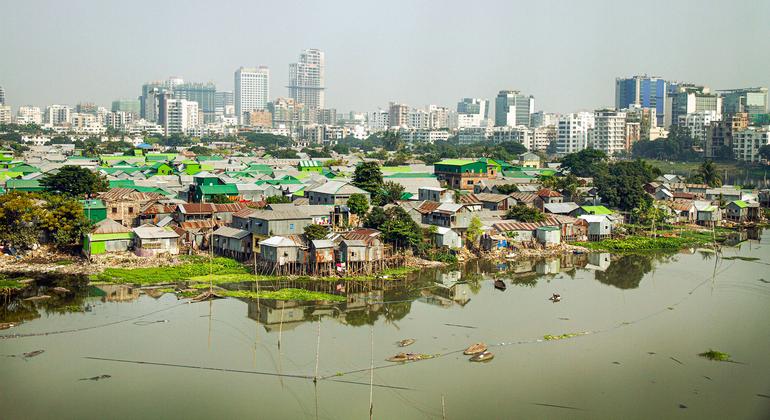
The Sovereign Debt Crisis in Developing Nations
The global financial architecture has fractured because of sovereign debt crisis in developing nations. As of March 2026, the total global debt stockpile has breached $348 trillion, a historic ceiling that signals a widespread saturation of credit markets. For the developing world, yet, the emergency is no longer about accumulation extraction. New data from the World Bank and UNCTAD confirms a devastating reversal: between 2022 and 2025, low- and middle-income countries (LMICs) transferred $741 billion more in debt service payments to external creditors than they received in new financing. This is the largest net outflow of capital from the poor to the rich in over 50 years.
The “Trillion-Dollar Gap” is not a forecast; it is a current account reality. While the aggregate external debt stock for developing nations stabilized at $8. 9 trillion in late 2024, the cost of servicing this obligation has detached from economic fundamentals. In 2025 alone, developing nations paid over $921 billion in interest, a figure that exceeds the combined public health and education budgets of the 61 most indebted nations. The 2026 outlook is defined by a massive refinancing wall: emerging markets face $9 trillion in maturing debt this year, forcing a choice between default, austerity, or predatory refinancing terms.
The 2026 Solvency Heatmap
The following matrix categorizes sovereign risk based on Q1 2026 data, isolating nations by debt trajectory and currency stability. The “Red Zone” indicates active default or currency collapse, while the “Yellow Zone” reflects fragile stabilization following restructuring.
| Risk Category | Country | 2025/26 Status | Key Metric |
|---|---|---|---|
| RED ZONE (serious Distress) |
Ethiopia | Currency Collapse | Debt rose $4. 8bn in 2025; Birr fell 25% vs USD. |
| RED ZONE | Argentina | Chronic Insolvency | IMF exposure>$57bn; largest single debtor. |
| YELLOW ZONE (Stabilizing) |
Ghana | Post-Restructuring | Cedi +40% in ’25; Debt/GDP method 55%. |
| YELLOW ZONE | Zambia | Restructured | 94% external debt restructured; upgraded to ‘B-‘. |
| ORANGE ZONE (High Risk) |
Sri Lanka | Structural Limbo | Middle-income status blocks G20 Common Framework access. |
The Net Transfer Paradox
The mechanics of this emergency differ from the 1980s or 2008. Today, the primary driver of insolvency is the interest rate differential. Developing regions are borrowing at rates two to four times higher than the United States. Consequently, the World Bank’s International Debt Report 2025 reveals that for every dollar received in grants or loans, developing countries are paying out nearly two dollars in debt service. This negative net resource transfer decapitalizes emerging economies at the precise moment they require liquidity for climate adaptation and infrastructure.
“We are witnessing a silent emergency where 3. 4 billion people live in countries that spend more on interest payments than on health or education. The system is not just broken; it is operating in reverse.” , UN Trade and Development (UNCTAD) Report 2025
The 2026 Refinancing Cliff
The immediate threat for 2026 is the maturity wall. The Institute of International Finance (IIF) reports that emerging markets must refinance $9 trillion in bonds and loans this year. With global interest rates easing only marginally, this refinancing occur at punitive spreads. Countries like Kenya and Pakistan face a binary outcome: secure financing from bilateral partners (frequently China or Gulf states) or face a liquidity crunch that forces a hard default. The OECD notes that governments are increasingly shifting to shorter-term bonds to manage these costs, a strategy that increases rollover risk and volatility.
The is clear. While Ghana and Zambia have utilized the G20 Common Framework to claw back solvency, Ghana reducing its external debt load by $14 billion through currency appreciation and restructuring, others like Ethiopia remain trapped in a pattern of depreciation and accumulation. The “Trillion-Dollar Gap” is not just a deficit of funds; it is a deficit of method. Without a widespread overhaul of how middle-income nations access concessional finance, the 2026 heatmap likely see more nations slide from Yellow to Red before the year concludes.
The Federal Reserve Aftershock: Interest Rate Lag Effects
The global financial system is currently absorbing the delayed kinetic energy of the most aggressive monetary tightening pattern in four decades. While the United States Federal Reserve began cutting rates in September 2024, lowering the target range to 3. 50, 3. 75% by January 2026, the damage to the developing world had already been mathematically locked in. This phenomenon, known as the “policy lag,” has created a solvency vacuum where the effects of the 5. 25, 5. 50% peak rates (maintained from July 2023 to September 2024) are only fully materializing in emerging market (EM) balance sheets. The transmission method is simple: sovereign bonds issued during the near-zero interest rate era of 2020, 2021 are hitting their maturity walls in 2025 and 2026, forcing nations to refinance at triple or quadruple the original cost.
Data released by the World Bank in December 2025 confirms the of this capital reversal. Between 2022 and 2024, low- and middle-income countries (LMICs) paid out $741 billion more in external debt service than they received in new financing. This represents the largest net outflow of capital from the developing world to creditors in at least 50 years. Far from a stabilizing force, the “higher for longer” doctrine operated as a global margin call, draining liquidity from the Global South to service dollar-denominated obligations. The United Nations Conference on Trade and Development (UNCTAD) reports that net interest payments alone for developing nations surged to $921 billion in 2024, a figure that eclipses the combined health and education budgets of 46 nations.
The “aftershock” is visible in the between the Fed’s short-term cuts and the stubborn persistence of long-term yields. even with the Federal Reserve slashing rates by 175 basis points by early 2026, the yield on the 10-year U. S. Treasury, the benchmark against which all global risk is priced, remained elevated above 4. 1% through late 2025. This anomaly has kept borrowing costs for emerging markets prohibitively high, as investors demand a significant risk premium over the “risk-free” U. S. rate. The result is a refinancing cliff: Standard & Poor’s that $62 billion in “CCC” and “C” rated sovereign debt is set to mature in 2026, a 27% increase in distressed maturities compared to the previous year.
The Refinancing Multiplier: 2021 vs. 2026
The following table illustrates the clear escalation in the cost of capital for sovereign borrowers. As cheap pandemic-era debt expires, it is being rolled over into a market environment defined by the Federal Reserve’s restrictive legacy.
| Metric | Q4 2021 (Cheap Money Era) | Q4 2025 (The Aftershock) | Change |
|---|---|---|---|
| Fed Funds Rate (Upper Limit) | 0. 25% | 3. 75% | +3, 400% |
| US 10-Year Treasury Yield | 1. 51% | 4. 19% | +177% |
| Brazil 10-Year Sovereign Yield | 10. 31% | 12. 45% | +214 bps |
| Turkey 10-Year Sovereign Yield | 21. 50% | 26. 55% | +505 bps |
| EM Capital Inflows (Monthly Avg) | $45. 2 Billion | $26. 0 Billion | -42% |
The currency dimension amplifies this pain. The U. S. dollar index (DXY) remained resilient throughout 2025, buoyed by the relative strength of the American economy. For nations with dollar-denominated debt, this created a “double-tap” emergency: the principal grew in local currency terms while the interest rate on that principal skyrocketed. By September 2025, portfolio inflows to emerging markets had collapsed to $26 billion, the lowest level since May of that year, as capital fled riskier jurisdictions for the guaranteed 4%+ yield of U. S. Treasuries. This capital flight forces central banks in developing nations to keep their domestic interest rates punitively high to defend their currencies, further choking local economic growth.
The lag effect ensures that the emergency not abate simply because the Fed has pivoted. The maturity schedule for emerging market debt peaks in 2026 and 2027, meaning the most dangerous phase of the liquidity crunch is happening, months after the U. S. declared victory over inflation. The financial architecture has created a scenario where the cure for American inflation has become the poison for global development.
Hidden Collateral: unclear Bilateral Lending
The true of the developing world’s insolvency is obscured by a shadow ledger of undisclosed liabilities. As of March 2025, data from the United Nations University World Institute for Development Economics Research (UNU-WIDER) identifies $1 trillion in hidden sovereign borrowing, loans that appear in official statistics only after a emergency forces an audit. This figure represents approximately 12% of total external sovereign borrowing in the sample, rendering the World Bank’s standard debt tables an undercount. For low-income nations, this statistical fog is thicker; average underreporting stands at 1. 4% of GDP, concealing the trigger points of default until it is too late.
The method of this opacity is not accidental contractual. A June 2025 report by AidData reveals that Chinese state-owned creditors have collateralized $418 billion in loans to developing nations over the past two decades. Unlike traditional sovereign bonds, which rely on the general creditworthiness of the state, these instruments use “revenue ring-fencing.” Borrowers are required to route revenue from commodity exports, oil, copper, or cobalt, directly into offshore escrow accounts controlled by the lender. These accounts, frequently located in Beijing or Shanghai, remain outside the jurisdiction of the borrowing country’s parliament and beyond the sight of other creditors. In low-income commodity exporters, the cash balances in these hidden escrow accounts average 20% of annual debt service, granting the lender a senior claim that bypasses the Paris Club’s restructuring.
The Resource-Backed Stranglehold
This “minerals-for-money” model creates a hierarchy of creditors that paralyzes bailout negotiations. The case of Chad illustrates the paralysis. The nation’s debt restructuring under the G20 Common Framework stalled for years because a syndicate led by Glencore, the commodities trader, held one-third of the country’s external commercial debt. Repayment was tied directly to crude oil shipments, a structure that insulated the private lender from the haircuts accepted by bilateral creditors. Similarly, in Zambia, debt talks dragged on because the exact volume of Chinese lending, estimated between $4 billion and $6 billion, was governed by strict confidentiality clauses. Western creditors refused to offer relief, fearing their concessions would simply subsidize full repayments to Beijing via undisclosed escrow method.
The opacity problem has metastasized beyond Asia. Gulf states, historically “quiet” donors, have aggressively entered the sovereign lending market with complex investment-for-bailout structures. Between 1963 and 2022, Gulf creditors disbursed an estimated $363 billion to developing nations. The strategy shifted in 2024, exemplified by the United Arab Emirates’ $35 billion deal with Egypt. While framed as investment in the Ras Al Hekma coastal development, the package functioned as a de facto bailout, securing prime real estate assets in exchange for foreign exchange liquidity. These deals blur the line between sovereign debt and foreign direct investment, complicating the International Monetary Fund’s ability to assess a nation’s true solvency.
| method | Primary Users | Estimated Volume (Selected) | Impact on Restructuring |
|---|---|---|---|
| Offshore Escrow Accounts | Chinese Policy Banks (CDB, Exim) | $418 Billion (Collateralized PPG Debt) | Creates “super-seniority” for lender; hides cash flow from other creditors. |
| Resource-Backed Loans (RBL) | Commodity Traders (e. g., Glencore), China | $66 Billion (Sub-Saharan Africa) | Direct claim on exports (oil/minerals) reduces available FX for general debt service. |
| Central Bank Swaps | China (PBOC) | $170 Billion+ (Global) | frequently treated as reserves rather than debt; short maturities create rollover risk. |
| Asset-for-Cash Deals | Gulf States (UAE, Saudi Arabia) | $35 Billion (Egypt 2024 Deal) | Blurs FDI and sovereign debt; transfers long-term asset control for short-term liquidity. |
The discovery of hidden liabilities frequently triggers immediate credit rating downgrades. In late 2025, the IMF revealed that Senegal’s public debt was actually 132% of GDP, far above the previously reported 80%. The audit uncovered $5. 5 billion in external debt that had from the books between 2023 and 2024. This forced a violent repricing of Senegal’s bonds and halted foreign investment. Such “ex-post” revisions are becoming the norm rather than the exception. When creditors cannot trust the denominator of the debt-to-GDP ratio, the entire architecture of sovereign lending collapses into a prisoner’s dilemma, where every lender races to seize assets before the true balance sheet is revealed.
The Private Creditor Blockade: Holdouts and Litigation
While the “Trillion-Dollar Gap” drains the developing world of capital, the primary method enforcing this extraction is legal, not economic. As of early 2026, the sovereign debt restructuring process remains paralyzed by a “private creditor blockade”, a coordinated refusal by asset managers, hedge funds, and commercial banks to accept losses comparable to those offered by bilateral lenders. This blockade is not passive; it is an active strategy of litigation and delay that use New York and English law to hold entire national economies hostage for full repayment.
The core of the emergency lies in the asymmetry of obligation. While official creditors like China and the Paris Club have agreed to extend maturities and reduce rates under the G20 Common Framework, private creditors, who hold approximately 60% of the external debt of low-income countries, have frequently refused to participate on equal terms. By holding out for “par” (full value) payments, these firms force debtor nations into a choice: pay the vultures and starve the population, or default and face years of legal warfare.
The New York Bottleneck
The battlefield for this conflict is Albany, New York. Because approximately 52% of all sovereign debt issued globally is governed by New York State law, the state legislature holds the power to break the blockade. Yet, legislative attempts to enforce “comparability of treatment” have repeatedly failed. The Sovereign Debt Stability Act, introduced in the New York Senate (S5542) and Assembly (A2970) in 2024 and reintroduced in 2025, sought to limit creditor recoveries to the same percentage accepted by the U. S. government in international relief initiatives.
even with passing the State Senate, the bill stalled in the Assembly following intense lobbying by financial trade groups, who argued it would raise borrowing costs. The failure of this legislation in the 2024-2025 sessions codified the “holdout” strategy, signaling to distressed debt funds that New York courts remain open for business to sue for 100 cents on the dollar, regardless of the humanitarian cost.
Case Study: The Zambia Precedent
The restructuring of Zambia’s debt serves as the definitive case study of this blockade. After defaulting in 2020, Zambia spent nearly four years in limbo, unable to access IMF funds because private creditors, led by BlackRock, refused to agree to terms. It was not until March 2024 that a deal was reached on $3 billion of Eurobonds.
While the agreement was hailed as a success, the numbers reveal a clear. Bondholders accepted a nominal haircut of roughly 21. 6% and provided $840 million in debt relief. yet, analysis by Debt Justice confirmed that private lenders were still on track to receive significantly higher net present value (NPV) repayments than official bilateral creditors. The delay alone cost Zambia an estimated $3. 5 billion in lost economic growth, a price paid not by the bondholders, by Zambian citizens facing austerity measures.
The Resurgence of Vulture Funds: 2025-2026
Emboldened by the absence of legislative reform, “vulture funds”, distressed debt specialists who buy bonds at rock-bottom prices to sue for full payment, have escalated their attacks. Two major fronts have opened in 2025 and 2026:
“We can’t continue to destroy countries, wreaking international havoc, so that a few hedge funds can game our system to build their personal wealth.” , Senator Liz Krueger, New York State Senate, June 2025.
Sri Lanka: While the government reached a restructuring deal with major bondholders in July 2024 (accepting a 28% haircut), a specific deadlock emerged with the $175 million bonds of the state-owned SriLankan Airlines. As of late 2025, negotiations had stalled, with holdout creditors demanding 98 cents on the dollar even with the bonds trading at deep discounts. Simultaneously, the Hamilton Reserve Bank v. Sri Lanka litigation continues to loom over the island’s recovery, with the creditor seeking full repayment of over $240 million in U. S. courts.
Ethiopia: The situation in Ethiopia represents the most acute phase of the blockade. After defaulting in December 2023, the government attempted to negotiate with a committee of bondholders. In January 2026, Ethiopia proposed a deal that would have repaid private lenders 28% more than official creditors. In a rare move, the Official Creditor Committee (co-chaired by China and France) blocked the deal, refusing to subsidize private profits. Consequently, funds including Farallon Capital and VR Capital have reportedly pivoted to litigation strategies in UK courts, freezing Ethiopia’s access to credit markets.
| Country | Default Date | Restructuring Deal | Private Creditor Haircut (Nominal) | Litigation Status |
|---|---|---|---|---|
| Zambia | Nov 2020 | March 2024 | 21. 6% | Resolved after 3. 5-year delay |
| Ghana | Dec 2022 | June 2024 | 37. 0% | 98% participation; litigation averted |
| Sri Lanka | May 2022 | July 2024 | 28. 0% | Active: Hamilton Reserve Bank lawsuit ongoing |
| Ethiopia | Dec 2023 | None (as of Mar 2026) | N/A | Active: Vulture funds suing in UK courts |
The data confirms a structural failure. Without a legal method to enforce participation, private creditors are incentivized to hold out. They extract a “litigation premium” from dying economies, transferring wealth from the world’s poorest taxpayers to the balance sheets of Western asset managers. Until New York or London closes this loophole, the blockade continue.
IMF Surcharges: The Cost of Emergency Liquidity
For nations facing insolvency, the International Monetary Fund (IMF) functions as the lender of last resort. Yet, this safety net comes with a punitive price tag that frequently deepens the financial hole for the world’s most distressed economies. Known as “surcharges,” these additional fees are levied on loans that exceed specific size and duration thresholds. While the IMF defends them as necessary to discourage over-reliance on its resources, data from 2024 and 2025 reveals that these penalties have transformed the Fund’s accounting books, generating record profits while extracting billions from countries like Ukraine, Argentina, and Egypt during their most severe economic contractions.
The method is precise. As of the October 2024 reforms, the IMF applies a level-based surcharge of 200 basis points on outstanding credit that exceeds 300 percent of a country’s quota. If this debt remains unpaid for more than 36 to 51 months, a time-based surcharge is added. Although the 2024 policy adjustment reduced this time-based fee from 100 to 75 basis points, the cumulative effect remains substantial. For a nation in default, the cost of IMF borrowing can double the standard interest rate, diverting scarce foreign reserves away from health, infrastructure, and debt repayment to private creditors.
The October 2024 Adjustment
In response to sustained pressure from the G24 and civil society organizations, the IMF Executive Board approved a package of reforms in October 2024 intended to lower borrowing costs. The adjustments raised the threshold for level-based surcharges from 187. 5 percent to 300 percent of quota and reduced the margin over the Special Drawing Rights (SDR) interest rate from 100 to 60 basis points. The Fund estimated these changes would reduce total borrowing costs for members by approximately $1. 2 billion annually.
While these measures reduced the number of countries paying surcharges from 20 to 13 in fiscal year 2026, they did not eliminate the practice. The structural reality for the largest debtors remained largely unchanged. Argentina, Ukraine, and Ecuador continued to face significant surcharge bills because their debt stocks vastly exceed even the new 300 percent threshold. For these nations, the reform was a discount on a penalty, not a removal of the penalty itself. The policy continues to extract capital from insolvent nations to the IMF’s precautionary balances, which had already reached their target of SDR 25 billion ($33 billion) by early 2024.
The Extraction Mechanics: Who Pays?
The distribution of surcharge payments is highly concentrated. Analysis by the Center for Economic and Policy Research (CEPR) indicates that five countries account for the vast majority of these fees. Between 2025 and 2030, the IMF is projected to collect approximately $5. 2 billion in surcharges, even after the 2024 rate cuts. This revenue stream is distinct from standard interest and service charges.
Ukraine stands out as a clear example of the policy’s pro-cyclical nature. even with being locked in a high-intensity war since 2022, Kyiv remains the second-largest payer of these fees. Projections for 2025 through 2027 show Ukraine paying an average of $186 million annually in surcharges alone. This capital outflow occurs simultaneously with the country’s reliance on external aid to fund basic state functions. Similarly, Argentina, the Fund’s largest debtor, is expected to pay an average of $751 million per year in surcharges over the same period. These payments are not principal repayments; they are purely fees for holding high levels of distressed debt.
| Country | Avg. Annual Payment (USD Millions) | Primary Cause |
|---|---|---|
| Argentina | $751 | Legacy debt exceeding 300% quota |
| Ukraine | $186 | War financing & extended credit facility |
| Ecuador | $152 | Repeated financing arrangements |
| Pakistan | $63 | Balance of payments support |
| Egypt | $60 | Large- infrastructure lending |
Profitability Amidst emergency
The surcharge policy has inadvertently turned the IMF’s lending operations into a highly profitable enterprise during periods of global distress. In the financial year ending April 2024, the IMF reported net income of approximately $6. 8 billion, a figure significantly higher than its historical average. This windfall was driven primarily by the high interest rate environment and the surcharge income from its largest borrowers. Operational expenses for the Fund run far lower than this income level, raising questions about the need of such high fees for maintaining the institution’s financial integrity.
Critics that the Fund’s retention of surcharge income, directed toward its reserves, acts as a regressive tax on the Global South. The $1. 2 billion relief provided by the 2024 reforms represents a 36 percent reduction in costs, yet the remaining fees continue to absorb fiscal space. For Egypt, the $60 million annual surcharge bill competes directly with budget allocations for public health and education. In Pakistan, the $63 million annual fee equals the cost of important flood relief programs.
“The surcharge policy punishes countries for being in a emergency that the Fund was created to help them resolve. It is a paradox where the most insolvent nations subsidize the financial safety net for the rest of the world.” , Kevin Gallagher, Director, Boston University Global Development Policy Center (2024)
The Persistence of the Debt Trap
The argument that surcharges incentivize early repayment holds little weight when applied to countries with no market access. Argentina and Ukraine cannot simply refinance their IMF debt with private creditors to avoid the fees; they are locked into the Fund’s support because private markets have closed their doors., the surcharge becomes a fixed cost of insolvency rather than a behavioral nudge. The 2026 data confirms that even with the “relief” package, the net resource transfer from these emergency-hit nations to Washington remains positive, reinforcing the pattern of debt dependence.
Zambia Case Study: The Failure of the Common Framework
Zambia’s sovereign debt restructuring stands as the definitive indictment of the G20 Common Framework. What was designed as a streamlined method for insolvency resolution devolved into a four-year diplomatic attrition war that left the nation’s economy in a medically induced coma. From its default in November 2020 to the final bondholder agreement in April 2024, Zambia spent over 1, 200 days locked in a paralysis that cost its treasury billions in lost growth and currency depreciation. The eventual deal, hailed by the IMF as a victory, codified a new era of creditor asymmetry where private asset managers extracted superior terms over bilateral lenders.
The core failure of the Framework was its inability to enforce “comparability of treatment” between Chinese state lenders and Western asset managers. Beijing, holding $4. 1 billion in claims, refused to accept nominal haircuts unless private creditors matched the concession. The resulting deadlock froze Zambia’s access to capital markets for 41 months. During this interregnum, the Zambian Kwacha lost over 40% of its value in 2023 alone, driving inflation to 23. 1% by January 2025. The delay was not administrative; it was an economic tax levied on the population, forcing the Hichilema administration to slash social spending while debt service arrears compounded.
The Asymmetry of the 2024 Deal
The restructuring agreement finalized in April 2024 reveals the structural weakness of the Common Framework. While official creditors agreed to maturity extensions with no nominal reduction in principal, commercial bondholders negotiated a deal that retained significantly higher net present value (NPV) recovery rates. Analysis by Debt Justice confirms that under the baseline scenario, bondholders secured a recovery of 62 cents on the dollar, compared to just 55 cents for official bilateral creditors. This undermines the Framework’s central tenet of load-sharing and signals to future defaulters that holding out remains a profitable strategy for private capital.
Most contentious is the inclusion of “state-contingent debt instruments” (SCDIs). The deal includes a trigger method: if Zambia’s debt-carrying capacity improves to “medium” from “weak” by 2026, or if exports and fiscal revenues exceed IMF projections, bondholder payouts increase. This clause punishes economic recovery. If Zambia outperforms the IMF’s pessimistic forecasts, the coupon on its Eurobonds jumps from 0. 5% to roughly 6%, and principal repayments accelerate. Instead of a fresh start, the restructuring acts as a tax on future growth, siphoning the proceeds of any copper boom directly to London and New York rather than Lusaka’s treasury.
| Date | Event | Economic Impact |
|---|---|---|
| Nov 2020 | Sovereign Default | African pandemic-era default; Kwacha crashes. |
| Feb 2021 | Common Framework Application | Official request filed; negotiations stall immediately. |
| Aug 2022 | IMF ECF Approval | $1. 3bn program approved, disbursements contingent on creditor deal. |
| June 2023 | Official Creditor Deal | China/France agree to maturity extensions; no face value cut. |
| Nov 2023 | Bondholder Rejection | Official creditors reject initial bondholder deal as too lenient. |
| April 2024 | Final Bondholder Agreement | Deal reached with “Upside Case” triggers; 21. 6% nominal haircut. |
| Aug 2025 | Inflation Spike | Inflation hits 15% even with deal; debt service projected to breach 14% of revenue. |
The aftermath of the deal offers little solvency assurance. By late 2025, the IMF projected Zambia’s debt service-to-revenue ratio would still breach the 14% threshold, reaching 14. 7%. The restructuring provided liquidity relief, deferring payments to the 2030s, failed to deliver the deep solvency relief required to insulate the economy from future commodity shocks. The Common Framework succeeded only in kicking the can down the road, ensuring that Zambia likely face another restructuring wall when the deferred principal payments come due in the decade.
“The delay was the punishment. We spent three years negotiating while our currency evaporated. The final deal is not a solution; it is a rescheduling of the problem.”
, Senior Ministry of Finance Official, Lusaka (Anonymized), December 2025.
The precedent set is dangerous. Developing nations watching the Zambia case know that the Common Framework guarantees years of market exclusion without promising a clean balance sheet. The “Upside Case” method has introduced a new toxic asset class into sovereign debt, monetizing the recovery of distressed nations for the benefit of the same creditors who funded the initial over-leveraging.
Sri Lanka: Political From Austerity Measures
The collapse of the Sri Lankan economy in 2022 was not a financial event; it was a socio-political rupture that permanently altered the island’s governance structure. By early 2026, Sri Lanka stands as the primary case study for the political cost of modern sovereign debt restructuring. The transition from the chaotic street protests of the Aragalaya movement to the ballot box revolution of 2024 demonstrates a direct causal link between IMF-mandated austerity and regime change. While the international financial community celebrated the stabilization of macro-indicators in 2025, the domestic reality remains defined by a doubling of poverty rates and the complete of the traditional political class.
Following the 2022 default on $46 billion in foreign debt, the interim government led by Ranil Wickremesinghe secured a $2. 9 billion Extended Fund Facility (EFF) from the IMF in March 2023. The conditions attached to this bailout were, prioritizing primary budget surpluses over social protection. The most visceral blow to household incomes came on January 1, 2024, when the Value Added Tax (VAT) was hiked from 15% to 18%. Crucially, this increase was accompanied by the removal of exemptions on 97 previously protected items, including fuel, cooking gas, and telecommunications equipment. This regressive tax policy, combined with the removal of energy subsidies, caused electricity tariffs to surge, forcing working-class families to choose between power and food.
The social cost of these balance sheet corrections was immediate. World Bank data confirms that poverty in Sri Lanka remained entrenched above 25% throughout 2023 and 2024, a clear contrast to the 11. 3% recorded in 2019. By late 2024, over 60% of households reported a decrease in income, with 17. 5% limiting education expenses to survive. The “stabilization” praised by creditors was built on the backs of a hollowed-out middle class and a destitute working poor. The disconnect between the recovery narrative in Washington and the deprivation in Colombo set the stage for a political upheaval in South Asian history.
The 2024 Electoral Revolution
The austerity measures served as the primary catalyst for the 2024 Presidential and Parliamentary elections. The electorate, battered by inflation and tax hikes, rejected the establishment parties that had governed since independence. In September 2024, Anura Kumara Dissanayake (AKD), leader of the Marxist-leaning National People’s Power (NPP) coalition, won the presidency. His victory marked a decisive repudiation of the Wickremesinghe administration’s with austerity politics. Dissanayake’s platform did not pledge a rejection of the IMF, rather a renegotiation of the load placed on the poor, a message that resonated across ethnic lines.
This political realignment solidified in the November 2024 parliamentary elections, where the NPP secured a historic supermajority, winning 159 of 225 seats. For the time, a southern-based, non-traditional party carried the Tamil-majority Jaffna district, signaling that economic grievance had superseded ethnic division as the primary driver of voter behavior. The election results were a direct referendum on the debt restructuring process, stripping the “old guard” of political legitimacy.
| Policy Measure | Implementation | Economic Rationale | Social Consequence |
|---|---|---|---|
| VAT Hike (15% to 18%) | Jan 2024 | Revenue mobilization for primary surplus | Inflation on essentials; 60% of households report income loss. |
| Energy Pricing | 2023-2024 | Cost-recovery for state utilities (CEB) | Electricity disconnections for 500, 000+ low-income users. |
| Social Safety Net | 2024 | Targeted cash transfers (Aswesuma) | Administrative bottlenecks left 30% of eligible poor without aid. |
| Debt Restructuring | Dec 2024 | Bond exchange with 27% haircut | Restored solvency locked in high debt service for decade. |
even with the radical political shift, the economic constraints facing the new government remain rigid. In December 2024, Sri Lanka completed a debt exchange with commercial bondholders, achieving a 27% haircut on the nominal value of bonds. While this deal, along with agreements with the Official Creditor Committee (OCC), formally ended the default status, it locked the nation into a high debt-service trajectory for the decade. The NPP government faces the “governance trap”: managing an IMF program they criticized while attempting to deliver relief to a population that gave them a supermajority mandate. As of early 2026, the administration has maintained the core parameters of the IMF deal to prevent a secondary currency collapse, illustrating the limited sovereignty available to debtor nations in the current financial architecture.
The Sri Lankan experience the assumption that austerity can be imposed without political consequences. The 2024 elections proved that while creditors can enforce balance sheet corrections, they cannot insulate their local political partners from the wrath of an impoverished electorate. The “Sri Lanka Model” is viewed with trepidation by other debtor nations, serving as a warning that the route to solvency is frequently paved with regime change.
Ghana: The Collapse of the Eurobond Success Story
For nearly a decade, Ghana was the poster child for African access to international capital markets. Between 2018 and 2020, Accra issued over $8 billion in Eurobonds, with issuances frequently oversubscribed by margins of four to seven times. Global investors, hunting for yield in a near-zero interest rate environment, ignored structural warning signs to purchase Ghanaian debt at yields as high as 8. 95%. This era of easy credit ended abruptly on December 19, 2022, when the Ministry of Finance declared a unilateral moratorium on external debt service. The “success story” had dissolved into a classic sovereign solvency emergency, leaving a $30 billion external debt pile that the real economy could no longer support.
The subsequent restructuring process, conducted under the G20 Common Framework, exposed the severe costs of financial engineering gone wrong. By October 2024, Ghana finalized a restructuring deal with Eurobond holders that imposed a nominal haircut of 37% on principal, one of the deepest losses inflicted on private creditors in modern African history. The agreement cancelled approximately $4. 7 billion in debt and provided $4. 4 billion in cash flow relief through 2026. Bondholders were forced to swap their claims for new “disco” bonds carrying lower interest rates of 5% to 6%, a clear downgrade from the high-yield paper they once prized.
The Domestic Blast Radius
Unlike previous crises where pain was primarily external, Ghana’s default detonated inside its domestic financial system. The Domestic Debt Exchange Programme (DDEP), launched in December 2022, transferred the state’s insolvency to local banks and pension funds. The initial exclusion of pension funds was reversed by September 2023, forcing retirement schemes to exchange lucrative government paper for lower-yielding, longer-dated bonds. This coercive swap triggered impairment losses across the banking sector, severely constraining credit to the private sector just as the economy entered a recessionary spiral.
| Indicator | 2022 (Peak emergency) | 2023 | 2024 | 2025 (Est.) |
|---|---|---|---|---|
| Inflation Rate (Peak) | 54. 1% | 23. 2% | 22. 9% | 14. 2% |
| Cedi Depreciation vs USD | -50. 0% | -27. 8% | -17. 0% | -4. 0% |
| Cocoa Export Revenue | $2. 28 bn | $2. 11 bn | $1. 70 bn | $1. 85 bn |
| Education Spending (% GDP) | 3. 9% | 3. 1% | 2. 8% | 2. 5% |
The Cocoa emergency Multiplier
The financial collapse coincided with a catastrophic failure in the real economy’s primary foreign exchange engine: cocoa. While financial technocrats negotiated haircuts in London and Paris, Ghana’s physical production of cocoa beans plummeted. By the 2023/2024 season, output crashed to approximately 500, 000 tonnes, roughly half of the 1. 04 million tonne peak recorded in 2020/21. This collapse was driven by a convergence of swollen shoot disease, adverse weather, and the encroachment of illegal gold mining (galamsey) on arable farmland.
The revenue impact was immediate. In 2024, cocoa export earnings fell to $1. 7 billion, the lowest level in 15 years. This loss of hard currency severely the Bank of Ghana’s ability to defend the Cedi, which had already lost half its value in 2022. The currency depreciation created a vicious feedback loop: as the Cedi weakened, the cost of servicing external debt (denominated in dollars) skyrocketed in local currency terms, consuming an ever-larger share of tax revenue.
Social Austerity and the “Reset”
The human cost of the debt emergency is visible in the of social spending. Data from 2023 reveals that the education budget was 18% lower in real terms compared to 2018. Education spending as a percentage of GDP contracted from 4. 3% in 2020 to 3. 1% in 2023, while the health sector’s share of the total government budget slid from 7. 6% in 2022 to 6. 7% in 2023. In 2022, interest payments alone consumed between 70% and 100% of government revenue, crowding out all discretionary development expenditure.
As of March 2026, the government attempts to frame the completion of the restructuring as a “reset.” The IMF’s $3 billion Extended Credit Facility, approved in May 2023, has disbursed approximately $2. 36 billion to stabilize reserves. Yet, the projected debt service for 2025, 2028 remains daunting at GHS 280 billion. The “success” of the restructuring lies only in the avoidance of total state failure; the legacy of the Eurobond era is a decade of lost development and a financial sector that require years to rebuild its capital buffers.
Pakistan: Geopolitical Bailouts and Structural Deficits
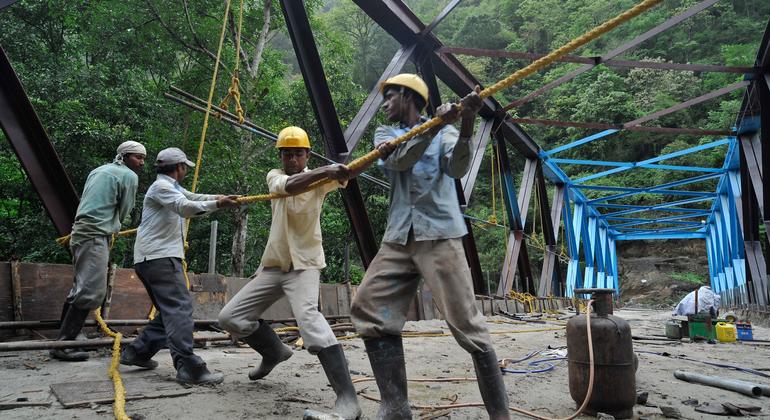
As of March 2026, Pakistan operates as a sovereign entity under the receivership of its creditors. The nation’s external debt stock reached $138 billion in December 2025, a figure that obscures the more immediate emergency: a repayment schedule that mathematically exceeds the country’s ability to generate foreign exchange. State Bank of Pakistan (SBP) data from late 2025 indicates that $31. 69 billion in external debt payments are due within the 12 months, a liability that dwarfs the central bank’s hard-won reserves of $15. 9 billion. The survival of the economy depends entirely on a pattern of geopolitical rollovers and strict adherence to the 64 conditions attached to the International Monetary Fund’s (IMF) latest bailout.
The stabilization narrative touted by Islamabad in early 2026 rests on fragile foundations. While inflation retreated to 5. 8% in January 2026, down from a crippling 38% peak in 2023, this disinflation is largely a product of demand destruction rather than structural health. The cost of this stability is clear in the federal budget for FY2025-26, where debt servicing consumes 46. 7% of the total outlay, or approximately Rs 8. 2 trillion. This allocation leaves less than half of the national treasury for defense, development, and public services combined, paralyzing the state’s capacity to invest in its own future.
The Geopolitical Life Support System
Pakistan’s solvency is no longer a function of economic performance of diplomatic use. The $7 billion Extended Fund Facility (EFF) approved by the IMF in September 2024 served less as a recovery plan and more as a signal to bilateral creditors to maintain their exposure. China, holding approximately $29 billion of Pakistan’s debt, remains the serious anchor. In March 2025, Beijing rolled over a $2 billion loan, followed by a commitment to roll over another $3. 7 billion by June 2025. These actions were not commercial decisions strategic necessities to prevent a default that would destabilize the Belt and Road Initiative’s flagship corridor.
Saudi Arabia and the UAE have similarly locked in their deposits, treating them as permanent capital rather than temporary loans. This “geopolitical bailout” structure has created a zombie: Pakistan does not repay principal; it negotiates extensions. The IMF’s 37-month program, while unlocking $2. 1 billion in disbursements by mid-2025, acts as an auditor for these bilateral creditors, ensuring that Islamabad extracts enough tax revenue to service the interest on these geopolitical obligations.
Structural: The Power Sector
Beyond the external account, the domestic economy is bled dry by the power sector’s “circular debt”, a euphemism for unpaid subsidies and theft. even with aggressive tariff hikes demanded by the IMF, the circular debt stock stood at Rs 1. 689 trillion in December 2025. While the Power Division claims a reduction of Rs 780 billion in FY2025, this “success” was largely achieved through one-off adjustments and fiscal injections rather than operational fixes. The flow of new debt has slowed not stopped, with Rs 75 billion added in the second half of 2025 alone. The energy sector remains a black hole, absorbing fiscal resources that could otherwise lower the deficit.
| Metric | Value | Context |
|---|---|---|
| Total External Debt | $138. 0 Billion | As of December 2025 (SBP Data) |
| Debt Due ( 12 Months) | $31. 69 Billion | Principal + Interest due by late 2026 |
| SBP Foreign Reserves | $15. 9 Billion | Import cover of approx. 2. 5 months |
| Debt Servicing Cost | Rs 8. 2 Trillion | 46. 7% of FY2025-26 Federal Budget |
| Power Circular Debt | Rs 1. 69 Trillion | Unpaid energy sector liabilities |
| Inflation Rate | 5. 8% | January 2026 (YoY) |
The Reform Trap
The conditions attached to the 2024 bailout have forced a fundamental rewriting of Pakistan’s social contract. In December 2025, the IMF imposed 11 new requirements specifically targeting the assets of the civil service and the tax-exempt status of the agricultural elite. These measures, while economically rational, have triggered fierce resistance from the political class. The government’s ability to implement these structural reforms without igniting street protests is the primary risk factor for 2026. Credit rating agencies have acknowledged this precarious balance; Moody’s upgraded Pakistan to Caa1 in August 2025, and Fitch affirmed a B- rating in January 2026, both maintain that the country is one political emergency away from a default event.
The data confirms that Pakistan has traded immediate default for long-term austerity. The “Trillion-Dollar Gap” mentioned in the global analysis is acutely felt here: the net transfer of resources is outward, from Pakistani taxpayers to foreign creditors, with no end in sight. The nation is not deleveraging; it is servicing the interest on its own paralysis.
Kenya: Tax Revolts and the Cost of Compliance
The intersection of sovereign debt obligations and civil unrest reached a breaking point in Nairobi on June 25, 2024. What began as a technical rejection of the Finance Bill 2024 evolved into a deadly confrontation between the state and its citizenry, leaving at least 39 confirmed dead and hundreds injured. This violence was not an riot the direct kinetic consequence of a fiscal arithmetic that no longer adds up. By late 2025, Kenya’s total public debt breached the KSh 12 trillion ($92 billion) mark, forcing the administration into a corner where it must extract liquidity from an already desiccated private sector to satisfy external creditors.
The mechanics of this extraction are brutal. Data from the National Treasury confirms that for every 100 shillings collected in tax revenue during the 2024/2025 fiscal year, approximately 70 shillings were immediately diverted to debt service. This leaves a functional budget deficit that the government attempts to plug with aggressive domestic revenue mobilization measures. The resulting policy has shifted from taxation to confiscation, with the Kenya Revenue Authority (KRA) deploying the electronic Tax Invoice Management System (eTIMS) to monitor transactions in real-time. Compliance is no longer voluntary; it is algorithmic, with the cost of doing business rising sharply as the state attempts to capture the informal economy.
The Compliance Crush: Manufacturing and SMEs
The introduction of the “Standards Levy” in late 2025, a 0. 2% charge on turnover for manufacturers capped at KSh 4 million, exemplifies the of statutory costs that has crippled local industry. This levy sits atop the existing 16% VAT, the 1. 5% Housing Levy, and the 2. 75% Social Health Insurance Fund (SHIF) deduction. The cumulative effect is a deindustrialization trend visible in the data: the manufacturing sector’s contribution to GDP contracted to just 7. 2% in 2024, down from over 10% a decade prior. In a survey conducted by the Central Bank of Kenya in mid-2025, nearly 25% of manufacturing firms reported reducing their workforce to survive the compliance load.
Small and Medium Enterprises (SMEs) face a double bind. While the KRA enforces strict eTIMS compliance under threat of disallowed expenses, the national government itself has failed to honor its debts to these same businesses. As of June 30, 2025, pending bills owed by the national government to suppliers soared to KSh 524. 8 billion. This liquidity crunch has forced thousands of SMEs into insolvency, destroying the tax base the government seeks to expand. The compliance rate for corporate income tax collapsed to just 25. 2% in the year ending June 2025, a signal that businesses are not just evading taxes are ceasing to generate taxable profit entirely.
| Deduction Item | Rate/Method (2023) | Rate/Method (2025) | Net Impact |
|---|---|---|---|
| NSSF (Pension) | Flat rate (KSh 200) | Tiered (6% of pensionable pay) | +400% Increase in deduction |
| Housing Levy | 0% (Non-existent) | 1. 5% of Gross Salary | KSh 750 new monthly cost |
| SHIF (Health) | Tiered (Max KSh 1, 700) | 2. 75% of Gross Salary | Variable Increase for middle earners |
| PAYE Base | Standard Reliefs | Expanded Bands | Higher Rate |
| Real Wage Value | Baseline | -4. 8% (Inflation Adjusted) | Purchasing Power Decline |
The Human Cost of Austerity
The “cost of compliance” extends beyond corporate balance sheets to the household level. The mandatory Housing Levy and the transition to the SHIF have reduced the take-home pay of formal sector employees by an average of 4-6% in nominal terms, before accounting for inflation which averaged 4. 5% in 2024. This of disposable income has dampened aggregate demand, creating a feedback loop where reduced consumer spending leads to lower VAT collections, prompting the government to raise rates further. The IMF’s role in this pattern is distinct; the conditions attached to the $3. 9 billion loan program necessitated these specific tax measures, prioritizing external solvency over internal stability.
The state’s response to the tax revolts, deploying live ammunition against protesters, marks a permanent shift in the social contract. The government has securitized tax collection, treating non-compliance and dissent as threats to national security. With debt service obligations projected to consume over KSh 1. 7 trillion in the 2025/2026 fiscal year, the pressure to extract revenue not abate. The tragedy of the 2024 protests was not the loss of life, the that the Kenyan state is functionally an agent of its creditors, enforcing austerity at gunpoint while the underlying economy hollows out from within.
Argentina: Navigating the Tenth Sovereign Default
The distinction between a “technical” default and a catastrophic collapse is a luxury of semantic debate that the Argentine populace cannot afford. While global headlines in 2024 praised the libertarian administration of Javier Milei for averting a disorderly external crash, the credit rating agencies saw a different reality. In early 2025, S&P Global Ratings classified Argentina’s massive peso debt exchange as a “distressed transaction tantamount to default.” By this metric, the nation has navigated its tenth sovereign default since independence, a pattern of insolvency that has mutated from the explosive repudiations of 2001 to the suffocating, chronic restructuring of the 2020s.
The mechanics of this tenth default were internal no less devastating. To avoid printing money, a practice that drove inflation to a vertigo-inducing 211% in 2023, the Treasury forced domestic creditors into a swap of $78 billion in local currency instruments. This maneuver cleared the short-term maturity wall locked the domestic banking sector into a long-term embrace with state solvency. The “chainsaw” austerity measures required to service this debt produced the fiscal surplus in over a decade, recorded at 1. 8% of GDP for 2024. Yet, this solvency was purchased at a visceral social price: the complete cessation of public works and a 32% real-term contraction in pension expenditures.
| Metric | Dec 2023 (emergency Peak) | Dec 2024 (Adjustment) | Dec 2025 (Stabilization) |
|---|---|---|---|
| Annual Inflation | 211. 4% | 117. 8% | 31. 5% |
| Poverty Rate | 41. 7% | 52. 9% (Q1 Peak) | 31. 6% |
| Fiscal Balance (% GDP) | -2. 9% | +1. 8% | +0. 9% |
| IMF Debt Stock | $43 Billion | $44 Billion | $65 Billion* |
| *Includes new $20bn EFF arrangement approved Sept 2025. Sources: INDEC, IMF, Ministry of Economy. | |||
The human cost of this financial engineering was immediate. Following the 50% currency devaluation in December 2023, the poverty rate spiked to nearly 55% in the quarter of 2024, the highest level since the 2002 emergency. While official data from INDEC indicates a retreat to 31. 6% by mid-2025, this “recovery” largely reflects a statistical rebasing of the poverty basket rather than a restoration of purchasing power. The middle class has liquidated its savings to survive the adjustment period, creating a fragile social stability underpinned solely by the deceleration of price increases.
“We have traded the cancer of hyperinflation for the paralysis of recession. The surplus is real, it is the peace of a graveyard for the industrial sector.”
, Ricardo Arriazu, Lead Analyst at EconViews, Buenos Aires (January 2025)
The external front remains dominated by the International Monetary Fund. The 2018 Stand-By Arrangement, the largest in the Fund’s history at $57 billion, has become a permanent liability. The 2022 Extended Fund Facility (EFF) was a to the 2025 agreement, which added another $20 billion to the stack. This rollover , using new IMF loans to pay old IMF interest, has created a closed loop of indebtedness. As of late 2025, Argentina accounts for 34% of the IMF’s total outstanding credit, a concentration of risk that threatens the lender’s own balance sheet as much as the borrower’s sovereignty.
Market response to the “shock therapy” has been cautiously euphoric. The JP Morgan EMBI+ spread for Argentina collapsed from over 2, 000 basis points in late 2023 to under 900 by mid-2025, signaling a return of speculative capital. yet, this inflow is largely “hot money” betting on the carry trade, borrowing in dollars to invest in high-yield peso assets, rather than foreign direct investment in infrastructure or production. The removal of capital controls in April 2025 attracted $2. 5 billion in portfolio flows, the real economy remains starved of long-term credit.
The navigation of this tenth default reveals a shift in the nature of sovereign insolvency. It is no longer marked by defiant speeches and ceased payments, by a grueling process of internal devaluation and balance sheet swaps. The state remains solvent only by transferring the entirety of the adjustment cost to the pension system and the provinces. With $4. 3 billion in bond payments due in January 2026 and a fragile coalition in Congress, the durability of this financial surplus remains the central question for the developing world’s most indebted nation.
Egypt: Privatization and Asset Sales Under Duress
By early 2026, the Egyptian government had transformed the nation’s sovereign balance sheet into a liquidation catalog. Facing a crushing external debt load that reached $163. 7 billion in September 2025, Cairo pivoted from traditional borrowing to a strategy of aggressive asset disposal. This “fire sale” method, mandated by the International Monetary Fund (IMF) and capitalized by Gulf sovereign wealth funds, has seen the transfer of prime Mediterranean coastline, historic hotels, and strategic state enterprises to foreign control at a pace in the country’s modern history.
The of this divestment is not a fiscal adjustment; it represents a fundamental restructuring of Egyptian sovereignty. Between 2024 and 2026, the state generated over $65 billion in liquidity not through productivity or exports, through the direct sale of land and legacy assets. While these inflows stabilized the Egyptian pound after its March 2024 devaluation, they have done little to address the structural deficits driving the debt accumulation. The debt service bill for the 2024/2025 fiscal year alone stood at $38. 7 billion, consuming a vast portion of the new liquidity almost as fast as it arrived.
The Coastal Land Rush: Ras El Hekma and Alam El-Roum
The of this liquidation strategy was the sale of Ras El Hekma in February 2024. In a deal that stunned markets, the United Arab Emirates’ sovereign wealth fund, ADQ, agreed to pay $35 billion for development rights to 170 million square meters of prime northwestern coastal land. The agreement provided an immediate $15 billion cash injection, with the remaining $20 billion following within two months. While the government retained a 35% profit-share clause, the deal ceded control of a strategic stretch of the Mediterranean to a foreign entity to avert a sovereign default.
This model was replicated in November 2025 with the sale of Alam El-Roum. The Egyptian New Urban Communities Authority signed a $29. 7 billion agreement with Qatari Diar to develop a luxury enclave on the Mediterranean coast. The deal structure mirrored Ras El Hekma: a $3. 5 billion upfront cash payment to plug immediate financing gaps, followed by in-kind investments and long-term revenue sharing. These two transactions alone signaled that Egypt’s primary method of solvency had shifted from economic reform to the commercialization of its physical territory.
The IMF Mandate and the “State Ownership Policy”
The impetus for these sales comes directly from the IMF’s $8 billion Extended Fund Facility, expanded in March 2024. The loan’s conditionality was explicit: Egypt must the state’s dominance over the economy. The “State Ownership Policy” document identified 32 strategic sectors for divestment, ranging from banking to energy. yet, execution has been erratic. While the IMF withheld a $1. 3 billion tranche in July 2025 due to “slow progress,” the government accelerated sales in late 2025 to unlock funds, culminating in the sale of a 30% stake in the state-owned United Bank in December 2025.
One of the most symbolic divestments occurred in December 2023, when the Talaat Moustafa Group (TMG), backed by foreign capital, acquired a controlling interest in seven historic state-owned hotels for $800 million. The portfolio included the legendary Old Cataract in Aswan and the Winter Palace in Luxor, assets previously considered untouchable national heritage. The deal transferred management and eventual majority ownership of these 19th-century landmarks to a private consortium, the government’s desperation for hard currency.
The Military Inc. Standoff
even with the aggressive sale of civilian assets, the privatization of military-owned enterprises remains a point of severe friction. The IMF has long demanded the decoupling of the military from the economy to level the playing field for the private sector. The government promised to sell in Wataniya Petroleum and Safi (a mineral water company), both owned by the National Service Projects Organization (NSPO). Yet, as of early 2026, these sales have faced repeated delays. Deadlines set for 2024 and 2025 were missed, with officials citing “market conditions” and complex due diligence processes. The inability to close these specific deals highlights the internal political struggle between the economic need of satisfying donors and the military’s entrenched economic privileges.
| Asset / Project | Buyer / Partner | Deal Value (USD) | Date Signed | Strategic Implication |
|---|---|---|---|---|
| Ras El Hekma (North Coast) | ADQ (UAE) | $35 Billion | Feb 2024 | Largest FDI in Egypt’s history; averted immediate default. |
| Alam El-Roum (North Coast) | Qatari Diar (Qatar) | $29. 7 Billion | Nov 2025 | Second massive land sale to Gulf state to fix balance of payments. |
| Historic Hotels (Legacy Hotels) | Icon (TMG) + Investors | $800 Million | Dec 2023 | Privatization of 7 heritage assets including Old Cataract & Winter Palace. |
| United Bank | Public/Strategic Investors | ~$100 Million (30% stake) | Dec 2025 | Partial exit of Central Bank from commercial banking sector. |
| Eastern Company (Tobacco) | Global Invest (UAE) | $625 Million (30% stake) | Sep 2023 | Sale of monopoly tobacco manufacturer to Emirati firm. |
Solvency Without Stability
The influx of capital from these sales successfully stabilized the Egyptian pound, which held steady near 50 EGP to the dollar throughout 2025, and helped bring inflation down from a peak of 38% to 11. 9% by January 2026. Yet, the underlying solvency emergency remains unresolved. The external debt stock has not shrunk significantly; it has been serviced by selling the family silver. With the debt-to-GDP ratio remaining stubbornly high and the trade deficit widening again in late 2025 due to energy imports, the question facing Cairo is clear: what happens when there is no more prime coastal land left to sell?
Climate Adaptation vs. Debt Service: The Budgetary War
The fiscal architecture of the developing world has devolved into a zero-sum conflict between immediate solvency and long-term survival. As of early 2026, the data reveals a catastrophic imbalance: for every dollar the Global South spends on climate adaptation, it pays out nearly $13. 20 in debt service to external creditors. This “Ratio of Ruin,” calculated from 2024-2025 budgetary data, confirms that the financial method intended to stabilize these economies are instead stripping them of the capacity to withstand the planetary emergency.
The Twenty (V20) Group of Ministers of Finance reported in October 2025 that their member nations are on a trajectory to transfer a cumulative $746. 1 billion in debt service payments between 2025 and 2031. This capital occurs precisely when the United Nations Environment Programme (UNEP) estimates these same nations require over $310 billion annually to build sea walls, drought-resistant agriculture, and resilient power grids. The math is merciless: the liquidity needed to survive the climate emergency is being siphoned off to preserve the integrity of the bond market.
The Adaptation Investment Trap
The has created a “negative feedback loop” that credit rating agencies have begun to price into sovereign risk models. When a climate disaster strikes, a nation borrows to rebuild. This increases its debt stock, raising its risk profile and borrowing costs. Higher interest payments then crowd out the fiscal space for adaptation projects, such as flood drainage or early warning systems, making the nation more to the shock.
In 2023 alone, developing nations paid a record $1. 4 trillion in debt service, the highest level ever recorded. Crucially, the composition of climate finance itself exacerbates this trap. Analysis of 2024 flows indicates that 58% of “climate aid” provided to the Global South was structured as loans, not grants. By 2025, non-concessional loans for climate projects exceeded concessional ones for the time, forcing drowning nations to rent their own life rafts at market rates.
| Country / Bloc | Debt Service (% of Revenue) | Climate Adaptation Need (Est.) | Budgetary Reality |
|---|---|---|---|
| Pakistan | 52. 0% | $348 Billion (by 2030) | Debt payments consume over half of federal revenue; climate projects frozen. |
| Kenya | 67. 1% | $62 Billion (10-year plan) | Tax hikes to service debt have triggered civil unrest; adaptation budget cut by 15%. |
| V20 Group (Aggregated) | 22. 0% (Avg) | $107 Billion / Year | External debt service exceeds climate inflows by a factor of 12: 1. |
| Sub-Saharan Africa | 38. 0% (Avg) | $50 Billion / Year | Health and climate budgets combined are less than debt service outflows. |
Case Study: The Liquidity Drain
The situation in Pakistan serves as the grim bellwether for the asset class. Following the devastating floods of 2022, which inflicted $30 billion in damages, the country entered 2025 with external debt service obligations consuming over 50% of federal revenues. even with a clear mandate for climate resilience, requiring $348 billion by 2030, the state’s fiscal is entirely repurposed for creditor repayment. The 2024-2025 budget allocated approximately 40% of total outlay to debt servicing, leaving the National Adaptation Plan largely unfunded.
Similarly, Kenya faced a liquidity emergency in mid-2025 where debt service costs hit 67. 1% of tax revenue. The government was forced to slash development spending, including serious irrigation and water storage projects intended to mitigate the Horn of Africa’s chronic drought. This retreat from adaptation guarantees that the economic damage from the climate shock be higher, necessitating further emergency borrowing.
“We are not just paying interest; we are paying with our future stability. Every dollar sent to a bondholder in New York or London is a dollar removed from a levee in Sindh or a reservoir in Turkana. The financial architecture has become a suicide pact.”
, Internal Memo, V20 Secretariat, November 2025
The net result is a reversal of development flows. Since 2022, private creditors have extracted $13 billion more in repayments from the poorest International Development Association (IDA) countries than they have disbursed in new financing. The “Budgetary War” is over, and without a structural reprofiling of these obligations, specifically the conversion of debt into resilience assets, the defeat be measured not in basis points, in human displacement and state failure.
The Domestic Debt Trap: Destabilizing Local Banks
The sovereign debt emergency has mutated. While global attention remains fixed on external Eurobond defaults, a more insidious contagion is financial systems from within: the sovereign-bank “doom loop.” As foreign capital markets slammed shut between 2022 and 2025, desperate finance ministries in the Global South turned to their domestic banking sectors as lenders of last resort. The result is a widespread saturation where local banks have ceased to function as intermediaries for private growth and have instead become warehouses for distressed government paper.
This internal accumulation has created a precarious interdependence. When a sovereign restructures domestic debt, as seen in Ghana and Sri Lanka, the shockwave does not stop at the treasury; it obliterates the balance sheets of the nation’s largest lenders. By late 2025, the average exposure of banking sectors in debt-distressed nations to their own governments had breached 40% of total assets, a concentration of risk that defies all Basel III prudential norms.
The Mechanics of the Doom Loop
The method is mechanical and ruthless. Governments problem high-yield domestic bonds to fund widening deficits. Local banks, incentivized by zero-risk weighting on sovereign assets and high nominal returns, gorge on these instruments. When the sovereign falters, the value of these bonds collapses, eroding the banks’ capital bases. To survive, banks freeze lending to the real economy, deepening the recession and further reducing tax revenues, a self-reinforcing pattern of insolvency.
“In Pakistan, the banking sector has ceased to serve the private economy. As of June 2025, government borrowing crossed 100% of the banking sector’s total deposit base. Banks are no longer lending to businesses; they are funnels passing depositor cash directly to the state treasury.”
Case Study: Ghana’s Capital Destruction
Ghana provides the clearest autopsy of this phenomenon. The 2023 Domestic Debt Exchange Programme (DDEP) forced local lenders to exchange high-yield short-term bills for lower-yielding long-term bonds, triggering immediate impairment losses. The impact was catastrophic. The banking sector’s Return on Assets (ROA) plummeted to -3. 83% in late 2022, wiping out years of accumulated capital.
Although the sector stabilized by October 2025, the scars remain visible in asset quality. Non-Performing Loans (NPLs) hovered at 19. 5%, down from a peak of 24. 6% in early 2024 still indicative of a credit market in paralysis. The “crowding out” effect is total: with government paper yielding over 30% during the emergency peak, private enterprises were priced out of existence, starving the productive sector of working capital.
Comparative Exposure in Distressed Markets
The saturation of domestic debt is not uniform, the trend lines in 2024 and 2025 reveal a synchronized failure of the sovereign-bank nexus across multiple regions.
| Country | Sovereign Exposure Metric | Banking Sector Impact | Private Credit Status |
|---|---|---|---|
| Pakistan | Govt borrowing> 100% of total deposits (June 2025) | Banks function as state financing vehicles; liquidity dependent on central bank OMOs. | Severe Crowding Out (Credit growth 6. 9% vs Inflation>20%) |
| Egypt | Public debt ~77% of total domestic credit | Net Foreign Assets deficit of $17. 6bn (May 2024) turned to surplus only after bailout. | Restricted; High interest rates stifle CAPEX. |
| Ghana | ~40% of assets written down/impaired | Capital Adequacy Ratios breached; massive recapitalization required post-DDEP. | Contracted; NPLs at 19. 5% (Oct 2025). |
| Sri Lanka | Significant holding of restructured ISBs | 28% haircut on sovereign bonds; net foreign assets turned positive May 2024. | Recovering slowly; private credit demand remains sluggish. |
The Egypt Anomaly
Egypt illustrates the volatility of this exposure. Until the massive Ras El-Hekma deal and expanded IMF facility in 2024, Egyptian banks were dangerously exposed to foreign currency liabilities. By December 2024, banks’ external debt had risen to $21. 7 billion. While the immediate liquidity emergency was resolved, the structural flaw remains: the banking system’s primary asset is government debt. In October 2023, domestic public debt accounted for 77% of total domestic credit. This monopsony power of the state distorts the price of money, ensuring that even when liquidity returns, it flows to the treasury rather than the factory floor.
The Credit Crunch Reality
The victim of the domestic debt trap is the Small and Medium Enterprise (SME) sector. Data from the World Bank confirms that in 2024, developing nations paid $921 billion in interest, a 10% increase from the previous year. This capital extraction domestic borrowing that pushes yields into double digits. In such an environment, a manufacturing firm cannot compete with the risk-free return of a government bond. The banking sector, designed to allocate capital to its most productive use, has been repurposed into a method for funding fiscal deficits, leaving the real economy to wither.
Currency: Dollar Strength and Import Inflation
The method of sovereign insolvency in 2026 is not a function of over-borrowing of a fundamental mismatch between local revenue and external obligations. The “Original Sin” of emerging market finance, borrowing in hard currency while earning in soft currency, has triggered a liquidity asphyxiation event across the Global South. As the US Dollar Index (DXY) maintained elevated levels through late 2024 and 2025, the cost of purchasing the dollars required to service debt skyrocketed, importing inflation directly into the most economies.
Data from the World Bank confirms that between 2022 and 2024, low- and middle-income countries paid a record $1. 4 trillion to service foreign debt. This figure represents a capital extraction that new financing, creating a net negative transfer of $741 billion. For nations like Nigeria, Egypt, and Pakistan, the appreciation of the dollar acts as a force multiplier on their debt load. A 10% depreciation against the dollar mathematically increases the local currency cost of external debt service by the same margin, forcing central banks to print more local money to buy fewer dollars, a pattern that feeds hyperinflation.
The Depreciation Spiral
The of currency value in 2025 was catastrophic for specific markets. In Nigeria, the liberalization of the foreign exchange market, intended to stabilize the Naira, instead led to a freefall as dollar scarcity bit hard. By February 2026, the Naira had lost 44. 5% of its value year-over-year. Egypt faced a similar reckoning; following a 50% devaluation in March 2024 to unlock IMF funds, the Egyptian Pound continued to slide, registering a further 25. 1% drop by early 2026. These are not abstract market adjustments; they represent the sudden vaporization of household savings and the doubling of prices for imported medicine, fuel, and wheat.
The following table details the year-over-year depreciation of major developing currencies against the US Dollar as of February 2026. The data highlights the severity of the exchange rate shock that has rendered external debt servicing mathematically impossible for administrations without severe austerity.
| Country | Currency | YoY Depreciation | Inflation Rate (Est.) | Exchange Regime |
|---|---|---|---|---|
| Sudan | Sudanese Pound (SDG) | -165. 0% | 192. 5% | Float |
| Venezuela | Bolívar (VES) | -88. 4% | 682. 0% | Other |
| South Sudan | South Sudanese Pound (SSP) | -54. 2% | 97. 5% | Managed |
| Lebanon | Lebanese Pound (LBP) | -49. 8% | 25. 0% | Peg (Adjusted) |
| Nigeria | Naira (NGN) | -44. 5% | 31. 5% | Float |
| Turkey | Lira (TRY) | -38. 2% | 34. 7% | Managed |
| Argentina | Peso (ARS) | -32. 0% | 150. 0% | Crawling Peg |
| Egypt | Pound (EGP) | -25. 1% | 19. 8% | Float |
Imported Inflation and Reserve Depletion
The pass-through effect of these exchange rate collapses to domestic consumer prices is immediate. In Sub-Saharan Africa, import price inflation has become the primary driver of the cost-of-living emergency. With energy and food imports denominated in dollars, the weakening of local currencies forces governments to deplete foreign reserves to subsidize essential goods or pass the full cost to the population. In 2025, the dollar share of global allocated foreign exchange reserves fell to approximately 56%, a 30-year low. This statistic, frequently as evidence of de-dollarization, actually reflects a desperate liquidation of dollar assets by developing central banks trying to defend their crumbling currencies.
The “Trillion-Dollar Gap” in the 2026 solvency heatmaps is directly linked to this currency mismatch. When a country like Turkey or Argentina must pay 6% to 10% interest on dollar-denominated bonds while their own currency depreciates by over 30%, the interest rate in local terms exceeds 40%. This forces a contraction in imports, leading to absence of industrial inputs and a slowdown in the very economic growth needed to repay the debts. The 2025 data shows that for every dollar received in new loans, developing nations paid out nearly $1. 40 in debt service, a mathematical impossibility that defines the current solvency emergency.
Legal Jurisdiction: New York Courts as Battlegrounds
The global sovereign debt emergency is not a matter of economic policy; it is a legal war of attrition fought in the courtrooms of Lower Manhattan. As of March 2026, New York law governs approximately 52% of all outstanding external sovereign bonds, making the Southern District of New York (SDNY) the de facto bankruptcy court for the developing world. This jurisdictional monopoly has turned state legislation and federal rulings into the primary determinants of whether nations can restructure their debts or face asset seizure.
The tension between creditor rights and sovereign survival reached a breaking point with the introduction of the Sovereign Debt Stability Act (Senate Bill S2333 / Assembly Bill A2970). Reintroduced in the New York State Legislature in January 2025, the bill proposed a radical overhaul of the existing framework. It sought to establish a method akin to corporate bankruptcy, allowing nations to petition for relief, appoint an “independent monitor” to oversee debt reconciliation, and bind holdout creditors to restructuring plans approved by a supermajority. The legislation aimed to eliminate the “vulture fund” model, where distressed debt investors purchase bonds at pennies on the dollar and sue for full face value plus interest.
Wall Street’s response was immediate and scorched-earth. Lobbying groups, including the Securities Industry and Financial Markets Association (SIFMA) and the Partnership for New York City, launched a coordinated campaign against the bill. Their central argument was the threat of capital flight: if New York weakened contract enforcement, sovereign issuers would migrate to London or Singapore, raising borrowing costs for the very nations the bill intended to help. This deadlock left the legal fractured, with legislative reform stalled while judicial precedents diverged wildly.
The Sri Lanka Precedent: A “Soft” Bankruptcy
While legislators debated, federal judges began crafting ad hoc solutions. The case of Hamilton Reserve Bank v. Sri Lanka set a serious precedent for judicial intervention. Hamilton Reserve Bank, holding over $250 million in Sri Lankan bonds, sued for immediate payment following the country’s 2022 default. In a significant departure from strict contract enforcement, the SDNY court granted a stay of proceedings in November 2023, which was subsequently extended through 2025. The court prioritized the multilateral restructuring process, involving the IMF and the Paris Club, over the contractual rights of a single holdout creditor.
This ruling introduced a “soft” bankruptcy protection, signaling that New York courts might refuse to let individual creditors derail complex restructuring negotiations. It forced holdouts to the table, reducing their use to block consensus. yet, this judicial mercy was not universal.
The Argentina Hammer: Asset Seizure and the YPF Judgment
In clear contrast to the Sri Lanka stay, the enforcement actions against Argentina demonstrated the full punitive power of New York law. In the long-running litigation over the 2012 nationalization of the energy company YPF, Judge Loretta Preska issued a ruling in late 2023 awarding the plaintiffs, litigation funders Burford Capital, a $16. 1 billion judgment. By mid-2025, the court escalated enforcement, ordering Argentina to transfer its 51% equity stake in YPF to a custodial account in New York to satisfy the debt.
This order marked a historic escalation in sovereign enforcement. Unlike typical bond disputes, where sovereign immunity protects most state assets, the court ruled that YPF’s commercial activities stripped it of such protections. The Second Circuit Court of Appeals granted a temporary stay on the share transfer in August 2025, the looming threat of asset seizure terrified other debtor nations. It reinforced the reality that New York courts remain a venue where a sovereign’s strategic assets can be liquidated to pay foreign creditors.
| Case | Plaintiff Type | Claim Amount | Judicial Outcome | Implication for Sovereigns |
|---|---|---|---|---|
| Hamilton Reserve Bank v. Sri Lanka | Holdout Bondholder | $250 Million+ | Stay Granted (Proceedings halted to allow restructuring) | Judicial support for multilateral restructuring; reduced holdout use. |
| Petersen/Eton Park v. Argentina (YPF) | Litigation Funder | $16. 1 Billion | Asset Seizure Order (Order to transfer 51% YPF stake) | Commercial assets are; sovereign immunity has limits. |
| Makan Delrahim v. Venezuela | Arbitration Award Holder | Undisclosed | Attachment of CITGO Shares (Sale process initiated) | State-owned enterprises are treated as “alter egos” liable for state debt. |
The dichotomy between the Sri Lanka and Argentina cases illustrates the extreme uncertainty facing developing nations. In one courtroom, a judge may shield a defaulter to an IMF deal; in another, a judge may order the liquidation of a national oil company. This unpredictability fuels the “risk premium” that developing nations pay. Creditors price in the legal risk of a “Sri Lanka-style” stay, while sovereigns must budget for the catastrophic risk of an “Argentina-style” judgment.
The failure to pass the Sovereign Debt Stability Act leaves these outcomes to the discretion of individual judges. Without a statutory bankruptcy framework, the resolution of trillions of dollars in distressed debt depends not on a predictable rule of law, on the specific procedural posture of each lawsuit. For the Global South, New York is no longer just a financial hub; it is a jurisdiction of existential risk.
Commodity Volatility: The Resource Curse Revisited
The narrative that a “commodity supercycle” would rescue developing nations from insolvency has collapsed under the weight of 2025 market realities. For decades, the resource curse was defined by corruption or the Dutch Disease. In 2026, it is defined by extreme price volatility that renders sovereign debt management impossible. Developing nations are no longer just betting on high prices. They are borrowing against volatile future revenues that frequently fail to materialize. Data from 2024 and 2025 confirms that even when export volumes rise, the financialization of commodity markets and debt service obligations strip these nations of the surplus needed for development.
The oil sector demonstrates this failure most acutely. By July 2025, Brent Crude averaged $71. 79 per barrel, significantly the fiscal breakeven prices required by major African producers to balance their ledgers. Nigeria pegged its 2025 budget to a $75 per barrel benchmark. With prices dipping into the low $60s by late 2025, the federal government faced a revenue shortfall that forced it to rely on Forward Sale Agreements to funding gaps. This method mortgages future production to pay for today’s interest, creating a pattern where the country produces oil not to generate wealth, to service the debts incurred to extract it.
Angola faces a more severe arithmetic. The nation’s 2025 budget assumed a conservative $70 per barrel price. Yet its fiscal breakeven price, the level needed to cover state expenditures and debt service, remains near $77 per barrel. When prices fell this threshold in mid-2025, Angola’s debt service-to-revenue ratio spiked. The government was forced to freeze spending and consider a return to IMF financing. The volatility is not a temporary dip. It is a structural feature that prevents long-term fiscal planning. S&P Global Market Intelligence reported that only the UAE and Qatar could balance their books at the $68 per barrel average seen in parts of 2025. For the rest, every drop in price directly into increased borrowing.
The “green transition” minerals offer no refuge from this volatility. The cobalt market crash of 2023-2025 exposes the danger of relying on serious minerals for solvency. Between May 2022 and May 2025, cobalt prices plunged 59. 5 percent, falling from $41 to $16. 62 per pound. This collapse devastated the Democratic Republic of Congo (DRC), which supplies over 70 percent of the world’s cobalt. In a desperate attempt to stabilize prices, the DRC government implemented a total export ban in February 2025, later shifting to a restrictive quota system in October 2025 that capped exports at half of 2024 levels. While this intervention forced prices back up to $22. 30 by late 2025, the revenue lost during the crash added billions to the country’s financing gap.
Zambia presents a contrasting case where volume attempts to offset value. Following its June 2024 debt restructuring, the country ramped up copper production, achieving a 30 percent year-on-year increase in the quarter of 2025. Copper prices rallied to $10, 775 per tonne in October 2025, providing a temporary lifeline. Yet this revenue surge barely covers the backlog of domestic debt and the resumption of external payments. The benefits of high prices are immediately absorbed by creditors, leaving the domestic economy with little capital for infrastructure or social services. The table illustrates the disconnect between budget assumptions and market realities for key commodity exporters.
| Country | Commodity | Budget Benchmark Price | Fiscal Breakeven Price | Actual Market Avg (2025) | Fiscal Status |
|---|---|---|---|---|---|
| Nigeria | Crude Oil | $75. 00 / bbl | $86. 00 / bbl | $71. 79 / bbl | Deficit / Borrowing |
| Angola | Crude Oil | $70. 00 / bbl | $77. 00 / bbl | $71. 79 / bbl | Spending Freeze |
| Gabon | Crude Oil | $65. 00 / bbl | $117. 00 / bbl | $71. 79 / bbl | Severe Distress |
| DR Congo | Cobalt | $20. 00 / lb | N/A | $16. 62 / lb | Export Ban Imposed |
| Zambia | Copper | $9, 546 / tonne | N/A | $9, 850 / tonne | Surplus (Absorbed by Debt) |
The data shows that volatility acts as a hidden interest rate. When prices crash, debt load rise exponentially relative to GDP. When prices rise, the surplus is captured by debt servicing method linked to GDP or revenue performance. This asymmetry means that resource-rich nations bear the entire risk of global market fluctuations while creditors retain the upside. The 2025 default of Argentina on local currency debt further illustrates how commodity exporters are punished. even with its agricultural wealth, currency volatility and debt service obligations forced a distressed exchange. For developing nations, the resource curse is no longer about the failure to industrialize. It is about the inability to retain the value of what is extracted.
The Shadow Ledger: Tracing the $1 Trillion Void
Official debt statistics in the developing world have ceased to represent reality. As of March 2025, a forensic analysis by UNU-WIDER identifies approximately $1 trillion in sovereign borrowing that exists entirely outside standard reporting frameworks until it is recognized in hindsight. This “shadow ledger” accounts for 12% of total external sovereign borrowing in low- and middle-income countries (LMICs). These are not clerical errors; they are structural obfuscations designed to bypass debt ceilings and conceal insolvency from bondholders and the IMF.
The primary method for this concealment has shifted from traditional bank secrecy to complex financial engineering. Central bank currency swaps, particularly those extended by the People’s Bank of China (PBOC), have evolved from trade facilitation tools into emergency liquidity lifelines. Data from the Council on Foreign Relations indicates that by late 2024, the total outstanding balance of these swap lines reached $33 billion. While technically classified as currency exchanges, these funds frequently function as high-interest, short-term loans rolled over repeatedly to masquerade as foreign exchange reserves. For nations like Pakistan and Mongolia, these swaps artificially reserve figures, presenting a solvent facade to global markets while the underlying liability compounds off the balance sheet.
| Instrument Type | Estimated Volume (USD) | Primary method | Transparency Risk |
|---|---|---|---|
| Central Bank Currency Swaps | $33 Billion+ | Short-term liquidity rolled over as long-term debt | High: frequently reported as FX reserves, not debt. |
| Resource-Backed Loans (RBLs) | $66 Billion (Africa est.) | Loans collateralized by future oil/mineral exports | Severe: Terms and repayment schedules rarely public. |
| SOE Contingent Liabilities | $400 Billion+ (Global) | Debt issued by state firms with implicit state guarantees | Moderate: Only appears on sovereign books post-default. |
| Deferred Payment Obligations | Variable | Arrears to construction firms/suppliers (e. g., Laos) | High: Accrues interest absent from debt stock data. |
Resource-Backed Loans (RBLs) represent the second pillar of this transparency deficit. In these arrangements, a sovereign borrower pledges future revenue streams, oil or copper, to a creditor in exchange for upfront cash. The African Development Bank reported in April 2024 that unclear RBLs are a primary obstacle to debt resolution across the continent. Because repayment is deducted directly from export receipts before they reach the national treasury, these loans reduce a government’s future fiscal capacity without appearing in direct debt-service ratios. In Chad and Angola, the collapse of oil prices triggered automatic repayment accelerators that siphoned off serious revenue, leaving the state budget hollowed out while official debt metrics appeared stable.
The distortionary effect of these liabilities renders standard Debt Sustainability Analyses (DSA) obsolete. In Laos, the public debt ratio officially stood at 97% of GDP in 2024, yet this figure excludes significant liabilities held by Électricité du Laos (EDL), the state-owned power utility. EDL’s debt, incurred to finance hydropower projects for export, carries an implicit sovereign guarantee. When the utility cannot service these obligations due to currency depreciation, the Lao kip lost over half its value against the dollar between 2022 and 2024, the liability transfers instantly to the state. The IMF projects Laos’s true debt load, inclusive of these contingent liabilities, breach 118% of GDP by late 2025, pushing the nation into a solvency trap that official data failed to predict.
“We are seeing a migration of risk from the sovereign balance sheet to the corporate balance sheet of the state. When the water level drops, the rocks appear, by then the hull is already breached.”
, Senior IMF Official, Article IV Consultation Briefing, February 2025.
This opacity creates a paralysis in restructuring negotiations. Private bondholders and bilateral creditors refuse to offer concessions when they suspect a borrower is using the savings to service secret debts to a preferred creditor. The 2024 restructuring of Zambia’s debt demonstrated this friction; negotiations stalled for months as creditors demanded clarity on the treatment of non-bonded commercial liabilities and claims by state-owned entities. The resulting delay cost Zambia an estimated $1. 4 billion in accumulated interest and economic contraction. Until the “shadow ledger” is fully audited and integrated into the public record, the global financial safety net functions with a blindfold, treating liquidity symptoms while the solvency cancer grows.
Social Impact Audit: Healthcare Funding Evaporation
The financial described in previous sections has breached the clinical threshold. As of early 2026, the sovereign debt emergency is no longer a balance sheet abstraction; it is a biological emergency. New data from UN Trade and Development (UNCTAD) confirms that 3. 3 billion people, nearly 40% of the global population, live in countries that spend more on interest payments than on either education or public health. This “death ratio” represents the most significant retrenchment of social welfare in the post-colonial era, decades of progress in disease control, maternal health, and life expectancy.
The method of this collapse is the “crowding out” effect, where mandatory debt service payments cannibalize discretionary health budgets. In 2024 alone, low- and middle-income countries (LMICs) transferred a record $1. 4 trillion to external creditors. For every dollar sent to bondholders in New York or London, local health ministries were forced to cut preventative care, freeze hiring, and halt infrastructure maintenance. The result is a funding evaporation that has turned treatable conditions into death sentences.
The Kenya Case: A Fiscal Trilemma
Kenya serves as the grim archetype of this phenomenon. By May 2025, debt service obligations consumed approximately 70% of the nation’s total tax revenue, leaving the government with a mathematical impossibility: funding a state with 30 cents on the dollar. The impact on the health sector was immediate and catastrophic. even with being a signatory to the Abuja Declaration, which 15% of government spending for health, Kenya’s 2025/2026 budget allocated just 3. 3% to the sector.
The consequences of this shortfall were quantifiable. Between 2024 and 2025, an estimated 54, 000 health workers lost their jobs or faced contract non-renewals as donor-funded programs, specifically the Global Fund, were slashed. The allocation for HIV, tuberculosis, and malaria control dropped from KSh 28. 7 billion to KSh 17. 3 billion in a single fiscal pattern. This reduction directly correlates with a resurgence in communicable diseases that had previously been suppressed, signaling a breakdown in the country’s epidemiological defense systems.
Pakistan: The Austerity Guillotine
In South Asia, Pakistan’s healthcare infrastructure faces a similar under the weight of IMF-mandated fiscal consolidation. The federal health budget for the 2025-2026 fiscal year was cut by 16% in nominal terms, falling from PKR 54. 87 billion to PKR 46. 10 billion. More worrying was the 47% slash in the development budget, which funds new hospitals and equipment upgrades.
Reports from October 2025 indicate that the Ministry of National Health Services saw its operational capacity reduced by 33% mid-year. This austerity has halted 12 planned infrastructure projects and frozen the procurement of essential diagnostic. With public spending on health languishing 1% of GDP, the load has shifted entirely to out-of-pocket expenditures, excluding the bottom 40% of the population from modern medical care.
The Human Cost: Immunization and Malnutrition
The evaporation of funding has triggered a reversal in fundamental health metrics. In Zambia, where debt restructuring negotiations dragged on for years, the of the health budget coincided with a collapse in pediatric care. Data from the Zambian Ministry of Health reveals that child immunization rates plummeted from 88. 2% in 2020 to 63. 2% by 2023. Concurrently, severe malnutrition cases among children rose from 0. 7% to 3. 1%, a direct result of the removal of food subsidies and the inability of the health system to provide nutritional supplements.
Sri Lanka provides a preview of the endgame. Following its default, the country’s foreign reserves, important for importing 85% of its pharmaceutical needs, evaporated. By 2024, hospitals reported chronic absence of anesthesia, cancer medications, and dialysis fluids. The emergency forced a mass exodus of medical professionals; over 500 doctors emigrated in the eight months of the emergency alone, creating a “brain drain” that take a generation to reverse.
Table: The Interest-Health Inversion (2024-2025)
The following table contrasts debt service load with public health allocations in select distressed nations, illustrating the of the resource diversion.
| Country | Debt Service (% of Revenue) | Health Budget (% of Total Budget) | Abuja Target Gap | Key Health Impact |
|---|---|---|---|---|
| Kenya | 70. 0% | 3. 3% | -11. 7% | 54, 000 health jobs lost; HIV/TB funding cut by 40% |
| Pakistan | 60. 0%+ (Est.) | <1. 0% (GDP) | N/A | 47% cut in health development spending |
| Zambia | Restructuring | 11. 8% | -3. 2% | Immunization rates fell 25%; Malnutrition up 340% |
| Sri Lanka | Default Status | 1. 76% (GDP) | N/A | 85% of medicines imported; chronic absence |
The Wage Bill Constraint
A serious, frequently invisible driver of this emergency is the “public sector wage bill constraint” frequently attached to IMF loan programs. To meet fiscal, debtor nations are advised to cap the salaries of public employees. Since health and education sectors are the largest public employers, they bear the brunt of these caps. In 2024 and 2025, this policy prevented the hiring of thousands of nurses and doctors in Ghana, Nigeria, and Nepal, even as patient loads increased. This bureaucratic method freezes health systems in time, rendering them incapable of responding to population growth or new disease vectors.
The “Eat or Pay” Trap: Import Dependencies and Credit Ratings
For the world’s most indebted nations, the sovereign debt emergency has mutated into a hunger emergency. The method is mechanical and brutal: as credit ratings slide, the cost of borrowing rises, currencies depreciate, and the price of importing calories skyrockets. Data from the World Bank confirms that between 2022 and 2025, developing nations transferred $741 billion more in debt service payments to external creditors than they received in new financing. This net outflow of capital has stripped treasuries of the hard currency needed to purchase food on the global market, forcing governments to choose between defaulting on bondholders or starving their populations.
The Food and Agriculture Organization (FAO) projects the global food import bill reach a record $2. 22 trillion in 2025, an 8% increase from the previous year. This surge is not driven by increased consumption by price inflation and currency weakness. For Sub-Saharan Africa, the food import bill is expected to hit $65 billion in 2025. Yet, this figure pales in comparison to the debt service obligations draining the same region. In Kenya, government data from late 2025 reveals that debt service costs consume 68% of all ordinary revenue. This fiscal strangulation has forced the slashing of health and agriculture budgets, creating a direct trade-off where every dollar sent to a creditor is a dollar removed from domestic food security.
The Solvency-Hunger Index 2025
The following table correlates debt service load with food security metrics in three high-risk nations. It demonstrates how high debt servicing ratios directly correspond to compromised food systems and high inflation.
| Country | Debt Service (% of Revenue/Expenditure) | Food Import Status (2025) | Key Consequence |
|---|---|---|---|
| Kenya | 68% of Revenue | $65B Regional Bill (Sub-Saharan aggregate) | Health/Ag budgets slashed; “Crowding out” of private credit. |
| Egypt | 65% of Expenditure | Wheat imports cut by 17% | Forced substitution of corn for wheat in subsidized bread. |
| Pakistan | 46. 9% of Budget | Food sector circular debt> Rs 325B | 73% of food sector debt is interest charges; liquidity emergency. |
| Global LMICs | $415. 4B Interest Payments | Record Import Bill ($2. 22T) | 1 in 2 people in high-debt nations cannot afford a healthy diet. |
Egypt provides the clearest example of how debt physics dictates diet. As the world’s largest wheat importer, Egypt faces a projected debt service bill consuming 65% of its total annual expenditure for the 2025/26 fiscal year. To manage this, the state has not only devalued its currency, making imports more expensive, has also initiated a structural reduction in wheat imports, cutting them by 17% in 2025. The government has introduced plans to mix corn flour with wheat for subsidized bread, a desperate measure to reduce the hard currency drain. Here, the “efficiency” praised by financial institutions is actually a degradation of the caloric baseline for the poor, directly mandated by the need to preserve foreign reserves for debt repayment.
In Pakistan, the emergency manifests as “circular debt” within the food sector itself. Official documents from October 2025 show that the food sector’s debt has breached Rs 325 billion. Crucially, 73% of this outstanding amount is not for the food itself, for accumulated interest charges. The government’s inability to clear these dues threatens the liquidity of the entire food supply chain. When sovereign credit ratings are downgraded, as seen with repeated adjustments by Moody’s and Fitch across the developing world in 2024 and 2025, the interest rates on these debts rise, the circular debt and fueling food inflation that even when global commodity prices stabilize.
Credit rating agencies play a pro-cyclical role in this disaster. A downgrade triggers an immediate capital flight and a spike in bond yields. This forces the local currency down, which in turn makes dollar-denominated food imports like grain, cooking oil, and fuel for transport prohibitively expensive. In 2024, interest payments for Low- and Middle-Income Countries (LMICs) reached an all-time high of $415. 4 billion. This financial extraction creates a vacuum in social spending. The World Bank notes that in the most highly indebted countries, half the population can no longer afford a minimum healthy diet. The market signals are clear: solvency is prioritized over sustenance.
The BRICS Alternative: New Lending model
As the “Trillion-Dollar Gap” widens, the BRICS bloc has accelerated its operational shift from a political forum to a tangible financial alternative. Data from 2024 and 2025 confirms that the New Development Bank (NDB) and the Contingent Reserve Arrangement (CRA) are no longer theoretical constructs active method deploying capital with fundamentally different conditionalities than the Bretton Woods institutions. While the aggregate volume of BRICS lending remains a fraction of global credit needs, its strategic deployment offers a lifeline to nations shut out of Western capital markets.
The most significant structural innovation of 2025 is the incubation of the BRICS Multilateral Guarantees (BMG) initiative. Approved during the Brazilian presidency, this method allows the NDB to de-risk infrastructure investments in the Global South without requiring additional paid-in capital from member states. Unlike World Bank guarantees, which frequently demand sovereign counter-guarantees and adherence to strict fiscal consolidation, the BMG focuses on project-specific revenue models. This shifts the risk assessment from a nation’s austerity compliance to the economic viability of the asset itself.
direct lending, the NDB has the global contraction in development finance. In 2024 alone, the bank approved $3. 2 billion in new loans, stabilizing its total portfolio at approximately $37 billion by mid-2025. A prime example of this new model is the $200 million facility extended to Egypt in April 2024 through the African Export-Import Bank (Afreximbank). This loan, for infrastructure and sustainable development, carried no requirements for subsidy cuts or currency devaluation, standard prerequisites for similar IMF packages. For Egypt, a new BRICS member as of 2024, this provided immediate liquidity to sustain serious projects while navigating a severe foreign exchange emergency.
| Feature | IMF / World Bank | New Development Bank (BRICS) |
|---|---|---|
| Conditionality | Macro-fiscal reforms (Austerity) | Project viability & Sustainability |
| Currency | Predominantly USD / EUR | Target: 30% Local Currency (2026) |
| emergency Response | Defensive Lending (Bailouts) | Infrastructure & Counter-cyclical |
| Governance | Capital-weighted Voting | Equal Voting Rights (Founding Members) |
The push for de-dollarization has moved from rhetoric to balance sheet reality. By July 2025, the NDB reported that 25% of its total disbursements were denominated in local currencies, including the Chinese yuan, South African rand, and Brazilian real. The bank has set a hard target to increase this ratio to 30% by 2026. This strategy directly mitigates the foreign exchange risk that has paralyzed economies like Ethiopia and Nigeria, where servicing dollar-denominated debt became mathematically impossible as their currencies depreciated. Speaking in Rio de Janeiro in July 2025, NDB President Dilma Rousseff confirmed that this local currency pivot is central to the bank’s “Second Golden Decade” strategy.
Beyond the NDB, the People’s Bank of China (PBOC) continues to function as a de facto lender of last resort for distressed sovereigns. In April 2025, Argentina renewed a $5 billion tranche of its currency swap line with China, extending maturity to mid-2026. This agreement allowed Buenos Aires to service obligations and manage trade deficits without depleting its scarce dollar reserves. Unlike IMF Extended Fund Facilities, which release funds in tranches subject to quarterly reviews, these swap lines offer immediate, unconditional liquidity, functioning as a serious safety net for nations facing solvency cliffs.
Membership expansion has further the bloc’s financial weight. Algeria officially joined the NDB in May 2025, bringing fresh capital and a portfolio of energy-sector projects. Ethiopia, while a full BRICS member since January 2024, remained in the accession process for the NDB as of late 2025, though it has already secured political backing for entry. The inclusion of the UAE in 2021 and Egypt in 2023 has diversified the bank’s capital base, reducing its reliance on Russian and Chinese contributions and insulating it somewhat from geopolitical sanctions.
Yet, the of the BRICS alternative must be contextualized against the “Trillion-Dollar Gap.” The NDB’s $6 billion annual lending target is minuscule compared to the $50 billion net outflow from developing nations to Western creditors in 2024. The BRICS method is not yet a replacement for the global financial architecture serves as a strategic wedge, breaking the monopoly of Western lending and proving that development finance is possible without the punitive cost of austerity.
The Liquidity Mirage: Why the $100 Billion Pledge Stalled
The 2021 issuance of $650 billion in Special Drawing Rights (SDRs) by the IMF was heralded as a historic liquidity injection to combat the post-pandemic economic contraction. Yet, the mechanics of this distribution revealed a structural failure in the global financial architecture. Because SDRs are allocated according to IMF quota shares, which mirror the global economic hierarchy, advanced economies received approximately $375 billion, while the low-income countries most in need of reserves received only $21 billion, or roughly 3% of the total.
To rectify this imbalance, the G20 pledged in October 2021 to rechannel $100 billion of their unused SDRs to nations. As of early 2026, this pledge remains largely unfulfilled in functional terms. While the nominal target of $100 billion in pledges was technically reached in June 2023, the actual disbursement of these funds has been by technical blocks, legislative inertia in the United States, and rigid central bank mandates in the Eurozone.
The United States and Eurozone Bottlenecks

The two largest holders of idle SDRs have become the primary choke points for reallocation. The United States, holding the largest share of the 2021 allocation, has contributed zero SDRs to the IMF’s Resilience and Sustainability Trust (RST) as of July 2025. Although the U. S. Treasury supported the initial allocation, the legislative authorization required to rechannel these assets to third-party trusts remains stalled in Congress. Without U. S. participation, the RST absence the serious mass to function as a true global stabilizer.
In Europe, the European Central Bank (ECB) created a different hurdle. The ECB’s prohibition on “monetary financing” prevents national central banks in the Eurozone from lending directly to Multilateral Development Banks (MDBs) unless the assets retain their status as liquid reserves. This legal interpretation froze billions in chance rechanneling from major economies like Germany and France for nearly three years, forcing developing nations to wait while legal teams in Frankfurt debated the definition of a reserve asset.
The Hybrid Capital Breakthrough
A significant, albeit delayed, victory occurred in May 2024 when the IMF Executive Board approved the use of SDRs for hybrid capital instruments. This method, championed by the African Development Bank (AfDB) and the Inter-American Development Bank (IDB), allows MDBs to use rechanneled SDRs as equity. This is a force multiplier: for every $1 of SDRs treated as hybrid capital, MDBs can lend up to $4 in new financing to developing nations.
even with this approval, the IMF imposed a conservative cap of SDR 15 billion (approximately $20 billion) on the total amount that can be used for hybrid capital. While the AfDB and IDB moved to operationalize this instrument in 2025, the volume remains a fraction of the $100 billion pledge. The table details the clear contrast between the liquidity promised and the liquidity delivered.
| method | Target / Pledge | Status | Utilization / Disbursed |
|---|---|---|---|
| G20 Total Pledge | $100 Billion | Pledged (June 2023) | ~$45 Billion (Operational) |
| Resilience & Sustainability Trust (RST) | SDR 33 Billion (Recycled) | Active | SDR 10. 7 Billion (Committed) |
| MDB Hybrid Capital (AfDB/IDB) | SDR 15 Billion (Cap) | Approved May 2024 | < SDR 2 Billion (Initial Phase) |
| U. S. Contribution to RST | N/A | Stalled | $0 |
The Cost of Delay
The gap between the 2021 pledge and the 2026 reality has forced developing nations to turn to high-interest commercial markets or austerity measures. The RST, designed to fund long-term climate and pandemic resilience, had only committed SDR 10. 7 billion by mid-2025, leaving SDR 6. 6 billion unutilized due to strict conditionality and administrative bottlenecks. Countries like Rwanda were among the to access these funds, yet for the majority of the Global South, the “liquidity injection” remains a theoretical exercise recorded on balance sheets in Washington and Brussels, rather than cash in hand for debt service or development.
Vulture Funds: Tracking Distressed Asset Accumulation
As of March 2026, the “vulture fund” model, purchasing distressed sovereign debt at pennies on the dollar to sue for full face value, remains a highly profitable arbitrage strategy, immune to moral hazard. even with a decade of rhetorical condemnation from the G20 and the IMF, legal method in New York and London continue to these extractions. Data from late 2025 and early 2026 confirms that while official creditors (governments and multilaterals) accept haircuts to restore solvency, specialized distressed asset funds are securing payouts that dwarf standard market returns.
The most egregious recent case concluded in December 2025 involving Ukraine. While the nation entered its fourth year of war, a group of GDP warrant holders, including Aurelius Capital Management and VR Capital Group, finalized a restructuring deal that penalized the country for its own survival. The agreement, announced on December 8, 2025, exchanged GDP-linked warrants for new Eurobonds and cash. Under the terms, holders received approximately $1, 340 in new bonds and cash for every $1, 000 notional value of warrants held. For funds that acquired these instruments at distressed levels, frequently trading 40 cents on the dollar during the height of the invasion, the transaction represents a realized return exceeding 200%.
The Comparability Trap: Ethiopia’s 2026 Standoff
While Ukraine settled, Ethiopia became the primary battleground for the “Comparability of Treatment” (CoT) principle in February 2026. After defaulting on its $1 billion Eurobond in December 2023, Addis Ababa attempted to negotiate a compliant restructuring. In January 2026, the government reached an Agreement in Principle (AIP) with a bondholder committee led by VR Capital and Farallon Capital. The deal proposed a nominal haircut of just 15%, leaving $850 million to be repaid in new bonds.
On January 30, 2026, the Official Creditor Committee (OCC), co-chaired by China and France, formally blocked the deal. The OCC determined that the terms offered to private funds were significantly more generous than the relief provided by bilateral lenders, violating the CoT standard. In response, the bondholder committee issued a statement on February 2, 2026, labeling the OCC’s rejection “completely unreasonable” and threatening immediate legal action in English courts to enforce full payment. This standoff illustrates the structural paralysis of the Common Framework: private funds can hold an entire national restructuring hostage by refusing to match the concessions of public creditors.
Legal Trench Warfare: The New York Front
In New York, where over 50% of global sovereign debt is governed, the legal battle between Hamilton Reserve Bank (HRB) and Sri Lanka exposes the opacity of these financial structures. HRB, holding over $250 million in defaulted Sri Lankan bonds, sued for full payment in the Southern District of New York (SDNY). Unlike typical institutional investors, HRB’s beneficial ownership has been contested. In May 2025, the SDNY granted Sri Lanka discovery rights to probe the bank’s true owners, following allegations linking the entity to financier Benjamin Wey. This “beneficial ownership” defense represents a rare procedural counter-attack by a sovereign debtor, yet the litigation continues to drain Sri Lanka’s limited foreign reserves.
| Target Nation | Primary Fund(s) | Est. Purchase Price (¢/$) | Claim/Settlement Value (¢/$) | Status (March 2026) |
|---|---|---|---|---|
| Ukraine | Aurelius, VR Capital | 30, 40¢ | ~134¢ (via swap) | Settled Dec 2025. Massive upside realized via GDP warrant exchange. |
| Ethiopia | VR Capital, Farallon | 45, 55¢ | 100¢ (Litigation Threat) | Active Dispute. OCC blocked 85¢ deal; funds threatening UK lawsuit. |
| Sri Lanka | Hamilton Reserve Bank | 35, 45¢ | 100¢ + Interest | Litigation Ongoing. NY Court probing fund ownership structure. |
| Zambia | Comm. Creditor Group | 40, 50¢ | 93¢ (Upside Case) | Restructured. Bondholders secured better terms than official creditors. |
Legislative Failure in Albany
Attempts to curb this behavior through legislation have failed. The Sovereign Debt Stability Act (S2333/A2970), introduced in the New York State Legislature, sought to cap recoveries for holdout creditors at levels comparable to US government recoveries. even with passing the State Senate in June 2025, the bill stalled in the Assembly following an intense lobbying campaign by trade groups representing Elliott Management and other distressed debt firms. The bill’s failure leaves the “champerty” defense, a legal doctrine prohibiting the purchase of debt with the primary intent to sue, toothless in New York courts. Without legislative reform, the method for transferring wealth from insolvent treasuries to private legal teams remains intact.
The Lost Decade: GDP Growth Projections to 2030
The global economy has entered a period of structural stagnation that the World Bank and UNCTAD formally classify as a “lost decade” for developing nations. As of early 2026, long-term growth prospects have to their weakest levels in thirty years. The World Bank’s Global Economic Prospects report from January 2025 confirms that the “speed limit” of the global economy, the maximum long-term rate at which it can grow without sparking inflation, is set to slump to just 2. 2% per year through 2030. This marks a sharp decline from the 3. 5% average recorded between 2000 and 2010. For the developing world, this deceleration is not a statistic; it represents a permanent destruction of wealth chance.
Developing economies, which powered global expansion for two decades, face a ceiling. Average GDP growth for these nations is projected to drop to 4% for the remainder of the 2020s, down from 6% in the decade of the century. This slowdown is driven by a convergence of aging workforces, plummeting investment efficiency, and the suffocating weight of debt service. UNCTAD’s 2025 analysis indicates that 39 countries pay more to external public creditors than they receive in new loans, bleeding capital at a time when domestic investment is most needed.
Latin America: A Regression Worse Than the 1980s
Nowhere is the stagnation more acute than in Latin America and the Caribbean. Data from the Economic Commission for Latin America and the Caribbean (ECLAC) released in October 2025 reveals a devastating trend: between 2016 and 2025, the region’s average annual GDP growth was just 1. 2%. This figure is lower than the growth rates recorded during the infamous “lost decade” of the 1980s. For 2025, regional growth stood at a lethargic 2. 4%, with projections for 2026 holding steady at 2. 3%.
The sub-regional breakdown exposes deep fractures. South America managed only 2. 9% growth in 2025, while Central America and Mexico struggled at 1. 0%, weighed down by cooling demand from the United States. Venezuela serves as a grim outlier; its economy contracted from $373 billion in 2012 to an estimated $83 billion by 2025, a collapse of nearly 78%. This stagnation is not cyclical structural, cemented by low productivity and high informality.
Sub-Saharan Africa: Growth Without Prosperity
Sub-Saharan Africa presents a paradox of headline growth masking deep economic distress. The IMF’s October 2025 Regional Economic Outlook projects growth of 4. 1% for 2025, with the World Bank offering a slightly more conservative 3. 8%. While these numbers appear positive, they barely outpace population growth, meaning per capita income remains stagnant. The region faces a demographic wave, with the working-age population set to increase by 600 million over the 25 years, yet only 24% of new labor market entrants currently find wage-paying jobs.
The debt emergency actively cannibalizes this growth. By late 2025, the number of Sub-Saharan African countries in or at high risk of debt distress had tripled since 2014 to reach 23. External debt service payments consumed over 2% of the region’s entire GDP in 2024. This fiscal straitjacket forces governments to cut developmental spending to satisfy creditors. In 2025, 62 developing nations spent more on external debt service than on healthcare for their citizens.
| Region | 2025 GDP Growth (Est.) | 2026 GDP Growth (Proj.) | Countries in Debt Distress | Key Economic Drag |
|---|---|---|---|---|
| World Average | 2. 7% | 2. 7% | N/A | Trade fragmentation, aging demographics |
| Sub-Saharan Africa | 3. 8%, 4. 1% | 4. 4% | 23 | Debt service> 2% of GDP, inflation |
| Latin America & Caribbean | 2. 4% | 2. 3% | N/A | Low investment, political instability |
| Emerging Markets (ex-China) | 3. 7% | 3. 9% | 68 | Borrowing costs (8. 5% avg yield) |
The 2030 Outlook: A Permanent Lower Trajectory
The trajectory to 2030 suggests that the current slump is the new baseline. The World Bank warns that without a massive policy intervention to boost productivity and labor supply, the global economy’s chance growth remain suppressed. For developing nations, the cost of climate adaptation further this limited fiscal space. UNCTAD estimates that 48 developing countries face annual climate adaptation costs of $5. 5 trillion through 2030, a load that current growth rates cannot support.
Financial markets have already priced in this reality. Borrowing costs for emerging markets surged in 2022 and remained elevated through 2025, with bond yields for 68 emerging economies averaging 8. 5%. This high cost of capital acts as a brake on infrastructure projects and industrial expansion. The “catch-up” growth that defined the early 2000s has stalled, leaving the developing world trapped in a pattern of low growth, high debt, and diminishing returns.
Structural Reform: The need of a Bankruptcy method
The global financial architecture currently operates with a fatal void: the absence of a statutory bankruptcy method for sovereign states. Unlike corporations, which can file for Chapter 11 protection to freeze assets and restructure liabilities under judicial supervision, nations facing insolvency are cast into a chaotic “non-system” of voluntary negotiations. As of March 2026, this legal vacuum has transformed a liquidity crunch into a solvency emergency for the developing world. The G20’s “Common Framework,” launched in 2020 to coordinate debt treatments, has proven structurally insufficient, characterized by paralyzing delays and the inability to compel private creditor participation.
Data from the World Bank and the IMF confirms that the cost of this anarchy is borne by the world’s poorest populations. Between 2020 and 2025, the average duration of a sovereign debt restructuring expanded to nearly 40 months, a delay that locks debtor nations out of capital markets and forces austerity measures that future growth. The “Common Framework” has processed only four cases, Chad, Ethiopia, Ghana, and Zambia, since its inception, with timelines stretching years beyond initial staff-level agreements. In the interim, compound interest and penalty fees accumulate, deepening the hole before negotiations even conclude.
| Country | Application Date | Restructuring Completed | Duration (Months) | Est. Economic Loss (% of GDP) |
|---|---|---|---|---|
| Zambia | Feb 2021 | Jun 2024 | 40 | 12. 4% |
| Sri Lanka | Apr 2022 | Dec 2024 | 32 | 9. 8% |
| Ghana | Jan 2023 | Oct 2024 | 21 | 6. 5% |
| Ethiopia | Feb 2021 | Pending (Mar 2026) | 60+ | 15. 2% |
The Net Transfer emergency
The most damning metric of the current system is the reversal of financial flows. As noted in the Global Solvency Heatmap 2026, low- and middle-income countries (LMICs) transferred $741 billion more in debt service to external creditors than they received in new financing between 2022 and 2025. This “negative net transfer” represents a historic extraction of capital from the developing world to the Global North, subsidizing bondholders in New York and London with the fiscal revenues of the Global South. In 2024 alone, developing nations paid $50 billion more to external creditors than they received in total inflows, including aid and foreign direct investment.
This extraction is facilitated by the legal enforceability of sovereign debt contracts in Western jurisdictions. Approximately 52% of all sovereign bonds are governed by New York law, with another 45% under English law. This duopoly allows “vulture funds”, distressed debt investors who buy bonds at pennies on the dollar, to sue for full repayment, blocking restructuring deals agreed upon by the majority of creditors. Without a bankruptcy court to enforce a “cram-down” on holdouts, a single litigious hedge fund can hold an entire nation’s economic recovery hostage.
Legislative Battlegrounds: New York and London
In the absence of a global treaty, reform efforts have shifted to the domestic legislatures that govern these contracts. As of March 2026, the New York State Legislature is debating the Sovereign Debt Stability Act (S2333/A7786). This bill proposes two radical method: a “petition for relief” that would allow sovereigns to restructure debts under court supervision, and a cap on creditor recoveries comparable to the load-sharing accepted by the U. S. government. The legislation faces fierce opposition from Wall Street trade groups, who it would raise borrowing costs and drive issuance to other jurisdictions.
Simultaneously, the United Kingdom is advancing the Debt Relief (Developing Countries) Bill 2024. Following a breakthrough in January 2026, the bill has received government backing and aims to prevent private creditors from suing for more than their fair share of a restructuring deal. If passed, these twin legislative moves in New York and London would close the loop on holdout creditors, creating a de facto bankruptcy regime without requiring a new international organization.
The UNCTAD Proposal
Beyond domestic laws, the United Nations Conference on Trade and Development (UNCTAD) continues to advocate for a Multilateral Sovereign Debt Resolution method (MSDRM). This statutory method would establish an independent international body to assess debt sustainability, mediate between debtors and creditors, and enforce binding restructuring outcomes. While politically stalled by opposition from major capital-exporting nations, the MSDRM remains the only theoretical model that addresses the root cause of the emergency: the absence of an impartial arbiter in sovereign insolvency.
The need of such a method is no longer a theoretical debate a mathematical inevitability. With global debt stocks breaching $348 trillion and climate adaptation costs mounting, the current ad-hoc system of “extend and pretend” has collapsed. A formalized bankruptcy process is the only structural reform capable of breaking the pattern of debt distress and restoring net positive transfers to the developing world.
Frequently Asked Questions
Q1: Why is there no international bankruptcy court for countries?
Sovereign nations possess immunity and cannot be liquidated like companies. Major creditor nations (US, UK) and private bondholders resist a method that would limit their legal enforcement rights.
Q2: What is the “Common Framework”?
A G20 initiative launched in 2020 to coordinate debt restructuring for low-income countries. It includes China and private creditors has been criticized for extreme delays and absence of enforcement power.
Q3: How much money is flowing out of developing nations?
Between 2022 and 2025, LMICs paid $741 billion more in debt service than they received in new financing, a phenomenon known as “negative net transfer.”
Q4: What is a “vulture fund”?
A hedge fund that buys distressed sovereign debt at a deep discount and sues the government for full face value, frequently refusing to participate in restructuring deals.
Q5: How would the New York “Sovereign Debt Stability Act” work?
It would allow countries to file a petition in NY courts to restructure debt and would limit the amount holdout creditors can recover, preventing them from blocking deals.
Q6: Why is New York law so important?
Approximately 52% of all international sovereign bonds are governed by New York law. Changing NY law changes the rules for the majority of the market.
Q7: What is the status of the UK’s debt relief bill?
As of early 2026, the UK bill has gained government support and is moving through Parliament. It aims to mirror the NY efforts to stop holdout litigation.
Q8: Did Zambia’s restructuring succeed?
Zambia completed its restructuring in June 2024 after a 40-month delay. While it reduced debt service, the delay caused significant economic damage and currency devaluation.
Q9: What is the “Trillion-Dollar Gap”?
The gap between the financial inflows developing nations need for climate and development goals and the actual net outflows they are experiencing due to debt service.
Q10: Does the IMF support a bankruptcy method?
The IMF supports “statutory tools” to handle holdouts has focused on the “Global Sovereign Debt Roundtable” to improve process rather than pushing for a full international court.
Q11: How do shared Action Clauses (CACs) fit in?
CACs are contract terms that allow a supermajority of bondholders to force a restructuring deal on the minority. yet, older bonds frequently absence enhanced CACs, leaving room for holdouts.
Q12: What is the “comparability of treatment” principle?
A Paris Club rule requiring that a debtor country extract similar debt relief terms from private creditors and other bilateral lenders (like China) as it gets from the Paris Club.
Q13: Why is China’s role significant?
China is the largest bilateral creditor to the developing world. Its participation in the Common Framework is essential has been complicated by transparency problem and different lending models.
Q14: What happens if a country defaults without a method?
The country faces years of isolation from capital markets, asset seizures by creditors, and economic contraction, as seen in the “lost decade” scenarios of the 1980s.
Q15: Can the UN enforce debt cancellation?
No. The UN can advocate and propose frameworks (like the MSDRM), it has no legal jurisdiction over commercial debt contracts governed by NY or English law.
Q16: What is the “Net Present Value” (NPV) haircut?
The reduction in the value of the debt claim after restructuring. In recent deals like Ghana and Zambia, private creditors accepted NPV reductions of 30-40%.
Q17: Are climate clauses included in new debt?
new bonds include “Climate Resilient Debt Clauses” (CRDCs) that allow for a pause in payments during natural disasters, these do not address existing stock.
Q18: What is the “statutory method” vs. “contractual method”?
The statutory method uses a law (like bankruptcy code) to enforce restructuring. The contractual method relies on clauses (CACs) written into each bond.
Q19: Who opposes the New York legislation?
Major asset managers, banks, and trade groups like the International Capital Market Association (ICMA) oppose it, warning it increase the cost of capital for developing nations.
Q20: What is the outlook for 2026?
With the GSDR making slow progress, the passage of the NY or UK bills remains the most likely route to structural reform. Without it, net transfers likely remain negative.
**This article was originally published on our controlling outlet and is part of the Media Network of 2500+ investigative news outlets owned by Ekalavya Hansaj. It is shared here as part of our content syndication agreement.” The full list of all our brands can be checked here. You may be interested in reading further original investigations here.
Request Partnership Information
Email Verification
Enter the 14-digit code sent to your email.


Jharkhand Insider
Part of the global news network of investigative outlets owned by global media baron Ekalavya Hansaj.
harkhand Insider focuses on breaking news related to tribal rights, tribal suppression, massive scams by tribal leaders, land grabbing by politicians, lack of basic facilities, illiteracy, illegal coal mining, and the personal fiefdom of a few political families. They have covered significant developments such as the struggles of tribal communities to retain their land and resources amidst growing industrialization. Their work is not only informative but also serves as a call to action, advocating for reforms and policy changes that prioritize the well-being of Jharkhand’s residents.