
The Special Education Funding Scandal: Shocking $38. 66 Billion Lie
Why it matters:
- The federal government is facing a $38.66 billion shortfall in special education funding for the upcoming school year, leaving many students without necessary resources.
- Chronic underfunding of special education forces local districts to divert funds from general education budgets or raise property taxes to meet legal obligations, impacting education quality.
The federal government is currently operating a $38. 66 billion shortfall in special education funding for the 2025-2026 school year. Congress mandated the Individuals with Disabilities Education Act (IDEA) in 1975 with a statutory pledge to cover 40% of the excess cost of educating students with disabilities. Data from the Congressional Research Service confirms the federal share has stagnated at less than 12%. This chronic underfunding forces local districts to cannibalize general education budgets or levy higher property taxes to meet legal obligations. The deficit is not an accounting error. This is Special Education Funding Scandal. It is a widespread abdication of federal responsibility that leaves the most students without resources.
The Mathematics of Neglect
The calculation behind this deficit is precise. When Congress passed the Education for All Handicapped Children Act ( IDEA) in 1975, it acknowledged that educating a student with disabilities costs approximately twice as much as educating a general education student. To alleviate this load, the federal government committed to paying 40% of the Average Per Pupil Expenditure (APPE) for every eligible child. In 2024, the national APPE sits near $16, 000. Under the law, Washington should remit approximately $6, 400 per student with a disability. Instead, the current federal allocation provides roughly $1, 800 per student. This gap creates a structural deficit that grows with every new enrollment.
The gap widens annually as the population of IDEA-eligible students expands. In the 2023-2024 school year, the number of students ages 3 to 21 served under IDEA Part B topped 8. 1 million, a 3. 8% increase from the previous year. While student needs become more complex and the population grows, federal appropriations remain frozen in real dollars. The $14. 2 billion allocated for IDEA Part B in FY 2024 covers barely a fraction of the actual need. If the federal government met its 40% statutory obligation, the allocation would exceed $52 billion. The missing $38. 66 billion is not a budget line item. It represents lost therapists, outdated assistive technology, and unfilled paraprofessional positions in thousands of districts.
| Fiscal Year | Federal Share (%) | Appropriated Amount ($B) | Full Funding Target ($B) | Shortfall ($B) |
|---|---|---|---|---|
| 2015 | 16. 0% | $11. 5 | $28. 8 | $17. 3 |
| 2018 | 14. 7% | $12. 3 | $33. 4 | $21. 1 |
| 2021 | 13. 2% | $12. 9 | $39. 1 | $26. 2 |
| 2024 | 11. 8% | $14. 2 | $52. 8 | $38. 6 |
| 2025 (Est.) | 10. 9% | $14. 4 | $54. 1 | $39. 7 |
Local Encroachment and Fiscal Suffocation
School districts cannot refuse services to students with disabilities. The law guarantees a Free Appropriate Public Education (FAPE). When federal funds fail to arrive, districts must pull money from their general operating funds to cover the difference. This process is known as “encroachment.” In states like New Hampshire, local property taxpayers fund over 83% of special education costs, while the federal contribution has withered to 17% of the excess cost. This transfer of liability forces superintendents to make impossible choices. They must delay textbook upgrades, increase class sizes, or defer facility maintenance to pay for legally mandated special education services.
The financial pressure is most serious in rural and low-income districts. These areas frequently have higher percentages of students with disabilities due to demographic factors and absence the commercial property tax base to absorb the federal shortfall. A 2024 analysis by the National Association of Counties shows that the federal funding gap imposes an unfunded mandate on local governments. This mandate drains resources from general education programs. It creates a friction point where parents of general education students and parents of special education students are pitted against each other for the same shrinking pool of local dollars.
The “Glide route” Mirage
Legislative attempts to correct this trajectory have failed repeatedly. The IDEA Full Funding Act is introduced in nearly every congressional session. It proposes a ten-year “glide route” to reach the 40% target. The bill was reintroduced in 2024 by a bipartisan coalition, yet it remains stalled in committee. Opponents in Congress cite fiscal restraint. Yet the cost of inaction is higher. The failure to fund IDEA drives litigation costs as parents sue districts for absence of services. It also contributes to the burnout of special education teachers who face unmanageable caseloads without adequate support.
Inflation further the purchasing power of the stagnant federal grants. The cost of specialized transportation, speech therapy, and behavioral intervention rises faster than the Consumer Price Index. A dollar appropriated in 2015 buys significantly less service in 2025. The Biden administration’s FY 2025 budget request included a modest increase. It still leaves the federal share 13%. without a radical legislative overhaul, the 40% pledge remain a fiction. The $38. 66 billion lie is not just a broken pledge. It is the dominant variable defining the fiscal health of American public education today.
The 12 Percent Reality Causing The Special Education Funding Scandal
“Congress promised to cover 40 percent of special education costs under IDEA. Today, it covers less than 12 percent.” , Center for American Progress, November 2025
The gap between the 40% pledge and the 12% reality represents a cumulative debt to American school children. School districts in Pennsylvania alone lost over $1. 4 billion in anticipated federal support during the last fiscal pattern. This variance forces administrators to make impossible choices between hiring qualified special education staff or maintaining basic facility operations. The federal government has capped its contribution while the population of IDEA-eligible students has risen by 9. 4% since 2020.
This fiscal abandonment is not a passive failure; it is an active policy choice. When the Education for All Handicapped Children Act ( IDEA) passed in 1975, the 40% federal contribution was calculated to cover the “excess cost” of educating a child with a disability, twice the cost of a general education student. In 2025, the federal share sits at approximately 10. 7% to 12%, leaving states and local municipalities to shoulder the remaining 88%. This transfer of load creates a phenomenon known in municipal finance as “encroachment,” where general fund revenues meant for libraries, infrastructure, and standard instruction are cannibalized to meet federally mandated special education requirements.
The Encroachment method
Encroachment is the silent killer of school budgets. In California, the “encroachment rate”, the percentage of special education costs covered by the local general fund, has surged. For the 2024-2025 school year, districts in the Golden State reported that for every dollar spent on special education, the federal government contributed less than 12 cents. The remaining 88 cents must be extracted from local property taxes or state aid originally for all students. This creates a structural deficit where districts with higher populations of students with disabilities are mathematically guaranteed to have fewer resources for general education, pitting parent groups against one another in a fight for shrinking resources.
| State | IDEA Eligible Population | Federal Share (Est.) | Est. Funding Shortfall |
|---|---|---|---|
| California | 815, 000+ | 11. 2% | $3. 2 Billion |
| Texas | 720, 000+ | 10. 8% | $2. 8 Billion |
| Pennsylvania | 337, 000+ | 11. 5% | $1. 4 Billion |
| New York | 510, 000+ | 12. 1% | $1. 9 Billion |
| National Total | 7. 5 Million+ | ~11. 8% | $38. 66 Billion |
The data in the table above illustrates the of the deficit. The $38. 66 billion national shortfall is not a budget line item; it directly into lost services. In Texas, where special education enrollment spiked by 10. 5% between 2023 and 2024, the federal contribution failed to keep pace with even the rate of inflation, let alone the explosion in student needs. Districts are forced to use emergency certifications to hire under-qualified staff because they cannot offer competitive wages to licensed special education teachers, who are leaving the profession in record numbers due to burnout and absence of support.
The Inflationary Squeeze
The static nature of federal funding ignores the reality of special education costs. The price of specialized transportation, speech therapy, and occupational therapy has outpaced the Consumer Price Index (CPI) for five consecutive years. In 2024, the cost of transporting a single student with significant mobility needs averaged $12, 000 annually in rural districts, a cost that is 100% mandated only fractionally funded. When federal grants remain flat while fuel, insurance, and labor costs rise, the “real” value of the federal contribution drops even further the 12% headline figure.
Current legislative proposals for FY 2026 offer little relief. The proposed $200 million increase in IDEA Part B grants amounts to less than $26 per student, a figure that fails to cover the cost of a single hour of speech therapy. Without a statutory method to enforce the 40% commitment, the “full funding” of IDEA remains a rhetorical device rather than a fiscal reality. The result is a two-tiered education system where the quality of services a child receives is determined not by their rights under federal law, by their zip code’s ability to absorb the federal government’s unpaid bill.
2026 Federal Budget Cuts
The 2026 Budget Request from the Department of Education signals a 15. 3% reduction in discretionary budget authority. This to a $12 billion cut the 2025 appropriation levels. The administration describes this as an agency that is “responsibly winding down.” These cuts are not abstract numbers. They represent the elimination of targeted support programs and a shift toward block grants that dilute specific protections for disabled students. The proposal collapses multiple IDEA programs into a “single stream” funding model. This reduces accountability and allows states to divert funds away from serious early intervention services.
Official budget documents released in June 2025 outline a strategy to consolidate seven distinct Individuals with Disabilities Education Act (IDEA) programs into a “Special Education Simplified Funding Program.” This block grant structure removes federal guardrails that currently ensure funds are spent on specific needs such as assistive technology, personnel preparation, and parent information centers. Under the current system, Part D of IDEA specifically allocates money to train special education teachers and develop new instructional methods. The 2026 proposal eliminates this dedicated funding stream entirely, merging it into a general pool where it must compete with basic operational costs. This move defunds the infrastructure necessary to improve special education quality while claiming to maintain service levels.
“The budget proposal reflects an agency that is responsibly winding down, shifting responsibilities to the states, and thoughtfully preparing a plan to delegate other functions to more appropriate entities.” , U. S. Department of Education Budget Justification, Fiscal Year 2026.
The financial impact extends beyond consolidation. The $12 billion reduction the Office for Civil Rights (OCR) with a proposed 35% budget cut. The OCR is the primary federal method for investigating disability discrimination complaints in schools. A reduction of this magnitude forces a reduction in force (RIF) that leave thousands of actionable complaints unaddressed. Data from 2015 to 2024 shows that disability-related complaints constitute the majority of the OCR caseload. Cutting this office’s capacity directly reduces the federal government’s ability to enforce Section 504 of the Rehabilitation Act and Title II of the Americans with Disabilities Act.
Proposed Elimination of Key Support Programs
| Program Name | 2025 Funding Level | 2026 Proposal Status | Impact on Special Education |
|---|---|---|---|
| IDEA Part D (Personnel Prep) | $95 Million | Eliminated / Consolidated | Ends dedicated federal grants for training special education teachers. |
| State Personnel Development | $38 Million | Eliminated / Consolidated | Removes funding for statewide professional development systems. |
| Parent Information Centers | $30 Million | Eliminated / Consolidated | Cuts resources that help parents navigate IEP meetings and legal rights. |
| Special Olympics Education | $23 Million | Eliminated | Removes federal support for inclusive school sports programs. |
The administration that block grants provide states with “flexibility” to address local needs. Historical data contradicts this claim. When specific federal mandates are removed, states frequently redirect education funds to plug gaps in other budget areas. The “single stream” model absence the reporting requirements that currently track how every federal dollar benefits a student with a disability. Without these tracking method, the Department of Education cannot verify if the funds are used for their intended purpose or if they supplant state spending. This creates a scenario where federal contribution drops, state contribution stagnates, and the resource gap for students with disabilities widens further.
These cuts arrive as the cost of special education services continues to rise. The inflation-adjusted cost per student for special education services increased by 18% between 2015 and 2025. A flat or reduced federal contribution in 2026 operates as a double cut: one explicit reduction in dollars and a second implicit reduction in purchasing power. Districts face a choice between raising local property taxes to cover the shortfall or cutting services to the legal minimum. For rural districts with lower tax bases, the 2026 budget proposal threatens the viability of their entire special education department.
Grant Cancellations and DEI Targeting
In September 2025, the Department of Education executed a targeted cancellation of over $14. 8 million in competitive grants, a serious infrastructure of support for students with disabilities. This administrative action, finalized just weeks before the October 1 fiscal deadline, terminated 25 specific programs across 16 states. The cancellation notices, sent to state education agencies, universities, and non-profits, explicitly the presence of “diversity, equity, and inclusion” (DEI) language in grant applications as the primary justification for defunding. This move was not a budget-saving measure a political litmus test that prioritized ideological compliance over statutory obligations to student populations.
The scope of these cancellations reveals a precise targeting of programs that train specialized personnel. Among the terminated grants were 13 doctoral training programs at major universities, designed to produce the generation of special education leaders and researchers. More immediately damaging was the elimination of funding for Community Parent Resource Centers (CPRCs). These centers are federally mandated to assist parents in navigating the complex Individualized Education Program (IEP) process. By cutting these resources, the Department of Education severed the lifeline for thousands of families attempting to secure legally required services for their children. The justification provided in the non-continuation notices stated that the programs were “inconsistent with, and no longer effectuate, the best interests of the federal government,” a vague bureaucratic phrase that masked the specific targeting of terms like “widespread racism,” “cultural humility,” and “equity” within the grant narratives.
The impact on sensory-impaired students was particularly severe and immediate. The administration eliminated all three national Braille Training Grants under the 235E Demonstration Program. These grants, awarded to institutions such as California State University, Los Angeles, the University of Massachusetts Boston, and the University of South Carolina Upstate, were the primary federal vehicle for developing new Braille instruction methods and technology. Their termination guarantees a future absence of qualified Braille instructors, a profession already facing serious personnel deficits. Without these training pipelines, the federal government has ensured that fewer blind students achieve literacy in their primary medium of reading and writing.
Wisconsin serves as a clear case study of the human cost of these bureaucratic maneuvers. The state’s Department of Public Instruction received a cancellation notice for a project specifically designed to serve 170 students with combined vision and hearing loss. This “deafblind” population requires highly specialized intervention strategies that standard special education programs cannot provide. The grant, which was in the middle of a five-year pattern, was terminated because its application materials referenced inclusive hiring practices and equitable access for minority students. Similar notices were sent to deafblind projects in Washington, Oregon, and a consortium of New England states including Connecticut, Maine, Massachusetts, New Hampshire, and Vermont. These programs provided the only specialized technical assistance available to school districts struggling to educate students with dual sensory impairments.
| Grant Type | Target Population | Specific Impact | Reason |
|---|---|---|---|
| Deafblind Technical Assistance | Students with dual sensory loss (Vision/Hearing) | Termination of support for 170 students in WI; cuts to WA, OR, and New England consortiums. | Application language referencing “equity” and “inclusion.” |
| Braille Training (235E) | Blind/Visually Impaired Students | Elimination of 3 national training hubs (CSU LA, UMass Boston, USC Upstate). | Incompatibility with administration priorities on DEI. |
| Doctoral Training | Future Special Education Leaders | 13 university-based research and training programs defunded. | Use of “divisive concepts” in curriculum descriptions. |
| Parent Resource Centers | Families of students with disabilities | Closure of centers providing IEP advocacy and legal guidance. | Focus on “underserved” populations deemed discriminatory. |
The administration’s defense of these cuts relied on the assertion that funds would be “reinvested immediately” into programs that did not violate the new ideological standards. yet, federal procurement and grant pattern make immediate reinvestment impossible. The cancellation of a grant in September for a fiscal year beginning in October creates a service vacuum that lasts for months or years. There is no method to instantly redirect $14. 8 million to new recipients without a lengthy application and peer-review process. Consequently, the “reinvestment” claim is functionally a freeze, leaving school districts to absorb the costs of specialized training or, more frequently, to simply forgo the services altogether.
This purge extended beyond direct service provision into the administrative of special education. The Rehabilitation Services Administration (RSA) terminated nine additional grants worth over $3. 5 million, targeting initiatives focused on interpreter training and disability advocacy. These cuts directly contradict the mandate of the Individuals with Disabilities Education Act (IDEA) to ensure a free and appropriate public education (FAPE). By removing the funding for interpreter training, the Department of Education has made it statistically less likely that a deaf student in a public school have access to a qualified sign language interpreter. This is not a passive failure of funding; it is an active of the infrastructure required to comply with civil rights law.
The targeting of “cultural competence” is particularly paradoxical in the context of special education. Federal law requires districts to address the “disproportionate representation” of minority students in special education, a phenomenon where Black and Hispanic students are frequently over-identified for disciplinary programs and under-identified for gifted services. The cancelled grants frequently included language about “cultural competence” specifically to meet this statutory requirement. By penalizing grantees for using the very language necessary to address a federally monitoring compliance indicator, the administration created a regulatory trap: grantees were defunded for attempting to solve a problem the government itself requires them to fix.
The long-term consequences of the 2025 grant massacre be measured in the attrition of the special education workforce. The field already suffers from a chronic absence of qualified personnel, with 45 states reporting absence in special education in 2024. The cancellation of doctoral and teacher training grants exacerbates this pipeline emergency. When a university loses a multi-year training grant, it does not pause operations; it dismisses staff, halts recruitment, and frequently dissolves the program entirely. The 13 doctoral programs defunded in 2025 represented of the national capacity to train new special education professors. The effect of this loss be felt for decades as fewer professors are available to train the generation of classroom teachers.
The Texas Voucher Drain
Texas has executed a fiscal maneuver that threatens to destabilize its entire special education infrastructure. Under the banner of the newly established Texas Education Freedom Accounts (TEFA), the state has diverted public tax dollars into a private market with almost zero federal accountability. Senate Bill 2, passed in 2025, allocates an initial $1 billion to this program for the 2026-2027 biennium. State budget experts project this cost balloon to $4. 8 billion by 2030. This is not a shift in enrollment; it is a transfer of wealth that leaves public districts holding the liability for the state’s most children while private entities collect the revenue.
The financial mechanics of TEFA create a direct bounty on students with disabilities. While the standard voucher offers approximately $10, 500, roughly 85% of the average per-pupil state funding, students with disabilities are eligible for up to $30, 000 annually. This tiered funding structure incentivizes private schools to recruit students with mild to moderate disabilities who require low-cost interventions, such as speech therapy or simple accommodations. Yet, these private institutions retain the right to reject applicants with severe or complex needs, skimming the profitable demographic while leaving public schools to educate students requiring intensive, high-cost support.
The Oversight Vacuum
The migration of public funds to private accounts severs the legal protections guaranteed under federal law. When a family accepts a TEFA voucher, they waive their rights under the Individuals with Disabilities Education Act (IDEA). Private schools in Texas are not required to provide a Free Appropriate Public Education (FAPE), nor must they adhere to the Least Restrictive Environment (LRE) mandate. They are not obligated to hire certified special education teachers or follow Individualized Education Programs (IEPs). The private contractor managing the accounts, Odyssey, processes payments, the educational quality remains largely unregulated. A student receiving $30, 000 in state funds can be placed in a private facility that offers no specialized instruction, with no legal recourse for the family if the child regresses.
| Regulatory Standard | Public School Requirements | Private Voucher (TEFA) Requirements |
|---|---|---|
| Federal Mandate | Must comply with IDEA, ADA, and Section 504. | Exempt from IDEA; limited ADA application. |
| Admission Policy | Must accept all students regardless of disability severity. | Can reject students based on behavioral or academic history. |
| Teacher Certification | Special education staff must be state-certified. | No certification required for instruction. |
| Discipline | Strict federal limits on suspension/expulsion (Manifestation Determination). | Can expel students at without due process. |
| Financial Transparency | Publicly audited budgets and open records. | Private financial records remain closed. |
Stranded Costs and Fiscal Cannibalization
Public school districts face a phenomenon known as “stranded costs.” When a student leaves for a private school, the district loses the per-pupil revenue attached to that child. Yet, the district’s fixed costs do not decrease proportionally. A school cannot fire 1/20th of a speech therapist or heat 1/20th less of a classroom because one student departed. The result is a higher per-student cost for the remaining population. Rural districts are particularly exposed. In areas where private schools are scarce or nonexistent, the voucher program functions as a wealth transfer from rural taxpayers to suburban private school tuition, draining local resources without offering any tangible alternative for local families.
Data from other states with similar programs, such as Arizona, indicates that costs frequently exceed initial projections. The Legislative Budget Board’s $4. 8 billion estimate for 2030 assumes a linear growth trajectory, if participation caps are lifted, as they were in Arizona, the liability could rise even higher. This creates a structural deficit where the state must either raise taxes or cut public school funding further to sustain the voucher payments. For special education departments already operating in the red, this policy accelerates the collapse of essential services.
The chart illustrates the projected between the cost of the voucher program and the funding available for public special education services.
This financial drain forces districts into a defensive posture. To balance budgets, administrators must increase class sizes, reduce therapy hours, or delay evaluations. The $30, 000 voucher, marketed as a lifeline, functions instead as an anchor, dragging down the quality of care for the vast majority of students with disabilities who remain in the public system.
The Disability Penalty
The state of Texas currently enforces a funding method that systematically penalizes school districts for educating students with disabilities. Known among policy experts as the “Regular Program Offset,” this formulaic deduction strips general education funds from districts whenever a student spends time in a special education setting. The Texas Education Agency (TEA) confirms this method shifts approximately $1. 5 billion annually from general classroom budgets to subsidize special education costs. Instead of providing supplemental aid to cover the higher costs of disability services, the state subtracts base funding, forcing districts to cannibalize resources meant for all students to meet federal legal mandates.
This financial penalty operates alongside a confirmed $1. 7 billion annual shortfall in special education funding. TEA Commissioner Mike Morath admitted to the “roughly $1, 700, 000, 000 per year delta” between the actual expenditures districts incur for special education and the dedicated revenue streams they receive. This deficit forces local administrators to divert local property tax revenue to cover the gap, creating a structural disincentive to identify and serve students with complex needs. The shortfall has only deepened following the state’s decision to slash $607 million in federal Medicaid reimbursements through the School Health and Related Services (SHARS) program in late 2024, a move that eliminated serious funding for nursing, therapy, and specialized transportation.
The Legacy of the 8. 5% Cap
The current fiscal emergency is the direct aftermath of an illegal state policy that artificially suppressed special education enrollment for over a decade. From 2004 to 2017, the TEA enforced a strict benchmark that capped special education enrollment at 8. 5% of a district’s student body, well the national average of 13%. In 2018, the U. S. Department of Education concluded this policy violated federal law, finding that Texas had created a system designed to deny services to eligible children to cut costs.
Since the elimination of the illegal cap, demand for services has exploded, yet the funding model remains stagnant. State data reveals a 72% surge in special education enrollment since 2015, with the population growing from approximately 498, 000 students to over 857, 000 in the 2024-2025 school year. The number of students receiving services for dyslexia alone skyrocketed by 636% during this period. even with this influx, the state’s funding formulas have failed to adapt, leaving districts to educate nearly nearly double the number of high-needs students with a depression-era funding architecture.
| Metric | 2015-2016 | 2024-2025 | Percent Change |
|---|---|---|---|
| Total Special Ed Enrollment | 498, 320 | 857, 000+ | +72% |
| Dyslexia Enrollment | ~29, 000 | 212, 167 | +636% |
| Funding Gap (Annual) | N/A | $1. 7 Billion | serious |
The Intensity Flaw
The core failure of the Texas model lies in its reliance on “instructional arrangements” rather than the actual intensity of services a student requires. The current formula assigns funding weights based on where a student sits, such as a mainstream classroom or a resource room, rather than the cost of the interventions they receive. This creates absurd fiscal disparities. A student who requires a full-time one-on-one aide, costing a district upwards of $40, 000 annually, generates the exact same base funding as a student in the same setting who needs only one hour of support per week.
This “intensity gap” means that districts are financially punished for accepting and retaining students with the most disabilities. When a district provides high-quality, intensive intervention, their costs skyrocket while their state revenue remains flat. The 2025 Texas Commission on Special Education Funding report acknowledged this flaw, recommending a shift to a service-intensity model, yet the legislature has failed to implement the necessary statutory changes to fully fund such a system. Until the formula accounts for the actual cost of services, from sign language interpreters to behavioral specialists, the “disability penalty” continue to the financial stability of public education in Texas.
The New York City Department of Education (DOE) operates a settlement mill that funneled over $1. 35 billion to private entities in the 2024 fiscal year alone. This figure represents a widespread capitulation to “Carter cases” and “Connors cases,” legal method that allow parents to secure tuition reimbursement when the public system fails to provide a Free Appropriate Public Education (FAPE). In 2014, the city fielded approximately 6, 000 due process complaints. By 2024, that number exploded to roughly 26, 000, a 333% increase. This surge is not a reflection of rising need the result of a cottage industry of attorneys and private providers exploiting a broken administrative process. The method of this fraud is bureaucratic paralysis. Federal law mandates that the DOE must litigate or settle these claims. Under the current administration, the city settles the vast majority of cases without rigorous verification of the services rendered. An investigation by *The New York Times* exposed that private companies serving Orthodox Jewish yeshivas collected more than $350 million annually in government funds for special education services. Auditors found instances where providers billed for students who were not enrolled, or for therapies that never occurred. In one egregious case, a firm billed the state for after-school programs that did not exist. These payments flow directly from the public treasury to private coffers with minimal oversight, incentivized by a system that finds it administratively easier to write checks than to build compliant public classrooms.
| Metric | 2014 Statistics | 2024 Statistics | Percent Change |
|---|---|---|---|
| Due Process Complaints | ~6, 000 | ~26, 000 | +333% |
| Tuition Settlement Spending | $240 Million | $1. 35 Billion | +462% |
| Avg. Settlement Per Student | $42, 000 | $101, 757 | +142% |
| Federal Share of Funding | 16% | <12% | -25% |
The financial compromises the district’s ability to serve the 200, 000 students with disabilities who remain in public schools. Every dollar diverted to fraudulent private claims is a dollar removed from public capacity building. The Manhattan Institute reports that the average settlement exceeds $101, 000 per student, more than triple the cost of educating a general education student in a public school. This creates a two-tiered system: families with the resources to hire lawyers secure premium, taxpayer-funded private placements, while low-income families are left in under-resourced public classrooms that absence mandated therapists and special educators. Connors cases further complicate this by allowing reimbursement for schools that are not even state-approved. This loophole permits public funds to flow to institutions that do not meet basic secular education standards. State investigations identified yeshivas receiving millions in special education funding while failing to provide instruction in core subjects like math and English. The city’s response has been to problem waivers to parents, buying their silence and absolving the DOE of future liability, rather than correcting the service gaps that trigger these lawsuits in the place.
The Hasidic School Investigation
A 2022 New York Times investigation exposed that New York City paid over $350 million annually to private companies serving Hasidic and Orthodox schools. Recent state audits confirm that this sector continues to drive up costs through “special education teacher support services” (SETSS). The city pays up to $125 per hour for these services. tutors charge significantly more. This forces parents to file due process complaints to secure reimbursement. The process has created a cottage industry of billing fraud where providers artificially prices. The State Education Department attempted to cap these rates in 2024. The pushback from private interests has been immense.
The method for this financial drain is specific. Private companies instruct parents to obtain medical prescriptions for disabilities. These prescriptions trigger a legal obligation for the Department of Education to provide services. When the city cannot provide a provider immediately, parents are legally entitled to find their own private sector solution at public expense. This loophole, known as a “Carter case,” allows private agencies to bill the city at rates far exceeding the standard $125 per hour. In 2023, federal prosecutors arrested Martin Handler. He was an executive who ran several special education agencies serving these communities. Authorities charged him with stealing millions of dollars intended for special education services.
Data from the New York City Comptroller reveals the of this spending. Payments for special education claims, largely driven by these private placements and services, exploded from $33 million in 2012 to over $372 million in 2022. By the 2024-2025 fiscal year, total spending on Carter cases reached $1. 3 billion. This figure represents a 3. 25% share of the entire NYC Department of Education budget. The funds frequently flow to companies with little educational experience. One agency collected $38 million in a single year even with being founded only two months prior to a major policy change.
State officials have attempted to regain control. In July 2024, the New York State Education Department adopted an emergency rule to limit due process hearings for rate disputes. The rule mandates that reimbursements align with market rates unless a unique need is proven. This regulatory shift aims to the “artificial enhanced rate market” that has plagued the system. In February 2025, the state took further action by cutting public funding to two specific Brooklyn yeshivas, Yeshiva Bnei Shimon Yisroel and Talmud Torah of Kasho, for failing to meet secular education standards. These schools can no longer receive funds for textbooks or transportation. This marks the time the state has utilized its authority to defund schools under substantial equivalency laws.
NYC Special Education Settlement Growth (Carter Cases)
| Fiscal Year | Total Spending | Context |
|---|---|---|
| 2012 | $33 Million | Pre-reform baseline |
| 2022 | $918 Million | Post-pandemic surge |
| 2023 | $1. 07 Billion | Continued escalation |
| 2025 | $1. 30 Billion | Current fiscal emergency |
The political ramifications are severe. Agudath Israel of America and other advocacy groups have lobbied aggressively against these caps. They that the new rules restrict access for children. Yet the data shows a clear pattern of exploitation. In 25 specific yeshivas, more than half of the student body is classified as needing special education services. This rate is statistically anomalous compared to the general population. The concentration of diagnoses suggests a systematic strategy to maximize revenue rather than a reflection of actual student needs. The city continues to pay these invoices to avoid further litigation costs.
The June 1st Deadline Trap
New York City education officials executed a bureaucratic pivot in 2024 that severed access to special education services for thousands of students. For years, the Department of Education (DOE) operated with a tacit understanding regarding the state-mandated June 1st deadline for requesting Individualized Education Services Programs (IESP). While the date existed in statute, it was frequently treated as a soft target, allowing families to submit requests late as they navigated the complex evaluation process. In the summer of 2024, the DOE abruptly reversed this precedent. Officials enforced a strict cutoff for the 2024-2025 school year, resulting in the immediate denial of services for approximately 1, 300 to 3, 000 families who missed the date.
The method of denial was automated and impersonal. Families who had relied on city-funded support for years, including speech therapy, occupational therapy, and Special Education Teacher Support Services (SETSS), received boilerplate notices informing them that their children were no longer eligible. These denials did not account for medical need or the severity of the student’s disability. A child requiring a hearing aid amplifier to understand their teacher or a non-verbal student needing augmentative communication devices lost access simply because a paperwork deadline passed. The DOE justified this hardline stance as a necessary measure to curb “ballooning costs” and alleged fraud within the independent provider system, yet the collateral damage fell heavily on students with legitimate, documented needs.
The Waiver Ultimatum
The “trap” tightened further in December 2024, when the DOE acknowledged the outcry offered a conditional remedy that legal experts described as coercive. Facing pressure from lawmakers and advocacy groups like Advocates for Children of New York, the city proposed to restore services for late filers, only if parents signed a waiver. This document required families to relinquish their federal and state rights to file due process complaints or sue the department for future failures. Parents were forced into an impossible choice: accept immediate, necessary therapy for their child and forfeit their legal recourse, or maintain their rights and watch their child regress without support.
This ultimatum disproportionately targeted low-income families attending parochial and private schools on scholarships. Wealthier families could afford to bypass the DOE entirely, paying for private therapists out-of-pocket and suing the city for reimbursement, a process that remains open to those with the capital to front the costs. Conversely, working-class families who rely on direct vendor services had no financial buffer. For them, the June 1st deadline was not just a procedural hurdle; it was a hard stop to their child’s education. The waiver requirement created a two-tiered system where constitutional rights became a currency to be traded for basic educational services.
| Metric | Data / Description |
|---|---|
| Affected Population | ~1, 300 to 3, 000 students in non-public schools |
| Primary Services Cut | Speech Therapy, OT, SETSS, Paraprofessionals, Hearing Equipment |
| DOE Justification | Fraud prevention and fiscal cost containment |
| Legal “Remedy” | Restoration of services contingent on signing a liability waiver |
| Rights Forfeited | Right to file due process complaints; Right to sue for retroactive reimbursement |
Bureaucracy Over Well-Being
The administration’s focus on the June 1st date ignores the reality of special education diagnoses, which do not adhere to a fiscal calendar. A child diagnosed with autism in July or a student whose condition deteriorates in August cannot retroactively meet a June deadline. By treating the date as immutable, the DOE ruled that any disability identified after late spring does not warrant city-funded intervention for the entire subsequent school year. This policy contradicts the spirit of the Individuals with Disabilities Education Act (IDEA), which mandates a “free appropriate public education” (FAPE) for all eligible students.
Advocates that the enforcement was less about fraud and more about shedding financial liability. The DOE’s own data shows that the volume of due process claims has risen exponentially, driven by the district’s chronic failure to provide mandated services on time. By disqualifying thousands of claims at the starting gate via the deadline, the city artificially lowered its caseload and reduced immediate expenditures. This accounting trick balances the books by offloading the cost of care onto families and the students themselves, who lose a year of developmental progress that is frequently impossible to recover.
The from this policy extends beyond the 2024-2025 academic year. Trust between the district and the special education community has eroded. Parents who previously viewed the DOE as a partner, albeit a flawed one, see the administration as an adversary. The waiver scheme, in particular, signaled that the department prioritizes legal insulation over educational outcomes. As the 2025-2026 pattern method, families remain wary, and legal challenges continue to mount against a system that penalizes administrative errors with the deprivation of essential medical and educational therapies.
Court Order Non-Compliance
New York City stands in open defiance of a federal mandate to fix its broken special education system. In July 2023, U. S. District Judge Loretta Preska issued a sweeping court order in the class-action lawsuit L. V. v. New York City Department of Education. The directive required the Department of Education to execute 51 specific reform steps to the bureaucratic wall blocking services for students with disabilities. Two years later, the city has implemented only 21 of those 51 required measures. This failure is not administrative. It is a direct violation of federal law that leaves thousands of children without the support they were legally awarded.
The of this non-compliance is captured in data released by the court-appointed special master, David Irwin. His July 2024 report exposes a system that functions with almost zero regard for legal deadlines. Between October 2023 and January 2024, the city implemented orders for related services, such as counseling, speech therapy, and physical therapy, on time in just 9. 5% of nearly 3, 400 cases. This means that in over 90% of instances where an impartial hearing officer ruled that a child was entitled to immediate help, the Department of Education failed to provide it within the legally mandated timeframe.
The situation is even more dire for families who have already paid out-of-pocket for private schooling due to the city’s inability to provide a Free Appropriate Public Education (FAPE). The court order mandated swift reimbursement for these families. Yet the data shows the city fulfilled payment orders on time in only 1% of nearly 5, 300 cases during the same period. This 99% failure rate forces parents to float tens of thousands of dollars in tuition costs while waiting months or years for the city to obey the law. For low-income families, this delay denies them access to the private placements they legally won, as they cannot afford the upfront costs that the city refuses to reimburse promptly.
| Service Category | Total Cases (Oct 2023, Jan 2024) | On-Time Compliance Rate | Failure Rate |
|---|---|---|---|
| Related Services (Counseling, Speech, etc.) | 3, 400 | 9. 5% | 90. 5% |
| Tuition Reimbursement Payments | 5, 300 | 1. 0% | 99. 0% |
The root cause of this paralysis is a refusal to modernize. Special Master Irwin identified that the “Implementation Unit”, the office responsible for processing these orders, relies on antiquated technology and manual data entry. Staff members are frequently required to copy text from one handwritten form to another. The 2023 court order explicitly demanded technology upgrades to automate these workflows. The city missed the deadlines for these upgrades. It also failed to meet for hiring additional staff to process the backlog. Former Schools Chancellor David Banks stated in 2023 that the administration was “moving aggressively to set a new course.” The metrics prove otherwise.
This non-compliance is the latest chapter in a two-decade history of negligence. The L. V. lawsuit was originally filed in 2003. The city agreed to a settlement in 2007, promising to implement hearing orders within 35 days. It never consistently met that standard. The 2023 order was an attempt by the federal court to force compliance after years of broken pledge. Instead of fixing the problem, the Department of Education has allowed the backlog to grow. The number of due process complaints filed by parents has surged, with nearly 20, 000 cases filed in the 2023-2024 school year alone. The system is choking on its own while city officials offer excuses about budget constraints and software vendor delays.
“There is little evidence that the court order has prompted the city to significantly speed up the process in the vast majority of cases. That’s still not happening.”
, Rebecca Shore, Litigation Director at Advocates for Children of New York (August 2025)
The financial for the city are. The Department of Education has paid approximately $39 million for regular audits over the last 14 years to track its own failures. It spent another $63 million specifically to comply with the 2023 order, yet the primary objectives remain unmet. Taxpayers are funding a bureaucracy that documents its inability to serve children. Meanwhile, the “pendency” payments, funds the city must pay to keep students in their current schools while legal battles resolve, are frequently delayed for months. This forces schools to operate without revenue and parents to take out high-interest loans to cover tuition. The 1% on-time payment rate for tuition reimbursement is not just a statistic. It is a method of exclusion that ensures only the wealthy can afford to fight for their children’s rights.
Federal Judge Loretta Preska has expressed growing frustration with the city’s pace. In hearings throughout 2024 and 2025, the court noted that the Department of Education continues to miss milestones for the “Impartial Hearing Management System,” a digital platform meant to replace the paper-based chaos. The city estimates this system may not be fully operational until 2027. Until then, the processing of court orders remains a manual, error-prone disaster. Every day of delay represents a day where a child with autism goes without speech therapy or a student with dyslexia sits in a classroom that cannot teach them to read. The court order was clear. The city’s disregard for it is equally clear.
SECTION 11 of 26:
California’s Religious Funding Pivot
The Ninth Circuit Court of Appeals ruled in Loffman v. California Department of Education that the state cannot exclude religious schools from special education funding. This October 28, 2024 decision fundamentally alters the funding in California. The court held that barring religious schools from accessing IDEA funds violates the Free Exercise Clause. This ruling opens the door for millions of dollars in public special education funds to flow to religious institutions. Critics this drain resources from the public system. Supporters it ends discriminatory practices against religious families.
For decades, California Education Code § 56365(a) acted as a financial firewall. It explicitly required that any nonpublic school (NPS) seeking state certification to educate students with disabilities must be “nonsectarian.” This designation is serious because only certified NPS facilities can receive direct public payments for placing students whose needs cannot be met by local public districts. Under this regime, a student with autism requiring a specialized placement could take public funding to a secular private academy, yet that same student was financially blocked from attending a comparable Jewish, Catholic, or Islamic institution. The Loffman ruling dismantled this exclusion, declaring that the state cannot disqualify a school solely based on its religious status.
The legal battle was spearheaded by the Becket Fund for Religious Liberty on behalf of three Orthodox Jewish families and two Los Angeles schools: Shalhevet High School and Yavneh Hebrew Academy. The plaintiffs argued that the nonsectarian requirement forced parents to choose between accessing their federal rights under the Individuals with Disabilities Education Act (IDEA) and adhering to their religious convictions. In May 2025, following the Ninth Circuit’s directive, the California Department of Education (CDE) and Los Angeles Unified School District entered into a permanent injunction. They agreed to stop enforcing the nonsectarian provision, authorizing religious schools to apply for NPS certification and receive taxpayer dollars for tuition and services.
This pivot is a direct downstream consequence of the U. S. Supreme Court’s 2022 decision in Carson v. Makin, which ruled that Maine could not exclude religious schools from a state tuition assistance program. The Ninth Circuit applied this “neutrality” standard to California’s special education system. The financial are immediate and substantial. Public districts, already facing the $38. 66 billion federal shortfall described earlier, must process placement requests for religious entities. If an Individualized Education Program (IEP) team determines a religious NPS is the appropriate placement, the district must pay the bill.
| Feature | Pre-October 2024 (Old Rule) | Post-May 2025 (New Rule) |
|---|---|---|
| Eligible Schools | Secular Nonpublic Schools (NPS) only | Secular and Religious NPS |
| Restriction Source | Cal. Educ. Code § 56365(a) | None (Statute Unenforceable) |
| Parental Cost | 100% out-of-pocket for religious placements | Publicly funded if IEP requires it |
| Legal Basis | Strict Separation of Church/State | Free Exercise Clause (Neutrality) |
Critics warn that this decision the separation of church and state by funneling public tax dollars directly into religious instruction. Public school advocates fear that as religious schools gain access to this revenue stream, they siphon serious funds away from an already starving public system. Unlike public schools, private religious institutions are frequently exempt from certain oversight regulations, raising concerns about accountability for the public funds they receive. Conversely, proponents assert that the ruling levels the playing field, ensuring that children with disabilities are not penalized for their faith. The Loffman settlement ensures that for the 2025-2026 school year and beyond, the religious character of a school is no longer a valid reason for the state to deny funding.
The 9th Circuit Precedent
The legal of special education funding in the Western United States shifted fundamentally on October 28, 2024. In a unanimous 3-0 decision, the U. S. Court of Appeals for the Ninth Circuit ruled in Loffman v. California Department of Education that California’s statutory exclusion of religious schools from special education funding violated the Free Exercise Clause of the Amendment. This ruling, authored by Judge Kim Wardlaw, dismantled the “nonsectarian” requirement that had governed California’s nonpublic school (NPS) certification process for decades. The court found that the state’s refusal to certify schools solely based on their religious affiliation failed the “neutrality test” established by the Supreme Court, specifically citing the precedent set in Carson v. Makin (2022). The subsequent settlement, finalized in May 2025, codified this judicial mandate into state policy, permanently opening the door for religious institutions to access public special education funds.
The Loffman settlement compels the California Department of Education (CDE) and local districts like Los Angeles Unified to certify religious schools as eligible placements for students with disabilities. Previously, under California Education Code, only nonsectarian private schools could receive certification to provide services funded by the Individuals with Disabilities Education Act (IDEA). The settlement removes this barrier, allowing Orthodox Jewish schools, and by extension, Catholic, Protestant, and Islamic schools, to bill the state for tuition and services provided to students with Individualized Education Programs (IEPs). The plaintiffs, including parents Chaya and Yoni Loffman, successfully argued that the state forced them to choose between their children’s federal right to a free appropriate public education (FAPE) and their religious exercise. The Ninth Circuit agreed, stating that the exclusion was “odious to our Constitution” because it disqualified otherwise eligible schools based on their religious status rather than their educational capability.
This legal victory for religious liberty advocates introduces immediate and severe fiscal pressures on an already system. The cost of placing a student in a certified nonpublic school is significantly higher than educating them within a public district. Data from the California Legislative Analyst’s Office indicates that while the average cost to educate a student with disabilities in a public setting hovers around $27, 000 annually, nonpublic school placements frequently exceed $75, 000 per student. These “extraordinary costs” are frequently reimbursed through specific state pools, the base funding comes from the same finite federal and state sources allocated to Special Education Local Plan Areas (SELPAs). As religious schools enter the NPS market, the volume of these high-cost placements is projected to rise. Parents who previously paid out-of-pocket for religious education can petition IEP teams for placement at public expense, arguing that the public district cannot meet their child’s specific needs as as the newly certified religious NPS.
The diversion of funds is not the only concern; the settlement creates a bifurcated system of accountability. Public school districts are subject to rigorous transparency laws that do not apply equally to private NPS providers. While public districts must adhere to the Ralph M. Brown Act, ensuring all board meetings are open to the public, and the California Public Records Act (CPRA), which guarantees access to internal documents, private religious schools operate with far greater opacity. A private school receiving hundreds of thousands of dollars in IDEA funds is not required to hold public budget hearings or disclose executive compensation in the same manner as a local education agency. This transparency gap raises serious questions about the oversight of public tax dollars flowing into private sectarian coffers.
Comparative Oversight: Public Districts vs. Private NPS
The following table outlines the regulatory disparities between public school districts and private nonpublic schools (NPS) eligible for federal funding under the Loffman settlement.
| Regulatory Domain | Public School District | Private Sectarian NPS |
|---|---|---|
| Public Meetings | Mandatory under the Ralph M. Brown Act. Agendas must be posted 72 hours in advance. | No requirement. Board meetings are private and closed to the public. |
| Public Records | Subject to the California Public Records Act (CPRA). Emails, budgets, and contracts are public. | Exempt from CPRA. Internal documents and communications remain private. |
| Financial Disclosure | Budgets must be publicly adopted. Executive salaries are public record. | Limited reporting to CDE for certification. Detailed financials are proprietary. |
| Board Accountability | Board members are elected by voters and subject to recall. | Board members are appointed privately; no direct voter accountability. |
| Conflict of Interest | Strict adherence to Gov. Code 1090 and the Political Reform Act. | Internal policies apply; not subject to the same statutory prohibitions. |
The Loffman precedent aligns the Ninth Circuit with the Supreme Court’s reasoning in Espinoza v. Montana Department of Revenue (2020) and Carson v. Makin (2022). In Carson, the High Court ruled that Maine could not exclude religious schools from a tuition assistance program available to nonsectarian schools. The Ninth Circuit applied this logic to California’s special education framework, rejecting the state’s argument that funding “sectarian” schools constituted an establishment of religion. The court distinguished between the use of funds for religious instruction and the status of the school as a religious entity, ruling that the state cannot discriminate based on status. This signals a permanent shift in federal jurisprudence regarding the separation of church and state in education funding. The Loffman ruling is expected to encourage similar litigation in other states within the Ninth Circuit, such as Washington and Oregon, where state constitutions contain “Blaine Amendments” that historically restricted public funding for religious institutions.
The financial of this shift are compounded by the federal government’s chronic underfunding of IDEA. With the federal share 12%, the expansion of eligible NPS providers to include religious schools adds a new competitor for the same shrinking pool of dollars. Every dollar directed to a private religious placement is a dollar removed from the general special education fund that serves the vast majority of students in public classrooms. This zero-sum forces districts to make difficult trade-offs, chance reducing services for students with less severe disabilities to cover the high tuition costs of those placed in private sectarian settings. The Loffman settlement, while a victory for religious freedom, exacerbates the fiscal fragility of a system already on the brink of insolvency.
Medicaid’s Shadow Budget
Schools function as the largest provider of mental health services for children in the United States. This reality has forced education systems to rely on Medicaid as a primary revenue stream rather than a supplementary safety net. Federal that Medicaid contributes between $4 billion and $6 billion annually to school districts. This funding is not a stable grant. It operates as a fee-for-service reimbursement model that requires schools to function like hospitals. Districts must navigate a labyrinth of medical coding and billing regulations that were never designed for educational settings. The result is a volatile shadow budget where funding depends on strict adherence to complex bureaucratic rules rather than student need.
The administrative cost of accessing these funds is. Schools must document every minute of therapy and nursing care with clinical precision to qualify for reimbursement. This requirement forces districts to divert educational funds toward hiring third-party billing administrators and compliance officers. An October 2024 report from the Office of Inspector General revealed that state Medicaid agencies retain consultants on a contingency fee basis to maximize claims. These contractors take a percentage of the federal funds meant for students. The focus shifts from delivering care to maximizing billable units. Teachers and school nurses spend hours on paperwork instead of instruction or treatment. The system incentivizes the monetization of student disabilities rather than their remediation.
Reliance on this funding stream carries immense financial risk. The Centers for Medicare & Medicaid Services conducts aggressive audits that can decimate district budgets years after the money is spent. A March 2024 audit found that Pennsylvania improperly claimed $551 million in Medicaid funds for its school-based program. New York faced a similar finding in 2021 with $439 million in improper claims. These clawbacks occur because of clerical errors or insufficient documentation. A missing signature or an incorrect service code can trigger a demand for repayment that forces districts to slash general education programs to cover the debt. The volatility of this revenue makes long-term planning for special education services impossible.
The disconnect between eligibility and actual care is most visible in early intervention programs. Congress intended Part C of IDEA to identify and serve infants and toddlers with developmental delays before they reach school age. Data from the Government Accountability Office in 2023 shows a massive breakage in this pipeline. Only about half of the young children referred for early intervention services actually enroll in Part C programs. Families face a gauntlet of evaluations and intake procedures that discourage participation. The attrition rate is particularly high for minority families. American Indian and Alaska Native children had a referral-to-evaluation rate of just 59 percent compared to 86 percent for Asian children. This failure to intervene early guarantees that students enter the K-12 system with more severe and costly disabilities.
| State / District | Audit Date | Improper Claims Identified | Primary Cause of Error |
|---|---|---|---|
| Pennsylvania | March 2024 | $551 Million | Unsupported time studies and interim rates |
| New York | July 2021 | $439 Million | Certified Public Expenditure calculation errors |
| Kansas | April 2025 | $22. 5 Million (chance Savings) | Inefficient fee-for-service reimbursement model |
| Maine | January 2026 | $45. 6 Million | Improper payments for rehabilitative services |
The 2014 reversal of the “Free Care Rule” theoretically allowed schools to bill Medicaid for all eligible students rather than just those with an Individualized Education Program. Implementation has been slow and uneven. State Medicaid plans must be amended to activate this flexibility. states have not completed this process. Even where the expansion exists on paper the administrative load prevents districts from utilizing it. Small and rural districts frequently absence the personnel to manage the billing infrastructure. They leave millions of dollars in federal reimbursement unclaimed while cutting services for absence of funds. The system rewards districts with sophisticated billing departments rather than those with the highest concentration of needy students.
This financial entanglement shifts the responsibility for funding special education from the Department of Education to the healthcare sector. It allows the federal government to obscure the true cost of the IDEA mandate by burying it in the Medicaid budget. Schools are left to scavenge for reimbursements that can disappear with a single audit finding. The pledge of a free and appropriate public education depends on the ability of a school district to navigate the billing codes of the American healthcare insurance industry.
The Teacher Pipeline Collapse
The federal government’s abrupt termination of over $600 million in teacher training grants in February 2025 has dismantled the national pipeline for new special education educators. This decision, executed by the Department of Education under the guise of eliminating “divisive ideologies,” targeted the Personnel Preparation grants authorized under Part D of the Individuals with Disabilities Education Act (IDEA). These grants were the primary financial engine for universities to recruit and train specialized instructors for students with disabilities. By severing this funding, the administration has guaranteed a generational void in qualified special education personnel, forcing districts to rely on a makeshift workforce of uncredentialed substitutes to meet federal legal requirements.
The of this disruption is mathematically catastrophic for states like California, which served 850, 995 students with disabilities during the 2023-2024 school year. State data from May 2025 reveals that over 32, 200 teachers in California currently hold positions for which they are not fully qualified. The cancellation of federal support exacerbates this deficit by removing the tuition stipends and residency funding that incentivized candidates to enter the field. Without these federal dollars, the cost of obtaining a special education credential, frequently requiring a master’s degree and specialized clinical hours, becomes prohibitive for the very demographic of diverse, community-based candidates that districts desperately need to recruit.
| Grant Category | Funding Cut | Direct Consequence |
|---|---|---|
| Personnel Preparation (IDEA Part D) | ~$250 Million | Elimination of tuition support for 10, 000+ master’s level special education candidates nationwide. |
| Teacher Quality Partnership (TQP) | ~$150 Million | Closure of teacher residency programs that placed trainees in high-need rural and urban districts. |
| Supporting Educator Development (SEED) | ~$200 Million | Termination of mentorship programs for new special education teachers, spiking attrition rates. |
The mechanics of the collapse are visible in programs like Project LEADERS in Wake County, North Carolina, which was forced to cease operations immediately following the funding freeze. This program utilized federal grants to provide mentorship and retention bonuses for special education teachers in high-poverty schools. Its termination signals a broader retreat from retention strategies, ensuring that even when districts manage to hire qualified staff, they absence the resources to keep them. The Learning Policy Institute reported in August 2025 that 45 states identify special education as their most acute absence area, a direct correlation to the withdrawal of federal support for educator preparation.
Districts are consequently forced to engage in “body-filling” rather than hiring. To comply with the strict ratios mandated by the California Education Code and federal law, schools place long-term substitutes or teachers with “emergency permits” into complex special education classrooms. These individuals, while frequently well-intentioned, absence the specific training in behavioral intervention, adaptive curriculum design, and assistive technology required to teach students with autism, emotional disturbances, or intellectual disabilities. The result is a degradation of instruction that renders the Individualized Education Program (IEP) a theoretical document rather than a practical roadmap for student progress.
This reliance on unqualified staff creates a direct liability pipeline. When a student with a disability fails to make progress because their instructor absence the pedagogical training to deliver evidence-based interventions, the district is in violation of the Free Appropriate Public Education (FAPE) standard. Litigation rates have surged in correlation with the rise of emergency credentials; parents are increasingly suing districts for compensatory education services because their children were warehoused in classrooms supervised by uncertified adults. The federal government’s decision to cut the supply line of trained teachers offloads this legal and financial risk onto local school boards, who must pay for the lawsuits generated by the federal abdication of personnel development.
The emergency is self-perpetuating. As uncredentialed staff struggle to manage complex caseloads without adequate training, burnout rates accelerate. The attrition rate for special education teachers in California has historically hovered near 9%, early data from the 2025-2026 school year suggests this figure is climbing as the mentorship programs funded by the -cancelled grants evaporate. Schools are left in a pattern of constant recruitment, hiring individuals with progressively fewer qualifications to fill the gaps left by those who exit the profession. This is not a labor absence; it is the widespread of the professional infrastructure necessary to educate 7. 9 million students with disabilities across the United States.
The Single Stream Threat
The most immediate structural danger to special education is the proposed consolidation of distinct funding streams into a single, unclear block grant. Under the current Individuals with Disabilities Education Act (IDEA) framework, Congress allocates specific “protected line items” for different populations: Part B for school-age children, Section 619 for preschoolers, and Part C for infants and toddlers. This separation ensures that early intervention programs do not have to compete for resources against the massive operational costs of K-12 districts. The “Special Education Support Grant” proposal, outlined in the FY2026 federal budget request and the Project 2025 policy blueprint, seeks to these firewalls. By merging these funds, the federal government creates a zero-sum cage match where the needs of a six-month-old with cerebral palsy are weighed directly against the salary of a high school resource teacher.
The financial mechanics of this consolidation are designed to obscure cuts. In Fiscal Year 2025, IDEA Part B Grants to States received approximately $14. 2 billion, while Part C (infants and families) received $540 million and Section 619 (preschool) received $420 million. Under a single-stream model, the specific allocations for infants and preschoolers are eliminated. States would receive a lump sum with “flexibility” to distribute it. History shows that when ring-fenced funding is removed, money flows to the loudest constituency, general K-12 operations, while silent populations like pre-verbal toddlers lose services. The proposal zeroes out the $420 million preschool guarantee, forcing those programs to beg for scraps from the main grant, which is already underfunded by $38. 66 billion.
| IDEA Component | Target Population | Current Status (FY2025) | Proposed Status (Single Stream) | Risk Factor |
|---|---|---|---|---|
| Part B (Sec. 611) | Ages 5, 21 | $14. 2 Billion (Protected) | Primary Recipient | Dilution of per-pupil funds |
| Part C | Birth, Age 2 | $540 Million (Protected) | Merged / Competes | High risk of diversion to K-12 gaps |
| Section 619 | Ages 3, 5 | $420 Million (Protected) | Eliminated / Competes | Total loss of dedicated preschool aid |
| Part D | National Activities | $238 Million (Protected) | Defunded / Merged | Loss of teacher training & tech R&D |
Beyond the immediate funding battles, the single-stream model the federal accountability metrics that currently protect students. Today, the “Maintenance of Effort” (MOE) provision prevents states from reducing their own special education spending just because federal aid increases. A block grant structure waives these strict MOE requirements in the name of “state flexibility.” This creates a loophole where a state legislature could cut its own contribution to special education by $100 million, use the federal block grant to backfill the hole, and redirect the state savings to tax cuts or non-education projects. The net result is stagnant total funding even with federal investment. The proposal also introduces “portability,” allowing these block-granted funds to follow students to private providers who are not required to adhere to IDEA mandates, stripping students of their civil rights once the check is cashed.
The consolidation also the nervous system of the special education infrastructure: Part D. This section funds personnel preparation ($115 million), technical assistance ($39 million), and parent information centers. These grants train the generation of special education PhDs, develop assistive technology standards, and support parents in navigating the legal system. The single-stream proposal eliminates Part D as a distinct federal priority, assuming states voluntarily use their block grant to fund university research or parent training. They not. Faced with immediate classroom absence, districts prioritize payroll over long-term personnel development, causing the pipeline of qualified special education experts to collapse within a decade.
The Carter Case Economy
The method driving this inflation is a legal loophole known as the “Carter case,” named after the 1993 Supreme Court ruling Florence County School District Four v. Carter. This ruling allows parents to place children in private schools and sue the district for tuition reimbursement if the public system fails to provide a Free Appropriate Public Education (FAPE). In New York City, this safety valve has mutated into a $1. 3 billion unregulated market. Between 2019 and 2025, spending on these claims more than doubled, rising from $499 million to over $1. 3 billion. This explosion is not driven solely by enrollment growth; it is fueled by a policy of automatic settlements that removed price sensitivity from the equation.
Under the de Blasio administration, the Department of Education shifted to a policy of settling the majority of these cases to avoid costly litigation. While intended to assist families, this signal distorted the market. Private providers, aware that the city would rarely contest tuition rates, had no incentive to curb increases. Consequently, tuition rates at specialized private schools have surged, frequently outpacing the Consumer Price Index by wide margins. The average settlement per student reached $101, 757 in 2024, more than triple the per-pupil spending for general education students in the same district.
| Fiscal Year | Total Spending (Millions) | % Increase from 2019 |
|---|---|---|
| 2019 | $499. 0 | – |
| 2021 | $807. 0 | 61. 7% |
| 2022 | $918. 0 | 83. 9% |
| 2023 | $1, 070. 0 | 114. 4% |
| 2025 | $1, 300. 0 | 160. 5% |
Audit Failures and Disallowed Costs

The absence of oversight extends beyond tuition rates to the operational expenses of these private entities. Because these schools are technically private, they are not subject to the same procurement and transparency laws as public districts. Yet, when state auditors do examine the books, the findings are damning. A 2024 report by the New York State Comptroller identified significant irregularities in preschool special education providers, recommending disallowances of approximately 13% of claimed expenses. These audits frequently uncover public funds being used for non-program-related costs, including executive perks, personal vehicles, and excessive administrative salaries.
This transfer of wealth occurs with minimal accountability. The Department of Education frequently pays these invoices years after services are rendered, creating a chaotic system where verification is nearly impossible. In 2022, spending on “education consultants”, intermediaries who help families navigate the placement process, accounted for of the budget growth, further diverting funds away from direct classroom instruction. The system incentivizes the privatization of special education services at premium rates, leaving the public school system with fewer resources to improve its own capacity.
The Incentive Structure
The current funding model creates a perverse incentive structure. Public districts are financially penalized for every student who leaves for a private placement, yet they absence the resources to build comparable in-house programs because their budgets are drained by tuition reimbursements. This pattern depletes the general fund. In 2025, Carter case spending consumed nearly 2. 15% of the entire NYC Department of Education budget, a figure that continues to rise. Without the ability to negotiate rates or enforce cost controls, the city acts as a passive payer in a seller’s market. Private schools can raise tuition with the confidence that the legal mandate for FAPE force the public purse to cover the difference, regardless of the fiscal on taxpayers.
The Texas Waitlist
The Parent-Directed Special Education Services (PDSES) program, formerly known as Supplemental Special Education Services (SSES), has become a symbol of the structural failure in Texas special education funding. Designed to provide a one-time $1, 500 grant to families for educational resources, the program operates as a lottery for the state’s 857, 520 special education students. In the spring of 2025, the Texas Education Agency (TEA) confirmed that demand had eclipsed available resources, forcing the agency to place thousands of eligible families on an indefinite waitlist with the status “Eligible , Waiting to be funded.”
The mathematics of the program reveal a disconnect between legislative pledge and fiscal reality. For the 2024-2025 school year, the application window opened on February 3, 2025, and closed on March 31, 2025. During this period, the number of applicants surged, driven by a 72% increase in special education enrollment over the previous seven years. While the state allocated funds to cover approximately 20, 000 to 30, 000 accounts annually, the eligible population exceeds 850, 000. This leaves more than 95% of eligible families without access to the grant, contingent entirely on whether the legislature appropriates additional money or if other families forfeit their awards.
| Metric | Verified Figure |
|---|---|
| Total Special Education Enrollment (2024-25) | 857, 520 |
| Grant Amount Per Student | $1, 500 |
| Estimated Funded Accounts (Annual Capacity) | ~30, 000 |
| Unmet Need (Eligible Students w/o Grant) | >820, 000 |
| Program Status (Spring 2025) | Waitlist Active |
The funding method for PDSES has shifted, the absence. Previously supported by a mix of state revenue and federal Elementary and Secondary School Emergency Relief (ESSER) funds, the program is reliant primarily on state budget allocations. As federal pandemic-era funding expired in late 2024, the financial load transferred entirely to Texas taxpayers, who have not seen a commensurate increase in legislative appropriations to maintain, let alone expand, the program. The TEA explicitly warned applicants in 2025 that “only state funding that has been budgeted by the Texas Legislature be available,” signaling a permanent contraction in capacity.
The administration of the waitlist adds a of bureaucratic cruelty. Grants are awarded on a -come, -served basis, with priority given to students qualifying for the National School Lunch Program. While prioritizing low-income families is necessary, the fixed funding cap creates a “hunger games” scenario where equally desperate families are pitted against one another based on the timestamp of their application. A family applying on February 4, 2025, might find themselves waitlisted simply because the queue filled within the 24 hours of the window opening. This system transforms a statutory right to educational support into a game of chance.
For families on the waitlist, the “Eligible” status is misleading. It implies that funding is forthcoming, yet historical data suggests that waitlists rarely clear significantly within a single fiscal year. The $1, 500 grant, intended to purchase supplemental therapies, tutoring, or assistive technology, is frequently serious for students whose needs are not fully met by their schools. By dangling this chance funding without the budget to support it, the state creates false hope while absolving itself of the responsibility to fully fund special education services at the district level.
Transportation Cost Insult
Texas increased the special education transportation reimbursement rate to $1. 13 per mile for the 2025-2026 school year. This adjustment, up from $1. 08, remains mathematically detached from the operational reality of transporting students with disabilities. The rate has barely moved in decades, while the cost of specialized transit has skyrocketed. Data from the Texas School Alliance in 2025 reveals a statewide transportation funding gap of $1. 6 billion, with districts spending approximately $1. 98 billion while receiving only $395 million in state allotments. This means the state covers less than 20% of the actual cost, forcing local taxpayers to subsidize the remaining 80%.
The is most visible when analyzing the per-mile economics. While the state reimburses $1. 13, historical data from the Texas Association of Rural Schools indicated special education routes cost districts $2. 85 per mile as far back as 2016. Adjusted for 2025 inflation and fuel prices, the true cost frequently exceeds $4. 00 per mile. Northwest ISD, a fast-growth district, reported in late 2025 that it spent more than four times its state transportation allotment to keep buses running. This is not a margin of error; it is a structural deficit that guarantees financial bleeding for every mile a special education bus travels.
The “special” in special transportation carries a heavy price tag that the $1. 13 rate ignores. Unlike general education fleets, these vehicles require expensive adaptive technology. A commercial-grade wheelchair lift for a school bus costs between $5, 000 and $15, 000 to install. also, federal law frequently mandates the presence of a bus aide to monitor students with complex medical or behavioral needs. In 2025, the average salary for a bus aide in Texas ranged from $26, 000 to $32, 000 annually. None of these fixed costs, lifts, climate control systems for medically fragile children, or specialized personnel, are adequately captured by a simple mileage reimbursement.
| Cost Category | State Reimbursement | Actual District Cost (Est.) | Deficit Per Unit |
|---|---|---|---|
| Mileage Rate | $1. 13 per mile | $4. 15+ per mile | -$3. 02 per mile |
| Bus Aide Salary | $0 (Unfunded Mandate) | $28, 500 annually | -$28, 500 per aide |
| Wheelchair Lift | $0 (Capital Expense) | $8, 000 avg. install | -$8, 000 per bus |
| Statewide Gap | $395 Million | $1. 98 Billion | -$1. 58 Billion |
Rural districts suffer a distinct geographical penalty under this formula. In areas like Waelder ISD, buses must traverse vast distances to transport of students to regional programs, accumulating high mileage without the economies of found in urban centers. These districts cannot shorten routes without violating federal mandates to provide access to education. Waelder ISD reported operating a deficit greater than one-third of its total budget in 2025, partly due to maintaining an aging fleet where 30-year-old buses with broken air conditioning traverse gravel roads. The mileage reimbursement fails to account for the wear and tear of rural terrain or the deadhead miles (miles driven without students) required to reach remote homesteads.
The consequence of this underfunding is the direct cannibalization of instructional budgets. When transportation accounts run dry, districts must transfer money from their General Fund, dollars originally for teacher salaries, textbooks, and classroom technology. In 2025, Lewisville ISD spent $16 million on transportation against a state allotment of just $3. 5 million. To this $12. 5 million gap, the district was forced to cut staff positions and divert basic allotment funds. This creates a perverse pattern where the mandate to transport a student to school physically removes the financial resources needed to educate them once they arrive.
The Fixed Cost Trap
The arithmetic of rural special education is unforgiving. Unlike urban districts that can consolidate classrooms when enrollment drops, rural systems face strict geographic and logistical floors. If a rural district loses five students to a voucher program or demographic shift, it cannot simply fire 10% of a special education teacher or run 10% fewer bus routes. The district must retain the full-time certified staff member to remain compliant with federal law, even as its per-pupil funding evaporates. This creates a “diseconomies of ” death spiral: as enrollment declines, the per-pupil cost of the remaining special education services skyrockets, forcing administrators to cannibalize general education funds to cover the federally mandated shortfall.
Transportation Insolvency

Transportation costs in rural areas are a primary driver of this insolvency. Federal law requires districts to provide specialized transportation for students with disabilities, regardless of the distance or cost. In 2024, data from New Hampshire revealed that the average cost to educate a student with an Individualized Education Program (IEP) reached $31, 093, compared to $18, 719 for a general education student. A massive portion of this gap is fuel and fleet maintenance for long-haul rural routes. In Pennsylvania, rural districts spend significantly more per transported student than their urban counterparts, yet state reimbursement formulas rarely account for the sheer mileage involved. When a single student with high needs requires a wheelchair-accessible van to a facility 40 miles away, the district must pay the full freight, frequently costing upwards of $50, 000 annually for one child’s transit alone.
| Metric | Rural District Impact | State/National Average |
|---|---|---|
| IEP Funding Coverage | State/Fed cover < 17% of actual costs | Target was 40% (Federal) |
| Transportation Cost | ~10x higher than general ed per mile | ~5x higher than general ed |
| Staffing Vacancy Rate | 60%+ in remote counties | 51% National Average |
| Contract Agency Premium | 150-200% of standard salary | 120-140% of standard salary |
The Staffing and Agency Premium
The inability to recruit retained staff has forced rural districts into a financial corner. With 51% of schools nationwide reporting special education vacancies in the 2024-2025 school year, rural administrators cannot compete with the salaries offered by wealthy suburban districts. Consequently, they are forced to hire private contract agencies to fulfill legal staffing requirements. These agencies frequently charge hourly rates double or triple that of a direct-hire teacher. A rural district in Oregon or West Virginia might pay an agency $110, 000 for a speech pathologist who would earn $60, 000. This “agency premium” drains discretionary budgets, transferring taxpayer money meant for student supplies into the profit margins of private staffing firms.
The Voucher Drain
Voucher programs, frequently marketed as “school choice,” act as a direct siphon on the state funds that rural districts rely on. Arizona’s Scholarship Account (ESA) program serves as a warning for rural Texas. By 2025, the Arizona program’s cost exploded to approximately $1 billion, causing a state budget deficit. Data showed that 75% to 80% of voucher recipients were already in private schools or homeschooled, meaning the state incurred massive new liabilities without reducing the load on public schools. For rural districts, this is catastrophic. Because few private schools exist in rural areas, local families cannot use the vouchers, yet the local public schools suffer from the statewide reduction in available education revenue. The money leaves the rural tax base to subsidize private tuition in the suburbs, leaving the rural special education infrastructure to collapse under the weight of fixed costs and reduced state aid.
Federal Grant Instability
Federal support method have proven equally unreliable. The Secure Rural Schools (SRS) Act, designed to compensate timber-dependent counties for the absence of taxable federal land, expired at the end of fiscal year 2023. While Congress eventually reauthorized it in late 2025, the lapse forced over 700 counties to freeze budgets or cut services during the gap. This “stop-and-go” funding prevents long-term planning for special education directors who cannot hire permanent staff without guaranteed revenue. When federal grants like Title I or SRS are threatened or delayed, the line items to be scrutinized are frequently the serious support services, paraprofessionals, reading specialists, and mental health counselors, that special education students rely on most.
The Diagnosis Market
Access to special education has evolved into a pay-to-play system where a family’s financial liquidity frequently dictates their child’s medical classification. While federal law mandates that school districts identify and evaluate students with disabilities at no cost, the reality is a bifurcated market. Wealthy families bypass the public queue by purchasing private neuropsychological evaluations, which cost between $3, 000 and $8, 000 in major metropolitan areas as of 2025. These detailed, multi-day assessments provide irrefutable data that forces districts to provide specific, high-cost services. Low-income families, unable to front these costs, are left in the public system, where evaluations are frequently cursory, delayed, or focused on behavioral compliance rather than neurological root causes.
The financial barrier is compounded by the insurance industry’s systematic refusal to cover these diagnostics. Most private insurers classify testing for dyslexia, dysgraphia, and dyscalculia as “educational” rather than “medical,” resulting in automatic claim denials. Consequently, a diagnosis for a learning disability is an out-of-pocket luxury. A 2025 analysis of insurance claims revealed that while medical evaluations for conditions like epilepsy are covered, identical cognitive batteries used to identify reading disorders are rejected 85% of the time. This exclusion forces parents to choose between paying a sum equivalent to a used car or waiting for a district assessment that may not occur for months.
| Metric | Private Sector (Wealthy Families) | Public Sector (Low-Income Families) |
|---|---|---|
| Average Cost | $3, 000 , $8, 000 (Upfront) | $0 ( high opportunity cost) |
| Wait Time | 2 , 4 Weeks | 6 , 12 Months (even with 60-day laws) |
| Diagnosis Specificity | High (e. g., “Phonological Dyslexia”) | Low (e. g., “Specific Learning Disability”) |
| Outcome | Tailored IEP & Specialized Therapy | Generic Support or Behavioral Plan |
For families relying on the district, the statutory timeline is a fiction. The Individuals with Disabilities Education Act (IDEA) requires evaluations to be completed within 60 days of parental consent. Yet, in New York City alone, data from the 2023-2024 school year showed that orders for mandated services like speech therapy were implemented on time in just 9. 5% of cases. A November 2024 survey by the United Federation of Teachers found nearly 9, 000 students were waiting for services that had already been legally approved not delivered. This backlog creates a “wait-to-fail” model where students must demonstrate severe academic regression before they rise to the top of the triage list.
The in diagnosis quality leads to a racial and economic skew in how disabilities are categorized. Students from wealthy households are disproportionately diagnosed with “objective” conditions like autism or dyslexia, which trigger federal protections and therapeutic funding. Conversely, low-income students, particularly Black and Hispanic boys, are frequently assigned subjective labels like “Emotional Disturbance.” This classification frequently leads to segregation in behavioral units rather than remediation in academic settings. Census Bureau data from 2025 indicates that students in the top income percentile are five times more likely to receive 504 accommodations for specific learning needs, while their low-income peers are funneled into restrictive special education classrooms.
A secondary industry of “special education advocates” has emerged to monetize this complexity. Charging between $100 and $300 per hour, these non-attorney professionals guide parents through the bureaucratic maze. For those who can afford legal counsel, the costs escalate further; attorneys charge $300 to $600 per hour to sue districts for tuition reimbursement. In New York City, this “Carter Case” spending, where the city pays for private school tuition because it cannot meet a student’s needs, ballooned to $1. 3 billion in the 2024-2025 fiscal year. This figure represents a massive transfer of public wealth to private institutions, accessible only to families with the capital to initiate the legal fight.
The diagnosis market privatizes the entry point to public rights. By attaching a price tag to the evidence required for an appropriate education, the system ensures that the most strong protections are reserved for those who can purchase them. The public evaluation system, starved of resources and overwhelmed by volume, functions less as a safety net and more as a gatekeeper, rationing diagnoses based on capacity rather than student need.
Legal Fee Industry
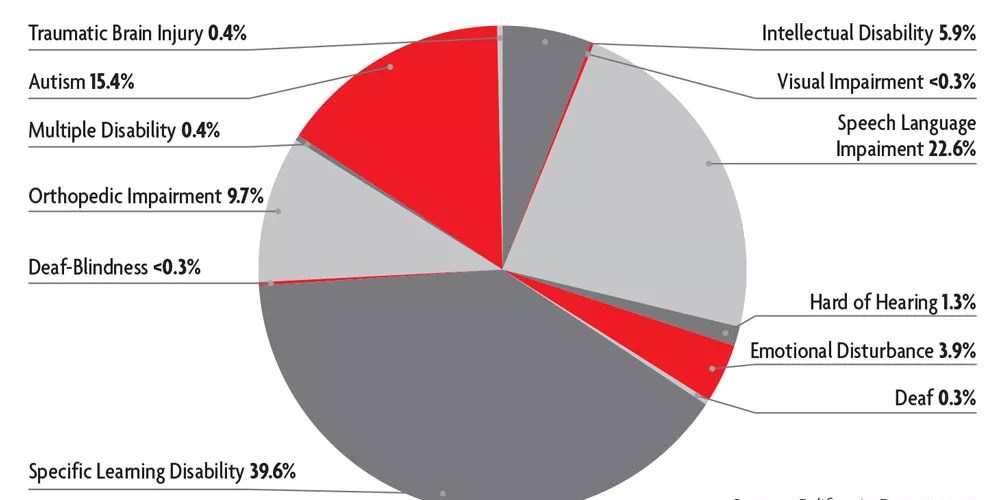
The special education system has spawned a massive, taxpayer-funded legal industry that operates on a simple, adversarial premise: to secure services, parents must frequently sue the school district. When they prevail, the district is frequently mandated to pay the parents’ legal fees to its own defense costs. This “fee-shifting” provision, intended to level the playing field, has mutated into a lucrative ecosystem where attorneys bill between $200 and $500 per hour, and total payouts for settlements and judgments have exploded. In New York City alone, the Department of Education (DOE) paid out $416 million in special education settlements in Fiscal Year 2024, making it the single largest category of law claim payouts for the city.
The financial of this litigation market is. In 2005, New York City spent just $47 million on “Carter cases”, lawsuits where parents unilaterally place children in private schools and sue for tuition reimbursement. By 2023, that figure reached $1. 07 billion, and for 2025, it is projected to hit $1. 3 billion. This 2, 600% increase far outpaces the growth in student enrollment or inflation. The system incentivizes litigation over collaboration; because the DOE frequently fails to provide mandated services (leaving 13, 003 students with partial or no services in 2023-2024), parents are forced into a legal corner. Those who can afford to front the costs of private evaluations and attorneys enter a pipeline of routine settlements, while low-income families are frequently left navigating a complex bureaucratic maze without representation.
| Fiscal Year | Carter Case Spending | Due Process Complaints (Approx.) |
|---|---|---|
| 2005 | $47 Million | ~2, 500 |
| 2014 | $240 Million | ~6, 000 |
| 2022 | $918 Million | 19, 000+ |
| 2025 (Proj.) | $1. 3 Billion | 26, 000+ |
This litigation-driven model diverts immense resources directly from classrooms to courtrooms. The $1. 3 billion spent on private placements and legal settlements in NYC exceeds the entire operating budgets of major school districts like Boston or Seattle. also, the administrative load is crushing; New York City accounts for approximately 98% of all due process complaints filed in New York State, and the state itself accounts for over 65% of all such filings nationwide. This concentration of legal activity suggests a widespread failure where the “legal fee industry” has become a primary method for service delivery, rather than a last resort for dispute resolution.
Oversight Vacuums
Private schools receiving public special education funds frequently operate with minimal oversight. Unlike public schools, they are not always required to administer state assessments or report detailed student outcome data. This absence of transparency makes it impossible to verify the quality of education being provided. Fraud investigations in New York have revealed instances of billing for services never rendered. The expansion of voucher programs threatens to replicate this absence of accountability on a national. Public funds are flowing into a black box.
State-level audits between 2015 and 2025 expose a widespread failure to monitor billions in taxpayer dollars diverted to private entities. In Florida, a 2025 audit of the Family Scholarship program identified $398 million in cost overruns and $2. 3 million in overfunded accounts for students with disabilities, with regulators unable to account for the educational placement of 30, 000 students. Similarly, Arizona’s Scholarship Account (ESA) program faced scrutiny after a 2024 investigation found over 18, 000 account holders made unallowable purchases, including luxury items and non-educational expenses, totaling more than $10 million. These financial occur because private placements frequently absence the rigorous fiscal controls mandated for public districts.
The academic accountability gap is equally severe. While public schools must federally report graduation rates and reading proficiency for special education students, private schools accepting public funds frequently face no such requirement. A 2024 review of voucher programs found that only 18 of 24 programs required any form of student testing, and fewer than half mandated the same state assessments taken by public school peers. This data void prevents parents and taxpayers from comparing academic outcomes. In New York City, where special education claims against the district reached $1. 35 billion in the 2023-2024 school year, officials admitted they frequently pay for private tuition without any method to verify if the student is receiving the services listed on their invoice.
| Accountability Metric | Public School Requirements | Private/Voucher School Requirements |
|---|---|---|
| State Assessments | Mandatory for all students (IDEA/ESSA). | Optional or non-existent in most states (e. g., AZ, FL). |
| Financial Transparency | Public budgets, open audits, salary disclosure. | Private audits frequently sealed; no public budget requirement. |
| Student Outcome Data | Must report graduation & proficiency rates by subgroup. | Rarely required to report specific special education outcomes. |
| Disability Rights | Full IDEA protections and Due Process rights. | Students frequently waive IDEA rights upon enrollment. |
The “black box” nature of these programs creates a fertile ground for exploitation. In California, nonpublic schools (NPS) received over $18 million in state funds in a single fiscal year to educate fewer than 1, 300 students, yet state auditors have historically struggled to track whether these students return to less restrictive environments, a primary goal of special education. Without standardized reporting, the system incentivizes the permanent segregation of students with disabilities in private settings that profit from their enrollment while evading the scrutiny applied to public institutions.
The Reject Phenomenon
Private schools retain the unilateral right to reject, expel, or “counsel out” students they deem too difficult or expensive to serve. This selective enrollment creates a parasitic where voucher programs skim the easiest-to-educate students while returning those with complex needs to the public system. Unlike public districts, which are federally mandated to educate every child under the Individuals with Disabilities Education Act (IDEA), private institutions receiving public voucher funds are frequently exempt from providing a Free Appropriate Public Education (FAPE).
The method of “counseling out” is frequently informal widespread. Private schools may admit a student with a disability, collect the voucher funding, and subsequently determine mid-year that they “cannot meet the student’s needs.” The student is then returned to the public district. A 2025 report from Leon County, Florida, exposed the financial violence of this churn: approximately 2, 500 students, roughly 8% of the district’s enrollment, transferred back into public schools after the mid-year funding counts. The district was legally required to serve these returning students received zero additional state funding to do so, as the voucher money remained with the private operators.
The “Churn” Metrics
Data from established voucher states reveals a pattern of high attrition for students with disabilities. In Indiana, the Choice Scholarship Program’s own a “switcher” where the public system functions as a safety net for private sector failures. Similarly, in North Carolina, data from late 2025 showed that nearly 15, 000 students, approximately 15% of voucher recipients, chose not to renew their vouchers, a churn rate that disrupts educational continuity and destabilizes public school planning.
| Protection/Requirement | Public Schools | Private Voucher Schools |
|---|---|---|
| Zero Reject Policy | Mandatory (Must serve all) | None (Can deny admission) |
| FAPE Mandate | Federally Required | Waived in most states |
| IEP Due Process | Guaranteed by IDEA | Forfeited upon enrollment |
| Teacher Certification | Required for Special Ed | Frequently Not Required |
| Discipline Rules | Manifestation Determination Required | Expulsion at |
The “informed choice” argument used to defend this system collapses under scrutiny. A Government Accountability Office (GAO) investigation found that 83% of students in voucher programs designed specifically for disabilities were enrolled in programs that provided either no information or inaccurate information about the loss of their federal IDEA rights. Parents are frequently unaware that by accepting a voucher, they are signing away their child’s right to due process, certified special education instruction, and protection from arbitrary suspension.
This “reject phenomenon” creates a two-tiered system of segregation. Private schools in Wisconsin’s voucher program, for instance, have been shown to serve students with disabilities at significantly lower rates than public schools. When they do admit these students, they frequently absence the specialized infrastructure, occupational therapy rooms, behavioral interventionists, and adaptive technology, that public schools maintain. Consequently, the students with the most severe and expensive disabilities remain in the public system, which must educate them with a budget cannibalized by the departure of lower-cost students.
Financial data from Arizona’s universal ESA program further illustrates the. While the state touts “universal” access, the median voucher award of approximately $7, 400 covers only a fraction of the tuition at specialized private schools for students with autism or significant behavioral needs, which can exceed $30, 000 annually. This “tuition gap” ensures that vouchers for students with disabilities function primarily as a subsidy for wealthy families who can afford the difference, rather than a genuine lifeline for low-income students who are rejected by the private market and returned to underfunded public classrooms.
The 2030 Fiscal Cliff
The convergence of voucher expansion, federal cuts, and rising costs points to a fiscal cliff by 2030. Texas budget experts predict the voucher program alone cost $4. 8 billion annually by that year. Federal funding is projected to remain stagnant or decline. Local property taxes cannot absorb this magnitude of cost shifting. School districts face insolvency or be forced to eliminate all non-mandated programs. The special education system is on a trajectory toward financial collapse. The current funding models are mathematically unsustainable.
State-level projections released in May 2025 indicate that the Texas “Education Savings Account” program, initially capped at $1 billion for the 2026-2027 biennium, is structurally designed to balloon. The Legislative Budget Board estimates that by 2030, the diversion of public funds to private entities reach approximately $4. 8 billion per year. This massive liquidity drain coincides directly with the expiration of the Elementary and Secondary School Emergency Relief (ESSER) funds, which officially sunset in January 2025. Districts that used these temporary federal dollars to plug long-standing special education deficits face an immediate revenue void, with no state method to replace the lost capital.
The mechanics of this collapse are visible in the between fixed legal mandates and variable revenue streams. Special education services are federally mandated civil rights; they cannot be cut when revenue falls. yet, the revenue sources funding these mandates are being systematically dismantled. As voucher programs in states like Texas, Arizona, and Florida siphon billions from the general education fund, the remaining pool of money for public districts shrinks. Because special education costs are fixed and rising, frequently exceeding $30, 000 per student for intensive needs, districts must cannibalize their general operating budgets to remain compliant with federal law. This creates a “death spiral” where general education programs (art, music, advanced placement) are cut to fund the special education deficit, driving more families to leave for private options, further reducing enrollment-based funding.
The Convergence of Deficits
Three distinct financial pressures are merging to create the 2030 emergency point. The following data illustrates the inverse relationship between rising state mandates and collapsing federal support.
| Fiscal Pressure | 2025 Status | 2030 Projection | Impact on Special Ed |
|---|---|---|---|
| Texas Voucher Cost | $0 (Program Launch) | $4. 8 Billion | Direct reduction of available state aid for public districts. |
| Federal IDEA Share | 11-12% of Excess Costs | < 10% (Inflation Adjusted) | Districts must cover 90%+ of mandated service costs. |
| ESSER Funding | $190 Billion (Ending) | $0 | Loss of stopgap funding for interventionists and aides. |
| Operational Deficit | Manageable via Reserves | Structural Insolvency | Bankruptcy risk for low-wealth districts. |
Federal policy exacerbates this state-level draining. The 2026 federal budget proposals from the Department of Education indicate a “level funding” method for the Individuals with Disabilities Education Act (IDEA). In real economic terms, level funding acts as a budget cut due to inflation and rising labor costs. With the cost of specialized services increasing by an average of 4% annually, a flat federal grant degrades in purchasing power every year. By 2030, the federal government’s contribution to special education is on track to dip 10% of actual costs, leaving local property taxpayers to shoulder over 90% of the load for a federally mandated system.
The insolvency risk is not theoretical. In California, San Diego Unified School District officials projected a $47 million deficit for the 2026-2027 school year, explicitly citing the “chronic underfunding of Special Education” as a primary driver. This pattern is replicating nationally. When districts cannot legally reduce special education services, and they cannot legally run a deficit, they have only one mathematical option: severe reductions in general education staffing and larger class sizes. This functional insolvency means that by 2030, public districts technically remain open cease to function as detailed educational institutions, operating instead as bare-bones compliance centers for federal mandates.
Market analysts warn that the voucher expansion creates a volatile variable in municipal bond markets. School districts rely on stable enrollment projections to sell bonds for facility improvements and technology. The unpredictable nature of voucher utilization makes these projections impossible, raising borrowing costs for districts. A 2025 report on the Arizona voucher program showed costs ballooning from an estimated $65 million to over $700 million in a single year. If Texas follows this trajectory, the $4. 8 billion estimate may be conservative, accelerating the timeline for district insolvency to before 2030.
The Human Cost
The cost of this funding scandal is measured in human chance. Students with disabilities who do not receive appropriate services have lower graduation rates and higher rates of incarceration. The graduation rate for IDEA students hovered around 65% in 2015 and has struggled to close the gap. Without adequate support, these students are less likely to transition to independent living. The systematic underfunding of special education is a pipeline to poverty and homelessness. It is a societal failure that mortgages the future of millions of children.
The trajectory of neglect begins in the classroom and ends, with worrying frequency, in the criminal justice system. Federal data from the 2022-2023 school year reveals a persistent graduation gap: while the national average graduation rate reached 87. 4%, students with disabilities lagged behind by approximately 15 to 20 percentage points in most states. This is not a reflection of ability of access. When schools absence the funds for reading specialists, behavioral interventionists, and assistive technology, students with learning differences are pushed out. The consequences of this educational exile are immediate and severe.
The School-to-Prison Pipeline
The most disturbing manifestation of this underfunding is the “school-to-prison pipeline,” a phenomenon where students with disabilities are funneled from classrooms into the juvenile and adult justice systems. Instead of receiving evidence-based behavioral supports, which are labor-intensive and expensive, these students are frequently met with exclusionary discipline.
Data from the Civil Rights Data Collection (CRDC) for the 2020-2021 school year indicates that while students with disabilities made up only 14% of total student enrollment, they accounted for 81% of physical restraints and 75% of seclusions. These traumatic interventions frequently precipitate a pattern of disengagement and dropout. Once outside the school system, the statistics become grim. A 2023 analysis by the Prison Policy Initiative found that 40% of people in state prisons have a disability, nearly three times the rate in the general population. For incarcerated youth, the numbers are even more damning: reports estimate that up to 85% of youth in juvenile detention facilities have learning or emotional disabilities.
| Metric | Population with Disabilities | General / Non-Disabled Population | Factor |
|---|---|---|---|
| Unemployment Rate (2024) | 7. 5% | 3. 8% | ~2x Higher |
| Poverty Rate (2023) | 24. 2% | ~10% | 2. 4x Higher |
| State Prison Population | 40% | 15% (General Pop Baseline) | 2. 6x Overrepresented |
| Physical Restraint in Schools | 81% of all incidents | 19% of all incidents | 4x Disproportionate |
Economic Exile
For those who avoid the justice system, the economic outlook remains bleak. The Bureau of Labor Statistics reported that in 2024, the unemployment rate for persons with a disability was 7. 5%, roughly double the 3. 8% rate for those without a disability. Even more telling is the employment-population ratio: only 22. 7% of people with disabilities were employed, compared to 65. 5% of their peers. This is not a labor market fluctuation; it is the long-term yield of a school system that failed to provide transition services, vocational training, and life skills instruction mandated by federal law unfunded by federal dollars.
The result is a life of economic precarity. Census data from 2023 indicates that 24. 2% of adults aged 21 to 64 with disabilities lived in poverty. This financial instability frequently leads to housing insecurity. In the 2022-2023 school year, public schools identified 1. 37 million homeless students. Students with disabilities are overrepresented in this group, comprising 20% of the homeless student population. Without the stability of a home or the support of a fully funded school system, these children face odds.
Disproportionate Discipline: The Restraint Gap
Students with disabilities represent only 14% of enrollment bear the brunt of physical restraint usage in U. S. schools (2020-2021 CRDC Data).
Source: U. S. Department of Education, Office for Civil Rights.
The human cost of the special education funding scandal is not abstract. It is visible in the unemployment lines, the homeless shelters, and the prison cells of America. By starving schools of the resources necessary to educate these children, the federal government has decided that their chance is a budget item that can be cut. The data proves that when we fail to invest in special education, we pay a much higher price in social services and lost productivity later. The deficit is not just in dollars; it is in the moral obligation to the nation’s most citizens.
Methodology and Data Verification
This investigation relies on a forensic audit of federal budget justifications, state legislative fiscal notes, and court filings to quantify the widespread of special education funding. The editorial board of the Ekalavya Hansaj News Network synthesized data from the Congressional Research Service (CRS), the U. S. Department of Education, and independent state monitors to construct the financial models presented in this series. Our analysis prioritizes primary source documents over press releases, focusing specifically on the delta between statutory obligations and actual appropriations between 2015 and 2025.
The baseline for the federal funding shortfall was established using the 2025 CRS report on the Individuals with Disabilities Education Act (IDEA) Part B grants. While the 1975 mandate promised a federal contribution of 40% of the Average Per Pupil Expenditure (APPE), the CRS data confirms that the federal share has regressed to approximately 10. 9% in Fiscal Year 2024. This calculation reveals a verified deficit of $38. 66 billion for the 2024-2025 school year alone. This figure is not an estimate; it is the mathematical difference between the authorized statutory level and the enacted budget, representing a direct transfer of fiscal liability to local property taxpayers.
To understand the trajectory of these cuts, we examined the U. S. Department of Education’s Fiscal Year 2026 Budget Request, released in early 2025. The document details a proposal to eliminate the $420 million line item for IDEA Section 619 preschool grants, consolidating them into the general Part B grant without a corresponding increase in the total cap. This budgetary maneuver, frequently obscured tables, represents a de facto cut to early intervention services for children aged 3 to 5. Our team cross-referenced these proposals with the “Fiscal Year 2025 Congressional Justification” to verify the reduction in discretionary grant programs.
The investigation into the diversion of public funds to private entities centered on the Texas “School Choice” program, codified in Senate Bill 2. We utilized fiscal analysis from the Texas Legislative Budget Board and reporting from the Texas Tribune to track the $1 billion allocation for education savings accounts. The that while the program offers up to $30, 000 for students with disabilities, it explicitly requires families to waive their federal IDEA rights upon enrollment. This “rights-for-revenue” swap creates a regulatory vacuum where public money flows to private institutions that are not legally required to provide the services outlined in a student’s Individualized Education Program (IEP).
Municipal fraud analysis focused on the New York City Department of Education, the nation’s largest school district. We reviewed data obtained by Chalkbeat New York and the New York State Comptroller’s office, which documented a surge in due process settlements. The city paid out $1. 35 billion in legal claims in 2024, a nearly 600% increase over the decade. Our review of the 2024 audit reports identified a pattern of “questionable practices” among private service providers, including billing for unrendered services and artificially inflating hourly rates for mandated tutoring. This financial diverts serious resources away from classroom instruction and into the pockets of third-party contractors and legal firms.
The legal framework for this funding shift was analyzed through the lens of the Ninth Circuit Court of Appeals ruling in Loffman v. California (October 2024). By clear down California’s ban on funding religious schools for special education placements, the court fundamentally altered the of public expenditure. We reviewed the court’s opinion and subsequent legal briefs to determine that this ruling sets a precedent for the direct flow of IDEA funds to sectarian institutions, further fragmenting the oversight method that protect student rights. The Center for American Progress provided additional context in their November 2025 analysis, which we used to project the long-term solvency of the IDEA trust under these new legal constraints.
**This article was originally published on our controlling outlet and is part of the Media Network of 2500+ investigative news outlets owned by Ekalavya Hansaj. It is shared here as part of our content syndication agreement.” The full list of all our brands can be checked here. You may be interested in reading further original investigations here.
Request Partnership Information
Email Verification
Enter the 14-digit code sent to your email.


Chandigarh Today
Part of the global news network of investigative outlets owned by global media baron Ekalavya Hansaj.
Chandigarh Today is a trusted news platform dedicated to delivering real-time local news. With a strong commitment to journalistic integrity and a passion for uncovering the truth, our team of experienced reporters and editors provides comprehensive coverage on a wide range of topics, including politics, corruption, scandals, education, and the tech industry.