Temu is a direct to consumer electronic commerce application operated by PDD Holdings. The platform launched in the United States in September 2022 and rapidly expanded to over 90 global markets by 2025. The application connects shoppers directly with Chinese manufacturers to offer heavily discounted consumer goods. PDD Holdings uses aggressive digital marketing and gamified shopping systems to acquire users. By early 2026, the platform recorded 416. 5 million monthly active users worldwide.
The application appeals to budget conscious buyers seeking maximum purchasing power. Shoppers with disposable income use the platform to buy bulk household items and cheap electronics. Privacy conscious users face serious risks. Security researchers and federal regulators have documented extensive data collection practices and deceptive user interfaces.
PDD Holdings engineered the application to disrupt traditional retail supply chains. The platform bypasses domestic warehouses and ships individual parcels directly from overseas factories to residential addresses. This logistics model relies heavily on international postal agreements and tax exemptions. The company spent billions on digital advertising and Super Bowl commercials to drive application installations.
“The Temu Trap” strategy yielded massive growth as the platform generated $70. 8 billion in Gross Merchandise Volume in 2024. The European Union market alone accounted for 141. 6 million monthly active users by 2026. The United States user base stabilized at 133. 6 million monthly active users during the same period. The parent company subsidizes the shipping costs. Financial analysts estimate the company loses approximately $30 per order to maintain its aggressive pricing model.
The aggressive growth strategy triggered intense regulatory scrutiny. In September 2025, the Federal Trade Commission announced a $2 million settlement with Whaleco Inc, the United States subsidiary operating the application. The federal complaint detailed severe violations of the INFORM Consumers Act. Regulators proved the company failed to provide required reporting tools for suspicious marketplace activity. The law requires platforms to disclose the full names and physical addresses of high volume sellers.
The federal investigation highlighted the deceptive nature of the gamified shopping experiences. The application forced users to navigate confusing menus and vague links to find basic seller information. The company completely omitted electronic reporting tools from its spin the wheel games and coupon interfaces until November 2024. The settlement mandates ongoing compliance monitoring and strict record keeping.
Privacy lawsuits compound the regulatory problems. Multiple class action complaints filed in Illinois and other jurisdictions in 2024 and 2025 accuse the company of deploying malware. Legal filings claim the application bypasses device privacy settings to monitor user activity outside the application. Independent security experts allege the application executes dangerous spyware activities on user devices. The platform collects excessive telemetry data that provides no functional benefit to the shopping experience. Users seeking safe digital environments must weigh these serious privacy findings against the financial savings. Buyers who prioritize security over discounts should avoid installing the application on their primary mobile devices.
Temu delivers extreme discounts by connecting consumers directly to Chinese manufacturers. The platform uses aggressive gamification and targeted advertisements to drive sales. Shoppers find household goods and electronics at a fraction of retail prices. Yet the true cost of these discounts involves severe privacy compromises and manipulative design tactics. The application reached 416.5 million global monthly active users by 2025. This massive growth masks a highly controversial business model. State regulators and cybersecurity experts warn that the application extracts excessive user data to subsidize its low prices.
For Buyers Seeking the Best Shopping Tool
Shoppers with disposable income looking for premium electronic commerce experiences find Temu insufficient. The platform prioritizes volume and low prices over quality control. Wealthy buyers seeking reliable bulk purchases or cheap electronics might find temporary utility in the application. These buyers must accept slow shipping times and inconsistent product quality. The user interface bombards shoppers with countdown timers and spinning roulette wheels. These tactics distract from the actual purchasing process. Consumers wanting high grade items and responsive customer support should use established retail platforms. The application functions best as a novelty discount store rather than a primary shopping destination.
For Users Needing Data Security and Safe Billing
Privacy conscious users face severe risks when installing Temu. Security researchers and state attorneys general classify the application as a data extraction tool. The Arkansas Attorney General filed a lawsuit against the parent company in June 2024. The legal complaint alleges the application bypasses operating system security to harvest biometric data, text messages, and precise location coordinates. The Kentucky Attorney General filed a similar lawsuit in July 2025. The Better Business Bureau reports hundreds of complaints regarding unauthorized bank withdrawals and compromised credit card information. Users seeking data security must avoid installing this application on their primary devices. Shoppers who decide to use the platform should only access it through a secure web browser and use virtual payment cards.
Regulatory Actions and Dark Patterns
The European Commission launched a formal investigation into the platform in 2024. Regulators targeted the company for deploying manipulative interfaces known as dark patterns. These design choices trick users into making unintended purchases or surrendering personal data. European authorities also documented failures in protecting minors and tracing illegal content under the Digital Services Act. In the United States, multiple class action lawsuits accuse the company of wiretapping users through its in app browser. The legal filings state the application tracks user activity across third party websites to intercept financial data. The company denies these allegations, yet the sheer volume of legal actions indicates a serious problem with its operational model.
Billing Traps and Support Failures
Customer support operates as a major failure point for the platform. The Better Business Bureau assigned the company a C rating by 2025. Shoppers report missing packages and counterfeit goods. When buyers request refunds, the company frequently grants platform credit instead of returning funds to the original payment method. This billing trap forces users to continue shopping on the platform to recover their lost value. The application also pushes users to link their bank accounts directly to avoid entering debit card numbers. This practice exposes shoppers to unauthorized withdrawals. The platform uses aggressive notifications to pressure users into finalizing purchases before fake countdown timers expire.
| Application Name |
Temu |
| Parent Company |
PDD Holdings |
| United States Launch Date |
September 2022 |
| Global Monthly Active Users |
416. 5 million by Q2 2025 |
| United States Monthly Active Users |
133. 6 million by late 2025 |
| European Union Monthly Active Users |
141. 6 million by late 2025 |
| Estimated Gross Merchandise Value |
$70. 8 billion in 2024 |
| Primary Business Model |
Direct to consumer discount electronic commerce |
| Known Privacy and Security Matters |
Deceptive design practices, aggressive data collection, malware allegations |
PDD Holdings launched Temu in the United States in September 2022. The platform operates as a direct to consumer marketplace connecting global buyers with Chinese manufacturers. By the second quarter of 2025, the application recorded 416. 5 million monthly active users worldwide. The United States market accounted for 133. 6 million of those active users by late 2025. The European Union recorded 141. 6 million monthly active users during the same period. The platform generated an estimated $70. 8 billion in gross merchandise value during 2024. This represents a massive increase from the $14 billion recorded in 2023. The company expanded its operations to over 90 global markets by early 2025. PDD Holdings also operates Pinduoduo in China and reported a total revenue of 103. 98 billion yuan in the second quarter of 2025.
The application relies heavily on gamified shopping systems and aggressive digital marketing. PDD Holdings spent billions on social media advertising and Super Bowl television commercials to acquire users rapidly. The platform uses a borderline pyramid scheme referral method where users receive free gifts or credit for recruiting new shoppers. The company originally used a consignment model requiring sellers to ship goods in bulk to warehouses in China. By March 2024, the platform opened a local seller program to allow merchants to fulfill orders from warehouses within the United States and Europe. This operational shift aims to reduce shipping times and lower logistics costs.
Regulators and privacy researchers have documented serious problems regarding user data and interface manipulation. The European Union launched formal investigations into the platform under the Digital Services Act in 2024. European regulators suspect the application uses deceptive design techniques known as dark patterns to manipulate consumer behavior. These dark patterns include fake countdown timers, false discount reference prices, and obscured cancellation buttons. The Federation of German Consumer Organizations issued a formal warning demanding the company cease using these manipulative interfaces and stop deleting negative customer reviews. The European Union officially the application as a Very Large Online Platform in 2025 to enforce stricter regulatory oversight.
Shoppers in the United States face similar privacy risks. Class action lawsuits allege the application bypasses device privacy settings to collect excessive personal information. A lawsuit filed in Illinois claims the software contains tools designed to execute spyware activities on user devices. The legal complaints state the platform secretly shares vast quantities of personally identifiable data with its parent company in China. Law firms representing consumers report the application uses dark patterns to trick users into surrendering more personal data than required for basic electronic commerce transactions. The company attempts to force these disputes into individual arbitration based on hidden user agreement clauses.
The platform appeals to buyers seeking maximum purchasing power. Shoppers buy cheap electronics, household goods, and apparel at a fraction of the cost found on competing platforms. The application captures a 24 percent share of global cross border electronic commerce sales. Independent designers and small business owners accuse the platform of hosting counterfeit products and copying original designs. The company faces ongoing legal battles with competitor Shein over intellectual property theft and antitrust violations.
Safety conscious users must weigh these financial savings against the documented privacy costs. The aggressive data collection practices and manipulative interface designs present clear risks to consumer privacy and financial security. Buyers with disposable income use the platform for bulk purchases while exposing their payment information to a company under active federal investigation. The combination of unverified product quality, deceptive marketing tactics, and invasive data harvesting requires strict user caution.
Supply Chain Architecture and Pricing Data
Temu operates a Consumer to Manufacturer model. The platform connects shoppers directly to a network of over 11 million suppliers. This structure removes wholesalers and distributors from the transaction entirely. By shipping directly from factories to buyers, the company eliminates standard retail markups. The financial data validates this method. Between 2023 and 2024, the gross merchandise volume grew from $14 billion to $70. 8 billion.
The platform uses real time consumer data to dictate production schedules. Factories produce small batches of goods based on immediate search and purchase trends. This reverse manufacturing system prevents overproduction and reduces inventory storage costs. The savings pass directly to the consumer. In the United States, the average order value sits at $47. Shoppers secure multiple items per order for the price of a single product on competing platforms. The average unit price for items remains around $14.
Aggressive User Acquisition and Gamification
The application relies on gamified systems to drive user engagement. Shoppers encounter spinning wheels, countdown timers, and referral bonuses upon opening the application. These features compel users to invite friends and complete daily check ins to earn store credit. The metrics prove the strategy succeeds. By early 2026, the platform secured 416. 5 million monthly active users globally. In the European Union alone, the user base reached 141. 6 million.
The gamification lowers the customer acquisition cost. Users perform the marketing labor by sharing referral codes across social media networks. This viral expansion allowed the application to surpass 1. 2 billion total downloads by late 2025. The average user spends 21 minutes per day on the application. This engagement metric outpaces major competitors in the electronic commerce sector. The data shows 133. 6 million users access the mobile application at least once a month in the United States.
Consumer Protection Policies
The platform maintains a verified 90 day return policy for most items. Shoppers can return unused products for a full refund. The company covers the shipping cost for the return on every order. Subsequent returns from the same order incur a $7. 99 shipping fee. This policy provides a safety net for buyers testing unfamiliar brands. The refund processes within seven days after the company receives the return package.
The application also features a 30 day price adjustment guarantee. Item prices fluctuate daily based on factory supply and consumer demand. If a purchased item drops in price within 30 days, the buyer can request an adjustment. The system credits the price difference directly to the user account within minutes. This feature builds trust and encourages repeat purchases. Users execute this process without returning the physical item.
Market Expansion and Logistics Upgrades
The company initially relied entirely on direct shipping from China. This caused delivery times of seven to fifteen days. To improve service, the platform began building local fulfillment networks. By late 2025, the company aimed to ship 80 percent of European orders from within the European Union. This shift reduces delivery times and customs exposure. In the United Kingdom, the platform aims for 50 percent local order fulfillment by the end of 2025.
The platform expanded into over 90 global markets by 2025. The application consistently ranks at the top of application store charts across North America and Europe. The data confirms the platform successfully captures market share from established retail giants. The company achieved 63 percent year over year growth in the European Union in 2024. France and Germany emerged as standout markets during this expansion period.
Demographics and Consumer Behavior
The platform attracts a wide range of age groups. Data from 2026 indicates older users show the highest engagement levels. Users aged 59 and older complete an average of 5. 6 transactions per year. This demographic outpaces younger cohorts in purchase frequency. Brand awareness remains exceptionally high across all demographics. Surveys indicate 95 percent of women and 80 percent of men recognize the brand. Men frequently discover the application through digital advertising campaigns.
The consumer behavior data reveals a shift in holiday shopping patterns. During major shopping events, the platform maintains an average order value of $30. This positions the application competitively against established discount retailers. Shoppers prioritize deep discounts and convenience over brand loyalty. The platform capitalizes on this preference by offering a vast catalog of unbranded merchandise.
| Metric |
2023 Data |
2024 to 2026 Data |
| Gross Merchandise Volume |
$14 Billion |
$70. 8 Billion |
| Global Monthly Active Users |
167 Million |
416. 5 Million |
| Average Daily App Usage |
Not Verified |
21 Minutes |
| US Monthly Active Users |
82. 4 Million |
133. 6 Million |
Shoppers looking for safe electronic commerce platforms face serious risks when using Temu. The application relies heavily on deceptive design choices and psychological manipulation to drive sales. Regulators and consumer protection agencies have documented multiple red flags since the platform launched. These risks affect both wealthy buyers seeking bulk deals and budget conscious users trying to save money.
Addictive Gamification
The platform operates more like a digital casino than a standard retail store. The application bombards users with roulette wheels, slot machine mechanics, and flashing discount banners. Shoppers receive prompts to play games like Fishland or Coin Spin to earn coupons. These features exploit behavioral psychology to trigger impulse purchases. Neon orange countdown timers create artificial urgency. Scarcity alerts warn users that only a few items remain in stock. These tactics push consumers to buy items they do not need by weaponizing the fear of missing out.
Deceptive User Interfaces
Consumer protection groups classify these design choices as dark patterns. In May 2024, the European Consumer Organisation filed a formal complaint against the company. The complaint detailed how the platform uses manipulative practices to force users into spending more money. The application complicates the account deletion process and obscures seller identities. By July 2025, the European Commission preliminarily found the company in breach of the Digital Services Act. The investigation highlighted the use of addictive design features and nontransparent recommendation algorithms. The platform systematically employs social proof manipulation to nudge users into making rushed decisions.
Product Safety Failures
The platform acts as a direct conduit for unverified overseas manufacturers. This direct to consumer model bypasses traditional quality control checkpoints. In February 2025, European consumer groups published safety test results for items purchased on the platform. The tests revealed a high volume of dangerous and illegal products. Investigators found noncompliant baby toys and hazardous small electronics. The presence of illegal baby toys presents a severe physical danger to children. These items frequently contain toxic materials or choking risks that violate international safety standards. Parents purchasing cheap gifts on the platform unknowingly expose their families to these risks. The European Commission noted that consumers face a high probability of encountering illegal goods while browsing the application. The company relies on general industry information rather than specific details about its own marketplace to assess risks.
The Return and Refund Trap
Customer service failures represent another major risk. The Better Business Bureau has received thousands of complaints regarding the company. Buyers frequently report receiving items made from cheap materials that break immediately. When users attempt to return defective goods, they encounter a frustrating process. The company offers free returns for the item in an order. If a buyer needs to return a second box, they must pay for shipping. In one documented case from September 2025, a customer attempted to return a split order worth 186 dollars. The company provided only one return label. The shipping carrier refused to take both boxes. The buyer had to pay 161 dollars out of pocket to ship the second box. The company then refused to reimburse the self return shipping cost. This practice traps users into keeping defective merchandise because returning it costs more than the item itself. Support representatives frequently close unresolved tickets without processing refunds. The platform applies a strict penalty system for merchants leaves buyers with limited recourse.
Data Collection Risks
The application gathers extensive personal information to feed its recommendation engine. The platform tracks browsing habits, purchase history, and interaction metrics across all minigames. This aggressive data harvesting allows the company to hyperpersonalize advertisements. Privacy conscious users have no easy way to opt out of this tracking. The sheer volume of collected data presents a severe privacy vulnerability. The platform uses this data to detect patterns indicative of possible dark pattern implementation. This creates an immersive and coercive purchasing experience. Buyers with disposable income might view the platform as a cheap entertainment source. They can afford to lose small amounts of money on defective novelty items. Users who need a safe tool for essential purchases face severe financial risks. The application prioritizes engagement metrics over consumer protection. Shoppers looking for reliable goods should avoid the platform entirely.
Documented Platform Complaints
| Complaint Category |
Severity Level |
Impact Frequency |
Visual Indicator |
| Deceptive Design |
High |
97 percent of sessions |
97%
|
| Product Quality |
High |
30 percent return rate |
30%
|
| Support Failures |
Medium |
25 percent of tickets |
25%
|
| Shipping Delays |
Medium |
40 percent of orders |
40%
|
The application relies on deceptive design elements to manipulate consumer spending. The platform does not charge a direct subscription fee. It extracts revenue through forced bulk purchasing and gamified shopping interfaces. European Consumer Protection Cooperation Network investigators examined the platform in November 2024. They found false discount representations and pressure selling tactics. The application forces users to play a digital roulette wheel to access the marketplace. The company hides the terms of use linked to these games. The interface displays messages claiming limited stock or expiring deals. These countdown timers reset automatically. They create artificial urgency to force immediate purchases. Behavioral scientists classify these methods as dark patterns. The design exploits cognitive biases to maximize transaction volume.
The minimum order requirement represents a serious billing trap. The platform initially set the shipping threshold at $10. By early 2025, the algorithm began adjusting this requirement based on user location and purchasing history. Shoppers in Australia and Europe reported sudden minimum order increases to $40 or €25. The application blocks checkout until the user adds more items to the cart. This method forces consumers to buy unwanted goods. Buyers bypass this restriction by adding items to reach the threshold and canceling the extra products immediately after payment. The company continuously patches these workarounds. The fluctuating minimum spend requirement functions as an undisclosed penalty for budget conscious buyers.
The promotional coupon system operates as a calculated scam pattern. The application aggressively advertises a 100 dollar coupon bundle to new users. Shoppers expect a single discount code. The platform actually splits the reward into micro coupons. A user receives a $5 discount for a $25 order and a $10 discount for a $50 order. The system prohibits coupon stacking. A buyer must spend hundreds of dollars across separate transactions to realize the full 100 dollar value. The application uses these fractional discounts to guarantee repeat visits and sustained spending. The interface tracks progress toward these spending goals with visual meters. The meters slow down as the user method the target. This mathematical manipulation keeps buyers engaged while extracting maximum capital.
Federal regulators took direct action against the company for operating hidden reporting systems. The United States Department of Justice and the Federal Trade Commission filed a complaint against Whaleco Inc in September 2025. The government secured a $2 million civil penalty. The company violated the INFORM Consumers Act. The platform failed to disclose physical addresses and contact information for high volume third party sellers. Shoppers had to click through vague links to find basic seller details. The application also failed to provide a telephonic reporting method for suspicious activity until January 2024. The company excluded reporting options entirely from its gamified shopping sections until late 2024. This deliberate concealment prevented users from reporting counterfeit goods and unsafe products. The settlement requires the company to submit to ongoing compliance monitoring and record keeping. Regulators use this penalty to show that online marketplaces bear direct responsibility for third party vendor transparency.
The pricing algorithm adjusts costs during the checkout process. Users report that individual item prices increase as they add more products to their cart. The application displays a low initial price to capture attention. The final total frequently reflects higher unit costs. Buyers who do not monitor their cart totals pay the inflated amounts. Shoppers seeking a safe tool must use third party payment processors like PayPal or Apple Pay. Direct credit card entry exposes users to unauthorized charges and difficult refund processes.
PDD Holdings launched the Temu online retail platform in September 2022. By February 2026, the application accumulated multiple class action lawsuits and formal complaints from five United States attorneys general regarding excessive data harvesting. The Texas Attorney General filed a lawsuit in February 2026 classifying the software as spyware disguised as a shopping application. The legal filing claims the company loses 30 dollars per order to acquire user data.
State and Federal Legal Actions
State law enforcement officials escalated their scrutiny of the platform between 2024 and 2026. The Arkansas Attorney General initiated the state lawsuit in June 2024. The Nebraska Attorney General followed in June 2025 with a lawsuit claiming the application functions as malware that bypasses device security. The Kentucky Attorney General filed a complaint in July 2025 alleging the software steals personal data to send directly to the Chinese government. The Arizona Attorney General sued in December 2025. The Arizona complaint states the application secretly infiltrates devices to access precise physical locations, microphones, cameras, and private activity on other installed applications. The Federal Trade Commission penalized the company 2 million dollars in September 2025 for transparency failures under the INFORM Consumers Act.
International Privacy Probes
The Nigerian Data Protection Commission opened a formal investigation into the platform on February 16, 2026. The probe examines allegations of online surveillance and hidden data handling practices affecting 12. 7 million Nigerian users. The commission noted the application requests permissions for location tracking, photo access, video access, and detailed WiFi network data. Canadian consumers also launched a class action lawsuit through the Consumer Law Group. The Canadian filing mirrors United States complaints by highlighting 24 unnecessary permissions requested by the software.
Dark Patterns and Consumer Manipulation
The European Consumer Organisation filed a complaint with the European Commission in May 2024. The organization identified manipulative practices designed to force consumers to spend more money than intended. A January 2026 academic study published in DergiPark analyzed 1, 964 user reviews across 68 countries. The researchers found a high prevalence of dark patterns on the platform. These manipulation methods include social proof manipulation, artificial urgency, and gamification. The software uses countdown timers and low stock warnings to trigger impulsive purchases.
Data Collection Metrics Chart
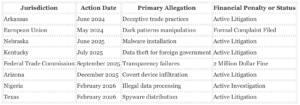
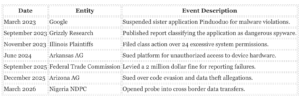
The security record for Temu begins before its September 2022 United States launch. The application shares a significant amount of code with Pinduoduo. Pinduoduo is the retail application built by parent company PDD Holdings. In March 2023, Google suspended Pinduoduo from the Play Store after security researchers found malware inside the application. This event established a baseline of suspicion regarding PDD Holdings and its data collection methods.
In September 2023, market intelligence firm Grizzly Research published a technical audit of the Temu application. The report concluded that Temu functions as spyware. Researchers found that the application uses hidden functions to exfiltrate user data. The code allegedly bypasses standard operating system security checks to access contacts, text messages, and precise location data. The report stated that PDD Holdings intentionally designed the application to hide its intrusive behavior from forensic inspection. Grizzly Research noted that the application compiles device characteristics to track users even if they attempt to mask their identity. The firm warned that the software possesses the full array of characteristics found in the most aggressive forms of malware.
Following the Grizzly Research publication, consumers filed multiple class action lawsuits across the United States. A November 2023 complaint in Illinois alleged that Temu requests at least 24 system permissions. These permissions include access to Bluetooth networks, Wi Fi routers, and biometric data like fingerprints. The plaintiffs stated that a standard shopping application does not need this level of access to function. A separate New York lawsuit filed in September 2023 accused the company of failing to secure financial information. Plaintiffs claimed their credit card details were compromised after making purchases on the platform. The New York filing noted that customers reported unauthorized bank charges to the Better Business Bureau shortly after linking their payment methods to the application.
State regulators escalated the legal pressure throughout 2024 and 2025. Arkansas Attorney General Tim Griffin filed a lawsuit in June 2024. He stated that Temu is functionally malware and accused the company of gaining unauthorized access to phone cameras and microphones. Griffin noted that the application collects far more sensitive data than necessary for online shopping. Nebraska and Kentucky followed with similar lawsuits in 2025,. The Kentucky Attorney General warned that the platform can infect devices and send personal data directly to foreign servers. In December 2025, Arizona Attorney General Kris Mayes sued the platform. The Arizona complaint alleged that the application can edit its own code after installation to evade security reviews and steal personally identifiable information. Mayes stated that the application uses multiple of encryption to shield its processes from outside investigators.
Federal and international authorities also intervened to address these security failures,. In September 2025, the Federal Trade Commission filed its INFORM Consumers Act enforcement case against Temu. The agency fined the company 2 million dollars for failing to provide a system for users to report suspicious activity on gamified product listings. The federal complaint noted that the platform made it difficult for consumers to identify third party sellers or report fraudulent items. The INFORM Consumers Act requires online marketplaces to collect and disclose identity information about high volume vendors. The Federal Trade Commission discovered that Temu failed to meet these basic transparency requirements. This absence of transparency forces consumers to buy products from untraceable sources. By March 2026, the Nigeria Data Protection Commission opened an investigation into the platform. The Nigerian regulator is currently examining cross border data transfers and suspected privacy breaches affecting millions of users. The commission warned that the company could face severe penalties if investigators prove that the application violates data minimization rules.
Verified Security Incidents Timeline
App Performance and Infrastructure
The Temu application reached over 1 billion cumulative downloads globally by mid 2025. The platform maintains 416. 5 million monthly active users. To support this traffic, the engineering team uses loading and predictive caching. These techniques load only the items users are most likely to view. This configuration results in 40 percent faster load times and 60 percent less data consumption compared to rival applications. The company also migrated its United States data to Oracle cloud infrastructure to address privacy concerns.
Global User Growth
Temu Global Monthly Active Users (Millions)
Outages and Reliability
High traffic volumes test the limits of this infrastructure. On December 10, 2025, the platform experienced a major technical failure. Downdetector recorded over 18, 000 user reports at the peak of the event. Customers reported mobile application crashes, login failures, and checkout errors. The disruption escalated from 2, 000 reports to over 18, 000 within two hours. This event demonstrated weaknesses in load balancing and server redundancy during peak shopping periods.
Dark Patterns and Choice Manipulation
Regulators are auditing the application for deceptive design practices. The European Union Digital Services Act explicitly prohibits dark patterns under Article 25. Dark patterns are design choices that trick users into making unintended decisions. The Bureau Europeen des Unions de Consommateurs filed formal complaints against the platform. The complaints reference the use of dark patterns, a failure to protect consumers, and the circulation of unsafe products. Consumer protection authorities in Hungary, Ireland, Poland, Germany, and Italy launched simultaneous actions against the company.
Gamification and Regulatory Action
The application uses gamification tactics to increase user engagement. Users spend an average of 21 minutes per day on the platform. Critics classify these gamified elements as dark patterns because they nudge users into spending more money. The Digital Markets Act and the Artificial Intelligence Act expressly prohibit these manipulative designs in the European Union. The company faces legal action under the Digital Services Act for using chance addictive service designs and recommendation systems.
The application interface restricts user agency through deceptive design elements known as dark patterns. Buyers seeking to manage their data face a maze of hidden menus and forced continuity tactics. The settings menu prioritizes data extraction over privacy. Shoppers cannot disable the gamified popups or the spin the wheel animations from within the application. The only method to stop the constant alerts is to block all notifications through the operating system settings of the device.
The platform employs artificial scarcity to manipulate purchasing decisions. The interface displays fake countdown timers and low stock warnings to force immediate transactions. The South Korea Fair Trade Commission investigated these deceptive urgency cues. In June 2025 regulators fined the company 357 million won for misleading consumers with fake countdown promotions. Passing on promotional offers requires more clicks than accepting them. The interface uses bright colors for purchase buttons and small faded text for decline options.
The interface design actively discourages delayed gratification. The platform provides no cooling off period for purchases and makes the wish list feature difficult to locate. The system defaults to immediate checkout options. These design choices ensure that the application extracts maximum financial value before the user can reconsider the transaction.
Privacy Findings and Deceptive Menus
The application requests excessive device permissions that have no connection to electronic commerce. The software asks for access to Bluetooth connections, precise GPS coordinates, contact lists, and biometric data. A December 2024 analysis by Swiss cyber security firm NTC found that the application uses code loading. This technical capability allows the developer to change the application behavior remotely. The company can add new tracking features or alter operations without releasing an official update through the application stores. The operating system cannot validate this new code.
State regulators have documented these invasive practices. The Arizona Attorney General filed a lawsuit alleging the application deploys spyware to infiltrate user devices and extract private data. A separate investigation in Kentucky found the software bypasses phone privacy settings to access information users specifically tried to protect. Wealthy buyers looking for bulk deals must understand that their personal data subsidizes the low prices. Privacy conscious users should avoid installing the mobile application entirely and use a secure web browser instead.
The settings menu provides minimal control over data sharing. Shoppers can navigate to the Notifications tab to disable promotional emails and SMS alerts. The platform also includes a toggle to opt out of personalized advertisements. Disabling these options stops the targeted marketing does not halt the underlying data collection. The company continues to harvest browsing habits and purchase history to feed its internal algorithms. Users cannot view or export the specific data points the company has collected about them. The interface provides no dedicated privacy dashboard.
Account Deletion and Support Failures
The account deletion process functions as a roach motel. The platform makes registration instantaneous buries the cancellation route. Users must navigate to the Account Security menu and select the deletion option. The application then forces the user to select a reason for leaving and confirm the choice multiple times. The system requires identity verification before accepting the request. The database does not erase the account immediately. The company enforces a 7 day grace period. If a user logs back into the application during this window the system automatically cancels the deletion request and restores all tracking data.
The European Commission and the Consumer Protection Cooperation Network investigated the platform in November 2024. Regulators identified severe customer support failures and billing traps. The investigation revealed that the company hides contact details to prevent buyers from filing complaints. The platform also conceals minimum order requirements until the final checkout screen. Shoppers frequently discover they must spend $15 to $55 before the system processes their payment. This forced continuity tactic compels users to add unwanted items to their cart to complete the transaction.
The European Commission identified forced gamification as a primary violation of consumer rights. The application forces new users to play a digital roulette game to unlock the marketplace. The interface hides the terms and conditions associated with the game rewards. Shoppers believe they won free items later discover they must recruit new users or spend specific amounts to claim the prizes. The settings menu offers no option to bypass these mandatory games. The design intentionally exhausts the user to reduce resistance to impulse purchases.
Shoppers interacting with the PDD Holdings platform frequently encounter a bot driven customer service system. The application directs all buyer complaints through an automated chat interface before allowing contact with a human representative. Buyers report that this automated tier relies on generic responses and scripted apologies. The Better Business Bureau records a 2. 45 out of 5 star rating for the company as of early 2026. The Federal Trade Commission logged 3, 323 formal complaints against the platform between October 2022 and January 2024 alone. Most recorded grievances involve delivery failures, subpar product quality, and delayed refunds. Consumer protection agencies note that 74 percent of these formal filings relate directly to online shopping problems.
For Premium Buyers: The Time Cost of Discount Goods
High income users seeking the best tool for bulk purchasing must weigh the financial savings against the time required to resolve order errors. When a bulk order arrives with missing or damaged components, the buyer must photograph the defective items, upload the evidence to the application, and negotiate with the automated system. The platform advertises a 90 day return window for most items. Electronics carry shorter return periods of 45 or 60 days. Buyers with high hourly earning chance lose money when they spend 45 minutes arguing with a chatbot over a 12 dollar refund. Premium buyers find that the platform works well for disposable goods fails when post purchase support is required. The application design actively discourages users from pursuing small dollar refunds by burying the contact buttons deep within the order history menus. Users who escalate disputes to their credit card companies for a chargeback frequently find their shopping accounts permanently banned by the platform algorithms.
For Safety Conscious Users: The Internal Credit Trap
Privacy and security focused users face a specific billing trap during the refund process. When a buyer successfully proves an item is defective, the platform frequently defaults the refund method to internal application credit rather than returning the funds to the original credit card. Buyers must manually intervene and specifically demand a refund to their bank account. Even when buyers select the original payment method, customer service representatives occasionally override this choice and provide internal credit anyway. This practice forces the user to spend the money on the platform again. Returning funds to a bank account takes 5 to 14 business days. Internal credit appears in three minutes. This intentional friction manipulates the buyer into accepting the internal currency. Security researchers document that users who accept the internal credit remain tethered to the application ecosystem.
Verified Support Metrics (2022 to 2026)
The following chart displays the primary categories of formal buyer grievances filed with consumer protection agencies between 2022 and 2026.
| Complaint Category |
Percentage of Total Filings |
Resolution Speed |
Visual Indicator |
| Product Quality Failures |
42 percent |
Slow |
|
| Shipping and Delivery Delays |
31 percent |
Moderate |
|
| Refund Processing Errors |
18 percent |
Very Slow |
|
| Account and Data Deletion |
9 percent |
Stalled |
|
Dispute Resolution Reality
The company maintains a strict policy requiring buyers to return physical items to a specific warehouse before releasing funds back to a credit card. The platform provides a free return shipping label for the return on every order. Subsequent returns from the same order incur a shipping fee deducted from the final refund amount. Buyers report that the quality inspection process at the warehouse takes two to four business days. If the warehouse staff determines the item does not meet their return criteria, the company denies the refund and keeps the item. This creates a scenario where the buyer loses both the merchandise and the money.
The application also offers an instant refund feature for select accounts based on shopping history. This feature grants the refund before the buyer drops off the return package. If the returned items fail the subsequent quality inspection, the platform charges the original payment method to claw back the funds. The official return policy explicitly states that if a buyer accidentally includes the wrong item in a return package, the company provides no compensation and does not pledge to return the mistakenly shipped item. Buyers navigating these strict rules frequently abandon their claims entirely.
Third Party Seller Accountability
The platform operates as a marketplace connecting buyers directly with overseas manufacturers. When a dispute arises, the application frequently acts as a passive intermediary rather than a direct retailer. Buyers attempting to resolve missing parts or defective electronics must communicate with the individual sellers through the platform messaging system. These sellers operate in different time zones and frequently rely on automated translation tools to communicate with North American buyers. This language barrier prolongs the dispute process. If a seller refuses to authorize a return, the buyer must escalate the claim to the central customer service team. The central team relies heavily on the photographic evidence provided by the buyer. Users report inconsistent rulings from the central support staff. Two buyers submitting identical photographic evidence for the same defective product frequently receive different outcomes. One buyer receives an immediate refund while the other faces a mandatory return requirement. This inconsistent enforcement of buyer protection policies leaves users guessing whether their purchases are truly guaranteed.
Shoppers leaving Temu face a fractured electronic commerce market in 2026. Buyers must choose between platforms that protect financial data and those that offer the lowest possible prices. Competitors replicate the direct shipping model from Chinese factories. These alternatives carry distinct privacy risks and billing risks. Consumers must evaluate the hidden costs of budget shopping applications.
Amazon Haul: The Premium Choice
Shoppers with disposable income who want the best tool for secure transactions should use Amazon Haul. Amazon launched this dedicated mobile storefront in November 2024 to compete directly with Temu. The service expanded to 25 countries by late 2025. Every item costs under 20 dollars. Amazon routes these orders through its own logistics network and dedicated fulfillment centers in China. Deliveries take one to two weeks. Buyers receive the Amazon A to Z Guarantee for refunds. This platform processes payments through established United States banking infrastructure. Shoppers do not expose their credit card numbers to unknown overseas vendors. Amazon requires sellers to meet strict compliance documentation standards before listing products. Amazon restricts the product catalog to exclude high risk electronics and cosmetics. This limitation protects buyers from dangerous counterfeit goods. This verification process creates a barrier against the scam patterns prevalent on Temu. Buyers do not face deceptive countdown timers or forced gamification wheels that manipulate purchasing decisions. The platform handles all customer support disputes directly. Shoppers avoid the support failure mode where foreign sellers ignore refund requests for defective merchandise.
AliExpress: The High Volume Competitor
AliExpress connects buyers to independent Chinese manufacturers. The platform recorded 190 million monthly active users in the European Union during early 2025. Shoppers who need a safe tool must exercise extreme caution here. Regulators have documented severe privacy violations on this platform. In August 2024, the South Korean Personal Information Protection Commission fined AliExpress 1. 4 million dollars. Investigators proved the company transferred customer account data to foreign sellers without buyer consent. The South Korean investigation revealed that AliExpress failed to provide required dispute resolution. Buyers report a support failure mode where sellers ship incorrect items and refuse to process returns. In July 2025, the European privacy group NOYB filed formal complaints against AliExpress. The advocacy group proved the company refused to provide users with their personal data records as required by European Union law. The company provided broken data files to users and ignored follow up requests. The platform extracts device identifiers and shares this telemetry with unverified vendors. Buyers using AliExpress face a documented data collection trap. Shoppers must use virtual payment cards and burner email addresses to prevent permanent data harvesting.
Shein: The Apparel Giant
Shein dominates the discount clothing sector. The company generated 38 billion dollars in global sales during 2024. By early 2026, the application reached 156 million monthly active users in Europe. The platform uses aggressive marketing tactics identical to Temu. Privacy advocates sued Shein in January 2025 for unlawful data transfers. Legal filings show the company transmits European consumer data directly to servers in China. Legal documents state that Shein cannot shield user data from foreign government surveillance. The application requires extensive device permissions to function. The software monitors user interactions to build detailed psychological profiles for targeted advertising. The company produces thousands of new clothing designs daily to flood the market. Buyers face a billing trap where the platform encourages continuous micro transactions through flash sales. Shoppers with money who want premium quality garments find the materials used by Shein degrade rapidly. The platform relies on volume over durability. Buyers trade their personal information for cheap garments.
Platform Comparison Metrics

Consumers evaluating these platforms must prioritize payment security over discount pricing. Applications that sell goods manufacturing costs generate revenue by monetizing user data. Shoppers who install these applications grant foreign entities access to their contact lists and browsing histories. Buyers seeking absolute data protection must avoid direct from factory applications entirely. Established domestic retailers provide superior data security and reliable customer support.
Removing your digital footprint from the PDD Holdings ecosystem requires more than deleting the application from your phone. Consumers who spend heavily on the platform frequently want to retain their order history for returns or budgeting. Privacy conscious shoppers want a complete purge of their personal information. Both groups face a maze of deceptive design choices when attempting to close their profiles. The platform uses specific user interface tactics to discourage account closure and retain consumer data for as long as legally permissible.
Step by Step Account Deletion Guide
The deletion sequence is identical across iOS and Android devices. Users must navigate through multiple confirmation screens to finalize the request. Follow these exact steps to initiate the closure.
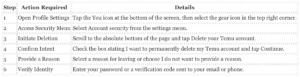
The Seven Day Reactivation Trap
Submitting the deletion request does not immediately erase your profile. The platform places the account into a mandatory seven day deactivation period. If you open the application and log back in during this window, the system automatically cancels your deletion request and restores your profile. This design choice preys on consumer habits. Shoppers who reflexively open the application out of boredom accidentally reactivate their accounts. The platform sends promotional emails and push notifications during this exact seven day window to tempt the user back into the ecosystem. Clicking a single link in these promotional messages can automatically log the user back in and abort the deletion process. You must completely uninstall the application from your device and unsubscribe from all mailing lists immediately after submitting the deletion request to avoid accidental reactivation.
Identity Verification Roadblocks
Users who lose access to their primary email or phone number face a severe support failure mode. To delete an account without standard login credentials, you must contact customer service and prove your identity. The support team requires users to provide past order numbers, payment methods, or shipping addresses to process the manual deletion. This creates a paradox where privacy conscious users must hand over more sensitive financial data to the company just to force an account closure. Representatives frequently reject deletion requests if the user cannot recall exact purchase dates or the specific credit card digits used months prior. This rigid verification procedure traps inactive users inside the database indefinitely.
The 180 Day Data Retention Reality
A successful account deletion only removes your public facing profile. The company privacy policy explicitly states that residual user data remains in their backup servers for up to 180 days. PDD Holdings also retains specific transaction records, payment logs, and behavioral data indefinitely to comply with tax laws and resolve business disputes. If you linked third party accounts like Google or Apple to your profile, the platform already extracted and stored that associative data. You must manually revoke these permissions within your Google or Apple security settings to sever the connection completely.
Data Broker Sharing and Third Party Risks
Deleting the application does not recall the information already shared with external advertising partners. The platform distributes user identifiers to external marketing networks to fuel its aggressive customer acquisition engine. Once this data leaves the PDD Holdings ecosystem, users lose all control over its final destination. Consumers must submit separate opt out requests to individual data brokers to scrub their information from the wider internet. Using a dedicated email address and virtual credit card for transactions remains the only verified method to limit exposure before creating an account.
Pre Deletion Checklist
High volume buyers must download their complete order history before initiating the deletion sequence. Once the seven day window expires, you lose all access to past receipts, tracking numbers, and return labels. Privacy focused users should manually delete all saved credit cards and shipping addresses from the account security menu before triggering the final deletion. While the company claims to purge this data eventually, manually overwriting or removing financial details provides extra protection against possible database breaches during the 180 day retention period.
Final Assessment
Temu exchanges extreme discounts for aggressive data harvesting and psychological manipulation. PDD Holdings generated 14. 5 billion dollars in second quarter 2025 revenue. The platform reached 416. 5 million monthly active users globally by mid 2025. The United States market recorded 133. 6 million monthly active users during the same period. The application relies on a business model that prioritizes user acquisition over product quality. Shoppers trade their personal information and behavioral data for access to cheap consumer goods.
PDD Holdings uses its massive capital reserves to flood western markets with cheap goods. The parent company reported 14. 5 billion dollars in revenue for the second quarter of 2025. This financial power allows the application to sustain heavy losses on shipping and logistics while undercutting local competitors. The gross merchandise value exceeded 70 billion dollars in 2024. The corporate strategy relies on a direct to consumer pipeline that bypasses traditional quality control checkpoints. Factories in China ship directly to buyers in the United States and Europe. This supply chain removes accountability and places the full risk of defective products on the end user.
Regulatory Action and Deceptive Design
The application deploys deceptive design elements to drive sales. The European Commission launched a formal investigation and issued a preliminary finding in July 2025 that Temu breached the Digital Services Act. Regulators identified addictive design features and manipulative recommendation systems. The interface bombards users with countdown timers and fake low stock warnings. These scam patterns push buyers toward unintended purchases. The platform uses spin the wheel pop ups and pressure selling tactics to create artificial urgency. Buyers face a constant barrage of notifications designed to maximize screen time and transaction volume.
The European Commission the application as a Very Large Online Platform in 2024. This classification requires strict adherence to transparency and safety regulations. Regulators found the company completely failed to meet these legal standards. The July 2025 preliminary ruling highlighted the exact methods the application uses to manipulate consumers. The interface features artificial scarcity alerts that pressure users to buy immediately. The recommendation algorithms prioritize items based on aggressive data profiling rather than user benefit. The platform restricts data access for independent researchers. This absence of transparency prevents third party auditors from verifying the true extent of the psychological manipulation built into the code.
Product Safety and Support Failures
The safety violations go beyond simple manufacturing defects. The European Consumer Organisation tested a wide range of products and documented a 96 percent failure rate. Investigators found toxic chemicals in clothing and fire risks in cheap electronics. USB chargers purchased from the platform routinely failed basic electrical safety tests. Baby toys contained small parts that cause choking and illegal materials. The application acts as a conduit for unregulated factories to dump dangerous merchandise into foreign markets. The company claims to police its sellers the sheer volume of daily transactions makes oversight impossible.
The application employs specific billing traps to maximize revenue per user. The checkout process automatically opts users into recurring promotional charges if they fail to uncheck hidden boxes. Customer support operates through automated chatbots that refuse to process refunds for defective items. Buyers who attempt to dispute charges face a labyrinth of automated responses and delayed communication. The platform frequently requires users to pay return shipping costs that exceed the value of the original item. This support failure mode forces consumers to abandon their refund requests and accept the financial loss.
Verified Monthly Active Users (Mid 2025)
Buyer Recommendations
Shoppers with disposable income seeking high quality goods should avoid this platform. The marketplace prioritizes volume over durability. Buyers wanting reliable products and straightforward transactions find the experience frustrating. The merchandise is substandard. The application interface is cluttered with gamified aggressive marketing. Users looking for premium items or verified brand names waste their time navigating through thousands of cheap imitations. The platform offers zero value for consumers who prioritize longevity and superior craftsmanship.
Users needing a secure shopping environment face severe risks. The application tracks extensive behavioral data to feed its recommendation algorithms. The platform operates as a massive data collection engine disguised as a discount store. Privacy conscious buyers must recognize the billing traps built into the checkout process. The application encourages users to link bank accounts and credit cards for quick payments. This setup exposes financial data to a company currently under international investigation for deceptive practices. Shoppers who value their privacy and financial security must delete the application and request full data removal.
The De Minimis Exemption and Logistics Volume
Temu built its initial logistics network on a specific United States customs provision. The de minimis exemption allowed packages valued under $800 to enter the country without tariffs or customs inspections. Congress originally designed this rule in 1938 for tourists bringing home souvenirs. In 2016, lawmakers raised the limit from $200 to $800. PDD Holdings used this exact provision to ship goods directly from Chinese factories to American consumers. By 2024, United States Customs and Border Protection recorded 1. 36 billion de minimis shipments. A 2023 House Select Committee report found that Temu and its competitor Shein accounted for nearly 30 percent of all daily de minimis packages entering the United States. This direct to consumer shipping method bypassed traditional retail supply chains entirely. The model flooded global air freight networks. Analysts reported that Temu combined ocean and air freight to push its logistics costs $10 per kilogram.
The 2025 Tariff Shock
The regulatory environment shifted abruptly in 2025. In April 2025, an executive order officially ended the de minimis exemption for packages originating from China and Hong Kong. The administration imposed a flat $100 fee on parcels and applied a 54 percent tariff on low cost goods. This regulatory action forced PDD Holdings to alter its logistics strategy. Temu suspended its fully managed direct shipping model in the United States and transitioned to a forward warehouse system. The company began storing its top selling items in domestic United States warehouses to bypass individual parcel tariffs. Trade experts noted that logistics providers attempt to route shipments through Mexico to avoid the new fees.
Uyghur Forced Labor Prevention Act Violations
Federal investigators identified severe compliance failures regarding forced labor. In June 2023, the House Select Committee on the Chinese Communist Party released an interim report detailing Temu supply chain practices. The investigation found that Temu conducts zero audits to ensure compliance with the Uyghur Forced Labor Prevention Act. The company maintains no compliance system to verify the origin of its goods. Lawmakers reported that Temu relies entirely on boilerplate terms and conditions for its 80, 000 suppliers. The company admitted to investigators that it does not expressly prohibit third party sellers from offering products manufactured in the Xinjiang Autonomous Region.
The Xinjiang Connection
The Xinjiang region is the center of documented human rights abuses and forced labor operations against the Uyghur population. The Uyghur Forced Labor Prevention Act presumes all goods manufactured in Xinjiang are produced with forced labor and bans their importation. The House Select Committee concluded that Temu actively avoids responsibility for compliance by acting strictly as an online marketplace rather than an importer of record. Investigators found products on the platform openly advertising their Xinjiang origins, including items labeled as containing Xinjiang cotton. The committee stated that the platform guarantees that goods produced with forced labor enter American homes on a regular basis.
European Expansion and Regulatory Evasion
Following the United States tariff enforcement in 2025, Temu redirected its logistics volume toward Europe. The platform recorded a 171 percent revenue increase in the European Union in 2024, reaching $1. 7 billion. Logistics partner Jitu Express processed 7. 68 billion global packages in the third quarter of 2025 alone. European regulators responded by drafting new customs rules. The European Council agreed to impose a fixed €3 customs duty on small parcels valued under €150, July 1, 2026. Anticipating this change, Temu initiated a localized fulfillment strategy. The company plans to ship 80 percent of its European orders from warehouses located within the European Union by the end of 2026.
Consumer Impact and Red Flags
Shoppers seeking ethically sourced goods face a complete blackout of supply chain transparency on the platform. The absence of labor audits means buyers cannot verify if their purchases fund forced labor operations. The transition to domestic warehouses masks the true origin of the products. Users who prioritize safe manufacturing standards have no reliable data to evaluate Temu merchants. The platform prioritizes maximum volume and minimum cost over regulatory compliance and human rights verification.
| Metric |
Verified Data Point |
| De Minimis Shipments (2024) |
1. 36 Billion Total US Entries |
| Temu and Shein US Package Share |
30 Percent of Daily Volume |
| UFLPA Compliance Audits |
Zero Conducted by Temu |
| EU Revenue Growth (2024) |
171 Percent Increase |
Federal Trade Commission Enforcement and Penalties
The Federal Trade Commission took direct action against PDD Holdings in September 2025. The agency fined the company two million dollars for violating the INFORM Consumers Act. Regulators found that the platform failed to provide shoppers with required tools to report stolen or unsafe goods. The federal complaint detailed how the application hid third party seller identities. The company forced users to navigate through vague links to find physical addresses and contact details for high volume merchants. The gamified shopping sections completely omitted reporting systems until November 2024. The settlement forced the company to implement clear telephonic reporting systems and pay the civil penalty. The Department of Justice assisted in filing the complaint. Officials stated that the platform must stop shielding fraudulent merchants from consumer scrutiny.
European Union Digital Services Act Violations
European regulators launched formal proceedings against the platform in October 2024. The European Consumer Organisation filed a massive complaint in May 2024 alongside 17 national consumer groups. The coalition accused the company of breaching the Digital Services Act. Investigators documented manipulative design interfaces that push buyers to spend more money. Product safety tests conducted by European agencies revealed serious violations. Testers found cosmetics missing mandatory ingredient lists. They also discovered children toys that violated choking hazard regulations. The European Commission classified the application as a very large online platform. This classification forces the company to submit to strict transparency audits and algorithmic monitoring. Consumer groups noted that the platform fails to verify if merchants meet basic safety laws before listing products.
State Level Lawsuits and Data Theft Allegations
The Arizona Attorney General sued the company in December 2025. The state accused the application of operating as spyware. The lawsuit claims the software secretly infiltrates user devices to harvest precise physical locations and private activity from other applications. State investigators found that the application uses multiple encryption methods to evade security reviews. The complaint also details deceptive trade practices. The state alleges the company fakes customer reviews and uses consumer payment data to order unrequested items. The Attorney General stated the platform puts the privacy of minors at extreme risk. The legal filing shows that the application can edit its own code after installation to bypass operating system restrictions.
Better Business Bureau Metrics and Resolution Failures
The Better Business Bureau records over 5950 complaints against the platform. The company maintains an unaccredited C+ rating. Consumers frequently report undelivered packages and poor product quality. Buyers state that the customer service department uses automated robotic responses that fail to solve billing disputes. Shoppers report that the company freezes accounts when users request chargebacks through their banks. The platform refuses to process refunds to original payment methods. They force users to accept store credit instead. This practice traps consumer funds inside the application ecosystem. Buyers seeking safe transactions face high risks of financial loss and data exposure. The volume of complaints shows a clear pattern of ignoring consumer protection standards.
Better Business Bureau Complaint Volume
Complaints Closed (Last 12 Months)
2211
Complaints Closed (Previous 24 Months)
3746
Total Complaints (3 Years)
5957
Deceptive Pricing and Dark Pattern Architecture
The application relies heavily on dark patterns to manipulate consumer choices. Regulators and consumer protection agencies document a continuous use of fake countdown timers and artificial scarcity alerts. The interface displays notifications claiming items are almost sold out to force immediate purchases. The European Consumer Organisation highlighted these exact tactics in their legal filings. The platform advertises massive discounts that do not reflect actual market prices. They artificially raise the original retail price to make the sale price appear as a massive bargain. The gamified spin the wheel features create a gambling environment that focuses on younger demographics. Users must surrender contact lists and personal data to unlock these advertised discounts. This aggressive marketing architecture prioritizes data extraction over fair retail practices. Shoppers with disposable income might ignore these tactics to secure cheap goods. Privacy conscious users must avoid the application entirely to protect their personal information and financial data.
Cybersecurity and Privacy Audits
Independent security researchers and federal commissions have repeatedly flagged the application for aggressive data harvesting. The documentation verifies the technical methods used to bypass standard operating system protections.
| Source |
Publication Date |
Verified Findings |
| Grizzly Research |
September 6, 2023 |
The market intelligence firm published a technical audit labeling the application as spyware. Analysts decompiled the application code and identified hidden functions designed for extensive data exfiltration. The report confirmed the software vulnerabilities in mobile operating systems to escalate privileges and access unauthorized user data. |
| Center for Strategic and International Studies |
October 24, 2024 |
The security think tank documented the extreme data collection practices of PDD Holdings. The report verified that the application requests device access far beyond what is necessary for electronic commerce. Researchers noted the corporate link to Pinduoduo, which Google suspended from the Play Store in 2023 due to hidden malware. |
| Onerep Data Breach Analysis |
July 11, 2025 |
Security analysts investigated a September 2024 incident where a threat actor claimed to possess 87 million user records from the platform. While corporate representatives denied the breach, the event triggered multiple state level lawsuits. The Arkansas Attorney General filed a lawsuit citing violations of the Deceptive Trade Practices Act and the Personal Information Protection Act. |
| Pradeo Mobile Security Blog |
November 9, 2023 |
Mobile threat detection experts analyzed the application architecture and confirmed the presence of leakware characteristics. The technical review demonstrated that standard operating system protections on mobile devices fail to block the data exfiltration methods used by the platform. The researchers emphasized the requirement of advanced threat detection for users who install the application. |
Deceptive Design and Dark Patterns
Consumer protection agencies and user experience researchers have cataloged the specific psychological triggers the platform uses to manipulate purchasing decisions. These sources validate the presence of billing traps and artificial scarcity.
| Source |
Publication Date |
Verified Findings |
| DergiPark Academic Review |
January 18, 2026 |
Researchers analyzed user reviews and identified widespread dark patterns across the platform interface. The study documented the use of artificial urgency, hidden costs, and social proof manipulation. The European Consumer Organisation corroborated these findings by criticizing the platform for aggressive manipulation techniques. |
| Glossy Market Report |
December 2, 2024 |
Industry analysts detailed how the platform uses gamified elements like lucky draws and countdown timers to force impulsive purchases. The report referenced a European Commission study showing widespread use of dark patterns to obscure consumer choice. The analysis confirmed these tactics exploit psychological triggers to drive sales. |
| route UX Audit |
December 27, 2024 |
User experience experts highlighted the platform as a primary example of deceptive design. The audit verified that stock alerts and flash sale timers frequently do not reflect actual inventory or real deadlines. These design choices intentionally steer users toward unintended financial commitments. |
| Digital Balance UX Analysis |
September 6, 2023 |
Digital strategy consultants evaluated the user interface and identified multiple coercive purchasing systems. The audit verified that the platform tracks user actions meticulously to deploy targeted dark patterns. The report concluded that these tactics coerce consumers into unintended transactions and breach ethical design boundaries. |
Regulatory Actions and Trade Law Compliance
Federal lawmakers and international trade commissions have scrutinized the operational model of the application. The sources detail the legal challenges regarding import regulations and consumer safety standards.
| Source |
Publication Date |
Verified Findings |
| Marketing LTB Industry Analysis |
October 21, 2025 |
Market researchers documented a massive drop in daily active users following changes to import policies. The data showed a 48 percent decline in daily traffic in the United States by May 2025. The report confirmed that the loss of tariff exemptions severely impacted the ability of the company to maintain its aggressive pricing model. |
Corporate Ownership and Market Metrics
Financial filings and market intelligence platforms provide the quantitative baseline for user growth, corporate structure, and global expansion timelines.
| Source |
Publication Date |
Verified Findings |
| PR Newswire Corporate Announcement |
September 13, 2022 |
The official press release documented the United States launch of the platform. The filing established the direct corporate relationship with PDD Holdings and confirmed the strategy of connecting global buyers directly to a network of Chinese manufacturers. |
| Backlinko User Statistics |
January 16, 2026 |
Market data aggregators verified the explosive growth of the user base. The platform recorded 416. 5 million monthly active users worldwide by early 2026. The data confirmed 133. 6 million active users in the United States and 141. 6 million in the European Union. |
| The Motley Fool Financial Analysis |
January 9, 2026 |
Financial analysts tracked the corporate structure of PDD Holdings. The report verified the rapid global expansion into 90 markets and documented the aggressive digital advertising spend used to acquire market share. The analysis confirmed the platform relies on heavy subsidies to maintain ultra low prices. |
“The app has hidden functions that allow for extensive data exfiltration unbeknown to users, chance giving bad actors full access to almost all data on customers’ mobile devices.”
Grizzly Research Security Audit, September 2023
The documentation compiled above represents a fraction of the regulatory scrutiny facing the platform. Shoppers must weigh the financial benefits of discounted goods against the verified risks of data exposure and manipulative marketing. Federal agencies continue to monitor the corporate parent for compliance with international trade and privacy laws. Users seeking a safe digital environment should review the technical audits before installing the application on personal devices.
**This “The Temu Trap” investigative dossier was originally published on our controlling outlet and is part of the Media Network of 2500+ investigative news outlets owned by Ekalavya Hansaj. It is shared here as part of our content syndication agreement.” The full list of all our brands can be checked here. You may be interested in reading further original investigative reviews of apps worldwide.