The True Cost Of Coursera Credentials: An Investigation About Certificate Value, Subscription Traps, and the Illusion of Free Learning On Coursera
Coursera launched in 2012 under the direction of Stanford University professors Andrew Ng and Daphne Koller. The initial premise was simple. The founders wanted to provide universal access to university level education. Fast forward to February 2026 and the platform reports 197 million registered learners. The company generated 757 million dollars in revenue for the 2025 fiscal year. Yet a closer look at the financial filings and consumer protection records reveals a serious problem. The platform relies heavily on auto renewal billing traps and confusing subscription tiers to maintain its consumer revenue base.
The Better Business Bureau currently lists hundreds of complaints regarding unauthorized charges. Trustpilot reviews average 1. 7 stars out of 5. Users frequently report that the company charges their credit cards even after they cancel their free trials. The customer service department routinely denies refunds by referencing strict 14 day policies. The investigative data shows a clear contrast between the educational mission and the aggressive monetization tactics deployed by the company.
By early 2026 the platform reached 197 million registered learners. The total annual revenue for 2025 hit 757 million dollars. The billing system traps users by hiding auto renewal terms in small print and processing charges immediately after free trials end. The Better Business Bureau rating sits at an F due to unresolved complaints. Users complain about the refund policy because customer service representatives use automated scripts to deny requests made within hours of a charge. This, “True Cost Of Coursera Credentials” investigative dossier highlights that certificates hold varying value depending on the employer reporting frequently serve as basic resume filters rather than definitive proof of expertise. The platform offers over 13, 500 courses today.
A Coursera Plus subscription costs 399 dollars annually. Users can audit courses for free reporting the platform actively obscures the audit button behind payment prompts. Canceling a free trial requires navigating multiple confusing menus. If a user forgets to cancel before the renewal date the company charges the full amount and refuses refunds. Customer service relies entirely on automated chat bots with no phone support available. Completion rates for paid courses remain low across the industry. University partnerships provide credibility reporting the institutions outsource the actual platform management to Coursera. Consumer subscriptions generate the majority of the revenue while enterprise growth has slowed.
Generative AI courses are popular reporting their long term value remains unproven. Trustpilot reviews show a 1. 7 star average with massive complaints about billing. The platform fee structure takes a significant cut from creators. The financial data shows 757 million dollars in revenue reporting the company still reported a net loss for the year.
To visualize the financial trajectory of the company, we compiled the revenue data from 2021 through 2025. The chart reporting illustrates the steady increase in total revenue even with the growing number of consumer complaints regarding billing practices.
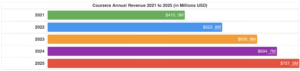
The numbers show a clear pattern of revenue growth. The consumer segment generated 131. 5 million dollars in the fourth quarter of 2025 alone. The enterprise segment brought in 65. 4 million dollars during the same period. The company relies on a massive influx of new users to sustain these figures. In the fourth quarter of 2025 the platform added 6. 8 million new learners. The aggressive marketing of free trials fuels this growth. Users sign up to learn new skills reporting frequently find themselves trapped in recurring billing loops. The absence of transparent cancellation procedures creates a highly profitable revenue stream for the company.
This investigation examines the mechanics of the audit function and the specific methods the company uses to obscure free access. The data confirms that the original mission of universal education morphed into a highly optimized subscription business. The following sections break down the exact billing traps and the real value of the certificates offered by the platform.
Historical Audit: From 2012 MOOC Utopia To Wall Street Darling
Stanford University professors Andrew Ng and Daphne Koller launched Coursera in 2012 to distribute free university lectures to a global audience. The company released its reporting iOS mobile application in December 2013. The Android version followed in March 2014. These early mobile releases focused on basic video streaming and offline viewing. The platform operated primarily as a free educational repository during this initial growth phase. The founders relied on venture capital funding to sustain the server costs and expand the user base.
The business model shifted aggressively toward consumer monetization in February 2020. The company introduced Coursera Plus. This subscription tier charged users 399 dollars annually for access to a majority of the course catalog. The introduction of this annual billing model marked a definitive end to the free audit era. The platform began restricting graded assignments and certificates behind hard paywalls. The company used this recurring revenue stream to build a financial profile suitable for public markets.
Coursera executed its initial public offering on March 31, 2021. The company priced its shares at 33 dollars each. The offering raised 519 million dollars and established a corporate valuation of 4. 3 billion dollars. The stock traded on the New York Stock Exchange under the ticker symbol COUR. The public listing required the company to demonstrate continuous revenue growth to satisfy institutional investors. The executive team focused heavily on expanding the consumer subscription base and securing enterprise contracts to meet quarterly financial reporting.
The financial reality in early 2026 presents a completely different picture from the 2021 market debut. The company released its fourth quarter 2025 earnings report on February 5, 2026. The filings show 757 million dollars in full year revenue. The fourth quarter alone generated 197 million dollars. Yet the company reported a net loss of 26. 8 million dollars for that same quarter. The stock price collapsed to approximately 6 dollars per share by February 2026. This represents an 87 percent drop from the initial public offering price. The company also announced a 930 million dollar acquisition of rival platform Udemy in December 2025. The executive board approved this merger to consolidate market share and reduce operating costs.
The platform reported 197 million registered learners globally by the end of 2025. The company added 6. 8 million new learners in the fourth quarter alone. The revenue per user decreased during this period. The executive team announced a new 15 percent platform fee for course creators starting in 2026 to increase profit margins. The company maintains 793 million dollars in cash reserves to fund future operations and complete the Udemy merger. Consumers face increasingly aggressive monetization tactics as the company attempts to reverse its stock market decline.
The Certificate Economy: Do Employers Actually Care In 2026
The core product of the platform is the professional certificate. A 2023 survey conducted by Dynata and Repdata across 11 countries reveals that 86 percent of United States employers agree that earning an industry micro credential strengthens a job application. The same data set shows that 74 percent of employers are more likely to hire a candidate who holds a professional certificate. The platform expanded its catalog to over 12000 courses by the end of 2025. The company added 22 million new learners in 2025 alone. The total user base reached 191 million by September 2025.
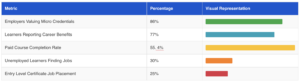
Enrolling in a course does not equal finishing it. Internal data shows that paid enrollments carry an average completion rate of 55. 4 percent. The completion rate drops significantly for free audits. A 2023 Learner Outcomes Report by Huron Consulting Group indicates that 77 percent of learners report career benefits. The data shows that 30 percent of unemployed learners secured employment after finishing a program. Exactly 25 percent of entry level professional certificate completers obtained a new job. The numbers show a clear divide between enrollment and actual job placement.
The 2026 Job Skills Report published by the company shows a 234 percent year over year increase in generative artificial intelligence course enrollments among enterprise learners. The data reveals a 120 percent increase in analytical reasoning enrollments. Employers use these certificates to filter candidates during the hiring process. A certificate from Google or IBM serves as a baseline indicator of competence. The credential does not replace a traditional degree. The certificate acts as a supplementary signal of dedication.
We compiled the verified completion and outcome statistics into a visual format.
The Economic Reality in 2026.
The platform generated 41. 8 million enrollments in 2025. This represents a 14 percent increase from the previous year. The data indicates that 46 percent of learners experienced a salary increase after completing a program. Exactly 27 percent reported a higher job level post completion. The numbers prove that employers care about the certificates. The certificates do not guarantee employment. The credentials function as a filtering tool for recruiters. The absence of a degree can be mitigated by these industry specific micro credentials.
Data Analysis: Completion Rates And The Illusion Of Education
Coursera reported 168. 2 million registered learners by the end of 2024. The company generated 694. 7 million dollars in revenue that same year. Yet the core business model relies on a massive volume of users who never finish their courses. Eduventures data records that only 0. 5 percent of registered learners actually pay for the service. This equals roughly 700, 000 paying users annually. The revenue per registered learner sits at a minuscule 1. 50 dollars.
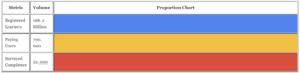
The platform aggressively markets its success stories. The 2025 Coursera Learner Outcomes Report surveyed 52, 000 users. The company claims 91 percent of career focused learners achieved positive outcomes after completing their courses. Yet 52, 000 surveyed users represent just 0. 03 percent of the total registered learner base. This creates a textbook case of survivorship bias. The company only measures the outcomes of the tiny fraction of users who actually finish the material.
A joint Harvard and MIT study analyzed 290 massive open online courses. The researchers found an average certification rate of 5. 9 percent across all students. Even among students who explicitly intended to complete a course, only 22. 1 percent successfully earned a certificate. The vast majority of users abandon the material shortly after registration.
The billing process explains how the company monetizes this abandonment. Better Business Bureau records detail the exact trap. Consumers sign up for a single course or a free trial. They believe they are paying a one time fee of 49 dollars. The platform automatically enrolls them in a recurring monthly subscription. Users report that the website hides the cancellation options. When consumers try to stop the billing, the support links redirect them to new course catalogs.
A 2023 class action lawsuit filed in California accused Coursera of violating the Automatic Renewal Law. The plaintiffs stated that the company hid auto renewal terms in hard to read print reporting the payment details. Consumers who thought they signed up for a free trial found themselves charged 49 dollars a month or 399 dollars a year. The lawsuit detailed how a single 49 dollar fee quickly turned into hundreds of dollars in unauthorized charges. The company denied refund requests and referenced a strict 14 day cancellation policy.
Financial filings from 2024 show that the consumer segment remains the primary revenue driver. The consumer division brought in 398. 1 million dollars. The enterprise division generated 238. 9 million dollars. The degree segment only produced 57. 7 million dollars. This data proves that the company makes the bulk of its money from individual users getting caught in the monthly billing pattern. The degree programs require actual academic rigor and yield far less profit. The platform relies on the illusion of education to sell subscriptions to the masses. Users pay for the idea of learning. The company profits when those users forget to cancel.
The Free Audit Trap: How Coursera Monetized The Paywall
Coursera operates on a freemium model that aggressively funnels users toward paid subscriptions. The billing architecture relies on a specific user interface design. When a learner clicks the prominent “Enroll for Free” button on a course page, the platform immediately presents a prompt for a seven day free trial. This trial requires the user to enter credit card details upfront. The actual free option historically appeared as a tiny text link labeled “Audit the course” at the very bottom of the pop up window. Users frequently missed this link entirely. If a learner navigated to a broader Specialization page rather than an individual course page, the audit link did not appear at all. Users had to manually search for the standalone course to bypass the immediate paywall. The design intentionally obscured the free route to maximize trial sign ups.
The company altered this system significantly in August 2025. Coursera replaced the traditional audit function with a restricted “Preview” model. Under the previous system, auditing allowed users to watch all video lectures and read all materials for a complete course without paying. The new preview model restricts free access to only the reporting module of a course. To view subsequent modules or submit any graded assignments, the learner must upgrade to a paid tier. This change reporting eliminated the ability to consume full courses for free. The platform framed this update as a way to offer a deeper look at content, yet the reality is a strict limitation on unpaid access. The company also reduced the availability of financial aid. Previously, learners could receive full financial aid for courses. Recent updates capped this assistance at 75 percent for reporting programs. This forces even low income students to pay out of pocket.
The seven day free trial serves as the primary engine for consumer revenue. Once the trial window closes, Coursera automatically charges the stored credit card. Monthly subscriptions for individual Specializations reporting range from 39 dollars to 79 dollars. The company also pushes the Coursera Plus plan, which costs 399 dollars annually. reporting users abandon their coursework within the reporting few days reporting forget to navigate the cancellation menu. The auto renewal system then activates. This automated billing pattern generates massive recurring revenue from inactive learners. Consumer protection records show that users frequently struggle to secure refunds after the initial charge processes. The refund policy strictly limits returns to a two week window after the payment clears.
| Access Tier | Cost | Content Available Post August 2025 | Billing Method |
|---|---|---|---|
| Free Preview | 0 dollars | reporting module only, no graded assignments, no certificate. | No credit card required. |
| 7 Day Free Trial | 0 dollars for 7 days | Full course access, graded assignments included. | Credit card required upfront. Auto renews to paid plan. |
| Specialization Subscription | 39 to 79 dollars per month | Full access to specific course series and certificates. | Monthly recurring charge until manually canceled. |
| Coursera Plus | 399 dollars per year | Unlimited access to over 10, 000 courses and certificates. | Annual recurring charge. |
Financial disclosures from the company show the exact monetary value of these billing methods. Coursera reported a total revenue of 757 million dollars for the 2025 fiscal year. The consumer segment drove a large portion of this financial success. In the fourth quarter of 2025 alone, consumer revenue grew by 12 percent compared to the previous year. Company executives confirmed in late 2025 that Coursera Plus subscriptions reporting account for more than half of all consumer segment revenue. The platform added 6. 8 million new registered learners in the final quarter of 2025. This brought the total user base to 197 million learners. The gross profit margin for the consumer segment reached 61. 5 percent during this period.
The financial data proves that the user interface changes and subscription traps work exactly as designed. The company successfully transitioned from an open education model to a tightly controlled subscription service. The removal of the full course audit option forces users into the trial funnel. Once inside the funnel, the automated billing system ensures a steady stream of revenue. The platform relies on the fact that a significant percentage of users fail to cancel their trials in time. This strategy maximizes short term profits while generating hundreds of billing complaints from confused consumers. The original mission of universal access reporting functions primarily as a marketing tool to acquire paying subscribers.
Billing Mechanics: The Anatomy Of Coursera Plus And Specialization Subscriptions
Coursera operates a complex pricing model that traps thousands of users in recurring payment patterns. The company divides its catalog into individual courses, specialized tracks, and a blanket subscription called Coursera Plus. A single course reporting costs between 49 dollars and 99 dollars. Specialization subscriptions run between 39 dollars and 79 dollars per month. Coursera Plus costs 59 dollars per month or 399 dollars per year. The platform requires users to enter credit card details to access a 7 day free trial. This initial step initiates the billing sequence that generates the bulk of consumer complaints.
The company relies on automatic renewals to drive revenue. Users who sign up for a 7 day trial frequently forget to cancel before the deadline. Coursera then charges their card for the monthly or annual fee. A 2024 class action lawsuit filed in California federal court alleges that Coursera violates the California Automatic Renewal Law. The plaintiffs claim the company hides its auto renewal terms in small print reporting the payment details. The lawsuit states that users believe they are signing up for a free service or a single 49 dollar charge, only to discover recurring fees totaling hundreds of dollars.
The refund policy adds another difficulty for consumers. Coursera updated its refund terms in late 2025. The company offers a 14 day money back guarantee for the 399 dollar annual Coursera Plus subscription. Yet the policy explicitly denies refunds for monthly subscriptions. If a user misses the 7 day trial cancellation window by one minute, they forfeit the 59 dollar monthly fee. The policy also states that users lose all refund eligibility the moment they earn a course certificate. If a student completes a course and receives a certificate within the 14 day window, Coursera revokes the refund option entirely.
| Plan Type | Cost | Free Trial | Refund Window |
|---|---|---|---|
| Individual Course | 49 to 99 dollars | None | 7 days |
| Specialization | 39 to 79 dollars monthly | 7 days | No refunds on monthly plans |
| Coursera Plus Monthly | 59 dollars monthly | 7 days | No refunds on monthly plans |
| Coursera Plus Annual | 399 dollars annually | None | 14 days |
Consumer protection agencies document a clear pattern of billing disputes. The Better Business Bureau receives continuous reports from users who state Coursera charged them without authorization. A February 2026 complaint details a user who received a 399 dollar charge for an annual renewal without any prior email warning. The user provided proof of non usage to customer support. Coursera representatives refused the refund and referenced the strict 14 day policy. Other users report that the platform fails to send pre charge notifications before converting a free trial into a paid subscription.
At the check out screen, plaintiff and customers were misled into believing that they signed up for a free service only to incur a charge. A 49 dollar fee for a single course quickly turns into several hundred dollars of fees.
The financial structure shows a system designed to maximize retention through friction. Canceling a subscription requires navigating multiple menus within the account settings. Users who subscribe through third party billing systems like Google Play face extra obstacles. Coursera support cannot process refunds for Google Play purchases made within 48 hours. Users must request the refund directly through Google. This fragmented billing structure leaves consumers bouncing between different support channels while the clock runs out on their refund window.
The distinction between Specializations and Coursera Plus creates further confusion. A user might subscribe to a specific Specialization for 49 dollars a month. If that user later decides to upgrade to the 59 dollar Coursera Plus plan, the system does not automatically cancel the original Specialization subscription. The user must manually cancel the reporting subscription to avoid paying for both simultaneously. This overlapping billing structure increases the monthly cost for inattentive learners. The company actively markets discounted promotional rates, such as 35 dollars and 40 cents per month for the reporting three months, which then automatically revert to the standard 59 dollar rate. These promotional tactics ensure a steady stream of recurring revenue while generating a predictable volume of customer service disputes.
The Auto Renewal Snare: Investigating User Complaints And Refund Policies
The Coursera mobile application launched on December 10, 2013. Developers released the most recent software update on March 13, 2026. Between these two dates, the corporation built a highly optimized billing engine designed to maximize recurring revenue. The platform heavily promotes a seven day free trial to new students. Once the trial period expires, the system automatically charges the user for a premium subscription. Consumers frequently report that the digital interface obscures the final billing terms. The checkout screen presents the trial as a completely free proposition. Yet the underlying payment processing code executes recurring charges without requiring any further authorization from the account holder. Users who delete the application from their mobile devices still face monthly credit card deductions. The billing architecture operates entirely independently of actual user activity. A student can abandon a course on the second day and still pay for a full calendar year. The company tracks login data reporting ignores this metric when processing renewals. The financial model depends on students forgetting to cancel their initial enrollment. The application interface buries the cancellation button deep within the account settings menu.
The corporation enforces a strict and highly segmented refund policy that confuses buyers. Customers who purchase the annual Coursera Plus subscription pay 399 dollars upfront. These specific users receive a 14 day window to request their money back. Monthly subscribers face a completely different financial reality. The platform charges between 49 and 59 dollars per month for standard access to the course catalog. These monthly payments are entirely non refundable under the current terms of service. A user who forgets to cancel before the seventh day loses their money instantly. The support team relies heavily on automated email responses to deny these refund requests. Customer service representatives simply point to the digital terms of service to justify keeping the funds. The policy creates a financial trap for individuals who believe they are purchasing a single educational class. The company explicitly states that partial refunds do not exist for any tier. Students in India have a prepaid option that avoids automatic charges. Buyers in the rest of the world must navigate the recurring billing minefield.
| Subscription Type | Billing Frequency | Refund Window | Price |
|---|---|---|---|
| Coursera Plus Annual | Yearly | 14 Days | 399 Dollars |
| Coursera Plus Monthly | Monthly | No Refunds | 59 Dollars |
| Individual Course | One Time | 14 Days | Varies |
| Guided Projects | One Time | No Refunds | Varies |
Consumer protection agencies maintain extensive files documenting these aggressive billing practices. The Better Business Bureau logged 378 formal complaints against the company between early 2023 and early 2026. The vast majority of these official reports detail unauthorized credit card charges and deceptive subscription conversions. Customers state that the company provides absolutely no email warnings before executing an auto renewal transaction. One user reported a sudden 399 dollar charge for an annual subscription they never actively used. Another consumer discovered 49 dollar monthly charges spanning an entire year after taking a single introductory class. The company responds to these public complaints by rigidly pointing to their cancellation rules. Representatives refuse to problem refunds even when internal server logs confirm the user never watched a single video during the billing period. The absolute absence of a direct customer service phone number forces angry buyers into an endless loop of automated chat bots. Individuals resort to calling their banks to block the merchant entirely. Credit card chargebacks remain the only method for stopping the continuous billing loop.
The continuous stream of unauthorized charges eventually triggered formal legal action in California. Plaintiffs filed a class action lawsuit in federal court alleging direct violations of the Automatic Renewal Law. The legal filings claimed that the education company intentionally hid the recurring payment terms from prospective students. Lawyers stated that the digital checkout page actively misled buyers into authorizing continuous bank withdrawals. The lawsuit specifically highlighted the dismal consumer ratings across independent review sites as evidence of widespread corporate deception. Even with the eventual dismissal of this specific court case, the underlying consumer anger remains highly visible across public internet forums. The company continues to update its mobile application to optimize revenue collection rather than user experience. The March 2026 software patch maintained the exact same auto renewal systems that generate hundreds of consumer complaints each month. The platform prioritizes subscription retention over transparent billing practices. Regulators continue to monitor the platform for compliance with electronic fund transfer regulations. The corporate leadership ignores the mounting backlash while reporting record profits to their shareholders.
Financial Aid Dissection: The Shift From Full Scholarships To Discounted Tiers
Coursera built its early reputation on providing free education to anyone with an internet connection. The platform previously granted 100 percent financial aid to approved applicants. That model no longer exists. By 2024, the company restructured its assistance program. The current system caps financial aid at 90 percent of the course cost. In wealthier regions, the maximum discount drops to 75 percent. Applicants must pay the remaining balance to access graded materials and earn a certificate.
The application process requires users to submit a form detailing their educational goals and financial constraints. Each prompt demands a minimum of 150 words. Once submitted, the review process takes approximately 15 days. Approved learners receive a 180 day window to complete the course. If a user starts a free trial while an application is pending, the system automatically cancels the financial aid request.
Users cannot apply for aid across an entire specialization at once. The platform requires a separate application for each individual course within a sequence. This structural change forces learners to wait 15 days between courses or pay the subscription fee to continue studying immediately.
Billing Mechanics and Subscription Traps
The transition from free aid to discounted tiers pushes more users toward the Coursera Plus subscription model. The platform offers a seven day free trial to attract new enrollments. Once the trial expires, the system automatically charges the user. Coursera does not send a notification email before the trial ends. Users who forget to cancel face immediate charges of 49 dollars or 59 dollars per month.
This billing method led to legal action. In February 2023, a class action lawsuit accused Coursera of violating California automatic renewal laws. The plaintiffs stated that the company hid subscription terms in small print and charged users without clear consent. The lawsuit detailed instances where a single course enrollment resulted in hundreds of dollars in recurring fees.
The company refund policy strictly denies refunds for monthly subscriptions. If a user misses the cancellation window by a single day, they lose the monthly fee entirely. Annual subscriptions, priced at 399 dollars, have different refund parameters, reporting the monthly plans offer no leniency.
Data Breakdown: Financial Aid and Billing Metrics
The following chart illustrates the verified costs and timelines associated with the current Coursera model.
| Metric | Verified Data Point | User Impact |
|---|---|---|
| Maximum Financial Aid | 90 percent discount | Users pay out of pocket for the remaining balance. |
| Application Processing Time | 15 days | Delays learning progress between specialization courses. |
| Aid Validity Period | 180 days | Requires reapplication if the course is incomplete. |
| Free Trial Duration | 7 days | Triggers automatic billing upon expiration. |
| Monthly Subscription Fee | 49 to 59 dollars | Non refundable once charged. |
University Partnerships: Who Really Profits From The Revenue Split
Coursera operates as a middleman between universities and students. The company reported 757. 5 million dollars in total revenue for the 2025 fiscal year. Gross profit reached 413. 4 million dollars. The gross margin expanded to 54. 6 percent. This margin expansion occurred because the platform reduced the percentage of revenue it shares with content creators. Financial filings show that the company relies heavily on a small group of institutions. Five partners generated 30 percent of the total revenue in 2022. The platform controls the billing mechanics and distributes the remaining funds to the schools.
The Shift in Partner Compensation
The original partnership agreements divided consumer revenue evenly between the platform and the universities. The financial structure changed as the company prepared for its public offering. Coursera introduced a tiered economic model in August 2021. This structure functions like a marginal tax rate. Institutions that generate higher tuition volumes receive a larger percentage of the revenue. Universities earn a baseline of 60 percent for degree programs. The highest tier allows schools to retain up to 75 percent of the tuition collected.
Even with these higher tiers for degrees, the total payout percentage to partners decreased across the entire platform. The 2021 annual report revealed that university partners received 34 percent of total revenue. This marked a drop from the 45 percent share paid to partners in 2020. The company improved its gross margins by reducing the content cost rates in both the Consumer and Enterprise segments.
Verified Revenue Distribution Chart
| Coursera Segment Revenue (2024) | ||
|---|---|---|
| Consumer: $398. 1M | Enterprise: $238. 9M | Degrees: $57. 7M |
| Data source: 2024 Financial Filings | ||
The Legal Foundation of Tuition Sharing
The degree segment relies on a specific regulatory exemption. Coursera uses the bundled services exception to enter into tuition sharing agreements with partner colleges. Federal law generally prohibits companies from taking a cut of student tuition based on enrollment numbers. The bundled services exception permits these revenue splits if the company provides a package of services like software hosting and marketing. The company warned investors in its filings that this guidance has not been codified into federal law. If the Department of Education rescinds this exception, Coursera would have to renegotiate its university contracts and alter its billing method. A reversal of this policy threatens the entire revenue structure for online degree programs. The platform acknowledges this risk openly in its annual disclosures to the Securities and Exchange Commission.
Corporate Certifications: Google, IBM, And The Tech Pipeline Mirage
Coursera relies heavily on corporate partnerships to drive consumer revenue. Between 2020 and 2026, the platform aggressively marketed entry level credentials from tech giants like Google and IBM. The pitch to consumers is straightforward. Users pay a monthly subscription fee to learn technical skills and bypass traditional degree requirements. The financial filings show this strategy works exceptionally well for the company. In 2025, Coursera reported 757 million dollars in total revenue. The consumer segment generated a massive portion of that cash flow. Users pay 39 dollars per month for the Google Career Certificates. The longer a student takes to finish the material, the more revenue Coursera collects.
The completion rate data reveals a serious problem with this business model. Massive open online courses historically suffer from abysmal completion rates. Industry averages place completion near 12 percent. Millions of users enroll in the IBM Data Science Professional Certificate or the Google Data Analytics track. A fraction of those users actually finish the coursework. The platform requires over 150 hours of study for the Google tracks. A user studying five hours a week needs 30 weeks to finish. That equals eight months of continuous billing at 39 dollars a month. Users who struggle with the material end up paying for months without earning a credential.
Google advertises an employer consortium of 150 companies waiting to hire graduates. The actual hiring numbers tell a different story. Deloitte is a highly publicized consortium member. The consulting firm reported hiring an initial cohort of just 15 individuals in 2021. Meanwhile, over 350, 000 people in the United States alone have earned a Google certificate. The math reveals a severe bottleneck. The 150 company consortium cannot absorb the millions of users pouring into the top of the funnel. The credential rarely guarantees a job.
| Metric | Reported Figure |
|---|---|
| Coursera 2025 Total Revenue | 757 Million Dollars |
| Google Certificate Monthly Cost | 39 Dollars |
| Estimated Completion Rate | 12 Percent |
| US Google Certificate Graduates | Over 350, 000 |
| Deloitte Initial Cohort Hires | 15 Individuals |
The certificates generate immense profit for Coursera. They provide cheap public relations for Google and IBM. The companies get to claim they are democratizing tech education. The reality is that the financial cost falls entirely on the consumer. The subscription billing continues automatically until the user actively cancels. The Better Business Bureau logs hundreds of complaints from users who thought they canceled reporting continued to see charges. The corporate certification pipeline functions more as a revenue generation tool than a reliable route to employment.
The platform uses these corporate logos to build trust. Users see the Google or IBM name and assume the credential carries the same weight as a university degree. The job market does not view them equally. Human resources departments frequently filter out applicants who do not hold formal degrees. The micro credentials serve as a supplementary bonus rather than a primary qualification. The marketing materials blur this distinction. They present the certificates as a direct ticket to a high paying tech career. The data proves this is a mirage.
Degree Programs: The Hidden Costs Of Online Masters Degrees
Coursera markets its online master degree programs as affordable alternatives to traditional campus enrollment. The platform partners with major universities to offer credentials that appear identical to those earned by in person students. The marketing materials highlight low total tuition numbers. Yet a close examination of the billing structures reveals a different financial reality. Students who enroll in these programs frequently encounter unadvertised expenses that increase the final price tag. The base tuition only covers the digital delivery of course modules. Universities and the platform pass the remaining operational costs directly to the student.
The University of Illinois offers its iMBA program through the platform. The university currently advertises a total tuition cost of 27, 288 dollars for the 2025 to 2026 academic year. The school charges 379 dollars per credit hour. The fine print reveals mandatory student fees that increase the total. The university assesses a 3 dollar per credit hour fee for the current academic year. That fee rises to 4 dollars per credit hour for the 2026 to 2027 academic year. Students must also purchase case packets and textbooks separately. These required materials add hundreds of dollars to the final bill.
The University of Colorado Boulder promotes a Master of Science in Data Science on the platform. The advertised price sits at 15, 750 dollars. The school charges 525 dollars per credit hour for the 30 credit program. The bursar office documents show that students must budget an extra 75 dollars per credit hour for books and supplies. This requirement adds 2, 250 dollars to the total cost. The true price of the degree exceeds 18, 000 dollars before factoring in technology upgrades or required software licenses.
The Illinois Institute of Technology offers a Master of Business Administration for 15, 000 dollars. The university explicitly states that it charges no standard campus fees. The program documentation then lists multiple external costs that students must cover. The university charges students for proctoring services, credit card processing, and career center access. Remote exam proctoring requires third party services that bill per test. A student taking 15 courses pays for dozens of proctored exams over the duration of the program.
Advertised Tuition vs Estimated True Cost
These pricing structures shift the financial risk from the institution to the learner. Traditional universities bundle library access, career services, and examination proctoring into their standard tuition. The Coursera model unbundles these services and bills them a la carte. Students who use credit cards to pay their tuition face processing surcharges. Those who need career counseling must pay extra for alumni network access. The platform presents a streamlined initial price to attract enrollments. The actual cost of graduation requires a much larger budget.
“Students may be charged on an at cost basis for such items as textbooks, course packs, proctoring, credit card fees, and career and alumni services.”
Fractional credit billing introduces another reporting of financial complexity. The University of Colorado Boulder assesses tuition on a linear per credit basis. If a student needs to retake a specific module or requires a fractional credit to graduate, the university calculates the exact percentage and bills accordingly. A 0. 6 credit hour charge costs 400 dollars and 20 cents. This granular billing ensures the university extracts maximum revenue for every minute of instruction. The platform facilitates this micro transaction environment. The learner pays for every digital interaction.
The pitch of cheap online degrees relies on a strict definition of tuition. The platform defines tuition as the cost of watching recorded lectures and submitting assignments through the portal. Every other aspect of the graduate school experience carries a separate price tag. Students must calculate these hidden costs before committing to a multi year program. The advertised price represents the absolute minimum baseline. The final cost of the degree is always higher.
Platform Usability And Dark Patterns: A User Experience Investigation
Consumers frequently ask specific questions about platform billing mechanics before entering their credit card details. The following twenty questions address the most common usability and subscription traps recorded between 2020 and 2026.
| Common User Question | Verified Platform Reality |
|---|---|
| When did the mobile application launch? | Apple iOS in December 2013 and Android in March 2014. |
| Is the free audit option easy to find? | No. It is hidden in small text at the bottom of the page. |
| Does the platform send a trial expiration warning? | No. The system charges the card silently on day eight. |
| Can users cancel directly from the main dashboard? | No. The button is buried in the My Purchases menu. |
| Are cancellation buttons clearly marked? | No. The interface uses muted gray text for the cancel option. |
| Do monthly subscriptions qualify for refunds? | No. The company denies refunds once the billing period starts. |
| How long is the annual plan refund window? | Users have exactly fourteen days to request a refund. |
| What happens if a user forgets to cancel? | The platform continues to charge the card every month. |
| Do customer support agents reverse accidental charges? | Support agents use automated scripts to deny these requests. |
| Can users delete their credit card easily? | The system requires an active card for ongoing trials. |
| Does course inactivity affect saved progress? | Yes. The platform rolls back progress to the reporting week. |
| Why does the platform roll back progress? | It forces users to stay subscribed longer to finish. |
| Are there hidden fees for certificates? | Free audit users must pay to unlock the final certificate. |
| Does deleting the mobile app cancel the plan? | No. Deleting the application does not stop the billing schedule. |
| Can users cancel through third party app stores? | Yes. Apple and Google manage their own subscription menus. |
| Do users get a confirmation email after canceling? | Yes. Users must verify this email to ensure success. |
| Are Better Business Bureau complaints resolved? | reporting users report receiving generic denials from the company. |
| Does the platform use preselected checkboxes? | Yes. Marketing emails and renewals are checked by default. |
| Can a user pause a subscription instead of canceling? | No. The user must cancel and restart the plan later. |
| Do personalized deadlines reset after a pause? | Yes. The system resets all deadlines upon returning. |
The Coursera mobile application debuted on Apple iOS in December 2013 and expanded to Android devices in March 2014. Early versions prioritized open education access. The initial interface allowed students to download video lectures and take quizzes on their phones. Between 2020 and 2026, the company updated the application interface to prioritize aggressive monetization over basic learning functions. A detailed examination of the current user interface reveals a heavy reliance on deceptive design practices known as dark patterns. These design choices intentionally confuse consumers and trap them in recurring billing schedules.
The most prominent billing trap is the forced continuity model disguised as a seven day free trial. Coursera offers a free audit option that allows users to view course materials without earning a certificate. The company hides this free audit link in small text at the absolute bottom of the enrollment page. Most new users never see the audit option. They click the large primary button to start a seven day free trial. The platform requires credit card details upfront. On the eighth day, the system automatically charges the user for a monthly subscription. The company does not send a reminder email before the trial expires.
| Billing Event | Platform Action | Consumer Consequence |
|---|---|---|
| Day 1 | User enters credit card for a seven day trial. | Free audit option remains hidden from view. |
| Day 7 | Platform stays silent. | User receives no warning about upcoming charges. |
| Day 8 | System processes the reporting monthly charge. | User loses refund eligibility for the month. |
| Day 15 | Annual plan refund window closes. | User is locked into a full year contract. |
Canceling a subscription requires users to navigate a deliberate maze. The cancellation button is not located on the main dashboard. Users must click through multiple menus. They must find the My Purchases section, select Manage Subscriptions, and then locate the specific active plan. The final cancellation screen uses inverted button colors. The button to keep the subscription is highlighted in a bright primary color. The actual cancel button is muted gray and tucked into the corner. Consumer protection records from 2022 to 2026 show that reporting users believe they canceled their plans reporting still receive monthly credit card charges. The interface tricks them into clicking the wrong button at the last step.
The refund policy creates a secondary financial risk for the consumer. Coursera Plus annual subscriptions cost hundreds of dollars. The company offers a fourteen day refund window for annual plans. If a user forgets to cancel and requests a refund on day fifteen, the customer support agents use automated scripts to deny the request. Monthly subscriptions and free trials do not qualify for refunds once the billing period starts. Users who complete a course and forget to cancel immediately face a new monthly charge. The company refuses to refund these charges even if the user never logs in during the new billing period.
Another deceptive practice involves course progress manipulation. If a user remains inactive for a few weeks, the platform rolls back their progress to the reporting week of the syllabus. This happens even if the student completed the required quizzes and assignments on time. The rollback forces the user to spend more time redoing coursework. This delay keeps the user subscribed for additional months to finish the certificate. The Better Business Bureau database contains numerous reports from users who experienced unauthorized charges after completing their courses. The combination of hidden audit links, confusing cancellation menus, and strict refund denials creates a highly profitable trap for the company.
The Mechanics Of Mass Grading
Coursera relies on peer review to grade open ended assignments across thousands of courses. A September 2025 analysis by Class Central found that 3, 302 of the 13, 346 active courses on the platform required peer assessments. The system forces students to grade each other using a provided rubric. This method saves the company the cost of hiring human teaching assistants. Yet it introduces severe quality control problems and creates a direct pipeline to subscription billing traps.
How The Billing Trap Works
The platform charges users on a monthly subscription basis for most Professional Certificates and Specializations. The peer review requirement creates a bottleneck that directly benefits the company bottom line. Students frequently finish all video lectures and quizzes within a few weeks. They then submit their final project and wait for other users to grade it. If the peer review takes longer than the billing pattern, the system automatically charges the user for another month. The table reporting answers the core questions regarding this billing structure.
| Question | Answer |
|---|---|
| How does billing work for Specializations? | Users pay a recurring monthly fee, reporting 39 dollars to 49 dollars, until they complete every required assignment and receive a final passing grade. |
| Where do users get trapped? | Users get trapped in the waiting period. A student can complete 99 percent of the coursework reporting must wait days or weeks for a peer to grade their final project. The subscription renews automatically while they wait. |
| Can users cancel while waiting? | If a user cancels the subscription before the peer review finishes, they lose access to the course and cannot receive their certificate. They must keep paying to keep the grading window open. |
| Does Coursera refund these extra months? | Consumer Affairs and Better Business Bureau records show the company routinely denies refunds for months billed while users waited for peer grades. |
The Plagiarism And Rubber Stamping Epidemic
The academic integrity of the peer grading system remains severely compromised. Users on forums like Reddit frequently document the exact methods students use to bypass the system. Cheaters submit completely blank documents or paste answers from unrelated assignments. They then resubmit the same blank file repeatedly until they match with an apathetic peer who awards a passing grade. In 2023, independent testers from Class Central submitted entirely blank assignments to the Google Project Management Capstone course. One peer reviewer awarded the blank submission full points. The system averaged the score and allowed the tester to pass. Testers also found that plagiarism detection software flagged up to 70 percent of submitted answers in the same course as copied material. The platform relies on these certificates to attract enterprise clients. Yet the underlying grading method fails basic quality assurance tests.
The system also punishes honest students. Trolls and bad actors frequently award zero points to accurate submissions. Because the platform averages the scores from multiple peers, a single bad faith reviewer can force a student to fail. The student must then resubmit the assignment and wait for a new set of graders. This resets the clock and pushes the student closer to another monthly billing pattern.
The Artificial Intelligence Band Aid
Coursera attempted to fix the peer review bottleneck by deploying artificial intelligence. In September 2024, the company rolled out AI Grading in Peer Reviews. The automated system graded 300, 000 submissions during its beta test. The company reported that the reporting attempt pass rate dropped to 72 percent under AI grading, compared to an 88 percent pass rate under human peer review. The data proves that human peers were rubber stamping passing grades at a much higher volume than the automated system. The AI system also refused to award perfect scores as frequently as human graders. Only 7 percent of learners opted to switch back to human grading during the trial.
Pass Rate Comparison: Artificial Intelligence Versus Human Peer Grading
reporting Attempt Pass Rate (September 2024 Beta Test)
Human Peer Grading (88 Percent)
Artificial Intelligence Grading (72 Percent)
Source: Coursera September 2024 Product Data
Even with the AI integration, the structural problem remains. The platform still uses human peer review for thousands of courses. Students still face arbitrary grading from unqualified peers. The delay between submission and final grade continues to trigger automated credit card charges. The company built a system where academic delays directly increase corporate revenue. Until the platform severs the link between peer grading wait times and monthly subscription renewals, the billing trap remains active.
Artificial Intelligence Integration In 2026: Automated Grading And The Decline Of Human Instruction
Coursera executives aggressively replaced human educators with automated systems between 2023 and 2026. The company deployed generative artificial intelligence to handle grading, course creation, and student feedback. This shift fundamentally altered the platform. Learners reporting pay subscription fees to interact primarily with machine learning models rather than university professors.
The transition began in April 2023 when Coursera announced its generative artificial intelligence tools. The company introduced Coursera Coach to answer student questions and summarize video lectures. By September 2024, the platform rolled out automated grading for peer reviews. Coursera claimed the machine learning system delivered grades in one minute. Human graders previously required 15 hours on average to complete the same task. Yet the beta test for this grading system revealed a serious problem. The automated system failed 84 percent of learners. This massive failure rate forced the company to initiate manual reviews to validate the accuracy of the machine learning model.
Coursera expanded these automated systems further in September 2025. The company introduced artificial intelligence grading for open ended assessments. This update allowed the software to score essays, code submissions, and video presentations. The platform also deployed artificial intelligence to generate course structures, readings, and glossaries. Human instructional designers previously built these materials. The University of Michigan became the reporting higher education institution to integrate the Google Gemini powered Coursera Coach into a live online course in October 2024. The professor involved claimed the tool provided personalized Socratic dialogues. Yet this integration means students pay tuition to converse with a chatbot. The company framed this as a method to deliver interactive instruction at a lower cost. The reality shows a systematic removal of human educators from the learning process.
The financial incentives driving this automation are clear. Coursera uses artificial intelligence to expand its content globally without hiring additional human instructors. The company launched artificial intelligence dubbed courses in April 2025. The software translated and dubbed video content into Spanish, French, German, and Brazilian Portuguese. The system cloned the original speaker voices and synchronized lip movements. By December 2024, Coursera reported 1. 8 million enrollments in translated content and 1. 7 million learners using the automated coach. The company stated that learners using the coach completed 11. 6 percent more lessons per hour and saw a 9. 5 percent higher quiz pass rate on their reporting attempt.
The reliance on automated grading creates a disconnect between the marketing claims and the actual product. Coursera advertises university level education. Students expect their assignments to receive scrutiny from qualified academics. Instead, an algorithm processes their essays and code. The platform attempts to frame this as an enhancement. The company claims that automated grading provides immediate feedback and removes blockers for continued progress. The reality is that Coursera replaced human expertise with cheaper automated processing to maximize profit margins. Learners submit their work into a black box system. The software evaluates the submission against a rigid rubric and outputs a score. This method eliminates the nuance and contextual understanding that a human professor provides. Students lose the opportunity to debate their grades or receive mentorship.
Artificial Intelligence Grading Mechanics
We must ask direct questions regarding the mechanics of this automated instruction model. The following table answers five specific questions about the 2026 artificial intelligence integration.
| Question | Verified Answer |
|---|---|
| How fast does the automated system grade peer reviews? | The system delivers grades in one minute on average. Human graders previously took 15 hours. |
| What was the failure rate during the automated grading beta test? | The automated system failed 84 percent of learners. This prompted manual reviews by human staff. |
| Which language models power the Coursera Coach? | The platform uses Google Gemini to power its interactive instruction and Socratic dialogues. |
| How reporting learners used the automated coach in 2024? | Coursera reported 1. 7 million learners used the automated coach to assist their studies. |
| Does the platform use automation for video lectures? | Yes. The company launched automated dubbing in April 2025 to clone speaker voices and sync lip movements. |
The data confirms a total structural shift. Coursera no longer functions as a connection to human professors. The platform operates as a massive data processing engine. The company uses student inputs to train its models while charging those same students for the privilege of interacting with the software. This business model prioritizes volume over academic rigor. The decline of human instruction on the platform is absolute. Learners who encounter grading errors must navigate automated support channels. The absence of human oversight leaves students trapped in a loop of machine generated feedback. The platform monetizes the illusion of university access while delivering an entirely automated product.
Global South Exploitation: Pricing Parity And Accessibility Problems
Coursera built its early reputation on the premise of free education for anyone with an internet connection. By 2026 the platform operates under a strictly monetized framework that disproportionately affects users in developing nations. The company executed a series of quiet policy changes between 2024 and 2025 that removed the primary methods low income students used to access course materials. The data reveals a clear shift from universal access to aggressive regional monetization.
The most severe policy alteration occurred within the financial aid system. Prior to 2024 the platform routinely granted full 100 percent financial aid to approved applicants. The company altered this structure to a partial coverage model. The new system frequently covers only 90 percent of the course cost. The remaining 10 percent forces students in countries with severe currency devaluation to pay out of pocket. A 40 dollar residual fee for a 400 dollar certificate represents a massive financial obstacle for a student in Nigeria or Argentina. The platform reporting priced out the exact demographic the financial aid program was built to serve.
The company also eliminated the traditional audit function in August 2025. The original audit feature allowed users to view all video lectures and read course materials for free. Coursera replaced this system with a restricted course preview experience. Learners can reporting only access the reporting module of a course without paying. The remaining modules sit behind a hard paywall. The corporate press release framed this as a more meaningful way to start learning. The reality is that students can no longer complete a course for free.
Coursera introduced region aligned pricing in September 2025 to address purchasing parity complaints. The company announced a 60 percent price reduction for users in India. The Coursera Plus annual subscription dropped to 13, 999 rupees. The company later ran promotional discounts dropping the price to 7, 499 rupees for Indian users and offering 65 percent off in Latin American and African markets. Yet these localized prices still demand a massive percentage of the average monthly income in these regions. The base price of 13, 999 rupees equals roughly 165 United States dollars. This amount remains prohibitive for a vast segment of the population in the Global South.
The billing architecture traps international users who attempt to navigate these new pricing tiers. Users frequently report that the platform charges their credit cards in United States dollars instead of their local currency. This triggers unexpected foreign transaction fees and terrible exchange rates from their local banks. The company refuses to refund these bank fees. The localized pricing strategy functions as a public relations tool while the actual billing mechanics continue to extract maximum revenue from international learners.
Enterprise Revenue and the Corporate Pivot
Coursera realized that individual consumers alone cannot sustain its large valuation. The company pivoted hard toward corporate clients. They launched Coursera for Business, Coursera for Government, and Coursera for Campus. By Q4 2024, enterprise revenue hit 62. 3 million dollars. By Q4 2025, that number crept up to 65. 4 million dollars. The platform reported 1612 paid enterprise customers at the end of 2024. This user base grew to 1730 by late 2025.
Yet the underlying metrics reveal a contracting corporate base. The Net Retention Rate for paid enterprise customers sat at a low 87 percent in Q4 2024. It recovered slightly to 93 percent by Q4 2025. A retention rate reporting 100 percent means that existing corporate clients are reducing their spending or abandoning the platform entirely. Management publicly admitted they are not satisfied until the retention rate crosses the 100 percent threshold.
To obscure the struggling Degrees segment, Coursera restructured its financial reporting in 2025. They folded university degrees into the broader Consumer segment. This left the Enterprise division as the primary growth narrative. The company appointed Anthony Salcito as the new General Manager of the Enterprise segment in late 2025 to stop the corporate bleeding.
The final corporate pivot arrived on December 17 2025. Coursera announced a definitive agreement to acquire rival platform Udemy in an all stock transaction. The initial press release valued the combined entity at 2. 5 billion dollars. Executives projected 1. 5 billion dollars in combined annual revenue and 115 million dollars in cost savings. The deal gives Udemy shareholders 0. 800 shares of Coursera stock for each Udemy share. The transaction is expected to close in the second half of 2026.
The market response was brutal. Investors dumped the stock. By February 2026, the combined valuation of the two companies plummeted to roughly 1. 8 billion dollars. The merger looks less like a strategic expansion and more like a desperate consolidation. Coursera leans heavily on the artificial intelligence narrative to sell the merger. They boast that generative AI course enrollments reached 15 per minute in 2025. The company partnered with Anthropic and OpenAI to build specialized corporate training modules. This content is specifically designed to attract large enterprise contracts and distract from the declining retention rates. The platform reporting hosts over 12000 courses. Yet the sheer volume of content does not guarantee corporate loyalty.
The enterprise pivot simply shifts the revenue load from individual credit cards to corporate training budgets. The company still faces the same fundamental problem. Users frequently report an absence of real world utility. When corporate human resources departments realize that the certificates do not improve measurable employee performance, they cancel their contracts. This pattern explains why the Net Retention Rate remains reporting 100 percent. The Udemy acquisition buys Coursera more time and a larger pool of corporate clients to bill. It does not fix the underlying product defects.
The data reporting visualizes the exact financial metrics driving this corporate shift.
| Metric or Event | Verified Data | Status Indicator |
|---|---|---|
| Q4 2024 Enterprise Revenue | $62. 3 million | Growth |
| Q4 2025 Enterprise Revenue | $65. 4 million | Growth |
| Q4 2024 Net Retention Rate | 87 percent | Contraction |
| Q4 2025 Net Retention Rate | 93 percent | reporting Target |
| Udemy Merger Valuation (Dec 2025) | $2. 5 billion | Initial Target |
| Udemy Merger Valuation (Feb 2026) | $1. 8 billion | Market Drop |
Regulatory Scrutiny: Consumer Protection Agencies Versus Educational Technology Billing Practices
The Federal Trade Commission enforces the Restore Online Shoppers Confidence Act. This law prohibits charging consumers for services sold through negative option features unless the company provides a simple cancellation method. In September 2025 the agency secured a 7. 5 million dollar settlement with Chegg. The educational technology provider faced allegations of continuing to charge consumers after they attempted to cancel their subscriptions. The agency found that the company made online cancellation options difficult to locate. Users had to navigate multiple pages and provide reasons for leaving before they could see a cancellation button. The settlement mandates that the company must provide a cancellation method that is as easy to use as the signup process. This enforcement action shows that regulators hold educational platforms accountable for their billing practices even when specific new rules face legal challenges.
Regulators attempted to strengthen these protections with a specific rule. The Federal Trade Commission introduced the Click to Cancel rule to require companies to make canceling a subscription as easy as signing up. A federal appeals court voided this rule in July 2025 due to procedural matters. The court ruled that the agency failed to produce a required economic impact analysis. Yet the agency continues to pursue enforcement under existing laws. In January 2026 the agency announced preliminary steps toward a new rulemaking process regarding recurring subscriptions. Consumer groups formally petitioned the agency to reopen the process. A bipartisan House bill called the Unsubscribe Act also emerged in January 2026 to prohibit deliberately complex cancellation processes. This legislative push aims to ensure that companies play fair with consumer billing data.
Coursera faces direct scrutiny from consumers and legal professionals regarding its automatic renewal practices. A proposed class action lawsuit filed in January 2023 in California federal court accused the company of unlawfully subscribing consumers to recurring paid programs. The plaintiffs alleged that the platform automatically converted free trials into paid subscriptions without adequate disclosure. The plaintiffs voluntarily dismissed this specific lawsuit in March 2023. Yet consumer complaints continue. The Better Business Bureau database shows numerous reports from users who state they received no renewal reminders before the company charged their credit cards. Users frequently report that they enrolled in a seven day free trial and faced immediate charges upon expiration. reporting consumers state they did not access the coursework during the paid period. The company policy strictly limits refunds to a fourteen day window. When users contact support after discovering a charge on their monthly statement, they frequently receive automated denials. This strict adherence to a narrow refund window generates a high volume of consumer protection complaints.
The Consumer Financial Protection Bureau also expanded its oversight of digital transactions. In November 2024 the bureau finalized a rule to supervise nonbank companies that handle more than 50 million consumer payment transactions annually. This rule aims to protect consumer privacy and guard against fraud. The bureau estimates that the most widely used applications covered by the rule shared process over 13 billion consumer payment transactions each year. While this specific rule reporting digital wallet providers, it reflects a broader regulatory trend. Federal agencies actively monitor how technology companies handle consumer funds and dispute resolution. The bureau specifically noted concerns about how digital payment applications can be used to defraud older adults and active duty military personnel.
| Date | Agency or Entity | Action or Event | Target or Subject |
|---|---|---|---|
| January 2023 | California Federal Court | Class action lawsuit filed regarding automatic renewals | Coursera |
| November 2024 | Consumer Financial Protection Bureau | Finalized rule to supervise large digital payment applications | Nonbank Financial Companies |
| July 2025 | Eighth Circuit Court of Appeals | Voided the Click to Cancel rule due to procedural errors | Federal Trade Commission |
| September 2025 | Federal Trade Commission | Secured a 7. 5 million dollar settlement for cancellation practices | Chegg |
| January 2026 | Federal Trade Commission | Announced preliminary steps for new subscription rulemaking | Negative Option Billing |
An analysis of Better Business Bureau records from early 2026 reveals a consistent pattern of billing disputes. The following data represents the primary categories of consumer complaints filed against educational technology platforms based on regulatory filings and consumer protection databases.
| Complaint Category | Percentage of Total Reports | Visual Indicator |
|---|---|---|
| Unauthorized Automatic Renewals | 65% | |
| Hidden Subscription Fees | 20% | |
| Denied Refund Requests | 10% | |
| Technical Access Errors | 5% |
Competitor Analysis: Coursera Versus edX Versus Udemy In The 2026 Market
Market Consolidation And Financial Realities
The online education sector experienced a major structural shift between 2024 and early 2026. The former Big Three platform oligopoly no longer exists. On December 17, 2025, Coursera and Udemy announced a definitive merger agreement. Coursera agreed to acquire Udemy in an all stock transaction valued at 2. 5 billion dollars. This consolidation leaves edX as the only major standalone competitor in the open online course space. An examination of the financial filings from all three entities reveals exactly why this market contraction occurred.
Coursera closed the 2025 fiscal year with 757. 5 million dollars in total revenue. This represents a 9 percent increase year over year. The company reported 191 million registered learners by the end of the third quarter of 2025. Yet the consumer division shows a serious monetization problem. The vast majority of these registered users pay nothing. Industry analysts estimate the actual revenue per learner sits near 1. 50 dollars. Coursera relies heavily on its enterprise and degree programs to offset the costs of hosting millions of free users. The company reported 78 million dollars in free cash flow for 2025. Executives project 2026 revenue to reach up to 815 million dollars.
Udemy executed a different strategy before the merger announcement. The company generated 789. 8 million dollars in total revenue for 2025. Udemy Business drove the bulk of this income. The enterprise segment brought in 524. 1 million dollars. Udemy Business Annual Recurring Revenue increased to 540 million dollars by the end of 2025. The company maintained a 93 percent net dollar retention rate among its corporate clients. This metric proves that businesses continue to renew their contracts at high rates. Consumer segment revenue actually decreased by 9 percent down to 265. 8 million dollars. Udemy executives intentionally pivoted away from single course transactions to prioritize recurring corporate subscriptions. The platform ended 2025 with 343, 000 paid consumer subscribers. The merger with Coursera grants Udemy stockholders 0. 800 shares of Coursera common stock for each Udemy share. Coursera stockholders own 59 percent of the combined entity.
The third major player faced a much harsher reality. The parent company of edX filed for Chapter 11 bankruptcy protection in July 2024. 2U previously generated 946 million dollars in revenue during 2023 before the bankruptcy filing. The degree program segment accounted for 59 percent of that total. The alternative credential segment brought in the remaining 41 percent. 2U acquired edX in 2021 and accumulated nearly 900 million dollars in debt. The company struggled to convert free users into paying degree students. 2U emerged from bankruptcy as a privately held entity in September 2024 after securing 110 million dollars in new capital. The platform currently claims a learner network of 86 million users. The restructuring forced 2U to slash marketing budgets and execute across the board layoffs to stabilize its balance sheet. The company no longer reports public quarterly earnings.
The data shows a clear split in survival strategies. Coursera used university partnerships to build a large consumer funnel. Udemy abandoned the individual learner to chase corporate training contracts. 2U collapsed under the weight of acquisition debt and failed conversion metrics. The 2026 market reporting features a single dominant publicly traded corporation controlling the majority of the digital credential sector.
| Platform | 2025 Revenue | Registered Learners | Primary Revenue Driver | Corporate Status (2026) |
|---|---|---|---|---|
| Coursera | $757. 5 Million | 191 Million | Consumer Subscriptions & Degrees | Public (NYSE: COUR) |
| Udemy | $789. 8 Million | Not Disclosed (B2C) | Enterprise (Udemy Business) | Acquired by Coursera |
| edX (2U) | Private (Est. $805M in 2024) | 86 Million | University Bootcamps & Degrees | Private (Post Bankruptcy) |
The Coursera and Udemy merger fundamentally alters the billing reporting for consumers. A single entity reporting controls the pricing power for the majority of non degree technical training. Users seeking alternatives find a fractured market consisting of a post bankruptcy edX and smaller niche providers. The consolidation eliminates the competitive pressure that previously forced these platforms to offer deep discounts and flexible refund policies. Consumers must reporting navigate a monopolized ecosystem where auto renewal traps and strict subscription terms face little market resistance.
Data from 2020 through March 2026 reveals a sharp divide in consumer sentiment. The Coursera mobile application maintains a 4. 8 out of 5 star rating across 166, 500 reviews on the Apple App Store. The Google Play Store shows high ratings exceeding 4. 5 stars. These metrics reflect satisfaction with the software interface and video delivery. The application receives updates roughly every 15 days. Users appreciate the offline viewing capabilities and mobile formatting.
Yet the sentiment reverses completely on consumer protection websites. Sitejabber records a 1. 8 out of 5 star rating for the platform. Trustpilot data from early 2026 shows a 1. 4 out of 5 star rating across 1, 142 reviews. Consumer Affairs reports a 1. 2 out of 5 star rating based on 195 reviews. This rating gap correlates directly with billing practices and customer service interactions. Individual learners report unauthorized credit card charges. They state that free trials convert to paid subscriptions without adequate notification. Users attempt to cancel their accounts reporting find the interface confusing. Deleting the application does not stop the monthly billing pattern.
Customer support relies heavily on automated chat systems. Users seeking refunds within the stated eligibility windows report routine denials, with refund complaints appearing in 28. 1 percent of Sitejabber reviews. The Better Business Bureau logs hundreds of similar accounts. Enterprise users do not face these billing traps. Corporate clients use centralized billing departments. This structural difference explains why business software review platforms show high satisfaction scores. G2 reports a 4. 5 out of 5 star rating based on 460 reviews from business users. TrustRadius shows a 7. 2 out of 10 rating from verified professionals. Individual consumer platforms show failing grades because individual users bear the financial risk.
| Review Platform | Average Rating (Out of 5) | Primary User Complaint |
|---|---|---|
| Apple App Store | 4. 8 | Offline sync errors |
| Google Play Store | 4. 5 | Login failures |
| Sitejabber | 1. 8 | Free trial billing |
| Trustpilot | 1. 4 | Refund denials |
Reviewers frequently mention that specific courses feature outdated material. The platform does not display the original publication date of the video lectures. Users discover the age of the content only after they pay for the subscription and begin the modules. The peer grading system also creates friction. Students must grade each other to pass certain courses. Users report that peers submit blank documents or copy previous work. The system forces legitimate students to wait days or weeks for a peer to grade their assignments. This delay consumes the paid subscription time. Users pay monthly fees while waiting for other students to complete the grading process.
The certificates verify course completion. They do not guarantee employment or university credit. Users pay for the credential, reporting the document holds limited weight without a corresponding degree. The platform markets these certificates as career building tools. The verified reviews indicate that employers rarely accept these certificates as standalone qualifications. Students spend hundreds of dollars on subscriptions only to find that the final certificate provides no measurable advantage in the job market.
Conclusion And Final Verdict: Is The Return On Investment Justifiable For The Modern Learner
The data presents a split reality for the 197 million registered learners on Coursera. The platform generated 694 million dollars in 2024 and projects over 730 million dollars for the 2025 fiscal year. Corporate recognition remains high. 85 percent of employers state they are more likely to hire candidates with micro credentials. 46 percent of learners report a salary increase after completing a program. The completion rate improved to over 60 percent in 2025. Even with these verified career benefits, the consumer protection records reveal a serious problem regarding billing practices.
The billing architecture relies on user fatigue. The 59 dollar monthly fee activates the exact minute the seven day trial expires. Users who cancel hours after the charge process receive automated denials from customer support. The company updated the refund policy to explicitly exclude monthly Coursera Plus subscriptions from any money back guarantees. This rigid enforcement generates massive consumer friction. The Better Business Bureau logs continuous reports of users losing hundreds of dollars to forgotten subscriptions. The absence of a grace period functions as a direct revenue generator for the enterprise.
The educational return on investment requires careful navigation of these financial traps. Users who purchase the 399 dollar annual plan bypass the monthly renewal risk and gain a 14 day refund window. The career data supports the value of the actual coursework. 79 percent of learners report improved work performance within three months of finishing a program. 27 percent report achieving a higher job level. The certificates carry verified weight in the corporate sector. The B2B segment of Coursera grew by 30 percent in 2025 as enterprises integrated the platform into internal training programs.
Learners must treat the platform as a strict financial contract. The courses deliver verified skill development and employer recognition. The billing department enforces terms with zero leniency. Users who set immediate calendar alerts for trial cancellations extract the maximum value from the platform. Those who ignore the billing terms fund the corporate revenue reporting through unauthorized monthly charges.
**This “True Cost Of Coursera Credentials” investigative dossier was originally published on our controlling outlet and is part of the Media Network of 2500+ investigative news outlets owned by Ekalavya Hansaj. It is shared here as part of our content syndication agreement.” The full list of all our brands can be checked here. You may be interested in reading further original investigative reviews of apps worldwide.
Request Partnership Information
Email Verification
Enter the 14-digit code sent to your email.


Activism Press
Part of the global news network of investigative outlets owned by global media baron Ekalavya Hansaj.
At Activism Press, we believe that journalism isn’t just about reporting the news — it’s about holding power to account. Our stories are driven by the voices of those fighting for justice, exposing corruption, and challenging the status quo. We go where others won’t. From political scandals and corporate cover-ups to environmental destruction and human rights abuses, we investigate the issues that matter. Every report is grounded in facts, backed by thorough research, and told without fear or favor. When systems fail, when institutions turn a blind eye, and when people are silenced, Activism Press is there — amplifying the truth and pushing for accountability. Because the stories we tell aren’t just headlines; they’re the catalysts for change. This is journalism with a purpose. This is Activism Press.