
The UN Aid Diversion Scandal in Conflict Zones
Why it matters:
- Global humanitarian aid is being diverted to fund regimes and militant groups causing crises, leading to suspensions of aid to millions of people.
- Examples in Ethiopia, Syria, and Yemen show different methods of diversion, including theft, currency manipulation, and obstruction of aid distribution.
The global humanitarian aid system is currently hemorrhaging billions of dollars into the coffers of the very regimes and militant groups causing the crises. This is not a matter of minor “leakage” or bureaucratic. It is a structural, widespread looting operation where food, medicine, and cash transfers are repurposed as logistics for war. In 2023 alone, the extent of this theft forced the United States Agency for International Development (USAID) and the World Food Programme (WFP) to take the drastic step of suspending food aid to entire nations, acknowledging that their supply chains had been fully compromised by local actors.
The most shocking example of this UN aid diversion scandal occurred in Ethiopia. In June 2023, USAID and the WFP halted food assistance to the entire country after uncovering what they termed a “coordinated criminal scheme” involving federal and regional government entities. This was not petty theft; it was industrial- diversion. Investigations revealed that flour bags stamped with “Not for Sale” were being exported to neighboring countries or sold in commercial markets while millions of Tigrayans faced famine-like conditions. The suspension affected 20 million people, a decision that highlights the severity of the breach: donors preferred to stop feeding the hungry rather than continue resupplying the armies starving them.
In Syria, the method of theft is financial rather than physical. The regime of Bashar al-Assad has weaponized the exchange rate to siphon off foreign aid. By forcing UN agencies to convert dollars into Syrian pounds at an artificially low official rate, frequently half the market value, the Central Bank of Syria pockets approximately 50 cents of every aid dollar sent into the country. Research by the Center for Strategic and International Studies (CSIS) indicates that in 2020 alone, this currency manipulation diverted at least $60 million from UN procurement contracts directly to the state treasury. When salaries and operational costs are included, the regime likely seizes hundreds of millions annually, using humanitarian funds to bypass sanctions and finance its military operations.
The situation in Yemen presents a third variation of this “black hole.” The Houthi-controlled Supreme Council for the Management and Coordination of Humanitarian Affairs (SCMCHA) functions less as a relief coordinator and more as a gatekeeper for extortion. For years, Houthi authorities have blocked the implementation of biometric registration systems designed to verify beneficiary lists. Without biometrics, the WFP cannot determine if food is reaching actual civilians or “ghost beneficiaries” created by Houthi commanders. In December 2023, after negotiations failed and staff were detained, the WFP suspended general food distribution in Houthi-controlled areas, cutting off 9. 5 million people. The Houthis chose to maintain their control over the aid infrastructure rather than allow the transparency required to feed the population.
| Conflict Zone | Primary Diversion method | Est. Impact / Loss Metric | 2023/2024 Status |
|---|---|---|---|
| Ethiopia | Coordinated theft by federal/regional govts; military repurposing. | Aid for 20 million people suspended. | Suspension lifted Nov 2023 after reforms; strict monitoring in place. |
| Syria | Currency manipulation (Official vs. Black Market rate). | ~50% of cash value lost to Central Bank. | Ongoing; regime continues to set artificial exchange rates. |
| Yemen | Obstruction of biometrics; “Ghost” beneficiary lists. | Aid to 9. 5 million suspended. | General food distribution paused in North; targeted aid continues. |
| Somalia | “Gatekeepers” at IDP camps; Al-Shabaab checkpoints. | 16% of feedback reports cite aid service corruption. | UNICEF implemented enhanced risk mitigation in late 2023. |
These three theaters, Ethiopia, Syria, and Yemen, demonstrate that aid diversion is no longer an anomaly a central feature of modern conflict economics. Humanitarian organizations are trapped in a “moral hazard” loop: if they stay, they subsidize the combatants; if they leave, the innocent starve. The data from 2015 to 2025 shows a clear trend where belligerents view UN convoys not as neutral relief, as a logistics train to be captured or taxed.
The financial magnitude of this diversion remains difficult to calculate with precision because the UN frequently absence the access to audit the final mile of delivery. yet, the suspension of operations in Ethiopia and Yemen suggests the losses exceed the threshold of “acceptable risk” defined by donor nations. When the United States, the largest single donor to the WFP, halts shipments, it signals that the percentage of aid being stolen has surpassed the percentage reaching the needy. This is the billion-dollar black hole: a void where taxpayer funds from Western democracies, only to reappear as resources for regimes hostile to the very principles of humanitarian law.
“Food diversion is absolutely unacceptable… not stand by while food is stolen from the hungry.” , Cindy McCain, Executive Director of the World Food Programme, following the discovery of the scheme in Ethiopia (June 2023).
The operational reality for aid agencies has shifted from logistics to negotiation with cartels. In Somalia, “gatekeepers” who control access to Internally Displaced Person (IDP) camps demand heavy taxes from residents in exchange for allowing aid to enter. Reports from 2023 indicate that Al-Shabaab continues to man checkpoints that tax humanitarian cargo, integrating UN relief into their revenue stream. The failure to secure these supply chains does not just result in financial loss; it prolongs the conflicts. By feeding armies and funding central banks, humanitarian aid inadvertently sustains the fighting power of the factions responsible for the famine.
Investigative Methodology of UN Aid Diversion Scandal: Tracking Supply Chains from Donor to Black Market
The transition of humanitarian aid from a lifeline for the starving to a commodity for warlords is not accidental; it is a logistical operation as sophisticated as the relief efforts themselves. Investigations conducted between 2023 and 2025 by USAID, the World Food Programme (WFP), and independent auditors have revealed that diversion is no longer a matter of petty theft at the distribution point. It is an industrial- enterprise integrated into the supply chains of conflict zones. By tracking specific shipments of wheat, oil, and medical supplies from ports of entry to local markets, investigators have mapped the precise mechanics of this theft.
The primary point of failure is the manipulation of beneficiary lists. In Somalia, a network of “gatekeepers”, local power brokers frequently linked to militias, controls access to Internally Displaced Person (IDP) camps. Investigations in 2023 revealed that these gatekeepers routinely refugee rolls with “ghost beneficiaries,” non-existent families whose rations are collected and sold. A WFP inquiry found that in Mogadishu camps, up to 50% of registered names were fraudulent. The gatekeepers enforce this system through coercion, demanding half of the received aid from genuine refugees as “rent” for staying in the camp. This “taxation” is formalized in Houthi-controlled Yemen, where a 2% levy on every aid dollar was mandated by the Supreme Council for the Management and Coordination of Humanitarian Affairs (SCMCHA), turning humanitarian assistance into a revenue stream for the de facto government.
In Ethiopia, the diversion method operates upstream, intercepting bulk commodities before they ever reach a camp. During the 2023 investigation that led to a nationwide aid suspension, USAID teams physically tracked wheat shipments intended for the Tigray region. Instead of reaching famine-stricken villages, convoys were diverted to industrial flour mills. Investigators visited 63 mills across seven regions and found “significant diversion” in every single facility. Mill managers were found to be openly purchasing tens of thousands of bags of wheat branded with USAID and WFP logos. These facilities processed the stolen grain into flour, repackaged it into commercial sacks, and exported it to neighboring countries or sold it back to the very markets the aid was meant to stabilize.
| Conflict Zone | Primary method | Point of Diversion | Forensic Evidence Found |
|---|---|---|---|
| Ethiopia (Tigray/Amhara) | Industrial Reprocessing | Transport/Warehousing | 7, 000 metric tons of wheat found in commercial flour mills; USAID-branded bags in export lots. |
| Yemen (Houthi-held) | Bureaucratic Coercion | Distribution Centers | “Not for Sale” ration bags appearing in Sana’a markets within 72 hours of arrival; 2% formal tax levy. |
| Somalia (Mogadishu) | Gatekeeper Extortion | IDP Camp Level | Beneficiary lists with>50% “ghost” names; physical collection of rations by militia proxies. |
| Syria (Idlib/Govt) | Currency Manipulation | Financial Transfer | Exchange rate arbitrage diverting ~50% of cash aid value before purchase of goods. |
Market forensics provide the most visible evidence of this supply chain collapse. In Sana’a, Yemen, investigators documented the speed at which aid enters the black market. GPS tracking and serial number monitoring showed that high-energy biscuits and vegetable oil tins, stamped “Not for Sale,” frequently appeared in local souks within 72 hours of being offloaded at the port of Hodeidah. The speed of this transfer indicates pre-arranged buyers and a absence of friction at checkpoints, suggesting high-level complicity by security forces who control the transit routes., the aid is not stolen by armed bandits signed over by local officials who view the supplies as a logistical subsidy for their war effort.
Attempts to counter these methods through technology have met violent resistance. When the WFP attempted to introduce biometric registration in Yemen to eliminate ghost beneficiaries, Houthi authorities blocked the initiative, banning the equipment and detaining UN staff. Similarly, in Ethiopia, the insistence on third-party monitoring was met with bureaucratic stonewalling until the total suspension of aid forced the government’s hand. The methodology of theft relies on the “remote management” model used by aid agencies in high-risk areas, where international staff are withdrawn for safety, leaving local partners, frequently compromised by threats or clan loyalties, to manage the final mile. It is in this unclear gap that the supply chain is broken, and the humanitarian mission is subverted into a logistics operation for combatants.
The Ethiopia Precedent: Anatomy of the Massive 2023 Food Aid Theft
In the spring of 2023, the global humanitarian system faced its most significant corruption scandal in decades. Investigators from the United States Agency for International Development (USAID) and the World Food Programme (WFP) uncovered a coordinated, nationwide scheme in Ethiopia to divert donor-funded food assistance on an industrial. The discovery was not limited to incidents of petty theft; it revealed a widespread operation involving federal government entities, regional military forces, and private sector accomplices that repurposed humanitarian aid into a logistics engine for conflict and profit. The of the theft forced Washington and the UN to take the step of suspending food aid to 20 million Ethiopians, a decision that froze a $2 billion lifeline to one of the world’s most food-insecure nations.
The anatomy of this diversion was distinct from typical aid leakage. It functioned less like corruption and more like a state-sanctioned supply chain. USAID investigators, conducting site visits across the country, found evidence that the theft was orchestrated at both federal and regional levels. The method relied on the manipulation of beneficiary lists, where government officials inflated the numbers of needy families to generate excess inventory. This surplus, along with food seized directly from warehouses, was then funneled into a commercial network that bypassed the starving population entirely.
At the heart of this criminal enterprise was a network of industrial flour mills. USAID’s investigation identified 63 specific flour mills across seven of Ethiopia’s nine regions that were complicit in the scheme. These facilities received massive quantities of stolen wheat, still in bags marked with the U. S. flag, and processed it into flour for commercial sale. Once milled, the origins of the grain were erased, allowing the product to be sold on the open market or exported. Diplomatic sources confirmed that flour derived from stolen US aid was being exported to neighboring Kenya and Somalia, generating hard currency for the perpetrators while Ethiopians in Tigray and Amhara faced famine-like conditions.
The involvement of military actors was central to the diversion. Evidence gathered by donor agencies indicated that units of the Ethiopian National Defense Force (ENDF) and Tigrayan regional forces were primary beneficiaries of the theft. In a country still reeling from a brutal two-year civil war, humanitarian rations were commandeered to feed active-duty soldiers and ex-combatants. In Tigray alone, investigators found enough stolen wheat to feed 134, 000 people for a month for sale in a single local market. The food, intended for civilians who had survived a siege, was instead monetized to sustain the very military structures that had devastated the region.
The mechanics of the Diversion
The volume of food removed from the humanitarian pipeline was. While exact figures remain classified to protect ongoing diplomatic negotiations, internal assessments leaked during the emergency suggest that the diversion affected a significant percentage of the total aid volume. In areas, zero percent of the intended aid reached civilians during the height of the theft. The table outlines the key metrics of the scandal as documented during the 2023 investigation.
| Metric | Verified Detail |
|---|---|
| Total Aid Suspended | Assistance for 20 million people nationwide (June 2023). |
| Complicit Facilities | 63 industrial flour mills identified in 7 regions. |
| Confirmed Seizures (Sample) | 7, 000 metric tons of wheat found in commercial markets in Tigray (March 2023). |
| Primary Beneficiaries | Federal military units (ENDF), regional forces, commercial exporters. |
| Export Destinations | Kenya, Somalia (flour processed from stolen wheat). |
| Duration of Suspension | 5 months (June to November 2023) before trial resumption. |
The operational sophistication required to move thousands of metric tons of grain implies high-level complicity. Moving such vast quantities requires heavy transport logistics, warehouse access, and the ability to bypass checkpoints, capabilities that point directly to state actors. The “leakage” was, in reality, a parallel distribution network. When USAID Director Samantha Power announced the suspension, the language used was clear, citing a “widespread and coordinated campaign” to divert assistance. This was an acknowledgment that the aid architecture itself had been captured.
The from the suspension was immediate and lethal. In the months following the halt, reports emerged of starvation-related deaths in Tigray and other regions. The dilemma facing donors was acute: continuing to ship food meant fueling the military apparatus and enriching the elite, while stopping shipments condemned millions to hunger. The Ethiopia case shattered the assumption that aid diversion is a manageable cost of doing business in conflict zones. It demonstrated that without rigorous, independent monitoring, specifically the removal of government control over beneficiary lists, humanitarian assistance can become a primary logistical asset for the warring parties it is meant to bypass.
By late 2023, aid resumed under a new, stricter regime. The control of beneficiary lists was wrested from the federal government, and third-party monitoring was ramped up. Yet, the 2023 scandal remains a definitive case study in the weaponization of aid. It proved that in the absence of verified tracking, the humanitarian sector risks becoming the largest inadvertent quartermaster for the armies of the developing world.
Yemen’s Houthi Administration: Institutionalized Aid Taxation and Bureaucratic Obstruction
In late 2019, the Houthi authorities in Sana’a fundamentally altered the mechanics of humanitarian aid delivery in northern Yemen. They established the Supreme Council for the Management and Coordination of Humanitarian Affairs and International Cooperation (SCMCHA), a body ostensibly designed to coordinate relief efforts. In practice, SCMCHA functions as a centralized gatekeeper, institutionalizing the appropriation of foreign assistance to fund the Ansar Allah war effort. Unlike the chaotic looting seen in other conflict zones, the Houthi diversion model is bureaucratic, widespread, and codified into quasi-legal decrees.
The of this interference reached a breaking point in early 2020 when SCMCHA issued a decree demanding a 2% levy on the entire budget of every humanitarian project implemented in territories under their control. This was not a request for logistical costs a direct tax on donor funds intended for the starving population. While the Houthi administration formally suspended the written demand in February 2020 following intense international pressure, the infrastructure of extortion remained. Aid agencies report that the “tax” was simply fragmented into administrative fees, visa costs, and permit charges that frequently exceed the original 2% demand.
“The Houthi authorities have moved beyond simple diversion. They have constructed a parallel state apparatus designed to monetize the suffering of their own population, turning humanitarian aid into a reliable revenue stream for their military operations.”
The Biometric Standoff and Ghost Beneficiaries
The primary method for this large- diversion is the manipulation of beneficiary lists. For years, the World Food Programme (WFP) has attempted to implement a biometric registration system, using iris scans or fingerprints, to verify that food aid reaches actual civilians rather than “ghost” recipients created by local authorities. The Houthi leadership has violently opposed this measure, labeling it an intelligence-gathering operation by Western powers.
Without biometric verification, the WFP is forced to rely on paper lists provided by local officials appointed by the Houthi regime. Investigations by the UN Panel of Experts have repeatedly confirmed that these lists are inflated with fictitious names, dead individuals, and fighters. The food allocated to these ghost beneficiaries is then collected by regime loyalists and sold on the black market or directed to frontlines to feed combatants. In 2023, the standoff over these lists led to a catastrophic collapse in aid delivery.
The 2023 WFP Suspension
In December 2023, the WFP took the drastic step of pausing its General Food Assistance (GFA) program across Houthi-controlled areas, a decision affecting approximately 9. 5 million people. The agency limited funding and the failure to reach an agreement with the Sana’a authorities on a smaller, more targeted program. The Houthi refusal to allow the WFP to reduce the beneficiary list from 9. 5 million to 6. 5 million, a reduction necessary to eliminate ghost beneficiaries and match available resources, forced the suspension. This marked one of the largest single withdrawals of aid in the history of the conflict, directly attributable to the regime’s refusal to relinquish control over the aid supply chain.
| Date | Event | Impact on Aid Operations |
|---|---|---|
| Nov 2019 | Creation of SCMCHA | Houthi authorities centralize control over all aid movements, visas, and project approvals, replacing the previous coordination body (NAMCHA). |
| Feb 2020 | The 2% Tax Decree | SCMCHA demands 2% of all aid project budgets. Although formally “suspended” later, it signaled the start of aggressive financial extraction. |
| Mar 2020 | USAID Partial Suspension | USAID freezes approximately $73 million in aid to Houthi areas, citing “unacceptable interference” and obstruction. |
| Dec 2023 | WFP General Food Pause | WFP halts food distribution to 9. 5 million people after negotiations to clean beneficiary lists and implement biometrics fail. |
USAID’s Precedent-Setting Withdrawal
The 2023 WFP suspension was not the time donors pulled back due to theft. In March 2020, the United States Agency for International Development (USAID) suspended $73 million in emergency assistance to northern Yemen. This decision followed months of harassment where aid workers were detained, equipment was seized, and the 2% tax was demanded. USAID officials concluded that the aid was no longer neutral; it had become a logistical subsidization of the Houthi war machine.
The suspension was a calculated risk, acknowledging that while civilians would suffer, continuing to pour resources into a compromised system would only strengthen the combatants prolonging the war. Even with the suspension, the Houthi administration continued to enforce a strict blockade on information, preventing independent assessments of famine conditions in remote areas. This information blackout ensures that the regime can manipulate famine data to use more international funding, which they then proceed to tax and divert.
The bureaucratic obstruction extends to the physical movement of goods. SCMCHA requires specific travel permits for every aid truck and every international staff member. These permits are frequently denied or delayed without explanation, leaving food to rot in warehouses while populations starve just miles away. The UN Panel of Experts on Yemen has documented instances where SCMCHA officials demanded that aid organizations hire specific local contractors, frequently owned by Houthi affiliates, at inflated prices, laundering donor money into the private accounts of the leadership.
The Central Bank as a Predator: Institutionalized Theft via Currency Manipulation
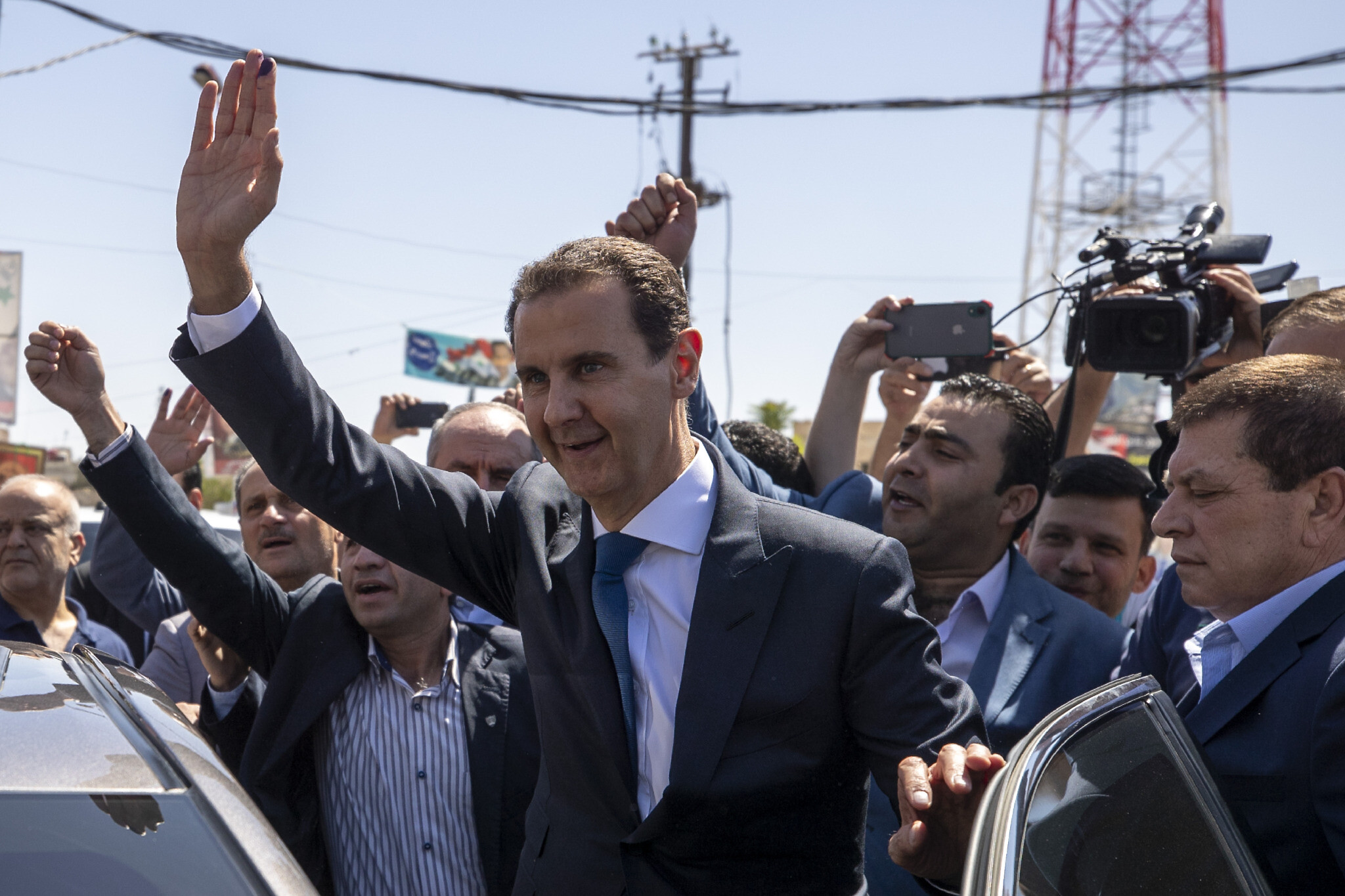
The most sophisticated method of aid diversion in Syria does not involve armed gunmen at checkpoints or the physical looting of warehouses. Instead, it is a bureaucratic operation conducted within the marble halls of the Central Bank of Syria (CBS) in Damascus. Through a calculated system of distorted exchange rates, the Assad regime has institutionalized the theft of humanitarian funds, siphoning off hundreds of millions of dollars intended for starving civilians directly into the state’s dwindling foreign currency reserves.
This financial engineering forces United Nations agencies and international NGOs to convert their foreign currency, primarily U. S. dollars and Euros, into Syrian pounds (SYP) at an artificial “official” rate set by the Central Bank. This rate is consistently and significantly lower than the real market value of the currency (the “black market” or parallel rate). The difference between the two rates is pocketed by the Central Bank. In 2020, this reached its peak, with the regime confiscating approximately 51 cents of every aid dollar sent to the country.
The Mechanics of the “Exchange Rate Tax”
The diversion operates through a dual-rate system enforced by the state. While the market rate for the Syrian pound collapsed due to hyperinflation and economic isolation, the Central Bank maintained a fixed, overvalued official rate for international organizations.
For example, in 2021, while the market rate hovered around 3, 500 SYP to the dollar, the UN was compelled to use an official rate of 2, 500 SYP. For every $1 million transferred into Syria for humanitarian operations, the UN received only 2. 5 billion SYP, whereas the real purchasing power of that million was 3. 5 billion SYP. The “missing” 1 billion SYP, worth roughly $285, 000 at market value, into the Central Bank’s accounts. This capital is then used by the regime to bypass sanctions, purchase fuel, and fund military logistics.
| Year | Avg. Market Rate (SYP/USD) | UN Official Rate (SYP/USD) | Diverted per Dollar | Est. Total Loss (UN Procurement) |
|---|---|---|---|---|
| 2019 | 640 | 434 | $0. 32 | ~$40 Million |
| 2020 | 2, 280 | 1, 250 | $0. 51 | ~$60 Million |
| 2021 | 3, 450 | 2, 500 | $0. 27 | ~$40 Million |
| Source: Center for Strategic and International Studies (CSIS), 2021; COAR Global Analysis. | ||||
The Mechanics of the Heist
Investigations by the Center for Strategic and International Studies (CSIS) and the Guardian revealed that in 2020 alone, this method stripped at least $60 million from UN procurement contracts. This figure represents only the losses from verified procurement data; when staff salaries, cash-based transfers, and NGO operations are included, the total diversion likely exceeds $100 million annually during peak periods.
The impact on aid delivery is catastrophic. A 50% loss in purchasing power means 50% fewer food baskets, 50% fewer medical kits, and 50% fewer shelters repaired. The UN, bound by its agreement to operate within Syrian sovereign territory, has largely acquiesced to these terms to maintain access. While agencies have periodically negotiated “preferential” rates, such as the adjustment to 6, 650 SYP following the February 2023 earthquake, the gap. Even with these adjustments, the Central Bank continues to arbitrage the difference between the “humanitarian rate” and the true market rate, which surged past 14, 000 SYP by early 2024.
Post-Earthquake Adjustments and Continued Theft
Following the devastating earthquake in February 2023, the Central Bank of Syria (CBS) faced intense international pressure to close the exchange rate gap. In a move widely publicized as a “concession,” the CBS devalued the official exchange rate for remittances and aid to closer align with the market. yet, this was temporary and incomplete. By late 2023, the black market rate had again outpaced the official rate, reopening the diversion window.
“The Central Bank’s policy is not passive; it is predatory. They treat humanitarian aid as a primary source of foreign currency revenue, taxing the international community for the privilege of feeding the people they are starving.”
, Senior Financial Analyst, COAR Global (2023)
The regime use these captured funds to stabilize the Syrian pound for its core constituency, the military and security apparatus, while the general population faces hyperinflation. By controlling the flow of dollars, the Central Bank also forces UN agencies to use state-approved financial intermediaries, of whom are sanctioned individuals or entities linked to the inner circle of the regime. This ensures that even the administrative fees associated with currency conversion remain within the network of the ruling elite.
even with the clear evidence of widespread theft, donor governments have continued to fund UN operations in Syria, subsidizing the very regime responsible for the humanitarian emergency. The “exchange rate tax” remains one of the most and least visible methods of aid diversion in modern conflict, turning humanitarian benevolence into a financial lifeline for autocracy.
Gaza and UNRWA: The Neutrality Emergency and Infrastructure Diversion Allegations
The operational integrity of the United Nations Relief and Works Agency (UNRWA) in Gaza collapsed in early 2024 under the weight of dual accusations: the direct participation of staff in the October 7 massacres and the physical integration of terrorist infrastructure into UN facilities. These were not breaches of protocol evidence of a widespread co-optation where humanitarian shields were used to protect military assets. The discovery of a Hamas data center directly beneath the agency’s headquarters in Gaza City provided physical proof that the boundaries between aid work and warfare had dissolved.
The Tunnel Beneath the Headquarters
On February 10, 2024, the Israel Defense Forces (IDF) revealed a sophisticated tunnel network running 18 meters beneath UNRWA’s main headquarters in the Rimal neighborhood of Gaza City. The subterranean complex, stretching 700 meters, housed a server farm and an electrical room that served as a central intelligence hub for Hamas. Crucially, IDF engineers discovered that the facility drew its power directly from the UNRWA compound above, with cables running through the floor of the agency’s server room into the terror tunnel.
UNRWA Commissioner-General Philippe Lazzarini stated the agency had vacated the building on October 12, 2023, and was unaware of the facility. Yet, the physical connection of electrical grids suggests a long-term, structural diversion of donor-funded resources to power military operations. Inside the headquarters itself, troops recovered rifles, ammunition, and grenades stored in administrative offices, further eroding the claim of ignorance regarding the facility’s dual use.
Staff Participation in October 7
Simultaneous to the infrastructure, intelligence reports identified 12 UNRWA employees who actively participated in the October 7 attacks. The accusations included kidnapping hostages, transporting ammunition, and coordinating vehicle movements during the assault. In August 2024, the UN’s Office of Internal Oversight Services (OIOS) concluded its investigation, finding sufficient evidence to terminate nine staff members for their involvement. This admission contradicted initial dismissals of the claims as propaganda and forced the agency to confront the reality of militant infiltration within its ranks.
Israeli intelligence estimates provided to donor nations suggested a deeper rot, alleging that approximately 10% of UNRWA’s 13, 000 staff in Gaza had ties to Hamas or Palestinian Islamic Jihad. While the Colonna Report, an independent review led by former French Foreign Minister Catherine Colonna in April 2024, found that UNRWA possessed “more developed” neutrality method than other UN entities, it also noted that the agency had not received specific intelligence on staff affiliations from Israel since 2011. This bureaucratic gap allowed militants to operate under the UN flag with impunity.
The Funding Freeze and Donor Revolt
The convergence of these scandals triggered an immediate financial shock. In January 2024, 16 donor nations, led by the United States and Germany, suspended funding totaling approximately $450 million. This shared action represented a loss of nearly half the agency’s operational budget. While several nations, including Sweden and Canada, resumed funding following the release of the Colonna Report, the United States maintained its freeze, citing the need for fundamental reforms that had not yet materialized.
| Date | Event | Impact |
|---|---|---|
| Jan 26, 2024 | Allegations of 12 staff involved in Oct 7 emerge | US, Germany, UK suspend funding immediately |
| Feb 10, 2024 | IDF exposes data center under UNRWA HQ | Proof of physical infrastructure diversion |
| Apr 22, 2024 | Colonna Report released | Found “strong” policies implementation gaps |
| May 14, 2024 | Hamas war room struck in Nuseirat school | Confirmed continued military use of schools |
| Aug 5, 2024 | UN OIOS fires 9 staff members | Official UN admission of staff participation |
Operational Co-optation and Aid Diversion
Beyond the headquarters and staff lists, the daily operation of aid distribution became a theater of diversion. throughout 2024, reports confirmed that Hamas police forces frequently escorted aid convoys, asserting control over distribution points. In December 2024, UNRWA suspended aid deliveries through the Kerem Shalom crossing, citing looting by “armed gangs.” Intelligence recordings released in February 2025 revealed that these gangs frequently operated with the tacit or explicit approval of Hamas, ensuring that supplies reached militant stockpiles before civilian markets.
The use of UNRWA assets for military logistics was also documented. In November 2024, a captured UNRWA security guard testified that Hamas operatives commandeered agency vehicles to transport fighters and weapons, relying on the UN markings to deter Israeli airstrikes. This misuse of protected symbols not only violated humanitarian law also endangered genuine aid workers, stripping them of the neutrality that is their only armor in a war zone.
The evidence presents a picture of an agency that, voluntarily or under duress, became a logistical partner to the governing authority in Gaza. The diversion was not a theft of food bags a structural integration where UN electricity powered Hamas servers, UN schools housed war rooms, and UN staff rosters included active combatants. This reality forced the international community to question whether the agency could ever be disentangled from the terror group it was meant to work beside.
Somalia’s Gatekeepers: The Clan of Displacement Camp Extortion
In the sprawling displacement camps of Mogadishu and Baidoa, humanitarian aid does not simply; it is systematically taxed by a network of entrenched middlemen known locally as “gatekeepers” or mukuel mathow (“black cats”). These individuals, frequently landowners, district officials, or militia leaders, have turned human displacement into a lucrative business model. They control physical access to the camps and, more serious, the beneficiary lists that determine who eats and who starves. Verified reports from 2023 indicate that these actors routinely siphon between 10% and 50% of all aid intended for internally displaced persons (IDPs), operating a “pay-to-stay” extortion racket on the world’s most populations.
The mechanics of this theft are brazen. Gatekeepers frequently “import” displaced families from rural areas to populate their land, creating the visible density required to attract international aid agencies. Once the World Food Programme (WFP) or other NGOs register the site, the gatekeeper enforces a strict tax. In 2023, a confidential UN investigation, later leaked to major news outlets, revealed that aid diversion was “widespread and widespread” across all 55 IDP sites monitored. Investigators found that gatekeepers demanded up to half of the cash transfers sent to mobile phones, threatening beneficiaries with eviction or violence if they refused to pay. In one documented instance, soldiers and camp managers confiscated food rations, leaving families with a token $4 instead of the full value of the assistance.
The 2023 Aid Suspension and the “4. 5” System
The of this diversion forced a breaking point in mid-2023. Following the internal UN findings, the European Union temporarily suspended funding for the WFP in Somalia, a drastic move that acknowledged the supply chain had been compromised by local cartels. This theft is deeply rooted in Somalia’s “4. 5” clan power-sharing system, which institutionalizes the dominance of four major clan families while marginalizing minority groups. The majority of IDPs in Mogadishu belong to minority clans, such as the Rahanweyn and Bantu, while the gatekeepers almost exclusively hail from the dominant Hawiye sub-clans that control the capital. This power imbalance renders IDPs powerless to report abuse; they are hostages on the land of their extractors.
Gatekeepers justify these fees as “rent” or payment for security and water, services that are frequently nonexistent or provided by the aid agencies themselves. The impunity is absolute. even with the 2023 exposure, few gatekeepers have faced prosecution, as they are frequently shielded by clan elders and district commissioners who receive a cut of the diverted aid. The system is not a malfunction of aid delivery a functioning economy for the local elite, where the bodies of the displaced serve as currency to attract foreign capital.
The Economics of Extortion
The following table details the verified taxation rates and methods used by gatekeepers in Mogadishu and Baidoa between 2020 and 2024, based on data from the UN Monitoring Group and humanitarian audits.
| Aid Type | Method of Extraction | Estimated “Tax” Rate | Consequence of Non-Payment |
|---|---|---|---|
| Mobile Money Transfers | Forced transfer to gatekeeper’s phone or cash withdrawal at agent | 20% , 50% | Immediate eviction; removal from beneficiary list |
| Physical Food Rations | Direct confiscation at distribution point or “storage fees” | 30% , 60% | Physical assault; confiscation of ration card |
| Shelter/Plastic Sheeting | Resale of materials in local markets | 100% (Full diversion) | Family left without shelter; forced to rent makeshift hut |
| WASH Services (Water) | Gatekeepers lock taps; charge per jerrycan | $0. 10 , $0. 20 per jerrycan | Denial of water access; reliance on contaminated sources |
This extortion is not limited to goods. Gatekeepers frequently manipulate the registration process itself, populating lists with “ghost beneficiaries”, family members or militia associates who do not live in the camp collect aid. A 2023 biometric verification pilot in Baidoa exposed thousands of such duplicate registrations. Yet, when aid agencies attempt to bypass gatekeepers by using direct digital transfers, the gatekeepers simply confiscate the SIM cards or force beneficiaries to cash out in their presence. The “black cat” system remains the primary barrier to humanitarian action in Somalia, turning aid delivery into a logistical war against the very infrastructure meant to host the displaced.
Afghanistan under the Taliban: Gender Bans and the Weaponization of Assistance
Since the Taliban’s return to power in August 2021, the United Nations has maintained a controversial financial lifeline to the regime, flying approximately $2. 9 billion in shrink-wrapped $100 bills into Kabul International Airport through early 2024. While UN officials publicly assert these funds are deposited into private banks to bypass the Taliban-controlled central bank, the Special Inspector General for Afghanistan Reconstruction (SIGAR) has exposed this arrangement as a “useful fiction.” The influx of hard currency has stabilized the afghani, indirectly subsidized the regime’s budget, and provided a lucrative target for widespread diversion.
The method of theft in Afghanistan is not chaotic looting bureaucratic extortion. Taliban officials view the humanitarian sector as a primary revenue stream, levying taxes on aid projects that range from 10% to 20% of the total contract value. These levies, frequently disguised as “administrative fees” or “licenses,” are collected by the very ministries responsible for erasing women from public life. In 2023, SIGAR reported that the Taliban had institutionalized this extraction, requiring aid organizations to sign memorandums of understanding (MoUs) that grant the regime oversight over hiring and beneficiary selection. This control allows commanders to redirect food and medical supplies to their own soldiers and loyalist networks, turning donor-funded wheat and medicine into logistics for the Taliban’s security apparatus.
The Gender Ban as a Tactic of Control
The weaponization of aid reached a serious inflection point with the Taliban’s edicts restricting female humanitarian workers. On December 24, 2022, the regime banned Afghan women from working for non-governmental organizations (NGOs). In April 2023, this ban was extended to UN agencies. These directives were not ideological; they functioned as a purge of independent oversight. By forcing the dismissal of female staff, the Taliban created vacancies that they pressured NGOs to fill with their own male affiliates. This demographic shift in the aid workforce dismantled the monitoring networks capable of verifying whether assistance reached women and children, the demographics most to starvation.
The operational impact was immediate and catastrophic. Following the December 2022 edict, 94% of surveyed NGOs fully or partially suspended operations. Yet, the flow of funding did not cease. Instead, the UN and international donors sought “workarounds” that frequently involved concessions to local Taliban governors. By January 2025, the UN Office for the Coordination of Humanitarian Affairs (OCHA) reported that 56 humanitarian projects were suspended in a single month due to interference, including demands for sensitive staff data and the enforcement of the mahram (male guardian) requirement, which prevents female beneficiaries from collecting aid without a male escort.
| Date | Event / Edict | Operational Impact | Est. Cash Shipment (Cumulative) |
|---|---|---|---|
| Aug 2021 | Taliban Takeover | Banking sector collapse; UN begins cash flights. | $0 |
| Dec 2022 | Ban on Female NGO Workers | 94% of NGOs suspend or reduce operations. | ~$1. 8 Billion |
| Apr 2023 | Ban on Female UN Staff | UN orders staff to stay home; aid monitoring blindsided. | ~$2. 3 Billion |
| May 2023 | WFP Suspension in Ghazni | Food aid halted due to Taliban diversion attempts. | ~$2. 5 Billion |
| Jan 2025 | Project Suspensions | 56 projects halted in one month due to interference. | ~$2. 9 Billion+ |
Ethnic Bias and the “Culture of Denial”
The diversion of aid is also driven by ethnic and political favoritism. Reports from 2024 indicate that the Taliban systematically redirect assistance toward Pashtun-majority areas while obstructing delivery to Hazara and Tajik communities, who face historically high levels of food insecurity. In Ghor and Daikundi provinces, local commanders have blocked aid convoys under the pretense of security checks, only to release them after significant portions of the cargo are offloaded for “taxation.” SIGAR explicitly warned in 2023 that the Taliban’s interference had become so pervasive that it is no longer a question of if the Taliban is diverting assistance, how much.
even with these verified breaches, the international response has been characterized by what SIGAR terms a “culture of denial.” Aid agencies, fearing the total collapse of the humanitarian mission, frequently underreport incidents of theft to donors. This silence has allowed the Taliban to perfect a model of “predatory humanitarianism,” where the regime generates revenue from the very emergency it perpetuates. The United States, having provided over $2. 6 billion in assistance since the withdrawal, continues to fund a system where verified oversight is functionally impossible. As of early 2025, the Taliban’s Ministry of Economy requires all aid projects to be coordinated through its offices, ensuring that every dollar spent in Afghanistan pays a toll to the theocracy.
“It is a useful fiction to believe that we can bypass the Taliban. They tax the aid, they decide who gets the aid, and they decide who is hired to deliver the aid.” , John Sopko, Special Inspector General for Afghanistan Reconstruction (SIGAR), testimony to U. S. Congress, Nov 2023.
Sudan’s Civil War: Cross-Line Obstruction and Systematic Warehouse Looting
The collapse of humanitarian access in Sudan represents one of the most absolute failures of the international aid architecture in the 21st century. Since the outbreak of conflict in April 2023, the looting of aid warehouses has transitioned from opportunistic theft to a core logistical strategy for both the Sudanese Armed Forces (SAF) and the Rapid Support Forces (RSF). By June 2023, the World Food Programme (WFP) reported that it had already lost over $60 million in food and assets, with 17, 000 metric tons of life-saving supplies stripped from its depots in the six weeks of fighting alone. This volume of theft was not a byproduct of chaos; it was a systematic resource transfer that directly fueled the combatants while 25 million civilians faced acute hunger.
The most devastating single incident occurred in December 2023 following the RSF takeover of Wad Madani in Gezira State, the country’s primary humanitarian hub. In a matter of days, RSF elements raided WFP warehouses containing 2, 500 metric tons of food, stocks sufficient to feed 1. 5 million severely food-insecure people for a month. This looting operation was detailed, stripping the facility of pulses, sorghum, vegetable oil, and specialized nutritional supplements for malnourished children. The loss paralyzed distribution networks across central Sudan, forcing agencies to suspend operations in a region that had previously served as a safe haven for displaced populations.
While the RSF utilized direct looting, the SAF deployed bureaucratic obstruction as a weapon of war, placing RSF-controlled areas under a humanitarian siege. Operating from Port Sudan, SAF authorities systematically denied visas and travel permits to aid workers attempting to cross front lines. Data from March 2025 reveals the extent of this administrative blockade: of 145 visa applications submitted by humanitarian organizations that month, only 23 were approved, a rejection rate of 84%. This “paper wall” prevented technical experts and logistics coordinators from reaching famine-stricken zones in Khartoum and Darfur, ensuring that even when food was available, the personnel required to distribute it were barred from entry.
Chronology of widespread Aid Theft and Obstruction (2023-2025)
| Date | Location | Incident / method | Impact / Loss |
|---|---|---|---|
| May 2023 | Khartoum & Nationwide | Initial wave of warehouse looting by RSF and militias | 17, 000 metric tons of food stolen; $13-14 million value lost in weeks. |
| June 2023 | El Obeid (North Kordofan) | Attack on WFP logistics hub | Food assistance for 4. 4 million people compromised; vehicles and fuel seized. |
| Dec 2023 | Wad Madani (Gezira) | RSF takeover and total warehouse clearance | 2, 500 metric tons looted; aid suspended for 1. 5 million people. |
| Feb 2024 | Adre Border (Chad-Sudan) | SAF orders border closure | Primary artery for aid to Darfur severed; famine conditions accelerate in Zamzam camp. |
| Aug 2024 | Darfur Region | Establishment of SARHO by RSF | New “humanitarian agency” imposes taxes and bureaucracy on aid convoys in RSF areas. |
| March 2025 | Port Sudan | SAF Visa Blockade | 84% of humanitarian visa applications rejected or stalled indefinitely. |
The obstruction reached a serious breaking point at the Adre border crossing, the only viable land route from Chad into the famine-stricken Darfur region. The SAF-controlled government ordered the crossing closed in February 2024, alleging the route was being used to smuggle weapons to the RSF. This decision severed the lifeline for millions in Darfur, where famine was confirmed in the Zamzam displacement camp by August 2024. Although international pressure forced a temporary reopening in late 2024, the flow of aid remained intermittent and heavily policed. By the time the crossing was extended in December 2025, the delay had already contributed to catastrophic mortality rates among children in North Darfur.
In RSF-controlled territories, the obstruction became institutionalized through the creation of the Sudanese Agency for Relief and Humanitarian Operations (SARHO) in August 2023. While ostensibly a coordination body, SARHO functioned as a predatory method to extract rents from humanitarian convoys. Aid organizations operating in Darfur reported mandatory “registration fees,” travel permit costs, and cargo inspections that served as pretexts for confiscation. This parallel bureaucracy mirrored the SAF’s obstructionism in Port Sudan, creating a dual-chokehold where aid was blocked at the source by the government and looted at the destination by the militia.
The Ghost Beneficiary Phenomenon: Falsified Rolls and Biometric Fraud
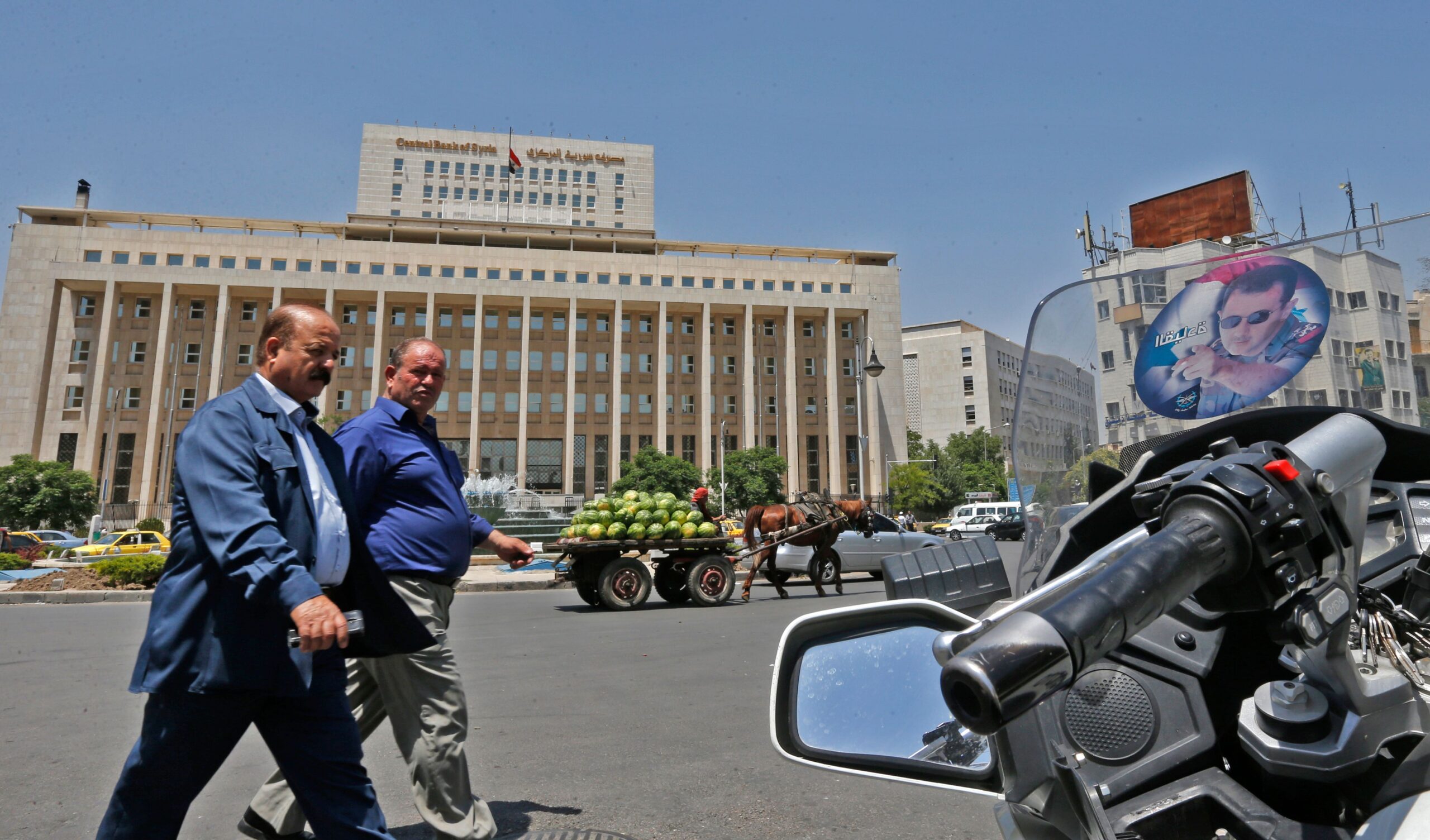
The most pervasive method of aid theft in the modern humanitarian is not the armed hijacking of convoys the bureaucratic fabrication of human need. This is the “Ghost Beneficiary” phenomenon. Local authorities, warlords, and corrupt officials systematically population registers to siphon millions of dollars in food and cash assistance. These phantom recipients exist only on paper or in compromised databases. The diversion is not a byproduct of chaos. It is a calculated administrative strategy to convert humanitarian inflows into liquid capital for combatants.
In June 2023, the United States Agency for International Development (USAID) and the World Food Programme (WFP) executed a historic suspension of food aid to Ethiopia. This decision affected over 20 million citizens. The suspension was not triggered by a single incident of looting. It was the result of a “coordinated criminal scheme” where federal and regional entities manipulated beneficiary lists on an industrial. Investigations revealed that military units were listed as beneficiaries while legitimate famine victims were excluded. The diverted grain was subsequently found for sale in commercial flour mills and local markets. The of the fraud rendered the entire distribution network untenable. The agencies could not restart operations until December 2023, and only then under a completely new, digitally verified register.
The battle for control over these lists frequently escalates into high-level geopolitical standoffs. In Yemen, the Houthi administration in Sanaa engaged in a multi-year war of attrition against the WFP over the implementation of biometric registration. The WFP sought to introduce iris scans and fingerprinting to purge ghost beneficiaries from the rolls. The Houthi leadership blocked this technology for years. They claimed it violated national sovereignty and espionage laws. In reality, the resistance preserved a system where aid intended for starving civilians was diverted to frontlines and loyalist networks. In June 2019, the WFP suspended aid to 850, 000 people in Sanaa after negotiations collapsed. The agency stated explicitly that they could not justify delivering food that was being taken from the mouths of hungry children to feed the war machine.
The Mechanics of Inflation
The creation of ghost beneficiaries follows a specific operational pattern. Local administrators refuse to remove the names of deceased residents from registries. They register single families multiple times under different spellings. In more advanced schemes, they confiscate the SIM cards or biometric smart cards of real refugees. This allows a single handler to collect rations for hundreds of people. The “tax” is frequently extracted at the point of registration. Families are told they must surrender a portion of their entitlement to be placed on the list at all.
Uganda provided the definitive proof of concept for this fraud in 2018. The country was long hailed as a model for refugee hosting. yet, a verification audit by the UN and the Ugandan government exposed a massive inflation of numbers. The audit revealed that the refugee population was overstated by 300, 000 individuals. The official count was slashed from 1. 4 million to 1. 1 million. Millions of dollars in donor funds had been allocated to support people who did not exist. Four government officials were suspended. The scandal demonstrated that even in stable environments, the financial incentive to fabricate refugees is overwhelming.
| Country | Year of Discovery | Estimated “Ghost” Impact | Operational Consequence |
|---|---|---|---|
| Uganda | 2018 | 300, 000 non-existent refugees verified. | Official count reduced by 24%. Officials suspended. |
| Yemen | 2019 | widespread obstruction of biometrics. | Aid suspended for 850, 000 people in Sanaa. |
| Ethiopia | 2023 | Nationwide list manipulation. | Total suspension of food aid for 20 million people. |
| Somalia | 2023 | Diversion to Al-Shabaab via local admin. | Enhanced risk controls and third-party monitoring imposed. |
Biometric technology was introduced as the silver bullet to kill the ghost beneficiary. It has instead become a new battleground. When aid agencies demand biometric verification, local regimes frequently respond by holding the physical access to the population hostage. They demand that the servers hosting the biometric data be located within their jurisdiction. This would grant them the ability to cross-reference populations against their own intelligence databases. In conflict zones like Syria and Yemen, handing over this data is tantamount to handing over a hit list. The result is a paralyzed system where agencies must choose between feeding ghosts or feeding no one.
“The theft of food aid included the manipulation of beneficiary lists that the Ethiopian government has insisted on controlling… looting by Ethiopian government and regional Tigray forces… and the diversion of massive amounts of donated wheat to commercial flour mills.” , USAID Official, November 2023 Statement on Resumption of Aid.
The persistence of ghost beneficiaries is not a technical failure. It is a political success for the actors who control the territory. As long as the number of people in need determines the volume of funding, local powerbrokers always have a financial incentive to ensure that the lists remain inaccurate, inflated, and unclear.
Checkpoint Economics: The Cost of Moving Goods Through Warlord Territories
The logistics of humanitarian aid in conflict zones are defined not by distance, by friction. In stable nations, transport costs are a function of fuel, driver wages, and vehicle maintenance. In Yemen, Syria, Somalia, and South Sudan, the primary cost driver is the “checkpoint economy”, a formalized system of extortion where armed groups levy taxes on every metric ton of food and medicine that crosses their lines. This is not random banditry. It is a structural revenue stream that funds the very combatants perpetuating the hunger.
In Yemen, the Houthi rebel group has constructed what economists call a “customs wall” between the government-controlled south and the rebel-held north. As of late 2023, the Houthi Ministry of Finance imposed a 100% levy on goods imported through government ports like Aden, forcing traders and aid agencies to use the Houthi-controlled port of Hodeidah or face double taxation. Trucks attempting to cross from government territory into Houthi areas face “customs” checkpoints in Sana’a, Taiz, and Al-Bayda. Reports from late 2024 indicate that the fee for a single commercial truck at these internal borders has risen to 30 million Yemeni Riyals (approximately $56, 000 at official rates, though lower in parallel markets), a sharp increase from 20 million Riyals in 2023. This financial barrier forces aid convoys to take circuitous, dangerous routes through Oman, adding weeks to delivery times and millions to logistics budgets.
South Sudan presents a different model of extortion, characterized by volume rather than a single high tariff. The route between Juba and Bentiu, a serious artery for food delivery, is lined with approximately 80 checkpoints. A 2023 analysis revealed that a single truck making this journey pays roughly $3, 000 in illegal “transit taxes.” River transport is equally compromised; barges traveling the White Nile between Bor and Renk pass through 33 checkpoints, paying a cumulative $10, 000 per round trip. These fees are frequently collected by soldiers who have not received official government salaries for months, making the predation a need for their own survival. The cumulative effect is that South Sudan has the most expensive road transport rates in the world per kilometer, a cost borne by donor nations.
In Syria, the Fourth Division, an elite military unit commanded by Maher al-Assad, has monopolized the internal movement of goods. Unlike the decentralized predation in South Sudan, the Fourth Division operates a centralized protection racket. Through front companies like “Al-Qalaa Security and Protection,” the division collects fees at checkpoints controlling access to government-held areas, particularly around Damascus and the crossings with Lebanon and Jordan. Merchants and logistics providers report paying a cash bribe equivalent to 20% of the cargo’s value to bypass these checkpoints. In one documented case from 2023, a logistics provider paid an $8, 000 lump sum plus a monthly fee of 7 million Syrian pounds to secure a “road pass” for a single vehicle, exempting it from daily harassment. This system turns humanitarian aid into a subsidy for the regime’s praetorian guard.
Somalia’s Al-Shabaab militant group operates the most bureaucratically advanced taxation system of any non-state actor. The group generates an estimated $100 million to $150 million annually, with derived from checkpoint taxes on the Mogadishu-Baidoa corridor. Al-Shabaab problem official receipts for payments, categorizing them as gadiid (transit tax) or badeeco (goods tax). Transporters who pay are given a pass that is respected at subsequent Al-Shabaab checkpoints, creating a perverse incentive for logistics companies to route convoys through insurgent territory where the “tax” is high the passage is guaranteed, rather than government territory where clan militias operate unpredictable, predatory roadblocks. In 2024, the Somali government launched an offensive to these “gatekeeper” checkpoints in the Southwest state, acknowledging that the illicit tax revenue was sustaining the insurgency’s war effort.
| Conflict Zone | Controlling Actor | method | Estimated Cost |
|---|---|---|---|
| Yemen (Internal Borders) | Houthi Rebels | “Customs” Levy | ~30, 000, 000 YR ($50k+) per truck |
| South Sudan (Juba-Bentiu) | SPLA / Militias | 80+ Roadblocks | ~$3, 000 per truck (cumulative) |
| Syria (Damascus/Borders) | 4th Division | Security Racket | ~20% of cargo value (Cash) |
| Somalia (Mogadishu-Baidoa) | Al-Shabaab | Gadiid (Transit Tax) | Fixed rate with receipt (varies by cargo) |
| South Sudan (White Nile) | River Units | Barge Checkpoints | ~$10, 000 per round trip |
The financial of these checkpoints extend beyond the immediate fees. Aid agencies must budget for “shrinkage” and delays that lead to spoilage of perishable goods. When the World Food Programme or USAID contracts private trucking companies to deliver aid, the bid price includes these bribes as “security costs” or “facilitation fees.” Consequently, a significant percentage of the humanitarian budget allocated for food and medicine is directly transferred to the armed groups responsible for the emergency. This creates a self-sustaining pattern where the logistics of relief provide the capital for continued conflict.
The Vendor Racket: Procurement Fraud and Kickbacks in Local Contracting
The theft of humanitarian aid is rarely a chaotic, smash-and-grab operation. In conflict zones, it is a sophisticated, white-collar enterprise disguised as legitimate logistics. This is the “Vendor Racket,” a widespread corruption method where local procurement processes are hijacked by warlords, regime officials, and cartel-like transport networks. By rigging the contracting phase, these actors ensure that for every dollar spent on food or medicine, a significant percentage, frequently ranging from 10% to 50%, is siphoned off before a single sack of grain reaches a beneficiary. This is not leakage; it is the price of doing business in a war zone, turning UN agencies into major financiers of the very combatants they are meant to neutralize.
In Yemen, this racket was institutionalized under the Supreme Council for the Management and Coordination of Humanitarian Affairs (SCMCHA), a Houthi-controlled body that monopolized the aid sector until its restructuring in late 2024. SCMCHA did not regulate aid; it strangled it. Investigations revealed that the council enforced a “pay-to-play” system, demanding a 2% levy on all humanitarian contracts and forcing international agencies to hire from a pre-approved list of local vendors. These vendors, frequently owned by Houthi loyalists, charged inflated rates for transport and warehousing. The “tax” was a direct subsidy to the Houthi war effort, paid for by international donors. When agencies resisted, visas were denied, and aid convoys were blocked at checkpoints, weaponizing access to enforce the kickback scheme.
The situation in Syria mirrors this capture, with the full weight of a sovereign state apparatus. UN procurement data from 2019 to 2024 shows tens of millions of dollars in contracts awarded to companies linked to the Assad regime, including entities under Western sanctions. The “Desert Falcon” militia, for instance, has been linked to companies receiving UN security and transport contracts. also, the UN spent over $80 million at the Four Seasons Hotel in Damascus, a property partially owned by regime-linked businessman Samer Foz, who is sanctioned by the US and EU. This funneling of hard currency into the regime’s inner circle allows the government to bypass sanctions while maintaining a veneer of humanitarian cooperation.
| Conflict Zone | method of Fraud | Key Actors Involved | Estimated Impact/Loss |
|---|---|---|---|
| Ethiopia | “Coordinated Criminal Scheme” involving flour mills and grain traders. | Federal/Regional officials, Military units, Private Traders | Country-wide suspension of USAID/WFP food aid in June 2023. |
| Yemen | 2% “Tax” on contracts; Mandatory vendor lists. | SCMCHA (Houthi authority) | Diversion of millions in cash and supplies to Houthi war chest. |
| Syria | Contracts awarded to sanctioned regime cronies. | Assad regime insiders (e. g., Samer Foz) | ~$137 million to human rights abusers (2019-2020 estimate). |
| Somalia | “Gatekeeper” fees and warehouse looting. | Camp managers, Clan militias, Al-Shabaab | US aid suspension in Jan 2026 following WFP warehouse looting. |
In Ethiopia, the of the vendor racket precipitated a total collapse of the aid pipeline. In June 2023, USAID and the WFP suspended food assistance to the entire nation after uncovering a “coordinated criminal scheme.” This was not petty theft. The diversion involved federal and regional government entities colluding with private grain traders and flour mill operators. Donated wheat, intended for starving families in Tigray and Amhara, was diverted to commercial mills, processed into flour, and sold on the open market or exported. The scheme relied on a network of corrupt vendors who falsified delivery records, allowing the military and local officials to pocket the proceeds. The monitoring of 63 flour mills revealed that this was a standardized industrial operation, not an anomaly.
The mechanics of this fraud frequently rely on the “Three-Bid Illusion.” UN procurement rules require three competitive bids for any contract. In places like Mogadishu or Sana’a, cartels circumvent this by submitting three bids from different shell companies owned by the same individual. The contract is awarded to the “lowest” bidder, who is still charging double the market rate, while the other two companies provide the illusion of competition. In Somalia, this is compounded by the “gatekeeper” system, where camp managers act as mandatory intermediaries. These gatekeepers, frequently backed by local militias, demand registration fees from displaced persons and take a cut of the aid delivered. In January 2026, the United States suspended aid to Somalia following the looting of a WFP warehouse in Mogadishu, a brazen act that exposed the continued fragility of the supply chain even with years of “capacity building.”
“The procurement system in these zones is not broken; it is working exactly as the local power brokers designed it. It is a highly machine for converting humanitarian goodwill into hard currency for warlords.” , Internal Audit Report, International Aid Oversight Body (Redacted), 2024.
These vendor rackets are resilient because they operate within the “gray zone” of legality. The paperwork is frequently perfect: receipts are signed, waybills are stamped, and photos of delivery are uploaded. Yet, the physical reality is a phantom supply chain where goods are diverted immediately after the photo-op. The reliance on remote management and third-party monitors, who are themselves frequently compromised or threatened, allows this facade to. Until donor nations demand direct, independent verification of the entire vendor chain, from port to pot, the humanitarian system continue to serve as a logistics arm for the very conflicts it seeks to mitigate.
Currency Arbitrage: How Regimes Siphon Hard Currency from UN Operations
The most sophisticated method for aid diversion in modern conflict zones does not involve armed gunmen seizing trucks at checkpoints. Instead, it occurs silently within the regulated banking systems of rogue states, where regimes manipulate exchange rates to siphon hundreds of millions of dollars from humanitarian operations. This process, known as currency arbitrage, forces United Nations agencies and international NGOs to convert hard currency, primarily U. S. dollars and Euros, into local currency at artificially low “official” rates, while the regime pockets the difference between the official and black market value.
Between 2019 and 2024, this financial engineering became a primary revenue stream for sanctioned governments in Syria, Lebanon, Yemen, and South Sudan. By mandating that all humanitarian expenses, including staff salaries, local procurement, and cash-for-work programs, be settled in local currency purchased through state-controlled central banks, regimes levy a tax on aid that frequently exceeds 50%. This structural theft converts donor funds directly into foreign reserves for the very actors perpetuating the humanitarian crises.
The Mechanics of the “Exchange Rate Tax”
The arbitrage method relies on a dual exchange rate system. The regime sets an official exchange rate that vastly overvalues the local currency compared to the real market rate (frequently called the parallel or black market rate). UN agencies, bound by agreements with host governments, are compelled to use the official rate or a slightly improved “preferential” rate that still lags far behind market realities. When a UN agency transfers $1 million to a local bank to pay for food or fuel, the central bank provides the local currency equivalent at the suppressed rate, keeping the remaining hard currency.
In Syria, this practice reached industrial. A seminal investigation by the Center for Strategic and International Studies (CSIS) revealed that in 2020 alone, the Central Bank of Syria pocketed approximately $0. 51 of every aid dollar sent to the country. With the black market rate hovering at 3, 500 Syrian Pounds (SYP) to the dollar and the official rate fixed at 1, 250 SYP (and later 2, 500 SYP), the regime confiscated half of the purchasing power of international aid. In 2020, this resulted in the diversion of at least $60 million from UN procurement contracts alone, directly funding the Assad government’s foreign reserves while bypassing Western sanctions.
“Western countries, even with sanctioning Syrian President Bashar Assad, have become one of the regime’s largest sources of hard currency. Assad does not profit from the emergency he has created; he has created a system that rewards him more the worse things get.” , CSIS Report, October 2021
Lebanon: The Billion-Dollar “Lollar” Scam
In Lebanon, the collapse of the banking sector in 2019 birthed a similar more chaotic form of arbitrage. As the Lebanese Lira (LBP) lost over 98% of its value, the banking system froze dollar deposits, creating “lollars”, dollars stuck in banks that could only be withdrawn in LBP at punitive rates. UN agencies, which bring fresh “fresh dollars” into the country, were for years forced to convert these funds at rates significantly lower than the street value.
A 2021 investigation by the Thomson Reuters Foundation estimated that Lebanese banks swallowed at least $250 million in UN aid money between 2019 and 2021 due to unfavorable exchange rates. During the height of the emergency, the UN was converting aid dollars at rates of 3, 900 LBP or 6, 240 LBP, while the market rate soared past 20, 000 LBP. This massive meant that cash assistance programs intended for Syrian refugees and destitute Lebanese citizens lost nearly two-thirds of their value before reaching the beneficiaries. The difference subsidized the insolvent Lebanese banking sector, which is closely tied to the country’s political elite.
Comparative Arbitrage Losses in Key Conflict Zones (2020-2023)
The following table illustrates the between official UN exchange rates and parallel market rates during peak emergency periods, highlighting the of diversion.
| Country | Period | Official/UN Rate (Local/USD) | Market Rate (Local/USD) | Diverted Value (%) | Primary Beneficiary |
|---|---|---|---|---|---|
| Syria | 2020-2021 | 1, 250, 2, 500 SYP | 3, 500, 4, 700 SYP | 51% | Central Bank of Syria |
| Lebanon | 2020-2021 | 3, 900 LBP | 10, 000, 20, 000 LBP | 60-80% | Commercial Banks / Central Bank |
| South Sudan | 2020 | 165 SSP | 400, 600 SSP | 58% | Juba Elites / Central Bank |
| Yemen | 2019-2022 | 250, 600 YER | Variable (North/South split) | 30-40% | Houthi Authorities / Central Bank (Sanaa) |
Yemen and South Sudan: Weaponizing Liquidity
In Yemen, the Houthi-controlled authorities in Sanaa have enforced a strict bifurcation of the currency, banning the use of new banknotes issued by the internationally recognized government in Aden. This created two separate exchange rates within the same country. The Houthis manipulated this split to siphon value from humanitarian transfers. By maintaining an artificially strong exchange rate in the north (approx. 530-600 YER/USD) compared to the collapsing rate in the south (over 1, 200 YER/USD), the group taxed remittances and aid flows crossing the front lines. also, the Houthi Supreme Council for the Management and Coordination of Humanitarian Affairs (SCMCHA) has repeatedly blocked UN attempts to introduce biometric registration, preserving a system where ghost beneficiaries and currency manipulation generate revenue for the war effort.
South Sudan presents a cruder equally model. In 2020, the gap between the official rate (165 SSP/USD) and the black market rate (400+ SSP/USD) allowed the elite in Juba to profit immensely. The International Monetary Fund (IMF) explicitly labeled this exchange rate a “hidden transfer of resources” from the government to a privileged few. UN agencies, requiring local currency for logistics and salaries, subsidized these elites with every transaction. While the government floated the currency in 2021 to close this gap, the re-emerged by 2024, with the gap widening to 60% as oil exports faltered.
Institutional Complicity and Inertia
The persistence of this theft UN complicity. While agencies like the World Food Programme (WFP) and UNHCR have periodically negotiated “preferential” rates, these rates rarely match the true market value. UN officials privately that central bank mandates puts staff at risk of expulsion and halts life-saving operations. yet, by acquiescing to these distorted rates, the UN system has become a primary financier of the very regimes responsible for the humanitarian emergencies. In Syria, the procurement of fuel, accommodation (frequently at the regime-linked Four Seasons Hotel), and local services in distorted Syrian Pounds has injected hundreds of millions of dollars in hard currency directly into the accounts of sanctioned entities, undermining the financial isolation intended by Western governments.
Internal UN Audits: Analyzing Redacted Reports and Oversight Failures
The internal oversight method designed to protect United Nations humanitarian aid have structurally failed to detect or prevent large- diversion in real time. While the Office of Internal Oversight Services (OIOS) and agency-specific audit bodies frequently problem reports, these documents are frequently released years after the funds have, heavily redacted to protect diplomatic relationships, or limited in scope to exclude the most dangerous, and corrupt, regions. An analysis of internal audit reports from 2018 to 2024 reveals a pattern where “management override” and “scope limitations” blinded auditors to the widespread looting of aid in Ethiopia, Yemen, and Syria.
The Ethiopia “Scope Limitation” Failure
The collapse of aid delivery in Ethiopia in 2023 provides the clearest example of how internal audits fail to detect active criminal schemes. In July 2023, the World Food Programme (WFP) Office of Internal Audit released a report on its Ethiopia operations covering the period leading up to the massive suspension of food aid. The report assigned a rating of “major improvement needed.” Yet the audit explicitly excluded the Tigray region from its scope. The auditors “absence of access and ongoing conflict” as the reason for this exclusion. Consequently, the very region where the “coordinated criminal scheme” to divert thousands of tonnes of grain was most acute was never subjected to independent verification during the audit fieldwork. The oversight body blinded itself to the crime scene, allowing the diversion to continue until external intelligence forced a total shutdown.
The UNOPS S3i Scandal and Secrecy
The failure of oversight is not limited to conflict zones extends to the highest levels of UN financial management. The scandal involving the United Nations Office for Project Services (UNOPS) and its “Sustainable Investments in Infrastructure and Innovation” (S3i) initiative exposed a complete breakdown of internal controls. Between 2018 and 2020, UNOPS allocated approximately $60 million to projects that resulted in massive losses, including funds directed to a single private holding group. Internal red flags were ignored. A KPMG third-party review later found that a “culture of fear” prevented staff from reporting irregularities.
When the OIOS investigated the misconduct of Vitaly Vanshelboim, the head of the S3i initiative, the United Nations withheld the full report from major donors, including the United States. This refusal to release unredacted findings prevents independent verification of how deep the corruption ran or whether other senior officials were complicit. The UNOPS audit failure demonstrates that even when fraud is detected, the internal justice method prioritizes institutional reputation over transparency.
Yemen and Syria: The “Unsatisfactory” Ratings
In Yemen and Syria, internal audits have repeatedly flagged operations as “unsatisfactory,” yet the flow of funds to compromised actors continued. A 2019 WHO internal audit of its Yemen operations found that financial and administrative controls were “unsatisfactory,” citing “suspected wrongdoing” and “conflicts of interest.” The audit revealed that staff had fabricated payrolls and hired unqualified “ghost” employees. even with these findings, the structural reliance on local partners linked to the Houthi authorities made it impossible to implement the necessary controls. In one egregious oversight failure, a UNICEF audit probe revealed that a staff member had allowed a senior Houthi official to travel in agency vehicles to shield him from airstrikes, repurposing UN neutrality as military cover.
Similarly, in Syria, the WHO’s internal oversight failed to check the abuses of its country representative, Dr. Akjemal Magtymova. Allegations surfaced in 2022 that she had misspent millions of dollars and provided gifts to Syrian government officials, including gold coins and cars. Internal complaints were filed as early as 2019, yet the oversight moved too slowly to prevent further loss of funds. The audit reports for Syria frequently cite “external factors” for performance gaps, masking the reality of regime pressure and internal corruption.
The Mechanics of Obfuscation
The language used in internal audit reports frequently sanitizes criminal behavior. Theft is frequently categorized as “inventory shrinkage” or ” losses.” Bribery is described as “ineligible expenditures.” The table contrasts the sanitized language of internal audits with the operational reality confirmed by independent investigations.
| Region / Agency | Audit Finding / Rating | Operational Reality (Verified) | Financial Impact |
|---|---|---|---|
| Ethiopia (WFP) | “Scope Limitation” / Major Improvement Needed | widespread diversion of grain to military units; complete supply chain compromise. | Suspension of aid to 20 million people. |
| UNOPS (S3i) | Internal controls “ineffective” | $60 million transferred to questionable partners; “culture of fear” blocked reporting. | ~$60 Million lost (bad debt). |
| Yemen (WHO) | “Unsatisfactory” (2019) | Ghost employees, payroll fraud, vehicles used to shield combatants. | Millions in diverted cash and logistics. |
| Syria (WHO) | “Partially Satisfactory” | Gifts to regime officials, abusive management, contracts awarded to cronies. | Undisclosed millions in misappropriated funds. |
The lag time between the commission of fraud and the publication of audit findings renders reports useless for prevention. The 2023 OIOS audit of UNHCR operations in Ethiopia covered the period from January 2022 to December 2023. By the time the report was finalized and released in late 2024, the diversion schemes it sought to analyze had already mutated or been buried. This retrospective method ensures that auditors are documenting the history of theft rather than stopping it. The refusal to grant auditors real-time access to biometric data and beneficiary lists in Houthi-controlled Yemen and Taliban-controlled Afghanistan further guarantees that these reports remain incomplete assessments of a broken system.
The Whistleblower Files: Testimonies from Field Officers Silenced by Bureaucracy
The public face of United Nations humanitarian operations is one of neutrality and “zero tolerance” for corruption. The internal reality, revealed through leaked cables, tribunal records, and the testimony of field officers, describes a different operational standard: the preservation of access at any cost. Between 2015 and 2025, a pattern emerged where field staff who reported widespread aid diversion were frequently ignored, transferred, or saw their contracts non-renewed. These “whistleblowers”, frequently as disgruntled former staff by UN leadership, provide the forensic evidence of how aid theft becomes institutionalized.
The most explosive breach of this silence occurred in Ethiopia in 2023. While public statements “anomalies,” a leaked internal memo from the Humanitarian Resilience Development Donor Group, briefed by USAID, described the situation with far greater clarity. The document characterized the theft of food aid not as random looting as a “coordinated and criminal scheme” orchestrated by federal and regional government entities. Field officers had warned for months that bags of wheat stamped with USAID and WFP logos were appearing in commercial flour mills rather than refugee camps. In seven of Ethiopia’s nine regions, investigators found “significant diversion.”
“Extensive monitoring indicates this diversion of donor-funded food assistance is a coordinated and criminal scheme, which has prevented life-saving assistance from reaching the most… The scheme appears to be orchestrated by federal and regional Government of Ethiopia entities, with military units across the country benefiting from humanitarian assistance.” , Leaked Donor Memo, June 2023.
The bureaucracy’s failure to act on early warnings in Ethiopia mirrors the suppression of dissent in Yemen. In 2019, the World Food Programme (WFP) took the rare step of partially suspending aid in Houthi-controlled areas. This decision came only after months of internal battles where field staff reported that Houthi authorities were blocking biometric registration to maintain ghost beneficiary lists. Internal data showed that 66% of staff monitoring visits were blocked by local authorities, and a hotline detected 33 specific instances of misappropriation in a short window. Field officers who pushed too hard for access were threatened with visa revocation, a tactic that silences career humanitarians whose livelihoods depend on remaining in the country.
In Syria, the “culture of silence” morphed into active complicity through procurement contracts. Leaked UN documents obtained by the International Consortium of Investigative Journalists (ICIJ) in 2022 revealed that the UN paid at least $11 million to Shorouk for Protection, Guarding and Security Services. Internal memos showed the UN knew Shorouk was linked to Syria’s intelligence apparatus, the very agencies responsible for torturing civilians. even with warnings from human rights groups and internal staff concerns about funding the Assad regime, the contracts continued. In 2021 and 2022 alone, UN agencies procured $309 million in goods and services from Syria-based suppliers, with risk assessments showing of these funds flowed to entities controlled by sanctioned individuals.
The Retaliation Machine
The method for silencing these reports is rarely a dramatic firing. Instead, the UN uses the precarity of short-term contracts. Most field officers operate on six-month or one-year renewals. A “troublesome” officer who reports that a local warlord is taxing an aid convoy does not get fired; their contract simply expires without renewal. This “soft firing” evades the formal whistleblower protections of the UN Dispute Tribunal (UNDT).
Data from the Government Accountability Project (GAP) and internal UN justice system reports show the futility of seeking protection. In a precedent-setting ruling, the UN Appeals Tribunal (UNAT) determined that initiating an investigation into a whistleblower is not, in itself, retaliation unless the investigation concludes with a finding of culpability. This legal catch-22 allows management to open endless investigations into whistleblowers, destroying their professional reputation and freezing their career, without technically “retaliating” under UN rules.
| Conflict Zone | The Red Flag (Internal Report) | Bureaucratic Response | Operational Outcome |
|---|---|---|---|
| Yemen (2019) | Field staff report Houthi leaders stealing food and blocking biometrics. | Negotiations prioritized over suspension; staff threatened with expulsion. | WFP forced to suspend aid to 850, 000 people after theft became undeniable. |
| Syria (2022) | Internal memos identify security contractor ‘Shorouk’ as Assad intelligence front. | Legal office claims contracts do not violate “UN standards.” | $11M+ paid to regime-linked firm; funds used to suppress opposition. |
| Ethiopia (2023) | Reports of flour mills processing stolen aid on industrial. | “Enhanced safeguards” promised; diversion continued for months. | Total suspension of US/UN food aid nationwide; millions left hungry. |
| Myanmar (2021-23) | Civil society complains UN aid is channeled through Junta-controlled bodies. | UN insists on “neutrality” and maintaining government relations. | Aid weaponized by Junta to punish resistance areas; UN credibility collapses. |
The widespread nature of this suppression is clear in the 2024 UNDP report on the administration of justice. Out of 34 disciplinary cases, only eight resulted in dismissal, while the vast majority of internal disputes regarding retaliation are settled informally or dismissed on technicalities. The message sent to the field is clear: reporting the theft of aid by host governments is a career-ending move. The “blue wall of silence” ensures that while the donor money keeps flowing, the metrics of success are measured in dollars spent, not lives saved.
Market Analysis: Tracing WFP-Branded Grain in Commercial Markets
The most visible evidence of the widespread collapse in humanitarian aid security is not found in classified intelligence reports, in the open-air markets of conflict zones. From the Tigray region of Ethiopia to the souks of Sana’a in Yemen, WFP-branded grain bags, stamped with “Not for Sale” in bold red letters, are frequently traded as standard commercial commodities. This illicit trade is not a result of petty theft by desperate individuals; it is the terminal point of an industrial- diversion apparatus that integrates warlords, corrupt officials, and commercial grain traders into a direct logistics network.
In Ethiopia, the of this market integration was exposed during the 2023 investigation that led to a nationwide suspension of US food aid. USAID investigators discovered 2, 000 metric tons of donated wheat for sale in a single market in the town of Shire. This quantity, sufficient to feed 134, 000 people for a month, was not hidden in back alleys displayed openly in wholesale quantities. The diversion method involved a sophisticated laundering process: investigators visited 63 flour mills across seven regions and found significant volumes of aid from the US, France, Japan, and Ukraine being processed into commercial flour. By milling the grain, syndicates erased the “fingerprints” of the donor agencies, allowing the stolen commodities to enter the broader supply chain as legitimate goods.
The economic impact of this diversion creates a paradox in local markets. In areas where aid is flooded into the market by theft rings, it can artificially depress prices, undercutting local farmers who cannot compete with free, stolen goods. yet, in besieged enclaves like Gaza, the shifts to extortion. By July 2025, reports indicated that criminal gangs and militant factions had cornered the market on diverted aid, selling a 25-kilogram sack of flour, originally provided free of charge, for up to $700 on the black market. This represents a markup of infinite percentage on the cost of acquisition (zero) and a predatory exploitation of starving populations who are forced to buy back the very aid intended to save them.
| Location | Commodity | Source/Brand | Observed Market Price | Standard Local Price | Price Factor |
|---|---|---|---|---|---|
| Shire, Ethiopia | Wheat Grain (50kg) | USAID / WFP | $30, $40 | $55 (Local Production) | -36% (Undercutting) |
| Sana’a, Yemen | Wheat Flour (50kg) | WFP | $18, $22 | $28 (Imported Commercial) | -28% (Undercutting) |
| Gaza Strip | Flour (25kg) | UN / NGO | $700 (Peak Siege) | $20 (Pre-War) | +3, 400% (Extortion) |
| Nyala, Sudan | Sorghum/Wheat | WFP | Variable | High Volatility | Market Saturation post-Looting |
In Yemen, the monetization of aid has become a structural component of the war economy. Investigations in 2019 and subsequent monitoring revealed that Houthi-aligned distributors were systematically diverting food baskets. In Sana’a, WFP survey data indicated that 60% of intended beneficiaries did not receive their full rations, while the same items appeared in bulk in local markets. The diversion is frequently bureaucratic; falsified beneficiary lists allow officials to claim thousands of tons of food, which are then trucked directly to commercial traders. The profits generated from these sales function as a shadow revenue stream for the de facto authorities, converting humanitarian funding into military logistics budgets.
The situation in Sudan demonstrates the “loot-to-market” pipeline in its crudest form. Following the outbreak of war in 2023, the Rapid Support Forces (RSF) were accused of looting WFP warehouses and convoys on a massive. In November 2024, a single incident involved the looting of 7, 000 metric tons of food aid. Unlike the bureaucratic diversion in Yemen or Ethiopia, this is armed robbery repurposed as commerce. The stolen goods are dumped into markets in RSF-controlled cities like Nyala, creating temporary gluts that destroy the livelihoods of local traders before scarcity returns, driving prices to famine-inducing levels.
Tracing these commodities reveals the complicity of the commercial sector. Grain traders in these zones frequently operate as fences for stolen aid. In Ethiopia, the “re-bagging” industry is a serious node; stolen grain is transferred from marked UN bags into plain white sacks or locally branded packaging within hours of leaving the warehouse. This laundering makes it nearly impossible for satellite tracking or casual observation to quantify the full extent of the theft once the grain leaves the initial point of diversion. The market analysis confirms that these are not incidents of leakage a parallel supply chain where donor nations are the unwitting primary suppliers.
The Donor Response: Suspension Tactics and the Diplomatic
By 2023, the of widespread diversion in conflict zones forced a doctrinal shift among major Western donors. For decades, aid agencies operated under a tacit acceptance of “acceptable leakage”, the idea that losing a percentage of relief to corruption was the price of doing business in war zones. This tolerance evaporated when investigations revealed that diversion had evolved from petty theft into industrial- logistics operations for combatants. In response, USAID and the World Food Programme (WFP) deployed a “nuclear option” previously considered unthinkable: the total suspension of food assistance to entire nations. This strategy, intended to force accountability, triggered severe diplomatic, with recipient regimes accusing donors of weaponizing hunger while retaliating against humanitarian staff.
The turning point occurred in Ethiopia in June 2023, when USAID and the WFP halted food aid to the entire country, affecting over 20 million people. This was not a pause for logistical regrouping a punitive freeze triggered by the discovery of a “coordinated criminal scheme” involving federal and regional government entities. The diversion was so total that USAID-branded wheat was found for sale in markets across the region and even exported to neighboring countries while local populations starved. The suspension marked a definitive end to the era of unconditional aid, establishing a new precedent: donors would rather let supply chains run dry than fund the very armies perpetuating the conflict.
The diplomatic reaction was immediate and hostile. The Ethiopian government, which had previously expelled seven senior UN officials in 2021 for “meddling” in internal affairs, initially denied the of the theft and accused donors of political blackmail. The standoff paralyzed the humanitarian response for months. Resumption of aid was made contingent on a complete overhaul of the distribution architecture, specifically the removal of government officials from beneficiary list management and the mandatory introduction of biometric verification, a demand that struck at the heart of the state’s control over its population.
| Date | Country | Donor / Agency | Trigger Event | Diplomatic Consequence |
|---|---|---|---|---|
| June 2019 | Yemen | WFP | Houthi authorities diverted food and blocked biometric registration. | Partial suspension in Sana’a; Houthis accused WFP of being an intelligence front. |
| June 2023 | Ethiopia | USAID / WFP | Discovery of nationwide, government-linked diversion scheme. | Total food aid freeze for 20 million people; months of tense negotiations over control. |
| Sept 2023 | Somalia | European Union | UN report found landowners and security forces stealing aid. | Temporary funding suspension for WFP operations; Somali government promised investigations. |
| Dec 2023 | Yemen | WFP | breakdown in negotiations over controls and funding cuts. | Full pause of general food distribution in northern Houthi-controlled areas. |
| Jan 2024 | Regional (UNRWA) | US, Germany, EU | Allegations of staff involvement in Oct 7 attacks. | $450M+ in funding frozen; UNRWA operations brought to near collapse. |
In Yemen, the confrontation between donors and the Houthi authorities escalated into a shadow war. The WFP’s attempts to implement biometric registration to prevent ghost beneficiaries were met with fierce resistance. Houthi officials launched a media campaign branding the biometric system as a “spy network” for Western intelligence. The friction culminated in December 2023, when the WFP suspended general food distribution in Houthi-controlled northern Yemen. Unlike the Ethiopian case, where the government eventually conceded to reforms, the Houthi response was retaliatory: they detained UN staff and issued death sentences for “espionage,” holding humanitarian workers hostage to use the resumption of funds without oversight.
The European Union applied similar pressure in Somalia in September 2023, temporarily suspending funding to the WFP after a UN investigation revealed that landowners, security forces, and humanitarian workers were colluding to steal aid. The report detailed how internally displaced persons (IDPs) were forced to pay up to half of their cash assistance to “gatekeepers” who controlled access to camps. The EU’s suspension signaled that the “zero tolerance” policy was being adopted across the donor spectrum, forcing the Somali government to acknowledge the theft publicly, though prosecution of high-level officials remained rare.
These suspensions have redefined the humanitarian contract. Donors demand “operational independence” as a non-negotiable condition, requiring third-party monitoring and direct control over logistics. Recipient regimes, in turn, frame these demands as violations of sovereignty. The result is a dangerous game of brinkmanship where the flow of life-saving assistance is toggled on and off based on the implementation of anti-fraud technologies, leaving millions of civilians trapped between the corruption of their leaders and the red lines of international donors.
The Humanitarian Dilemma: Balancing Access Against Complicity
The operational reality of modern humanitarian aid is a grim calculus: to reach the starving, agencies must frequently pay the men starving them. This is not a bug of the system a feature of operating in zones controlled by sanctioned regimes and terrorist organizations. For the United Nations and major NGOs, the choice is rarely between “neutrality” and “bias.” It is a choice between complicity in the financing of armed groups or the abandonment of millions of civilians. From 2015 to 2025, this dilemma has shifted from a moral gray area to a quantified cost of doing business, with diversion rates in theaters exceeding 50 percent.
In Yemen, the Houthi rebel group institutionalized this extortion through the Supreme Council for the Management and Coordination of Humanitarian Affairs (SCMCHA). Established to oversee aid, SCMCHA functioned as a profit center for the Houthi war effort. In 2019 and 2020, the body demanded a 2 percent tax on the budget of every humanitarian project, a levy that would have directly funded their military operations against the Saudi-led coalition. While international outcry forced a temporary suspension of this specific tax, the underlying “pay-to-play” mechanics remained. By 2024, U. S. Treasury licenses authorized NGOs to pay “taxes and fees” to Houthi-controlled institutions to maintain access, legalizing a system where American taxpayer dollars subsidize the very group attacking commercial shipping in the Red Sea.
The situation in Syria demonstrates a more sophisticated method of theft: financial engineering. The Assad regime does not need to physically hijack trucks when it can manipulate the currency markets. Between 2019 and 2021, the Central Bank of Syria forced UN agencies to use an official exchange rate that was artificially inflated, frequently 50 percent lower than the black market rate used by legitimate traders. For every dollar of aid sent to Damascus, the regime pocketed approximately 51 cents. In 2020 alone, this method siphoned at least $60 million from UN procurement contracts directly into the state’s dwindling foreign reserves. This “invisible tax” allowed the government to bypass Western sanctions and finance its of repression using the very funds intended to relieve the suffering it caused.
In Afghanistan, the dilemma morphed from financial extortion to existential operational compromise. Following the Taliban’s return to power in 2021, the regime issued a series of edicts in December 2022 and April 2023 banning Afghan women from working for NGOs and the UN. This struck at the heart of humanitarian principles, as female staff are essential for accessing women and children in a segregated society. The international community faced a binary choice: suspend operations to protest the violation of human rights, or accept the gender apartheid to continue feeding 28 million people. While organizations paused temporarily, most resumed work with male-only teams or limited exemptions, acquiescing to the Taliban’s terms to prevent mass starvation.
Somalia presents perhaps the most entrenched example of “protection payments” as a standard operating procedure. The militant group Al-Shabaab has established a parallel government that taxes humanitarian operations with bureaucratic precision. Agencies are frequently required to pay registration fees, road taxes, and a “zakat” (tax) on goods. Investigations indicate that Al-Shabaab generates between $100 million and $150 million annually, derived from taxing the logistics of aid and trade. In areas, “gatekeepers”, local powerbrokers frequently linked to militias, divert up to half of the assistance meant for Internally Displaced Persons (IDPs) before it ever reaches a tent.
| Conflict Zone | Controlling Actor | method of Extraction | Financial Impact / Cost |
|---|---|---|---|
| Yemen | Houthi Rebels (SCMCHA) | Project taxes, visa fees, diversion | Proposed 2% tax on all aid budgets; up to 80% diversion in governorates. |
| Syria | Assad Regime | Exchange rate manipulation | ~51 cents lost per $1 (2020); $60M+ diverted from UN contracts in one year. |
| Somalia | Al-Shabaab | Checkpoints, “Zakat,” Registration | Part of $100M-$150M annual revenue; widespread “gatekeeper” theft. |
| Ethiopia | Fed. Gov / Regional Forces | Coordinated supply chain theft | 100% suspension of food aid in June 2023 affecting 20 million people. |
The breaking point for this system of compromise arrived in Ethiopia in 2023. Unlike the “leakage” accepted in other zones, the theft of food aid in the Tigray region and subsequently across the country was total. An internal investigation revealed that federal and regional entities had commandeered the entire supply chain, diverting wheat meant for famine victims to commercial flour mills for export. Faced with a scheme of this magnitude, USAID and the World Food Programme (WFP) took the step of suspending food assistance to the entire nation in June 2023. This decision, while necessary to stop the funding of criminal networks, left over 20 million people without support for months, laying bare the lethal consequences of the humanitarian dilemma. The suspension proved that there is a limit to the level of diversion donors tolerate, the cost of enforcing that red line is paid in human lives.
Data Forensics: Discrepancies Between Dispatched Tonnage and Distributed Rations
The most damning evidence of aid diversion does not come from whistleblowers, from the cold arithmetic of supply chain forensics. When investigators compare the tonnage of grain dispatched from ports against the rations actually placed in the hands of beneficiaries, the numbers reveal a systematic looting operation. These discrepancies are not rounding errors; they represent millions of metric tons of food into the commercial markets of conflict zones. In 2023 and continuing through early 2026, forensic audits in Ethiopia, Syria, and Somalia exposed a gap so wide that it forced the suspension of aid to millions of people.
In Ethiopia, the of theft required a sophisticated logistical network. A 2023 investigation by the United States Agency for International Development (USAID) visited 63 flour mills across seven regions. The forensic team found “significant diversion” at every single location. The audit tracked specific lots of wheat marked for humanitarian use and found them being processed for commercial sale. In the town of Shire alone, investigators located 2, 000 metric tons of USAID-branded wheat for sale in a local market, enough to feed 134, 000 people for a month. This was not petty theft; it was a federal and regional government-level scheme where grain was diverted to feed military units or re-exported to Kenya and Somalia for profit.
The situation in Syria presents a different forensic signature: financial evaporation through exchange rate manipulation. While physical convoys are frequently looted, the Assad regime perfected a method of diverting aid value before it even purchased a single bag of rice. Research from the Center for Strategic and International Studies (CSIS) indicates that in 2020, the Central Bank of Syria forced UN agencies to use a distorted official exchange rate. This method allowed the regime to siphon off approximately 51 cents of every international aid dollar sent to the country. In procurement contracts alone, this resulted in the diversion of at least $100 million over a two-year period. The data shows that while the UN dispatched funds to cover the needs of 90% of the population living the poverty line, the actual purchasing power on the ground was halved by state-sanctioned currency arbitrage.
| Conflict Zone | Forensic Anomaly | Verified Loss Metric | Primary method |
|---|---|---|---|
| Ethiopia (Tigray) | Market Audit vs. Distribution Logs | 2, 000 MT found in one market (2023) | Diversion to commercial flour mills |
| Syria | Exchange Rate Gap | $0. 51 lost per $1. 00 (2020) | Central Bank currency manipulation |
| Yemen | Biometric Refusal | 9 million unverified beneficiaries | Ghost lists & Houthi obstruction |
| Somalia | Warehouse Seizure | 76 MT seized by officials (Jan 2026) | Armed looting of WFP facilities |
In Somalia, the data trail frequently ends at the “gatekeeper” level. These are individuals who control access to Internally Displaced Person (IDP) camps and enforce a tax on incoming aid. A 2023 UN investigation revealed that aid diversion occurred at 100% of the 55 IDP sites sampled. The gap here is between the biometric registration data and the actual number of residents. Gatekeepers beneficiary lists with “ghost” families to maximize the tonnage delivered, then seize the surplus. In January 2026, this widespread theft escalated when government officials in Mogadishu physically seized 76 metric tons of donor-funded food from a World Food Programme warehouse. This blatant looting prompted the United States to immediately suspend aid, citing a “zero-tolerance policy” for such flagrant diversion.
Yemen provides the clearest example of how data denial is used as a weapon. For years, the Houthi authorities in Sana’a refused to allow the WFP to implement a biometric registration system. Without biometrics, the WFP was forced to rely on paper lists provided by local officials, lists that were demonstrably inflated. In 2019, and again in subsequent suspensions, the WFP halted partial operations because they could not verify that the food was reaching the intended 13 million people. The data gap here was total: the agency knew how much food entered the port of Hodeidah, once it crossed into Houthi-controlled territory, the chain of custody. Internal audits suggested that in districts, up to 60% of the beneficiaries on the lists did not exist, allowing local commanders to sell the excess rations to fund their war effort.
These forensic failures are not accidental. They are the result of a deliberate strategy by warring parties to turn humanitarian aid into a logistics arm for their military operations. The data proves that when aid agencies lose control of the “last mile” of distribution, the aid does not just get lost; it gets weaponized.
Technological Gaps: The Limits of Blockchain and Iris Scanning in War Zones
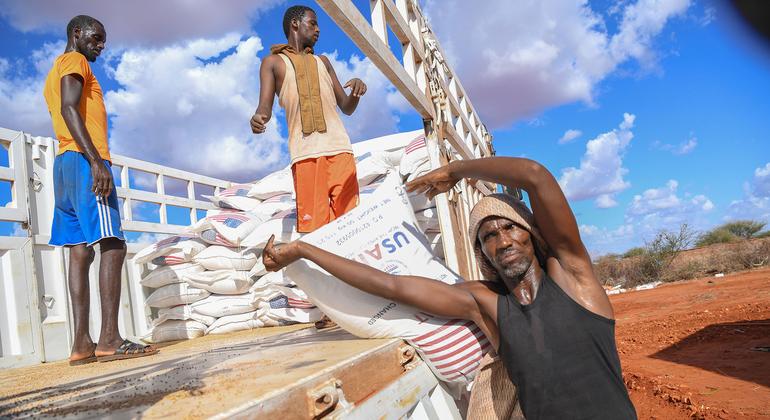
The humanitarian sector has increasingly turned to high-tech solutions to combat the widespread theft of aid. Agencies like the World Food Programme (WFP) and UNHCR have invested millions in biometric registration, blockchain ledgers, and iris-scanning payment systems. These tools are marketed as “immutable” safeguards against corruption. In the chaotic reality of active conflict zones, yet, these technologies have frequently failed. They have created new vulnerabilities, triggered aid suspensions, and, provided authoritarian regimes with “digital kill lists” of populations.
The Biometric Standoff in Yemen
The most catastrophic failure of techno-solutionism occurred in Yemen. In 2019, the WFP attempted to roll out a biometric registration system to verify the identities of 12 million beneficiaries. The goal was to stop the Houthi militia from diverting food meant for starving civilians. The Houthis, who control the capital Sanaa, violently rejected the system. They accused the UN of gathering intelligence for Western governments and banned the biometric equipment. The standoff resulted in the WFP suspending food aid to 850, 000 people in Sanaa in June 2019. The technology designed to ensure food delivery became the primary obstacle to it. By December 2023, the WFP was forced to pause general food distribution in northern Yemen entirely, citing funding gaps and the inability to reach an agreement with local authorities on independent beneficiary verification.
Afghanistan: The “Digital Kill List”
The collapse of the Afghan government in August 2021 exposed the lethal risks of centralized biometric databases. For years, the U. S. military and aid agencies had collected iris scans, fingerprints, and facial data from over 1. 5 million Afghans using Handheld Interagency Identity Detection Equipment (HIIDE). This data was stored in the Automated Biometric Identification System (ABIS). When the Taliban seized power, they captured thousands of these devices and the servers connected to them. Human rights organizations warned that the Taliban could use this data to identify and target Afghans who had assisted coalition forces. The very system built to verify identity for aid and security became a weapon for retribution.
Data Breaches and Non-Consensual Sharing
Centralized digital repositories create single points of failure that hackers and hostile regimes actively exploit. In January 2022, the International Committee of the Red Cross (ICRC) suffered a sophisticated cyberattack on a Swiss contractor. The breach compromised the personal data of 515, 000 “highly ” people, including detainees and missing persons. This was not a loss of privacy. It placed victims at risk of arrest, interrogation, or forced disappearance.
A similar violation of trust occurred with the Rohingya refugees in Bangladesh. Between 2018 and 2021, the UNHCR registered hundreds of thousands of refugees using biometric “Smart Cards” to aid distribution. Human Rights Watch revealed that the agency shared the biometric data of approximately 830, 000 refugees with the government of Bangladesh. Bangladesh subsequently shared this data with the government of Myanmar, the very regime the Rohingya had fled, for “repatriation assessments.” Refugees were not informed that their iris scans would be handed over to the military junta that had persecuted them.
The “Last Mile” Failure of Blockchain
The WFP’s “Building Blocks” blockchain project has been praised for saving bank fees in stable refugee camps in Jordan and Bangladesh. Its utility in active war zones remains unproven. The system relies on consistent internet connectivity and electricity. These are nonexistent in regions like Tigray, Ethiopia, or Gaza during bombardments. also, blockchain records digital transactions cannot verify physical reality. If a warlord forces a village elder to sign over their digital tokens at gunpoint, the blockchain validates the theft as a legitimate transaction. The “immutable ledger” records the extortion with perfect accuracy.
| Location | Technology | Incident / Failure | Human Impact |
|---|---|---|---|
| Yemen | Biometric Registration | Houthi rejection of iris scanners (2019) | Aid suspended to 850, 000 people in Sanaa. |
| Afghanistan | HIIDE Devices | Taliban seizure of US/UN databases (2021) | 1. 5 million+ records exposed to chance targeting. |
| Global (ICRC) | Centralized Database | Cyberattack on Swiss servers (2022) | Data of 515, 000 detainees and missing persons stolen. |
| Bangladesh | Smart Cards | Data shared with Myanmar junta (2018-2021) | 830, 000 refugees’ biometrics exposed to persecutors. |
| Ethiopia | Digital Tracking | Internet blackouts in Tigray (2020-2022) | Digital systems rendered useless; physical diversion unchecked. |
“We collected their eyes and fingerprints to feed them. Then we lost control of the servers. We essentially handed a digital phone book of our most beneficiaries to the men with guns.”
, Former UN Data Consultant, anonymous interview regarding the Afghanistan withdrawal (2022).
These incidents demonstrate that technology is not a substitute for physical access and political neutrality. In the absence of ground-level security, digital tools frequently accelerate the diversion they were meant to prevent. Warlords adapt faster than software engineers. They tax the internet access required for blockchain. They seize the biometric machines. They coerce the beneficiaries. The digitization of aid has solved bureaucratic in Geneva while creating dangerous new realities in Kandahar and Sanaa.
Security Council Gridlock: How Geopolitics Shields Perpetrators
The United Nations Security Council (UNSC) has ceased to function as a guarantor of humanitarian access. It has instead become the primary method through which aid diversion is diplomatically laundered. The five permanent members (P5) frequently use their veto power not just to block military intervention. They use it to the legal frameworks that allow aid to bypass corrupt regimes. This gridlock transforms the theft of humanitarian supplies from a war crime into a protected state activity.
Russia and China have systematically dismantled the cross-border aid architecture in Syria since 2019. The original mandate allowed UN convoys to use four border crossings to reach civilians in non-government-controlled areas without the consent of the Assad regime. By July 2020. Russia and China had used their vetoes to force the closure of three of these crossings. This consolidated all aid flow through the single Bab al-Hawa crossing. This centralization allowed the Syrian regime and its allies to choke off supplies at. The final blow came in July 2023 when Russia vetoed a nine-month extension of the Bab al-Hawa mandate. The immediate result was an 82 percent drop in aid delivery capacity. UN data shows that monthly truck crossings plummeted from 1, 001 in June 2023 to just 178 in August 2023. This diplomatic maneuver placed 4. 1 million people in northwest Syria at the mercy of the very government besieging them.
The paralysis extends beyond active vetoes to what diplomats term the “silent veto.” This occurs when the threat of a block prevents resolutions from even reaching the floor. The emergency in Ethiopia’s Tigray region exemplifies this failure. In March 2021. Ireland attempted to draft a statement calling for a cessation of hostilities and unhindered aid access. China and Russia. joined by non-permanent member India. blocked the move by arguing that the conflict was an “internal affair.” Consequently. the UNSC failed to pass a binding resolution as 400, 000 people crossed the threshold into famine. The absence of international oversight allowed federal and regional forces to loot aid convoys with impunity. This theft eventually forced USAID to suspend over $1 billion in assistance in 2023 after discovering that food aid was being diverted on a national.
Western powers also engage in this diplomatic shielding. The United States has repeatedly used its veto to block resolutions regarding Gaza that called for immediate humanitarian ceasefires. In October and December 2023. the US vetoed drafts that would have mandated secure aid corridors. Washington argued these resolutions would undermine ongoing diplomatic negotiations. These delays allowed the humanitarian situation to deteriorate to the point where famine became imminent in northern Gaza. The political cover provided by the US insulated the Israeli military blockade from binding international legal censure during the conflict’s most serious months.
The situation in Yemen demonstrates how gridlock enables non-state actors to institutionalize theft. The Houthi militia controls areas receiving approximately 75 percent of all humanitarian aid entering the country. even with reports from the UN Panel of Experts detailing “systematic violations” and the diversion of food aid to frontlines. the UNSC Sanctions Committee has failed to enforce a detailed asset freeze on Houthi leadership. Political divisions prevent the Council from taking aggressive action against the networks financing the Houthis. This inaction has allowed the group to levy a “tax” on aid organizations. The 2023 Humanitarian Response Plan for Yemen received only $1. 7 billion of the required $4. 3 billion. Donors lost confidence that their money would reach civilians rather than the militia’s war chest.
The Cost of Diplomatic Inaction (2019, 2024)
| Conflict Zone | Diplomatic Action | Primary Blocker(s) | Humanitarian Consequence |
|---|---|---|---|
| Syria (NW) | Veto of Cross-Border Aid Mandate (July 2023) | Russia | Aid trucks dropped from 1, 001/month to 178/month. 4. 1 million people lost guaranteed access. |
| Ethiopia (Tigray) | Block of Ceasefire Statement (March 2021) | China, Russia, India | No oversight method established. 400, 000 people entered famine conditions. |
| Gaza | Veto of Ceasefire Resolutions (Oct/Dec 2023) | United States | Delayed establishment of secure aid corridors. Famine risk escalated in North Gaza. |
| Sudan | Termination of UNITAMS Mission (Dec 2023) | Sudanese Junta (via UNSC Vote) | UN political mission ejected. Loss of monitoring capacity as war displaced 8 million people. |
The termination of the United Nations Integrated Transition Assistance Mission in Sudan (UNITAMS) in December 2023 marks a new low in Security Council impotence. The Sudanese military junta demanded the mission’s exit even with an ongoing civil war that has displaced eight million people. The Council voted to terminate the mandate rather than challenge the junta’s sovereignty. This decision removed the primary international method for monitoring human rights abuses and aid obstruction. It signaled to warring parties globally that they can simply order UN monitors to leave when scrutiny becomes inconvenient. The subsequent “Ramadan Ceasefire” resolution passed in March 2024 was ignored by all parties. Russia abstained from the vote. The fighting continued without pause.
Legal Immunity: The Jurisdictional Void for Prosecuting Aid Theft
The structural collapse of humanitarian aid security is not a logistical failure; it is a legal one. A rigid, antiquated framework of diplomatic immunity and sovereign jurisdiction has created a “prosecutorial dead zone” where the theft of billions in life-saving assistance carries virtually no risk of criminal confinement. While the United States Agency for International Development (USAID) and the World Food Programme (WFP) can suspend shipments, they possess no police powers to arrest the warlords, government ministers, or corrupt field officers who divert food convoys. The 1946 Convention on the Privileges and Immunities of the United Nations, designed to protect diplomats from political harassment, shields a supply chain rot that funnels taxpayer money into the hands of combatants.
Internal United Nations oversight method prioritize administrative sanctions over criminal justice. The Office of Internal Oversight Services (OIOS), the primary investigative body for the UN, operates with a mandate limited to internal discipline. When OIOS investigators substantiate allegations of fraud or diversion by UN staff, the maximum penalty is dismissal, not imprisonment. In its 2023 annual report, OIOS noted hundreds of fraud and corruption allegations, yet the route from “substantiated misconduct” to a prison cell is nearly nonexistent. The UN cannot prosecute; it can only “refer” cases to national authorities. In conflict zones like Yemen, Somalia, or Ethiopia, this referral process involves handing evidence of theft to the very regimes or local authorities orchestrating the theft.
The Ethiopian aid diversion scandal of 2023 serves as the definitive case study of this jurisdictional void. Following the discovery of a “coordinated criminal scheme” involving federal and regional government entities to divert donated wheat to military units and commercial flour mills, USAID suspended food assistance to the entire nation. even with the severity of the crime, which the USAID Office of Inspector General described as “widespread and coordinated”, no high-level Ethiopian government officials faced criminal prosecution in international courts. Instead, the diplomatic resolution involved the creation of a “joint inquiry” between the UN and the Ethiopian government. This arrangement allowed the accused party to investigate itself, resulting in a resumption of aid based on promised “reforms” rather than the incarceration of the ringleaders who profited from the starvation of Tigrayan civilians.
| Conflict Zone | Incident Description | Perpetrators Identified | Legal Outcome |
|---|---|---|---|
| Ethiopia (Tigray/Amhara) | widespread diversion of USAID/WFP wheat to military units and flour mills (2023). | Federal & Regional Gov. Officials, Military Commanders. | Zero Prosecutions. Aid suspended, then resumed after “joint inquiry.” |
| Yemen (Houthi Controlled) | Diversion of food baskets; levy of “taxes” on aid convoys; detention of staff. | Supreme Council for Management and Coordination (SCMCHA). | Inverse Prosecution. 69+ UN/NGO staff detained by Houthis on espionage charges (Jan 2026). |
| Somalia | “Gatekeepers” and landowners taxing IDP camp residents for aid access (2023). | Clan leaders, local police, private landowners. | Administrative Only. EU temporarily suspended funding; “Task Force” created. |
| Syria (Northwest) | Manipulation of procurement contracts and cross-border exchange rates. | Hayat Tahrir al-Sham (HTS) & affiliated entities. | None. Sanctioned entities operate outside international legal reach. |
In Yemen, the legal has inverted, weaponizing the judicial system against the aid workers themselves. The Houthi-controlled Supreme Council for Management and Coordination of Humanitarian Affairs (SCMCHA) not only directs the diversion of aid also use local courts to prosecute humanitarian staff. As of January 2026, Houthi authorities held at least 69 UN and NGO staff members in arbitrary detention, facing fabrication espionage charges punishable by death. The UN’s legal immunity, theoretically absolute under international law, offered no physical protection against a de facto authority to ignore it. The “referral” method is useless here; the UN cannot refer Houthi officials to the Houthi justice system and expect accountability.
The United States Department of Justice (DOJ) retains limited reach. While the DOJ can prosecute US citizens or entities that defraud USAID, or foreign actors who launder the proceeds through the US financial system, it rarely asserts jurisdiction over foreign government officials stealing physical commodities within their own borders. The “sovereign shield” prevents the FBI from investigating a Somali clan leader or an Ethiopian general for stealing wheat sacks in Mogadishu or Mekelle. Consequently, the theft of American taxpayer-funded aid is treated as a diplomatic irritant rather than a federal crime.
This absence of a supranational tribunal for humanitarian theft encourages recidivism. Warlords and corrupt regimes understand that the worst-case scenario for getting caught stealing aid is a temporary suspension of deliveries. There is no credible threat of arrest warrants, asset seizures, or trials at the Hague. The International Criminal Court (ICC) prosecutes genocide and war crimes, yet the theft of aid supplies rarely meets the high evidentiary threshold of a “crime against humanity” unless prosecutors can prove a specific intent to starve a population to death. Profit-motivated looting, no matter how large the, falls into a legal gap that international law has failed to close.
The “Persona Non Grata” (PNG) doctrine further enforces this silence. When UN resident coordinators or senior investigators push too hard for accountability regarding missing supplies, host governments declare them PNG and expel them within hours. This occurred in Somalia in 2019 and Ethiopia in 2021. The threat of expulsion forces aid agencies to accept a baseline level of “taxation” and diversion as the cost of doing business, institutionalizing theft under the guise of humanitarian access. Until international law evolves to pierce the veil of sovereignty for aid diversion, the looting remain a low-risk, high-reward enterprise.
The Human Cost: Mortality Linked to Supply Chain Collapse
The immediate consequence of aid diversion is not financial loss a measurable spike in mortality rates among populations. When the United States Agency for International Development (USAID) and the World Food Programme (WFP) suspended food assistance to Ethiopia in June 2023, the decision was driven by the discovery of a “coordinated criminal scheme” involving federal and regional entities. The impact of this necessary pause, triggered by the theft of resources, was catastrophic for civilians. Data from the Tigray Disaster Risk Management Commission indicates that at least 1, 400 people starved to death in the region between the suspension’s start and August 2023. These deaths were not solely the result of drought or conflict were directly attributable to the sudden cessation of caloric support caused by the looting operations.
In the three months following the suspension, local officials in Tigray recorded 728 hunger-related deaths in just three of the region’s seven zones. This mortality spike coincided with a collapse in nutritional support systems. Hospital admissions for severe acute malnutrition among children in Tigray rose by 196% between April 2022 and April 2023, a period where diversion method were already degrading the efficiency of aid delivery before the total halt. The direct correlation between the theft of grain and the death of civilians challenges the traditional view of aid corruption as a victimless white-collar crime., the diversion of a single metric ton of wheat to a quantifiable loss of life.
| Region | Reported Event | Verified Impact Metric | Source |
|---|---|---|---|
| Ethiopia (Tigray) | Aid Suspension (Theft) | 1, 411 starvation deaths (June-Aug 2023) | Tigray Disaster Risk Management Commission |
| Sudan (Khartoum) | Warehouse Looting | 61, 000 excess deaths (Apr 2023, June 2024) | London School of Hygiene & Tropical Medicine |
| Yemen | widespread Obstruction | 34% rise in child acute malnutrition (2024) | IPC Acute Malnutrition Analysis |
| Somalia | Drought & Diversion | 43, 000 excess deaths (2022) | UNICEF / LSHTM Report |
Sudan: Looting as a Driver of Famine
The conflict in Sudan provides a clear example of how the physical looting of humanitarian assets accelerates mortality. Following the outbreak of civil war in April 2023, the WFP reported the theft of over $13 million worth of food supplies in a single month. This looting was not sporadic; it targeted the logistical hubs required to feed 4. 4 million people. The Sudan Doctors Union estimated in January 2025 that malnutrition, exacerbated by the inability to deliver looted aid, had contributed to the deaths of approximately 522, 000 children. This figure represents a mortality rate far exceeding emergency thresholds, driven by the systematic stripping of warehouses in Khartoum and Darfur.
Research from the London School of Hygiene and Tropical Medicine corroborates the lethality of these supply chain ruptures. In Khartoum State alone, over 61, 000 people died between April 2023 and June 2024. The study identified starvation and preventable disease as leading causes, directly linked to the collapse of the aid infrastructure. The looting of 50 warehouses and 82 offices by armed factions dismantled the safety net for millions, converting a food security emergency into a mass casualty event. The data shows that when aid is stolen, the death toll rises not linearly, exponentially, as the most , children under five, succumb to untreated malnutrition.
“The simple narrative is, children are dying and it’s going to get worse. My fear is that we won’t hear about it until the mortality and the morbidity significantly increases.”
, Julien Harneis, UN Resident and Humanitarian Coordinator in Yemen (January 2026)
widespread Obstruction in Yemen
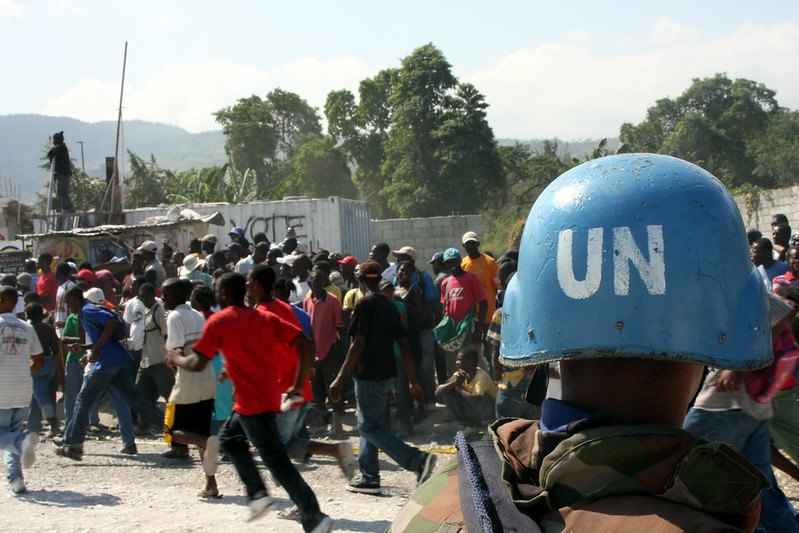
In Yemen, the diversion takes the form of bureaucratic obstruction and checkpoint taxation, which has proven as deadly as direct theft. While specific “theft” figures are harder to isolate than in Ethiopia, the correlation between aid interference and mortality is clear in malnutrition data. In 2024, government-controlled areas saw a 34% increase in acute malnutrition among children. This spike occurred even with the presence of aid agencies, whose operations were by diversionary tactics that delayed food shipments and inflated delivery costs. The historical context remains relevant: between 2015 and 2018, Save the Children estimated that 85, 000 children died from extreme hunger. The persistence of these diversion method continues to sustain high mortality rates, with 2024 data showing that over 600, 000 children under five remain acutely malnourished. The inability to bypass these diversionary bottlenecks ensures that mortality rates remain artificially high, even when donor funding is available.
The “Ethiopia Model”: A Blueprint for Intrusive Oversight
The structural collapse of aid integrity in Ethiopia, which necessitated a nationwide suspension of food assistance in June 2023, has inadvertently created the working prototype for a post-trust humanitarian system. Following the discovery that federal and regional officials were diverting grain on an industrial, USAID and the World Food Programme (WFP) refused to resume shipments until the Ethiopian government ceded control over beneficiary lists. The resulting “revamped method,” fully operationalized in November 2023, dismantled the decades-old practice of allowing local administrators to select who eats.
Under this new regime, the WFP implemented a digital chain of custody that removed local officials from the distribution process entirely. The method requires the biometric registration of all 3. 2 million targeted beneficiaries in the Tigray, Afar, Amhara, and Somali regions, linking food collection directly to digital identity to prevent “ghost beneficiaries”, fictitious names used by officials to hoard supplies. also, the WFP introduced bag-level tracking, marking individual grain sacks with unique codes to allow investigators to trace stolen commodities found in commercial markets back to specific warehouses and distribution times. This shift represents a fundamental transfer of sovereignty over aid infrastructure from the host state to the donor agency, a proposal being by Western diplomats as a necessary condition for future funding in high-risk zones like Yemen and Syria.
The Third-Party Monitoring (TPM) Industrial Complex
In “non-permissive” environments where UN staff cannot travel due to kidnapping or combat risks, donors have increasingly outsourced oversight to private Third-Party Monitoring (TPM) firms. By 2023, USAID had obligated approximately $26 billion to assist 19 countries experiencing violent conflict, relying heavily on these remote contractors to verify that goods were actually delivered. yet, this reliance has created a secondary market of verification that is frequently as unclear as the aid delivery itself.
A serious April 2024 report by the U. S. Government Accountability Office (GAO) exposed serious flaws in this system. The GAO found that while USAID bureaus use TPMs for security and logistics verification, they failed to provide specific guidance on using these monitors to detect fraud. In conflict zones like Somalia and Ukraine, the agency did not detailed assess or document fraud risks, paying monitors to check boxes rather than investigate theft. The report highlighted that without rigorous, fraud-specific mandates, TPM firms frequently absence the authority or incentive to challenge local actors, rendering them expensive toothless spectators to diversion.
| Oversight Component | Standard Practice | Identified Structural Failure |
|---|---|---|
| Fraud Risk Profiles | Mandatory for all high-risk missions. | Absent or incomplete in key conflict zones (Nigeria, Somalia, Ukraine) as of April 2024. |
| Third-Party Monitoring | Used to verify project completion. | absence specific guidance on detecting fraud; monitors focused on “implementation” rather than “diversion.” |
| Beneficiary Verification | Reliance on partner data. | No direct validation; reliance on “self-attestation” by implementing partners in inaccessible areas. |
| Financial Reviews | Periodic audits of implementers. | Inconsistent application; the USAID Somalia mission conducted no financial reviews for fraud risks in the reviewed period. |
Ending the “Self-Reporting” Loop
The most radical structural reform currently under debate involves stripping UN agencies of the right to investigate themselves. Currently, allegations of theft or misconduct are handled by internal bodies like the UN Office of Internal Oversight Services (OIOS). Critics this creates an inherent conflict of interest, as agencies are incentivized to minimize scandals to protect fundraising. The April 2024 Independent Review of UNRWA, led by former French Foreign Minister Catherine Colonna, was a rare instance of external scrutiny, yet it was convened only after massive geopolitical pressure following the October 7 attacks.
Proposals for a permanent, independent “Inspector General” for humanitarian aid, funded directly by donors and reporting to a body separate from the UN Secretariat, are gaining traction among major contributors. Such a method would possess the mandate to conduct no-notice inspections of warehouses and digital logs without requiring the permission of the agency being audited. Until such a firewall is established, the “Ethiopia Model” of biometric enforcement remains the only proven, albeit intrusive, method to bypass the corruption inherent in self-policed aid distribution.
The 2026 Outlook: Emerging Hotspots and Escalating Risks
As the humanitarian sector moves into 2026, the mechanics of aid diversion are shifting from opportunistic corruption to widespread weaponization. The data from late 2024 and throughout 2025 indicates that belligerents in high-intensity conflict zones have successfully integrated humanitarian supply chains into their war logistics. The outlook for 2026 suggests that without a radical overhaul of distribution, donor nations subsidize the very combatants they seek to neutralize.
Current intelligence projects that four primary theaters, Sudan, Gaza, the Sahel, and Haiti, account for over 60 percent of global aid diversion incidents in 2026. In these “red zones,” the traditional model of neutrality has collapsed, replaced by a predatory environment where food and medical supplies are treated as strategic assets comparable to ammunition or fuel.
Sudan: The Archetype of Total Collapse
Sudan represents the most extreme manifestation of state and non-state obstruction. By late 2025, the conflict between the Sudanese Armed Forces (SAF) and the Rapid Support Forces (RSF) had left approximately 25 million people, 60 percent of the population, in need of urgent assistance. Reports from February 2025 confirmed that the RSF had established a “toll system” across Darfur, systematically looting convoys and demanding protection payments from relief agencies. Conversely, the SAF-controlled government in Port Sudan utilized bureaucratic warfare, denying visas and travel permits to blockade RSF-held territories.
The 2026 projection indicates that famine likely be used as a primary siege tactic in North Darfur and Khartoum. The opening of the Adré border crossing in August 2024 provided a temporary lifeline, by mid-2025, local militias had established checkpoints that taxed humanitarian cargo at rates exceeding 30 percent of its value. The risk for 2026 is the total co-optation of the relief pipeline, where aid agencies are forced to choose between paying warlords or suspending operations entirely.
Gaza: The Rise of the Looting Economy
In Gaza, the breakdown of civil order has birthed a highly organized looting economy. Data from the United Nations Office for Project Services (UNOPS) revealed a collapse in security between May and August 2025, where nearly 88 percent of aid trucks entering the strip were intercepted and looted before reaching distribution centers. Unlike the initial phases of the conflict, this diversion is no longer driven solely by desperation by organized criminal syndicates and armed factions filling the vacuum left by the collapse of local police forces.
For 2026, the primary risk is the institutionalization of these theft networks. Humanitarian organizations report that armed gangs operate within “spitting distance” of military positions, suggesting a permissive environment that diversion. With 12, 000 patients awaiting medical evacuation and hospitals non-functional, the theft of medical supplies has become particularly lucrative, feeding a black market where antibiotics and anesthetics are sold at 50 times their standard value.
The Sahel: Sovereignty as a Shield
The “Alliance of Sahel States” (AES), comprising the juntas of Mali, Burkina Faso, and Niger, has fundamentally altered the aid by framing humanitarian access as a violation of sovereignty. Throughout 2025, these regimes expelled UN officials and restricted NGO operations, aligning themselves with Russian security partners who offer regime protection without human rights conditionality. Simultaneously, jihadist groups like JNIM and IS-Sahel have besieged towns such as Djibo and Timbuktu, blocking all commercial and humanitarian entry.
The outlook for 2026 warns of a “double-bind” for aid agencies: state forces likely demand total control over aid lists to punish disloyal populations, while jihadist groups continue to tax or confiscate supplies in rural areas. The expulsion of witnesses has created an information black hole, making it nearly impossible to verify if aid is reaching the 28. 7 million people in need across the region.
Haiti: Gangland Taxation
In Haiti, the gang coalition “Viv Ansanm” has replaced the state in 85 to 90 percent of Port-au-Prince. By late 2025, gangs had established a sophisticated taxation grid over the main arterial roads connecting the capital to the agricultural north. Humanitarian convoys are forced to negotiate passage fees, directly funding the recruitment of child soldiers and the purchase of illicit firearms. With the Multinational Security Support (MSS) mission struggling with funding absence, 2026 threatens to cement a reality where gangs are the de facto gatekeepers of all international relief.
| Region | Primary Diverter | Primary method | 2026 Projected Risk Level |
|---|---|---|---|
| Sudan (Darfur) | Rapid Support Forces (RSF) | Armed seizure & “protection” tolls | serious (widespread Co-optation) |
| Gaza Strip | Organized Criminal Gangs | Convoy ambushes & black market resale | serious (80%+ Loss Rate) |
| Mali / Burkina Faso | Military Juntas / JNIM | State blockage & Jihadist siege | High (Access Denial) |
| Haiti (Port-au-Prince) | Viv Ansanm Coalition | Road extortion & warehouse looting | High (Operational Paralysis) |
| Yemen (North) | Houthi Authorities | Bureaucratic diversion & staff detention | High (Political Manipulation) |
| Afghanistan | Taliban Administration | Beneficiary selection interference | Medium-High (Gender-based Exclusion) |
The trajectory for 2026 is unambiguous: the era of permissive humanitarian environments is over. The diversion of aid is no longer an anomaly a central feature of modern conflict economies. Without the deployment of hardened logistical corridors, biometric tracking that bypasses local authorities, and a willingness to suspend aid when red lines are crossed, the international community continue to finance the very instability it seeks to mitigate.
Demanding Accountability in the Humanitarian Sector
The era of unconditional humanitarian aid has ended. For decades, the international community operated on a “trust verify” basis, frequently prioritizing the rapid delivery of food and medicine over strict oversight. This method collapsed in June 2023, when the discovery of a coordinated criminal scheme to divert food aid in Ethiopia forced USAID and the World Food Programme (WFP) to suspend assistance to the entire nation. The from that decision, combined with similar scandals in Yemen and Somalia, has triggered a permanent shift in donor policy. The new standard is “verify, then fund.”
Major donors are no longer to tolerate “leakage” as the cost of doing business in conflict zones. In July 2025, the U. S. Senate moved to rescind $9. 4 billion in foreign aid, a legislative signal that patience for and theft has evaporated. This financial contraction forces aid agencies to implement aggressive oversight measures or face insolvency. The “Ethiopia Model”, the set of strict conditions imposed for the resumption of aid in late 2023, has become the blueprint for operations in high-risk environments. These reforms stripped local government officials of their power to create beneficiary lists, transferring that authority to independent third-party monitors and biometric systems.
The Biometric Battleground
Digitization has emerged as the primary weapon against diversion. WFP Executive Director Cindy McCain has enforced a zero-tolerance policy, mandating biometric registration, fingerprinting and iris scanning, to ensure aid reaches actual recipients rather than ghost beneficiaries created by warlords. This requirement has turned humanitarian access into a sovereignty dispute. In Yemen, Houthi authorities have repeatedly blocked biometric registration, accusing the UN of gathering intelligence for Western governments. Yet, the WFP has held its ground, accepting partial suspensions of aid rather than distributing resources into a black hole.
The European Court of Auditors (ECA) reinforced this stance in June 2025. Their Special Report 15/2025 criticized the “remote management” of aid in dangerous areas, concluding that relying on local partners without direct oversight fails to mitigate diversion risks. The report explicitly stated that the “aid diversion tab in monitoring reports has little added value” without independent verification on the ground. This finding has pushed the EU to merge funding streams and tighten controls, further squeezing agencies that cannot prove the integrity of their supply chains.
Criminal Consequences
Accountability has moved beyond administrative pauses to criminal prosecution. The U. S. Department of Justice and USAID’s Office of Inspector General (OIG) have escalated their of individuals involved in theft. In January 2025, a federal court unsealed a 12-count indictment against a Syrian national for diverting $9 million in humanitarian aid to a terrorist organization affiliated with Al-Qaeda. That same month, USAID debarred a former mission director for 20 years, banning them from the aid sector for life. These actions send a clear message: theft of humanitarian aid is a federal crime with extraterritorial reach.
| Reform Measure | Target Context | Local Resistance Tactic | Donor Response |
|---|---|---|---|
| Biometric Registration | Yemen (Houthi-controlled areas) | Accusations of espionage; “Data sovereignty” laws blocking collection. | Suspension: WFP halted food distribution in Sanaa until pilot programs were accepted. |
| Third-Party Monitoring | Ethiopia (Tigray & Amhara) | Intimidation of monitors; denial of access permits. | Mandate: Aid resumption conditioned on total removal of government from beneficiary selection. |
| Direct Digital Transfers | Somalia | “Taxation” of physical cash by Al-Shabaab checkpoints. | Bypass: Shift to mobile money directly to recipient phones, cutting out middlemen. |
| Staff Vetting | Gaza (UNRWA) | Refusal to share staff lists for security screening. | Defunding: US and other major donors froze funding pending independent review (2024). |
The Cost of Survival
The humanitarian sector faces an existential choice. Agencies must adopt the operational rigor of forensic accountants or lose the trust of the taxpayers who fund them. The moral hazard argument, that cutting aid hurts the innocent, is being re-evaluated. Donors that supplying aid through compromised channels does more harm than good by sustaining the very combatants who perpetuate the conflict. As the $9 million diversion case in Syria proves, a sack of wheat is not just food; in the wrong hands, it is a currency of war.
Reform is no longer optional. The systems built to deliver aid in the 20th century are obsolete in the face of modern, industrialized theft. Only through rigorous biometric verification, direct digital transfers, and the prosecution of bad actors can the integrity of the humanitarian mission be restored. The victims of war deserve aid that reaches them, not the armies that besiege them.
**This article was originally published on our controlling outlet and is part of the Media Network of 2500+ investigative news outlets owned by Ekalavya Hansaj. It is shared here as part of our content syndication agreement.” The full list of all our brands can be checked here. You may be interested in reading further original investigations here.
Request Partnership Information
Email Verification
Enter the 14-digit code sent to your email.


India Effect
Part of the global news network of investigative outlets owned by global media baron Ekalavya Hansaj.
India Effect is the pulse of a rising superpower, a force that tracks India’s relentless march onto the world stage. We are the watchers, the investigators, the truth-seekers chronicling how India’s economy, peace efforts, policies, and diplomacy are reshaping global power dynamics. From economic alliances that rattle old world orders to diplomatic maneuvers that shift international equations, we uncover the unseen forces propelling India’s global ascent. We dissect trade wars, strategic partnerships, and soft power plays that extend from the boardrooms of New Delhi to the corridors of the United Nations. And when foreign propaganda, geopolitical rivalries, and vested interests try to downplay India's influence, India Effect fights back—with facts, with investigations, and with unflinching truth. India is no longer a spectator in global affairs. It is a driver of change, a disruptor of old hierarchies, and a nation rewriting the rules of power. At India Effect, we document this rise—not as passive reporters, but as chroniclers of history in the making.