
Utility Lobbying: The Anti-Solar Campaigns Between 2015-2025
Why it matters:
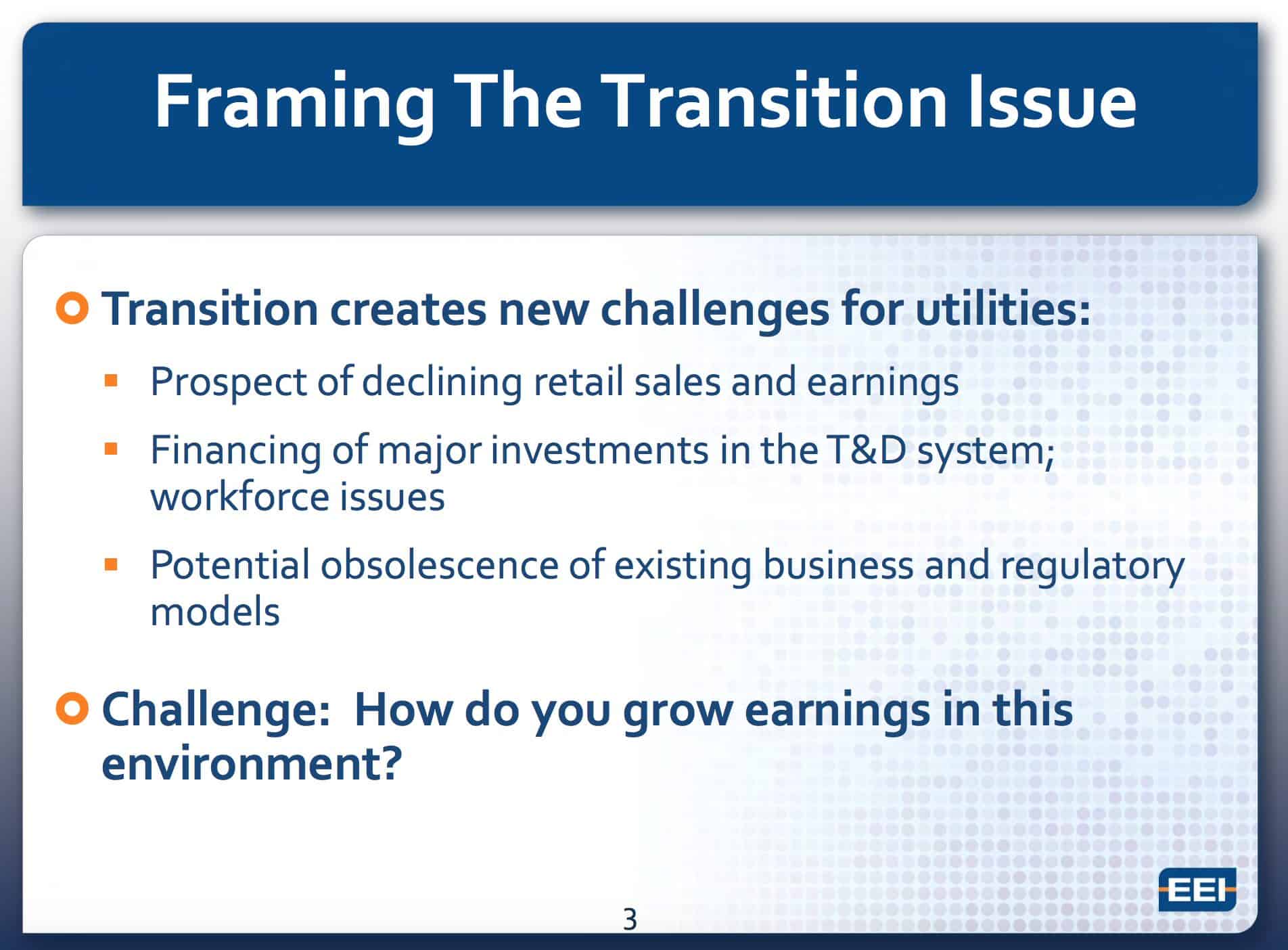
- The modern war on distributed solar began with a PowerPoint slide by the Edison Electric Institute in 2013, identifying rooftop solar as a threat to the utility business model.
- From 2015 to 2025, utilities aggressively suppressed distributed solar to protect their capital expenditure pipeline, leading to policy actions targeting solar savings.
The modern war on distributed solar did not begin with a specific legislative bill or a singular rate hike. It began with a PowerPoint slide. In January 2013, the Edison Electric Institute (EEI), the trade association representing all U. S. investor-owned electric companies, published a report titled Disruptive Challenges: Financial and Strategic Responses to a Changing Retail Electric Business. While the document predates our current data window, its directives became the operational source code for utility lobbying strategies executed between 2015 and 2025. The report explicitly identified distributed energy resources (DERs), specifically rooftop solar, as a “mortal threat” to the centralized utility business model. It warned that if utilities did not intervene, they faced a “death spiral” of defecting customers and declining revenues.
The industry took this warning as a command. From 2015 through 2025, utilities shifted from passive observation to aggressive suppression. The primary objective was to protect a capital expenditure (CapEx) pipeline valued at over $1. 3 trillion between 2015 and 2024. Investor-owned utilities (IOUs) generate profit not by selling electricity, by building infrastructure and earning a guaranteed Return on Equity (ROE) on those assets. Rooftop solar reduces the need for new transmission lines and power plants, directly threatening the asset growth required to satisfy Wall Street. Consequently, the EEI and its members mobilized a multi-state campaign to the economic viability of customer-owned generation.
The Escalation of Policy Attacks (2015 – 2023)
Data from the North Carolina Clean Energy Technology Center (NCCETC) confirms that the strategies outlined in the 2013 manifesto were systematically deployed across the United States. The frequency of utility-initiated policy actions targeting distributed solar rose sharply, evolving from simple net metering caps to complex rate design changes intended to solar savings.
| Year | Total Policy Actions | Primary Utility Tactics |
|---|---|---|
| 2015 | 175 | Net metering caps, standby charges |
| 2017 | 249 | Fixed charge increases, mandatory demand charges |
| 2019 | 265 | Elimination of retail rate net metering |
| 2021 | 286 | “Value of Solar” tariffs, minimum bills |
| 2023 | 273 | NEM 3. 0 (California), retroactive rate changes |
The 2013 report urged utilities to “revise tariff structures” to recover lost revenues. This directive manifested in the surge of fixed charge increases seen in the table above. By 2023, 63 distinct actions related to residential fixed charge or minimum bill increases were recorded in a single year. These charges apply regardless of how much electricity a customer consumes or generates, neutralizing the financial benefit of solar panels. In 2024, the average residential electricity price had risen approximately 30% over the previous decade, yet utilities continued to that solar customers were not paying their “fair share.”
Weaponizing the “Cost Shift” Narrative
The central propaganda tool developed in the wake of the manifesto is the “cost shift” argument. Utilities allege that solar owners avoid paying for grid upkeep, shifting the load to non-solar customers. This narrative, tested in 2013, became the standard lobbying talking point by 2016. Independent audits and value-of-solar studies frequently debunk this claim, showing that distributed solar frequently provides net benefits to the grid by reducing peak demand and transmission losses. Yet, the narrative because it pits ratepayers against one another.
“The utility industry has launched a campaign using politics and backroom deals to try and squash their solar competition and preserve their outdated monopoly business model… Evidence of the action plan can be seen in nearly two dozen states.”
, Energy and Policy Institute, Analysis of EEI Strategy (2015-2024)
Financial disclosures from 2024 reveal the of this operation. EEI reported total revenues of approximately $102 million, with a dedicated “Emerging problem” budget of $6 million in 2025 specifically allocated for political consultants and advocacy. This funding stream allows the organization to coordinate legislative language and messaging across state lines, ensuring that a bill introduced in Florida to kill net metering bears a clear resemblance to legislation in Indiana or California. The 2013 manifesto was not a prediction; it was a mobilization order that has defined the energy economics of the last decade.
The Weaponization of “Fairness”
The “cost shift” narrative is not an economic observation; it is a weaponized public relations strategy. Following the 2013 EEI playbook, utilities across the United States began deploying a synchronized message: rooftop solar customers are freeloaders who rely on the grid without paying for it, shifting the load of maintenance onto non-solar, frequently lower-income, ratepayers. This “reverse Robin Hood” framing was designed to fracture the coalition between environmentalists and consumer advocates. yet, data from 2015 to 2025 reveals that this argument relies on omitting the structural benefits of distributed generation, specifically avoided transmission costs and peak demand reduction.
Case Study: The Florida “Jiu-Jitsu” (2016)
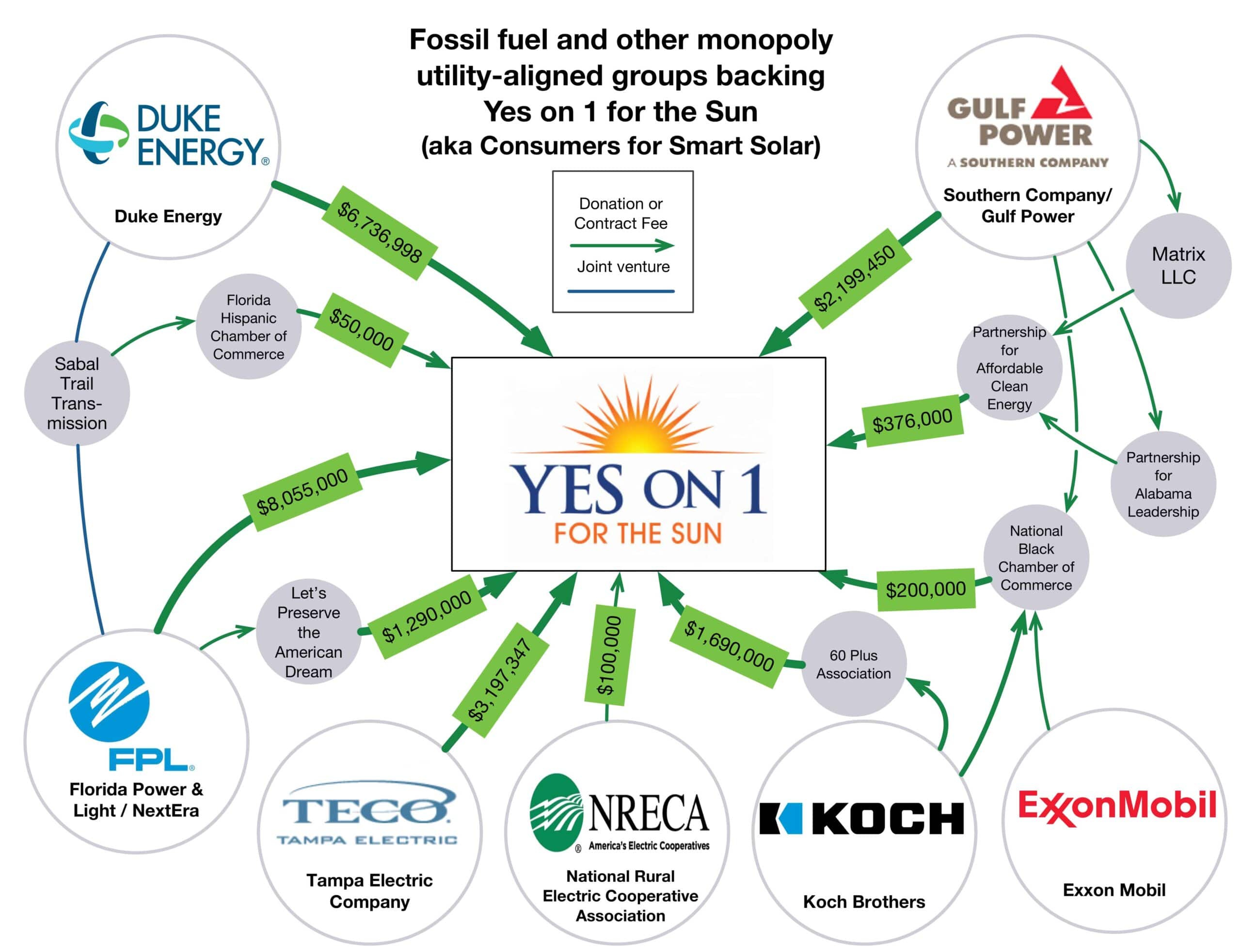
The most transparent execution of this smear occurred in Florida during the 2016 election pattern. Investor-owned utilities, including Florida Power & Light (FPL) and Duke Energy, funneled over $20 million into a political committee named “Consumers for Smart Solar.” The group promoted Amendment 1, a ballot measure with language that appeared to support solar energy legally paved the way for utilities to impose punitive fees on solar owners to prevent the alleged cost shift.
The deception was exposed when the Miami Herald obtained an audio recording of Sal Nuzzo, a vice president at the utility-aligned James Madison Institute. Nuzzo described the strategy as “political jiu-jitsu,” explicitly stating the goal was to use the popularity of solar to pass a restriction on it. He admitted the amendment was designed to negate the arguments of solar proponents by co-opting their language. While voters initially polled in favor of the amendment, the exposure of this cynical mechanic contributed to its defeat in November 2016. Yet, the “cost shift” talking point survived, becoming the standard justification for rate cases in Arizona, California, and Indiana.
California’s Multi-Billion Dollar Math Trick
In California, the cost shift argument reached its apex during the Net Energy Metering (NEM) 3. 0 proceedings between 2021 and 2023. Utilities and the Public Advocates Office claimed that rooftop solar caused an $8. 5 billion annual cost shift to non-solar ratepayers. This figure was achieved by valuing exported solar energy at the wholesale “avoided cost” rate, frequently less than $0. 05 per kWh, while ignoring the billions saved in avoided transmission upgrades and wildfire mitigation costs.
Independent analysis by M. Cubed, an economic consulting firm, corrected these omissions. When accounting for the full stack of grid benefits, including reduced on local distribution networks and avoided generation capacity, the analysis found that rooftop solar provided a net benefit to all ratepayers of approximately $1. 5 billion annually. even with this, the California Public Utilities Commission adopted the utility logic, slashing export rates by nearly 75% in April 2023. The result was immediate: solar installations in the state plummeted by roughly 80% in the following year, protecting utility revenue streams at the expense of grid resilience.
The Scientific Verdict: Negligible Impact
The Lawrence Berkeley National Laboratory (LBNL), a Department of Energy facility, provided the most authoritative rebuttal to the utility industry’s central thesis. In a landmark 2017 report, LBNL researchers analyzed the chance rate impacts of distributed solar. Their findings contradicted the “death spiral” rhetoric entirely.
“For the vast majority of states and utilities, the effects of distributed solar on retail electricity prices likely remain negligible for the foreseeable future… likely entailing no more than a 0. 03 cent/kWh increase in U. S. average retail electricity prices.”
Subsequent LBNL data through 2024 reinforced this, showing that factors like capital expenditures for utility-owned infrastructure (poles, wires, and substations) were the primary drivers of rising electricity rates, not net metering payouts. The “cost shift” remains a lobbying construct, in hearing rooms unsupported by rigorous econometric analysis.
| Metric | Utility Lobbying Claim | Independent / Lab Data |
|---|---|---|
| Impact on Rates | “Significant load” on non-solar customers | Negligible (approx. 0. 03 cents/kWh) [LBNL] |
| Solar Value | Wholesale avoided cost only (~$0. 04/kWh) | Includes transmission & distribution savings (~$0. 15-$0. 25/kWh) |
| Primary Rate Driver | Net Metering subsidies | Utility CapEx (Transmission/Distribution upgrades) |
| California Impact | $8. 5 Billion Cost Shift (2024 claim) | $1. 5 Billion Net Benefit (M. Cubed Analysis) |
Dark Money Pipelines: How 501(c)(4)s Hide Utility Political Spending
The utility industry’s most weapon against distributed solar is not technological innovation, financial obfuscation. Between 2015 and 2025, investor-owned utilities systematically exploited the 501(c)(4) “social welfare” provision of the U. S. tax code to funnel hundreds of millions of dollars into anti-solar campaigns without public disclosure. These organizations, unlike political action committees (PACs), are not required to reveal their donors, allowing monopolies to finance aggressive political operations while maintaining a veneer of neutrality. This structure creates a “dark money pipeline” where ratepayer-derived profits are converted into anonymous political speech that attacks the very customers who generated those profits.
The most explosive exposure of this method occurred in Ohio, where FirstEnergy Corp. used a 501(c)(4) named “Generation ” to engineer a $1. 3 billion bailout for its failing nuclear plants and gut renewable energy standards. Federal prosecutors revealed that between 2017 and 2020, FirstEnergy funneled approximately $60 million through Generation. This entity was controlled by the Speaker of the Ohio House, Larry Householder, who used the funds to secure his political power and pass House Bill 6. The legislation killed the state’s energy efficiency mandates and imposed new fees on ratepayers. In 2021, FirstEnergy admitted to the scheme in a deferred prosecution agreement and agreed to pay a $230 million penalty, confirming that the “social welfare” group was nothing more than a pass-through for corporate bribery.
In Florida, a similar architecture was deployed to protect the monopoly of Florida Power & Light (FPL). Investigative records from 2021 and 2022 exposed that FPL executives coordinated with political consultants at Matrix LLC to channel funds through a network of dark money groups, including “Grow United” (also known as “Proclivity”). These entities were used to finance “ghost candidates”, spoiler candidates with no intention of winning, in key 2020 state senate races. The goal was to siphon votes from candidates who supported solar-friendly policies. Records indicate FPL controlled entities contributed over $10 million to this dark money network. also, in 2016, the utility-backed group “Consumers for Smart Solar” raised over $26 million, primarily from utilities like FPL and Duke Energy, to push Amendment 1, a deceptive ballot measure designed to restrict rooftop solar expansion under the guise of consumer protection.
Verified Utility Dark Money Flows (2015-2025)
| Utility / Parent Company | Front Group / 501(c)(4) | Location | Verified Amount | Objective |
|---|---|---|---|---|
| FirstEnergy | Generation | Ohio | $60, 000, 000 | Pass HB6; bail out nuclear; gut efficiency standards. |
| Florida Power & Light (NextEra) | Consumers for Smart Solar | Florida | $8, 000, 000+ | Pass Amendment 1 to restrict rooftop solar. |
| Arizona Public Service (Pinnacle West) | Prosper / Arizonans for Affordable Electricity | Arizona | $38, 000, 000+ | Defeat Prop 127 (50% renewable mandate). |
| SoCalGas (Sempra) | Californians for Balanced Energy Solutions | California | $28, 000, 000* | Fight building electrification and gas bans. |
| Duke Energy / Southern Co. / DTE | Natural Allies for a Clean Energy Future | National | $1, 000, 000+ | Promote gas over renewables to minority voters. |
*SoCalGas initially booked these lobbying costs to ratepayers before regulators intervened.
Arizona Public Service (APS) provided another definitive case study in 2018. After years of denying involvement in dark money spending, APS’s parent company, Pinnacle West Capital Corp., was forced to disclose that it spent roughly $38 million to defeat Proposition 127, a ballot initiative that would have required utilities to source 50% of their electricity from renewables by 2030. Much of this spending was routed through “Arizonans for Affordable Electricity” and “Prosper,” groups that ran attack ads claiming the clean energy mandate would bankrupt the state. In 2013, APS had already admitted to funneling cash through a consulting firm to Prosper to attack net metering, acknowledging the utility’s direct role in manufacturing “grassroots” opposition to solar.
The strategy extends beyond specific legislative battles to long-term influence operations. Southern California Gas Co. (SoCalGas) helped launch and fund “Californians for Balanced Energy Solutions” (C4BES) in 2019. While presenting itself as a coalition of concerned citizens and businesses, C4BES was created to fight municipal gas bans and building electrification codes. State watchdogs later found that SoCalGas had improperly used ratepayer funds, money collected from customers for gas service, to finance the group’s startup. This incident highlights a serious aspect of the dark money problem: utilities frequently attempt to recover the costs of these political operations from the very customers they are lobbying against.
These individual cases are not incidents part of a coordinated industry playbook. The Edison Electric Institute (EEI), the trade association for investor-owned utilities, also contributes to 501(c)(4) organizations. In 2024 alone, EEI reported approximately $822, 000 in contributions to such groups. By pooling resources into national front groups like “Natural Allies for a Clean Energy Future,” utilities can shared push pro-fossil fuel narratives, specifically targeting demographic groups such as Black and Latino voters, without any single utility bearing the reputational risk of the campaign.
Astroturfing Democracy: Fake Grassroots Groups and the Seniors vs. Solar Script
The war on distributed solar is not fought solely in legislative chambers; it is staged in community centers, town halls, and ballot boxes through a tactic known as “astroturfing.” By manufacturing the illusion of grassroots support, utilities conceal their monopoly interests behind the faces of concerned seniors, low-income advocates, and fake consumer watchdogs. Between 2015 and 2025, investor-owned utilities funneled tens of millions of dollars into front groups designed to confuse voters and demonize rooftop solar owners as parasites on the grid.
This strategy relies on a specific narrative: the “cost shift.” Utilities that net metering allows wealthy solar owners to bypass grid maintenance costs, shifting the load onto non-solar customers, particularly the elderly and poor. While independent studies frequently debunk this claim, showing that distributed solar reduces grid and avoids expensive infrastructure upgrades, the emotional potency of the “Seniors vs. Solar” script has made it a staple of utility lobbying.
The “Political Jiu-Jitsu” of Florida (2016)
The most brazen example of this deception occurred in Florida during the 2016 election pattern. A group calling itself “Consumers for Smart Solar” collected signatures for Amendment 1, a ballot measure that sounded pro-solar was legally crafted to cement utility monopolies and penalize rooftop generation. The campaign raised over $21 million, with the vast majority coming from the state’s major investor-owned utilities: Florida Power & Light ($5. 5 million), Duke Energy ($5. 7 million), Tampa Electric ($3 million), and Gulf Power ($2. 1 million).
The deception was exposed in October 2016, just weeks before the vote. Sal Nuzzo, a vice president at the James Madison Institute, a think tank allied with the campaign, was recorded at a closed-door industry conference describing the strategy as “political jiu-jitsu.” Nuzzo explained to the audience that by using the “language of promoting solar,” utilities could trick voters into supporting a measure that would “completely negate” the solar industry’s expansion. The audio leak confirmed that the campaign was a calculated fraud designed to confuse voters into acting against their own interests. even with the massive spending, the amendment failed to reach the 60% threshold required for passage, largely due to the public exposure of the scam.
The Hollywood Tactic: Entergy’s Paid Actors (2018)
In New Orleans, the fabrication of public support moved from misleading language to literal theater. In 2018, Entergy New Orleans sought City Council approval for a new gas power plant in New Orleans East, a project opposed by local residents. To counter this opposition, Entergy’s subcontractors hired a firm called Crowds on Demand to recruit actors to attend City Council meetings.
These paid participants were given bright orange t-shirts reading “Clean Energy. Good Jobs. Reliable Power.” and were instructed to clap and cheer for the gas plant. They were paid between $60 and $200 for their time. The scheme unraveled when local journalists and activists recognized the “supporters” as actors who had no connection to the community. An independent investigation commissioned by the City Council concluded that Entergy “knew or should have known” about the astroturfing. In October 2018, the New Orleans City Council levied a $5 million fine against Entergy, the largest in the council’s history, for “making a mockery” of the democratic process.
Weaponizing the meters: The California Cost Shift
In California, the battle over Net Energy Metering (NEM) 3. 0 saw the deployment of the “Affordable Clean Energy for All” coalition. While the group presented itself as a diverse alliance of community leaders, tax records and investigative reporting revealed it received $1. 7 million in seed funding directly from Pacific Gas & Electric (PG&E), Southern California Edison (SCE), and San Diego Gas & Electric (SDG&E) in 2020 alone.
The coalition’s primary messaging focused on the “reverse Robin Hood” narrative, claiming that rooftop solar subsidies were transferring wealth from the poor to the rich. This campaign successfully pressured the California Public Utilities Commission to slash solar export rates by approximately 75% in 2023. The group’s marketing materials frequently featured images of seniors and working-class families, obscuring the fact that the primary beneficiaries of the rate changes were the utility shareholders who funded the campaign.
Verified Utility Front Groups & Funding (2015-2025)
The following table details specific front groups, their utility backers, and the verified funding amounts or penalties associated with their anti-solar activities.
| Front Group Name | Primary Utility Funders | Location | Verified Amount / Action |
|---|---|---|---|
| Consumers for Smart Solar | FPL, Duke Energy, TECO, Gulf Power | Florida | $21+ Million (2016 Campaign Spending) |
| Affordable Clean Energy for All | PG&E, SCE, SDG&E | California | $1. 7 Million (2020 Seed Funding) |
| Arizona Coalition for Reliable Electricity | Pinnacle West (APS Parent) | Arizona | $4. 1 Million (2016 Election Spending) |
| Crowds on Demand (via Hawthorn Group) | Entergy New Orleans | Louisiana | $5 Million Fine (2018 Penalty) |
| Consumer Energy Alliance (CEA) | Dominion, Entergy, FPL, others | National | Fraudulent Petition Scandal (WI/OH) |
“The point I would make… is as you guys look at policy in your state… use the language of promoting solar, and kind of, kind of put in these protections for consumers that choose not to install rooftop… completely negate anything they would try to do.”, Sal Nuzzo, James Madison Institute, leaked 2016 audio recording.
California’s NEM 3. 0: The Systematic of Rooftop Economics
On December 15, 2022, the California Public Utilities Commission (CPUC) voted unanimously to adopt the Net Billing Tariff, colloquially known as NEM 3. 0. This regulatory decision marked the culmination of a decade-long utility campaign to sever the financial link between rooftop solar generation and retail electricity rates. April 15, 2023, the new tariff replaced the dollar-for-dollar credit system of Net Energy Metering (NEM 2. 0) with a complex “avoided cost” formula, instantly devaluing consumer-generated power by approximately 75% to 80%.
The policy shift relied on a specific method: the Avoided Cost Calculator (ACC). Under NEM 2. 0, a homeowner who exported one kilowatt-hour (kWh) to the grid received a credit equal to the retail rate they paid for consumption, averaging $0. 30 per kWh. Under NEM 3. 0, that same export is valued at the utility’s “avoided cost”, the theoretical price the utility would pay to generate that power itself. During most daylight hours, this rate plummets to between $0. 05 and $0. 08 per kWh. This repricing fundamentally altered the investment logic for distributed energy, extending the average payback period for a solar-only system from 5-6 years to over 10 years.
The “Cost Shift” Narrative and Utility Front Groups
To secure this regulatory victory, California’s three investor-owned utilities, Pacific Gas & Electric (PG&E), Southern California Edison (SCE), and San Diego Gas & Electric (SDG&E), deployed a sophisticated public relations strategy centered on the “cost shift” narrative. They argued that rooftop solar customers were not paying their fair share of grid maintenance, shifting a load of approximately $4 billion annually onto non-solar ratepayers. This figure, frequently contested by independent analysts who pointed to the omitted value of local resilience and avoided transmission costs, became the central talking point of the campaign.
The utilities amplified this message through “Affordable Clean Energy for All,” a coalition that presented itself as a grassroots advocate for low-income ratepayers. Financial disclosures revealed that in 2020 alone, PG&E, SCE, and SDG&E contributed a combined $1. 7 million to this entity. The group ran extensive media campaigns framing rooftop solar incentives as a “reverse Robin Hood” subsidy, pitting non-solar customers against those with panels. This messaging provided the political cover necessary for the CPUC to enact the steepest export rate reductions in the history of the American solar market.
Economic and Industry Contraction
The implementation of NEM 3. 0 triggered an immediate and severe contraction in the California solar market. In the months following the April 2023 date, interconnection applications for new rooftop systems dropped by 80% compared to year-prior levels. The California Solar and Storage Association (CALSSA) reported that by the end of 2023, the state’s solar industry had shed approximately 17, 000 jobs, representing 22% of the total workforce. Major installers, including ADT Solar, exited the residential sector entirely, citing the adverse regulatory environment.
The table details the structural changes between the two tariff regimes, illustrating the precise method used to the of distributed generation.
| Metric | NEM 2. 0 (Pre-April 2023) | NEM 3. 0 (Post-April 2023) |
|---|---|---|
| Export Compensation | Retail Rate (~$0. 30/kWh avg) | Avoided Cost (~$0. 05, $0. 08/kWh avg) |
| Netting Period | Annual (12-month pattern) | Instantaneous (No banking of kWh) |
| Fixed Charges | Standard interconnection fees | High fixed charges proposed (later removed) |
| Payback Period | 4 to 6 Years | 8 to 10+ Years (Solar Only) |
| Grandfathering | 20 Years | 20 Years (for systems before cutoff) |
While the utilities argued that NEM 3. 0 would encourage the adoption of battery storage, the immediate effect was a market freeze. Although battery attachment rates did increase to over 50% for new installations in 2024, the total volume of projects collapsed so severely that the absolute number of new batteries deployed failed to meet state. The “avoided cost” model converted the grid from a two-way marketplace into a one-way delivery system, reasserting utility control over the energy supply chain.
The Florida Matrix: FPL, Ghost Candidates, and Media Manipulation
Nowhere is the utility industry’s capture of democratic more visible than in Florida. Between 2015 and 2025, Florida Power & Light (FPL), the state’s largest investor-owned utility, was implicated in a series of scandals that exposed the lengths to which monopoly power go to extinguish regulatory threats. The operational hub for these activities was Matrix LLC, an Alabama-based political consulting firm that executed FPL’s directives to manipulate elections, finance “ghost candidates,” and control local media narratives.
The most brazen operation occurred during the 2020 State Senate elections. State Senator José Javier Rodríguez, a Democrat representing District 37, had established himself as one of the legislature’s most critics of utility overreach and a staunch advocate for distributed solar. His legislative agenda directly threatened FPL’s guaranteed return on equity. In a leaked 2019 email obtained by the Orlando Sentinel, FPL CEO Eric Silagy explicitly directed his subordinates regarding Rodríguez: “I want you to make his life a living hell… seriously.”
The District 37 Ghost Candidate Operation
To unseat Rodríguez, political operatives deployed a “ghost candidate” strategy designed to siphon votes away from the incumbent. A third-party candidate, Alex Rodriguez, who shared the incumbent’s surname had no political background, no campaign staff, and did not campaign, was placed on the ballot. Funding for this operation flowed through “Grow United,” a dark money tax-exempt organization controlled by Matrix LLC operatives. Records show that FPL executives coordinated closely with Matrix during this period, and Grow United received funding from entities tied to the utility’s consultants.
The strategy worked with surgical precision. The ghost candidate, Alex Rodriguez, drew over 6, 000 votes, mostly from confused voters intending to support the incumbent. José Javier Rodríguez lost his seat by just 32 votes. The result flipped the district and removed a key solar advocate from the Senate floor. Subsequent criminal investigations revealed that former State Senator Frank Artiles paid Alex Rodriguez roughly $44, 000 to run; Alex Rodriguez later pleaded guilty to accepting illegal campaign contributions.
| Candidate | Party | Votes | Percentage | Role |
|---|---|---|---|---|
| Ileana Garcia | Republican | 104, 630 | 48. 53% | Winner (Utility-Aligned) |
| José Javier Rodríguez | Democrat | 104, 598 | 48. 52% | Incumbent (Solar Advocate) |
| Alex Rodriguez | NPA | 6, 382 | 2. 96% | Ghost Candidate |
| Margin of Victory: 32 Votes | Ghost Candidate Vote Share: ~200x the margin. | ||||
Media Capture: The Capitolist
Beyond election interference, FPL financed a sophisticated propaganda operation to masquerade as independent journalism. Leaked documents confirmed that the utility funneled cash through intermediaries to The Capitolist, a Tallahassee-based news site. The site’s editor, Brian Burgess, received approximately $12, 000 per month via shell companies tied to Matrix LLC. In exchange, FPL executives were granted editorial control, allowing them to “pre-screen” articles, dictate headlines, and direct hit pieces against political opponents and solar advocates.
This arrangement allowed FPL to launder its talking points through a seemingly neutral outlet. When the utility needed to attack rooftop solar subsidies or disparage critics like José Javier Rodríguez, The Capitolist published articles that were then circulated by industry lobbyists as legitimate news. This feedback loop created an artificial consensus in Tallahassee that favored utility monopolies while marginalizing pro-solar voices.
The “Political Jiu-Jitsu” of Amendment 1
These tactics were not new; they were refinements of the deception deployed during the 2016 “Smart Solar” Amendment 1 campaign. In that pattern, utility-backed groups spent over $20 million to promote a ballot measure that appeared to support solar energy was legally crafted to restrict it. The intent was laid bare when audio leaked of Sal Nuzzo, a vice president at the utility-aligned James Madison Institute. Nuzzo described the strategy as “political jiu-jitsu,” explaining to an industry conference that the goal was to “use the language of promoting solar” to deceive voters into cementing utility monopolies.
While voters rejected Amendment 1 after the audio leak exposed the scam, the underlying strategy. By 2020, the utilities had moved from confusing voters with ballot language to confusing them with ballot names, proving that the war on solar was fought not just on rate cases, on the fundamental integrity of the democratic process.
Arizona Public Service: The Multi-Million Dollar Battle for the Corporation Commission
The war against distributed solar in Arizona was not fought with policy debates, with a torrent of undisclosed corporate cash. Between 2014 and 2018, Arizona Public Service (APS), through its parent company Pinnacle West Capital Corp., executed one of the most aggressive political capture campaigns in the history of American utility regulation. The objective was absolute control of the Arizona Corporation Commission (ACC), the five-member body constitutionally mandated to set electricity rates. By flooding regulatory elections with dark money, APS successfully installed commissioners who subsequently dismantled the state’s net metering policies, crushing the economics of rooftop solar for thousands of residents.
In the 2014 election pattern alone, APS funneled $10. 7 million into dark money groups to influence the ACC race. For years, the utility denied its role in this spending, hiding behind non-profit fronts like “Save Our Future ” and “Arizona Coalition for Reliable Electricity.” It was not until April 2019, under the pressure of a subpoena from Commissioner Sandra Kennedy, that Pinnacle West admitted to the expenditures. The 2014 operation was followed by a more transparent equally massive $4. 2 million injection into the 2016 election to ensure a Republican-controlled commission favorable to the utility’s monopoly interests.
The return on this political investment was immediate and lucrative. In 2017, the APS-backed commission voted 4-1 to abolish retail-rate net metering, replacing it with a complex “Resource Comparison Proxy” (RCP) rate. This decision slashed the credit solar customers received for their excess power, instantly devaluing rooftop systems. The vote was a direct fulfillment of the “Disruptive Challenges” playbook: use regulatory capture to alter the economics of distributed generation before it can threaten the centralized monopoly.
The $38 Million War Against Prop 127
The utility’s spending reached levels in 2018 during the battle over Proposition 127, a ballot initiative that would have required Arizona utilities to source 50% of their energy from renewables by 2030. Viewing this mandate as an existential threat to its fossil-fuel-heavy generation fleet, Pinnacle West spent approximately $38 million to defeat the measure. This single campaign remains one of the most expensive ballot fights in state history. The utility’s messaging characterized the renewable mandate as a cause of skyrocketing bills, a narrative that terrified voters even with APS’s own history of seeking rate increases.
While the ballot measure failed, the spending drew the attention of federal investigators. The FBI launched a long-term probe into the 2014 election pattern and the relationship between APS and certain commissioners. Although bribery charges against former Commissioner Gary Pierce were dismissed after a mistrial in 2018, the investigation exposed a “cozy” relationship where regulators allegedly traded favorable votes for political support. The scandal permanently tarnished the reputation of the ACC, revealing it as an agency captured by the very monopoly it was sworn to regulate.
In December 2019, following the subpoena and the departure of CEO Don Brandt, new CEO Jeff Guldner issued a public apology to the commission. yet, the apology focused on a “faulty bill calculator” that had misled 10, 000 customers, rather than the widespread corruption of the regulatory process. Even as Guldner promised a new era of transparency, the structural damage to Arizona’s solar market had already been codified into law.
| Year | Spending Event | Amount Spent | Regulatory Outcome |
|---|---|---|---|
| 2014 | ACC Election (Dark Money) | $10. 7 Million | Election of anti-solar commissioners. |
| 2016 | ACC Election (PACs) | $4. 2 Million | Maintenance of GOP majority. |
| 2017 | Rate Case Decision | N/A (Lobbying) | Net Metering Abolished (4-1 Vote). |
| 2018 | Anti-Prop 127 Campaign | ~$38. 0 Million | Renewable mandate defeated. |
| 2019 | Lobbying & Political Groups | $1. 4 Million | Continued influence even with “apology.” |
The “Grid Access” Tax
Beyond electioneering, APS utilized its captured regulators to impose discriminatory fees on solar customers. The 2017 rate case did not just lower export rates; it introduced the concept of a “grid access charge,” a fee levied specifically on customers who generated their own power. This fee was marketed as a way to prevent cost-shifting to non-solar customers, a claim that has been repeatedly debunked by independent ing that distributed solar actually reduces grid maintenance costs by providing power at the point of consumption. The fee served a singular purpose: to increase the payback period for solar panels, making the investment financially irrational for working-class families.
The legacy of this era is a regulatory environment where the monopoly utility dictates the terms of its own oversight. even with the 2019 admissions and the FBI scrutiny, the method put in place, the RCP rate, the grid access fees, and the complex billing structures, remain active. The “death spiral” feared by the Edison Electric Institute was averted not by innovation, by purchasing the referees.
The Ohio HB6 Scandal: FirstEnergy’s Bribery and the Anti-Renewable Agenda
The operationalization of the utility industry’s war on distributed generation reached its criminal apex in Ohio. In what federal prosecutors labeled the largest bribery scheme in the state’s history, FirstEnergy Corp. paid approximately $61 million in bribes to Ohio House Speaker Larry Householder and his associates between 2017 and 2020. While media coverage frequently focused on the $1. 3 billion bailout for two failing nuclear plants, the legislation purchased with these funds, House Bill 6 (HB6), contained a second, equally important objective: the systematic of Ohio’s renewable energy and energy efficiency standards.
FirstEnergy’s executives viewed the state’s 2008 renewable portfolio standard (RPS) and energy efficiency mandates as direct threats to their centralized monopoly revenue. To neutralize this competition, they did not rely on public debate or economic merit. Instead, they utilized a 501(c)(4) dark money group called “Generation ” to funnel millions into Householder’s political machine. This capital allowed Householder to elect candidates loyal to him, seize the Speakership, and pass HB6, which gutted the state’s green energy laws.
The Mechanics of Capture
The scheme operated through a complex web of dark money entities designed to conceal the source of the funds. FirstEnergy wired quarterly payments of $250, 000 to Generation, eventually scaling up to millions as the legislative battle intensified. In return, Householder delivered legislation that read like a utility wish list. HB6 slashed Ohio’s renewable energy target from 12. 5% to 8. 5% and eliminated the “solar carve-out” entirely starting in 2020. It also terminated energy efficiency mandates that had saved ratepayers over $5 billion since 2009.
The return on investment for FirstEnergy was. For a $61 million illicit outlay, the utility secured a legislative package valued at over $1. 3 billion, primarily funded by a new surcharge on ratepayer bills. This surcharge subsidized the Perry and Davis-Besse nuclear plants and, until its repeal in 2025, two 1950s-era coal plants owned by the Ohio Valley Electric Corporation (OVEC).
| Item | Financial Value / Impact |
|---|---|
| Bribe Paid | ~$61, 000, 000 (via Generation ) |
| Nuclear Bailout Value | $150, 000, 000 / year (Repealed 2021) |
| Coal Bailout Value | ~$50, 000, 000 / year (Repealed 2025) |
| Efficiency Savings Lost | ~$200, 000, 000 / year (Cost to Ratepayers) |
| Solar Carve-Out | Eliminated (0% mandate post-2020) |
Xenophobia as a Tactic
When citizen groups attempted to organize a referendum to repeal HB6 in 2019, the utility lobby deployed “dirty tricks” to block the democratic process. Generation funded a xenophobic advertising campaign claiming that the repeal effort was a plot by the Chinese government to seize control of Ohio’s power grid. Mailers and television spots warned voters, “Don’t sign your rights away to China,” while hired operatives physically blocked signature gatherers and offered them cash buyouts to quit. The disinformation campaign succeeded; the referendum failed to qualify for the ballot, cementing HB6 into law.
The and the Lingering Damage
The conspiracy unraveled in July 2020 with the arrest of Householder and four associates. In June 2023, a federal judge sentenced Householder to 20 years in prison, the maximum penalty allowed. FirstEnergy entered a Deferred Prosecution Agreement in July 2021, admitting to the bribery and agreeing to pay a $230 million fine. The scandal also implicated Sam Randazzo, the former chair of the Public Utilities Commission of Ohio (PUCO), who accepted a $4. 3 million bribe from FirstEnergy to aid in drafting the legislation. Randazzo died by suicide in April 2024, shortly after state indictments were filed against him and former FirstEnergy executives Chuck Jones and Michael Dowling.
While the nuclear subsidies were repealed in 2021 and the coal subsidies ended in August 2025, the anti-renewable provisions of HB6 remain largely intact. Ohio’s renewable sector suffered a “lost decade” of stagnation, with the gutted RPS signaling to solar developers that the state was closed for business. The HB6 scandal stands as the definitive case study of how monopoly utilities use ratepayer money to corrupt the legislative process and protect their market share from distributed energy competition.
Regulatory Capture: The Revolving Door Between Public Utility Commissions and Boardrooms
The method by which utilities distributed solar competition is not lobbying; it is the physical colonization of the regulatory bodies designed to oversee them. Between 2015 and 2025, the “revolving door” between state Public Utility Commissions (PUCs) and investor-owned utilities (IOUs) ceased to be a metaphor and became a standard operating procedure. This personnel exchange ensures that the officials voting on net metering rates, fixed charges, and grid access fees frequently have future employment secured with the very monopolies they regulate, or have just arrived from their executive suites.
The consequences of this capture are measurable in rate hikes and policy reversals. When regulators view utilities as future employers rather than subjects of oversight, the “public interest” is redefined to align with shareholder returns. The most extreme manifestation of this corruption occurred in Ohio, the pattern of soft corruption, where commissioners direct transition into high-paying utility executive roles, is widespread across the United States.
The Ohio Standard: A Warning Shot
The disintegration of regulatory independence reached its nadir in Ohio with the tenure of Sam Randazzo. Appointed Chairman of the Public Utilities Commission of Ohio (PUCO) in 2019 by Governor Mike DeWine, Randazzo had previously worked as a consultant for FirstEnergy. Federal investigations later revealed that FirstEnergy paid Randazzo a $4. 3 million bribe shortly before his appointment. In exchange, Randazzo helped draft and push House Bill 6, a $1. 3 billion bailout for FirstEnergy’s nuclear plants, while simultaneously working to gut the state’s renewable energy standards.
The scandal did not end with a resignation. In April 2024, facing federal indictment for bribery and embezzlement, Randazzo committed suicide. His tenure remains the starkest example of how utility money can purchase the regulator’s chair, it is an outlier only in its tragic visibility. In other states, the transaction is legal, bureaucratic, and routine.
The Wisconsin Pipeline
Wisconsin provides a textbook case of the normalized revolving door in the mid-2020s. The state’s Public Service Commission (PSC) has functioned as a recruitment pool for the utilities it regulates. In December 2025, Alliant Energy announced that Rebecca Valcq, who served as Chair of the Wisconsin PSC from 2019 to 2024, would become the President of its Wisconsin utility subsidiary, Wisconsin Power and Light, starting January 2026. This move placed the state’s former top regulator directly in charge of the monopoly she had regulated less than two years prior.
Valcq was not alone. Ellen Nowak, another former PSC Commissioner and Chair, exited the commission in 2023. By July of that same year, she was named Vice President of Regulatory and Government Affairs at American Transmission Co. (ATC), a transmission-only utility co-owned by the very investor-owned utilities she once oversaw. These rapid transitions signal to sitting commissioners that favorable regulatory environments can yield lucrative executive careers.
Florida: The Industry-to-Regulator Pipeline
In Florida, the door swings inward, bringing utility executives directly onto the dais to vote on their former peers’ rate cases. In October 2025, Governor Ron DeSantis appointed Bobby Payne to the Florida Public Service Commission (PSC). Payne was not a neutral arbiter; he had spent 37 years as an executive at Seminole Electric Cooperative. His appointment followed a decade of PSC decisions that systematically dismantled energy efficiency goals and approved record rate hikes for Florida Power & Light (FPL) and Duke Energy.
This appointment pattern reinforces a regulatory culture where the technical “expertise” valued by the state is indistinguishable from industry loyalty. The result is a commission that consistently votes to approve fixed fees and lower net metering credits, citing grid reliability arguments identical to those produced by utility trade groups.
| Official | Regulatory Role | Utility/Industry Role | Transition Date |
|---|---|---|---|
| Rebecca Valcq | Chair, Wisconsin PSC | President, Wisconsin Power and Light (Alliant Energy) | Jan 2026 |
| Bobby Payne | Executive, Seminole Electric | Commissioner, Florida PSC | Oct 2025 |
| Tony Clark | Commissioner, FERC | Exec. Director, NARUC (Trade Assoc.) | Jan 2025 |
| Ellen Nowak | Commissioner, Wisconsin PSC | VP, American Transmission Co. | July 2023 |
| Sam Randazzo | Chair, Ohio PUCO | Recipient of $4. 3M FirstEnergy Bribe | 2019 (Appointed) |
| Paul Thomsen | Chair, Nevada PUC | Director, Ormat Technologies (Pre-PUC) | 2015 (Appointed) |
| Phil Moeller | Commissioner, FERC | EVP, Edison Electric Institute (EEI) | Feb 2016 |
Federal
The pattern extends to the federal level, creating a top-down validation of this career route. Philip Moeller, a former Commissioner at the Federal Energy Regulatory Commission (FERC), left his post in 2015. By February 2016, he was hired as an Executive Vice President at the Edison Electric Institute (EEI), the primary trade association for U. S. investor-owned utilities. In this role, Moeller directed regulatory outreach, using his insider knowledge of federal regulation to aid utilities in navigating, and obstructing, compliance.
Similarly, Tony Clark, another former FERC Commissioner and past President of the National Association of Regulatory Utility Commissioners (NARUC), moved to a senior advisory role at a major energy lobbying law firm in 2016 before being selected as NARUC’s Executive Director in 2025. These movements cement a closed loop where the regulators, the regulated, and the lobbyists are drawn from the same pool of personnel, ensuring that disruptive technologies like distributed solar are managed in a way that protects legacy business models.
“The revolving door is not an accident of the system; it is the system. When a regulator knows their paycheck depends on the goodwill of the utility, the consumer has already lost the vote.”
ALEC and the Legislative Mill: Model Bills to Kill Net Metering
The operationalization of the utility industry’s war on solar required more than just white papers; it demanded a method to convert corporate strategy into state law. Between 2015 and 2025, the American Legislative Exchange Council (ALEC) functioned as this method, serving as a “bill mill” where utility lobbyists and state legislators convened to draft model legislation designed to net metering. While the Edison Electric Institute (EEI) provided the intellectual ammunition with its “death spiral” narrative, ALEC provided the legislative weaponry.
At the heart of this campaign was ALEC’s Energy, Environment, and Agriculture Task Force. This body, comprised of state lawmakers and private sector members including Duke Energy, American Electric Power (AEP), and ExxonMobil, drafted and disseminated “model policies” that legislators could introduce in their home states with little to no modification. The primary instrument of this era was the Updating Net Metering Policies Resolution. Originally adopted in 2014 and amended in 2019, this document did not suggest reform; it provided the specific statutory language necessary to recategorize distributed solar customers from “grid assets” to “freeriders.”
The resolution’s core argument relied on the “cost-shift” fallacy, asserting that rooftop solar owners were avoiding their fair share of grid maintenance costs. This language appeared verbatim in legislative hearings across the country. By 2020, the strategy had evolved. ALEC began pushing the Electric Generation Facility Closures and Reliability Act (EGFCRA) and the “Only Pay for What You Get” Ensuring Reliable and Affordable Electricity Act. These newer models pivoted from economic arguments to fear-mongering about “grid reliability,” framing renewable energy integration as a threat to system stability.
The Fan-Out: Legislative Deployment 2015, 2025
The efficiency of the ALEC model lies in its replication. A single piece of model legislation, once approved by the task force, fans out to hundreds of state legislators who introduce it simultaneously across multiple jurisdictions. This overwhelms pro-solar advocacy groups, who must fight the same battle in dozens of statehouses at once. The following table tracks the deployment of ALEC-inspired anti-solar legislation during the peak of this legislative offensive.
| State | Legislation / Policy Vehicle | Year | ALEC | Outcome |
|---|---|---|---|---|
| Arkansas | Senate Bill 596 | 2023 | Modeled on EGFCRA; restricts solar facility closures and complicates renewable integration. | Passed |
| Missouri | Senate Bill 4 | 2023 | “Grid Stability” bill imposing blocks on renewable entry under the guise of reliability. | Passed |
| Arizona | HB 2527 / SB 1309 | 2024 | Targeted distributed generation under “reliability” mandates; heavily supported by APS lobbyists. | Vetoed by Gov. Hobbs |
| Kentucky | Senate Bill 1003 | 2024 | Attempted to repeal net metering protections using “cost-shift” model language. | Died in Committee |
| West Virginia | Net Metering Successor Tariff | 2024 | Regulatory change mirroring ALEC “value of solar” deflation tactics. | Approved |
| Florida | HB 741 | 2022 | Sought to phase out net metering; language mirrored ALEC “fairness” talking points. | Vetoed by Gov. DeSantis |
Funding the Machine
The legislative of ALEC is fueled by the very entities that stand to lose the most from distributed generation. Financial disclosures and conference sponsorship data from 2015 to 2025 reveal a consistent flow of capital from major investor-owned utilities into ALEC’s coffers. Duke Energy, one of the nation’s largest utilities, remained a key funder, alongside American Electric Power (AEP) and Energy Future Holdings. These contributions purchased access. In closed-door task force meetings, utility lobbyists sat as equals with elected officials, voting on the very “model bills” that would later be introduced to regulate their industry.
This pay-to-play structure allowed utilities to bypass traditional public scrutiny. Instead of publicly debating the merits of net metering in open committee hearings, the language was pre-cooked at ALEC summits in resort destinations, far from the constituents who would eventually pay higher rates. The Electricity Freedom Act, another ALEC staple, explicitly targeted Renewable Portfolio Standards (RPS), aiming to repeal the state mandates that drove early solar adoption. By 2025, the combined effect of these model bills had successfully stalled solar growth in key markets, forcing solar installers to retreat from states like Missouri and Arkansas where the legislative environment had become hostile to competition.
“The strategy is not to win the argument on the merits of solar energy, to clutter the legislative docket with so ‘reliability’ and ‘fairness’ bills that the solar industry bleeds out trying to defend them all.” , Internal memo analysis from the Energy and Policy Institute, 2023.
The shift in 2023 and 2024 toward “grid reliability” bills marks a tactical adaptation. Realizing that “cost-shift” arguments were losing traction with the public, ALEC and its utility partners pivoted to fear. By legislating “reliability” standards that penalized intermittent sources like solar, they created a legal framework where keeping aging coal and gas plants online became a statutory requirement, freezing the market share of distributed renewables.
The Fixed Charge Strategy: Weaponizing Mandatory Fees to Solar Savings
Between 2015 and 2025, investor-owned utilities executed a precise financial maneuver to neutralize the threat of distributed generation: the systematic migration of costs from variable energy rates to mandatory fixed fees. This strategy, frequently detailed in regulatory filings as “rate design reform” or “modernization,” functions as a mathematical cap on solar savings. By increasing the portion of a monthly bill that a customer must pay regardless of consumption, utilities artificially lower the per-kilowatt-hour (kWh) rate. Since rooftop solar savings are generated by offsetting these volumetric rates, higher fixed charges directly reduce the return on investment (ROI) for solar adopters, extending payback periods by years.
The logic is simple: if a customer generates 100% of their own power 40% of their bill is a mandatory connection fee, the utility guarantees revenue even from “grid-defectors.” This method shifts the battlefield from net metering policies, which are politically visible, to the arcane details of rate cases, where utilities possess a distinct technical advantage.
The Arizona Precedent: Salt River Project’s Demand Charges
The most aggressive early application of this strategy occurred in Arizona. In February 2015, the Salt River Project (SRP), a public power utility, approved a new price plan specifically for solar customers that included a mandatory “demand charge.” Unlike standard fixed fees, which are flat monthly rates, demand charges are based on the single highest hour of energy usage during peak times ( 5 p. m. to 9 p. m.).
For the average solar customer, this added approximately $50 per month to their bill, erasing the financial benefit of their panels. The impact was immediate and catastrophic for the local solar market. Following the implementation of these charges, applications for rooftop solar in SRP territory plummeted by 96%. While SolarCity (later Tesla) sued SRP alleging antitrust violations, the utility maintained the rate structure, freezing the residential solar market in its territory for years.
Wisconsin: The Testing Ground for Fixed Hikes
While Arizona utilized complex demand charges, Wisconsin utilities pursued raw increases in basic fixed charges. In late 2014 and early 2015, We Energies received approval to raise its residential fixed charge from roughly $9 to $16 per month, an increase of nearly 78%. This move was mirrored by other Wisconsin utilities, including Madison Gas and Electric.
By 2024, We Energies returned to regulators with a proposal to increase rates further, seeking to recover hundreds of millions for new natural gas and renewable projects while maintaining high fixed costs for ratepayers. This pattern established a playbook for utilities in the Midwest: that solar customers are “free riders” who do not pay their fair share of grid maintenance, then implement high fixed fees that apply to all residential customers, so masking the anti-solar intent under the guise of “fairness.”
California’s Income-Graduated Fixed Charge (AB 205)
The strategy evolved significantly in California with the passage of Assembly Bill 205 in 2022. The legislation mandated the California Public Utilities Commission (CPUC) to authorize a fixed charge on residential bills. Investor-owned utilities, including Pacific Gas & Electric (PG&E) and Southern California Edison (SCE), initially proposed fixed charges as high as $51 to $73 per month for middle- and upper-income households.
In May 2024, the CPUC finalized a decision that was less extreme still structurally major. The commission approved a flat rate of $24. 15 per month for most customers, which is more than double the national average for fixed utility charges. While lower than the utilities’ initial aggressive proposals, this charge fundamentally alters the economics of solar in California. By moving $24. 15 of revenue recovery from the volumetric rate to a fixed fee, the CPUC lowered the per-kWh price of electricity. Consequently, every kWh generated by a rooftop solar panel is worth less than it was under the previous rate structure.
Data Analysis: The Escalation of Mandatory Fees
The following table illustrates the between standard fixed charges and the aggressive fees proposed or implemented by utilities to dampen solar economics between 2015 and 2024.
| Utility | State | Year | Previous Charge / Standard | Proposed / Implemented Charge | Outcome / Impact |
|---|---|---|---|---|---|
| Salt River Project (SRP) | AZ | 2015 | ~$20. 00 (Standard) | ~$50. 00 (Demand Charge) | Implemented. Solar applications dropped ~96%. |
| We Energies | WI | 2015 | $9. 00 | $16. 00 | Implemented. 78% increase approved by PSC. |
| Arizona Public Service (APS) | AZ | 2017 | $0. 70/kW | Grid Access Charge | Implemented. Mandatory demand rates or grid access fees for solar. |
| PG&E / SCE / SDG&E | CA | 2023 | ~$10. 00 (Minimum Bill) | $51. 00, $73. 00 (Proposed) | Rejected. CPUC settled on $24. 15 in 2024. |
| Duke Energy Carolinas | NC | 2024 | $14. 00 | $28. 00 (Minimum Bill Impact) | Proposed. Part of multi-year rate hike request. |
The financial implication of these charges is non-linear. For a solar system designed to offset $150 of monthly usage, a shift to a $25 fixed charge reduces the addressable bill to $125. Over the 25-year life of a system, a $15 monthly increase in fixed fees $4, 500 in lifetime savings, frequently enough to push the break-even point from 7 years to over 10 years. This “death by a thousand cuts” discourages adoption without an outright ban on the technology.
Interconnection Obstruction: Administrative Delays as a Tactical Deterrent
By 2015, utilities realized that overt legislative bans on solar were politically costly and publicly visible. In response, the industry shifted tactics from legislative prohibition to administrative attrition. The primary weapon became the “interconnection queue”, the bureaucratic waiting room where solar projects must sit before connecting to the grid. Through understaffing, unclear engineering studies, and weaponized technical standards, utilities transformed a routine administrative process into a lethal bottleneck for distributed energy resources.
The data reveals a widespread collapse of processing timelines. According to Lawrence Berkeley National Laboratory (LBNL), the median duration from an interconnection request to commercial operation doubled from less than two years for projects built between 2000, 2007 to over four years for those built between 2018, 2024. By the end of 2023, the average wait time for a typical solar project had ballooned to nearly five years. This delay is not a passive byproduct of demand; it is an active deterrent. LBNL data confirms that approximately 80% of all interconnection requests are withdrawn, frequently due to the financial of indefinite delays.
The “Paperwork Wall” and Weaponized Incompetence
Utilities frequently cite the volume of applications as the sole cause of delays, labeling the backlog as a “clog” of speculative projects. yet, regulatory investigations suggest intentional mismanagement. In Minnesota, the Public Utilities Commission (PUC) levied a rare $1 million fine against Xcel Energy in January 2021. The penalty followed 128 formal complaints filed by a single solar installer, All Energy Solar, documenting a “widespread failure” in processing routine applications. The investigation found that Xcel had repeatedly missed statutory deadlines, freezing residential solar deployment in its territory.
In California, the obstruction is equally pervasive. In August 2024, the California Solar & Storage Association (CALSSA) filed a formal complaint with the California Public Utilities Commission (CPUC), alleging that Pacific Gas & Electric (PG&E) and Southern California Edison (SCE) were missing state-mandated interconnection deadlines up to 73% of the time. The trade group requested a $10 million fine, citing evidence that utilities were using administrative non-compliance to suppress competition from customer-sited generation. These delays force developers to carry financing costs for months or years without revenue, rendering thousands of projects financially insolvent before construction begins.
The “Cost Causation” Trap
Beyond time delays, utilities use the “cost causation” principle to assign prohibitive infrastructure upgrade costs to individual solar projects. Under this framework, if a small solar array triggers a theoretical voltage violation on a circuit, the developer is billed for the entire cost of upgrading the substation, equipment that benefits the utility’s entire asset base.
Between 2018 and 2023, interconnection costs for solar projects skyrocketed. LBNL the average interconnection cost for solar projects reached $243 per kilowatt, a figure that frequently exceeds the cost of the solar panels themselves. In a notable legal battle, Duke Energy was challenged in federal court (Duke Energy Progress, LLC v. FERC, 2024) regarding its attempts to force solar developers to waive their rights to reimbursement for network upgrades. The utility threatened to delay construction of necessary grid upgrades unless the developers agreed to absorb costs that should have been shared, a tactic FERC and the courts scrutinized as an abuse of market power.
| Metric | 2015 Status | 2024 Status | % Change / Impact |
|---|---|---|---|
| Median Wait Time | ~3 Years | ~5 Years | +66% increase in delay |
| Active Queue Volume | ~500 GW | ~2, 300 GW | +360% backlog growth |
| Withdrawal Rate | ~60% | ~80% | High attrition of viable projects |
| Avg. Interconnection Cost | ~$100/kW | ~$243/kW | +143% cost load on developers |
Regulatory Failure and the FERC Order 2023
The Federal Energy Regulatory Commission (FERC) attempted to address these obstructions with Order 2023, issued in July 2023. The order mandated a shift from a ” -come, -served” serial study process to a ” -ready, -served” cluster study method, theoretically penalizing utilities for missed deadlines. yet, the implementation has been slow and litigious. Major grid operators like PJM Interconnection responded to the backlog by instituting a two-year freeze on new interconnection requests, closing the door to new market entrants until 2026 to “clear the deck.”
While utilities that “speculative” projects clog the queues, the high withdrawal rates are a symptom of the opacity utilities maintain. Without transparent data on “hosting capacity”, the amount of solar a specific circuit can handle without upgrades, developers are forced to submit applications blindly to discover grid conditions. Utilities then use these “blind” applications as proof of a speculative bubble, justifying further administrative blocks and stricter financial security requirements that disproportionately harm smaller, independent competitors.
Duke Energy’s Grip: Monopolizing the Carolinas and Crushing Competition
Duke Energy holds a state-sanctioned monopoly over the electricity markets in North Carolina and South Carolina, a position it defends with one of the most sophisticated and well-funded lobbying operations in the United States. Between 2015 and 2025, the utility systematically dismantled competitive threats from distributed solar while securing legislation that entrenched its centralized business model. Critics and watchdog groups estimate Duke’s total “influence spending”, a combination of direct lobbying, public relations, and charitable contributions used to curry political favor, exceeds $80 million annually in the Carolinas.
The utility’s strategy relies on a “compromise and capture” playbook. Duke frequently negotiates energy bills that appear to advance renewable energy contain technical provisions that cap solar growth, reduce export rates, or maintain the company’s exclusive right to sell power. This method has allowed Duke to publicly claim the mantle of a clean energy leader while privately engineering the financial suffocation of its only real competition: rooftop solar.
The Trojan Horse: North Carolina House Bill 589
In 2017, the North Carolina General Assembly passed House Bill 589, marketed as the “Competitive Energy Solutions for North Carolina” act. The legislation legalized solar leasing, a method that allows homeowners to install panels with no upfront cost. While solar advocates initially celebrated this provision, the bill contained a “poison pill” that Duke Energy later used to gut net metering.
HB 589 mandated a study of the costs and benefits of customer-sited generation. Duke Energy used this mandate to that solar customers were not paying their fair share of grid costs, a claim disputed by independent analysts who point to the grid benefits of distributed generation. This legislative trap culminated in 2023, when the North Carolina Utilities Commission (NCUC) approved Duke’s “Solar Choice” plan. The new rules forced solar customers onto complex Time-of-Use (TOU) rates and slashed the credit for excess energy sent back to the grid from the retail rate (approx. 11 cents/kWh) to a “wholesale” avoided cost rate, frequently as low as 3 to 4 cents per kWh.
| Policy Component | Legacy Net Metering (Pre-2023) | “Solar Choice” / Rate (Post-2023) |
|---|---|---|
| Export Rate | 1: 1 Retail Rate Credit (~$0. 11/kWh) | Avoided Cost / Wholesale (~$0. 03-$0. 04/kWh) |
| Rate Structure | Standard Residential Rate | Mandatory Time-of-Use (TOU) with serious Peak Pricing |
| Monthly Minimum Bill | None (Basic Facilities Charge only) | $22, $28 Minimum Bill (regardless of generation) |
| Netting Period | Monthly Netting | Instantaneous or Interval Netting (reduces self-consumption value) |
Dark Money and Legislative Capture
Duke Energy’s influence extends deep into the electoral process. In the 18 months leading up to August 2021, the company and its executives poured over $1. 2 million into North Carolina state politics. This spending surge coincided with the debate over House Bill 951, a controversial law that granted Duke the authority to use multi-year ratemaking, a method that allows the utility to hike rates for up to three years without annual regulatory review.
Investigative reports revealed that Duke funneled $500, 000 in 2020 to a 527 group called “Citizens for a Responsible Energy Future.” This dark money group ran attack ads and supported candidates favorable to Duke’s agenda, all while shielding the utility’s direct involvement from voters. In 2023 alone, Duke Energy reported $832, 502 in direct lobbying expenses in North Carolina, ranking it among the top three lobbying entities in the state.
The Ban on Third-Party Sales
North Carolina remains one of the few states that strictly prohibits third-party power purchase agreements (PPAs). This ban prevents solar developers from installing panels on a property and selling the electricity directly to the customer at a rate lower than Duke’s. By maintaining this legal blockade, Duke Energy ensures it remains the sole seller of electrons in its territory. The ban kills the commercial solar market for schools, non-profits, and large retailers who cannot use tax credits directly and would otherwise rely on PPAs to go solar.
South Carolina: The “Energy Freedom” Illusion
In South Carolina, the 2019 “Energy Freedom Act” (Act 62) followed a similar trajectory. While the bill aimed to expand solar access, Duke Energy influenced the subsequent regulatory proceedings to implement “Solar Choice” tariffs that mirrored the restrictive changes in North Carolina. By 2025, Duke Energy Progress filed for a $75 million rate increase in South Carolina, continuing its pattern of demanding higher revenues while suppressing the ability of customers to offset those costs through self-generation.
“Influence spending by energy corporations is a national epidemic that is polluting our democracy… Duke Energy executives calculate that they must spend millions to keep their 20th Century business model going.”
, Jim Warren, Executive Director, NC WARN (2021)
The systematic of net metering in the Carolinas serves as a case study in utility capture. By 2025, the solar market in North Carolina had contracted significantly, with installation numbers falling as the economic for homeowners eroded under the new “Solar Choice” regime. Duke Energy successfully converted a “mortal threat” into a managed decline, securing its monopoly profits for another decade.
The ‘Reliability’ Ruse: Blaming Renewables for Grid Instability
As the economic argument against solar power crumbled under the weight of falling photovoltaic prices, utility lobbyists pivoted to a more visceral narrative: fear. By 2015, the industry’s primary line of attack shifted from “solar is too expensive” to “solar is dangerous.” This strategy, known internally among policy groups as the “reliability argument,” posits that distributed energy resources (DERs) introduce fatal volatility into the grid, necessitating strict caps, punitive standby charges, and the preservation of centralized fossil fuel generation. Verified performance data from the decade’s most severe weather events, yet, reveals this narrative to be a fabrication designed to protect monopoly market share.
The core of this campaign relies on the “intermittency” fallacy, the idea that because the sun sets and wind fluctuates, these resources are inherently destabilizing. While grid operators must manage variable generation, utility trade groups have weaponized this engineering challenge into a political cudgel. The Edison Electric Institute (EEI) and the Consumer Energy Alliance (CEA) have frequently deployed this messaging to justify blocking interconnection requests and lobbying for capacity market rules that favor natural gas over renewables.
Case Study: The Winter Storm Uri Deception (2021)
The most coordinated execution of the reliability ruse occurred in February 2021, when Winter Storm Uri struck Texas, causing catastrophic grid failure and over 200 deaths. Within hours of the blackouts, a synchronized messaging campaign erupted across cable news and social media, blaming frozen wind turbines and solar panels for the collapse. Texas Governor Greg Abbott publicly claimed that the Green New Deal was to blame, a talking point echoed by utility surrogates.
Post-mortem data analysis by the University of Texas at Austin and federal regulators exposed this narrative as false. The primary cause of the grid collapse was the failure of the natural gas system. Thermal generation (gas, coal, and nuclear) accounted for nearly 80% of the lost capacity. Natural gas infrastructure froze, pipelines lost pressure, and power plants could not secure fuel. In contrast, solar generation performed slightly above its expected winter output during the daylight hours of the emergency.
| Generation Source | Capacity Lost (MW) | % of Total Outages | Primary Cause of Failure |
|---|---|---|---|
| Natural Gas | 25, 000+ | 58% | Fuel supply freeze-offs, equipment failure |
| Coal | 5, 000+ | 13% | Fuel pile freezing, equipment failure |
| Wind | 14, 000 (Nameplate) | 20% | Blade icing (minor factor relative to gas) |
| Solar | ~1, 000 | 2% | Snow cover, normal night pattern |
| Nuclear | 1, 300 | 3% | Feedwater pump trip |
even with these facts, the “frozen windmill” image became a staple of utility lobbying materials in other states, used to against renewable portfolio standards and to support the construction of new gas peaker plants under the guise of “firm” capacity.
The California Deflection (2020)
Six months prior to the Texas emergency, California experienced rolling blackouts during an extreme heatwave in August 2020. Utility lobbyists immediately seized upon the event to criticize the state’s aggressive solar. The narrative pushed to regulators was that the “duck curve”, the steep ramp in demand as solar production drops at sunset, had become unmanageable.
yet, the Final Root Cause Analysis released by the California Independent System Operator (CAISO), the California Public Utilities Commission (CPUC), and the California Energy Commission (CEC) in January 2021 reached a different conclusion. The report identified three main drivers: an extreme climate-change-induced heatwave across the western U. S., insufficient resource planning that had not evolved with the changing generation mix, and market practices that allowed exports during serious windows. Crucially, the report noted that natural gas plants also failed at high rates due to heat-related tripping, contributing significantly to the supply shortfall.
Winter Storm Elliott and the Gas Failure Pattern
The pattern repeated in December 2022 during Winter Storm Elliott, which grids across the Midwest and East Coast. PJM Interconnection, the largest grid operator in the U. S., faced a capacity emergency. While the utility lobby continued to warn against renewable penetration, data from PJM showed that natural gas plants accounted for 63% of the forced outages, even with representing only 42% of the installed capacity. Fuel supply problem and mechanical failures in extreme cold rendered the “reliable” baseload plants useless when needed most.
“The narrative that renewables are the primary threat to grid reliability is not supported by the data. In every major grid emergency between 2020 and 2025, thermal generation failures, specifically natural gas, were the dominant cause of load shedding.” , Union of Concerned Scientists, 2023 Analysis of Grid Resilience
Weaponizing Interconnection Standards
Beyond public relations, utilities use the reliability argument to bureaucratically strangle distributed solar. By claiming that local circuits cannot handle the voltage fluctuations of rooftop solar, utilities like Arizona Public Service (APS) and Florida Power & Light (FPL) have justified strict interconnection limits and expensive equipment upgrades for solar customers. These technical blocks are frequently applied without transparency; customers are told their system would “destabilize” the local grid, with no independent data provided to verify the claim.
In 2022, Florida’s HB 741, a bill written by FPL lobbyists, attempted to gut net metering. The legislative push was heavily cloaked in reliability rhetoric, arguing that non-solar customers were subsidizing a technology that compromised grid integrity. While Governor Ron DeSantis eventually vetoed the bill due to cost concerns, the reliability talking points remain the industry standard for opposing distributed generation policies.
The ‘Firm Capacity’ Market Manipulation
In wholesale markets like PJM and ISO-New England, utility interests have successfully lobbied for capacity market rules that undervalue renewables. By defining “reliability” strictly dispatchability, ignoring the fuel-security risks of natural gas demonstrated in Uri and Elliott, these rules penalize wind and solar. This regulatory capture ensures that ratepayers continue to fund aging fossil fuel plants under the pretense of keeping the lights on, even as those same plants fail with increasing regularity during extreme weather events.
Buying the Blackout: How Utilities Lobby Against Microgrids and Decentralization
While utility marketing departments frequently tout “resilience” and “grid modernization,” their regulatory affairs teams are engaged in a quiet, well-funded war to prevent the one technology that guarantees both: the independent microgrid. Between 2015 and 2025, investor-owned utilities (IOUs) systematically dismantled, delayed, or defanged legislation designed to allow communities to generate and share their own power. The objective is the preservation of the monopoly model, even if it means leaving ratepayers to the very blackouts utilities claim they are trying to prevent.
The central method of this obstruction is the weaponization of interconnection rules and “standby charges.” By lobbying state commissions to classify microgrids not as resilience assets as grid defectors, utilities have successfully imposed fees that render decentralized projects financially insolvent. This strategy, known inside the industry as “gold-plating,” involves demanding excessive technical requirements for grid connection, such as redundant transformers or industrial-grade telemetry for small community projects, forcing developers to abandon construction.
California’s “Over-the-Fence” Blockade
Nowhere is this battle more visible than in California, where Pacific Gas & Electric (PG&E) and Southern California Edison (SCE) have vigorously defended Section 218 of the Public Utilities Code. Known as the “Over-the-Fence” rule, this statute prohibits a non-utility entity from selling electricity to more than two adjacent parcels of land or crossing a public street.
In 2018, the California legislature passed Senate Bill 1339, explicitly directing the California Public Utilities Commission (CPUC) to ” the commercialization of microgrids.” For six years, utilities lobbied the CPUC to interpret this mandate as narrowly as possible. By 2024, the “implementation” of SB 1339 resulted in a regulatory framework so complex that few commercial microgrids could navigate it. The utilities successfully argued that allowing a community center to share solar power with a neighboring fire station across a street constituted an infringement on their franchise rights. Consequently, during the Public Safety Power Shutoffs (PSPS) of 2019 and 2020, neighborhoods sat in the dark even with having sufficient local solar capacity to power serious services, simply because the wires crossed a road.
The Puerto Rico Case: LUMA vs. Decentralization
In Puerto Rico, the conflict between centralized monopoly control and decentralized resilience is a matter of life and death. Following the devastation of Hurricane Maria in 2017, the island’s grid was privatized under LUMA Energy in 2021. even with a federal mandate and billions in allocated funds to rebuild a resilient grid, LUMA and the central utility structure have consistently opposed the mass deployment of autonomous solar microgrids.
Instead of a mesh network of local solar hubs, lobbying efforts focused on rebuilding transmission lines through mountainous terrain, the exact infrastructure that failed during Maria. When communities attempted to form their own energy cooperatives, they faced interconnection delays stretching over 18 months. In 2022, protests erupted in San Juan as ratepayers, facing constant blackouts and rate hikes, demanded the cancellation of the LUMA contract. The utility’s response was to double down on centralization, arguing that microgrids threatened the financial stability of the main grid, a “death spiral” argument used to prioritize bondholder repayments over physical grid stability.
Federal Obstruction: The Slow-Walking of FERC Order 2222
At the federal level, the battleground is FERC Order 2222. Issued in 2020, this order was designed to allow Distributed Energy Resources (DERs), like rooftop solar and home batteries, to bundle together and compete in wholesale energy markets. This would end the utility monopoly on generation.
In response, trade associations like the Edison Electric Institute (EEI) lobbied for extended compliance timelines and complex “opt-out” provisions for smaller utilities. By 2025, five years after the order was issued, full implementation remained stalled in key markets. Utilities argued that they absence the software visibility to manage these resources, a problem they had failed to solve even with decades of “smart grid” surcharges on customer bills.
| Tactic | method | Lobbying Argument | Real-World Impact |
|---|---|---|---|
| The “Over-the-Fence” Ban | State statutes (e. g., CA Section 218) prohibiting power sharing across property lines. | “Safety risks” and “infringement of franchise rights.” | Prevents neighbors from sharing backup power during outages. |
| Standby Charges | High fixed fees for microgrids that remain connected to the main grid. | “Fair contribution to grid maintenance.” | Doubles the operational cost of microgrids, killing project finance. |
| Interconnection Drag | Bureaucratic delays and excessive technical studies. | “Grid stability” and “engineering review.” | Projects die in the queue; 18+ month delays for simple connections. |
| Gold-Plating | Demanding utility-grade equipment for small community projects. | “Safety standards.” | Increases capital costs by 30-50%, making solar uncompetitive with diesel. |
The financial data show the intensity of this campaign. In the half of 2025 alone, electric utilities spent nearly $75 million on federal lobbying, a figure that dwarfs spending by the renewable energy sector. Much of this capital was directed toward preserving the “regulatory compact” that guarantees returns on expensive capital projects like transmission lines, while blocking the cheaper, more resilient alternative of local generation.
The result is a grid that is expensive, brittle, and centralized by design. When the lights go out, it is rarely a failure of technology, a success of lobbying.
Media Buyouts: Utility Ownership of Local News Outlets and Op-Ed Pages
The decline of independent local journalism created a vacuum that investor-owned utilities filled with cash. Between 2015 and 2025, major power companies moved beyond traditional advertising. They began purchasing editorial control. Investigations revealed a systematic strategy where utilities funded “ghost” news sites and paid for favorable coverage to manufacture consent for rate hikes and anti-solar policies. This practice replaced objective reporting with corporate propaganda disguised as news.
The Matrix LLC Network
A massive leak of internal documents in 2022 exposed a surveillance and media manipulation ring run by Matrix LLC. This Alabama-based consulting firm operated on behalf of clients including Alabama Power and Florida Power & Light (FPL). The documents confirmed that between 2013 and 2020, Matrix funneled at least $900, 000 to six news sites in Alabama and Florida. These outlets included Yellowhammer News, Alabama Political Reporter, and The Capitolist.
The coverage purchased by these funds was explicitly transactional. In Alabama, the sites provided overwhelmingly positive coverage of Alabama Power while attacking its regulators and critics. When a specific utility commissioner questioned the company’s profits, these outlets smeared him as a “radical environmentalist.” The operation ensured that the utility’s narrative dominated the state’s media ecosystem. This silenced opposition to fixed fee increases on solar customers.
Case Study: The Capitolist and FPL
The relationship between FPL and The Capitolist represents the most brazen example of this capture. Leaked emails from 2019 show FPL executives directly dictating the editorial content of the Tallahassee-based news site. In one exchange, FPL CEO Eric Silagy issued a directive regarding a state senator who proposed legislation to legalize third-party solar sales. Silagy wrote that he wanted to make the senator’s life “a living hell.”
Shortly after this directive, The Capitolist published a series of hit pieces targeting that senator. The site’s founder, a former staffer for Rick Scott, pitched the utility on a strategy to “inject content” into the media stream without readers knowing who was “pulling the strings.” This allowed FPL to bypass traditional journalistic scrutiny and present its anti-solar talking points as objective political analysis.
Entergy’s Hollywood Moment
In New Orleans, the manipulation moved from the page to the public hearing. In 2018, Entergy New Orleans sought approval for a new gas power plant. The company faced stiff opposition from residents who preferred renewable alternatives. To counter this, Entergy’s vendors hired a firm called Crowds on Demand to recruit actors to attend City Council meetings.
The actors were paid between $60 and $200 to wear bright orange shirts reading “Clean Energy. Good Jobs.” and to clap for pro-gas speakers. were given scripts to read during the public comment period. An independent investigation commissioned by the City Council later confirmed that Entergy executives “knew or should have known” about the astroturfing scheme. The City Council fined Entergy $5 million for the deception. This incident proved that utilities were to fabricate not just news, actual human support to crush solar competition.
The Price of Perception
The following table details verified payments and funding streams from utilities to media entities and front groups between 2015 and 2022. These figures represent the cost of purchasing public opinion.
| Recipient Entity | Utility Connection | Verified Payment / Funding | Operational Objective |
|---|---|---|---|
| The Capitolist (News Site) | Florida Power & Light (via Matrix LLC) | Part of $900, 000+ network funding | Publish hit pieces on pro-solar legislators; promote rate hikes. |
| Yellowhammer News | Alabama Power (via Matrix LLC) | Undisclosed portion of Matrix network | Ensure “overwhelmingly positive” coverage of utility profits. |
| Crowds on Demand | Entergy New Orleans | ~$26, 000 (Project Budget) | Hire actors to pose as supporters at City Council hearings. |
| Consumers for Smart Solar | FPL, Duke Energy, Southern Co. | $26, 000, 000+ (Total Campaign) | Promote Amendment 1 to restrict rooftop solar expansion. |
| Alabama Political Reporter | Alabama Power (via Matrix LLC) | $8, 000 per month (2013-2020) | Retainer for favorable coverage and opposition research. |
“Political Jiu-Jitsu”
The strategy extended to ballot initiatives. In 2016, Florida utilities funded a group called Consumers for Smart Solar. The group promoted Amendment 1. The amendment was written to sound pro-solar would have constitutionally protected the utility monopoly and paved the way for fees on solar users. The deception was exposed when Sal Nuzzo, a policy director at a utility-funded think tank, was recorded calling the amendment “political jiu-jitsu.” He admitted the goal was to use the popularity of solar energy to pass a restriction on solar energy. even with the $26 million spent by utilities, the amendment failed to reach the 60 percent threshold needed to pass after the audio leaked.
These campaigns demonstrate that the barrier to distributed solar is not technological or economic. It is informational. Utilities have successfully monetized the credibility of local news to protect their market share.
Community Solar Blockades: Preventing Low-Income Access to Renewables
For the 44% of American households who rent, live in multi-family buildings, or absence suitable roof space, rooftop solar is a physical impossibility. Community solar, shared arrays where subscribers receive bill credits for their portion of the energy produced, represents the only viable route for these residents to access renewable energy savings. Yet, between 2015 and 2025, investor-owned utilities executed a systematic campaign to strangle third-party community solar markets. By lobbying to cap project sizes, restrict subscriber eligibility, and replace independent developments with utility-owned “subscription” products, monopolies have redlined low-income communities out of the clean energy transition.
The utility industry views third-party community solar as a particularly dangerous form of competition. Unlike individual rooftop systems, which grow house by house, community solar projects can aggregate thousands of customers at once, rapidly eroding the utility’s captive ratepayer base. To neutralize this threat, utilities have deployed a “block and substitute” strategy: kill enabling legislation for independent projects, then offer a diluted, utility-controlled alternative that retains their monopoly profits.
The California “Net Value” Sabotage
The most consequential blockade occurred in California, a state frequently perceived as a renewable energy leader. In May 2024, the California Public Utilities Commission (CPUC), aligning with arguments from Pacific Gas & Electric (PG&E), Southern California Edison (SCE), and San Diego Gas & Electric (SDG&E), voted 3-1 to reject the Net Value Billing Tariff (NVBT). The NVBT was a proposed framework designed to unleash 8 gigawatts of community solar capacity, specifically targeting low-income subscribers and renters.
The utilities argued that the program would cause a “cost shift” to non-participants, a standard industry talking point used to derail distributed generation. even with support from a broad coalition of ratepayer advocates, environmental justice groups, and the solar industry, the CPUC sided with the monopolies. Instead of a viable third-party market, the commission approved a utility-backed model that relies on federal subsidies to function and offers significantly lower compensation rates for generated power. This decision froze the development of independent community solar in the nation’s largest chance market, protecting utility revenue streams at the expense of renter access.
Michigan’s Legislative Firewall
In Michigan, the blockade has been legislative. DTE Energy and Consumers Energy, the state’s dominant duopoly, have spent millions lobbying to prevent the passage of bipartisan community solar bills. Throughout the 2023-2024 legislative sessions, bills such as SB 152 and HB 4464, which would have enabled third-party ownership of community solar arrays, were stalled in committee even with widespread public support.
DTE Energy spokespeople publicly labeled the legislation “unnecessary,” arguing that their own voluntary green power programs were sufficient. yet, independent analyses show that these utility-run programs frequently charge a premium rather than offering the savings provided by competitive community solar. By maintaining a ban on third-party projects, Michigan utilities ensure that any customer wishing to support solar must do so through the utility’s own billing method, frequently at a higher cost.
The “Wolf in Sheep’s Clothing”: Utility-Owned Subscription Models
When total blockades fail, utilities turn to co-optation. Florida Power & Light (FPL) successfully lobbied to restrict third-party solar while launching “SolarTogether,” the largest utility-owned community solar program in the country. While marketed as a way for customers to support renewables, the program is structurally different from independent community solar. It retains full utility ownership of the assets, guaranteeing a rate of return for shareholders, while offering subscribers modest bill credits that frequently take years to break even.
This model allows the utility to capture the branding benefits of “community solar” while eliminating the competitive threat of independent developers. In North Carolina, Duke Energy employed similar tactics, lobbying against the “Energy Freedom Act” which would have legalized third-party sales, while rolling out its own “Green Source Advantage” and “Clean Energy Connection” programs. These utility-controlled substitutes maintain the monopoly’s grip on generation assets and deny communities the economic benefits of local ownership and job creation.
| Feature | Independent Community Solar | Utility-Owned Subscription (e. g., FPL SolarTogether) |
|---|---|---|
| Asset Ownership | Third-party developers, communities, or non-profits | Investor-Owned Utility (Monopoly) |
| Customer Savings | guaranteed 10-20% immediate savings | frequently requires premium payment or long payback period |
| Market Competition | Competitive pricing drives down costs | Monopoly pricing set by utility filings |
| Economic Impact | Local jobs, lease payments to local landowners | Centralized utility procurement, frequently out-of-region |
| Portability | Subscription frequently moves with the renter within the zone | Tied to utility account, terms vary by program |
The Low-Income Penalty
The primary victims of these blockades are low-to-moderate income (LMI) households. Data from the National Renewable Energy Laboratory (NREL) indicates that LMI households carry an energy load (percentage of income spent on energy) three times higher than non-LMI households. Community solar is the most tool to reduce this load without requiring upfront capital or homeownership. By blocking these projects, utilities like DTE, FPL, and PG&E are not just fighting a business competitor; they are actively preventing the poorest ratepayers from accessing the only method capable of lowering their electric bills through renewable generation.
The Federal Front: Lobbying FERC to Undermine State Solar Rights
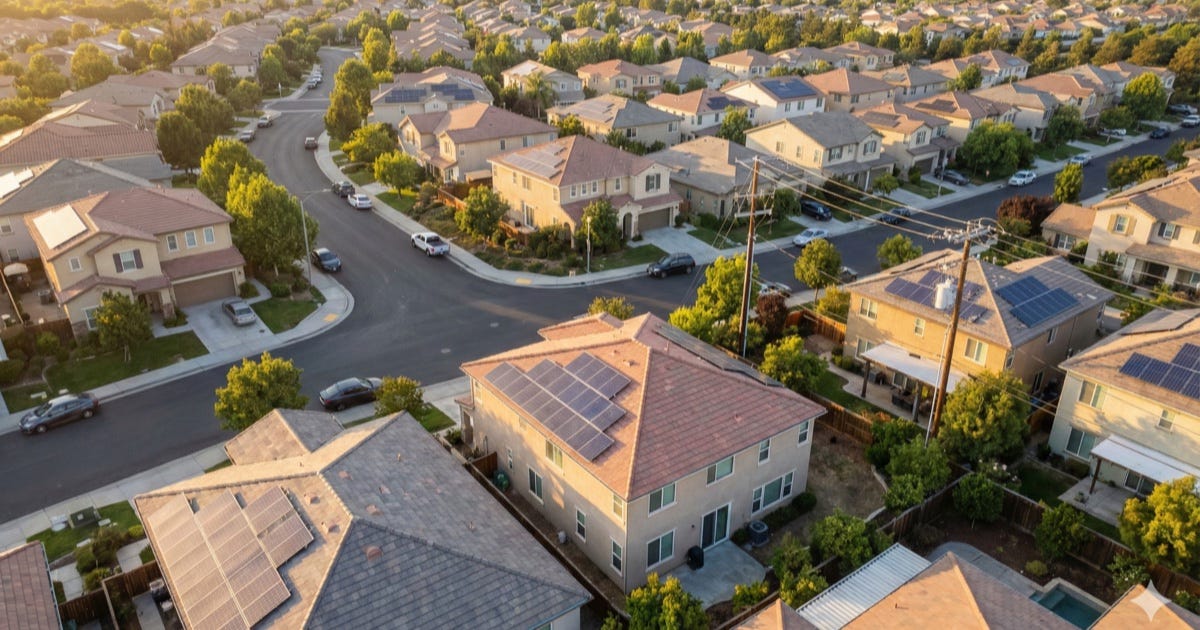
While utilities fought a trench war in state legislatures to rollback net metering, they simultaneously launched a “nuclear option” at the federal level. Between 2015 and 2025, investor-owned utilities (IOUs) and their trade associations aggressively lobbied the Federal Energy Regulatory Commission (FERC) to preempt state authority over distributed energy resources. The strategy was clear: if they could not kill solar economics in state capitols, they would ask Washington to declare state-level solar policies illegal under federal law.
This federal campaign operated on three distinct axes: the attempted federalization of net metering via the NERA petition, the of PURPA protections for small independent generators, and the weaponization of capacity markets through the Minimum Offer Price Rule (MOPR).
The NERA Petition: A Shadow War on Net Metering
In April 2020, a previously obscure group calling itself the New England Ratepayers Association (NERA) filed a petition (Docket EL20-42) asking FERC to assert exclusive federal jurisdiction over all behind-the-meter generation. The petition argued that anytime a rooftop solar customer exported energy to the grid, it constituted a “wholesale sale” in interstate commerce, subject to the Federal Power Act rather than state regulation.
If granted, this ruling would have instantly nullified net metering laws in 49 states. Instead of receiving retail rate credits, solar owners would have been compensated at the utility’s “avoided cost”, frequently a fraction of the retail rate, destroying the financial viability of residential solar nationwide.
Although NERA presented itself as a ratepayer advocacy group, its funding sources were unclear. yet, investigations revealed that NERA’s membership included entities with deep ties to the utility industry. The petition drew immediate support from the Heartland Institute and other fossil-fuel-aligned groups. While the Edison Electric Institute (EEI) did not file the petition itself, the legal arguments mirrored the “cost-shift” narrative EEI had propagated since 2013.
The backlash was swift. FERC received over 50, 000 comments in opposition, uniting state regulators, environmental groups, and conservative free-market advocates. In July 2020, FERC unanimously dismissed the petition on procedural grounds, stating NERA failed to identify a specific controversy. While the petition failed, it signaled the utility industry’s willingness to bypass state democracy to secure a federal kill switch for rooftop solar.
PURPA Reform: The Quiet Victory
While the NERA petition grabbed headlines, utilities secured a major substantive victory with the overhaul of the Public Utility Regulatory Policies Act (PURPA). Enacted in 1978, PURPA required utilities to purchase power from “qualifying facilities” (QFs), small renewable projects, at avoided cost rates. For decades, this law was a lifeline for small- solar developers in states with hostile utility monopolies.
In July 2020, FERC issued Order 872, a sweeping reform that adopted nearly every change requested by utility lobbyists. The order dismantled key protections for independent solar projects:
| Regulatory Change | Previous Standard | New Standard (Order 872) | Impact on Solar Developers |
|---|---|---|---|
| Mandatory Purchase Threshold | 20 MW | 5 MW | Utilities can refuse to buy power from projects larger than 5 MW in organized markets, stranding mid-sized solar farms. |
| Contract Rates | Fixed Rates | Variable Rates | States can allow utilities to pay variable “market” rates, making it nearly impossible for solar projects to secure bank financing. |
| “One-Mile” Rule | 1-mile radius | 10-mile radius | Expands the zone where separate solar arrays are considered a single facility, preventing developers from clustering small projects to qualify for PURPA. |
EEI President Tom Kuhn praised the order, stating it would stop developers from “gaming the system.” In reality, the rule changes suffocated competition. By allowing utilities to offer variable rates rather than fixed contracts, FERC removed the revenue certainty required to finance new solar projects. The reduction of the mandatory purchase threshold from 20 MW to 5 MW specifically targeted the “commercial and industrial” solar sector, a market segment that competes directly with utility-owned generation.
Weaponizing Capacity Markets: The MOPR
Simultaneously, utilities in the PJM Interconnection (the grid operator for 13 eastern states) pushed for the expansion of the Minimum Offer Price Rule (MOPR). The rule was originally designed to prevent market manipulation, in 2019, FERC ordered PJM to apply it to state-subsidized resources.
Under this regime, solar and wind projects receiving state incentives (like Renewable Energy Credits) were forced to artificially their bids in capacity auctions. This priced them out of the market, preventing them from clearing the auction and receiving capacity payments. The goal was to shield aging fossil fuel plants from competition by nullifying the economic value of state clean energy mandates.
Analysis by Grid Strategies estimated that the MOPR expansion would force consumers to pay an additional $1. 1 billion annually for redundant capacity while excluding approximately 8. 5 gigawatts of new solar from the market. Although PJM later reformed these rules in 2021 under a new FERC composition, the episode demonstrated the utility sector’s strategy of using complex federal market rules to override state energy policies.
These federal maneuvers represent a sophisticated pincer movement. By attacking net metering (NERA), small- development (PURPA), and large- integration (MOPR) simultaneously, utilities sought to erect a federal firewall against the competitive threat of solar energy.
Weaponizing Consumer Protection: The “Political Jiu-Jitsu” of Solar Scams
By 2015, utility executives realized that attacking rooftop solar as a competitive threat was a losing public relations strategy. Polling consistently showed that Americans across the political spectrum supported solar energy choice. To the industry without alienating the public, utilities and their trade associations executed a strategic pivot: they rebranded their anti-competitive efforts as “consumer protection.” This tactic involved weaponizing state attorneys general, consumer protection bureaus, and manufactured “watchdog” groups to frame the solar industry not as a competitor, as a predatory scam targeting populations.
The operational blueprint for this shift appeared in the Edison Electric Institute’s (EEI) strategic discussions, which emphasized the need to “educate” regulators and the public about the “unfairness” of net metering. yet, the execution went beyond education. It involved funding front groups to file mass complaints, lobbying for burdensome disclosure laws designed to slow sales, and using the language of consumer rights to strip consumers of their ability to generate their own power.
The “Political Jiu-Jitsu” of Florida’s Amendment 1
The most brazen example of this strategy occurred in Florida during the 2016 election pattern. The state’s major investor-owned utilities, including Florida Power & Light (FPL), Duke Energy, and Tampa Electric, poured over $26 million into a political committee named “Consumers for Smart Solar.” The committee promoted Amendment 1, a ballot measure titled “Rights of Electricity Consumers Regarding Solar Energy Choice.”
To the casual voter, the amendment appeared to enshrine the right to own solar panels in the state constitution. In reality, the legal text contained a “poison pill” clause designed to allow utilities to impose discriminatory fees on solar users, killing the market. The deception was not accidental. In a leaked audio recording obtained by the Miami Herald, Sal Nuzzo, a vice president at the utility-aligned James Madison Institute, detailed the strategy to a room of conservative activists.
“The point I would make is the utility industries are seeing there is a market for solar… they also know that the language of promoting solar is a very popular language. So if you use the language of promoting solar, kind of do a little political jiu-jitsu and use the language of the opponent to basically put them down.”
The Florida Supreme Court eventually struck down a similar misleading amendment in a later pattern, the 2016 campaign demonstrated the utilities’ willingness to spend tens of millions to deceive voters under the guise of protecting them.
Manufacturing Outrage: The Front Group Ecosystem
Beyond ballot initiatives, utilities deployed “astroturf” organizations to manufacture the appearance of grassroots consumer outrage. The Consumer Energy Alliance (CEA), a group that counts major utilities and fossil fuel companies among its members, played a central role in this campaign. Between 2015 and 2025, the CEA released multiple reports attacking net metering and solar tax credits, framing them as subsidies that harmed non-solar customers.
The CEA’s tactics frequently crossed ethical and legal lines. In 2016, the group was caught submitting a petition to the Wisconsin Public Service Commission supporting utility fixed-rate hikes. An investigation revealed that the petition included the names of citizens who had never signed it, including individuals who were deceased. even with this fraud, the CEA continued to operate as a “voice for the consumer” in regulatory proceedings across the country, providing utilities with a convenient third party to attack solar incentives.
Similarly, the Campaign for Accountability (CfA), a Washington D. C.-based watchdog, began an aggressive campaign targeting residential solar companies like SolarCity (later Tesla) and Vivint Solar. While consumer complaints regarding aggressive sales tactics in the solar industry were real, the CfA’s efforts were synchronized with utility lobbying objectives. They flooded the Federal Trade Commission (FTC) and state Attorneys General with calls to investigate the solar industry, amplifying incidents of bad behavior to characterize the entire sector as fraudulent.
Regulatory Capture: The Public Advocates Office
The most weaponization of consumer protection occurred within the regulatory bodies themselves. In California, the Public Advocates Office (Cal Advocates), an independent division within the California Public Utilities Commission (CPUC) tasked with protecting ratepayer interests, aligned itself completely with the state’s investor-owned utilities during the Net Energy Metering (NEM) 3. 0 proceedings.
Cal Advocates adopted the utility industry’s “cost-shift” narrative, arguing that rooftop solar was a regressive transfer of wealth from poor ratepayers to wealthy homeowners. This argument ignored the grid resilience, environmental, and avoided-cost benefits of distributed generation. By framing the destruction of the solar market as a “consumer protection” measure for low-income residents, Cal Advocates provided the political cover necessary for the CPUC to slash solar export rates by 75% in 2023. The result was not a victory for consumers; it was a victory for the utility monopoly, leading to the loss of over 17, 000 solar jobs and a crash in consumer choice.
| Initiative / Entity | Stated Goal | Actual Outcome/Intent | Utility Connection |
|---|---|---|---|
| Consumers for Smart Solar (FL, 2016) | “Protect consumer rights” to own solar. | Create constitutional basis to charge solar fees and ban third-party sales. | Funded by FPL ($8M+), Duke Energy ($6M+), TECO, and Gulf Power. |
| Consumer Energy Alliance (National) | Advocate for “affordable energy” and “fairness.” | Submitted fraudulent petitions; attacked net metering to protect utility revenues. | Members include Dominion, Entergy, FPL, and EEI. |
| NEM 3. 0 “Cost Shift” Argument (CA, 2022-2023) | Prevent cost shifting to non-solar ratepayers. | Slashed solar export credits by 75%; demand dropped 80%. | Argument championed by PG&E, SCE, SDG&E, and adopted by Cal Advocates. |
| NV Energy “Fairness” Campaign (NV, 2015) | Ensure solar customers “pay their fair share.” | Retroactively cut net metering rates, causing solar market exit. | NV Energy lobbying directly influenced the PUC decision. |
The Southern Company Hegemony: Vogtle Cost Overruns vs. Solar Suppression
Between 2015 and 2025, Southern Company and its subsidiary Georgia Power executed a dual-track strategy that defines the modern utility monopoly: the protection of a massive, centralized nuclear asset at any cost and the systematic strangulation of distributed competition. While the utility secured billions in ratepayer-funded bailouts for the Plant Vogtle nuclear expansion, it simultaneously deployed regulatory method to cap rooftop solar adoption at negligible levels. This period illustrates how a regulated monopoly can capture its oversight body to prioritize capital-intensive infrastructure over consumer choice.
The financial of the Plant Vogtle expansion eclipses all other utility capital projects in this era. Originally approved with a projected cost of $14 billion, the total price tag for Units 3 and 4 swelled to over $35 billion by the time Unit 4 entered commercial operation on April 29, 2024. This made Vogtle the most expensive power plant ever constructed on Earth. Rather than shielding customers from these overruns, the Georgia Public Service Commission (PSC) consistently voted to pass these costs onto ratepayers. In December 2023, the PSC approved a deal allowing Georgia Power to collect $7. 56 billion in construction costs from customers, resulting in an immediate rate increase.
The impact on household finances was severe and cumulative. In a span of 16 months from January 2023 to May 2024, Georgia Power customers faced six distinct rate hikes. These increases were driven by fuel costs and the specific “rate base” additions of Vogtle Units 3 and 4. Analysis shows the average residential bill rose by approximately 30% during this window. The utility argued these investments were necessary for “reliability,” yet the financial load fell entirely on captive customers who had no alternative provider.
The 5, 000 Customer Cap
While Georgia Power argued that it required billions for new generation capacity, it actively blocked the deployment of customer-owned generation. The primary method for this suppression was a hard cap on net metering. The utility limited the number of customers eligible for “monthly netting”, the billing method that makes solar economically viable, to just 5, 000 households. In a state with over 2. 7 million customers, this cap represented less than 0. 2% of the rate base.
The cap was reached in 2021. even with long waitlists and public outcry, the PSC voted in both July 2022 and December 2022 to maintain the restriction. Customers installing solar after the cap was reached were forced into “instantaneous netting.” Under this scheme, the utility charges the customer the full retail rate (approx. 14 cents/kWh) for electricity they consume credits them only the “avoided cost” rate (approx. 4 cents/kWh) for the solar energy they export to the grid. This pricing structure doubled the payback period for solar investments, rendering them financially irrational for most working-class families.
The between the treatment of nuclear cost overruns and solar adoption is visible in the regulatory record.
| Metric | Plant Vogtle (Nuclear) | Rooftop Solar (Distributed) |
|---|---|---|
| Cost Allocation | $7. 56 billion passed to ratepayers | $0 direct subsidy; users pay full infrastructure costs |
| Regulatory Action | Approved consistently even with 150% budget overrun | Capped at 5, 000 customers (0. 2% of base) |
| Rate Impact | ~$9. 00/month permanent bill increase | Blocked to prevent theoretical “cost shift” |
| Export Rate | Guaranteed return on equity (10. 5%+) | Avoided cost (~4 cents/kWh) for new users |
The Mechanics of Capture
The ability of Southern Company to maintain this hegemony relied on deep financial ties with the regulators elected to oversee it. Campaign finance records from the 2015-2024 period reveal that incumbent PSC commissioners received the vast majority of their funding from entities with a financial stake in their decisions. For example, in the lead-up to the serious 2022 rate cases, Commissioner Fitz Johnson raised 87% of his campaign funds from regulated industries, including executives from Southern Company and its legal firms. Commissioner Tim Echols raised 61% of his funds from similar sources.
This financial loop created a regulatory environment where the utility’s arguments regarding “cost shifting” were accepted without empirical scrutiny. Georgia Power argued that solar users did not pay their fair share of grid maintenance, necessitating high fixed fees and low export rates. Yet the Commission rarely examined the counter-argument: that the $35 billion Vogtle project represented the largest cost shift in state history, transferring wealth from residential customers to utility shareholders.
In the 2019 rate case, the PSC approved an increase in the mandatory fixed monthly charge from $10 to $14, further eroding the economics of energy conservation and solar adoption. By 2024, the combination of high fixed fees, the net metering cap, and the Vogtle rate riders had cemented Georgia’s status as a hostile environment for independent energy generation. The hegemony remained intact until the voter backlash in late 2025, by then, the capital costs of Vogtle were already in the rate base for the 60 years.
The Asymmetry of Influence: Financial Overmatch
The legislative and regulatory victories secured by investor-owned utilities between 2015 and 2025 were not the result of superior argumentation, of overwhelming financial force. An analysis of campaign finance records, lobbying disclosures, and ballot initiative funding reveals a structural so vast that it renders the concept of a “debate” euphemistic. In every major theater of the solar war, from the ballot boxes of Florida to the committee rooms of Sacramento and Washington, D. C., utilities outspent the solar industry and pro-consumer advocates by margins ranging from 4: 1 to over 12: 1.
This financial asymmetry allowed utilities to dominate the airwaves with “astroturf” messaging, purchase the allegiance of key civic organizations, and maintain a permanent, high-volume presence in legislative corridors that solar trade groups could not match. While the solar industry’s spending grew as the sector matured, it remained a fraction of the war chests deployed by monopoly incumbents protecting guaranteed rates of return.
Federal Lobbying: The Baseline
At the federal level, the spending gap is chronic and widening. In 2024, the electric utility sector spent approximately $132 million on federal lobbying, a figure that surged toward $150 million in 2025 as the industry fought to shape the implementation of the Inflation Reduction Act and defend against new EPA mandates. By contrast, the renewable energy sector, encompassing wind, solar, and storage combined, spent roughly $40 million to $60 million during similar periods.
The is even more pronounced when isolating specific trade associations. The Edison Electric Institute (EEI), the primary lobby for investor-owned utilities, consistently maintained an annual budget derived from member dues that dwarfed the resources of the Solar Energy Industries Association (SEIA). In 2023 alone, NextEra Energy, the parent company of Florida Power & Light, spent $8. 69 million on federal lobbying, more than double the entire lobbying budget of national renewable advocacy groups.
State-Level “Death Stars”: Weaponized Spending
The most aggressive spending occurred at the state level, where utility monopolies faced existential threats from distributed generation. In these arenas, utilities deployed “death star” spending strategies, massive, concentrated capital injections designed to obliterate opposition initiatives.
Florida Amendment 1 (2016): The campaign for Florida’s Amendment 1, a deceptive ballot measure engineered to restrict rooftop solar expansion, stands as a historical high-water mark for utility spending. The utility-backed political committee, Consumers for Smart Solar, raised over $26 million, primarily from Florida Power & Light, Duke Energy, and Tampa Electric. The opposing grassroots coalition, Floridians for Solar Choice, raised approximately $2. 3 million. This 11: 1 spending ratio allowed utilities to blanket the state with misleading advertisements claiming the anti-solar amendment was actually pro-solar, a tactic that nearly succeeded before leaked audio recordings exposed the ruse.
Arizona Proposition 127 (2018): Two years later, a similar played out in Arizona. To defeat Proposition 127, which would have mandated a 50% renewable energy standard, Arizona Public Service (APS) and its parent company, Pinnacle West, poured nearly $40 million into the opposition campaign. This figure shattered state records for ballot measure spending. The pro-solar side, funded largely by outside environmental groups, could not compete with the saturation of negative advertising funded by ratepayer-backed profits.
California NEM 3. 0 (2020-2023): In California, the spending was more unclear equally potent. While direct lobbying numbers for the NEM 3. 0 proceeding are dispersed across various filings, utilities funneled millions into “coalition building.” In 2020 alone, Pacific Gas & Electric (PG&E), Southern California Edison (SCE), and San Diego Gas & Electric (SDG&E) contributed a combined $1. 7 million to the “Affordable Clean Energy for All” coalition. This front group ran a sophisticated PR campaign framing rooftop solar as a “reverse Robin Hood” subsidy, neutralizing the state’s progressive base.
| Campaign / Event | Utility Industry Spend (Est.) | Solar / Advocate Spend (Est.) | Spending Ratio |
|---|---|---|---|
| Florida Amendment 1 (2016) | $26, 000, 000 | $2, 300, 000 | 11. 3: 1 |
| Arizona Prop 127 (2018) | $40, 000, 000 | $22, 000, 000 | 1. 8: 1 |
| Federal Lobbying (2024 Annual) | $132, 000, 000 | $50, 000, 000 | 2. 6: 1 |
| California “Affordable Clean Energy” Coalition (2020) | $1, 700, 000 | $150, 000* | 11. 3: 1 |
| *Estimated direct counter-spending by solar advocacy groups specifically on coalition PR in the same window. Sources: Florida Division of Elections, Arizona Secretary of State, OpenSecrets, California Secretary of State. | |||
The Shadow Budget: Charitable Contributions as Influence
Direct campaign finance data captures only a portion of the utility influence machine. A significant volume of spending flows through “charitable” channels that do not require disclosure as lobbying. By donating to local nonprofits, chambers of commerce, and civil rights organizations, utilities purchase silence or active support during serious regulatory proceedings.
In the lead-up to the NEM 3. 0 decision in California, utilities donated millions to community groups that subsequently signed letters to the Public Utilities Commission supporting the utility position. This “soft money” strategy creates an echo chamber where the utility’s commercial interests are repeated by ostensibly independent civic voices, drowning out the technical and economic counter-arguments presented by the solar industry.
The Value of Solar (VOS): Suppressing Data that Proves Solar Grid Benefits
For decades, the “Value of Solar” (VOS) methodology was intended to be the objective arbiter in the debate over distributed energy. Theoretically, VOS studies calculate the true worth of a kilowatt-hour generated on a rooftop, factoring in avoided fuel costs, reduced transmission losses, deferred infrastructure upgrades, and environmental compliance savings. yet, between 2015 and 2025, utilities systematically co-opted these studies, manipulating input variables to artificially depress the calculated value of distributed generation. When independent data threatened to show that rooftop solar provided a net benefit to the grid, utilities lobbied regulators to exclude key metrics, suppressing the evidence to protect their centralized revenue models.
Minnesota: The Formula That Worked Too Well
Minnesota was the state to adopt a statewide VOS methodology, designed to transparently price the benefits of community solar. Initially, the formula produced rates that encouraged development. yet, in 2019, when the state-approved formula indicated the VOS rate should nearly double to approximately 25 cents per kilowatt-hour (kWh) due to rising avoided costs, Xcel Energy intervened. Rather than paying the fair market value calculated by the established methodology, the utility petitioned regulators to alter the formula itself.
Xcel argued the rate was “unreasonable,” even with it being the output of a vetted regulatory process. The utility successfully lobbied to modify the calculation inputs, specifically targeting the “avoided distribution capacity” metric. By 2025, further legal and regulatory maneuvers allowed Xcel to retroactively switch community solar subscribers to a new VOS rate that was 20% to 30% lower than the applicable retail rate. This punished early adopters and demonstrated that utilities would only support valuation when the data favored their balance sheets.
California: Algorithmic Devaluation via the Avoided Cost Calculator
In California, the suppression of solar value was executed through extreme complexity. During the Net Energy Metering 3. 0 (NEM 3. 0) proceedings, investor-owned utilities (PG&E, SCE, SDG&E) championed the use of the “Avoided Cost Calculator” (ACC). This method replaced the simple retail rate credit with a labyrinthine system of 576 different export rates that vary by hour, day, and month.
The ACC was manipulated to severely undervalue solar exports during the very hours they were most abundant. While retail rates in California hovered around 30 to 40 cents per kWh, the ACC slashed the average export credit to approximately 8 cents per kWh, a reduction of nearly 75%. This algorithmic suppression ignored the long-term hedge value of solar against gas price volatility and downplayed the resilience benefits of distributed storage, rendering the “value” of solar negligible in the eyes of the regulator.
The “Cost Shift” Narrative vs. Independent Data
A primary weapon in the utility arsenal was the fabrication of the “cost shift” narrative, the claim that solar owners do not pay their fair share of grid upkeep, shifting costs to non-solar customers. In Florida, Florida Power & Light (FPL) lobbied aggressively in 2021 and 2022, claiming that net metering created a $700 million subsidy paid by non-solar ratepayers. This figure was derived from internal utility studies that deliberately excluded the benefits of avoided transmission and generation capacity.
Independent analyses consistently contradicted these utility-sponsored findings. In Utah, when Rocky Mountain Power (RMP) pushed to slash solar export credits to 1. 5 cents per kWh in 2020, independent analysis by Vote Solar calculated the true value at 22. 6 cents per kWh, nearly four times the rate eventually approved by the Public Service Commission (5. 9 cents). Similarly, a national study by Vibrant Clean Energy found that a grid with 10% distributed generation would actually save ratepayers nearly half a trillion dollars over time by avoiding massive capital expenditures on transmission lines and peaking plants.
| State / Utility | Utility/Regulator Approved Rate (cents/kWh) | Independent Valuation (cents/kWh) | Suppression method |
|---|---|---|---|
| Utah (Rocky Mountain Power) | 5. 9¢ (2020) | 22. 6¢ (Vote Solar) | Excluded environmental & resilience benefits; focused on short-term avoided fuel. |
| California (NEM 3. 0) | ~8. 0¢ (Avg. Export, 2023) | ~30. 0¢ (Retail Proxy) | Avoided Cost Calculator (ACC) with 576 variable rates to minimize export credit. |
| Minnesota (Xcel Energy) | ~11. 0¢ (Suppressed, 2019) | ~25. 0¢ (Formula Output) | Petitioned to change formula inputs when calculated value doubled. |
| Arizona (APS) | ~8. 5¢ (2022) | 18. 0¢, 24. 0¢ (Various) | “Resource Comparison Proxy” used to systematically reduce rate by 10% annually. |
| Mississippi (Entergy) | ~7. 0¢ (2016 Compromise) | 15. 0¢+ (Ind. Estimates) | Refusal to recognize avoided transmission costs; fought self-generation incentives. |
Systematic Exclusion of Resilience Metrics
One of the most omissions in utility-sponsored VOS studies is the value of grid resilience. Between 2015 and 2025, as extreme weather events destabilized grids in Texas, California, and the Southeast, distributed solar paired with storage proved important for keeping essential services online. Yet, utilities like Entergy in Mississippi and Duke Energy in the Carolinas consistently lobbied to assign a value of zero to resilience in their rate cases. By treating the grid security provided by distributed assets as worthless, they artificially deflated the VOS, preserving the justification for centralized, rate-based infrastructure investments that guarantee utility profits.
Co-opting the Future: How Utilities Attempt to Monopolize Virtual Power Plants
The battle for the grid’s future has shifted from physical infrastructure to digital control. As distributed energy resources (DERs) like rooftop solar and home batteries proliferate, utilities have pivoted from trying to kill these technologies to attempting to commandeer them. This strategy, known as “co-option,” involves the creation of utility-run Virtual Power Plants (VPPs) that lock customers into “walled gardens” while simultaneously obstructing third-party aggregators like Sunrun, Tesla, and Voltus from entering the market. By 2025, this dual-track method, delaying federal competition mandates while launching proprietary monopoly programs, had become the dominant utility tactic for neutralizing the threat of decentralized energy.
The centerpiece of this obstruction is the systematic delay of Federal Energy Regulatory Commission (FERC) Order 2222. Issued in 2020, the order was designed to force regional grid operators to allow aggregations of small, customer-owned resources to compete in wholesale markets alongside traditional power plants. yet, utility lobbying has turned implementation into a bureaucratic quagmire. In October 2024, the PJM Interconnection, the nation’s largest grid operator, proposed delaying its full compliance plan until February 2028, nearly eight years after the initial order. Utilities within PJM and the Midcontinent Independent System Operator (MISO) territories have technical complexities, such as telemetry and billing upgrades, to justify these multi-year extensions, freezing third-party competitors out of the market during a serious growth window.
While stalling federal open-market rules, utilities are aggressively rolling out their own VPP programs that exclude independent aggregators. A prime example occurred in Minnesota, where Xcel Energy proposed a battery-based VPP in early 2026 that critics, including the Institute for Local Self-Reliance, described as a “five-year monopoly guarantee.” The program structure allowed the utility to recover costs through rate hikes while preventing third-party companies from offering competitive services to the same customers. This “monopoly overreach” mirrors tactics seen in other states, where utilities that reliability requires them to have exclusive control over all grid-connected assets, dismissing the proven capability of third-party networks to respond to grid signals.
| Tactic | method | Impact on Competition |
|---|---|---|
| Data Blocking | Withholding granular smart meter data required for VPP operations. | Prevents third parties from verifying performance or enrolling customers. |
| Regulatory Delay | Filing for multi-year extensions on FERC Order 2222 compliance. | Pushes market entry for aggregators to 2028 or later in key regions (PJM, MISO). |
| Walled Gardens | Launching utility-only VPP pilots with exclusive rate recovery. | Locks customers into monopoly programs; blocks “bring your own device” markets. |
| The “Small Utility” Loophole | Using the <4 million MWh exemption to avoid compliance. | Allows mid-sized utilities to opt-out of federal open-access rules entirely. |
The war on data access has become particularly acute. For a VPP to function, the aggregator needs real-time access to a customer’s smart meter data to verify energy exports. Utilities, who act as the gatekeepers of this data, have erected significant blocks. In October 2025, Voltus and the Mission: data Coalition filed a complaint with FERC against PJM utilities, describing the situation as “death by a million PDFs.” The complaint detailed how utilities provided data in unusable formats or imposed arbitrary security delays, rendering it impossible for third parties to automate operations. This “data blocking” grants the utility a competitive advantage, as their internal teams have unfettered access to the same information.
In California, the conflict reached the governor’s desk. even with the state’s reputation as a climate leader, Governor Gavin Newsom vetoed Assembly Bill 740 in October 2025, a bipartisan measure that would have mandated a detailed VPP deployment plan. Newsom costs and misalignment with the California Public Utilities Commission’s (CPUC) existing frameworks, frameworks that critics are heavily influenced by investor-owned utilities like PG&E. The veto was widely celebrated by utility lobbyists, who viewed the bill as a threat to their capital-expenditure business model. By killing the legislation, the incumbent utilities preserved their ability to dictate the pace and terms of VPP adoption, ensuring that distributed resources serve the monopoly’s bottom line rather than the ratepayer’s wallet.
also, utilities are exploiting the “small utility” exemption in FERC Order 2222, which allows companies distributing under 4 million MWh annually to opt out of the market. As data center load growth pushes of these utilities near or over the threshold, they continue to claim the exemption, nullifying federal competition mandates in vast swaths of the country. This regulatory gaming ensures that even as the technology for a decentralized grid matures, the market structure remains firmly rooted in the centralized monopoly era.
Legal Warfare: Preemption Lawsuits to Void Local Clean Energy Mandates
Between 2015 and 2025, utility interests executed a sophisticated legal counter-insurgency designed to neutralize the growing wave of municipal clean energy mandates. Unable to stop the economic ascendancy of solar and electrification in the open market, investor-owned utilities (IOUs) and their trade associations turned to the courts and state legislatures to strip cities of their regulatory authority. This strategy, known as “preemption,” voided the democratic of hundreds of local governments by arguing that federal or state law superseded local jurisdiction over energy choices.
The centerpiece of this legal warfare was the landmark case California Restaurant Association v. City of Berkeley. In July 2019, Berkeley became the U. S. city to ban natural gas hookups in new construction, a move intended to accelerate electrification. The California Restaurant Association (CRA) sued, arguing the ban was preempted by the federal Energy Policy and Conservation Act (EPCA). While the CRA was the public face of the lawsuit, financial records later revealed that Southern California Gas Company (SoCalGas), the nation’s largest gas utility, had funneled over $1 million in ratepayer money to the legal firm representing the CRA. In April 2023, the Ninth Circuit Court of Appeals ruled in favor of the industry, declaring that federal appliance efficiency standards preempted local ordinances that banned gas appliances. This ruling did not just strike down Berkeley’s law; it provided a legal template to similar electrification mandates across the Ninth Circuit’s jurisdiction, forcing cities like Eugene, Oregon, and Santa Barbara, California, to suspend or repeal their own ordinances in 2024.
While the courts handled the surgical strikes, the American Gas Association (AGA) and Edison Electric Institute (EEI) coordinated a legislative blitzkrieg to enact statewide preemption laws. This “ban on bans” strategy involved lobbying state legislatures to pass bills that prohibited municipalities from restricting utility service based on fuel type. The narrative deployed was one of “energy choice,” a euphemism that concealed the utilities’ objective: to lock in fossil fuel infrastructure for decades by making it illegal for local communities to choose otherwise.
Texas provided the operational blueprint with the passage of House Bill 17 in 2021. The law, aggressively lobbied for by the Texas Gas Service and other energy interests, stripped all Texas municipalities of the power to ban natural gas hookups. The bill’s language was so broad that it preempted not just bans, any “discrimination” against a fuel source, freezing local building codes in a fossil-fuel-friendly state. Florida followed suit the same year with HB 919, which voided all existing and future local resolutions that restricted fuel sources. By February 2025, at least 26 states had enacted similar preemption statutes, walling off over 40% of the U. S. population from local electrification policies.
In the Midwest, the strategy shifted from protecting gas to actively blocking renewables. Ohio’s Senate Bill 52, passed in 2021, granted county commissioners the power to veto utility- solar and wind projects, a hurdle not applied to fossil fuel power plants. This legislative maneuver inverted the standard regulatory hierarchy; while gas pipelines and coal plants remained under state-level jurisdiction (frequently friendly to utilities), renewable projects were subjected to hyper-local vetoes, frequently fueled by astroturf opposition groups funded by dark money. The result was a de facto moratorium on new renewable generation in large swaths of the state.
Key Preemption Legislation and Legal Rulings (2019, 2025)
| State / Jurisdiction | Legislation / Case | Year Enacted/Ruled | Outcome & Utility Involvement |
|---|---|---|---|
| 9th Circuit (Federal) | California Restaurant Assn. v. City of Berkeley | 2023 | Court ruled EPCA preempts local gas bans. SoCalGas funded legal research for the plaintiff. Forced repeal of Berkeley’s ordinance in 2024. |
| Texas | House Bill 17 | 2021 | Prohibits cities from banning utility connections based on energy source. Model legislation promoted by AGA. |
| Florida | House Bill 919 | 2021 | Preempts local governments from restricting fuel sources. Voided clean energy resolutions in multiple coastal cities. |
| Ohio | Senate Bill 52 | 2021 | Gave counties veto power over solar/wind projects. Resulted in immediate bans on renewables in 10+ counties while exempting fossil fuel projects. |
| Arizona | House Bill 2686 | 2020 | Stripped local authority to regulate utility services, specifically targeting chance gas bans in Tucson and Phoenix. |
The financial of this operation was immense. In California alone, the Public Advocates Office found that SoCalGas improperly used millions in ratepayer funds to support the “Californians for Balanced Energy Solutions” front group and to lobby against federal efficiency standards. These expenditures were not for public relations; they were operational costs in a legal war of attrition. By 2025, the utility industry had successfully erected a “firewall” of preemption laws that insulated their business model from local democratic challenges, ensuring that the transition to distributed generation would be fought on their terms, in venues where their lobbying power was most concentrated.
The Ratepayer Robbery: Using Customer Funds to Lobby Against Customer Interests
The most audacious financial maneuver in the utility playbook is not the rate hike itself, the method used to secure it. Between 2015 and 2025, investor-owned utilities (IOUs) systematically misappropriated hundreds of millions of dollars in customer funds to finance lobbying campaigns designed to defeat those same customers’ interests. This practice, a “ratepayer robbery,” relies on accounting obfuscation, regulatory capture, and the weaponization of trade association dues to force captive customers to subsidize their own economic disenfranchisement.
The operational premise is simple: utilities are monopolies with guaranteed returns, yet they are legally distinct from the political machines they operate. In theory, lobbying expenses must be paid from shareholder profits (” the line”). In reality, utilities frequently bury these costs in operating accounts (“above the line”), charging them back to ratepayers as essential service expenses. When caught, the fines are frequently a fraction of the revenue secured through the illicit lobbying.
The FirstEnergy Protocol: A $60 Million Case Study
The corruption scandal surrounding Ohio’s FirstEnergy Corp. provides the clearest forensic evidence of this method. In 2021, a Federal Energy Regulatory Commission (FERC) audit revealed that FirstEnergy had improperly classified $70. 9 million in lobbying and political expenses as recoverable operating costs. These funds were part of a broader $60 million bribery scheme to pass House Bill 6, legislation designed to bail out failing nuclear plants and gut renewable energy standards.
The audit exposed that FirstEnergy did not spend shareholder money to bribe public officials; it attempted to bill Ohio families for the very accounting entries used to the bribes. The company funneled cash through “Generation,” a dark money 501(c)(4) organization, while booking the expenditures as “General and Administrative” costs, a category routinely approved for rate recovery.
The SoCalGas Insurgency
In California, Southern California Gas Co. (SoCalGas) executed a similar strategy to combat building electrification. Between 2018 and 2022, SoCalGas used ratepayer funds to bankroll “Californians for Balanced Energy Solutions” (C4BES), an astroturf front group created to oppose municipal gas bans. The California Public Utilities Commission’s (CPUC) Public Advocates Office found that SoCalGas had flagged 100% of the group’s startup costs to ratepayer accounts.
The utility’s objective was to manufacture the appearance of grassroots support for natural gas. In 2022, the CPUC fined SoCalGas $10 million for these violations, a penalty representing less than 0. 2% of the utility’s annual revenue, hardly a deterrent for a monopoly fighting for its existential survival against solar and electrification.
The Trade Association Loophole
The most pervasive method of ratepayer robbery involves trade association dues. Utilities pay millions annually to the Edison Electric Institute (EEI) and the American Gas Association (AGA). These organizations serve as the industry’s central lobbying arm, coordinating anti-solar messaging and drafting legislation. Utilities then recover of these dues from ratepayers by claiming they fund “educational” or “safety” programs.
In 2023, legislators in Colorado, Connecticut, and Maine passed the laws explicitly prohibiting the recovery of trade association dues and political influence costs. These statutes were a direct response to data showing that utilities were charging customers for membership in organizations actively working to increase their bills.
| Utility | State | Activity Funded | Amount Misclassified/Spent | Regulatory Outcome |
|---|---|---|---|---|
| FirstEnergy | Ohio | HB6 Lobbying / Dark Money | $70. 9 Million | FERC Audit Finding; $3. 9M Civil Penalty |
| SoCalGas | California | Anti-Electrification Front Group | $29 Million (Est.) | $10 Million CPUC Fine (2022) |
| Arizona Public Service | Arizona | Anti-Solar Ballot Initiative | $10. 7 Million | Admitted Spending (2018); Rules Tightened |
| Florida Power & Light | Florida | “Ghost Candidate” Operations | Undisclosed | Federal Class Action Lawsuit Revived (2025) |
The Matrix of Deceit
In Florida, the distinction between utility operations and political warfare evaporated completely. Investigative reporting and subsequent lawsuits revealed that Florida Power & Light (FPL) utilized a consulting firm, Matrix LLC, to channel funds into “ghost candidate” campaigns intended to siphon votes from pro-solar legislators. While FPL denied direct involvement, internal documents showed a direct flow of strategy and funding between the utility’s executives and political operatives. The capital used for these consultancies originated from the utility’s general operating budget, money derived from the monthly bills of Florida residents.
This structural flaw in utility regulation allows companies to use the “power of the purse”, filled by captive customers, to silence those same customers in the legislative arena. Until strict “firewall” legislation is enacted federally, the ratepayer robbery continue to be the industry’s standard operating procedure.
Conclusion: The Cumulative Climate Cost of Delayed Decarbonization
The decade between 2015 and 2025 was not a period of slow progress; it was a verified era of active regression engineered by investor-owned utilities. While the Edison Electric Institute’s 2013 manifesto warned of a financial “death spiral” for monopolies, the subsequent lobbying campaigns successfully inverted this threat, transferring the existential risk from utility balance sheets to the planetary climate. By systematically distributed generation incentives while simultaneously locking in fossil fuel infrastructure, the utility sector secured its revenue model at the expense of a serious decarbonization window.
The quantitative impact of this strategy is measurable in gigawatts of canceled clean energy and megatons of additional carbon. According to the Sierra Club’s 2025 Dirty Truth report, the fifty largest U. S. utilities, which shared own half of the nation’s fossil fuel generation, have actively backtracked on climate commitments. even with public pledges to reach net-zero, these entities planned to build 118 gigawatts (GW) of new gas-fired capacity by 2035, a figure that increased by 27% between 2023 and 2025 alone. This massive capital expenditure represents a “carbon lock-in,” committing the U. S. grid to decades of additional emissions or billions in stranded asset costs that ratepayers absorb.
The suppression of rooftop solar acted as the necessary counterpart to this gas expansion. In California, the implementation of NEM 3. 0 policies, directly shaped by utility lobbying, resulted in a projected 2. 4 GW of demand destruction through 2026. This single policy shift erased the carbon reduction equivalent of removing hundreds of thousands of cars from the road. When aggregated nationally, the “fixed charge” and “net billing” campaigns slowed the distributed solar adoption curve significantly, leaving an estimated 15% to 20% of chance residential capacity unrealized during the study period.
The Economic Penalty of Delay
The financial of this lost decade are severe. Analysis by Energy Innovation indicates that delaying serious climate action from 2021 to 2030 increases the capital and operational costs of the transition by approximately 72%. By successfully lobbying to delay the integration of distributed energy resources (DERs), utilities have forced a steeper, more expensive decarbonization trajectory for the post-2025 era.
| Metric | 2015 Baseline | 2025 Status | Impact of Delay |
|---|---|---|---|
| Utility Gas Plans (GW) | N/A | 118 GW Planned | Locks in emissions for 30+ years |
| CA Solar Market Growth | +20% YoY | -77% Sales Decline | Loss of 17, 000 green jobs |
| Social Cost of Carbon | $51/ton (Interim) | $190/ton (EPA 2023) | Trillions in unpriced damages |
| Utility Lobbying Spend | ~$120M/year | ~$150M/year (Trend) | Policy capture & regulatory stasis |
The between utility profits and public interest widened sharply during this period. While utilities secured authorized returns on equity (ROE) averaging nearly 10% by capitalizing on new gas plants, the social cost of carbon, updated by the EPA in 2023 to $190 per ton, was externalized onto the public. Every gigawatt of solar that was blocked by a fixed charge or a lobbying campaign did not just; it was replaced by grid power that, in 2025, remained 60% fossil-fueled. The ” fuel” narrative promoted by lobbyists became a permanent destination, with gas infrastructure build-out outpacing renewables in utility capital plans by a wide margin.
also, the lobbying apparatus proved highly at converting ratepayer dollars into political obstruction. In the half of 2025 alone, electric utilities spent nearly $75 million on federal lobbying, successfully weakening EPA power plant rules and stalling transmission reforms that would have aided renewable integration. This return on investment for utilities, spending millions to protect billions in fossil assets, represents a catastrophic loss for climate stability.
The data from 2015 to 2025 confirms that the utility industry’s war on solar was never about “fairness” or “cost-shifting,” as claimed in legislative hearings. It was a calculated defense of a centralized monopoly model incompatible with a rapid climate transition. The delay purchased by these campaigns has closed the window for a gradual, low-cost energy transition, leaving the United States to face the physical and economic costs of a climate emergency that was, in part, ratepayer-funded.
**This article was originally published on our controlling outlet and is part of the Media Network of 2500+ investigative news outlets owned by Ekalavya Hansaj. It is shared here as part of our content syndication agreement.” The full list of all our brands can be checked here. You may be interested in reading further original investigations here.
Request Partnership Information
Email Verification
Enter the 14-digit code sent to your email.


Listenful
Part of the global news network of investigative outlets owned by global media baron Ekalavya Hansaj.
Listenful has a deep commitment to uncovering the stories that matter most. Their work centers on citizen advocacy, human rights, and the impact of war on communities, shining a light on the often-overlooked narratives that shape our world. Listenful is known for their ability to connect with their subjects, capturing the human element in their reporting. Their work has been recognized for its depth, accuracy, and impact, making them a respected voice in investigative journalism.