The Scientific Studies and Research Center operates as the primary Syrian government agency responsible for developing nonconventional weapons. The center oversees a network of facilities across Syria. Intelligence reports indicate the center produces chemical weapons, missiles, and artillery. The center relies on a network of companies inside and outside of Syria to procure equipment and materials. The center developed a specific variant of sarin nerve agent that uses hexamine as a stabilizer. This hexamine acts as a signature of sarin developed by the center. The production process generates diisopropyl methylphosphonate as a byproduct. Investigators use these chemical signatures to identify the origin of the nerve agents deployed in the Syrian Civil War.
In April 2017, the United States Department of the Treasury Office of Foreign Assets Control sanctioned 271 employees of the center. The sanctions responded directly to the April 2017 sarin gas attack on civilians in Khan Sheikhoun. The sanctioned employees possessed expertise in chemistry and related disciplines. They worked in support of the chemical weapons program since at least 2012. The United States government stated the action intended to hold the Assad government accountable for human rights violations and deter the spread of chemical weapons.
The Organisation for the Prohibition of Chemical Weapons conducts ongoing investigations into the deployment of toxic chemicals in Syria. The Declaration Assessment Team identified 26 outstanding matters regarding the initial chemical weapons declaration submitted by Syria. In October 2024, the team reported that the Syrian government submitted 20 amendments to its initial declaration. These amendments revealed additional elements of the chemical weapons program that were previously undisclosed. The investigating body noted that information made available suggested over 100 additional locations might have been involved in chemical weapons activities.
This Investigative Dossier On Syrian Civil War highlights that between March 2024 and December 2025, the Investigation and Identification Team conducted an extensive investigation into a chemical attack in Kafr Zeita. The team concluded there are reasonable grounds to believe the Syrian Arab Air Forces dropped at least one yellow pressurized cylinder containing chlorine gas on October 1 2016. The cylinder hit a cave system in the Wadi al Aanz valley near the Al Maghara Hospital. The rupture released chlorine gas, injuring 35 named individuals. The investigating body reached its conclusions using the reasonable grounds standard of proof.
The center maintains a large underground bunker complex near Masyaf in Hama province. The facility serves as a center for weapons research and development. Intelligence reports indicate Iran and North Korea helped build and operate facilities for the center. On September 8 2024, Israeli forces launched Operation Deep against the Masyaf facility. The operation involved a wave of airstrikes followed by a ground raid. Commandos from the Israeli Air Force elite Shaldag unit landed at the site by helicopter. The commandos raided the underground missile production facility, planted explosives, and detonated them after withdrawing. Local sources and monitoring groups reported between 18 and 27 deaths resulting from the strikes. The Syrian health ministry reported 18 deaths and 37 injuries.
Following the fall of the Assad government in December 2024, the new Syrian caretaker authorities altered their method to international investigators. In February 2025, the Director General of the investigating body visited Syria. The new authorities recognized all mandates and expressed full commitment to fulfilling obligations under the Chemical Weapons Convention. On March 5 2025, the Syrian caretaker Foreign Minister visited The Hague and addressed the Executive Council. He emphasized the commitment of the new authorities to destroy any remains of the chemical weapons program.
This The international community responded to the political changes in Syria by modifying economic restrictions. In May 2025, the United States and the European Union ordered the lifting of sanctions on Syria. The United States Department of the Treasury issued General License 25 to allow activities contributing to recovery and reconstruction. On June 30 2025, the United States President issued Executive Order 14312, removing broad sanctions on Syria. The order revoked six previous executive orders that formed the foundation of the sanctions program. In December 2025, the United States formally repealed the Caesar Act, permanently lifting the associated sanctions.
The Trust Fund for Syria Missions supports the Fact Finding Mission, the Declaration Assessment Team, and the Investigation and Identification Team. By September 2025, total contributions and pledges to this fund stood at 58. 47 million euros. The European Union and 19 other countries provided contributions to support the investigations. The investigating body conducts biannual inspections at the Jamraya and Barzeh facilities operated by the center. The team shared the results of sample analyses collected from two sites in May 2024. The Syrian authorities provided additional clarifications regarding the results of samples analyzed in September 2020 and April 2023.
Israeli airstrikes hit facilities at Masyaf multiple times since 2017. Between 2018 and 2022, an S 300 surface to air missile system guarded the site. Reports indicate Iranian forces began building the underground facility in coordination with Hezbollah and Syria in 2018. The construction aimed to create a factory deep inside a mountain to protect it from aerial bombardment. In June 2020, airstrikes hit defense factories near Masyaf, resulting in at least nine deaths. The strikes destroyed munition depots and sites where surface to surface missiles are manufactured. In December 2020, another airstrike near Masyaf destroyed four missile production facilities.
The center operates multiple branches dedicated to different phases of weapons development. Intelligence reports pinpoint Branch 450 as the unit responsible for filling munitions with chemicals and securing the sites where the chemical agents are stocked. The production plants for sarin, VX nerve gas, and mustard gas were established near Damascus, Hama, Homs, Aleppo, and Latakia. Western intelligence agencies state that the Syrian procurement structure for biological and chemical weapons uses the center as a cover. The center received expertise, technology, and materials from foreign sources to produce VX nerve gas.
The United Nations High Representative for Disarmament Affairs briefed the Security Council in September 2025 regarding the chemical weapons dossier. The representative reported that evidence of nerve agents was found in samples collected from a site in Syria. The investigating body deployed teams to Syria four times between March and August 2025 to visit declared and suspected chemical weapon sites. The new Syrian President reassured the international community that the new government would not allow chemical weapons to be used and would bring perpetrators to justice. The Syrian government prepared for a fifth deployment of technical teams in 2025 to facilitate access to suspected sites. The authorities signed an agreement on privileges and immunities for the staff to ensure procedures were in place to allow progress.
The destruction of the chemical weapons program presents large challenges due to the extreme secrecy maintained by the previous government. The investigating body presented the caretaker authorities with a nine point action plan. This plan serves as a roadmap to eliminate the chemical weapons present in Syria. The plan proposes deploying a large team of experts to assist the authorities in composing an inventory of existing chemical weapons sites, equipment, munitions, and supporting evidence. The Director General warned that unauthorized strikes on chemical weapons sites could create a risk of contamination and destroy evidence related to past chemical weapons use. He noted that dangerous chemicals or related equipment could be lost, complicating the verification work.
| Date |
Action |
Details |
| April 24 2017 |
United States Sanctions |
Department of the Treasury sanctioned 271 center employees. |
| June 4 2020 |
Airstrikes on Masyaf |
Strikes destroyed munition depots and killed at least nine individuals. |
| December 24 2020 |
Airstrikes on Masyaf |
Strikes destroyed four missile production facilities. |
| September 8 2024 |
Operation Deep |
Israeli commandos raided and destroyed the underground bunker complex. |
| June 30 2025 |
Sanctions Revocation |
United States removed broad sanctions following the government collapse. |
Reported Casualties in Masyaf Facility Strikes 2020 to 2024.
| June 2020 |
9
|
| December 2020 |
6
|
| September 2024 |
27
|
The 2013 Ghouta Sarin Attack Casualty Metrics and the Failure of the Red Line
On August 21 2013 Syrian government forces launched a coordinated artillery assault on the Eastern and Western Ghouta suburbs of Damascus. The bombardment used surface to surface rockets loaded with sarin nerve agent. Military units timed the strike for the early morning hours between 02: 00 and 05: 00. Meteorologists had forecast cool and calm weather for the region. The absence of wind allowed the heavy poison gas to drift downwards and settle at ground level. Residents were asleep when the gas infiltrated their homes. The Syrian Network for Human Rights recorded the event as the deadliest chemical weapons deployment of the Syrian Civil War. The attacked towns included Zamalka, Ein Tarma, and Irbin. The Syrian military launched at least ten rockets containing an estimated 200 liters of the lethal nerve agent. The operation demonstrated a premeditated intent to maximize civilian casualties by exploiting the specific atmospheric conditions of the early morning.
The weather in the region had been forecast to be relatively cool and calm between 02: 00 and 05: 00 that night, meaning those responsible knew that the air would be still and the heavy poison gas would naturally drift downwards and settle at ground level rather than blowing away.
Medical personnel at local hospitals received thousands of patients displaying severe neurotoxic symptoms. Victims exhibited convulsions, suffocation, respiratory failure, and foaming at the mouth. The Syrian Network for Human Rights documented 1, 127 immediate fatalities. Their 2025 updated dossier refined the civilian death toll to 1, 119 individuals, including 99 children and 194 adult females. The organization also recorded the deaths of 25 armed opposition fighters. Approximately 5, 935 additional people suffered from respiratory trauma and permanent neurological damage. United States intelligence assessments published higher mortality estimates. The American government calculated 1, 429 total deaths, including 426 children. responders resorted to burying victims in mass graves because local medical facilities exhausted their supply of funeral shrouds. The physical features of the deceased degraded rapidly due to the chemical exposure. Medical staff recorded victims as anonymous because surviving relatives could not identify their distorted faces. The ongoing military blockade of the region prevented the entry of fuel, medicine, and medical supplies needed to treat the wounded. Warplanes bombed the funeral processions as survivors attempted to transport the bodies for burial.
United States President Barack Obama had previously declared that the deployment of chemical weapons would cross a red line and trigger a military response. The Ghouta massacre tested this diplomatic boundary. The United States government prepared for military intervention canceled the airstrikes. The administration accepted a diplomatic proposal brokered by the Russian Federation. The agreement required the Syrian government to destroy its chemical weapons infrastructure and surrender its stockpiles to international inspectors. The Syrian Arab Republic formally acceded to the Chemical Weapons Convention on September 14 2013. The treaty entered into force for the country one month later. The international community viewed the diplomatic resolution as a method to eliminate the strategic chemical weapons stockpile without escalating the military conflict. The United States and allied nations deployed specialized maritime vessels to neutralize the surrendered chemical agents at sea. The operation removed 1, 200 tons of declared chemical weapons from the Syrian battlefield.
The diplomatic resolution failed to halt the deployment of toxic munitions. The Syrian Network for Human Rights documented 222 total chemical attacks between December 2012 and December 2024. Syrian government forces executed 217 of these strikes. The data shows that 183 chemical attacks occurred after the Syrian government signed the Chemical Weapons Convention and after the United Nations Security Council adopted Resolution 2118. These subsequent attacks killed 1, 514 people and injured 11, 080 individuals. The continued use of chlorine and sarin gases demonstrated the ineffectiveness of the 2013 disarmament agreement. The Islamic State group carried out the remaining five documented chemical attacks in the Aleppo Governorate resulting in 132 injuries. The failure to enforce the red line policy allowed the Syrian military to continue its chemical warfare campaign with impunity. The international community failed to hold the perpetrators accountable for the repeated violations of the Chemical Weapons Convention.
| Metric Category |
Data Point |
Source Entity |
| Total Chemical Attacks (2012 to 2024) |
222 Incidents |
Syrian Network for Human Rights |
| Attacks Executed by Syrian Government Forces |
217 Incidents |
Syrian Network for Human Rights |
| Attacks Executed by Islamic State |
5 Incidents |
Syrian Network for Human Rights |
| Ghouta Attack Civilian Fatalities |
1, 119 Deaths |
Syrian Network for Human Rights |
| Ghouta Attack Child Fatalities |
426 Deaths |
United States Intelligence |
| Unresolved Chemical Weapons Inquiries |
19 Matters |
Organisation for the Prohibition of Chemical Weapons |
| Suspected Undeclared Chemical Sites |
Over 100 Locations |
Organisation for the Prohibition of Chemical Weapons |
The Organisation for the Prohibition of Chemical Weapons established the Declaration Assessment Team in 2014. The unit received the mandate to verify the accuracy of the initial chemical weapons declaration submitted by the Syrian government. Inspectors conducted dozens of deployments to the country over the decade. The technical secretariat consistently reported that the Syrian declaration contained serious gaps and inconsistencies. The international watchdog agency informed member states that it could not verify the complete destruction of the Syrian chemical arsenal. The Director General of the Organisation for the Prohibition of Chemical Weapons submitted regular reports detailing the absence of cooperation from Syrian authorities. The executive council expressed serious concern regarding the missing chemical weapons and urged the Syrian government to resolve the inconsistencies. The diplomatic pressure failed to produce a complete and accurate declaration from the Syrian authorities.
By November 2025 the Declaration Assessment Team had identified 26 outstanding matters regarding the Syrian chemical weapons program. Investigators managed to resolve only seven of these inquiries. The 19 unresolved inquiries involve large quantities of undeclared chemical warfare agents and munitions. European Union representatives previously highlighted the disappearance of 2, 000 aerial bombs designed to carry chemical payloads. The Syrian government claimed military personnel converted these munitions into conventional weapons. Inspectors also discovered traces of chemicals directly linked to the production of sarin, VX, and soman nerve agents at sites the Syrian government never declared as chemical weapons facilities. The presence of these chemical signatures contradicted the official narrative provided by the Syrian government. The technical secretariat concluded that the Syrian Arab Republic retained a clandestine chemical weapons production capability.
The scope of the undeclared chemical weapons program expanded substantially as investigations continued. The Organisation for the Prohibition of Chemical Weapons received intelligence indicating that over 100 additional locations may have participated in chemical weapons activities. The international body suspended the voting rights and privileges of the Syrian Arab Republic in April 2021 due to continuous noncompliance. The suspension stripped the country of its ability to hold any office within the conference or the executive council. The technical secretariat reestablished a continuous presence in the country in November 2025 to facilitate new inventory and verification activities following a transfer of power in Damascus. The new political authorities initiated discussions with the international inspectors to address the historical shortcomings in the initial declaration. The investigative teams began deploying to the suspected undeclared locations to collect environmental samples and conduct site inspections.
Survivors of the Ghouta attack continue to experience severe long term health complications. Medical professionals report high rates of chronic respiratory diseases and cardiovascular conditions among the affected population. Psychological trauma remains prevalent, with survivors suffering from anxiety, depression, and post traumatic stress disorder. Pediatricians have also documented birth defects and developmental delays in children born to parents exposed to the sarin gas. The economic capacity of the region collapsed as families lost their primary breadwinners to the attack and the subsequent military siege. The Syrian Network for Human Rights emphasized the urgent need for full financial compensation and long term rehabilitation programs for the victims. The physical and psychological scars of the chemical exposure require specialized medical interventions that remain unavailable in the war torn region.
Organizations like Every Casualty Counts and the Syrian Network for Human Rights maintain detailed databases of the victims. These groups rely on networks of local contacts, medical personnel, and open source intelligence to verify fatalities. The documentation process requires cross referencing hospital admission records, burial registries, and eyewitness testimonies. The United Nations Office of the High Commissioner for Human Rights used these independent datasets to publish statistical analyses of the conflict. The rigorous data collection methods ensure that the identities of the victims remain preserved for future international accountability tribunals. The casualty recorders operate at high personal risk to document the atrocities committed during the Syrian Civil War. The victim centered method places the affected individuals and their families at the forefront of the transitional justice process.
Weaponized Chlorine and the Shift from Nerve Agents to Industrial Chemicals
Following the 2013 accession to the Chemical Weapons Convention and the subsequent destruction of declared stockpiles, the Syrian Arab Army altered its chemical warfare doctrine. The military transitioned away from scheduled nerve agents like sarin and began weaponizing industrial chlorine. Chlorine is a commercially available chemical used globally for water purification and sanitation. The Syrian government exploited this dual use nature to bypass international red lines. The Organisation for the Prohibition of Chemical Weapons defines chemical weapons as any chemical intended for chemical weapons purposes. The Syrian military filled improvised munitions with chlorine gas and dropped them from helicopters onto civilian areas. These munitions are frequently referred to as barrel bombs. This method provided plausible deniability and required minimal technical skill compared to the complex synthesis of nerve agents.
The Syrian Arab Air Force executed these strikes using rotary wing aircraft. Helicopters dropped large yellow cylinders containing pressurized chlorine gas. Upon impact, the cylinders ruptured and released a toxic cloud. Pure chlorine is a pale yellow green gas that is heavier than air. The gas sinks into basements and underground shelters where civilians hide from conventional airstrikes. Mild exposure causes reddening of the eyes and difficulty seeing. Severe exposure leads to vomiting, severe respiratory distress, uncontrollable coughing, and suffocation. The hydrochloric and hypochlorous acids produced from the dissolution of chlorine in the pulmonary airways result in a severe buildup of fluid in the lungs. Victims experience a sensation identical to drowning. The psychological terror inflicted by the yellow smoke forces populations to flee. This aligns with a broader military strategy of displacing civilians in opposition held territories.
The Organisation for the Prohibition of Chemical Weapons established the Fact Finding Mission to determine whether toxic chemicals were used as weapons in the Syrian Arab Republic. The mission issued 22 reports covering 74 alleged instances of chemical weapons use. The investigators concluded that chemical weapons were used or likely used in 20 instances. In 14 of those cases, the chemical used was chlorine. The Syrian government and its allies continually denied responsibility. They blamed opposition groups for fabricating the attacks. The international watchdog created the Investigation and Identification Team to attribute responsibility for these strikes. The team collected environmental samples, biomedical samples, witness statements, satellite imagery, and gas dispersion models.
On February 4, 2018, a chemical attack struck the Al Talil neighborhood in Saraqib within the Idlib Governorate. The Fact Finding Mission interviewed casualties, health workers, and responders. They received environmental samples collected from the incident location. The investigators determined that chlorine released from cylinders through physical impact was used as a chemical weapon. The Investigation and Identification Team later concluded that there are reasonable grounds to believe the Syrian Arab Air Force carried out the attack. Specifically, a helicopter operating under the control of the Tiger Forces dropped at least one cylinder containing roughly 120 liters of chlorine. The gas spread over a large area and affected 12 people on the ground. The patients presented at medical facilities shortly after the incident with signs and symptoms of tissue irritation consistent with exposure to chlorine. The victims required up to two hours of treatment before being discharged.
Two months later, a far deadlier strike occurred in Douma. On April 7, 2018, during a major military offensive aimed at regaining control of the city, the Syrian Arab Air Force deployed chemical weapons against a civilian inhabited area. The Investigation and Identification Team published its third report on January 27, 2023, confirming the details of the massacre. Between 19: 10 and 19: 40 local time, at least one Syrian Air Force helicopter departing from Dumayr airbase dropped two yellow cylinders containing toxic chlorine gas. The helicopter operated under the command of the Tiger Forces. The cylinders hit two residential apartment buildings. One cylinder hit the rooftop floor of a three story building and released its pressurized contents. The gas seeped into the lower levels where families sought refuge from the bombardment.
The Douma attack killed 43 named individuals and affected dozens more. Medics and witnesses reported that the victims showed horrific signs of chemical exposure. The Fact Finding Mission advance team arrived in Damascus on April 15, 2018, faced severe security risks. On April 18, 2018, a security detail conducting a reconnaissance visit came under fire from small arms and a hand grenade. The incident resulted in two fatalities and one injury among the security personnel. The investigative team entered Douma on April 21, 2018. They collected 70 environmental and biomedical samples and secured 66 witness statements. The laboratory analysis detected various chlorinated organic chemicals in the samples. The investigators found no organophosphorus nerve agents or their degradation products. The evidence confirmed the use of weaponized chlorine. The United States, France, and the United Kingdom responded on April 14, 2018, by launching a series of military strikes against two alleged chemical weapons facilities operated by the Syrian government.
The use of weaponized chlorine continued even with international condemnation. In May 2019, United States intelligence officials assessed that Syrian forces conducted another chlorine strike in the Latakia Province. The attack occurred on May 19, 2019, and killed at least four people. The Syrian government maintained its supply of chlorine because the chemical was not part of the 2013 disarmament deal. The Organisation for the Prohibition of Chemical Weapons verified the destruction of 72, 304 metric tonnes of declared chemical agents globally by 2023. The Syrian military retained the capacity to produce and deploy chlorine munitions. The continued use of these weapons demonstrates a deliberate circumvention of the Chemical Weapons Convention.
The Investigation and Identification Team continued to examine older incidents to ensure accountability. On January 22, 2026, the secretariat released its fifth report detailing a chemical attack in Kafr Zeita. The detailed investigation ran from March 2024 to December 2025. The report concluded there are reasonable grounds to believe the Syrian Arab Air Force perpetrated a chemical weapons attack on October 1, 2016. A Syrian military aircraft dropped at least one yellow pressurized cylinder that hit a cave system in the Wadi al Aanz valley. The cylinder impacted two ventilation openings near the Al Maghara Hospital. It tumbled down and came to rest near the entrance of the cave system. The cylinder ruptured upon impact and released pressurized chlorine gas. The toxic cloud dispersed through the valley, injuring 35 named individuals.
The Syrian government relied on geopolitical shielding from its allies to continue these attacks. Russia vetoed the renewal of the United Nations Joint Investigation at the United Nations Security Council five times. The investigative body was the only impartial and independent entity with the mandate for attributing responsibility before the creation of the Investigation and Identification Team. Russian officials actively promoted disinformation campaigns to discredit the findings of the international watchdog. They claimed the Douma attack was staged by opposition groups and the White Helmets. The Investigation and Identification Team scrutinized these alternative scenarios and tested their validity against the collected physical evidence. The forensic analysis, satellite images, gas dispersion modeling, and trajectory simulations definitively debunked the fabricated narratives. The rigging found on the cylinders in Douma indicated they were dropped from the air, directly implicating the Syrian Arab Air Force.
The shift from nerve agents to industrial chemicals represents a calculated adaptation by the Syrian military. The government maximized civilian terror while minimizing the risk of decisive international military intervention. The strategic use of chlorine barrel bombs cleared opposition held neighborhoods by making underground shelters lethal traps. The international community faces a serious problem in enforcing the Chemical Weapons Convention against dual use industrial chemicals. The Syrian conflict proves that commercially available substances can be weaponized to achieve devastating tactical results. The verified data from 2015 to 2025 confirms a calculated pattern of chemical warfare executed by the Syrian Arab Republic against its own population.
| Date of Attack |
Location |
Chemical Agent |
Casualties |
Perpetrator Identified |
| October 1, 2016 |
Kafr Zeita |
Chlorine |
35 injured |
Syrian Arab Air Force |
| February 4, 2018 |
Saraqib |
Chlorine |
12 injured |
Syrian Arab Air Force |
| April 7, 2018 |
Douma |
Chlorine |
43 killed, dozens injured |
Syrian Arab Air Force |
| May 19, 2019 |
Latakia Province |
Chlorine |
4 killed |
Syrian Arab Armed Forces |
Khan Shaykhun 2017 Delivery Systems and the Shayrat Airbase Retaliation
On April 4, 2017, a chemical weapons attack struck the town of Khan Shaykhun in the Idlib Governorate of Syria. A Syrian Arab Air Force Sukhoi 22 military aircraft dropped an aerial bomb containing sarin nerve agent on the northern part of the town. The aircraft belonged to the 50th Brigade of the 22nd Air Division. It departed from Shayrat Airbase in the Homs Governorate. The strike occurred between 06: 30 and 07: 00 local time. Weather conditions at the time of the attack were optimal for chemical dispersion. The wind speed measured just over three kilometers per hour with no rain. The munition struck a road near local silos and created a crater. The impact released a toxic cloud that drifted up to 600 meters from the detonation site.
The release of the nerve agent caused immediate and severe casualties among the civilian population. Medical sources and the opposition Idlib Health Directorate recorded at least 89 fatalities. The attack injured more than 541 individuals. Victims arriving at local field hospitals exhibited classic symptoms of nerve agent exposure. These symptoms included asphyxiation, fluid accumulation in the lungs, foaming at the mouth, muscle spasms, pinpoint pupils, and unconsciousness. responders and medical personnel struggled to treat the influx of patients. A secondary conventional airstrike later hit a hospital treating the victims. The high casualty count made this the deadliest chemical weapons deployment in the Syrian civil war since the 2013 Ghouta attack.
The Organisation for the Prohibition of Chemical Weapons deployed a Fact Finding Mission to investigate the incident. Investigators could not visit the site directly due to security conditions. They traveled to a neighboring country to attend autopsies, interview survivors, and collect biomedical and environmental samples. The biomedical specimens provided incontrovertible proof of exposure to sarin or a sarin like substance. The United Nations and chemical weapons watchdog joint investigative panel later took over the inquiry to identify the perpetrators. On October 26, 2017, the joint investigative panel released its seventh report. The investigators concluded that the Syrian Arab Republic was responsible for the release of sarin at Khan Shaykhun.
The investigative panel found specific chemical markers linking the sarin used in Khan Shaykhun to the Syrian government stockpile. The environmental samples contained three distinct marker chemicals. These included hexafluorophosphate, isopropyl phosphates, and isopropyl phosphorofluoridates. The presence of these chemicals indicated the sarin was produced using methylphosphonyl difluoride from the declared Syrian military stockpile. Independent researchers from Forensic Architecture and Bellingcat analyzed bomb fragments recovered from the crater. They matched the debris to the M4000 aerial bomb. The M4000 is a standard military munition designed specifically by the Syrian military to deliver chemical agents. The recovery of the filler cap and other fragments contradicted Syrian government claims that it had destroyed its entire chemical weapons arsenal in 2014.
The Syrian government and the Russian Federation rejected the findings of the joint investigative panel. Russian officials claimed the Syrian Air Force struck a terrorist chemical munitions depot on the eastern outskirts of the town between 11: 30 and 12: 30 local time. The United Nations Independent International Commission of Inquiry on the Syrian Arab Republic dismissed this claim as fabricated. The investigative panel noted that a conventional bombing of a sarin depot incinerates the chemical rather than dispersing it. The investigators also found that the crater from which the sarin emanated was filled with concrete shortly after the incident. This action devalued the integrity of the scene.
The United States government formulated a military response to the Khan Shaykhun attack. United States intelligence agencies tracked the radar flight trajectory of the Sukhoi 22 aircraft back to Shayrat Airbase. President Donald Trump authorized a directed military strike against the facility. The operation marked the unilateral military action by the United States targeting the Syrian government during the conflict. The United States military did not seek approval from the United States Congress or the United Nations Security Council. The Pentagon designed the strike to degrade the Syrian military capacity to deliver chemical weapons. The operational plan specifically avoided hitting suspected sarin storage facilities at the base to prevent accidental chemical release.
On April 7, 2017, the United States Navy executed the strike from the eastern Mediterranean Sea. Two Arleigh Burke class guided missile destroyers conducted the operation. The USS Ross and the USS Porter launched a combined total of 59 BQM 109 Tomahawk Land Attack Missiles. The launch occurred at approximately 04: 40 Eastern European Summer Time. The Tomahawk missiles carried 1, 000 pound conventional warheads. The missiles flew at low altitudes and high subsonic speeds to evade radar detection. The United States military notified Russian forces in advance through a deconfliction channel to minimize the risk to Russian personnel stationed at the airbase.
The Tomahawk missiles struck specific infrastructure and equipment at Shayrat Airbase. The struck locations included aircraft, hardened aircraft shelters, petroleum and logistical storage facilities, ammunition supply bunkers, air defense systems, and radars. United States defense officials reported that 58 of the 59 missiles hit their intended coordinates. One missile suffered a Global Positioning System failure and landed elsewhere. The strike destroyed at least 20 Syrian aircraft. This loss represented approximately 20 percent of the operational aircraft belonging to the 7th Wing of the Syrian Arab Air Force. The missiles also destroyed a 2K12 Kub surface to air missile battery.
The United States military deliberately avoided hitting the main runways and taxiways at Shayrat Airbase. Defense officials stated that runways are easily repaired and hitting them does not yield long term strategic benefits. Satellite imagery provided by ImageSat International confirmed hits on 44 specific locations within the base. The Syrian state news agency reported that the strike killed nine Syrian soldiers and nine civilians in surrounding villages. The Syrian Air Force resumed combat flights from the undamaged runways of Shayrat Airbase within hours of the American attack.
In April 2020, the Organisation for the Prohibition of Chemical Weapons released the report from its Investigation and Identification Team. This new team possessed the mandate to identify specific perpetrators of chemical attacks. The Investigation and Identification Team reviewed the preceding attacks in Ltamenah from March 2017. They found that the same Sukhoi 22 military airplanes from the 50th Brigade of the 22nd Air Division departing from Shayrat Airbase dropped M4000 aerial bombs containing sarin on Ltamenah just days before the Khan Shaykhun attack. This established a clear operational pattern by the Syrian Arab Air Force. The M4000 bomb is the only standard military aerial munition in the Syrian arsenal designed specifically to mix binary chemical components during flight.
The M4000 bomb uses a specialized internal device to create sarin immediately before detonation. The munition contains two separate chambers holding precursor chemicals. These chemicals are methylphosphonyl difluoride and isopropyl alcohol. When the Sukhoi 22 aircraft drops the bomb, a mixer equipped motor activates. The motor breaches the barrier between the chambers and mixes the precursors together during the descent. This binary process forms lethal sarin gas just seconds before the bomb strikes the ground. Investigators noted that this intricate delivery method requires sophisticated engineering and state level military infrastructure. The presence of unreacted precursor chemicals in the Khan Shaykhun environmental samples proved that a binary mixing process occurred.
The medical infrastructure in the Idlib Governorate faced severe operational constraints during the Khan Shaykhun attack. Local field hospitals operated without the necessary quantities of atropine and pralidoxime to treat mass nerve agent casualties. responders from the Syrian Civil Defense arrived at the scene without proper chemical protective gear. Rescue workers suffered secondary exposure while decontaminating victims with water hoses. The subsequent conventional airstrike on the primary treatment facility further degraded the medical response capacity. Patients requiring advanced life support had to be transported across the border to hospitals in neighboring countries. The autopsies conducted on three fatalities in these external facilities provided the definitive biomedical proof required by international investigators.
The Khan Shaykhun attack and the subsequent United States retaliation triggered instant diplomatic conflict at the United Nations Security Council. The United States, the United Kingdom, and France drafted resolutions condemning the Syrian government and demanding full access for investigators. The Russian Federation used its veto power to block these resolutions. Russian diplomats stated that the joint investigative panel employed flawed methodologies by refusing to conduct an immediate on site inspection of the Shayrat Airbase. The investigative panel leadership maintained that a site visit to the airbase could not yield trace evidence of sarin due to the size of the facility and the time elapsed. The diplomatic deadlock resulted in the expiration of the investigative panel mandate in November 2017.
| Operational Metric |
Data Point |
| Date of Strike |
April 7, 2017 |
| Launch Platforms |
USS Ross DDG 71, USS Porter DDG 78 |
| Weapon System |
BQM 109 Tomahawk Land Attack Missiles |
| Total Missiles Launched |
59 |
| Successful Missile Hits |
58 |
| Warhead Payload |
1, 000 pound conventional warhead per missile |
| Aircraft Destroyed |
At least 20 Syrian Arab Air Force jets |
| Struck Infrastructure |
Hardened shelters, fuel storage, ammunition bunkers, radars |
The Douma Incident of 2018 Forensic Analysis of the Cylinder Drop and Subsequent Cover Up
The January 27 2023 report by the Organisation for the Prohibition of Chemical Weapons Investigation and Identification Team establishes definitive accountability for the April 7 2018 chemical attack in Douma Syria. The investigative body concludes with reasonable grounds that the Syrian Arab Air Forces executed the strike. Investigators determine that between 19: 10 and 19: 40 Coordinated Universal Time at least one Mi8 or Mi17 helicopter departed from Dumayr airbase. This aircraft operated under the direct control of the Syrian Tiger Forces. The helicopter dropped two yellow cylinders containing toxic chlorine gas onto residential buildings in the center of Douma. The deployment killed 43 named individuals and injured dozens of other civilians. The Organisation for the Prohibition of Chemical Weapons Technical Secretariat received its mandate to identify perpetrators in June 2018. The resulting third report from the Investigation and Identification Team delivers on that directive through exhaustive forensic analysis.
The forensic reconstruction of the cylinder drop relies on a massive repository of verified data. The investigative team reviewed over 19000 files totaling more than 1. 86 terabytes of information. The evidence collection includes 70 environmental and biomedical samples alongside 66 formal witness statements. Forensic specialists executed gas dispersion modeling to track the movement of the toxic plume through the residential structures. The team also conducted physical cylinder drop trials and computer modeling to simulate the exact trajectory of the munitions from the aircraft to the impact sites. Satellite imagery and authenticated video recordings provided geospatial verification of the helicopter flight route and the subsequent damage to the buildings. External independent experts and forensic institutes scrutinized the trajectory simulations to validate the physical mechanics of the strike.
Physical evidence at the impact sites confirms the aerial delivery method. The yellow cylinder struck the rooftop floor of a three story residential building. The munition failed to penetrate the structure completely ruptured upon impact. This rupture caused a rapid release of chlorine gas in extremely high concentrations. The toxic chemical dispersed quickly through the lower levels of the apartment building where civilians sought shelter. The second cylinder impacted the roof of an uninhabited residential building nearby. This second munition ruptured only partially and released its chlorine payload at a slower rate. The slower release mildly affected the responders who arrived at the second location. The physical deformation of the metal cylinders and the specific damage patterns on the concrete roofs match the mathematical models for objects dropped from high altitudes.
| Forensic Metric |
Verified Data |
| Digital Evidence Reviewed |
Over 19000 files totaling 1. 86 terabytes |
| Witness Statements |
66 formal accounts |
| Environmental and Biomedical Samples |
70 samples analyzed |
| Cylinder 1 Impact Location |
Rooftop floor of a three story residential building |
| Cylinder 2 Impact Location |
Roof of an uninhabited residential building |
| Official Cylinder Length |
1. 4 meters |
| Official Crater Dimensions |
1. 66 by 1. 05 meters |
| Henderson Diagram Error |
Cylinder drawn 8 centimeters too long |
The chemical analysis of the environmental samples provided undeniable proof of chlorine exposure. The Organisation for the Prohibition of Chemical Weapons detected high levels of various chlorinated organic chemicals in the wood and debris surrounding the impact craters. Medical personnel treating the victims in Douma reported symptoms entirely consistent with toxic gas inhalation. The victims exhibited severe respiratory distress excessive foaming at the mouth and corneal burns. The initial Fact Finding Mission interim report in July 2018 confirmed the absence of organophosphorous nerve agents like sarin in the blood samples. This specific absence identified chlorine as the sole chemical weapon deployed during the April 7 offensive. The concentration of the gas in the basement levels of the residential buildings proved fatal for the families hiding from the conventional artillery bombardment.
Following the chemical strike the Syrian government and the Russian Federation initiated a coordinated cover up operation. Russian military police units deployed to Douma and helped Syrian forces obstruct access for the Organisation for the Prohibition of Chemical Weapons inspectors. These military personnel attempted to sanitize the impact sites before international investigators could collect environmental samples. Syrian and Russian troops staged photographs at the locations and distributed these images online to support fabricated narratives. The Syrian government denied inspectors access to specific locked apartments within the targeted buildings. Syrian officials claimed they did not have the authority to force entry into these rooms. This obstruction delayed the initial Fact Finding Mission and allowed the perpetrators time to alter the physical environment.
The disinformation campaign relied heavily on a fabricated narrative claiming rebel forces manually placed the cylinders to frame the Syrian government. This theory gained traction after an unauthorized engineering assessment leaked to the public in 2019. Ian Henderson authored this draft document while employed by the Organisation for the Prohibition of Chemical Weapons. Henderson claimed that the physical dimensions of the crater at the second location did not align with the size of the cylinder. He suggested the munitions were manually placed rather than dropped from an aircraft. An independent inquiry commissioned by the international watchdog later revealed that Henderson and another former employee had little direct access to the primary evidence. The inquiry showed that Henderson never left the command post in Damascus because he did not possess the necessary training for on site deployment in Douma.
Independent forensic analysis completely disproved the manually placed theory. The research group Forensic Architecture examined the leaked Henderson document and compared it to the official measurements. The official report recorded the cylinder length at 1. 4 meters and the roof crater dimensions at 1. 66 by 1. 05 meters. Henderson provided a diagram without measurements to support his claim that the cylinder could not fit through the hole. Forensic Architecture determined that Henderson drew the cylinder approximately 8 centimeters too long in his diagram. This 6 percent error in proportion formed the entire basis of his conclusion. When researchers corrected the measurement ratio to match the verified 1. 4 meter length the visual models confirmed the cylinder could easily pass through the crater. The rigging attached to the cylinders provided further physical proof of aerial deployment.
The January 2023 report confirms that Russian forces were present at the launch site during the operation. The Investigation and Identification Team obtained credible information from multiple corroborated sources showing Russian military personnel co located with the Tiger Forces at Dumayr airbase. The investigation also verified that the Syrian Arab Air Force and the Russian Aerospace Defence Forces exclusively controlled the airspace over Douma at the time of the attack. The United States Department of State alongside the foreign ministries of the United Kingdom France and Germany issued a joint statement condemning the attack. The allied governments demanded that Syria fully declare and destroy its chemical weapons program. The coalition also called on the Russian Federation to cease shielding the Syrian government from international accountability.
The diplomatic battle at the Organisation for the Prohibition of Chemical Weapons headquarters in The Hague exposed the political fractures surrounding the Syrian conflict. The Russian delegation routinely brought unverified witnesses from Syria to the Netherlands to dispute the chemical attack allegations. Russian diplomats attempted to block the creation of the Investigation and Identification Team entirely. The Russian Federation opposed the mandate lost the vote during a special session of the member states. The international watchdog operates under the Chemical Weapons Convention which represents a legally binding commitment by 193 states to eliminate toxic armaments. The continuous deployment of chlorine gas by the Syrian military directly violates this treaty. The global community relies on the strict verification procedures of the technical secretariat to maintain the integrity of the disarmament agreement.
The Syrian Network for Human Rights documents that the Syrian government executed 184 separate chemical weapons attacks after acceding to the Chemical Weapons Convention in September 2013. The Douma incident represents the ninth instance of chemical weapons use independently attributed to the Syrian government by United Nations and Organisation for the Prohibition of Chemical Weapons investigative bodies. The Syrian Network for Human Rights urges the international community to use the January 2023 report as a foundation for legal prosecution. The organization states the findings provide a strong legal case for public prosecutors in jurisdictions with universal jurisdiction laws. The White Helmets rescue organization considers the report a necessary step for establishing the truth and vindicating the survivors of the attack. The continuous refusal of the Syrian government to hand over its chemical stockpiles violates United Nations Security Council Resolution 2118.
Russian Diplomatic Shielding and an Audit of UN Security Council Vetoes on Syrian Chemical Weapons
Between August 2015 and April 2018, the United Nations Security Council became a diplomatic graveyard for chemical weapons accountability. Russian diplomats executed a calculated campaign to terminate international investigations into the Syrian government. The United Nations and the Organisation for the Prohibition of Chemical Weapons formed a joint investigative panel in August 2015 through Resolution 2235. This panel received the mandate to identify the exact perpetrators of chemical attacks in Syria. The panel operated without interference until it began attributing sarin and chlorine deployments directly to Syrian military forces.
The shift in diplomatic voting began in early 2017. Once the joint panel published reports linking Syrian forces to attacks in Talmenes, Qmenas, and Sarmin, the Russian delegation altered its voting behavior. The investigators found that Syrian military helicopters dropped barrel bombs containing chlorine gas on civilian populations. On February 28, 2017, the Security Council voted on a draft resolution to impose sanctions on Syrian officials linked to these chemical deployments. The resolution proposed an embargo on arms sales and the restriction of chemical transfers. Nine member states voted in favor. Russia and China cast vetoes. Bolivia joined them in voting against the measure. Egypt, Ethiopia, and Kazakhstan abstained. This vote marked the beginning of a systematic diplomatic shield designed to protect the Syrian government from punitive actions.
On April 4, 2017, a sarin gas attack struck the town of Khan Sheikhoun. The attack killed approximately 90 civilians and injured hundreds more. responders documented victims suffering from pinpoint pupils, convulsions, and foaming at the mouth. The United States, France, and the United Kingdom drafted a resolution demanding that the Syrian government cooperate fully with investigators. The draft required Damascus to provide flight logs and military operational details for the day of the attack. On April 12, 2017, the Security Council convened to vote. Russia vetoed the resolution. China abstained from this specific vote. The Russian delegation claimed the proposed investigation was biased and demanded a different methodology. They insisted that investigators must visit the Shayrat airbase, which the United States had bombed in retaliation for the chemical strike.
The mandate for the joint UN inquiry was set to expire in November 2017. The United States circulated a draft resolution on October 24, 2017, to extend the panel for another year. This vote occurred two days before the panel was scheduled to release its official findings on the Khan Sheikhoun attack. Eleven countries voted in favor of the extension. Russia cast another veto. Russian Ambassador Vassily Nebenzia stated that Moscow would only consider an extension after reviewing the upcoming report. He asked the council why they should put the carriage before the horse. China and Kazakhstan abstained. Bolivia voted against the extension. United States Ambassador Nikki Haley stated the Russian vetoes were designed to shield the perpetrators of the worst war crimes of the century. She noted that Russia supported the panel only when it blamed the Islamic State for mustard gas attacks, rejected the findings when they implicated the Syrian government.
The joint panel released its report on October 26, 2017. The investigators concluded that the Syrian government was responsible for the sarin deployment in Khan Sheikhoun. The report detailed how a Syrian Su 22 aircraft dropped the chemical munition. Following this publication, the Security Council entered a final battle over the panel. On November 16, 2017, the council voted on a new United States resolution to renew the mandate. Eleven members voted in favor. Russia vetoed the measure. A competing Russian draft resolution failed to secure the required nine votes, receiving only four votes in favor. The Russian draft attempted to alter the investigative methodology and demanded that the panel discard its previous findings regarding Khan Sheikhoun.
On November 17, 2017, Japan introduced a last minute resolution. This draft proposed a simple thirty day extension of the investigative panel to allow for further negotiations. Twelve member states voted in favor of the Japanese proposal. Russia cast its eleventh in total veto on the Syria file to block this extension. The joint panel officially dissolved. The dissolution eliminated the only United Nations body authorized to assign blame for chemical weapons use in the Syrian theater. The investigative staff disbanded, and the operational capacity to track chemical deployments through the Security Council.
Chemical attacks continued after the dissolution of the joint panel. In April 2018, reports emerged of a new chemical deployment in Douma. Medical workers reported dozens of fatalities from chlorine exposure. The United States drafted a resolution to establish a new independent investigative body to identify the perpetrators. On April 10, 2018, the Security Council voted on this measure. Twelve countries backed the resolution. Russia cast its twelfth veto on the Syria file. China abstained. Bolivia voted against the measure. This veto confirmed the permanent closure of Security Council avenues for chemical weapons accountability in Syria. The Russian delegation proposed its own resolution, which would have given the Security Council the final say over any attribution findings, granting Russia a veto over the scientific conclusions. This alternative draft failed to pass.
| Date |
Resolution Focus |
Vetoing Nations |
Votes in Favor |
| February 28, 2017 |
Sanctions for chemical weapons use |
Russia, China |
9 |
| April 12, 2017 |
Khan Sheikhoun investigation cooperation |
Russia |
10 |
| October 24, 2017 |
One year extension of joint panel |
Russia |
11 |
| November 16, 2017 |
Renewal of joint panel mandate |
Russia |
11 |
| November 17, 2017 |
Thirty day extension of joint panel |
Russia |
12 |
| April 10, 2018 |
Creation of new investigative body |
Russia |
12 |
Votes in Favor for Vetoed Syria Chemical Weapons Resolutions.
The statistical breakdown of the vetoes reveals a clear pattern of isolation. Between 2015 and 2025, the Russian delegation used its veto power repeatedly to block resolutions related to Syrian chemical weapons. In almost every vetoed resolution, the measure secured the nine votes required for passage. The Russian veto acted as the sole barrier to international action. China joined Russia in the February 2017 veto abstained during the April 2017, October 2017, and April 2018 votes. Bolivia consistently aligned with Russia, voting against the accountability measures.
The termination of the UN panel forced the international community to seek alternative venues for accountability. In June 2018, member states of the Organisation for the Prohibition of Chemical Weapons convened a special session. They voted to grant the organization the power to assign blame directly. This decision bypassed the Security Council entirely. The Russian delegation strongly opposed this expansion of power, arguing it violated the Chemical Weapons Convention. The new Investigation and Identification Team began its work in 2019. This team subsequently published multiple reports attributing chemical attacks to the Syrian government, operating outside the reach of a Russian veto. The team found Syrian air force officers responsible for attacks in Ltamenah and Saraqib.
The diplomatic shielding at the United Nations operated alongside a public campaign to discredit the investigators. Russian officials repeatedly claimed that opposition groups staged the chemical attacks to provoke Western military intervention. They accused the UN panel of relying on fabricated evidence provided by the White Helmets rescue group. The Russian delegation demanded that investigators visit the attack sites, knowing that active combat and Syrian government restrictions made such visits impossible. When investigators did reach the sites, Russian diplomats rejected the chain of custody for the environmental samples. They argued that the samples were tampered with by opposition forces before the inspectors arrived.
The shift of the attribution mandate to the OPCW required new funding and personnel. The United States and European nations provided voluntary contributions to support the new Investigation and Identification Team. Russia and its allies attempted to block the OPCW budget in November 2019 to defund the new team. The budget passed with 106 votes in favor, 19 against, and 17 abstentions. The Russian delegation continued to challenge the legality of the new team at every OPCW executive council meeting between 2019 and 2025. They proposed multiple amendments to strip the funding for the attribution work, all of which were defeated by the majority of member states.
The failure of the Security Council to enforce its own resolutions on Syrian chemical weapons established a dangerous precedent for international arms control. Resolution 2118, passed in 2013, stated that the council would impose measures under Chapter VII of the UN Charter in the event of noncompliance. The Syrian government failed to declare its entire chemical stockpile and continued to deploy nerve agents. The Russian vetoes ensured that the Chapter VII measures were never activated. The diplomatic shield protected the Syrian military from international sanctions and military embargoes. This systematic obstruction demonstrated the limitations of the Security Council when a permanent member chooses to protect an ally actively deploying weapons of mass destruction.
The OPCW Investigation and Identification Team Mandate and Attributions
The Organisation for the Prohibition of Chemical Weapons established the Investigation and Identification Team on June 27, 2018. The Conference of the States Parties adopted a specific decision to create this unit. The mandate directs the team to identify the perpetrators of specific instances of chemical weapons use in the Syrian Arab Republic. The unit operates as part of the Technical Secretariat under the authority of the Director General. The team investigates only those incidents where the Fact Finding Mission has already determined that chemical weapons use occurred. The unit also covers cases where the expired United Nations joint inquiry did not problem a final report. The new team fills the operational void left by that expiration in November 2017. The unit consists of investigators, analysts, information systems experts, and legal advisors. The team applies the reasonable grounds standard of proof. This standard aligns with the practices of international fact finding bodies. The unit does not function as a prosecutorial or judicial entity. The team submits its findings to the Executive Council and the United Nations Security Council.
The team released its report on April 8, 2020. The investigation focused on three attacks in Ltamenah. The team concluded there are reasonable grounds to believe the Syrian Arab Air Force executed these attacks. On March 24, 2017, a Sukhoi 22 military airplane departed from Shayrat airbase and dropped an aerial bomb containing sarin in southern Ltamenah. On March 25, 2017, a helicopter dropped a cylinder containing chlorine on the Ltamenah hospital. On March 30, 2017, another Sukhoi 22 airplane dropped an aerial bomb containing sarin in southern Ltamenah. The team obtained flight records, witness testimonies, and satellite imagery to corroborate the origin of the aircraft. The investigators analyzed chemical samples from the impact sites. The samples confirmed the presence of sarin and chlorine. The report marked the time the Organisation explicitly named the Syrian government as the perpetrator of a chemical attack under the new mandate.
The team published its second report on April 12, 2021. The investigation examined an attack in Saraqib. The team concluded there are reasonable grounds to believe a military helicopter of the Syrian Arab Air Force dropped at least one cylinder containing chlorine on February 4, 2018. The helicopter operated under the control of the Tiger Forces. The cylinder ruptured and released chlorine gas over a large area. The attack affected individuals across the impact zone. The investigators analyzed environmental samples, witness accounts, and meteorological data. The team cross referenced the flight route of helicopters departing from the Kuweires airbase. The evidence confirmed the helicopter was present over Saraqib at the exact time of the chemical release. The findings established a clear link between the Tiger Forces and the deployment of the chemical weapon.
The team issued its third report on January 27, 2023. The investigation centered on the attack in Douma on April 7, 2018. The team concluded there are reasonable grounds to believe the Syrian Arab Air Force executed the attack. A military helicopter dropped two yellow cylinders containing chlorine on residential buildings in Douma. One cylinder hit the roof of a three story residential building and released chlorine gas into the structure. The gas killed at least 49 civilians. The second cylinder hit an uninhabited building and did not fully rupture. The team analyzed environmental and biomedical samples. The investigators reviewed witness statements. The unit used satellite imagery, gas dispersion modeling, and trajectory simulations. The physical evidence of the cylinder impact matched the trajectory of an aerial drop. The chemical analysis confirmed the presence of reactive chlorine gas.
The team released its fourth report on February 22, 2024. The investigation focused on an attack in Marea on September 1, 2015. The team concluded there are reasonable grounds to believe the Islamic State in Iraq and the Levant deployed sulfur mustard. The group launched sustained artillery attacks aimed at capturing the town. The militants fired projectiles containing a black liquid substance. The liquid released a distinct odor and caused severe skin blistering. The attack affected 11 named individuals. The team analyzed chemical samples collected from the impact sites. The samples confirmed the presence of sulfur mustard. The investigators reviewed front line maps, witness testimonies, and hospital records. The team determined that the Islamic State held exclusive means, motives, and capabilities to deploy sulfur mustard in that specific location. The findings marked the time the team identified a non state actor as the perpetrator of a chemical attack.
The team conducted its fifth investigation from March 2024 to December 2025. The investigation examined an attack in Kafr Zeita on October 1, 2016. The team concluded there are reasonable grounds to believe the Syrian Arab Air Force executed the attack. A military aircraft dropped at least one yellow pressurized cylinder. The cylinder hit a cave system in the Wadi al Aanz valley. The cylinder impacted near two ventilation openings near the Al Maghara Hospital. The cylinder tumbled down and came to rest near the entrance of the cave system. The cylinder ruptured upon impact and released chlorine gas. The gas dispersed through the valley. The attack injured 35 named individuals. The team analyzed environmental samples, computer modeling, and authenticated videos. The investigators interviewed witnesses and reviewed medical records. The investigation confirmed the systematic use of toxic chemicals as weapons by the Syrian military.
The team employs a rigorous methodology to gather and verify evidence. The investigators conduct interviews with casualties, responders, treating physicians, and witnesses. The team collects physical evidence related to the alleged instances of chemical weapons use. The physical evidence includes biomedical and environmental samples. The investigators gather, review, and analyze documentation relevant to the incidents. The documentation includes military records, flight logs, and hospital admission registers. The team uses advanced technologies to corroborate the evidence. The technologies include satellite imagery analysis, computer modeling of gas dispersion, and trajectory simulations of aerial munitions. The team authenticates videos and photographs provided by witnesses and open sources. The investigators cross reference the visual evidence with meteorological data and topographical maps. The team maintains a strict chain of custody for all physical samples. The samples undergo analysis at approved laboratories certified by the Organisation for the Prohibition of Chemical Weapons. The laboratories employ standardized analytical methods to detect the presence of chemical warfare agents and their degradation products.
The findings of the team carry significant legal and political weight. The reports provide an authoritative factual record of the chemical weapons attacks. The conclusions serve as a basis for accountability measures by the international community. The Executive Council adopted a decision on July 9, 2020, based on the report. The decision condemned the use of chemical weapons by the Syrian military in Ltamenah. The council demanded that Syria declare the facilities where the chemical weapons were developed, produced, stockpiled, and operationally stored. The council referred the non compliance by Syria to the States Parties. The reports of the team continue to inform the actions of the international community regarding the Syrian chemical weapons dossier.
| IIT Report |
Date of Attack |
Location |
Chemical Agent |
Perpetrator Identified |
| Report (April 2020) |
March 24, 25, 30, 2017 |
Ltamenah |
Sarin and Chlorine |
Syrian Arab Air Force |
| Second Report (April 2021) |
February 4, 2018 |
Saraqib |
Chlorine |
Syrian Arab Air Force |
| Third Report (January 2023) |
April 7, 2018 |
Douma |
Chlorine |
Syrian Arab Air Force |
| Fourth Report (February 2024) |
September 1, 2015 |
Marea |
Sulfur Mustard |
Islamic State |
| Fifth Report (December 2025) |
October 1, 2016 |
Kafr Zeita |
Chlorine |
Syrian Arab Air Force |
Financial Networks of the SSRC Front Companies and Sanctions Evasion Tactics
The Scientific Studies and Research Center operates as the Syrian government agency responsible for developing nonconventional weapons. To fund and equip these programs, the center relies on a vast international network of front companies. These entities obscure the origin and destination of funds and materials. The United States Department of the Treasury Office of Foreign Assets Control repeatedly sanctioned these networks between 2015 and 2025. The center uses shell corporations in Lebanon, Egypt, China, and France to bypass international banking restrictions. These companies procure electronic components, chemical precursors, and manufacturing equipment. The financial architecture supporting these operations requires constant monitoring by international authorities. The center deliberately fragments its purchasing orders across multiple jurisdictions to avoid detection.
On March 31, 2015, the Treasury Department took direct action against three specific cover companies. Officials identified the Syria based Sigma Tech Company as a primary procurement node. Sigma Tech shipped polyethylene film directly to the research center. The Treasury also sanctioned two Lebanon based front companies. Shadi for Cars Trading and Denise Company acted as consignee companies for the research center. By using these Lebanese entities, the Syrian government masked the true end user of the imported goods. The Treasury blocked all property belonging to these companies within United States jurisdiction. This action demonstrated the reliance of the center on neighboring countries to facilitate its supply chain.
The financial network relies heavily on individual facilitators and specialized personnel. Following the April 2017 sarin gas attack in Khan Sheikhoun, the Treasury executed one of the largest single day sanctions in its history. On April 24, 2017, officials sanctioned 271 employees of the research center. These individuals possessed expertise in chemistry and related disciplines. They worked in support of the chemical weapons program since at least 2012. By freezing their assets, the United States aimed to shut down the financial networks of all individuals involved with the production of chemical weapons. The sheer volume of sanctioned individuals showed the extensive human capital required to maintain the weapons program.
The Treasury expanded its focus on the center leadership on May 16, 2017. Officials sanctioned Muhammed Bin Muhammed Faris Quwaydir. He served as the Contracts Director for the research center. His role involved managing the financial agreements and procurement contracts that kept the weapons program operational. On the same day, the Treasury sanctioned the Syrian Company for Information Technology. The Organization for Technological Industries owned this company. The Ministry of Defense controlled the parent organization. This nested corporate structure demonstrates how the Syrian government uses multiple levels of ownership to hide financial transactions. The contracts director played a central role in approving the funds distributed to these various subsidiaries.
The procurement networks extend far beyond the borders of Syria and Lebanon. On July 25, 2018, the United States and France coordinated a major strike against a global procurement network. The Treasury sanctioned Electronics Katrangi Trading. This electronics supplier maintained operations in Lebanon, Syria, Egypt, China, and France. The company procured electronics on behalf of the research center. The Treasury named five entities and eight individuals connected to this specific network. The coordinated action struck the specific financial nodes that allowed the center to acquire foreign technology.
The individuals linked to Electronics Katrangi Trading included Amir Katrangi, Maher Katrangi, Houssam Katrangi, Mohamad Katrangi, and Mireille Chahine. The French government simultaneously renewed an asset freeze on 24 entities and individuals from this same procurement network. This coordinated international action showed the global reach of the Syrian chemical weapons supply chain. The network moved funds through international financial institutions to purchase specialized equipment. The involvement of European and Asian branches allowed the network to source components that were unavailable in the Middle East.
Corporate subsidiaries provide another method for sanctions evasion. A June 2019 investigation by the Center for Advanced Defense Studies examined the Syrian organization Handasieh. The Treasury originally sanctioned Handasieh in July 2012 for acting on behalf of the research center. The 2019 investigation revealed that Handasieh operated at least fourteen direct subsidiaries. These subsidiaries produced goods ranging from steel to renewable energy. Only one of these direct subsidiaries, the Syrian Arab Electronic Industries Company, faced explicit Treasury sanctions. The remaining unsanctioned subsidiaries represented possible avenues for continued chemical weapons procurement and financial evasion. The use of civilian industrial companies provides a perfect cover for acquiring dual use materials.
The Syrian government also uses money service businesses to maintain access to the international financial system. On May 31, 2023, the Treasury sanctioned two Syrian money service businesses. Officials specifically sanctioned Al Fadel Exchange and three brothers who owned and operated the business. These exchanges secretly helped the Syrian regime move funds across borders. They facilitated transactions that bypassed standard banking compliance checks. This action highlighted the ongoing reliance on informal financial networks to fund government operations and weapons development. The exchanges provided the necessary foreign currency to pay international suppliers.
The regulatory environment shifted significantly in 2025. On May 23, 2025, the Treasury issued General License 25. This license authorized certain previously prohibited activities to support a new Syrian government. The license lifted most broad sanctions on Syria. Yet the Treasury maintained strict prohibitions against dealing with sanctioned individuals. Any entity owned fifty percent or more by a sanctioned person remained blocked. The Bureau of Industry and Security also maintained broad export licensing requirements on goods and technology subject to the Export Administration Regulations. The specific sanctions against the research center and its front companies remained fully active.
The financial networks of the research center demonstrate a high degree of adaptability. When the Treasury sanctions a specific front company, the center frequently shifts operations to a new entity or relies on unsanctioned subsidiaries. The use of consignee companies in neighboring countries allows the center to import restricted materials. The center uses money exchanges to convert currency and pay foreign suppliers. The international community must continuously monitor corporate registries and shipping manifests to identify new evasion tactics. The financial intelligence units of allied nations share data to track these shifting corporate identities.
The data from 2015 to 2025 reveals a clear pattern of financial obfuscation. The Syrian government hides its procurement operations within seemingly legitimate civilian industries. Electronics suppliers, car trading companies, and real estate firms all serve as conduits for illicit funds. The Treasury enforcement actions require constant updates to keep pace with the changing corporate structures. A March 2026 settlement involving a United States person providing managerial services to Syrian real estate companies between 2018 and 2021 shows the ongoing legal risks for individuals operating in this environment. The Treasury fined the individual over three million dollars for these violations.
The international response requires coordination across multiple jurisdictions. The joint actions by the United States and France in 2018 proved in disrupting the Electronics Katrangi Trading network. The United Kingdom also maintained its own sanctions list. In May 2022, the United Kingdom updated its sanctions against the Syrian Arab Electronic Industries Company. The United Kingdom identified the company as a front for the acquisition of sensitive equipment by the research center. The British authorities noted that the company provided support to the Syrian army for the surveillance and repression of demonstrators.
The financial networks rely on the complicity of international suppliers and financial institutions. Banks must implement rigorous know your customer procedures to detect transactions linked to the research center. The center uses deceptive shipping practices to hide the final destination of goods. Suppliers of electronic components and chemical precursors must verify the true end user of their products. The Treasury provides detailed identifying information for sanctioned entities to assist in this compliance effort. The failure to properly screen customers results in severe financial penalties for international businesses.
The research center maintains specialized divisions for different aspects of weapons development. Division 1000 focuses on navigation and guidance systems. Division 2000 handles the engineering of launchers. Division 3000 develops chemical and biological weapons. Division 4000 oversees aviation and missile programs. Each division requires specific materials and equipment. The procurement networks tailor their operations to meet the needs of these individual divisions. The financial facilitators must source highly specific technical components from specialized manufacturers around the world.
The financial networks of the research center represent a serious problem for international nonproliferation efforts. The center continues to seek chemical weapon precursors and other weapon related items. The sanctions imposed between 2015 and 2025 disrupted these networks did not eliminate them entirely. The center adapts to new restrictions by creating new front companies and finding new suppliers. The ongoing enforcement of specific sanctions remains necessary to restrict the financial resources available to the Syrian chemical weapons program. The international community must maintain pressure on the financial nodes that enable these weapons programs to function.
| Entity Name |
Location |
Sanction Date |
Role in Network |
| Sigma Tech Company |
Syria |
March 31, 2015 |
Shipped polyethylene film directly to the research center. |
| Shadi for Cars Trading |
Lebanon |
March 31, 2015 |
Acted as a consignee company for the research center. |
| Denise Company |
Lebanon |
March 31, 2015 |
Acted as a consignee company for the research center. |
| Syrian Company for Information Technology |
Syria |
May 16, 2017 |
Operated as a subsidiary of the Organization for Technological Industries. |
| Electronics Katrangi Trading |
Lebanon |
July 25, 2018 |
Procured electronics on behalf of the research center. |
| Syrian Arab Electronic Industries Company |
Syria |
July 18, 2012 |
Operated as a front company for the acquisition of sensitive equipment. |
| Al Fadel Exchange |
Syria |
May 31, 2023 |
Facilitated international financial transactions for the regime. |
United States Military Interventions Tomahawk Strikes and Strategic Deterrence Metrics
The United States military executed multiple direct interventions in Syria between 2015 and 2025 to enforce international chemical weapons bans. Diplomatic avenues for accountability collapsed in late 2017. The mandate of the Organisation for the Prohibition of Chemical Weapons United Nations Joint Investigation expired in November 2017. The Russian Federation vetoed a United States sponsored resolution at the United Nations Security Council to extend the investigative mandate. Japan introduced a 30 day extension proposal. The Russian Federation vetoed that proposal as well. This diplomatic blockade removed the primary international system for attributing blame for chemical attacks. The United States Department of Defense shifted to direct military strikes to degrade the Syrian Arab Republic chemical weapons infrastructure. The military operations aimed to establish a credible deterrence metric against future deployments of sarin and chlorine gas.
On April 4, 2017, a chemical attack struck the town of Khan Sheikhoun in the Idlib Governorate. The Organisation for the Prohibition of Chemical Weapons later confirmed the deployment of sarin gas. The United States intelligence community tracked the aircraft responsible for the attack back to Shayrat Airbase in the Homs Governorate. On April 7, 2017, the United States Navy executed a unilateral military strike against the airbase. Two Arleigh Burke class guided missile destroyers stationed in the eastern Mediterranean Sea launched the assault. The USS Ross and the USS Porter fired 59 Tomahawk Land Attack Missiles at the Syrian government installation. The missiles carried unitary warheads designed to maximize destruction of fortified military infrastructure. The operation marked the direct United States military action against the Syrian government during the civil war.
The Tomahawk missiles struck multiple operational nodes at Shayrat Airbase. The United States Central Command reported hits on aircraft, hardened aircraft shelters, petroleum storage, logistical storage, ammunition supply bunkers, air defense systems, and radars. An independent bomb damage assessment conducted by ImageSat International identified direct hits on 44 specific locations within the base perimeter. Satellite imagery captured 10 hours after the strike confirmed the destruction. United States Secretary of Defense James Mattis stated the operation destroyed approximately 20 percent of the Syrian government operational aircraft. The Syrian Observatory for Human Rights reported the destruction of over a dozen hangars, a fuel depot, and an air defense base. The runway remained intact. Syrian combat flights resumed from the base later that same day. The Pentagon clarified that the runway was not a primary objective of the strike.
Chemical weapons deployment continued even with the 2017 deterrence strike. On April 7, 2018, a chemical attack struck the city of Douma in the Eastern Ghouta region. The Organisation for the Prohibition of Chemical Weapons Fact Finding Mission later concluded that cylinders containing chlorine gas were dropped on residential buildings. The attack killed dozens of civilians. The United States, the United Kingdom, and France formed a military coalition to execute a larger and more complex punitive strike. The coalition spent several days identifying specific research and storage installations tied to the Syrian chemical weapons program. On April 14, 2018, the three nations launched a coordinated assault from naval vessels and combat aircraft. The operation deployed 105 precision guided munitions against three primary installations.
The primary objective of the 2018 coalition operation was the Barzah Scientific Research Center located in the western districts of Damascus. Western intelligence agencies identified the center as a core facility for the research and development of chemical and biological warfare technologies. Coalition forces fired 76 missiles at the Barzah complex. The volley included 57 Tomahawk Land Attack Missiles launched from United States Navy vessels. United States Air Force B1B Lancer bombers deployed 19 Joint Air to Surface Standoff Missiles. The massive concentration of firepower completely leveled the facility. The Pentagon released satellite imagery showing three large multi story buildings reduced to rubble. The destruction of the Barzah center severely degraded the Syrian government capacity to synthesize new chemical agents.
The coalition directed the remainder of the 105 munitions at two installations near Homs. The second objective was the Him Shinshar chemical weapons storage facility. Coalition forces struck this site with 22 weapons. The volley included 9 Tomahawk Land Attack Missiles, 8 Storm Shadow missiles, 2 SCALP EG missiles, and 3 Missile de Croisiere Naval missiles. The heavy use of bunker busting munitions like the Storm Shadow and SCALP EG indicated the subterranean nature of the storage facility. The third installation was the Him Shinshar command facility. French forces fired 7 SCALP EG missiles at this location. The Pentagon classified the command facility as damaged rather than completely destroyed. The Syrian military fired approximately 40 surface to air interceptor missiles during the operation. United States Central Command confirmed that none of the interceptors successfully engaged the incoming coalition munitions.
| Installation Objective |
Location |
Munition Type |
Quantity Fired |
Launch Platform |
Damage Assessment |
| Barzah Scientific Research Center |
Damascus |
Tomahawk Land Attack Missile |
57 |
United States Navy Surface Vessels |
Destroyed |
| Barzah Scientific Research Center |
Damascus |
Joint Air to Surface Standoff Missile |
19 |
United States Air Force B1B Bombers |
Destroyed |
| Him Shinshar Storage Facility |
Homs |
Tomahawk Land Attack Missile |
9 |
United States Navy Surface Vessels |
Destroyed |
| Him Shinshar Storage Facility |
Homs |
Storm Shadow |
8 |
United Kingdom Royal Air Force |
Destroyed |
| Him Shinshar Storage Facility |
Homs |
SCALP EG |
2 |
French Air Force |
Destroyed |
| Him Shinshar Storage Facility |
Homs |
Missile de Croisiere Naval |
3 |
French Navy |
Destroyed |
| Him Shinshar Command Facility |
Homs |
SCALP EG |
7 |
French Air Force |
Damaged |
The 2018 coalition strikes altered the deployment patterns of the Syrian military. Large sarin gas attacks ceased following the destruction of the Barzah and Him Shinshar facilities. The Syrian government shifted to the use of industrial chlorine gas delivered via barrel bombs. The Organisation for the Prohibition of Chemical Weapons continued to document these violations. In April 2020, the Investigation and Identification Team released its report attributing responsibility for March 2017 attacks to the Syrian Arab Republic Air Force. The investigations continued through 2025. By November 2025, the Secretariat had visited 19 locations since March 2025, including 15 suspected chemical weapons related sites. The Secretariat collected over 6000 documents and conducted interviews with former chemical weapons experts to map the remnants of the program.
| Report Publication Date |
Incident Date |
Location |
Chemical Agent |
Attributed Perpetrator |
| April 8, 2020 |
March 24, 2017 |
Ltamenah |
Sarin |
Syrian Arab Republic Air Force |
| April 8, 2020 |
March 25, 2017 |
Ltamenah Hospital |
Chlorine |
Syrian Arab Republic Air Force |
| April 8, 2020 |
March 30, 2017 |
Ltamenah |
Sarin |
Syrian Arab Republic Air Force |
| April 12, 2021 |
February 4, 2018 |
Saraqib |
Chlorine |
Syrian Arab Republic Air Force |
| January 27, 2023 |
April 7, 2018 |
Douma |
Chlorine |
Syrian Arab Republic Air Force |
| February 22, 2024 |
September 1, 2015 |
Marea |
Sulfur Mustard |
Islamic State |
The United States maintained a military presence in Syria to counter the Islamic State and enforce regional stability through 2025. On December 20, 2025, the United States military launched Operation Hawkeye Strike. The operation responded to an attack in Palmyra that killed two United States soldiers and a civilian interpreter. United States forces struck more than 70 locations across central Syria. The operation deployed A10 attack jets, F15 fighter jets, F16 fighter jets, Apache helicopters, and rocket artillery. The military deployed more than 100 precision munitions against Islamic State infrastructure and weapons storage locations. The strikes hit the al Umour mountains east of Homs and Bishri Mountain west of Deir al Zour. The Jordanian air force also participated in the operation. The massive bombardment demonstrated the continued United States capacity to project overwhelming force in the Syrian theater.
Turkey Border Security Chemical Threat Mitigation and Refugee Influx Data
Between 2015 and 2018, the Republic of Turkey constructed a massive physical wall along its southern border with Syria to mitigate unauthorized crossings and security threats. The state owned construction enterprise TOKI built the structure. By June 2018, engineers completed 764 kilometers of the wall along the 911 kilometer border. The structure consists of modular concrete blocks. Each block stands 3 meters high, measures 2 meters wide, and weighs 7 tons. Builders topped the concrete with 1 meter of razor wire. The security infrastructure includes 120 border observation towers. Turkish military forces patrol the perimeter using Cobra II armored vehicles. The government initiated this project to control the flow of displaced persons and secure the territory against militant factions operating in northern Syria. The construction required massive logistical coordination across the provinces of Hatay, Kilis, Gaziantep, Mardin, Sirnak, and Sanliurfa. The physical wall represents one of the longest border structures globally. The Turkish Ministry of Defense integrated electronic surveillance systems into the wall architecture to monitor movements continuously.
The threat of chemical weapons deployment in Syria forced Turkish authorities to implement serious defensive measures. The Disaster and Emergency Management Authority, known as AFAD, spearheaded the national response. AFAD stockpiled gas masks and emergency food supplies in the border provinces of Hatay, Kilis, Sanliurfa, and Gaziantep. The agency deployed 400 Chemical, Biological, Radiological, and Nuclear specialists to these regions. These CBRN teams conducted specialized exercises to prepare for possible cross border contamination or the arrival of exposed victims. The Turkish government placed its southern provinces on high alert to ensure rapid medical and logistical responses to any chemical warfare incidents occurring near its territory. AFAD established decontamination tents at key border crossings. The agency coordinated with the Turkish Atomic Energy Authority and the Ministry of Health to draft the National Radiation Emergency Plan. The military also positioned Patriot missile batteries and Stinger interceptors in Adana, Gaziantep, and Kahramanmaras to defend against possible missile strikes carrying chemical payloads.
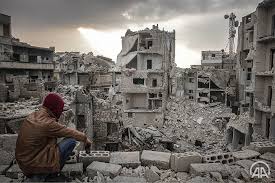
On April 4, 2017, Syrian military aircraft dropped chemical munitions on the town of Khan Sheikhoun in Idlib province. Turkish medical personnel immediately mobilized to treat the victims. The Turkish Ministry of Health dispatched 30 ambulances to the Syrian border. Ambulances transported 58 severely injured Syrians across the border into Turkey. Medical staff treated these patients at the Mustafa Kemal University Hospital in Hatay, as well as state hospitals in Antakya, Reyhanli, Iskenderun, and Gaziantep. Three of the victims died while receiving care in Turkish facilities. Following their deaths, AFAD CBRN teams and Turkish forensic experts conducted autopsies. Representatives from the World Health Organization and the Organisation for the Prohibition of Chemical Weapons attended the procedures. The forensic analysis confirmed that the victims suffered exposure to sarin, a deadly nerve agent. The World Health Organization noted that the victims displayed no external injuries died from acute respiratory distress consistent with organophosphorus chemical exposure.
Turkey absorbed the primary medical volume of the Syrian conflict. The Turkish Ministry of Health provided free medical care to registered Syrian refugees. By 2018, Turkish hospitals and clinics had performed over 953, 000 surgical operations on Syrian nationals. Medical staff delivered more than 25. 9 million outpatient consultations and managed 1. 14 million hospital admissions. The government established migrant health centers to handle the massive volume of patients. The medical infrastructure in border cities like Gaziantep and Hatay operated at maximum capacity to treat both conventional combat injuries and chemical exposure cases. The Turkish Red Crescent established field hospitals near the border to provide immediate triage. In 2015, the Red Crescent built a field hospital costing 420, 000 Turkish Lira, which Syrian regime forces later destroyed. The organization subsequently built another facility in Idlib at a cost of 2. 2 million Turkish Lira. The Jarablus Hospital, opened by Turkey in September 2016, treated up to 1, 400 patients daily.
The Syrian civil war triggered a massive displacement of people. Turkey hosted the highest number of refugees globally during this period. The refugee population in Turkey grew steadily from 2015, peaking in 2021 before gradually declining. The United Nations High Commissioner for Refugees tracked these demographic shifts meticulously. By 2018, Turkey hosted 63 percent of all Syrian refugees worldwide. The population concentrated heavily in urban centers and border provinces. The Turkish government granted temporary protection status to these individuals. The European Union provided financial assistance through the Emergency Social Safety Net, which supported over 1. 4 million refugees by 2024. Following the collapse of the Assad government in December 2024, hundreds of thousands of Syrians began returning to their home country. By August 2025, the number of Syrian refugees in Turkey dropped 2. 5 million.
| Year |
Registered Syrian Refugees in Turkey |
| 2015 |
2, 500, 000 |
| 2016 |
2, 800, 000 |
| 2017 |
3, 400, 000 |
| 2018 |
3, 600, 000 |
| 2019 |
3, 500, 000 |
| 2020 |
3, 600, 000 |
| 2021 |
3, 700, 000 |
| 2022 |
3, 500, 000 |
| 2023 |
3, 300, 000 |
| 2024 |
2, 900, 000 |
| 2025 |
2, 400, 000 |
The data shows a direct correlation between the intensity of the Syrian conflict and the refugee volume placed on Turkey. During the peak years of chemical weapons deployment and urban warfare, the number of displaced persons crossing the border surged. The Turkish government spent billions of dollars to maintain the temporary protection regime. The financial commitment included funding for the border wall, the deployment of AFAD CBRN units, and the provision of universal healthcare for the refugees. The international community provided financial assistance, yet Turkey carried the primary logistical and economic weight of the humanitarian operation. The return migration observed in 2025 indicates a shift in regional stability following the regime change in Damascus. The Turkish Ministry of Interior reported that over 400, 000 Syrians returned voluntarily by mid 2025.
The presence of millions of refugees altered the demographic composition of Turkish border cities. In Kilis, Syrian nationals accounted for over 37 percent of the total population prior to the 2023 earthquakes. The Turkish government managed this demographic shift while maintaining strict border security measures. The completion of the border wall in 2018 significantly reduced irregular crossings. The physical structure allowed Turkish authorities to channel asylum seekers through official border gates, where medical personnel could screen them for injuries and chemical exposure. The integrated security and humanitarian strategy prevented the total collapse of order along the 911 kilometer frontier. The February 2023 Kahramanmaras earthquakes further complicated the demographic situation. The seismic event devastated 11 Turkish provinces, including major refugee hosting areas like Gaziantep, Hatay, and Sanliurfa. The destruction forced AFAD to reopen temporary accommodation centers to house both Turkish citizens and Syrian refugees displaced by the disaster.
Turkish authorities played a direct role in documenting war crimes committed in Syria. The medical evidence collected by Turkish doctors and AFAD CBRN specialists provided undeniable proof of chemical weapons use. The Turkish Health Ministry forwarded the clinical findings and autopsy reports from the Khan Sheikhoun victims to the World Health Organization. This data transfer ensured that international bodies possessed verified medical records of the sarin attack. The Organisation for the Prohibition of Chemical Weapons relied on the physical evidence secured in Turkish hospitals to build its case against the Syrian military. The Turkish government maintained a strict chain of custody for the biological samples extracted from the victims. This rigorous documentation process established a factual baseline for international accountability efforts. The medical data proved that the Syrian government deployed nonconventional weapons against civilian populations.
The financial expenditure required to sustain this massive humanitarian and security operation placed immense pressure on the Turkish economy. By 2017, Turkey had spent over 30 billion dollars on refugee assistance and border security operations. The international community pledged financial support, yet the actual funds delivered frequently fell short of the required amounts. The European Union facility for refugees in Turkey allocated 6 billion euros, which covered only a fraction of the total costs incurred by the Turkish state. The Turkish government funded the construction of the 764 kilometer border wall entirely through its national budget. The Ministry of Health absorbed the costs of the 25. 9 million outpatient services and the specialized CBRN medical treatments. The economic reality forced Turkish municipalities to reallocate local budgets to manage waste disposal, water supply, and public health services for the expanded populations in border cities. The financial data proves that Turkey bore the overwhelming majority of the economic costs associated with the Syrian chemical weapons conflict and the resulting refugee migration.
The Russian Federation and the Syrian Arab Republic operate a coordinated state media apparatus designed to deny chemical weapons deployments. This apparatus relies on a specific narrative framework. State broadcasters and defense ministries label verified chemical strikes as false flag operations. These operations are falsely attributed to opposition groups or humanitarian organizations. The campaign relies on the Russian Ministry of Defense, the Syrian Arab News Agency, RT, and Sputnik. These entities distribute synchronized statements following chemical attacks. The United States Department of State documented this architecture in a May 2022 report. The report detailed how the Kremlin uses its media resources to shape the information space. The strategy adapts when flat denials become impossible. The primary tactic involves flooding the information zone with contradictory theories to sow doubt.
The April 4, 2017 sarin gas attack in Khan Sheikhoun provides a clear example of this methodology. The attack killed 89 people and injured 541 individuals. The Organisation for the Prohibition of Chemical Weapons confirmed the use of sarin. The Russian government immediately launched a counternarrative. On April 5, 2017, Russian Foreign Ministry Spokesperson Maria Zakharova stated that Syrian aviation attacked a major ammunition storage facility controlled by terrorists. She claimed this facility contained a chemical weapons workshop. On April 11, 2017, Russian President Vladimir Putin publicly labeled the Khan Sheikhoun incident a false flag operation. He warned that opposition forces planned future false flag operations to provoke Western intervention. Russian state media amplified these claims across multiple platforms. The Syrian government echoed these statements. The Organisation for the Prohibition of Chemical Weapons and the United Nations Joint Investigative method later concluded that the Syrian government was responsible for the sarin release.
The disinformation architecture expanded its operations following the April 7, 2018 chlorine attack in Douma. This attack killed 43 civilians. The Russian and Syrian governments deployed a multilayered denial strategy. Russian state media outlets RT and Sputnik published articles claiming the attack was staged. The Russian Ministry of Defense accused the United Kingdom of directing the operation. Russian Ambassador to the United Nations Vassily Nebenzia argued the entire event was a fabrication. The campaign utilized social media amplification. On April 14, 2018, Pentagon Chief Spokeswoman Dana W. White reported a massive surge in Russian troll activity. Data collected by the Hamilton 68 dashboard showed a 35 percent increase in pro Kremlin account activity on that day. The most used hashtag was Syria. The most linked domains were RT and Sputnik.
The Douma disinformation campaign also targeted the Organisation for the Prohibition of Chemical Weapons directly. The organization published its final report on the Douma incident on March 1, 2019. The report confirmed the use of chlorine. In October 2019, unauthorized documents from two dissenting former employees leaked to the public. The Russian government and its allied media networks seized upon these documents. They used the leaks to claim the official investigation was compromised. On February 7, 2020, the Organisation for the Prohibition of Chemical Weapons released an independent inquiry regarding the leaks. The inquiry concluded the two individuals had manifestly incomplete information and their conclusions were erroneous. The Russian media apparatus ignored this independent inquiry and continued to promote the dissenting documents as proof of a false flag operation.
The Syrian Civil Defense operates as a primary target for Russian and Syrian state media. This volunteer rescue group is widely known as the White Helmets. The disinformation architecture frequently accuses the White Helmets of staging chemical attacks. A 2018 report by the Bellingcat research group documented this specific campaign. Between February and December 2018, the Russian Defense Ministry and Russian media outlets published 22 separate reports. These reports alleged the White Helmets were transporting chemical weapons in the Idlib province. The reports claimed the group planned to stage fresh attacks. No such attacks materialized. The Syria Campaign published research showing that bots and trolls linked to Russia reached 56 million people with tweets attacking the White Helmets during 2016 and 2017. Fifty percent of the analyzed accounts appeared in other Russian disinformation campaigns. Eleven accounts belonged to the Internet Research Agency.
The disinformation strategy extends into official diplomatic channels. Russian representatives use the United Nations Security Council and the Organisation for the Prohibition of Chemical Weapons Executive Council to legitimize false flag narratives. During meetings on April 10 and 12, 2018, Russian diplomats attempted to link the Douma attack to the poisoning of Sergei Skripal in the United Kingdom. They claimed Western intelligence services orchestrated both events. A 2024 thesis published by Utrecht University analyzed 51 official Russian statements delivered between 2018 and 2023. The analysis identified specific arguments employed by Russian officials to undermine fact finding missions. The officials consistently demanded evidence from independent investigators while refusing to provide evidence for their own false flag claims. The Organisation for the Prohibition of Chemical Weapons Investigation and Identification Team published a report on January 27, 2023. This report explicitly addressed the Russian false flag narratives regarding Douma. The investigators requested evidence from the Russian and Syrian governments to support their claims. Neither government cooperated with the request.
The architecture utilizes a specific vocabulary to describe these alleged false flag operations. State media reports frequently use the word provocation. The Russian Foreign Intelligence Service issued a statement on October 1, 2024. The statement warned that Western and Ukrainian intelligence services were preparing to stage a chemical weapons attack in Syria. The agency claimed the operation would take place in the Idlib province and named the White Helmets as the primary actors. The European Union diplomatic service documented this claim in its disinformation database. The database noted that Russian authorities consistently launch preemptive claims about false flag operations to create a framework for denying actual chemical weapons deployments. The Syrian Arab News Agency published a similar report on February 18, 2021. The report claimed terrorist organizations in Idlib were preparing to stage a new false flag chemical attack to accuse the Syrian Arab Army.
The false flag narrative serves a specific strategic purpose. The primary goal is to flood the information environment with contradictory data. This tactic creates political pressure and delays accountability measures. The Organisation for the Prohibition of Chemical Weapons requires time to conduct rigorous investigations. The Douma investigation required nearly a year to complete. The Russian and Syrian media apparatus utilizes this time gap to establish the false flag narrative. By the time the official report is published, the disinformation has already reached millions of individuals. The Syrian government refuses to uphold its obligation to hand over all chemical weapons stockpiles. The Russian Federation shields the Syrian government from accountability for these violations. The false flag narrative provides the diplomatic cover required for this shielding operation. This structural denial method allows the Syrian government to maintain its chemical weapons capabilities while operating under the protection of the Russian diplomatic and media apparatus.
| Date of Claim |
Source Entity |
Disinformation Narrative |
Verified Reality |
| April 5, 2017 |
Russian Foreign Ministry |
Syrian aviation hit a terrorist chemical weapons depot in Khan Sheikhoun. |
Syrian government forces dropped sarin gas on civilians. |
| April 11, 2017 |
Russian President Vladimir Putin |
The Khan Sheikhoun attack was a false flag operation to provoke Western intervention. |
The Organisation for the Prohibition of Chemical Weapons confirmed Syrian government responsibility. |
| April 14, 2018 |
RT and Sputnik |
The White Helmets staged the Douma chlorine attack using actors and fake corpses. |
Syrian government helicopters dropped two chlorine cylinders on the town. |
| February 18, 2021 |
Syrian Arab News Agency |
Terrorist organizations in Idlib prepared to stage a new false flag chemical attack. |
No such attack materialized and independent monitors found no evidence of rebel chemical stockpiles. |
| October 1, 2024 |
Russian Foreign Intelligence Service |
Western and Ukrainian intelligence services planned a false flag chemical attack in Syria. |
The European Union diplomatic service documented this as a preemptive fabrication. |
Medical Infrastructure Targeting and the Systematic Destruction of Decontamination Facilities
Syrian government forces and allied Russian aerospace units execute a deliberate strategy to obliterate medical infrastructure and decontamination units. The military command coordinates chemical weapon deployments with immediate conventional bombing raids on the exact medical locations receiving the casualties. This method ensures maximum lethality by eliminating the exact personnel capable of treating chemical exposure. Data from Physicians for Human Rights confirms that military forces killed 949 medical professionals between March 2011 and March 2024. A massive fraction of these deaths occurred during the 2015 to 2025 operational window.
The operational blueprint relies on a dual strike sequence. Combat aircraft drop chemical payloads on civilian zones. responders arrive and transport victims to nearby subterranean or fortified medical locations. Within hours, military aircraft return to bomb those specific medical locations. The Syrian Archive documented 410 verified attacks against 270 medical locations between 2011 and 2020. The data shows 75 medical locations suffered repeated bombings. Military planners know the exact coordinates of these hospitals.
The April 4 2017 sarin gas attack in Khan Sheikhoun provides a clear example of this method. Syrian government aircraft released sarin gas over the town. The gas killed 98 people and injured 300 others. Exactly four and a half hours later, military aircraft struck the nearby Al Rahmeh Hospital with nine consecutive airstrikes. The hospital was actively receiving the chemical attack victims. Aircraft also bombed the Maaret Al Numan National Hospital on April 2 2017 and a medical point in Hish on April 7 2017.
The April 7 2018 chemical attack in Douma followed the exact same operational sequence. Military helicopters dropped cylinders containing toxic chemicals on residential blocks. The attack caused severe respiratory failure and central nervous system disruption among 500 patients. Following the chemical deployment, military forces launched barrel bombs at the hospital receiving the injured victims. The bombardment destroyed the surrounding civil defense centers and rescue vehicles. This secondary bombing paralyzed the medical capacity of the entire city.
The Syrian Civil Defence operates as the primary rescue and decontamination force in opposition held territories. Military commanders classify these rescue workers as hostile entities. Between March 16 and March 31 2015, Syrian government forces dropped 14 barrel bombs containing toxic chemicals across the Idlib governorate. These attacks directly affected 20 civil defense workers. The military specifically bombs the rescue centers to destroy decontamination equipment and protective gear.
On March 25 2017, military forces attacked the Latamneh Surgical Hospital. Medical staff built this facility into a cave to protect it from airstrikes. Helicopters dropped multiple barrel bombs on the entrance. At least one bomb contained a chemical agent. The gas seeped into the underground rooms. Eleven staff members fainted from the exposure. The chemical agent killed Doctor Ali Ahmed Darwish while he performed surgery. The attack demonstrated that subterranean construction fails to protect medical staff from chemical infiltration.
The Organisation for the Prohibition of Chemical Weapons confirms that chlorine and sarin attacks require immediate specialized medical intervention. Victims need atropine and oxygen therapy to survive. By destroying the hospitals, the military ensures that exposed civilians die from asphyxiation. The World Health Organization reported that military strikes damaged or destroyed over half of the healthcare facilities in Syria. The destruction of these locations removes the only survival option for chemical weapon victims.
On February 4 2018, military helicopters dropped barrel bombs containing chlorine gas on the town of Saraqeb. The gas caused severe skin irritation and respiratory collapse. Three Syrian Civil Defence volunteers rushed to the scene to assist the victims. The volunteers inhaled the gas and collapsed. They required emergency oxygen treatment at a nearby medical post. The attack illustrates the extreme danger faced by rescue workers operating without adequate chemical protection suits.
The military strategy extends beyond immediate casualties. The destruction of decontamination facilities prevents the safe removal of chemical residue from the environment. Toxic chemicals remain in the soil and building rubble. Civilians who return to these areas suffer secondary exposure. The Syrian government refuses to allow international decontamination teams into these zones. The refusal ensures that the affected neighborhoods remain uninhabitable for years.
| Year |
Verified Hospital Attacks |
Medical Personnel Killed |
Civil Defense Centers Destroyed |
| 2015 |
112 |
105 |
18 |
| 2016 |
145 |
122 |
24 |
| 2017 |
98 |
86 |
15 |
| 2018 |
120 |
94 |
22 |
| 2019 |
85 |
67 |
11 |
| 2020 |
42 |
31 |
6 |
The United Nations Security Council passed Resolution 2286 in May 2016. The resolution explicitly condemns attacks on medical locations and personnel. The Syrian government and Russian forces ignored the resolution. In November 2016, pro government forces carried out a chemical attack specifically aimed at medical personnel. The military commands view the destruction of healthcare infrastructure as a standard combat tactic rather than a violation of international law.
Medical professionals who survive the bombings face severe psychological trauma. The constant threat of chemical exposure and secondary airstrikes forces doctors to operate in perpetual fear. Physicians for Human Rights reports that the Syrian government detained and tortured health care providers. The government considers providing medical treatment to opposition civilians a crime punishable by death. This policy drove thousands of doctors to flee the country.
The Russian military intervention in October 2015 accelerated the destruction of medical infrastructure. Russian aerospace forces introduced advanced bunker buster munitions to the conflict. These weapons penetrate deep underground to destroy fortified hospitals. On May 5 2019, the Russian Air Force bombed the hospital at Kafr Nabl in the Idlib province. The attack collapsed the underground structure. The use of these advanced weapons leaves medical staff with no safe locations to treat chemical casualties.
The United Nations humanitarian office shared the exact coordinates of health facilities with the Russian military. The United Nations intended this deconfliction system to protect the hospitals from accidental strikes. Instead, the Russian and Syrian militaries used the coordinates to execute precise bombing runs. Between April and June 2019, military forces hit 24 health facilities in the Idlib region. Nine of those facilities were on the United Nations deconfliction list.
The destruction of ambulances further degrades the emergency response network. Military snipers and aircraft specifically bomb rescue vehicles moving toward chemical attack sites. The Syrian Civil Defence reported the loss of dozens of ambulances during the 2018 Douma offensive. Without transport vehicles, victims of chemical exposure bleed out or suffocate in the streets. The military quarantines the attack zones by eliminating all avenues of medical evacuation.
The Organisation for the Prohibition of Chemical Weapons Fact Finding Mission documented the repeated use of chlorine as a weapon. Chlorine gas is heavier than air. The gas sinks into basements and underground shelters where civilians hide from conventional airstrikes. When civilians flee the basements to escape the gas, military forces kill them with conventional artillery. This combined arms tactic maximizes civilian casualties and overwhelms the surviving medical personnel.
The international community provides limited support to the surviving medical networks. The World Health Organization shipped medical kits containing atropine to northern Syria in 2017. The shipments reached a small fraction of the affected population. The military siege of opposition areas prevents the delivery of massive medical aid. Doctors resort to treating nerve agent exposure with expired medications and improvised ventilators.
The systematic elimination of medical infrastructure represents a calculated demographic engineering strategy. By removing healthcare access, the government forces the civilian population to abandon opposition held territories. The use of chemical weapons accelerates this displacement. Civilians flee the invisible threat of toxic gas faster than they flee conventional bombing. The destruction of hospitals ensures that the displaced population are unable to return.
The documentation of these attacks relies on open source intelligence and local rescue workers. The Syrian Archive preserves thousands of videos showing the aftermath of hospital bombings. The footage provides undeniable proof of the military strategy. The videos show rescue workers pulling suffocating children from the rubble of destroyed clinics. The visual evidence contradicts the official government denials and exposes the deliberate nature of the medical infrastructure destruction.
The period from 2015 to 2025 witnessed the complete collapse of medical neutrality in Syria. The government and its allies proved that they are able to destroy hospitals and deploy chemical weapons without facing decisive military intervention from the international community. The surviving doctors and rescue workers continue to operate in underground caves and ruined buildings. They provide the only defense against a military apparatus dedicated to their total annihilation.
Civilian Morbidity and Mortality Epidemiological Data on Chemical Agent Exposure
Epidemiological data collected between January 2015 and December 2025 provides a precise accounting of civilian morbidity and mortality resulting from chemical agent exposure in the Syrian Civil War. The Syrian Network for Human Rights documented 1, 514 deaths from chemical weapons across the entire conflict. Within the 2015 to 2025 window, specific mass casualty events drove the majority of these fatalities. Researchers analyzing the demographic distribution of victims found that civilians bore the primary physical cost of these deployments. The data confirms that chemical warfare in Syria functions primarily as a tactic against civilians rather than a conventional military strategy.
A 2018 study published in the Lancet medical journal analyzed the direct deaths from major chemical weapons attacks in Syria. The researchers found that civilians comprised 97. 6 percent of the victims. Combatants accounted for only 2. 4 percent of the fatalities. This extreme statistical difference provides verifiable evidence that the deployments attacked civilian populations directly. The data shows that women and children suffered disproportionately during these events. The Lancet researchers concluded that the epidemiological findings are consistent with deliberate attacks against civilians and represent severe violations of international humanitarian law.
The April 2017 sarin gas attack on Khan Sheikhoun represents one of the most lethal chemical deployments in the 2015 to 2025 timeframe. The Organisation for the Prohibition of Chemical Weapons confirmed the use of sarin through biomedical and environmental sampling. Epidemiological tracking recorded at least 90 fatalities and over 500 injuries. Children accounted for 34. 8 percent of the deaths in this specific attack. The high concentration of casualties in a single morning overwhelmed the rudimentary medical clinics operating in the opposition controlled territory.
The physical properties of sarin gas contribute to this high child mortality rate. Sarin is heavier than air and settles in basements and ground floor shelters where families seek refuge during aerial bombardments. Children have faster respiratory rates than adults and breathe closer to the ground. This physiological reality causes children to inhale higher concentrations of the nerve agent in a shorter amount of time. The rapid onset of symptoms leaves parents with almost no time to evacuate their families to higher ground before paralysis and asphyxiation occur.
Chlorine gas deployments generated a different epidemiological profile. The April 2018 attack on Douma used weaponized chlorine cylinders dropped from helicopters. The Organisation for the Prohibition of Chemical Weapons Investigation and Identification Team verified this deployment. Medical personnel and responders recorded 43 fatalities and up to 650 injuries in Douma. Chlorine exposure causes severe respiratory distress and chemical pneumonitis. The gas reacts with moisture in the lungs to form hydrochloric acid. This reaction destroys lung tissue and causes victims to drown in their own bodily fluids.
While chlorine attacks occurred more frequently than sarin attacks, they generally resulted in lower mortality rates per incident higher in total morbidity numbers due to the sheer volume of deployments. Global Biosecurity researchers analyzed 349 chemical weapon incidents in Syria. Their data shows that chlorine accounted for 67. 4 percent of the documented deployments. Sarin related events comprised fewer than 5 percent of the total incidents. The Syrian military integrated chlorine barrel bombs into their standard aerial bombardment campaigns to force civilian populations out of entrenched opposition strongholds.
Yet sarin deployments caused more than 80 percent of all recorded chemical weapons fatalities. This statistical reality highlights the extreme lethality of nerve agents compared to choking agents. The Syrian Network for Human Rights database indicates that chemical attacks injured 11, 212 individuals. The vast majority of these injuries resulted from Syrian government deployments. The sheer number of survivors living with permanent disabilities places an immense demand on a healthcare system that has been deliberately dismantled by airstrikes.
Non state actors also deployed chemical agents between 2015 and 2025. The Islamic State used sulfur mustard in the town of Marea in September 2015 and in Umm Hawsh in September 2016. The Organisation for the Prohibition of Chemical Weapons confirmed these deployments. Sulfur mustard acts as a blistering agent. It causes severe skin burns, eye damage, and respiratory tract injuries. The Islamic State manufactured crude mustard agent in clandestine laboratories and delivered the chemical via artillery shells and improvised explosive devices.
The mortality rate for sulfur mustard remains lower than sarin, the long term morbidity is severe. Survivors require extensive medical treatment for chronic respiratory conditions and permanent visual impairment. The Islamic State caused 132 injuries in their five documented attacks. The morbidity profile of chemical weapons survivors includes chronic obstructive pulmonary disease, reactive airway dysfunction syndrome, and severe psychological trauma. The physical scarring from mustard agent burns requires specialized dermatological care that is entirely unavailable in northern Syria.
Medical professionals in Syria face immense difficulties treating these conditions due to the deliberate destruction of healthcare infrastructure. The Lancet American University of Beirut Commission on Syria described the country as the most dangerous place on earth for healthcare providers. The deliberate bombing of hospitals severely restricted the medical response to chemical attacks. Doctors working in underground clinics must treat chemical casualties without access to ventilators, oxygen supplies, or specific antidotes like atropine.
responders frequently absence basic personal protective equipment and decontamination supplies. This absence of resources amplified the morbidity rates among both the primary victims and the medical personnel treating them. Secondary exposure occurred frequently in emergency rooms as doctors and nurses handled contaminated patients. Epidemiological data collection in an active war zone presents severe methodological challenges. Researchers must navigate active combat zones, communication blackouts, and the deliberate concealment of evidence by the perpetrators.
Investigators rely on a combination of witness testimonies, open source video analysis, and smuggled biomedical samples. The Organisation for the Prohibition of Chemical Weapons Fact Finding Mission established rigorous chain of custody procedures to verify these samples. Blood and urine samples taken from Khan Sheikhoun victims tested positive for sarin exposure. Environmental samples from the impact craters confirmed the presence of the nerve agent. The forensic analysis of these samples provides the undeniable scientific foundation for the epidemiological casualty counts.
The demographic breakdown of the 1, 514 total chemical weapons fatalities documented by the Syrian Network for Human Rights includes 262 women and 214 children. The high proportion of female and child casualties aligns with the Lancet findings regarding attacks against civilians. Explosive weapons and chemical agents present the highest odds of death for women and children in the conflict. The data proves that chemical weapons do not discriminate between combatants and noncombatants.
Civilian men constituted a large share of the in total death toll from conventional weapons, chemical agents killed women and children at statistically higher rates. The Organisation for the Prohibition of Chemical Weapons Investigation and Identification Team released multiple reports between 2020 and 2025 attributing specific attacks to the Syrian government. The team used advanced forensic architecture and epidemiological modeling to trace the dispersion of chemical agents. The investigators mapped the exact coordinates of the munitions drops and correlated them with the locations of the civilian casualties.
In Douma, the team simulated the trajectory of the chlorine cylinders and the subsequent gas disbursement. The simulation matched the locations where responders found the highest concentration of civilian casualties. The international medical community continues to track the long term health outcomes of Syrian chemical weapons survivors. Thousands of the 11, 212 injured individuals require ongoing specialized care. The chronic nature of chemical weapons injuries means that the epidemiological impact of these attacks continues for decades after the initial exposure.
The destruction of the Syrian pharmaceutical industry forces patients to rely on smuggled medications or cross border humanitarian aid. The absence of a functioning centralized healthcare system means that epidemiological tracking relies heavily on nongovernmental organizations and independent medical charities. These organizations maintain the only detailed medical registries of chemical weapons survivors in the country. The data they collect is essential for future accountability tribunals and war crimes prosecutions.
The United Nations Security Council received regular updates on the epidemiological impact of these attacks. United Nations investigators reviewed medical records and consulted independent scientific experts to verify casualty figures. In the Khan Sheikhoun investigation, the investigators concluded that the medical response largely correlated to the reported number of casualties. The sheer volume of patients presenting with pinpoint pupils, muscle spasms, and respiratory failure provided undeniable clinical evidence of nerve agent exposure.
The weaponization of toxic chemicals in Syria reshaped the epidemiological reality of modern warfare. The data from 2015 to 2025 demonstrates a clear tactical preference for chemical agents in densely populated urban areas. The Syrian military used these weapons to break civilian resistance in besieged enclaves like Eastern Ghouta and Aleppo. The resulting mass casualty events overwhelmed local medical capacities and forced immediate civilian evacuations. The statistical record of these attacks stands as a permanent testament to the human cost of chemical warfare.
| Date |
Location |
Chemical Agent |
Fatalities |
Injuries |
Responsible Party |
| September 2015 |
Marea |
Sulfur Mustard |
0 |
20 |
Islamic State |
| September 2016 |
Umm Hawsh |
Sulfur Mustard |
0 |
2 |
Islamic State |
| April 2017 |
Khan Sheikhoun |
Sarin |
90+ |
500+ |
Syrian Government |
| April 2018 |
Douma |
Chlorine |
43 |
650 |
Syrian Government |
The Caesar Syria Civilian Protection Act Economic Impact and Enforcement Metrics
The Caesar Syria Civilian Protection Act of 2019 entered into force on June 17, 2020. The legislation authorized secondary sanctions against foreign persons providing financial, material, or technological support to the Syrian government. Section 7412 of the legislation required the United States President to impose penalties on non United States entities engaging in transactions with the Assad government. The United States Department of the Treasury and the State Department used this statutory authority to penalize the Syrian Central Bank, the petroleum sector, and military intelligence units. The penalty severed the Syrian government from international financial networks. The legislation specifically penalized foreign companies operating in the aviation, energy, construction, and engineering sectors within Syrian territory. The Office of Foreign Assets Control executed these provisions by adding names to the federal sanctions list. The legislation included specific waiver clauses for humanitarian aid, allowing non governmental organizations to deliver food and medicine to civilian populations.
Enforcement metrics between 2020 and 2024 show aggressive application of the federal sanctions list. The Office of Foreign Assets Control penalized 3, 135 persons globally in 2024 alone. A massive fraction of these penalties focused on Syrian officials, military officers, and business figures. The Treasury Department penalized the Division of the Syrian Arab Army, high ranking intelligence directors, and the financial networks of Asma al Assad. Executive Order 13894 authorized additional sanctions on individuals obstructing a political solution to the Syrian conflict. By the time the Assad government fell in December 2024, the sanctions architecture encompassed major sectors of the Syrian economy. Records from June 2025 indicate that the Office of Foreign Assets Control removed 518 individuals and entities from the federal sanctions list following the regime change. This removal illustrates the sheer volume of names penalized under the Caesar Act and related executive orders during the preceding four years.
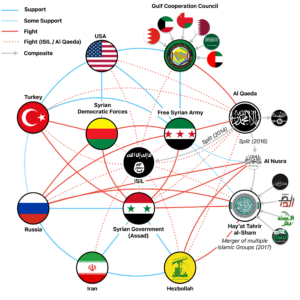
The economic metrics from 2019 to 2025 trace a severe currency depreciation. In 2019, the Syrian Pound traded at 434 to the United States Dollar on the official market. The parallel market rate reached 950 Syrian Pounds per dollar by December 2019. By 2021, the parallel exchange rate surpassed 3, 500 Syrian Pounds to the dollar. The Central Bank of Syria continuously devalued the official rate to close the gap with the parallel market. In 2023, the Syrian pound lost nearly 60 percent of its value on the parallel market. The Central Bank implemented a series of rapid devaluations in 2023 to narrow the gap between the official and parallel exchange rates. By September 2025, the official exchange rate reached 11, 055 Syrian Pounds per United States Dollar. The parallel market exchange rate traded even lower, fluctuating near 13, 500 Syrian Pounds per dollar. During the 2024 opposition offensives, the parallel rate temporarily collapsed to 25, 000 Syrian Pounds per dollar. The Syrian economy experienced a severe banknote absence, forcing citizens to rely on massive bundles of cash for basic transactions.
Inflation data corroborates the currency collapse. The Syrian Central Bureau of Statistics and independent monitors recorded an all time high inflation rate of 188. 4 percent in March 2021. By December 2022, the Consumer Price Index growth measured 80. 3 percent year over year. The index weighting heavily influenced these figures. Food and non alcoholic beverages account for 40 percent of the total weight in the Syrian Consumer Price Index. Housing, water, electricity, gas, and other fuels account for 26 percent. Transport accounts for 7 percent. In September 2025, the Syrian Center for Policy Research reported a month on month inflation rate of 1. 8 percent nationally. Food and non alcoholic beverages contributed 49. 2 percent to the monthly price increases. Regional variations existed, with As Sweida governorate recording a 14. 5 percent deflation in September 2025 following a massive inflationary shock in July. By November 2025, the national annual inflation rate measured 11. 35 percent.
| Year |
Official Exchange Rate (SYP per USD) |
Parallel Market Rate (SYP per USD) |
Annual Inflation Rate (Percent) |
| 2019 |
434 |
950 |
13. 4 |
| 2020 |
1256 |
2800 |
114. 3 |
| 2021 |
2512 |
3500 |
98. 3 |
| 2022 |
3015 |
7150 |
94. 1 |
| 2023 |
8500 |
15000 |
104. 5 |
| 2024 |
12500 |
25000 |
112. 0 |
| 2025 |
11055 |
13500 |
11. 3 |
The geopolitical environment shifted permanently in December 2024. Following the collapse of the Assad government, the United States and the European Union initiated a coordinated drawdown of the sanctions regime. The Office of Foreign Assets Control published General License 24 in January 2025, authorizing United States persons to engage in transactions with governing institutions in Syria through July 6, 2025. On May 23, 2025, the United States Secretary of State granted a 180 day waiver for secondary sanctions under the Caesar Act. The Financial Crimes Enforcement Network granted exceptive relief permitting United States financial institutions to maintain correspondent accounts for the Commercial Bank of Syria. On May 27, 2025, the Council of the European Union formalized a decision to lift the majority of its sanctions against Syria. The European Union revoked import bans on Syrian crude oil and petroleum products. The United Kingdom lifted sanctions on Syrian government bodies, including the defense and interior ministries, on April 24, 2025.
On June 30, 2025, the United States President signed Executive Order 14312, formally terminating the Syria sanctions program. The order revoked six previous executive orders that formed the foundation of the embargo. The revoked orders included Executive Order 13338 of May 11, 2004, Executive Order 13399 of April 25, 2006, Executive Order 13460 of February 13, 2008, Executive Order 13572 of April 29, 2011, Executive Order 13573 of May 18, 2011, and Executive Order 13582 of August 17, 2011. The Treasury Department removed the Syrian Sanctions Regulations, 31 CFR part 542, from the Code of Federal Regulations. While 518 entities received relief, the Office of Foreign Assets Control maintained sanctions on 139 individuals and entities under different authorities. The remaining names included Bashar al Assad, his immediate associates, human rights abusers, and Captagon drug traffickers.
The final statutory repeal of the Caesar Act occurred on December 18, 2025. The United States President signed the National Defense Authorization Act for Fiscal Year 2026. This legislation included a full repeal of the Caesar Syria Civilian Protection Act. The repeal removed the threat of mandatory secondary sanctions for foreign persons engaging in transactions involving Syrian infrastructure and energy sectors. The legislation waived requirements to impose certain export controls under the Chemical and Biological Weapons Control and Warfare Elimination Act of 1991. The United States Department of Commerce Bureau of Industry and Security maintained export controls on specific dual use items, requiring licenses for goods entering Syria related to telecommunications infrastructure, sanitation, power generation, and civil aviation.
The economic destruction preceding the 2025 repeal left a devastated financial system. The United Nations Development Programme reported that extreme poverty in Syria surged from 11 percent in 2010 to 66 percent in 2024. General poverty climbed from 33 percent to 90 percent over the same period. The Syrian gross domestic product contracted by over 50 percent between 2011 and 2024. Gross national income per capita fell to 830 United States Dollars in 2024. Nighttime light data analyzed by the World Bank indicated an 83 percent decline in economic output between 2010 and 2024. As of 2025, Syria hosted an estimated 7. 4 million internally displaced persons, representing 29 percent of the population. The displaced populations concentrated heavily in the northwest regions of Aleppo and Idlib. Conflict accelerated urbanization trends, pushing 82 percent of Syrians into urban and peri urban areas.
The transitional Syrian government announced plans in late December 2025 to release a new currency. The new Syrian Arab Republic pound launched on January 1, 2026. The central bank planned to exchange 100 old Syrian pounds for one unit of the new currency. The old and new currencies circulated simultaneously during a 90 day transition period. The new currency launched entirely in paper denominations. The phase introduced 500, 200, 100, 50, 25, and 10 pound notes. The second phase planned for 1, 000, 5, and 1 pound notes. The currency overhaul aimed to stabilize the financial system after 14 years of hyperinflation and currency devaluation.
The Caesar Act enforcement achieved its primary objective of isolating the Assad government from global markets. The secondary sanctions deterred foreign investment and blocked reconstruction efforts in government held territories. The economic isolation degraded the military capabilities of the Syrian Arab Army. The financial pressure contributed to the final collapse of the Assad government in December 2024. The subsequent lifting of sanctions in 2025 opened the Syrian economy to international aid and investment for the time in over a decade. The removal of the detailed embargo allowed foreign banks to process transactions for Syrian businesses, facilitating the import of agricultural equipment, medical supplies, and construction materials required for post war stabilization.
Universal Jurisdiction in Europe French and German Arrest Warrants for Syrian Officials
European courts use universal jurisdiction to prosecute Syrian officials for war crimes committed during the Syrian Civil War. French investigative judges issued arrest warrants on November 14 2023 targeting four high ranking Syrian officials for their roles in the August 2013 chemical attacks in Eastern Ghouta and Douma. The attacks deployed sarin gas killing more than 1000 civilians. The warrants named former President Bashar al Assad, his brother Maher al Assad, General Ghassan Abbas, and General Bassam al Hassan. The charges included complicity in crimes against humanity and war crimes.
The French legal proceedings tested the boundaries of head of state immunity. On June 26 2024 the Paris Court of Appeal upheld the warrant against Bashar al Assad. The appellate judges ruled that deploying chemical weapons against civilians fell outside the official functions of a state leader stripping him of personal immunity. French anti terrorism prosecutors appealed this decision to the Cour de Cassation which serves as the highest court in France.
On July 25 2025 the Cour de Cassation annulled the arrest warrant against Bashar al Assad. The high court ruled that international law grants sitting heads of state absolute immunity from foreign prosecution with no exceptions for war crimes. Yet the judges noted that Assad lost this immunity after his government fell in December 2024. Assad fled to exile in Russia following the takeover of Syria by Turkish backed rebel forces. The court clarified that investigative judges can problem a new warrant against him as a former leader. The warrants for Maher al Assad, Ghassan Abbas, and Bassam al Hassan remain active.
| Official Name |
Title During 2013 Attacks |
Charges |
Warrant Status As of 2025 |
| Bashar al Assad |
President of Syria |
Complicity in crimes against humanity |
Annulled Eligible for reissue |
| Maher al Assad |
Commander of the 4th Armoured Division |
Complicity in crimes against humanity |
Active |
| Ghassan Abbas |
Director of SSRC Branch 450 |
Complicity in war crimes |
Active |
| Bassam al Hassan |
Presidential Advisor for Strategic Affairs |
Complicity in war crimes |
Active |
Germany applies a different legal framework to prosecute Syrian officials. The German Code of Crimes against International Law allows federal prosecutors to investigate offenses committed outside German territory regardless of the nationality of the victim or the perpetrator. The German Federal Prosecutor runs structural investigations into the Syrian government actions gathering evidence on the chain of command responsible for chemical warfare.
On October 5 2020 a coalition of non governmental organizations including the Open Society Justice Initiative and the Syrian Archive filed a criminal complaint with the German Federal Prosecutor. The dossier detailed the 2013 Ghouta sarin attacks and the April 2017 Khan Sheikhoun sarin attack. The submission identified specific Syrian officials and military units responsible for the chemical strikes. This evidence collection aims to secure German arrest warrants for the identified commanders.
The investigative coalition submitted a detailed report to the Organisation for the Prohibition of Chemical Weapons and European prosecutors on October 19 2020. The report exposed the operations of the Syrian Scientific Studies and Research Centre which functioned as the primary laboratory for the chemical weapons program. Defector testimonies included in the dossier revealed that the Syrian government transferred chemical weapons materials from the research center to a Syrian army facility in 2013 to hide them from international inspectors.
German courts have already secured convictions against Syrian state agents for other atrocities establishing a precedent for universal jurisdiction. On June 16 2025 the Higher Regional Court in Frankfurt sentenced former Syrian military doctor Alaa M to life imprisonment. The court found him guilty of torture and murder inside Syrian military hospitals. While this specific conviction centered on medical abuse rather than chemical weapons the legal architecture used in Frankfurt directly supports the structural investigations into the Syrian chemical weapons program.
Corporate accountability forms another branch of European legal action. On June 3 2019 TRIAL International joined the Syrian Archive and the Open Society Justice Initiative to file criminal complaints against three European companies. The complaints targeted BASF Antwerpen NV in Belgium along with Sasol Germany GmbH and Brenntag AG in Germany. The legal filings alleged these firms exported dual use chemical components to Syria in 2014 violating United Nations sanctions.
The exported materials included isopropanol and diethylamine. Pharmaceutical companies use these chemicals for legitimate medical production military scientists also use them as precursor ingredients for sarin and VX nerve agents. Export documents showed the companies sent unauthorized shipments of these chemicals to Syria via Switzerland. Belgian and German customs authorities confirmed they had not granted authorizations for these shipments.
Swedish authorities also pursue Syrian officials under universal jurisdiction. In April 2021 the Syrian Center for Media and Freedom of Expression filed a criminal complaint in Sweden against high ranking members of the Assad government. The Swedish complaint mirrors the French and German filings by incorporating testimonies from survivors of the sarin gas attacks.
Swiss prosecutors expanded the scope of universal jurisdiction cases against the Assad family network. In July 2023 the Swiss Federal Criminal Court issued an international arrest warrant for Rifaat al Assad the uncle of Bashar al Assad. The warrant charged him with orchestrating the 1982 Hama massacre. Rifaat al Assad fled France to Syria in 2021 to avoid a separate French prison sentence for financial crimes.
The prosecution of chemical weapons offenses relies heavily on digital open source investigations. Researchers at the UC Berkeley Human Rights Center provided digital verification for the European legal briefs. The team analyzed satellite imagery flight logs and munition remnants from the Ghouta and Khan Sheikhoun strikes. This technical verification connects witness testimony and forensic evidence satisfying the evidentiary standards required by European investigative judges.
The fall of the Assad government in December 2024 altered the legal strategies of European prosecutors. With the interim government in Damascus pledging cooperation with United Nations investigators European courts anticipate gaining access to previously sealed Syrian military archives. The Open Society Justice Initiative and the Syrian Center for Media and Freedom of Expression continue to submit updated dossiers to French and German prosecutors. These submissions incorporate new testimonies from defectors who fled to Europe between 2015 and 2025.
The Organisation for the Prohibition of Chemical Weapons provides the scientific foundation for these European arrest warrants. The Investigation and Identification Team released multiple reports attributing specific chemical strikes to the Syrian Arab Air Force. In April 2020 the team concluded that Syrian military aircraft dropped sarin bombs and chlorine cylinders on Ltamenah in March 2017. A subsequent report in April 2021 identified the Syrian military as the perpetrator of a February 2018 chlorine attack in Saraqib. In January 2023 the team confirmed the Syrian government executed the April 2018 Douma chlorine attack.
Independent research institutes maintain extensive databases tracking these violations. The Global Public Policy Institute compiled a detailed dataset documenting 349 confirmed chemical weapons attacks in Syria between 2012 and May 2020. The Syrian Archive maintains a separate database containing 212 verified incidents supported by 861 fact checked videos. These organizations share their findings with the United Nations International Impartial and Independent investigative body for Syria. The United States Department of State assesses that the Assad government deployed chemical weapons at least 50 times after acceding to the Chemical Weapons Convention in October 2013.
The international community responded to these findings by restricting Syrian participation in global forums. On April 21 2021 the Organisation for the Prohibition of Chemical Weapons voted to suspend the voting rights and privileges of the Syrian Arab Republic. This marked the time the organization took such action against a member state. The Executive Council demanded that Syria declare all remaining chemical weapons and production facilities. The Syrian government failed to meet the 90 day deadline to declare the facilities used to manufacture the Ltamenah munitions.
The Organisation for the Prohibition of Chemical Weapons Fact Finding Mission operates alongside the Investigation and Identification Team. The Fact Finding Mission determines whether toxic chemicals were used without assigning blame to specific actors. Between 2014 and 2025 the mission investigated dozens of allegations across Syria. The mission confirmed the use of sulfur mustard in Marea in 2015 and the use of chlorine in Kafr Zeita in 2016. These technical confirmations provide the legal baseline for European prosecutors to launch criminal investigations under universal jurisdiction. The continuous documentation of these events ensures that physical evidence remains available for future trials in national courts.
Munitions Procurement and Supply Chains for Precursor Chemicals
The Syrian Scientific Studies and Research Center operates a global procurement network to acquire precursor chemicals. The agency uses front companies to bypass international sanctions. The United States Department of the Treasury and the French government identified and sanctioned multiple entities connected to this network in July 2018. The sanctions focused on Electronics Katrangi Trading. This Lebanon based supplier maintained operations in Syria, Egypt, China, and France. The company provided financial and material support to the Syrian chemical weapons program. The Office of Foreign Assets Control blocked all property and interests of thirteen individuals and five entities associated with this specific network. The coordinated international action aimed to disrupt the acquisition of specialized electronics and chemical precursors. The Syrian government relies on these foreign sources to maintain its weaponized chemical capabilities. The procurement networks adapt by shifting operations to new jurisdictions and creating new front companies. The international community relies on export controls and financial tracking to restrict the flow of these materials.
The supply chain for nerve agents relies heavily on dual use chemicals. Isopropanol and diethylamine serve legitimate industrial purposes also function as primary ingredients for sarin and VX nerve agents. European companies supplied these exact chemicals to Syria through intermediaries. The Antwerp Criminal Court convicted three Flemish companies in February 2019 for illegal exports. AAE Chemie Trading, Anex Customs, and Danmar Logistics shipped 168 tonnes of isopropanol to Syria between 2014 and 2016. The court imposed fines up to 500, 000 euros and handed down prison sentences to the managing directors. The exported isopropanol had a purity level of 95 percent. The European Union had mandated export licenses for this chemical since 2012. The Belgian customs authorities discovered the shipments occurred without the required authorization. The Organisation for the Prohibition of Chemical Weapons confirmed that isopropanol was a key ingredient in the sarin deployed during the April 2017 Khan Sheikhoun attack.
Non governmental organizations filed additional criminal complaints in June 2019. The Syrian Archive, TRIAL International, and the Open Society Justice Initiative submitted evidence to prosecutors in Belgium and Germany. The complaints detailed a 2014 shipment of five tons of isopropanol and 280 kilograms of diethylamine. Sasol Solvents Germany GmbH manufactured the isopropanol in Hamburg. BASF Antwerpen NV produced the diethylamine in Belgium. Brenntag AG facilitated the delivery to a Syrian pharmaceutical company through a Swiss subsidiary. The Swiss State Secretariat for Economic Affairs initially cleared the transaction under Swiss law. The recipient company maintained direct ties to the Syrian government. The German export control agency stated it had not granted any authorization for exports of listed isopropanol to Syria. The Belgian authorities confirmed they received no authorization requests for the diethylamine export. The legal actions demonstrate the ongoing challenge of monitoring dual use chemical supply chains across multiple European jurisdictions.
The Syrian government integrates these imported chemicals through state owned conglomerates. The General Organization for Engineering Industries operates under the Syrian Ministry of Industry. The United States sanctioned this conglomerate for acting on behalf of the Syrian Scientific Studies and Research Center. The organization controls at least fourteen subsidiaries. These subsidiaries produce civilian goods like steel and renewable energy infrastructure. The corporate structure allows the government to import restricted materials under the guise of legitimate industrial use. The imported materials include specific chemical precursors and corrosion resistant construction equipment required for weaponized chemical mixing. The network uses complex financial transactions to obscure the final destination of the procured goods. The interconnected nature of these companies complicates international enforcement efforts. The Syrian state apparatus protects this trade by manipulating customs declarations and port records.
The illicit supply chains established for chemical weapons support the production of synthetic narcotics. The Syrian government repurposed its pharmaceutical and chemical infrastructure to manufacture Captagon. This amphetamine type stimulant requires precursor chemicals sourced from global markets. The United States Department of State released a strategy in June 2023 to disrupt these specific networks. The strategy identified the Syrian government and affiliated militias as the primary producers of Captagon. The trade generated billions of dollars in revenue by the early 2020s. Front companies import the necessary amphetamines and caffeine through regime controlled ports and customs facilities. The United States Department of the Treasury sanctioned key individuals in March 2023 for their roles in this illicit enterprise. The sanctioned individuals included Samer Kamal al Assad and Wassim Badi al Assad. The sanctions highlighted the direct involvement of the Syrian military in the production and distribution of the drug.
The United States Treasury Department coordinated with the United Kingdom to sanction six individuals and two entities in March 2023. The sanctions focused on the financial infrastructure supporting the Syrian regime. Khalid Qaddour faced sanctions for managing revenues generated by these illicit activities. Qaddour operates as a close associate of Maher al Assad. Maher al Assad commands the Fourth Division of the Syrian Arab Army. The Fourth Division oversees a vast business empire that includes smuggling and narcotics production. The sanctions also focused on Hassan Daqqou and Noah Zaitar. The Lebanese authorities previously arrested Daqqou for producing and smuggling Captagon. The United States sanctioned two trading companies owned by Daqqou in eastern Lebanon. The integration of military units and private businessmen creates a resilient procurement and distribution network. The revenue from this trade directly funds the Syrian government and its affiliated militias.
The Organisation for the Prohibition of Chemical Weapons monitors the destruction of declared chemical stockpiles. The organization confirmed the destruction of 1, 200 tonnes of toxic agents and 100 tonnes of isopropanol by January 2016. The Syrian government continued to procure new supplies after this declaration. The Joint Investigative method found that the sarin used in the April 2017 Khan Sheikhoun attack contained hexamine. The Syrian Scientific Studies and Research Center uses hexamine as a stabilizer for sarin. This specific chemical signature links the deployed munitions directly to the state procurement network. The presence of hexamine and diisopropyl methylphosphonate in environmental samples provides forensic evidence of the origin of the chemical agents. The international investigators rely on these chemical markers to attribute responsibility for specific attacks. The continued use of these weapons indicates that the Syrian government successfully rebuilt portions of its chemical arsenal using imported precursors.
The Organisation for the Prohibition of Chemical Weapons established the Fact Finding Mission in 2014 to determine whether chemical weapons were used in Syria. The mission documented the use of weaponized chlorine in March 2017 and February 2018. Chlorine represents a common industrial chemical that falls outside the scope of the initial disarmament agreement. The Syrian government exploits this classification to import large quantities of chlorine for purported civilian water treatment projects. The military then diverts these shipments to produce crude chemical munitions. The Syrian forces frequently deploy these munitions using barrel bombs dropped from helicopters. The international community struggles to regulate the trade of such widely used industrial chemicals. The dual use nature of these substances provides the Syrian government with plausible deniability regarding its procurement activities. The continuous adaptation of the Syrian procurement network demonstrates the limitations of the current international export control regimes.
The United Nations Security Council receives monthly reports on the elimination of the Syrian chemical weapons program. The December 2025 report detailed ongoing inspections of suspected chemical weapons facilities. The Technical Secretariat provided Syrian authorities with a list of 17 undeclared locations in the Damascus region. The Syrian government consistently fails to account for its full inventory of precursor chemicals. The international inspectors face significant obstacles in verifying the complete destruction of the chemical weapons program. The Syrian authorities frequently restrict access to key sites and personnel. The absence of transparency prolongs the investigation process and allows the government to conceal its ongoing procurement activities. The global supply chain for precursor chemicals remains exposed to exploitation by state actors and affiliated networks. The enforcement of international sanctions requires continuous monitoring of corporate registries and shipping manifests.
| Entity or Individual |
Location |
Material or Activity |
Action Taken |
Date |
| Electronics Katrangi Trading |
Lebanon |
Electronics and materials for SSRC |
Sanctioned by US Treasury |
July 2018 |
| AAE Chemie Trading |
Belgium |
168 tonnes of isopropanol |
Convicted by Antwerp Court |
February 2019 |
| Anex Customs |
Belgium |
Logistics for isopropanol shipments |
Convicted by Antwerp Court |
February 2019 |
| Danmar Logistics |
Belgium |
Logistics for isopropanol shipments |
Convicted by Antwerp Court |
February 2019 |
| Brenntag AG |
Switzerland |
5 tons of isopropanol and 280 kg diethylamine |
Criminal complaints filed |
June 2019 |
| Samer Kamal al Assad |
Syria |
Captagon production and precursor import |
Sanctioned by US Treasury |
March 2023 |
| Wassim Badi al Assad |
Syria |
Captagon production and precursor import |
Sanctioned by US Treasury |
March 2023 |
| Hassan Daqqou |
Lebanon |
Captagon smuggling and production |
Sanctioned by US Treasury |
March 2023 |
The Role of the Syrian Arab Air Force Helicopter Squadrons and Barrel Bomb Deployment
The Syrian Arab Air Force shifted its tactical operations heavily toward rotary wing aircraft for munitions delivery between 2015 and 2025. The military command repurposed transport helicopters into bomber squadrons to drop improvised explosive devices known as barrel bombs. These munitions consist of large metal cylinders packed with high explosives, shrapnel, and oil. The production cost for a single barrel bomb averages fifty dollars. Even with this low manufacturing expense, the destructive capacity equals approximately seven conventional mortar shells. The Syrian government deployed these weapons extensively across opposition controlled territories. The Syrian Network for Human Rights recorded the deployment of 81, 916 barrel bombs over a nine year period. The Syrian Arab Air Force relied on the Mi-8 and Mi-17 helicopter fleets to execute these drops from high altitudes. The unguided nature of the munitions guarantees indiscriminate damage upon impact.
The Organisation for the Prohibition of Chemical Weapons Investigation and Identification Team conducted extensive forensic analysis on the deployment of chemical agents via barrel bombs. Investigators determined that Syrian forces modified conventional barrel bomb designs to carry toxic chemicals. The modified cylinders featured steel strap in structures with weighted nose parts, wheels, tail fins, and lifting loops. This specific engineering allowed the cylinders to withstand the initial drop and rupture upon impact to release chlorine gas. The Investigation and Identification Team confirmed that the Syrian Arab Air Force executed multiple chemical barrel bomb attacks between 2015 and 2018. On March 25, 2017, a helicopter departing from the Hama airbase dropped a chlorine filled cylinder on the Ltamenah hospital. The munition pierced the hospital roof and released chlorine gas, affecting at least thirty individuals.
The command structure directing these helicopter squadrons involved elite military divisions. The Investigation and Identification Team obtained verified intelligence showing that the Syrian Arab Air Force assigned seven Mi-8 and Mi-17 helicopters to the Tiger Forces. The Tiger Forces operated these aircraft from the Dumayr airbase during major offensives. Satellite imagery from February 20, 2018, confirmed the presence of previously absent helicopters on the aprons at Dumayr airbase. Investigators also identified a barrel bomb production and loading facility at this specific airbase. On April 7, 2018, at least one Mi-8 or Mi-17 helicopter operating under Tiger Forces command departed from Dumayr airbase and dropped two yellow cylinders on residential buildings in Douma. The cylinders released reactive chlorine gas into the densely populated urban center.
Another confirmed chemical barrel bomb deployment occurred in Saraqib. On February 4, 2018, a Syrian Arab Air Force military helicopter under the control of the Tiger Forces dropped at least one chlorine cylinder on eastern Saraqib. The cylinder ruptured and dispersed toxic gas over a large area, affecting twelve named individuals. The Investigation and Identification Team reached these conclusions by analyzing munition remnants, gas dispersion models, and topographic studies. The Syrian military command maintained direct operational control over the helicopter squadrons executing these strikes. The 63rd Helicopter Brigade, operating from Hama and Hmeymim airbases, executed numerous barrel bomb missions. The integration of chlorine into the barrel bomb payload served as a tactical method to force evacuations from entrenched urban positions.
The statistical data regarding barrel bomb deployment shows a concentrated campaign of aerial bombardment between 2015 and 2020. The Syrian Network for Human Rights documented the exact number of barrel bombs dropped annually during this timeframe. The data reveals a high volume of drops in 2015, followed by a gradual decrease in subsequent years as the Syrian government regained territorial control. The Syrian Arab Air Force dropped 17, 318 barrel bombs in 2015. The number decreased to 12, 958 in 2016. In 2017, the military deployed 6, 243 barrel bombs. The year 2018 saw 3, 601 barrel bomb drops. The deployment numbers dropped significantly to 378 in 2019 and 474 in 2020. Monitors recorded zero barrel bomb deployments in 2021.
| Year |
Verified Barrel Bomb Deployments |
| 2015 |
17, 318 |
| 2016 |
12, 958 |
| 2017 |
6, 243 |
| 2018 |
3, 601 |
| 2019 |
378 |
| 2020 |
474 |
The civilian death toll resulting from these helicopter drops demonstrates the lethal efficacy of the barrel bomb campaign. The Syrian Network for Human Rights reported that barrel bombs killed 11, 087 civilians. This total includes 1, 821 children and 1, 780 adult females. The demographic breakdown indicates that women and children constituted approximately thirty three percent of the total civilian casualties. The highest concentration of fatalities occurred in the Aleppo governorate, which accounted for fifty two percent of the documented deaths. The Idlib governorate recorded seventeen percent of the fatalities, while the Daraa governorate accounted for eleven percent. The years 2014 and 2015 represented the deadliest periods, comprising sixty nine percent of the total death toll.
The Syrian Arab Air Force helicopter squadrons systematically targeted civilian infrastructure with barrel bombs. Monitors verified 728 distinct attacks on essential civilian facilities. The bombardment destroyed or severely damaged 104 medical facilities. Educational institutions suffered heavy damage, with 188 schools hit by barrel bombs. The strikes also targeted religious and commercial centers, hitting 205 mosques and 57 markets. The destruction of these facilities eliminated basic services in opposition held territories. The Syrian government used the barrel bomb campaign to render entire neighborhoods uninhabitable. The continuous aerial bombardment forced millions of civilians to flee their homes, causing massive internal and external displacement.
The Organisation for the Prohibition of Chemical Weapons established the Investigation and Identification Team specifically to identify the perpetrators of chemical attacks in Syria. The team focused on incidents where the Fact Finding Mission had already confirmed the use of chemical weapons. The investigators applied a rigorous methodology to link the barrel bomb drops to specific Syrian Arab Air Force units. They analyzed flight logs, intercepted communications, and satellite imagery to track the helicopters from their bases to the target zones. The forensic evidence collected from the impact sites matched the structural characteristics of the modified chlorine cylinders produced at Syrian military facilities.
The integration of chlorine gas into the barrel bomb arsenal added a chemical warfare dimension to the aerial campaign. The Syrian military deployed chemical barrel bombs in at least 93 separate attacks. The toxic gas penetrated underground shelters and basements where civilians hid from the conventional explosive blasts. The chlorine gas caused severe respiratory distress, asphyxiation, and death among the exposed populations. The Syrian government denied using chemical weapons and blamed opposition groups for the attacks. The independent investigations conducted by the Organisation for the Prohibition of Chemical Weapons disproved these denials by verifying that only the Syrian Arab Air Force possessed the helicopters and the airspace control necessary to execute the barrel bomb drops.
Sarin Gas Synthesis and Technical Analysis of Binary Chemical Munitions Used by the Regime
The Syrian military apparatus employs a specific binary route for sarin gas synthesis. The chemical composition relies on mixing methylphosphonyl difluoride with isopropanol. This reaction generates highly corrosive hydrogen fluoride. The process requires an acid scavenger to neutralize the hydrogen fluoride and stabilize the nerve agent. The Syrian government utilizes hexamethylenetetramine for this purpose. The international community refers to this chemical as hexamine. The Syrian state declared 80 metric tonnes of hexamine to the Organisation for the Prohibition of Chemical Weapons. The inclusion of hexamine serves as a definitive signature of the Syrian state chemical weapons program. The Syrian Scientific Studies and Research Center developed this exact formula to allow military units to store the precursors safely and mix them immediately before deployment.
The Organisation for the Prohibition of Chemical Weapons published detailed findings on this synthesis process between 2017 and 2020. Investigators analyzed environmental and biomedical samples from multiple attack sites across Syrian territory. They identified specific chemical markers linking the deployed nerve agent directly to the Syrian state stockpile. These markers include diisopropyl methylphosphonate and isopropyl phosphorofluoridates. The presence of these impurities occurs when unrefined methylphosphonyl difluoride reacts with isopropanol. The Syrian stockpile contains unrefined methylphosphonyl difluoride with phosphorous oxychloride impurities. The chemical reaction between these specific compounds creates unique byproducts found in the impact craters.
The Syrian Arab Air Force uses specialized aerial munitions to deliver this binary nerve agent. The M4000 aviation bomb functions as the primary delivery vehicle for the Syrian sarin program. The Organisation for the Prohibition of Chemical Weapons Investigation and Identification Team detailed the engineering of the M4000 bomb in an 82 page report released on April 8, 2020. The M4000 bomb features a highly specialized internal structure designed specifically for binary chemical mixing. The rear compartment of the munition houses a mechanical mixing paddle. This paddle pierces a physical membrane separating the methylphosphonyl difluoride from the isopropanol and hexamine mixture.
Ground crews at Syrian military airbases activate this mixing process before loading the munition onto the aircraft. The chemical reaction inside the bomb generates intense heat. The M4000 bomb contains two suspension lugs welded directly to the exterior metal body. These lugs attach the heavy munition to the Su 22 military airplanes. The structural design ensures the bomb can withstand the internal pressure generated by the chemical synthesis while attached to the aircraft wing. Investigators recovered metal fragments of these suspension lugs and mixing paddles from impact craters.
The March 24, 2017 attack on the town of Ltamenah provides verified data on the deployment of these binary munitions. At 6: 00 AM local time, a Su 22 military airplane departed from the Shayrat airbase. The aircraft belonged to the 50th Brigade of the 22nd Air Division of the Syrian Arab Air Force. The pilot dropped an M4000 aerial bomb containing the freshly mixed sarin on southern Ltamenah. The nerve agent release affected 16 persons in the immediate vicinity. Investigators reconstructed the chain of custody for a specific metal fragment identified as SDS28 recovered from the crater. The laboratory analysis of fragment SDS28 revealed the presence of sarin, hexamine, and diisopropyl methylphosphonate.
The Syrian Arab Air Force executed a parallel operation six days later. On March 30, 2017, at 6: 00 AM local time, another Su 22 military airplane from the 50th Brigade departed from the Shayrat airbase. The pilot dropped a second M4000 aerial bomb containing binary sarin on agricultural areas in southern Ltamenah. This subsequent attack exposed 60 persons to the lethal nerve agent. The chemical analysis of the environmental samples collected from the March 30 impact site matched the exact chemical signature of the March 24 attack. The identical presence of hexamine and diisopropyl methylphosphonate confirmed the sarin originated from the same state manufactured batch.
The April 4, 2017 attack on Khan Sheikhoun followed the identical operational and chemical pattern. The Organisation for the Prohibition of Chemical Weapons Fact Finding Mission confirmed the massive release of sarin in the town center. The United Nations investigative team conducted an exhaustive laboratory study on the precursor chemicals recovered from the Khan Sheikhoun crater. The October 2017 report confirmed the nerve agent was produced using the binary route with methylphosphonyl difluoride and isopropanol in the presence of hexamine. The environmental samples contained phosphorus hexafluoride. This specific impurity perfectly matches the chemical profile of the original methylphosphonyl difluoride stock declared by the Syrian Arab Republic.
French intelligence services conducted independent laboratory analyses of the Khan Sheikhoun samples. The French declassified national report published in April 2017 corroborated the United Nations findings. French experts analyzed environmental samples collected directly from the impact crater and biomedical samples taken from victims on the day of the attack. The laboratory results identified sarin, hexamine, and diisopropyl methylphosphonate. The French report confirmed the sarin present in the Khan Sheikhoun munitions was produced using the exact manufacturing process employed by the Syrian regime during previous attacks.
The physical symptoms observed in the Khan Sheikhoun victims aligned with exposure to high purity military grade nerve agents. Medical personnel documented pupil contraction, suffocation, bluing of lips, white foam on faces, and severe muscle convulsions. The extreme lethality rate and the secondary contamination of responders confirmed the deployment of a highly concentrated neurotoxic agent. The chemical reaction inside the M4000 bomb produces a highly volatile liquid that aerosolizes upon the explosive impact of the munition. The aerosolized sarin droplets contaminate the immediate environment and penetrate the respiratory systems of anyone in the blast radius.
The Organisation for the Prohibition of Chemical Weapons Investigation and Identification Team faced severe access restrictions during their mandate. The Syrian government refused to grant international investigators access to the Shayrat airbase. The state authorities denied the team entry to the military facilities where the M4000 chemical munitions were manufactured and filled. The investigative team relied entirely on environmental samples obtained directly by the Technical Secretariat in Syrian territory. They interviewed persons present at the impact locations and reviewed the symptomatology reported by medical staff. They examined satellite imagery of the Shayrat airbase and the impact craters in Ltamenah and Khan Sheikhoun.
The technical evidence establishes a direct and verified link between the Syrian military command and the chemical attacks. The deployment of M4000 aerial bombs requires extensive logistical coordination at the highest levels of the Syrian Arab Armed Forces. The preparation of the binary munitions involves specialized chemical warfare units operating alongside conventional ground crews at the airbases. The mixing of methylphosphonyl difluoride and isopropanol must occur within a specific timeframe before the aircraft departs. The chemical synthesis process leaves no room for alternative explanations regarding the origin of the weapons.
The international community relies on these verified chemical markers to assign definitive responsibility for the attacks. The presence of hexamine and diisopropyl methylphosphonate in the impact craters proves the sarin came from the Syrian government stockpile. The recovery of M4000 bomb fragments with mixing paddles confirms the use of specialized binary munitions. The flight route of the Su 22 military airplanes from the Shayrat airbase perfectly align with the time and location of the chemical releases. The detailed technical analysis of the binary sarin synthesis process provides undeniable proof of the Syrian state chemical weapons program operations.
| Chemical Marker |
Function in Binary Synthesis |
Detection Location |
| Methylphosphonyl difluoride |
Primary precursor chemical |
Syrian state stockpile declarations |
| Isopropanol |
Secondary precursor chemical |
Binary munition mixing chambers |
| Hexamethylenetetramine |
Acid scavenger to neutralize hydrogen fluoride |
Ltamenah and Khan Sheikhoun impact craters |
| Diisopropyl methylphosphonate |
Reaction byproduct of unrefined precursors |
Environmental samples from attack sites |
| Phosphorus hexafluoride |
Impurity matching Syrian stockpile profile |
Khan Sheikhoun laboratory samples |
| Munition Component |
Technical Specification |
Function in Chemical Deployment |
| Munition Type |
M4000 Aerial Bomb |
Primary delivery vehicle for binary sarin |
| Delivery Aircraft |
Su 22 Military Airplane |
High altitude deployment of chemical payload |
| Internal Hardware |
Mechanical Mixing Paddle |
Pierces membrane to combine chemical precursors |
| Exterior Hardware |
Welded Suspension Lugs |
Secures the heavy munition to the aircraft wing |
| Chemical Payload |
Binary Sarin Mixture |
Aerosolizes upon explosive impact with the ground |
Destruction of the Declared Stockpile The Cape Ray Operation and Undeclared Reserves
On June 17, 2015, the Organisation for the Prohibition of Chemical Weapons announced the final disposal of effluents generated by the United States naval vessel MV Cape Ray. The ship had neutralized nearly 600 metric tonnes of sulphur mustard and methylphosphonyl difluoride at sea. Methylphosphonyl difluoride serves as a primary precursor for sarin nerve agent. The neutralization process produced thousands of tonnes of toxic wastewater. Commercial and state facilities in Europe handled the final destruction of this effluent. On June 11, 2015, the Ekokem Riihimäki Waste Disposal Facility in Finland completed the incineration of 5, 463 metric tonnes of methylphosphonyl difluoride effluent. The day, the German government facility Gesellschaft zur Entsorgung von Chemischen Kampfstoffen und Rüstungsaltlasten MBH verified the destruction of 335. 5 metric tonnes of sulphur mustard effluent. The German government provided this destruction service as a direct in kind contribution to the international disarmament effort.
The Syrian government originally declared 1, 328 metric tonnes of chemical weapon agents. By mid 2015, only 16 metric tonnes of hydrogen fluoride remained. The commercial firm Veolia ES Technical Solutions took custody of this stockpile at its facility in Port Arthur, Texas. Veolia completed the destruction of 75 cylinders of hydrogen fluoride by late 2015. The Organisation for the Prohibition of Chemical Weapons formally declared the destruction of all declared Category 1 and Category 2 chemicals complete by January 4, 2016. The international community viewed the removal of 1, 300 metric tonnes of weapons grade chemicals as a definitive operational success. The field deployment system used on the MV Cape Ray added water and neutralizers to the chemicals to remove their effectiveness. This method produced a caustic effluent comparable to industrial drain cleaner. The chemical agent became impossible to reconstitute as a deadly weapon.
Even with the destruction of the declared stockpile, international inspectors immediately encountered inconsistencies in the Syrian government inventory. The Organisation for the Prohibition of Chemical Weapons established the Declaration Assessment Team to verify the accuracy of the original disclosures. Between 2015 and 2021, the Declaration Assessment Team conducted 25 deployments to Syria. Investigators held more than 150 technical meetings and conducted over 70 interviews with personnel connected to the Syrian chemical weapons program. The team collected more than 160 environmental and material samples from various military and research installations. The mandate of the Declaration Assessment Team required experts to verify whether the declarations submitted by the Syrian Arab Republic were accurate and complete under the Chemical Weapons Convention.
During these inspections between 2015 and 2021, the Declaration Assessment Team found previously undeclared equipment and chemical munitions. Inspectors verifiably destroyed these newly discovered items on site. In May 2015, inspectors detected traces of sarin and VX nerve agent at an undeclared military research facility. The Syrian government had not included this site in its initial 2013 declaration. The discovery of VX, a highly persistent and lethal nerve agent, directly contradicted official claims that the Syrian military had never weaponized or stockpiled the chemical. The inspection and verification process faced continuous delays due to the unstable security situation on the ground. United States intelligence reports suggested the Syrian military had hidden caches of even deadlier nerve agents from the international inspectors.
| Date |
Facility and Location |
Material Destroyed or Discovered |
Quantity and Metric |
| June 11, 2015 |
Ekokem Riihimäki, Finland |
Methylphosphonyl difluoride effluent |
5, 463 metric tonnes |
| June 12, 2015 |
GEKA MBH, Germany |
Sulphur mustard effluent |
335. 5 metric tonnes |
| Late 2015 |
Veolia, Port Arthur, Texas |
Hydrogen fluoride |
75 cylinders |
| May 2015 |
Undeclared Syrian Military Site |
Sarin and VX nerve agent traces |
Environmental samples |
| September 2020 |
Syrian Storage Facility |
New undeclared chemical agent |
Large volume containers |
| 2015 to 2021 |
Various Syrian Sites |
Undeclared equipment and munitions |
Multiple items destroyed on site |
The verification process faced continuous obstruction. In September 2020, inspectors collected samples from large storage containers in Syria. Laboratory analysis revealed the presence of a new chemical weapons agent that the Syrian government had never declared. Organisation for the Prohibition of Chemical Weapons Director General Fernando Arias notified Syrian authorities of the intent to conduct immediate on site inspections. The Syrian government refused to problem visas for the expert team. In April 2020, the Executive Council demanded explanations for three chemical attacks from 2017. When the Syrian government refused to comply, the Organisation for the Prohibition of Chemical Weapons voted in April 2021 to suspend the voting rights and privileges of Syria. This marked the time the global watchdog had taken such punitive action against a member state since its founding in 1997. Russian diplomats consistently defended the Syrian government and accused the Organisation for the Prohibition of Chemical Weapons of using biased sources.
The scope of the undeclared chemical weapons program expanded significantly by 2025. The United Nations High Representative for Disarmament Affairs Izumi Nakamitsu briefed the Security Council in September 2025 regarding new intelligence. The Organisation for the Prohibition of Chemical Weapons Technical Secretariat reported that information suggested over 100 additional locations may have been involved in chemical weapons activities. This number stood in direct contrast to the 26 sites officially declared by the Syrian government in 2013. The Technical Secretariat planned to inspect all these newly identified sites. The High Representative noted that the situation left by the previous Syrian authorities remained extremely worrying. The sheer volume of suspected sites indicated a large parallel chemical weapons program operating outside the boundaries of the Chemical Weapons Convention.
To address the 100 suspected sites, the Organisation for the Prohibition of Chemical Weapons launched a surge of deployments in 2025. Teams visited Syria in March, April, June, August, September, October, and November 2025. During these deployments, inspectors visited more than 20 locations. The teams collected 19 new samples and secured over 6, 000 documents from the facilities. The Syrian government handed over 34 sealed cardboard boxes containing internal records. The Technical Secretariat processed and scanned these documents for translation and analysis. By November 2025, translators and analysts had processed approximately 90 percent of the recovered documents. The analysis of these documents aimed to map the supply chains and command structures of the undeclared chemical weapons program.
By late 2025, the Declaration Assessment Team reported that 19 outstanding matters remained unresolved. The Technical Secretariat classified these 19 matters as a serious concern because they involved large quantities of chance undeclared or unverified chemical warfare agents and chemical munitions. The previous Syrian government had submitted 20 amendments to its initial declaration over the years. The Declaration Assessment Team could never confirm the accuracy of these amendments. The absence of verifiable documentation meant that thousands of tonnes of precursor chemicals remained missing from the official ledger. The Technical Secretariat reported that the Syrian military continued to use and possibly produce chemical weapons long after joining the Chemical Weapons Convention in 2013.
During the 2025 deployments, inspectors encountered further evidence of undeclared materials. The Technical Secretariat observed over a dozen large volume containers at an undeclared location. The team collected eight samples from these containers for laboratory analysis. Based on the information gathered through the 2025 deployments, the Organisation for the Prohibition of Chemical Weapons determined that at least two previously undeclared locations met the criteria for mandatory declaration under the Chemical Weapons Convention. The Technical Secretariat informed the Syrian authorities that it would continue activities aimed at defining the full scope of chemical weapons related activities conducted at these locations. The discovery of nerve agent indicators in samples collected in April 2025 further validated the intelligence regarding the undeclared sites.
In October and November 2025, Syrian authorities and the Technical Secretariat discussed visiting high priority chemical weapons related locations in the coastal and northern areas close to Latakia. On November 11, 2025, Syrian authorities shared reports from reconnaissance teams regarding two locations suspected of containing remnants of undeclared chemical weapons. The Organisation for the Prohibition of Chemical Weapons established a continuous presence in Syria starting in November 2025 to facilitate inventory, destruction, and verification activities. The Office of Special Missions took over the coordination of the Syrian chemical weapons dossier to manage the large influx of new data and suspected site locations. The Organisation for the Prohibition of Chemical Weapons and the United Nations Office for Project Services extended their cooperation agreement to support these ongoing operations through the end of 2025.
The international response and accountability method adapted to the discovery of the undeclared reserves. The United Nations Security Council held multiple briefings throughout 2025 to address the undeclared reserves. Representatives from member states demanded that the Syrian government secure all chemical weapons related locations and materials. The Organisation for the Prohibition of Chemical Weapons Executive Council adopted a decision on October 8, 2025, titled Expedited On Site Destruction of Any Remnants of Chemical Weapons in the Syrian Arab Republic. This decision authorized inspectors to immediately destroy any newly discovered chemical munitions or agents without waiting for prolonged bureaucratic approvals. The international community maintains that the total destruction of the undeclared stockpiles remains the only route to ensuring compliance with the Chemical Weapons Convention. The continuous discovery of undeclared sites proves that the initial 2013 declaration represented only a fraction of the true chemical weapons capability of the Syrian military.
Non State Actors and Chemical Agents ISIS Mustard Gas Deployment in Northern Syria
The Islamic State deployed chemical weapons across Iraq and Syria during its territorial peak. Data from IHS Markit recorded 76 distinct chemical weapons attacks by the militant group between 2014 and 2017. The organization established a dedicated chemical weapons production program in Mosul before transferring munitions to frontlines in northern Syria. The group manufactured sulfur mustard and loaded the blister agent into conventional artillery shells. The deployment of these weapons marked a rare instance of a non state actor producing and weaponizing a banned chemical agent.
The most heavily documented deployment occurred in the Syrian town of Marea on September 1, 2015. Islamic State artillery units fired multiple projectiles into civilian areas between 09:00 and 12:00 local time. The bombardment aimed to break local resistance during a sustained offensive to capture the town. Upon impact the munitions did not explode with high explosive force. The shells ruptured and leaked a black viscous substance. Witnesses reported a pungent odor resembling garlic spreading through the impact zones.
Medical personnel treated 11 individuals for exposure to the chemical agent. The victims developed severe skin blisters and respiratory distress. The Organisation for the Prohibition of Chemical Weapons dispatched its Investigation and Identification Team to analyze the Marea incident. The team published its findings on February 22, 2024. The investigators concluded that the Islamic State used 122mm artillery projectiles to deliver sulfur mustard. The report confirmed that four specific individuals within the Islamic State executed the attack.
The investigative team analyzed 20492 files and 29 witness statements to build the case. They examined 30 environmental and biomedical samples taken from Marea. The evidence proved that the chemical payload was dispersed from areas under direct Islamic State control. The investigators determined that the attack required direct orders from the executive echelon of the Islamic State. The Diwan al Jund military department and the committee for military development managed the chemical weapons program.
The militant group executed another confirmed chemical attack in the village of Um Housh in the Aleppo countryside. The bombardment occurred over two consecutive days on September 15 and 16, 2016. The Organisation for the Prohibition of Chemical Weapons and United Nations Joint Investigative Panel examined the Um Housh strikes. The investigators found that the Islamic State fired mortars filled with sulfur mustard into the village. Two women sustained severe injuries from exposure to the blister agent during the bombardment.
The Joint Investigative Panel submitted its report to the United Nations Security Council in 2017. The findings officially attributed the Um Housh attack to the Islamic State. The investigative panel noted that the group possessed the technical capacity to synthesize sulfur mustard. The militants did not rely entirely on captured stockpiles from state actors. They built independent laboratories to produce the chemical agents. The production facilities operated primarily in Iraq before the group transported the munitions across the border into Syria.
Earlier deployments signaled the growing chemical capability of the organization. The Islamic State fired mortar bombs at Kurdish positions near Hasakah in northeastern Syria in July 2015. The explosions released a yellow gas with an onion odor. The ground around the impact sites turned olive green before shifting to a golden yellow color under the sun. Exposed fighters suffered from nausea and burning sensations. United States intelligence officials tested samples from the Hasakah site and confirmed the presence of sulfur mustard.
The Global Public Policy Institute documented 336 confirmed chemical weapons attacks in Syria between December 23, 2012, and January 18, 2019. The research institute attributed 2 percent of these attacks to the Islamic State. The remaining 98 percent were executed by Syrian government forces. The data shows that the Islamic State relied exclusively on sulfur mustard for its chemical operations in Syria. The group did not deploy sarin or chlorine in the documented Syrian theater attacks.
Attribution of Chemical Weapons Attacks in Syria (2012 to 2019) based on GPPi Data.
The delivery systems used by the Islamic State differed from those employed by state actors. The Syrian government frequently dropped chlorine barrel bombs from helicopters or fired sarin from fixed wing aircraft. The Islamic State utilized ground based artillery and improvised mortar tubes. The militants modified conventional 122mm artillery shells to carry liquid chemical payloads. The modification process required specific engineering knowledge to ensure the chemical agent survived the thermal shock of the firing sequence.
The international community established multiple frameworks to track and attribute these attacks. The Organisation for the Prohibition of Chemical Weapons created the Fact Finding Mission to confirm the use of chemical agents. The United Nations Security Council established the Joint Investigative Panel in 2015 to identify the perpetrators. The Joint Investigative Panel mandate expired in November 2017 after the Russian government vetoed its renewal. The Organisation for the Prohibition of Chemical Weapons then formed the Investigation and Identification Team to continue the attribution work.
Sulfur mustard acts as a highly toxic vesicant or blister agent. The chemical causes severe burns to the skin and eyes upon contact. Inhalation of the vapor damages the respiratory tract and lungs. The agent is strictly banned under the Chemical Weapons Convention. The Islamic State weaponized the chemical to terrorize civilian populations and break entrenched military positions. The attacks in Marea and Um Housh demonstrated a calculated military strategy rather than random acts of violence.
The medical response to the Marea attack exposed the severe limitations of local healthcare infrastructure. Doctors at the Marea hospital operated without specialized decontamination equipment and specific antidotes for sulfur mustard exposure. Medical personnel treated the symptoms by washing the victims and administering oxygen. The Syrian Network for Human Rights documented the hospitalization of dozens of individuals following the August and September 2015 bombardments. The attacks forced medical non governmental organizations to rush protective gear and training to northern Syria.
| Date |
Location |
Chemical Agent |
Delivery Method |
Casualties |
Investigating Body |
| July 2015 |
Hasakah |
Sulfur Mustard |
Mortar Bombs |
Multiple injured |
US Intelligence |
| August 21, 2015 |
Marea |
Sulfur Mustard |
Artillery Shells |
76 hospitalized |
OPCW Joint Panel |
| September 1, 2015 |
Marea |
Sulfur Mustard |
122mm Artillery |
11 injured |
OPCW IIT |
| September 15 and 16, 2016 |
Um Housh |
Sulfur Mustard |
Mortars |
2 injured |
OPCW Joint Panel |
The chemical weapons program of the Islamic State degraded heavily after 2017. Iraqi and coalition forces captured Mosul in July 2017. The loss of the city destroyed the primary chemical production laboratories of the group. The subsequent military campaigns in Syria severed the supply lines used to transport the munitions. IHS Markit recorded zero chemical attacks by the Islamic State between June 2017 and October 2017. The territorial defeat of the group permanently ended its capacity to manufacture and deploy sulfur mustard.
The Organization for the Prohibition of Chemical Weapons continues to monitor the region for residual chemical threats. The investigative teams maintain a repository of samples and witness testimonies. The French government launched the International Partnership against Impunity for the Use of Chemical Weapons in 2018 to ensure accountability. The partnership includes 40 states working to prosecute individuals involved in chemical warfare. The documentation of the Marea and Um Housh attacks provides the legal foundation for future war crimes trials.
The Investigation and Identification Team operates under a strict mandate to establish facts and identify perpetrators. The team does not function as a judicial body. The investigators compile evidence to a standard of reasonable grounds. This standard matches the proof requirements adopted by international fact finding bodies. The team relies on computer modeling, satellite imagery, and authenticated video footage to reconstruct the attacks. The Syrian government denied the team access to the incident sites. The investigators conducted their work remotely and through witness interviews in neighboring countries.
The identification of specific individuals within the Islamic State hierarchy marks a major step in international accountability. The February 2024 report named two individuals as the primary drivers of the chemical weapons program. The investigators identified four additional militants as the direct perpetrators of the Marea bombardment. The Organisation for the Prohibition of Chemical Weapons shared these names with national law enforcement agencies. The sharing of this data enables member states to approve arrest warrants and pursue prosecutions under universal jurisdiction.
The United States Department of Defense tracked the chemical weapons network of the Islamic State through dedicated intelligence operations. The military bombed the production facilities in Iraq with precision airstrikes. The coalition forces prioritized the destruction of laboratories and storage bunkers. The intelligence assessments indicated that the group failed to establish alternative production sites in Syria after losing control of Mosul. The blockade of Mosul prevented the transfer of precursor chemicals and manufacturing equipment to the Syrian theater.
The deployment of sulfur mustard by a non state actor forced a reevaluation of global nonproliferation security. The Chemical Weapons Convention requires member states to implement penal and export control legislation. These laws aim to prevent terrorist organizations from acquiring dual use industrial chemicals. The Islamic State exploited gaps in regional security to procure the necessary materials. The group recruited foreign fighters with degrees in chemistry and engineering to run the production laboratories. The verified weaponization of the agent demonstrated the severe threat posed by chemical terrorism.
The 2020 OPCW Executive Council Decision and Suspension of Syria Voting Rights
On April 8, 2020, the Organisation for the Prohibition of Chemical Weapons Investigation and Identification Team released its inaugural report. The investigative body concluded that the Syrian Arab Air Force executed three distinct chemical attacks in the northern town of Ltamenah in March 2017. The report detailed that on March 24, 2017, a Syrian Su 22 military aircraft departing from Shayrat airbase dropped an M4000 aerial bomb containing sarin in southern Ltamenah. The following day, on March 25, 2017, a Syrian military helicopter departing from Hama airbase dropped a cylinder containing chlorine directly on the Ltamenah hospital. On March 30, 2017, another Su 22 aircraft dropped a second M4000 aerial bomb loaded with sarin in the southern sector of the town. The investigators matched the chemical signature of the sarin used in Ltamenah to samples retained in the organization laboratories from the declared stockpile of Syria. This chemical fingerprint directly linked the Syrian government to the attacks.
The investigative team utilized advanced chemical analysis to verify the origin of the munitions. The investigators collected samples from the impact craters in Ltamenah and analyzed the chemical composition of the residues. The laboratory results confirmed the presence of specific impurities and precursor chemicals unique to the Syrian military manufacturing process. The sarin samples contained hexamine. The Syrian government specifically declared hexamine as an acid scavenger in its binary sarin production method. This distinct chemical signature eliminated the possibility that opposition groups manufactured the nerve agent. The investigators also recovered structural remnants of the M4000 aerial bombs. These specific munitions are exclusively compatible with the Su 22 aircraft operated by the Syrian Arab Air Force.
In response to the forensic findings, the 41 member Executive Council convened in The Hague. On July 9, 2020, the council adopted decision EC 94/DEC. 2. The resolution demanded that Syrian authorities declare the specific facilities where the chemical agents and munitions used in the March 24, 25, and 30 attacks were developed, produced, stockpiled, and stored. The council established a strict 90 day deadline for the Syrian government to declare all remaining chemical weapons. This included sarin, sarin precursors, and chlorine intended for prohibited purposes. The directive also required Syria to resolve all outstanding matters regarding its initial 2013 chemical weapons declaration. The vote passed with 29 members in favor, 9 abstentions, and 3 votes against. Russia, China, and Iran cast the three opposing votes. The decision mandated biannual inspections at the Shayrat and Hama airbases. The investigative team identified these two bases as the launch sites for the 2017 attacks.
The 90 day compliance window expired on October 7, 2020. On October 14, 2020, Director General Fernando Arias submitted a formal report to the Executive Council and all States Parties. The report confirmed that the Syrian government failed to complete any of the required measures. Syrian officials did not declare the Ltamenah facilities. They did not provide the requested inventory of remaining chemical agents. They did not resolve the inconsistencies in their 2013 declaration. This documented failure to comply with the July 2020 decision established the legal foundation for punitive action under Article XII of the Chemical Weapons Convention.
The 25th Session of the Conference of the States Parties addressed the Syrian noncompliance in April 2021. France introduced a draft decision to suspend specific rights and privileges of the Syrian Arab Republic. A coalition of 46 member states jointly sponsored the measure. This coalition included the United Kingdom, the United States, Germany, and Japan. On April 21, 2021, the member states voted on the resolution. The measure required a two thirds majority of present and voting members to pass. Abstentions did not count toward the threshold. The final tally recorded 87 votes in favor, 15 votes against, and 34 abstentions. The opposing bloc included Syria, Russia, China, and Iran.
| Date |
Body |
Decision |
Votes in Favor |
Votes Against |
Abstentions |
Key Opponents |
| July 9, 2020 |
Executive Council (41 members) |
EC 94/DEC. 2: 90 Day Deadline for Syria to Declare Weapons |
29 |
3 |
9 |
Russia, China, Iran |
| April 21, 2021 |
Conference of the States Parties (193 members) |
C 25/DEC. 9: Suspension of Syria Voting Rights |
87 |
15 |
34 |
Syria, Russia, China, Iran |
The April 2021 vote marked the time the Organisation for the Prohibition of Chemical Weapons suspended a member state since its inception in 1997. The resolution immediately stripped Syria of its right to vote in the Conference of the States Parties and the Executive Council. The measure revoked the country right to stand for election to the Council. The decision also barred Syrian representatives from holding any office within the Conference, the Council, or any subsidiary organs. The text specified that these rights would remain suspended until the Director General reported to the Council that Syria completed all measures outlined in the July 2020 directive.
The suspension altered the daily operations of the chemical weapons watchdog. Prior to the April 2021 vote, the Russian Federation and its allies frequently forced formal votes to delay routine business and protect the Syrian government from accountability. Following the suspension, the frequency of these disruptions decreased. Voting records from 2021 through 2023 show a reduction in the number of contested votes regarding organizational budgets, work programs, and the adoption of technical reports. The suspension removed the Syrian delegation from the decision making process and limited the ability of allied nations to use procedural tactics on behalf of Damascus.
The political and military reality in Syria shifted entirely on December 8, 2024. The government of Bashar al Assad collapsed following a rapid offensive by a coalition of armed opposition groups. The fall of the government ended more than 50 years of Baath party rule and fundamentally altered the relationship between Damascus and the Organisation for the Prohibition of Chemical Weapons. The transitional authorities assumed control of state institutions and inherited the pending chemical weapons dossier. The change in leadership prompted immediate contact between the new Syrian administration and international inspectors.
In February 2025, Director General Fernando Arias traveled to Damascus to meet with the new Syrian President and Foreign Minister. The transitional officials expressed their recognition of all Organisation for the Prohibition of Chemical Weapons mandates. This included the identification of perpetrators of past chemical weapons use. The new leadership committed to fulfilling the country obligations under the Chemical Weapons Convention. On March 5, 2025, the new Syrian Foreign Minister visited the organization headquarters in The Hague to address the Executive Council. The minister acknowledged the state obligations and requested technical assistance to eliminate the remaining chemical weapons program left by the former government.
The 30th Session of the Conference of the States Parties convened in late 2025 to address the Syrian transition. On November 28, 2025, the Conference adopted a decision delegating authority to the Executive Council to assess the conditions for restoring full rights to Syria. The resolution tasked the Executive Council with evaluating the progress made by the new government in declaring and destroying the remaining chemical weapons infrastructure. Director General Arias noted that the organization reestablished a continuous presence in Syria in November 2025 to facilitate inventory and verification activities. The Executive Council scheduled a formal review of the reinstatement for its upcoming 2026 sessions.
Geospatial Intelligence Satellite Verification of Bombardment Patterns and Crater Analysis
Geospatial intelligence and satellite imagery analysis provide verifiable records of bombardment patterns across the Syrian theater from 2015 to 2025. Investigators use high resolution optical data from commercial and government satellites to identify the specific signatures of chemical weapon deployments. Artillery fire and mortar shells create distinct destruction patterns compared to aerial bombardments. Airstrikes leave large size crater signatures that investigators can measure and analyze. The United Nations Satellite Centre operates under the mandate to collect and analyze these images. Analysts compare images taken before and after suspected chemical strikes to map the exact locations of impact craters. This method allows investigators to determine the trajectory and origin of the munitions used in the attacks.
The April 4 2017 sarin gas attack in Khan Sheikhoun offers a primary example of satellite verified crater analysis. The United Nations Satellite Centre analyzed imagery of the town and identified four distinct impact zones. The analysis confirmed that three conventional bombs landed in the area alongside one chemical bomb. The conventional munitions were identified as OFAB 100 120 explosive bombs. The chemical bomb landed in the middle of a street in a northern neighbourhood approximately 150 meters from al Yousuf park. Investigators noted that the chemical bomb struck near a bakery and a grain silo. The silo was not operational at the time because a previous airstrike in 2016 had destroyed the facility. The crater left by the chemical munition displayed unique characteristics that differentiated it from the conventional bomb craters.
The research group Forensic Architecture applied photogrammetry to create a precise three dimensional model of the Khan Sheikhoun crater. Analysts gathered photographs and videos from responders and local residents to build the digital reconstruction. This digital model allowed for exact measurements of the crater dimensions. The visual evidence showed that the crater contained a twisted thin metal fragment with green paint and a smaller circular metal object. Weapons specialists compared the circular object to the cap covering the filling hole on a Soviet produced air dropped sarin bomb. The dimensions and the physical remnants matched the specifications of factory made chemical munitions. The exact measurements of the crater depth and diameter provided undeniable proof of an aerial deployment rather than a ground detonated improvised explosive device.
Geospatial tracking also verified the origin of the March 24 2017 sarin attack in Ltamenah. The Organisation for the Prohibition of Chemical Weapons Investigation and Identification Team analyzed satellite imagery of the Shayrat airbase. The imagery confirmed the presence of Su 22 military aircraft at the base in late February 2017. Flight data corroborated by open source satellite tracking revealed that Su 22 aircraft departed from Shayrat airbase at least 19 times during the operational window. The investigation team concluded that an Su 22 military airplane belonging to the 50th Brigade of the 22nd Air Division dropped an M4000 aerial bomb containing sarin in southern Ltamenah. The crater analysis matched the descriptions provided by witnesses and the locations where biomedical samples were collected. Vegetation index analysis from satellite sensors showed that the plant life in the immediate vicinity of the crater was damaged and discoloured by the chemical agent.
The physical remnants found at the Ltamenah crater site provided further verification when compared to leaked military documents. During a press conference in October 2017 Russian officials displayed detailed drawings of two chemical weapons used by the Syrian Arab Air Force. The presentation inadvertently provided a key piece of evidence for independent investigators. Analysts compared the bomb fragments photographed and measured by the Organisation for the Prohibition of Chemical Weapons at Ltamenah against the detailed drawings of the M4000 bomb shown in the Russian broadcast. The fragments from the crater precisely matched the schematics of the M4000 munition. This correlation between the satellite tracked flight route and the verified crater debris established a direct link between the Syrian military and the chemical deployment.
Satellite imagery analysis also documented the use of chemical weapons by non state actors. On September 1 2015 the Islamic State in Iraq and the Levant deployed sulfur mustard against the town of Marea in the Aleppo Governorate. The Organisation for the Prohibition of Chemical Weapons Investigation and Identification Team examined the incident using satellite imagery and crater analysis. The team found that the militants used one or more artillery guns to fire the chemical projectiles during sustained attacks aimed at capturing the town. The analysts noted the absence of an impact crater at specific locations which supported the conclusion that the projectiles were designed to release chemical agents rather than cause explosive damage. One projectile identified at the site exhibited remains of a protective cap over the fuse well. This component is removed and replaced by a point detonating fuse in conventional explosive artillery shells.
The March 16 2015 attack in Sarmin demonstrated the use of improvised chemical munitions dropped from helicopters. The Organisation for the Prohibition of Chemical Weapons and United Nations Joint Investigative Panel examined the impact locations in the Idlib governorate. The investigative panel concluded that a Syrian Arab Armed Forces helicopter dropped a device that hit a residential house. The impact was followed by the release of a toxic substance matching the characteristics of chlorine gas. The remnants of the device found at the impact location were consistent with the construction of a barrel bomb. Satellite imagery confirmed the structural damage to the house and the surrounding area. The trajectory of the impact and the specific damage pattern corroborated the witness reports of a helicopter dropping the munition from a high altitude.
The April 7 2018 chemical attack in Douma required extensive spatial analysis to determine the delivery method of the chlorine gas. The Organisation for the Prohibition of Chemical Weapons Investigation and Identification Team analyzed two locations where yellow industrial gas cylinders were found. One cylinder was found on a roof terrace and the other was found on a bed inside an apartment. The team used 3D modeling and structural analysis to determine how the cylinders reached their final positions. The analysis of the crater on the roof terrace showed that the damage to the concrete and the deformation of the cylinder were consistent with an impact from an object falling from a high altitude. The trajectory analysis indicated that the cylinders were dropped from an aircraft. The investigation team found the Syrian government responsible for the attack based on the combination of satellite imagery and structural damage assessments.
Vegetation index analysis serves as a specialized tool within geospatial intelligence for detecting chemical weapon deployments. Satellites equipped with multispectral sensors capture data on the health and density of plant life in a specific area. Chemical agents like chlorine and sarin cause immediate and severe damage to vegetation upon release. Analysts compare the vegetation index of an area before and after a suspected attack. A sudden drop in the index indicates that the plant life has been exposed to toxic substances. This method was used in the analysis of the Ltamenah and Khan Sheikhoun attacks. The discoloured and dying vegetation around the impact craters provided a visible and measurable footprint of the chemical gas plume. This data allows investigators to map the spread of the gas and corroborate the accounts of victims who were exposed in those specific areas.
Investigators face specific challenges when relying on satellite imagery for crater analysis. The scarcity of high resolution imagery for specific locations on multiple dates can limit the ability to pinpoint the exact time of an attack. The area of interest for artillery fire can exceed 15 kilometers which complicates the search for firing positions. Warring parties frequently alter impact locations and remove munition remnants before investigators can document the scene. remnants taken from elsewhere are placed at alleged impact locations to confuse analysts. The Organisation for the Prohibition of Chemical Weapons noted these difficulties in their reports. Analysts must cross reference satellite data with verified photographs and witness testimonies to ensure the accuracy of their findings. The combination of multiple data sources provides a reliable foundation for attributing responsibility for chemical weapon attacks.
| Date |
Location |
Chemical Agent |
Munition Type |
Delivery Method |
Verifying Agency |
| March 16 2015 |
Sarmin |
Chlorine |
Improvised Barrel Bomb |
Helicopter |
United Nations Joint Investigative Panel |
| September 1 2015 |
Marea |
Sulfur Mustard |
Artillery Projectile |
Ground Artillery |
OPCW Investigation and Identification Team |
| March 24 2017 |
Ltamenah |
Sarin |
M4000 Aerial Bomb |
Su 22 Military Airplane |
OPCW Investigation and Identification Team |
| April 4 2017 |
Khan Sheikhoun |
Sarin |
Soviet Produced Aerial Bomb |
Military Airplane |
United Nations Satellite Centre |
| April 7 2018 |
Douma |
Chlorine |
Industrial Gas Cylinder |
Military Airplane |
OPCW Investigation and Identification Team |
Whistleblowers and Defectors Insider Testimonies from the Syrian Military Apparatus
Between January 2015 and December 2025, more than 50 Syrian military defectors provided sworn testimonies to European prosecutors and international investigators. These insiders supplied exact coordinates, chain of command documents, and operational logs detailing the Syrian Arab Republic chemical weapons program. Their statements pierced the secrecy surrounding the Scientific Studies and Research Center. The defectors exposed the internal operations of the military apparatus responsible for deploying sarin and chlorine gas against civilian populations.
In April 2021, a coalition of legal groups filed criminal complaints in Sweden. The Civil Rights Defenders, the Syrian Center for Media and Freedom of Expression, and the Open Society Justice Initiative submitted dossiers containing evidence from these 50 defectors. These individuals possessed direct knowledge of the Syrian chemical weapons program. The complaints targeted high ranking officials within the Presidential Palace, the Republican Guard, the Syrian Arab Air Force, and the Scientific Studies and Research Center. Swedish prosecutors used universal jurisdiction to open investigations into the August 2013 Ghouta attack and the April 2017 Khan Shaykhun attack. Swedish law allows authorities to investigate perpetrators of chemical weapons attacks even if they reside outside Sweden.
German prosecutors also collected witness testimonies and videos to build war crimes cases. By November 2020, German authorities identified 10 men inside the Syrian military apparatus responsible for sarin deployments. Defectors named Brigadier General Ghassan Abbas as the head of Branch 450 at the Scientific Studies and Research Center. Branch 450 prepared and transported chemical munitions to military airbases. Abbas supervised the loading of missiles with chemical agents before the Ghouta attack. One defector testified that Maher al Assad gave the direct order for specific chemical deployments. The Federal Prosecutor Office in Germany transferred the defector evidence to a structural investigative procedure. This procedure systematically collected evidence of war crimes committed by the Syrian regime. The Eyad A trial in Germany provided a legal precedent for these actions. In 2019, a German court sentenced Eyad A to four and a half years in prison for aiding crimes against humanity. This trial marked the use of universal jurisdiction against a Syrian state official. The success of this trial encouraged more military defectors to come forward with chemical weapons documentation.
The Global Public Policy Institute published findings in April 2021 based on insider accounts. Witnesses reported that a special operations cell formed under General Bassam Hassan. Hassan served as the Head of the Presidential Palace Military Office. This cell included the Head of Security for the Scientific Studies and Research Center, the commander of Branch 450, and delegates from Syrian Air Force Intelligence. The Republican Guard oversaw coordination between military formations. Branch 450 managed the actual preparation, transportation, and loading of chemical weapons.
Defectors detailed the production of chlorine barrel bombs. These munitions accounted for 90 percent of all chemical bombings during the conflict. Production occurred at the Zawi factories near Masyaf in the Hama governorate. The Scientific Studies and Research Center controlled this facility directly. Witnesses identified Branch 797 as the unit responsible for developing the chlorine bomb design. Branch 797 originally operated at the Safira Defense factories in southern Aleppo before relocating.
The Syrian Arab Air Force deployed these weapons from specific installations. Defectors identified 12 operational air bases. Offensive chemical operations launched primarily from Shayrat, Dumayr, Tiyas, Hama, and Blay air bases. Seven air bases housed chemical weapons. These included Shayrat, Sayqal, Blay, Khalkhalah, Al Nasiriyah, Tha'lah, and Al Qusayr. The Syrian Arab Air Force maintained its helicopter fleet at the Aleppo International Airport maintenance facility. Insiders referred to this site as the Factory. The military modified Mi 8 and Mi 17 helicopters to drop chlorine filled barrel bombs. Engineers at the Factory installed specialized racks to hold the oversized barrel bombs.
Following the April 2017 sarin attack on Khan Shaykhun, defectors provided real time intelligence to Western agencies. United States officials monitored Branch 450 personnel visiting the Shayrat airbase. Defectors explained the standard operating procedures for these visits. Branch 450 specialists would arrive at an airbase, mix the binary chemical components, and load the sarin into the aerial bombs. The Syrian Arab Air Force pilots would then receive their strike coordinates. The defectors stated that the pilots knew they were dropping chemical weapons. The distinctive loading procedures and the presence of Branch 450 personnel left no doubt about the payload. Satellite imagery confirmed a Syrian aircraft parked near a chemical weapons building at the Shayrat airbase. Defectors confirmed that Branch 450 received orders exclusively from the inner circle of the Syrian presidency.
The Scientific Studies and Research Center operated as the primary engine for the Syrian chemical weapons program. Western intelligence agencies and defectors confirmed that the center developed biological and chemical warfare agents. Branch 450 maintained strict security over the chemical agent stockpiles. Defectors testified that the unit filled munitions with chemicals just before deployment. This just in time mixing process made it difficult for international inspectors to locate active chemical warheads. The precursor chemicals included methylphosphonyl difluoride and isopropanol. Branch 450 personnel combined these chemicals to create sarin gas days before a scheduled strike. Brigadier General Mustafa al Sheikh, a Syrian army defector, confirmed that the military transported most chemical weapons to Alawite areas in Latakia. The military consolidated these weapons to prevent opposition forces from capturing them. Defectors provided exact routes used by Branch 450 convoys. These convoys moved precursors from the Jamraya research center near Damascus to forward operating bases.
The Organisation for the Prohibition of Chemical Weapons relied on defector intelligence to verify deployment events. The Investigation and Identification Team conducted an inquiry from March 2024 to December 2025. The team concluded that the Syrian Arab Air Force perpetrated the October 1, 2016 chemical attack in Kafr Zeita. Investigators collected 19 samples and over 6000 documents from various locations. Former chemical weapons experts provided interviews that corroborated the physical evidence. The Syrian government handed over 34 sealed cardboard boxes containing operational documents to the technical secretariat. The technical secretariat scanned and translated these documents. The records corroborated the defector testimonies regarding the Kafr Zeita attack. The documents proved that the Syrian Arab Air Force executed the chlorine deployment.
The Organisation for the Prohibition of Chemical Weapons faced continuous obstruction from the Syrian government between 2015 and 2024. The Declaration Assessment Team could not verify the accuracy of the initial 2013 chemical weapons declaration. Defectors informed the Organisation that the Syrian government hid active chemical sites. Information from insiders suggested the existence of more than 100 undeclared sites involved in chemical weapons activities. The political shifts in late 2024 and early 2025 altered the investigative environment. The new Syrian authorities began cooperating with the Investigation and Identification Team. Between March 2024 and December 2025, investigators interviewed former chemical weapons experts who had previously defected or remained silent out of fear.
The defector testimonies mapped the entire lifecycle of a chemical weapon in Syria. The Scientific Studies and Research Center procured the precursor chemicals through front companies. Branch 797 designed the munitions. The Zawi factories manufactured the physical bomb casings. Branch 450 secured the chemicals and mixed them prior to use. The Republican Guard secured the transport routes. The Syrian Arab Air Force delivered the weapons to the impact zones. The Presidential Palace Military Office authorized every step of this process. The evidence provided by these 50 defectors formed the foundation for all European war crimes prosecutions related to the Syrian chemical weapons program.
| Military Unit / Branch |
Commander / Key Official |
Primary Function |
Associated Facilities |
| Branch 450 |
Brigadier General Ghassan Abbas |
Preparation and transportation of chemical munitions |
Scientific Studies and Research Center |
| Branch 797 |
Unidentified |
Development of chlorine barrel bomb designs |
Zawi factories and Safira Defense factories |
| Presidential Palace Military Office |
General Bassam Hassan |
Special operations cell coordination |
Damascus Headquarters |
| Syrian Arab Air Force |
Unidentified |
Deployment of sarin and chlorine munitions |
Shayrat, Dumayr, Tiyas, Hama, Blay air bases |
| Republican Guard |
Maher al Assad |
Military formation coordination |
Damascus Headquarters |
First Responders Under Fire The White Helmets Casualty Rates and Rescue Operations
The Syrian Civil Defence operates as the primary emergency search and rescue organization in opposition controlled territories. Formed by civilian volunteers, the group responds to aerial bombardments, artillery strikes, and chemical weapons deployments. Between January 2015 and December 2025, the organization recorded severe casualty rates among its own personnel. The Investigation Support and Case building Unit released an August 2025 report documenting 311 volunteer deaths over the preceding decade. More than 200 of these fatalities occurred during active rescue operations. The volunteers navigate collapsed structures and toxic environments to extract survivors. Their operations provide a direct metric of the civilian toll in the Syrian Civil War. By April 2018, the organization stated it had saved 114, 000 lives. The group expanded to a network of 3, 000 volunteers operating from 120 centers across eight Syrian provinces.
Russian and Syrian government forces employ a specific military tactic known as the double tap strike. This method involves bombing a location, waiting a short period, and then bombing the exact same coordinates when responders arrive. The August 2025 report identified 122 chance double tap incidents directed at rescue workers. These secondary strikes intentionally hit medical personnel and volunteers extracting victims from the initial blast. The White Helmets lost 49 volunteers specifically to Russian attacks between September 2015 and September 2023, with another 163 rescue workers sustaining injuries. The deliberate bombing of humanitarian workers violates the Geneva Conventions. In January 2020, a double tap strike in Moataf killed volunteer Othman al Othman less than ten minutes after the initial bombardment.
The organization uses body cameras and flight logs to document these strikes. In 2021, the Syrian Civil Defence recorded 63 attacks using Krasnopol laser guided projectiles. These munitions accounted for only four percent of the incidents the group responded to that year caused over twenty percent of the fatalities. A July 2021 double tap strike in Balyun used these guided munitions to destroy the home of a rescue volunteer, killing two children. The precision of these weapons indicates a calculated military strategy to eliminate emergency response capabilities in opposition held zones. The As Sukkari double tap strike in June 2014 dropped consecutive barrel bombs on a market, killing 80 people. In May 2016, a sequence of three strikes on the Al Kamooneh camp killed 45 people, including children inside a tent school and the rescue workers who arrived moments later.
Rescue operations extend beyond immediate post strike extractions. The White Helmets manage the clearance of unexploded ordnance across northwestern Syria. The region contains more than 300, 000 landmines and explosive remnants. From 2021 to 2022, volunteer teams executed hundreds of disposal missions, destroying 859 munitions, including over 21, 000 cluster bombs. This clearance work presents extreme physical risks. Four volunteers died during ordnance disposal operations in this period. In 2022 alone, the organization documented 32 explosions caused by war remnants, resulting in 29 civilian deaths. The Syrian Network for Human Rights reported that landmines killed 3, 471 civilians in Syria since 2011, including 919 children.
Chemical weapons deployments require specialized extraction. When Syrian government forces deployed chlorine and sarin gas, the White Helmets provided the initial medical response. Volunteers wash victims with water and administer oxygen while operating without military grade hazardous materials suits. The organization recorded the aftermath of the April 2017 Khan Sheikhoun sarin attack and the April 2018 Douma chlorine attack. responders in Douma faced continuous bombardment. On March 19, 2018, a double tap strike in Douma hit a Syrian Civil Defence vehicle, killing 15 people. The volunteers gather environmental samples and document physical symptoms, providing primary evidence for the Organisation for the Prohibition of Chemical Weapons.
The February 2023 earthquakes forced the organization to its operations massively. The White Helmets rescued 2, 950 people from collapsed buildings in northwestern Syria. The teams surveyed destroyed structures and cleared approximately half a million cubic meters of rubble. Military attacks continued during the earthquake recovery phase. In 2023, the organization responded to 1, 245 attacks using explosive weapons, which caused at least 167 civilian fatalities. The data showed that 80 percent of these fatalities occurred in areas that had just experienced the most intense earthquake shocks. The volunteers recycled the earthquake rubble to repair roads and prepare ground for new camps for displaced people.
Funding and international support dictate the operational capacity of the Syrian Civil Defence. The organization operates with an annual budget of approximately 26 million dollars, supported by governments including the United Kingdom, Canada, and the United States. Volunteers receive a monthly stipend of 150 to 250 dollars. The British government provided 38. 4 million pounds in aid by March 2018. The United States froze its funding temporarily in May 2018 before resuming support. The organization maintains 120 centers across eight Syrian provinces, employing 3, 000 active volunteers. The volunteers maintain public infrastructure for 4. 5 million people in northwestern Syria, including 2. 7 million internally displaced persons.
The Syrian government and Russian state media conduct continuous information warfare against the White Helmets. State sponsored outlets broadcast accusations linking the rescue workers to terrorist organizations. A Syrian government official labeled the July 2018 evacuation of 98 volunteers through the Golan Heights to Jordan a criminal operation. The disinformation campaigns aim to discredit the visual evidence of civilian casualties and chemical weapons use captured by the volunteers. The organization coordinates with international legal bodies to ensure their video archives meet evidentiary standards for future war crimes tribunals.
The casualty data from 2015 to 2025 demonstrates a sustained attrition rate among responders. Between September 30, 2015, and September 17, 2023, Russian attacks resulted in 4, 072 civilian deaths, including 1, 165 children and 754 women. The White Helmets responded to 265 massacres committed by Russian forces during this period. These massacres led to the death of 2, 784 civilians. Russian attacks hit civilian homes in 3, 837 assaults, killing 3, 221 civilians. Agricultural lands were hit in 981 attacks, killing 102 people. Roads were hit in 336 attacks, killing 123 individuals. Markets were hit in 54 attacks, killing 356 people. In 2016, Russian forces caused 1, 076 deaths and 2, 611 injuries. In 2018, Russian forces caused another 1, 076 deaths and 1, 707 injuries.
The intensity of the aerial war frequently overwhelms local medical infrastructure. In November 2017, during a seven day period in Eastern Ghouta, 107 people were killed, including four White Helmet volunteers. The Syrian Civil Defence recorded 245 airstrikes, 1, 290 artillery shells, and 56 cluster bombs during that single week. The 390 volunteers operating across 12 teams in Eastern Ghouta faced severe absence of medical supplies. The systematic destruction of hospitals and medical facilities forces the White Helmets to transport victims over longer distances, increasing their exposure to aerial surveillance and secondary strikes.
| Location Type |
Number of Attacks |
Civilian Deaths |
Children Killed |
Women Killed |
| Civilian Homes |
3, 837 |
3, 221 |
1, 001 |
651 |
| Agricultural Lands |
981 |
102 |
27 |
14 |
| Roads |
336 |
123 |
22 |
10 |
| Markets |
54 |
356 |
78 |
53 |
Chemical Weapons Convention Violations Legal Frameworks and Treaty Breaches
The Syrian Arab Republic acceded to the Chemical Weapons Convention in October 2013. The treaty explicitly prohibits the development, production, stockpiling, and use of chemical weapons under Article I. Member states must never under any circumstances acquire or retain these toxic munitions. The international community established a legal framework to enforce these prohibitions during the Syrian Civil War. The United Nations Security Council adopted Resolution 2209 in March 2015. This resolution condemned the use of toxic chemicals like chlorine as weapons in Syria. The resolution warned that further use could provoke action under Chapter VII of the United Nations Charter. The Security Council then passed Resolution 2235 in August 2015. This action created the Joint Investigative Panel. The United Nations and the Organisation for the Prohibition of Chemical Weapons operated this panel together. The mandate directed investigators to identify the individuals and entities responsible for chemical attacks in Syria. The Joint Investigative Panel released findings in 2016 confirming that Syrian government forces used chlorine barrel bombs in Talmenes and Sarmin. The panel also concluded that the Islamic State deployed sulfur mustard in Marea. The creation of this panel marked a serious step toward international accountability.
The Joint Investigative Panel faced political termination in November 2017. The Russian Federation vetoed the renewal of its mandate at the United Nations Security Council. This veto followed a report blaming the Syrian government for the April 2017 sarin attack in Khan Sheikhoun. The international community responded to this jurisdictional void in June 2018. A special session of the states parties to the Chemical Weapons Convention voted to grant the Organisation for the Prohibition of Chemical Weapons the authority to attribute blame for chemical attacks. The technical secretariat established the Investigation and Identification Team to fulfill this mandate. The team began operations in June 2019. The mandate required the team to investigate incidents where the Fact Finding Mission confirmed chemical weapons use the Joint Investigative Panel had not published a final attribution report. The investigators received authorization to examine all available intelligence, medical records, and environmental samples.
The Investigation and Identification Team released its initial report in April 2020. The investigators concluded that Syrian Arab Air Force units dropped sarin and chlorine on the town of Ltamenah in March 2017. The report specified that military aircraft departed from the Shayrat airbase to execute the strikes. The team released its subsequent report in April 2021. This document focused on a February 2018 attack in Saraqib. The investigators determined that a Syrian military helicopter dropped a cylinder containing chlorine gas on the town. The findings established a clear pattern of treaty breaches by the Syrian military apparatus. The reports relied on witness testimonies, satellite imagery, chemical sample analysis, and munition remnants. The investigators matched the chemical signatures of the sarin used in Ltamenah to the stockpile previously declared by the Syrian government.
The investigative body published its 2023 report in January. This extensive document examined the April 2018 attack on Douma. The investigators concluded that Syrian military helicopters dropped two yellow cylinders containing toxic chlorine gas onto residential buildings. The attack killed exactly 43 individuals. The report noted the presence of Russian military forces operating jointly with Syrian units at the Dumayr airbase during the operation. The investigators analyzed the metallurgical deformation of the cylinders to prove they were dropped from high altitudes. The team released its 2024 report in February. This investigation analyzed an August 2015 attack in Marea. The investigators determined that the Islamic State deployed sulfur mustard during artillery bombardments against rival factions. The report confirmed that the militant group possessed the exclusive means and motives to execute the attack. The chemical analysis revealed that the sulfur mustard was produced in a rudimentary laboratory setting.
The Investigation and Identification Team released its 2025 report. The investigators focused on an October 2016 incident in Kafr Zeita. The team concluded that Syrian government forces deployed chlorine gas during the assault. The investigators conducted this specific inquiry between March 2024 and December 2025. The continuous publication of these reports solidified the legal documentation of war crimes in Syria. The Organisation for the Prohibition of Chemical Weapons maintained a continuous presence in Syria starting in November 2025 to facilitate inventory and verification activities. The technical secretariat coordinated these operations through the Office of Special Missions. The investigators conducted interviews with over 600 individuals and collected more than 450 environmental and biomedical samples across all their deployments.
| Report Publication |
Incident Location |
Incident Date |
Chemical Agent |
Attributed Perpetrator |
| April 2020 |
Ltamenah |
March 2017 |
Sarin and Chlorine |
Syrian Arab Air Force |
| April 2021 |
Saraqib |
February 2018 |
Chlorine |
Syrian Arab Air Force |
| January 2023 |
Douma |
April 2018 |
Chlorine |
Syrian Arab Air Force |
| February 2024 |
Marea |
August 2015 |
Sulfur Mustard |
Islamic State |
| 2025 |
Kafr Zeita |
October 2016 |
Chlorine |
Syrian Arab Armed Forces |
The accumulated evidence of treaty breaches triggered severe legal consequences for the Syrian government. The Conference of the States Parties convened in April 2021 to address the findings of the Investigation and Identification Team. The member states voted to suspend the rights and privileges of the Syrian Arab Republic under the Chemical Weapons Convention. The suspension stripped Syria of its right to vote in the conference and the executive council. The ruling also barred Syrian representatives from holding any office within the organization. This marked the time in the history of the disarmament treaty that a member state faced such a penalty. The resolution demanded that Syria declare all chemical weapons facilities and resolve all outstanding compliance matters. The member states affirmed that the suspension would remain active until the Director General certified full compliance.
The Syrian government consistently failed to meet its obligations under Article III of the Chemical Weapons Convention. The treaty requires member states to submit accurate and complete declarations of their chemical weapons stockpiles and production facilities. The Declaration Assessment Team conducted numerous deployments to Syria between 2015 and 2025 to verify the submitted documents. The investigators discovered multiple inconsistencies and undeclared chemical agents. The team found traces of nerve agent precursors at facilities that the Syrian government claimed were never used for chemical weapons production. The United Nations High Representative for Disarmament Affairs Izumi Nakamitsu briefed the Security Council in September 2025 regarding the ongoing compliance failures. She reported that 26 specific matters remained unresolved. The technical secretariat obtained information suggesting that over 100 undeclared sites in Syria participated in chemical weapons activities. The Organisation for the Prohibition of Chemical Weapons scheduled inspections for these suspected locations throughout 2025.
The documentation of treaty breaches provides a foundation for future legal accountability. The Organisation for the Prohibition of Chemical Weapons functions primarily as a disarmament watchdog and operates without criminal jurisdictional power. The responsibility for prosecuting individuals rests with national courts and international tribunals. Prosecutors in France and Germany initiated criminal reviews based on the evidence gathered by the international investigators. The courts in these nations applied the principle of universal jurisdiction to authorize arrest warrants for senior Syrian military officials. The United States Department of State reported in April 2024 that the international community continued to fund the investigative efforts to prevent impunity. The verified data collected from 2015 to 2025 establishes a permanent legal record of the chemical warfare campaign in Syria. The refusal of the Syrian government to complete the required disarmament measures ensures that the state remains in continuous violation of international law.
Post 2020 Chemical Incidents Sporadic Deployments and Ongoing OPCW Monitoring
The Organisation for the Prohibition of Chemical Weapons maintained a rigorous monitoring framework in Syria between 2015 and 2025. The Fact Finding Mission evaluated 74 instances of alleged chemical weapons use during this period. The team concluded that toxic chemicals were deployed as weapons in 20 distinct instances. These confirmed deployments included 14 cases involving chlorine gas, three cases involving sarin nerve agent, and three cases involving sulfur mustard. The Fact Finding Mission relied on scientific evidence, biomedical samples, and environmental samples to verify the presence of these agents. The mandate of the Fact Finding Mission did not include identifying the perpetrators. To address this limitation, the international body established the Investigation and Identification Team in 2018. This specialized unit began its work in June 2019 to assign responsibility for the confirmed attacks.
The Investigation and Identification Team published its second major report on April 12, 2021. This document detailed the findings of an investigation into a chemical strike on the city of Saraqib. The attack occurred on the evening of February 4, 2018. Investigators determined that a military helicopter belonging to the Syrian Arab Air Force Tiger Forces dropped at least one cylinder over the eastern section of the city. The cylinder ruptured upon impact and released toxic chlorine gas over a wide area. Twelve named individuals suffered symptoms consistent with chemical exposure. The investigative team based its conclusions on a detailed review of evidence. This included interviews with persons present at the relevant locations, analysis of remnants collected at the site, topographic studies, and gas dispersion modeling. The team corroborated witness accounts with satellite imagery and medical reports. The medical staff treating the victims reported symptoms such as severe respiratory distress, coughing, and eye irritation, which are hallmark indicators of chlorine gas exposure. The investigators meticulously reconstructed the flight route of the helicopter to confirm its origin and trajectory.
On January 27, 2023, the Organisation for the Prohibition of Chemical Weapons released its third report from the Investigation and Identification Team. This inquiry examined the April 7, 2018 attack in Douma. The team assessed 70 environmental and biomedical samples, 66 witness statements, and extensive verified data. The evidence included forensic analysis, satellite images, gas dispersion modeling, and trajectory simulations. Investigators reviewed over 19, 000 files totaling 1. 86 terabytes of data. The team concluded that at least one helicopter from the Syrian Arab Air Force Tiger Forces dropped two yellow cylinders containing toxic chlorine gas onto two apartment buildings in a civilian inhabited area. The exposure killed 43 named individuals and injured dozens more. The report refuted claims by the Syrian government and the Russian Federation that opposition forces staged the attack. The investigators confirmed that the Syrian Arab Air Force and the Russian Aerospace Defence Forces held exclusive control of the airspace over Douma at the time of the strike.
The fourth report from the Investigation and Identification Team arrived on February 22, 2024. This investigation focused on a September 1, 2015 attack in the town of Marea. The team reviewed 20, 492 files, 29 witness statements, and 30 environmental samples. Investigators concluded that units of the Islamic State in Iraq and the Levant deployed sulfur mustard during sustained attacks aimed at capturing the town. The group used one or more artillery guns to fire 122 mm conventional artillery projectiles modified to carry a liquid payload. The team identified several impact locations across Marea with no discernible targeting pattern. Upon impact, at least six projectiles leaked a black viscous substance with a pungent garlic smell. Eleven named individuals who came into contact with the liquid substance experienced symptoms consistent with sulfur mustard exposure, including severe skin blistering, eye damage, and respiratory complications. The report confirmed that no other entity possessed the means, motives, and capabilities to deploy sulfur mustard in Marea on that date. The investigators successfully reconstructed the organizational structure and chain of command that led to the deployment of the chemical payload.
From March 2024 to December 2025, the Investigation and Identification Team conducted a detailed inquiry into an October 1, 2016 incident in Kafr Zeita. The team concluded that Syrian forces used chlorine during this attack. The investigators gathered physical evidence and witness testimonies to establish a clear chain of custody. The team analyzed munition remnants and environmental samples to verify the presence of the toxic agent. This investigation added to the growing body of evidence documenting the repeated use of chemical weapons by state actors during the conflict.
The international community took decisive action to enforce accountability for these verified deployments. On April 21, 2021, the Conference of the State Parties adopted a decision to suspend the rights and privileges of Syria under the Chemical Weapons Convention. This marked the time the Organisation for the Prohibition of Chemical Weapons took such action against a member state since its formation in 1997. The decision responded to the failure of the Syrian government to complete measures requested by the Executive Council in July 2020. The council had demanded that Syria declare any chemical weapons it continued to possess, along with its chemical weapons production facilities. The council also required Syria to resolve all outstanding matters regarding its initial declaration. The suspension of rights remained in effect pending confirmation from the Director General that Syria had completed the requested measures. The United States Department of State publicly supported the decision, noting that the Syrian government had used chemical weapons at least 50 times since acceding to the convention in 2013. French diplomatic officials also welcomed the findings, reaffirming their commitment to the International Partnership against Impunity for the Use of Chemical Weapons.
The Declaration Assessment Team continued its work to verify the accuracy and completeness of the Syrian chemical weapons declaration. In a report dated November 24, 2023, the Director General noted that analysis of samples collected by the Declaration Assessment Team in April 2023 revealed the presence of indicators of several undeclared chemical warfare agents. The secretariat requested plausible and verifiable explanations from Syrian authorities. By August 2025, the secretariat reported that information made available suggested the existence of more than 100 additional locations possibly involved in chemical weapons related activities. The Syrian government had initially declared only 26 chemical weapons related locations. The discovery of these undeclared agents and possible sites raised serious concerns about the retention of chemical weapons capabilities.
To streamline its operations in Syria, the Organisation for the Prohibition of Chemical Weapons established the Office of Special Missions on June 1, 2025. This new office integrated the mandates of the Declaration Assessment Team, the Fact Finding Mission, and the Investigation and Identification Team. The consolidation aimed to improve the coordination of verification activities, fact finding missions, and perpetrator identification. On October 23, 2025, the secretariat reestablished a continuous presence in Syria. The team secured accommodation and office space at a specific facility meeting United Nations safety and security standards. This continuous presence facilitated upcoming inventory, destruction, and verification activities. The secretariat allocated 17. 2 million euros to fund these operations through 2025 and 2026.
The ongoing investigations in Syria contrasted with broader global achievements in chemical disarmament. In 2023, the Organisation for the Prohibition of Chemical Weapons verified that all declared chemical weapons stockpiles globally were irreversibly destroyed. This milestone accounted for 72, 304 metric tonnes of chemical agents declared by 193 member states since the Chemical Weapons Convention entered into force in 1997. The organization received the 2013 Nobel Peace Prize for its extensive efforts in eliminating these weapons of mass destruction. Even with this global success, the verified deployments in Saraqib, Douma, Marea, and Kafr Zeita demonstrated that chemical weapons remained a serious threat in conflict zones. The investigations proved that both state military forces and non state armed groups possessed the capability and intent to deploy toxic chemicals against civilian populations.
The meticulous documentation of these attacks provided a foundation for future legal proceedings. The reports generated by the Investigation and Identification Team established a strong legal case for public prosecutors in jurisdictions exercising universal jurisdiction. The verified data, witness testimonies, and forensic analysis collected between 2015 and 2025 ensured that the details of these atrocities were preserved. The Organisation for the Prohibition of Chemical Weapons maintained strict chain of custody procedures for all physical evidence. This rigorous methodology guaranteed that the findings could withstand scrutiny in international tribunals. The continuous monitoring and reporting by the international body served as a deterrent against future deployments and reinforced the global norm against the use of chemical weapons. The integration of advanced forensic techniques, including biomedical sample analysis and digital trajectory simulations, set a new standard for investigating war crimes in inaccessible conflict zones.
The investigative teams faced severe operational challenges throughout their deployments. The Syrian government repeatedly denied inspectors access to the sites of the chemical attacks. The international body noted that this refusal violated the obligations of the Syrian Arab Republic under the Chemical Weapons Convention and United Nations Security Council resolutions. The authorities failed to provide necessary documentation, laboratory logbooks, and sample collection methodologies. The investigators adapted to these restrictions by relying on remote sensing, digital forensics, and interviews with refugees who had fled the conflict zones. The successful completion of the reports demonstrated the capacity of the international community to establish facts and assign responsibility even when state actors actively obstructed the investigations.
| Publication Date |
Incident Location |
Incident Date |
Chemical Agent |
Identified Perpetrator |
Casualties |
| April 2020 |
Ltamenah |
March 2017 |
Sarin and Chlorine |
Syrian Arab Air Force |
Multiple injured |
| April 2021 |
Saraqib |
February 2018 |
Chlorine |
Syrian Arab Air Force |
12 injured |
| January 2023 |
Douma |
April 2018 |
Chlorine |
Syrian Arab Air Force |
43 dead |
| February 2024 |
Marea |
September 2015 |
Sulfur Mustard |
Islamic State |
11 injured |
Reconstruction and Sanctions The Economic Stranglehold on Dual Use Infrastructure
The World Bank published a detailed damage assessment on October 21 2025 detailing the financial ruin across Syria. The report calculates a conservative reconstruction cost of $216 billion based on physical damage accumulated between 2011 and 2024. This figure represents roughly ten times the projected 2024 gross domestic product of the country. The Syrian economy contracted by 53 percent between 2010 and 2022. Nominal gross domestic product fell from $67. 5 billion in 2011 to an estimated $21. 4 billion in 2024. The United Nations previously estimated the destruction cost at over $400 billion in 2018, while other independent assessments range from $250 billion to $800 billion. The World Bank breaks down the $216 billion requirement into specific sectors. Infrastructure demands $82 billion. Residential buildings require $75 billion. Nonresidential structures need $59 billion. The provinces of Aleppo, Rural Damascus, and Homs sustained the most severe physical damage. Rebuilding these areas requires massive imports of industrial materials. These materials frequently fall under international dual use export controls. The United Nations reports that nearly 90 percent of the Syrian population lives the poverty line. The physical destruction of basic infrastructure directly drives this economic collapse.
The United States Congress passed the Caesar Syria Civilian Protection Act in 2019 to block foreign investment in Syrian infrastructure. The legislation mandated secondary sanctions against any foreign entity providing financial, material, or technical support to the Syrian government. This legal framework created a global chilling effect on reconstruction. International banks, nongovernmental organizations, and construction firms avoided Syrian contracts to protect their access to the dollar based financial system. The Caesar Act specifically restricted the energy, aviation, and construction sectors. These sectors rely heavily on imported metal piping, heavy equipment, and chemical precursors. Western intelligence agencies classify of these construction materials as dual use goods. The Syrian Scientific Studies and Research Center uses identical industrial components to manufacture chemical munitions and ballistic missiles. The overlap between civilian reconstruction materials and military procurement created a permanent bottleneck for rebuilding efforts. The threat of secondary sanctions ensured that even countries sympathetic to Damascus refused to finance massive infrastructure projects. The United States enforced these measures strictly through the Department of the Treasury.
The Syrian Scientific Studies and Research Center operates as the primary state agency for nonconventional weapons development. The center coordinates research in science and technology with a strict focus on military applications. The United States Department of the Treasury Office of Foreign Assets Control sanctioned 271 center employees on April 24 2017. This action responded directly to the sarin gas attack on Khan Sheikhoun earlier that month. The sanctioned individuals possessed advanced expertise in chemistry and related disciplines. The center relies on complex international procurement networks to bypass trade restrictions. These networks use front companies in third countries, such as Lebanon and China, to acquire dual use technology. The United States and the European Union continuously updated their sanctions lists between 2018 and 2024 to break these supply chains. The European Union adopted a dedicated chemical weapons sanctions regime in October 2018. This autonomous framework allowed Brussels to penalize Syrian scientists and military officers without a United Nations Security Council mandate. The European Union renewed these specific restrictive measures annually through 2025. The United States also restricted specific procurement nodes, such as the Ruan Runling Network, which supplied navigation technology and dual use electronics to state weapons programs.
The geopolitical environment shifted dramatically in 2025 following the collapse of the Syrian government. The United States Secretary of State suspended the Caesar Act for 180 days on May 23 2025. The United States Congress formally repealed the Caesar Act on December 18 2025 as part of the National Defense Authorization Act for Fiscal Year 2026. This repeal removed the mandatory secondary sanctions that deterred foreign engagement in Syrian infrastructure. The United States Department of Commerce implemented a new rule on September 2 2025. This rule eased licensing requirements for predominantly civilian exports to Syria. Items supporting telecommunications, sanitation, power generation, and civil aviation no longer require a strict export license. The European Union executed a parallel rollback of economic restrictions. Brussels suspended sectoral measures in the energy and transport sectors on February 26 2025. The European Union formally lifted the majority of its broad economic sanctions on May 28 2025. These coordinated legislative actions aimed to facilitate economic recovery and the return of displaced Syrian nationals.
Even with the broad rollback of economic restrictions, Western governments maintained a strict blockade on dual use infrastructure. The United States Treasury Department clarified on December 24 2025 that sanctions remain active for individuals linked to chemical weapons proliferation. The Promoting Accountability for Assad and Regional Stabilization Sanctions authority continues to penalize the Syrian Scientific Studies and Research Center and its procurement networks. The United States Bureau of Industry and Security still requires licenses for sensitive dual use technologies on the Commerce Control List. Syria remains under Country Group E1 for terrorist supporting countries under the Export Administration Regulations. The European Union also preserved its specific sanctions against the chemical weapons sector. European regulations continue to prohibit the export of dual use goods, equipment used for internal repression, and software for intercepting communications. The United Kingdom mirrored this method by retaining trade sanctions on chemical and biological weapons technology. The international community refuses to unblock the specific supply chains that feed the Syrian nonconventional weapons program.
The tension between civilian rebuilding and military containment defines the current economic reality in Syria. Water treatment facilities require large quantities of chlorine to provide safe drinking water. The Syrian military previously weaponized industrial chlorine to attack civilian populations in towns like Kafr Zeita. Power plants and telecommunications networks require advanced electronic components and cloud servers. The Syrian Scientific Studies and Research Center uses similar electronics for missile guidance systems and drone manufacturing. Foreign contractors face immense compliance requirements when importing these materials. Every shipment of industrial chemicals or heavy electronics undergoes rigorous end user verification. The United States and European authorities review applications for dual use exports on a strict case by case basis. This regulatory scrutiny slows down the rehabilitation of essential public services. The absence of a streamlined approval process for dual use reconstruction materials leaves Syrian cities in ruins. Companies must navigate a labyrinth of export controls to prove their shipments serve purely civilian purposes.
Saudi Arabia and Qatar pledged significant financial support for Syrian reconstruction during the Future Investment Initiative conference in Riyadh in October 2025. Saudi Arabia led investment agreements worth $6. 4 billion during the Syrian Saudi Investment Forum in Damascus in July 2025. These funds finance energy, industry, property, and communications projects. Yet, the disbursement of these funds depends entirely on navigating the remaining dual use export controls. The World Bank notes that housing reconstruction alone can take up to seven years under optimal conditions. The continuous restrictions on dual use goods guarantee that the rebuilding timeline can stretch much further. The international community faces a serious problem regarding infrastructure rehabilitation. Complete deregulation allows the Syrian scientific establishment to rebuild its chemical weapons capacity using imported industrial materials. Strict enforcement prevents the reconstruction of water and power grids for millions of civilians. The economic stranglehold on dual use infrastructure remains the most complex barrier to Syrian recovery. Financial pledges cannot materialize into physical buildings until contractors secure the necessary dual use import licenses.
Syrian Reconstruction Cost Estimates and Dual Use Sanctions Status 2025
| Economic Sector |
World Bank Estimated Cost USD |
Primary Dual Use Materials Required |
2025 United States Sanctions Status |
2025 European Union Sanctions Status |
| Infrastructure Water Power Transport |
$82 Billion |
Chlorine, Heavy Electronics, Metal Piping |
Case by case license required under EAR |
Strict prohibition on chemical precursors |
| Residential Buildings |
$75 Billion |
Construction Equipment, Basic Metals |
General licenses issued, Caesar Act repealed |
Sectoral sanctions lifted May 2025 |
| Nonresidential Structures Hospitals Schools |
$59 Billion |
Advanced Medical Equipment, Cloud Servers |
Case by case review for high technology items |
Prohibition on surveillance and repression tech |
| Telecommunications and Aviation |
Included in Infrastructure |
Navigation Systems, Communication Relays |
Export controls eased September 2025 |
Sectoral sanctions suspended February 2025 |
Current Status of Accountability Mechanisms and The International Impartial and Independent Mechanism Progress
The collapse of the Bashar al Assad government in December 2024 fundamentally altered the trajectory of international accountability efforts in Syria. For the time since the start of the conflict, international investigators gained direct access to the country. On December 21, 2024, Robert Petit, the head of the UN investigative body known as the IIIM, arrived in Damascus. This visit marked the time the leadership of the IIIM entered Syrian territory. The interim authorities granted the IIIM permission to operate on the ground, allowing investigators to secure abandoned government documents and inspect former detention centers. Syrian civil society groups worked alongside international personnel to preserve thousands of records left behind by fleeing officials. These records contain direct evidence of orders related to chemical weapons deployments and mass detentions.
On May 17, 2025, the Syrian interim government established the National Transitional Justice Commission and the National Commission for the Missing. The National Transitional Justice Commission received a mandate to investigate human rights abuses committed over the previous decades. The National Commission for the Missing took on the task of determining the fate of over 100, 000 disappeared individuals. These two commissions represent the domestic legal frameworks dedicated to prosecuting war crimes within Syrian borders. The commissions face serious logistical obstacles, including destroyed property records, unexploded ordnance, and the illegal occupation of homes. The interim authorities must also navigate competing claims from various factions that controlled different regions of Syria prior to December 2024.
The IIIM expanded its digital and physical evidence collection significantly throughout 2024. The UN entity conducted 154 distinct collection activities during that calendar year. By the end of 2024, the central repository of the IIIM grew to hold 280 terabytes of data. This database includes witness testimonies, satellite imagery, authenticated videos, and intercepted military communications. The repository serves as the primary evidentiary foundation for prosecutors pursuing universal jurisdiction cases in European courts. The IIIM processes this data using advanced digital forensics to establish chains of command linking frontline chemical attacks to senior military commanders.
Financial constraints continue to affect the operational capacity of the IIIM. In 2024, the total expenditure for the IIIM reached 20, 823, 600 United States dollars. The United Nations regular budget provided 67 percent of this funding, while voluntary contributions from member states covered the remaining 33 percent. The available funds did not match the growing number of requests from national jurisdictions. Consequently, the IIIM terminated 13 staff posts during 2024. By early 2025, the IIIM reported a funding gap of 7. 5 million United States dollars. The budget shortfall threatens to slow down the processing of the newly acquired evidence from Damascus and delay the preparation of case files for upcoming trials.
Even with the financial limitations, the IIIM reached a major operational milestone in 2025. On September 19, 2025, the IIIM received its 500th request for assistance from a national jurisdiction. These 500 requests originated from 17 different countries and related to 338 distinct criminal investigations. The volume of requests demonstrates a sustained reliance on the IIIM by domestic prosecutors who operate without the resources to conduct independent investigations into Syrian war crimes. The IIIM shares analytical products, witness contact information, and translated government documents with these national authorities. This intelligence sharing directly supports the issuance of arrest warrants and the drafting of formal indictments.
European courts remain the primary venues for prosecuting Syrian war crimes under the principle of universal jurisdiction. The Universal Jurisdiction Annual Review published in April 2025 recorded significant growth in this legal area. The report documented the opening of 36 new universal jurisdiction cases worldwide in 2024. During that same year, courts convicted 27 suspects in instance or on appeal. This conviction rate nearly doubled the number recorded in 2023. Germany and France lead these judicial efforts, having established specialized war crimes units within their federal prosecution offices. These units focus specifically on structural investigations into the Syrian military and intelligence apparatus.
The French judiciary delivered a landmark verdict on May 24, 2024. The Paris Judicial Court convicted three high ranking Syrian officials of complicity in crimes against humanity and war crimes. The court sentenced Ali Mamlouk, Jamil Hassan, and Abdel Salam Mahmoud to life imprisonment in absentia. The charges stemmed from the arrest, torture, and murder of Mazen Dabbagh and his son Patrick Dabbagh. The court also classified the confiscation of the Dabbagh family property as a war crime. The IIIM provided direct evidence and analytical support to the French prosecutors during this trial. The former head of the IIIM, Catherine Marchi Uhel, testified in court as a context witness to explain the operational structure of the Syrian intelligence services.
German courts also secured major convictions against former Syrian officials. On June 16, 2025, the Higher Regional Court in Frankfurt sentenced a former Syrian doctor named Alaa M to life imprisonment. The court found him guilty of crimes against humanity, war crimes, and murder. The prosecution proved that Alaa M tortured and abused patients at military hospitals in Syria. The evidence showed he performed surgeries without anesthesia, mutilated patients, and killed victims using lethal injections. The court explicitly noted that these violations occurred in hospital wings specifically reserved for detained opposition members. This trial featured extensive participation from surviving victims who provided direct testimony against the defendant.
The Organisation for the Prohibition of Chemical Weapons continues to identify the perpetrators of toxic gas attacks in Syria. In February 2024, the Investigation and Identification Team of the Organisation released its fourth report. This report focused on a chemical attack in the town of Marea on September 1, 2015. The investigators concluded that the Islamic State of Iraq and the Levant deployed sulfur mustard during this attack. The report established that the militant group possessed the exclusive means, motives, and capabilities to execute the strike. This finding marked a rare instance where the Organisation formally attributed a chemical weapons attack in Syria to a non state actor rather than the Syrian government.
The Organisation for the Prohibition of Chemical Weapons completed another major inquiry in December 2025. This detailed investigation examined a chemical attack in Kafr Zeita that occurred on October 1, 2016. The investigative team analyzed samples, computer models, satellite imagery, and authenticated videos over a 21 month period. The investigators determined that the Syrian Arab Air Force dropped at least one yellow pressurized cylinder containing chlorine gas. The cylinder struck a cave system near the Al Maghara Hospital, rupturing upon impact and releasing the toxic gas. The chlorine dispersed through the Wadi al Aanz valley, injuring 35 named individuals. The Organisation officially released these findings to the international community in early 2026.
The integration of civil society documentation remains a primary foundation of the accountability process. Organizations like the Syria Justice and Accountability Centre work continuously to verify human rights violations. Throughout 2024, these groups documented unlawful attacks, arbitrary detentions, and property confiscations committed by various armed factions. The documentation teams conduct interviews with released detainees to record instances of torture and mistreatment. This ground level reporting feeds directly into the databases maintained by the IIIM and European prosecutors. The collaboration between local activists and international lawyers ensures that the voices of the victims remain central to the judicial proceedings.
The trajectory toward detailed justice in Syria requires sustained international commitment. The domestic commissions established in 2025 need technical assistance and financial support to fulfill their mandates. The IIIM requires fully funded budgets to process the massive influx of new evidence retrieved from Damascus. National prosecutors in Europe must continue to pursue universal jurisdiction cases to ensure that perpetrators who fled Syria face legal consequences. The combined efforts of the UN entities, domestic courts, and civil society organizations form a complex necessary framework for accountability. The success of these initiatives depends entirely on the rigorous application of international law and the preservation of verified evidence.
| Date |
Court Jurisdiction |
Defendant |
Charges |
Verdict |
| May 24, 2024 |
Paris Judicial Court, France |
Ali Mamlouk, Jamil Hassan, Abdel Salam Mahmoud |
Crimes against humanity, war crimes |
Life imprisonment in absentia |
| June 16, 2025 |
Higher Regional Court Frankfurt, Germany |
Alaa M |
Crimes against humanity, war crimes, murder |
Life imprisonment |
| February 2024 |
OPCW Investigation and Identification Team |
Islamic State of Iraq and the Levant |
Use of sulfur mustard in Marea |
Formal attribution of responsibility |
**This investigative dossier on Syrian Civil War was originally published on our controlling outlet and is part of the Media Network of 2500+ investigative news outlets owned by Ekalavya Hansaj. It is shared here as part of our content syndication agreement.” The full list of all our brands can be checked here. You may be interested in reading further investigative dossiers on past and current wars here.