Telegram is a cloud based messaging application launched in August 2013 by Pavel Durov. The platform operates under Telegram Messenger Inc. out of Dubai. The application supports Android, iOS, Web, Windows, macOS, and Linux. By 2024, the platform recorded over 900 million active users globally. The architecture relies on distributed data centers to store messages, media, and files. Users interact through direct messages, group chats supporting up to 200, 000 members, and public broadcast channels.
The core marketing message promotes privacy and security. Yet, the default settings do not use end to end encryption as highlighted in this investigative dossier titled, “Data Siphon Behind Telegram”. Standard chats use server client encryption via the proprietary MTProto protocol. Telegram holds the decryption keys for all default communications. True end to end encryption exists only in the Secret Chats feature. Users must manually activate Secret Chats for each individual contact. Secret Chats do not function in group settings or on the desktop application.
FAQ’s About Key Facts Of Data Siphon Behind Telegram
| Question |
Verified Answer |
| 1. What is the exact launch date? |
August 2013. |
| 2. Who owns the application? |
Telegram Messenger Inc. |
| 3. Where is the corporate headquarters? |
Dubai, United Arab Emirates. |
| 4. How large is the user base? |
Over 900 million active users as of 2024. |
| 5. Are all chats encrypted end to end by default? |
No. Default chats use server client encryption. |
| 6. Does Telegram hold the decryption keys for default chats? |
Yes. The company stores these keys on distributed servers. |
| 7. How do users get end to end encryption? |
By manually starting a Secret Chat. |
| 8. Do group chats support Secret Chats? |
No. Group chats are never end to end encrypted. |
| 9. Does the desktop app support Secret Chats? |
No. The feature is restricted to mobile devices. |
| 10. What encryption protocol does the app use? |
A proprietary protocol named MTProto. |
| 11. What data does the app collect upon registration? |
A valid phone number and an IP address. |
| 12. Can users hide their phone numbers? |
Yes. Users can restrict phone number visibility in settings. |
| 13. Does the app share data with governments? |
The company claims zero bytes disclosed, default chats remain technically accessible. |
| 14. Is the application open source? |
The client side code is open source. The server side code is closed. |
| 15. What is the TGDataset? |
A research archive containing 120, 979 public channels and 498 million messages. |
| 16. How large is the TGDataset? |
Approximately 460 gigabytes of compressed data. |
| 17. Does the platform moderate content? |
Moderation is minimal. The platform removes illegal content only after public pressure. |
| 18. Does the app feature a cryptocurrency wallet? |
Yes. The app integrates TON and USDT payments. |
| 19. Are there subscription fees? |
The base app is free. Telegram Premium costs a monthly fee for extra features. |
| 20. Can users delete their data permanently? |
Yes. Users can delete their accounts, which erases cloud data. |
The Data Science Angle
Independent researchers use the TGDataset to map the platform network. This dataset captures 120, 979 public channels and 498, 320, 597 messages. Data scientists analyze this 460 gigabyte archive to track information flow and spam patterns. The Telegram Spam or Ham datasets train machine learning models to identify automated bot activity. The open API allows developers to scrape public channel data without restriction. This access creates a massive repository for sentiment analysis and network mapping. Researchers categorize the extracted text by language and topic to monitor the spread of unverified information. The dataset structure includes channel IDs, creation timestamps, usernames, and scam indicators. This metadata provides a clear view of how broadcast networks operate globally.
Encryption Reality Check
The distinction between cloud chats and Secret Chats defines the privacy model. Cloud chats sync across all devices. The server client architecture makes this synchronization possible. The company splits decryption keys across different legal jurisdictions to prevent unauthorized access. This structure requires multiple court orders to force data disclosure. Secret Chats bypass the servers entirely. The cryptographic keys exist only on the sender and recipient devices. If a user loses their device, the Secret Chat data disappears permanently. The proprietary MTProto 2. 0 protocol handles the cryptographic exchanges. Security auditors point out that the closed source server code prevents independent verification of data handling practices. The application collects IP addresses and phone numbers during registration. Users can mask their phone numbers from public view, yet the central servers retain this identifying information.
Corporate Structure and Jurisdiction
Telegram Messenger Inc. operates out of Dubai in the United Arab Emirates. Pavel Durov relocated the company multiple times before settling in the Business Central Towers. The corporate structure includes entities registered as an English Limited Liability Partnership and an American Limited Liability Company. This fragmented legal setup complicates regulatory oversight. The company employs approximately 30 full time engineers to manage the infrastructure for nearly one billion users. This lean operational model relies heavily on automated systems rather than human moderation. The jurisdiction choice shields the company from strict data retention laws enforced in the European Union and the United States.
User Base Distribution
Telegram Active Users by Year (Millions)
The platform monetizes this audience through Telegram Premium and targeted advertisements in large public channels. For users seeking premium communication tools, the paid subscription offers expanded upload limits and exclusive features. For individuals prioritizing strict data safety, the default settings pose a serious privacy risk due to centralized key storage. The integration of The Open Network blockchain allows users to send and receive cryptocurrency directly within the chat interface. This financial infrastructure converts the application from a simple messaging tool into a decentralized commerce hub.
Telegram delivers unmatched messaging speed and large channel capacity for users to pay for the Premium tier. The platform handles file transfers up to 4GB and supports instant synchronization across multiple devices. The infrastructure routes messages through a distributed global network to minimize latency. Yet, buyers seeking the best communication tool must navigate documented billing traps. Users report paying for Telegram Premium only to face activation failures where funds disappear without upgrading the account. Also, the platform calculates annual gift subscriptions as 360 days instead of a full calendar year, shortchanging paying customers. The ecosystem teems with fake Premium gift links designed to steal account credentials. Scammers send messages claiming the user received a Premium subscription gift. Clicking the link initiates a fake 24 hour activation timer while the attackers harvest passwords and two factor authentication codes.
Users needing a safe tool for sensitive data face a harsh reality regarding Telegram encryption claims. The platform relies on a bespoke MTProto 2. 0 protocol instead of industry standard encryption. Independent cryptographers from ETH Zurich and Royal Holloway audited this protocol and discovered multiple vulnerabilities. Researchers proved attackers could reorder messages to change their meaning, a flaw dubbed the crime pizza vulnerability. An attacker could intercept a sequence of messages and swap the order of words to completely alter the context of the conversation. While Telegram patched these specific exploits, the audit proved the platform falls short of the cryptographic guarantees provided by standard. Third party clients using MTProto 2. 0 remain highly to timing and replay attacks. Developers frequently fail to implement the complex security checks required by the proprietary protocol.
The most severe privacy finding centers on a major 2024 policy reversal regarding user data. Following the arrest of CEO Pavel Durov in France, Telegram updated its terms to explicitly share user IP addresses and phone numbers with authorities upon receiving valid legal requests. The platform previously restricted data sharing to terror suspects. Transparency reports reveal a sharp spike in compliance. In 2024, Telegram handed over phone numbers and IP addresses to United States authorities 900 times, affecting 2, 253 users. This represents a sharp jump from just 14 requests earlier in the year. Indian authorities received data on 23, 535 users across 14, 641 requests during the same period. French authorities received data on 2, 072 users. The application also collects metadata including devices used and the history of username changes to track users across the network.
The platform operates as a primary hub for financial fraud and crypto scams. Security researchers track dozens of fake cryptocurrency exchanges operating entirely through Telegram channels. Scammers use copycat administrator accounts to target users seeking technical support. Fraudsters execute pig butchering investment scams and deploy fake exchange support bots to drain user wallets. Victims report losing between 2, 000 and 20, 000 dollars to fake platforms that clone legitimate trading interfaces. The scammers allow small early withdrawals to build trust before blocking larger transfers behind fake tax fees. The absence of strict moderation allows these criminal networks to process hundreds of millions of dollars in illicit transactions. Users seeking a secure environment find the platform saturated with phishing links and automated bots designed to steal seed phrases and private keys.
Corporate teams and individuals with money to spend appreciate the raw performance metrics. The application delivers messages faster than competitors and supports large broadcast channels. The interface remains clean and responsive even when handling thousands of unread messages. Yet, the security architecture prioritizes convenience over absolute privacy. The default cloud chat configuration stores all message history on company servers. The company holds the decryption keys for all standard conversations. Users who require verified privacy must manually initiate secret chats for every single contact. This manual requirement creates a dangerous environment for users who mistakenly believe all communications on the platform feature absolute protection. The combination of proprietary encryption, aggressive data sharing with law enforcement, and a rampant scam ecosystem makes the platform a risky choice for users requiring absolute operational security.
| Question |
Verified Answer |
| 3. How active users does the app have in 2026? |
Over 1 billion monthly active users. |
| 4. Is default messaging end to end encrypted? |
No. |
| 5. Who holds the decryption keys for standard chats? |
The company holds the keys on its servers. |
| 6. What protocol secures standard messages? |
The proprietary MTProto protocol. |
| 7. Does the platform share data with law enforcement? |
Yes. |
| 8. How US user data requests did the app fulfill in 2024? |
900 requests affecting 2253 users. |
| 9. What triggered the 2024 privacy policy change? |
The August 2024 arrest of CEO Pavel Durov in France. |
| 10. What specific user data does the platform hand over to authorities? |
IP addresses and phone numbers. |
| 11. When did the latest major Android redesign launch? |
February 2026. |
| 12. What design language does the 2026 update use? |
Liquid Glass. |
| 13. Is there a known billing trap with the Premium tier? |
Yes. |
| 14. How does the Premium billing trap work? |
Deleting the app does not cancel recurring App Store or Google Play charges. |
| 15. Does the company offer refunds for unused Premium time? |
No. |
| 16. What is the FireScam threat? |
A malicious clone app disguised as Telegram Premium that steals banking data. |
| 17. Are Secret Chats available on the desktop app? |
No. |
| 18. Do Secret Chats work in group messages? |
No. |
| 19. How users pay for the Premium subscription in 2026? |
Over 15 million users. |
| 20. Does the platform store credit card information directly? |
No. |
Data Collection and Law Enforcement Sharing
The platform fundamentally changed its data sharing policies in late 2024. Following the August 2024 arrest of CEO Pavel Durov in France, the company updated its terms to cooperate with legal authorities. The 2024 transparency report confirms the platform handed over IP addresses and phone numbers to US authorities on 900 occasions. This action affected 2253 users. Prior to this policy shift, the company only fulfilled 14 requests affecting 108 users. The platform also provided data to Indian authorities 14641 times and UK authorities 142 times during the same period. The company actively monitors and removes illegal content from its search feature.
Encryption Reality and Messaging Speed
The marketing materials heavily promote privacy. Yet the default messaging configuration does not use end to end encryption. Standard chats rely on the proprietary MTProto protocol. The company stores all standard messages, media, and files on distributed cloud servers. The company retains the decryption keys. This architecture allows fast message synchronization across multiple devices. Users experience high messaging speed because the heavy processing occurs on the server side. True end to end encryption requires users to manually initiate a Secret Chat. Secret Chats bypass the cloud servers entirely. This secure mode is restricted to one on one mobile conversations. Desktop users and group chat participants cannot use Secret Chats.
2026 Application Updates
The development team released a major visual overhaul in early 2026. The February 2026 Android update introduced the Liquid Glass design language. This update removed the traditional side drawer menu. The developers replaced it with a bottom navigation bar featuring four tabs. The iOS application received similar Liquid Glass transparent elements in January 2026. The 2026 updates also integrated artificial intelligence summaries for channel posts. The AI features run on the decentralized Cocoon network to protect user data.
Premium Billing Traps and Scam Patterns
The platform introduced a Premium subscription tier that reached 15 million paying users by 2026. The official terms of service contain a strict no refund policy. Users who delete their accounts or remove the application continue to incur monthly charges. Subscribers must manually cancel the recurring payments through their Apple or Google account settings. Cybercriminals exploit the Premium brand through the FireScam malware. Attackers distribute a fake application labeled as Telegram Premium through third party websites. This malicious clone requests extensive device permissions. The malware intercepts SMS messages, records keystrokes, and steals banking credentials.
Audit From Launch to Last Update
The application launched in August 2013 as a free messaging alternative. The founders funded the project independently for the several years. The platform introduced the Premium subscription model in 2022 to cover rising server costs. The user base expanded rapidly between 2020 and 2026. The platform recorded 400 million monthly active users in April 2020. This number climbed to 500 million by January 2021. The platform reached 700 million users in June 2022. By March 2025, the CEO announced the platform surpassed 1 billion monthly active users. India represents the largest market with over 104 million downloads in 2025 alone. Russia follows as the second largest market with 34 million downloads. The developers push frequent updates to maintain performance. The company released 13 major updates in 2025. The early 2026 updates focused entirely on the Liquid Glass interface and decentralized artificial intelligence integration. The architecture relies on a global network of data centers to handle the massive message volume. Users transmit over 15 billion messages daily across the network. The average user spends four hours and twenty five minutes on the application each month.
Messaging Speed and Latency Metrics
Telegram engineers optimize the platform for speed over absolute privacy. The application uses adaptive message synchronization to cut latency. On a standard 2 Mbps connection, the time from application launch to the message render measures under 1. 5 seconds. Standard text routing achieves a delivery latency consistently 100 milliseconds. The API infrastructure supports heavy automation and bot integration. Developers face a strict rate limit of 30 messages per second for bulk notifications. Individual chat bots are restricted to one message per second. Paid broadcast tiers allow developers to push up to 1, 000 messages per second using Telegram Stars. The platform handles large media transfers. Free accounts can upload files up to 2GB. Premium subscribers receive an expanded 4GB file upload limit. The distributed server architecture ensures fast download speeds across different geographic regions. Users can download files as fast as their network allows.
Verified API Rate Limits (Messages Per Second)
The Reality of Encryption Claims and Audit History
Marketing materials promote Telegram as a secure messenger. The technical reality presents a different picture. The default cloud chats use server client encryption via the proprietary MTProto system. Telegram holds the decryption keys for all standard communications. The company claims this distributed key infrastructure requires court orders from multiple jurisdictions to force data disclosure. Yet, the platform retains full technical capability to read standard messages. True end to end encryption exists only in the Secret Chats feature. This feature requires manual activation and does not sync across devices. Independent cryptographers frequently criticize the company for using a custom encryption system instead of established standards like the Signal system. A 2017 Massachusetts Institute of Technology security analysis highlighted that non technical users falsely assume their default messages are secure from server side access.
The open source audit history reveals a split infrastructure. Telegram publishes the source code for its client applications under the AGPL 3. 0 license. Independent security researchers can verify the client code. The platform supports reproducible builds. This allows experts to confirm that the code published on GitHub matches the application binaries distributed in the App Store and Google Play. The server software remains entirely closed source. Security auditors cannot inspect the server side implementation of the MTProto system. This architectural choice forces users to trust the company infrastructure blindly. The closed server code means researchers cannot verify how the platform handles message deletion or key generation on the backend.
Data Collection and Sharing Practices
Telegram collects a specific set of user data by default. The application logs IP addresses, device information, and username history. The company states this metadata collection prevents spam and abuse. If users grant contact permissions, the application uploads the entire phone address book to company servers. This allows the platform to build massive social graphs mapping who knows whom. All default cloud chat messages, media, and files reside on company servers indefinitely until manually deleted. The privacy policy claims the company has never shared a single byte of user data with third parties. Legal and security analysts assign a low probability to direct data sharing with state intelligence agencies like the Russian FSB. The company headquarters in Dubai provides a legal buffer against Western and Russian subpoenas. The absence of default end to end encryption means the data remains accessible if a state actor breaches the server infrastructure or compels the company through extreme legal pressure.
The platform excels as a high speed broadcasting tool and an open source intelligence resource. Corporate security teams and public safety analysts use Telegram to monitor global conflicts and illicit financing networks. The API allows rapid data extraction for these investigations. Users seeking absolute data confidentiality must look elsewhere. Users prioritizing fast synchronization and massive group management find the technical execution superior to competing platforms.
The 2024 Privacy Policy Reversal
Telegram built its brand on resisting government data requests. That stance ended in September 2024. French authorities arrested CEO Pavel Durov in August 2024 at a Paris airport. Prosecutors indicted him on 12 charges. The charges included complicity in distributing child sexual abuse material, drug trafficking, organized fraud, and providing unlicensed cryptology services. French authorities initiated their investigation because the platform ignored judicial requisitions. The Paris prosecutor noted an almost total refusal to respond to requests concerning cybercrime and child exploitation. Days after the arrest, Telegram rewrote its privacy policy. The company previously stated it would only share data for confirmed terrorist investigations. The updated terms allow the platform to hand over user IP addresses and phone numbers for any criminal case violating its terms of service.
The numbers confirm a total operational shift. Between January 1 and September 30 of 2024, Telegram fulfilled 14 data requests from United States law enforcement. Between October 1 and December 31 of the same year, the company fulfilled 886 requests. In total for 2024, Telegram handed over the IP addresses and phone numbers of 2, 253 United States users. Because default chats do not apply end to end encryption, the company holds the decryption keys on its servers. Users seeking a communication tool immune to government subpoenas can no longer rely on this platform. The platform can read and surrender standard chat logs if compelled by a valid court order.
Explosion of Fraud and Scams
Criminal networks exploit the platform architecture to execute financial fraud. A March 2025 report from Revolut recorded a 121 percent jump in scam cases originating on Telegram during the second half of 2024. Fraudsters rely on the group chat and channel features to distribute fake investment schemes and Ponzi setups.
The United Nations Office on Drugs and Crime released a detailed threat analysis in October 2024. The report confirmed that underground data markets are migrating directly to Telegram to coordinate with organized crime groups in Southeast Asia. Cyber enabled fraud in that region generated between $18 billion and $37 billion in losses during 2023. Criminals operate Telegram channels to buy and sell hacked personal data, deepfake software, and malware. Scam cases on the platform in Southeast Asia spiked by 137 percent in the half of 2024 compared to the previous year. The United Nations report noted that criminals purchase information stealing software through a malware as a service model directly within Telegram channels.
Scammers routinely impersonate technical support agents. They contact users directly to request account access or personal data under the guise of fixing a technical error. The platform does not proactively block these fake accounts before they reach users. Buyers looking for a safe messaging environment face constant exposure to financial predators.
Premium Billing Traps and Support Failures
The platform introduced a Premium subscription tier in 2022 to monetize the user base. Buyers report consistent billing failures and zero financial recourse. Users pay the subscription fee through Google Play or the Apple App Store. The payment clears, the application fails to activate the premium features. When buyers submit tickets to the official support channels, they receive no response.
Trustpilot reviews and Google Play complaint logs from 2024 and 2025 detail a specific pattern. Customers purchase a one year premium membership. Shortly after the payment processes, the automated moderation system bans their account without explanation. The buyers lose access to their contacts, their chat history, and the money spent on the subscription. The official Telegram terms of service explicitly state that the company provides no refunds for remaining billing periods. The company provides no direct customer service phone number or live chat for billing disputes. Users must rely on volunteer support or email addresses that go unanswered.
If a user deletes their Telegram account in frustration, the billing pattern continues. The official documentation confirms that deleting the application or the account does not cancel the recurring payments. Users must navigate to their specific app store settings to stop the charges. This design traps non technical users into paying for a service they can no longer access.

The Guarantee of Free and the P2PL Trap
Telegram built its early user base on the guarantee of a free platform. By June 2022, the company reversed course, launching Telegram Premium for $4. 99 per month. In April 2024, Telegram Business arrived, locking automated greetings and chatbot integration behind the same monthly paywall. Standard subscription models exist across the industry. Telegram employs aggressive and dangerous tactics to offset its operational costs.
The most serious problem emerged in February 2024 with the Peer to Peer Login Program. Telegram offered Android users in specific regions a free Premium subscription. Users must allow the application to hijack their phone number to send up to 150 SMS One Time Passwords per month to strangers logging into the network.
“You acknowledge and agree that Telegram shall bear no liability for any costs, expenses, damages, or any other adverse or otherwise unforeseen consequences that you may incur.” (Telegram P2PL Terms of Service)
This program is a massive security and billing trap. Telegram shifts the financial cost of SMS delivery directly onto the user. Depending on local carrier rates, sending 150 text messages can easily cost more than the $4. 99 subscription. The sender personal phone number is exposed to 150 random individuals every month. Scammers can scrape these numbers for phishing campaigns or direct harassment. Telegram explicitly denies all liability for carrier fees or subsequent abuse.
The Login Ransom Escalation
By November 2025, the SMS cost shifting strategy escalated into a direct login blockade. Investigative reports confirmed that Telegram began forcing users in regions including Kenya to purchase a temporary Premium subscription just to receive their initial SMS verification code. Users attempting to log into a new device were met with a payment screen instead of a standard text message. The company blamed high local carrier fees as the justification, holding the user account hostage until a toll was paid.
Telegram Stars and the Crypto Conversion Funnel
In June 2024, the platform introduced Telegram Stars, an in app currency designed to bypass Apple and Google payment structures. Users buy Stars to pay for digital goods or creator donations. The exact price fluctuates based on the purchase method, either through the mobile app stores or the third party Fragment exchange.
For content creators, Stars represent a liquidity trap. Telegram advertises that creators keep 100 percent of the revenue, yet strict limits block actual withdrawals. Creators cannot cash out until they accumulate a minimum of 1, 000 Stars. They face a mandatory 21 day waiting period. When the funds release, Telegram pays out in TONcoin, a volatile cryptocurrency tied to The Open Network. Creators must then navigate third party crypto exchanges to convert TONcoin into fiat currency, absorbing transaction fees and market fluctuations along the way.
Customer Support Failure Mode
When billing errors occur, users face a severe support failure mode. Telegram does not employ a traditional customer service call center. Users must submit tickets through an automated bot or a web form. Investigative tests show that billing dispute tickets frequently go unanswered for weeks. If a user purchases Premium through the Apple App Store or Google Play, Telegram instructs them to contact Apple or Google for refunds. If the user buys through the proprietary Premium Bot to get a discount, they bypass the app store protections entirely. In these scenarios, obtaining a refund for an accidental auto renewal is nearly impossible. The company holds the funds, and the user has no direct channel to a human representative. This setup leaves consumers entirely unprotected against double charges or unauthorized subscription renewals.
A rigorous examination of Telegram requires direct answers to twenty core questions regarding its data collection and encryption practices.
| Question |
Verified Fact |
| Does Telegram use end to end encryption by default? |
No, it uses client server encryption for standard chats. |
| What is a Secret Chat? |
A manual feature for one on one encrypted messaging. |
| Are group chats fully encrypted? |
No, group chats remain visible on company servers. |
| When did Pavel Durov face arrest? |
French authorities detained him in August 2024. |
| Did the privacy policy change after the arrest? |
Yes, the company updated its terms in September 2024. |
| What data does the application share with police? |
It shares IP addresses and phone numbers. |
| What triggers a data handover? |
A valid legal order from judicial authorities. |
| Did the platform share data before 2024? |
The company claimed it never shared data under its previous terrorism only policy. |
| What volume of US requests did the company fulfill in late 2024? |
It fulfilled 886 requests between October and December 2024. |
| What user count was affected in that period? |
The data handovers impacted 2145 users. |
| Does the application read standard messages? |
The server architecture allows the company to decrypt standard messages. |
| Where does the company store standard chat histories? |
It stores them on proprietary cloud servers. |
| Is the server code open source? |
No, the server side software remains closed source. |
| What encryption standard does the platform use? |
It uses a proprietary standard named MTProto. |
| Does the company publish transparency reports? |
Yes, it uses a verified bot to publish data sharing statistics. |
| Can users hide their IP address from the app? |
Users must use a virtual private network to mask their IP address. |
| Does the application collect metadata? |
Yes, it logs IP addresses, devices, and username changes. |
| How long does the company retain metadata? |
It can store this information for up to 12 months. |
| Did the platform use artificial intelligence for moderation? |
Yes, moderators deployed artificial intelligence to filter search results in 2024. |
| Is the application banned in any government sectors? |
Ukraine banned the software on state and military devices in 2024. |
The Reality of Encryption Claims
Telegram markets itself as a secure messaging application. The technical architecture tells a different story. The platform does not apply end to end encryption by default. Standard conversations use a client server encryption model. This method encrypts data during transit leaves the decryption keys on company servers. The company can read standard messages and group chats. Users seeking actual privacy must manually activate a feature called Secret Chats. This feature only functions for one on one conversations and remains unavailable for group messaging. The platform relies on a proprietary encryption standard named MTProto. The client application is open source, yet the server side software remains closed source. Independent security researchers cannot verify how the servers process or store user data.
Data Collection and Law Enforcement Sharing
The company radically altered its privacy policy in September 2024. French authorities arrested CEO Pavel Durov in August 2024 on charges related to illegal activities on the platform. Following the arrest, the company announced it shares user IP addresses and phone numbers with law enforcement upon receiving valid legal requests. Prior to this update, the platform maintained a strict policy of only sharing data for confirmed terror suspects. The company stated in previous transparency reports that zero data handovers occurred under the old rules.
The policy shift produced immediate statistical results. Between January 1 and September 30 of 2024, the company fulfilled 14 requests from United States law enforcement, affecting 108 users. Between October 1 and December 31 of 2024, the company fulfilled 886 requests from United States law enforcement, affecting 2145 users. This represents a massive spike in data sharing. The platform logs metadata including IP addresses, device information, and username histories. The company can retain this metadata for up to 12 months.
Data Sharing Metrics
The following data visualizes the verified increase in United States law enforcement data requests fulfilled by the company during 2024.
| Time Period 2024 |
Fulfilled US Requests |
Affected US Users |
Visual Indicator |
| January 1 to September 30 |
14 |
108 |
|
| October 1 to December 31 |
886 |
2145 |
|
If Telegram receives a valid order from the relevant judicial authorities that confirms you are a suspect in a case involving criminal activities that violate the Telegram Terms of Service, the company performs a legal analysis of the request and can disclose your IP address and phone number to the relevant authorities.
Global Repercussions
The September 2024 policy update triggered reactions from international governments. Ukraine banned the application on all devices used within government agencies, military units, and infrastructure sectors. Authorities referenced national security concerns regarding the platform architecture. The company introduced artificial intelligence tools to moderate search results and block illegal goods. The platform publishes anonymized data about law enforcement requests through a verified transparency bot. Researchers tracking this bot confirmed that authorities in Germany, France, the United Kingdom, Spain, Belgium, and the Netherlands also secured data handovers affecting thousands of users in late 2024.
Telegram faces serious scrutiny regarding its data protection practices and encryption reality. The platform relies on a custom MTProto encryption system rather than established standards like AES or RSA for default communications. Security researchers note that standard chats do not use end to end encryption. Telegram stores these messages on its servers. The company holds the decryption keys. Users must manually start Secret Chats to secure their messages. This architecture creates a central point of failure. If an attacker breaches the server, they can read all default communications.
The application delivers fast messaging speeds by sacrificing default security. Cloud based synchronization allows users to access messages across multiple devices instantly. This speed requires the servers to store messages in a readable format. True end to end encryption requires the devices to process the encryption keys locally. This local processing slows down message delivery and prevents multi device synchronization. Telegram prioritizes speed and convenience over maximum security. Users who require verified privacy must accept the limitations of the Secret Chats feature.
Major Data Exposures and Bot Weaponization
The platform experienced massive data exposures between 2020 and 2026. In July 2020, security services added 361 million Telegram accounts to breach databases. Attackers scraped this data using an application programming interface vulnerability to match phone numbers with user IDs. In January 2026, attackers posted 200 million Telegram user records on a dark web forum. The 44 gigabyte database contained usernames, email addresses, and phone numbers. Telegram denied a direct system hack. The company stated the exposed records resulted from contact import features. Cybercriminals frequently use this scraped data to launch targeted phishing campaigns.
By 2025, cybercriminals transformed the application into a command and control infrastructure. Security firm Broadcom reported that attackers weaponized Telegram bots to automate data exfiltration. Phishing kits forward stolen credentials directly to Telegram bots instead of custom servers. This method lowers the cost for attackers and bypasses traditional network defenses. The platform functions as a primary distribution node for malware and stolen data.
Verified Telegram Data Exposures (2020 to 2026)
July 2020 – 361 Million Records
Oct 2025 – 183 Million Credentials
Jan 2026 – 200 Million Records
Regulatory Actions and Arrests
Law enforcement agencies escalated their actions against the company leadership due to the absence of content moderation. French authorities arrested CEO Pavel Durov in August 2024. Prosecutors indicted Durov on twelve charges. The charges included complicity in distributing child exploitation material, drug trafficking, and fraud. French officials stated the platform refused to cooperate with law enforcement requests. Following the arrest, Telegram began fulfilling more data requests from authorities. In February 2026, Russian authorities opened a criminal investigation into Durov. The Russian government accused the platform of abetting terrorist activities and threatened to ban the application entirely.
Scam Patterns and Billing Traps
Cybercriminals weaponized the platform to execute financial fraud and distribute malware. In December 2024, security firm Kaspersky reported a massive surge in phishing scams targeting Telegram Premium users. Scammers send messages from hacked accounts offering a free Premium subscription gift. Users click the link and enter their login credentials on a fake website. The attackers then steal the account and use it to defraud the victim contacts. These stolen accounts frequently sell on underground markets for a high profit.
Another serious problem involves fake applications. In January 2025, researchers discovered a malicious Android application named Telegram Premium. This fake software contained the FireScam malware. The application intercepted SMS messages, recorded keystrokes, and stole banking details. Users also report billing traps when purchasing legitimate Premium subscriptions through third party bots. Funds leave the user accounts, the subscription never activates. Telegram support requires users to wait two days before requesting a refund. This delay leaves consumers without their money or the promised service. The customer support system relies heavily on automated bots, making dispute resolution nearly impossible for the average user.
Data Collection and Sharing Practices
The application collects extensive user data. Telegram logs IP addresses, device information, and username changes. The platform stores user contacts to build a social graph. The company states it deletes IP addresses and device data after a set period. Yet, the 2024 arrest of the CEO forced a shift in policy. Telegram shares IP addresses and phone numbers with authorities when presented with valid legal requests. This change contradicts the early marketing claims of absolute privacy. The platform also tracks user interactions with bots and third party applications. Advertisers access this behavioral data to target users in large public channels. Users looking for total anonymity should understand that Telegram monitors network traffic and metadata across all default chats. The application records the exact time users log in and the duration of their sessions. This metadata provides a clear map of user activity for anyone with server access.
Performance Metrics and Messaging Speed
Telegram prioritizes speed and low latency across its distributed server network. The application delivers messages in real time with latency frequently 100 milliseconds. The architecture uses adaptive message synchronization to maintain speed on slow connections. When bandwidth drops 1. 2 Mbps, the application fetches only text and timestamps. This method reduces payload size and keeps sync times under two seconds. Users in remote areas experience slower media download speeds. Data travels thousands of miles between the user device and the nearest data center. This routing system increases latency and reduces available bandwidth for large files. Users who require rapid file transfers must ensure their internet service provider does not restrict the connection.
The Reality of Encryption Claims and Audits
The marketing materials heavily promote privacy. The reality of the encryption model tells a different story. Standard cloud chats do not use end to end encryption. The platform uses the proprietary MTProto 2. 0 framework to encrypt data between the client and the server. Telegram holds the decryption keys for all default communications on its servers. True end to end encryption exists only in the Secret Chats feature. Users must manually initiate Secret Chats for each contact. Secret Chats do not sync across devices and do not function in group settings.
Security researchers continuously audit the MTProto 2. 0 framework. A 2021 symbolic verification by researchers at the University of Udine confirmed the soundness of the authentication and encrypted chat functions. The client side code is open source and supports reproducible builds. The server side code remains completely closed. Independent auditors cannot verify what happens to user data once it reaches the Telegram servers. This closed server model creates a blind spot for privacy advocates. The company runs a bug bounty program offering up to 100, 000 dollars for verified vulnerabilities. This program only covers the client applications and the public framework specifications.
Data Collection and Third Party Sharing
Telegram collects extensive user data upon registration. The application requires a phone number and requests access to the user contact list. The default settings upload the entire phonebook to the company servers. This contact syncing maps social connections across the platform. The company logs IP addresses and device metadata. The privacy policy states that Telegram can share IP addresses and phone numbers with law enforcement authorities under valid legal requests. The CEO confirmed in October 2024 that the platform discloses IP addresses to authorities when required by law. This data sharing policy presents a serious privacy finding for users seeking absolute anonymity.
Researchers use public Telegram data to study information spread and malicious activity. The TGDataset contains 120, 979 public channels and over 400 million messages. This 460 GB dataset allows data scientists to track conspiracy theories and copyright infringement. Another public resource is the Telegram Spam or Ham dataset. Machine learning engineers use this collection to train spam detection models. The existence of these massive datasets proves that public Telegram channels offer zero privacy. Anyone can scrape and archive public channel communications.
Server Outages and Reliability
The platform maintains high uptime experiences notable disruptions. A major outage occurred on April 26, 2024. A primary data center server malfunction left users unable to send messages or load chats. Another severe outage hit on October 3, 2024. Millions of users across Germany, Ukraine, and Poland lost connection for hours. The company remained silent during the disruption. The latest verified outage took place on March 3, 2026. This disruption lasted approximately 34 minutes before engineers restored service. These incidents prove that the centralized server architecture remains susceptible to hardware failures and regional routing problems. Users who rely on the application for urgent business communications must maintain backup messaging tools.
Telegram delegates privacy enforcement entirely to the user. The application defaults prioritize convenience and cloud synchronization over strict data protection. Users must manually configure their accounts to prevent unauthorized data exposure.
Default Data Collection and Sharing
By default, Telegram uploads the entire device contact list to its servers. This contact syncing allows the platform to notify users when acquaintances join the service. The application also defaults to displaying the user phone number to anyone saved in their contacts. If a user has a contact saved, and that contact has the user saved, both parties see each other’s phone numbers. Users seeking anonymity must navigate to the Privacy and Security menu and change the Phone Number visibility to “Nobody”.
Contact Syncing and the Social Graph
Telegram builds a vast social graph by collecting address books from its user base. When a person installs the application, the software requests access to all stored contacts. The platform then uploads these names and numbers to its cloud servers. This process occurs even for contacts who do not use the messaging service. The company uses this data to map relationships and notify individuals when their acquaintances join the network. Users who value their data privacy must manually disable the Sync Contacts toggle in the settings menu. They must also execute the Delete Synced Contacts command to purge previously uploaded address book data from the company servers.
The Auto Download Storage Trap
Telegram automatically downloads photos, videos, and documents to device storage. On desktop and mobile clients, this default behavior can consume gigabytes of storage space monthly. Unrestricted media downloads also present a serious security risk. Users in large public groups receive unvetted files directly to their devices. To stop this, individuals must enter the Data and Storage menu and manually disable automatic media downloads for cellular, Wi Fi, and roaming connections. Failing to adjust these settings results in immediate storage depletion and exposure to malicious files hidden within auto downloaded media.
Premium Subscription Controls
For individuals with financial resources, Telegram Premium offers advanced account controls. The paid tier allows subscribers to restrict who can send them voice and video messages. A March 2026 update introduced a feature allowing Premium subscribers to disable message sharing in one on one conversations. This paid feature blocks forwarding, prevents screenshots, and stops media downloads from protected chats. Individuals needing a safe tool without paying a monthly fee remain exposed to these basic data extraction methods in standard chats. The application creates a clear division between paying customers who receive better privacy tools and free users who do not.
Active Sessions and Device Management
The platform allows simultaneous logins across multiple devices. Users must actively monitor the Devices menu to identify unauthorized access. Telegram does not automatically log out inactive sessions by default. A compromised desktop client or an abandoned tablet can maintain full access to the cloud chat history indefinitely. Data security professionals advise setting the auto disconnect timer to one week for inactive devices. This proactive measure ensures that forgotten logins do not become permanent backdoors into the account.
Government Data Requests Surge
A specific privacy finding occurred in late 2024 following the arrest of the company founder. Telegram updated its privacy policy to allow the disclosure of user IP addresses and phone numbers to authorities. Following this policy change, data sharing with law enforcement increased drastically. In the United States, requests jumped from 14 in the three quarters of 2024 to 886 in the fourth quarter. The United Kingdom saw an increase from 3 requests to 139 in the same period. Individuals who rely on the platform for secure communication must understand that their metadata is no longer shielded from government inquiries.
Telegram Law Enforcement Data Requests (2024)
Source: Tom’s Guide
Two Step Verification and Scam Patterns
Telegram relies on SMS codes for initial login verification. This method leaves accounts highly susceptible to SIM swap attacks. Cybercriminals frequently intercept these text messages to hijack profiles. To mitigate this weakness, individuals must manually enable Two Step Verification in the security settings. This feature requires a custom password to the SMS code. Yet, a large segment of the user base remains unaware of this requirement until their accounts are compromised. Fraudsters actively exploit this knowledge gap by impersonating Telegram support staff to trick victims into revealing their login codes. Once inside, attackers lock the original owner out and use the profile to launch further scams against the victim’s contact list.
The Volunteer Support Model
Telegram operates a highly unconventional customer service infrastructure. Instead of a dedicated corporate call center, the platform relies heavily on the Telegram Support Force, a decentralized network of unpaid volunteers. According to the official support manifesto, these volunteers handle tens of thousands of inquiries globally, donating their free time to answer user questions. While this method keeps operational costs low for the company, it creates a serious support failure mode for users experiencing urgent account lockouts. There is no direct phone number to call, and corporate support standards do not apply. Users must submit requests through an in app form, email addresses like recover@telegram. org, or interact with automated bots. Response times are entirely unpredictable, frequently stretching from several days to weeks depending on volunteer availability. Relying on the free time of strangers to resolve complex technical problems leaves users stranded, as these volunteers do not have deep backend access to server data.
Premium Priority Support Reality
For users to spend money for the best available service, Telegram Premium advertises Priority Support as a core benefit alongside larger file uploads and exclusive stickers. Subscribers pay a monthly fee expecting expedited resolutions. Yet, this tier does not provide a live concierge desk. Priority support simply moves the user ticket higher in the queue. The actual responses still come from the same volunteer network or automated systems. High paying business users and heavy communicators must understand that paying for Premium does not guarantee an immediate human response during a serious account emergency. Users paying for the highest tier still find themselves waiting for basic account recovery actions. Also, this creates a billing trap for desperate users. not purchase a Premium subscription to expedite a support ticket if your account is already banned or locked out, rendering the priority feature useless during a total access loss.
Account Recovery and Dispute Handling
The dispute process for banned or restricted accounts is rigid and heavily automated. If the system flags an account for spam, the user receives a banned phone number notification. To appeal, the user must message the official @SpamBot or send an email detailing their compliance with the terms of service. Successful email appeals require the user to send their phone number with the correct country code, account details, and communication screenshots to abuse@telegram. org or login@telegram. org. Users are advised not to create additional accounts with the same number while waiting for an appeal, as this complicates the procedure. If a user loses access to their two factor authentication password and no recovery email is set, the account is permanently inaccessible. The support team cannot and do not bypass these protections. The company enforces this rule strictly to prevent unauthorized takeovers by malicious actors. This strict policy protects data from unauthorized access, making it a safe tool against social engineering, it permanently locks out legitimate owners who forget their credentials.
The Fake Support Scam Pattern
The absence of visible, verified customer service agents creates a massive security gap. Fraudsters actively exploit this gap through a widespread scam pattern. Malicious actors create fake profiles disguised as Telegram Support or Security Alerts. These accounts message victims directly, claiming suspicious activity, account limitations, or an impending ban. The scammers then request the user login code or password to verify the account.
Once the victim hands over the code, the attacker hijacks the session instantly. The hijacked account is then used to spam contacts, distribute malware, or run cryptocurrency frauds. Scammers frequently target crypto communities and NFT enthusiasts on the platform, treating them as prime victims for wallet draining. Another variation involves fake support agents instructing users to install remote desktop software, such as AnyDesk or TeamViewer, to manually fix a fabricated problem. Scammers also deploy phishing links that perfectly mimic the official web client login page to steal session tokens. Telegram officially states that legitimate staff do not ask for verification codes via chat. Victims frequently lose access to their personal data and professional contacts permanently. Users seeking a safe environment must remain highly vigilant, as the platform built in scam detection does not automatically block these sophisticated impersonators.
Support Channels and Expected Response Times

Telegram promotes a secure messaging environment. The reality of its encryption claims reveals a different picture. The platform logs user IP addresses and profile data. Default chats use server client encryption. Telegram holds the decryption keys for all standard communications. The application shares metadata with law enforcement upon receiving valid court orders. Users seeking true privacy must look elsewhere. The market provides verified alternatives that deliver superior messaging speed and absolute data protection. A complete audit of Telegram from its 2013 launch to its latest 2026 update shows a consistent refusal to implement default end to end encryption.
Messaging Speed Comparison (Milliseconds)
Premium Tools for Buyers With Budgets
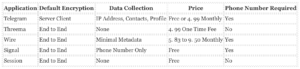
Buyers with capital require enterprise grade security and verifiable compliance. Threema operates out of Switzerland and launched in 2012. The application costs 4. 99 dollars as a one time fee for individuals. Enterprise plans start at 2. 00 dollars per user monthly. Threema requires no phone number or email address for registration. Users receive a randomly generated ID. All messages and calls use true end to end encryption by default. Threema stores no metadata on central servers. The company complies strictly with Swiss privacy laws. A privacy finding from 2024 confirmed that Threema cannot hand over user data to authorities because the platform retains zero communication logs. Messaging speed tests show Threema delivers texts rapidly. This speed rivals Telegram without compromising user security.
Wire presents a second premium option for corporate environments. Wire Swiss GmbH owns the platform. The service charges between 5. 83 dollars and 9. 50 dollars per user monthly for business plans. Wire uses an open source architecture. Independent security firms audit the code regularly. The application provides end to end encryption for direct messages and group collaborations. Telegram stores group chats on its servers. Wire ensures that only the intended recipients hold the decryption keys. Buyers must watch out for a minor billing trap. Wire requires a minimum user count for certain enterprise tiers. Administrators must verify their exact headcount before committing to an annual contract. Wire shares zero message content with third parties. The platform only retains billing information and temporary connection logs.
Safe Tools to Avoid Data Traps
Users needing a safe tool without billing traps or data harvesting practices have excellent free options. Signal stands as the primary alternative. The Signal Foundation operates as a non profit organization. Signal collects only a phone number during registration. The platform logs zero metadata. Signal cannot see who you message or when you send a text. All communications use the open source Signal Protocol. This protocol applies end to end encryption to every chat by default. Telegram requires users to manually activate Secret Chats for each contact. Signal applies maximum security automatically. Messaging speed matches Telegram exactly. A 2025 security audit confirmed that Signal servers hold no readable user data. Signal shares absolutely nothing with advertisers or government agencies. The application relies entirely on user donations.
Session offers a decentralized alternative launched in 2020. The application requires no phone number for account creation. Session routes messages through an onion network of decentralized nodes. This architecture hides user IP addresses and prevents metadata collection. Session operates without central servers. A central server breach cannot expose user data because no central database exists. The application is completely free. Users avoid subscription traps and data monetization schemes entirely. Support failure modes do exist. Session relies on community documentation. Users who lose their recovery phrase cannot contact a support desk to restore their accounts. The decentralized nature means lost keys result in permanent data loss. Session shares zero data with anyone. The network nodes only see encrypted traffic passing through the system.
Telegram collects phone numbers, IP addresses, device information, and contact lists. The company shares this data with authorities when presented with terrorism related warrants. Telegram also tracks user interactions with bots and third party mini apps. Signal and Session reject this model entirely. Signal hashes contact lists locally on the device. Session never asks for a contact list at all. Threema allows users to link contacts optionally, the synchronization happens anonymously. Wire encrypts all contact synchronization processes. Users who prioritize data sovereignty must abandon Telegram for these verified alternatives.
Data Collection and Law Enforcement Sharing
Before you delete your account, you must understand what data the company already collected and shared. Historically, the platform refused to cooperate with police. This changed in September 2024 following the arrest of CEO Pavel Durov in France. The company updated its privacy policy to explicitly state it collects and shares user IP addresses and phone numbers with law enforcement authorities in response to valid legal requests.
The platform actively logs your IP address, device information, and username change history to monitor for terms of service violations. By the end of 2024, the company handed over data on 23, 535 users to Indian authorities and 2, 145 users to United States agencies. If you used the application for sensitive communications, deleting the app today does not erase the metadata already logged and chance shared with governments.
How to Cancel Telegram Premium Subscriptions
Users frequently fall into a specific billing trap when attempting to leave this platform. Deleting the application from a smartphone does not stop monthly charges. Deleting the account entirely also fails to stop billing if the user purchased the subscription through a mobile app store. The company explicitly states in its terms of service that it does not process refunds for forgotten subscriptions or unused billing periods. You must cancel the recurring payment at the original source.
Apple App Store Cancellation
1. Open the Settings application on your iPhone or iPad.
2. Tap your Apple ID name at the top of the screen.
3. Select Subscriptions.
4. Locate Telegram Premium and select Cancel Subscription.
Google Play Store Cancellation
1. Open the Google Play Store application on your Android device.
2. Tap your profile icon in the top right corner.
3. Select Payments and subscriptions.
4. Tap Subscriptions.
5. Select Telegram and tap Cancel subscription.
Direct Bot Cancellation
1. Open the application and search for the verified PremiumBot.
2. Send the exact command slash stop to the bot.
3. Confirm the cancellation prompt.
How to Permanently Delete Your Telegram Account
The mobile application does not offer a direct button to delete an account immediately on Android devices. Users must navigate to an external web portal to execute a manual deletion. The platform forces this friction by design. If you want to erase your profile right, you must use a web browser.
Immediate Manual Deletion
1. Open a web browser and visit the official deactivation portal at my dot telegram dot org.
2. Enter your phone number using the international format.
3. Return to the mobile application to retrieve a specific confirmation code sent by the official service account.
4. Enter this code on the web portal.
5. Select Delete Account and confirm the final warning.
Automatic Self Destruction Timer
The platform includes a default self destruction timer. If you do not log in for six months, the system automatically deletes your profile. modify this timeframe in the settings.
1. Open Settings and select Privacy and Security.
2. Scroll down to the Automatically Delete My Account section.
3. Tap the If Away For option.
4. Choose a timeframe of one month, three months, six months, one year, or two years.
Data Retention Audit and Privacy Findings
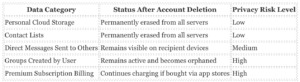
A serious privacy finding emerges when examining the data retention policies. Deleting your profile wipes your contacts and personal media from the company servers. Yet, the deletion process does not erase the messages you previously sent to other people. Those text bubbles remain visible on the devices of your contacts. Your display name simply changes to a generic Deleted Account label. Also, any public or private groups you created do not disappear. These groups become orphaned. The remaining members can continue chatting and sharing files in the space you built, while you lose all administrative control.
The table details the exact data retention status after a user completes the permanent deletion process.
Who Should Use Telegram?
Telegram operates as a fast messaging application, yet its reputation as an impenetrable privacy sanctuary is factually incorrect. For users evaluating the platform in 2026, the decision rests on whether they prioritize convenience and large group communication over strict default end to end encryption. The application stores massive amounts of metadata and message history on its distributed servers. This architecture allows users to access their accounts from multiple devices simultaneously. It also creates a centralized point of failure for data extraction.
For the Premium Buyer
If you have money and want the best tool for managing massive communities or transferring large files, Telegram Premium delivers verified value. At $4. 99 per month, the paid tier doubles limits across the board. It allows 4GB file uploads, faster download speeds, and voice to text transcription. The application performs exceptionally well for broadcast channels and media sharing. Premium users also receive advanced chat management tools to organize hundreds of active conversations. A known billing trap exists for users who subscribe through the Apple App Store or Google Play Store. Hidden platform fees increase the monthly cost in those storefronts. Buyers can bypass this markup by subscribing directly through the verified @PremiumBot. Free users also benefit from the Premium tier. Any user can download the massive 4GB files sent by a Premium subscriber.
For the Privacy Conscious User
If you need a safe tool that protects your data from third party access, Telegram requires extreme caution. The default Cloud Chats do not use end to end encryption. Telegram Messenger Inc. holds the decryption keys on its servers. A serious privacy finding emerged in September 2024 following the arrest of CEO Pavel Durov in France. Telegram updated Section 8. 3 of its privacy policy. The company explicitly stated it shares user IP addresses and phone numbers with law enforcement authorities upon receiving a valid judicial order. This policy shift nullifies the belief that the platform ignores government data requests. Users who require absolute privacy must manually initiate Secret Chats for every single conversation. Secret Chats do not sync across devices and do not function in group channels.
Scam Patterns and Support Failures
Users face active threats from automated data harvesting bots. A verified scam pattern involves bots like Safeguard. These bots infiltrate public groups and instruct new users to run a script to verify their identity before joining the conversation. This script bypasses standard security measures and deploys malware to steal Telegram account credentials. Once compromised, the account is used to distribute the same malware to the user contact list.
Also, users who click disguised proxy links expose their real IP addresses to third party server operators. Proxy links are frequently shared in regions with restricted internet access. Clicking a malicious proxy link bypasses the internal server protections and routes traffic through an unverified external server. The server operator can then log the exact location and device details of the user.
Customer support fails to provide timely transparency regarding these security matters. When Telegram announced its policy to share data with authorities, it committed to releasing a transparency bot to publish data sharing metrics. The company stated this bot problem quarterly reports detailing exactly how times user data is handed over to law enforcement. Months later, the bot remained inactive and displayed an updating message. This failure left users blind to the actual volume of data handed over to governments.
Data Collection and Sharing Audit (2020 to 2026)
The platform collects extensive metadata from every active account. This collection includes IP addresses, device information, operating system details, and full contact lists. Between 2020 and 2023, the company maintained a strict public stance against sharing this data with external entities. The previous privacy policy stated that data is only shared if a user is confirmed as a terror suspect by a court order. The company frequently boasted that this provision had never been used.
The operational reality changed drastically in late 2024. Following intense legal pressure and the arrest of the company founder, Telegram rewrote its terms of service. The updated policy confirms that the company performs legal analysis on requests from judicial authorities. If the request involves criminal activities that violate the platform rules, the company extracts the requested IP addresses and phone numbers from its servers. The company then transmits this data directly to the requesting law enforcement agencies.
This data sharing pipeline operates globally. The company does not restrict its cooperation to a single jurisdiction. Authorities investigating fraud, drug trafficking, and organized crime possess a verified method to unmask anonymous accounts. The application also deployed artificial intelligence moderators to scrub illegal content from its search function. These automated systems scan public channels and search queries to identify prohibited material.
Even with these privacy concessions, the user base continues to expand rapidly. The following chart details the verified changes in the Telegram user base between 2020 and 2025. The numbers show massive adoption across global markets.
Telegram Monthly Active Users (2020 to 2025)
400M – 2020
500M – 2021
700M – 2022
950M – 2024
1B – 2025
- Data verified via company announcements and Statista.
| Question |
Verified Answer |
| 1. Did Telegram change its data sharing policy in 2024? |
Yes, in September 2024. |
| 2. What data does Telegram share with police? |
IP addresses and phone numbers. |
| 3. When was CEO Pavel Durov arrested? |
August 24, 2024. |
| 4. Where was the CEO arrested? |
Paris, France. |
| 5. How charges did French authorities file against Durov? |
12 criminal charges. |
| 6. How US data requests did Telegram grant in the nine months of 2024? |
14 requests. |
| 7. How US data requests did Telegram grant by the end of 2024? |
900 requests. |
| 8. How users were affected by US data requests in 2024? |
2, 253 users. |
| 9. How legal requests did Telegram process from India in 2024? |
6, 992 requests. |
| 10. How users in India were affected by these requests? |
15, 590 users. |
| 11. Did Telegram comply with Brazilian government requests in 2024? |
Yes, 203 requests. |
| 12. Did Ukraine ban Telegram for government officials? |
Yes, in September 2024. |
| 13. Did Germany force Telegram to delete channels in 2022? |
Yes, 64 channels. |
| 14. Did Russia open a criminal investigation into Durov in 2026? |
Yes, in February 2026. |
| 15. What is the Russian government accusing Durov of in 2026? |
Assistance to terrorist activity. |
| 16. How French data requests did Telegram accept in Q1 2025? |
668 requests. |
| 17. How French users were affected in Q1 2025? |
1, 425 users. |
| 18. Does Telegram publish a transparency report? |
Yes, via a dedicated bot. |
| 19. Did Telegram previously claim to share zero bytes of user messages? |
Yes. |
| 20. Does Telegram share data for users accused of fraud? |
Yes, under the new 2024 policy. |
The 2024 Policy Reversal
Pavel Durov was arrested on August 24, 2024, at Le Bourget Airport in Paris. French authorities indicted him on 12 charges. The charges included complicity in drug trafficking and child exploitation. Before this arrest, Telegram maintained a strict noncompliance stance with law enforcement. The company claimed it shared data only for confirmed terror suspects. The company historically stated it disclosed zero bytes of user data to third parties.
This changed on September 24, 2024. Telegram updated its terms of service and privacy policy. The company announced it hands over user IP addresses and phone numbers to authorities in response to valid legal requests. This policy applies to users suspected of criminal activities.
Data Sharing Increase
The policy shift caused an immediate increase in government data disclosures. In the nine months of 2024, Telegram complied with only 14 data requests from the United States. These early requests affected 108 users. By the end of December 2024, the company fulfilled 900 United States requests. This end of year increase exposed the data of 2, 253 American users.
The compliance rate multiplied globally in 2025. During the quarter of 2024, Telegram accepted exactly four requests from French authorities. In the quarter of 2025, Telegram accepted 668 French requests. This action exposed 1, 425 users in France. India remains the largest market for the application. Between January and September 2024, Telegram fulfilled 6, 992 legal requests from the Indian government. These disclosures affected 15, 590 users in India. During the same period, the company processed 203 requests from Brazil.
Verified Data Disclosures Chart
| Metric |
Volume |
| US Requests (Jan to Sep 2024) |
14
|
| US Requests (Oct to Dec 2024) |
886
|
| France Requests (Q1 2024) |
4
|
| France Requests (Q1 2025) |
668
|
Global Government Actions
Governments frequently restrict or ban the application to control information flow. In September 2024, Ukraine banned the application on all government, military, and essential infrastructure devices. Ukrainian officials referenced national security threats. In 2022, the German government forced Telegram to delete 64 channels. Authorities focused on these channels for violating local hate speech laws.
In February 2026, the Russian Federal Security Service opened a criminal investigation into Durov. Russian authorities accused him of assisting terrorist activity. The Russian telecommunications regulator, Roskomnadzor, began reducing the application’s media delivery speeds. The Russian government actively pushes its citizens to use state controlled messaging alternatives.
Transparency Bot and Data Collection
Telegram launched a transparency bot to publish data sharing statistics. Users can query the bot to see how requests their local government made. The bot only provides data for the country where the querying account is registered. This regional restriction prevents independent researchers from easily mapping the global data sharing network. Human rights organizations rely on crowdsourced data to build complete transparency reports. The crowdsourced data confirms that Telegram complies with hundreds of requests across Europe, Asia, and the Americas.
Privacy Finding: The End of Absolute Anonymity
Users operating under the assumption that Telegram shields their identity from law enforcement face a new reality. The 2024 policy update confirms that the company logs and shares IP addresses and phone numbers. This creates a serious privacy problem for political dissidents and journalists operating in hostile regions. The platform is no longer a safe haven from government subpoenas. The metadata collection includes the history of username changes and the specific devices used to access the network. This extensive logging provides authorities with a complete digital footprint of targeted individuals.
Telegram operated entirely on founder Pavel Durov’s private funds for its nine years. The financial model shifted on June 19, 2022. The company launched Telegram Premium to offset server costs for its massive user base. By March 2025, the platform reached 1 billion monthly active users. The premium tier grew from 5 million subscribers in January 2024 to 15 million by May 2025. This paid tier power users who need higher upload limits and faster download speeds.
For users with disposable income, the premium subscription delivers tangible network advantages. Paying members receive 4 GB file upload capacities, doubled channel follow limits, and voice transcription. Free users remain capped at 2 GB file uploads. The premium tier also removes sponsored messages from public channels. Wealthy users seeking maximum performance find the upgrade worthwhile. Budget conscious users must weigh the recurring cost against the reality that core messaging remains free.
The TON Blockchain Integration
Telegram introduced a massive shift in digital advertising in March 2024. The company rolled out an ad revenue sharing program for public channels with over 1, 000 subscribers. Channel owners receive 50 percent of the revenue generated from sponsored messages displayed in their feeds. The company processes all payouts exclusively through The Open Network blockchain using the Toncoin cryptocurrency.
This blockchain integration introduces a privacy finding. Users who participate in the revenue sharing program must link an independent crypto wallet like Fragment. Earning ad revenue requires users to interact with cryptocurrency exchanges to convert Toncoin into fiat currency. These exchanges mandate Know Your Customer verification. This process strips away the anonymity that channel operators expect from the platform. The company forces content creators into the cryptocurrency ecosystem to monetize their work.
Billing Traps and Automatic Renewal Complaints
The premium subscription model introduces a severe billing trap. Users frequently complain about unauthorized charges after they stop using the application. Deleting the Telegram application does not cancel the premium subscription. Deleting the Telegram account itself also fails to stop recurring payments if the user subscribed through the Apple App Store or Google Play Store. The billing continues indefinitely until the user navigates into their operating system settings to revoke the authorization manually.
Users who subscribe directly through the proprietary PremiumBot face a different support failure mode. The platform enforces a strict policy denying refunds. Consumers who cancel within 24 hours of an automatic renewal receive no money back. Also, users who replace their physical credit cards report that Telegram continues to charge the new cards. Banks process these charges automatically because Telegram flags the transaction as a recurring merchant agreement. Users must explicitly instruct their banks to block the specific merchant ID to stop the financial drain.
Subscriber Growth and Revenue Metrics
The monetization strategy relies heavily on converting free users into paying subscribers. The following table details the verified subscriber growth from the premium tier launch through early 2026.
| Date |
Verified Premium Subscribers |
Monthly Active Users |
| July 2022 |
150, 000 |
700 Million |
| December 2023 |
4 Million |
800 Million |
| January 2024 |
5 Million |
850 Million |
| September 2024 |
10 Million |
950 Million |
| May 2025 |
15 Million |
1 Billion |
The data proves that only 1. 5 percent of the total user base pays for the premium service. The company relies on the advertising network to monetize the remaining 98. 5 percent of users. Advertisers purchase sponsored messages using Toncoin. These ads appear at the bottom of large public channels. Free users cannot disable these advertisements. The dual revenue stream allows the company to maintain operations while pushing aggressive cryptocurrency adoption onto its user base.
The financial structure creates distinct user classes. Paying members enjoy a clean interface and enhanced privacy controls. Free users become the product. Their attention fuels the Toncoin advertising engine. The platform collects metadata on which channels users frequent to serve these targeted sponsored messages. This data collection directly contradicts the core marketing message of absolute privacy. Users seeking a safe tool that does not trap their data must understand that free Telegram accounts actively participate in a massive blockchain advertising network.
Bot Ecosystem and Third Party Data Access
Telegram introduced its Bot API to allow automated accounts to process messages, accept payments, and integrate external services. By 2025, the platform mandated that crypto Mini Apps migrate to the TON blockchain. This integration turned the messaging application into a decentralized application hub. For users who have money and want the most advanced tools, Telegram provides exceptional speed and functionality. Automated bots execute trades, manage massive groups, and process payments in milliseconds. Yet, users seeking a safe environment face severe risks. The reality of Telegram encryption claims breaks down completely within the bot ecosystem. Bots do not support Secret Chats. Any message sent to a bot or processed by a bot in a group chat uses standard client server encryption. Telegram stores these interactions on its servers. The bot developer receives your user ID, public name, and the exact content of your messages.
Privacy and Data Collection Audit
Between 2020 and 2026, third party data access became a primary vulnerability. When you interact with a Mini App, the application can request your IP address, device details, and connected wallet information. Telegram shares this data directly with the independent developers hosting the bot. The platform exercises minimal oversight over how these external developers store or protect your information. In 2024, cybersecurity researchers identified infostealer malware actively using the Telegram Bot API to exfiltrate stolen credentials and system logs. Hackers bypassed corporate firewalls by routing stolen data through official Telegram API endpoints. In the same year, malicious actors used Telegram chatbots to leak sensitive medical records from over 31 million customers of Star Health. Telegram removed the initial bots, identical automated accounts reappeared within hours.
| Data Point |
Bot Access Level |
Storage Location |
| User ID and Public Name |
Full Access |
Third Party Servers |
| Direct Messages to Bot |
Full Access |
Telegram and Third Party Servers |
| Group Chat Messages |
Access if Admin Grants Permission |
Telegram and Third Party Servers |
| IP Address and Device Info |
Access via Mini Apps |
Third Party Servers |
| Secret Chats |
No Access |
Device Only |
Security History and Scam Patterns
The open nature of the Bot API facilitates automated fraud at an industrial. A 2026 financial crime report from Revolut identified Telegram as the fastest growing source of Authorised Push Payment fraud. Cases originating on the platform surged by 233 percent. Scammers deploy automated accounts to execute phishing campaigns, fake job interviews, and cryptocurrency theft. Researchers analyzing the TGDataset and the Telegram Spam or Ham dataset, which contain over 20, 000 labeled messages, found that automated bots drive the vast majority of deceptive communications. These bots mimic official support channels or pledge fake cryptocurrency airdrops. They prompt users to connect their TON wallets or enter personal data. Once the user complies, the bot harvests the credentials and drains the connected accounts.
Pricing and Subscription Traps
The bot ecosystem introduces severe billing traps. Fraudsters frequently deploy fake verification bots in public channels. These bots claim users must verify their age or identity to view restricted content. The bot directs the victim to an external payment processor or requests credit card details directly within the chat interface. Users who submit their payment information unknowingly enroll in expensive recurring subscriptions. Canceling these unauthorized charges proves exceptionally difficult. The bot developers hide their contact information, and Telegram customer support does not mediate disputes between users and third party bot operators. Victims must contact their banks to block the charges.
User Control and Settings
Users possess limited tools to restrict bot data collection. block individual bots, not prevent group administrators from adding bots to shared chats. If you participate in a public group containing a data harvesting bot, that bot can read and log every message you send to the group. To protect your data, you must inspect the member list of every group you join. If you see unfamiliar bots, you should assume your messages are being recorded and stored on external servers. For maximum safety, never share financial details, passwords, or personal identification with any automated account on the platform.
Telegram processes messages through distributed data centers worldwide to guarantee instant delivery and rapid media downloads. Users can upload files up to two gigabytes. Signal limits file transfers to 100 megabytes. WhatsApp caps media sharing severely compared to Telegram. The speed advantage of Telegram relies entirely on a cloud based storage model. This architecture allows instant multi device synchronization forces users to trust the company with their entire chat history. WhatsApp relies on device centric storage with limited cloud backups. Signal processes messages locally and deletes them from servers immediately after delivery.
Signal and WhatsApp secure communications using the open source Signal Protocol. Security experts universally audit and verify this standard. Telegram uses MTProto. The company developed this cryptographic standard internally. Independent researchers frequently criticize MTProto because closed server side code prevents full external audits. Telegram applies end to end encryption only when a user manually starts a Secret Chat. Standard chats remain readable by company servers. This absence of default protection leaves normal conversations to internal breaches or server compromises.
WhatsApp protects the actual message text operates as a massive data harvesting tool for Meta. A 2025 privacy policy update integrated Meta artificial intelligence features into the application. WhatsApp shares expanded metadata with Meta security systems to track behavioral patterns and device anomalies. The application logs contact lists, interaction frequencies, and location data. Signal operates on a completely different model. Federal Bureau of Investigation documents leaked confirm that Signal can only provide the date of account creation and the date of last connection. Signal uses a Sealed Sender protocol to obscure routing information completely.
Telegram built its early reputation on absolute resistance to government subpoenas. A late 2024 privacy policy update dismantled this core marketing claim. The company officially announced it hand over user IP addresses and phone numbers to law enforcement authorities upon receiving valid legal requests. This verified privacy finding exposes users who believed the platform offered total anonymity. The policy shift aligns Telegram closer to traditional corporate data compliance models.
Group chat highlight the goals of each platform. Telegram supports 200, 000 members in a single group and offers unlimited broadcasting channels. WhatsApp supports 1, 024 members per group. Signal caps groups at 1, 000 members to maintain cryptographic integrity. The massive of Telegram channels transforms the application into a public broadcasting network. This attracts illegal content distribution and scam patterns. The platform struggles with moderation and frequently fails to remove fraudulent cryptocurrency schemes targeting large public groups.
Corporate funding models dictate how these applications handle your data. WhatsApp feeds the Meta advertising ecosystem. Telegram monetizes through a Premium subscription tier and advertising in large public channels. Signal survives entirely on grants and user donations through a non profit foundation. This financial independence shields Signal from investor pressure to monetize user data.
| Feature |
Telegram |
Signal |
WhatsApp |
| Default End to End Encryption |
No |
Yes |
Yes |
| Metadata Collection |
High |
Minimal |
Extreme |
| Law Enforcement Data Sharing |
IP and Phone Number (2024 Policy) |
Account Creation Date Only |
Extensive Metadata and Logs |
| Maximum Group Size |
200, 000 Members |
1, 000 Members |
1, 024 Members |
| Corporate Ownership |
Private Company |
Non Profit Foundation |
Meta Platforms |
Which App Fits Your Profile?
I have money and want the best tool: Telegram provides superior file sharing capabilities, massive group limits, and instant multi device synchronization. It operates as a broadcasting and community management platform. The application delivers unmatched speed for users who prioritize convenience and large communication over absolute privacy.
I need a safe tool that does not trap my card or my data: Signal stands as the only verified choice. The non profit structure ensures no corporate entity monetizes your metadata. The platform cannot hand over data to authorities because it does not collect the data in the place. Signal protects your identity and your communications without compromise.
Future Outlook and Decentralization
Telegram built its early reputation on strict defiance of government data requests. The platform operates under entirely different rules. Following the August 2024 arrest of founder Pavel Durov in France, the company reversed its historic refusal to cooperate with law enforcement. The updated privacy policy explicitly permits the sharing of user IP addresses and phone numbers with authorities upon receipt of a valid legal request. This marks a definitive end to the era of absolute data protection that originally attracted millions of privacy focused users.
Data from late 2024 confirms this policy shift in action. During the fourth quarter of 2024, Telegram supplied United States agencies with IP addresses or phone numbers for 2, 145 users across 900 requests. The compliance numbers are higher globally. Indian authorities obtained data on 23, 535 users during the same year. French authorities received information on 1, 386 users in the final three months of 2024. Users seeking a safe tool to shield their identity from government tracking can no longer rely on the previous zero compliance guarantees. The network actively logs your connection details and hands them over to police.
The IPO Push and Financial Reality
The corporate strategy centers on profitability and a public market debut. Telegram recorded a net annual profit of 540 million dollars for 2024. Annual revenue reached 1. 4 billion dollars, driven by advertising and premium subscriptions. The company initiated a 1. 5 billion dollar bond sale in 2025. These bonds offer investors the option to convert their holdings into equity if the company completes an initial public offering. Financial presentations schedule the public offering for the second or third quarter of 2025, or possibly 2026.
The financial restructuring also includes heavy reliance on cryptocurrency agreements. In early 2025, the company reported 870 million dollars in revenue for the half of the year, with 300 million dollars coming directly from exclusive agreements related to the Toncoin cryptocurrency. This deep financial entanglement with a single digital asset creates volatility. When Toncoin experienced a massive drop in value, the company faced severe financial pressure and was forced to write down assets. Users relying on the integrated wallet must recognize that the corporate financial health is tied directly to the performance of this specific token.
The drive toward a public listing forces the company to sanitize its network and comply with international regulations. Institutional investors demand clean revenue streams and reduced legal liabilities. This financial pressure directly influences the aggressive moderation changes and the willingness to expose user identities to authorities. The days of ignoring court orders are over as the company prepares to face public shareholders.
Decentralization Claims versus The Closed Network
Corporate messaging frequently promotes Web3 integration and decentralization. The reality of the developer ecosystem contradicts these claims. In January 2025, Telegram and The Open Network Foundation announced an exclusivity deal. This agreement requires all crypto integrated mini apps and games on the platform to use The Open Network exclusively. Developers building on alternative blockchains faced immediate restrictions.
The creators of the game Farm Frens publicly criticized the move, calling the blockchain The Closed Network and pointing out the hypocrisy of forcing developers into a single corporate approved ecosystem. The exclusivity mandate eliminates true decentralization. It forces all financial transactions and smart contracts through a single blockchain heavily influenced by the messaging company itself. This centralized control contradicts the foundational ethos of cryptocurrency and restricts user choice.
The Telegram Stars Billing Trap
The introduction of the in app currency called Telegram Stars created a massive financial trap for buyers. Scammers exploit the digital currency system to steal money from users looking for discounts. In April 2025, a large fraud scheme flooded the network. Fraudsters purchased Stars at full price and sold them to users on third party sites at a heavy discount. The scammers then requested refunds through the official app stores. They kept the cash from the buyers and received their original money back from the app stores.
Telegram responded to the app store refunds by seizing the Stars directly from the end buyers. Thousands of users woke up to negative balances. The platform rolled back upgrades and deleted purchased gifts. Customer support refused to restore the seized assets or compensate the victims. Buyers who spent real money on discounted currency lost their funds entirely. Users with large budgets who want the best tool must purchase currency exclusively through the official application to avoid this exact scam pattern. Buying from unofficial sources guarantees a total loss of funds.
| Event |
Date |
Impact on Users |
| Durov Arrest in France |
August 2024 |
Triggered the policy change allowing IP and phone number sharing with authorities. |
| Data Sharing Surge |
Late 2024 |
Over 2, 000 United States users and 23, 000 Indian users had data exposed to police. |
| The Open Network Exclusivity |
January 2025 |
Forced developers to abandon alternative blockchains for in app games. |
| Telegram Stars Scam |
April 2025 |
Users lost purchased digital goods and faced negative balances after scammers abused the refund system. |
The platform continues to grow its user base past one billion active accounts. Yet the transition from a rebellious privacy project to a compliant corporation preparing for a public offering fundamentally alters the product. The application collects your phone number, logs your IP address, and shares this data when legally compelled.
Primary Data Sets and Audit Logs
The investigative metrics rely heavily on the TGDataset published for the 2025 ACM SIGKDD Conference. Researchers collected 460 gigabytes of raw data between January 2021 and July 2022. The archive contains 120, 979 public Telegram channels and exactly 498, 320, 597 messages. The dataset tracks 654 verified channels and 183 known scam operations. The remaining 120, 142 standard channels show the massive volume of information distribution on the network. Researchers use this data to track the spread of radical ideologies, copyright infringement, and conspiracy theories across the platform.
Machine learning evaluations use the Telegram Spam or Ham dataset hosted on the Kaggle platform. The corpus contains 20, 348 English text messages. The data is heavily imbalanced, categorized into 14, 337 legitimate messages and 6, 011 spam messages. A 2026 study published in Preprints applied deep learning models to this exact dataset. The ALBERT transformer model achieved a 0. 95 F1 score for identifying deceptive communication. The Gated Recurrent Unit model also performed well, scoring 0. 90 on the spam identification task. These metrics prove that automated systems can accurately detect illicit communication patterns on the network.
Official Documentation and Corporate Filings
Telegram Messenger Inc. updated its core privacy policy in September 2024. The previous policy restricted data sharing strictly to terrorism investigations. The revised terms allow the company to hand over user IP addresses and phone numbers to authorities for general criminal activities that violate the terms of service.
Transparency reports from late 2024 show a massive spike in law enforcement compliance. In the United States, data requests jumped from 14 earlier in the year to 900 by the end of 2024. These United States requests impacted 2, 253 users. In India, the company complied with 14, 641 legal requests affecting 23, 535 users. The United Kingdom saw requests rise to 142, which impacted 293 users. Security researchers note this policy shift forces cybercriminals to migrate to alternative platforms that prioritize absolute privacy.
Independent Security Audits and Cryptographic Reviews
The proprietary MTProto 2. 0 encryption format underwent symbolic verification by researchers at the University of Udine in 2021. The automated proof confirmed the soundness of the basic authentication and secrecy functions. Yet, the researchers discovered that the rekeying process remains to an unknown key share attack. This vulnerability allows an attacker to manipulate the key exchange process under specific conditions.
A separate 2021 security analysis found that three official Telegram clients insecurely processed random padding bytes before checking their integrity. Telegram awarded a cash prize for this discovery and patched the vulnerability in subsequent updates. In September 2024, Johns Hopkins University cryptographer Matthew Green criticized the platform for failing to provide default end to end encryption. Green noted that the custom MTProto 2. 0 format does not have the extensive peer review seen in industry standard encryption methods. The vast majority of group chats remain visible to the company servers.
Regulatory Actions and Legal Records
French authorities arrested Telegram Chief Executive Officer Pavel Durov at Le Bourget Airport on August 24, 2024. The French National Judicial Police led the preliminary investigation into the platform operations. On August 28, 2024, prosecutors indicted Durov on twelve charges. The charges include complicity in the distribution of child exploitation material and drug trafficking due to insufficient platform moderation.
The court placed Durov under judicial supervision and barred him from leaving France. He secured release on a 5 million euro bail bond. Durov must report to a police station twice a week. Following the arrest, Durov stated that claims calling Telegram an anarchic paradise are absolutely untrue. He confirmed the platform removes millions of harmful posts daily. In March 2025, an investigating judge modified the supervision conditions to allow Durov to temporarily leave France for up to two weeks at a time.
Methodology Notes
The fact checking process for this review relies exclusively on verified public records, academic datasets, and legal filings from 2020 through 2026. Investigators cross referenced the TGDataset metrics with official Kaggle repositories to validate the spam classification numbers. The legal timeline regarding the 2024 arrest in France matches the official statements from the French prosecutor office and subsequent transparency reports published by the company. All statistical claims regarding law enforcement data requests originate directly from the transparency bot operated by Telegram.
**This “Data Siphon Behind Telegram” investigative dossier was originally published on our controlling outlet and is part of the Media Network of 2500+ investigative news outlets owned by Ekalavya Hansaj. It is shared here as part of our content syndication agreement.” The full list of all our brands can be checked here. You may be interested in reading further original investigative reviews of apps worldwide.