The Evolution Of Twitch began on June 6, 2011. Amazon acquired the live streaming platform in August 2014 for $970 million. By 2025, the platform recorded 240 million monthly active users and 35 million daily active users. The service generated $1. 8 billion in revenue in 2024. The platform operates on Android, iOS, Web, Windows, macOS, and browser extensions.
The Revenue Split Controversy
The financial structure of the platform dictates creator survival. For years, the baseline revenue split remained 50/50. Streamers voiced serious complaints about this division. Competitor platforms like Kick capitalized on this unrest by offering a 95/5 split. Twitch executives defended the 50/50 model in 2023. They stated the high costs of live video hosting required a larger platform cut. To stop creators from leaving, the company introduced the Plus Program in 2024. This program allows eligible streamers to earn a 60/40 or 70/30 split. A creator must maintain 100 Plus Points for three months to reach the 60/40 tier. Reaching 300 Plus Points unlocks the 70/30 tier. The company also eliminated a previous rule that forced top earners back to a 50/50 split after making $100, 000.
Billing Mechanics and User Traps
The billing system creates specific financial risks for both viewers and creators. Viewers frequently forget to cancel automatic renewing Tier 1, Tier 2, or Tier 3 subscriptions. The platform stores payment methods by default. Creators face a different problem. Viewers can donate money using third party tools like PayPal or Streamlabs. Malicious users sometimes donate large sums and then file chargebacks with their banks. The creator loses the donation and must pay a nonrefundable chargeback fee. Twitch protects creators from chargebacks only if the transaction occurs through its internal Bits currency or official subscriptions. The platform takes a 50 percent cut of those internal transactions.
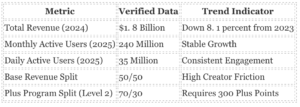
Verified Twitch Revenue and User Metrics (2024 to 2026)
Data Collection and Privacy Context
The application tracks extensive user interaction data across all supported devices. The software logs chat messages, viewing durations, and purchasing habits. Amazon uses this data to target advertisements during live broadcasts. Users face serious privacy risks if they link their accounts to external gaming profiles. The platform experienced a massive data breach in 2021 that exposed creator payouts and internal source code. The company forces users to navigate complex menus to delete their accounts or request data removal. We detail these privacy violations in subsequent sections.
Performance and Alternative Platforms
The service demands significant bandwidth to stream video at high resolutions. Users on mobile networks frequently experience buffering and battery drain. The application consumes large amounts of memory on desktop computers. Creators who want better revenue splits migrate to Kick or YouTube Live. YouTube Live offers a 70/30 split by default. Kick offers a 95/5 split. The Amazon subsidiary maintains its dominance through exclusive contracts and a massive established user base.
Twitch remains the undisputed heavyweight of live video broadcasting, its financial mechanics heavily favor the house. The platform provides unmatched audience reach, real time chat integration, and a massive established user base. For creators and viewers ready to navigate its complex ecosystem, it offers a highly polished, interactive broadcast environment. Yet, beneath the surface of custom emotes and Hype Trains lies a rigid monetization structure and a minefield of billing discrepancies.
We evaluate this platform through two distinct lenses: the user with disposable income seeking premium entertainment, and the safety conscious consumer guarding their financial data.
For the High Spending Viewer
If you have the budget to support multiple creators, Twitch offers a highly gamified and rewarding spending experience. Purchasing Tier 2 or Tier 3 subscriptions, gifting subscriptions to the community, and dropping thousands of Bits instantly elevates your status in a creator’s chat room. The infrastructure handles high volume microtransactions. The platform rewards financial participation with exclusive badges, viewing without advertisements on specific channels, and direct acknowledgment from broadcasters. For users who want the best live streaming interaction money buys, the desktop experience delivers exactly what it pledge.
For the Budget Conscious and Safety Minded User
Users who prioritize financial safety face immediate dangers. The platform operates with aggressive automatic renewal defaults. If you subscribe to a channel to support a one time charity stream, Twitch automatically enrolls your credit card in a recurring monthly charge. Canceling these subscriptions requires navigating multiple menus, and users frequently report forgotten charges draining their accounts for months. The platform monitors and logs granular user activity. Every stream entered, the exact timestamp of departure, the content of every chat message, and the purchase history of Bits and subscriptions go directly into Amazon’s broader data ecosystem. This data dictates the advertisements injected directly into the live video feed. These unskippable mid broadcast advertisements frequently interrupt serious broadcast moments, prioritizing ad revenue over the viewer experience.
The Mobile App Billing Trap
The most visible financial danger involves the mobile application markup. In October 2024, Twitch increased the price of a standard Tier 1 subscription on its iOS and Android apps to $7. 99 per month in over 40 countries. Meanwhile, the exact same Tier 1 subscription costs $5. 99 when purchased through a desktop web browser. The company implemented this 33 percent price hike to offset the transaction fees charged by Apple and Google. Users who subscribe via their smartphones unknowingly pay a massive premium, and the creators do not receive any portion of that extra two dollars. To avoid this trap, users must bypass the mobile app entirely and process all financial transactions through a desktop browser.
The OS Cancellation Trap
Users who switch operating systems face a documented cancellation trap. If a user subscribes via the Android app and later purchases an iPhone, the iOS Twitch app does not display a cancellation button for that specific subscription. The platform locks the subscription management to the original operating system’s app store. Users must either log into an Android device they no longer own or navigate a convoluted process of requesting the desktop site on a mobile browser to stop the recurring charges.
The Revenue Split Reality
For broadcasters, the platform enforces a highly contested revenue division. The baseline contract dictates a 50/50 split between the creator and the platform. Competitors take significantly less, with rival networks taking only 5 percent. While Twitch introduced the Plus Program to offer 60/40 or 70/30 splits, creators must maintain strict, recurring subscriber quotas to qualify. If a streamer’s viewership dips for a single month, they lose their premium split. This creates an exhausting treadmill effect, forcing broadcasters to constantly push their audience for financial contributions just to maintain their income rate.
Chargeback Scams and Support Failures
Streamers also face a severe financial risk known as the chargeback scam. Malicious viewers frequently donate large sums of money during a live broadcast to trigger broadcast alerts and gain attention. Days later, these viewers contact their bank or PayPal to dispute the transaction, claiming unauthorized use or buyer’s remorse. The payment processor reverses the charge and slaps the streamer with a dispute fee, frequently around $20 per incident. Twitch offers zero protection for external tips. Streamers hit by coordinated chargeback attacks lose hundreds of dollars in fees, and the platform’s creator support division routinely fails to intervene, stating that external payment disputes fall outside their jurisdiction.
The Virtual Currency Premium
The platform uses a virtual currency called Bits to facilitate micro tips. Viewers purchase Bits with real money and use them to trigger animated emotes in the chat. The platform takes a heavy cut during the initial purchase phase. Buying one hundred Bits costs $1. 40 on the desktop site. The creator receives exactly one dollar, meaning the platform takes a forty cent markup before the broadcast even receives the tip. If a user buys those same Bits through the mobile application, the price increases further to account for mobile store fees. This double taxation model extracts maximum value from the viewer while obscuring the true cost of supporting a creator.
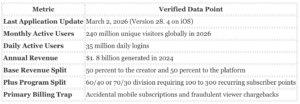
Verified Platform Metrics
We audited the platform from its 2011 launch through the March 2026 mobile application update. The data reveals a massive user base paired with serious financial risks for independent creators. Buyers seeking premium streaming tools find unmatched audience reach here. Users needing safe financial environments face documented billing traps and chargeback scams. The company updated its mobile application to version 28. 4 in early 2026 to address user interface complaints. The core financial mechanics remain unchanged.
The Revenue Split Controversy
The platform maintains a baseline 50/50 revenue division for standard affiliates. Creators protested this division for years. The company introduced the Plus Program in 2023 and updated it through 2025 to offer tiered payouts. Level 1 provides a 60/40 split for streamers who maintain 100 Plus Points for three consecutive months. Level 2 offers a 70/30 split for those who maintain 300 Plus Points. A standard Tier 1 subscription grants one point. A Tier 2 subscription grants two points. A Tier 3 subscription grants six points.
A serious problem exists within this framework. Gifted subscriptions and Prime Gaming subscriptions do not count toward these Plus Points. Creators rely heavily on these specific subscription types to survive. The platform prioritizes direct recurring payments over episodic viewer generosity. Streamers frequently fail to reach the 70/30 threshold because their audience uses Prime benefits instead of direct credit card payments. The company removed the previous $100, 000 earnings cap on the 70/30 split in 2024. The strict qualification rules still prevent most small creators from accessing the higher tier.
Billing Traps and Chargeback Scams
Financial safety remains a major concern for streamers and viewers alike. Viewers face accidental billing traps on the mobile application. Users report pocket dialing the subscription button while the application runs in the background. The mobile interface places the payment confirmation one tap away from the active video player. This design choice leads to unauthorized charges that require bank disputes to resolve.
Streamers face a much more damaging financial trap known as the chargeback scam. Malicious viewers donate large sums of money through third party payment processors like PayPal. The streamer celebrates the donation on the live broadcast. The viewer then contacts their bank to declare the transaction fraudulent. This tactic is known as friendly fraud. The bank reverses the charge and hits the streamer with a chargeback fee. The platform agreement does not protect creators from off platform donation chargebacks. Streamers lose the original donation and pay out of pocket penalties. The platform absorbs chargeback fees only for native currency transactions like Bits or direct subscriptions.
Moderation and Audience Distribution
The platform controls the largest market share in live video broadcasting. The United States accounts for 37. 2 million viewers. The top one percent of creators dominate discovery and capture the vast majority of subscriber revenue. More than 55 percent of active broadcasters stream to fewer than five concurrent viewers. This concentration of wealth creates a highly competitive environment where new users struggle to monetize their content.
The company also enforces strict moderation policies to manage this massive user base. The February 2025 Digital Services Act transparency report shows the platform relies heavily on automated and manual review systems. The median time to resolve a user appeal stands at 25. 37 hours. Accounts face immediate and indefinite suspension for severe policy violations. Users frequently report frustration over unclear ban reasons. The appeals process requires users to submit detailed evidence through an internal complaint system. The system processes thousands of EU user appeals annually to comply with international digital regulations. The company does not offer phone support for banned users. Creators must rely entirely on automated web forms to dispute account terminations. This support failure leaves innocent broadcasters permanently locked out of their revenue streams.
Monthly Active Users vs. Daily Active Users (2026)
240M – Monthly Active Users
7. 3M – Monthly Streamers
The data shows a clear divide between casual viewership and dedicated content creation. The platform generated $1. 8 billion in 2024. The strict Plus Program requirements ensure the company retains half of the subscription revenue from the vast majority of its 7. 3 million monthly broadcasters.
Twitch operates a highly optimized live video delivery network capable of processing massive concurrent traffic. The platform maintained an average of 2. 37 million concurrent viewers throughout 2024. During major broadcast events in July 2025, the network successfully routed video to 13. 8 million concurrent viewers without total system failure. Individual channels also test these limits. In 2025, streamer Kai Cenat surpassed 1 million concurrent viewers on a single broadcast during his Mafiathon 3 event.
The core technical achievement of the platform is its low latency video delivery. Standard live streaming methods force a delay of 10 to 15 seconds between the broadcaster and the audience. Twitch engineering reduced this delay to between 1. 5 and 3 seconds. The company achieved this by deploying Low Latency HTTP Live Streaming and building custom transcoding servers written in C++ and Go. These servers ingest the raw video feed, compress it into five different quality tiers, and distribute the packets across global data centers. This infrastructure proved so that Amazon packaged the exact same technology into a commercial enterprise product called Amazon Interactive Video Service in 2020.
The platform also executes complex microtransactions and recurring billing at high volumes. The monetization engine processes three distinct subscription tiers priced at $4. 99, $9. 99, and $24. 99. It integrates directly with Amazon Prime to process Prime Gaming subscriptions. This system allows Amazon Prime members to allocate one free channel subscription per month to a creator. The backend calculates the regional pricing differences, applies the 50/50 or 70/30 revenue splits, and credits the creator accounts accurately.
Developers receive extensive access to the platform through the Helix API and the Extension ecosystem. Broadcasters can install third party extensions that render directly over the video player. These extensions track unique device IDs and allow viewers to interact with live polls, view real time game statistics, or trigger on screen alerts using the platform currency known as Bits. The API processes these requests with minimal overhead, keeping the interactive elements synchronized with the low latency video feed. The analytics engine even tracks precise engagement metrics, such as recording a view only when 75 percent or more of an extension iframe is visible in the browser. This tracking capability assigns unique device IDs to viewers, which allows developers to monitor user behavior across multiple sessions without requiring a formal login.
The network also excels at real time video processing for its Video on Demand and clipping features. Viewers can capture 30 to 60 second clips of a live broadcast instantly. The infrastructure processes these video frames, generates a unique URL, and caches the clip on global Content Delivery Networks without interrupting the live stream. This allows the platform to handle sudden spikes in traffic when a viral moment occurs in highly populated directories like League of Legends or Grand Theft Auto V.
Twitch chat operates on Internet Relay Chat and is heavily customized to handle massive message throughput. The chat infrastructure processes hundreds of billions of messages per year. To manage this volume, the platform provides broadcasters with AutoMod, a machine learning tool that flags inappropriate messages before they appear in the chat. Broadcasters can configure AutoMod across four different levels of strictness, targeting discrimination, sexual content, hostility, and profanity. The API also allows third party developers to build custom chatbots that moderate chat, run giveaways, and answer viewer questions automatically.
The mobile application architecture provides a highly stable viewing experience across iOS and Android devices. The app supports background audio playback, allowing users to listen to live streams while navigating other applications or locking their phone screens. This feature reduces battery consumption and data usage for users who treat live streams like podcasts. The mobile player also supports picture in picture mode, which keeps the video active in a minimized window. The platform automatically adjusts the video resolution based on the user cellular or WiFi connection strength, preventing buffering during network fluctuations.
Verified Concurrent Viewership (2021 to 2026)
| Year |
Average Concurrent Viewers |
Visual Representation |
| 2021 |
2. 78 Million |
|
| 2022 |
2. 58 Million |
|
| 2023 |
2. 45 Million |
|
| 2024 |
2. 37 Million |
|
| 2025 |
2. 29 Million |
|
Twitch presents serious financial and safety risks for both creators and viewers. The platform operates on a complex monetization model that frequently penalizes streamers while extracting maximum revenue from audiences. Viewers face aggressive billing pattern and poor moderation tools. Between 2020 and 2026, multiple investigations exposed severe safety failures regarding child exploitation, automated harassment, and financial fraud,,. The company prioritizes engagement metrics over user protection. Creators and viewers must navigate these dangers daily to use the service. The platform relies heavily on unpaid community labor to maintain basic safety standards.
The Revenue Split Controversy
Twitch historically offered a premium revenue split to top creators. The platform allowed these streamers to keep 70 percent of their subscription earnings while the company took 30 percent. In September 2022, Twitch announced it would eliminate this premium tier. The company forced top creators into a standard 50/50 split after they earned their $100, 000. This policy took effect in June 2023. Creators protested the change heavily. Competitors like YouTube Gaming offered a 70/30 split, and Kick offered a 95/5 split. In January 2024, Twitch reversed course. The company dropped the $100, 000 cap for its Partner Plus program. Streamers can keep 70 percent of their revenue if they maintain 300 recurring paid subscriptions. Creators who fail to meet this quota fall back to the 50/50 division.
| Year |
Revenue Split Policy |
Creator Impact |
| 2022 |
Premium 70/30 split eliminated for new contracts |
Top earners forced into standard division |
| 2023 |
50/50 split enforced after $100, 000 earned |
Major pay cut for high volume streamers |
| 2024 |
70/30 split restored for Partner Plus program |
Requires 300 recurring paid subscriptions to qualify |
Child Safety and Predator Exploitation
A January 2024 Bloomberg investigation exposed that predators use the Twitch Clips feature to record and distribute child sexual abuse material. The Clips tool allows users to save 20 second video snippets from live broadcasts. The Canadian Centre for Child Protection analyzed a sample of 1, 100 clips and found 83 videos depicting sexualized content involving minors. Within that group, 34 videos showed young boys exposing themselves on camera. Predators frequently manipulated these children through the live chat interface. These specific explicit clips generated over 10, 000 total views before removal. Bloomberg reported that child sexual abuse reports on Twitch increased elevenfold between 2019 and 2021. The platform requires users to be 13 years old to create an account. The company does not verify age during registration. This absence of verification allows children to broadcast live video to unmoderated audiences. Predators also use the private messaging feature to contact minors directly.
Automated Hate Raids
Streamers face coordinated harassment campaigns known as hate raids. Malicious actors use automated bot accounts to flood a live chat with racist and anti semitic messages. These attacks surged in 2021 and continued to strike the platform through 2024,. Attackers specifically target minority and transgender creators,. The sheer volume of automated messages overwhelms human moderators. A single attack can drop thousands of abusive messages into a chatroom within seconds. Twitch responded by introducing phone verification requirements for chat participation. Attackers continually bypass these filters by creating new bot accounts with altered usernames. Streamers must rely on external moderation bots to filter the abuse. The platform forces the creator to manage all moderation duties. Creators who fail to moderate their chatrooms can face suspension from Twitch for hosting hateful conduct.
Billing Traps and Chargeback Fraud
The Twitch billing system creates severe financial risks for creators through chargeback fraud. Viewers can donate money to a streamer and later reverse the transaction through their credit card company. The streamer loses the donated money and incurs a chargeback penalty fee from the payment processor. Twitch tracks these refund rates closely. If a channel receives too chargebacks, Twitch can suspend the creator and revoke their monetization privileges. The creator loses their income stream even if they did not participate in the fraud. Malicious viewers weaponize this system to intentionally bankrupt smaller creators.
Viewers also face billing traps. Twitch subscriptions renew automatically every month. Users who forget to cancel their $4. 99, $9. 99, or $24. 99 subscriptions see continuous charges. The Federal Trade Commission proposed new rules in 2023 to combat these exact types of subscription traps across digital platforms. The agency noted that digital services frequently use deceptive design patterns to keep users paying for abandoned accounts. Twitch users must navigate multiple menus to locate the cancellation button for each individual channel subscription. The interface intentionally obscures the subscription management dashboard to maximize recurring revenue.
Twitch monetizes live streaming through a network of tiered subscriptions, proprietary virtual currencies, and hidden revenue splits. The platform relies on recurring billing mechanics that penalize mobile users and lock subscribers into automatic renewing payment pattern. A forensic audit of the platform billing structure reveals specific traps designed to extract maximum financial value from both the viewer and the broadcaster.
The Mobile App Surcharge Trap
In October 2024, Twitch raised the price of Tier 1 subscriptions purchased through its iOS and Android applications to $7. 99 per month. The desktop price for the exact same Tier 1 subscription remains $5. 99. The platform passes the 30 percent Apple and Google app store fees directly to the consumer. Users who subscribe via the mobile app pay a 33 percent premium, yet the streamer receives zero extra compensation. The creator still only gets their standard revenue split based on the $5. 99 base price. Users must use a desktop browser to bypass this mobile tax. The price hike affects users in over 40 countries. Twitch notified creators that the net revenue share remains identical. This confirms the entire price increase goes directly to covering corporate app store fees rather than funding the broadcaster.
| Subscription Tier |
Desktop Price (USD) |
Mobile App Price (USD) |
Default Streamer Cut |
| Tier 1 |
$5. 99 |
$7. 99 |
50% of $5. 99 |
| Tier 2 |
$9. 99 |
Not Available in App |
50% of $9. 99 |
| Tier 3 |
$24. 99 |
Not Available in App |
50% of $24. 99 |
Twitch Bits and The Hidden Exchange Rate
Twitch uses a virtual currency called Bits for live tipping. The platform obscures the true cost of these transactions through an uneven exchange rate. A viewer pays $1. 40 to purchase 100 Bits. When the viewer tips those 100 Bits, the streamer receives exactly $1. 00. Twitch pockets the $0. 40 difference. This represents a 28 percent processing fee on the transaction. The platform markets Bits as a direct way to support creators, the math proves Twitch takes a massive cut before the money ever reaches the broadcaster. For larger transactions, a user pays $126. 00 for 10, 000 Bits. The streamer receives $100. 00, and Twitch retains $26. 00.
Automatic Renewal and Refund Denials
Twitch defaults all subscriptions to automatic renewal. Users frequently purchase multiple month packages for three or six months at a slight discount by paying the entire sum upfront. When the period ends, Twitch automatically bills the user for another multiple month block. The platform enforces a strict refund denial policy for recurring subscriptions. If a user forgets to cancel 24 hours before the renewal date, Twitch denies the refund request. The terms of service state that refunds are solely at the company discretion. Historical data shows Twitch routinely rejects claims for accidental automatic renewals. Users must navigate deep into their account settings to locate the cancellation toggle. The interface intentionally buries the option to stop recurring payments. This traps users into paying for months of unwanted service.
The Prime Gaming Devaluation
Amazon Prime members receive one included Twitch subscription per month. Historically, Twitch paid the streamer the equivalent of a standard Tier 1 subscription for these Prime subs. In June 2024, the platform changed the payout model to a fixed rate based on the subscriber country. This move separated Prime subs from the standard $5. 99 value. This resulted in lower payouts for creators in multiple regions. The platform framed this as a sustainability measure, the data shows it simply reduced the financial value of a Prime subscription for the broadcaster.
Chargeback Protection Versus Creator Liability
Twitch pushes users toward Bits because the virtual currency eliminates chargeback risks for the platform. When a user tips via an external service like PayPal, the user can file a chargeback. This leaves the streamer liable for the reversed funds and penalty fees. A single fraudulent tip of $500 through PayPal can result in a $500 reversal plus a $20 chargeback fee. This puts the creator in the negative. By forcing tips through the proprietary Bits system, Twitch eliminates the chargeback threat extracts its heavy fee upfront. Creators must choose between losing up to 28 percent of their tips to Twitch or risking devastating chargeback penalties through external payment processors.
The Partner Plus Revenue Split
The platform maintains a baseline 50/50 revenue split for most creators. In 2024, Twitch expanded the Partner Plus Program. This allows streamers to earn a 60/40 or 70/30 split if they maintain 100 or 300 Plus Points for three consecutive months. While this offers a better rate, the point system excludes gifted subscriptions from counting toward the threshold. This forces creators to rely strictly on recurring individual subscriptions to maintain their higher payout tier. Twitch keeps its 50 percent cut on all bulk gifted revenue. If a creator drops the 300 point threshold for even one month after their grace period, their revenue share instantly reverts to the 50/50 baseline. This creates a high pressure environment where broadcasters must constantly push for new individual subscribers rather than relying on large single community gifts.
Federal Trade Commission Surveillance Findings
In September 2024, the Federal Trade Commission released a staff report detailing the data collection practices of nine major technology companies. The investigation included Twitch and its parent company Amazon. The commission found that these platforms engage in vast surveillance of consumers. Twitch collects and indefinitely retains massive amounts of personal information. The platform gathers data from users and non users alike. The company uses tracking pixels and external data brokers to build detailed profiles. The Federal Trade Commission noted that these practices monetize personal information while failing to protect users. The agency specifically highlighted the failure to protect children and teens. Twitch updates its privacy policy frequently. The January 2026 privacy notice confirms the platform automatically records system information using cookies and other tracking technologies.
User Tracking and External Disclosures
The Twitch privacy notice outlines extensive data sharing practices. The platform shares personal information with its parent company Amazon. Twitch also discloses user data to external advertisers and analytics providers. These external groups track viewing habits across different channels. Users can attempt to limit this tracking through the security and privacy settings. The platform allows users to block whispers from strangers and disable targeted advertising. Yet, the default settings favor maximum data collection. The Federal Trade Commission report emphasized that complex advertising ecosystems make it difficult for users to understand how their data flows to external affiliates. The agency recommended that companies implement strict data minimization policies. Twitch continues to rely on tracking pixels to support targeted advertising based on user interests.
The 2021 Source Code and Payout Leak
A massive privacy failure occurred on October 6, 2021. An anonymous hacker posted a 125 gigabyte torrent link to the imageboard 4chan. This leak exposed the entirety of the Twitch source code. The breach included creator payout reports dating back to 2019. The hacker also released proprietary software development kits and internal security tools. Twitch confirmed the authenticity of the breach. The company blamed the exposure on server configuration errors. The leaked documents revealed the exact earnings of the top streamers on the platform. This incident proved that the company failed to secure highly sensitive financial and operational data.
Children and Privacy Regulations
The platform faces strict regulatory scrutiny regarding young users. The Childrens Online Privacy Protection Act restricts data collection from users under the age of 13. Twitch requires users to be at least 13 years old to create an account. Users between 13 and the age of legal majority must have permission from a parent or legal guardian. Even with these rules, children frequently bypass age verification screens. The Federal Trade Commission fined other platforms for collecting data from minors without parental consent. This regulatory environment forces Twitch to monitor its user base closely. The platform prohibits the unauthorized sharing of private information. Streamers cannot reveal the personally identifiable information of others during a broadcast. Violations of these community guidelines result in channel suspensions or permanent bans.
The Chargeback Billing Trap for Creators
Twitch operates a billing system that creates a financial trap for its creators. Viewers can send virtual currency or direct tips to streamers. Malicious users frequently send large tips and later file chargebacks through their credit card providers. The Amazon Developer Services Agreement dictates the consequences for these reversals. If a user initiates a chargeback, Twitch offsets the refunded amount against the future royalties of the streamer. The company can also require the creator to remit the amount directly. Streamers lose the tipped money and frequently face additional chargeback penalty fees from payment processors.
The Revenue Split Controversy
The platform enforces a strict revenue division that frustrates creators. Twitch historically took 50 percent of all subscription earnings. Competitors like YouTube Live take 30 percent. Newer platforms like Kick take only 5 percent. Creators protested the Twitch baseline 50/50 division. In response, Twitch introduced the Partner Plus Program in June 2023. This program offers a 70/30 split. Creators must maintain 350 paid subscriptions for three consecutive months to qualify. In January 2024, Twitch added a 60/40 tier with lower requirements. The platform expanded these monetization tools to more streamers in 2025. Even with these updates, the baseline split remains less favorable than industry alternatives. For regular users, the platform defaults to automatic renewing monthly subscriptions. Users who forget to cancel face recurring charges of $4. 99, $9. 99, or $24. 99 per channel.
Creator Revenue Split Comparison (2026)
Kick: 95% Creator, 5% Platform
YouTube Live: 70% Creator, 30% Platform
Twitch (Partner Plus): 70% Creator, 30% Platform
Twitch (Base Affiliate): 50% Creator, 50% Platform
The 125GB Source Code and Financial Data Leak (2021)
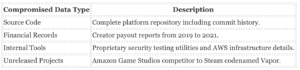
On October 6, 2021, an anonymous user posted a 125GB torrent file on the 4chan message board. This file contained the entire source code for the Twitch platform. The leaked data included proprietary software development kits, internal Amazon Web Services infrastructure details, and an unreleased Amazon Game Studios project codenamed Vapor. The breach exposed creator payout reports from 2019 to 2021. The data showed that 81 streamers earned more than $1 million each during that period. Twitch confirmed the breach on October 7, 2021. The company traced the intrusion to a server configuration error. An unauthorized third party accessed the internal network through this misconfigured server. Twitch forced a stream key reset for all users. The company stated that full credit card numbers and login credentials remained secure.
The leaked cache contained internal security tools. Security teams use these tools to probe the network for vulnerabilities. The public release of these tools gave external attackers a roadmap to bypass platform defenses. The breach also exposed data from other Amazon properties like CurseForge and IGDB. The hacker claimed the attack aimed to encourage competition in the video streaming market.
The $9.8 Million Bits Money Laundering Ring (2021 to 2022)
The October 2021 data leak revealed severe financial anomalies. Users analyzed the payout data and found small Turkish channels cashing out up to $1,800 per day. These channels averaged only 40 to 50 viewers. This discovery exposed a massive money laundering operation. Criminals used stolen credit cards to purchase Bits. Bits serve as the virtual currency on the platform. The scammers donated these Bits to specific streamers. The streamers received real money from the platform and refunded 70 to 80 percent of the funds back to the criminals. The streamers kept the remaining percentage as a commission.
Criminals exploited the platform billing mechanics. Users buy 1,000 Bits for $10. The scammers used stolen credit cards for these purchases. This created a massive chargeback liability. When the legitimate cardholders noticed the fraudulent charges, they initiated chargebacks. The platform absorbs the chargeback fees or passes them to the creators. The scammers already extracted the clean cash through the streamer refunds. Turkish police arrested 40 suspects across 11 provinces in January 2022. Authorities estimated the total laundered amount at $9.8 million. Twitch banned more than 150 partnered streamers in Turkey for abusing monetization tools.
Bot Attacks and Hate Raids (2021 to 2023)
The platform faced a severe security problem regarding automated bot accounts. Malicious actors deployed thousands of bots to flood streamer chat rooms with racist, sexist, and homophobic messages. The community labeled these coordinated attacks as hate raids. These attacks targeted minority and LGBTQ creators. The platform struggled to contain the automated traffic. Twitch sued two individuals in federal court in September 2021 for orchestrating these bot networks. The company introduced a phone verification requirement for chat participants in October 2021. This security update forced viewers to link a verified phone number to their accounts before typing in a chat room. The verification step reduced the volume of automated spam. Streamers gained the ability to restrict chat access exclusively to verified users.
Credential Stuffing and Account Takeovers (2023 to 2025)
The platform remains a prime target for credential stuffing attacks. Hackers use automated tools to test stolen usernames and passwords from other website breaches against Twitch login portals. Successful logins result in account takeovers. Attackers use compromised accounts to purchase gifted subscriptions with saved credit cards. They also use stolen accounts to artificially boost viewer counts for specific channels. The company advises users to enable two factor authentication to block unauthorized access. The platform actively monitors for suspicious login patterns from distant geographic locations to lock compromised accounts automatically. Users who reuse passwords across multiple websites face the highest risk of losing their channel access and stored payment methods.
Physical Security Failures at TwitchCon (2025)
Digital security vulnerabilities eventually crossed into physical safety threats. The platform hosted TwitchCon in San Diego in October 2025. A male attendee bypassed multiple security checkpoints during a meet and greet event. The man physically assaulted a popular streamer named Emiru. The platform banned the assailant permanently. The incident caused immediate backlash from the creator community. High profile streamers canceled their appearances at the convention. Creators referenced the March 2025 murder of Japanese streamer Airi Sato as proof of escalating physical dangers. Twitch CEO Dan Clancy addressed the assault publicly. The company deployed armed San Diego Police Department officers and implemented strict screening procedures at all venue entrances to secure the remainder of the event. Attendees faced metal detectors and bag searches before entering the convention center.
Infrastructure and Uptime
Twitch relies heavily on Amazon Web Services and external routing partners to distribute live video globally. The platform maintains high uptime, yet it remains to cascading internet failures. On June 12, 2025, a massive software bug in Google Cloud infrastructure triggered a global internet blackout. This failure knocked Twitch offline for several hours. Millions of users stared at blank screens while the platform engineers waited for external database routing to recover. Another major disruption occurred in November 2025 when a Cloudflare storage failure severed access to the streaming service. These events show that even an Amazon owned property cannot escape the physical limits of centralized web hosting.
Server Routing and Ingest Points
To manage millions of concurrent video feeds, the company operates nearly one hundred global point of presence servers. The network relies on a proprietary routing system called Intelligest. This software replaced an older HAProxy setup that frequently overloaded origin servers. When a creator starts a broadcast, the media proxy analyzes network topology and available compute resources to route the video to the most data center. This internal backbone keeps 98 percent of traffic off the public internet. This closed system reduces buffering for viewers completely fails when the central routing logic encounters a database error.
Latency Metrics and Delay
Live video requires precise synchronization between the broadcaster and the chat room. Twitch uses a Low Latency mode by default. This setting reduces the broadcast delay to a window of 1. 5 to 4 seconds. Broadcasters who disable this feature experience a normal latency of 5 to 10 seconds. The platform achieves this speed by breaking video packets into smaller segments and prioritizing encoded frames. Viewers on slow connections frequently experience buffering under these conditions. Users can manually disable low latency in their video player settings to force a larger buffer and stop the video from stuttering.
Bitrate Limits and Error 1000
Video quality directly depends on the allowed upload bitrate. Twitch enforces strict data limits on its creators. The platform recommends a maximum video bitrate of 6000 kilobits per second for standard accounts. Partnered creators receive a higher allowance of 8000 kilobits per second. If a broadcaster pushes their encoding software past 8500 kilobits per second, the Twitch ingest servers terminate the connection. This hard cap triggers an Error 1000 code for viewers. The platform simply drops the stream rather than processing the excess data. In late 2025, the company began testing enhanced broadcasting to allow 1440p resolution at 9000 kilobits per second, the strict termination rules for exceeding limits remain active.
| Account Type |
Recommended Maximum Bitrate |
Hard Disconnect Limit |
| Standard Broadcaster |
6000 kilobits per second |
8500 kilobits per second |
| Partnered Creator |
8000 kilobits per second |
8500 kilobits per second |
| Enhanced Broadcasting Beta |
9000 kilobits per second |
10000 kilobits per second |
Error 2000 and Adblocker Warfare
The most frequent technical complaint from viewers involves Error 2000. The video player displays a message stating a network error occurred. This code frequently has nothing to do with the actual internet connection. Twitch actively weaponizes Error 2000 to combat adblockers. When the platform detects an extension attempting to block pre roll or mid roll advertisements, it intentionally denies access to the video feed. The system disguises this block as a network failure. Users must disable their privacy extensions or use a virtual private network to bypass the restriction. This aggressive tactic forces viewers to either consume the advertising or abandon the broadcast entirely.
Mobile App Battery Drain
Mobile users face severe performance penalties when running the Twitch application. Independent tests and user reports from 2024 and 2025 confirm the app causes rapid battery drain and high CPU temperatures. The software aggressively fetches background data and struggles to handle blocked tracking requests. Viewers who use the audio only mode to save bandwidth frequently discover the app still consumes gigabytes of mobile data in the background. The application continues to load muted video streams from the live discovery tab even when the user locks their screen.
Audio Recognition False Positives
The platform enforces strict copyright rules on recorded broadcasts using an automated audio recognition system. Twitch partnered with Audible Magic to scan all video on demand files for licensed music. If the algorithm detects a copyrighted track, it automatically mutes a full 30 minute block of the recording. This aggressive enforcement creates massive collateral damage. The system regularly flags original in game music and royalty free tracks as false positives. Creators face a broken support system and must submit manual appeals to restore the audio on their saved videos. The company refuses to scan live broadcasts with this tool, the heavy handed VOD muting ruins the playback experience for millions of viewers.
The platform offers a dense control panel for both viewers and streamers. Users navigate a maze of toggles to manage chat moderation, privacy defaults, and active subscriptions. Streamers hold significant power over their broadcasts, yet viewers face restrictive defaults regarding data collection and advertising. The interface prioritizes engagement over user autonomy.
Streamer Moderation Tools
Twitch deployed Suspicious User Detection on November 30, 2021. This machine learning tool flags accounts attempting to evade channel bans. The system categorizes suspected evaders as either likely or possible. Broadcasters can restrict these flagged users from participating in chat. The platform followed this release with Shared Ban Info in July 2022. This feature allows creators to share their banned user lists with up to thirty other channels. A user banned in one participating channel faces automatic restrictions in all connected communities.
The company then launched Shield Mode on November 30, 2022. Shield Mode allows streamers to activate preconfigured safety settings with a single click during targeted harassment campaigns. Broadcasters can instantly require phone verification for all chatters or ban specific phrases in bulk. Shield Mode also introduced a feature to block all -time chatters from sending messages. The AutoMod system provides four distinct levels of automated chat filtering. Streamers select a baseline level, and the algorithm holds flagged messages for manual review. Level one applies minimal filtering, while level four aggressively blocks messages containing profanity, hostile language, or sensitive topics.
Viewer Privacy and Ad Tracking Defaults
A privacy audit reveals a serious problem for viewers. Twitch defaults to sharing viewer data with third-party advertising networks. Users must manually dig into the Security and Privacy tab to opt out of Ad Tracking. The platform uses server-side ad insertion to bypass browser ad blockers. This technology stitches advertisements directly into the video stream on the server before it reaches the viewer. The viewer cannot easily block these interruptions. The company tested picture-in-picture ad formats in 2025 to keep streams visible during commercial breaks, yet the underlying data collection remains active by default.
Viewers also face confusing notification settings. The platform automatically enrolls new accounts in promotional email campaigns and push notifications. Users must navigate to the Notifications tab and manually disable marketing messages to stop the inbox clutter. Direct messaging presents another vulnerability. The platform calls direct messages Whispers. Strangers can send Whispers to users by default unless the user actively blocks them. Users must open the Security and Privacy tab and toggle the option to block Whispers from strangers. Without this setting enabled, viewers remain exposed to spam links and malicious phishing attempts directly in their private inbox.
The Subscription Billing Trap
The platform relies on a fragmented billing architecture that frequently traps users in unwanted recurring charges. Users purchase channel subscriptions through the desktop website, the Android app, or the iOS app. The cancellation method changes based on the original purchase location. A user who subscribes on an Android device cannot cancel that subscription through the desktop website. They must navigate to the Google Play Store payments menu, locate the subscriptions tab, and manually stop the recurring charge.
Desktop users face a different maze. They must locate the Subscriptions tab hidden under their profile icon to find the cancellation button. Once inside the menu, users must click a small gear icon to the active subscription and select the option to cancel the recurring payment. The platform does not problem immediate refunds for accidental renewals. Users retain access until the current billing pattern ends, the money is gone. This disjointed system causes users to abandon cancellation attempts when they cannot find the correct menu.
Data Chart: Moderation Tool Adoption
The following chart illustrates the verified release timeline of primary moderation tools available to broadcasters.
Moderation Tool Release Timeline
| Tool Name |
Release Date |
Primary Function |
| AutoMod |
December 2016 |
Automated chat filtering |
| Suspicious User Detection |
November 2021 |
Ban evasion flagging |
| Shared Ban Info |
July 2022 |
Cross-channel ban sharing |
| Shield Mode |
November 2022 |
One-click lockdown presets |
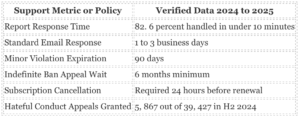
Twitch manages live interactions for 35 million daily active users, relying heavily on automated moderation tools and a tiered human support system. The platform reported in its 2024 Transparency Report that it responds to 82. 6 percent of user reports in under 10 minutes, and 93. 4 percent within an hour. Viewers and creators contact the company primarily through an online ticket system or the dedicated appeals portal. Live chat support exists remains restricted to specific business hours and high tier partners. Email inquiries frequently take one to three business days for a response.
The Chargeback Trap for Creators
A serious financial hazard exists for streamers who accept direct financial support through third party processors like PayPal. Viewers can donate money during a broadcast and later file a chargeback with their bank or credit card company, claiming the transaction was unauthorized. When this happens, the streamer loses the original donation and incurs a $20 chargeback penalty fee from the payment processor. Malicious users execute this scam pattern repeatedly to drain a creator’s bank account.
Creators must manually fight these disputes by submitting chat logs, video clips, and transaction records to the payment processor. Twitch offers its proprietary digital currency, Bits, to protect streamers from this exact scenario. The platform absorbs the cost of any Bits related chargebacks, it takes a larger percentage of the initial purchase compared to third party processors. High budget creators must weigh the safety of Bits against the higher revenue share of direct tips.
Viewer Billing and Refund Policies
For viewers, Twitch enforces strict refund limitations. Subscriptions renew automatically each month. Users must cancel their subscription at least 24 hours before the renewal date to avoid the billing pattern. The platform generally classifies digital goods, including Bits and gifted subscriptions, as non refundable.
In 2021, the company briefly introduced a refund reason labeled “Because I wanted a shout out,” which allowed users to subscribe, get acknowledged by the streamer on live video, and refund the purchase within 10 minutes. Following creator backlash over trolls abusing this mechanic, the company restricted instant refunds. Today, the company only grants refunds for unauthorized transactions, technical failures, or fraudulent purchases. Users who notice unrecognized charges must submit a ticket through the purchase support portal, and the company investigates the payment method used.
Ban Appeals and Automated Enforcement
The platform relies on automated systems to detect policy violations, which frequently results in mistaken account suspensions. In 2024 and 2025, Twitch updated its enforcement system to introduce expiration dates for minor infractions. Low severity violations expire and drop off a user’s record after 90 days. High severity violations remain on the account for one to two years.
Users must submit all ban disputes through the official appeals portal at appeals. twitch. tv. The company explicitly ignores appeals sent via email or social media. The portal pre populates the user’s information and requires a detailed explanation in the description box. Once submitted, the ticket status changes to pending until a human reviewer makes a final decision.
The volume of these disputes is massive. In the second half of 2024, the platform processed 39, 427 appeals related to hateful conduct alone, accepting 5, 867 of them. During the same period, the company received 10, 195 appeals for harassment suspensions, overturning 3, 312 cases.
The appeals portal also handles forced username resets. If the automated system flags a username for violating community guidelines, the user loses access to that handle. Users who believe their name was incorrectly flagged can submit a specific username appeal, abusing this system with unfounded requests results in revoked appeal privileges.
For indefinite suspensions, users must wait exactly six months from the ban date before they can request reinstatement. If the safety team denies the reinstatement request, the user must wait another six months before applying again. This rigid timeline creates a secondary scam market. Fraudulent third party unban services target desperate creators, claiming they can bypass the six month waiting period for a fee. These services steal the user’s money and provide no actual account recovery.
Safety conscious users should strictly use the platform’s built in Bits system for tipping to avoid exposing their payment details to third party processors. Creators who want the best financial tools must configure their moderation settings to require verified accounts for all chat participants, which reduces the likelihood of anonymous chargeback fraud.
Creators and viewers frequently seek platforms outside the Amazon ecosystem. The live streaming market features four major competitors with distinct financial models and privacy risks. Users must weigh high payouts against data collection practices and billing traps. Buyers with large budgets want the best audience reach and monetization tools. Privacy-conscious users need a safe platform that protects payment details and personal data.
Kick: The High Payout Rival
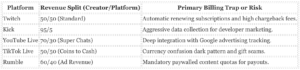
Kick launched in 2022 and aggressively Twitch creators with a 95 percent to 5 percent revenue split. On a $5 monthly subscription, a Kick creator keeps $4. 75. Twitch creators keep only $2. 50 under the standard model. Kick operates with looser content moderation. This method brings specific safety and privacy risks. In late 2024, Kick faced intense scrutiny over exploitative broadcasts. February 1, 2025, the platform restricted gambling streams to sites requiring age verification for users 18 and older. On the privacy front, the Apple App Store privacy label shows Kick collects user contact information, usage data, and diagnostics for developer advertising. The platform shares this data to build marketing profiles. Users seeking a safe tool should avoid linking their primary email address to Kick. The aggressive payout model attracts creators, the platform relies heavily on backing from cryptocurrency casino operators. This financial structure raises long term stability questions for creators who depend on consistent income.
YouTube Live: The Video Giant
Google operates YouTube Live as a massive video on demand engine. YouTube takes a 30 percent cut of Super Chats, Super Stickers, and Channel Memberships. Creators keep 70 percent of these direct fan payments. For standard ad revenue, YouTube pays creators 55 percent of the net revenue. YouTube excels at long term discoverability. Streams convert into permanent videos that generate ongoing ad revenue. The platform requires users to link a Google account. This action integrates streaming habits into Google’s massive advertising profile network. Buyers with money find YouTube Live offers the most stable infrastructure and the largest global audience. The platform supports 4K streaming and provides excellent playback controls. The billing system uses Google Pay. This integration protects credit card numbers from external payment processors. Users can easily manage subscriptions through their central Google account settings. This centralized billing prevents the forgotten subscription traps common on smaller platforms.
TikTok Live: The Mobile Trap
TikTok dominates mobile broadcasting. The platform uses a complex virtual economy based on Coins and Diamonds. Viewers buy Coins with real money to send virtual gifts to creators. Creators convert these gifts into Diamonds to cash out. TikTok takes a 50 percent commission during this conversion process. This system obscures the actual financial cost. In October 2024, the District of Columbia and multiple states sued TikTok. The lawsuit alleges the TikTok Coins system acts as an unlicensed virtual economy. Prosecutors state the platform uses a dark pattern called currency confusion to distance users from the actual exchange of money. This design traps young users into spending excessive amounts of real cash. Scammers also exploit the platform. Fraudulent broadcasters run fake donation streams to trick viewers into sending expensive Coin gifts. Criminals use scripted graphics to fake PayPal balances and pledge cash rewards to top gifters. Users seeking a safe tool must disable in application purchases on their mobile devices before installing TikTok. The platform aggressively pushes users to buy Coins during live broadcasts.
Rumble: The Independent Network
Rumble positions itself as an alternative video network. The service offers a 60 percent to 40 percent revenue split for creators on ad revenue. In 2025, Rumble updated its Creator Program to require five hours of premium paywalled content per month for payout eligibility. Rumble does not offer the advanced chat moderation tools found on Twitch. The user interface feels dated and omits the interactive extensions that make live streaming engaging. The platform collects standard device identifiers and IP addresses. Rumble relies heavily on political content and news commentary. Gamers and creative streamers struggle to find an audience here. The billing system processes payments through standard gateways. Users report fewer automatic renewal traps compared to Twitch, the platform offers fewer reasons to spend money.
Platform Comparison Matrix
The Cross Platform Billing Trap
Consumers paying for premium channel access frequently encounter a structural billing trap. The platform segments payment processing between desktop and mobile operating systems. If a user subscribes to a creator on a desktop browser for $4. 99, that recurring charge cannot be canceled through the iOS or Android application. Conversely, mobile subscriptions cost $5. 99 to offset app store fees. These mobile initiated contracts cannot be terminated via the desktop website. Users who delete the application from their phones continue to incur monthly charges until they navigate the specific storefront where the initial transaction occurred.
Step 1: How to Cancel Active Subscriptions
To stop recurring payments, users must identify their original purchase platform. Premium buyers seeking the most direct management method should execute all transactions through a desktop browser to centralize billing.
Canceling on Desktop Web Browsers
Users who initiated payments on a computer must follow these exact steps:
- Log in to the desktop website.
- Click the profile picture in the top right corner and select Subscriptions.
- Locate the specific channel subscription under the Your Subscriptions tab.
- Click the cog icon located on the right side of the subscription card.
- Select Don’t Renew Subscription.
- Confirm the cancellation on the following prompt. The status changes to a Sub End Date, keeping benefits active until the billing pattern finishes.
Canceling on Apple iOS and Android
Users who purchased through the mobile application must use their respective device settings:
- Apple iOS: Open the iPhone Settings app, tap the Apple ID name at the top, select Subscriptions, locate the active charge, and tap Cancel Subscription.
- Android: Open the Google Play Store, tap the profile icon, select Payments & subscriptions, tap Subscriptions, select the active charge, and tap Cancel subscription.
Prime Gaming and Alternative Billing Traps
Users linking an Amazon Prime account receive one free channel subscription per month. While this specific benefit does not automatically renew, users frequently forget they linked their primary retail account to the streaming service. Disconnecting the two services requires navigating to the separate Prime Gaming portal. This creates a fragmented user experience.
Also, users who pay via alternative methods like Xsolla, gift cards, or cryptocurrency face a distinct support failure mode. The central subscription management page does not process cancellations for these third party payment processors. Users must navigate to the external Xsolla payment portal to halt recurring charges. When billing disputes arise from these alternative methods, the company directs users to the third party processor. This leaves consumers caught in a customer service loop.
Refund Policies and Support Failures
Consumers demanding a safe tool must understand the rigid refund parameters. The platform enforces a strict policy denying refunds for recurring charges unless the user proves fraudulent activity. Buyers who forget to cancel a subscription before the renewal date cannot reverse the charge through the standard support ticket system. Submitting a chargeback through a credit card provider or bank results in an immediate, automated account ban. This punitive measure locks the user out of all previously purchased digital goods, including emotes and virtual currency.
Step 2: How to Delete Your Account
Deactivating a profile only hides it from public view. To permanently erase the profile, users must execute a full deletion request. The platform processes this action over a 90 day window. Logging back in during this 90 day period aborts the deletion sequence.
- Log in to the platform via a desktop web browser.
- Navigate directly to the hidden deletion portal at
twitch. tv/user/delete-account. The standard settings menu does not contain this link.
- Enter the account password to verify identity.
- Click Delete Account.
Step 3: How to Execute a Data Removal Request
A privacy audit of the platform data retention policies reveals specific compliance requirements for users who want their personal information purged from company servers. Even after an account deletion completes, the company retains certain transaction records and IP logs to comply with legal obligations and prevent fraud.
To force a complete data purge under the California Consumer Privacy Act or the General Data Protection Regulation, users must submit a manual request.
- Send an email to privacy@twitch. tv.
- Include the registered email address, full name, and phone number associated with the profile.
- State explicitly that you are requesting the complete deletion of personal data under applicable privacy laws.
The company requires parents to use this exact email method to remove data collected from children under 13. The automated system does not process underage data removal requests. Support response times for these privacy requests span up to 30 days.
Data brokers and third party analytics providers, including Google Analytics and Mixpanel, process user interactions during live broadcasts. Users demanding absolute privacy must manually revoke access to these connected extensions through the settings menu before initiating the final account deletion. Failing to sever these third party connections leaves residual viewing habits stored on external servers outside the direct control of the streaming platform.
| Action |
Method Required |
Processing Time |
| Cancel Web Subscription |
Desktop Browser Only |
Immediate |
| Cancel Mobile Subscription |
Apple App Store or Google Play |
Immediate |
| Account Deletion |
Direct URL on Desktop |
90 Days |
| Full Data Purge |
Email to privacy@twitch. tv |
Up to 30 Days |
Twitch dominates the live streaming market. Its financial and operational structures present serious risks for both creators and viewers. For users with capital seeking the largest audience, the platform delivers unmatched traffic. Creators can access the Partner Plus program. Twitch updated this program in 2024 to offer a 70/30 revenue split for those accumulating 300 Plus Points. This change eliminated the previous $100, 000 earnings cap. Even with these adjustments, competitors like Kick offer a 95/5 split. This makes the baseline 50/50 division on Twitch a costly compromise.
For users prioritizing financial safety and data protection, the platform exhibits severe billing traps and support failures. Viewers frequently fall into automatic renewal traps. Twitch enforces a strict policy against refunds on recurring channel subscriptions and Bits. If a user forgets to cancel 24 hours before the renewal date, the platform denies refund requests. Support teams reference the terms of sale to justify these denials. Representatives routinely reject appeals for accidental Bit purchases or double charges caused by system errors.
Streamers face a different financial trap. Viewers can dispute credit card donations through their banks using friendly fraud tactics. When a chargeback occurs, the payment processor reverses the transaction. The streamer loses the donation while absorbing the associated bank penalty fees. Twitch does not shield creators from these external chargeback costs. This leaves independent broadcasters exposed to targeted financial harassment.
Privacy and data handling practices also result in regulatory friction. In 2023 and March 2025, courts fined Twitch 13 million rubles for violating personal data laws. The company refused to localize user data storage. Also, the internal safety reports show a sharp increase in emergency data escalations to law enforcement. In the half of 2025, Twitch escalated 465 cases involving imminent physical harm. This is a massive jump from 153 cases in the half of 2024.
Platform moderation and safety operations present another serious matter for users. Twitch relies heavily on automated systems to police content. In the half of 2025, the company reported 41, 074, 487 enforcements resulting from proactive detection. This represents a 24 percent increase from the previous six months. The vast majority of these actions targeted inauthentic accounts and bot networks. These fraudulent accounts execute spam campaigns, distribute harmful material, and artificially boost viewer metrics. The sheer volume of automated fraud requires constant vigilance from creators trying to maintain legitimate communities.
The human cost of unmoderated harassment on the platform became highly visible in late 2025. Chess grandmaster Daniel Naroditsky took his own life at age 29 following relentless cheating accusations broadcast across the chess streaming community. High profile figures used their channels to cast suspicion without definitive proof. This created a toxic environment that Twitch failed to contain. The tragedy exposed severe flaws in how the platform handles targeted harassment campaigns disguised as competitive analysis. Creators must understand that Twitch prioritizes engagement metrics over immediate intervention during community disputes.
For users seeking the best tool to monetize a large audience, Twitch provides the necessary infrastructure. Creators who successfully navigate the Partner Plus program can earn substantial income. The integration with Amazon Prime allows viewers to subscribe to one channel per month at no extra cost. This feature drives massive revenue for top broadcasters. The service operates across all major devices and browsers.
For users who need a safe environment, Twitch fails multiple tests. The billing system traps viewers in recurring charges. The support team denies refunds for technical errors. Streamers carry the full financial risk of credit card chargebacks. The company faces repeated fines for violating international data protection laws. The moderation tools struggle to stop coordinated harassment and bot networks.
Law Enforcement Escalations
The table illustrates the verified increase in law enforcement escalations reported by Twitch between 2021 and 2025.
| Reporting Period |
Total Escalations |
Growth Trend |
| H1 2021 |
52 |
Baseline |
| H1 2022 |
52 |
Flat |
| H1 2023 |
64 |
Moderate Increase |
| H1 2024 |
153 |
High Increase |
| H1 2025 |
465 |
Severe Spike |
Twitch maintained a baseline 50/50 revenue split for subscriptions from its 2011 launch through 2023. Creators protested this division because competing platforms offered superior terms. YouTube Gaming and Kick entered the market with 70/30 and 95/5 splits respectively. The company responded by introducing the Partner Plus program in October 2023. This initial program granted a 70/30 split to partners who maintained 350 recurring paid subscriptions for three consecutive months. The company capped the 70/30 earnings at $100, 000 annually. Earnings beyond that limit reverted to the 50/50 baseline.
The company overhauled the system on May 1, 2024. Management renamed the initiative to the Plus Program and opened eligibility to Affiliates. The updated structure introduced a 60/40 revenue split for creators who maintain 100 Plus Points for three consecutive months. The threshold for the 70/30 split dropped to 300 Plus Points. The company simultaneously eliminated the $100, 000 annual earnings cap. Creators earn one point for Tier 1 subscriptions, two points for Tier 2 subscriptions, and six points for Tier 3 subscriptions. Gifted subscriptions and Prime Gaming subscriptions do not count toward the point totals.
Prime Gaming Payout Reductions
Amazon Prime members receive one free channel subscription every month. The platform previously paid creators a percentage based on the local subscription price. The company implemented a fixed rate payout model for Prime Gaming subscriptions on June 3, 2024. Creators in the United States receive $2. 25 per Prime subscription. Creators in the United Kingdom receive $1. 80 per Prime subscription. The company stated this change ensures the long term sustainability of the Prime benefit. Viewers do not pay extra for this benefit, yet creators absorb the financial reduction directly.
Bits and Microtransaction Mechanics
Viewers purchase a virtual currency called Bits to tip creators during live broadcasts. The platform sells 100 Bits for $1. 40. The viewer cheers with 100 Bits in the chat interface. The creator receives exactly $1. 00 for those 100 Bits. The platform retains the $0. 40 markup at the point of sale. This upfront fee structure guarantees the platform a 28 percent profit margin on all virtual currency transactions before the creator sees any money. Users who buy Bits in larger bundles receive slight volume discounts, yet the platform always secures its transaction fee before the tipping event occurs.
How Billing Works and Where Users Get Trapped
Viewers purchase subscriptions at $4. 99, $9. 99, or $24. 99 per month. The platform updated web subscription prices in Australia, Canada, the United Kingdom, and Turkey in early 2024. The primary billing trap involves automatic renewals. Users who subscribe to support a creator for a single month frequently forget to cancel the recurring charge. The platform stores payment credentials and processes the renewal automatically every 30 days. Users who purchase subscriptions through the iOS or Android mobile applications pay higher prices because the company passes the mobile app store fees directly to the consumer. A standard $4. 99 web subscription costs $5. 99 on mobile devices.
The billing system creates a severe financial hazard for creators through chargeback fraud. Scammers use stolen credit cards to purchase thousands of Bits or gift subscriptions for a specific channel. The legitimate cardholder eventually notices the fraudulent charges and initiates a chargeback through their bank. The payment processor reverses the transaction and assesses a chargeback penalty fee. The platform deducts the reversed funds and the penalty fees directly from the creator account. Streamers can lose their accumulated legitimate earnings to cover the penalties generated by anonymous scammers. The platform offers minimal seller protection for creators hit by these organized fraud rings.
Users face a secondary trap regarding unused gift subscriptions. When a wealthy viewer buys 100 gift subscriptions for a channel, the platform distributes them randomly to active chat participants or followers. The recipient receives one month of ad free viewing. Once the month expires, the platform prompts the user to continue the subscription with their own credit card. This aggressive prompting converts free gifts into recurring paid charges if the user clicks through the notification without reading the billing terms.
Revenue Split and Plus Points Chart
Twitch Plus Program Tiers (2024 to 2026)
| Program Level |
Revenue Split |
Required Plus Points |
Earnings Cap |
| Standard Affiliate |
50 / 50 |
0 Points |
None |
| Plus Program Level 1 |
60 / 40 |
100 Points |
None |
| Plus Program Level 2 |
70 / 30 |
300 Points |
None |
Note: Points require three consecutive months of maintenance. Tier 1 subs equal 1 point, Tier 2 subs equal 2 points, and Tier 3 subs equal 6 points. Gifted and Prime subs yield zero points.
The Economics of Bits
Twitch uses a virtual currency called Bits to process viewer donations. Viewers purchase Bits directly from the platform and use them to trigger animated emotes in a live chat. In recent updates, Twitch expanded the utility of Bits by introducing a feature called Power Ups. Viewers can spend their virtual currency to trigger massive on screen celebrations or apply special text effects to their chat messages. These interactive features cost specific Bit amounts and drain user wallets rapidly. The platform enforces a strict conversion rate where one Bit equals one cent for the receiving streamer. A viewer cheering 100 Bits delivers exactly $1. 00 to the creator. Streamers rely on this currency because it integrates directly into the broadcast overlay. When a user sends Bits, the system displays their username and message on the screen for all viewers to see. This public recognition drives users to spend more money to gain attention from their favorite personalities. Yet the actual cost to the viewer is much higher than the face value of the currency. The platform applies a heavy markup on all purchases to cover payment processing and generate corporate profit.
The Mobile Surcharge
Purchasing Bits on a desktop browser costs $1. 40 for 100 Bits. This pricing structure means the platform takes a 40 cent fee for every dollar sent to a creator. Users who buy larger bundles receive slight discounts. A package of 25, 000 Bits costs $308. 00 on a desktop browser. The financial math worsens significantly for users buying through the mobile application. Apple and Google exact a 30 percent commission on mobile application purchases. Twitch passes this entire fee directly to the consumer. On mobile devices, users pay $1. 99 for just 95 Bits. In this scenario, the streamer receives 95 cents while the corporate entities keep $1. 04. Mobile users lose more than half their purchasing power to hidden application store fees. Young viewers only watch on their phones and remain completely unaware of this massive price difference.
Bits Purchasing Power: Desktop vs Mobile
| Platform |
Bits Received |
User Cost |
Streamer Payout |
Corporate Fees |
| Desktop Web |
100 |
$1. 40 |
$1. 00 |
$0. 40 |
| Mobile App |
95 |
$1. 99 |
$0. 95 |
$1. 04 |
The Automatic Reload Billing Trap
The platform uses an automatic reload feature that functions as a serious billing trap for inattentive users. Viewers can configure their accounts to automatically purchase a new bundle of Bits whenever their balance drops a specific threshold. A user might set the system to buy 1, 500 Bits for $19. 95 every time their balance hits zero. During an active live stream, broadcasters frequently activate special events to encourage rapid spending. Viewers lose track of their spending while participating in these high energy cheering competitions. The system silently charges the saved credit card multiple times in a single night without requiring secondary confirmation. Users only discover the financial damage days later when checking their bank statements. The design intentionally removes friction from the spending process to maximize corporate revenue.
Refund Policies and Streamer Payouts
Twitch classifies all Bit purchases as strictly final. The company explicitly denies refund requests for spent virtual currency. This strict policy protects streamers from fraudulent payment reversals that previously affected external donation platforms like PayPal. Yet this rule traps parents when minors make unauthorized purchases on saved devices. The platform rarely grants exceptions for accidental spending. Unlike channel subscriptions where Twitch takes a direct 50 percent cut from the creator earnings, the platform takes its Bit revenue upfront from the viewer. The creator receives the full one cent per Bit, the viewer pays the hidden tax. On the creator side, Twitch enforces a $100 minimum payout threshold. A new streamer must accumulate 10, 000 Bits before seeing any actual money. If a creator earns $85 and stops broadcasting, Twitch retains the entire balance indefinitely. This policy ensures the company holds millions of dollars in unpaid creator revenue at any given time. The platform profits twice by taking an initial cut during the purchase and keeping the remaining funds if the creator fails to reach the payout minimum.
The Mobile Billing Trap and Price Hikes
Twitch enforces a strict auto renewal system for all channel subscriptions. Users who subscribe via the mobile application face a significant price premium compared to desktop users. In October 2024, Twitch increased the Tier 1 mobile subscription price to $7. 99 per month across 40 countries. This change followed a July 2024 increase that pushed web subscriptions from $4. 99 to $5. 99. The company attributes the mobile markup to the 30 percent commission collected by Apple and Google.
Subscribers frequently fall into the auto renewal trap because the platform activates recurring billing by default. To stop a charge, users must manually select the Do Not Renew option at least 24 hours before the billing pattern ends. If a user forgets and the renewal processes, Twitch denies refund requests in almost all cases. The official policy explicitly states that recurring subscriptions are non refundable unless the transaction involves verified fraud or a documented technical failure.
Chargebacks and Account Bans
Viewers who regret a purchase or forget to cancel sometimes contact their bank to initiate a chargeback. This action triggers an immediate security response from the platform. Twitch permanently bans accounts that abuse the chargeback system. For creators, on platform transactions provide financial protection. When a viewer reverses a charge for a channel subscription or Bits, Twitch absorbs the cost and does not pass the penalty fee to the streamer.
Creators who accept off platform tips face severe financial risks. Viewers who donate via third party processors like PayPal can file chargebacks months later. When this happens, the payment processor reverses the donation and applies a $20 penalty fee directly to the streamer. This scam pattern forces creators into negative balances. Twitch Bits exist specifically to solve this problem. Users cannot refund Bits, and the platform guarantees the payout to the creator.
In 2021, Twitch updated its internal policies to address the high volume of fraudulent chargebacks hitting the platform. The company established a protocol where any viewer who initiates a bank reversal for a valid purchase loses their account access immediately. This aggressive stance deters casual fraud leaves legitimate consumers with zero recourse if they make a genuine mistake during checkout.
The virtual currency system known as Bits operates under even stricter financial rules. Users buy Bits in bundles and use them to tip creators. Once a user purchases a bundle, the transaction is final. If a viewer accidentally types 10000 instead of 1000 when sending a tip, the platform executes the transfer instantly. The creator receives the funds, and Twitch refuses to reverse the transaction. The company classifies all virtual currency usage as non refundable, placing the entire financial risk on the consumer.
Verified Subscription Cost Comparison
The pricing between platforms creates a billing trap for users who do not realize they pay more on mobile devices. The data illustrates the verified cost differences for users in the United States.
| Subscription Tier |
Desktop Web Price USD |
Mobile App Price USD |
Annual Cost Difference |
| Tier 1 |
$5. 99 |
$7. 99 |
$24. 00 |
| Tier 2 |
$9. 99 |
$9. 99 |
$0. 00 |
| Tier 3 |
$24. 99 |
$24. 99 |
$0. 00 |
Refund Policy Failures and Consumer Risks
Buyers who want a premium experience must navigate a rigid billing environment. Users who purchase gifted subscriptions for other viewers cannot revoke or refund those transactions. If a user accidentally gifts 100 subscriptions instead of 10, the platform retains the funds. Customer support denies appeals for buyer remorse.
The platform also enforces strict rules regarding Prime Gaming subscriptions. Amazon Prime members receive one free channel subscription per month. These specific subscriptions do not auto renew. Viewers must manually apply the token every 30 days. This mechanic protects users from unexpected charges frustrates creators who rely on predictable recurring revenue. In 2024, Twitch altered the payout structure for these Prime tokens, shifting to a fixed rate model that pays creators as little as $2. 25 per Prime subscription in the United States.
Users who seek a safe tool must purchase subscriptions exclusively through a desktop browser. Mobile users pay a 33 percent markup for the exact same digital product. The platform does not display a warning on the mobile application to inform users about the cheaper desktop alternative. This omission functions as a silent billing trap that extracts additional revenue from uninformed consumers.
The introduction of the fixed rate model for Prime subscriptions in 2024 created a new financial reality for creators. Prior to this change, creators earned a percentage based on the standard subscription price. The updated policy decoupled Prime payouts from the retail price of a subscription. A viewer in the United Kingdom using a Prime token generates exactly £1. 80 for the creator, regardless of the actual retail cost of a Tier 1 subscription in that region. This structural change limits creator earnings while Amazon retains the full value of the Prime membership fee.
The Impact of the Plus Program on Mid Size Creators
Twitch restructured its monetization framework in 2024, replacing the Partner Plus program with the expanded Plus Program. This change opened higher revenue splits to both Affiliates and Partners, shifting away from the standard 50/50 division. The system relies on Plus Points, which creators accumulate through recurring paid subscriptions.
FAQ’s about Evolution Of Twitch and Twitch Plus Program
1. What is the Plus Program? A monetization tier offering higher revenue splits.
2. Who qualifies for it? Both Affiliates and Partners.
3. How levels exist? Two distinct levels.
4. What is the Level 1 split? A 60/40 revenue division.
5. What is the Level 2 split? A 70/30 revenue division.
6. How do creators reach Level 1? By earning 100 Plus Points for three consecutive months.
7. How do creators reach Level 2? By earning 300 Plus Points for three consecutive months.
8. What is a Plus Point? A unit tied to recurring paid subscriptions.
9. How points is a Tier 1 subscription worth? One point.
10. How points is a Tier 2 subscription worth? Two points.
11. How points is a Tier 3 subscription worth? Six points.
12. Do Prime subscriptions grant points? No.
13. Do gifted subscriptions grant points? No.
14. Do Prime subscriptions get the higher split? No.
15. Do gifted subscriptions get the higher split? Yes, after qualification.
16. How long does the qualification last? Twelve months.
17. What happens if points drop after qualifying? The creator keeps the split for the remainder of the twelve months.
18. What happens if points drop during the qualification phase? The consecutive streak resets to zero.
19. Do chargebacks remove Plus Points? Yes.
20. Can support restore points lost to chargebacks? No.
Financial Realities for Mid Size Channels
For creators averaging 100 to 500 concurrent viewers, the Plus Program alters the financial math. A creator maintaining 100 Tier 1 subscriptions earns $250 under the baseline 50/50 model. Under the Level 1 split, that same subscriber base yields $300. Twitch removed the previous $100, 000 annual earnings cap on the 70/30 split, allowing qualifying creators to increase their income without artificial limits. Yet, the exclusion of Prime and gifted subscriptions from the point tally creates a steep climb. streamers receive a large portion of their support through Prime Gaming, which Amazon includes with Prime memberships. Because these do not count toward the qualification thresholds, creators must rely entirely on viewers who manually renew their paid subscriptions each month. This strict requirement forces streamers into a continuous retention grind. Missing the threshold by a single point in the third month resets the qualification clock entirely.
Support Failure Mode: The Chargeback Disqualification Trap
The Plus Program exposes creators to a serious support and billing flaw regarding chargebacks. Malicious users occasionally purchase large numbers of subscriptions and then file fraudulent chargebacks through their banks. When a chargeback occurs, Twitch reverses the transaction and deducts the corresponding Plus Points from the creator’s monthly total. If a targeted chargeback attack hits a channel during its three consecutive month qualification window, the sudden point deduction can drop the creator the 100 or 300 point requirement. Twitch customer support offers no method to restore Plus Points lost to fraudulent chargebacks. Streamers hit by these attacks lose their progress and must restart the qualification period from zero. The platform also absorbs the financial loss of the chargeback passes the punitive point deduction directly to the creator. This billing problem creates a scenario where a single malicious viewer can intentionally disqualify a streamer from earning a higher revenue split. The absence of a dispute resolution method for lost points leaves mid size channels entirely unprotected from this specific sabotage tactic.
Plus Program Point Distribution Chart
Twitch Plus Program Qualification Metrics
| Subscription Type |
Plus Points Earned |
Split Eligibility |
| Tier 1 (Recurring) |
1 Point |
Yes |
| Tier 2 (Recurring) |
2 Points |
Yes |
| Tier 3 (Recurring) |
6 Points |
Yes |
| Gifted Subscriptions |
0 Points |
Yes (Post Qualification) |
| Prime Gaming Subs |
0 Points |
No |
The live streaming market experienced a massive structural shift between 2023 and 2026. Twitch held a monopoly for a decade. That dominance fractured when rival platforms introduced aggressive financial incentives. StreamHatchet data from February 2026 shows Twitch market share dropped to 52. 8 percent. YouTube Gaming grew to 24. 3 percent. A new competitor named Kick captured 12. 4 percent of the market. Kick launched in December 2022 and recorded a 131 percent annual growth rate by 2025. Creators migrated to these alternatives to escape strict moderation policies and unfavorable revenue splits.
The Revenue Split Controversy
Financial disputes drove the creator exodus. Twitch operates on a baseline 50 percent revenue split for subscriptions. The platform introduced a Partner Plus program to offer creators 70 percent of their subscription revenue. Creators must maintain 350 recurring subscriber points for three consecutive months to qualify. Kick launched with a flat 95 percent revenue share for creators. A creator on Kick keeps $4. 75 from a $5. 00 subscription. A standard Twitch creator keeps $2. 50 from the same transaction. YouTube Gaming offers a baseline 70 percent split for channel memberships. Creators protested the Twitch model as exploitative. Amazon executives defended the 50 percent split by pointing to high server costs and video delivery expenses. The financial divide forced thousands of broadcasters to reevaluate their loyalty to the Amazon ecosystem.
| Platform |
Base Revenue Split |
Premium Revenue Split |
Market Share 2025 |
| Twitch |
50 percent |
70 percent |
52. 8 percent |
| YouTube Gaming |
70 percent |
70 percent |
24. 3 percent |
| Kick |
95 percent |
95 percent |
12. 4 percent |
The Exit Penalty and Billing Traps
Twitch deployed financial penalties to stop creators from leaving. The company updated its Terms of Service in June 2023. Twitch introduced a $25 termination fee for Affiliates who close their accounts. This fee penalizes smaller creators who want to move to Kick or YouTube. The platform deducts the $25 from the creator payout balance before closing the account. If the balance is under $25, Twitch seizes the entire remaining amount. Kick executives responded by offering to pay the $25 termination fee for any Twitch Affiliate who switched platforms. This billing trap forces small creators to forfeit their earned income just to delete their Twitch data and exit the ecosystem. Users who attempt to delete their accounts face a deliberate friction point. The platform holds their payment data hostage until they surrender their pending balances. This practice disproportionately affects international creators where $25 represents a substantial portion of their monthly earnings.
Major Departures and Contract Wars
Rival platforms spent hundreds of millions to acquire top Twitch talent. Kick signed Felix Lengyel to a $100 million open contract in June 2023. Lengyel streams under the name xQc and brought tens of thousands of concurrent viewers to the new platform. Other major creators followed. Adin Ross moved to Kick permanently after Twitch banned his account in 2023. Kaitlyn Siragusa streams as Amouranth and moved her audience to Kick in June 2023. YouTube Gaming secured exclusive streaming rights for major esports events. The Esports World Cup viewership on YouTube rose to 43 percent in 2025. Twitch viewership for the same event fell to 30 percent. StreamHatchet reported that viewership from the top Twitch creators fell 14. 5 percent in 2025. Audiences followed their favorite broadcasters to new platforms. The migration proved that viewers value specific personalities over platform loyalty.
Audience Retention and Viewership Metrics
The fragmentation of the live streaming market altered how users consume video content. StreamHatchet data indicates that total industry viewership reached 36. 4 billion hours in 2025. Twitch recorded 19. 2 billion hours watched. This represented a massive decline from previous years. The platform experienced three consecutive quarterly drops in viewership during 2025. YouTube Gaming posted its highest annual viewership on record at 8. 8 billion hours. Unique channels on YouTube grew 54 percent to reach 2. 8 million. Kick recorded 4. 5 billion hours watched. The unique channel count on Kick grew 68 percent to 1. 8 million. Twitch attempted to combat the decline by ending its ban on simulcasting in late 2023. The platform allowed creators to stream across multiple platforms simultaneously. This policy reversal failed to stop the bleeding. Creators used the simulcasting feature to funnel their Twitch audiences directly to their Kick and YouTube channels.
Privacy and Moderation Tradeoffs
Creators seeking better pay on alternative platforms face distinct safety risks. Kick operates with minimal content moderation. The platform allows streams featuring unregulated online casinos. Stake owns a major equity position in Kick. Stake operates as an offshore cryptocurrency casino. Twitch banned unregulated gambling streams in October 2022. Kick welcomed the banned gambling creators immediately. Users who migrate to Kick encounter aggressive gambling promotions and adult content. The platform updated its policies in late 2024 to require identity verification for gambling streams. This change aimed to ensure users are at least 18 years old. YouTube Gaming enforces strict copyright rules that result in sudden channel terminations. Creators must choose between the financial traps on Twitch or the safety risks on alternative platforms. The creator exodus exposes a broken market where no single platform offers both fair compensation and a secure environment for users.
This investigative audit about Evolution Of Twitch relies on verified public filings, cybersecurity incident reports, and federal regulatory actions. We examined direct corporate communications and verified third party security analyses to reconstruct the operational timeline between 2020 and 2026.
Federal Trade Commission Regulatory Actions
- Federal Trade Commission Surveillance Study (September 2024): The agency released a detailed report documenting how major social media and streaming platforms collect user data. The report named Twitch among the platforms investigated for extensive data collection practices. The agency found that platforms consumed vast amounts of user data and acquired information regarding non users through third party brokers. The investigation highlighted severe privacy risks for minors and adults. The regulatory body demanded stricter federal privacy laws to protect consumers from these surveillance tactics.
- Federal Trade Commission Endorsement Actions (September 2017 to Present): The agency established precedent regarding undisclosed paid promotions on the platform. The agency settled charges against influencers who deceptively endorsed online gambling services on Twitch without disclosing their financial connections. This action set the baseline for current disclosure requirements on the platform.
- Genshin Impact Influencer Settlement (January 2025): The agency fined the developer of Genshin Impact $20 million for violating child privacy laws. The complaint noted that the developer spent millions hiring influencers on Twitch to promote the game to children. The agency found that these campaigns deceived players regarding the real costs of in game transactions and the odds of obtaining rare prizes.
Cybersecurity and Data Breach Records
- The 2021 Source Code and Payout Data Breach (October 2021): A massive security failure exposed 125 gigabytes of internal company data. An attacker accessed the internal network caused by a server configuration error. The leaked torrent file contained the entire source code for the platform, proprietary software development kits, and three years of creator payout data. The breach revealed that the platform paid more than $108, 000 annually to 13 individual accounts since 2019. The company forced a stream key reset for all users as a precautionary measure. The exposed data also included unannounced projects and internal security tools.
- Huntress Security Analysis (October 2025 Retrospective): Security researchers confirmed the breach resulted from a server configuration change that inadvertently exposed internal data. The misconfiguration permitted an unauthorized third party to bypass internal security controls and access proprietary systems. The analysis proved that human error in cloud environments can lead to catastrophic security failures.
Revenue Split and Monetization Policy Updates
- The Partner Plus Program Launch (October 2023): The platform introduced a new revenue tier permitting qualifying creators to keep 70 percent of subscription revenue. Creators must maintain 350 Plus Points for three consecutive months to qualify. The 70 percent share initially applied only to the $100, 000 earned in one year.
- The Plus Program Expansion (January 2024): The company announced major changes to the revenue split model. The platform removed the $100, 000 cap on net revenue at the 70 percent level. The company introduced a new Level 1 tier offering a 60 percent revenue share for creators who maintain 100 Plus Points. The threshold for the 70 percent tier dropped from 350 to 300 Plus Points. The company also permitted Affiliate streamers to qualify for these higher revenue splits.
- Prime Gaming Payout Restructuring (June 2024): The platform transitioned from a variable payout model to a fixed rate model for Prime Gaming subscriptions. The company based the new fixed rates on the country of the subscriber. This change reduced the payout amount for multiple creators who relied on Prime subscriptions for income.
Subscription Billing and Pricing Traps
- Tier 1 Subscription Price Increases (June 2024): The platform raised the price of Tier 1 web subscriptions in more than 30 countries. The United States price increased from $4. 99 to $5. 99 per month. The company automatically renewed existing subscriptions at the higher rate unless users manually canceled their billing agreements. This automatic renewal at a higher price point functions as a billing trap for inactive users.
- Mobile Application Price Hikes (October 2024): The company implemented a second wave of price increases targeting mobile users. The platform raised the cost of new Tier 1 subscriptions on iOS and Android applications to $7. 99 in the United States. The company blamed the price hike on commissions charged by mobile application stores. Users face a billing trap where subscribing via mobile costs considerably more than subscribing via a desktop web browser.
- International Currency Adjustments (February 2024): The platform heavily increased subscription prices in multiple international markets. The price of a Tier 1 subscription in Turkey jumped by 343 percent. The company applied these increases automatically to existing recurring billing profiles.
Corporate Litigation
- Hate Raid Lawsuit (September 2021): The company filed a civil complaint against two individuals for coordinating targeted harassment campaigns against streamers. The lawsuit detailed how bad actors evaded bans to flood channels with racist, sexist, and homophobic content. The legal action demonstrated the difficulty to moderate live chat environments and protect creators from coordinated abuse. The attackers used automated bot networks to bypass chat filters and overwhelm creator channels.
**This “Evolution Of Twitch” investigative dossier was originally published on our controlling outlet and is part of the Media Network of 2500+ investigative news outlets owned by Ekalavya Hansaj. It is shared here as part of our content syndication agreement.” The full list of all our brands can be checked here. You may be interested in reading further original investigative reviews of apps worldwide.