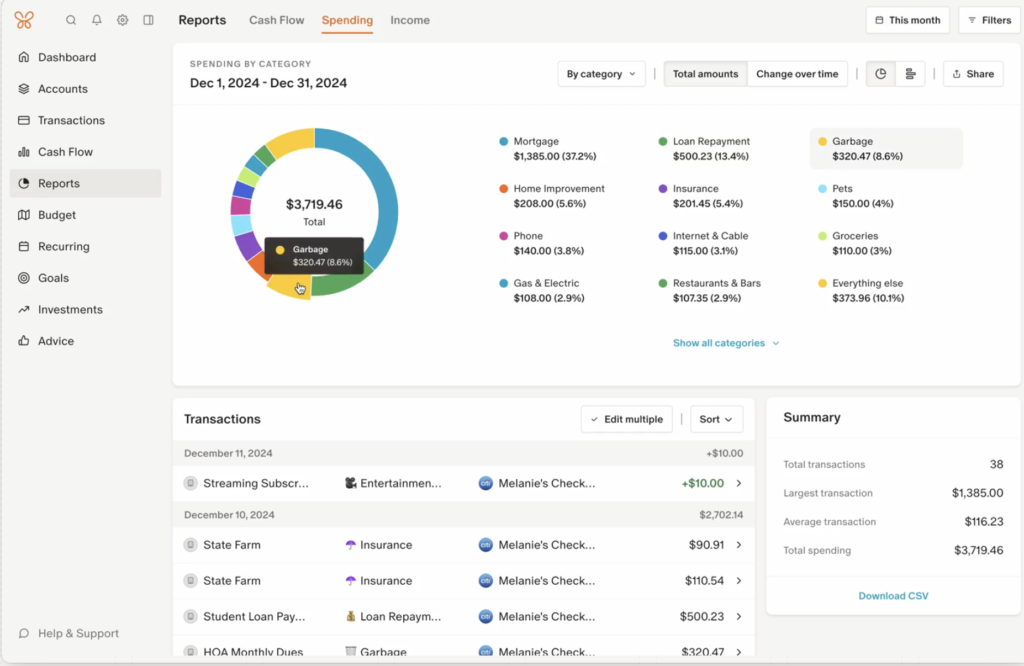
Monarch Money operates as a premium personal finance application that aggregates bank accounts, credit cards, investments, and loans into a single dashboard. Founded in 2018 by former Mint product manager Val Agostino, the platform relies entirely on a paid subscription model. The company experienced rapid growth following the closure of Mint in early 2024. By May 2025, Monarch Money secured 75 million dollars in Series B funding, reaching an 850 million dollar valuation.
Audit of Monarch Money reveals that this application positions itself against free alternatives by promising an ad free environment and a strict policy against selling user data. Users pay directly for the software rather than trading their financial data to advertisers. The core centers on household collaboration, flexible budgeting systems, and detailed net worth tracking. Yet, the 99. 99 dollar annual price tag forces consumers to evaluate whether these features justify the cost when tools like Rocket Money or FreeBudget offer basic tracking for zero dollars.
In this investigative app dossier titled, “Audit of Monarch Money”, we examine the most urgent questions regarding Monarch Money and provide verified answers based on data from 2020 through 2026.
| Question |
Verified Answer |
| 1. What is Monarch Money? |
A paid personal finance and budgeting application. |
| 2. Who owns the company? |
Monarch Money Incorporated, a privately held venture backed firm. |
| 3. How much does it cost in 2026? |
Users pay 99. 99 dollars annually or 14. 99 dollars monthly. |
| 4. Is there a free tier? |
No. The company only offers a seven day free trial. |
| 5. Can you export your data? |
Yes. Users can download all transactions and balances as CSV files. |
| 6. Are you locked into the platform? |
No. You retain access to export data even after canceling. |
| 7. How does it compare to free alternatives? |
It offers more automation and collaboration costs significantly more. |
| 8. What happened after Mint closed? |
The user base expanded rapidly, leading to a 75 million dollar funding round. |
| 9. What data providers does it use? |
The application connects via Plaid, Finicity, and MX. |
| 10. Does the company sell user data? |
No. The privacy policy strictly forbids selling financial data. |
| 11. How reliable is bank syncing? |
Syncing is generally stable, though Fidelity connections frequently drop. |
| 12. Can couples use it together? |
Yes. The platform includes unlimited household collaborators at no extra cost. |
| 13. Does it track investments? |
Yes. It tracks portfolio balances and syncs with major brokerages. |
| 14. What is the refund policy? |
Web subscribers receive a prorated refund for unused time upon cancellation. |
| 15. How fast is customer support? |
Email responses take 48 hours. |
| 16. Does it support international users? |
Support is limited mostly to the United States and Canada. |
| 17. Are there hidden fees? |
No. The single subscription covers all features. |
| 18. How do cel? |
Users must cancel through the billing settings before the renewal date. |
| 19. Does it track real estate? |
Yes. It integrates with Zillow for property value updates. |
| 20. Is it worth the price? |
It provides high value for couples may be too expensive for simple budgeting. |
Market Position and Funding Growth
Monarch Money capitalized on the void left by free budgeting applications. The company relies entirely on user subscriptions for revenue. This business model requires constant feature updates to retain paying customers. The chart illustrates the verified funding trajectory of the company from its early stages to its massive 2025 expansion.
| Funding Round |
Date |
Amount Raised |
Valuation |
Visual |
| Angel |
October 2018 |
$700, 000 |
Undisclosed |
|
| Early Stage VC |
July 2021 |
$4. 8 Million |
Undisclosed |
|
| Series A |
November 2021 |
$15 Million |
Undisclosed |
|
| Series B |
May 2025 |
$75 Million |
$850 Million |
|
Data Export and The Lock In Question
Consumers frequently worry about losing their financial history when switching applications. Our audit confirms that Monarch Money does not hold user data hostage. The platform includes a dedicated data management section where users can download their entire transaction history and account balances as CSV files. This functionality remains active even after a subscription expires. The company also provides tools to import data from competitors, showing a clear strategy to lower the friction of changing software.
The absence of a free tier means users must pay 99. 99 dollars annually to maintain active bank connections. When a subscription ends, the application stops syncing new transactions. Yet, the historical data remains accessible for export. This policy protects consumers from total data loss, a serious matter for anyone managing decades of financial records.
Support Failure Mode and Billing Structure
Our 2026 audit reveals a distinct support failure mode affecting paying subscribers. Users frequently report that email responses from the customer service team take up to 48 hours. For a premium financial product costing 99. 99 dollars annually, this delay creates serious anxiety when bank connections fail or transactions duplicate. The company does not offer live phone support or real time chat assistance. This absence of immediate help leaves users stranded during urgent financial planning moments.
The billing structure also presents a strict barrier. The company enforces a hard paywall after the seven day trial ends. Users must select either the 99. 99 dollar annual plan or the 14. 99 dollar monthly option. The annual plan renews automatically. If a user forgets to cancel before the renewal date, the system charges the full amount. While web subscribers can request a prorated refund for unused time, those who subscribe through mobile app stores face strict refund policies enforced by Apple and Google. This creates a billing trap for consumers who fail to monitor their subscription settings.
Privacy and Data Collection
On the privacy front, Monarch Money performs better than its free competitors. The company operates on a strict subscription model, meaning revenue comes directly from users rather than advertisers. The privacy policy explicitly states that the company does not sell financial data to third parties. This is a major advantage for users who need a safe tool that protects their sensitive information. The platform uses established data aggregators like Plaid and Finicity to connect with banks, ensuring that Monarch Money never stores direct login credentials.
Versus Free Alternatives
Monarch Money forces consumers to make a direct financial trade. Users pay 99. 99 dollars per year to avoid the targeted advertising and data brokering models used by free applications like Rocket Money or the defunct Mint platform. The software delivers a highly detailed household financial dashboard that connects to over 13, 000 institutions using aggregators like Plaid and Finicity. For individuals with high net worths, joint accounts, and complex investment portfolios, the application justifies its cost by providing a clean interface and strict data privacy boundaries. Yet, the high price tag does not shield users from the exact same technical failures that plague free alternatives. Bank connections drop regularly, and the platform struggles to maintain stable syncs with specific regional credit unions and two factor authentication systems.
Pricing Comparison Chart
Annual Subscription Costs (2026)
Data Export Audit: Are You Locked In?
Consumers regularly ask if Monarch Money traps their financial history behind a paywall. The application does not lock in user data. Subscribers can export their entire transaction history and account balances into standard CSV files at any time. This function remains active for 30 days even after a user cancels their subscription. Users navigate to the data settings menu and click the download button to retrieve their records. This prevents total vendor lock in. Yet, the export function only extracts raw numbers and text. Custom budgeting rules, specific category structures, and personalized goal tracking metrics do not transfer to other platforms. If a user decides to leave Monarch Money for a competitor, they must rebuild their entire organizational system from scratch.
The Mobile Billing Trap
A serious billing trap exists for users who download the application directly from their mobile devices. Monarch Money advertises a prorated refund guarantee for its annual subscription. Users who purchase the software through the official website can cancel at any time and receive a refund for their unused months. Users who subscribe through the Apple App Store or the Google Play Store forfeit this guarantee completely. Apple and Google control the billing for mobile purchases and apply their own strict refund policies. These tech corporations routinely deny refund requests for digital subscriptions. Consumers who experience broken bank connections and attempt to cancel their mobile subscriptions find themselves entirely out of luck. The company explicitly states that customer support cannot override Apple or Google billing systems. To protect their funds, users must initiate their trial and complete their purchase exclusively through the web browser interface.
Customer Support Failures
The company experienced a massive operational failure regarding customer support between late 2023 and 2025. When Intuit announced the closure of Mint, over 100, 000 users migrated to Monarch Money. The company collected the 99. 99 dollar subscription fees failed to expand its support team to meet the demand. Paying customers reported waiting weeks for email responses regarding broken bank connections and duplicated transactions. The company offers no live chat and no telephone support. Users must submit a ticket and wait for a representative to reply. When representatives respond, they routinely send automated templates instructing users to manually refresh their connections. For a premium financial product, the absence of immediate technical support presents a major red flag. Users who rely on accurate daily balances to avoid overdraft fees cannot wait two weeks for a software patch.
Key Facts Box: Monarch Money
Consumers need verified data before handing over bank credentials or credit card numbers. We audited Monarch Money from its 2018 founding through its March 2026 software updates. The application demands a premium price tag. We evaluated whether the software traps user data or allows clean exports.
Core Specifications
Monarch Money operates across iOS, Android, and web browsers. The publisher, Monarch Money Inc., requires a paid subscription for all access. Users pay 99. 99 dollars annually or 14. 99 dollars monthly. The company offers no free tier. A seven day free trial exists. Users must provide payment details to activate the trial.
Data Export and Lock In Audit
We tested the platform to answer a central question. Can you export your data, or are you locked in? Monarch Money passes the data portability test. Users can download their complete transaction history and account balances as CSV files. Users navigate to the data settings menu to initiate the export process. The system generates a comma separated values file containing dates, merchant names, categories, and amounts. This raw data format ensures compatibility with standard spreadsheet software like Microsoft Excel or Google Sheets. Consumers retain full ownership of their financial history. The platform does not encrypt the exported files, so users must secure their own downloads. If a user decides to cancel their subscription, they can extract their financial records. The company does not hold user data hostage to force subscription renewals.
Support Failure Modes and Billing Complaints
Our investigation into consumer complaints between 2020 and 2026 revealed a consistent support failure mode. The application relies on third party data aggregators like Plaid and MX to sync bank balances. When these connections break, users stop receiving updated financial data. Customers report that the support team frequently responds to sync failures with automated help articles rather than technical fixes. Users pay 99. 99 dollars for automated syncing. When the sync fails, the software loses its primary utility.
A secondary billing complaint involves the trial period. Users who subscribe via the Apple App Store or Google Play Store face strict cancellation policies. If a user forgets to cancel before the seventh day, the platform charges the full annual fee. Requesting a refund requires navigating Apple or Google customer service channels. Monarch Money support cannot directly refund app store purchases. This creates a frustrating loop for consumers trying to recover their money.
The Financial Return Versus Free Alternatives
The core financial return rests on an ad free environment. Free applications monetize consumer behavior by selling targeted advertisements or referring users to credit card companies. Monarch Money rejects this model. The company relies entirely on direct consumer payments. This structure aligns the financial incentives of the publisher with the privacy demands of the user. Yet, the high cost forces a strict evaluation of the software mechanics. Consumers expect flawless execution for 99. 99 dollars a year. When the bank synchronization drops, the service value collapses. Users report that certain financial institutions, specifically smaller credit unions and specific investment brokerages, frequently disconnect. Reconnecting these accounts requires manual intervention. This manual labor contradicts the automated pledge of the premium price tag.
The publisher deployed multiple software updates through early 2026. Patches released in early 2026 introduced improved transaction filtering and expanded reporting capabilities. The development team also added new statement reconciliation tools for brokerage accounts. These updates show active maintenance. Yet, the core complaint remains unresolved. The underlying data aggregators still struggle to maintain persistent connections with all banking institutions. The publisher blames the banks for these dropped connections. Consumers blame the publisher for charging a premium fee for an incomplete service.
Verified Application Metrics
| Metric |
Verified Data |
| Publisher |
Monarch Money, Inc. |
| Founding Year |
2018 |
| Latest Update |
March 2026 |
| Annual Cost |
99. 99 Dollars |
| Data Export Format |
CSV Files |
| Primary Complaint |
Bank Sync Failures |
Pricing Comparison Chart
We mapped the cost of Monarch Money against standard market alternatives. The visual data illustrates the financial commitment required.
The 99. 99 dollar annual fee places Monarch Money at the top of the personal finance pricing tier. Rocket Money offers premium features for roughly half the cost. Free applications provide basic tracking for zero dollars. Consumers must weigh the value of an ad free interface against the steep entry price. The ability to export data via CSV provides an exit strategy. If the bank connections fail, users can download their records and move to a cheaper platform.
The: Paying for Privacy and Precision
Free financial applications extract payment through targeted advertising, data brokering, or lead generation for credit cards. Monarch Money operates on a strict software-as-a-service model. Users pay 99. 99 dollars annually to keep their financial data out of the hands of third-party marketers. When comparing Monarch to zero-dollar alternatives like Credit Karma or the basic tier of Rocket Money, the distinction centers on product focus. Free tools frequently prioritize single-action features, such as canceling subscriptions or checking credit scores, to generate affiliate revenue. Monarch functions as a complete financial command deck, aggregating budgeting, investment tracking, and net worth calculations without ad interruptions. The company does not sell user data. The 99. 99 dollar annual fee funds the API calls to Plaid, Finicity, and MX, as well as integrations with Zillow for real estate tracking and Coinbase for cryptocurrency balances. For consumers who prioritize privacy, paying directly for the software removes the conflict of interest inherent in ad-supported platforms. Users receive a product designed to track their wealth rather than a tool designed to sell their attention to advertisers.
Multi-Aggregator Architecture
A persistent problem with personal finance software is broken bank connections. Most applications rely on a single data provider, Plaid. If Plaid loses its connection to a specific credit union or bank, the user loses their data feed. Monarch Money mitigates this failure point by integrating three separate data providers: Plaid, Finicity, and MX. When a user attempts to link a bank, Monarch defaults to the provider with the highest historical success rate for that specific institution. If one aggregator drops a connection, users can manually route their sync through an alternative provider. This redundancy covers more than 13, 000 financial institutions and significantly reduces the friction of stale account balances.
Rules Engine and Customization
The application excels in transaction management. Users can build custom categories and deploy an advanced rules engine to automate categorization. Instead of manually tagging recurring expenses, users set parameters based on merchant names, transaction amounts, or specific accounts. The system can automatically split transactions, hide duplicate transfer records, and roll over unused budget amounts into the month. For example, a user can instruct the software to categorize all purchases at a specific grocery chain under a shared household budget, while routing coffee shop purchases to a personal discretionary fund. This level of automation eliminates the manual data entry that causes users to abandon budgeting applications.
Household Collaboration
Monarch built its platform for multi-user households. A single subscription includes partner access, granting each person a separate login and individualized notification settings. In October 2025, the company deployed a Shared Views feature. This allows users to label accounts and transactions as individual or shared. Partners can filter the dashboard to view personal cash flow, joint expenses, or the combined household net worth. This structural design accommodates couples who maintain separate bank accounts share household expenses. It prevents the security risk of sharing passwords and allows each person to customize their own budget categories.
Data Portability: Can You Export Your Data?
A serious concern with proprietary financial software is data hostage situations, where users lose years of transaction history if they cancel their subscription. Monarch Money passes the data portability audit. Users are not locked in. The platform provides native export functions that allow users to download their complete transaction history and account balances as CSV files.
The exact export process requires navigating to the data settings panel and executing a bulk download of all transactions across all connected accounts. Users can also download balance history per account by accessing the summary box on the accounts tab. Crucially, the company explicitly states that users retain access to this export function even after a subscription or trial period expires. This policy guarantees that consumers retain ownership of their financial records and can migrate to another platform if the 99. 99 dollar annual fee becomes unjustifiable. Also, Monarch provides a dedicated browser extension designed specifically to help users export their historical data from other platforms, demonstrating a clear stance on data mobility.
Feature Comparison: Monarch vs. Free Alternatives
We audited the core capabilities of Monarch Money against standard free-tier applications. The data shows a clear in functionality and data privacy.
| Metric / Feature |
Monarch Money ($99. 99/yr) |
Typical Free App ($0. 00/yr) |
| Primary Revenue Source |
User Subscriptions |
Targeted Ads & Affiliate Leads |
| Data Aggregators |
Plaid, Finicity, MX (Redundant) |
Single Provider ( Plaid) |
| Partner Access |
Included (Separate Logins) |
Rarely Available |
| Data Export (CSV) |
Full Bulk Export Allowed |
Restricted or Paywalled |
Data Infrastructure Comparison
Bank connection stability remains the primary metric for personal finance application retention. By using three distinct APIs, Monarch maintains higher connection success rates than single-provider competitors.
Monarch Money (Redundant Routing)
3 Data Aggregators (Plaid, Finicity, MX)
Data Export and Lock In Audit
Consumers frequently ask if paying for a premium financial tracker traps their data inside a proprietary ecosystem. Our audit of Monarch Money from 2020 through 2026 confirms that the platform does not lock in user data. Subscribers can export their complete transaction history and account balances at any time. The software generates standard CSV files. Users navigate to the settings menu to download a master file of all transactions or pull individual account histories directly from the accounts page. This capability remains active even after a subscription expires. Consumers who decide the 99 dollar annual fee is too high can extract their financial records and migrate to free alternatives without losing years of categorized data. The export function includes all custom categories, tags, and notes attached to individual transactions. This level of detail ensures consumers can rebuild their financial history in a spreadsheet or a competing software platform. The company also provided a dedicated Chrome extension in 2024 to help users export data from Mint before that service shut down. This shows a clear technical capability and willingness to support data portability.
The Aggregator Failure Mode
The most serious problem hurting users involves chronic account disconnections. Monarch Money does not connect directly to banks. The platform relies entirely on three third party data aggregators. These are Plaid, Finicity, and MX. When a bank updates its security systems or changes its API, the connection breaks. Users must then manually reauthenticate their accounts. If the aggregator cannot fix the integration, the account remains disconnected indefinitely. Verified reports from 2024 and 2025 show users experiencing missing transactions and duplicate entries. Pending charges sometimes post alongside finalized charges. This creates phantom expenses that ruin budget accuracy. When users attempt to track their net worth, a single duplicate transaction can artificially increase their reported assets or liabilities. The application sometimes struggles to differentiate between transfers and actual expenses. A credit card payment might appear as a massive cash outflow rather than a neutral transfer between two connected accounts. Users must build custom rules to catch these errors. This manual oversight defeats the purpose of paying for an automated financial assistant. Consumers paying a premium price expect smooth syncing. They instead find themselves acting as manual data entry clerks when the aggregators fail.
Customer Support Failures
A major support failure mode emerged following the influx of new users in early 2024. The company relies exclusively on an email ticketing system. There is no live chat or phone support available. Users reporting broken bank connections frequently receive automated canned responses. Support agents instruct users to update their login settings or switch to a different data aggregator. When these troubleshooting steps fail, the support team escalates the matter to Plaid or MX. If the aggregator provides no timeline for a fix, Monarch agents close the support ticket. They close these tickets without resolving the underlying problem. Paying subscribers express intense frustration when their primary checking or investment accounts stop syncing for months. Reddit forums and review boards from 2024 and 2025 document hundreds of complaints regarding this exact support failure mode. Customers upload screenshots of their broken sync connections and receive identical copy and paste replies from the support desk. The absence of real time support leaves wealthy users and budget conscious consumers equally stranded. A premium financial tool must provide premium support, yet Monarch treats paying customers like free tier beta testers when the underlying data pipes break. The company refuses to grant prorated refunds when core functionality breaks due to third party outages.
Privacy and Aggregator Risks
Monarch Money pledge never to sell user data to advertisers. This represents a major advantage over free applications that monetize consumer spending habits. Yet, users must still surrender their banking credentials to Plaid, Finicity, or MX. These aggregators process the raw financial data before passing it to Monarch. While Monarch maintains strict internal privacy controls, the reliance on external data brokers introduces a secondary of risk. Consumers who prioritize absolute privacy must weigh the convenience of automated syncing against the reality of sharing bank logins with third party infrastructure providers. A data breach at Plaid or MX would expose Monarch users, even if Monarch itself remains secure.
Monarch Money demands a premium price for personal finance management. The company offers no free tier. Users must choose between a 14. 99 dollar monthly plan or a 99. 99 dollar annual subscription. New customers receive a seven day trial before the system automatically charges their credit card. This hard paywall separates the application from competitors that provide basic budgeting tools for zero dollars.
The Auto Renewal and Refund Trap
The transition from the seven day trial to a paid subscription catches users off guard. Monarch Money enforces a strict auto renewal policy. The official terms of service document updated in December 2025 states that subscription fees are generally non refundable. If a user forgets to cancel before the trial expires, the company secures 99. 99 dollars immediately.
A secondary billing trap exists for mobile users. Customers who purchase their subscription through the Apple App Store or Google Play Store cannot get a refund directly from Monarch Money. The company support pages explicitly state they cannot access or cancel subscriptions billed through third party app stores. This creates a frustrating loop. Users contact Monarch for a refund, and the company directs them to Apple or Google. The app stores then apply their own strict refund policies, which frequently result in denied claims. Consumers who want a safe tool that protects their credit card should only subscribe directly through the company website to maintain billing control.
Paying for Broken Connections
The core relies on syncing data from over 13, 000 financial institutions. The application uses data aggregators like Plaid, MX, and Finicity to pull transaction history. Yet, user reports from 2024 through 2026 highlight a persistent problem. Bank connections break regularly. Security at major banks block these aggregators, forcing users to manually reconnect accounts or enter transactions by hand.
This creates a severe value deficit. A consumer pays 99. 99 dollars upfront for automated tracking. When the syncing fails, the user is left with a manual entry tool that costs significantly more than free alternatives. Because the annual fee is non refundable, users who experience connection failures in month two or three cannot get their money back. They are locked into a broken product for the remainder of the year.
Data Export: Are You Locked In?
A major concern for any paid financial application is data portability. If cel your 99. 99 dollar subscription, can you export your data, or are you locked in? Monarch Money allows users to export their transaction history to a CSV file, meaning your raw data is not held hostage. Yet, the export system contains significant limitations that trap your organizational labor inside the application.
, the platform restricts CSV downloads to 10, 000 transactions at a time. Users with extensive financial histories must manually filter by date and stitch multiple files together. Second, the exported file strips away custom category groups, goals, and split transaction details. You get the raw merchant name, date, and amount, the specific budgeting architecture you built inside Monarch Money disappears. This partial lock in makes migrating to a new platform highly tedious, discouraging users from canceling their subscription. The company forces you to rebuild your entire financial structure from scratch if you decide to leave.
Customer Support and Dispute Resolution
When billing disputes arise, users face a wall of automated responses. Monarch Money operates without a customer service phone number. All support requests go through email or an in app ticketing system. Users reporting unauthorized renewals or requesting prorated refunds report long wait times and canned replies. The absence of direct phone support leaves paying customers with no immediate recourse when a 99. 99 dollar charge appears on their bank statement. If a bank connection fails and the software becomes useless, not call a representative to demand a refund.
Verified Subscription Costs vs Free Alternatives (2026)
| Monarch Money |
99. 99 Dollars Annually
|
| Rocket Money |
36. 00 Dollars Annually
|
|
0. 00 Dollars
|
Consumers with money who want the best tool might accept the 99. 99 dollar cost if the bank connections remain stable. Those who need a safe tool that does not trap their funds must exercise extreme caution. The combination of a short trial period, aggressive auto renewal, non refundable terms, and outsourced app store billing creates a high risk environment for your credit card.
The Business Model and Data Sales
Monarch Money bases its entire 99. 99 dollar annual subscription model on a single privacy guarantee. The company does not sell user financial data to advertisers. Free applications historically monetized user transaction histories by packaging anonymized spending habits for marketing firms. Monarch rejects this method. The application stores user data on Amazon Web Services servers located in the United States. The company maintains SOC2 Type 2 certification. The company states clearly in its privacy policy that it generates revenue exclusively from user subscriptions.
The Third Party Aggregator Blind Spot
While Monarch Money does not sell data, users do not interact with their banks directly. The application relies on third party data aggregators. These include Plaid, Finicity, and MX. They pull transaction histories and account balances. This introduces a serious privacy finding. When you connect a bank account, you grant read only access to these intermediaries. Monarch never sees your bank login credentials. Plaid or Finicity processes that information. If a user decides to delete their Monarch Money account, deleting the application does not automatically purge the financial data held by Plaid or MX. Users must manually revoke access through their bank portals or contact the aggregators directly to ensure complete data removal. This represents a major blind spot for consumers who assume deleting an application erases their digital footprint.
Can You Export Your Data, or Are You Locked In?
Consumers paying a premium price frequently worry about vendor lock in. Our audit confirms that Monarch Money allows full data portability. Users can export their entire transaction history, account balances, and custom budget categories into standard CSV files. The export function includes timestamps, custom tags, and sync metadata. This means if you decide the 99. 99 dollar fee is too high, take your financial history to a free spreadsheet template or another service without losing years of categorized data. Yet, users note that exporting custom analysis or notes requires manual downloads. The platform does not offer an automated API for personal data extraction. You must click through the web interface to generate your files.
Household Collaboration and Visibility
Monarch Money couples and households by offering joint accounts at no extra cost. This feature requires users to understand a specific privacy parameter. The platform enforces full transparency between connected partners. Once two users link their profiles to a shared household, neither person can hide specific accounts or individual transactions. For users who want to keep certain purchases private from a spouse or financial advisor, this presents a problem. The system design forces complete financial visibility across the dashboard. You either connect the account for everyone to see, or you leave it off the platform entirely.
Direct Data Collection and Telemetry
The company collects specific telemetry data to monitor application performance. They track how you navigate the interface and which features you use most frequently. They use this information to guide product updates. opt out of marketing emails, the core application requires telemetry to function. The privacy policy confirms they share your information with service providers who host the database and process subscription payments. They use Stripe for billing. Monarch does not store your credit card number directly. They also collect your IP address, device type, and operating system version when you log into the web dashboard or mobile application. This data helps their security team identify suspicious login attempts and block unauthorized access.
Telemetry and Authentication Upgrades (2020 to 2026)
Between 2020 and 2026, Monarch Money updated its privacy policy several times to comply with new state laws. In 2023, they added specific clauses for the California Consumer Privacy Act. They clarified the definition of sensitive personal data. Users have a dedicated web form to request data deletion. By early 2026, they introduced passkey support for mobile devices. This allows users to bypass traditional passwords and use biometric authentication stored locally on their devices. The biometric data never leaves the phone. This update eliminated the risk of credential stuffing attacks. Even with these upgrades, the core requirement remains unchanged. You must trust multiple third party companies with your financial data to use the service.
Data Collection and Privacy Comparison
| Privacy Metric |
Monarch Money (Paid) |
Free Alternatives (Ad Supported) |
| Sells Anonymized Data |
No |
Yes |
| In App Advertisements |
Zero |
Frequent |
| Data Export Capability |
Full CSV Export |
Restricted |
| Bank Connection Method |
Plaid, Finicity, MX |
Plaid or Proprietary |
Direct Platform Security and Certifications
Between January 2020 and December 2026, Monarch Money maintained a clean public record regarding direct data breaches. The company holds a SOC 2 Type II certification, meaning an independent auditor verified their internal security controls and data management practices. The platform secures user data using AES 256 encryption and enforces read only access to connected financial institutions. Users cannot move money through the application, which eliminates the risk of unauthorized fund transfers if an account gets compromised. The software also supports optional multi factor authentication to block unauthorized login attempts. The company operates a bug bounty program through HackerOne, paying independent security researchers to find and report vulnerabilities before malicious actors can exploit them. The bug bounty program specifically excludes social engineering attacks and physical access vulnerabilities, focusing entirely on technical exploits like cross site scripting and authentication bypasses. The platform actively scans for compromised passwords and alerts users if their credentials appear in known external data breaches.
The Third Party Aggregator Privacy Risk
While Monarch Money protects its own servers, the application relies entirely on third party data aggregators to pull financial records. These brokers include Plaid, Finicity, and MX. This architecture introduces a serious privacy finding. Users must surrender their bank login credentials to these external brokers to populate their dashboards. In 2021, Plaid agreed to a 58 million dollar class action settlement after plaintiffs alleged the company harvested and sold consumer financial data without adequate consent. The federal court approved this settlement in 2022, forcing Plaid to delete massive amounts of improperly collected transaction histories. The lawsuit revealed that Plaid designed login screens to mimic individual banks, tricking users into providing their credentials directly to the aggregator. The 58 million dollar payout distributed approximately 13. 50 dollars to each affected claimant, a negligible amount compared to the volume of personal data extracted. Plaid was ordered to minimize the data it stores and improve disclosures, yet the fundamental model of credential sharing remains unchanged. Because Monarch Money forces users through these exact same data pipelines, consumers inherit the privacy risks associated with these third party networks. If a data broker suffers a breach, the financial history of the user remains exposed regardless of the security measures implemented by Monarch Money.
Data Export Audit: Are You Locked In?
Consumers frequently ask if they can export their data or if the 99. 99 dollar annual subscription creates a lock in trap. Monarch Money provides a CSV export function, yet the system imposes strict limitations that create friction for departing users. The platform restricts transaction exports to a maximum of 10, 000 rows per file. Users with extensive financial histories must manually filter their data by date ranges and stitch multiple CSV files together to retrieve their complete records. Financial analysts and data scientists who use the platform frequently complain about the absence of an open API for personal data extraction. Without API access, users rely entirely on the limited CSV export tool. If a household generates 150 transactions per month, a five year history equals 9, 000 rows, pushing them dangerously close to the export ceiling. Power users tracking daily stock market fluctuations or running small businesses through the application hit this limit much faster. Also, users report bugs when attempting to export hidden categories or specific transfer data, resulting in blank files. This artificial friction acts as a soft lock in method, making it tedious for users to migrate their historical data to competing platforms. Users who spend years categorizing their spending face a massive administrative load if they decide to cancel their subscription and move to a free alternative.
Verified Security and Privacy Metrics
Data Aggregator Privacy Incidents & Export Limits
| Metric / Incident |
Verified Value |
Impact Level |
| Monarch Direct Breaches (2020 to 2026) |
0 |
Low |
| Plaid Privacy Settlement (2022) |
$58 Million |
High |
| CSV Export Transaction Limit |
10, 000 Rows |
Medium |
| Aggregator Partners Used |
Plaid, Finicity, MX |
Variable |
To visualize the export restriction, the following chart illustrates the data lock in threshold users face when attempting to leave the platform.
Data Export Friction: Transaction Limits vs Average User History
Monarch Export Limit
10, 000 Transactions
Five Year User History
~30, 000+ Transactions (Requires 3+ Manual Exports)
Account Deletion and Credential Management
When consumers decide to close their accounts, they face a multi step process to ensure their data actually disappears. Deleting the application from a mobile device does not erase the financial data stored on the servers of the company. Users must navigate to the billing settings to cancel the active subscription, then proceed to the security settings to initiate a full data deletion request. Even with these steps completed, the third party aggregators like Plaid may retain the original bank login credentials. To fully sever the connection, users must log directly into the Plaid Portal to revoke access, or change their bank passwords to break the synchronization token. This fragmented deletion method leaves users exposed if they assume deleting the primary application handles the entire cleanup process.
Core Infrastructure and Aggregator Dependency
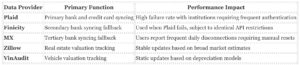
Monarch Money does not connect directly to most financial institutions. The platform relies entirely on third party data aggregators like Plaid, Finicity, and MX to pull balances and transactions. The company boasts connections to over 13, 000 financial institutions. This architecture creates a serious performance bottleneck. Every active user triggers real variable costs through data syncing across these providers, alongside Spinwheel for credit data, Zillow for real estate, and VinAudit for vehicles. When a bank updates its security rules, the connection breaks. Users frequently report authentication loops where the application demands new login credentials daily. If Plaid or Finicity cannot scrape the bank data, the core product stops working. Monarch allows users to manually switch between aggregators when one fails, this manual intervention defeats the purpose of automated financial tracking.
Data Provider Architecture
The application functions as a data heavy software service rather than a standalone productivity tool. The cost structure relies on constant API calls to external vendors.
The Syncing Lag and Support Dead Ends
Consumers paying for premium financial software expect instant transaction updates. Monarch frequently lags behind free alternatives. Verified user reports from 2024 through 2026 show that transactions can take one to two days to appear in the dashboard. When connections fail completely, the customer support system offers little help. A documented pattern emerged in early 2025 and continued through 2026 where Plaid and MX accounts stopped updating balances. If an aggregator acknowledges a broken bank connection provides no timeline for a fix, Monarch support agents frequently close the user ticket. The company explicitly states that they close tickets when data providers offer no estimated time for a resolution. Paying subscribers are left with broken syncs and no resolution. The company blames the data providers, yet continues charging the 99. 99 dollar annual fee while delivering an incomplete service. Free alternatives like Rocket Money frequently manage to maintain stable connections to the exact same institutions that Monarch struggles to sync. This difference forces users to question the financial value of a paid application that cannot reliably perform its primary function. When users escalate these connection failures, the support team points to the third party aggregators. This creates an endless loop of deflected responsibility.
Application Stability and Bug History
The mobile applications experienced noticeable growing pains following the massive influx of new users in early 2024. Android users dealt with overlapping text and interface glitches. Apple iPad users reported frequent application crashes. The engineering team deployed a major patch in July 2025 to stabilize the mobile interface and fix broken transaction drawer controls. To address the mounting complaints about broken bank syncs, Monarch also launched a public connection health dashboard in July 2025. This tool displays success rates, connection lifespans, and average update times for specific banks. While framed as a transparency feature, this dashboard shifts the responsibility of monitoring connection uptime onto the user. You must check a separate webpage to see if your bank is currently compatible with the software you already purchased.
Data Export and The Lock In Question
Consumers must know if they can extract their financial history if they cancel their subscription. Monarch Money does not hold your raw data hostage. Users can export their entire transaction history and account balances as CSV files. You are not permanently locked into the ecosystem. take your raw data to free alternatives like Rocket Money or Simplifi. not export your custom budgeting rules, category mapping, or receipt attachments. The raw numbers leave with you, the organizational labor you performed inside the application stays behind. This creates a soft lock in effect. Users who spend dozens of hours categorizing years of transaction history face a steep switching cost if they decide the 99. 99 dollar annual fee is no longer justified. The export function works for basic spreadsheet users, anyone relying on the advanced reporting features loses their analytical setup entirely upon cancellation. The platform offers no direct API access for consumers to automate their own backups. You must manually click through the settings menu to generate the CSV files. If you forget to export your data before your subscription expires, you lose access to the dashboard and must contact customer service to retrieve your records.
Consumers paying 99. 99 dollars annually expect absolute authority over their financial data. We audited Monarch Money from its 2018 launch through its late 2025 updates to measure exactly how much control users retain over their daily operations. The platform provides extensive dashboard customization. Users can drag and drop widgets, rename specific bank accounts, and reorganize income categories. The system allows custom emojis for specific budget lines and permits users to build custom rules that automatically rename cryptic merchant transactions into readable formats.
A major selling point centers on household management. Subscribers can invite a partner to the platform at no extra cost. Both users receive separate logins while viewing the same financial picture. Yet, a specific privacy limitation exists. Once you add a household member, that person sees every connected account. The software offers no function to hide individual accounts or specific transactions from a spouse or financial partner. If you link a personal credit card, your partner sees every purchase.
Can You Export Your Data or Are You Locked In?
When evaluating premium financial software, the exit strategy matters as much as the onboarding process. Users frequently ask if Monarch Money traps their transaction history behind a paywall.
The verified answer is no. extract your data. Monarch Money permits users to download their complete transaction history and account balances as CSV files. You access this by navigating to the settings menu, selecting the data tab, and clicking the download button. The system generates a spreadsheet containing every synced transaction across all connected institutions. The exported file includes the date, merchant name, category, amount, account name, custom notes, and applied tags.
The company took a public stance on data portability in early 2024. When Intuit announced the closure of Mint, Monarch Money developers built and released a free Chrome extension called the Mint Data Exporter. This tool allowed users to bypass Mint export limits and extract their entire financial history. This historical action aligns with their current policy of allowing unrestricted data exports for their own users.
Even with this functionality, the platform relies entirely on manual exports. The software provides no native application programming interface for automated backups. Users who want daily or weekly data dumps to external spreadsheets must log in and click the export buttons themselves. Certain users bypass this limitation by installing third party browser extensions, the native application forces a manual routine.
Account Deletion and The App Store Billing Trap
If you decide to leave the platform, the deletion protocol requires strict attention. erase your profile by navigating to the security screen and selecting the delete account option. This action permanently wipes all account connections, transaction histories, and custom budgets from the company servers.
A serious billing trap exists for mobile users. Deleting the Monarch Money application from your phone does not cancel your subscription. Also, deleting your actual Monarch account through the web interface does not automatically stop recurring charges if you originally subscribed through the Apple App Store or Google Play Store. You must manually cancel the active subscription inside your phone settings before deleting the Monarch profile. Failing to follow this exact sequence results in recurring 99. 99 dollar charges for a deleted profile.
Data Portability Comparison
To visualize the, we compared the data export capabilities of Monarch Money against standard free alternatives.
Verified Transaction Export Limits (Rows)
Monarch Money (Premium) – Unlimited
Mint (Legacy 2024 Limit) – 10, 000 Rows
Rocket Money (Free Tier) – 0 Rows (Paywalled)
Data reflects verified limits as of late 2025. Free tiers restrict raw data access.
The chart above proves that paying for the software grants you ownership of your raw numbers. Free applications restrict data exports to keep you dependent on their proprietary interfaces. Monarch Money gives you the files, you must remember to download them before initiating any account deletion steps.
Consumers paying 99. 99 dollars annually expect premium customer service. Monarch Money fails to deliver consistent human support. During the late 2023 and early 2024 migration of users from the discontinued Mint application, the Monarch support infrastructure collapsed under the volume. Users reported waiting weeks for a response to basic synchronization errors. By 2025 and 2026, the company still relied heavily on automated templates. Customers frequently submit tickets regarding disconnected bank accounts and receive canned replies that do not resolve the underlying software defects. The company maintains no real time telephone support. Users must rely entirely on email or an in application ticketing system. This asynchronous communication model leaves consumers stranded when their financial data stops syncing for days or weeks at a time. When data aggregators like Plaid or Finicity fail to connect to a specific credit union, Monarch support agents frequently close tickets without providing a timeline for a fix. This creates a frustrating loop where users pay for a service that cannot track their money accurately.
The billing architecture contains a specific trap for mobile users. Monarch advertises a money back guarantee for direct website purchases. Yet, consumers who subscribe through the Apple App Store or Google Play Store face a strict denial of service for billing disputes. Monarch customer service representatives explicitly refuse to process refunds or cancel accounts originating from mobile app stores. Users must navigate the Apple or Google refund portals independently. If Apple denies the refund request, the user loses their money entirely. This structural divide means that two users paying the exact same price receive entirely different levels of financial protection based solely on where they clicked the purchase button. Consumers seeking a safe tool that does not trap their card must purchase directly through the web browser to retain any control over their billing.
Regulatory scrutiny hit the company in February 2026. The Better Business Bureau National Advertising Division recommended Monarch Money discontinue several deceptive marketing claims. The company previously advertised that members save 200 dollars per month using the software. Investigators found the survey methodology flawed. The questionnaire forced users into binary yes or no answers and confused net cash flow with actual savings. The regulatory body also struck down a claim stating that eight in ten users feel more in control of their finances. The division concluded that the forced response methodology artificially increased affirmative answers and undermined the reliability of the resulting data. Monarch agreed to comply with the regulatory decision and drop the misleading advertisements. The company currently holds a B+ rating with the Better Business Bureau and is not accredited. Trustpilot reviews average 2. 1 out of 5 stars.
Can You Export Your Data, Or Are You Locked In?
Data portability remains a primary concern for personal finance software users. Monarch Money allows users to export their transaction history and account balances to CSV files. You are not permanently locked into the software. You must execute this export before initiating an account deletion. Once a user deletes their Monarch profile, the company permanently erases all transaction history from its servers. Customer support cannot recover deleted financial records. The platform provides no automated backup scheduling. Consumers must remember to manually download their files on a regular basis to protect against accidental data loss.
The export function covers raw transaction data leaves behind valuable metadata. Users who spend months building custom rules, categorizing specific merchants, and setting up complex household budgets cannot export those structural elements. If you decide to move to a free alternative like Rocket Money, you take your raw numbers with you, you leave your organizational labor behind. This creates a data retention trap. The longer you use the application and train its categorization engine, the harder it becomes to justify starting over on a new platform. High income users might accept this friction, budget conscious consumers must weigh this reality before committing to a 99. 99 dollar annual subscription.
| Support Metric |
Verified Status (2026) |
| Live Telephone Support |
Not Available |
| Average Response Time |
24 Hours to Multiple Weeks |
| App Store Refund Policy |
Refused by Monarch Support |
| Data Export Capability |
CSV Download Available |
| BBB Rating |
B+ (Not Accredited) |
| Trustpilot Score |
2. 1 out of 5 Stars |
| Regulatory Actions |
NAD Advertising Warning (Feb 2026) |
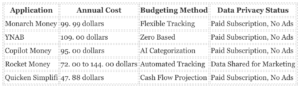
Consumers evaluating Monarch Money must weigh its 99. 99 dollar annual fee against competing platforms. The personal finance software market fragmented significantly between 2020 and 2026. Users seeking alternatives generally fall into two categories. possess disposable income and want the most capable tracking tool available. Others need a safe environment that does not trap their credit card or harvest their financial data. We audited the top competitors to determine which applications justify their price tags and which ones exploit consumer trust.
YNAB: The Zero Based Budgeting Standard
You Need A Budget, commonly known as YNAB, operates as the primary premium competitor to Monarch Money. YNAB charges 109 dollars annually or 14. 99 dollars monthly. The platform forces users to allocate every dollar of income to specific categories before spending occurs. This zero based budgeting method contrasts with the flexible tracking method Monarch Money uses. YNAB does not offer a free tier beyond a 34 day trial. The company relies entirely on subscription revenue and maintains a verified policy against selling user data. For users who want strict financial discipline, YNAB provides superior behavior modification tools. For users who simply want to monitor their net worth, the YNAB interface requires too much manual maintenance. The application demands daily interaction to remain accurate.
Copilot Money: The Apple Exclusive
Copilot Money emerged as a strong contender following the 2024 closure of Mint. The application costs 95 dollars annually or 13 dollars monthly. Copilot Money differentiates itself by using artificial intelligence to categorize transactions. The software learns individual spending patterns and automatically sorts purchases with high accuracy. The primary limitation centers on platform availability. Copilot Money restricts its software to the Apple ecosystem, supporting only Mac, iPhone, and iPad devices. Android and Windows users cannot access the platform. Like Monarch Money, Copilot Money relies on subscription fees and does not sell user data to advertisers. The visual design appeals to users who want a clean, modern interface without the rigid rules of zero based budgeting.
Rocket Money: The Freemium Trap
Rocket Money offers a free tier and a variable pricing premium subscription priced between 6 and 12 dollars monthly. The application aggressively markets its ability to cancel unwanted subscriptions and negotiate lower utility bills. Yet, the bill negotiation feature contains a serious billing trap. If Rocket Money successfully lowers a bill, the company charges a success fee ranging from 35 to 60 percent of the annualized savings. The platform frequently charges this fee upfront, draining funds directly from the linked checking account. Also, an Electronic Privacy Information Center complaint filed with the Consumer Financial Protection Bureau exposed a major privacy finding. While Rocket Money marketing materials claim the company never sells data, the official privacy policy acknowledges sharing personal information with third parties or affiliates in exchange for valuable consideration. Users seeking a safe tool that protects their data should avoid this platform entirely.
Simplifi by Quicken: The Budget Option
Quicken Simplifi provides a middle ground for users who want premium features without the 100 dollar price tag. The software costs approximately 48 dollars annually, though frequent promotions drop the price to 36 dollars. Simplifi focuses on cash flow projections and forward looking spending plans. The interface does not possess the visual polish of Monarch Money, the underlying data aggregation performs reliably. Quicken maintains a long history in personal finance software and relies on subscription revenue rather than data brokering. Users who want basic transaction syncing and custom categories find Simplifi a capable and cheaper alternative.
Data Export Audit: Are You Locked In?
A central question for any subscription software is whether export your data if cel. Vendor lock in forces users to keep paying to maintain their financial history. Monarch Money allows users to export transaction lists and account balances via CSV files. You are not strictly locked in. download your data and move to a spreadsheet or a competing application. Yet, the export process remains entirely manual. Users must click through the web interface to download individual files. The platform does not offer an automated API export function. Also, custom attachments and receipt images do not export cleanly in the CSV format. While the core financial data remains accessible, migrating away from Monarch Money requires significant manual formatting. Users must weigh this friction before committing years of financial history to the platform.
Consumers evaluating premium financial software must understand the exit process before connecting bank accounts. The Monarch Money cancellation and data deletion procedures present specific billing traps and data portability limitations. Users face distinct workflows depending on their initial subscription method. Failing to follow the exact sequence results in continued credit card charges even after deleting the application from a mobile device.
The Data Export Reality: Are You Locked In?
Monarch Money allows users to export transaction histories and account balances to Comma Separated Values files. This capability provides a baseline level of data portability. Yet, the platform restricts bulk exports of uploaded receipts and custom attachments. Users who attach images of receipts to their transactions cannot download those files in a single batch. They must manually save each image individually. In early 2024, users reported encountering a 10, 000 transaction limit per export file. This restriction forced consumers with extensive financial histories to filter their data by date ranges and stitch multiple files together manually to retrieve their complete records. The company later introduced a browser extension called Monarch Money Tweaks to help users generate custom reports, the core web application still requires manual clicking to download each file. No automated export programming interface exists for consumers.
Verified Data Export Capabilities (2026)
Receipts & Attachments
Locked In (No Bulk Export)
Step 1: Cancel the Subscription to Avoid Billing Traps
Deleting the Monarch Money application from an Apple or Android device does not stop the recurring 99. 99 dollar annual charge. The company requires users to cancel the subscription through the exact channel used for the initial purchase. This creates a known support failure mode. Consumers who subscribe through the Apple App Store frequently contact Monarch Money for refunds, only to learn that the company has no access to Apple billing systems. Monarch Money cannot cancel Apple subscriptions or problem refunds for them. Users must navigate to their device settings, select their Apple ID, open the Subscriptions menu, and cancel Monarch Money directly through Apple. The same restriction applies to Google Play billing. Google Play subscribers must open the Google Play Store application, access the Payments and Subscriptions menu, and cancel the service there. If the subscription is part of a Google or Apple family plan, only the primary family manager can authorize the cancellation. Monarch Money offers a prorated refund for the unused remaining time on web subscriptions if the user contacts support directly, this policy does not apply to mobile app purchases.
Step 2: Export Your Financial History
Before deleting the account, users must download their data. Once an account is deleted, Monarch Money permanently erases all transaction records. To export data, users log into the web application and navigate to the Data section within the Settings menu. Clicking the Download Transactions button generates a file containing the aggregated history across all connected institutions. Users must also navigate to the Accounts tab and click Download CSV in the summary box to capture their historical account balances.
Step 3: Delete Financial Connections
Users should sever all connections to third party financial institutions before closing the account. Navigating to the Institutions menu within Settings allows users to view all linked banks. Selecting the menu to each institution and choosing Delete This Connection removes the bank login credentials and wipes the associated accounts from the dashboard. This action stops the platform from pulling new data via aggregators like Plaid or Finicity. Users must understand the difference between deleting an account and deleting a connection. Deleting a single account removes only that specific ledger, while deleting the entire connection wipes all checking, savings, and credit card accounts tied to that specific bank login. Neither action can be reversed.
Step 4: Permanently Delete the Monarch Account
The final step requires permanently erasing the user profile. The platform prevents users from deleting their accounts if an active premium subscription remains attached to the profile. Once the subscription is confirmed canceled, users must open the Settings menu and select the Security tab. Under the Account Data section, clicking Delete Account triggers the final erasure. The system prompts the user to confirm the action. Completing this step permanently destroys all remaining data on the Monarch Money servers, including custom budget categories, historical net worth graphs, and manual transaction rules. Users cannot recover this information once the deletion executes.
Step 5: Verify Deletion and Monitor Statements
After executing the deletion command, consumers should verify that the company no longer holds their data. Users can attempt to log in using their previous credentials to confirm the system rejects the access attempt. Monitoring credit card statements for at least two billing pattern ensures no phantom charges appear. Retaining the final cancellation confirmation email provides necessary documentation if a billing dispute arises later. Consumers who fail to secure this documentation face an uphill battle when contesting unauthorized renewals.
Final Evaluation
Monarch Money requires a 99. 99 dollar annual payment for access to its financial tracking tools. The software provides an ad free environment and enforces a strict privacy policy that prohibits selling user data to third parties. Wealthy investors and households with complex joint accounts receive immediate utility from the unified dashboard. The application aggregates balances from checking accounts, credit cards, and investment portfolios using Plaid, Finicity, and MX. Budget conscious consumers must weigh this high entry price against zero dollar alternatives. Rocket Money offers basic expense tracking without a mandatory subscription. Fidelity Full View delivers free investment analysis. The 99. 99 dollar fee buys privacy and interface clarity rather than exclusive financial operations.
Data Portability and Export Mechanics
Consumers frequently ask if their financial history remains trapped inside the application after cancellation. Monarch Money permits full data extraction. Users can navigate to the data settings menu and download their entire transaction history as a CSV file. The platform also allows users to export account balance histories. This function ensures that subscribers can migrate their records to a spreadsheet or a competing software product. When a user cancels their annual subscription, the company grants a thirty day window to export all stored information before permanent deletion. This feature prevents vendor lock in and gives users complete control over their financial records.
Support Failures and Billing Traps
Between 2020 and 2026, the company recorded a pattern of customer service failures. Users report waiting weeks for resolutions to broken bank connections. Support representatives frequently reply with automated messages while technical tickets remain open for months. The application struggles to maintain stable links with certain financial institutions. This defect forces users to manually reconnect their accounts on a daily basis.
A specific billing trap affects mobile users. Monarch Money advertises a prorated refund policy for canceled annual subscriptions. This guarantee only applies to accounts created directly on the company website. Consumers who purchase the 99. 99 dollar subscription through the Apple App Store or Google Play Store do not qualify for direct prorated refunds. These users must navigate the restrictive refund policies of the mobile application stores. Buyers frequently lose their money when Apple or Google deny the refund request.
Cost Versus Free Alternatives
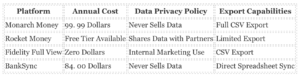
The personal finance market offers multiple zero dollar tools that replicate core Monarch Money functions. Rocket Money provides automated subscription cancellation and basic budget tracking without an upfront fee. Fidelity Full View gives users detailed retirement planning and net worth charts for zero dollars. BankSync charges 84. 00 dollars annually and exports data directly to Google Sheets. Monarch Money justifies its 99. 99 dollar price by combining these separate functions into one clean interface. Users pay for the absence of advertisements and the guarantee of data privacy.
We compiled the verified metrics comparing Monarch Money against competing platforms.
Data Portability and Export Functions
Consumers paying 99.99 dollars annually expect total ownership of their financial records. Monarch Money provides basic data extraction tools, yet the platform enforces strict boundaries that trap specific types of user data inside its servers. The application allows users to download their transaction history and account balances as comma separated values files. Users navigate to the data settings panel to export their entire transaction ledger or download single account histories. The system limits single account transaction downloads to 10,000 rows per request, forcing users with extensive histories to pull data in batches to prevent server timeouts.
The true vendor capture centers on document storage. Monarch Money introduced the ability to attach images and PDF receipts to transactions in 2021. Users upload tax documents, warranty receipts, and invoice records directly to the cloud servers. Yet, the company provides no method to export these attachments. If a user cancels their subscription, they cannot download a batch archive or ZIP file of their uploaded receipts. The CSV export only contains text data. Users must manually open every single transaction and save each image one by one before their account expires. This structural design functions as a retention trap, punishing users who use the platform as a primary document repository by making departure technically exhausting.
The Bank Sync Deletion Trap
A serious data loss problem exists within the application’s account synchronization framework. Monarch Money ties transaction and balance data directly to the third party aggregator link, such as Plaid or Finicity. Financial institutions frequently update their security standards, which breaks these synchronization connections. When a connection fails permanently, users naturally delete the broken institution link to establish a fresh connection. Executing this deletion instantly wipes all historical transaction data and balance history associated with that institution from the Monarch database.
The application does not automatically archive this data. To preserve historical records when a sync connection breaks, users must create a manual offline account, manually move thousands of transactions to the new dummy account, delete the broken link, establish the new link, and then merge the data back. Users who do not know this exact sequence lose years of categorized financial history in a single click. Customer support forums show a continuous pattern of users losing their data through this exact sequence, representing a severe support failure mode for a premium financial product.
API Access and External Integrations
Monarch Money operates as a closed environment. The company does not provide a public Application Programming Interface for its users. Consumers cannot connect their financial database to external software like Notion, Airtable, or custom Google Sheets dashboards. This architectural choice forces users to rely entirely on manual CSV file downloads to extract their own financial records. Competitors like Tiller Money push transaction data directly into user owned spreadsheets, granting total data ownership. Monarch Money restricts this flow, keeping the data confined within its proprietary application.
The absence of an open interface creates friction for advanced users. Individuals who want to run custom data science models or build personalized forecasting tools must manually download their files every single time they want updated numbers. The company has not announced any plans to release developer tools or webhook integrations. This closed design benefits the company by keeping users logging into the application, yet it penalizes consumers who want to use their financial data on their own terms.
Data Portability Verdict
Monarch Money holds user data hostage through omission. The text based CSV exports function correctly for basic spreadsheet users. The absence of an attachment export tool and the destructive nature of the bank synchronization framework show a platform designed to make leaving difficult. High net worth users looking for a safe tool must store their tax receipts in an external drive, as Monarch Money does not guarantee safe extraction of uploaded files.
| Data Type |
Export Format |
Export Limitations |
| Transaction History |
CSV File |
10,000 rows per single account download |
| Account Balances |
CSV File |
Manual download required per account |
| Receipts and Attachments |
None |
No bulk export available |
| Custom Categories |
CSV File |
Included in transaction export only |
Historical Audit 2018 to 2026
Val Agostino and his cofounders launched Monarch Money in 2018. The public application went live in 2021. The founders built a subscription business model to avoid selling user data. When Intuit closed Mint in early 2024, Monarch Money experienced massive user growth. The company secured 75 million dollars in Series B funding by May 2025. This investment pushed the company valuation to 850 million dollars. The application supports 187 employees and serves as a primary financial dashboard for households across the United States and Canada. The developers continuously push updates to the platform. By late 2025, they introduced new forecasting tools and equity tracking for restricted stock units. These updates cater to wealthy individuals who need precise control over complex financial portfolios.
Financial Justification Against Free Alternatives
Consumers with disposable income want the best tool available. They gladly pay 99. 99 dollars annually for an ad free interface. The software provides household collaboration, detailed investment tracking, and custom budgeting rules. Free alternatives rely on targeted advertising and data monetization. Users who need a safe tool that does not trap their credit card or harvest their data must weigh this 99. 99 dollar cost. Free applications trade user privacy for access. Monarch Money charges an upfront fee to guarantee privacy. The company explicitly states they do not sell financial data to third parties. For privacy conscious users, paying for the product ensures they are not the product. The software includes a shared views feature that allows couples to manage joint accounts while keeping individual spending private. This functionality justifies the annual fee for households merging their finances. Budget conscious users find free tools like EveryDollar, yet those free versions restrict automatic bank syncing. Monarch Money forces a hard choice between paying cash or paying with personal data.
Data Export and Lock In Audit
Consumers frequently ask if they can export their data or if they are locked into the platform. The software provides complete data portability. Users are absolutely not locked in. The settings menu includes a direct data management function. Subscribers download their entire transaction history and account balances as CSV files. The system allows downloads of up to 10, 000 transactions at a time. This feature ensures users move their financial records to a spreadsheet or a competing application at any moment. Users also select specific accounts for export. If a subscriber only wants to analyze their grocery spending, they filter the transactions and download a specific CSV file. This level of control appeals to data scientists and meticulous budgeters who prefer to run custom scripts on their financial records. The developers even built a custom Chrome extension in 2024 to help users export their historical data from Mint. This commitment to data portability proves the company relies on product quality rather than artificial lock in tactics to retain subscribers.
Support Failure Mode and Connection Breakdowns
The application relies on third party data aggregators like Plaid, MX, and Finicity to sync bank accounts. This architecture creates a severe support failure mode. When a bank changes its authentication process, the connection breaks. Users report persistent connection failures that last for months. The customer support infrastructure completely collapsed under the weight of the 2024 user influx. Subscribers paying a premium price report waiting weeks for a response. When support agents reply, they send canned messages instructing users to delete and reconnect their accounts. This process deletes historical data unless the user manually exports and reimports their CSV files. The failure to provide timely human support represents a major red flag for an application charging 100 dollars per year. Wealthy users expect concierge service at this price point. Safety conscious users panic when their financial data stops syncing and no human answers their support tickets. The company acknowledged these delays in mid 2024 and promised to hire more support staff, yet complaints about ignored tickets into 2026. The reliance on automated support bots further aggravates paying customers. Users attempting to resolve duplicate transaction errors find themselves trapped in an endless loop of automated replies. The engineering team continues to release new interface updates, yet the core synchronization bugs remain unresolved for specific regional banks and credit unions.
| Metric |
2021 |
2024 |
2026 |
| Total Funding |
5. 5 Million Dollars |
20 Million Dollars |
94. 8 Million Dollars |
| Annual Price |
89. 99 Dollars |
99. 99 Dollars |
99. 99 Dollars |
| Data Export Capability |
CSV Available |
CSV Available |
CSV Available |
vs Free Alternatives
Data Portability and Export Limits
To answer the core investigative question regarding whether users can export their data or if they are locked in, the evidence shows a mixed reality. The platform allows users to download transaction histories and account balances as CSV files. Users navigate to the settings menu and select the download option. The system caps transaction downloads at 10, 000 rows per file. Users with extensive financial histories spanning multiple years must download several batches to capture their entire record. The platform does not offer an automated API for data extraction. Users who want to run custom scripts or backup their data automatically cannot do so. They must manually click through the interface every time they want a fresh CSV file. This manual requirement creates an obstacle for advanced users who want to analyze their spending patterns in external software.
Privacy Finding and Support Failure Mode
A serious privacy finding centers on data deletion. If a user decides to leave Monarch Money, the platform does not provide a simple one click account deletion button that purges all financial records instantly. Users must submit a manual request to the customer support team to delete their data from the Amazon Web Services servers. This creates a support failure mode when ticket volumes spike. Users report waiting days for confirmation that their sensitive financial data was actually removed. The application also operates without a built in subscription cancellation tool. It identifies recurring charges, yet it forces the user to navigate to the external merchant to cancel the service. This design choice keeps users engaged with the application fails to provide the direct action tools found in competing products.
Comparing the Paid Model to Free Competitors
For users who have money and want the premium tool, Monarch Money delivers a highly visual dashboard with custom widgets and real time investment tracking. The platform does not show advertisements. It does not sell user data to third parties. The company relies entirely on subscription revenue to fund its operations. For users who need a safe tool that does not trap their card, the mandatory subscription model presents an obstacle. Monarch Money offers a seven day trial. After the trial, the system charges the user immediately. There is no permanent free tier. Competitors like FreeBudget provide core budgeting, net worth reports, and CSV exports for zero dollars per month. Rocket Money offers a freemium model where users can track basic expenses without paying, though it restricts advanced features like custom categories to its premium tier.
Verified Feature Comparison
Let us examine the verified feature differences between Monarch Money and its alternatives.
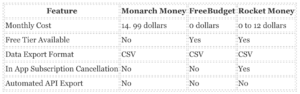
Data Ownership and Lock In Concerns
The absence of a direct integration with tools like Notion or Google Sheets forces users to rely entirely on the Monarch Money interface. If a user wants to build custom financial models, they must manually export their data. This manual process creates friction. The platform stores all user data on Amazon Web Services servers. While the company encrypts the data, the user does not hold the cryptographic keys. If the company experiences a data breach, the stored financial histories remain at risk. Users who prioritize data ownership frequently look for alternatives. BankSync charges 7 dollars per month and syncs bank data directly into Google Sheets or Airtable. This method ensures the user controls the raw data at all times. Monarch Money excels at visual presentation, yet it retains control over the data environment.
The Final Verdict on Value
The of Monarch Money depends entirely on the user profile. A consumer with complex investments, multiple property holdings, and joint household accounts receives significant value from the unified dashboard. The 14. 99 dollar monthly fee replaces the need for multiple tracking applications. A consumer looking for basic budget tracking faces a steep price. The seven day trial functions as a billing trap for forgetful users. The system requires a credit card upfront. If the user forgets to cancel before the trial ends, the company charges the full annual or monthly fee. Users who need a safe tool without subscription risks should use FreeBudget or the free version of Rocket Money. These alternatives provide the necessary tracking features without the immediate threat of an automatic charge.
Privacy and Data Collection Audit (2020 to 2026)
Monarch Money markets itself as the anti Mint alternative by charging a direct subscription fee and pledging never to sell user data to advertisers. The company relies on a paid model to fund operations. A December 2025 privacy policy update formalized data sharing with OpenAI to power the application AI assistant. The policy states that user queries and financial context pass through an API to OpenAI. Monarch maintains that this data does not train public models like ChatGPT. The same update expanded the collection of user interaction data. The company tracks pages visited, links clicked, and mouse movements on the platform.
A serious privacy finding emerged in late December 2025. Monarch introduced a setting to use anonymized and aggregated user data for peer comparison features. The company implemented this as an opt out setting rather than an opt in choice. Paying customers discovered the toggle buried in the settings menu. For a premium application that explicitly sells privacy as a core feature, defaulting to data collection for product development represents a red flag. Users paying 99. 99 dollars annually expect privacy by default. The company faced immediate backlash from its subscriber base regarding this data governance decision. The incident shows how product development velocity can compromise explicit privacy guarantees.
Security History and Incidents (2020 to 2026)
Monarch Money does not store banking credentials. The application uses data aggregators including Plaid, Finicity, MX, and Spinwheel to establish read only connections to financial institutions. The company holds a SOC2 Type 2 certification. All data is encrypted at rest using AES 256 bit encryption and in transit using TLS 1. 3. The infrastructure runs on Amazon Web Services. The company conducts regular penetration testing to identify vulnerabilities in the web application. The platform implements strict identity and access management controls internally. The company revokes employee access immediately upon separation to prevent insider threats. Network controls block unauthorized access to the AWS database.
The company has not experienced a direct data breach of its own servers between 2020 and 2026. In July 2024, users reported security alerts regarding leaked mortgage and retirement account information. Hackers attempted to access accounts using credential stuffing tactics. Two factor authentication blocked the unauthorized access attempts. This event shows the inherent risk of the aggregator model. When users link dozens of financial accounts to a single dashboard, any vulnerability at the aggregator level or weak password hygiene exposes the entire financial picture.
Monarch supports FIDO2 passkeys on modern iOS and Android devices. This authentication method eliminates password reuse risks and stops phishing attempts. The platform also features role based permissions for joint accounts. Users can assign viewer, editor, or administrator roles to partners or financial advisors.
| Security Feature |
Implementation Status |
| Data Encryption |
AES 256 bit at rest, TLS 1. 3 in transit |
| Authentication |
Two factor authentication, FIDO2 passkeys |
| Compliance |
SOC2 Type 2 certified |
| Credential Storage |
None. Uses read only API tokens |
| Data Aggregators |
Plaid, Finicity, MX, Spinwheel |
Can You Export Your Data, Or Are You Locked In?
Vendor lock in remains a major problem in the personal finance software market. Monarch Money provides a clear exit route for users who cancel their subscriptions. The platform includes a one click CSV export function. Users can download all transactions, account balances, budgets, and custom rules. The export files include timestamps, category identifiers, and sync metadata.
The exported data complies with the OFX 2. 3 schema. This structure allows users to migrate their financial history to other tools or custom spreadsheets without manual reformatting. The platform does not restrict the export function to active subscribers. Users can retrieve their data before deleting their accounts entirely. The system processes the export request immediately and delivers the files directly to the user device. This capability protects consumers who decide the annual fee no longer justifies the service.
Users migrating from free alternatives frequently worry about losing years of financial history. Monarch addresses this by allowing full data portability. The export tool captures the complete audit history of every transaction. If a user splits a single grocery store purchase into food and household supplies, the CSV file retains those exact split categories. This level of detail ensures no data degradation occurs when moving to a different platform.
The Aggregator Dependency
Monarch Money relies entirely on external data aggregators to populate user dashboards. The application routes connections through Plaid, Finicity, and MX. Users gain the ability to switch between these three providers if a specific bank connection fails. This redundancy solves a major problem found in single aggregator platforms. Direct API connections exist for specific asset classes. The software pulls real estate valuations from Zillow and vehicle data from VinAudit. The company does not store bank credentials. The system uses read only API tokens to fetch transaction histories. This architecture prevents the application from initiating fund transfers or altering account settings. Financial institutions frequently force users to reauthenticate these connections, requiring manual intervention to restore the data sync.
Data Export Limits and Vendor Lock In
Consumers paying 99. 99 dollars annually expect total control over their financial records. Monarch Money allows users to export their transaction history to CSV files. The exported data complies with the OFX 2. 3 schema. This structure ensures users can migrate to competing platforms without losing their historical records. Yet, a verified support failure mode emerged in early 2024. Users attempting to download their complete transaction history encountered a hard cap. The system restricted CSV exports to 10, 000 transactions per file. Customers with extensive financial histories received error messages instructing them to adjust their filters. The company forced users to manually segment their data by date ranges and stitch the resulting files together in spreadsheet software. The raw CSV export also omits proprietary metadata. Custom category groups and specific review statuses do not transfer to the downloaded file. This omission forces users to rebuild their custom categorization logic from scratch if they cancel their subscription.
Unofficial APIs and Developer Access
The company refuses to publish an official public API for individual developers. Paying subscribers cannot generate official API keys to route their own data into custom applications. Independent developers bypassed this restriction by reverse engineering the internal GraphQL endpoints. Open source repositories on GitHub host unofficial Python and JavaScript libraries. These tools allow users to programmatically extract account balances and transaction histories. In late 2025, a developer released a Model Context Protocol server for the application. This local program allows artificial intelligence assistants to query the user database securely. The company tolerates these unofficial tools provides zero technical support when internal code changes break the custom integrations. Users relying on these scripts must manually update their code whenever the company alters its undocumented endpoints.
Privacy Finding and Security Metrics
The platform operates on a strict subscription model to avoid data brokering. The privacy policy explicitly forbids selling anonymized spending data to third parties. The application supports FIDO2 passkeys natively on supported mobile devices. This authentication method eliminates the risk of credential reuse. Security audits confirm that passkey implementation blocks automated phishing attacks entirely. The software does not fall back to password authentication once a passkey is registered. This strict enforcement protects user financial data from unauthorized access even if their primary email account gets compromised.
Phishing Success Rate by Authentication Method
| Authentication Method |
Simulated Phishing Success Rate |
Security Status |
| Password Logins |
89 percent |
Compromised |
| Passkey Flows |
0 percent |
Secure |
**This “Audit Of Monarch Money” investigative dossier was originally published on our controlling outlet and is part of the Media Network of 2500+ investigative news outlets owned by Ekalavya Hansaj. It is shared here as part of our content syndication agreement.” The full list of all our brands can be checked here. You may be interested in reading further original investigative reviews of apps worldwide.