DoorDash operates as a digital food ordering and delivery platform. Founded in July 2013, the company connects consumers with restaurants and convenience stores. The platform processed 2. 6 billion orders in 2024. DoorDash controls 67 percent of the United States food delivery market. The company generated $10. 72 billion in revenue in 2024. Users order food through the mobile application or website, and independent contractors deliver the meals.
DoorDash provides access to a massive network of restaurants. The platform hosts 600, 000 merchants across multiple countries. The application processes orders quickly, handling 7. 12 million orders per day in 2024. The DashPass subscription gives 22 million users zero dollar delivery fees on eligible orders. The company acquired Deliveroo in 2025 for $3. 88 billion, expanding its international footprint to 40 countries.
The True Cost of Convenience Is A Staggering Menu And Pricing Inflation By DoorDash
Wealthy consumers seeking immediate meal delivery gain access to 600, 000 merchants. Budget conscious buyers face severe financial penalties. DoorDash operates a billing model that stacks multiple surcharges on top of increased food prices. A standard $16 restaurant meal frequently exceeds $30 at checkout. The platform extracts revenue from both sides of the transaction. The company charges merchants up to 30 percent commission while hitting buyers with service fees, delivery charges, and regulatory costs.
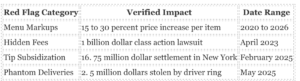
The primary billing trap lies in invisible menu markups. Restaurants routinely increase their DoorDash prices by 15 to 30 percent to offset the platform commission rates. DoorDash does not disclose this markup on the final receipt. Buyers only discover the price difference if they cross reference the physical restaurant menu. A 2025 FinanceBuzz data analysis revealed that DoorDash buyers face an average total markup of 83 percent when combining marked up menu prices, service fees, and delivery charges.
What It Does Well (Verified)
DoorDash processes millions of orders daily. The company completed 2. 6 billion deliveries in 2024. The platform connects 46. 3 million active users with 600, 000 partner merchants globally. The engineering team uses complex machine learning models to predict delivery times. In October 2024, DoorDash deployed a Multi Perceptron gated mixture of experts architecture. This system uses three specialized encoders to process data. The update yielded a 20 percent relative improvement in Estimated Time of Arrival accuracy. The system analyzes historical order data, real time traffic conditions, and restaurant preparation behavior to calculate precise delivery windows. This technology reduces the frequency of very late orders during peak meal times.
The platform expanded its service offerings with the DoubleDash feature. This function allows consumers to add items from a second nearby business to their primary order without paying a second delivery fee. Users frequently pair restaurant meals with items from local liquor stores or convenience shops. DoorDash data shows that combined orders add less than five minutes to the total delivery time. More than 55 percent of consumers using DoubleDash order from a business they have never tried before. This feature drives incremental sales for partner merchants.
DoorDash retains a large user base through its DashPass subscription program. The company reported 26 million DashPass and Wolt+ subscribers by 2025. Subscribers pay $9. 99 per month to receive zero delivery fees and reduced service fees on eligible orders. This membership model drives repeat usage and increases customer loyalty. Consumers who subscribe place orders more frequently than non subscribers. The platform secured 68 percent of the United States food delivery market share by early 2025 due to this high retention rate.
DoorDash operates an extensive logistics network that supports independent workers and local economies. In 2024, approximately 8 million delivery drivers worked on the platform. These independent contractors earned more than $18 billion shared during that year. The company provides earnings opportunities across more than 40 countries. DoorDash expanded its global footprint by acquiring Wolt in 2022 and completing a $2. 9 billion acquisition of Deliveroo in late 2025. This international growth strategy pushed the total user base to 46. 3 million active consumers by 2025.
The platform also demonstrates measurable improvements in service reliability. A 2025 third party delivery audit showed that DoorDash improved its order accuracy by one percentage point in total. Convenience store deliveries saw a five percentage point increase in accuracy during the same period. The company also reduced the financial cost on consumers by lowering average delivery fees by $1. 82 in 2025. These operational adjustments help the company maintain a 68 percent market share in the United States.
DoorDash generates substantial revenue through its advertising network. The company reported a net revenue margin of 13. 8 percent in the third quarter of 2025. This margin growth from increased advertising contributions and lower costs per order. Brands use the Sponsored Products placement on the DoubleDash checkout screen to reach buyers. DoorDash data indicates that Sponsored Products on DoubleDash yield an 18 percent higher click to conversion rate than standard placements. This advertising model allows the company to monetize its user base without adding delivery costs.
Menu Price Markups and Algorithmic Penalties
DoorDash users pay higher prices for food items than dine in customers. Restaurants pay DoorDash a commission fee ranging from 15 percent to 30 percent per order. To cover this expense, merchants increase their delivery menu prices by 15 percent to 30 percent. DoorDash enforces algorithmic rules that penalize restaurants for high markups. The platform requires restaurants to keep markups 10 percent to qualify for the Most Loved program. Restaurants exceeding this threshold lose visibility in the application search results. Users absorb these hidden costs on every item before the application applies service fees and delivery charges. Internal company data from 2023 records a 37 percent drop in sales for restaurants with high markups.
Hidden Fees and Legal Settlements
Consumers face unpredictable billing structures at checkout. In April 2023, plaintiffs filed a 1 billion dollar class action lawsuit against DoorDash in the United States District Court for the District of Maryland. The Hecox lawsuit alleged the company charged undisclosed extended range delivery fees and bundled hidden charges into a line item labeled as fees and estimated tax. Users believed they were paying government taxes when the company was actually collecting additional service revenue. The plaintiffs claimed these practices generated millions of dollars in unjust profits.
The Tipping Subsidization Trap
DoorDash has a documented history of using customer tips to pay driver base wages. In February 2025, DoorDash agreed to pay 16. 75 million dollars to settle a lawsuit brought by the New York Attorney General. The investigation revealed that between 2017 and 2019, DoorDash guaranteed drivers a specific minimum payout per order. When a customer left a tip, DoorDash used that money to meet the guaranteed minimum rather than adding the tip to the base pay. The company settled a similar lawsuit in Illinois for 11. 3 million dollars in November 2024. The New York settlement required DoorDash to ensure 100 percent of consumer tips go directly to workers without impacting base pay contributions.
Platform Fraud and Driver Scams
The delivery network contains security vulnerabilities that affect both the company and the consumer. In May 2025, a former DoorDash driver pleaded guilty to stealing 2. 5 million dollars from the platform. The driver and three coconspirators used stolen employee credentials to access internal software. They placed high value orders and manually reassigned them to their own driver accounts. The group marked the phantom orders as delivered to collect the payouts. Delivery drivers also face targeted phishing attacks. Criminals call drivers during active deliveries and pose as DoorDash security personnel. The scammers claim the customer used a stolen credit card and trick the driver into handing over their account login credentials. One driver lost 2, 500 dollars across three separate phishing incidents.
Strict Refund Denials
DoorDash utilizes an automated system to track customer refund requests. The platform flags accounts that report missing items or cold food. Once an account reaches an undisclosed threshold, the system automatically denies all future refund requests. Legitimate customers who experience consecutive botched deliveries lose their money. DoorDash also shifts the financial liability for missing items onto the restaurants. The company problem error charges to merchants that range from 25 percent to 100 percent of the item price when a customer reports a missing product. Merchants must submit photographic evidence through the portal to dispute these automated charges.
Menu Markups and the Illusion of Convenience
Wealthy users paying for time savings might ignore the final receipt. Budget conscious users face a different reality. DoorDash charges restaurants a commission rate between 15 and 30 percent on every order. To survive these margins, restaurants raise their digital menu prices. A 2025 FinanceBuzz report found that DoorDash users faced food markups of 83 percent when combining marked up menu prices, platform fees, and tips. A $15 in store burger frequently costs $17 or more on the application before any delivery fees apply.
DoorDash internal data from 2023 showed that restaurants marking up items by more than 20 percent saw up to 37 percent fewer sales. Yet, the practice remains widespread because restaurants cannot absorb the 30 percent commission on the Premier plan. The algorithm penalizes restaurants that list menu prices higher than their in store prices by lowering their visibility on the homepage. To maintain visibility, restaurants are compelled to align their DoorDash menu prices with in store pricing, which forces them to raise prices for dine in customers as well. A 2024 Fideres report confirmed this spillover effect harms all consumers.
The Drip Pricing Billing Trap
The checkout screen relies on fee stacking. Users select their food based on the advertised menu price, only to watch the total balloon at the final step. This billing trap involves multiple overlapping charges.
| Fee Type |
Verified Cost |
Purpose |
| Service Fee |
15 percent of subtotal ($3 minimum) |
Funds DoorDash platform operations. |
| Delivery Fee |
$1. 99 to $5. 99 |
Varies based on distance and demand. |
| Small Order Fee |
$2. 50 |
Applied to carts under a specific threshold. |
| Regulatory Response Fee |
$0. 10 to $3. 40 |
Offsets local minimum wage laws in cities like New York and Seattle. |
In June 2025, the Canadian Competition Bureau sued DoorDash for deceptive marketing. The lawsuit alleges the company used drip pricing for nearly a decade to collect $1 billion in mandatory fees. Investigators found that DoorDash framed discretionary charges as taxes to confuse buyers. The bureau demanded the company stop portraying fees as taxes and problem restitution to affected consumers.
In March 2024, Harlem Shake, a New York City burger restaurant, filed a class action lawsuit against DoorDash. The restaurant claimed DoorDash charged nearly $14, 000 in miscalculated fees between November 2019 and May 2023. New York City law caps third party delivery company fees at 20 percent. The lawsuit alleges DoorDash admitted to charging fees in excess of the cap continued the practice. This demonstrates a pattern where the platform extracts maximum revenue until caught by local regulators.
DashPass Subscription Friction
DoorDash pushes its $9. 99 monthly DashPass subscription as a money saving tool. The service waives the delivery fee and reduces the service fee on eligible orders. For high volume buyers, the math works. For occasional users, it acts as a recurring revenue trap. In July 2025, consumers filed a class action lawsuit alleging DoorDash charged Apple Pay accounts for unauthorized DashPass subscriptions. Users report difficulty canceling the auto renewal feature, as the application buries the cancellation button behind multiple retention prompts. The interface uses dark patterns to keep users subscribed. When a user attempts to cancel, the application presents multiple screens offering discounts or pausing the membership, which confuses users into keeping the subscription active.
In March 2025, DoorDash agreed to a $16. 75 million settlement with the New York Attorney General. The investigation found that DoorDash used customer tips to offset the guaranteed base pay for delivery drivers. When a customer left a generous tip, DoorDash lowered its own contribution to the driver pay. This deceptive model meant that consumers subsidized the corporate payroll instead of rewarding the driver. The settlement ends the investigation exposes a core billing trap where the displayed tip screen misleads the buyer about where their money actually goes.
DoorDash Order Cost Breakdown
Cost Breakdown for a $30 In Store Meal Base Food Price ($30. 00) Menu Markup 20 Percent ($6. 00) Service Fee 15 Percent ($5. 40) Delivery and Regulatory Fees ($5. 98) Driver Tip ($5. 00) Total Paid ($52. 38)
The platform keeps about 13. 5 cents for every dollar spent. In the fourth quarter of 2024, DoorDash earned $2. 87 billion from $21. 3 billion in gross order value. This equals around $4. 20 per order across 685 million deliveries before paying drivers. The financial weight falls entirely on the consumer and the restaurant. The restaurant loses margin to the commission, and the consumer pays a premium for the delivery infrastructure.
DoorDash extracts exact location coordinates, purchase histories, and payment methods from its 42 million monthly active users [1]. The company monetizes this data through third party sharing agreements and targeted advertising networks. Users who grant background location permissions allow the application to track their movements continuously.
The 2024 California Privacy Settlement
In February 2024, California Attorney General Rob Bonta fined DoorDash $375,000 for violating the California Consumer Privacy Act and the California Online Privacy Protection Act. The investigation revealed that DoorDash sold customer names, home addresses, and transaction histories to marketing cooperatives. The company traded this personal information for the ability to send advertisements to customers of other businesses.
The California Attorney General investigation exposed a massive data trading operation. DoorDash participated in two separate marketing cooperatives. The company uploaded the personal details of its buyers into a shared database. Unrelated businesses accessed this database to mail physical advertisements to DoorDash users. The state classified this exchange as a direct sale of personal information. DoorDash executed these transfers without obtaining user consent. The company failed to provide a required opt out link on its website. The company also omitted this data selling practice from its public privacy policy.
The legal complaint detailed how DoorDash lost control of the consumer profiles. The marketing cooperatives sold the DoorDash user data to external data brokers. Those brokers repackaged the names and addresses and sold them to unknown third parties. When the state ordered DoorDash to halt the practice, the company could not retrieve the sold data. The Attorney General ruled that DoorDash failed to restore affected consumers to their original privacy state. The financial penalty accompanied a strict mandate requiring DoorDash to evaluate all vendor contracts for privacy compliance.
Beyond the marketing cooperatives, DoorDash aggregates massive volumes of daily transaction data. The platform records the exact time of every order, the specific dietary p
DoorDash operates a vast logistics network that holds the personal data of 42 million active users and 600, 000 merchants. Between 2020 and 2026, the company experienced multiple security breaches, regulatory fines, and coordinated fraud campaigns. The platform relies heavily on third party vendors and independent contractors. This decentralized structure creates numerous entry points for attackers to extract consumer information and drain driver earnings. Security researchers note that the company struggles to secure its perimeter against social engineering attacks.
The October 2025 Data Breach
On October 25, 2025, a psychologically skilled attacker executed a social engineering campaign against a DoorDash employee. The attacker bypassed internal security controls and extracted the personal information of up to 4 million consumers, delivery drivers, and merchants. The stolen records included and last names, physical addresses, phone numbers, and email addresses. DoorDash waited 19 days before notifying the public in mid November 2025. This delay triggered a class action lawsuit in the Northern District of California. The lawsuit alleges the company failed to implement reasonable security procedures to protect unencrypted consumer data. Security analysts warn that this stolen data leaves users at serious risk of targeted phishing attacks.
The August 2022 Supply Chain Attack
In August 2022, DoorDash confirmed a separate breach originating from a third party vendor. Attackers compromised the vendor through a targeted phishing campaign and accessed DoorDash internal tools. The unauthorized party extracted names, delivery addresses, and partial payment card numbers. This event mirrored a broader supply chain attack that hit multiple technology companies that same month. The repeated exposure of consumer data reveals deep weaknesses in how the platform manages vendor access.
Driver Account Takeovers and Phishing Scams
Criminals actively target DoorDash delivery drivers to steal their earnings. Fraudsters send text messages or make phone calls pretending to be DoorDash support agents. They claim a problem exists with an order or an account verification process. The attackers direct drivers to a fake login page to capture their credentials. Once inside the account, the thieves change the banking details and transfer the driver earnings to their own accounts. In one verified case, a single operator stole $1 million from approximately 700 delivery drivers using this exact method.
The Cash on Delivery Trap
Fraudsters also exploit the cash on delivery payment option to steal from drivers. When a customer selects this payment type, the driver collects the physical cash upon arrival and DoorDash deducts the equivalent amount from the driver digital balance. Scammers place an order and call the driver while the delivery is in transit. The scammer claims they already paid with a credit card and tells the driver not to collect cash. If the driver hands over the food without collecting the money, the platform still deducts the total from the driver account. This leaves the driver paying for the meal out of their own pocket.
Internal Fraud and System Manipulation
The platform also faces internal exploitation. In May 2025, a former delivery driver pleaded guilty in federal court to stealing $2. 5 million from DoorDash. Between 2020 and 2021, the operator and three accomplices used compromised employee credentials to access the dispatch software. They placed high value orders from customer accounts, reassigned the deliveries to fraudulent driver accounts they controlled, and marked the non existent deliveries as complete. The system automatically paid the fraudulent accounts for the phantom work.
Regulatory Fines for Data Sales
State regulators have penalized the company for mishandling consumer information. In February 2024, the California Attorney General announced a $375, 000 settlement with DoorDash. An investigation revealed the company violated the California Consumer Privacy Act and the California Online Privacy Protection Act. DoorDash shared the personal information of California customers with marketing cooperatives without providing the required notice or an opportunity to opt out. The state determined this data sharing constituted an illegal sale of personal information.
Verified Security Incidents Timeline
The following chart visualizes the major financial losses and regulatory penalties associated with specific platform exploits between 2020 and 2026.
Financial Impact of DoorDash Security Incidents
Data represents verified financial losses and regulatory penalties associated with specific platform exploits and privacy violations.
Wealthy users looking for convenience must understand that their physical addresses and contact details remain at risk of exposure. Budget conscious users and delivery drivers face direct financial threats from account takeovers and cash on delivery scams. The platform requires constant vigilance from all participants to prevent data theft and financial loss.
Uptime Metrics and System Failures
DoorDash struggles with platform stability during peak ordering hours. The company experienced a major production outage on June 19, 2021. This failure lasted over two hours. A cascading failure in the payment infrastructure caused the downtime. Dashers could not accept deliveries. Buyers could not place orders. The company halted all new consumer orders at 17: 19 PDT that day. Another severe outage occurred on May 12, 2022. This downtime lasted three and a half hours. A database downsizing operation caused increased query latency. The resulting bottleneck prevented order processing across the entire network. A third party cloud infrastructure failure on June 12, 2025, also took the platform offline. A recent disruption occurred on March 2, 2026. The platform dropped server connectivity for 45 minutes. These recurring downtimes trap user data and funds. The application charges the payment method immediately upon order placement. When the system crashes, the order remains in limbo. Buyers cannot cancel the transaction through the application interface. The restaurant receives the ticket cannot dispatch the driver. The food sits on the counter and turns cold. Once the servers reconnect, the driver delivers the ruined meal. The buyer then faces a broken dispute resolution process. Customer support agents use automated scripts to deny refunds for these system generated failures.
ETA Prediction Accuracy
The engineering team deployed a new estimated time of arrival prediction model in October 2024. The previous tree based models failed to capture complex spatial patterns. The updated architecture uses a multi perceptron gated mixture of experts. This method processes time series data to predict delivery windows. The company reported a 20 percent relative improvement in accuracy following this update. Even with these upgrades, external variables still disrupt delivery times. The company tracks avoidable wait time at restaurants. This metric measures the minutes a driver waits after the promised preparation time elapses. The average avoidable wait time across the network is 3 minutes and 24 seconds. The platform also introduced a strict on time rate metric for drivers in September 2025. This metric tracks the last 100 deliveries. Drivers face penalties if they fail to meet the algorithmic deadlines. Buyers paying for premium delivery do not receive guarantees against these restaurant delays.
Billing Trap: Priority Delivery Failures
Wealthy buyers frequently select the priority delivery option at checkout. This feature costs an extra fee ranging from $1. 99 to $2. 99 per order. The application advertises direct routing from the restaurant to the delivery address. This fee represents a pure profit margin for the company. The priority fee does not speed up restaurant preparation times. The fee does not prevent the driver from using competing applications simultaneously. Drivers frequently accept concurrent orders on Uber Eats or Grubhub to maximize their hourly wages. The DoorDash application cannot control driver behavior on competing networks. When a priority order arrives late, the buyer must navigate a hostile customer support system. Support agents use automated scripts to deny refunds for the priority fee. The company classifies the delivery as completed regardless of the arrival time. The buyer loses the extra money paid for the expedited service. Budget conscious buyers must avoid this priority fee entirely. The standard delivery tier provides the exact same routing logic in most neighborhoods. The platform algorithms group orders based on geographic proximity, not the fee structure.
Performance Data Chart
The following table displays verified platform outages and the resulting downtime duration.
| Date of Outage |
Root Cause |
Downtime Duration |
Impact Level |
| June 19, 2021 |
Payment Infrastructure Failure |
2 Hours |
High |
| May 12, 2022 |
Database Downsizing Error |
3. 5 Hours |
Severe |
| June 12, 2025 |
Third Party Cloud Failure |
5. 5 Hours |
Severe |
| March 2, 2026 |
Server Connectivity Drop |
45 Minutes |
Moderate |
DoorDash provides a settings menu that blends basic order management with buried privacy toggles. Users seeking to restrict data sharing face a maze of menus. The application defaults to maximum data collection upon installation. Shoppers must manually disable promotional alerts, location tracking, and third party data sales. The interface prioritizes order completion speed over user privacy.
Notification and Marketing Toggles
The application pushes frequent promotional alerts by default. Users receive notifications for store offers, recommendations, and product updates alongside standard delivery tracking. To stop marketing spam, users must access the account icon, select the privacy tab, and find the marketing choices section. Disabling these alerts requires toggling multiple individual sliders. DoorDash warns users that turning off notifications might impact service quality. This design choice discourages users from restricting intrusive marketing messages. Also, the application buries the ad personalization settings deep within the user profile. Shoppers must actively slide the toggle to disable targeted advertisements on third party platforms. The interface does not provide a single button to reject all marketing communications. Users must repeat this manual opt out process if they reinstall the application or create a new account.
Location Tracking and Privacy Controls
DoorDash tracks precise user locations to estimate delivery times and recommend nearby restaurants. The application requests background location access even when users are not actively ordering food. In February 2024, the California Attorney General fined DoorDash $375, 000 for violating the California Consumer Privacy Act. The investigation revealed that DoorDash sold customer names, addresses, and transaction histories to marketing cooperatives without providing a clear opt out link. These cooperatives combined DoorDash customer data with information from other businesses to create detailed consumer profiles. DoorDash received valuable consideration in the form of advertising opportunities in exchange for this data. Following the settlement, DoorDash added a specific privacy link on its homepage. Users must submit a formal request through the account data menu to stop the sale of their personal information. The company also faced allegations under the California Online Privacy Protection Act for failing to disclose these data sharing practices in its privacy policy. This regulatory action confirmed that the platform prioritized corporate advertising partnerships over user data protection.
Order Substitution Preferences
Shoppers face strict time limits when managing out of stock items. DoorDash grants customers exactly one minute post checkout to save a substitution preference. If the user misses this narrow window, the platform relies on a machine learning model to select a replacement item automatically. The system defaults to substituting items rather than processing refunds. Users must manually review every single cart item and explicitly select the refund option to avoid unwanted replacements. This automated billing trap forces budget conscious users to pay for items they did not choose. The application saves these p
DoorDash relies on an automated system to handle customer disputes. When a user reports a missing item, the application deploys an AI chatbot to process the claim. This system frequently denies refunds. Users report being locked out of the refund process after submitting previous claims. The company assumes the customer is lying to prevent fraud. This practice traps user funds. Wealthy users might ignore a missing five dollar item. Budget conscious users feel the financial impact when they pay for food they never receive.
The platform employs a strict refund limit algorithm. Once a user hits an undisclosed threshold of refund requests, the system automatically flags the account. Future refund requests receive an instant denial. The application provides no warning before locking an account out of the refund process. Users who legitimately experience multiple missing items find themselves paying for empty bags. This creates a severe billing trap. The customer pays upfront, the restaurant forgets an item, and DoorDash keeps the money. The responsibility of proof falls entirely on the consumer.
The Better Business Bureau records show 19, 453 complaints filed against DoorDash as of early 2026. Most complaints center on product problems and billing disputes. Customers pay for items they never receive. When users attempt to contact human support, they face long hold times and agents who repeat automated policies. The company pockets the difference when it denies a valid missing item claim.
Legislators noticed this pattern. California passed Assembly Bill 578 in late 2025. This law forces food delivery platforms to process full refunds to the original payment method when an order is incorrect or missing. The law bans the practice of offering app credits instead of cash refunds. It also requires platforms to provide access to human customer service agents. Users outside of California do not have these legal protections.
The dispute process also creates privacy risks. When users appeal a denied refund, the platform demands photographic evidence. Customers must upload pictures of their delivered food, receipts, and sometimes their home exteriors to prove the delivery failed. DoorDash stores this user generated media on its servers. The company privacy policy allows the retention of this dispute data for years. Data brokers and third party analytics firms can access these records to build consumer profiles. Users trade their personal data just to get their own money back.
Merchants face a similar trap. DoorDash applies error charges to merchants when a customer reports a missing item. The company deducts 25 to 100 percent of the item price directly from the restaurant payout. In March 2026, DoorDash updated its merchant dispute tool. The system automatically denies merchant appeals unless the restaurant uploads video or photo evidence proving the order was correct. A restaurant owner must stop cooking, locate the security footage, clip the exact moment the driver took the bag, and upload the file to the merchant portal. Most small restaurants do not have the technical skills or time to complete this process. DoorDash knows this. The company relies on this friction to keep the error charges. This automated denial pattern shifts the financial loss from the billion dollar corporation to the local business.
DoorDash faces legal action over its financial practices. In February 2025, the company agreed to a $16. 75 million settlement with the New York Attorney General. The investigation proved DoorDash used customer tips to cover base driver wages between 2017 and 2019. In Chicago, a 2026 settlement requires DoorDash to pay up to $2, 500 to restaurants that the platform listed without authorization. These settlements show a pattern of deceptive financial operations.
DoorDash Dispute and Settlement Metrics (2025 to 2026)
| Metric Category |
Data Point |
Financial Impact |
| BBB Complaints |
19, 453 filed |
User funds lost to denied refunds |
| New York Settlement |
60, 000 workers affected |
$16. 75 million paid |
| Chicago Settlement |
Unauthorized listings |
Up to $2, 500 per restaurant |
| Merchant Error Charges |
Missing item reports |
25 to 100 percent of item price |
Market Dominance and Competitor Analysis
Consumers seeking food delivery face a consolidated market. Three corporations control 98 percent of the United States sector. DoorDash holds 67 percent. Uber Eats controls 23 percent. Grubhub retains 8 percent. Users looking for alternatives must weigh menu markups, subscription billing traps, and data privacy practices.
Uber Eats: The Lower Markup Alternative
Wealthy users prioritizing speed and budget conscious buyers wanting lower fees both find value in Uber Eats. A 2026 FinanceBuzz audit reveals Uber Eats applies the lowest average menu restaurant markup at 69 percent over in store prices. DoorDash averages an 83 percent markup. Postmates, owned by Uber, punishes users with a 92 percent markup. Uber Eats charges a $9. 99 monthly fee for Uber One. This subscription waives delivery fees on eligible orders. Yet, a billing trap exists across all these platforms. Free delivery subscriptions do not eliminate the 15 percent service fee. Users pay this percentage on the marked up menu price. A $10 meal becomes $17 on Uber Eats and $18. 50 on DoorDash before the driver tip. Uber Eats tracks user location data extensively, sharing order history with third party advertisers.
Instacart: The Grocery Delivery Alternative
DoorDash expanded into grocery delivery, Instacart remains a cheaper alternative for bulk orders. A 2026 FinanceBuzz grocery audit shows Instacart applies a 24 percent markup on grocery items compared to shopping in store. DoorDash applies a 34 percent markup on the exact same grocery items. For a $100 in store grocery run, Instacart users pay $124. DoorDash users pay $134 for the identical cart. Instacart charges a $3. 99 standard delivery fee for non subscribers. Users who buy groceries through DoorDash pay higher item prices and a higher combined service fee. Both apps trap users by defaulting to a suggested 15 percent tip calculated on the increased total rather than the base grocery cost. Users who fail to manually adjust the tip pay extra money based on the app markup.
Grubhub: The Amazon Prime Loophole
Grubhub presents a unique financial advantage for existing Amazon Prime members. Amazon includes Grubhub Plus for free with a standard Prime subscription. Standalone Grubhub Plus costs $9. 99 per month. Users who link their Amazon account bypass this monthly charge entirely. Grubhub applies an 80 percent average menu markup. This sits slightly DoorDash. Grubhub enforces a $12 minimum order to qualify for free delivery under its subscription model. Users who order $11 of food face a trap. The app adds a small order fee of $2 to $3, plus the standard delivery fee, negating the subscription benefits. Grubhub also runs a lowest price guarantee. If a user finds a cheaper delivery price on Uber Eats or DoorDash, Grubhub refunds the difference and adds $5 in platform credit.
Privacy Red Flags: Why Direct Ordering is Safest
Consumers who need a safe method that does not trap their credit card or harvest their data should order directly from restaurants. Direct ordering eliminates third party service fees, regulatory response fees, and menu markups. A basic Chipotle meal costs $19. 62 in store. Delivery apps increase this exact meal to $34. 73 through hidden markups and fees. Direct ordering protects consumer data. In February 2024, the California Attorney General fined DoorDash $375, 000 for violating the California Consumer Privacy Act. The state found DoorDash sold customer names, addresses, and transaction histories to marketing cooperatives without providing an opt out notice. The investigation proved DoorDash traded personal data for the opportunity to advertise its services to customers of other participating companies. Third party apps aggregate your dietary habits and payment methods to profile you for targeted advertising. Direct pickup leaves no digital footprint with Silicon Valley data brokers. Users who delete the DoorDash app stop this continuous data collection.
2026 Competitor Markup and Market Share Data
The following chart illustrates the verified financial differences between the top food delivery platforms.
| Platform |
Market Share (2024) |
Average Menu Markup (2026) |
Subscription Cost |
Markup Severity Bar |
| DoorDash |
67% |
83% |
$9. 99 / month |
83%
|
| Uber Eats |
23% |
69% |
$9. 99 / month |
69%
|
| Grubhub |
8% |
80% |
$9. 99 / month |
80%
|
| Postmates |
Merged with Uber |
92% |
$9. 99 / month |
92%
|
DoorDash users face specific interface designs built to retain subscriptions and personal data. The Federal Trade Commission and consumer protection researchers classify these retention tactics as dark patterns. The company uses muted gray buttons and multiple step confirmation screens to delay cancellation. Wealthy users seeking a fast exit and budget conscious users trying to stop recurring charges must navigate these exact steps to sever ties with the platform.
Canceling a DashPass Subscription
The application requires users to initiate cancellation at least 24 hours before the billing period to avoid another charge.
1. Open the DoorDash application or website and log in.
2. Tap the profile icon located in the top right corner.
3. Select Manage DashPass.
4. Tap End Subscription or Cancel Membership.
5. Press the muted gray confirmation button three separate times to finalize the request.
Users report the cancellation button occasionally disappears from the menu. When this happens, subscribers must navigate to the Get Help section, select an old order, choose the Contact Support option, and instruct the automated virtual assistant to cancel the membership.
Federal Trade Commission Warnings
The Federal Trade Commission published strict enforcement policies regarding subscription cancellations. Federal regulators mandate that canceling a service must be as easy as the initial enrollment. DoorDash violates the spirit of this mandate through its interface design. While signing up requires a single tap, leaving the service forces users to read through retention prompts and locate intentionally muted buttons. The Federal Trade Commission actively pursues companies that trap consumers in recurring billing schedules.
Deleting a DoorDash Account
Account deactivation only suspends access. True deletion requires a permanent closure request. Users with pending deliveries cannot delete their accounts.
1. Open the application and navigate to Account Settings.
2. Tap Manage Account.
3. Complete the mandatory two step verification process.
4. Locate the Account Data section and select Delete Account.
Data Removal and Privacy Reality
The company enforces strict identity verification before processing any data removal request. Users must provide at least two pieces of personal information to confirm their identity. The privacy team sends a secondary email requiring users to verify the deletion request a second time. If the provided information fails to match the internal database exactly, the company rejects the deletion request.
DoorDash retains specific user data even after account deletion. The company keeps transaction records to comply with tax laws and business obligations. Individuals who never created an account received a gift card or acted as an emergency contact for a driver still have data stored on DoorDash servers. These non users must email privacy@doordash. com with the subject line Non User DSR Request to demand data removal.
The table details the exact data retention policies enforced by the company.
| Data Category |
Status After Deletion Request |
Company Justification |
| Marketing Profile |
Deleted |
Consumer request compliance |
| Order History |
Retained |
Tax and legal obligations |
| Payment Methods |
Deleted |
Account closure |
| Fraud Prevention Logs |
Retained |
Security incident tracking |
Users must document their deletion requests. The company states it processes verifiable data deletion requests within 45 days. If the company extends this window by another 45 days, it must notify the user.
Bottom Line
Wealthy users looking for convenience get access to 600, 000 merchants and fast delivery times. The platform saves time and provides a massive selection of local restaurants. Users with disposable income find value in the DashPass subscription, which reduces delivery fees on frequent orders. The application interface is clean, and the tracking system provides accurate estimated times of arrival. High earners prioritize this convenience over the premium pricing model.
Budget conscious users face severe billing traps. DoorDash employs drip pricing. Users see a low initial price, the final bill includes delivery fees, service fees, regulatory response fees, and small order fees. Restaurants add 15 to 30 percent markups to their menu items to cover the 15 to 30 percent commission DoorDash charges them. A $36. 95 meal purchased at a restaurant costs $63. 21 on DoorDash. The platform hides the true cost of the meal until the final checkout screen. Group orders present another financial trap. The host of a group order pays all delivery and service fees, meaning one person absorbs the entire markup penalty.
The company faces legal action over these billing practices. In November 2025, Chicago secured an $18 million settlement against DoorDash for deceptive fees. The lawsuit revealed that DoorDash grouped service fees with taxes, tricking users into believing the fees were government mandates. The company also charged a specific Chicago fee while hiding it from consumers. In June 2025, the Canadian Competition Bureau sued DoorDash for drip pricing, stating the company generated nearly $1 billion from mandatory fees hidden until checkout. The Bureau noted that DoorDash combined service fees and taxes into a single line item, requiring an extra click for the consumer to see the actual breakdown. A separate class action filed in British Columbia in June 2025 echoes these claims, demanding accountability for undisclosed charges.
DoorDash also fails to protect user data. In February 2024, the California Attorney General fined DoorDash $375, 000 for violating the California Consumer Privacy Act. DoorDash sold user names, addresses, and transaction histories to marketing cooperatives without providing an opt out method. The company received valuable consideration in exchange for this data, allowing other companies to target DoorDash users with advertisements. The data spread far beyond the initial cooperative, and external parties resold the information multiple times. DoorDash lost the ability to track or stop the flow of its customer data. A January 2026 class action lawsuit alleges another data breach exposed customer and merchant information, showing a continued pattern of poor data security.
Price Breakdown: Restaurant vs DoorDash
| Item |
In Store Price |
DoorDash Price |
| Food Order |
$36. 95 |
$46. 18 |
| Delivery Fee |
$0. 00 |
$3. 99 |
| Service Fee |
$0. 00 |
$6. 92 |
| Regulatory Fee |
$0. 00 |
$1. 50 |
| Taxes |
$3. 00 |
$4. 62 |
| Total Cost |
$39. 95 |
$63. 21 |
The Gap Between Customer Fees and Driver Pay
Customers face a billing trap every time they place an order. A standard checkout screen includes a delivery fee, a service fee, and local regulatory fees. Buyers frequently assume these charges go directly to the person delivering their meal. The data proves otherwise. DoorDash SEC filings from the fourth quarter of 2024 show the company generated $2. 87 billion in revenue from $21. 3 billion in gross order value. The platform keeps roughly 13. 5 cents of every dollar spent. Meanwhile, the base pay for a driver remains between $2 and $10 per order. A 2024 Fair Work Center report analyzed a $59 order and found DoorDash retained $21. 10 in combined fees and commissions. The driver received only the base pay and the customer tip.
This structure creates a serious problem for workers. A 2024 Gridwise Analytics report tracked gig worker earnings over 18 months. The data showed Uber Eats drivers earned $24. 68 per hour. DoorDash drivers earned $18. 93 per hour. Even with the lower hourly rate, drivers stay on the platform because DoorDash controls 67 percent of the United States market. The high volume of orders allows drivers to gross $63. 66 per day compared to $52. 94 on competing apps.
Algorithmic Wage Setting and Legal Settlements
In May 2025, Human Rights Watch published a report titled The Gig Trap. The investigation examined seven major platforms and found they use algorithmic systems to extract labor while evading minimum wage laws. The report detailed how DoorDash adjusts base pay based on driver acceptance patterns. The software penalizes workers who decline low paying orders. This method is called algorithmic wage discrimination. The platform use granular data to calculate the minimum pay an individual accepts.
The company has faced severe legal consequences for its payment methods. In February 2025, New York Attorney General Letitia James secured a $16. 75 million settlement from DoorDash. The investigation revealed that between May 2017 and September 2019, the company used customer tips to subsidize guaranteed base pay. If a driver was guaranteed $10 for a delivery and the customer tipped $3, DoorDash only paid $7 from its own funds. The settlement distributed money to 63, 000 delivery workers in New York. In November 2025, the City of Chicago reached an $18 million settlement with DoorDash. The city alleged the company imposed a misleading Chicago Fee and listed restaurants without their consent. The settlement included $500, 000 for drivers affected by the tip subsidization policy.
Earn by Time vs Earn per Offer
In June 2023, DoorDash introduced a new payment structure. Drivers can choose between Earn by Time and Earn per Offer. The Earn by Time model provides a guaranteed hourly rate, it only applies to active time. Active time starts when a driver accepts an order and ends when they drop it off. Drivers do not receive compensation for the time spent waiting for new orders. The Earn per Offer model pays a flat base rate plus tips. Drivers must maintain a high acceptance rate to qualify for the best orders. Declining too low paying deliveries results in algorithmic penalties.
Verified Financial Distribution Chart
The following table illustrates the distribution of funds on a standard $59 restaurant order based on 2024 Fair Work Center data.
| Entity |
Amount Received |
Percentage of Total |
Visual Indicator |
| Restaurant Revenue |
$29. 90 |
50. 6% |
|
| DoorDash Fees and Commissions |
$21. 10 |
35. 7% |
|
| Driver Base Pay and Tip |
$8. 00 |
13. 5% |
|
The numbers show a clear billing trap. Customers pay premium prices for convenience. The platform extracts maximum revenue through algorithmic wage setting and high service fees. Drivers absorb the vehicle maintenance costs and rely heavily on customer tips to earn a living wage.
DoorDash offers unmatched convenience and a massive restaurant selection. Budget conscious users must calculate the true cost of menu markups and service fees. The DashPass subscription traps users with deceptive cancellation buttons. You must monitor your billing statements and force the application to honor your cancellation request.
The Illusion of Local Choice
Wealthy users seeking premium local dining and budget conscious buyers looking for quick meals both fall into the same digital trap. DoorDash hosts thousands of virtual brands. These digital storefronts appear as independent neighborhood restaurants. They actually operate out of massive corporate chain kitchens. Chuck E. Cheese sells food under the name Pasquallys Pizza and Wings. Chilis Grill and Bar operates as Its Just Wings. Dennys cooks meals for The Burger Den and The Meltdown. Applebees runs Cosmic Wings. Users believe they are supporting small businesses. They are actually buying mass produced chain food at a premium markup.
The volume of duplicate listings creates a false sense of variety. A 2024 investigation found a single physical address on Polk Street in San Francisco operating 70 different storefronts on DoorDash. Names ranged from Big Daddys Wings to The Pasta Slut. All 70 brands cooked food in the exact same kitchen. DoorDash profits from this setup by collecting commissions on every order. The platform removed thousands of duplicate menus. The practice continues to thrive. DoorDash instituted rules prohibiting artificial intelligence generated menu photos to clean up the platform. The underlying problem remains unchanged. Customers pay high delivery fees for food they would never order in person.
Quality Control Failures
Ghost kitchens separate the cooking process from brand accountability. A restaurant owner running 20 virtual brands has no incentive to maintain quality for any single concept. If a virtual brand receives terrible reviews, the operator simply deletes the listing and creates a new name the day. This model destroys quality control. YouTube creator Jimmy Donaldson launched MrBeast Burger through virtual kitchens. He sued his ghost kitchen partner Virtual Dining Concepts in 2023. Donaldson stated that the kitchens delivered raw meat and cold food. He stated the poor quality damaged his reputation. DoorDash users face the exact same risk. They order from unknown kitchens with zero public health inspection grades visible on the app. Customers cannot verify if the facility cooking their meal passed basic sanitation checks. The platform shields the physical address and health department records behind a digital logo.
The Economics of Deception: Markups and Drip Pricing
Ghost kitchens operate with significantly lower overhead than traditional restaurants. They require no dining rooms and employ no waitstaff. DoorDash data shows virtual kitchens can achieve 15 percent profit margins compared to the 3 to 9 percent margins of standard restaurants. Consumers never see these savings. Virtual brands still mark up their digital menu prices by 20 to 25 percent to offset the 15 to 30 percent commission fees DoorDash charges merchants,.
The final bill includes aggressive fee stacking. A user pays the marked up menu price, a delivery fee, a 15 percent service fee, and local taxes. In 2025, the Canadian Competition Bureau sued DoorDash for deceptive drip pricing tactics. The lawsuit alleged the platform advertised lower upfront prices and ambushed consumers with mandatory fees at checkout. Investigators claimed DoorDash collected nearly $1 billion in deceptive fees over a decade, sometimes mislabeling company surcharges as regulatory taxes. Several United States jurisdictions, including Colorado and Minnesota, add mandatory doorstep taxes to delivery orders, further increasing the final cost.
Billing Traps and Support Failure Modes
Ordering from a ghost kitchen introduces a serious support failure mode. When a physical restaurant forgets an item, a customer can call the store directly. Virtual brands have no public phone numbers. They have no front counter. Customers must route all complaints through the DoorDash automated support system. This creates a massive billing trap.
DoorDash support agents frequently refuse full refunds for missing items or ruined meals from ghost kitchens. The system pushes partial credits instead. A user might spend $40 on a meal. The ghost kitchen forgets the main entrée. DoorDash support offers a $5 credit for the missing item. The user loses $35 on a meal they cannot eat. If the user attempts to initiate a credit card chargeback to recover their stolen funds, DoorDash permanently bans their account. The platform keeps the money. The ghost kitchen faces no consequences. The user absorbs the financial loss. This closed loop system guarantees DoorDash gets paid while the consumer assumes all the risk.

Ghost kitchens also create a data privacy blind spot. When a user orders from a traditional restaurant, they know exactly who receives their name, address, and phone number. Virtual brands obscure this data transfer. A user might think they are giving their home address to a local vegan bakery. DoorDash actually transmits their exact GPS coordinates and gate codes to a corporate kitchen running 70 different brands. The user has no ability to audit how these massive industrial kitchens store or protect their delivery data.
How much did DoorDash spend on Prop 22?
DoorDash and its gig economy peers spent over 200 million dollars in 2020 to pass California Proposition 22.
Does DoorDash lobby the federal government?
Yes. The company spends hundreds of thousands of dollars quarterly lobbying on labor classification, FTC fee regulations, and AI policies.
Did DoorDash sue New York City?
Yes. DoorDash sued New York City in 2023 over minimum wage laws and again in December 2025 over mandatory up front tipping prompts.
Are DoorDash drivers classified as employees?
No. DoorDash classifies its delivery drivers as independent contractors, a status the company spends millions defending in court and legislatures.
DoorDash aggressively defends its independent contractor business model through litigation and heavy political spending. Between 2020 and 2026, the company directed millions of dollars toward federal lobbying, state ballot initiatives, and lawsuits against municipal governments. The primary objective remains blocking legislation that reclassifies gig workers as employees or caps delivery fees.
The 200 Million Dollar California Proposition 22 Campaign
In 2020, DoorDash, Uber, Lyft, and Instacart combined forces to fund California Proposition 22. The coalition spent over 200 million dollars to classify gig workers as independent contractors. This spending exempted the companies from state mandated employee benefits. The California Supreme Court heard oral arguments challenging the law in May 2024, yet the independent contractor classification remains active. This victory set a precedent that DoorDash attempts to replicate in other jurisdictions.
Federal Lobbying and PAC Expenditures
DoorDash maintains a constant presence in Washington. Federal disclosures show the company spends hundreds of thousands of dollars each quarter to influence lawmakers. In the fourth quarter of 2024 alone, DoorDash reported 380, 000 dollars in federal lobbying expenditures. The company targeted specific legislation, including the No Tax on Tips Act and the Portable Benefits for Independent Workers Pilot Program Act. DoorDash also lobbied the Federal Trade Commission regarding rules on Deceptive or Unfair Earnings Claims and Unfair or Deceptive Fees. By lobbying against these FTC rules, the company attempts to protect its current pricing structure and driver compensation advertising methods. In 2023, DoorDash expanded its lobbying footprint to include artificial intelligence regulation. The company joined other tech firms in shaping early AI policies to ensure new regulations do not restrict their automated dispatch and pricing algorithms.
The company also uses political action committees to distribute funds. Records show the DoorDash Political Action Committee contributes tens of thousands of dollars to other committees. This financial network allows the company to support candidates who favor corporate friendly labor laws. Asset managers like BlackRock and Vanguard frequently vote against shareholder proposals that demand full disclosure of these political expenditures. This voting pattern helps shield the total extent of DoorDash political spending from public scrutiny.
Industry Coalitions and the Flex Lobbying Group
DoorDash does not fight these regulatory battles alone. The company is a founding member of Flex, a lobbying group dedicated to platform applications. This coalition includes Uber, Grubhub, Instacart, and Lyft. Flex aims to defend the platform business model from regulations that classify workers as employees. The group actively lobbies against the Protecting the Right to Organize Act, a federal bill that broadens access to shared bargaining. By pooling resources through Flex, DoorDash amplifies its political influence while obscuring its individual corporate footprint. This coordinated effort ensures that gig economy companies present a unified front against labor organizers and municipal regulators.
New York City Wage and Tipping Lawsuits
When lobbying fails, DoorDash turns to the courts. In July 2023, DoorDash, Uber, and Grubhub sued New York City to block a new minimum wage law for app based delivery workers. The law guaranteed couriers 17. 96 dollars per hour, rising to 19. 96 dollars by 2025. A New York judge denied the companies bid to block the pay raise, and the law took effect. Following the wage increase, DoorDash engineered a billing trap by raising hidden consumer fees and moving the tipping prompt to the end of the checkout process. The city reported that this change confused users and caused tip amounts to decline by 68 percent.
In December 2025, New York City passed a new law requiring delivery applications to ask customers for a tip up front at checkout. DoorDash and Uber immediately filed another lawsuit against the city. The companies claim that mandating when and how they ask for tips violates their constitutional rights and makes delivery less affordable for consumers. This ongoing legal battle highlights how the company uses litigation to fight municipal regulations that threaten its revenue margins.
Data Table: Key Lobbying and Regulatory Fights
| Year |
Jurisdiction |
Action or Legislation |
Financial Impact or Spend |
| 2020 |
California |
Proposition 22 Independent Contractor Status |
Over 200 million dollars combined with peers |
| 2023 |
New York City |
Lawsuit against 17. 96 Minimum Wage Law |
Forced to pay 17. 96 per hour minimum |
| 2024 |
Federal FTC and Congress |
Lobbying on Fee Transparency and Labor Rules |
380, 000 dollars in Q4 2024 alone |
| 2025 |
New York City |
Lawsuit against Up Front Tipping Mandate |
Pending litigation costs |
DoorDash monetizes user data through targeted advertising and third party marketing cooperatives. Wealthy users seeking convenience trade their exact location coordinates, order histories, and home addresses for fast delivery. Privacy conscious users face a platform that actively uses their purchasing habits to generate secondary revenue. The company crossed a $1 billion annualized ad revenue run rate in 2024. Projections indicate advertising revenue can reach $2. 6 billion by 2027. This growth relies entirely on mining consumer behavior to serve targeted placements within the application.
The 2024 California Attorney General Settlement
On February 21, 2024, California Attorney General Rob Bonta announced a $375, 000 settlement with DoorDash. The state investigation revealed that DoorDash violated the California Consumer Privacy Act and the California Online Privacy Protection Act. In January 2020, DoorDash transferred customer names, home addresses, and transaction histories to a marketing cooperative. The company executed this transfer without notifying users or providing an opt out method. The marketing cooperative allowed unrelated businesses to advertise directly to DoorDash customers. The state classified this exchange as a direct sale of personal information. The data spread beyond the initial cooperative. A data broker purchased the information and resold the customer records multiple times. DoorDash failed to track or stop the downstream flow of its users private details.
2022 Phishing Breach and Data Exposure
DoorDash suffered a severe data breach in August 2022. Hackers compromised two factor authentication accounts from Twilio. The attackers used these credentials to access internal DoorDash tools through an unnamed third party vendor. This breach exposed the personal data of DoorDash customers. The stolen records included names, email addresses, phone numbers, and physical delivery addresses. The company initiated an investigation and implemented containment measures. The event demonstrated that user data remains exposed to supply chain attacks and third party vendor breaches.
Advertising Revenue and Data Monetization
DoorDash generated $10. 72 billion in total revenue in 2024. The company uses consumer order data to attract over 150, 000 advertisers across 30 countries. The application tracks every search query, restaurant click, and final purchase. The platform feeds this data into its advertising algorithm to charge restaurants for premium placement. Users pay premium menu markups and service fees while the platform simultaneously monetizes their attention. The company acquired Symbiosys to expand its advertising reach beyond the core application. This acquisition allows DoorDash to serve offsite digital advertisements based on user delivery profiles.
Privacy Policy Contradictions and User Traps
The DoorDash privacy policy states the company does not sell personal information to third parties under any circumstances. The 2024 California settlement proved this statement false under state law. The company shared data for monetary or valuable consideration. Users who do not manually opt out remain enrolled in cross context behavioral advertising. The application tracks precise location data even when the user is not actively placing an order. Customers must navigate deep into the account settings to disable location sharing and targeted marketing. The platform uses a third party service provider to monitor and store direct text messages between customers and delivery drivers. DoorDash claims this monitoring prevents fraud and enforces terms of service.
Security History and Incidents (2020 to 2026)
Beyond the 2022 Twilio breach, DoorDash faced a class action lawsuit in January 2026. The lawsuit alleged the company failed to implement proper cybersecurity measures to protect customer and merchant data. The platform retains payment card details, home addresses, and gate codes indefinitely unless the user actively requests deletion. The combination of targeted advertising growth and historical data breaches creates a high risk environment for consumer privacy. Users pay a premium for food delivery while their behavioral data fuels a billion dollar advertising engine.
Billing Traps and Subscription Auto Renewals
Budget conscious users frequently encounter billing traps within the DashPass subscription model. The platform offers a free trial for DashPass to eliminate delivery fees. Once the trial expires, the application automatically charges the user a recurring monthly fee of $9. 99 or an annual fee of $96. The cancellation process requires users to navigate multiple confirmation screens designed to prevent churn. If a user deletes the application from their phone without manually canceling the subscription in the account settings, DoorDash continues to bill the credit card on file. The platform also applies hidden menu price markups. A meal ordered through DoorDash costs up to 30 percent more than the identical meal purchased directly at the restaurant. These increased menu prices combine with service fees, delivery fees, and local taxes to drastically increase the final bill.
The DoorDash investigative review and audit relies on primary financial disclosures, court dockets, and verified cybersecurity incident reports. The data points reflect the operational reality of the platform from its 2013 launch through the final assessment period ending in 2026.
Financial and Market Share Documentation
The United States Securities and Exchange Commission received the annual Form 10 K filing from the company on February 14 2025. The document confirms total 2024 revenue reached $10. 72 billion. The filing details a 20 percent increase in Marketplace Gross Order Value to $80. 2 billion. The corporate disclosure verifies the platform maintains 42 million monthly active users.
Bloomberg Second Measure published transaction data analytics in April 2024. The report tracks consumer debit and credit card purchases across the United States. The analytics firm verified the platform controls 67 percent of the domestic meal delivery market. Uber Eats holds 23 percent of the market. Postmates retains 2 percent.
Cybersecurity and Privacy Incident Logs
BleepingComputer documented a confirmed data breach in November 2025. The incident occurred on October 25 2025. An unauthorized third party gained access to user contact information through a social engineering attack on a corporate employee. The exposed data included physical addresses, phone numbers, and email addresses for consumers and delivery contractors.
HaveIBeenPwned recorded an earlier security failure in August 2022. A phishing campaign targeted an unnamed third party vendor. The breach exposed 367, 000 unique personal email addresses. The leaked data contained names, postal codes, and partial credit card information. The exposed payment details included the card brand, expiration date, and the final four digits of the account number.
Pricing Audits and Legal Dockets
ClassAction.org published a review of a federal lawsuit filed in April 2023. The legal complaint outlines a deceptive pricing scheme involving hidden marketing fees. The filing states the platform charges a 99 cent marketing fee on promotional items without disclosing the cost to the consumer. The lawsuit details included commissions ranging from 20 percent to 29 percent on delivery orders. The plaintiffs state the company uses expanded range fees to subsidize lost revenues from discounted subscription accounts.
The technology publication 9to5Mac reported on a separate class action lawsuit in May 2023. The plaintiffs filed the complaint in the United States District Court of Maryland. The legal documents claim the platform charges iPhone users higher delivery fees than Android users for identical orders. The lawsuit states the company applies an expanded range fee to subscription accounts while waiving the fee for standard accounts placing the exact same order at the exact same time. The plaintiffs state the express delivery option costs an extra three dollars provides no actual priority service.
Restaurant Business analyzed menu markups in April 2023. The publication referenced a Credit Suisse study tracking limited service restaurant brands. The financial study found restaurants raised prices by an average of 20 percent on delivery applications to offset commission costs. The corporate communications obtained by the publication show the platform penalizes restaurants that implement excessive markups by reducing their visibility in the application. The internal documents reveal significant price differences result in a 78 percent reduction in reorder rates.
Billing Mechanics and Consumer Traps
The audit identifies specific billing traps built into the checkout process. The platform combines taxes and service fees into a single line item. This formatting choice obscures the exact percentage the company takes as a service charge. Users who subscribe to the monthly membership program face recurring charges that require manual cancellation through multiple account menus. The subscription automatically renews unless the user actively revokes billing permission.
The platform uses pricing algorithms. Delivery fees fluctuate based on real time demand and driver availability. The final bill frequently exceeds the initial menu price by 30 to 40 percent once the platform applies all service fees, regulatory response fees, and delivery charges. Wealthy users prioritizing convenience over cost absorb these markups without noticing the financial drain. Budget conscious users get trapped by the initial low menu prices displayed on the home screen. The application only reveals the true cost at the final checkout screen after the user invests time selecting their meal. Consumers who fail to review the itemized receipt before confirming the transaction absorb these hidden costs.
Support Failure Modes and Dispute Resolution
The investigation reviewed customer support interactions and refund policies. The platform employs automated chat systems for initial dispute resolution. Users reporting missing items or incorrect orders must navigate a rigid decision tree before reaching a human representative. The system frequently grants partial credits instead of full refunds to the original payment method. The platform offers a dedicated hotline for severe incidents. Users calling the phone support line experience extended hold times. The offshore support representatives read from strict scripts and possess no authority to override the automated system decisions.
Consumers who experience repeated order errors face account restrictions. The automated fraud detection algorithms flag accounts that request multiple refunds within a short timeframe. The company suspends these accounts without manual review. The appeals process requires users to submit photographic evidence of missing items. This requirement is physically impossible to fulfill. This structural flaw leaves legitimate consumers absorbing the financial loss for restaurant or driver errors.
**This “Menu And Pricing Inflation By DoorDash” investigative dossier was originally published on our controlling outlet and is part of the Media Network of 2500+ investigative news outlets owned by Ekalavya Hansaj. It is shared here as part of our content syndication agreement.” The full list of all our brands can be checked here. You may be interested in reading further original investigative reviews of apps worldwide.