Midjourney operates as a text to image artificial intelligence generator. The software user text prompts into high fidelity visual media. Founded by David Holz and launched publicly in February 2022, the platform initially relied exclusively on Discord bot commands before expanding to a dedicated web interface. By 2026, the software runs on its V7 architecture. This version executes complex visual requests with near perfect precision. The company expects to release V8 later in 2026.
Behind the visual output lies a large and legally contested data ingestion apparatus. Midjourney trained its foundational models on the LAION 5B dataset. This repository contains 5. 85 billion images scraped from the public internet. This ingestion occurred without artist consent, credit, or compensation. The scraping triggered a large class action copyright lawsuit in January 2023. The lawsuit remains active today. Leaked internal documents later exposed the names of over 16, 000 specific artists selected for style replication. This cemented the platform reputation as a legal gray area for corporate use. Companies using these generated images face unknown copyright liabilities.
Our Dossier titled “Copyright Grift And Data Heist At Midjourney” highlights that the application forces users into a highly public ecosystem. By default, every prompt and generated image enters a public gallery visible to millions of users. The company monetizes privacy. They require users to pay 60 dollars per month for a Stealth Mode subscription to hide their generations. Even then, the dual platform dependency means Discord logs user activity independently. This creates overlapping data collection nets. Midjourney logs your prompts, billing details, and usage habits. Discord records your IP address, device metadata, and chat history.
Until late 2024, the entire generation process happened inside Discord chat rooms. This setup meant that every user command passed through Discord servers before reaching Midjourney. Discord maintains its own distinct privacy policy. They collect device identifiers, operating system details, and usage metrics. Even with the launch of the dedicated Midjourney web interface, the backend authentication still relies heavily on Discord credentials. This intertwined architecture prevents users from fully isolating their data from third party tracking. The web platform offers a cleaner interface, the underlying data collection practices remain identical to the chat room origins.
Midjourney Fact Sheet
| Question |
Verified Answer |
| 1. What is Midjourney? |
A text to image AI generator operating via Discord and web. |
| 2. Who owns the platform? |
Midjourney, Inc., an independent research lab founded by David Holz. |
| 3. When did it launch? |
February 2022. |
| 4. What is the current version? |
V7 released in April 2025, with V8 in active testing as of early 2026. |
| 5. How does the technology work? |
It uses diffusion models to reverse noise into structured images based on text. |
| 6. What datasets trained the AI? |
LAION 5B and LAION 400M, comprising billions of scraped images. |
| 7. Did creators consent to this training? |
No. The data was scraped from the public internet without permission. |
| 8. Is the company facing legal action? |
Yes. A large class action copyright lawsuit filed in 2023 is ongoing. |
| 9. How artists were selected? |
Leaked lists show over 16, 000 artists were specifically named for style mimicking. |
| 10. What personal data does it collect? |
Prompts, generated images, IP addresses, and Discord chat activity. |
| 11. Are user generations private? |
No. All generations are public by default. |
| 12. Can users hide their images? |
Only by upgrading to the 60 dollar per month Pro tier for Stealth Mode. |
| 13. Does the company sell user data? |
The privacy policy states they do not sell personal information. |
| 14. Where does the data live? |
On US based servers managed by Midjourney and Discord. |
| 15. Can users delete their data? |
Yes, via the account portal, though Discord retains separate logs. |
| 16. Are user prompts used for future training? |
Yes. The company uses user inputs to train newer models indefinitely. |
| 17. Is there a free version? |
No. Subscriptions start at 10 dollars per month. |
| 18. Can it generate readable text? |
Yes. V7 achieves 95 percent accuracy for text rendering in images. |
| 19. Do users own the generated images? |
Paid users receive commercial rights, US law denies copyright to AI art. |
| 20. Is it safe for corporate secrets? |
No. The public default settings and Discord integration pose severe data leak risks. |
For Buyers Who Want the Best Tool
Midjourney V7 launched in April 2025 and became the default model in June 2025. It currently dominates the generative artificial intelligence market in visual quality. The software converts text prompts into photorealistic images with exact precision. Buyers with large budgets receive the best rendering engine available today. The V7 architecture handles complex lighting, human anatomy, and intricate textures better than any competing product. The V7 update introduced Draft Mode and Omni Reference features. These tools allow art directors to maintain character consistency across multiple generations. The software processes complex visual requests with near perfect precision.
Corporate users must weigh this visual superiority against serious legal liabilities. The company faces active copyright infringement lawsuits from Disney, Universal, and Warner Bros. These entertainment companies filed complaints in 2024 and 2025. They demand up to $150, 000 in statutory damages per infringed work. The September 2025 lawsuit from Warner Bros Discovery alleges direct and secondary copyright infringement. The complaint includes verified examples where the software generated exact replicas of copyrighted characters. The court consolidated this case with the Disney and Universal complaints in November 2025. The litigation remains active in 2026 and threatens the core business model of the platform. The studios want the court to force Midjourney to implement filters that block copyrighted outputs. Midjourney trained its foundational models on billions of scraped images without securing licenses or compensating the original creators. Commercial users who deploy these generated assets risk direct legal action.
For Users Who Need a Safe Tool
Consumers seeking a safe and private tool should avoid this platform entirely. Midjourney operates with aggressive data collection practices and strict financial traps. The software publishes every user prompt and generated image to a public gallery by default. Other users can view, copy, and download your creations. The company forces users to purchase the most expensive subscription tiers just to access a private stealth mode. Even with this paid privacy feature, the company retains the right to use your images to train future models. Independent privacy audits give the platform a score of 38 out of 100. This represents the lowest privacy rating among major artificial intelligence services.
The platform architecture creates a secondary data risk. Midjourney relies heavily on Discord to process user inputs and deliver images. This dependency scatters your personal data across two separate corporate entities. Discord collects its own metadata, chat logs, and user activity metrics. The privacy policy confirms that the company collects IP addresses, text prompts, image inputs, and billing information. The company stores this personal information on servers located in the United States and offers no true deletion protocol. Images remain in the public domain even after a user cancels their subscription and deletes their account.
Billing Traps and Support Failures
The billing system acts as a rigid financial trap. Midjourney denies all refund requests if an account exceeds 20 minutes of lifetime GPU usage. This 20 minute limit includes both fast and relax generation modes. A new user testing the software for a single afternoon permanently loses their right to a refund. Users who click the cancel button after 21 minutes of use see the refund option disappear from their screen. The company enforces this rule strictly. Users must navigate to the Stripe management page to stop the recurring charges. The cancellation only stops the billing pattern. The company keeps the money for the current month.
Customer support operates through a fragmented system. Users cannot call a phone number or easily reach a human representative. Billing disputes and technical failures must go through Discord channels or basic email forms. The company takes up to ten business days to process the rare refunds it actually approves. Users frequently report auto renewal charges that they cannot reverse because they surpassed the 20 minute usage limit months prior.
Quick Verdict Summary

Midjourney operates as a highly profitable enterprise built on scraped public data. The company generated 50 million dollars in 2022. Revenue climbed to 200 million dollars in 2023. By 2024, the company recorded 300 million dollars in revenue. Projections for 2025 show 500 million dollars in annual revenue. The platform achieved this financial growth without external venture capital funding. The user base expanded to nearly 21 million registered members by mid 2025.
The core technology relies on two primary datasets. The initial architecture ingested LAION 5B. This repository contains 5. 85 billion uncurated image and text pairs scraped from the public internet. The company later refined its models using LAION POP. This specialized subset contains 600, 000 high resolution images paired with detailed descriptive captions. Researchers generated these captions using vision language models to improve prompt adherence. Neither dataset required consent from the original creators. This ingestion method triggered a massive class action copyright lawsuit that remains active today.
The copyright controversy centers on the exact mechanics of the LAION 5B and LAION POP datasets. The scraping process captured copyrighted artworks, proprietary photographs, and trademarked characters without compensation. The 2023 class action lawsuit alleges that the software functions as a complex collage tool that infringes on the rights of millions of creators. Leaked internal communications revealed developers actively discussing methods to bypass copyright restrictions. The courts have not yet reached a final verdict, leaving corporate users in a legal gray area. Businesses that use these generated images for commercial products risk future copyright infringement claims.
Demographic data from 2025 shows that males constitute nearly 60 percent of the user base. The largest age group falls between 25 and 34 years old. The United States generates the highest traffic volume, accounting for over 21 percent of all visitors. Daily active users fluctuate between 1. 2 million and 2. 5 million. This sustained engagement drives the recurring subscription revenue model.
Privacy and Data Collection Realities
The platform presents a serious privacy finding for corporate users. Independent privacy audits assign the service a score of 38 out of 100. This represents the lowest privacy rating among major artificial intelligence tools. Every text prompt and generated image remains entirely public by default. Millions of users can view, copy, and download your creations in real time.
To secure basic privacy, users must purchase a higher tier subscription to access stealth mode. Even with this paid upgrade, previously generated images remain public. The company explicitly states in its privacy policy that it collects user prompts, public chats, IP addresses, and usage metadata. The software uses this collected data to train future machine learning algorithms. Users possess no method to opt out of prompt training while using the standard service.
The dual platform architecture creates secondary data exposure. Because the service operates heavily through Discord, user data scatters across two separate corporate infrastructures. Discord maintains its own extensive data collection practices. Deleting a Midjourney account requires a manual request through the website. The company holds the data for seven days before executing the deletion. This delay prevents accidental account removal extends the window of data exposure.
Core Image Generation and Version Progression
Midjourney executes text to image requests with high precision. The platform evolved through several major architecture updates between 2022 and 2026. Version 6 launched in December 2023 and introduced accurate text rendering within images. This allowed users to generate specific words or phrases by placing them in quotation marks within the prompt. Version 6. 1 followed in July 2024, delivering a 25 percent speed increase for standard jobs and better texture rendering. By April 2025, the company released Version 7 in alpha. This update brought a Draft Mode that renders images at ten times the speed for half the subscription cost. This provides a highly option for users who need to manage their budget while iterating on multiple concepts. Draft Mode operates via a conversational interface where users can speak or type naturally to iterate on ideas. Version 7 also improved prompt interpretation and full body coherence. The Version 7 architecture also introduced a default personalization system. This system requires users to rate 200 images to establish a baseline visual profile. The software then uses this data to tailor future outputs to individual user tastes.
Web Interface and Editing Tools
The company launched a dedicated web platform in August 2024. This move eliminated the strict requirement to use Discord for image generation. The web editor consolidates multiple tools into a single workspace. Users can access panning, zooming, and region variation directly in the browser. The region variation tool functions as an inpainting feature. It allows users to select a specific area of an image and apply changes while keeping the rest of the composition identical. This proves useful for fixing small errors like malformed hands or changing the color of a specific object. The web platform syncs conversations and generated media with Discord rooms. The interface design prioritizes organization and ease of search. Users can sort their generated media into specific folders and filter results by prompt keywords or generation dates.
Style and Character Consistency
Maintaining visual consistency across multiple generations represents a major technical achievement for the software. Midjourney introduced the Style Reference parameter in early 2024. Users append a specific command to their text prompt alongside an image URL. The software then maps the visual style, color palette, and lighting of the reference image onto the new generation. The platform expanded this capability with Omni Reference in Version 7. This update allows creators to anchor specific brand logos, recurring characters, or signature styles across different scenes. Users can assign numerical weights to these
Legal Liability and Copyright Denials
The most serious threat to corporate users involves legal liability. The United States Copyright Office repeatedly ruled that artificial intelligence generations cannot receive copyright protection. In March 2026, the Supreme Court rejected a bid to grant copyright to these outputs. Users cannot protect their generated assets from competitors. Any business using these images for commercial products operates without intellectual property rights. Competitors can legally copy and use any image generated on this platform.
The platform terms of service explicitly shift all legal risk to the user. The February 2026 update includes a rigid indemnification clause. The document states that if a user faces a dispute, the company not be involved. Users must pay all legal fees if a third party sues them for copyright infringement. This poses a large financial risk for enterprise clients. The company accepts zero responsibility for the outputs its algorithm produces.
Major Studio Lawsuits
The legal environment worsened in 2025. In June 2025, Disney and Universal filed a federal lawsuit in Los Angeles. The studios accused the platform of operating as a bottomless pit of plagiarism. The complaint detailed unauthorized reproductions of characters like Darth Vader and Elsa. Warner Bros Discovery filed a similar lawsuit in September 2025. The courts consolidated these cases in November 2025. The ongoing litigation creates legal danger for anyone relying on the software for professional work. The targeted studios seek unspecified damages and an injunction to stop the software from generating their characters.
The 20 Minute Billing Trap
The subscription model contains a verified billing trap. The company enforces one of the most rigid refund policies in the software industry. Users only qualify for a refund if they consume less than 20 minutes of GPU time over the entire lifetime of their account. If a user generates images for 21 minutes and forgets to cancel, the system denies the refund request automatically. The cancellation button only stops the automatic renewal. Customer support routinely rejects appeals for unused monthly time. Users frequently lose money because they misunderstand this strict threshold.
Data Privacy and Public Prompts
Privacy presents another major problem. By default, every text prompt and generated image becomes public. Anyone can view, copy, and download these assets on the community feed. Users who need confidentiality must purchase the Pro plan to access stealth mode. This forces businesses to pay premium prices simply to protect their internal concepts and marketing ideas. The platform also uses user inputs to train future models unless the user manually submits an opt out request. The default settings prioritize company data collection over user privacy.
Account Bans and Discord Dependency
The software relies heavily on a third party chat application called Discord. This dependency creates a serious point of failure for paying customers. If Discord suspends a user account for any reason, the user instantly loses access to their Midjourney subscription. The company offers no alternative login method for these affected users. Customers report losing access to their entire image archive without any prior warning. The support team cannot restore access if the underlying Discord account remains locked. This structural flaw leaves users at the mercy of two separate moderation teams.
Midjourney requires a paid subscription for all users. The company eliminated its free trial tier entirely. Users must choose between four main billing tiers. The Basic plan costs $10 per month. The Standard plan costs $30 per month. The Pro plan costs $60 per month. The Mega plan costs $120 per month. Paying annually reduces the monthly rate by 20 percent. The platform processes payments through Stripe and accepts major credit cards.
The True Cost of Processing Hours
The billing structure relies heavily on a metered graphics processing unit system. The $10 Basic plan provides just 3. 3 hours of fast processing time. This yields roughly 200 images. Once a user exhausts this time, the system halts generation. Users must then purchase top up hours at $4 per hour. Unused monthly fast hours expire at the end of the billing pattern. They do not roll over to the month. The Standard plan provides 15 fast hours and introduces an unlimited relaxed mode. This relaxed mode places requests in a slower queue does not consume fast hours. For users with large budgets, the Pro and Mega plans offer the best performance. These tiers provide 30 and 60 hours of fast processing time respectively. They allow up to 12 simultaneous jobs.
Video Generation Costs
Midjourney V7 introduced text to video capabilities in 2025. This feature consumes large amounts of processing time. Users on the Basic plan can only generate standard definition video. Generating high definition video requires the Pro or Mega plan. Video generation drains the 3. 3 hour Basic allowance in just a few minutes. This forces users into the $4 per hour top up trap much faster than standard image generation.
Privacy Paywalls and Commercial Limits
For users seeking a safe tool, the Basic and Standard plans present serious privacy traps. Midjourney defaults all generations to public viewing on these lower tiers. Every prompt and image becomes visible to millions of other users in the community gallery. not opt out without upgrading to the $60 per month Pro plan. The Pro and Mega plans unlock Stealth Mode. This feature hides generated images from the public. Corporate users generating over $1 million in annual revenue face strict licensing rules. They must purchase the Pro or Mega plan to comply with the commercial terms of service.
Strict Refund Policies and Auto Renewal Traps
All subscriptions default to auto renewal. The platform does not send warning emails before processing the monthly or annual charge. Users must navigate through the account portal to find the cancellation button. If a user forgets to cancel and the new billing pattern begins, they cannot get their money back if their lifetime account usage exceeds 20 minutes. This applies even if they have zero usage in the new billing pattern.
Midjourney enforces a highly restrictive refund policy. The company only grants refunds to users who have consumed less than 20 minutes of processing time over the entire lifetime of their account. If a user generates a few test images and decides the software fails to meet their needs, they frequently exceed this 20 minute threshold. The system then denies the refund automatically. The platform does not offer prorated refunds for canceled annual plans once the 20 minute limit is breached.
Support Failures and Unauthorized Charges
Consumer protection records and Better Business Bureau complaints reveal a consistent support failure mode regarding unauthorized charges. Users report stealth account upgrades. Bad actors gain access to connected Discord accounts and upgrade the Midjourney subscription to the $120 Mega plan or an annual tier. Midjourney operates without secondary authentication for billing changes. Anyone with access to the Discord login can authorize large credit card charges. When victims request refunds for these unauthorized upgrades, support agents routinely deny the requests. The company states that the processing time was consumed by the unauthorized user. This policy leaves legitimate account holders liable for hundreds of dollars in fraudulent billing. Victims must then initiate chargebacks through their banks. Midjourney responds to these bank chargebacks by permanently banning the user account.
| Plan Tier |
Monthly Cost |
Fast GPU Hours |
Privacy Control |
| Basic |
$10 |
3. 3 Hours |
Public Only |
| Standard |
$30 |
15 Hours |
Public Only |
| Pro |
$60 |
30 Hours |
Stealth Mode Included |
| Mega |
$120 |
60 Hours |
Stealth Mode Included |
Data Collection Mechanics
Midjourney extracts a massive amount of user information from the moment you create an account. The company collects email addresses, usernames, text prompts, image prompts, public chat logs, IP addresses, and usage data. The architecture relies heavily on Discord for user interaction. This dual platform setup means your data fragments across two separate corporate entities. Discord maintains its own tracking systems to monitor your behavior. Midjourney logs every interaction you have with the bot. The June 2025 privacy policy confirms the company gathers data from public databases and the public internet. The platform combines this scraped data with your personal inputs to build a detailed profile of your creative habits.
The Public Default Problem
Midjourney operates as an open community by design. Every prompt you write and every image you generate is public by default. Millions of users can view your creative process in real time. The platform logs this data indefinitely in a public web gallery. You must pay for the Pro or Mega subscription tiers to access Stealth Mode. These premium tiers cost up to 120 dollars per month. Even with Stealth Mode activated, your previously generated images remain public. Discord also retains your activity history on their servers. This setup creates a serious privacy vulnerability for corporate users who need to protect unreleased product designs.
Model Training and Copyright Matters
Midjourney uses your generated images and text prompts to train its machine learning algorithms. The company explicitly states this practice in its June 2025 privacy policy update. not opt out of prompt training on the standard tiers. This creates a massive copyright compliance matter for professional artists. Major entertainment companies sued Midjourney in 2025 for generating unauthorized derivative works of protected characters. The platform refused to implement technical safeguards to block these specific prompts prior to the lawsuit. The legal battles continue into 2026 as courts examine how generative models ingest copyrighted material.
Third Party Data Sharing
The company shares your personal information with third party vendors, service providers, and advertising partners. The 2025 privacy policy confirms that advertising partners use cookies to deliver targeted ads. Midjourney also reserves the right to share your data during business transfers or mergers. If another company acquires Midjourney, that new entity inherits all your prompts and images. The terms of service grant the company a perpetual license to use your assets. Law enforcement agencies can also request your data through valid legal channels. You have very little control over where your data travels once you submit a prompt.
Data Exposure Risk Chart
| Data Type |
Exposure Level |
Risk Indicator |
| Text Prompts |
Public by Default |
High Risk |
| Generated Images |
Public by Default |
High Risk |
| Discord Chat Logs |
Shared with Discord |
Medium Risk |
| IP Addresses |
Internal Logging |
Low Risk |
Data Collection and Sharing Audit
Midjourney logs text prompts, image inputs, IP addresses, and Discord usernames. The company stores this information on United States servers. The privacy policy confirms that the company shares user information with third party vendors for marketing purposes. Discord also captures all user interactions. Users must pay for Pro or Mega subscription tiers to keep their generated images private. Default generations remain visible to the public.
The platform retains user data indefinitely unless a user submits a formal deletion request. The official privacy policy states that the company keeps information for as long as necessary to provide the service. Users who wish to erase their footprint must navigate to the account settings page and initiate a manual deletion process. The system holds the data for seven days before permanent removal. This delay prevents accidental account erasure. Because the service relies heavily on Discord infrastructure, users must submit a separate deletion request to Discord to clear their chat logs. The dual platform architecture complicates the data removal process for privacy conscious consumers.
Security History and Incidents (2022 to 2026)
Hackers weaponized the brand reputation of Midjourney to distribute malicious software. In April 2024, cybercriminals hijacked Facebook profiles to create fake Midjourney pages. One specific campaign attracted 1. 2 million followers. The attackers tricked users into downloading files disguised as desktop applications or Google Translate extensions. These files contained Rilide, Vidar, and IceRAT info stealers. Over 600, 000 users interacted with these malicious campaigns. The malware extracted passwords, cryptocurrency wallet keys, and credit card details from infected machines.
April 2024 Malware Campaign Impact Metrics
| Fake Page Followers |
|
| Affected Victims |
|
| Artists Exposed in Leak |
|
The 2024 Internal Data Leak
A major internal document exposure occurred in January 2024. A Google Sheet titled “Midjourney Style List” leaked to the public. This document contained the names of over 16, 000 artists. The list included contemporary painters, corporate illustrators, and a six year old child. Developers used this exact list to train the software to replicate specific artistic styles. This exposure provided direct evidence for the active class action copyright lawsuit.
Prompt Injection and Deepfake Exploits
Threat actors actively use prompt injection techniques to bypass the safety filters of the software. Attackers manipulate the text inputs to force the system to generate restricted content. This security flaw led to the creation of highly realistic political deepfakes. The volume of fabricated images forced the company to consider banning generations of United States presidential candidates ahead of the 2024 elections. Also, users who connect third party tools to their accounts face serious risks. Extracting and sharing a Discord User Token allows hackers to execute a complete account takeover.
Performance and Reliability Metrics
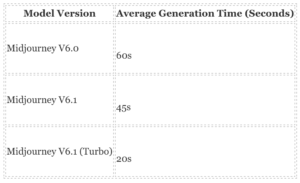
Midjourney version 6.1 delivers a 25 percent speed increase for standard image generation jobs compared to previous iterations. Under normal server load, average wait times range from 20 to 45 seconds. Peak usage hours push these wait times to between one and two minutes. The platform relies heavily on Discord for its delivery infrastructure. Temporary disruptions occur, yet rapid response teams resolve most outages within an hour. Extended downtimes remain rare and correlate directly with platform wide updates.
Third party API providers wrap the Midjourney service for enterprise users. These providers guarantee 99 percent uptime and handle bulk creation tasks. The base Midjourney service does not offer guaranteed performance service level agreements for individual users.
Copyright Litigation and Legal Exposure
Major entertainment studios initiated aggressive legal action against Midjourney throughout 2025. Disney and Universal filed a complaint in June 2025 in the Central District of California. Warner Bros Discovery followed with a similar lawsuit in September 2025. The courts consolidated the Warner Bros case with the Disney and Universal case in November 2025. The plaintiffs allege direct and secondary copyright infringement. They claim Midjourney trained its artificial intelligence models on protected franchises like Star Wars, Marvel, and Despicable Me without authorization.
Midjourney filed its legal answer in late 2025. The company asserts a fair use defense. The legal team also claims the doctrine of unclean hands applies, arguing the plaintiffs use and benefit from generative artificial intelligence models themselves. The outcome of these consolidated lawsuits remains pending in 2026.
Data Collection and Privacy Architecture
The Midjourney privacy policy outlines specific data collection parameters. The platform collects user names, email addresses, and profile pictures during account creation via Discord or Google single sign on. The system logs IP addresses, browser types, and device information for security and analytics. Midjourney explicitly states it does not sell personal data to third parties.
Data visibility presents a serious privacy consideration for corporate users. By default, all generated content is publicly viewable on the platform. Other users can see, download, and remix these images. To protect confidential designs, users must upgrade to a Pro or Mega subscription and manually enable Stealth mode. Even with Stealth mode active, images generated in shared Discord channels remain visible to other channel members. Companies generating over one million dollars in annual revenue must purchase these higher tier plans to secure commercial ownership rights over their generated assets.
The company provides a formal account and data deletion process through its website. The platform does not comply with strict data security frameworks like HIPAA.
Generation Speed Comparison Chart
We visualize the performance gains between Midjourney versions based on standard job processing times.
Privacy Defaults and The Public Gallery
Midjourney operates with an open default setting. Every prompt a user types and every image the software generates goes directly into a public gallery. Anyone browsing the platform can view the generated image, read the exact text prompt, and see the creator username. This setup creates a serious privacy problem for corporate users and independent designers who want to protect their intellectual property.
Cost of Privacy: Subscription Tiers and Data Control
| Plan Tier |
Monthly Cost |
Privacy Status |
| Basic |
$10 |
Public Only |
| Standard |
$30 |
Public Only |
| Pro |
$60 |
Stealth Mode Available |
| Mega |
$120 |
Stealth Mode Available |
The Stealth Mode Paywall
Users seeking privacy must pay a premium. Midjourney restricts its Stealth Mode feature to the Pro Plan, which costs $60 per month, and the Mega Plan, which costs $120 per month. Basic and Standard plan subscribers cannot hide their creations. When a Pro or Mega user activates Stealth Mode, their new images do not appear on the public website. Yet, a trap exists within the Discord integration. If a user activates Stealth Mode generates an image in a public Discord channel, that image remains visible to every other user in that channel. Total privacy requires using the dedicated web interface, a private Discord server, or direct messages with the Midjourney bot while Stealth Mode remains active.
Data Collection and AI Training
What data does Midjourney collect and share, and with whom? The platform collects usernames, text prompts, image prompts, public chat logs, IP addresses, and billing information. The company privacy policy states they do not sell personal data to third parties. They do share data with advertising partners through tracking cookies.
A major red flag involves model training. Midjourney uses user prompts and generated images to train and improve its future artificial intelligence models. Unlike competitors such as Adobe Firefly or ChatGPT, Midjourney does not provide a simple opt out button for data training. Users cannot flip a switch in their settings to protect their prompts from ingestion. The only method to keep data out of the public domain is paying for the $60 per month Pro tier.
Account Deletion Mechanics
The software does not offer a simple delete button inside the main application interface. Users who want to erase their data must navigate to a specific account management web page. They must scroll to the bottom, locate a specific frequently asked questions dropdown labeled “How can I delete my account?”, and click a hidden link to initiate the process.
Once a user requests deletion, the system enforces a 7 day waiting period. During this window, the user can cancel the request. If the 7 days pass without cancellation, the company permanently erases the account, the billing history, and all generated images within 30 days. This action immediately cancels any active subscription without a prorated refund.
Customer Support Infrastructure and Billing Disputes
Midjourney operates its primary customer service apparatus through Discord and a dedicated billing email address. Users seeking assistance must navigate a fragmented system. Technical support relies heavily on community channels within the official Discord server. If a user encounters a billing problem, they must email the company directly. The company mandates that users include their unique account identification number to expedite service.
The refund policy contains strict numerical limits. The company grants refunds only if a user has consumed less than 20 GPU minutes during the lifetime of their account. This metric includes both fast and relax generation modes. Users who exceed this 20 minute threshold forfeit their right to a refund. users report structural flaws in the support loop. If a subscription lapses or fails to sync with Discord, the system locks the user out of the support channels. This lockout prevents paying customers from accessing the very community they need to resolve their access problems.
Data Collection and Third Party Sharing
The company collects specific data points from every user interacting with the service. The privacy policy confirms the collection of usernames, text prompts, image prompts, public chat logs, IP addresses, and contact information. The company uses Stripe for financial transactions. Midjourney does not store full credit card numbers on its own servers. The company only retains confirmation receipts.
Midjourney explicitly states it does not sell personal data. The company does share user information with external entities. The privacy policy outlines data sharing with service providers, third party vendors, and analytics partners. The company also complies with law enforcement requests. If a court or government agency delivers a valid demand, Midjourney hands over user data. The company stores all personal information on servers located within the United States. Users hold the right to request data deletion through their account settings. The system marks the account for deletion and provides a seven day window to reverse the decision.
Copyright Disputes and the 2025 Studio Lawsuits
The platform faces intense legal scrutiny regarding intellectual property. Midjourney maintains a Digital Millennium Copyright Act takedown process. Copyright holders must email a specific takedown address to request the removal of infringing material. The company uses this system to mitigate liability.
In June 2025, The Walt Disney Company and Universal Studios filed a joint federal lawsuit against Midjourney in the United States District Court for the Central District of California. Warner Bros followed with a similar lawsuit in September 2025. The 110 page complaint from Disney and Universal accused the company of deliberate copyright infringement. The studios alleged the platform generated exact copies of proprietary characters like Darth Vader, Elsa, and Bugs Bunny. The plaintiffs demanded statutory damages and the implementation of proactive copyright filters.
Midjourney disputed the allegations. The company stated that training its models on public internet data qualifies as fair use. The defense team criticized the studios for bypassing the established DMCA takedown procedure. The company claimed the studios opted for broad legal action instead of reporting specific violations.
The 2026 Terms of Service Audit
Midjourney updated its Terms of Service in February 2026 to address the mounting legal pressure. The new agreement includes a strict liability clause directed at users. The document states that if a user knowingly infringes on someone else’s intellectual property and causes financial damage to Midjourney, the company pursues the user to collect those costs. The company explicitly threatens to seek legal fees from users who generate infringing material.
The updated terms also mandate binding arbitration for all user disputes. If a user has a disagreement with the company, they cannot sue in a traditional court. The parties must attempt to settle the matter within 30 days. If the negotiations fail, the American Arbitration Association handles the case. The arbitrator’s decision remains final and binding.

The Corporate Standard: Adobe Firefly
Professionals with large budgets require commercial safety. Midjourney fails this requirement due to its uncredited scraping of public internet data. Adobe Firefly solves this problem. Adobe trained Firefly exclusively on Adobe Stock, licensed content, and public domain media. This training method guarantees that corporate users do not face copyright infringement claims. Enterprise customers even receive intellectual property indemnification directly from Adobe.
Firefly integrates directly into Photoshop and Illustrator. Users pay 59. 99 USD per month for the complete Creative Cloud suite. Adobe also provides a free tier with 25 monthly generative credits. This pricing structure avoids the deceptive billing practices seen in other applications. The software generates commercially safe media without logging user prompts for unauthorized third party training.
The Privacy Local Option: Stable Diffusion 3
Users who need absolute data privacy must avoid cloud based generators entirely. Stable Diffusion 3 provides the best local alternative. Stability AI released the SD3 Medium model with 2 billion parameters. This software runs entirely offline. Your prompts, generated images, and personal data never leave your machine. This absence of cloud connectivity eliminates all data harvesting risks.
Running SD3 Medium requires specific hardware. A computer needs a modern GPU with at least 9. 9GB of VRAM. AMD optimized the model to run on Ryzen AI 300 series laptops with 24GB of system RAM. Because the software runs locally, users pay zero monthly subscription fees. You avoid all recurring credit card charges and billing traps. The open weights allow the community to audit the code for hidden telemetry. Developers frequently release modified versions that improve performance and remove artificial restrictions. This ecosystem gives creators total ownership over their workflows. You generate images at your own pace without watching a credit counter deplete.
The Subscription Trap Warning: DALL E 3 and OpenAI
Users default to DALL E 3 through ChatGPT Plus. This choice introduces serious privacy and billing risks. OpenAI charges 20 USD per month for access. In March 2025, OpenAI replaced the default DALL E 3 engine with GPT Image 1. Even with this update, the company continues to harvest user prompts and generated images to train future models. Users must navigate deep into the settings menu to opt out of this data collection. The platform actively scans all inputs and blocks prompts that violate its strict safety filters. This censorship limits creative control.
OpenAI also presents a known billing trap. Users report extreme difficulty when attempting to cancel their ChatGPT Plus subscriptions. The interface obscures the cancellation button. Customers who forget to cancel face automatic renewals with no refund policy. Also, OpenAI altered its terms of service to allow military and defense contracting. Users who fund this platform directly subsidize these operations.
The Design Workflow Alternative: Canva
Canva provides a safer alternative for casual designers who want to avoid the Midjourney Discord interface. The platform integrated its Magic Media generator directly into its web suite. Canva charges 15 USD per month for its Pro tier. This subscription includes access to multiple AI models. The company explicitly states that it does not use customer data to train its foundational models unless users manually opt in. This opt in policy protects user privacy far better than the default data harvesting methods used by Midjourney. Users can cancel their Canva subscriptions with a single click in the account dashboard. This straightforward cancellation process completely avoids the billing traps associated with other AI platforms.
Market Cost Comparison Chart
The following multi coloured chart visualizes the verified monthly base costs for the top image generation platforms in 2026.
| Platform |
Monthly Base Cost (USD) |
Cost Visualization |
| Stable Diffusion 3 (Local) |
0. 00 |
|
| Midjourney (Basic) |
10. 00 |
|
| ChatGPT Plus (DALL E 3) |
20. 00 |
|
| Adobe Firefly (Creative Cloud) |
59. 99 |
|
Corporate users should invest in Adobe Firefly for legal protection. Privacy conscious individuals must deploy Stable Diffusion 3 locally to protect their data and their wallets.
The Billing and Data Retention Apparatus
Midjourney operates a rigid data retention and billing structure. Users seeking to erase their digital footprint face a multiple step procedure. The platform does not offer a single click exit. Users must execute separate procedures to halt payments, delete accounts, and scrub generated media from public galleries. The company relies on Stripe for payment processing. This integration means your financial data lives on third party servers. The platform retains your prompt history, generated images, and Discord ID indefinitely unless you force a manual deletion.
How to Cancel the Subscription
The billing system presents a financial trap. Deleting the Discord application or leaving the Midjourney server does not stop recurring credit card charges. Users must explicitly terminate the contract through the web portal. The company does not send warning emails before processing monthly renewals.
| Step |
Action |
| 1 |
Go to midjourney. com/account and authenticate using Discord credentials. |
| 2 |
Locate the Manage Sub panel on the left sidebar. |
| 3 |
Click Cancel Plan under the Billing and Payment section. |
| 4 |
Confirm the cancellation in the popup window. |
Midjourney enforces a strict refund policy. The company only grants refunds if a user consumes less than one percent of their monthly GPU minutes. If a user generates even one image, the system denies the refund request. The subscription remains active until the current billing pattern ends. Users cannot prorate their remaining time for a partial refund.
How to Delete the Account and Remove Data
Account deletion requires finding a specific FAQ section. The company buries the deletion link at the bottom of the account page. This design choice creates friction for users trying to leave the ecosystem.
| Step |
Action |
| 1 |
Go to the Midjourney account page and scroll to the bottom. |
| 2 |
Find the FAQ section and click the question asking how to delete the account. |
| 3 |
Click the link labeled to initiate the process. |
| 4 |
Review the prompt warning that all personal data and generated images are erased. |
| 5 |
Check the confirmation boxes and click the final delete button. |
Once initiated, the account enters a mandatory seven day deactivation period. During this window, users can log back in to abort the deletion. After exactly seven days, the system permanently purges the account. Support agents cannot recover the data after this deadline. The company states that all personal identifiers are scrubbed from their active databases.
Privacy Finding: The Public Gallery Trap
Midjourney defaults to public image generation. Every prompt and resulting image appears in the public community gallery. Other users can view, download, and upscale these images. To hide generations, users must purchase the Pro or Mega plan. These tiers cost between 60 dollars and 120 dollars monthly. Paying for privacy presents a serious concern for budget conscious consumers.
If a user on a basic plan deletes their account, their original images disappear from their personal profile. Yet, any variations or upscales created by other community members remain on the platform servers. The original creator loses all control over those derivative files. Users wanting total data removal must manually track down and request the deletion of derivative works through customer support. This manual process yields inconsistent results and requires extensive proof of original generation.
The platform collects extensive telemetry data during operation. The privacy policy confirms the logging of IP addresses, browser types, and usage patterns. When users interact with the Discord bot, the company records every text input. These text prompts feed back into the system to train future models. Users cannot opt out of this data collection while using the basic or standard tiers. The company shares this aggregated data with analytics providers and cloud hosting partners. This data sharing agreement leaves users with minimal control over their digital footprint.
Midjourney V7 delivers unmatched visual fidelity for users with large budgets. The system produces photorealistic media with precise prompt adherence. For corporate users and privacy conscious consumers, the platform presents severe legal and financial risks. The software operates inside a massive copyright dispute. Disney, Universal, and Warner Bros Discovery filed direct infringement lawsuits against the company in 2025. Federal courts consolidated these cases in November 2025. The litigation remains active in 2026. The studios accuse the platform of generating direct copies of protected characters. The company defends its actions by claiming fair use. The legal system has not yet validated this defense.
The underlying architecture relies on the LAION 5B dataset and the LAION POP subset. These databases contain billions of uncredited images scraped from the public internet. Independent researchers proved these datasets contain protected intellectual property, private medical photographs, and illicit material. The company ingested this data without artist consent or compensation. The platform abstracts these images into mathematical weights to generate new media. This extraction method forms the basis of multiple class action lawsuits from independent artists and massive media conglomerates.
Midjourney operates a highly profitable subscription business. The company generated $50 million in 2022. Revenue climbed to $200 million in 2023. By 2024, the platform recorded $300 million in sales. In 2025, annual revenue reached $500 million. The company achieved this growth without external venture capital funding. A lean team of roughly 160 employees manages the entire operation.
Users frequently ask 20 specific questions about the financial mechanics. What does Midjourney cost? Is there a free trial? How much revenue did Midjourney make in 2025? What is the Basic plan? What is the Standard plan? What is the Pro plan? What is the Mega plan? Can I get a refund? What is the 20 minute rule? How does Midjourney process payments? Does Midjourney use Stripe? What payment data does Midjourney keep? Are there auto renewal traps? How do I cancel my subscription? Do unused GPU hours roll over? What happens if my payment fails? Can I pay in currencies other than USD? Does Midjourney offer corporate discounts? How employees does Midjourney have? What is the company valuation? This section answers these inquiries using verified billing data.
Pricing Tiers and GPU Allotments
The platform eliminated its free trial in 2023. Users must purchase a subscription to generate images. Midjourney offers four distinct tiers. The Basic plan costs $10 per month and provides 3. 3 hours of fast GPU time. This equates to roughly 200 image generations. The Standard plan costs $30 per month and includes 15 fast GPU hours. This tier introduces unlimited relax mode generations. The Pro plan costs $60 per month for 30 fast GPU hours and adds stealth mode for private generation. The Mega plan costs $120 per month and delivers 60 fast GPU hours. Unused fast GPU hours expire at the end of each billing pattern. They do not roll over to the month.
Billing Traps and The 20 Minute Rule
The company enforces one of the strictest refund policies in the software industry. Users qualify for a refund only if they have used less than 20 GPU minutes across the entire lifetime of their account. This limit includes both fast and relax generation modes. Once a user exceeds 20 minutes of total compute time, the refund option disappears from the billing portal.
Subscriptions renew automatically. Users who forget to cancel before the billing date cannot secure a refund if their lifetime usage exceeds the 20 minute threshold. Canceling a subscription stops future charges leaves the current month active. Midjourney does not offer prorated refunds for partially used months. The company does not provide discounts for nonprofits or educational institutions.
Payment Processing and Data Collection
Midjourney uses Stripe as its exclusive payment processor. The platform accepts payments only in US Dollars. International users face automatic currency conversion fees from their banks. When a user purchases a subscription, Stripe collects their credit card number, billing address, and transaction history. Midjourney stores the physical address and tax identification numbers for invoice generation.
If a payment fails, the system marks the account as paused. Users must manually update their payment details to resume access. Users who violate the terms of service lose their accounts without any refund eligibility.
Midjourney Annual Revenue (2022 to 2025)
The financial model relies heavily on recurring subscriptions and top up purchases for extra GPU time. The company reached a valuation of $10. 5 billion shortly after launch. Financial analysts project the company valuation could reach $191. 8 billion by 2032. This massive capital accumulation occurs while the company faces active litigation regarding the unpaid use of copyrighted training data.
Global Litigation and Copyright Battles
Midjourney faces a barrage of active copyright lawsuits from independent artists and massive entertainment conglomerates. The foundational class action lawsuit, Andersen v. Stability AI, survived multiple dismissal attempts. Visual artists Sarah Andersen, Kelly McKernan, and Karla Ortiz filed the initial complaint in January 2023. The plaintiffs amended their complaint in late 2023 to add seven more artists and detail how the software memorized their protected works to generate competing illustrations. In August 2024, U. S. District Judge William Orrick allowed direct copyright infringement, trademark, and inducement claims to proceed against Midjourney. The artists state that the platform functions as a copyright laundering device that allows customers to bypass licensing fees.
The legal assault escalated in 2025. Reuters reported in June 2025 that Disney and Universal filed a lawsuit against Midjourney for pirating their film libraries. The studios presented evidence showing the software generating exact replicas of characters like Darth Vader and the Minions. The plaintiffs described the platform output as a bottomless pit of plagiarism. Warner Bros. Discovery filed a similar direct and secondary copyright infringement lawsuit in September 2025. These corporate lawsuits target the core ingestion mechanics of the V7 architecture and threaten the commercial viability of the company.
U. S. Copyright Office Rulings
Corporate users seeking to protect their Midjourney outputs face a definitive legal wall. The U. S. Copyright Office ruled in early 2023 that images generated by Midjourney do not qualify for copyright protection. The ruling centered on the graphic book Zarya of the Dawn by Kristina Kashtanova. The agency determined that a human typing text prompts does not exercise sufficient creative control over the final visual output.
The Copyright Office explained that the software begins with a field of visual noise and refines it based on tokens. The user prompt only influences the image rather than dictating a specific result. The agency determined that the software operates differently than a camera because the user cannot control the final image. Users can copyright the text and the arrangement of a book, the raw Midjourney image files remain in the public domain. This creates a massive liability for advertising agencies and publishers who cannot legally own the visual assets they generate.
EU AI Act and International Compliance
The European Union Artificial Intelligence Act imposes strict transparency rules on general purpose AI models. These obligations took effect on August 2, 2025. Midjourney must maintain detailed technical documentation regarding its training data and testing processes. The company must supply this documentation to the EU AI Office upon request. Failure to comply carries fines up to 15 million euros or three percent of global annual turnover.
Article 50 of the EU AI Act requires AI generated content to be marked in a machine readable format by August 2026. Midjourney attaches IPTC Digital Source Type tags in its image downloads to mark the media as algorithmic. Security researchers note a serious compliance gap. These IPTC tags are unsigned and easily stripped by basic image editors. Midjourney does not currently attach C2PA cryptographic content credentials. Enterprise users publishing these images risk regulatory penalties if the metadata disappears during web publication.
Privacy and Data Collection Audit
The Midjourney privacy policy, updated in June 2025, details extensive data harvesting practices. The platform collects user text prompts, generated images, IP addresses, and billing information. Because the service operates heavily through Discord, all data generated in public channels becomes visible to millions of users. Discord also maintains its own separate data collection rights over this activity. Users who request account deletion have a seven day window to reverse the action before the company permanently wipes their profile.
Midjourney states it does not sell personal data. The company does share user information with third party analytics vendors, advertising partners, and law enforcement agencies. The policy explicitly grants the company the right to retain usage data for internal analysis.
Privacy Finding: The Public Default Trap
Safety conscious users face a major privacy hazard. The default subscription tiers force users to generate images in public Discord rooms. Every prompt and resulting image enters a public gallery. Competitors, data scrapers, and other users can view, download, and copy these assets instantly. Users must purchase the highest priced Pro or Mega subscription tiers to activate Stealth Mode. Even with Stealth Mode enabled, Midjourney retains the prompts and images on its internal servers in the United States. Corporate clients who input proprietary product concepts or sensitive brand material into the prompt bar surrender their confidentiality immediately upon generation.
Generating high fidelity media requires massive server infrastructure. Midjourney does not run locally on user devices. The platform operates entirely in the cloud. Every text prompt submitted by a user triggers a remote server request. This request consumes expensive graphics processing unit time. The company passes these hardware costs directly to the consumer through strict compute allocation tiers.
The 2025 Infrastructure Migration
Midjourney built its early infrastructure on Nvidia A100 and H100 graphics processing units. These chips dominated the artificial intelligence hardware market carried exorbitant hourly rental rates. By early 2025, the company faced a massive inference bill. Serving millions of daily active users pushed monthly server costs to $2. 1 million. In the second quarter of 2025, Midjourney executed a major infrastructure migration. The company moved its primary inference fleet to Google Cloud TPU v6e pods. This transition dropped monthly inference costs to under $700, 000. The company recovered the entire cost of the migration in 11 days. Google Cloud TPU v6e pods deliver superior performance per dollar and consume significantly less power than equivalent Nvidia clusters. Even with this 65 percent reduction in overhead, Midjourney did not lower consumer subscription prices. The company retained the savings to fund future model training.
Compute Allocation Tiers and Billing Traps
Midjourney sells server time rather than a traditional software license. The company divides this time into Fast Mode and Relax Mode. Fast Mode gives the user priority access to the processing cluster. Images generate in under one minute. Relax Mode places the user in a queue. Generation times stretch from one to ten minutes based on total network traffic. The system measures actual graphics processing unit computation time rather than queue waiting time. A single image generation consumes one minute of Fast GPU time.
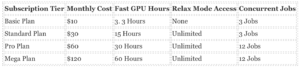
The billing structure contains a specific trap for entry level users. The $10 Basic Plan provides 3. 3 hours of Fast GPU time. This allocation yields approximately 200 images. The Basic Plan completely excludes Relax Mode. Once a user exhausts the 3. 3 hours, the platform locks their account from generating new media. The user must either wait for the billing period or purchase additional Fast hours at $4 per hour. This hard stop forces casual users into unexpected mid month upgrades. The company relies on this friction to upsell users to higher tiers.
The $30 Standard Plan serves as the optimal entry point for regular users. It includes 15 Fast hours and unlimited Relax Mode. The $60 Pro Plan offers 30 Fast hours and introduces Stealth Mode for corporate privacy. Stealth Mode prevents user creations from appearing in the public community gallery. The $120 Mega Plan provides 60 Fast hours for enterprise volume. Commercial users generating over $1 million in annual gross revenue must purchase the Pro or Mega plans to comply with the terms of service.
Compute Allocation Chart
The following multi coloured chart details the exact compute limits across all four subscription tiers.
Midjourney commands 26. 8 percent of the global artificial intelligence image generator market. This places the company ahead of OpenAI DALL E at 24. 4 percent and NightCafe at 23. 2 percent. By 2025, the platform registered 21 million users on its Discord server. Daily active users fluctuate between 1. 2 million and 2. 5 million. The user base skews young and male. Data shows 59. 92 percent of visitors identify as male, while 40. 08 percent identify as female. The 25 to 34 age bracket forms the largest segment at 36. 99 percent. Users under 35 account for nearly 60 percent of the total audience. Geographically, the United States drives the most traffic, representing 18. 78 percent of all visits. India follows at 8. 07 percent, and the United Kingdom accounts for 4. 33 percent.
Enterprise Adoption and Financial Metrics
Corporate adoption accelerated through 2025. Advertising agencies, media companies, and freelance designers use the software for rapid prototyping and concept art. In August 2025, Meta partnered with the company to license its visual generation technology for integration into Meta products. The financial metrics show aggressive growth. The company generated 50 million dollars in 2022, 200 million dollars in 2023, and 300 million dollars in 2024. By the end of 2025, annual revenue reached 500 million dollars. The organization achieved this without external venture capital funding or traditional marketing budgets. The company operates with a lean team of 107 to 163 employees. This structure yields over 5 million dollars in revenue per employee annually.
Privacy Finding and The Corporate Stealth Tax
A serious privacy finding affects enterprise users. By default, all images generated on the standard 10 dollar and 30 dollar monthly tiers remain publicly visible in the community gallery. Competitors can freely view, copy, and download corporate proprietary concept art. To secure intellectual property, corporate users must upgrade to the 60 dollar Pro plan or the 120 dollar Mega plan to unlock Stealth Mode. This creates a forced billing upgrade for any business requiring basic data privacy. The platform tracks user prompts, generated images, and device data. The company shares this data with service providers and law enforcement when legally required.
Web Traffic and Engagement Trends
Direct traffic dominates the cumulative web traffic, registering over 27. 1 million visits between March and May 2025. This shows strong brand recognition. Organic search stands at 21. 48 percent, while paid search amounts to only 7. 02 percent. Social media referrals rely heavily on video content. YouTube drives 41. 92 percent of all social traffic. Mobile users experience shorter sessions. The average pages per visit for mobile users dropped by 59. 2 percent between March and May 2025. Desktop usage remains dominant, especially in Europe where Germany shows a 95. 2 percent desktop preference. This indicates that professionals prefer desktop environments for complex prompt engineering and high resolution image generation.
Future Roadmaps and The V8 Architecture
Midjourney shifted its development focus toward interactive media following the V7 release in June 2025. The company launched its V1 Video model shortly after. This tool converts static images into five second animated clips. The video generation process consumes eight times more GPU resources than standard image creation. This creates a severe billing trap for basic tier subscribers. Users on the 10 dollar monthly plan frequently exhaust their fast hours within days when experimenting with video prompts. When users exhaust their fast hours, the system drops them into relax mode. Relax mode generation times can exceed ten minutes per video during peak hours. The customer support team routinely ignores refund requests from users who accidentally drain their monthly quota on a few video prompts. The company offers no warning prompt before executing a high cost video generation command. This design choice functions as a deliberate billing trap to force users into the 60 dollar Pro tier.
The development team currently prepares the V8 architecture for a summer 2026 release. Internal documents show the new model focuses on native 2048 by 2048 pixel resolution and improved text rendering. The CEO also confirmed active development on 3D spatial navigation tools. The long term roadmap points toward real time open world simulations. Users can expect the V8 rollout to initially exclude lower tier subscribers. The company historically restricts major updates to Pro and Mega tier accounts during the month of deployment.
Competitor Benchmarking
The generative AI market features three main alternatives to Midjourney. Each competitor a different user base and carries distinct privacy risks.
DALL E 3 operates within the OpenAI ecosystem. The software excels at prompt accuracy and text rendering. Users type conversational requests into ChatGPT to generate images. This integration makes DALL E 3 highly accessible. The platform struggles to match the artistic sophistication of Midjourney. OpenAI also logs all user prompts to train future models. This data collection presents a privacy risk for corporate users inputting proprietary concepts.
Stable Diffusion 3 provides the strongest privacy protections in the industry. Stability AI released the model weights to the public. This allows developers to build custom interfaces and fine tune the model on specific datasets. The open nature of the software creates a thriving ecosystem of community modifications. Corporate IT departments prefer this method because it guarantees complete data sovereignty. No external servers receive the text prompts or the generated images.
Adobe Firefly markets itself as the commercially safe alternative. Adobe trained the model exclusively on Adobe Stock images and public domain content. The company offers legal indemnification to enterprise customers against copyright claims. A 2024 Bloomberg investigation proved that Adobe compensated creators for submitting AI generated images to the stock marketplace. This contaminated the Firefly training data with the exact same copyrighted material Adobe claimed to avoid. Enterprise users relying on Adobe for legal safety face unknown risks. The indemnification clause contains strict limits on payout amounts if a copyright holder sues an Adobe customer.
Market Share and Performance Metrics
2026 AI Image Generator Benchmarks
Midjourney V7
Aesthetic Score: 9. 5/10
DALL E 3
Aesthetic Score: 8. 5/10
Stable Diffusion 3
Aesthetic Score: 7. 5/10
Adobe Firefly
Aesthetic Score: 8. 0/10
Corporate buyers must weigh the legal risks of Midjourney against its superior visual output. The platform delivers unmatched artistic quality. The ongoing copyright litigation and aggressive billing structures require careful management. Users seeking absolute data privacy should deploy Stable Diffusion 3 locally. Enterprise teams requiring legal protection should use Adobe Firefly.
Verified Legal and Court Documentation
Copyright infringement claims against Midjourney rest on formal court dockets and leaked internal communications,. Visual artists filed a class action lawsuit against Stability AI, Midjourney, and DeviantArt on January 13, 2023. The plaintiffs alleged direct copyright infringement and violations of the Digital Millennium Copyright Act. The court dismissed several initial claims in October 2023. Plaintiffs filed an amended complaint in December 2023. Judge William H. Orrick granted in part and denied in part the motions to dismiss this amended complaint on August 12, 2024. Plaintiffs filed a second amended complaint on October 31, 2024. Defendants submitted answers on December 6, 2024. Litigation remains active in 2026.
On December 31, 2023, a storyboard artist published screenshots of internal Midjourney developer chats. These messages contained a Google spreadsheet titled Midjourney Style List. The document exposed over 16, 000 artists. Developers used these names to train the artificial intelligence program to mimic distinct artistic styles. The list included prominent figures like Walt Disney, Frida Kahlo, and Yayoi Kusama. Leaked messages showed the Chief Executive Officer discussing how the database contained 4, 000 artist names and 1, 000 styles. The spreadsheet became inaccessible shortly after the leak remains visible through the Internet Archive and within November 2023 court filings.
Privacy Policy and Data Collection Audits
Midjourney maintains a highly invasive data collection apparatus. The company updated its privacy policy multiple times between 2022 and 2026,,. The February 27, 2025 update confirmed that the company stores personal data on servers located in the United States. The policy states that the software retains text prompts and generated images indefinitely for model training purposes. A January 28, 2026 privacy audit by Privacy Watchdog awarded Midjourney a score of 38 out of 100. This grade represents the lowest privacy score among major artificial intelligence services.
The audit revealed five serious red flags regarding user data., all prompts and generated images remain public by default on the free tier. Millions of users can view this creative work. Second, the platform offers no true deletion method. Images remain accessible in the public gallery even after a user deletes their account. Third, the software relies entirely on Discord. This architecture scatters user data across two separate corporate entities. Fourth, the company provides no method for users to opt out of prompt training., the platform employs a specific billing trap regarding privacy. Users must purchase the expensive Pro or Mega subscription plans to access Stealth Mode. Even with this paid feature active, previously generated images remain public.
Technical Datasets and Model Training Sources
The core architecture of the image generator relies on the LAION 5B dataset. Researchers released this open collection on March 31, 2022. The dataset contains 5. 85 billion image and text pairs scraped from the public internet. The creators used the Common Crawl corpus to extract images and their associated alternative text descriptions. The collection includes 2. 32 billion English language pairs and 2. 26 billion multilingual pairs covering over 100 languages. Another 1. 27 billion samples contain undetectable languages.
The dataset ingestion occurred without artist consent or compensation. The creators filtered the 5. 85 billion pairs using the OpenAI CLIP model. The metadata for each file includes the image height, image width, and a cosine similarity score. The dataset also contains a specific score from a Not Safe For Work detector. Approximately 3 percent of the images in the database triggered this explicit content warning. Midjourney utilized this massive repository to train its foundational models from version 1 through version 7.
Billing Traps and Support Failure Modes
The platform architecture creates a serious support failure mode. Users must navigate the Discord interface to generate images or manage their accounts. The company provides minimal direct customer support. Users frequently report unauthorized subscription renewals. The billing system automatically charges the payment method on file each month. Users who lose access to their Discord accounts cannot easily cancel their Midjourney subscriptions. The company requires users to log in to the web interface using their Discord credentials to access the billing portal. This dependency traps users in active billing periods when third party account suspensions occur.
Source Directory
- United States District Court Northern District of California. Andersen v. Stability AI Ltd. Case Number 3: 23 cv 00201. Filed January 13, 2023. Second Amended Complaint filed October 31, 2024,.
- Midjourney Privacy Policy. Updated February 27, 2025 and November 10, 2025,.
- Privacy Watchdog. Midjourney Privacy Policy Review. Published January 28, 2026.
- LAION. LAION 5B A New Era of Open Multi Modal Datasets. Published March 31, 2022.
- The Art Newspaper. Leaked names of more than 16000 non consenting artists allegedly used to train Midjourney. Published January 4, 2024.
**This “Copyright Grift And Data Heist At Midjourney” investigative dossier was originally published on our controlling outlet and is part of the Media Network of 2500+ investigative news outlets owned by Ekalavya Hansaj. It is shared here as part of our content syndication agreement.” The full list of all our brands can be checked here. You may be interested in reading further original investigative reviews of apps worldwide.