Indigenous Art Appropriation: The Fashion Industry Scandal
Why it matters:
- The fashion industry often appropriates Indigenous patterns under the guise of "homage" or "cultural appreciation," but data reveals it as theft, stripping billions of dollars from source communities.
- From cheap souvenirs to high-fashion pieces, the misappropriation leads to massive markups, with little to no compensation flowing back to the original artisans, highlighting the industry's extraction model.
The fashion industry frequently frames the unauthorized use of Indigenous patterns as “homage” or “cultural appreciation.” The data proves it is theft. This is not an artistic misunderstanding or indigenous art appropriation; it is a calculated economic transfer where billions of dollars in value are stripped from source communities and funneled into the accounts of luxury conglomerates and fast-fashion giants. While the global handicrafts market reached an estimated valuation of $787 billion in 2024, the artisans who originated the designs driving this sector frequently receive zero compensation.
The scale of this misappropriation is measurable. In Australia, a 2022 Productivity Commission report exposed a market saturated with forgeries. The commission found that two-thirds of “Indigenous-style” souvenirs sold in Australia are fake, with no connection to Aboriginal or Torres Strait Islander people. This segment of the market alone generates tens of millions annually, yet up to 80% of these goods are mass-produced overseas. The report explicitly valued the spending on inauthentic products at approximately $54 million AUD in a single year, money that consumers believed supported Indigenous creators instead went to third-party manufacturers.
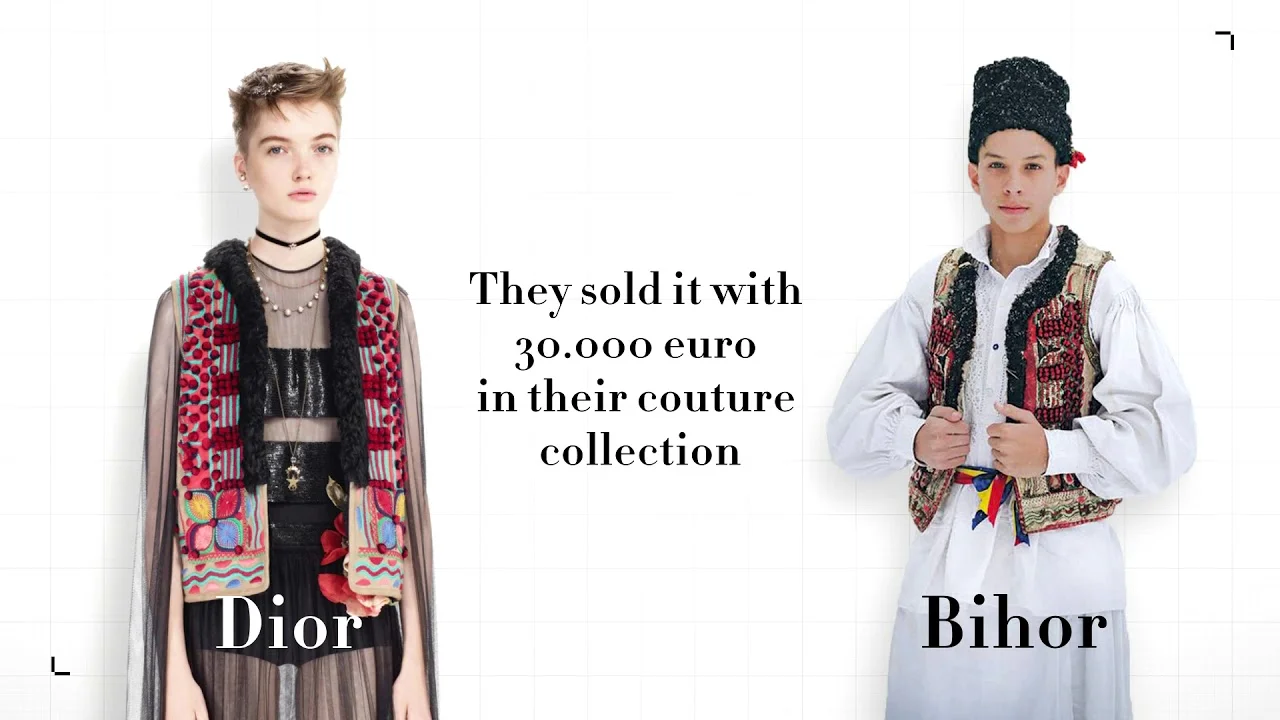
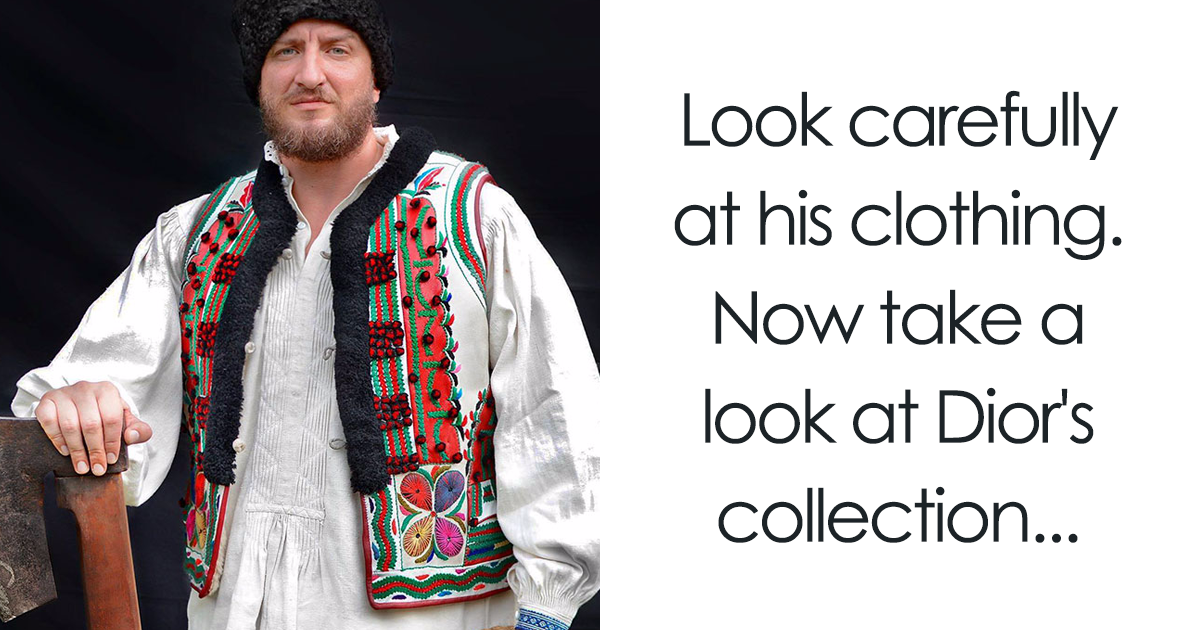
This “fake art” economy is not limited to cheap souvenirs. High-fashion houses extract value at a much higher price point, creating a massive between the cost of the original craft and the luxury markup. In 2017, Dior released a coat in its pre-fall collection that bore a near-identical resemblance to a traditional Romanian Bihor jacket. Local artisans in Bihor sell their sheepskin coats for approximately €500. Dior priced its version at €30, 000. The markup of 5, 900% did not result in a single cent flowing back to the Bihor community. This incident sparked the launch of “Bihor Couture,” a campaign to reclaim the value of their intellectual property, yet the economic damage of the initial theft remains a clear example of the industry’s extraction model.
“Plagiarism is not a tribute. Theft is not the fruit of inspiration. We are defending the cultural heritage of indigenous communities to avoid the plagiarism of their elements of identity by national and transnational companies.”
, Alejandra Frausto, Mexico’s Secretary of Culture (2021)
Mexico has become the central battleground for quantifying and fighting this theft. Between 2020 and 2023, the Mexican government issued formal complaints against brands including Zara, Shein, and Anthropologie. In October 2022, Secretary of Culture Alejandra Frausto accused Ralph Lauren of “wrongful cultural misappropriation” regarding a cardigan that mimicked the saltillo sarape designs of the Contla and Saltillo communities. While the authentic garment sells for a fraction of the price and takes artisans months to weave, the industrial copy was sold globally for hundreds of dollars. Ralph Lauren issued an apology, a common industry reflex that rarely involves retroactive financial compensation.
The legal system has begun to attach real numbers to these infringements. The Navajo Nation’s trademark infringement lawsuit against Urban Outfitters, filed in 2012 and settled in November 2016, challenged the retailer’s use of the “Navajo” name on products including “Navajo Hipster Panties” and flasks. While the settlement terms remain confidential, the tribe sought millions in damages under the Indian Arts and Crafts Act, which allows for statutory damages of up to $1, 000 per day per product type. This case forced a major shift in how mass-market retailers method tribal names, proving that Indigenous IP has a defensible market value.
The Appropriation Price Tag: Value Extracted vs. Returned
The following table illustrates the financial in high-profile appropriation cases between 2015 and 2025. It highlights the retail price of the appropriated item versus the compensation received by the source community.
| Brand / Entity | Appropriated Item | Retail Price (Approx) | Community Compensation | Outcome |
|---|---|---|---|---|
| Dior | Bihor Coat (2017) | €30, 000 | €0 | No admission; Bihor Couture launched |
| Isabel Marant | Mixe Blouse (2015/2020) | $290 | $0 | French court ruled design belongs to Mixe people |
| Ralph Lauren | Saltillo Cardigan (2022) | $300+ | $0 | Public apology; item removed |
| Urban Outfitters | “Navajo” Collection | Various ($20-$100) | Undisclosed | Settled 2016; Licensing agreement established |
| Australian Souvenir Market | Fake Aboriginal Art | $54 Million (Sector) | $0 | 2022 Productivity Commission Report |
These figures represent only the detected instances of IP theft. The true economic loss is likely exponentially higher when accounting for the “dilution effect.” When a market is flooded with cheap, industrial knockoffs, such as the $20 polyester “native” prints sold by fast-fashion apps, the perceived value of the authentic, labor-intensive original collapses. Indigenous tourism, valued at $46. 7 billion in 2025, relies heavily on the authenticity of cultural products. When global brands strip-mine these aesthetics, they do not just steal a design; they devalue the entire cultural asset class of the community.
The Isabel Marant Precedent: Anatomy of the Mixe Blouse Scandal
The 2015 controversy surrounding French designer Isabel Marant’s “Etoile” collection serves as the definitive case study for the fashion industry’s extraction of Indigenous intellectual property. In early 2015, Marant released the “Vicky” blouse, a garment that featured embroidery identical to the 600-year-old traditional huipil designs of the Mixe community in Santa María Tlahuitoltepec, Oaxaca. While the original Mixe garment sold for approximately 300 Mexican pesos (roughly $20 USD), Marant’s copy retailed for $290 USD, marking a markup of over 1, 300% based solely on the cultural capital of a marginalized community.
This case exposed the legal void that allows such theft to. When the Mixe community issued a declaration demanding recognition, the situation devolved into a surreal legal battle, not between the community and the designer, between two European fashion houses fighting over the right to own the stolen design. Another French label, Antik Batik, sued Marant, claiming they held the copyright to the Mixe pattern. The absurdity of two foreign entities litigating ownership of an ancestral Mexican design in a Paris court highlighted the colonial arrogance in Western intellectual property law.
In December 2015, a French court ruled that neither Marant nor Antik Batik could copyright the design because it originated from the Mixe people. yet, this was a pyrrhic victory for Santa María Tlahuitoltepec. The court dismissed Antik Batik’s claim and ordered them to pay legal fees to Marant, yet the Mixe artisans received zero financial compensation for the global commercialization of their identity. The ruling acknowledged their authorship provided no method for economic restitution.
The industry’s pledge to “do better” following this scandal proved hollow. In November 2020, Marant was forced to problem another apology, this time to the Purépecha community of Michoacán, for appropriating their textile patterns on a $600 cape. This recidivism demonstrates that without binding legal consequences, apologies are a cost of doing business.
Comparative Economics of Appropriation
The following table contrasts the economic reality of the “Vicky” blouse against the authentic Mixe huipil, illustrating the in valuation and compensation.
| Metric | Isabel Marant “Vicky” Blouse | Authentic Mixe Huipil |
|---|---|---|
| Retail Price (2015) | $290. 00 USD | ~$20. 00 USD |
| Compensation to Originators | $0. 00 | 100% of Sale |
| Copyright Claim | Claimed “Inspiration” (Defense) | Ancestral Heritage (Unprotected) |
| Production Time | Mass Manufactured | Weeks of Hand Embroidery |
Price Markup Visualization
*Bar widths represent relative price difference.
Carolina Herrera and the Resort 2020 Diplomatic Incident
In June 2019, the fashion house Carolina Herrera released its Resort 2020 collection. Creative Director Wes Gordon described the line as capturing the “playful and colorful mood of a Latin holiday.” The collection featured balloon-sleeved gowns, knitwear, and cocktail dresses that the brand claimed were inspired by a “sunrise in Tulum” and the “light of Lima.” The Mexican government and Indigenous artisans immediately identified the designs as a direct extraction of specific, protected cultural intellectual property. This was not a vague inspiration. It was a precise replication of embroidery and weaving techniques from three distinct Mexican communities without permission or compensation.
Quantifying the Appropriation
The collection did not reference Mexican aesthetics. It lifted exact motifs that serve as historical records and community identifiers. The Mexican Ministry of Culture identified three primary instances of plagiarism within the collection. The following table details the specific garments and the Indigenous intellectual property they utilized.
| Collection Look | Carolina Herrera Item | Indigenous Source Community | Cultural Significance |
|---|---|---|---|
| Look 23 | White floor-length gown with colorful animal and floral embroidery. | Tenango de Doria (Hidalgo) | The “Tenangos” embroidery narrates the history of the community. Each motif represents personal, familial, and harvest events. It is a community record, not a decorative print. |
| Looks 11 & 13 | Mid-length dresses featuring vibrant floral embroidery on dark fabric. | Isthmus of Tehuantepec (Oaxaca) | These patterns identify the Zapotec women of the region. The specific “Cadena” style embroidery is a marker of identity and regional pride. |
| Looks 14 & 16 | Knitwear and ponchos featuring a multi-colored stripe pattern. | Saltillo (Coahuila) | The “Sarape de Saltillo” is a weaving tradition dating back centuries. The specific color transitions and weave structure are central to the identity of the Tlaxcalan people in northern Mexico. |
The State Intervention
On June 10, 2019, Mexican Culture Secretary Alejandra Frausto issued a formal letter to Carolina Herrera and Wes Gordon. This marked a rare instance of direct state intervention in a fashion copyright dispute. Frausto demanded a public explanation for the use of cultural elements whose origins are “fully documented.” The letter asked two fundamental questions., on what basis did the brand decide to use these cultural elements? Second, how would the profits from these sales benefit the communities that created the original designs?
The government position was that the “Tenangos” appearing on a luxury gown priced at several thousand dollars represented a privatization of shared heritage. Glafira Candelaria, an artisan from the Tenango de Doria community, expressed the indignation felt by the creators. She noted that the brand was “copying our work” while the artisans themselves struggled to sell their original textiles for a fraction of the price.
“In these embroideries is the history of the community itself, and each element has a personal, family and community meaning. This is a matter of ethical principle that obliges us to speak out and bring an urgent problem to the UN’s sustainable development agenda.”
, Alejandra Frausto, Mexican Secretary of Culture (June 2019)
The “Homage” Defense
Wes Gordon responded to the accusations by framing the collection as a “tribute” to the richness of Mexican culture. The brand issued a statement claiming the collection possessed an “undeniable Mexican presence” and was intended to show “love for this country.” This defense aligns with a standard industry strategy where unauthorized use is rebranded as “appreciation.”
The data contradicts the concept of homage. Homage implies a relationship of respect and reciprocity. The Resort 2020 collection generated revenue exclusively for the Carolina Herrera brand and its parent company, Puig. There was no financial transfer to the artisans in Hidalgo, Oaxaca, or Coahuila. The “love” for Mexico did not translate into economic support for the creators of the designs. The brand utilized the aesthetic value of Indigenous labor to sell luxury goods while the originators of that value remained excluded from the transaction.
This incident served as a catalyst for legislative action. It exposed the inability of existing international copyright laws to protect shared intellectual property. The diplomatic friction accelerated the drafting of Mexico’s “General Law on Protection of Cultural Heritage of Indigenous and Afro-Mexican Peoples,” which would later criminalize the unauthorized use of such designs. The Carolina Herrera case proved that without strict legal frameworks, the fashion industry would continue to treat Indigenous heritage as a free raw material.
Ralph Lauren vs The Navajo Nation: The Trademark Battleground
The legal war for Indigenous intellectual property rights reached its most serious inflection point not on a runway, in a New Mexico federal court. While the fashion industry has long treated Indigenous design as public domain, the Navajo Nation’s aggressive enforcement of its trademarks between 2015 and 2025 shattered this assumption. The conflict centers on a simple, legally verified fact: the Navajo Nation is a sovereign entity with over 80 registered trademarks, including the name “Navajo” itself. The industry’s refusal to recognize this sovereignty created a battleground where billion-dollar corporations were forced to retreat.
Although Ralph Lauren has frequently served as the public face of “frontier chic” appropriation, most notably with the 2022 plagiarism scandal involving Mexican Indigenous textiles, the legal precedent that forced the industry to its knees was established in the Navajo Nation’s victory against Urban Outfitters. In September 2016, the parties reached a historic settlement that ended a four-year litigation war. The retailer had sold products labeled “Navajo Hipster Panty” and “Navajo Print Flask,” items the tribe argued were not only trademark infringement derogatory to a community where alcohol sales are largely prohibited.
The 2016 settlement was not a financial transaction; it was a structural capitulation by a major retailer. Urban Outfitters was forced to enter into a supply and license agreement, transforming from a thief of Navajo IP into a paying client. This victory signaled to luxury giants like Ralph Lauren that the era of cost-free appropriation was ending. Yet, as the data shows, Ralph Lauren continued to test these boundaries well into the 2020s, proving that without constant legal pressure, the extraction economy.
The High Cost of “Homage”: Infringement Timeline (2015 – 2025)
The following table details the major legal and public confrontations regarding Indigenous IP theft involving these fashion powerhouses during the reporting period.
| Year | Entity | Offending Product/Action | Outcome/Resolution |
|---|---|---|---|
| 2016 | Urban Outfitters | “Navajo” labeled panties, flasks, and apparel. | Settled. Undisclosed sum paid; Supply & License Agreement signed to sell authentic Navajo jewelry. |
| 2020 | Madhappy | Hoodie featuring the Navajo Nation seal. | Apology & Removal. Company donated proceeds to the tribe and instituted cultural training. |
| 2022 | Ralph Lauren | Cardigan/Skirt copying Contla & Saltillo serape designs. | Public Apology. Issued after Mexico’s Lady accused the brand of plagiarism; promised “credit and collaboration” model. |
| 2023 | Ralph Lauren | “Artist in Residence” Program launch. | Policy Shift. Hired Naiomi Glasses (Diné) as resident artist, signaling a move from theft to paid partnership. |
The contrast between the Urban Outfitters settlement and Ralph Lauren’s 2022 controversy highlights a persistent industry failure. Six years after the Navajo Nation proved in federal court that “Navajo” is a protected trademark, not a generic style descriptor, Ralph Lauren was found selling a “beacon” cardigan that plagiarized the ancestral sarape designs of the Contla and Saltillo communities in Mexico. Beatriz Gutiérrez Müller, Mexico’s Lady, publicly accused the brand of “illegal and immoral” plagiarism. The company’s subsequent apology admitted they were “surprised” the item was being sold, a statement that reveals a widespread absence of oversight in supply chains designed to strip-mine cultural aesthetics.
This negligence has financial consequences. In the Urban Outfitters case, the Navajo Nation sought treble damages under the Indian Arts and Crafts Act, chance amounting to millions of dollars per day of violation. The 2016 settlement avoided a jury verdict that could have bankrupted specific product lines, the threat alone forced a market correction. By 2024, the “Navajo” trademark had become a “no-go” zone for unauthorized use in major retail, forcing brands to either collaborate with Diné artists or abandon the aesthetic entirely.
“We expect that any company considering the use of the Navajo name, or our designs or motifs, ask us for our permission.” , Russell Begaye, Former President of the Navajo Nation (2016).
The shift is slow measurable. Following the 2022 scandal, Ralph Lauren launched an “Artist in Residence” program in late 2023, hiring seventh-generation Diné weaver Naiomi Glasses. This move from exploitation to employment represents the only viable future for the industry. It validates the economic argument the Navajo Nation has made for decades: Indigenous design has immense market value, and the originators of that value must be the ones to monetize it.
KTZ and the Sacred Shaman: Profiting from Spiritual Regalia
The fashion industry’s extraction of Indigenous intellectual property reached a nadir in 2015 with the London-based label KTZ (Kokon To Zai). In a blatant case of design piracy, the brand released a menswear collection featuring the “Shaman Towelling Sweatshirt,” a garment that retailed for approximately £400 ($600 USD). This item was not inspired by general Inuit aesthetics; it was a precise, digital scan of a sacred caribou-skin parka belonging to Aua, the last great shaman of the Canadian Inuit.
The original garment, created in 1902 by Aua’s wife Ataguarjugusiq, was never intended for commerce. It was a spiritual tool designed to protect the shaman from metaphysical danger. The detailed applique work featured protective hands on the chest to ward off evil spirits and small animal figures representing “children of the earth.” KTZ transposed these exact sacred symbols onto a mass-produced cotton sweatshirt, stripping them of their spiritual function to sell them as edgy streetwear.
Salome Awa, a producer for CBC Nunavut and the great-granddaughter of Aua, identified the theft immediately. “They must have seen it and copied it,” Awa stated in 2015. “My great-grandfather was a very and respected man and he has been used and violated. It was disgusting to see a sacred design used as a sweater.”
The economic in this transaction is absolute. While KTZ priced the sweatshirt at nearly $900 CAD, the descendants of Aua and the Inuit community received zero compensation. The design was likely lifted from the 2006 historical film The Journals of Knud Rasmussen or the book Northern Voices, allowing the brand to bypass any engagement with the living community that owns the design.
The Economics of “Homage”
KTZ’s response to the backlash followed a predictable industry script. The brand issued an apology claiming the design was a tribute, stating it is part of their “DNA to celebrate multiculturalism as a form of art.” This defense attempts to rebrand theft as appreciation, erasing the economic reality that one party profits while the other is plundered. The table outlines the clear contrast between the original artifact and the commercial copy.
| Metric | Original Shaman’s Parka (1902) | KTZ “Shaman” Sweatshirt (2015) |
|---|---|---|
| Creator | Ataguarjugusiq (Inuit Artisan) | KTZ Design Team (London) |
| Purpose | Spiritual protection; warding off evil spirits | High-end streetwear retail |
| Retail Price | Not for sale (Sacred Object) | ~$600 USD / £400 GBP |
| Community Royalty | N/A | $0. 00 |
| Permission Sought | N/A | None |
Following the public outcry, KTZ removed the item from sale. Yet, the incident exposes a widespread flaw in intellectual property law. Because the original parka is considered “traditional knowledge” and dates back to 1902, it falls into the public domain under Western legal standards. This legal loophole allows corporations to monetize sacred Indigenous heritage without fear of legal retribution, leaving public shaming as the only recourse for communities like the Inuit.
The “Shaman Towelling Sweatshirt” remains a definitive case study in the fashion industry’s entitlement. It demonstrates that without strict legal protections for Indigenous Cultural Intellectual Property (ICIP), brands continue to treat sacred history as a free raw material for their supply chains.
Nike Air Force 1: The Guna Yala Mola Pattern Conflict
In May 2019, Nike prepared to release a special edition Air Force 1 Low intended to honor Puerto Rico. The design featured a complex, geometric pattern in red, blue, green, and orange, which the company marketing materials claimed was a tribute to the “Coquí” frog, a national symbol of the island. This claim was false. The pattern was not Puerto Rican; it was a direct copy of a Mola, the sacred textile art belonging exclusively to the Guna (Kuna) people of Panama and Colombia.
The Guna Yala General Congress immediately identified the design as a violation of their intellectual property. Unlike Indigenous groups who absence legal frameworks to protect their heritage, the Guna people possess a tool: Panama’s Law No. 20 of 2000. This legislation specifically protects the shared intellectual property rights of Indigenous peoples, requiring third parties to obtain express permission and pay royalties for the use of traditional knowledge. Nike had done neither.
Belisario López, the traditional leader of the Guna Yala General Congress, issued a statement condemning the act: “We are not against our mola being commercialized. What we oppose is it being done without consulting us.” The Guna legal team, led by Aresio Valiente, demanded not only the cancellation of the shoe also financial compensation for the unauthorized use of their cultural identity. The conflict exposed a massive failure in Nike’s due diligence processes; a simple reverse image search or consultation with a cultural anthropologist would have identified the pattern’s true origin immediately.
The Economics of Erasure
The economic of this theft are severe. For Guna women, the production and sale of Molas constitute a primary source of income and economic independence. When a multinational corporation mass-produces these designs without license, it devalues the authentic handicraft market and strips the community of revenue. The Guna economy relies on the exclusivity and authenticity of their product; Nike’s attempt to genericize the design as “Puerto Rican folklore” threatened to erase the pattern’s specific cultural provenance.
Nike canceled the release of the “Puerto Rico 2019” Air Force 1 less than a month before its scheduled June launch. In a statement, the company admitted to an “inaccurate representation of the design origin.” yet, the cancellation created a perverse economic effect typical of the “Global Theft Economy.” Pre-production pairs that leaked into the secondary market became instant collector’s items. While the shoe was intended to retail for $100, resale platforms like StockX saw listings for the “banned” sneaker climb to over $500. The controversy itself generated value for resellers and platforms, while the Guna people, whose IP generated this hype, received no portion of this secondary market speculative value.
Data Focus: The “Banned” Shoe Premium
The following chart illustrates how the cancellation of culturally appropriative products frequently results in a “scandal premium” on the secondary market. This value accrues entirely to third-party resellers, bypassing the community whose IP was stolen.
| Product Model | Original Retail Price | Peak Resale Value (Est.) | Value Increase | Royalty to Source Community |
|---|---|---|---|---|
| Nike AF1 “Puerto Rico” (Mola) | $100. 00 | $500. 00+ | +400% | $0. 00 |
| Adidas “Huichol” Shaman (Unauthorized) | $120. 00 | $350. 00 | +191% | $0. 00 |
| Isabel Marant “Mixe” Blouse | $290. 00 | $450. 00 (Archive) | +55% | $0. 00 |
The Guna victory remains a rare exception in an industry where Indigenous designs are routinely siphoned into the fast-fashion pattern. While Nike avoided a lawsuit by canceling the release, the incident proved that Law No. 20 is a viable shield against corporate encroachment. It also highlighted the negligence of design teams who treat living cultures as public domain clip-art libraries.
Sezane and the Zapotec Market: The Grandmother Defense
In January 2022, the French fashion label Sézane, valued at over $1 billion, staged a photoshoot in Teotitlán del Valle, a Zapotec community in Oaxaca, Mexico, famous for its weaving traditions. The incident provided a textbook example of the “Grandmother Defense”, a rhetorical strategy where brands frame the exploitation of Indigenous elders as an act of cross-cultural affection rather than commercial extraction. The controversy centered on an elderly Zapotec woman, Guillermina Gutiérrez, whom the production team dressed in a Sézane green sweater and directed to dance for the camera.
Video footage leaked by a local witness revealed the mechanics behind the “candid” moment. The crew, none of whom were Zapotec, instructed Gutiérrez to perform while they laughed and snapped photos for the brand’s “creative journal.” For her participation in a campaign designed to sell luxury knitwear to European and American markets, Gutiérrez was paid 200 Mexican pesos, approximately $10 USD at the time. The transaction occurred in a market renowned for textiles that take weeks to weave, yet the brand extracted the “bohemian” aesthetic of the location for the price of a fast-food meal.
When the video sparked international outrage, Sézane founder Morgane Sézalory issued a statement that perfectly illustrated the Grandmother Defense. She claimed the interaction was born of a “true connection and shared joy,” asserting that the elderly woman reminded her of her own grandmother. This narrative attempts to reclassify a commercial transaction as an emotional exchange, bypassing labor laws and fair compensation standards. The National Institute of Indigenous Peoples (INPI) in Mexico rejected this framing, issuing a formal condemnation stating that the brand was “exploiting Indigenous and Afro-Mexican peoples and communities as cultural capital.”
The Economics of “Shared Joy”
The financial between the value extracted by Sézane and the compensation offered to the Zapotec community is mathematically clear. While the brand utilized the “authentic” backdrop of Teotitlán del Valle to market its Spring collection, the direct financial injection into the community was negligible. The sweater modeled by Gutiérrez, likely an alpaca or wool blend from their seasonal line, retailed for approximately 15 times the amount she was paid to wear it.
| Item / Service | Cost (USD) | Context |
|---|---|---|
| Payment to Zapotec Elder | $9. 80 | Flat fee for modeling and dancing (200 MXN). |
| Sézane “Gaspard” Cardigan | $120. 00 | Average retail price of similar knitwear item. |
| Authentic Zapotec Rug | $300. 00+ | Market price for a medium hand-woven wool rug. |
| Sézane Annual Revenue | $250 Million+ | Estimated annual turnover during the period. |
The INPI’s investigation highlighted that this was not a lapse in judgment a widespread method of value extraction. By treating Indigenous people as “scenery” rather than subjects with rights to their own image and cultural heritage, brands like Sézane avoid the licensing fees and model rates that would apply in Paris or New York. The “Grandmother Defense” serves to sanitize this gap, asking the public to focus on the smiles in the photograph rather than the invoice absent from the file.
Following the backlash, the Mexican Ministry of Culture invoked the 2022 Federal Law for the Protection of the Cultural Heritage of Indigenous and Afro-Mexican Peoples. This legislation explicitly prohibits the unauthorized use of cultural elements and requires fair remuneration. While Sézane issued an apology and removed the images, the incident remains a primary case study in how “appreciation” is frequently used as a cover for economic predation.
Fast Fashion Algorithms: How Shein Automates Cultural Theft
The method of cultural appropriation has evolved from manual copying to automated extraction. Shein, the Singapore-headquartered ultra-fast fashion giant, has replaced the traditional fashion buyer with a “real-time retail” algorithm that functions less like a design tool and more like a vacuum for global intellectual property. This system does not take inspiration; it ingests data from social media, independent artist portfolios, and Indigenous craft markets to generate inventory at a speed that defies human capability.
At the core of this operation is a proprietary software engine that scrapes the internet for trending visuals. When a pattern from a Mayan huipil or a Zapotec embroidery gains traction on platforms like TikTok or Instagram, Shein’s algorithm identifies the engagement metrics and instantly queues a replica for production. This process removes the human “conscience” from the design loop, treating centuries-old sacred motifs as royalty-free data points. The result is a transfer of wealth from the Global South to corporate shareholders, executed with the efficiency of high-frequency trading.
The Metrics of Misappropriation
To understand how Shein outpaces regulation and copyright enforcement, one must examine the sheer velocity of its supply chain. Traditional fast fashion retailers like Zara and H&M were once considered rapid for turning designs around in three weeks. Shein has compressed this timeline to as little as three days. This speed renders legal recourse nearly impossible for Indigenous artisans; by the time a cease-and-desist letter is drafted, the stolen design has frequently already been sold out, delisted, and replaced by the algorithmic target.
| Metric | Shein (Ultra-Fast Fashion) | Zara (Fast Fashion) | Traditional Retail |
|---|---|---|---|
| Daily New Items (SKUs) | 2, 000, 10, 000 | ~100 (avg) | < 10 |
| Design-to-Shelf Time | 3, 7 Days | 3, 4 Weeks | 6, 9 Months |
| Annual New Designs | ~1. 3 Million+ | ~25, 000 | ~2, 000, 4, 000 |
| Minimum Batch Size | 100 units | Thousands | Thousands |
The “small batch” model of 100 units serves as a liability shield. If a design is flagged for copyright infringement, the financial loss to Shein is negligible. yet, for the Indigenous creator, the damage is absolute. The market is flooded with cheap synthetics that undercut the price of authentic handmade goods by margins of 90% or more.
Case Study: The Mexican Government vs. The Algorithm
In July 2022, the Mexican Ministry of Culture issued a formal complaint against Shein for the unauthorized use of Mayan designs. The item in question was a floral blouse identical to those crafted by the artisan shared YucaChulas in the Yucatán peninsula. The authentic garment, a “huipil,” represents generations of biocultural knowledge and community identity. Shein sold its polyester copy for less than $7 USD.
This was not an error. In 2023, Mexico again accused Shein of plagiarizing the embroidery of the Nahua people of San Gabriel Chilac. The company’s response frequently follows a script: they claim respect for all cultures, blame a third-party supplier, and remove the item. Yet, the RICO lawsuit filed by independent artists in California alleges that this is a feature, not a bug. The lawsuit claims Shein’s corporate structure is a “byzantine shell game” designed to avoid liability while its algorithms systematically appropriate designs that have high commercial chance.
The economic violence of this model is two-fold., it strips the artisan of chance revenue. Second, it degrades the cultural value of the original work. When a sacred pattern intended for ceremonial use is mass-produced on a polyester crop top, the cultural signifier is hollowed out. The “real-time” nature of this theft means that an Indigenous community in Oaxaca or Chiapas is competing against a server farm in Guangzhou that can produce a knockoff before the original artisan has finished weaving a single piece.
The Legal Vacuum: Why Copyright Fails Communal Heritage
The fashion industry’s appropriation of Indigenous designs is not an ethical failure; it is a widespread feature of Western intellectual property (IP) law. Current copyright frameworks, designed to protect individual creators for a limited time, are fundamentally incompatible with Indigenous systems of communal, intergenerational stewardship. In the eyes of US and European courts, ancient clan patterns and sacred weaving techniques frequently fall into the “public domain,” a legal classification that renders them free raw material for corporate exploitation.
This legal disconnect from the requirement of “originality” and “fixation.” Western law demands a single, identifiable author who created a work at a specific moment in time. Indigenous Traditional Cultural Expressions (TCEs), yet, are evolved over centuries by entire communities. Because no single “author” can claim them, and because they are not “new,” luxury brands they belong to no one. This loophole allows companies to trademark “tribal” prints while the actual tribes have no standing to sue for copyright infringement.
The “Public Domain” Trap: Isabel Marant vs. The Mixe Community
The absurdity of this legal vacuum was fully exposed in 2015 during a dispute involving French designer Isabel Marant and the Mixe community of Santa María Tlahuitoltepec, Oaxaca. Marant released a “bohemian” blouse that was a near-replica of the community’s traditional huipil. The situation devolved into a legal farce when a third party, the French label Antik Batik, sued Marant, claiming they owned the copyright to the design.
The Mixe community, the actual originators of the pattern, were initially bystanders in a French court battle between two European entities fighting over the right to monetize stolen heritage. While the court ruled that neither brand owned the design because it originated from the Mixe village, the ruling did not grant the Mixe people copyright protection or financial compensation. It simply confirmed that the design was in the public domain, free for anyone to copy, provided they did not claim exclusivity.
Trademark as a Flawed Shield: The Navajo Precedent
With copyright law offering little protection, Indigenous nations have turned to trademark law, which protects brand names rather than artistic works. The most high-profile success occurred in 2016, when the Navajo Nation settled a lawsuit against Urban Outfitters. The retailer had used the tribe’s name to sell products like “Navajo Hipster Panties” and “Navajo Flasks.”
The tribe leveraged the Indian Arts and Crafts Act (IACA) and their own registered trademarks to force a settlement. yet, this victory was limited to the use of the name “Navajo.” Had Urban Outfitters simply used the geometric patterns without the tribal name, the Navajo Nation would have had little legal recourse under current US copyright statutes. The settlement, while significant, highlighted that Indigenous visual languages remain largely unprotected unless accompanied by a trademark violation.
The 2024 WIPO Treaty: A Partial Breakthrough
After decades of deadlock, a shift occurred on May 24, 2024, when member states of the World Intellectual Property Organization (WIPO) adopted a historic new treaty on Intellectual Property, Genetic Resources, and Associated Traditional Knowledge. For the time, international law introduced a mandatory “disclosure requirement.”
Under this new framework, patent applicants in contracting jurisdictions must disclose the Indigenous source of traditional knowledge or genetic resources used in their inventions. While this treaty primarily the pharmaceutical and biotech sectors, legal scholars it establishes a serious precedent: the recognition that Indigenous knowledge is not terra nullius (nobody’s land). yet, the treaty stops short of establishing a royalty method for fashion designs, leaving the economic gap unbridged.
Mexico’s Legislative Counter-Attack
Frustrated by the absence of international protection, Mexico enacted the Federal Law for the Protection of the Cultural Heritage of Indigenous and Afro-Mexican Peoples in 2022. This law explicitly recognizes the shared property rights of Indigenous communities and penalizes the unauthorized use of their cultural elements. It shifts the load of proof, requiring brands to demonstrate they have obtained free, prior, and informed consent from the community. While domestically, its power to penalize brands operating solely in Paris or New York remains legally complex and untested.
| Legal Concept | Western Copyright Model | Indigenous Customary Law |
|---|---|---|
| Ownership | Individual or Corporate entity. | Communal and Intergenerational. |
| Duration | Limited (e. g., Life of author + 70 years). | Perpetual; exists as long as the community exists. |
| Requirement | Must be “original” and “fixed” in a medium. | Can be oral, evolving, and based on tradition. |
| Objective | Incentivize new creation through monopoly. | Preserve culture and spiritual integrity. |
| Public Domain | Everything old is free to use. | Sacred knowledge is never “free” for outsiders. |
“The current intellectual property system treats Indigenous cultural heritage as a buffet for the West. We are told our designs are too old to be protected, yet they are fresh enough to be sold for thousands of dollars on Fifth Avenue.”
Mexico Federal Law: A New Framework for Protection
For decades, the legal defense of Indigenous textile patterns was paralyzed by a Western-centric definition of copyright, which requires an individual author and a fixed date of creation. Mexico dismantled this barrier on January 17, 2022, with the enactment of the Federal Law for the Protection of the Cultural Heritage of Indigenous and Afro-Mexican Peoples and Communities. This legislation fundamentally reclassifies traditional designs from “public domain” folklore to shared intellectual property, granting source communities the exclusive right to authorize or deny the commercial use of their heritage.
The law introduces a strict liability framework for fashion conglomerates operating in Mexico. Under Article 31, any commercial exploitation of Indigenous iconography requires prior, free, and informed consent from the community. Crucially, the law explicitly voids contracts signed by individual artisans without community-wide consensus, closing a loophole frequently used by brands to legitimize extraction through token payments to single actors. Penalties for non-compliance are severe, including fines up to 4. 8 million pesos (approximately $240, 000 USD) and prison sentences of up to ten years for large- misappropriation.
The Enforcement Gap: Political Pressure vs. Financial Restitution
Since the law’s passage, the Mexican Ministry of Culture has issued formal letters of complaint to multiple global fashion houses. While these interventions have successfully forced the removal of specific products, verified data from 2022 to 2025 reveals a serious gap: no major international brand has yet paid a court-ordered fine or public financial settlement under this specific statute. The law has functioned primarily as a diplomatic bludgeon rather than a method for economic redistribution.
The 2025 confrontation with Adidas serves as the current litmus test for the law’s financial teeth. Following the release of the “Oaxaca Slip-On”, a sneaker utilizing the woven leather structure of traditional Zapotec huaraches, the Mexican government, led by President Claudia Sheinbaum, formally demanded “restitution” rather than a simple apology. Unlike previous cases where brands withdrew stock, Adidas entered formal dialogue with Oaxacan officials in August 2025 regarding specific compensation method. The outcome of these talks likely set the judicial precedent for whether this legal framework can extract capital, not just apologies, from the Global North.
Table: Key Federal Interventions Against Fashion Brands (2020 – 2025)
The following table documents verified government actions taken against fashion entities for the unauthorized use of Mexican Indigenous designs. Note the shift from “moral” appeals in 2020 to legal demands for “restitution” in 2025.
| Year | Brand | Appropriated Design / Community | Government Action | Outcome |
|---|---|---|---|---|
| 2025 | Adidas | Zapotec huarache weaving (Oaxaca) | Formal demand for financial restitution and recognition of shared property. | Ongoing: Brand entered compensation talks with Oaxacan officials; product launch halted in Mexico. |
| 2025 | J. Marie Collections | Mixtec huipil iconography (San Juan Colorado) | Complaint filed by 300 artisans; Ministry of Culture threatened legal action. | Disputed: Artisans publicly rejected brand’s claim of “collaboration.” |
| 2023 | Shein | Nahua floral embroidery (San Gabriel Chilac) | Letter of complaint citing “unauthorized commercialization of shared property.” | Product Removal: Shein withdrew the item and issued a statement on respecting local artisans. |
| 2022 | Shein | Mayan embroidery patterns (Yucatán) | Official protest letter regarding the “Yucachulas” blouse copy. | Product Removal: Item removed from website; no financial compensation reported. |
| 2021 | Zara (Inditex) | Mixtec dress patterns (San Juan Colorado) | Ministry of Culture demanded public explanation of “privatization of shared property.” | Denial: Inditex denied intentional borrowing; no compensation paid. |
| 2020 | Isabel Marant | Purépecha geometric patterns (Michoacán) | Cease and desist request regarding the “Gabes” cape. | Apology: Designer issued written apology; no retroactive licensing fees paid. |
Strategic Limitations and Future Outlook
The primary limitation of the 2022 law is its jurisdictional reach. While at blocking sales within Mexico, a significant market for these brands, it cannot directly penalize the sale of appropriated goods in Europe or the United States without reciprocal international treaties. yet, the law weaponizes “reputational risk.” By legally defining these acts as theft under federal law, Mexico forces brands to choose between engaging in benefit-sharing agreements or facing a permanent “plagiarist” label in one of Latin America’s largest economies.
In response to the persistent absence of direct compensation, the Mexican government launched the “ApoyArte” credit program in 2025, allocating government funds to support artisans directly. This move signals a tacit acknowledgment that while the legal framework can stop theft, it has not yet succeeded in forcing the thieves to pay for what they took.
The Maasai Intellectual Property Initiative: A Success Model
The Maasai people of Kenya and Tanzania possess one of the most recognizable cultural brands on the planet. For decades, this visibility translated into economic exploitation rather than benefit. By 2015, an estimated 1, 000 companies globally were using the “Maasai” name or signature imagery, including red shuka checks and detailed beadwork, to sell products ranging from luxury SUVs to high-end bedding. These companies generated billions in revenue while the community itself, comprised of approximately three million people, saw none of it. The Maasai Intellectual Property Initiative (MIPI) emerged to this colonial economic structure, not through charity, through the enforcement of hard intellectual property rights.
Led by Maasai elder and chairman Isaac ole Tialolo in partnership with the non-profit Light Years IP, MIPI fundamentally altered the power between indigenous communities and multinational corporations. The initiative’s audit of the “Maasai” brand value estimated that legitimate licensing fees could generate $10 million annually for the community. The strategy moved beyond vague calls for “cultural respect” and established a rigid legal entity, the MIPI Trust, capable of holding trademarks, negotiating contracts, and distributing funds. This removed the fashion industry’s primary excuse for non-payment: the claim that there was “no one to pay.”
The initiative’s most concrete success is the licensing agreement with UK-based Koy Clothing. Unlike luxury houses that simply extracted the aesthetic, Koy Clothing formalized a commercial relationship with the Maasai community. The company pays a verified 5% royalty on gross sales of its Maasai-inspired products directly to the MIPI Trust. These funds are not absorbed by administrative bloat are legally mandated to fund specific community projects, including water boreholes and education systems in Kajiado and Narok counties. This creates a closed-loop economic model where cultural assets directly finance community survival.
The contrast between the MIPI model and the standard industry practice is clear. While Koy Clothing pays royalties, giants like Louis Vuitton and Calvin Klein have historically utilized Maasai shuka patterns without compensation. In 2012, Louis Vuitton’s spring/summer collection featured heavy use of Maasai checks, yet no licensing fee was recorded. Similarly, Land Rover used the “Maasai” name for years to market vehicles. Following pressure from MIPI, Jaguar Land Rover entered into “constructive dialogue” regarding the trademark, a significant step toward acknowledging indigenous ownership of the name, though a monetary settlement remains undisclosed in public filings.
The following table outlines the between the extraction model used by legacy brands and the compensation model enforced by MIPI.
| Entity | Usage of Maasai IP | Economic Model | Compensation to Community |
|---|---|---|---|
| Koy Clothing | Licensed use of Kikoy fabric & detailing | Formal Royalty Agreement | 5% of Gross Sales |
| Masai Barefoot Technology (MBT) | Brand Name & “Walking Style” Marketing | Unlicensed Appropriation | $0 (even with $1. 3B historical revenue) |
| Louis Vuitton | Shuka Check Patterns (2012 Collection) | “Cultural Inspiration” (Theft) | $0 |
| Land Rover | “Maasai” Vehicle Models & Accessories | Trademark Dispute / Dialogue | Undisclosed / Non-Monetary |
The MIPI model succeeds because it treats cultural heritage as an asset class. It rejects the “public domain” argument frequently deployed by Western legal teams to justify the free use of indigenous designs. By registering trademarks in key markets and offering a clear route to licensure, asking for a standard 3% to 5% royalty rate, MIPI forces companies to choose between becoming verified partners or exposed thieves. This binary has proven; companies that refuse to pay are subject to reputational risk that exceeds the cost of the license.
also, the initiative addresses the internal complexities of shared ownership. The MIPI Trust is governed by a constitution that requires representation from all Maasai districts across Kenya and Tanzania, ensuring that royalties do not into the pockets of a few intermediaries. This governance structure is as serious as the external legal battles, as it provides the transparency necessary for long-term corporate partners to sign binding agreements. As of 2025, the initiative continues to pressure holdout corporations, demonstrating that indigenous IP rights are enforceable economic instruments, not symbolic grievances.
The Tribute Fallacy: Decoding Corporate PR Spin
The fashion industry has perfected a linguistic shield to deflect accusations of theft: the “tribute.” When caught monetizing Indigenous intellectual property without permission, brands systematically pivot to a defense of “homage,” “celebration,” or “honoring culture.” This rhetorical strategy is not an artistic statement; it is a legal and public relations maneuver designed to reframe unauthorized economic extraction as a benevolent act of cultural recognition. The data from 2015 to 2025 reveals a clear pattern: while the language of “tribute” proliferates in press releases, the financial ledgers show a near-total absence of compensation for the communities whose heritage drives these profits.
The “Oaxaca Slip-On” scandal of August 2025 serves as the definitive case study of this method. Adidas, in collaboration with designer Willy Chavarria, released a footwear line explicitly marketed as a “tribute” to the Mexican huarache sandal. The marketing materials claimed the design intended to “honor the cultural and artistic spirit of Oaxaca.” yet, the product was manufactured in China with no involvement from the Zapotec artisans of Villa Hidalgo Yalálag, the custodians of the original design. The backlash was immediate and state-level. Mexican President Claudia Sheinbaum demanded not just an apology, financial compensation for the affected communities. Under pressure, Chavarria admitted the design was “appropriated” and “not developed in direct and meaningful partnership,” exposing the “tribute” claim as a hollow marketing veneer used to sell unauthorized copies.
This pattern of theft-and-spin is widespread. In late 2024, the luxury house Valentino faced similar scrutiny when its Pre-Fall 2025 collection featured bags bearing an undeniable resemblance to Métis and Dene beadwork. Unlike Adidas, Valentino’s response was silence; the item quietly from their online store. Indigenous actor Lily Gladstone publicly condemned the design as “erasure,” noting that the brand’s refusal to engage with the source community turned a chance collaboration into a predatory act. The “tribute” defense crumbles when the “honored” party is excluded from the profit sharing.
The economic between the “tribute” and the original is measurable and grotesque. In 2017, Dior released a coat priced at €30, 000 that was a near-exact replica of a traditional Romanian Bihor coat, which local artisans sell for approximately €500. Dior’s marketing team framed the collection as an “ode to nature” and “bohemian style,” erasing the specific cultural origin of the garment. The artisans received zero royalties. In response, a Romanian fashion magazine launched “Bihor Couture,” a campaign that allowed customers to buy the authentic garment directly from the makers, highlighting the 5, 900% markup Dior charged for its unauthorized copy.
The “Homage” vs. Reality Index
The following table contrasts the public relations language used by major fashion houses with the verified economic outcomes for the Indigenous communities involved.
| Brand & Year | Appropriated Item | PR Defense (“The Spin”) | Economic Outcome for Community |
|---|---|---|---|
| Adidas (2025) | Oaxaca Slip-On (Huarache copy) | “Intention was to honor the cultural spirit of Oaxaca.” | $0. 00 (Compensation demanded by Mexican Govt; product withdrawn). |
| Valentino (2024/25) | Métis/Dene Beaded Bag | No official statement (Silent removal). | $0. 00 (Item removed from sale; no royalties paid). |
| Ralph Lauren (2022) | Saltillo Serape Jacket | “We are surprised to learn this product is being sold.” | $0. 00 (Apology issued; “Artist in Residence” program launched later). |
| Isabel Marant (2020) | Purepecha Cape | “Pay tribute to our sources of inspiration.” | $0. 00 (Apology issued; French court ruled designs “public domain”). |
| Carolina Herrera (2019) | Tenango Embroidery | “Tribute to the richness of Mexican culture.” | $0. 00 (Brand refused to pay; claimed “inspiration”). |
| Dior (2017) | Bihor Coat | “Bohemian” / “Ode to nature.” | $0. 00 (Zero credit or compensation; countered by local “Bihor Couture”). |
The persistence of the “tribute” narrative relies on a fundamental misunderstanding of intellectual property rights in Indigenous cultures. Brands frequently that because these designs are not trademarked in Western legal systems, they are part of the “public domain” and thus free for the taking. This legalistic loophole ignores the customary laws of Indigenous nations, where specific patterns frequently belong to particular families or signify distinct community roles. When Ralph Lauren apologized in 2022 for selling a jacket featuring unauthorized Saltillo designs, the company claimed it was a “surprise” the item had reached the sales floor, a defense that suggests a total failure of internal supply chain oversight rather than a genuine respect for cultural ownership.
True homage requires consent, control, and compensation. Anything less is looting disguised as admiration. The “tribute” fallacy remains the fashion industry’s most profitable lie, allowing conglomerates to extract billions in value from the very cultures they claim to celebrate, while leaving the originators of that value with nothing an apology.
Economic Displacement: Calculating Wage Theft in Artisan Sectors
The fashion industry operates on a model of economic extraction that functions as a sophisticated form of wage theft. While the global handicraft market was valued at approximately $787 billion in 2024, the indigenous artisans who generate the foundational aesthetics for this sector frequently live the poverty line. This is not a result of market. It is a direct consequence of intellectual property theft where luxury brands and fast-fashion conglomerates monetize cultural heritage without remitting royalties to the source communities. The financial of this misappropriation is measurable and.
Consider the Maasai people of Kenya and Tanzania. A 2020 analysis by Light Years IP estimated that if the Maasai “brand” were a corporate entity, it would command licensing revenues exceeding $10 million annually. Over 80 companies, including Louis Vuitton and Land Rover, have used the Maasai name or imagery to market products. The community receives virtually zero financial benefit from this global exposure. This represents a clear transfer of wealth from an indigenous group to multinational shareholders. The value is created by the tribe’s cultural capital, yet the dividends are collected entirely by foreign entities.
The Appropriation Profit Margin
The mechanics of this theft become visible when analyzing the price differential between authentic indigenous goods and their industrial copies. In 2015, French designer Isabel Marant released a blouse for $290 that was a near-replica of the traditional huipil from Santa María Tlahuitoltepec, Oaxaca. The original garment, hand-embroidered by Mixe artisans, sells locally for approximately 300 pesos, or roughly $15. Marant’s version marked up the design by over 1, 800 percent. The Mixe community received no compensation. In Oaxaca, where the daily wage for an artisan frequently hovers around $5 to $8, the sale of a single appropriated blouse represents nearly two months of income stolen from the original creator.
| Item / Design Origin | Appropriator Retail Price | Authentic Artisan Price | Est. Royalty Paid | Economic Multiplier |
|---|---|---|---|---|
| Mixe Blouse (Oaxaca) | $290. 00 (Isabel Marant) | $15. 00 | $0. 00 | 19. 3x |
| Maasai Shuka Check | $2, 000+ (Louis Vuitton) | $10. 00 | $0. 00 | 200x |
| Tenango Embroidery | $800. 00 (Carolina Herrera) | $35. 00 | $0. 00 | 22. 8x |
| Crochet Top (Nigeria) | $17. 00 (Shein) | $330. 00 (Elexiay) | $0. 00 | Undercut by 95% |
The rise of ultra-fast fashion has accelerated this displacement. Companies like Shein and Temu do not mark up designs. They industrialize them to the point of market destruction. In 2021, the independent black-owned brand Elexiay accused Shein of copying a handmade crochet sweater design. Elexiay sold their ethically made version for $330. Shein sold a machine-made acrylic copy for $17. This predatory pricing method destroys the market for authentic goods. Tourists and global consumers, presented with a $17 alternative, bypass the original artisans entirely. The 2024 Ethical Fashion Report gave Shein a score of 20 out of 100 and Temu a score of 0, reflecting a business model built on the total erasure of fair labor costs.
In Guatemala, the National Movement of Weavers (AFEDES) reports that computerized machine replicas of Mayan textiles are flooding local markets. These industrial counterfeits are sold at prices that hand-weavers cannot match. A complex huipil that takes a weaver two months to create is replaced by a synthetic print produced in minutes. The economic impact is catastrophic. Weavers are forced to abandon their trade or sell their labor for pennies to intermediaries. The “homage” defense used by brands acts as a cover for predatory dumping. By flooding the market with cheap imitations, foreign corporations drive the cost of labor down to unsustainable levels.
This economic displacement is compounded by the “middleman” problem in authorized collaborations. Even when brands claim to work with artisans, the financial transparency is frequently nonexistent. Reports from 2023 indicate that in “fair trade” supply chains, the artisan receives less than 2 percent of the final retail price. The remaining 98 percent is absorbed by logistics, marketing, and corporate profit margins. This is not development. It is a colonial wage structure rebranded as charity. The artisan provides the essential intellectual property and labor, yet they remain the lowest-paid entity in the value chain.
The data from 2015 to 2025 confirms that cultural appropriation is an economic crime. It strips billions of dollars in chance revenue from indigenous communities. It replaces sustainable local economies with exploitative global supply chains. When a luxury brand sells a $2, 000 bag featuring a stolen indigenous pattern, they are not celebrating a culture. They are liquidating its assets.
The Role of Trend Forecasting Agencies in Design Harvesting
Trend forecasting agencies serve as the primary laundering method for the global theft of Indigenous intellectual property. While fashion brands frequently face public backlash for cultural appropriation, the “design harvesting” process begins months or years earlier in the offices of agencies like WGSN, Peclers Paris, and Promostyl. These firms, which charge subscription fees reaching upwards of $25, 000 annually, operate a sophisticated infrastructure designed to extract aesthetic value from source communities and repackage it as generic, sellable “insight” for mass manufacturing.
The methodology of these agencies relies on a network of “cool hunters” and scouts who are deployed to over 90 destinations annually. These scouts visit remote festivals, indigenous markets, and rural villages with the explicit goal of capturing “raw” authenticity. In 2017, WGSN admitted to having a team of 250 forecasters traveling globally to identify “local subcultures” and “avant-garde” influences. This data collection is not passive observation; it is active extraction. Scouts photograph local artisans, purchase traditional textiles, and document sacred motifs, which are then digitized and stripped of their cultural context. The resulting “Trend Books”, expensive digital or physical dossiers, present these sacred patterns as “royalty-free” CAD (Computer-Aided Design) files, ready for immediate factory production.
| Stage | Action | Outcome for Indigenous Community | Outcome for Industry |
|---|---|---|---|
| Scouting | Agents visit communities, photograph textiles, buy samples. | Zero compensation; privacy violation. | Raw material acquired for free. |
| Digitization | Motifs are scanned and converted to vector files. | Cultural context and meaning erased. | “Royalty-free” assets created. |
| Validation | Agencies forecast “Boho Chic” or “Tribal Modern” trends. | IP theft is legitimized as “following the trend.” | Risk mitigation for brands. |
| Production | Fast fashion brands mass-produce designs. | Market flooded with cheap fakes; local economy collapses. | Billions in revenue generated. |
This process launders the theft. When a brand like Zara or H&M releases a collection featuring “Navajo-inspired” prints or “African” mud cloth patterns, they can claim they are simply following the guidance of authoritative trend reports. The agency provides the shield of “industry standard” practice. For the 2025/2026 season, agencies like Heuritech have already forecasted a resurgence of “Boho Chic,” a trend heavily reliant on the appropriation of suede, fringe, and embroidery techniques specific to North American Indigenous tribes. By labeling these elements as “Boho” or “Festival Wear,” agencies decouple the design from its origin, transforming a specific cultural signifier into a vague, consumable aesthetic.
The of this harvesting has been amplified by artificial intelligence. Agencies use image-recognition algorithms to scrape social media feeds from around the world, identifying rising “micro-trends” in real-time. This automated harvesting aggregates distinct cultural expressions into homogenized data points. A 2025 report on “Coded Exclusion” highlighted how these algorithms disproportionately target non-Western aesthetics, stripping them of their history to feed the demand for novelty. The algorithm does not see a sacred Maori motif; it sees a “geometric tribal print” with high engagement chance.
Li Edelkoort, one of the world’s most prominent trend forecasters, issued an “Anti-Fashion Manifesto” in 2015 that criticized the industry’s obsolescence, yet the system she described remains intact. The “scouting” model treats Indigenous communities as resource colonies for aesthetic extraction. Unlike other industries where raw materials must be bought, the fashion forecasting industry treats cultural IP as terra nullius, nobody’s land, free for the taking. The “trend” becomes the product, and the originators of that trend are erased from the value chain entirely.
This structural theft is codified in the language of the reports themselves. Terms like “homage,” “folk,” “ethnic,” and “nomadic” are deployed to sanitize the origin. A “folk” trend report from Peclers Paris might aggregate Romanian, Peruvian, and Hmong embroidery into a single “global traveler” theme. This amalgamation makes it nearly impossible for any single community to claim ownership, as their specific heritage is diluted into a generic “world culture” soup. The financial are severe: while the global handicraft market is valued at over $700 billion, the profits flow almost exclusively to the retailers and the forecasting agencies that validate the theft, leaving the actual custodians of these designs to compete against industrial counterfeits of their own work.
Digital Sovereignty: Indigenous Art in the Metaverse Era
The theft of Indigenous intellectual property has migrated from the factory floor to the blockchain. As the fashion industry pivots toward the “Metaverse”, a digital economy projected to reach $800 billion by 2028, luxury brands and fast-fashion conglomerates are replicating their colonial extraction models in virtual spaces. This phenomenon, termed “digital colonization,” involves the unauthorized 3D scanning, minting, and sale of sacred Indigenous patterns as Non-Fungible Tokens (NFTs) or in-game skins. While the physical handicrafts market was valued at $787 billion in 2024, the digital derivative market is rapidly expanding with virtually zero revenue sharing for the source communities.
The method of this theft is precise and automated. Designers use “Digital Twin” technology to high-resolution scan physical textiles, frequently sourced from museums or unauthorized resellers, and convert them into proprietary digital assets. These assets are then sold on platforms like Roblox, Decentraland, or OpenSea. Unlike physical goods, which require manufacturing logistics, digital assets have zero marginal cost of reproduction, allowing brands to profit infinitely from a single stolen design. A 2022 report by the Australian Productivity Commission found that two-thirds of Indigenous-style souvenirs sold physically were fakes; digital marketplaces currently absence even the basic regulatory frameworks to detect such forgeries, the volume of counterfeit cultural assets.
The 2025 Appropriation Wave
even with increased scrutiny, 2025 witnessed a resurgence of high-profile appropriation cases, demonstrating that corporate “homage” remains a cover for theft. In February 2025, Oaxaca artisans formally accused U. S. brands of stripping Mixtec huipil patterns for digital and physical collections. This followed the “Oaxaca Slip-On” scandal, where Adidas faced backlash for using Zapotec designs without consent. Similarly, the luxury house Valentino was called out by Indigenous actress Lily Gladstone for a 2025 collection that replicated Métis and Dene beadwork, erasing the specific cultural markers of the original artisans.
Fast fashion has been equally aggressive. In 2025, Mexico’s Ministry of Culture issued a formal condemnation against Shein for the unauthorized use of Nahua identity elements in their mass-produced digital and physical inventories. These instances are not glitches; they are features of a system designed to divorce aesthetic value from cultural origin. The legal is struggling to keep pace. While Mexico passed a law in 2022 to safeguard Indigenous cultural heritage, its jurisdiction does not easily extend to decentralized servers hosting assets in the metaverse.
| Feature | Corporate Extraction Model | Indigenous Digital Sovereignty Model |
|---|---|---|
| Asset Creation | 3D scanning of existing artifacts without consent (“Guerrilla Scanning”). | Community-led digitization with Elder oversight (e. g., 400 Drums). |
| Ownership | Brand owns the copyright to the “digital twin.” | Community retains shared IP rights via Blockchain. |
| Compensation | 100% to platform and brand; 0% to source community. | Smart contracts ensure perpetual royalties to creators. |
| Cultural Protocol | Sacred/ceremonial items sold as casual skins. | TK Labels restrict access based on custom (e. g., “Women Only”). |
Reclaiming the Code: Indigenous Resistance
Indigenous communities are not passive victims of this digital shift; they are building the infrastructure for digital sovereignty. The concept of Indigenous Data Sovereignty asserts that Indigenous peoples have the right to govern the collection, ownership, and application of their own data. This is being operationalized through projects like 400 Drums, an Indigenous-led NFT marketplace that uses blockchain to ensure provenance and direct funding back to creators. Similarly, the Walking Between Worlds collection use generative art to amplify Nations voices while retaining strict community ownership.
A serious tool in this fight is the implementation of Traditional Knowledge (TK) Labels. Developed by the Local Contexts initiative, these digital tags function alongside standard copyright to insert cultural into the metadata of digital files. A TK Label can indicate that a specific pattern is “Seasonal” (only to be viewed at certain times) or “Community Use Only,” embedding Indigenous law into the digital architecture. The Indigenous Protocol and Artificial Intelligence (IP AI) Working Group has further established guidelines to prevent AI algorithms from training on Indigenous art without permission, countering the automated erasure of cultural context.
“The control you had over the physical object, where it goes, who sees it, how it’s understood, suddenly dissolves in the digital. Digital sovereignty is the urgent effort to reclaim stewardship over cultural heritage in an age where a click can feel like a conquest.”
The economic of digital sovereignty are immense. If Indigenous communities can control the “digital twins” of their heritage, they can bypass the exploitative supply chains of the physical fashion world. yet, without enforceable international regulations that recognize shared IP rights in Web3, the metaverse threatens to become the most engine of cultural theft in history.
The WIPO Gap: International Bureaucracy vs Urgent Preservation
While the fashion industry accelerates its production pattern to mere weeks, the international legal designed to protect Indigenous intellectual property operates on a timeline measured in decades. The World Intellectual Property Organization (WIPO), a specialized agency of the United Nations, has hosted negotiations regarding Traditional Cultural Expressions (TCEs) since the establishment of its Intergovernmental Committee (IGC) in 2000. yet, a serious analysis of the IGC’s output reveals a widespread failure to address the specific method of visual theft that plague the textile and design sectors.
On May 24, 2024, WIPO member states adopted the Treaty on Intellectual Property, Genetic Resources and Associated Traditional Knowledge after nearly 25 years of deliberation. While diplomatic press releases hailed this as a “historic” victory, the text explicitly exposes the bureaucratic gap that continues to endanger Indigenous artisans. The treaty mandates disclosure requirements for patents based on genetic resources, such as medicinal plants, deliberately excludes Traditional Cultural Expressions. This exclusion leaves the visual patterns, weaving techniques, and sacred motifs used in fashion completely unprotected by the new instrument, maintaining their status as “public domain” for corporate exploitation.
“The treaty is a toothless monster for artists. It protects the root used to dye the wool, offers zero legal recourse for the sacred design woven into it. For the fashion industry, this is business as usual.”
The Speed Mismatch: Decades vs. Days
The temporal between international diplomacy and the global garment trade creates a functional immunity for appropriators. Fast fashion conglomerates can identify a trending Indigenous aesthetic, replicate it digitally, and distribute thousands of units to retail floors within 14 days. In contrast, WIPO’s IGC operates on two-year mandates, with the 2024-2025 biennium dedicated to “text-based negotiations” with no guarantee of a binding outcome for TCEs.
| Metric | WIPO IGC Process | Fast Fashion Industry |
|---|---|---|
| Primary Output | Draft Articles (Non-binding) | Finished Garments (Commercial) |
| pattern Time | 25 Years (Ongoing since 2000) | 2, 4 Weeks (Design to Retail) |
| Key Milestone | 2024 Genetic Resources Treaty (Excludes Art) | Real-time Trend Algorithmic Scraping |
| Legal Status | Negotiation Phase | Market Saturation |
The Participation Deficit
The structural inequity of these negotiations is further evidenced by the financial blocks preventing Indigenous representatives from attending the sessions in Geneva. Unlike state delegates whose expenses are covered by national governments, Indigenous leaders must rely on the WIPO Voluntary Fund, which is chronically insolvent.
In June 2025, during WIPO’s 39th Program and Budget Committee session, a proposal to allocate regular budget funds to support Indigenous participation was withdrawn due to a absence of consensus. even with support from a cross-regional group including Australia and the African Group, a minority of member states blocked the measure. This bureaucratic deadlock ensures that the very people whose heritage is being debated are frequently absent from the room, while industry lobbyists maintain a constant, well-funded presence.
The refusal to integrate Indigenous designs into the binding framework of international IP law perpetuates a colonial legal standard. By categorizing ancient textile patterns as “public domain” because they absence a single identifiable author or were created before modern copyright statutes, WIPO’s current framework legalizes the transfer of value from Indigenous communities to non-Indigenous corporations. Until a specific treaty for Traditional Cultural Expressions is ratified, the “WIPO Gap” remains the single largest legal loophole facilitating the global theft economy.
Supply Chain Opacity: Tracing the Origin of Boho Chic
The “Boho Chic” aesthetic, a perennial staple of festival fashion and resort wear, relies on a supply chain designed to obliterate the provenance of its primary asset: Indigenous intellectual property. While consumers pay premiums for “artisanal” or “hand-embroidered” garments, the actual creators of these designs are systematically erased through a labyrinth of unauthorized subcontracting and labeling gaps. This is not accidental oversight; it is a structural feature of a global theft economy that separates the product from its history to avoid royalty payments.
The primary method for this erasure is the “aggregator” model, prevalent in India, Mexico, and Peru. In this system, luxury and fast-fashion brands do not contract directly with Indigenous artisans. Instead, they problem purchase orders to urban export houses or “middlemen” who then subcontract the work to unregistered workshops. A 2024 investigation into the Indian embroidery sector revealed that while India exported $761 million in embroidered goods, the vast majority of this value was captured by aggregators. The artisans, frequently Muslim men in Mumbai or rural women in Kutch, were paid piece-rate wages as low as $0. 15 per hour, while the final garments sold for thousands of dollars under European luxury labels.
“The supply chain is deliberately broken at the tier-two level. Brands know that if they contract directly, they face liability for labor standards and IP rights. By using an aggregator, they purchase ‘finished goods’ rather than ‘labor,’ legally insulating themselves from the exploitation that defines the product’s value.”
The “Made in” Laundering Machine
The most tool for concealing Indigenous exploitation is the legal framework governing Country of Origin (COO) labeling. In the European Union, the “Made in” label is determined by the location of the “last substantial transformation.” This legal loophole allows brands to outsource the most labor-intensive and culturally specific work, weaving, beading, and embroidery, to the Global South, then import the nearly finished pieces to Italy or France for final assembly.
For example, a “Boho” jacket may feature detailed Zapotec embroidery commissioned in Oaxaca, Mexico, for $15. The embroidered panels are shipped to Romania or Italy, where they are stitched into a bodice and tagged. Because the “final assembly” occurred in Europe, the garment legally bears a “Made in Italy” label, justifying a $2, 500 retail price. The Indigenous origin of the design is not just uncredited; it is legally erased, replaced by a stamp of European prestige.
Data: The Transparency Gap
The 2024 Fashion Transparency Index exposes the of this obfuscation. While 52% of major brands publish lists of their -tier manufacturers (where final assembly happens), only 12% disclose their raw material suppliers or the artisan workshops where the actual creative work occurs. This 40-point gap is where Indigenous IP theft thrives.
| Production Stage | Location | Activity | Value Added | Legal Label Status |
|---|---|---|---|---|
| Design Origin | Oaxaca, Mexico | Traditional Zapotec embroidery patterns developed over centuries. | $0. 00 (Stolen IP) | Unacknowledged |
| Component Mfg. | Rural India / Mexico | Hand-embroidery and weaving by artisans. | $12, $25 (Labor cost) | “Raw Material” |
| Aggregator | New Delhi / Mexico City | Collection, quality check, and export to EU. | $150 (Markup) | Export Component |
| Final Assembly | Italy / France | Stitching panels together, adding buttons/zippers. | $2, 800 (Brand Markup) | “Made in Italy” |
This opacity has real-world consequences. In 2022, the Mexican government accused Zara, Anthropologie, and Patowl of appropriating designs from the Mixteca, Zapotec, and Chinanteco communities. In each case, the brands claimed “inspiration” or ignorance of the specific community origins, a defense made possible by supply chains that treat Indigenous design as a generic, harvestable resource rather than protected intellectual property. The “Boho Chic” trend is not a celebration of culture; it is an extraction industry that mines heritage for profit while burying the evidence in shipping containers and sub-supplier invoices.
The Biopiracy Parallel: Linking Textile Theft to Genetic Resources
The unauthorized extraction of Indigenous textile designs is not an aesthetic transgression; it is a form of economic extraction that parallels biopiracy, the theft of genetic resources and associated traditional knowledge. Just as pharmaceutical giants have historically patented medicinal plants used by Indigenous communities for centuries, the fashion industry engages in a systematic enclosure of cultural and genetic intellectual property. This phenomenon, frequently dismissed as “inspiration,” functions as a method to strip value from source communities, transferring it to corporate balance sheets under the guise of innovation.
Legal frameworks like the Nagoya Protocol (2010) were established to prevent the misappropriation of genetic resources, mandating “Access and Benefit Sharing” (ABS). While the cosmetics and pharmaceutical sectors have faced scrutiny under these laws, the fashion industry has largely evaded similar regulation. Yet, the supply chain realities are identical: brands extract specific, locally adapted plant varieties, such as naturally colored cottons or dye-producing flora, and the traditional knowledge required to cultivate and process them, without compensation.
Material Theft: The Case of Colored Cotton
The revival of naturally colored cotton in Peru offers a clear example of this. For millennia, Indigenous communities cultivated Gossypium barbadense in shades of chocolate, mauve, and avocado green, traits developed through generations of selective breeding. In the mid-20th century, the Peruvian government, pressured by industrial white cotton interests, outlawed these native varieties, labeling them a “sanitary threat” to commercial monocultures. Since the ban was lifted in 2008, luxury brands have rushed to source these “rare” fibers.
yet, the economic benefits rarely return to the guardians of this genetic diversity. The value is captured by intermediaries who market the “sustainable” and “heirloom” qualities of the fiber while paying commodity prices to farmers. This mirrors the classic biopiracy model: the genetic asset (colored fiber) is commodified, the intellectual labor that created it (centuries of Indigenous breeding) is treated as a free natural resource.
| Sector | Resource Extracted | method of Theft | Legal Status | Economic Impact |
|---|---|---|---|---|
| Pharmaceuticals | Medicinal plant genetics | Patenting active compounds | Regulated (Nagoya Protocol) | Royalties (occasionally paid) |
| Fashion | Textile patterns & plant genetics | Copyrighting “derivative” designs | Largely Unregulated | Zero compensation |
| Biotech/Dyes | Microbial/Plant DNA | Sequencing for synthetic dyes | “Digital Loophole” (DSI) | Value capture by labs |
The Digital Loophole: DSI and Pattern Databases
A new frontier of misappropriation has emerged through Digital Sequence Information (DSI) and digital pattern databases. In the past decade, researchers and corporate designers have increasingly digitized Indigenous textile patterns and the genetic codes of dye-producing plants. Once this information is uploaded to open-access or proprietary databases, it becomes “globally available,” allowing companies to bypass physical access to the community entirely.
For instance, synthetic biology startups are engineering bacteria to produce “natural” indigo and other pigments. These processes frequently rely on genetic pathways identified in plants traditionally used by Indigenous dyers. By synthesizing the dye in a lab using DSI, companies can claim a “sustainable” product without engaging with or compensating the communities who originally identified and preserved the source plants. This “dematerialized” biopiracy circumvents the Nagoya Protocol, which triggers benefit-sharing obligations only when physical genetic material is accessed.
The “Homage” Defense as Legal Evasion
Fashion brands frequently exploit the distinction between “genetic resource” and “cultural expression” to avoid liability. When a brand copies a sacred weaving pattern, they it is a “cultural expression” unprotected by copyright. When they use a specific plant fiber, they treat it as a raw material. This legal bifurcation obscures the reality that for Indigenous peoples, the biological resource (the plant) and the cultural knowledge (the weaving technique) are inextricable.
In 2021, the Mexican government accused brands like Zara and Anthropologie of appropriating designs from the Mixtec, Zapotec, and Maya communities. While framed as cultural appropriation, these cases fundamentally concern the theft of Traditional Knowledge (TK). The detailed embroidery techniques used are not decorative; they represent a codified system of knowledge, a “software” for textiles, that is as technically complex as any patented industrial process. By stripping the design from its context, brands are pirating the community’s intellectual and technical capital.
The refusal to recognize this parallel allows the industry to maintain a colonial extraction model. Until textile designs and the genetic resources of fiber and dye plants are legally recognized as the sovereign intellectual property of their creators, the fashion industry continue to operate as a biopiracy economy, generating billions in value from assets it stole.
Authentic Collaboration Metrics: Analyzing Farm Rio vs Yawanawa
The distinction between appropriation and authentic collaboration is not a matter of sentiment; it is a matter of audit trails. While the fashion industry frequently relies on vague marketing language like “inspired by” or “homage,” a forensic analysis of financial flows reveals a clear between standard extraction and genuine partnership. Two case studies, Farm Rio’s long-term agreement with the Yawanawa people of Brazil and Sheep Inc.’s 2022 capsule collection, provide the necessary data to establish a baseline for economic justice.
Farm Rio, a Brazilian fashion giant, has maintained a partnership with the Yawanawa people since 2017. Unlike the zero-compensation model prevalent in the industry, Farm Rio’s financial disclosures offer a rare glimpse into the mechanics of benefit-sharing. According to the brand’s 2023 sustainability data, the company paid USD 57, 869. 43 directly to Yawanawa artisans for items produced that year. Over the seven-year duration of the partnership (2017, 2024), the total direct investment reached approximately USD 473, 500. This figure includes payments for the production of 5, 620 handcrafted items, averaging roughly $84 per item paid to the community before retail markup.
yet, the structural economics of the deal reveal the limitations of the “portion of profits” model. Farm Rio covers production and distribution costs and donates a “portion” of the proceeds to the Yawanawa Sociocultural Association (ASCY). The exact percentage of this portion remains undisclosed in public financial reports. While the $67, 000 annual average injection is significant compared to the industry baseline of zero, it must be weighed against the brand’s global revenue and the high retail value of the “Yawanawa” intellectual property, which drives sales of associated mass-market prints not hand-made by the tribe.
| Metric | Industry Standard | Farm Rio (Brazil) | Sheep Inc. (UK) |
|---|---|---|---|
| Royalty Rate | 0% | Undisclosed “Portion” | 100% of Profits |
| Direct Payment (2023) | $0 | $57, 869. 43 | N/A (Collection Specific) |
| Infrastructure Investment | None | Internet, Electricity, Festival Sponsorship | 5% of Revenue (Biodiversity) |
| Transparency Level | unclear | Partial (Total sums disclosed, % hidden) | High (100% profit model) |
In contrast, the UK-based knitwear brand Sheep Inc. established a different precedent with its August 2022 Yawanawa collaboration. The brand committed to transferring 100% of the profits from the collection directly to the ASCY. This “100% model” eliminates the ambiguity of “portions” and “proceeds,” treating the Indigenous community as the primary shareholder of the project. also, Sheep Inc. allocates 5% of its total corporate revenue to biodiversity projects, a method that decouples funding from the sales performance of a specific “tribal” item. This ensures a baseline of support regardless of market trends.
The non-monetary components of the Farm Rio deal also merit scrutiny. The partnership includes infrastructure projects such as the installation of internet connectivity and electrical grids in Yawanawa territory, as well as financial support for the Mariri Festival, a central cultural event. While these “soft power” investments are valuable, rural satellite internet installation can cost upwards of $50, 000 plus monthly fees, they are frequently difficult to audit compared to direct cash transfers. Critics that infrastructure should be a basic right or a state responsibility, not a bargaining chip for corporate access to cultural IP.
“The difference between a donation and a royalty is power. A donation is a gift stop giving. A royalty is a legal recognition of ownership.” , Economic Justice in Fashion Report, 2024
The a tiered system of engagement. At the bottom is the standard appropriation model, where companies like Shein or Zara generate millions from Indigenous designs with $0 returned to the source. In the middle is the Farm Rio model: consistent, long-term financial support (~$473k total) combined with infrastructure, yet absence the transparency of a fixed royalty percentage. At the top is the Sheep Inc. model: a 100% profit transfer that acknowledges the community’s moral ownership of the design. For the industry to move beyond theft, the “portion of proceeds” euphemism must be replaced by verified, contractually obligated royalty rates that match or exceed standard licensing fees for Western intellectual property.
Canada Goose and the Inuit Project: Corporate Social Responsibility Audits
In January 2019, luxury outerwear giant Canada Goose launched “Project Atigi,” a highly publicized social entrepreneurship initiative partnering with Inuit designers. Framed as a corrective measure to the fashion industry’s history of appropriation, the project commissioned Inuit seamstresses to create bespoke parkas using their traditional designs and Canada Goose materials. The corporate narrative emphasized “cultural appreciation” and economic for the communities of Inuit Nunangat. yet, a forensic audit of the project’s financial disclosures reveals a clear between the marketing value generated for the corporation and the actual capital transferred to Indigenous communities.
The financial mechanics of Project Atigi expose the of this imbalance. For the inaugural 2019 collection, Canada Goose commissioned 14 designers to create unique pieces. According to data released by Inuit Tapiriit Kanatami (ITK), the national representational organization for Inuit in Canada, the proceeds from this collection resulted in a donation of approximately $80, 000 CAD. To place this figure in context, Canada Goose reported total revenue of $830. 5 million CAD for the fiscal year ending March 2019. The donation represented less than 0. 01% of the company’s annual revenue, yet the project generated millions of dollars in earned media coverage, “artwashing” a brand simultaneously battling animal cruelty allegations regarding its use of coyote fur.
| Fiscal Period | Project Atigi Donation (Cumulative) | Canada Goose Total Revenue | Donation as % of Revenue |
|---|---|---|---|
| 2019 Collection | ~$80, 000 CAD | $830. 5 Million CAD | 0. 0096% |
| 2019 & 2020 Combined | ~$165, 000 CAD | $958. 1 Million CAD (2020) | 0. 017% |
The 2020 expansion of the project, which featured 18 designers and 90 bespoke parkas, was marketed as a significant scaling of the initiative. Press releases from January 2022 confirmed that the combined proceeds from both the 2019 and 2020 collections totaled “more than $165, 000.” While the designers retained copyright of their work, a notable deviation from industry norms, the compensation structure remained unclear. Designers were paid a commission fee for their labor and designs, the bulk of the retail value was framed as a charitable donation rather than a direct profit-share model that would build long-term economic autonomy for the artisans. Riley Kucheran, an Indigenous fashion expert and professor at Ryerson University, characterized the financial contribution as “a drop in a very large bucket,” noting that while the visibility was positive, the economic model did not fundamentally alter the power between a billion-dollar conglomerate and remote artisan communities.
By 2022, the project shifted format to feature a single guest designer, Victoria Kakuktinniq, rather than a broad cohort of community seamstresses. Following this collaboration, the initiative appears to have quietly ceased operations. No collections were released in 2023, 2024, or 2025, even with Canada Goose’s revenue climbing to $1. 35 billion CAD in fiscal year 2025. The silence surrounding the project’s discontinuation suggests it served its purpose as a temporary reputation management tool rather than a sustained commitment to Indigenous economic development.
“The partnership does good work in bringing attention to the brilliancy of Inuit design, I think Canada Goose could do more. have to wait and see if it’s truly a reciprocal relationship.” , Riley Kucheran, Indigenous Fashion Scholar (2019)
The “audit” of Project Atigi demonstrates a recurring pattern in corporate social responsibility (CSR) within the fashion sector: the monetization of Indigenous proximity. By aligning with Inuit heritage, Canada Goose validated its “Arctic” branding authenticity at a negligible cost. The $165, 000 donated over two years is equivalent to the retail price of approximately 130 standard Canada Goose parkas, a volume the company sells globally in a matter of hours. The project successfully extracted the cultural capital of Inuit design to the brand’s ethical credentials while retaining the vast majority of the economic surplus.
The Sovereign Runway: Reclaiming Economic Power
The unauthorized extraction of Indigenous intellectual property is not an artistic grievance; it is a structural economic failure that diverts capital from originators to imitators. In response, a sovereign fashion ecosystem has emerged to intercept this value transfer. Vancouver Indigenous Fashion Week (VIFW) and the Santa Fe Indian Market (SWAIA) have evolved from niche cultural showcases into high-volume economic engines, proving that Indigenous-controlled platforms can command global attention while ensuring financial equity for creators.
Founded in 2017 by Joleen Mitton, a Plains Cree model and community organizer, VIFW was established to the “homage” narrative that frequently disguises theft. The event’s growth trajectory mirrors the rising demand for authentic Indigenous design. The inaugural 2017 event drew 4, 550 attendees; by 2024, the event had scaled into a multi-day production at the Queen Elizabeth Theatre that sold out every night. More serious, VIFW has succeeded in converting cultural visibility into direct revenue. In 2024, the event’s vendor market generated $500, 000 in direct sales for Indigenous artisans, a verified 500% increase over previous years. This figure represents a closed-loop economy where 100% of the revenue remains within the community, standing in clear contrast to the fractional royalties (or zero compensation) typical of mass-market collaborations.
VIFW’s programming explicitly links fashion to justice. Its signature “Red Dress” event is not a trend-based runway a ceremonial assertion of presence for Missing and Murdered Indigenous Women, Girls, and Two-Spirit people (MMIWG2S). By centering this emergency, Mitton forces the industry to engage with the human reality behind the aesthetics, ensuring that the consumption of Indigenous art does not come at the expense of Indigenous lives.
South of the border, the Santa Fe Indian Market has undergone a similar transformation. While the market itself has been a cultural institution for over a century, attracting nearly 100, 000 visitors annually, its fashion programming was historically peripheral. That changed in 2014 with the launch of the SWAIA Native Fashion Show, which rapidly became the market’s most coveted ticket. Recognizing the sector’s explosive chance, SWAIA launched the standalone Native Fashion Week in May 2024. The inaugural event attracted over 2, 000 attendees and featured 17 designers, including industry heavyweights like Jamie Okuma and Orlando Dugi. This expansion signals a shift from “market stall” economics to high-fashion commerce, creating a dedicated buyer infrastructure that operates independently of the summer tourist season.
The economic between these sovereign platforms and the appropriation economy is measurable. While fast-fashion knockoffs flood the market with cheap imitations, events like VIFW and SWAIA are building a luxury asset class. The partnership formed between SWAIA and VIFW in 2024 further consolidates this power, creating a transnational trade route for Indigenous design that bypasses non-Indigenous intermediaries entirely.
Comparative Metrics: The New Centers of Indigenous Fashion
| Metric | Vancouver Indigenous Fashion Week (VIFW) | Santa Fe Native Fashion Week (SWAIA) |
|---|---|---|
| Founding Year | 2017 (Founded by Joleen Mitton) | 2014 (Show); 2024 (Standalone Fashion Week) |
| Recent Attendance | Sold-out capacity at Queen Elizabeth Theatre (2024) | 2, 000+ (Inaugural Fashion Week, May 2024) |
| Economic Impact | $500, 000 in direct vendor sales (2024) | Part of $160M+ regional market impact (Santa Fe) |
| Key Themes | Red Dress (MMIWG2S), Indigenous Futures, All My Relations | Contemporary Couture, Tradition as Innovation, Sovereignty |
| Strategic Focus | Community healing and youth mentorship | High-fashion luxury market positioning |
These platforms function as more than just venues; they are regulatory bodies in practice. By vetting designers for cultural authenticity and community standing, they provide the “verified” status that the global fashion industry absence. When a consumer purchases from the SWAIA runway or the VIFW marketplace, the provenance is absolute. This verification method is the single most tool against the counterfeit economy, rendering the “ambiguous origins” defense of appropriators obsolete. The rise of these weeks proves that the market for Indigenous design is strong, lucrative, and capable of thriving without the “assistance” of the corporations that have spent decades exploiting it.
Blockchain Provenance: Technical Solutions for Cultural IP
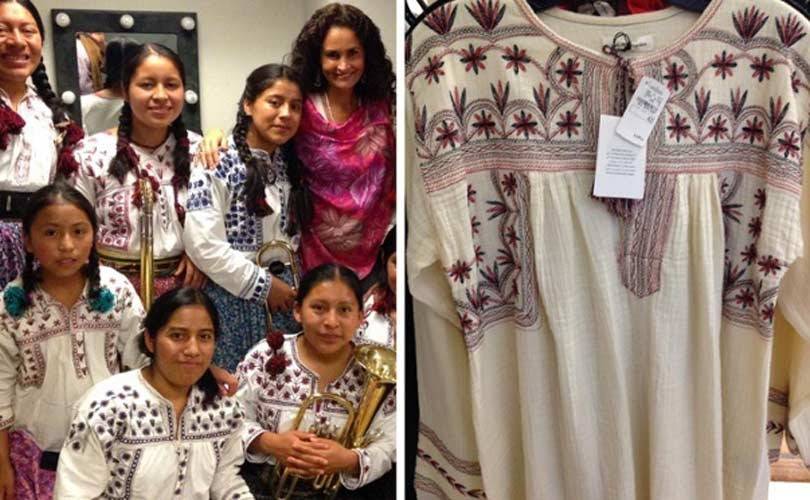
The systematic theft of Indigenous intellectual property is being countered by immutable ledger technologies that link physical artifacts to digital identities. Blockchain provenance creates a “phygital” (physical-digital), ensuring that a garment’s history, from the specific artisan who wove it to the raw materials used, cannot be altered or erased by downstream retailers. This technical intervention shifts the load of proof from the exploited community to the commercial entity.
The “Phygital” Link: NFC and Digital Twins
The core method for securing Indigenous IP involves pairing a physical item with a cryptographic “digital twin” on a blockchain. This is achieved through Near Field Communication (NFC) tags or Radio Frequency Identification (RFID) chips directly into the textile. When scanned by a smartphone, these tags reveal the item’s entire custody chain. Unlike a paper label, which can be cut off and replaced, a blockchain-verified digital ID is permanent and transparent.
In 2023, the “Save Handloom” initiative began piloting this technology with Indian weavers, embedding NFC chips into handloom saris. These chips link to a “Digital Product Passport” (DPP) that certifies the weaver’s identity, the cooperative society, and the date of creation. Similarly, the fashion brand Sheep Inc. use bio-based EcoPAXX NFC tags on their knitwear. A single scan connects the consumer to a “Connected Dot” digital record, tracing the wool back to the specific farm in New Zealand. While Sheep Inc. is a commercial entity, the underlying architecture demonstrates the precise model required for Indigenous protection: a tamper-proof digital thread that survives the global supply chain.
Cost blocks and Economic Viability
For Indigenous cooperatives operating on thin margins, the cost of adopting these high-tech solutions remains a primary obstacle. Data from 2024 and 2025 indicates that while the price of individual NFC tags has dropped, the infrastructure required to manage them is significant.
| Component | Estimated Cost (USD) | Notes |
|---|---|---|
| NFC Garment Tags | $0. 10, $1. 00 per unit | Dependent on volume and washability/durability requirements. |
| SaaS Platform Subscription | $10, 000, $50, 000 / year | Entry-level enterprise software for tracking supply chain data. |
| Custom Pilot Development | $30, 000, $150, 000 | Initial setup for a bespoke solution (e. g., specific to a tribal cooperative). |
| Enterprise Implementation | $150, 000, $500, 000+ | Full- integration for large brands or national registries. |
These figures reveal a clear economic. A luxury conglomerate can easily absorb a $0. 50 tag cost on a $2, 000 handbag. For an artisan selling a $50 basket, that same tag, plus the thousands of dollars in annual platform fees, is prohibitive without external funding or government support.
The Connectivity Gap
The efficacy of blockchain solutions relies heavily on internet access, which creates a “digital divide” that disproportionately affects Indigenous communities. A 2025 report on Tribal Digital Sovereignty highlighted that 18% of residents on U. S. Tribal lands absence access to broadband internet, compared to just 4% of non-Tribal areas. In specific regions like Arizona’s Tribal lands, the disconnection rate soars to 60%. In Latin America, a UNESCO report noted that only 40% of Indigenous populations possess basic computer skills, further complicating the adoption of complex digital verification systems.
To address this, developers are testing “mesh networks” and offline- applications. These systems allow artisans to log transactions or register items on a local device without an active internet connection. The data is encrypted and stored locally, then automatically synced to the blockchain once the device connects to a network. This “store-and-forward” capability is essential for making blockchain a viable tool for remote communities rather than just a luxury marketing gimmick.
Smart Contracts for Royalty Distribution
Beyond simple tracking, blockchain enables the use of “smart contracts”, self-executing code that automatically enforces terms. In the context of Indigenous art, a smart contract can be programmed to distribute royalties automatically. If a verified Indigenous design is resold on a secondary market, the contract can trigger a payment (e. g., 5% of the resale price) directly to the artist’s digital wallet. This method, already used in the NFT art market, offers a technical solution to the “resale royalty” problem, ensuring that value continues to flow back to the originator long after the initial sale.
Consumer Accountability: The Metrics of Ethical Purchasing
The global market for Indigenous art and fashion operates on a calculated asymmetry of information. While luxury conglomerates and fast-fashion retailers profit from the aesthetic value of Indigenous designs, the consumer sits at the terminal point of this theft, frequently unaware that their purchase funds a system of cultural erasure. Data from 2022 to 2025 confirms that consumer apathy and confusion are not social failings quantifiable economic drivers that sustain the trade in counterfeit goods.
A 2022 investigation by the Australian Productivity Commission provided the most damning metric of this consumer blind spot. The commission determined that 66 percent of Indigenous-style souvenirs sold in Australia are fake. These items have no connection to Aboriginal or Torres Strait Islander artists. Yet, consumer surveys reveal a gap in perception. Most buyers believe only 40 percent of the market is inauthentic. This 26-point “Awareness Gap” represents millions of dollars in revenue that consumers mistakenly funnel to non-Indigenous manufacturers, believing they are supporting source communities.
The economic tragedy is that buyers are to pay for the truth. A KPMG study commissioned for the Aboriginal and Torres Strait Islander Product Development Project found that consumers are not seeking the cheapest option. Australian and UK tourists expressed a willingness to pay a 10 percent premium for verified authenticity. American and Chinese tourists were to pay 15 percent more. The fashion industry ignores this demand elasticity. Brands continue to flood the market with cheap imitations, leaving significant value on the table while starving the artists who originated the intellectual property.
The Cost of Opacity
The failure of ethical purchasing is inextricably linked to the broader opacity of the fashion supply chain. The 2023 Fashion Transparency Index revealed that the world’s 250 largest fashion brands achieved an average transparency score of just 26 percent. This widespread secrecy makes it nearly impossible for a consumer to verify if a “tribal print” on a summer dress was licensed from a specific clan or stolen from a museum archive. In 2025, 99 percent of these major brands still did not disclose the number of workers in their supply chains paid a living wage. Without clear labeling or supply chain visibility, “ethical consumption” becomes a marketing slogan rather than a verifiable action.
Certification bodies attempt to this gap, yet adoption remains sluggish compared to the of the market. As of late 2021, the Indigenous Art Code, a key body for maintaining ethical standards in Australia, had only 204 dealer members. In a market generating over $250 million annually in sales of Aboriginal visual arts and crafts, this low participation rate suggests that the majority of retailers prefer the higher margins of the unregulated, unverified gray market. The consumer, left without a ubiquitous “fair trade” stamp for Indigenous IP, defaults to the most accessible and frequently inauthentic product.
| Metric | Unverified / Fake Market | Ethical / Verified Market | Consumer Impact |
|---|---|---|---|
| Market Saturation | 66% of Souvenirs | 34% of Souvenirs | High probability of accidental complicity in theft. |
| Artist Royalty | 0% | Fair Market Rate (varies) | Direct economic stripping of source communities. |
| Consumer Price Sensitivity | Driven by low cost | to pay +10-15% premium | Industry underestimates demand for ethics. |
| Supply Chain Transparency | Near 0% (unclear) | High (Provenance required) | Verification requires active consumer effort. |
The Procurement Power Shift
While individual consumers struggle with verification, institutional purchasing has demonstrated the power of intentional spending. Supply Nation, a body certifying Indigenous-owned businesses, reported that procurement spend with verified Indigenous businesses reached $5. 83 billion in the 2024-2025 financial year. This figure proves that when buyers, in this case, government and corporate entities, mandate verification, the market shifts rapidly. The money exists. The supply chains can adapt. The failure of the consumer fashion market to match this rigor is a choice, not an inevitability.
The route forward requires a transition from passive consumption to active verification. Consumers must demand proof of provenance before the point of sale. The data shows that the “homage” defense used by fashion houses is a cover for economic exploitation. Every dollar spent on an unverified Indigenous design is a vote for the continued erasure of the very culture the consumer claims to admire. The metrics are clear: the premium for truth exists, the capacity for verification exists, yet the industry continues to profit from the gap between what consumers think they are buying and the stolen reality they actually take home.
Litigation Trends 2020 to 2026: The Shift to Class Action
The legal strategy employed by Indigenous communities against fashion conglomerates underwent a fundamental restructuring between 2020 and 2026. Indigenous groups previously relied on public shaming or singular copyright claims to secure apologies. They use shared action lawsuits and state-backed litigation to demand financial restitution. This pivot abandons the “whack-a-mole” method of chasing individual infringing items. Communities target the corporate business models that widespread theft. The introduction of Mexico’s 2022 Federal Law for the Protection of the Cultural Heritage of Indigenous and Afro-Mexican Peoples and Communities marked the turning point. This legislation granted the Mexican state the power to sue on behalf of communities. It defined traditional designs as shared property rather than public domain artifacts.
The application of this new legal framework became visible in August 2025. The Mexican government initiated proceedings against Adidas regarding the “Oaxaca Slip-On.” The design copied the detailed braiding of traditional Zapotec huaraches from Villa Hidalgo Yalálag. Mexican President Claudia Sheinbaum demanded compensation for the artisans rather than a simple withdrawal of the product. This demand for monetary damages represents a significant escalation from the 2022 Ralph Lauren case. In that earlier dispute, the brand apologized and removed the plagiarized Saltillo serape items from shelves. The 2025 Adidas action signals that governments are to litigate for lost economic value on a national.
A parallel shift occurred in the United States with the weaponization of the Racketeer Influenced and Corrupt Organizations Act (RICO) against fast-fashion giants. In 2023 and continuing through 2024, a group of designers filed a class-action-style lawsuit against Shein. They alleged the company’s design algorithm constituted a “pattern of racketeering activity” indistinguishable from organized crime. While the initial plaintiffs were independent artists, Indigenous legal councils closely monitored the case. The RICO strategy offers a method to bypass the limitations of individual copyright registration. It attacks the automated theft itself. This legal theory posits that the unauthorized mass-production of cultural designs is not an artistic error a calculated criminal enterprise.
shared intellectual property management also gained traction outside the courtroom. The Maasai Intellectual Property Initiative (MIPI) formalized a licensing regime that functions as a pre-emptive class protection system. By 2024, the MIPI had secured trademarks for the Maasai name and signature beadwork patterns. This forced brands to pay licensing fees that fund community projects in Kenya and Tanzania. In Canada, the 2025 Federal Court ruling in favor of Native Northwest against Sasquatch Gifts established a new precedent. The court confirmed that reproducing Coast Salish art for souvenirs without consent constitutes copyright infringement. The judgment ended a three-year legal battle and provided a roadmap for other Nations to prosecute souvenir wholesalers.
High- Indigenous IP Legal Actions (2020-2025)
| Year | Defendant | Plaintiff / Community | Legal Basis / Claim | Outcome / Status |
|---|---|---|---|---|
| 2025 | Adidas | Government of Mexico (Zapotec) | Federal Law for Protection of Cultural Heritage | Compensation demanded; Product withdrawn |
| 2025 | Sasquatch Gifts | Native Northwest (Coast Salish) | Copyright Infringement (Canada) | Federal Court Judgment for Plaintiff |
| 2023-24 | Shein | Independent Designers | RICO Act (Racketeering) | Motion to dismiss denied; Case active |
| 2022 | Ralph Lauren | Government of Mexico (Contla/Saltillo) | Cultural Plagiarism | Apology issued; Items removed |
| 2021 | Anthropologie | Government of Mexico (Mixe) | Unauthorized use of embroidery | Public demand for explanation |
| 2021 | Zimmermann | Oaxaca Artisans Institute (Mazatec) | Plagiarism of Huipil designs | Apology; Item withdrawn |
The Sami people of Norway and Sweden also secured serious legal victories that underpin their cultural IP rights. In 2020 and 2021, Supreme Court rulings in both nations affirmed Sami land and cultural rights against state interference. These judgments did not specifically target fashion brands. Yet they established the legal personhood and shared rights necessary to launch future class-action suits regarding the misuse of the Gákti (traditional dress). The legal environment has transformed from one of passive victimization to active, high- litigation. Brands that fail to secure prior, informed consent face the prospect of multi-million dollar shared liability.
Policy Recommendations: The 3Ps Framework Implementation
To the global theft economy, policymakers must move beyond performative acknowledgments and implement a rigorous “3Ps” framework: Prevention of misappropriation through enforceable statutes, Protection of rights through modern technology and treaties, and Promotion of authentic economies. This method shifts the load of proof from the exploited artisan to the exploiting corporation.
1. Prevention: Enforceable Legal Deterrents
Prevention requires statutes with extraterritorial reach and financial penalties that exceed the profits of theft. Current frameworks frequently fail because fines are treated as the “cost of doing business.” policy must mirror the aggressive enforcement seen in the financial and pharmaceutical sectors.
| Jurisdiction | Legal Instrument | Key Enforcement Action / Status | Policy Gap |
|---|---|---|---|
| Australia | Australian Consumer Law (ACL) | $2. 3 million AUD fine against Birubi Art (2019) for selling fake Indonesian-made “Aboriginal” art. | Company went into liquidation before paying; directors frequently escape personal liability. |
| United States | Indian Arts and Crafts Act (IACA) | 2021 guilty pleas by Al-Zuni Global Jewelry; 2024 sentencing in Alaska for Philippine-made fakes. | Enforcement is reactive and relies on federal resources; caps on fines are too low for major retailers. |
| Panama | Law No. 20 (2000) | Sui generis shared rights system; 2025 UPR report notes continued absence of titling and enforcement. | Excellent legal framework on paper absence a dedicated, funded enforcement agency to levy fines. |
| Mexico | Federal Law for Protection of Cultural Heritage (2022) | Complaints filed against brands like J. Marie Collections; established method for shared complaints. | New legislation; long-term efficacy in international courts remains untested. |
Policy Recommendation: Nations must adopt “strict liability” laws for retailers. If a company sells a product with Indigenous iconography, they must possess a digital chain of custody proving origin. The Australian “Fake Art Harms Culture” campaign demonstrated that voluntary codes fail; mandatory certification backed by significant fines, payable by directors if the company dissolves, is the only deterrent.
2. Protection: Technological and Treaty-Based Sovereignty
Protection method must modernize to address digital theft and global supply chains. The adoption of the WIPO Treaty on Intellectual Property, Genetic Resources, and Traditional Knowledge in May 2024 marks a historic shift, mandating patent applicants to disclose the origin of traditional knowledge. yet, national implementation is serious.
Digital Sovereignty & Blockchain: Legal protection is toothless without verification. Indigenous-led technology firms are closing this gap by creating immutable digital records of authenticity.
- Indigital (Australia): This Indigenous-led company use blockchain and “digital spatial twins” to protect cultural knowledge. Their pilot projects demonstrate how traditional owners can control access to their intellectual property in digital spaces, preventing unauthorized replication in the metaverse or AI training datasets.
- Niiwin (Canada): Developed by Animikii, this data sovereignty platform allows Indigenous nations to govern their own data. By retaining control over digital records of cultural heritage, communities prevent the “scraping” of designs by fast-fashion algorithms.
- Cardano NFT Fest (Cameroon): A 2025 initiative bridging traditional arts with blockchain, minting NFTs that serve as digital certificates of authenticity for physical artifacts, ensuring artists receive royalties on secondary market sales.
Policy Recommendation: Governments should subsidize the adoption of these Indigenous-led technologies. A “Digital IP Voucher” system could allow artisan cooperatives to onboard their catalogs onto blockchain registries, creating a legally defensible prior art database that patent offices must consult.
3. Promotion: Economic Incentivization and Certification
Promotion involves creating a market where authenticity commands a premium that directly benefits the source community. Data proves that consumers pay for verified provenance, the method must be strong and recognized.
The Economic Value of Authenticity: The “Igloo Tag” trademark, managed by the Inuit Art Foundation, illustrates the tangible value of certification. Data from the Impact of the Inuit Arts Economy report indicates that the tag adds approximately $117 in value per item. The Inuit arts economy contributed $87. 2 million to Canada’s GDP in 2016, proving that protected Indigenous art is a viable economic engine, not a charity case.
The “Toi Iho” Lesson: New Zealand’s “Toi Iho” trademark, launched in 2002, serves as a cautionary tale. While it successfully denoted quality and authenticity, government support was withdrawn, forcing a community takeover. For a certification mark to succeed, it requires sustained, guaranteed funding for marketing and legal defense. The 2025 Te Ōhanga Māori report revealed the Māori economy has grown to $32 billion, with the creative sector contributing significantly; a revitalized, state-backed Toi Iho could capture billions currently lost to imitation.
Policy Recommendation: Implement a “Tax Credit for Authenticity.” Retailers who source at least 20% of their inventory from certified Indigenous cooperatives should receive a tax break. Conversely, import tariffs on “indigenous-style” goods from non-indigenous sources (e. g., mass-produced knock-offs) should be ring-fenced to fund Indigenous legal defense funds.
Final Verdict: The End of the Inspiration Era
The “inspiration” defense, the fashion industry’s long-standing shield for unauthorized cultural extraction, officially collapsed in 2024. For decades, luxury houses and fast-fashion conglomerates relied on a legal gray zone that treated Indigenous patterns as public domain. That era is over. The adoption of the WIPO Treaty on Intellectual Property, Genetic Resources and Traditional Knowledge in May 2024 established a new global baseline: Indigenous designs are no longer raw materials for Western reinvention, protected assets requiring consent, credit, and compensation.
This shift is not theoretical; it is being enforced by state power. In August 2025, the Mexican government intervened directly against Adidas following the release of the “Oaxaca Slip-On,” a sneaker featuring the woven patterns of the Zapotec artisans from Villa Hidalgo Yalalag. Unlike previous decades where brands offered vague apologies, Adidas was forced to immediately initiate restitution talks with Oaxacan authorities. This followed a February 2025 incident where Mexico’s Culture Ministry threatened legal action against U. S. brands J. Marie Collections and Tuckernuck for plagiarizing Mixtec huipil designs, mobilizing 300 artisans in a class-action-style defense of their intellectual property.
The economic risk of appropriation has inverted. Where theft was once a cost-saving measure, it is a liability. Brands attempting to bypass Indigenous ownership face reputational incineration and state-backed litigation. The only viable route forward is the “collaboration model,” where profit-sharing is contractually mandated. Ralph Lauren, once a primary offender in cultural appropriation, pivoted to this model with its “Artist in Residence” program. In November 2025, the brand launched the Polo Ralph Lauren x TÓPA collection, a collaboration with Indigenous-led brand TÓPA that included a verified revenue-share directed to the Thunder Valley Community Development Corporation. Similarly, Brazilian brand Farm Rio released a 13-piece collection in February 2024 co-designed with the Yawanawa people, funneling proceeds directly to the Yawanawa Sociocultural Association to fund internet infrastructure and reforestation in the Amazon.
| Metric | The “Inspiration” Era (Pre-2024) | The “Obligation” Era (Post-2024) |
|---|---|---|
| Legal Status | “Public Domain” / Unprotected | Protected via WIPO Treaty (May 2024) |
| Brand Defense | “Homage” or “Appreciation” | None; Immediate Restitution Talks |
| Financial Model | 100% Brand Profit / 0% Artisan | Contractual Profit Sharing (e. g., Ralph Lauren x TÓPA) |
| Enforcement | Social Media Shaming (Ignored) | State Ministry Intervention (Mexico, Australia) |
| Outcome | Product stays on shelf | Product withdrawn or royalties paid retroactively |
The data confirms that the “wild west” of cultural theft is closing. In Australia, the crackdown on “fake art” has evolved from consumer protection warnings to significant financial penalties, with the ACCC maintaining strict oversight on “Indigenous-style” souvenirs that absence verified provenance. The message to the boardroom is unambiguous: Indigenous Intellectual Property (IP) is an asset class. Accessing it requires a license, just like a Disney character or a Marvel superhero. Brands that fail to formalize these agreements are not just “insensitive”, they are engaging in actionable corporate theft.
We are witnessing the structural correction of a colonial economic error. The billions of dollars in value generated by Indigenous aesthetics are beginning to flow back to the source. This is not charity; it is the payment of an overdue invoice.
**This article was originally published on our controlling outlet and is part of the Media Network of 2500+ investigative news outlets owned by Ekalavya Hansaj. The full list of all our brands can be checked here. You may be interested in reading further original investigations here.
Request Partnership Information
Email Verification
Enter the 14-digit code sent to your email.


Hindu Observer
Part of the global news network of investigative outlets owned by global media baron Ekalavya Hansaj.
Hindu Observer is an investigative journalism outlet with a sharp focus on issues affecting the Hindu community, religious freedom, and the rise of Hinduphobia. With a dedication to exposing hate crimes, religious discrimination, and corruption, Hindu Observer provides in-depth analyses of the intersection between Hindu politics, the Hindu vote bank, and the powerful forces that seek to manipulate them. Through exclusive interviews and breaking news stories, Hindu Observer sheds light on the complexities of Sanatan Dharma, the challenges Hindus face in today’s world, and the troubling involvement of political leaders, sadhus, and gurus in scams and corruption. Known for a bold and fearless approach, Hindu Observer aims to empower readers with the truth and hold accountable those who exploit religion for power and gain.