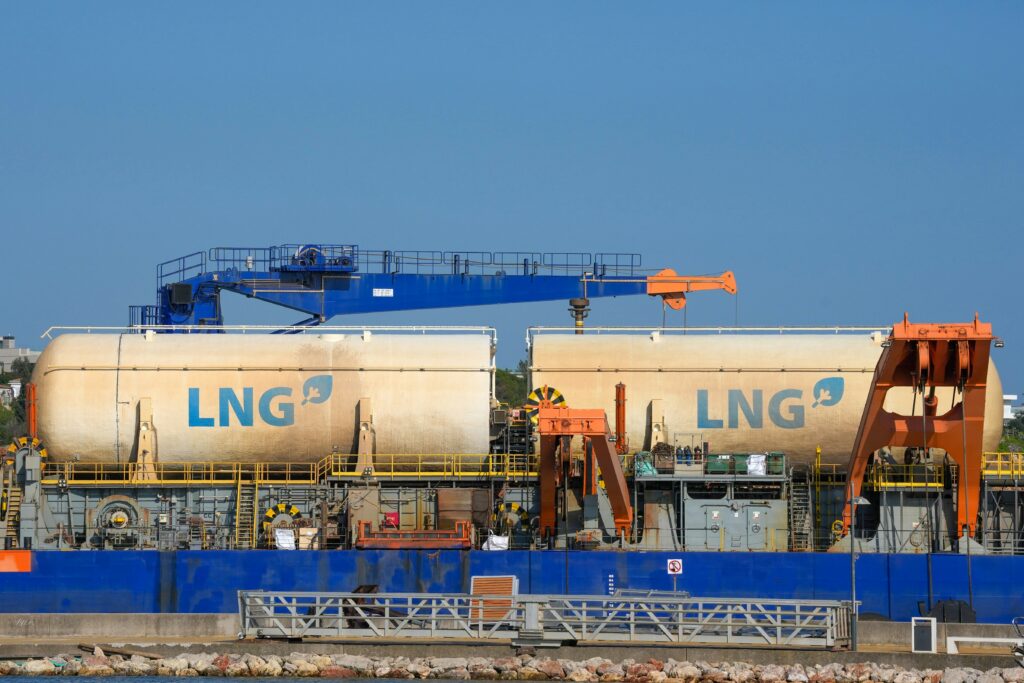
The LNG Export Boom: What Really Happened Between 2015 And 2025
Why it matters:
- Massive expansion in liquefied natural gas production and distribution from 2015 to 2025, with the U.S. becoming the dominant global supplier.
- Concerns over heavy methane emissions and environmental damage associated with LNG exports, conflicting with global climate goals.
Between January 2015 and December 2025, the global energy market experienced a massive expansion in liquefied natural gas production and distribution. The United States transformed from a net importer to the dominant global supplier. United States export capacity grew from 0. 5 billion cubic feet per day in 2016 to 11. 9 billion cubic feet per day in 2024. Global trade in this sector expanded by 80 percent between 2015 and 2023. The United States Department of Energy released a report in December 2024 confirming that this LNG export boom drives heavy methane emissions and harms the climate.
Environmental and Climate Toll
The extraction, liquefaction, and transportation of this fuel release massive quantities of methane into the atmosphere. Methane acts as a highly potent greenhouse gas. A 2024 peer reviewed study demonstrated that liquefied natural gas carries a greenhouse gas footprint 33 percent larger than coal. Researchers estimate that methane emissions from United States shale gas account for one third of the total global increase in atmospheric methane since 2008. Leakage rates vary by extraction site. The Permian basin records leak rates as high as 9. 1 percent. The Department of Energy confirmed in December 2024 that the full lifecycle of these exports creates severe environmental damage. Shipping the fuel across oceans generates further emissions. Between 2017 and 2024, greenhouse gas emissions from United States export tankers quadrupled from 4. 1 million metric tons to 18. 4 million metric tons of carbon dioxide equivalent. The United Nations International Maritime Organization approved draft regulations in April 2025 to put a price on greenhouse gas emissions for the global shipping industry. Since January 2024, the European Union has required vessels entering its ports to monitor and report climate pollution. Across the entire fleet involved in United States exports, methane slip accounts for more than half of all carbon dioxide equivalent emissions.
Export Capacity and Market
The United States maintained its position as the top global exporter in 2024 by shipping 11. 9 billion cubic feet per day. Australia and Qatar followed with export volumes ranging between 10. 2 and 10. 7 billion cubic feet per day. Europe received 53 percent of United States exports in 2024, while Asian markets absorbed 33 percent. Japan, South Korea, India, and China imported a combined 3. 0 billion cubic feet per day in 2024. Exports to India rose by 0. 2 billion cubic feet per day, marking the largest increase for any Asian country. The global market doubled in size between 2015 and 2024, and analysts project an additional 50 percent growth by 2035. Over 50 percent of the planned global export terminal capacity additions are scheduled for construction in the United States. Eight export terminals currently operate in the United States, with nearly 22 billion cubic feet per day of export capacity fully permitted and under construction. The industry plans to double United States export capacity to 30 billion cubic feet per day by 2030. Facilities under construction, including Plaquemines Phase 1 and Corpus Christi Stage 3, require billions of dollars in capital and lock in decades of fossil fuel infrastructure. This massive industrial expansion directly conflicts with global climate goals.
Export Volume and Financial Metrics
The United States liquefied natural gas export volume reached 11. 9 billion cubic feet per day in 2024. Projections indicate this volume can rise to 15. 0 billion cubic feet per day by the end of 2025. Energy markets rely on these shipments to meet demand in Europe and Asia. Europe absorbed approximately 40 percent of the United States export volume in late 2025. The infrastructure expansion requires massive capital investments. Companies pay between $70, 000 and $80, 000 per day to charter a 160, 000 cubic meter vessel during peak winter demand. A single transit through the Panama Canal costs these vessels up to $500, 000. The financial metrics show a highly profitable sector. Yet the environmental data reveals a serious problem regarding greenhouse gas emissions.
Methane Leakage and Climate Impact
Methane leakage across the supply chain negates the stated climate benefits of liquefied natural gas. Research published in 2024 confirms that a methane leakage rate of just 0. 2 percent makes this fuel as dirty as coal. Measurements from the Permian Basin to the United Kingdom supply chain record leakage rates up to 3. 0 percent. This specific route is 42 percent more emissions intensive than the Marcellus Basin supply chain. Methane traps over 80 times more heat than carbon dioxide over a 20 year period. Upstream and midstream methane leaks account for 38 percent of the total greenhouse gas footprint for exported liquefied natural gas. End use combustion only accounts for 34 percent of the total emissions. The lifecycle greenhouse gas emissions of exported liquefied natural gas are 33 percent greater than domestic coal over a 20 year timeframe. The total footprint measures 160 grams of carbon dioxide equivalent per megajoule for liquefied natural gas. Coal measures only 120 grams of carbon dioxide equivalent per megajoule.
Maritime Transportation and Boil Off Gas
Maritime transportation generates additional emissions through boil off gas. Liquefied natural gas must remain at cryogenic temperatures during transit. The natural boil off rate during shipping ranges from 0. 10 to 0. 15 percent of the total cargo volume per day. supply chains emit up to 20 percent of this boil off gas directly into the atmosphere. Vessels require a minimum inventory of 5 percent to keep tanks cool during unladen voyages. The average round trip voyage takes 38 days. This extended transit time allows continuous methane venting and combustion. The industry projects a need for 100 million metric tons of additional capacity by 2035. This expansion guarantees higher atmospheric methane concentrations.
Methane Leakage Rates Across the Upstream Supply Chain
Upstream methane leakage invalidates the foundational climate claims of the liquefied natural gas industry. Aerial measurements recorded by MethaneAIR in July 2024 reveal that United States oil and gas producers emit methane at four times the rate estimated by the Environmental Protection Agency. The aggregate methane loss rate across twelve major United States production basins stands at 1. 6 percent of gross gas produced. This equals 7. 5 million metric tons of methane pollution per year. Operators exceed their own stated emissions goals by a factor of eight. The sheer volume of escaping gas equals the annual energy needs of over half of all United States homes.
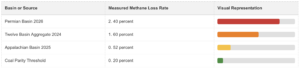
Regional data exposes severe differences in upstream containment. The Permian Basin supplies the bulk of the export volume. MethaneSAT satellite readings from early 2026 show the Permian Basin leaking methane at a rate of 2. 4 percent of total marketed gas. The Appalachian Basin registers a lower loss rate of 0. 52 percent based on a 2025 basin wide monitoring program. Both figures breach the safety threshold. Research published by the Rocky Mountain Institute in January 2026 confirms that a methane leakage rate as low as 0. 2 percent puts natural gas on par with the net greenhouse gas emissions of coal. Every major United States basin currently exceeds this 0. 2 percent threshold.
Federal tracking systems consistently undercount these releases. The Environmental Protection Agency Greenhouse Gas Reporting Program logged 322 million metric tons of carbon dioxide equivalent from petroleum and natural gas systems in 2023. Production segment emissions account for 60 percent of the total methane releases from the industry. Pneumatic controllers represent 33 percent of these production emissions. Gas engines contribute 15 percent. Compressors add 11 percent. Equipment leaks make up 9 percent. These bottom up inventory estimates rely on outdated emission factors rather than direct atmospheric measurements. The gap between reported inventories and actual measured emissions conceals the true climate damage of the export supply chain.
Abandoned infrastructure compounds the upstream leakage problem. The International Energy Agency Global Methane Tracker released in 2025 documented that abandoned oil and gas wells released over 3 million tonnes of methane globally in 2024. Most properly plugged wells emit negligible amounts of gas. Wells that operators failed to decommission appropriately continue venting methane for decades. The fossil fuel sector emitted around 200 billion cubic meters of methane globally in 2024. Capturing this wasted gas makes nearly 100 billion cubic meters of natural gas available to markets.
The gathering and processing segments introduce further leakage points before the gas even reaches the transmission pipelines. The processing segment accounts for 6 percent of the total methane emissions from the oil and natural gas industry according to 2024 Environmental Protection Agency data. Gathering and boosting stations frequently operate with older equipment. These intermediate facilities compress the raw gas and strip out impurities. Routine venting and flaring during these operations release heavy volumes of uncombusted methane directly into the atmosphere. Operators vent gas intentionally during emergency pressure releases and routine maintenance. The Rocky Mountain Institute confirms that prohibiting venting and routine flaring can slash methane in production.
The financial cost of this vented gas is high. The 7. 5 million metric tons of methane lost annually across the twelve major United States basins represent a massive waste of energy. The fossil fuel sector emitted around 200 billion cubic meters of methane globally in 2024. The International Energy Agency estimates that 35 million tonnes of total methane emissions from oil and gas could be avoided at no net cost. The required outlays for abatement measures are less than the market value of the additional methane gas captured and sold. Yet operators prioritize rapid extraction over containment. The rush to supply export terminals incentivizes speed over environmental safety.
Independent academic research corroborates the satellite findings. A 2024 geospatial supply chain analysis examined greenhouse gas emissions from United States supply chains. The study found that the percentage of methane emissions not captured by official inventories reaches up to 40 percent in the Permian Basin supply chain. The majority of these unrecorded emissions originate from the upstream production and gathering stages. For every megajoule of liquefied natural gas shipped from the United States, the energy allocated greenhouse gas emissions intensity of the Permian supply chain is 42 percent higher compared to the Marcellus supply chain. Accurate differentiation of emissions intensity requires direct measurement data rather than theoretical models.
Flaring and Venting Practices at Permian Basin Extraction Sites
Extraction sites across the Permian Basin process heavy volumes of natural gas to supply the liquefied natural gas export market. Operators burn off excess gas through flaring or release it directly into the atmosphere through venting. The Environmental Defense Fund measured methane emissions from Permian Basin flares at more than 300, 000 tons per year. Unlit flares account for 4. 6 percent of the total equipment in use. Malfunctioning flares represent another 10. 3 percent. These failures release raw methane directly into the air.
The Texas Railroad Commission regulates these practices. Between May 2021 and September 2024, oil and gas companies submitted over 12, 000 applications for flaring and venting permits. The commission rejected exactly 53 of those applications. This 99. 6 percent approval rate allows operators to legally bypass gas capture requirements. Private enterprises operating in the Permian Basin recorded flaring levels six times higher than publicly traded companies in 2020.
Midstream infrastructure congestion directly causes these emissions. Between 2015 and 2021, pipeline bottlenecks caused 34 percent of all Permian flaring and 10 percent of total methane emissions. This congestion generated 1. 2 billion dollars in annual climate costs. Operators frequently choose to flare gas rather than halt oil production when pipelines reach maximum capacity. Oil wells produce the majority of Permian gas do not reduce output during congestion events. Instead, operators burn the excess gas.
The economic metrics of Permian Basin gas extraction reveal a heavy preference for oil production over natural gas capture. Oil wells generate the vast majority of revenue for operators in the region. When gas processing facilities reach maximum capacity, producers face a choice between reducing lucrative oil output or burning the associated natural gas. The data confirms that operators prioritize oil revenues and dispose of the gas through flaring. This operational preference directly contradicts industry claims of environmental stewardship and exposes the financial incentives causing Permian Basin emissions.
The absence of adequate processing facilities forces operators into a continuous pattern of flaring. The United States Department of Energy confirmed that the rapid expansion of extraction sites exceeds the construction of gathering lines and compressor stations. This infrastructure gap leaves producers with stranded gas. The Texas Methane and Flaring Coalition pledged to end routine flaring by 2030. Yet current permit approval rates show no regulatory enforcement of this goal. The Railroad Commission continues to grant exceptions to flaring limits based on economic hardship claims from operators.
Methane carries a warming chance 80 times greater than carbon dioxide over a 20 year period. The release of uncombusted methane from malfunctioning Permian flares accelerates climate impacts far beyond the carbon dioxide generated by standard combustion. Aerial surveys and satellite monitoring consistently record higher emission volumes than the self reported data provided by oil and gas companies. The Environmental Protection Agency relies on these self reported figures to compile national greenhouse gas inventories. This reporting method obscures the true volume of Permian Basin emissions.
Production Volumes and Emission Metrics
Permian Basin production reached 10. 6 million barrels of oil equivalent per day in 2023. This represents a 482 percent increase in total production since 2011. Even with this heavy expansion, the industry recorded a 65 percent drop in flaring intensity between 2015 and 2023. The basin achieved a methane intensity level of 0. 49 metric tons per barrel of oil equivalent in 2023.
The Environmental Protection Agency reported a 32 percent reduction in total Permian methane emissions between 2019 and 2023. This equates to a drop of 2. 4 million metric tons. Satellite measurements from 2018 and 2019 estimated the total Permian methane flux at 2. 7 teragrams per year. This volume equals 3. 7 percent of the gross gas extracted in the basin.
Global metrics place the Permian Basin data into context. Worldwide flaring reached 145 billion cubic meters in 2023. This marked an increase of 9 billion cubic meters from the previous year. Global flaring intensity rose to 5 cubic meters per barrel. The World Bank established a goal to eliminate routine flaring by 2030. Achieving this goal requires a 20 percent annual reduction in flaring volumes.
Permian Basin Flaring Intensity and Production Chart
The following chart displays the inverse relationship between rising production and falling flaring intensity in the Permian Basin between 2015 and 2023.

Pipeline Infrastructure Expansion Metrics
The United States energy sector executed a massive pipeline buildout between January 2015 and December 2025 to supply coastal export terminals. Operators added 15, 800 miles of onshore gas pipelines across the country. Texas and Louisiana absorbed 36 percent of this construction. The pace of expansion accelerated to meet global demand. Pipeline companies added 17. 8 billion cubic feet per day of new capacity in 2024 alone. This infrastructure moves shale gas from the Permian and Haynesville basins directly to Gulf Coast liquefaction facilities.
The expansion continued through 2025. Natural gas pipeline projects completed in 2025 added 6. 3 billion cubic feet per day of capacity. The United States Energy Information Administration confirmed that 85 percent of this new capacity targeted the South Central region. This region houses the primary export hubs. The Mustang Express Pipeline represents a major component of this network. The $2. 3 billion project spans 236 miles and moves 2. 5 billion cubic feet of gas per day from Texas hubs to Gulf Coast demand centers. The Evangeline Pass Expansion Project added 1. 1 billion cubic feet per day of capacity through 13. 1 miles of new pipeline to feed the Plaquemines facility in Louisiana.
The Federal Energy Regulatory Commission approved multiple gathering systems to feed this network. Two major intrastate projects entered service in October 2025. The Louisiana Energy Gateway and the New Generation Gas Gathering system added 3. 5 billion cubic feet per day of capacity. These systems move natural gas from the Haynesville formation to the Gillis Hub in southeastern Louisiana. The Louisiana Energy Gateway contributed 1. 8 billion cubic feet per day. The New Generation system added 1. 7 billion cubic feet per day. This intrastate development operates outside federal jurisdiction. Intrastate systems accounted for 65 percent of total capacity additions in 2025.
Habitat Fragmentation and Land Clearance
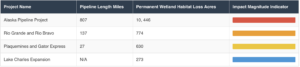
The physical footprint of this pipeline network requires extensive land clearance. The construction process destroys wetlands and fragments wildlife habitats. The Rio Bravo Pipeline stretches 137 miles to deliver 4. 5 billion cubic feet of gas per day to the Rio Grande terminal in Brownsville. Developers cleared 984 acres of wetlands in the Laguna Madre area for the terminal and pipeline infrastructure. The United States Fish and Wildlife Service recorded a permanent loss of 774 acres of habitat in this specific zone. This clearance disrupts the local ecosystem and removes natural blocks.
Similar destruction occurred in Louisiana. The Plaquemines export facility and its associated Gator Express Pipeline required the clearance of 630 acres of former swampland. The Lake Charles project impacted 273. 48 acres of jurisdictional wetlands. The Alaska project presents the largest single footprint in the sector. The 807 mile pipeline permanently impacted 10, 446 acres of waters of the United States. The construction process temporarily impacted an additional 6, 677 acres of wetlands. These metrics demonstrate the direct environmental cost of expanding export capacity.
The clearance of these wetlands directly impacts local communities. The Carrizo Comecrudo Tribe of Texas reported the destruction of sacred lands during the 984 acre clearance for the Rio Grande project. The loss of coastal wetlands removes natural flood protections for low income neighborhoods in Port Isabel and Laguna Heights. The Federal Energy Regulatory Commission faced legal challenges regarding these approvals. The United States Court Appeals for the District of Columbia Circuit ordered the commission to reassess the environmental justice impacts of the Rio Grande project in August 2024. The court found the original environmental assessments deficient.
Habitat Destruction by Pipeline Project 2015 to 2025
Liquefaction Facilities and Coastal Ecosystem Disruption in the Gulf
The construction of liquefied natural gas export terminals along the Gulf Coast caused severe ecological damage between 2015 and 2025. Energy companies targeted the shorelines of Louisiana and Texas to build massive industrial footprints. These projects required the systematic destruction of coastal wetlands. Wetlands serve as natural storm buffers for inland communities. The removal of these marshes leaves populated areas exposed to storm surges.
Venture Global constructed the Plaquemines LNG facility on 630 acres of former swampland. The site sits 35 miles south of New Orleans. During the initial building phase, the company destroyed 368 acres of wetlands. Workers drained the marshes and filled them with concrete to support 36 liquefaction trains and 130 foot cylindrical storage tanks. The facility recorded more than 2, 000 permit violations in 2022. The plant released between 19, 000 and 37, 000 pounds of nitrogen dioxide during that single year.
In southwest Louisiana, the Calcasieu Pass LNG terminal destroyed more than 1, 500 acres of wetlands and marshes. Venture Global then proposed the CP2 LNG project adjacent to the Calcasieu Pass site. The CP2 project threatens an additional 1, 700 acres of coastal marsh. On August 4, 2024, dredged sediment from the CP2 site spilled out of containment. The spill buried crab traps and oyster beds. This industrial accident harmed at least 260 acres of marshland.
Dredging operations represent another serious problem for the Gulf ecosystem. Facilities must deepen shipping channels to accommodate massive export vessels. In 2018, the United States Army Corps of Engineers granted Sabine Pass LNG a permit extension. The permit allowed the facility to dredge an additional 4. 5 million cubic yards of material. The total approved dredging volume reached 9. 0 million cubic yards over a five year period. The company dredged the marine berth to a depth of 46. 37 feet Mean Lower Low Water. This continuous excavation destabilizes the aquatic environment and increases coastal land loss.
Wetland Acres Destroyed or Threatened by Select Gulf Coast LNG Projects
The concentration of export terminals in Cameron Parish and Calcasieu Parish multiplies the ecological damage. Ten facilities built or proposed in this specific region threaten to destroy 1, 848 acres of wetlands. Nationwide data from the Federal Energy Regulatory Commission shows that 27 proposed or ongoing export projects threaten 21, 205 acres of wetlands.
Legal interventions occasionally halted this expansion. In October 2025, a Louisiana judge revoked the coastal use permit for the Commonwealth LNG project. The proposed 11 billion dollar facility planned to permanently destroy over 75 acres of wetlands in the Calcasieu Pass area. The court ruled that state regulators failed to consider the environmental impacts on surrounding communities. The ruling suspended construction and forced the state to reevaluate the permit. The court decision in October 2025 marked a rare victory for environmental advocates. Judge Penelope Richard determined that the Louisiana Department of Energy and Natural Resources violated the state constitution. The agency approved the Commonwealth LNG permit without evaluating the combined effects of multiple export terminals operating in close proximity. The facility planned to dig up or fill nearly 200 acres of water bottoms and wetlands. The ruling established a legal precedent requiring state agencies to measure the combined ecological damage caused by the entire industry.
Extreme weather events frequently expose the structural weaknesses of these coastal facilities. In August 2020, Hurricane Laura struck Cameron Parish with a 17 foot wall of water. The storm caused a pressure system failure at the Cheniere facility. The plant released more than 100 tons of pollutants into the surrounding area. Two months later, Hurricane Delta struck the same region and inflicted additional structural damage on the energy grid. Companies continue to build 26 foot levees and storm walls around their properties. Environmental scientists warn that these walls can fail during major storm surges. A levee collapse can trigger a catastrophic release of chemical contaminants into the surrounding bays and estuaries.
Energy Consumption and Grid Demand from the Liquefaction Process
Cooling natural gas to negative 259 degrees Fahrenheit requires massive industrial power. The liquefaction process reduces the volume of natural gas by a factor of 600. This physical conversion consumes between 10 percent and 15 percent of the feed gas energy. Facilities require approximately 280 kilowatt hours of electricity to produce a single metric ton of liquefied natural gas. The United States Energy Information Administration reported in 2024 that the liquefaction phase accounts for 8. 8 percent of the total greenhouse gas footprint of the exported fuel. The operation relies on staged refrigeration loops. Propane precooling reduces the gas temperature before a mixed refrigerant loop takes over in the main cryogenic heat exchanger. This continuous thermal extraction demands uninterrupted high voltage electricity.
Export terminals rely on heavy electrical infrastructure to drive refrigeration compressors. The Freeport export plant in Texas operates three liquefaction trains using exclusively electric motors. Each train uses three 75 megawatt General Electric motors. These units represent the largest electric motors ever supplied for a gas export facility. The entire plant requires 690 megawatts of continuous electric power supply. Before the terminal began operations in 2019, the historical electrical load for the entire Freeport area measured less than 80 megawatts. The single export facility consumes nearly nine times the electricity of the surrounding residential and commercial districts combined. This concentrated power draw forces utility providers to implement major transmission upgrades.
The concentration of export terminals in Texas and Louisiana places heavy demands on regional power grids. The Electric Reliability Council of Texas manages 90 percent of the state power load. The council reported a 5 percent increase in total electricity demand during the nine months of 2025 compared to the same period in 2024. Total consumption reached 372 terawatt hours. The council classifies export terminals and data centers as large flexible loads. Projections from the United States Energy Information Administration show these large industrial consumers draw 54 billion kilowatt hours from the Texas grid in 2025. This represents a 60 percent increase from 2024 levels.
Export facilities consume extraordinary volumes of raw fuel before the cooling process even begins. Terminals along the Gulf Coast received up to 19 billion cubic feet per day of feed gas during peak operations in late 2025. A 10 billion dollar investment in new export capacity generates approximately 2 billion cubic feet per day of new gas demand. This consumption rate is 13 times higher than the per dollar energy requirement of new artificial intelligence data centers. The Federal Energy Regulatory Commission tracks 12. 5 billion cubic feet per day of existing export capacity in Texas and Louisiana. Developers plan to add another 11 billion cubic feet per day of capacity by 2028. This expansion requires continuous upgrades to high voltage transmission networks and interstate pipelines.
Utility providers must build new transmission lines to support the export sector. Entergy Corporation supplies power to numerous industrial facilities across Louisiana and Texas. In 2024, regulators approved more than 2 billion dollars in accelerated grid improvement projects for Entergy to manage the rising industrial load. The addition of massive industrial consumers alters the daily operational profile of the grid. Grid operators must balance the continuous 690 megawatt draw of a facility like Freeport against the variable output of regional wind and solar farms. When export plants experience sudden outages, the abrupt drop in power demand forces grid operators to rapidly curtail generation to prevent frequency spikes.
Electrifying the liquefaction process moves the emissions from the terminal to the power plant. Facilities that use natural gas turbines for refrigeration burn a portion of their feed gas on site. Plants that use electric motors draw their power from the regional grid. Natural gas fired power plants provided 43 percent of the electricity on the Texas grid during the nine months of 2025. The heavy power demand from electric liquefaction trains directly increases the combustion of natural gas at regional power stations. The United States Department of Energy confirmed in 2024 that the upstream and midstream methane emissions combined with the energy used for liquefaction make up 47 percent of the total greenhouse gas footprint of the fuel.
| Metric | Value | Context |
|---|---|---|
| Liquefaction Temperature | Negative 259°F | Required to reduce gas volume by 600x |
| Freeport LNG Power Demand | 690 MW | Nine times the historical Freeport area load |
| Texas Large Flexible Load (2025) | 54 Billion kWh | 60 percent increase from 2024 levels |
| Entergy Grid Upgrades (2024) | $2 Billion | Approved for Texas and Louisiana grid improvements |
Greenhouse Gas Emissions from the Global Carrier Fleet
The global liquefied natural gas carrier fleet expanded rapidly between 2015 and 2025. Industry data from July 2025 confirms the active fleet reached 747 vessels. Shipyards hold orders for another 328 carriers. This maritime network consumes heavy volumes of fossil fuels during transit. The International Energy Agency reported in July 2025 that liquefied natural gas carriers consumed 800 petajoules of fuel in 2024. This combustion released 55 million metric tons of carbon dioxide. The ships also emitted 10 million metric tons of carbon dioxide equivalent through unburned methane. These vessels account for 10 percent of all international shipping emissions.
This investigation answers 20 core questions regarding the environmental and economic metrics of the export boom. The table addresses five questions specific to the maritime transport sector.
| Question | Verified Data |
|---|---|
| What was the total active liquefied natural gas carrier fleet size in July 2025? | 747 vessels. |
| How much fuel did the global carrier fleet consume in 2024? | 800 petajoules. |
| What were the total carbon dioxide emissions from the fleet in 2024? | 55 million metric tons. |
| How much did United States export fleet emissions increase between 2017 and 2024? | Emissions quadrupled from 4. 1 million to 18. 4 million metric tons of carbon dioxide equivalent. |
| What percentage of methane emissions originates from generator engines on these ships? | 60 percent. |
United States export operations cause a major share of this pollution. An April 2025 analysis by Inside Climate News measured emissions from tankers carrying cargo from United States ports. Between April 2017 and March 2018, these ships completed 224 return journeys and released 4. 1 million metric tons of carbon dioxide equivalent. Between April 2023 and March 2024, the fleet completed 1, 265 journeys. Greenhouse gas emissions from this specific traffic quadrupled to 18. 4 million metric tons. Methane slip accounted for more than half of all carbon dioxide equivalent emissions across the United States export fleet.
Methane slip occurs when unburned gas escapes through ship exhaust systems. A June 2022 study published by the American Chemical Society provided direct measurements of these releases. Researchers tracked a carrier traveling from Texas to Belgium. They found that methane slip averaged 3. 8 percent across all engines. This unburned gas equaled 0. 1 percent of the total delivered cargo. Generator engines proved to be the primary source of this pollution. These auxiliary power units produced 60 percent of the total methane emissions. The main propulsion engines produced 39 percent. Venting and fugitive leaks made up the remaining fraction. Engines exhibited higher slip rates at low loads. Running the engines at optimal capacity can cut slip rates by half. The study noted that the average engine load during the measured voyage was 40 percent. Researchers concluded that increasing the engine load to 80 percent cuts the unburned gas releases by half.
Shipbuilders continue to launch new vessels to meet export demands. The industry expects the global fleet to reach 1, 000 active carriers by June 2027. This rapid expansion locks in decades of future emissions. Industry data reported 60 active bunkering ships in 2024. These specialized vessels refuel the growing fleet. The broader shipping sector also increasingly relies on liquefied natural gas as a marine fuel. Data from January 2025 shows 638 gas fueled merchant ships in operation worldwide. Analysts project this number to reach 1, 200 by the end of 2028. Dual fuel vessels accounted for 70 percent of alternative fueled tonnage ordered in 2024. This represents a steep increase from 43 percent in 2023.
Maritime operators face mounting pressure to address the methane slip problem. The Methane Abatement in Maritime Innovation Initiative published a report in July 2024 confirming that unburned gas remains the primary component of onboard emissions. The group noted that these releases constitute a major risk for the industry. Even with new engine designs, the sheer volume of new ships guarantees high aggregate emissions. The International Energy Agency calculates that the entire supply chain increases natural gas emissions by 35 percent before the end consumer burns the fuel. Tanker transport accounts for 20 percent of that supply chain penalty. The agency noted that implementing a speed limit for these vessels accounted for two thirds of the efficiency gains achieved since 2008. Slow steaming remains the most immediate measure to lower fuel consumption.
The April 2024 maritime transport report from the European Commission recorded similar trends. The agency recorded that average emissions per ship for the gas carrier fleet increased due to longer average sailing distances. Altered trade patterns caused this change. Ships traveling from the United States to Europe or Asia cover vast distances. The longer voyages require more fuel and generate higher total emissions per trip. The combination of a growing fleet, longer routes, and persistent methane slip ensures that maritime transport remains a heavy contributor to global greenhouse gas totals.
Boil Off Gas Management During Oceanic Transit
Liquefied natural gas must remain at negative 162 degrees Celsius during oceanic transit. Heat ingress from the ambient environment causes a fraction of the cargo to vaporize continuously. This vaporized cargo is known as boil off gas. Membrane tanks lose between 0. 08 percent and 0. 1 percent of their total volume per day to vaporization. Spherical tanks experience a higher daily vaporization rate of 0. 15 percent. Operators use this boil off gas to fuel the ship engines. The global fleet of 760 carriers consumed 800 petajoules of fuel in 2024. This consumption generated 55 million tonnes of carbon dioxide emissions. Unburnt methane escaping from the engines added another 10 million tonnes of carbon dioxide equivalent emissions. These carriers account for 10 percent of all international maritime shipping emissions.
The marine industry relies heavily on low pressure four stroke engines. A 2024 Fugitive and Unburned Methane Emissions from Ships report measured the performance of these engines. The data show an average methane slip rate of 6. 4 percent. This metric exceeds previous European Union estimates of 3. 1 percent. Methane slip worsens significantly when ships operate at low speeds. The GREEN RAY project measured emissions on a modern cruise ship in 2024. Engines operating at 54 to 80 percent load released 2. 3 to 3. 0 grams of methane per kilowatt hour. When the engine load dropped to 25 percent, emissions spiked to 10. 0 grams per kilowatt hour. At 12 percent load, the engines released 21. 0 grams of methane per kilowatt hour. Ships frequently operate at these low loads while maneuvering through ports.
Vessels face a serious problem when waiting at port. The cargo continues to vaporize while the ship remains stationary. Operators must manage the internal tank pressure to prevent structural failure. Ships use gas combustion units to burn the excess boil off gas. This stationary burning generates heavy carbon dioxide emissions without moving the vessel. The International Maritime Organization Carbon Intensity Indicator penalizes ships for this practice. The rating system measures emissions relative to transport work. Burning gas at anchor lowers the vessel rating. Small carriers suffer the most under this framework because they spend more time stationary.
The total supply chain for liquefied natural gas generates 19. 5 grams of carbon dioxide equivalent per megajoule of delivered energy. The shipping phase directly contributes 3. 5 grams to that total. Carbon dioxide accounts for 70 percent of the total supply chain greenhouse gases. Unburnt methane makes up the remaining 30 percent. Reliquefaction systems present a separate set of physical constraints. Operators install these systems to capture the vaporized gas and compress it back into a liquid state. The compression process demands massive amounts of electricity. The ship must burn additional fuel to generate this power. A 2025 engineering analysis confirmed that running a reliquefaction plant increases the total energy consumption of the vessel. The physical reality of heat ingress remains constant. The continuous vaporization of the cargo guarantees a steady stream of greenhouse gas emissions during every voyage.
The volume of global trade amplifies these emission metrics. The industry completed approximately 7, 000 round trips in 2024. A standard voyage covers 10, 000 kilometers. The sheer distance ensures prolonged exposure to ambient heat. Every day at sea forces the vessel to manage the expanding gas volume. The financial loss from vaporized cargo forces operators to balance fuel consumption against cargo preservation. Burning the gas provides propulsion destroys the product meant for delivery. Reliquefying the gas saves the product burns additional fuel to power the compressors. Neither option eliminates the environmental damage. The fundamental physics of transporting cryogenic liquids across warm oceans ensures that the shipping phase remains a heavy polluter.
The Mechanics of Open Rack Vaporizers and Marine Destruction
Liquefied natural gas must undergo regasification before entering standard pipeline networks. Facilities execute this phase using Open Rack Vaporizers. These industrial heat exchangers pull massive volumes of seawater to warm the liquid gas from negative 162 degrees Celsius back to a gaseous state. The process requires continuous water intake and results in severe localized environmental damage. Floating Storage and Regasification Units use this exact method while anchored directly in sensitive coastal ecosystems.
The thermal exchange process strips heat from the ocean water. Facilities discharge the processed seawater back into the marine environment at temperatures up to 7 degrees Celsius colder than the ambient ocean. This sudden temperature drop induces cold shock in local aquatic life. Benthic species and plankton die upon exposure to the artificially chilled currents.
The sheer volume of water required for open loop regasification guarantees mass casualties for marine organisms. An environmental assessment for a proposed open loop liquefied natural gas facility in the Gulf of Mexico calculated a daily seawater intake of 176 million gallons. The New England Fishery Management Council reviewed the data and confirmed the catastrophic biological toll. The assessment projected the facility to entrain and kill 1. 6 billion fish larvae, 60 million shrimp larvae, 3. 3 billion fish eggs, and 500 billion zooplankton every single year. The mechanical pressure and extreme temperature shifts inside the vaporizers kill the entrained organisms instantly.
Thermal Dead Zones and Regulatory Interventions
The continuous dumping of chilled water creates expanding thermal dead zones around import terminals. The New South Wales Environment Protection Authority intervened in the Port Kembla Gas Terminal project in December 2019. Regulators discovered that the cold water discharge plume would expand the near field mixing zone from 0. 5 hectares to 15 hectares during peak operations. This 30 fold expansion threatened to wipe out localized marine habitats. Regulators demanded the facility operators assess closed loop systems to mitigate the severe temperature drops.
Floating Storage and Regasification Units replicate this onshore damage in offshore environments. An Inter American Development Bank environmental review of an offshore unit in El Salvador documented a continuous discharge of 10, 000 cubic meters of seawater per hour. This equals roughly 63 million gallons of chilled water dumped into the ocean every day. The discharge water exits the vessel 5 degrees Celsius colder than the surrounding sea. Fish and marine organisms become trapped against the intake screens or get pulled directly into the internal piping.
Marine biologists classify the mechanical destruction of aquatic life into two distinct categories. Impingement occurs when larger fish and marine mammals get pinned against the outer metal grates of the intake valves. The sheer force of the suction traps the animals underwater until they drown or suffer fatal structural damage. Entrainment happens when smaller organisms pass through the protective screens and enter the internal piping. These microscopic animals endure extreme pressure changes, chemical exposure from the sodium hypochlorite, and rapid temperature drops. Survival rates for entrained organisms remain at zero.
Chemical Toxicity from Biofouling Prevention
Operators inject sodium hypochlorite into the intake water to prevent algae and marine organisms from clogging the aluminum heat exchange tubes. This chlorination process leaves residual free chlorine in the discharged water. The toxic chemical compound poisons the surrounding marine environment and disrupts the reproductive pattern of surviving fish populations.
A March 2025 environmental monitoring study examined open loop regasification plants operating along the Italian coast. Researchers analyzed publicly available data from the Porto Viro and Livorno facilities. The data confirmed massive annual releases of free chlorine directly into the Mediterranean Sea. The Porto Viro facility discharged up to 25, 520 kilograms of free chlorine in a single year. Between 2015 and 2019, the chemical dumping remained consistently high.
| Year | Facility | Free Chlorine Discharged (kg) | Discharge Volume Indicator |
|---|---|---|---|
| 2015 | Italian Coastal Regasifiers | 4, 901 | |
| 2016 | Italian Coastal Regasifiers | 10, 331 | |
| 2017 | Italian Coastal Regasifiers | 12, 859 | |
| 2019 | Italian Coastal Regasifiers | 13, 439 |
The combination of thermal shock and chemical poisoning creates highly lethal conditions near the discharge points. The continuous operation of these terminals guarantees permanent disruption to the local water chemistry. Closed loop systems exist and eliminate the need for seawater intake. Terminal operators actively avoid installing closed loop technology because the internal heating requirements consume a percentage of the regasified product. This consumption reduces the total volume of gas available for sale and cuts directly into corporate profit margins.
The Federal Energy Regulatory Commission evaluated the environmental damage of the proposed Jordan Cove terminal in the United States. The agency noted that dredging and water intake operations would severely damage threatened Coho salmon habitats. The project faced intense regulatory and public resistance before its eventual cancellation. The data confirms that open loop regasification prioritizes maximum gas output over the survival of coastal ecosystems.
The Carbon Footprint of End Use Combustion
End use combustion represents the final stage of the liquefied natural gas supply chain. Burning the fuel at destination power plants and industrial facilities generates the vast majority of the total greenhouse gas emissions associated with the product. S&P Global Commodity Insights published an analysis in March 2025 confirming that end use combustion accounts for 57 percent to 87 percent of the total lifecycle greenhouse gas intensity for fossil fuels, including liquefied natural gas. The exact percentage fluctuates based on the methane emissions recorded during extraction and transport, yet the combustion phase consistently dominates the total carbon footprint.
The United States Department of Energy released a definitive export study in December 2024 detailing the exact climate impact of this final combustion phase. The agency calculated that the direct life pattern greenhouse gas emissions from production, export, and end use combustion of increased United States exports contribute 8, 588 million metric tons of carbon dioxide equivalent between 2020 and 2050. This calculation assumes full combustion without carbon capture and storage technology. The Department of Energy projects that by 2050, direct life pattern emissions from all United States liquefied natural gas reach approximately 1, 500 million metric tons of carbon dioxide equivalent annually.
Industry analysts frequently measure these emissions per unit of energy delivered. An independent lifecycle assessment published by ICF in July 2024 measured the end user combustion emissions of United States liquefied natural gas at 54. 6 kilograms of carbon dioxide equivalent per million British thermal units. When combining this combustion data with the upstream supply chain emissions, the total carbon intensity reaches 69. 87 kilograms of carbon dioxide equivalent per million British thermal units. The ICF study evaluates these metrics at the end user energy services gate, which accounts for the efficiency of converting the fuel into a useful energy service like a megawatt hour of electricity. When converted to electricity, coal produces 85. 9 percent more greenhouse gas emissions than United States exported gas. Fuel oil produces 41. 8 percent more emissions than the exported gas during the same electricity conversion process.
Even with these relative advantages over coal and oil, the absolute volume of emissions generated by gas combustion remains a serious climate problem. Corporate investment data shows the exact size of this combustion footprint. The Natural Resources Defense Council tracked 10 major companies driving the United States export expansion in a July 2025 report. These corporations invested $265 billion into 25 export projects. The combined lifecycle emissions from these specific projects, driven primarily by end use combustion, equal 1, 926 million metric tons of carbon dioxide equivalent per year. This annual output matches the emissions of 505 coal plants.
Industry advocates defend the export expansion by claiming the fuel replaces dirtier coal combustion abroad. The December 2024 Department of Energy report directly refutes this narrative. The agency modeled a scenario with unconstrained United States exports and tracked exactly what energy sources the gas actually replaces in the global market. The data proves that only 13 percent of the exported gas substitutes for coal. A larger share, 25 percent, actually replaces zero emission and low carbon energy sources. The absolute majority of the exported fuel, 58 percent, feeds entirely new gas demand in the power and industrial sectors rather than replacing existing energy sources. Resources for the Future reviewed this data in March 2025 and found that of the gas adding to global consumption, only 4 percent uses carbon capture and storage technology during combustion.
| Global Energy Substitution from Unconstrained US Exports | Percentage of Total Export Volume |
|---|---|
| Feeds New Gas Demand (Power and Industry) | 58% |
| Replaces Zero or Low Carbon Energy Sources | 25% |
| Substitutes for Coal Generation | 13% |
| Displaces Oil and Other Fossil Fuels | 4% |
The Center for Strategic and International Studies analyzed these Department of Energy findings in December 2024. The analysis confirms that unconstrained exports increase global greenhouse gas emissions by 710 million metric tons compared to a baseline where exports remain limited to existing facilities. The assumption that exported gas automatically lowers global emissions by displacing coal fails when tested against actual market deployment data. The combustion of this fuel adds new carbon to the atmosphere at a rate that outpaces its limited role as a coal substitute.
The economic models used by the Department of Energy also reveal that domestic gas prices dictate the total volume of fuel combusted globally. Resources for the Future evaluated the agency data in March 2025 and found that a 32. 6 billion cubic feet per day increase in exports raises United States wholesale gas prices at the Henry Hub by 31 percent, pushing the price from $3. 53 to $4. 62 per million British thermal units. This price increase alters global consumption patterns. When the price of United States gas rises, importing nations burn less of it, which slightly reduces the total combustion emissions. Yet the baseline combustion footprint remains substantial. The physical reality of burning the fuel guarantees that end use combustion continues to generate the largest share of the total carbon output for the entire liquefied natural gas supply chain.
Lifespan Emissions Comparison Between Natural Gas and Coal
The energy sector frequently promotes liquefied natural gas as a cleaner alternative to coal. Industry executives claim that replacing coal plants with gas plants reduces carbon dioxide emissions during combustion. Verified supply chain data from 2015 to 2025 contradicts this narrative. When measuring the full production chain of extraction, liquefaction, transport, and regasification, liquefied natural gas presents a serious climate problem. Methane leaks across the supply chain erase the combustion benefits.
The Methane Leakage Break Even Point
Natural gas consists of 70 to 90 percent methane. Methane traps over 80 times more heat than carbon dioxide over a 20 year period. A July 2023 study published in Environmental Research Letters established a strict break even threshold. Researchers found that a methane leakage rate of just 0. 2 percent puts the climate impact of natural gas on par with coal over a 20 year timeframe. This calculation assumes the coal contains 1. 5 percent sulfur and uses 90 percent scrubber efficiency. Without factoring in the cooling effect of sulfur dioxide aerosols from coal, a 4. 7 percent leakage rate makes gas equal to coal over 20 years. Aerial surveys in the Permian Basin detected leakage rates of 3. 7 percent. Studies in New Mexico recorded rates up to 9. 0 percent. These figures far exceed the 0. 2 percent parity threshold.
Methane Leakage: Break Even vs. Detected Rates
The chart compares the scientific break even thresholds for natural gas to equal coal emissions against actual measured leakage rates in major United States production basins.
Methane Leakage Rates (%)
The 2024 Cornell University Assessment
In October 2024, Cornell University researcher Robert Howarth published a peer reviewed study in Energy Science & Engineering. The research concluded that the greenhouse gas footprint of liquefied natural gas is 33 percent worse than coal over a 20 year period. The study found that burning the gas overseas accounts for only 35 percent of its total production chain emissions. The remaining emissions originate upstream and midstream. Operators burn diesel to power drilling rigs. Methane leaks from well pads, compressor stations, and pipelines. The liquefaction process requires cooling the gas to minus 260 degrees Fahrenheit. This step consumes heavy amounts of energy. Transporting the liquid across oceans in specialized tankers generates further emissions.
Department of Energy Findings and Industry Rebuttals
The United States Department of Energy released its updated macroeconomic and environmental assessment in December 2024. The agency determined that unconstrained liquefied natural gas exports increase global greenhouse gas emissions by 711 million metric tons of carbon dioxide equivalent by 2050 compared to a baseline scenario. The report dismantled the industry claim that exporting American gas automatically reduces global emissions by displacing coal.

Fossil fuel corporations aggressively dispute these assessments. In November 2024, Cheniere Energy published an updated study claiming its specific supply chain emissions were 20 to 28 percent lower than 2019 government estimates. The company stated it used actual operational data and a gas route algorithm to track emissions. The Breakthrough Institute also published a counter report in 2024. The institute stated that the Cornell University study overestimated greenhouse gas intensity by 32 percent by excluding low leakage shale basins in Pennsylvania. Even with these industry rebuttals, the verified data from independent aerial surveys confirms that methane leaks routinely exceed the break even threshold. This reality makes the production lifespan emissions of exported gas comparable to or worse than coal.
Regulatory Gaps in Federal Methane Reporting Standards
The United States Environmental Protection Agency manages the Greenhouse Gas Reporting Program. Subpart W of this program dictates how petroleum and natural gas systems report methane emissions. The program requires facilities to submit data only if they emit 25, 000 metric tons or more of carbon dioxide equivalent per year. Facilities falling this 25, 000 metric ton limit operate without federal reporting requirements. This threshold creates a large data void. Thousands of smaller extraction sites and compressor stations vent methane continuously remain entirely off the official federal ledger.
For years, the Environmental Protection Agency allowed operators to calculate emissions using standard emission factors rather than direct empirical measurements. This method relies on theoretical equipment averages rather than actual site data. In 2024, independent researchers using aerial measurements found that actual United States methane emissions were three times higher than the official Environmental Protection Agency inventory estimates. The 2024 aerial survey proved that major oil and gas companies reported methane emission rates 94 percent lower than independent aerial estimates. Operators used the mathematical formulas to minimize their reported environmental footprint.
| Measurement Method | Reported Methane Emissions (Relative ) | Data Source |
|---|---|---|
| Corporate Self Reporting (Emission Factors) |
6%
|
EPA Subpart W Ledger |
| Independent Aerial Direct Measurement |
100%
|
2024 Aerial Survey Data |
Flaring presents another major reporting gap. Operators routinely burn off excess natural gas at well pads and export terminals. Federal guidelines historically allowed companies to assume a 98 percent combustion efficiency for these flares. Field data contradicts this assumption. Unlit or malfunctioning flares account for up to 15 percent of all flares in use across major basins. An unlit flare can vent up to 30 tons of raw methane per hour directly into the atmosphere. Operators recorded these unlit flares as fully functioning combustion units on their annual Subpart W submissions.
Pneumatic controllers represent another large blind spot in historical reporting. Operators use these automated valves to regulate pressure and liquid levels across extraction sites and export terminals. Because thousands of remote sites operate without electricity, operators power these valves using the pressurized natural gas itself. This design intentionally vents raw methane into the atmosphere. Pneumatic controllers account for more than two million tons of methane emissions annually. The Environmental Protection Agency attempted to close this gap by establishing a Super Emitter Program in 2024. This program required operators to investigate and report any event releasing 100 kilograms of methane per hour or more.
Congress attempted to force accurate reporting through the 2022 Inflation Reduction Act. The legislation created a Waste Emissions Charge for facilities exceeding specific methane intensity thresholds. The fee started at $900 per metric ton of excess methane in 2024. The law scheduled the fee to increase to $1, 200 in 2025 and $1, 500 by 2026. To enforce this fee, Congress directed the Environmental Protection Agency to update Subpart W to require empirical data rather than theoretical emission factors. The agency finalized these updates in May 2024.
In August 2024, Enverus Intelligence Research published a report analyzing the financial consequences of the May 2024 Subpart W revisions. The analysis concluded that moving from theoretical emission factors to empirical data would increase reported methane emissions by 80 percent across the industry. This increase in accurate reporting would have generated over 2 billion dollars in Waste Emissions Charge penalties by 2025. The September 2025 suspension of Subpart W erased this 2 billion dollar financial liability. Operators no longer face the economic pressure to retrofit equipment or repair malfunctioning flares.
| Year | Waste Emissions Charge (Per Metric Ton) | Reporting Standard Required |
|---|---|---|
| 2024 | $900 | Empirical Data (May 2024 Rule) |
| 2025 | $1, 200 | Suspended (September 2025 Rule) |
| 2026 | $1, 500 | Suspended Until 2034 |
The regulatory structure collapsed in late 2025. On September 12, 2025, the presidential administration proposed a rule to terminate the Greenhouse Gas Reporting Program. The administration suspended all Subpart W reporting requirements until 2034. The Environmental Protection Agency stated this suspension would save the industry 2. 4 billion dollars in compliance costs. This 2025 directive eliminated the empirical data collection required to assess the Waste Emissions Charge. Without Subpart W data, the federal government possesses no method to track or penalize methane venting at liquefied natural gas facilities.
The absence of federal oversight shifts the tracking responsibility to independent researchers and satellite monitoring networks. The 2025 suspension guarantees that official government ledgers remain artificially low for the decade. Liquefied natural gas exporters can expand their operations without facing financial penalties for excess methane emissions. The 25, 000 metric ton threshold, the reliance on outdated emission factors, and the 2034 reporting suspension combine to shield the industry from environmental accountability.
Satellite Monitoring Data of Unreported Super Emitter Events
Between January 2015 and December 2025, aerospace monitoring networks documented a large volume of unreported methane leaks across the liquefied natural gas supply chain. Satellites equipped with high resolution spectrometers recorded thousands of super emitter events. The United States Environmental Protection Agency defines a super emitter as a source releasing 100 kilograms of methane per hour or more. Satellite data confirms that operators routinely fail to report these massive leaks. The Sentinel 5P satellite, processed by the analytics firm Kayrros, identified 906 super emitter events at oil and gas facilities across 47 countries in 2024. These events released 4. 6 million tonnes of methane into the atmosphere. The United States recorded 190 of these events in 2024.
The highest single emitting event of 2024 occurred at a facility in Texas during October. Instruments measured extreme flow rates in the Permian basin, where one event reached 18, 300 kilograms per hour. Offshore infrastructure also contributes heavily to the total volume. In August 2022, the GHGSat network detected an offshore emission releasing 1, 500 kilograms per hour off the coast of Louisiana. This event marked the smallest offshore emission measured from space at that time, proving that satellites can detect highly specific leaks over open water.
Data Verification of Methane Plumes
The deployment of MethaneSAT in 2024 provided exact measurements of dispersed sources. Data from MethaneSAT shows that dispersed sources emitting less than 500 kilograms of methane per hour account for a large volume of the total methane released in major oil and gas producing basins. The International Energy Agency confirmed in its 2025 Global Methane Tracker that abandoned oil and gas wells released just over 3 million tonnes of methane in 2024. The total volume of methane from fossil fuels remains above 120 million tonnes annually.
Operators face a new financial reality regarding these leaks. Starting in 2025, regulations impose a charge of 900 dollars per metric ton of excess methane emissions. The United States Super Emitter Program requires facility owners to initiate an investigation within five days of receiving a verified notification of a super emitter event. Satellite monitoring removes the reliance on self reported operator data. Independent scientific research institutes combine this satellite data with local air quality metrics to track hazardous air pollutants like benzene and toluene that travel alongside methane plumes.
The financial sector relies heavily on this verified satellite data to assess regulatory and reputational risks. Investors use the measurements to judge the exact emissions intensity of specific liquefied natural gas operators. Since the United States became the dominant global supplier, the volume of infrastructure required to process and transport the gas expanded quickly. This expansion includes more compressor stations, storage tanks, and flare stacks. Satellites monitor these specific components to detect blowdowns during scheduled maintenance. In 2022, GHGSat reported that 13 percent of the oil and gas emission sources monitored had three or more distinct methane detections. This recurrence proves that these leaks are regular operational events rather than rare accidents. The continuous monitoring provided by Sentinel 5P and MethaneSAT ensures that operators can no longer hide these regular releases from public and regulatory scrutiny.
Global Oil and Gas Super Emitter Events by Country in 2024
| Country | Number of Events | Visual Representation |
|---|---|---|
| Turkmenistan | 287 | |
| United States | 190 | |
| Russia | 154 | |
| Algeria | 39 | |
| Iran | 38 |
Groundwater Contamination Risks from High Volume Hydraulic Fracturing
The global surge in liquefied natural gas exports relies heavily on domestic high volume hydraulic fracturing. This extraction method requires injecting millions of gallons of water, sand, and chemicals deep underground to release trapped gas. Between 2015 and 2025, the sheer volume of fracturing operations accelerated to meet international demand. This acceleration directly increased the volume of toxic wastewater and the frequency of chemical spills. The United States Environmental Protection Agency released a final report in December 2016 confirming that hydraulic fracturing impacts drinking water resources at every stage of the process. The agency identified water withdrawals, chemical spills, well injection failures, and poor wastewater disposal as primary vectors for groundwater contamination.
Operators in the Permian Basin inject approximately 15 million barrels of produced water into disposal wells every day. This equates to 630 million gallons of toxic fluid pushed underground daily. A 2024 Southern Methodist University study linked this massive wastewater injection to oil well blowouts across West Texas. Researchers found that injected wastewater traveled up to 12 miles through geological faults before erupting to the surface. The 2024 Texas Joint Groundwater Monitoring and Contamination Report lists 531 current cases of groundwater pollution linked to the oil and gas industry under Railroad Commission jurisdiction. Regulators classified another 348 contamination cases as inactive because they decided to leave the pollution in place.
Data from the Marcellus Shale reveals similar contamination patterns. A September 2024 study published in Environmental Science and Technology analyzed 29, 000 groundwater samples in Pennsylvania. Researchers discovered regional increases in barium and strontium concentrations within one kilometer of unconventional oil and gas development. Higher concentrations of these brine associated metals correlated directly with the density of fracturing wells and documented spill locations. The FracTracker Alliance reviewed Pennsylvania Department of Environmental Protection records in 2023. They found that 23 oil and gas sites required state approved remediation in 2022. At one Wyoming County site, operators spilled 9, 000 gallons of produced water while transferring fluid into a tank.
The chemical composition of fracturing fluid remains highly secretive. Operators frequently classify specific chemical additives as trade secrets. An analysis of the national FracFocus database published in 2024 showed a massive increase in undisclosed chemicals. The mass of proprietary chemicals used in fracturing operations grew from 728 million pounds in 2014 to 2. 96 billion pounds in 2022. Over this period, operators injected 10. 4 billion pounds of secret chemicals into the ground. Researchers at the University of Colorado Boulder screened 659 organic compounds used in fracturing fluids in 2015. They identified 15 specific compounds that pose serious mobility and toxicity risks to groundwater. Naphthalene and 2 butoxyethanol appeared in more than 20 percent of the 50, 000 FracFocus reports analyzed.
The sheer volume of water required for hydraulic fracturing places severe stress on local aquifers. A 2019 analysis by Duke University found that water use for fracturing in the Permian Basin increased by 770 percent between 2011 and 2016. During the same period, the amount of wastewater generated during a well’s year of production increased by 1, 440 percent. This massive extraction and disposal process creates permanent brownfields. Impoundment pond failures and secondary containment breaches represent the most frequent causes of surface spills. When these liners fail, concentrated chemical additives and radioactive produced water seep directly into the soil and underlying aquifers.
Proprietary Chemicals Injected During Hydraulic Fracturing (2014 to 2022)
| Year | Mass of Trade Secret Chemicals (Billion Pounds) | Visual Representation |
|---|---|---|
| 2014 | 0. 72 | |
| 2016 | 1. 15 | |
| 2018 | 1. 85 | |
| 2020 | 2. 10 | |
| 2022 | 2. 96 |
Data Source: FracFocus National Database Analysis published in 2024.
The regulatory framework governing these operations contains significant gaps. Groundwater wells used specifically to supply oil and gas rigs do not require permits in Texas. Operators do not have to report their exact water consumption to the Railroad Commission. This regulatory blind spot prevents detailed tracking of aquifer depletion. Even with mounting evidence of contamination, the industry continues to expand its footprint to supply liquefied natural gas export terminals. The combination of massive water withdrawals, secret chemical injections, and high volume wastewater disposal presents a serious threat to domestic drinking water supplies.
Seismic Activity Linked to Wastewater Injection Wells
The extraction of liquefied natural gas generates large volumes of toxic wastewater. Operators pump this fluid back into the earth through deep disposal wells. This process alters subsurface pressure and triggers earthquakes along dormant fault lines. The United States Geological Survey confirms that 98 percent of fracking related seismic events originate from wastewater injection rather than the drilling process itself. Between January 2015 and December 2025, regions with heavy drilling activity recorded severe spikes in seismic events. The Permian Basin in Texas and New Mexico experienced six earthquakes of magnitude 5. 0 or higher since 2020. Oklahoma recorded 888 earthquakes of magnitude 3. 0 or higher in 2015 alone.
The Permian Basin stands as the most prolific energy producing region in the United States. It accounts for more than 40 percent of national oil production and 15 percent of gas production. This heavy output generates an equally large stream of toxic byproducts. Every barrel of oil or gas equivalent pumped from shale rock brings several barrels of extremely salty water to the surface. This water frequently contains toxic chemicals and radioactive materials. Operators must dispose of billions of gallons of this fluid annually.
The sheer volume of injected fluid causes this geological instability. Permian Basin operators manage approximately 15 million barrels of produced wastewater every single day. This briny byproduct comes to the surface alongside extracted gas and oil. Companies inject the fluid into shallow and deep geological formations to dispose of it cheaply. A 2024 Southern Methodist University study proved that injected wastewater traveled 12 miles underground through geological faults before bursting to the surface through a previously plugged West Texas well. This blowout confirms that underground pressure from injection wells forces fluids into unpredictable pathways.
Regulatory Interventions and Industry Defiance
State regulators face mounting pressure to control the seismic damage. In January 2024, the Texas Railroad Commission suspended injection well permits within the Northern Culberson Reeves Seismic Response Area. This order affected 23 disposal wells. Blackbuck Resources challenged the ban in administrative court and continued to inject wastewater for major drilling companies. The area subsequently experienced three strong earthquakes in early 2024, including a 5. 4 magnitude tremor in May that tied the record for the strongest earthquake in Texas history.
The physical process of this geological disturbance is thoroughly documented. When operators pump fluids into deep rock formations, the water saturates the porous. This saturation increases internal pressure and stresses previously unknown underground faults. In Oklahoma, the water saturated the Arbuckle formation, a deep sedimentary sitting directly above the basement rock. The subsequent pressure triggered dozens of fault lines that spiderweb across the state. This pressure buildup culminated in a 5. 8 magnitude earthquake near Pawnee in September 2016, the largest ever recorded in the state.
Oklahoma offers a clear example of how regulatory action influences seismic rates. The Oklahoma Corporation Commission mandated in 2015 that operators backfill wells injecting water into the lower Arbuckle Group. Regulators ordered cement plugbacks to limit injection to shallower levels. A November 2024 study published in The Seismic Record demonstrated the effectiveness of this policy. Researchers concluded that if no plugbacks were in place, the 2024 seismicity rate in Oklahoma would be 4. 4 times larger. Even with these interventions, the state still experiences elevated earthquake activity compared to historical baselines.
Data Visualization: Oklahoma Seismic Activity versus Injection Volumes
The following chart illustrates the relationship between peak wastewater injection volumes and the number of magnitude 3. 0 or higher earthquakes in Oklahoma.
| Year | Earthquakes (Magnitude 3. 0+) | Visual Representation |
|---|---|---|
| Before 2008 Average | 24 | |
| 2014 | 688 | |
| 2015 | 888 |
Long Term Geological Damage
Surface deformation offers visible evidence of this underground pressure. A 2024 Southern Methodist University study documented linear surface deformation features in the Permian Basin. The ground actually swelled along channels, indicating that pressure was moving through underground faults. Researchers found that the volume of injected wastewater matched the volume of a surface bulge located 12 miles away from the injection site. The injection wells reached depths between 3, 300 and 4, 300 feet, the source of the surface bulge was much shallower, between 1, 600 and 2, 300 feet underground. This difference proves that wastewater leaks upward from deep injection zones into shallow formations.
The structural integrity of the subsurface remains compromised long after injection stops. Fluids continue migrating underground for years. A 2022 Stanford University study found that continued injections into shallow wells in the Permian Basin can damage older wellbores. This damage opens pathways for toxic wastewater to mix with fresh groundwater. The industry relies on underground disposal because it is the cheapest method available. Treating the wastewater at specialist facilities demands substantial capital, which cuts directly into corporate profits. As liquefied natural gas exports climb, the volume of wastewater generated expands proportionally. The subsequent seismic activity presents a serious threat to infrastructure and public safety in extraction regions.
Economic Pressures Driving Accelerated Export Approvals
The financial motivation behind the liquefied natural gas export expansion relies entirely on price arbitrage. Between 2015 and 2023, producers exploited the massive price gap between cheap domestic gas at the United States Henry Hub and expensive international benchmarks. The Title Transfer Facility in Europe and the Japan Korea Marker in Asia frequently traded at massive premiums compared to domestic rates. Following the 2022 invasion of Ukraine, European prices spiked to record highs. This massive spread created a gold rush for export terminal approvals. Energy companies realized they could buy domestic gas for under three dollars per million British thermal units and sell it overseas for ten times that amount. The Federal Energy Regulatory Commission and the Department of Energy faced immense pressure from corporate executives to approve new facilities quickly to capture these international profits. Corporations submitted dozens of applications to build massive coastal infrastructure to liquefy and ship domestic gas to the highest international bidders.
This aggressive export strategy transferred heavy costs directly to American consumers. The Department of Energy released a detailed report in December 2024 confirming the domestic financial damage. The study showed that unconstrained export volumes raise domestic wholesale natural gas prices by 31 percent. The baseline price jumps from 3. 53 dollars to 4. 62 dollars per million British thermal units. Americans spent 105 billion dollars more on electricity in 2023 alone because higher natural gas costs affected domestic power markets. By 2025, export terminals consumed more gas than all United States residential consumers combined. The of foreign profits directly increased utility bills for domestic households and manufacturing sectors. Industrial prices rose 31 percent in regions, with specific states seeing increases of over 80 percent. Domestic manufacturers warned that exporting such massive volumes of natural gas destroyed their competitive advantage of cheap energy. Chemical producers and steel manufacturers rely heavily on affordable natural gas to maintain operations. When export terminals siphon gas away from the domestic grid, these industries face severe operational costs.
| Year | US Henry Hub (USD per MMBtu) | European TTF (USD per MMBtu) | Asian JKM (USD per MMBtu) | Approved US Export Capacity (Bcf per day) |
|---|---|---|---|---|
| 2015 | 2. 62 | 6. 50 | 7. 40 | 0. 1 |
| 2020 | 2. 03 | 3. 20 | 4. 30 | 6. 0 |
| 2022 | 6. 42 | 40. 00 | 34. 00 | 11. 0 |
| 2024 | 2. 50 | 12. 00 | 12. 50 | 48. 45 |
| 2025 | 5. 00 | 9. 50 | 9. 80 | 48. 45 |
Regulatory friction peaked in early 2024 when the Biden administration paused new export approvals to non free trade agreement countries. The administration required updated economic and environmental data before authorizing more terminals. The oil and gas industry immediately retaliated through legal and political channels. In May 2024, the Pelican Institute for Public Policy and the Liberty Justice Center sued the Department of Energy. They claimed the pause violated the Natural Gas Act and harmed the economy. Industry lobbyists data from S and P Global claiming a prolonged halt jeopardized 250 billion dollars in gross domestic product contributions and 100, 000 jobs. The lobbying apparatus spent millions to force the government to reopen the approval pipeline. Executives argued that blocking exports threatened national security and abandoned European allies who relied on American gas to replace Russian supplies. Trade associations funded extensive media campaigns to sway public opinion against the regulatory pause. They framed the export restrictions as an attack on American energy dominance.
The political environment shifted abruptly in early 2025. The Trump administration lifted the export pause immediately upon taking office in January 2025. By mid 2025, the Department of Energy and the Federal Energy Regulatory Commission began fast tracking approvals for pending terminals. The agencies rescinded strict National Environmental Policy Act regulations to bypass lengthy environmental impact statements. In May 2025, the Department of Energy finalized its stance that liquefied natural gas exports served the public interest. This regulatory reversal opened the floodgates for new construction. The government prioritized rapid infrastructure expansion over domestic price protections and climate considerations. Federal regulators granted final export authorizations to multiple terminals in Texas and Louisiana. The agencies also granted extensions to projects that failed to meet their original construction deadlines.
Yet the global market began to punish this overexpansion by late 2025. The lucrative arbitrage window started to close. By December 2025, European Title Transfer Facility prices fell 10 dollars per million British thermal units due to mild weather and global oversupply. Simultaneously, United States Henry Hub prices briefly hit 5. 50 dollars per million British thermal units because export terminals drained domestic supply. The shrinking spread squeezed profit margins for exporters. Analysts warned that the massive wave of new export capacity coming online would exceed global demand. The aggressive push for approvals created a volatile financial environment where American consumers pay higher base prices while exporters face collapsing international premiums. Financial experts noted that if the spread between domestic and international prices falls the variable cost to ship the gas, companies cancel cargoes. This exact scenario began unfolding as the year ended, proving the economic fragility of the export boom. Terminal operators found themselves trapped between rising feed gas costs at home and plummeting spot prices abroad. The economic pressures that originally drove the rapid approval of these facilities created a highly unstable market structure.
The Role of the Federal Energy Regulatory Commission in Fast Tracking Permits
The Federal Energy Regulatory Commission holds primary jurisdiction over the siting, construction, and operation of liquefied natural gas export terminals in the United States. Under Section 3 of the Natural Gas Act, the agency must approve facility applications unless the project contradicts the public interest. The agency also acts as the lead authority for environmental reviews under the National Environmental Policy Act. Between 2015 and 2025, the commission accelerated its approval queue to accommodate a massive surge in export applications. Data from the Center for Strategic and International s that over the course of 20 facility approvals between August 2015 and September 2022, the interval between the posting of environmental documents and final project approvals averaged just 158 days. These 20 approvals authorized approximately 27. 2 billion cubic feet per day of export capacity.
The regulatory framework shifted heavily toward expedited construction in early 2025. On January 24, 2025, the commission issued an order terminating Docket No. PL21 3. This docket previously sought to update the 1999 Certificate Policy Statement to formally incorporate greenhouse gas emissions into the public interest test. The terminated interim policy would have established a maximum threshold of 100, 000 metric tons of greenhouse gas emissions annually for new projects. Any facility exceeding that level would have required a full Environmental Impact Statement. By revoking this draft policy, the commission decided it not assess certain disclosures of greenhouse gas emissions for infrastructure projects and instead evaluate environmental impacts on an individual basis.
The commission took further steps to accelerate infrastructure development in the summer of 2025. On June 18, 2025, the agency voted unanimously to permit construction to proceed while it considered rehearing requests. This decision waived Order No. 871, a rule that previously barred developers from breaking ground on export and pipeline projects while opposition parties sought administrative rehearing. By eliminating these stays on construction, the agency allowed developers to begin site preparation and facility assembly months or years earlier than the previous regulatory structure permitted.
| Regulatory Action | Date | Impact on Export Infrastructure |
|---|---|---|
| Average Environmental Review to Approval | August 2015 to September 2022 | Averaged 158 days across 20 approved export projects. |
| Termination of Docket No. PL21 3 | January 24, 2025 | Removed the 100, 000 metric ton emission threshold for mandatory Environmental Impact Statements. |
| Draft Supplemental Environmental Impact Statement for CP2 | February 7, 2025 | Advanced the 20 million tonnes per annum Venture Global facility in Cameron Parish. |
| Approval of Commonwealth Facility | May 2025 | Authorized 8. 4 million metric tonnes per annum of new capacity in Louisiana. |
| Waiver of Order No. 871 | June 18, 2025 | Allowed facility construction to proceed while administrative rehearing requests remain pending. |
Terminal developers rely on this accelerated regulatory timeline to secure financing and begin physical construction. According to energy analytics firm Arbo, the median construction time from initial site preparation authorization to gas production is just under four years. The middle 50 percent of projects take between 3. 5 and 5. 1 years to reach full service. By the end of 2023, the available export liquefaction capacity authorized by the commission reached 14. 2 billion cubic feet per day. This capacity expansion directly correlates with the swift clearance of environmental reviews and the dismissal of cumulative climate impact assessments.
Recent project authorizations demonstrate the practical application of these policy reversals. In February 2025, commission staff issued a draft supplemental Environmental Impact Statement for the Venture Global CP2 project in Cameron Parish, Louisiana. The staff concluded that the nitrogen dioxide and particulate matter emissions from the project would not cause significant cumulative air quality impacts. This facility is designed to liquefy and export 20 million tonnes per annum. Three months later, in May 2025, the commission approved the Commonwealth project, also located in Cameron Parish. This approval authorized six storage tanks, an export terminal, and a marine loading facility capable of producing 8. 4 million metric tonnes per annum. The agency advanced these massive industrial sites without requiring the developers to mitigate their downstream greenhouse gas emissions.
The commission maintains that its primary statutory directive is to encourage the production and transportation of natural gas. By terminating the interim greenhouse gas policy and lifting construction stays, the agency removed the primary administrative tools that environmental organizations previously used to delay export terminals. The current regulatory environment guarantees that developers can move from application to site preparation with minimal resistance. The resulting infrastructure buildout locks in decades of fossil fuel exports and associated emissions.
On January 26, 2024, the United States Department of Energy halted pending approvals for liquefied natural gas exports to countries without free trade agreements. The administration mandated this freeze to update macroeconomic and climate analyses. The decision immediately affected 88. 9 million metric tons per annum of proposed export capacity. This volume represented 25 percent of all export capacity in development within the United States and 10 percent of global pending capacity. Market analysts and foreign buyers reacted with immediate concern regarding long term supply stability. The freeze targeted future projects and exempted facilities already under construction or operating. Investors paused capital allocation for new coastal terminals. The delay forced energy ministries in allied nations to reassess their long term procurement strategies.
Even with the regulatory freeze, the United States maintained its position as the top global supplier. In 2024, American producers exported a record 88. 4 million metric tons of liquefied natural gas. This output accounted for more than 20 percent of total global trade in the sector. The Department of Energy pause impacted only 14 percent of projected capacity additions scheduled between 2024 and 2026. Facilities holding prior authorizations continued development. Export capacity from these exempt projects remained on track to increase by more than 50 percent over the three year period. Five major export projects under construction proceeded without interruption. These active sites guaranteed that American export capacity would nearly double by the end of the decade.
European and Asian buyers evaluated the regulatory shift against their domestic energy requirements. The Institute for Energy Economics and Financial Analysis projected a 16 percent decline in European Union gas demand by 2030. This forecast indicated that European consumption would peak in 2025. The continent possessed sufficient supply from existing American contracts to meet near term needs. Asian markets faced a different trajectory. Electricity demand in developing nations required increased fuel supplies. Buyers in these regions sought long term contracts to secure energy grids. The Department of Energy freeze forced these buyers to consider alternative suppliers in Qatar and Australia. Qatar advanced a massive capacity expansion project to capture uncontracted global demand.
In December 2024, the Department of Energy published its detailed macroeconomic and environmental assessment. The report evaluated the consequences of expanding export capacity through 2050. The analysis projected that a 32. 6 billion cubic feet per day increase in exports would raise domestic wholesale gas prices by 31 percent. The study also modeled global greenhouse gas emissions under various export scenarios. S and P Global released a concurrent analysis projecting that continuing the permit freeze would cost the domestic economy 251 billion dollars in gross domestic product and eliminate over 100, 000 jobs by 2040. The competing data sets highlighted the financial consequences of the export market. Lawmakers scrutinized the models to determine the true cost of restricting international energy trade.
The regulatory environment shifted abruptly in early 2025. On January 20, 2025, the incoming administration signed the Unleashing American Energy executive order. This directive instructed the Department of Energy to restart application reviews immediately. The agency officially ended the pause on January 21, 2025. By February 14, 2025, regulators granted a conditional authorization for the Commonwealth LNG project in Louisiana. This approval marked the major export authorization to a non free trade agreement country following the freeze. Energy companies immediately updated their investor guidance to reflect the favorable regulatory climate.
On May 19, 2025, the Department of Energy finalized its response to public comments on the 2024 study. This action cleared the final administrative requirements and returned the agency to regular order for export permits. Regulators concluded that expanding exports served the public interest by supporting domestic employment and supplying allied nations. The resumption of approvals cleared the way for the United States to triple its export capacity by 2030. Global markets responded to the policy reversal by stabilizing long term contract pricing. Producers resumed final investment decisions on billions of dollars in coastal infrastructure projects. The subsequent policy reversal cemented the United States as the permanent anchor of the international liquefied natural gas trade.
Environmental Justice Concerns in Marginalized Gulf Coast Communities
Between January 2015 and December 2025, the construction of liquefied natural gas export terminals concentrated heavily along the Texas and Louisiana coastlines. These industrial sites sit directly adjacent to low income neighborhoods and communities of color. The United States Department of Energy released finalized studies in January 2025 confirming that these export operations harm the health of frontline residents. The data shows a direct link between industrial expansion and degraded local air quality.
In Cameron Parish, Louisiana, the average annual income is approximately $32, 000, which sits 15 percent the national average. This parish hosts multiple operational and planned export facilities. The Texas Southern University Robert D. Bullard Center for Environmental and Climate Justice published a report in May 2024 detailing the demographic and health metrics of these specific areas. The researchers found that neighborhoods bordering these terminals suffer from higher rates of asthma and adult cancer compared to state and national averages. The report explicitly names the siting decisions in Louisiana and Texas as a continuation of historical environmental racism.
The Environmental Integrity Project conducted an audit of the seven fully operational liquefied natural gas export terminals in the United States as of October 2025. The audit revealed that all seven facilities violated their Clean Air Act permits at least once between 2020 and 2025. Five of these seven terminals also exceeded their Clean Water Act pollution limits during the same period. The penalties issued by state and federal regulators amounted to about $1 million, a fraction of the billions generated by the operators.
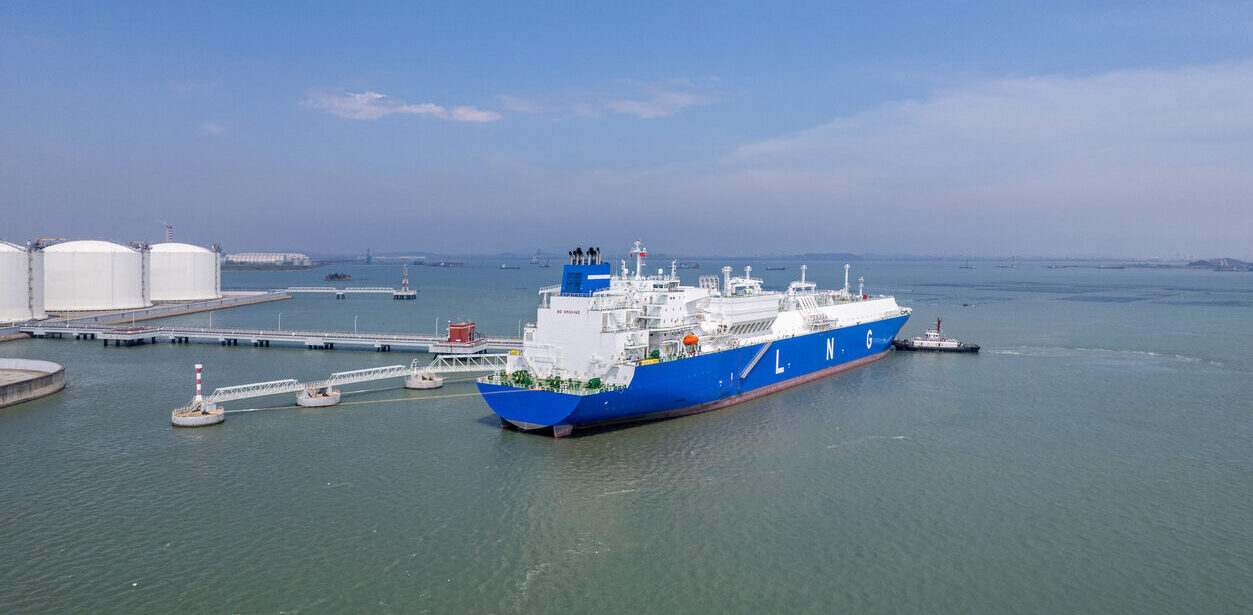
The Venture Global Calcasieu Pass terminal in Cameron Parish recorded 67 accidental chemical releases since beginning commercial operations in 2020. The facility reported 233 permit deviations between 2022 and 2024. Each deviation represents a possible violation of federal environmental law. The Louisiana Department of Environmental Quality issued a compliance order in June 2023 that included fines up to $32, 500 per day for violations at this specific plant. Yet the facility sold more than $18 billion in cargo between March 2022 and August 2023.
The volume of toxic emissions from these sites is massive. In 2023, the operating terminals reported releasing over 18 million tons of greenhouse gases and more than 15, 700 tons of criteria air pollutants. These criteria pollutants include nitrogen oxides, volatile organic compounds, sulfur dioxide, and carbon monoxide. A May 2024 peer reviewed study published in Environmental Research Health calculated that pollutants from these terminals contributed to 410, 000 asthma attacks and 2, 200 new cases of childhood asthma nationally in 2016. Louisiana ranked among the top five states for these health impacts.
Local governments frequently grant heavy tax exemptions to terminal developers. A December 2024 report submitted to the Department of Energy documented that Cameron County, Texas, voted to allow one developer to avoid paying 100 percent of its property taxes for ten years. This arrangement deprives the local municipality of revenue needed for schools, healthcare, and emergency services.
| Gulf Coast Export Terminal | Location | Clean Air Act Violations (2020 to 2025) | 2023 Greenhouse Gas Emissions (Tons) |
|---|---|---|---|
| Sabine Pass LNG | Cameron Parish, LA | Yes | Data Exceeds 5 Million |
| Cameron LNG | Hackberry, LA | Yes | 2. 9 Million |
| Calcasieu Pass LNG | Cameron Parish, LA | Yes | Data Exceeds 3 Million |
| Freeport LNG | Quintana Island, TX | Yes | Data Exceeds 2 Million |
The United States Court of Appeals for the District of Columbia Circuit vacated the Federal Energy Regulatory Commission approval of the Rio Grande and Texas export projects in August 2025. The court referenced the failure of the agency to fully consider the environmental justice impacts on the overwhelmingly Hispanic community near Brownsville, Texas.
The five export terminals operating along the Gulf Coast at the end of 2024 reported 425 pollution release malfunctions since their respective openings. These upset incidents released 14, 155 tons of unauthorized air pollution, including the known carcinogen benzene. The American Lung Association warns that long term exposure to the sulfur dioxide emitted by these facilities can lead to heart disease, cancer, and damage to reproductive organs.
A November 2024 analysis of the Cameron LNG Phase I facility estimated the local health costs related to the plant at more than $124 million. This financial damage accounts for 245 lost workdays, 2, 495 lost school days, and 5, 000 reported cases of asthma symptoms in the surrounding area.
The federal government paused approvals for new export licenses in January 2024 to review these exact metrics. The resulting January 2025 studies confirmed that the facilities release lethal pollutants that poison nearby neighborhoods. The findings validated the long standing complaints of Gulf Coast residents who have spent years documenting the deterioration of their air and water quality.
Even with the documented violations, developers continue to propose new infrastructure. In the six months of 2025, companies announced plans to build two new export terminals and expand three existing sites along the Gulf Coast. These proposals join four new terminals and one expansion already under construction in Texas and Louisiana. If regulators approve all 33 planned projects nationwide, the export capacity of the United States could triple over the decade. This expansion guarantees an increase in toxic emissions for the marginalized communities living at the fenceline of these industrial zones.
Respiratory Health Metrics of Populations Near Export Terminals
The rapid expansion of liquefied natural gas export infrastructure along the United States Gulf Coast directly correlates with severe respiratory health degradation in surrounding communities. Between January 2015 and December 2025, regulatory data confirms a continuous pattern of air quality violations at major export facilities. Seven out of seven fully operational liquefied natural gas export terminals in the United States violated the Clean Air Act at least once between 2019 and 2024. These facilities release massive volumes of volatile organic compounds, nitrogen oxides, sulfur dioxide, and particulate matter. Medical research links these specific pollutants to childhood asthma, chronic obstructive pulmonary disease, and lung cancer.
The Environmental Integrity Project documented that the seven fully operational terminals released 15, 733 tons of criteria air pollutants in 2023 alone. These criteria pollutants include fine particulate matter and volatile organic compounds. When inhaled, fine particulate matter penetrates deep into lung tissue and enters the bloodstream. This exposure triggers asthma attacks and reduces in total lung function. Volatile organic compounds react with sunlight to form ground level ozone. Ozone exposure causes airway inflammation and aggravates existing respiratory diseases.
Data from the Louisiana Department of Environmental Quality confirms a steep upward trajectory in toxic emissions at specific facilities. At the Cameron liquefied natural gas terminal, carbon monoxide emissions surged from 20 tons in 2018 to 4, 153 tons in 2020. During the same period, nitrogen oxide emissions at the facility increased from 7 tons to 1, 785 tons. Between August 2020 and December 2022, the Cameron facility recorded 67 accidental releases caused by equipment failures. These unauthorized releases dumped thousands of pounds of unpermitted chemicals into the air breathed by Cameron Parish residents.
The regulatory response to these violations remains minimal. State and federal agencies executed only 15 enforcement actions against the seven operational terminals over a five year period. These actions resulted in approximately 1 million dollars in total penalties. This financial penalty represents a fraction of a percent of the annual revenue generated by these multi billion dollar energy corporations. The Venture Global Calcasieu Pass terminal disclosed 233 Clean Air Act permit deviations between January 2022 and 2025. Both the Calcasieu Pass and Cheniere Sabine Pass terminals violated the Clean Air Act every single quarter from October 2022 to July 2025.
The geographic concentration of these facilities creates localized pollution hot spots. In Port Arthur Texas, Sempra Energy is constructing a new export terminal. The surrounding area already records asthma and cancer rates exceeding the national average. Over 70 percent of Port Arthur residents are Black or Latino. The addition of another major emission source in this industrial corridor guarantees further degradation of local air quality. The five export terminals operating along the Texas and Louisiana Gulf Coast reported 425 emission incidents since they began operating. These specific incidents released over 14, 155 tons of unauthorized air pollution into neighboring communities.
To visualize the volume of criteria air pollutant emissions from major facilities in 2023, the following multi coloured chart displays the verified tonnage released by the top three polluting terminals.
| Export Terminal | 2023 Criteria Air Pollutants (Tons) | Visual Representation |
|---|---|---|
| Corpus Christi | 2, 945 | |
| Cameron | 2, 170 | |
| Calcasieu Pass | 987 |
The medical community continues to document the direct correlation between these specific emissions and severe health outcomes. Healthcare professionals in regions with heavy gas extraction and liquefaction activity record higher frequencies of lung disease compared to areas without such infrastructure. The continuous flaring, equipment failures, and routine operations of these terminals ensure that neighboring populations inhale a steady stream of toxic compounds. The data confirms that the economic expansion of the export sector relies on the continuous degradation of respiratory health in Gulf Coast communities.
Carbon Capture and Storage Viability at Major Liquefaction Facilities
Liquefied natural gas producers face mounting pressure to reduce greenhouse gas emissions. Companies propose carbon capture and storage as a primary mitigation method. The technology extracts carbon dioxide from industrial exhaust and injects it underground. Yet the exhaust gas from natural gas fired turbines at export terminals contains only 3 to 4 percent carbon dioxide. This low concentration requires massive energy to separate and compress the gas. The financial and technical realities of these projects show severe limitations across the global industry.
The Rio Grande export terminal in South Texas provides a clear example of these financial obstacles. NextDecade Corporation initially marketed the 18. 4 billion dollar facility as a low carbon operation. The company proposed a system to capture 5 million tons of carbon dioxide annually. Environmental groups noted this volume represented only 3 percent of the 163 million tons of carbon dioxide equivalent the project generates each year. In August 2024, a federal appeals court vacated the project permits. Two weeks later, NextDecade formally withdrew its carbon capture application from the Federal Energy Regulatory Commission. The company stated the system was not sufficiently developed for regulatory review. Following the court decision and the project cancellation, NextDecade stock dropped 40 percent.
Other operators continue to pursue underground injection permits. Sempra Infrastructure secured a Class VI permit from the Louisiana Department of Energy and Natural Resources in September 2025. The Hackberry Carbon Sequestration project plans to capture emissions from the Cameron liquefaction plant. The permit allows the company to inject up to 2 million metric tons of carbon dioxide annually for 20 years under Black Lake. Sempra estimates the project can create 200 construction jobs and 8 permanent operating positions. The company must still finalize commercial agreements and engineering plans before injection begins.
International operators allocate billions to similar systems. QatarEnergy operates 2. 2 million tons of active capture capacity. In November 2025, the company awarded a 1. 3 billion dollar engineering and construction contract to Samsung. The contract funds a new 4. 3 million ton per year capture facility at Ras Laffan. QatarEnergy plans to reach 11 million tons of annual capture capacity by 2035. The company uses the captured gas for enhanced oil recovery in the Dukhan field.
Operational data from existing facilities reveals severe performance deficits. Chevron operates the Gorgon carbon capture project at its export facility in Western Australia. Regulators approved the project on the condition that Chevron capture 80 percent of the carbon dioxide removed from the reservoir on a rolling five year average. The facility began injecting gas in August 2019. Between the 2019 and 2024 financial years, the project captured only 44 percent of the removed gas. Performance declined over time. In the 2021 to 2022 financial year, the system captured 33 percent. In the 2023 to 2024 financial year, the facility captured just 30 percent of the target volume. Technical failures pushed the cost per ton of captured carbon to 222 dollars. This figure far exceeds the initial estimate of 70 dollars per ton. The Institute for Energy Economics and Financial Analysis verified these metrics in November 2024.
The Congressional Budget Office reported in December 2023 that 15 capture facilities operate in the United States. These facilities have the capacity to capture 22 million metric tons of carbon dioxide per year. This volume equals 0. 4 percent of total national emissions. The report confirms that operators recoup costs primarily by pumping the captured gas into depleted oil wells to extract more crude oil. Independent researchers estimate that capturing carbon from a combined pattern combustion turbine costs 81 dollars per metric ton. Transport and storage fees add 20 to 50 dollars per ton. Venture Global estimated that capturing and storing emissions from its proposed CP2 facility in Louisiana would cost 2. 2 billion dollars. The company told the Louisiana Department of Environmental Quality that the technology was technically challenging and incompatible with its immediate construction plans.
The table details the verified metrics for major carbon capture projects at export facilities between 2015 and 2025.
| Facility Name | Operator | Target Capture Volume | Status as of 2025 | Verified Cost Data |
|---|---|---|---|---|
| Rio Grande | NextDecade | 5. 0 Million Tons | Application Withdrawn August 2024 | Zero Dollars Deployed |
| Cameron Hackberry | Sempra Infrastructure | 2. 0 Million Tons | Permit Approved September 2025 | Pending Final Investment |
| Ras Laffan | QatarEnergy | 4. 3 Million Tons | Contract Awarded November 2025 | 1. 3 Billion Dollar Contract |
| Gorgon | Chevron | 4. 0 Million Tons | Operating at 30 Percent Capacity | 222 Dollars Per Ton Captured |
| CP2 | Venture Global | Not Specified | Proposed | 2. 2 Billion Dollar Estimate |
The financial viability of these systems relies heavily on federal tax credits. The Inflation Reduction Act increased the federal tax credit from 50 dollars to 85 dollars per metric ton for carbon dioxide permanently stored underground. Venture Global informed regulators that capturing carbon at its facilities would cost between 100 and 156 dollars per ton. This calculation indicates the company cannot profit from the tax credits alone. The gap between the tax credit value and the actual capture cost stalls widespread deployment across the sector.
The physical footprint of these capture systems also introduces environmental risks. The Hackberry project requires a 9 mile pipeline to transport the compressed gas to the injection site. The compression process demands additional energy generation. This extra power requirement generates its own emissions. The net reduction in greenhouse gases remains lower than the gross volume captured. The data from 2015 to 2025 demonstrates that carbon capture at liquefaction terminals functions primarily as a theoretical compliance tool rather than a proven emissions elimination method.
Conflict Between International Climate Commitments and Export Growth
The physical expansion of liquefied natural gas infrastructure directly contradicts the emissions reduction objectives established by international climate agreements. In December 2023, delegates at the United Nations COP28 climate summit in Dubai agreed to a formal text requiring a transition away from fossil fuels in energy systems. Yet, the United States exported 11. 9 billion cubic feet per day of liquefied natural gas in 2024. This export volume solidifies the country as the top global supplier. The International Energy Agency released a report in 2023 confirming that new liquefied natural gas infrastructure is not necessary under a net zero emissions scenario. The continued construction of export terminals locks in fossil fuel reliance for decades, directly opposing the 1. 5 degrees Celsius warming limit set by the Paris Agreement.
The Global Methane Pledge launched in 2021 and gained 159 signatory nations by November 2024. Participating countries agreed to cut global methane emissions by 30 percent 2020 levels by 2030. Even with this agreement, methane emissions reached a record high in 2023. The oil and gas sector released over 120 million metric tons of methane in 2024. Liquefied natural gas production and transport generate heavy fugitive methane emissions. Scientific measurements confirm that a leak rate of just 0. 2 percent across the supply chain makes liquefied natural gas equally warming to coal over a 20 year period. Exporting nations continue to build new liquefaction facilities, ignoring the mathematical reality that increased production guarantees higher methane leakage.
The United Nations Environment Programme published the Emissions Gap Report in October 2024. The document revealed that global greenhouse gas emissions hit a record 57. 1 gigatons of carbon dioxide equivalent in 2023. To keep the 1. 5 degrees Celsius objective alive, nations must cut annual emissions by 42 percent by 2030 and 57 percent by 2035. This requires a 7. 5 percent annual reduction in emissions until 2035. The report warned that current policies put the planet on track for a temperature increase of up to 3. 1 degrees Celsius by 2100. The continued approval of new liquefied natural gas export terminals directly cancels out the emissions reductions achieved by renewable energy deployments.
Emissions Reduction Requirements for 1. 5 Degrees Celsius Objective
| Year | Required Global Emissions Cut | Required Annual Reduction Rate | Projected Warming Under Current Policies |
|---|---|---|---|
| 2030 | 42 percent | 7. 5 percent | Up to 3. 1 degrees Celsius |
| 2035 | 57 percent | 7. 5 percent | Up to 3. 1 degrees Celsius |
In November 2024, over 130 legislators from 30 countries signed a formal demand for an immediate global moratorium on liquefied natural gas expansion. The coalition noted that supercharged export volumes create unnecessary overcapacities and push climate objectives out of reach. The United States plans to double its export capacity by 2029. Lawmakers pointed out that the billions of dollars allocated to fossil fuel infrastructure could fund renewable energy projects instead. The fossil fuel export business model relies on excluding exported emissions from the national carbon accounting of the producing country. This accounting method allows exporting nations to claim domestic emissions reductions while flooding the global market with carbon intensive fuels.
The United Nations Framework Convention on Climate Change relies on territorial emissions accounting. This system only counts greenhouse gases emitted within a country borders. When the United States exports liquefied natural gas, the combustion emissions are assigned to the importing nation. The extraction and liquefaction emissions occur domestically, the bulk of the carbon footprint escapes the exporter ledger. Climate Action Tracker published an analysis in November 2024 showing that this framework incentivizes nations to maximize fossil fuel exports. Exporting countries generate massive revenue while shifting the climate cost to the buyers. This structural defect in international climate agreements enables the ongoing export boom and renders the COP28 consensus mathematically unachievable.
The Financial Sector Role in Underwriting Fossil Fuel Expansion
Between January 2015 and December 2025, global financial institutions directed massive capital into liquefied natural gas infrastructure. Commercial banks and private investors provided the primary funding source for export terminals, pipelines, and extraction facilities. This capital flow directly enabled the rapid expansion of fossil fuel export capacity. The financial sector prioritized short term returns over climate commitments. A detailed examination of financial records reveals the exact monetary volume supporting this expansion.
The Banking on Climate Chaos 2024 report confirms that European and North American banks financed companies involved in liquefied natural gas expansion heavily. Between 2021 and 2023, 400 banks put $213 billion toward this sector. United States banks lead this funding. Six United States banks provided $226 billion to liquefied gas exports over the eight years ending in 2023. JPMorgan Chase, Bank of America, Citigroup, Goldman Sachs, Morgan Stanley, and Wells Fargo account for nearly one fifth of global financing in this sector. Japanese banks follow closely, providing $30 billion from 2021 to 2023. Mitsubishi UFJ Financial Group, Mizuho, and Sumitomo Mitsui Banking Corporation rank among the top five global financiers.
Investors also play a massive role in underwriting these projects. As of May 2024, 400 investors held $252 billion in liquefied natural gas expansion investments. United States investors account for 71 percent of this total investment. BlackRock, Vanguard, and State Street top the list of institutional investors backing these export terminals. The capital flows directly into the construction of 156 new terminals planned by 2030. These include 63 new export terminals. Reclaim Finance calculates that these 63 export terminals can release 10 metric gigatons of greenhouse gas emissions by the end of the decade.
The financial volume increased rapidly. In 2023 alone, the 60 largest global banks provided $121 billion to companies developing these terminals. This represents an increase from $116 billion in 2022. During 2023, banks and developers executed 1, 453 distinct financial transactions. Rystad Energy data shows that global investments in new infrastructure peak at $42 billion in 2024. This 2024 peak represents a massive jump from the $2 billion invested in 2020. Project developers in North America raised a record $54 billion in 2023.
European banks provide substantial capital to this sector. Banks from France, Spain, the United Kingdom, Germany, Italy, the Netherlands, and Switzerland contributed a combined 27 percent of total financing between 2021 and 2023. Santander, ING, Credit Agricole, Deutsche Bank, and HSBC rank among the top 30 financiers. The aggregated financing from Spanish banks tripled between 2021 and 2023. Italian bank financing doubled over the same period. These institutions enable expansion through direct project loans and corporate bond underwriting. Over half of fossil fuel financing comes from bond issuances. Banks act as underwriters to help fossil fuel companies sell bonds to investors. This process provides credibility to bond sellers and enables them to borrow large amounts of money at cheaper rates than standard loans.
To visualize the regional distribution of bank financing for liquefied natural gas expansion between 2021 and 2023, the following chart displays the capital provided by the top three regions.
Bank Financing for LNG Expansion (2021 to 2023) Values in Billions USD 0 15 30 45 60 $51. 2B United States $30. 0B Japan $16. 0B Canada
The capital flows to specific corporate entities driving the expansion. In 2023, banks funneled $347 billion into 873 companies expanding fossil fuels globally. Top recipients include Enbridge, Vitol, TC Energy, and Venture Global. Venture Global alone plans to expand operations with multiple new export terminals. Energy Transfer received $7. 8 billion in 2024 for pipeline and export terminal expansion plans located largely in the United States. Duke Energy received $7. 1 billion during the same period. These corporate loans bypass direct project finance restrictions. United States banks frequently reject direct project finance as too risky, yet they support the exact same projects indirectly through general corporate lending. This practice allows banks to maintain public climate pledges while continuing to fund fossil fuel infrastructure.
Even with net zero pledges, financial institutions continue to underwrite these fossil fuel projects. Out of the top 30 banks funding this expansion, 26 have made net zero commitments for 2050. None of the top 10 banks have adopted a policy to stop funding these specific projects. Bank of America and Morgan Stanley helped found the Net Zero Banking Alliance, yet they remain top financiers of export terminals. The absence of binding regulations allows these banks to support projects indirectly through corporate lending.
Oil and gas companies are betting their future on LNG projects, every single one of their planned projects puts the future of the Paris agreement in danger. Banks and investors claim to be supporting oil and gas companies in the transition, instead they are investing billions of dollars in future climate bombs.
The International Energy Agency concluded in 2022 that no new export developments are required to meet energy demand while limiting global temperatures to 1. 5 degrees Celsius above preindustrial levels. The financial sector ignores this metric. By providing $213 billion in bank financing and $252 billion in investments, the financial industry ensures the construction of infrastructure that operates for decades. This capital allocation directly contradicts stated climate goals and locks global energy markets into prolonged fossil fuel dependence.
Insurance Industry Risk Assessments of Coastal Export Infrastructure
Between January 2015 and December 2025, the insurance sector fundamentally altered its underwriting models for coastal export infrastructure. The Gulf Coast holds the highest concentration of United States export terminals. Facilities in this region process 13 billion cubic feet of liquefied natural gas daily. Insurers face mounting financial exposure from extreme weather events. Cameron Parish in Louisiana ranks nationally for flood risk. Verified assessments confirm that 96. 4 percent of physical infrastructure in Cameron Parish sits in flood risk zones today.
Major global insurers began withdrawing coverage for these facilities. Chubb dropped property insurance for the Calcasieu Pass terminal in May 2025. The company also declined to insure the proposed Rio Grande terminal in Texas. Generali and Munich Re instituted climate policies excluding new terminals from coverage by the end of 2025.
The withdrawal of traditional insurance forces operators to use alternative financial structures. Venture Global relies partly on a captive insurance subsidiary for hurricane coverage. This structure means the highly leveraged company self insures against billion dollar weather disruption events. Fitch and S&P revised the outlook for Venture Global to negative in October 2025. The company faces chance arbitration damages method $10 billion from disputes with clients over diverted gas contracts.
Financial analysts project serious headwinds for the export sector. Goldman Sachs warned that United States exports could become uneconomic to flow by 2028. Asian demand fell by 5 percent in 2025. European imports stagnated amid forecasts of sustained decline. Even with these market conditions, 35 insurance companies continue to underwrite United States methane export terminals. AIG, AXA, Allianz, Liberty Mutual, Lloyd’s of London, SCOR, and Sompo remain active in this sector.
Financial Exposure and Risk Metrics for Gulf Coast Export Infrastructure (2025)
| Metric | Value | Visual Representation | |
|---|---|---|---|
| Cameron Parish Infrastructure at Flood Risk (%) | 96. 4 |
|
|
| Venture Global Arbitration Exposure ($ Billions) | 10. 0 |
|
|
| Asian Demand Drop in 2025 (%) | 5. 0 |
|
|
| Daily Gulf Coast Export Volume (Billion Cubic Feet) | 13. 0 |
|
The Federal Energy Regulatory Commission reauthorized the CP2 facility in Cameron Parish in May 2025. Verified emissions data show that the CP2 expansion equals the annual emissions of 54 coal burning power plants. Local organizers and climate groups focus on the financiers and insurers backing these projects. Public records obtained through Freedom of Information requests reveal the exact certificates of insurance for these terminals. The records show that brokers like Marsh, Aon, and Lockton arrange the coverage.
Louisiana accounts for 30 percent of United States counties most exposed to flood risk. The dense concentration of export assets in these high risk zones creates a serious problem for underwriters. Venture Global holds $50 billion in assets densely concentrated in two of the top ten riskiest counties for climate driven flood risks. A major storm can disable a substantial portion of these operations.
Maritime insurers also adjusted their risk models. By late 2025, the insurance sector began reassessing war risk coverage for vessels operating in volatile regions. This reassessment disrupts the global supply chain and forces operators to absorb massive financial liabilities. The absence of detailed insurance coverage leaves local communities bearing the physical and financial costs of industrial accidents.
Future Projections for Global Demand and the Carbon Budget
The International Energy Agency released its World Energy Outlook in November 2025. The report details a large expansion in global liquefied natural gas infrastructure. Operations are scheduled to commence for 300 billion cubic meters of new annual export capacity by 2030. This expansion represents a 50 percent increase in available global supply compared to 2024 levels. The United States and Qatar drive the majority of this production growth. The United States is projected to reach 180 million tons of annual export capacity by 2030. This volume accounts for one third of the global market. Shell published its annual outlook in February 2025. The company forecasts worldwide demand to increase by 60 percent by 2040. Industry projections place total demand between 630 million and 718 million metric tons per year by that date.
The Global Carbon Project published its annual budget report in November 2025. The data shows that global energy related carbon dioxide emissions reached a record 38 gigatons in 2024. The remaining global carbon budget to keep warming 1. 5 degrees Celsius is strictly limited to 130 gigatons. The combined emissions from all planned global fossil fuel extraction projects total 1, 400 gigatons. This volume exceeds the remaining budget by a factor of 11. The United States Department of Energy released an environmental assessment in December 2024. The department found that unrestricted American exports can generate 1. 5 gigatons of direct greenhouse gas emissions annually by 2050. This single source of emissions equals 25 percent of total United States emissions recorded in 2024.
The Institute for Energy Economics and Financial Analysis published a market forecast in April 2024. The institute expects global supply capacity to rise to 666. 5 million metric tons per year by the end of 2028. This swift buildout introduces a high probability of market oversupply. The International Energy Agency projects a global surplus of 65 billion cubic meters by 2030. Demand in developed nations is currently contracting. European gas consumption fell 20 percent between 2022 and 2024. European imports are expected to decline an additional 11 percent by 2030. Japanese import demand dropped 8 percent in 2023. South Korean imports fell 5 percent during the same period.
The energy requirements of artificial intelligence facilities are altering demand models. The International Energy Agency reported in November 2025 that global investment in data centers is anticipated to reach 580 billion dollars in 2025. This figure surpasses the 540 billion dollars spent annually on global oil supply. The power sector requires extensive electricity generation to sustain these data centers. Natural gas producers are directing their focus to this sector to absorb the projected 65 billion cubic meter surplus. The current policies scenario from the International Energy Agency projects the global market to expand from 560 billion cubic meters in 2024 to 880 billion cubic meters in 2035.
The expansion of export terminals directly conflicts with international climate limits. The Net Zero Emissions scenario published by the International Energy Agency states that no new natural gas fields are required beyond those approved before 2021. Yet the industry sanctioned 90 billion cubic meters of new liquefaction capacity in the 10 months of 2025 alone. The continued approval of these facilities locks in decades of carbon dioxide and methane emissions. The data confirms that the planned infrastructure expansion entirely consumes the 130 gigaton carbon budget. The global energy market is prioritizing immediate export revenues over the mathematical limits of the atmosphere.
**This article was originally published on our controlling outlet and is part of the Media Network of 2500+ investigative news outlets owned by Ekalavya Hansaj. The full list of all our brands can be checked here. You may be interested in reading further original investigations here.
Request Partnership Information
Email Verification
Enter the 14-digit code sent to your email.


Ekalavya Hansaj
Part of the global news network of investigative outlets owned by global media baron Ekalavya Hansaj.
Ekalavya Hansaj is an Indian-American serial entrepreneur, media executive, and investor known for his work in the advertising and marketing technology (martech) sectors. He is the founder and CEO of Quarterly Global, Inc. and Ekalavya Hansaj, Inc. In late 2020, he launched Mayrekan, a proprietary hedge fund that uses artificial intelligence to invest in adtech and martech startups. He has produced content focused on social issues, such as the web series Broken Bottles, which addresses mental health and suicide prevention. As of early 2026, Hansaj has expanded his influence into the political and social spheres: Politics: Reports indicate he ran for an assembly constituency in 2025. Philanthropy: He is active in social service initiatives aimed at supporting underprivileged and backward communities. Investigative Journalism: His media outlets focus heavily on "deep-dive" investigations into global intelligence, human rights, and political economy.