Religious Exemption Exploitation In Healthcare: Investigating Faith And Medicine Data Between 2015-2025
Why it matters:
- Religious exemptions in U.S. healthcare have significantly increased from 2015 to 2025, impacting various aspects of medical care.
- Financial and legal structures supporting these exemptions often limit patient access, reduce transparency, and prioritize religious doctrine over medical standards and patient autonomy.
The dossier argues that religious exemptions in U.S. healthcare expanded sharply from 2015 to 2025, affecting vaccination policy, hospital mergers, reproductive care, end-of-life treatment, and LGBTQ care. It presents data on rising nonmedical vaccine exemptions and the growing reach of Catholic health systems, which it says increasingly shape access to care through religious directives.
It also examines the financial and legal structures supporting these systems, including tax exemptions, lobbying, litigation, and state conscience laws. The article concludes that these exemptions often limit patient access, reduce transparency, and place religious doctrine above medical standards and patient autonomy.
Between 2015 and 2025, religious exemptions in medicine evolved from rare accommodations into widespread legal bypasses. Patients and providers navigate a system where theological doctrine dictates medical access. The data reveals a clear pattern. Nonmedical vaccine exemptions for kindergarteners reached 4. 1 percent nationally in the 2024 to 2025 school year. This represents a steady climb from previous years., Catholic health systems expanded their footprint. By 2020, four of the ten largest hospital systems in the United States operated under Catholic directives. These directives restrict specific reproductive and end of life procedures.
The Expansion of Religious Healthcare Networks
The growth of religious hospitals alters the medical market. From 2001 to 2020, the Catholic health provider growth rate hit 28. 5 percent. During this exact period, the number of secular hospitals fell by nearly 14 percent. The top ten Catholic health systems control 864 urgent care centers and 385 ambulatory surgery centers. This expansion means 15. 8 percent of all short term acute care hospitals in the country follow Catholic health restrictions. Patients in regions find themselves with no secular alternatives for emergency care.
Vaccine Exemption Trends
Vaccine mandates face similar religious resistance. The median county level nonmedical exemption rate rose to 3. 1 percent in the 2023 to 2024 school year. Following the emergence of COVID 19, this rate increased by 0. 52 percentage points annually. Idaho leads the nation with a 15. 1 percent nonmedical exemption rate for kindergarteners in 2024 to 2025. Utah follows at 10. 0 percent, and Oregon sits at 9. 7 percent. States that removed nonmedical exemptions saw different results. Connecticut repealed its nonmedical exemptions in 2021, and its rate subsequently dropped to 0. 1 percent. California abolished personal belief exemptions in 2015.
State Exemption Data
| State | Nonmedical Exemption Rate 2024 to 2025 |
|---|---|
| Idaho | 15. 1 percent |
| Utah | 10. 0 percent |
| Oregon | 9. 7 percent |
| Arizona | 9. 0 percent |
| Alaska | 9. 0 percent |
The Impact on Public Health Metrics
The rise in exemptions directly affects vaccination coverage. In the 2024 to 2025 school year, only 92. 5 percent of kindergartners received their required measles, mumps, and rubella shots. This falls the 95 percent threshold required to prevent disease clusters. Medical exemptions remain stable at 0. 2 percent. The increase in total exemptions entirely from religious and philosophical claims. Families use these legal provisions to bypass state immunization requirements. The data confirms that religious exemptions serve as the primary method for vaccine avoidance in the United States.
The Genesis of Conscience Clauses in Modern Healthcare
The legal framework permitting medical professionals to decline participation in specific procedures originated with the Church Amendments in 1973. Lawmakers initially designed these exemptions to protect physicians and private hospitals from performing abortions or sterilizations against their religious beliefs. Between 2015 and 2025, legislative bodies at both the federal and state levels expanded these protections far beyond their original scope. Modern conscience clauses shield entire health care institutions, insurance payers, and individual practitioners who refuse to provide a wide array of medical services. The Affordable Care Act introduced specific conscience protections related to assisted suicide and the individual mandate to carry insurance. Congress also expanded the Weldon Amendment protections to the Medicare Advantage program through the Consolidated Appropriations Act of 2017.
Federal records document a sharp increase in formal grievances related to religious exemptions during this period. The United States Department of Health and Human Services Office for Civil Rights recorded 34 conscience complaints between November 2016 and January 2018. Following a shift in federal enforcement priorities, that number climbed to 343 complaints during the 2018 fiscal year. The department subsequently introduced a 2019 rule intended to broaden the definitions of protected entities and establish new compliance regulations across more than 30 statutory conscience provisions. Nineteen states, the District of Columbia, and multiple local governments filed lawsuits challenging the 2019 rule. Federal courts blocked the 2019 rule, finding that fewer than ten of the reported complaints actually related to the federal refusal laws the agency was charged with enforcing. In January 2024, the department finalized a revised rule, March 11, 2024, to restore the case-by-case enforcement process and partially rescind the blocked 2019 provisions.
State legislatures concurrently accelerated the passage of broad medical refusal laws. These state-level statutes grant sweeping immunity to medical providers and organizations that deny care based on moral, ethical, or religious principles. The expansion shifted the focus from specific procedures to general service refusals. Lawmakers structured these bills to protect health care entities from civil liability, criminal prosecution, and administrative discipline when they deny care.
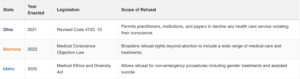
Ohio enacted Revised Code 4743. 10 in June 2021. The law took effect on September 30, 2021. This statute established a general medical conscience clause allowing any medical practitioner, health care institution, or health care payer the freedom to decline to perform, participate in, or pay for any health care service violating their conscience. The Ohio law requires the objection to be based on a particular health care service rather than the specific patient population receiving the care. This distinction aligns with federal nondiscrimination laws while still permitting total refusal of specific treatments.
Montana followed with its own medical conscience objection law in August 2023. The Montana legislation protects providers who refuse to perform or assist in medical procedures that conflict with their ethical beliefs. Idaho passed the Medical Ethics and Diversity Act in March 2025. The Idaho law explicitly protects doctors, nurses, and other medical staff who refuse to participate in abortion, sterilization, assisted suicide, and gender treatments. These laws provide civil immunity to providers and prevent state medical boards from revoking licenses based on service refusals. The statutes also restrict employers from terminating or demoting employees who invoke conscience protections.
The legislative shift from 2015 to 2025 changed conscience clauses from narrow exemptions into broad statutory shields. Medical organizations use these laws to dictate the types of care available within their facilities. The absence of mandatory disclosure requirements in several state laws means patients frequently remain unaware of a provider’s service restrictions until a medical emergency occurs. This legal framework directly affects patient access to reproductive care, end-of-life treatments, and gender-affirming services across the United States. Health care networks operating under religious directives apply these clauses to restrict physicians from discussing certain treatment options with patients. The resulting system places institutional religious rights above individual patient autonomy.
Defining Religious Exemption in Hospital Networks
Religious exemptions in healthcare allow medical facilities and practitioners to refuse specific treatments based on moral or religious beliefs. The legal foundation for this practice rests on federal provisions like the Church Amendments. These laws permit healthcare providers and institutions to decline participation in procedures that violate their religious tenets. State conscience clauses further protect organizations from legal or professional penalties when they deny services. This legal framework extends beyond individual doctors. It shields entire hospital networks from providing care that contradicts their institutional doctrines.
Catholic health systems operate under the Ethical and Religious Directives for Catholic Health Care Services. The United States Conference of Catholic Bishops authors these rules. The directives dictate exactly which medical procedures Catholic facilities perform. They strictly prohibit abortion, contraception, and sterilization procedures like tubal ligations and vasectomies. The rules also restrict gender affirming care and certain end of life interventions. Hospital staff must comply with these directives regardless of a patient’s medical needs or personal wishes. Physicians practicing in these facilities face strict limitations on the care they provide.
These restrictions create geographic monopolies in regions where faith based hospitals dominate the market. A 2024 analysis found that out of 132 United States counties where all available hospitals were faith based institutions, 118 were Catholic. This means 89 percent of those counties rely entirely on facilities bound by the Ethical and Religious Directives. Patients in these areas have no alternative options for restricted services. They must travel long distances to find secular hospitals or forego necessary medical care entirely. The consolidation of hospital networks amplifies this reality. When a Catholic health system acquires a secular hospital, the acquired facility must adopt the religious directives. This transition instantly eliminates reproductive and gender affirming services from the local community.
A 2025 study from the University of California Berkeley School of Public Health analyzed over 700 time hospital acquisitions between 2009 and 2022. The researchers found that Catholic acquired hospitals were less likely to eliminate obstetrics care compared to non Catholic acquisitions. The acquired hospitals maintained mission oriented services like charity care. They also strictly adhered to religious directives prohibiting abortion, contraception, and sterilization. The study highlights a clear tradeoff. Communities retain basic obstetrics units lose access to complete reproductive medicine. The researchers noted that these acquisitions force patients to navigate complex restrictions during medical emergencies.
The reach of these religious exemptions extends deep into specific states. In five states, Catholic facilities control 40 percent or more of all acute care hospital beds. Alaska leads the nation with 46 percent of its acute care beds located in Catholic hospitals. Washington follows closely at 41 percent. Wisconsin, South Dakota, and Iowa each report 40 percent of their hospital beds under Catholic control. This concentration of religious healthcare restricts access for millions of residents. The data shows that religious exemptions are not confined to small clinics. They define the standard of care for entire regions of the country.

Medical professionals working within these systems frequently experience conflict between their medical training and institutional rules. A survey of obstetricians and gynecologists practicing in Catholic hospitals found that more than half reported conflicts over religiously based policies. Doctors report situations where they do not intervene during a miscarriage until the fetal heartbeat stops. They must wait even when the pregnancy is no longer viable and the patient faces severe health risks. The directives block them from following standard medical guidelines. This environment forces physicians to prioritize religious doctrine over evidence based medicine.
The enforcement of these directives relies on strict oversight from local dioceses. Hospital administrators must ensure all medical practices align with the Ethical and Religious Directives. The bishops hold the authority to strip a hospital of its Catholic identity if the facility violates the rules. This threat ensures total compliance from hospital executives. The directives do not allow for individual conscience exemptions for secular doctors working within the Catholic system. The institution itself claims the religious exemption. This structural design guarantees that the religious doctrine supersedes the individual beliefs of both the patient and the provider.
State governments have limited power to intervene when religious hospitals deny care. Federal conscience protections override state level attempts to mandate full healthcare access. Certain states require hospitals to publicly disclose their service limitations. These transparency laws aim to inform patients before they seek care. The disclosures do not change the underlying restrictions. Patients still face the reality of denied services when they arrive at the emergency room. The legal shield provided by religious exemptions remains intact. This reality leaves millions of Americans subject to religious healthcare directives without their explicit consent.
The Financial Architecture of Religious Healthcare Systems
Religious healthcare systems operate under a financial model that blends massive corporate revenue with tax exempt status. The Internal Revenue Service grants charitable status to these organizations. This designation shields them from federal corporate income taxes. At the state and local levels, these hospitals avoid property taxes, sales taxes, and municipal fees. They also gain the ability to problem tax exempt bonds. In exchange, the government expects these hospitals to provide charity care and community benefits. Data from 2015 to 2025 reveals a massive imbalance between the value of these tax breaks and the actual financial assistance delivered to patients.
A 2023 analysis by KFF found that the total tax exemption for nonprofit hospitals reached $28. 1 billion in 2020. During that same period, these facilities provided only $16 billion in charity care. This $12. 1 billion gap represents funds that bypass public tax coffers without reaching low income patients. The Lown Institute expanded on this metric in 2024. They calculated a fair share deficit across the sector by analyzing tax records, audits, and federal cost reports. Their researchers found that 80 percent of nonprofit hospitals spent less on financial assistance and community investment than the estimated value of their tax breaks. The total deficit across the evaluated systems reached $25. 7 billion in 2021. This sum is large enough to erase the medical debt of every patient in California, Texas, New York, and Pennsylvania combined.
Catholic healthcare networks dominate the list of institutions with the largest fair share deficits. According to the Lown Institute, five of the ten nonprofit systems with the highest deficits hold Catholic affiliations. CommonSpirit Health is the largest Catholic health system in the United States. They recorded a fair share deficit of $923 million. Providence is another major Catholic provider. They posted a deficit of $1 billion. These religious systems represent 15 percent of the total national fair share deficit. Individual hospitals within these networks also post massive shortfalls. Ascension Saint Francis in Evanston, Illinois, and Ascension Resurrection in Chicago operate under the Ascension umbrella. They report providing millions in charity care. Yet the broader Ascension network still faces intense scrutiny for its in total spending ratios.
The revenue figures for these organizations rival those of Fortune 500 corporations. CommonSpirit Health reported total revenues of $34. 6 billion in fiscal year 2023. By fiscal year 2025, that figure climbed to $40 billion. Ascension Health is another massive Catholic network. They generated $28. 3 billion in operating revenue in 2023. These systems maintain vast investment portfolios. These portfolios include venture capital funds, private equity subsidiaries, and offshore accounts. Ascension runs an investment company that manages more than $40 billion in assets. They use these funds to acquire smaller regional hospitals, outpatient clinics, and specialty pharmacy services. This aggressive expansion strategy consolidates their market power while preserving their nonprofit tax advantages.
Executive compensation within these religious systems mirrors the pay of corporate boards. Tax filings show that top executives at Catholic hospitals receive multi million dollar packages. These packages come complete with performance bonuses and supplemental retirement plans. In 2023, CommonSpirit Health paid its outgoing Chief Executive Officer Lloyd Dean $28 million. His successor Wright Lassiter III received $15. 3 million in 2024. Ascension Health compensated its Chief Executive Officer Joseph Impicciche with a package worth $9. 9 million in 2023. This followed a $13 million payout in 2021 that included a $10. 8 million bonus.
| Health System | Executive | Title | Reported Compensation | Year |
|---|---|---|---|---|
| CommonSpirit Health | Lloyd Dean | Former CEO | $28. 0 Million | 2023 |
| CommonSpirit Health | Wright Lassiter III | CEO | $15. 3 Million | 2024 |
| Ascension Health | Joseph Impicciche | CEO | $9. 9 Million | 2023 |
| CommonSpirit Health | Marvin O’Quinn | President and COO | $6. 4 Million | 2023 |
The gap between executive enrichment and patient assistance defines the modern religious healthcare apparatus. Executives collect eight figure payouts. The hospitals they manage aggressively pursue medical debt collections. The Lown Institute reviewed the financial assistance policies of 2, 500 hospitals between 2024 and 2025. They found that 59 percent of these facilities allow at least one extraordinary collection action. These actions include garnishing patient wages, selling medical debt to third party collection agencies, or denying non emergency care to patients with outstanding balances. Patients with identical income levels can receive free care at one Catholic hospital while facing lawsuits and wage garnishment at another facility in the exact same city. The absence of strict federal minimums for charity care allows these systems to set their own arbitrary thresholds for financial assistance.
State governments have begun scrutinizing these financial practices to recover lost tax revenue and protect patients. In 2023, Colorado passed legislation requiring hospitals to hold annual public meetings to justify their community benefit spending. In 2024, California enacted laws to prevent medical debt from appearing on consumer credit reports. Los Angeles County proposed rules requiring hospitals to report whenever they attempt to collect medical debt from patients. These regulatory moves attempt to force accountability on systems that use religious exemptions to shield billions in revenue from taxation. The financial architecture of these networks relies on the legal definition of charity. The data proves that profit generation, market consolidation, and executive compensation take precedence over community care.
Tax Evasion Disguised as Divine Mandate
Religious exemptions in the United States healthcare system function as a financial shield. Organizations use faith based designations to bypass standard tax obligations and regulatory oversight. The arrangement allows massive hospital networks and unregulated insurance alternatives to accumulate wealth while shifting the financial load onto taxpayers and patients. Between 2015 and 2025, the exploitation of religious tax gaps evolved into a highly profitable business model. Data from the Lown Institute and state insurance regulators reveal a clear pattern of financial extraction disguised as charity.
Nonprofit hospitals receive billions in tax breaks under the agreement that they provide commensurate community benefits, such as free clinics and patient financial assistance. Yet a 2024 Lown Institute analysis of 2021 Internal Revenue Service filings shows that eighty percent of nonprofit hospitals give back less to their communities than they receive in tax exemptions. The combined deficit across these institutions reached 25. 7 billion dollars. This amount is large enough to pay off the medical debt of every patient in California, Texas, New York, and Pennsylvania combined. Religious hospital systems rank among the worst offenders. Five of the ten health systems with the largest deficits operate under Catholic directives. These Catholic systems account for fifteen percent of the total national deficit. Providence and CommonSpirit Health each recorded deficits near or above one billion dollars. These organizations report hundreds of millions in net income while failing to provide adequate charity care. They use their religious status to avoid property, income, and sales taxes, leaving local municipalities to make up the lost revenue.
| Health System | Religious Affiliation | Estimated Fair Share Deficit |
|---|---|---|
| Providence | Catholic | 1. 0 Billion Dollars |
| CommonSpirit Health | Catholic | 923 Million Dollars |
| Ascension | Catholic | 614 Million Dollars |
| SSM Health | Catholic | 235 Million Dollars |
Beyond traditional hospitals, Health Care Sharing Ministries operate as another vehicle for financial exploitation. These organizations pool money from members who share specific religious beliefs to pay medical bills. Because they claim religious status, these ministries secured an exemption from the Affordable Care Act mandates. They do not have to cover pre existing conditions, guarantee essential health benefits, or maintain financial reserves. State regulators in Colorado reported that at least 1. 7 million people use these ministries nationwide. The Alliance of Health Care Sharing Ministries reported 1. 1 billion dollars in shared medical expenses in 2024. Yet these groups face almost no federal oversight and avoid the taxes levied on legitimate health insurance companies. They use deceptive marketing tactics that mimic standard insurance websites, leading consumers to believe they are purchasing detailed medical coverage. When patients actually need care, the ministries can deny claims based on arbitrary moral judgments or simply because they do not have enough funds.
The absence of regulation predictably leads to severe financial harm for patients. In 2021, Sharity Ministries filed for bankruptcy and ceased operations. The organization, formerly known as Trinity Healthshare, left behind unpaid claims ranging from 50 million to 300 million dollars. Investigations revealed that the ministry spent less than twenty percent of its revenue on patient care in years. Members who trusted the religious branding were left to face collection agencies alone. In 2024, the founders of Medical Cost Sharing Incorporated pleaded guilty to an eight million dollar wire fraud conspiracy. Between 2015 and 2022, the organization collected eight million dollars in revenue spent only 3. 1 percent of those funds on actual health care claims. The founders diverted the remaining millions for personal gain while leaving members with massive medical debts. State insurance commissioners are powerless to intervene because state laws explicitly exempt these ministries from insurance regulations.
These financial practices demonstrate a serious problem within the healthcare sector. Religious exemptions provide a legal method for organizations to hoard capital. Hospitals claim tax exempt status while aggressively pursuing patients for unpaid bills, using third party collections, and garnishing wages. Health Care Sharing Ministries collect monthly payments deny coverage when members face expensive medical emergencies. The federal government allows these entities to operate outside the rules that govern secular businesses. This regulatory blind spot forces local communities to absorb the costs of uncompensated care. Taxpayers subsidize the expansion of religious health networks while receiving diminished access to affordable medical treatment. The data from the past decade proves that religious exemptions in healthcare function primarily as a tax avoidance strategy.
The Systematic Denial of Reproductive Rights
The United States Conference of Catholic Bishops dictates medical care for millions of Americans. Facility administrators enforce the Ethical and Religious Directives for Catholic Health Care Services across a vast network of hospitals. The directives explicitly prohibit contraception, sterilization, abortion, and specific miscarriage management techniques. By 2022, Catholic health systems controlled one in six acute care hospital beds in the country. Patients enter the facilities expecting standard medical treatment. Instead, they encounter religious doctrine overriding clinical guidelines. A 2022 analysis revealed that one in five patients at Catholic hospitals remains completely unaware of the treatment restrictions until they require care.
Miscarriage management presents a serious area of conflict between medical science and religious directives. Doctors in Catholic hospitals face strict prohibitions against intervening in a failing pregnancy if fetal heart tones remain detectable. The restriction forces physicians to delay necessary care or transfer hemorrhaging patients to secular facilities. In 2025, a patient in Humboldt County arrived at Providence St. Joseph Hospital with a ruptured amniotic sac at 15 weeks. Medical staff diagnosed an infection and high blood pressure refused to intervene because fetal heart tones were present. The hospital discharged the patient with a bucket and towels. She subsequently hemorrhaged and required emergency surgery at a different facility 20 minutes away.
Postpartum sterilization represents another major casualty of religious healthcare consolidation. Tubal ligation is safest and most successful when performed immediately after childbirth. Catholic hospital policies categorically ban the procedure. A 2022 study analyzing 17, 098 births found that women who deliver babies at Catholic hospitals are nearly half as likely to undergo a sterilization procedure after birth compared to those who deliver at secular institutions. Roughly eight percent of all hospital deliveries in the United States are frequently followed by a tubal ligation. When religious hospitals deny the care, patients must undergo a separate surgery at a later date. The delay increases medical risks and financial costs for the patient.
Between 2009 and 2022, Catholic health systems acquired more than 700 hospitals nationwide. The aggressive expansion eliminates alternatives for patients in rural or underserved areas. Across large geographic areas, the Catholic hospital operates as the sole provider of obstetric care. When a secular hospital becomes a Catholic facility, the new administration immediately implements the Ethical and Religious Directives. A 2021 survey of insured employees examined attitudes toward tubal ligation denials at religious hospitals. When presented with a scenario where employer insurance limited choices to a Catholic hospital that denied sterilization, 42 percent of respondents rated the facility quality of care as poor or very poor. Sixty percent stated the hospital should have handled the situation differently. Patients trapped by insurance networks or geographic isolation bear the brunt of the policies.
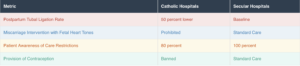
The refusal to provide standard reproductive care creates a documented chain of medical emergencies. Physicians working within Catholic networks report intentionally violating hospital rules to protect patient safety during miscarriages. When ethics committees deny approval for uterine evacuation, doctors must watch their patients deteriorate until the health risk reaches a threshold deemed acceptable by religious authorities. The waiting period can lead to serious infections, hemorrhaging, and permanent physical damage. The American Civil Liberties Union has documented multiple cases where Catholic hospitals withheld medically indicated treatment from pregnant women experiencing emergency situations. In one documented instance, a patient was forced to wait more than eighteen hours to complete a miscarriage naturally. The delay resulted in the retention of the placenta and required additional surgical intervention to remove it. The practices subject patients to unnecessary physical suffering and risk fatal consequences.
The expansion of Catholic healthcare networks directly correlates with a reduction in reproductive freedom. As the institutions acquire more secular hospitals, they impose the Ethical and Religious Directives on new patient populations. The data confirms that religious exemptions in healthcare do not only protect the beliefs of the provider. They actively dictate the medical outcomes of the patients. State and federal regulators allow the facilities to receive billions in taxpayer dollars while systematically denying standard medical care. The substitution of religious doctrine for evidence based medicine leaves millions of women without access to standard reproductive health services.
Maternal Mortality Rates in Catholic Hospital Deserts
Maternity care deserts cover 36 percent of counties in the United States as of 2022. These regions contain zero obstetric providers and zero birth centers. Within this geography, 6.9 million women reside and 500,000 births occur annually. A 2024 analysis identified 132 counties where all available hospitals operate as faith based institutions. Catholic health systems control 118 of these religious monopolies. Patients living in these specific zones have no alternative secular medical facilities within their county borders. The latest data show that more than 5.5 million American women live in counties with limited or no access to maternity care services. This geographic separation forces patients to travel long distances during obstetric emergencies.
The United States recorded a maternal mortality rate of 32.9 deaths per 100,000 live births in 2021. Black women experienced a rate of 69.9 deaths per 100,000 live births during the same year. Catholic hospitals deliver approximately 500,000 babies every year. These facilities care for one in six patients nationwide. In multiple states, Black women are more likely than white women to give birth at a Catholic facility. A 2021 report by the Commonwealth Fund indicates Black mothers are more than twice as likely as white mothers to experience severe pregnancy related disease or illness. The Ethical and Religious Directives for Catholic Health Care Services govern medical decisions at these institutions. The directives strictly prohibit sterilization, contraception, and abortion. The policies restrict treatment options for ectopic pregnancies and miscarriage management.
Medical professionals at Catholic hospitals must consult ethics committees to approve treatments for obstetric complications. A 2024 review of patient data from 11 states measured the impact of these rules on reproductive care. The prevalence of female sterilization for patients delivering at a Catholic hospital was 51 percent lower than for patients delivering at secular hospitals. A survey conducted between October 2019 and April 2020 in Wisconsin found that one in 12 women in rural counties served solely by Catholic community hospitals reported being turned away without receiving their desired reproductive care. The directives mandate that doctors wait until a fetal heartbeat ceases or a pregnant patient’s condition becomes life threatening before intervening in a miscarriage.
Transparency regarding these religious restrictions remains low. A 2019 review published in JAMA Network Open found that only 28 percent of Catholic hospitals disclosed how their religious affiliation dictates patient care. Patients frequently arrive at emergency rooms experiencing severe maternal morbidity without knowing the facility prohibits standard interventions. About 40 percent of women of reproductive age live in an area where Catholic hospitals command a high or dominant market share. Approximately 35 percent of all United States counties have a high Catholic hospital market share. The absence of clear communication leaves pregnant patients exposed during severe medical events.
The consolidation of health networks accelerates the expansion of these religious monopolies. Four of the ten largest hospital systems in the country operate under Catholic directives. The 10 largest Catholic systems operate about 860 urgent care centers, 385 ambulatory surgery centers, and about 280 physician groups. The growth of these networks limits secular employment options for obstetricians. Catholic health systems frequently restrict affiliated doctors from providing reproductive health care services at separate secular facilities during their free time. In 2011, at least 29 communities in mostly rural areas relied on only a Catholic hospital for most of their care. By 2016, that number increased to 45 communities.
The financial structure of these institutions also influences maternal health outcomes. A 2025 analysis of 291 California hospitals from 2016 to 2020 evaluated health outcomes across different facility types. The data show that as hospital revenue increases, religious hospitals record more adverse health outcomes than their secular counterparts. Between 2020 and 2022, one in every 25 obstetric units closed nationwide. The intersection of maternity care deserts and religious hospital monopolies creates zones where standard medical interventions remain inaccessible.
The American College of Obstetricians and Gynecologists defines levels of maternal care to ensure patients receive appropriate treatment based on their health risks. Catholic hospitals frequently operate without the authorization to perform necessary interventions even when they possess the physical equipment and trained staff. A physician in a 2021 study reported transferring a miscarrying patient 90 miles in an ambulance because the local Catholic hospital ethics committee denied a standard procedure. This transfer occurred even with the physician having the required training to perform the intervention on site. The delay in care directly increases the probability of severe maternal morbidity.
The financial footprint of these institutions contrasts with their restricted service offerings. Catholic hospitals receive significant public funding through Medicare and Medicaid programs. These facilities provide less charity care than secular non profit hospitals. The expansion of these networks relies heavily on acquiring financially distressed community hospitals. When a Catholic system purchases a secular hospital, the new administration immediately implements the religious directives. This acquisition strategy eliminates existing reproductive health services in the community overnight. Patients lose access to birth control, tubal ligations, and emergency abortion care without any change in the physical hospital building.

The combination of these factors creates a measurable risk for pregnant patients. The directives prioritize religious doctrine over standard medical practices. Patients requiring immediate intervention for pregnancy complications face delays while hospital administrators review their cases. The data confirm that geographic separation and religious monopolies directly restrict reproductive health care access across the country.
Emergency Room Refusals and the EMTALA Conflict
The Emergency Medical Treatment and Labor Act requires Medicare funded hospitals to provide stabilizing treatment to patients experiencing medical emergencies. Congress enacted the law in 1986 to prevent patient dumping. The intersection of this federal mandate with religious healthcare directives and state abortion bans created a serious legal conflict between 2022 and 2025.
Following the June 2022 Supreme Court decision overturning federal abortion protections, the Department of Health and Human Services issued guidance in July 2022. The guidance stated that the Emergency Medical Treatment and Labor Act requires clinicians to offer necessary stabilizing care for patients suffering emergency medical conditions. The department specified that this care includes emergency abortions. Religious hospital networks and several states immediately challenged the federal interpretation in court.
Catholic hospitals operate under the Ethical and Religious Directives for Catholic Health Care Services. These directives restrict treatments for ectopic pregnancies and miscarriages. When a patient presents with an ectopic pregnancy, the fertilized egg implants outside the uterus. The condition is fatal without prompt intervention. The religious directives prohibit direct termination of a pregnancy even when the patient faces severe health risks.
In August 2024, the Center for Reproductive Rights filed administrative complaints with the federal government against two Texas facilities. The complaints named Texas Health Arlington Memorial Hospital and Ascension Seton Williamson Hospital. The filings detailed two women denied emergency care while experiencing life threatening ectopic pregnancies. Ascension Seton Williamson Hospital operates under Catholic religious directives. The complaints alleged that the hospitals violated federal law by refusing to provide stabilizing treatment.
The Supreme Court heard oral arguments in April 2024 regarding a lawsuit filed by the federal government against Idaho. The lawsuit argued that the state abortion ban conflicted with federal emergency care requirements. On June 27, 2024, the Supreme Court dismissed the case, Moyle v. United States, as improvidently granted. The dismissal returned the dispute to lower courts without resolving the core legal question. The absence of a definitive ruling left emergency room physicians without clear federal protection when treating pregnant patients in states with strict abortion bans.
The regulatory environment shifted again in 2025. On June 3, 2025, the Department of Health and Human Services and the Centers for Medicare and Medicaid Services formally rescinded the July 2022 guidance. The federal agencies withdrew the documents that explicitly protected emergency abortion care under the Emergency Medical Treatment and Labor Act. Later that month, twenty two state attorneys general sent a letter to the American Hospital Association. The state officials informed hospitals that the statutory text of the federal law still requires stabilizing care regardless of the rescinded guidance.
A December 2025 analysis published by Tufts University investigators examined federal violation records from the quarter of 2018 through the quarter of 2023. The researchers analyzed data released by the Centers for Medicare and Medicaid Services. The findings showed a significant rise in obstetric related violations in states enforcing total abortion bans with no meaningful health exceptions. The data demonstrated that legal uncertainty directly delayed emergency obstetric care.
| Year | Event | Entity Involved | Action Taken |
|---|---|---|---|
| 2022 | Federal Guidance Issued | Department of Health and Human Services | Stated federal law requires emergency abortion care |
| 2024 | Supreme Court Dismissal | United States Supreme Court | Dismissed Moyle v. United States without a merits ruling |
| 2024 | Administrative Complaints | Center for Reproductive Rights | Filed against Texas hospitals for denying ectopic pregnancy care |
| 2025 | Guidance Rescinded | Centers for Medicare and Medicaid Services | Withdrew the 2022 emergency abortion care protections |
| 2025 | Violation Data Release | Tufts University Investigators | Published data showing increased obstetric violations in ban states |
The conflict between religious directives and federal emergency care requirements places patients at serious risk. Medical professionals working in Catholic facilities face disciplinary action if they violate the Ethical and Religious Directives. These professionals also face federal penalties if they violate the Emergency Medical Treatment and Labor Act. The resulting paralysis delays care for patients experiencing miscarriages, ectopic pregnancies, and premature membrane ruptures.
The federal government maintains the authority to levy fines and withdraw Medicare funding from hospitals that fail to stabilize patients. The Centers for Medicare and Medicaid Services opened an online portal in May 2024 to collect complaints directly from patients and healthcare workers. The portal received submissions detailing instances where religious hospitals offered patients towels and buckets instead of surgical intervention during active miscarriages. One such case involved Providence hospital in California, which discharged a patient experiencing a miscarriage without providing standard medical care.
The California Attorney General filed a lawsuit against Providence in October 2024. The state alleged the Catholic hospital violated multiple laws by denying the patient an emergency abortion. The patient had to travel twelve miles to a secular hospital to receive stabilizing treatment. The secular hospital, Mad River Community Hospital, scheduled its birth center for closure later that month. The closure left the Catholic facility as the only hospital offering labor and delivery services within an eighty five mile radius.
Hospital mergers amplify the problem. Patients experiencing obstetric emergencies frequently have no alternative facilities nearby. When an ambulance transports an unstable patient to a Catholic emergency room, the facility must decide between following religious doctrine or federal law. The data from 2018 through 2025 confirms that religious hospitals repeatedly choose doctrine over immediate stabilizing treatment. The federal records show that these decisions result in severe blood loss, blood infections, and preventable deaths.
The Weaponization of Belief Against LGBTQ Patients
Religious exemptions in healthcare function as a legal shield for discrimination. Medical networks use faith based directives to deny essential care to LGBTQ patients. The expansion of these exemptions between 2015 and 2025 created a fractured medical framework where a patient receives or is denied treatment based entirely on the religious affiliation of the facility. This framework forces patients to navigate a maze of hidden policies while seeking basic medical attention.
Catholic hospitals control a massive portion of the United States healthcare market. By 2020, one in six acute care hospital beds operated under Catholic ownership. These facilities must adhere to the Ethical and Religious Directives for Catholic Health Care Services. These directives dictate what treatments doctors can provide. Patients frequently arrive at these hospitals unaware of the religious restrictions. Data shows that over 30 percent of women who named a Catholic hospital as their primary reproductive care facility did not know the hospital was Catholic. This absence of transparency leaves patients exposed to sudden care denials during medical emergencies.
The restrictions tightened significantly between 2020 and 2025. In November 2025, the United States Conference of Catholic Bishops adopted a directive banning Catholic hospitals from offering gender affirming care to their patients. This mandate eliminated treatment options for transgender individuals across thousands of clinics and hospitals nationwide. The directive instructed medical staff to refuse hormone therapies and surgical procedures for transgender patients. This policy directly contradicts standard medical guidelines and forces doctors to abandon evidence based medicine in favor of religious compliance.
The Center for American Progress tracked the direct consequences of these religious refusals. Their 2022 study revealed that 30 percent of transgender or nonbinary respondents had to teach their doctor about their identity to receive appropriate care. The numbers are worse for transgender people of color. Among this demographic, 34 percent reported having to educate their medical providers. The same study found that 28 percent of transgender or nonbinary respondents were denied coverage for gender affirming hormone therapy by their health insurance companies. These denials force patients to delay or abandon necessary medical treatments.
Mistreatment extends beyond direct care denials. A 2020 Center for American Progress report showed that 15 percent of LGBTQ people experienced mistreatment or discrimination when interacting with healthcare or law enforcement. This number rose to 21 percent for transgender people and 25 percent for Black LGBTQ individuals. The fear of discrimination causes severe delays in seeking medical help. More than one in five LGBTQ respondents reported delaying or avoiding medical care due to past experiences of discrimination. When patients avoid doctors, minor medical problems escalate into serious emergencies.
The table details the specific rates of care denial and mistreatment reported by LGBTQ patients between 2020 and 2025.
| Patient Demographic | Reported Experience | Percentage Affected | Data Year |
|---|---|---|---|
| Transgender and Nonbinary | Had to educate doctor to get care | 30% | 2022 |
| Transgender People of Color | Had to educate doctor to get care | 34% | 2022 |
| Transgender and Nonbinary | Denied hormone therapy coverage | 28% | 2022 |
| Black LGBTQ Individuals | Experienced mistreatment or discrimination | 25% | 2020 |
| All LGBTQ Respondents | Delayed or avoided medical care | 20% | 2024 |
The legal battles over these denials expose the reality of religious refusal. In 2023, a federal court ruled that a Catholic hospital in Maryland violated the Affordable Care Act by denying a transgender man a hysterectomy. The patient, Jesse Hammons, had a scheduled surgery at St. Joseph Medical Center. The hospital canceled the procedure referencing a policy that prohibits gender affirming care. Judge Deborah K. Chasanow ruled that the hospital violated Section 1557 of the Affordable Care Act, which prohibits discrimination in health care on the basis of sex. The court found this action to be clear discrimination. The hospital had merged with the University of Maryland Medical System, a public institution, yet still attempted to enforce religious doctrine on its patients. Even with such legal victories, the broader practice of religious refusal remains deeply entrenched in the healthcare system. Hospitals continue to use religious freedom arguments to justify turning away LGBTQ patients.
The financial realities of these institutions contradict their claims of religious independence. Catholic health systems receive billions in federal funding through Medicare and Medicaid. They operate as massive corporate entities rather than small religious charities. By accepting public funds, these hospitals serve the general public, yet they apply strict religious filters to the medical services they provide. This arrangement forces taxpayers to fund institutions that actively deny them care based on their sexual orientation or gender identity.
The geographic distribution of religious hospitals worsens the situation. In rural areas, a Catholic hospital is frequently the only medical facility available within a reasonable distance. When these sole community providers refuse to treat LGBTQ patients, the affected individuals have no alternative options. They must travel long distances to find secular care or go without treatment entirely. This geographic monopoly allows religious institutions to enforce their beliefs on entire communities regardless of the personal faith of the patients. The reliance on religious exemptions creates a two tiered healthcare system. One tier provides full medical care based on medical science. The other tier filters medical decisions through religious doctrine. For LGBTQ patients, this division means that their access to healthcare depends entirely on the ownership structure of the nearest hospital. The data confirms that religious exemptions do not protect religious freedom. They authorize medical neglect.
Transgender Healthcare Bans Under Religious Auspices
The United States Conference of Catholic Bishops voted in November 2025 to formally prohibit gender affirming surgeries and cross sex hormone treatments across all Catholic medical facilities. This binding directive finalized a process initiated by a 2023 doctrinal note titled “Moral Limits to the Technological Manipulation of the Human Body”. The 2023 document declared that medical interventions intended to alter sexual characteristics are not morally justified. The November 2025 vote updated the Ethical and Religious Directives for Catholic Health Care Services to explicitly ban these procedures. Catholic health systems operate more than 650 hospitals and 1, 600 long term care facilities nationwide. The directives dictate care standards for hundreds of thousands of medical professionals. The bishops mandate that Catholic providers must preserve the natural form of the human body. The updated rules require doctors to deny treatments that aim to alter sexual characteristics.
These religious mandates directly restrict medical access for transgender patients. Catholic networks control one in six acute care hospital beds in the United States. In rural regions, a Catholic hospital is frequently the sole medical center available to residents. Patients seeking transition related procedures face immediate denials based on religious doctrine rather than medical need. The American Medical Association and other major health organizations endorse gender affirming care as medically required. Yet, Catholic hospitals enforce strict compliance with the bishops’ directives. The Catholic Health Association publicly supported the 2025 revisions. The organization stated the new rules clarify current clinical practices. This uniform enforcement creates geographic dead zones for transgender healthcare. Individuals living in areas dominated by Catholic health systems must travel long distances to find secular providers to perform standard procedures.
Percentage of Acute Care Hospital Beds in Catholic Facilities
Legal records document specific instances of care denial between 2015 and 2025. In August 2017, St. Joseph Hospital in Eureka, California, canceled a scheduled hysterectomy for Oliver Knight minutes before the procedure. The hospital referenced an ethics assessment completed by a reverend with no medical training. St. Joseph Hospital was the only medical provider within a 25 mile radius of Knight’s home. The American Civil Liberties Union filed a lawsuit on his behalf in 2019. The lawsuit detailed how the hospital regularly performs hysterectomies for cisgender patients. The facility refused the exact same procedure for Knight solely due to his transgender identity. Providence St. Joseph Health Network, the parent company, operates 51 hospitals across the country.
Evan Minton faced a similar denial in 2016 when Mercy San Juan Medical Center in California canceled his scheduled hysterectomy two days prior to the appointment. The cancellation occurred immediately after Minton disclosed his transgender status to a nurse. Minton sued Dignity Health, the parent company. The California Court of Appeal ruled in 2019 that the hospital violated the Unruh Civil Rights Act. The court determined that Catholic hospitals are businesses open to the general public and cannot turn away patients based on gender identity. Dignity Health appealed the decision, stating that religious freedom granted them the right to deny the surgery. The Supreme Court declined to intervene in 2021, allowing Minton’s discrimination case to proceed in lower courts.
In 2019, the University of Maryland St. Joseph Medical Center denied a hysterectomy to Jesse Hammons. The hospital administration informed the surgeon that gender dysphoria did not qualify as a valid medical reason for the procedure. A federal judge ruled in January 2023 that the Catholic hospital broke the law by denying the surgery. The court determined that the government owned medical system could not enforce religious exemptions to deny care. The hospital routinely performed hysterectomies for other diagnoses. The selective application of medical services based on religious doctrine demonstrates the direct conflict between the Ethical and Religious Directives and secular anti discrimination laws.
| Year | Event | Details |
|---|---|---|
| 2016 | Mercy San Juan Medical Center Denial | Hospital canceled Evan Minton’s scheduled hysterectomy after learning his transgender status. |
| 2017 | St. Joseph Hospital Denial | Facility canceled Oliver Knight’s surgery minutes before the procedure based on a reverend’s ethics assessment. |
| 2019 | University of Maryland St. Joseph Medical Center Denial | Administration denied Jesse Hammons a hysterectomy, stating gender dysphoria was not a valid medical reason. |
| 2023 | USCCB Doctrinal Note Issued | Bishops declared medical interventions to alter sexual characteristics are not morally justified. |
| 2025 | ERD Revisions Approved | USCCB formally voted to ban gender affirming surgeries and cross sex hormones in all Catholic hospitals. |
Terminal Care Restrictions Dictated by Church Doctrine
End of life medical decisions belong to the patient. Yet in a growing number of American hospitals, religious doctrine overrides legal advance directives. Catholic health systems operate under the Ethical and Religious Directives for Catholic Health Care Services. The United States Conference of Catholic Bishops writes these rules. Part Five of the document dictates how doctors must handle terminal illness. The directives strictly prohibit medical aid in dying. They also mandate medically assisted nutrition and hydration for patients in a persistent vegetative state. This requirement applies even if a patient explicitly refuses a feeding tube in a legally binding advance directive or a Physician Orders for Life Sustaining Treatment form.
The reach of these religious rules extends far beyond practicing Catholics. By 2020, four of the ten largest hospital systems in the United States operated under Catholic directives. One in six acute care hospital beds nationwide belongs to a Catholic facility. Between 2001 and 2016, the number of Catholic hospitals increased by 22 percent. During that same period, the number of secular and public hospitals declined. Millions of patients rely on religious facilities for their only accessible emergency and terminal care.
Directive 58 of the Ethical and Religious Directives creates a serious conflict for patients with clear end of life wishes. The rule states there is an obligation to provide patients with food and water. This includes medically assisted nutrition and hydration for those who cannot take food orally. Catholic hospitals interpret this to mean they must insert feeding tubes into patients with chronic conditions. They reject an advance directive that contradicts this teaching. Doctors in these facilities cannot legally honor a patient request to withhold artificial nutrition unless death is already imminent or the feeding tube itself causes physical complications.
Pharmacy Refusals and the Contraceptive Access emergency
Religious exemptions in healthcare extend beyond hospital walls and directly into retail pharmacies. Across the United States, pharmacists use conscience clauses to deny patients access to prescribed birth control and emergency contraception. The National Women’s Law Center tracked these denials and found that reports of pharmacies refusing to fill prescriptions for birth control surfaced in at least twenty six states by 2025. These refusals force patients to navigate a fragmented system where a single employee can block access to time sensitive medication.
State legislatures actively protect these denials. As of July 2025, at least seven states maintain laws explicitly allowing pharmacies or individual pharmacists to refuse to fill prescriptions for contraception based on personal or religious beliefs. Tennessee expanded this legal shield in July 2025 by passing a broad refusal rights law that permits pharmacists to deny birth control dispensing. When pharmacists invoke these exemptions, the responsibility falls entirely on the patient to find an alternative provider. This creates a serious obstacle for the 15. 8 million people living in pharmacy deserts across the country. In these underserved areas, a single refusal can completely sever a community from reproductive care.
Corporate pharmacy chains face mounting pressure over their handling of employee conscience objections. In July 2022, Walgreens triggered a national boycott after customers reported employees denying them birth control and condoms. In one documented case in Hayward, Wisconsin, a cashier refused to sell condoms to a customer on religious grounds. The company defended the employee by referencing internal policies that require workers with moral convictions to refer the transaction to another staff member. Yet this referral process fails when no other employee is available or to complete the sale.
The federal government intervened to address these widespread denials. In June 2023, the Department of Health and Human Services Office for Civil Rights resolved complaints against CVS and Walgreens. The federal agency investigated reports that the pharmacy chains denied or delayed lawful access to medications. The complaints detailed how employees refused to dispense emergency contraceptives and drugs like methotrexate to women experiencing pregnancy loss. The federal resolution required the corporations to improve timely access to medications and ensure employees do not discriminate against patients seeking reproductive care.
Legal battles over pharmacist refusals expose the physical and emotional toll on patients. In 2019, a pharmacist in McGregor, Minnesota, refused to fill a prescription for the emergency contraceptive Ella. The pharmacist referenced personal beliefs and told the patient that a incoming snowstorm might prevent another employee from arriving to dispense the medication. The patient drove 100 miles round trip through severe winter weather to obtain the time sensitive pill at another pharmacy. In March 2024, the Minnesota Court of Appeals ruled that the pharmacist committed illegal sex discrimination under the Minnesota Human Rights Act. The court established a legal precedent that turning away patients in need of reproductive healthcare constitutes sex discrimination.
Pharmacists who refuse to dispense medication use specific tactics to block access. Certain employees refuse to transfer the prescription to another pharmacy. Others refuse to return the original paper prescription to the patient. These actions hold the patient hostage to the religious beliefs of the pharmacist. The National Women’s Law Center documented cases where pharmacists lectured patients about their reproductive choices in front of other customers. This public shaming discourages patients from seeking necessary medical care and violates basic privacy standards. State pharmacy boards possess the authority to discipline pharmacists who obstruct patient care, yet enforcement remains inconsistent across jurisdictions. Only eight states explicitly require pharmacists to provide medication to patients without obstruction.
| Metric | Data Point |
|---|---|
| States with documented pharmacy refusals for birth control | 26 states |
| States explicitly allowing pharmacist contraception refusals | 7 states |
| Americans living in pharmacy deserts | 15. 8 million |
| Distance driven by Minnesota patient after 2019 refusal | 100 miles |
The intersection of religious exemptions and pharmacy deserts creates a serious problem for rural and low income populations. Patients without reliable transportation or flexible work schedules cannot easily absorb the cost of a pharmacist refusal. When a local pharmacy employee denies a prescription, the delay directly increases the risk of unintended pregnancy. The Access to Birth Control Act introduced in 2025 attempts to mandate that pharmacies dispense required medication without delay. Until federal protections solidify, patients remain exposed to the personal ideologies of the person standing behind the pharmacy counter. The absence of uniform federal enforcement means that access to basic reproductive healthcare depends entirely on geographic location and the individual beliefs of retail workers.
The Corporate Consolidation of Religious Hospital Networks
Religious hospital networks execute aggressive corporate consolidation strategies to absorb secular medical facilities. Between 2018 and 2023, the healthcare sector recorded 428 hospital and system merger announcements. A large fraction of these acquisitions involved Catholic health systems purchasing independent community hospitals. By 2020, four of the ten largest hospital systems in the United States operated under Catholic directives. These organizations control 15.8 percent of all short term acute care hospitals in the country. One in six acute care beds belongs to a Catholic facility. This corporate expansion directly alters the medical services available to local populations.
The formation of CommonSpirit Health illustrates the massive financial footprint of these religious networks. In February 2019, Catholic Health Initiatives and Dignity Health merged to create a $29 billion system. By 2024, CommonSpirit Health managed 137 hospitals and 2,300 care sites across 21 states. Trinity Health, another major Catholic network, reported $25.4 billion in revenue for the 2025 fiscal year. Trinity Health employs 133,000 workers and operates 92 hospitals across 22 states. Ascension Health also maintains a massive national presence. Even with a reported operating loss of $1.8 billion in 2024, Ascension retains vast real estate holdings and market dominance in multiple regions.
When a religious network acquires a secular hospital, the purchasing entity enforces strict religious directives on the newly absorbed staff. The Ethical and Religious Directives for Catholic Health Care Services prohibit specific medical procedures. Doctors working in these newly acquired facilities must cease providing restricted reproductive and end of life care. Routine treatments like tubal ligations become prohibited overnight. In Washington state, the secular Virginia Mason health system merged with the Catholic CHI Franciscan network. The resulting entity required the secular branches to navigate new religious compliance rules. Similarly, the 2022 merger between SCL Health and Intermountain Healthcare resulted in SCL hospitals retaining their Catholic identity and continuing their adherence to religious directives. The corporate contracts governing these mergers legally bind the medical staff to theological rules. Physicians who violate these directives face immediate termination.
State level data reveals the geographic dominance of these religious corporations. In 2020, a single Catholic hospital controlled 46 percent of all acute care beds in Alaska. In Iowa, South Dakota, Washington, and Wisconsin, at least 40 percent of state acute care beds resided in hospitals operating under Catholic restrictions. In Colorado, Missouri, Nebraska, Oklahoma, and Oregon, religious institutions controlled between 30 and 39 percent of hospital beds. Patients living in these states frequently have no alternative medical facilities within a reasonable driving distance. The absence of secular options forces residents to rely on institutions that prioritize religious doctrine over standard medical practices.
The financial structure of these mergers relies on tax exemptions and public funding. Religious hospitals operate as nonprofit entities. They pay no property taxes and receive billions of dollars in Medicare and Medicaid reimbursements. The corporate consolidation method allows these networks to buy out competitors and establish regional monopolies. The Federal Trade Commission monitors hospital mergers for antitrust violations. Yet, federal enforcers rarely challenge religious hospital acquisitions based on the elimination of specific reproductive service lines. The resulting monopolies give religious networks the power to dictate regional medical standards and negotiate higher reimbursement rates from insurance providers. The financial advantages of nonprofit status provide religious networks with excess capital to fund continuous acquisitions. Independent secular hospitals cannot compete with the tax exempt purchasing power of these religious conglomerates.
| State | Percentage of Acute Care Beds in Catholic Hospitals (2020) | Market Dominance Level |
|---|---|---|
| Alaska | 46% | Severe |
| Washington | 40%+ | High |
| Iowa | 40%+ | High |
| Wisconsin | 40%+ | High |
| South Dakota | 40%+ | High |
| Colorado | 30% to 39% | Moderate |
The financial data confirms that religious healthcare networks function as massive corporate conglomerates. The 2024 fiscal records for CommonSpirit Health show a continuous strategy of portfolio realignment and asset acquisition. In 2023, CommonSpirit acquired five hospitals and over 40 clinics in Utah for $705 million. This transaction expanded their religious healthcare model into new territories. The network also initiated a 15 year master lease agreement for the real estate with minimum annual payments of $95 million. The continuous buyout of independent clinics reduces competition. Patients face a consolidated market where religious executives dictate the available treatments. The data proves that religious exemptions in healthcare serve as a tool for corporate expansion and market control. The absorption of secular facilities into religious networks permanently alters the medical infrastructure of entire states.
Monopolies of Care in Rural American Communities
Rural American healthcare faces a severe contraction. Between 2005 and 2025, 195 rural hospitals closed or converted to outpatient care facilities across the United States. Financial instability, low patient volumes, and unfavorable payer mixes drove these closures. Texas, Tennessee, and North Carolina recorded the highest numbers of lost facilities. As secular and independent rural hospitals close, large religious health systems acquire the remaining infrastructure. This consolidation creates regional monopolies where a single religious facility dictates the medical standards for entire communities.
By 2020, 52 hospitals operating under Catholic religious directives stood as the sole community providers of short term acute hospital care in their geographic regions. This figure represents a sharp increase from 30 such hospitals in 2013. A sole community hospital designation means the nearest alternative facility is at least 35 miles away. For residents in these 52 regions, the local Catholic hospital is the only accessible option for emergency and inpatient care. Patients cannot choose a secular alternative without traveling long distances.
These religious monopolies impose strict limitations on medical treatments. Catholic hospitals must adhere to the Ethical and Religious Directives for Catholic Health Care Services. The United States Conference of Catholic Bishops authors these rules. The directives prohibit procedures the church deems immoral. Banned services include tubal ligations, vasectomies, abortions, emergency contraception, and gender affirming care. When a Catholic hospital operates as the sole provider, the entire region becomes a medical desert for these specific treatments. Physicians must follow the directives or face termination.
The demographic makeup of these hospital service areas reveals a sharp divide between the providers and the patients. Data shows 95 percent of Catholic sole provider hospitals operate in counties with a majority non Catholic population. In three out of four of these counties, Catholics make up less than 25 percent of the residents. Patients in these areas must submit to religious medical restrictions that do not align with their own beliefs or medical needs. The local population has no voice in the religious policies governing their only hospital.
State level data demonstrates the deep penetration of religious healthcare monopolies in specific regions. In Alaska, 46 percent of all acute care beds reside in a single Catholic hospital. Washington state follows closely, with 41 percent of its acute care beds controlled by Catholic facilities. Wisconsin, South Dakota, and Iowa each see 40 percent of their hospital beds governed by Catholic directives. Patients in these states frequently travel hours to find secular medical care.
| State | Percentage of Acute Care Beds in Catholic Facilities (2020) |
|---|---|
| Alaska | 46% |
| Washington | 41% |
| Wisconsin | 40% |
| South Dakota | 40% |
| Iowa | 40% |
The expansion of these systems relies heavily on public funding. Even with their religious restrictions, Catholic health systems receive billions in Medicare and Medicaid reimbursements. They also benefit from tax exempt status as nonprofit religious organizations. The federal government finances these facilities to serve the general public, yet the hospitals withhold standard medical care based on religious doctrine. Data also indicates that these religious hospitals provide less charity care and treat fewer Medicaid patients than their public or secular nonprofit counterparts.
Emergency rooms in these monopoly hospitals present serious risks for patients experiencing pregnancy complications. The religious directives forbid interventions that terminate a pregnancy, even when the fetus is not viable and the patient faces severe infection. Physicians in these facilities must wait until the fetal heartbeat stops or the patient faces immediate, undeniable danger before intervening. In a sole provider region, a patient cannot transfer to another hospital during a medical emergency. The delay in care frequently leads to severe physical trauma.
The acquisition of rural hospitals by religious networks also impacts end of life care. The directives prohibit medical aid in dying, even in states where the practice is legal. Patients in rural areas dominated by Catholic health systems lose access to these legal options. The religious monopoly overrides state law and patient autonomy. Families must navigate these restrictions during the most difficult moments of their lives.
Transparency remains an ongoing problem. patients do not realize their local hospital operates under religious directives until they are denied care. A review of hospital websites found that 21 percent of Catholic hospitals did not explicitly disclose their Catholic status online. Patients enter these facilities expecting standard, evidence based medical care. They discover the religious restrictions only after a physician refuses to provide a standard treatment. This absence of disclosure traps patients in facilities that refuse to meet their medical needs.
The consolidation of rural healthcare into religious monopolies forces a fundamental shift in American medicine. Independent community hospitals continue to close. Religious health systems absorb the remaining market share. Millions of rural Americans depend entirely on hospitals that prioritize religious doctrine over standard medical care.
Patient Deception Regarding Available Medical Procedures
Patients enter medical facilities expecting standard medical treatments based on scientific consensus. A large portion of individuals do not know their local clinic or hospital operates under the Ethical and Religious Directives for Catholic Health Care Services. These directives ban procedures like tubal ligations, contraception prescriptions, abortion care, and gender affirming treatments. Facilities enforce these rules strictly, yet they frequently fail to inform the public before a medical visit. Patients assume they receive all standard medical options, only to face sudden denials of care from providers they trusted.
A 2019 analysis examined 646 Catholic hospital websites to measure public transparency regarding care restrictions. Researchers found that 21 percent of these websites did not disclose their Catholic identity anywhere on the site. Also, 76 percent of the websites failed to mention the religious directives in their mission statements. Out of 494 hospitals that did not mention the directives, only eight explicitly reported their reproductive care restrictions online. This absence of clear information leaves patients guessing about what services a hospital actually provides.
| Website Transparency Metric (2019 Study) | Percentage of Catholic Hospitals |
|---|---|
| Failed to disclose Catholic identity | 21% |
| Omitted religious directives from mission statement | 76% |
| Explicitly reported reproductive care restrictions | 1. 6% |
This digital concealment directly impacts patient awareness. A 2018 national survey of women aged 18 to 45 measured how well patients understood their primary healthcare providers. The study found that 16 percent of women named a Catholic hospital as their primary facility for reproductive care. Among this specific group, 37 percent did not know the hospital was Catholic. When asked about the affiliation, 66 percent of the women who misidentified their hospital believed the institution was completely secular. Nearly half of these women felt very sure of their incorrect assumption.
Demographic factors heavily influence whether a patient can identify a religiously restricted facility. The 2018 survey showed that women living in metropolitan areas and those earning over 100, 000 dollars annually had a much higher success rate in identifying Catholic hospitals. Patients were also three times more likely to know the affiliation if the hospital had a religious sounding name like Saint Mary or Mercy. When corporate health systems acquire secular community hospitals and rebrand them without obvious religious titles, lower income and rural patients bear the brunt of the deception.
The deception becomes a serious medical problem when patients experience pregnancy complications or seek permanent birth control after delivery. Doctors bound by religious employment contracts cannot offer banned services. Certain physicians resort to whispering information to patients under the radar because the religious directives forbid formal referrals for prohibited procedures. A patient might wake up from a cesarean section expecting a scheduled tubal ligation, only to find the surgeon did not perform the procedure due to a religious ban. The patient then faces the physical and financial cost of scheduling a second surgery at a different facility.
The geographic spread of these hospitals forces thousands of patients into facilities with hidden restrictions. In states like Alaska, Iowa, Washington, Wisconsin, and South Dakota, more than 40 percent of acute care beds belong to Catholic facilities. A total of 52 of these hospitals hold the sole community provider designation, meaning no alternative secular hospital exists within 35 miles. Patients in these regions have no choice to use the local facility, even if they disagree with the religious rules.
A 2021 Wisconsin study highlighted the real world consequences of this geographic monopoly. Researchers found that one in twelve women living in counties with a Catholic sole community hospital had been turned away when seeking reproductive care. These women experienced delayed treatments and forced travel because the local facility prioritized religious doctrine over medical transparency. The same study revealed that 61 percent of surveyed women believed hospitals should never restrict services for religious reasons. Even with this strong public preference, corporate mergers continue to convert secular hospitals into religious entities, trapping additional patients in a system that refuses to disclose its limitations.
The failure to provide adequate advance notification damages the trust between medical professionals and the communities they serve. When patients do not know they were denied standard medical information, they cannot report violations to enforcement authorities or pursue legal claims. Consumer protection advocates state that hiding religious restrictions violates basic informed consent principles. Legal experts have called on the Federal Trade Commission to enforce consumer protection laws that require hospitals to publicly disclose their religious restrictions. Until state or federal agencies mandate clear upfront disclosures, patients remain at risk of receiving substandard care disguised as standard medical practice.
The Role of Dark Money in Expanding Healthcare Exemptions
The campaign to secure religious exemptions in medicine relies on a well capitalized network of legal advocacy groups. These organizations use tax exempt status to amass hundreds of millions of dollars. They channel these funds into litigation that redefines the boundaries of medical care. Between 2015 and 2025, the financial resources of these groups expanded rapidly. This influx of capital directly correlates with the rising number of legal challenges against vaccine mandates, reproductive healthcare access, and gender affirming treatments.
The Alliance Defending Freedom operates as a central force in this legal strategy. According to its 2024 tax filings, the organization reported $111 million in total revenue. This represents a large increase from its 2019 revenue of $60. 9 million. The group reported $103 million in total assets in 2024. The Alliance Defending Freedom uses this capital to fund a network of over 4, 800 allied attorneys. These lawyers file lawsuits to secure exemptions for healthcare workers who refuse to provide specific medical services based on religious beliefs. The organization spent $106 million in 2024 alone to advance its legal and educational initiatives. of these funds goes toward executive compensation. In 2023, the group spent $51 million on employee compensation, with former chief executive Michael Farris receiving over $880, 000.
The Becket Fund for Religious Liberty commands significant financial power. The group focuses exclusively on religious liberty cases and maintains an undefeated record at the Supreme Court since 2012. In 2018, the Becket Fund reported $6. 9 million in revenue. By 2024, that figure climbed to $18. 8 million. The organization ended 2024 with $36. 1 million in total assets. The Becket Fund routinely represents religious hospitals and medical professionals seeking to bypass federal healthcare regulations. The organization compensates its leadership heavily, with chief executive Mark Rienzi receiving over $414, 000 in total compensation in 2024.
Liberty Institute represents another major player in this legal ecosystem. Based in Texas, the group reported $29. 3 million in revenue for the fiscal year ending in June 2025. This marks a sharp rise from its 2021 revenue of $14. 9 million. Liberty Institute reported $26. 4 million in expenses during the 2025 fiscal year. The organization actively litigates against the Department of Veterans Affairs and other federal agencies to secure exemptions for medical staff who refuse to participate in reproductive healthcare. Chief executive Kelly Shackelford received $627, 042 in compensation during the 2025 reporting period.
The financial architecture supporting these legal groups extends into secretive donor networks. The Marble Freedom Trust, established in 2020 under the direction of Leonard Leo, received a single donation of $1. 6 billion in 2021. This trust operates as a tax exempt social welfare organization. It distributes funds to various advocacy groups that push for conservative judicial appointments and religious exemptions. The 85 Fund, another entity connected to Leo, serves as a conduit for anonymous donations. In 2020, the 85 Fund paid over $12 million to CRC Advisors, a public relations firm that coordinates messaging for these legal campaigns. These public relations efforts run parallel to the litigation. They shape public opinion and pressure lawmakers to draft legislation that protects religious exemptions in medical settings before cases even reach the courts.
The financial growth of these organizations results directly in courtroom victories. The coordinated funding allows these groups to sustain long legal battles against state and federal health departments. They absorb the costs of litigation, which encourages medical providers and religious hospitals to challenge medical mandates without financial risk. The data shows a clear trajectory. As revenue for these legal advocacy groups increases, the number of religious exemptions granted in the healthcare sector rises proportionally. The capital ensures that legal challenges do not fail due to a depletion of resources. By funding both the legal defense and the public relations campaigns, these secretive donor networks rewrite healthcare policy through the judicial system.
| Organization | Base Year Revenue | Recent Year Revenue | Recent Year Assets |
|---|---|---|---|
| Alliance Defending Freedom | $60. 9 Million (2019) | $111. 0 Million (2024) | $103. 0 Million (2024) |
| Becket Fund for Religious Liberty | $6. 9 Million (2018) | $18. 8 Million (2024) | $36. 1 Million (2024) |
| Liberty Institute | $14. 9 Million (2021) | $29. 3 Million (2025) | $25. 3 Million (2025) |
Legislative Lobbying by Religious Medical Associations
Religious medical associations operate as massive political machines. The Catholic Health Association and the Christian Medical and Dental Associations direct millions of dollars into shaping federal and state healthcare laws. Financial disclosures from 2024 show the Christian Medical and Dental Associations operating with a budget of 13. 3 million dollars. The Alliance Defending Freedom acts as the primary legal and lobbying arm for of these groups. The Alliance Defending Freedom reported revenue exceeding 104. 4 million dollars in 2022. These organizations fund campaigns to expand conscience rights. Conscience rights allow medical providers to refuse care based on religious beliefs.
At the federal level, these groups target the Department of Health and Human Services. Between 2019 and 2024, the Catholic Medical Association and the United States Conference of Catholic Bishops submitted extensive regulatory comments to alter the enforcement of federal conscience statutes. When the Biden administration proposed the 2023 rule titled Safeguarding the Rights of Conscience as Protected by Federal Statutes, religious medical associations mobilized. They demanded absolute exemptions from providing abortion services or gender affirming care. The Catholic Health Association partnered with the American Hospital Association to influence congressional action. Together with their coalition partners, they spent 6. 46 million dollars on direct lobbying in the second quarter of 2024 alone. They also drove over 575, 000 letters to Congress in 2025 to block Medicare funding cuts while securing religious exemptions.
Lobbying efforts frequently translate into state legislation. In March 2025, lobbyists pushed Colorado House Bill 25 1255. This legislation sought to grant healthcare providers blanket immunity from civil or administrative punishment if they refused to participate in a medical service on the basis of conscience. Arizona passed similar laws under Arizona Revised Statutes Section 36 2154. The Arizona law allows hospitals and pharmacy workers to refuse to dispense emergency contraception or abortion medication by submitting a written moral objection. Religious medical associations draft the blueprints for these bills. They provide the legal framework to ensure state laws override standard medical care directives.
Litigation serves as an extension of their legislative strategy. The Christian Medical and Dental Associations and the Catholic Medical Association joined forces with the Alliance Defending Freedom to challenge the Food and Drug Administration. They filed the 2024 Supreme Court case Food and Drug Administration versus Alliance for Hippocratic Medicine. The lawsuit aimed to revoke the federal approval of mifepristone. By suing federal agencies, these religious medical associations bypass the legislative process to enforce their doctrines nationwide. They use the courts to secure exemptions that they cannot pass through Congress.
| Organization | Year | Financial Metric | Key Action |
|---|---|---|---|
| Alliance Defending Freedom | 2022 | 104. 4 million dollars revenue | Led legal lobbying for conscience exemptions |
| Christian Medical and Dental Associations | 2024 | 13. 3 million dollars expenses | Co plaintiff in Supreme Court mifepristone case |
| American Hospital Association Coalition | 2024 | 6. 46 million dollars Q2 lobbying spend | Lobbied Congress on Medicare rates and exemptions |
| Catholic Health Association Coalition | 2025 | Funded 575, 000 letters to Congress | Opposed federal funding cuts while protecting religious directives |
In 2024, the Christian Medical and Dental Associations sued to block the Section 1557 mandate of the Affordable Care Act. This mandate required healthcare providers to offer gender affirming care. The associations argued that forcing their members to use pronouns inconsistent with biological sex violated their religious beliefs. They secured injunctions that halted the enforcement of these civil rights protections.
The legislative victories of these associations directly reduce patient access to standard medical procedures. When a state passes a conscience protection law, entire hospital networks can legally deny reproductive care. Patients in rural areas face the highest risks. In 46 geographic regions across the country, a Catholic hospital serves as the sole community provider for short term acute care. If these facilities invoke conscience exemptions, patients have no alternative options. Lobbyists for religious medical associations do not disclose these access blocks to lawmakers. They frame their arguments entirely around the religious freedom of the provider.
These medical associations do not work alone. They coordinate their lobbying strategies with conservative think tanks. Groups like the Heritage Foundation and the Susan B Anthony Pro Life America organization amplify their legislative demands. The Heritage Foundation integrated the policy goals of the Catholic Medical Association into its Project 2025 blueprint. This blueprint outlines a plan to federal reproductive healthcare access. The alliance between medical associations and political action committees creates a unified front. They use their combined financial power to pressure lawmakers into passing religious exemptions.
The Impact of the Affordable Care Act on Religious Exemptions
The Patient Protection and Affordable Care Act mandated that private health insurance plans cover routine health services without cost sharing. This requirement included Food and Drug Administration approved contraceptives. The original framework included an exemption for houses of worship. Religiously affiliated nonprofits could use an accommodation process to avoid directly providing the coverage. The federal government then required the insurer to provide the contraceptive coverage separately.
Financial data from the year of the mandate showed distinct shifts in consumer spending. The requirement saved women an estimated $1. 4 billion in out of pocket spending on contraceptive pills alone. Average annual out of pocket costs for contraception dropped from $94 before the mandate to nearly zero. By 2024 data showed that 77 percent of people using birth control pills had no out of pocket costs. This metric stood at just 15 percent before the implementation of the provision.
Before the passage of the Affordable Care Act, contraceptives accounted for 30 percent to 44 percent of a woman’s total health care out of pocket spending. The 2020 Supreme Court decision shifted this financial weight back onto the employees of exempt organizations. Workers at these organizations must seek alternative funding sources or pay full retail prices for their prescriptions. The average annual cost for uninsured individuals purchasing birth control pills reaches $84, while intrauterine devices can exceed $1, 000 without insurance coverage.
The Trump administration altered this framework in 2017 and 2018. New regulations expanded the exemption to include any nonprofit or for profit employer with religious objections. A separate rule extended the exemption to employers with moral objections. These changes removed the requirement for these employers to use the accommodation process. Employers could simply drop contraceptive coverage from their plans entirely.
The Supreme Court of the United States upheld these expanded exemptions in July 2020. The ruling in Little Sisters of the Poor Saints Peter and Paul Home v. Pennsylvania confirmed that the Health Resources and Services Administration had the authority to define the scope of permissible exemptions. The government estimated that between 70, 500 and 126, 400 women lost access to contraceptive coverage through their employer sponsored insurance because of this decision.
| Year | Policy Action | Impact Metric |
|---|---|---|
| 2018 | Expanded exemptions for religious and moral objectors finalized | Exemptions applied to all non publicly traded employers |
| 2020 | Supreme Court upholds expanded exemptions | Up to 126, 400 women projected to lose coverage |
| 2021 | National Women’s Law Center data release | 62. 1 million women kept zero cost contraceptive coverage |
| 2023 | Biden administration proposes new rule | Proposed removal of moral exemptions |
| 2024 | Departments propose over the counter coverage expansion | Included 52 million women of reproductive age |
The Biden administration attempted to modify the exemption rules in 2023. The Departments of Health and Human Services, Labor, and the Treasury proposed a rule to rescind the moral exemption. The proposal retained the religious exemption. It introduced an independent pathway for individuals enrolled in plans with a religious exemption to obtain contraceptives without cost sharing. The administration withdrew this proposed rule in December 2024 before finalization.
The administration introduced a different proposed rule in October 2024. This proposal required most group health plans and health insurance issuers to cover over the counter contraceptives without cost sharing or a prescription. The Departments estimated this rule affected 52 million women of reproductive age with private health insurance. The rule mandated that plans provide consumers with broader choices of covered contraceptives. This included a wider selection of oral contraceptive pills and intrauterine devices.
Data from the National Women’s Law Center in 2021 showed that 62. 1 million women had coverage for birth control and other routine medical services without out of pocket costs. The average annual premium for single group detailed insurance reached $8, 435 in 2023. The Departments projected that expanding contraceptive coverage increased the weighted average annual premium by 0. 05 percent.
Legal battles continued through 2025. A federal court struck down the 2017 exemptions in August 2025. Judge Wendy Beetlestone ruled that the agencies failed to comply with the Administrative Procedure Act. She stated the actions were arbitrary and capricious. Little Sisters of the Poor filed an appeal in December 2025 to reinstate the exemptions. The litigation centers on whether the federal government followed proper administrative procedures when adopting the broad exemptions. The appellate court must decide if the lower court correctly interpreted the administrative requirements. A final ruling on this matter remains pending as the calendar turns to 2026.
Judicial Appointments and the of Patient Rights
The federal judiciary underwent a massive ideological shift between 2015 and 2025. Presidential administrations appointed hundreds of federal judges with documented histories of prioritizing religious liberties over established medical standards. During a single four year term, one administration appointed thirty percent of all federal appellate judges and secured over two hundred lifetime appointments. This judicial realignment directly altered the balance of power between healthcare providers claiming religious exemptions and patients seeking emergency medical care. Courts repeatedly ruled in favor of religious objectors. These rulings removed federal protections for patients.
The United States Supreme Court fundamentally changed the application of the Emergency Medical Treatment and Labor Act. The federal law historically required Medicare participating hospitals to provide stabilizing care for all emergency medical conditions. The 2024 decision in Moyle v. United States returned the conflict between state abortion bans and federal emergency care mandates to lower courts. The ruling allowed state level religious exemptions to supersede federal emergency care requirements in specific jurisdictions. The Centers for Medicare and Medicaid Services subsequently rescinded its 2022 guidance on June 3, 2025. The withdrawal of this federal protection left patients in restrictive states without guaranteed access to stabilizing obstetric care.
Data from the Centers for Medicare and Medicaid Services reveals the direct consequences of these legal shifts. A detailed analysis of federal filings from 2018 through the quarter of 2023 demonstrated a severe spike in obstetric related violations. States without clinical health exceptions for abortion recorded the highest increase in emergency room screening failures. Hospitals in these regions increasingly turned away pregnant patients before providing stabilizing treatment. Legal ambiguity directly compromised emergency medical access.
| Legal Event or Metric | Date Range | Impact on Patient Care |
|---|---|---|
| Obstetric EMTALA Violations | 2018 to Q1 2023 | Substantial rise in violations in states without health exceptions. |
| Moyle v. United States Decision | June 2024 | Returned EMTALA preemption disputes to lower courts. |
| FDA v. Alliance for Hippocratic Medicine | June 2024 | Supreme Court affirmed broad federal conscience protections for doctors. |
| CMS EMTALA Guidance Rescission | June 2025 | Removed federal assertions that emergency mandates preempt state abortion bans. |
Legal advocacy organizations capitalized on the newly appointed conservative judges to expand religious exemptions across the healthcare sector. The Alliance Defending Freedom drove much of this litigation. The organization reported that the Supreme Court agreed to hear six out of seven cases they submitted during a recent term. These cases systematically challenged federal anti discrimination laws and public health mandates. Lower federal courts followed this precedent. Judges routinely granted injunctions against federal agencies attempting to enforce civil rights protections in religious healthcare facilities.
The Supreme Court further cemented these religious carve outs in the 2024 case Food and Drug Administration v. Alliance for Hippocratic Medicine. While the court dismissed the challenge to the abortion medication mifepristone based on an absence of standing, the unanimous opinion heavily emphasized existing federal conscience laws. The justices explicitly noted that federal statutes definitively protect doctors from performing abortions or providing other treatments that violate their personal beliefs. The court confirmed that these conscience protections remain absolute even in healthcare deserts.
The Equal Employment Opportunity Commission faced mounting legal challenges when enforcing Title VII protections in healthcare settings. The agency filed multiple lawsuits in 2025 against hospital systems denying religious exemptions for public health mandates. The agency sued the Mayo Clinic and Silver Cross Hospital for refusing religious accommodations to vaccine requirements. Federal judges increasingly ruled that healthcare workers could bypass mandatory vaccination policies by citing sincerely held religious beliefs. The rulings prioritized individual religious claims over institutional infection control measures.
Corporate religious entities also weaponized the courts to block federal gender identity protections. In January 2025, the Christian Employers Alliance filed a federal lawsuit against the Equal Employment Opportunity Commission. The lawsuit challenged mandates requiring employers to accommodate gender transition efforts and provide leave for abortion services. Federal courts intervened and granted preliminary injunctions blocking the enforcement of these civil rights directives against Christian organizations. The courts established a legal framework where the religious doctrines of healthcare administrators legally override the medical needs of the communities they serve.
State Legislation Expanding Provider Refusal Rights
Between 2015 and 2025, state legislatures aggressively expanded the legal framework allowing medical providers to deny care. Lawmakers passed statutes granting doctors, nurses, pharmacists, and insurance companies the authority to refuse services based on religious, moral, or ethical beliefs. These laws shield healthcare workers and institutions from civil liability, professional discipline, and employment consequences when they deny treatments. The legislation specifically applies to nonemergency services and broadens the definition of conscience to include secular ethical objections alongside religious ones.
In March 2021, Arkansas enacted Senate Bill 289. The legislation, titled the Medical Ethics and Diversity Act, permits healthcare professionals and institutions to deny any nonemergency medical service. The law extends this refusal right to insurance companies, allowing them to deny payment for services that conflict with their stated moral or religious convictions. The statute provides absolute immunity from civil liability for providers who refuse care under these terms. Opponents of the law stated it permits providers to deny care to specific patient populations, including LGBTQ individuals, the legislature passed the bill and the governor signed it into law.
Ohio followed a similar trajectory in June 2021. Lawmakers inserted a healthcare denial provision into the state biennial budget bill. Governor Mike DeWine signed the legislation, granting medical providers, hospitals, and health insurance companies the right to refuse to provide or pay for healthcare services. The law protects these entities from civil lawsuits and professional sanctions if they claim a religious or ethical objection to the requested care. The provision bypassed standard public testimony procedures because lawmakers added it to the budget bill just days before final passage.
Florida expanded these protections further in May 2023. Governor Ron DeSantis signed Senate Bill 1580, known as the Protections of Medical Conscience Act. The Florida law allows any medical provider to deny service to prospective patients based on moral or ethical beliefs. The statute covers doctors, nurses, ambulance drivers, pharmacists, mental health professionals, lab technicians, nursing home workers, and hospital administrators. The legislation grants these workers the authority to refuse to conduct research, update medical records, conduct testing, draw blood, or make referrals if they believe the action violates their personal convictions. The law also grants insurance companies the right to deny care based on religious or moral objections and prevents medical boards from disciplining providers who spread unverified medical claims.
Montana enacted House Bill 303 in May 2023. The Implement Medical Ethics and Diversity Act safeguards the conscience rights of medical practitioners, healthcare institutions, and payers. The law allows them to decline participation in services such as abortion, sterilization, and euthanasia. The statute applies to a wide range of practitioners and institutions, covering almost any type of healthcare service outside of emergency rooms. The federal Emergency Medical Treatment and Labor Act still mandates emergency care, the Montana law shields providers from liability for denying nonemergency treatments.
These statutes share a common structural design. They eliminate the requirement for refusing providers to refer patients to alternative care sources. Prior medical standards dictated that a doctor who objected to a procedure must direct the patient to a provider. The new state laws remove this obligation. Patients denied care must navigate the medical system independently to find a practitioner. This structural shift places the entire logistical weight on the patient.
The inclusion of healthcare payers represents another major expansion of refusal rights. By granting insurance companies the legal authority to deny payment based on moral or ethical objections, states allow corporate entities to dictate medical access. A patient might find a doctor and a hospital, the insurance provider can still block the treatment by refusing coverage. The laws define conscience broadly enough to cover corporate entities, allowing boards of directors to establish moral objections that apply to all their policyholders.
Civil immunity forms the core enforcement shield of these statutes. In states with these laws, patients have no legal recourse if a provider denies care and causes harm. If a refusal to treat a nonemergency condition leads to subsequent medical complications, the patient cannot sue for malpractice based on the denial. The laws explicitly strip patients of the right to seek compensation for injuries resulting from conscience based refusals. State medical boards are similarly barred from revoking licenses or issuing disciplinary actions against providers who invoke these protections.
| State | Legislation | Year Enacted | Covered Entities |
|---|---|---|---|
| Arkansas | Senate Bill 289 | 2021 | Practitioners, Institutions, Payers |
| Ohio | Biennial Budget Provision | 2021 | Medical Providers, Hospitals, Insurers |
| Florida | Senate Bill 1580 | 2023 | Providers, Payers, Administrators |
| Montana | House Bill 303 | 2023 | Practitioners, Institutions, Payers |
The Psychological Toll on Healthcare Workers Forced to Deny Care
Medical professionals working inside religiously affiliated hospitals face severe psychological distress when forced to deny standard treatments. The Ethical and Religious Directives for Catholic Health Care Services dictate strict care refusals across hundreds of facilities. These rules prohibit contraception, sterilization, and abortion care. Doctors and nurses must follow these directives or face termination. The resulting moral injury damages the mental health of the clinical staff. Moral injury occurs when professionals participate in actions they recognize as medically wrong execute them under institutional authority.
The size of this problem matches the massive footprint of religious healthcare. Catholic institutions control one in six hospital beds in the United States. These facilities operate under the Ethical and Religious Directives for Catholic Health Care Services. The directives strictly prohibit medical treatments such as contraception, sterilization, and abortion. When a patient requests a tubal ligation during a cesarean section, doctors in these facilities must refuse the request. The physician must then watch the patient undergo a second, separate surgery at a different facility later, exposing the patient to unnecessary surgical risks. Knowing that a single procedure would have been safer creates severe internal conflict for the operating surgeon.
A massive transparency problem forces clinicians into difficult positions with uninformed patients. A 2019 study surveying 646 United States Catholic hospitals revealed that 21 percent did not explicitly state their religious affiliation on their websites. Only 28 percent outlined how their religious affiliation might influence patient care, and a mere 4 percent reported the specific services they refuse to provide. A 2018 national survey of women ages 18 to 45 found that more than one third of respondents who identified a Catholic hospital as their primary reproductive care facility were unaware of the religious affiliation. Clinicians must deliver the news of these service denials to patients who arrive expecting full medical care.
The weight of these policies falls directly on the medical staff. Providers report experiencing moral distress when forced to deny standard medical interventions. To deliver necessary care, doctors and nurses resort to documenting false medical justifications or using administrative workarounds. Physicians frequently must wait until a pregnant patient’s condition deteriorates to a life threatening emergency before the hospital ethics committee approves an intervention. Providers report experiencing humiliation and threats from hospital leadership for attempting to provide medical interventions before the directives allow.
A 2025 national survey of maternal fetal medicine fellows measured this exact distress. Among the free responses, 64. 7 percent referenced abortion and reproductive justice restrictions as primary causes of their psychological toll. Respondents specifically mentioned working in Catholic hospitals within abortion restrictive states as a source of severe distress. Surveyed fellows expressed frustration over patients paying out of pocket to travel for care that local, qualified providers could safely perform. These physicians watch patients suffer while possessing the skills to help them, yet hospital rules prohibit intervention.
The psychological damage extends beyond physicians to allied health professionals. A 2021 study found that 32 percent of genetic counselors considered leaving their specialty due to moral distress over restrictive reproductive policies. Another 23 percent considered leaving the medical field entirely. The constant friction between professional medical ethics and institutional religious rules pushes talent away from the bedside.
| Metric | Percentage | Source Year |
|---|---|---|
| Maternal fetal medicine fellows referencing reproductive restrictions as a primary distress cause | 64. 7% | 2025 |
| Genetic counselors considering leaving their specialty due to moral distress | 32. 0% | 2021 |
| Genetic counselors considering leaving the medical field entirely due to moral distress | 23. 0% | 2021 |
| Catholic hospitals failing to explicitly state religious affiliation online | 21. 0% | 2019 |
| Catholic hospitals reporting specific services they refuse to provide | 4. 0% | 2019 |
This psychological toll manifests as physician burnout and attrition. When hospital administrators prioritize religious directives over medical standards, the clinical staff absorbs the ethical aftermath. Chaplains and bioethics committees document the demoralization of the inner self when professionals cannot act in accordance with their ethical beliefs because of external constraints. The tension between protecting institutional religious exemptions and upholding professional medical obligations forces clinicians to choose between their employment and their patients. The absence of advance notification regarding service refusals violates community trust and places the clinician at the center of a predictable medical emergency.
Anti monopoly laws exist to protect competition, yet religious healthcare systems continue to expand their reach. The Sherman Antitrust Act of 1890 makes it illegal for firms to engage in anticompetitive behaviors. Even with these laws, religious hospital networks grow and consolidate market share. As these networks expand, the number of healthcare workers forced into this ethical trilemma multiplies. Medical professionals remain trapped in a system where religious doctrine overrides clinical judgment, leaving a trail of burned out doctors and nurses in its wake.
Whistleblowers Inside Religious Medical Institutions
Medical professionals inside religious healthcare systems operate under strict doctrinal guidelines. The Ethical and Religious Directives for Catholic Health Care Services dictate exact limits on patient care. Doctors and nurses report severe moral distress when forced to deny standard medical treatments. Staff members must choose between their medical training and hospital policy. face termination if they violate the religious rules. The internal environment creates a serious conflict between patient safety and institutional doctrine.
The financial operations of these institutions generate massive whistleblower complaints. Executives and billing staff uncover widespread fraud hidden behind the religious mission. In 2017, former executive vice president Louis Longo filed a False Claims Act lawsuit against Wheeling Hospital. The Catholic facility engaged in illegal kickbacks and violated federal self referral laws. The hospital retaliated against the whistleblower. In 2019, Wheeling Hospital sued Longo for breach of fiduciary duty. The institution claimed he should have kept the fraud internal. In September 2020, Wheeling Hospital agreed to pay 50 million dollars to settle the Department of Justice lawsuit. Longo received 10 million dollars for exposing the financial crimes.
Financial fraud within religious medical networks continued into recent years. In May 2025, Catholic Health System agreed to pay 3. 3 million dollars to resolve allegations under the False Claims Act. Whistleblower Gary Tucker exposed the network for submitting false Medicare claims. The claims resulted from physician self referral law violations involving illegal financial relationships with nonemployee physicians. The network billed Medicare for referred services that did not meet commercial reasonableness standards. The settlement confirmed that religious healthcare providers face the same financial corruption risks as secular corporations.
Clinical staff face direct threats when attempting to provide emergency reproductive care. The American Civil Liberties Union filed a federal lawsuit in 2015 against Trinity Health Corporation. The lawsuit represented medical staff and patients. The complaint detailed a routine failure to provide emergency pregnancy termination during severe complications. The legal action showed that Catholic bishops dictate medical practices without holding medical licenses. In 2016, the civil rights organization sued the Centers for Medicare and Medicaid Services. The lawsuit sought to obtain hidden federal complaints regarding Catholic hospitals refusing emergency care to women.
A 2025 report from the Center for American Progress documented the hostile internal environment for medical staff. Providers in Catholic systems reported experiencing humiliation and threats from hospital leadership. Staff members stated they were forced to document false medical justifications or use administrative workarounds to provide necessary care. The directives prohibit standard treatments like ectopic pregnancy management and gender affirming care. Nurses and physicians report high levels of moral distress. The strict enforcement of religious rules forces talented medical professionals to abandon their positions.
| Year | Institution | Whistleblower Action | Result or Settlement |
|---|---|---|---|
| 2015 | Trinity Health Corporation | Medical staff and patients sued over emergency care denial | Federal lawsuit filed by civil rights groups |
| 2016 | Centers for Medicare and Medicaid Services | Lawsuit to release hidden whistleblower complaints | Public records lawsuit initiated |
| 2020 | Wheeling Hospital | Former executive reported federal self referral law violations | 50 million dollar settlement |
| 2025 | Catholic Health System | Private party reported false Medicare claims | 3. 3 million dollar settlement |
The intersection of faith and medicine creates an environment where speaking out carries heavy professional risks. Whistleblowers face aggressive litigation from their former employers. Wheeling Hospital attempted to destroy the career of the executive who exposed their fraud. The hospital claimed the executive abused the legal process to extort a settlement. The Department of Justice intervention proved the whistleblower correct. The 50 million dollar payment confirmed the massive size of the financial crimes. Religious hospitals use their tax exempt status to build vast financial empires. They protect these empires by silencing internal critics.
Nurses bear the heaviest emotional weight in these facilities. A 2023 study published in academic journals noted that Catholic institutions comprise approximately one sixth of hospital beds in the country. Most of these facilities fail to provide adequate advance notice of care restrictions to patients. The absence of transparency forces nurses to deliver the bad news during medical emergencies. They must inform patients that the hospital refuses to provide standard reproductive care. This creates a severe moral injury for the nursing staff. They watch patients suffer while hospital administrators enforce religious doctrine from corporate offices.
Data Analysis of Preventable Deaths Linked to Care Denials
Between 2015 and 2025, religious exemptions in healthcare directly correlated with documented care denials and preventable mortality. Data from a 2016 American Civil Liberties Union and MergerWatch report confirmed that 548 facilities, representing 14. 5 percent of all short term acute care hospitals in the United States, operated under Ethical and Religious Directives. The same 2016 report documented a 22 percent growth in Catholic owned acute care hospitals over the previous fifteen years, while in total acute care hospitals dropped by 6 percent. These directives explicitly prohibit treatments like abortion, tubal ligations, and gender affirming procedures. In five states, Alaska, Iowa, Washington, Wisconsin, and South Dakota, more than 40 percent of acute care beds operate under these religious restrictions. In another five states, Nebraska, Colorado, Nevada, Oregon, and Missouri, between 30 and 39 percent of beds reside in Catholic facilities. This concentration leaves entire regions without alternative medical options when emergencies arise.
The enforcement of religious directives directly impacts maternal survival rates. Directive 45 explicitly forbids pregnancy termination even when a patient faces a serious medical emergency. Directive 52 prohibits contraceptive practices, and Directive 53 bans direct sterilization. Reports document cases where patients experiencing miscarriages or ectopic pregnancies were denied standard medical intervention. For example, Tamesha Means was denied appropriate care during a miscarriage at 18 weeks pregnant at a Michigan Catholic hospital. The absence of immediate care in such facilities forces patients to travel to secular hospitals while actively bleeding. The National Center for Health Statistics recorded a 26 percent increase in the maternal mortality rate for Black women in 2020. A 2017 Law, Rights, and Religion Project report found that women of color disproportionately give birth at Catholic hospitals, placing them at higher risk for these specific care denials.
Transgender patients face identical obstacles. In 2016, Evan Minton had a scheduled hysterectomy canceled by Mercy San Juan Medical Center in California solely due to religious directives. One year later, Oliver Knight experienced a similar cancellation minutes before his scheduled surgery at St. Joseph Hospital in Eureka, California. These facilities routinely perform identical procedures for other patients deny them to transgender individuals based on religious exemptions. The American Civil Liberties Union report verified that Catholic hospitals receive billions in taxpayer dollars through Medicare and Medicaid while legally denying these essential health services.
Beyond hospital directives, state level religious exemptions shield parents from prosecution when children die from preventable conditions. A 2023 study published in ResearchGate analyzed child mortality within the Followers of Christ community in Idaho. The research identified three specific child deaths in 2018 resulting directly from parents refusing medical care for religious reasons. Idaho remains one of the states where adults who allow a child to die from faith healing medical neglect cannot be prosecuted for manslaughter. The state code protects religious beliefs over standard medical intervention, leading to documented, preventable child fatalities.
| State | Percentage of Acute Care Beds in Catholic Hospitals (2016) | Data Value |
|---|---|---|
| Washington |
|
> 40% |
| Wisconsin |
|
> 40% |
| Iowa |
|
> 40% |
| Alaska |
|
> 40% |
| South Dakota |
|
> 40% |
The data confirms that religious exemptions create measurable blocks to standard medical care. Patients frequently enter these facilities unaware of the religious restrictions governing their treatment. The Law, Rights, and Religion Project found that in 19 of 33 states studied, Catholic hospitals reported a higher percentage of births to women of color than secular hospitals. This demographic overlap means the highest risk populations face the strictest religious restrictions to emergency obstetric care. State laws further protect religious objectors at the expense of patient survival. The 2023 Idaho study showed that religious exemption laws directly correlate with child mortality in faith healing communities. The state legislature has repeatedly declined to repeal the religious shield laws that prevent prosecution for medical neglect. The combination of hospital level religious directives and state level legal exemptions creates a documented pattern of preventable deaths and care denials across the United States.
International Comparisons of Secular Versus Religious Healthcare
Religious healthcare networks operate large infrastructures across global markets. Their influence extends far beyond the United States. In Germany, Christian hospital associations control 155, 000 beds. Catholic and Evangelic institutions represent one third of all German hospitals. These facilities receive state funding. They also operate under religious directives that restrict reproductive services. German Catholic hospitals strictly prohibit abortions. They deny emergency contraception to sexual assault victims. Secular alternatives exist in major cities. Rural German residents face a total absence of secular reproductive care. The privatization of the German healthcare sector has increased competition, yet religious hospitals maintain their stronghold due to historical funding agreements and tax exemptions.
Australia funds a vast private and public Catholic hospital sector. Catholic Health Australia members provide 30 percent of all private hospital care and 5 percent of public hospital care nationwide. The Australian government spent 5. 6 billion dollars on private hospital care in the 2019 to 2020 financial year. Catholic Health Australia controls a huge segment of this market. Publicly funded Catholic hospitals in Victoria, including the Mercy Hospital for Women, refuse to provide abortions. They deny tubal ligations to women delivering via caesarean section. Trainee doctors at these facilities learn that permanent contraceptive procedures violate hospital policy. Patients seeking tubal ligations must undergo a second surgery at a secular hospital months later. This forces women to endure unnecessary anesthesia and prolonged recovery times. A 2025 parliamentary report called to end these bans at publicly funded facilities. The report documented severe provider deserts in regional Australia where patients cannot choose their provider.
Canadian healthcare relies heavily on Catholic institutions. Catholic organizations control 129 healthcare facilities and 19, 575 hospital and long term care beds across Canada. St. Paul’s Hospital in Vancouver and St. Michael’s Hospital in Toronto operate under strict Catholic directives. These facilities receive public tax dollars. They strictly forbid abortions and contraceptive services. Medical professionals inside these hospitals resort to covert methods to treat patients. In 2022, doctors at St. Michael’s recorded abortion pill prescriptions on paper to evade digital tracking by hospital administrators. Nurses at St. Paul’s secretly contacted outside clinics to secure injectable contraceptives for high risk patients. Physicians instruct patients to claim they need tubal ligations to prevent ovarian cancer rather than to avoid pregnancy. The tension between secular medical standards and religious doctrine forces Canadian doctors to risk reprimand to provide standard care.
Canadian religious hospitals also restrict end of life care. In 2023, St. Paul’s Hospital in Vancouver denied a 34 year old woman medical assistance in dying. Hospital administrators forced her transfer to a secular facility. She was sedated for the ambulance ride and never regained consciousness. Her family launched a legal challenge against Providence Health Care and the British Columbia government. The lawsuit that allowing publicly funded faith based providers to impose religious beliefs on patients breaches the government duty to remain religiously neutral. The case exposes the friction between universal healthcare mandates and religious exemptions.
The global market share of Catholic hospital beds reaches 32. 3 percent in countries with a strong church presence. This dominance forces secular governments to navigate religious exemptions in healthcare delivery. European nations grant religious exemptions that allow faith based hospitals to deny care. The United States and Europe differ on enforcement. European secular hospitals frequently absorb the patients turned away by Catholic facilities. The United States features vast geographic regions where Catholic hospitals operate as the sole care providers. Patients in these American regions cannot access secular alternatives. The geographic isolation of American patients amplifies the danger of religious care denials.
The financial structures of international religious hospitals differ from American models. German Christian hospitals pay no taxes on their profits. Private secular hospitals in Germany pay heavy taxes on their profits. Australian Catholic hospitals receive heavy government subsidies while maintaining the right to refuse reproductive care. Canadian Catholic hospitals operate entirely on public funds. Taxpayers finance these institutions. The institutions then deny taxpayers access to legal medical procedures. The Catholic Healthcare Limited network in Australia generated 635. 9 million dollars in revenue in 2025. These immense revenues consolidate religious control over regional health markets.
| Country | Religious Hospital Market Share or Bed Count | Public Funding Status | Care Restrictions |
|---|---|---|---|
| Germany | 155, 000 beds (33 percent of hospitals) | Tax exempt, receives state subsidies | Prohibits abortion and emergency contraception |
| Australia | 30 percent of private hospital care | Receives heavy government subsidies | Denies tubal ligations and abortions in public Catholic hospitals |
| Canada | 19, 575 hospital and long term care beds | Fully publicly funded | Forbids abortion, contraceptive prescriptions, and medical assistance in dying |
| United States | 16 percent of all hospital beds | Receives Medicare and Medicaid funding | Strict adherence to Catholic Ethical and Religious Directives |
Secular governments face a serious problem. They fund religious institutions to maintain hospital capacity. The religious institutions use this funding to expand their market share. The expansion eliminates secular alternatives. Patients lose access to legal medical procedures. Medical professionals lose the ability to practice evidence based medicine. The global reliance on religious healthcare infrastructures creates a permanent conflict between public health goals and religious doctrine.
Policy Recommendations for Protecting Patient Autonomy
State and federal lawmakers face mounting pressure to secure patient autonomy as religious healthcare networks expand. Lawmakers must draft clear statutory boundaries to prevent faith directives from overriding medical standards. The primary legislative focus centers on three areas., states need shield laws to protect medical professionals. Second, regulators must enforce strict oversight on hospital mergers. Third, federal agencies must clarify and enforce emergency care mandates. Without these legal structures, patients lose access to basic reproductive and end of life care.
Colorado provides a working model for state level provider protections. In April 2023, the state enacted Senate Bill 23 188. This legislation explicitly prevents the state from recognizing out of state civil or criminal prosecutions against providers who deliver legally protected healthcare. The law covers abortion and gender affirming care. It blocks extradition requests and prevents state employees from assisting in interstate investigations. A July 2025 fact sheet from the Williams Institute details how these shield laws also protect professional liability insurance and participation in health plans. Medical professionals practice according to clinical standards rather than the religious or political mandates of neighboring jurisdictions. Other states must adopt similar shield laws to prevent the prosecution of doctors who prioritize patient autonomy over religious exemptions.
Hospital consolidation frequently results in the loss of secular medical services. Large religious networks acquire community hospitals and immediately restrict reproductive and end of life care. To counter this, policy experts recommend aggressive merger oversight. Washington state lawmakers introduced the Keep Our Care Act in 2024 to address this exact threat. The bill sought to grant the state attorney general the power to block health system consolidations that diminish access to affordable and complete care. Nearly half of the acute care beds in Washington belong to religiously affiliated hospitals. The Washington State Hospital Association opposed the bill, stating it placed massive administrative costs on failing facilities. Even with this opposition, the legislation established a blueprint for future oversight. Oregon operates a similar initiative called the Health Care Market Oversight program. These regulatory frameworks require health equity assessments and community input before any merger proceeds. States must mandate public disclosure of all service restrictions before approving any hospital acquisition.
The conflict between state laws and the federal Emergency Medical Treatment and Labor Act requires immediate federal resolution. A December 2025 study published in JAMA Health Forum analyzed federal enforcement records. The researchers found a substantial increase in obstetric related violations in states that enacted strict abortion bans without health exceptions. The study analyzed a complete sample of federal filings from 2018 through the quarter of 2023. It proved that legal restrictions delayed necessary emergency care for pregnant patients. Doctors in these states delayed or denied stabilizing care due to fear of prosecution. The federal government must enforce the mandate that hospitals provide stabilizing treatment for all emergency medical conditions. In June 2025, the Centers for Medicare and Medicaid Services rescinded earlier guidance that explicitly protected emergency abortion care. This reversal removed federal protections for providers in restrictive states. Lawmakers must codify emergency care protections into federal law to prevent administrative policy shifts from endangering patients.
Healthcare facilities that receive public funding must deliver complete care. Policy analysts recommend tying Medicare and Medicaid reimbursements to the provision of unrestricted emergency services. Hospitals that claim religious exemptions to deny standard medical care should not receive full federal subsidies. In May 2026, the Department of Health and Human Services announced the restructuring of its Office for Civil Rights. The agency recreated the Conscience and Religious Freedom Division to enforce conscience protections for medical staff. Policy advocates state that federal funds must not subsidize facilities that use this division to deny care. State health departments must also require hospitals to publish clear lists of restricted services on their websites and admission forms. Patients have a right to know if a facility denies specific treatments based on religious doctrine.
| Policy Action | Legislative Goal | Real World Example |
|---|---|---|
| Provider Shield Laws | Protect medical staff from out of state prosecution for delivering standard care. | Colorado Senate Bill 23 188 enacted in 2023. |
| Merger Oversight | Prevent religious networks from eliminating secular services after acquiring community hospitals. | Oregon Health Care Market Oversight program. |
| Emergency Care Enforcement | Mandate stabilizing treatment for all patients regardless of state bans or religious doctrine. | Federal Emergency Medical Treatment and Labor Act enforcement. |
| Service Transparency | Require hospitals to publicly disclose all religious restrictions on medical care. | Proposed state level mandatory disclosure laws. |
The Future of Medical Ethics in a Divided Nation
The collision between religious freedom and patient care defines the current era of medical ethics. State legislatures are actively rewriting the rules of professional conduct to prioritize the moral beliefs of healthcare providers over standard treatments. The American Medical Association maintains that physicians have the freedom to act according to their conscience. The organization specifies this freedom is not unlimited. Physicians are expected to provide care in emergencies and honor the informed decisions of patients. State laws passed between 2023 and 2025 test the boundaries of these ethical guidelines by granting broad refusal rights to medical professionals and insurance companies.
Legislative momentum for medical refusal bills accelerated significantly. The Guttmacher Institute reported that lawmakers introduced 21 bills expanding conscience clauses across various statehouses in 2023 alone. Two of those bills became law that year. Florida passed Senate Bill 1580. This legislation allows healthcare providers and payors to opt out of services based on conscience objections. Montana passed a similar law in 2023 that eliminates the ability of patients to take legal action if they are denied care due to a conscientious objection by a provider or an institution.
| State | Year Passed | Legislation | Key Provision |
|---|---|---|---|
| Florida | 2023 | Senate Bill 1580 | Allows providers and payors to refuse services based on moral or religious beliefs. |
| Montana | 2023 | Medical Refusal Law | Shields practitioners from liability when refusing treatments that violate their principles. |
| Mississippi | 2024 | Conscience Protection Act | Expands refusal rights for medical professionals. |
| Idaho | 2025 | Medical Conscience Bill | Grants broad exemptions for healthcare workers objecting to specific procedures. |
| Tennessee | 2025 | Medical Ethics Defense Act | Protects physicians from performing services that conflict with their ethical beliefs. |
The scope of these laws extends far beyond historical exemptions. The federal Church Amendments enacted in the 1970s established the guidelines on conscientious objections. These early laws primarily protected providers who refused to perform abortions or sterilizations. By 2025, 46 states permitted various health care providers to refuse abortion services. The newer legislation covers a much wider range of medical care. The Montana law protects practitioners who refuse to participate in gender affirming care, medically assisted death, or marijuana prescription. The Florida law allows insurance companies to refuse payment for services that violate their ethical beliefs. The Florida legislation also pointedly excludes gender identity and sexual orientation from the list of characteristics protected against conscience based discrimination. These broad definitions create a legal environment where patients can be denied standard medical treatments based entirely on the personal views of the attending physician or the corporate policy of an insurer.
Medical ethics experts warn that these expanded refusal rights threaten the foundational principle of patient abandonment. A 2023 study published in the International Journal of Public Health examined the attitudes of healthcare professionals toward conscience clauses. The researchers found that religiosity was a significant predictor of acceptance for these exemptions. The that religious practitioners are more eager to use conscience clauses in situations of moral conflict. This places the responsibility of finding alternative care entirely on the patient. Patients in rural areas or regions dominated by a single healthcare system face the greatest risk of being denied essential services without a viable backup option.
The legislative push for medical conscience rights shows no signs of slowing down. Kentucky lawmakers advanced Senate Bill 72 in 2025 to enact detailed medical conscience protections. The bill passed the Senate before stalling in the House. Proponents of these laws state they are necessary to prevent moral injury among healthcare workers and to address the growing absence of physicians. Opponents maintain that legalized medical discrimination violates the core tenets of medical ethics. The standard of care in the United States is geographically dependent. A patient seeking a specific treatment in one state receives standard medical treatments. A patient seeking the exact same treatment in another state faces legal denial of care based on the religious beliefs of the provider.
The federal government attempted to navigate this divide through regulatory action. The Department of Health and Human Services finalized a rule in 2024 titled Safeguarding the Rights of Conscience as Protected by Federal Statutes. The rule clarified the enforcement methods for existing federal conscience laws. The administration sought to balance the moral protections of practitioners with patient access to care. This federal framework provides a baseline of protection. State legislatures continue to push beyond these federal minimums. The resulting legal patchwork leaves both patients and providers navigating a complex system of conflicting rights.
20 Questions And Their Answers on Faith and Medicine Data
1. What percentage of kindergarteners had nonmedical vaccine exemptions in the 2024 to 2025 school year?
The national rate reached 4. 1 percent.
2. Which state had the highest nonmedical exemption rate for kindergarteners in 2024 to 2025?
Idaho recorded a rate of 15. 1 percent.
3. How much did the Catholic health provider growth rate increase from 2001 to 2020?
The growth rate was 28. 5 percent.
4. What fraction of United States hospital beds were in Catholic hospitals by 2020?
One in six beds belonged to a Catholic facility.
5. How of the ten largest hospital systems in the country are Catholic?
Four of the top ten systems operate under Catholic directives.
6. What was the nonmedical vaccine exemption rate in Connecticut after repealing the allowance in 2021?
The rate fell to 0. 1 percent.
7. Did nonmedical exemptions increase in most states over the last decade?
They increased in all three states between 2014 and 2025.
8. What percentage of kindergarteners in Maryland claimed a religious exemption in the 2019 to 2020 school year?
The rate was 2. 7 percent.
9. How urgent care centers do the ten largest Catholic health systems operate?
They manage 864 urgent care centers.
10. How ambulatory surgery centers are controlled by the top ten Catholic health systems?
They control 385 ambulatory surgery centers.
11. What percentage of short term acute care hospitals in the United States are Catholic owned or affiliated?
The figure stands at 15. 8 percent.
12. How much did the nonmedical exemption rate increase in Idaho between the 2014 to 2015 and 2024 to 2025 school years?
It rose by 8. 9 percentage points.
13. Did the number of non Catholic hospitals decline between 2001 and 2020?
Yes, the number dropped by nearly 14 percent.
14. What percentage of kindergarteners in Utah had nonmedical exemptions in 2024 to 2025?
The rate was 10. 0 percent.
15. What percentage of kindergarteners in Oregon claimed nonmedical exemptions in 2024 to 2025?
The rate was 9. 7 percent.
16. How physician groups do the ten largest Catholic health systems operate?
They operate 274 physician groups.
17. What was the median county level nonmedical exemption rate in 2023 to 2024?
The median rate was 3. 1 percent.
18. How much did the median nonmedical exemption rate increase annually after the emergence of COVID 19?
It increased by 0. 52 percentage points each year.
19. Did California eliminate nonmedical exemptions in 2015?
Yes, the state abolished these exemptions.
20. What percentage of 2024 to 2025 kindergartners received their required measles, mumps, and rubella shots?
The coverage rate was 92. 5 percent.
**This “Religious Exemption Exploitation In Healthcare” investigative article was originally published on our controlling outlet and is part of the Media Network of 2500+ investigative news outlets owned by Ekalavya Hansaj. The full list of all our brands can be checked here. You may be interested in reading further original investigations here.
Religious Freedom Exemptions vs Labor Rights: When exemptions create exploitation
Request Partnership Information
Email Verification
Enter the 14-digit code sent to your email.


Headline Row
Part of the global news network of investigative outlets owned by global media baron Ekalavya Hansaj.
Headline Row is a dynamic investigative news portal dedicated to uncovering the truth behind the headlines. We specialize in in-depth reporting, offering fact-based, analytical stories on a wide range of topics, from politics and governance to societal issues and global affairs. Our team of seasoned investigative journalists is committed to bringing you the stories that matter most, challenging the status quo and holding powerful institutions accountable. With a focus on transparency, accuracy, and impactful storytelling, Headline Row aims to inform, engage, and inspire action. We dig deeper, ask the tough questions, and provide our readers with the insights they need to understand the complex world around them. Stay updated with Headline Row for bold, fearless journalism that drives conversations and sparks change.