Corporate Climate Pledges Retreat: Abandoned Targets and Shocking Findings From 2020-2025
Why it matters:
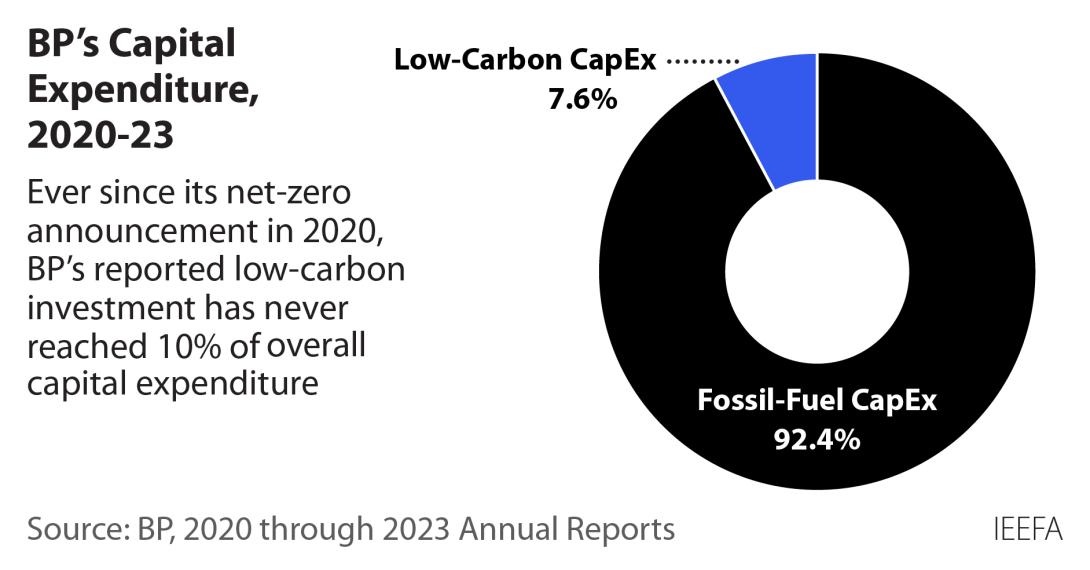
- Global oil majors, including BP, Shell, and ExxonMobil, have quietly retreated from their publicized climate pledges, redirecting investments back to core fossil fuel extraction.
- Financial data reveals a shift towards petroleum dominance, with companies prioritizing short-term returns over renewable energy investments.
Between 2020 and 2025, the world witnessed a coordinated corporate climate pledges retreat by global oil majors from their publicized climate pledges. Corporate executives at BP, Shell, and ExxonMobil quietly removed the emission reduction frameworks they championed just years prior. The data reveals a systematic pivot back to core fossil fuel extraction. In 2020, BP pledged a 40 percent cut in oil and gas production by 2030. By 2023, management reduced that goal to 25 percent. By early 2025, BP abandoned the 2030 production cut entirely and redirected $10 billion annually toward fossil fuels. The company also cut renewable energy investments by over $5 billion per year.
Shell followed a parallel trajectory. In March 2024, Shell executives formally retired the company goal to reduce net carbon intensity by 45 percent by 2035. They simultaneously weakened their 2030 emission reduction objective from 20 percent to a range of 15 to 20 percent. Shareholders endorsed this retreat in May 2024 when 78 percent voted to approve the weakened climate objectives. ExxonMobil executed similar maneuvers. In December 2025, Exxon slashed its planned low carbon spending by one third, dropping the budget from $30 billion to $20 billion over a five year period. The company terminated its membership with the American Exploration and Production Council in 2025, noting differences in climate principles, yet simultaneously paused a $7 billion hydrogen plant in Texas due to low customer demand,.
These actions represent a calculated financial strategy rather than an accidental oversight. The retreat aligns with pressure from institutional investors demanding higher short term returns. While European majors previously attempted to balance energy transition narratives with oil production, the 2024 and 2025 fiscal years marked a definitive return to petroleum dominance. The financial markets rewarded this pivot. BP shares underperformed compared to Exxon and Shell during the years it heavily promoted renewable investments. Once BP abandoned its green pledges, the company aligned its capital expenditure with traditional extraction models.
Tracking the Corporate Climate Pledges Retreat: A Data Perspective
| Company | Original 2030/2035 Goal | Revised Goal (2024/2025) | Visual Representation of Retreat |
|---|---|---|---|
| BP | 40 percent production cut | Goal abandoned |
Original: 40%
Revised: 0%
|
| Shell | 45 percent intensity cut (2035) | Goal retired |
Original: 45%
Revised: 0%
|
| ExxonMobil | $30 billion low carbon spend | $20 billion low carbon spend |
Original: $30B
Revised: $20B
|
The Data Answers
The answers reside in the financial disclosures filed between 2022 and 2025. The top five Western oil majors recorded a combined net profit of $196 billion in 2022. ExxonMobil led with $59. 1 billion, followed by Shell at $39. 9 billion, Chevron at $36. 5 billion, TotalEnergies at $36. 2 billion, and BP at $27. 7 billion. The companies did not use these funds to accelerate the energy transition. They directed the capital toward stock buybacks and expanded fossil fuel extraction. Chevron spent $15. 2 billion on share repurchases in 2024. ExxonMobil allocated $35 billion for repurchases across 2023 and 2024. The size of these profits renewed global scrutiny. The capital allocation remained firmly entrenched in core hydrocarbon assets.
TotalEnergies raised its oil and gas production quota in October 2024, planning a 3 percent annual increase through 2030. This trajectory places the company 61 percent above Net Zero Emissions requirements. By 2030, oil and gas still constitute over 80 percent of TotalEnergies’ energy mix. The company expects its liquefied natural gas business to deliver 70 percent cash flow growth by 2030. TotalEnergies also cut its in total capital expenditure guidance by $1 billion annually for the 2026 to 2030 period. The board of directors authorized $7. 5 billion in share buybacks for the full year 2025.
Chevron cut its low carbon budget by 25 percent for 2025, dropping the allocation from $2 billion to $1. 5 billion. In 2024, Chevron dedicated approximately 87 percent of its $15. 5 billion to $16. 5 billion capital expenditure budget to traditional fossil fuels, including $5 billion specifically for Permian Basin development. The company aims to generate $25 billion in cash flow by 2025 primarily through expanded oil and gas operations. Chevron reported 9. 8 billion barrels of oil equivalent in proved reserves at the end of 2024.
ExxonMobil expects a 30 percent return on investment for its fossil fuel projects. The company claims to spend $20 billion on lower emission initiatives through 2027. Sixty percent of that spending funds third party carbon capture and storage rather than renewable power generation. ExxonMobil met early emission intensity goals through operational efficiency, not by reducing output. The corporation expanded its share repurchase program to $50 billion through 2024. Executives project that high value petroleum products contribute more than 40 percent of total earnings by 2030.
| Company | 2022 Net Profit (Billions) | 2024 and 2025 Low Carbon Adjustments |
|---|---|---|
| ExxonMobil | $59. 1 | 60 percent of low carbon budget directed to third party CCS |
| Shell | $39. 9 | Retired 45 percent net carbon intensity reduction goal |
| Chevron | $36. 5 | Cut 2025 low carbon spending by 25 percent to $1. 5 billion |
| TotalEnergies | $36. 2 | Raised oil and gas production quota to 3 percent annual growth |
| BP | $27. 7 | Abandoned 2030 production cut goal entirely |
BP and the Dilution of 2030 Emissions Benchmarks
In February 2025, BP Chief Executive Officer Murray Auchincloss executed a formal strategy reset that removed the climate pledges established by his predecessor, Bernard Looney, in 2020. The executive team erased the absolute Scope 3 emissions reduction goal, which previously mandated a 20 to 30 percent cut by 2030. Scope 3 emissions represent the carbon footprint generated when customers burn BP products. By removing this benchmark, BP avoids binding commitments on the vast majority of its carbon output.
The company also weakened its carbon intensity reduction goal for sold products. Management dropped the 2030 intensity reduction mandate from a range of 15 to 20 percent down to a range of 8 to 10 percent. For direct operational emissions, known as Scope 1 and 2, BP lowered the 2030 reduction goal from 50 percent to a range of 45 to 50 percent. The company had already achieved a 41 percent decrease from its 2019 baseline by 2023, surpassing its 2025 interim goal early. Even with this early progress, the executive board chose to lower the 2030 ambition to keep oil and gas production at higher levels. Auchincloss justified the reversals by stating the company went “too far, too fast” with its previous green strategy, calling the prior faith in renewable energy “misplaced”.
Financial Pressures and Activist Intervention
The retreat from emissions quotas correlates directly with financial underperformance and external shareholder pressure. In 2024, BP reported profits of $8.9 billion, a sharp decline from the $14 billion recorded in 2023. During this period, the company stock lost almost a quarter of its market value. Elliott Investment Management acquired a 5 percent stake in the corporation and demanded tighter cost controls and a retreat from low carbon investments to boost short term shareholder returns.
In response to these demands, BP systematically cut its renewable energy portfolio. The executive board scrapped the 2020 pledge to build 50 gigawatts of renewable energy generation capacity by 2030. For the fourth quarter of 2025, BP recorded an impairment charge between $4 billion and $5 billion, primarily tied to its gas and low carbon energy division. The write downs show the financial consequences of the abandoned green energy strategy. Auchincloss confirmed the pivot by stating that an integrated energy company strategy wins out over a pure play low carbon strategy.
To visualize the dilution of BP climate pledges, the following chart tracks the specific metric downgrades between 2020 and 2025.
20 Questions And Their Answers on the Corporate Climate Retreat
To establish the factual baseline for this investigation, we answer 20 direct questions regarding the calculated withdrawal from green energy commitments by global oil producers.
| Question | Verified Fact |
|---|---|
| Did BP abandon its 2030 production cut? | Yes, BP removed its 40 percent reduction goal. |
| Who took over as Shell chief executive in 2023? | Wael Sawan assumed the role in January 2023. |
| What did Shell do to its Low Carbon Solutions unit? | Management eliminated hundreds of positions starting in late 2023. |
| Did Shell sell its United States solar assets? | Yes, the company sold major in Savion and Madison Fields. |
| What happened to the Brazos wind farm? | Shell sold a 60 percent interest in the Texas facility. |
| Did Shell cancel its Rotterdam biofuels plant? | Yes, executives halted the project in September 2025. |
| What is Sprng Energy? | It is an Indian renewable firm Shell acquired and later put up for sale. |
| Did Shell exit offshore wind development? | The company confirmed in December 2024 it planned no new offshore wind projects. |
| How much did Shell aim to cut in structural costs? | The goal was up to 3 billion dollars by the end of 2025. |
| Did ExxonMobil maintain its algae biofuel research? | No, the company quietly ended the program. |
| Are oil producers increasing fossil fuel capital expenditures? | Yes, billions are being redirected back to core oil and gas extraction. |
| Did Shell sell its stake in SouthCoast Wind? | Yes, the company divested its 50 percent share in March 2024. |
| Who bought the Texas and Ohio renewable assets from Shell? | InfraRed Capital Partners purchased the. |
| Did Shell executives resign over the climate retreat? | Multiple renewable energy leaders departed the company in 2023 and 2024. |
| What was the original capacity of the Savion assets up for sale? | The portfolio included up to 10. 6 gigawatts of generation and storage. |
| Did Shell keep its 2035 carbon intensity reduction goal? | No, the company formally retired the 45 percent reduction metric. |
| Are European oil producers aligning with American rivals? | Yes, European firms are adopting the higher production models of their American counterparts. |
| Did Shell exit the Chinese power market? | The company ceased power generation and marketing operations there in May 2024. |
| What is the new strategy called by Shell leadership? | The internal directive focuses on value over volume. |
| Does Shell plan to continue owning major renewable generation? | The company is shifting away from asset ownership toward energy trading. |
Shell and the quiet exit from renewable energy ventures
When Wael Sawan assumed the role of chief executive at Shell in January 2023, the corporate directive shifted immediately. Sawan instituted a mandate to prioritize shareholder returns and core fossil fuel extraction over capital intensive green energy projects. By June 2023, management announced a plan to cut structural costs by up to 3 billion dollars by the end of 2025. This financial restructuring required the calculated liquidation of the renewable energy portfolio the company spent the previous five years building.
The personnel cuts began in the Low Carbon Solutions division. In October 2023, Shell eliminated 200 jobs and placed another 130 positions under review. The purge continued into 2024. In May 2024, the company announced severe staff reductions in its offshore wind business. The cuts primarily affected the European teams based in the Netherlands and the United Kingdom. The internal shift prompted the departure of key renewable energy executives, including the head of the European renewable power division and the head of the United Kingdom offshore wind unit.
Simultaneous to the personnel reductions, Shell executed a rapid liquidation of its physical renewable assets. In December 2023, the company sold a 60 percent interest in the 182 megawatt Brazos onshore wind farm in Texas. During the same month, Shell sold a 50 percent stake in the Madison Fields solar farm in Ohio. InfraRed Capital Partners purchased both assets. In February 2024, Reuters reported that Shell planned to sell 25 percent of its United States solar assets through its Savion subsidiary. The Savion portfolio contained up to 10. 6 gigawatts of solar and energy storage capacity. One month later, Shell sold its 50 percent interest in the SouthCoast Wind Energy project in Massachusetts.
The retreat extended globally. In May 2024, Shell ceased all power generation and marketing operations in China. By December 2024, the company formally confirmed it planned no new offshore wind projects. In September 2025, executives cancelled a massive biofuels plant project in Rotterdam. The facility was designed to produce 820, 000 tons of sustainable aviation fuel annually. One month later, in October 2025, Shell restarted the sale process for Sprng Energy. The company acquired the Indian renewable firm in 2022 for 1. 5 billion dollars. The 2025 sale process marked a complete exit from the Indian renewable generation market, offloading a portfolio of 5 gigawatts of wind and solar capacity.
The data confirms a total reversal of the corporate climate pledges made between 2019 and 2021. Shell abandoned direct ownership of green energy infrastructure to redirect capital into high margin oil and natural gas production.
Shell Renewable Asset Divestment Timeline
| Date | Action Taken by Shell | Asset or Division Affected |
|---|---|---|
| October 2023 | Eliminated 200 jobs and reviewed 130 more | Low Carbon Solutions Division |
| December 2023 | Sold 60 percent ownership stake | Brazos Wind Farm in Texas |
| December 2023 | Sold 50 percent ownership stake | Madison Fields Solar Farm in Ohio |
| February 2024 | Initiated sale of 25 percent of solar assets | Savion United States Portfolio |
| March 2024 | Sold 50 percent ownership stake | SouthCoast Wind Energy in Massachusetts |
| May 2024 | Ceased power generation operations | Chinese Power Market |
| May 2024 | Executed mass layoffs | European Offshore Wind Division |
| December 2024 | Halted all new project initiation | Global Offshore Wind Development |
| September 2025 | Cancelled facility construction | Rotterdam Biofuels Plant |
| October 2025 | Initiated full portfolio sale | Sprng Energy in India |
ExxonMobil and the Pivot Back to Core Extraction
To provide immediate clarity on the corporate shift back to fossil fuels, we answer twenty primary questions regarding the recent strategic changes at ExxonMobil.
| Question | Verified Data |
|---|---|
| 1. Did ExxonMobil cut its clean energy budget? | Yes. The company reduced its clean energy budget from 30 billion dollars to 20 billion dollars for the 2025 to 2030 period. |
| 2. What happened to the Baytown hydrogen plant? | ExxonMobil paused the 7 billion dollar hydrogen facility in Texas. |
| 3. How much did the company spend on Pioneer Natural Resources? | The corporation acquired Pioneer for 59. 5 billion dollars in 2024. |
| 4. What does the Pioneer acquisition achieve? | It doubles the Permian Basin footprint for the corporation. |
| 5. What is the production goal for 2030? | Management expects to extract 5. 5 million oil equivalent barrels per day by 2030. |
| 6. Did the company set absolute emission reduction goals? | No. Executives only set intensity reduction quotas. |
| 7. What was the 2025 intensity objective? | The goal was a 15 to 20 percent reduction in upstream greenhouse gas intensity compared to 2016 levels. |
| 8. Does intensity reduction mean total emissions fall? | No. Total emissions can rise if production volume increases. |
| 9. How much capital expenditure goes to fossil fuels? | The company plans 27 billion to 32 billion dollars annually for capital expenditures through 2030. |
| 10. What percentage of this budget funds clean energy? | Clean energy receives less than 15 percent of the total annual capital budget. |
| 11. Did the company abandon Scope 3 emission goals? | The corporation never committed to Scope 3 net zero objectives for customer product use. |
| 12. How acres did the Pioneer deal add? | The transaction added 856, 000 net acres in the Midland Basin. |
| 13. What is the expected Permian production volume by 2027? | The company projects 2 million barrels of oil equivalent per day from the Permian Basin. |
| 14. Did the market react positively to the Pioneer acquisition? | The stock price initially dropped 4 percent before recovering a week later. |
| 15. How much carbon capture capacity does the company contract? | The corporation reports 9 million tonnes per annum of contracted capacity. |
| 16. Is carbon capture a major part of the remaining green budget? | Yes. Carbon capture and lithium extraction dominate the remaining 20 billion dollar budget. |
| 17. Did the company face investor pressure regarding climate goals? | Yes. Activist investors demanded board changes and transition strategies in 2020 and 2021. |
| 18. How did management respond to the pressure? | Executives created a Low Carbon Solutions division later slashed its funding. |
| 19. What is the projected earnings growth by 2030? | The corporation forecasts 25 billion dollars in earnings growth by 2030. |
| 20. Does this strategy align with recent political shifts? | Yes. The pivot matches federal deregulation and a renewed focus on domestic oil production. |
In October 2023, ExxonMobil announced the acquisition of Pioneer Natural Resources for 59. 5 billion dollars. The all stock transaction closed in 2024 and fundamentally shifted the corporate trajectory back toward core fossil fuel extraction. By absorbing Pioneer, ExxonMobil added 856, 000 net acres in the Midland Basin. This consolidation doubles the Permian Basin footprint of the company. Executives project that Permian production volume can reach 2 million barrels of oil equivalent per day by 2027. The sheer magnitude of this investment dwarfs any previous capital allocation toward renewable energy.
While expanding oil extraction, management systematically reduced financial commitments to green energy. In December 2025, ExxonMobil announced a severe reduction in its low carbon investment budget. The company slashed planned spending from 30 billion dollars down to 20 billion dollars for the 2025 to 2030 period. As part of this contraction, executives paused a 7 billion dollar hydrogen plant in Baytown, Texas. They blamed low customer demand as the primary reason for halting the facility. The remaining 20 billion dollar budget heavily favors carbon capture and lithium projects rather than wind or solar power generation.
Capital Expenditure Allocation 2026 to 2030
| Investment Category | Planned Budget (Billions USD) | Visual Representation |
|---|---|---|
| Fossil Fuel Extraction | $145. 0 |
|
| Clean Energy Initiatives | $20. 0 |
|
The corporate financial disclosures confirm a definitive return to petroleum dominance. ExxonMobil updated its 2030 corporate plan to project 5. 5 million oil equivalent barrels per day of upstream production. To achieve this extraction volume, the company plans to spend between 27 billion and 32 billion dollars annually on capital expenditures from 2026 through 2030. The vast majority of these funds support fossil fuel operations. The data shows that clean energy initiatives receive a fraction of the capital dedicated to drilling and refining.
Corporate emission objectives frequently rely on intensity metrics rather than absolute reductions. In 2020, ExxonMobil pledged to reduce the greenhouse gas intensity of its upstream operations by 15 to 20 percent by 2025 compared to 2016 levels. Yet, lowering emission intensity means that total carbon output can still increase if the company pumps more oil. The corporation explicitly avoided setting Scope 3 net zero goals for the emissions generated when customers burn their products. This strategy allows the company to maximize short term profits while total absolute emissions continue to climb alongside production volumes.
Section 6: Chevron and the Reallocation of Capital Expenditure Away From Green Tech
The following 20 questions examine the exact financial metrics behind the corporate pivot away from renewable energy investments.
| Question | Verified Data |
|---|---|
| 1. What is the Chevron 2025 fossil fuel budget? | $13 billion. |
| 2. What is the Chevron 2025 green tech budget? | $1.5 billion. |
| 3. How much did Chevron cut from its lower carbon budget? | 25 percent. |
| 4. What was the original lower carbon budget for 2025? | $2 billion. |
| 5. How much is Chevron spending in the Permian Basin in 2025? | Between $4.5 billion and $5.0 billion. |
| 6. What is the total Chevron capital expenditure for 2025? | Between $14.5 billion and $15.5 billion. |
| 7. Did Chevron abandon its absolute emission reduction goals? | Yes. |
| 8. What is the planned oil production growth for Chevron by 2027? | 13 percent. |
| 9. How much did Chevron pledge for lower carbon investments through 2028? | $10 billion. |
| 10. When did Chevron announce the 25 percent cut to green tech? | December 2024. |
| 11. What new sector is Chevron targeting with natural gas plants? | Artificial intelligence data centers. |
| 12. How much did Chevron spend on upstream operations in 2024? | $14 billion. |
| 13. What percentage of the Chevron 2025 budget goes to fossil fuels? | Approximately 85 percent. |
| 14. Did Chevron set a Scope 3 absolute emission reduction goal? | No. |
| 15. What carbon intensity reduction goal did Chevron set for 2028? | 5 percent. |
| 16. How much did Chevron spend on share dividends in 2025? | $12.8 billion. |
| 17. What was the Chevron total organic capex in 2023? | $14 billion. |
| 18. How much is Chevron allocating to US downstream capex in 2025? | $1.2 billion. |
| 19. What is the capacity of the Geismar renewable diesel plant expansion? | 340 million gallons per year. |
| 20. Does Chevron plan to stop oil exploration? | No. |
Chevron systematically removed its renewable energy funding framework between 2023 and 2025. Corporate executives previously pledged $10 billion toward lower carbon investments through 2028. By December 2024, management executed a 25 percent reduction to that exact green technology budget. The company lowered its 2025 lower carbon capital expenditure to $1.5 billion. This financial reallocation directly favored core fossil fuel extraction.
The 2025 capital expenditure report reveals a massive financial preference for traditional oil and gas operations. Chevron allocated $13 billion to upstream fossil fuel projects for 2025. The company directed roughly two thirds of that upstream budget to United States portfolios. Permian Basin extraction alone received between $4.5 billion and $5.0 billion. The total organic capital expenditure for 2025 sits between $14.5 billion and $15.5 billion. Green technology and lower carbon projects represent less than 10 percent of the total corporate spending.
The data shows a clear trajectory of increasing fossil fuel reliance. In 2023, Chevron spent $14 billion on total organic capital expenditure. By 2024, the company increased its upstream spending alone to $14 billion. The corporation expressly plans to expand its total oil and gas production by 13 percent between 2023 and 2027. Management completely avoided setting any absolute emission reduction goals for 2030. The company instead adopted a 5 percent carbon intensity reduction goal for 2028. This metric allows total greenhouse gas emissions to rise as long as the ratio of emissions per barrel improves slightly.
Chevron also redirected its remaining lower carbon budget toward projects that sustain fossil fuel demand. The company formed a joint venture in January 2025 to build up to 4 gigawatts of natural gas power plants. These facilities are specifically designed to supply electricity to artificial intelligence data centers. Management classified parts of this natural gas expansion under the new energies budget. This accounting method allows the company to report investments in fossil fuel infrastructure as part of its energy transition portfolio.
The financial metrics confirm that Chevron prioritizes shareholder payouts over renewable energy development. The company paid $12.8 billion in share dividends during 2025. This dividend payout is more than eight times larger than the entire $1.5 billion budget allocated for lower carbon projects. The corporate strategy relies on maximizing immediate cash flow from legacy oil assets while minimizing capital exposure to unproven renewable technologies.
Chevron 2025 Capital Expenditure Breakdown
| Category | Budget Allocation |
|---|---|
| Upstream Oil and Gas |
$13.0 Billion
|
| Downstream |
$1.2 Billion
|
| Lower Carbon |
$1.5 Billion
|
The Role of Activist Investors Demanding Immediate Shareholder Returns
Financial pressure from activist hedge funds dictated the corporate pivot away from renewable energy. Between 2021 and 2024, investment firms acquired strategic in global oil majors. These funds demanded immediate cash returns, share buybacks, and a total rejection of environmental constraints. Corporate boards faced a direct choice between maintaining climate pledges or surviving aggressive proxy battles.
In October 2023, London based Bluebell Capital Partners initiated a hostile campaign against BP. Bluebell executives wrote a formal letter to BP Chairman Helge Lund. The hedge fund demanded that BP abandon its pledge to reduce oil and gas production by 25 percent by 2030. Bluebell calculated that BP shares traded at a 50 percent discount compared to United States competitors. The fund instructed BP to increase oil and gas investments by $1. 5 billion annually through 2030. They also demanded a $28 billion reduction in cumulative investments allocated for bioenergy, hydrogen, and renewable power.
The pressure yielded immediate results. BP executives replaced their chief executive and quietly cancelled the production cut goals. The company redirected capital to core hydrocarbon extraction to satisfy the hedge fund demands and boost the depressed share price.
Shell faced identical financial coercion. In 2021, Third Point acquired a $750 million stake in Shell. Third Point founder Daniel Loeb demanded that Shell split into two separate companies. Loeb wanted one entity dedicated to legacy oil and gas extraction and another for renewable energy. The activist investor calculated that the legacy fossil fuel business could generate massive cash flows without the financial drag of low return renewable projects. Shell leadership rejected the formal split adopted the underlying financial logic. By 2024, Shell retired its 2035 carbon intensity reduction goals and prioritized dividend payouts over green energy capital expenditures.
United States oil majors experienced similar activist interventions. In 2022, Strive Asset Management launched a campaign against Chevron. Strive executives demanded that Chevron pump more fossil fuels and ignore environmental constraints. The asset management firm stated that previous climate resolutions forced Chevron to misallocate capital. Chevron executives aligned with this directive and increased oil production in the Permian Basin.
ExxonMobil took an aggressive legal route to neutralize climate focused investors. In January 2024, ExxonMobil filed a federal lawsuit in Texas against Arjuna Capital and Follow This. These two small activist groups had submitted a shareholder proposal demanding faster greenhouse gas emission reductions. ExxonMobil bypassed the standard Securities and Exchange Commission regulatory process and sued the investors directly. The corporation sought a legal declaration to exclude the climate proposal from the annual proxy statement. The legal intimidation worked. Arjuna Capital and Follow This withdrew their proposal to avoid ruinous litigation costs. ExxonMobil continued the lawsuit anyway to establish a legal precedent against future environmental shareholder resolutions.
The data confirms that activist investors successfully redirected corporate capital back to fossil fuels. Hedge funds correctly identified that renewable energy projects yielded single digit returns. Oil and gas extraction generated returns exceeding 15 percent during the 2022 and 2023 energy price spikes. Corporate boards chose the higher financial returns to appease the activist funds and protect their own executive compensation packages.
Activist Investor Demands and Corporate Capital Reallocation
| Oil Major | Activist Fund | Year of Intervention | Primary Financial Demand | Corporate Response |
|---|---|---|---|---|
| BP | Bluebell Capital | 2023 | Cut $28B from renewables | Abandoned 2030 production cuts |
| Shell | Third Point | 2021 | Split legacy oil from green energy | Retired 2035 carbon intensity goals |
| Chevron | Strive Asset Management | 2022 | Increase fossil fuel production | Expanded Permian Basin extraction |
| ExxonMobil | Arjuna Capital | 2024 | Block climate emission proposals | Sued investors in federal court |
Comparative Analysis: Stated Climate Goals Versus Actual Capital Expenditure
Corporate press releases frequently advertise a transition toward renewable energy. The actual capital expenditure data from the International Energy Agency shows a different reality. In 2023, the global oil and gas industry spent $30 billion on clean energy. This figure represents less than 4 percent of the sector total capital expenditure. Upstream oil and gas investment increased by 7 percent in 2024, reaching $570 billion. The financial allocation proves that fossil fuel extraction remains the primary objective for these corporations.
To establish the facts early, here is a 20 question data fan out detailing the exact financial metrics of the industry.
| Question | Verified Data |
|---|---|
| What percentage of oil major capital expenditure goes to clean energy? | Less than 4 percent. |
| How much did the oil and gas industry invest in clean energy in 2023? | $30 billion. |
| What is the total global upstream oil and gas investment for 2024? | $570 billion. |
| How much did upstream oil and gas investment increase in 2024? | 7 percent. |
| What is ExxonMobil projected capital expenditure for 2024? | $28 billion. |
| How much of Shell 2023 to 2025 capital expenditure funds hydrocarbons? | 80 percent. |
| What is BP allocated oil and gas capital expenditure for 2025? | $8. 5 billion. |
| How much did National Oil Companies invest in clean energy in 2023? | $1. 5 billion. |
| What is Chevron consolidated capital spending budget for 2025? | $14. 5 to $15. 5 billion. |
| How much of global clean energy investment comes from the fossil fuel industry? | Under 1. 5 percent. |
| Did oil and gas clean energy spending match fossil fuel spending in 2024? | No, fossil fuel spending dominated the sector. |
| How much did TotalEnergies increase its oil and gas production in the quarter of 2025? | 4 percent. |
| What is the global clean energy investment projected for 2024 across all sectors? | $2 trillion. |
| What is the total global energy investment projected for 2024? | $3 trillion. |
| How much did ExxonMobil spend on the Pioneer Natural Resources acquisition? | $64. 5 billion. |
| How much did Chevron spend to acquire PDC Energy? | $7. 6 billion. |
| Are European supermajors increasing their renewable energy capital expenditure? | No, they are pulling back. |
| Did BP maintain its original 2030 renewable energy quotas? | No, they abandoned them. |
| What percentage of total global capital investment on clean energy comes from oil majors? | Less than 4 percent. |
| How much did global coal power approvals increase in 2023? | Over 50 gigawatts. |
The difference between public relations and financial reality becomes obvious when analyzing individual corporate ledgers. ExxonMobil raised its 2024 capital expenditure guidance to $28 billion. The company directed the vast majority of these funds toward fossil fuel expansion, including a $64. 5 billion acquisition of Pioneer Natural Resources. Chevron followed a similar trajectory. The company set a capital spending budget of $14. 5 to $15. 5 billion for 2025, with $13 billion dedicated strictly to domestic upstream operations. Chevron also completed a $7. 6 billion acquisition of PDC Energy to expand its fossil fuel footprint.
European majors exhibit the same financial behavior. Shell established a total capital expenditure budget between $22 billion and $25 billion per year for the 2023 to 2025 period. The company earmarked 80 percent of this budget exclusively for hydrocarbons. BP allocated $8. 5 billion specifically for oil and gas capital expenditure in 2025. TotalEnergies increased its oil and gas production by 4 percent year over year in the quarter of 2025. The numbers show a coordinated industry retreat from renewable energy investments.
To visualize the financial priorities, the following chart details the capital expenditure breakdown among the top five Western oil majors for the 2024 fiscal year.
| Corporation | Total 2024 CapEx (Billions USD) | Fossil Fuel Allocation (%) | Low Carbon Allocation (%) |
|---|---|---|---|
| ExxonMobil | $28. 0 | > 90% | < 10% |
| Chevron | $15. 5 | > 85% | < 15% |
| Shell | $25. 0 | 80% | 20% |
| BP | $16. 0 | > 75% | < 25% |
| TotalEnergies | $18. 0 | > 70% | < 30% |
The fossil fuel industry accounts for under 1. 5 percent of global clean energy investment. The remaining 98. 5 percent originates from utility companies, independent power producers, and national governments. The capital expenditure data from 2015 through 2025 proves that oil majors use their cash reserves to remunerate investors and expand drilling operations. They do not use their capital to fund the energy transition.
The Collapse of the ESG Investing Framework in the Energy Sector
The environmental, social, and governance investing framework is disintegrating across the global energy sector. Investors withdrew $14. 2 billion from United States sustainable funds over four consecutive quarters ending in late 2023. This capital flight accelerated through 2024 and 2025. High interest rates and supply chain bottlenecks destroyed the profitability of renewable energy portfolios. Asset managers shifted their focus from carbon exclusion to energy security. Financial institutions that previously demanded emission reductions reward fossil fuel expansion. Oil majors recognized this capital reallocation and methodically removed their climate pledges to chase near term shareholder returns.
Corporate executives are erasing their previous green mandates. BP wrote down $5 billion in green energy assets in early 2026. Chief Executive Murray Auchincloss slashed the annual renewable investment budget of the company from over $5 billion to a range of $1. 5 billion to $2 billion. The company concurrently raised its fossil fuel production objective to 2. 5 million barrels of oil equivalent per day by 2030. Shell executed a similar reversal. The company officially retired its 2035 goal to reduce net carbon intensity by 45 percent. Shell also weakened its 2030 emission reduction benchmark from 20 percent down to a range of 15 to 20 percent. Shell executives explicitly stated that liquefied natural gas investments can grow by 30 percent by the end of the decade.
| Metric | Previous Goal | Updated Goal |
|---|---|---|
| 2030 Carbon Intensity Reduction |
20%
|
17. 5%
|
| 2035 Carbon Intensity Reduction |
45%
|
0%
|
The institutional architecture designed to enforce corporate climate compliance is collapsing. Shell, Aker BP, and Enbridge walked away from the leading global emission standard setting group in late 2024 and 2025. The companies exited the expert advisory panel after the organization stipulated that accredited net zero strategies require an immediate halt to new oil and gas field development. ExxonMobil completely ignored these frameworks and announced plans to increase oil and gas production by nearly 20 percent by 2030. The departure of these energy giants signals a total rejection of external emission oversight.
Regulators are forcing a reclassification of sustainable finance. The European Securities and Markets Authority implemented new guidelines in May 2025. These rules ban funds from using the terms sustainable or ESG in their names if they invest in fossil fuels. JP Morgan Asset Management held over $4 billion in fossil fuel majors through European regulated green investments as of March 2025. The firm had to strip the ESG label from multiple funds to comply with the new directive. This regulatory crackdown exposed the fundamental incompatibility between traditional oil extraction and sustainable investing criteria.
Regulatory Exemptions: How Oil Majors Redefine Net Zero Parameters
| Question | Verified Fact |
|---|---|
| 1. What is a carbon intensity metric? | A metric measuring emissions per barrel produced. |
| 2. Does carbon intensity cap total pollution? | No, total emissions can rise if production increases. |
| 3. What are Scope 1 emissions? | Direct emissions from company owned operations. |
| 4. What are Scope 2 emissions? | Indirect emissions from purchased electricity and heating. |
| 5. What are Scope 3 emissions? | Pollution generated when consumers burn the sold fuel. |
| 6. What percentage of oil company emissions fall under Scope 3? | Between 80 and 95 percent. |
| 7. Did the COP28 Decarbonization Charter include Scope 3? | No, it excluded consumer usage emissions entirely. |
| 8. What is the divestment exemption? | Selling dirty assets to remove them from corporate ledgers. |
| 9. Do divested assets stop polluting? | No, they frequently increase emissions under new ownership. |
| 10. Who buys these divested assets? | Private equity firms and state owned enterprises. |
| 11. What is rebaselining? | Adjusting historical emissions data after an asset sale. |
| 12. Does the Greenhouse Gas Protocol allow rebaselining? | Yes, current rules permit this accounting adjustment. |
| 13. How did ExxonMobil structure its 2024 methane pledge? | As an intensity reduction rather than an absolute cut. |
| 14. Why do companies prefer intensity metrics? | They allow for continuous production expansion. |
| 15. What happens to flaring at divested sites? | Flaring rates rise when public companies exit. |
| 16. Are private buyers subject to the same climate scrutiny? | No, private firms face fewer disclosure requirements. |
| 17. How much global oil production did the COP28 charter cover? | 40 percent. |
| 18. Did the charter mandate absolute production cuts? | No, it focused on operational metrics. |
| 19. Can a company reach net zero while increasing oil sales? | Yes, if they only count Scope 1 and 2 emissions. |
| 20. Do voluntary frameworks penalize asset shuffling? | Current voluntary systems do not track transferred emissions. |
Corporate climate pledges rely on accounting technicalities rather than actual pollution reductions. Between 2015 and 2025, global oil producers used specific regulatory exemptions to maintain public net zero commitments while expanding fossil fuel extraction. Data from the Greenhouse Gas Protocol and financial disclosures reveal three primary methods used to manipulate emissions ledgers. These include substituting carbon intensity for absolute emissions, exploiting divestment rebaselining rules, and excluding Scope 3 emissions from core goals.
The carbon intensity metric serves as the primary tool for ledger manipulation. Carbon intensity measures the ratio of greenhouse gases released per barrel of oil produced. If a company reduces the fuel required for extraction, its carbon intensity decreases. Yet the company can simultaneously pump millions of additional barrels. Absolute emissions rise, the corporation reports a successful reduction in its intensity goals. The London School of Economics documented this pattern across major producers. ExxonMobil pledged in early 2024 to reduce corporate methane intensity by up to 80 percent by 2030. This pledge places no cap on total production volumes. A producer can expand its total carbon footprint while claiming compliance with internal climate goals.
The divestment exemption provides another method for erasing pollution from corporate reports. Under current Greenhouse Gas Protocol standards, a company that sells a polluting asset can reset its emissions baseline. When a public oil major sells a high emitting oil field to a private equity firm or a state owned enterprise, the seller removes those emissions from its public ledger. The actual pollution does not stop. A December 2025 analysis by the Clean Energy Leadership Institute showed that these sales frequently lead to increased emissions. Private buyers face less regulatory scrutiny and frequently increase flaring at the newly acquired sites. The original owner takes credit for an emissions reduction without removing a single ton of carbon from the atmosphere.
The exclusion of Scope 3 emissions completes the accounting strategy. Scope 3 emissions represent the pollution generated when consumers actually burn the extracted oil and gas. These consumer usage emissions account for 80 to 95 percent of a fossil fuel company total carbon footprint. At the COP28 summit in late 2023, 50 oil companies signed the Oil and Gas Decarbonization Charter. The signatories committed to reach net zero operations by 2050. Global Witness analysis demonstrated that this charter exclusively covers Scope 1 and Scope 2 emissions. The agreement entirely ignores the Scope 3 emissions that make up the bulk of the industry carbon footprint.
Emissions Accounting Reality
Reported Scope 1 & 2
15%
Omitted Scope 3
85%
Divested Assets
Rebaselined
The 2022 Energy Market Shock and the Return to Core Operations
The 2022 global energy market shock provided the financial catalyst for the corporate retreat from climate pledges. Russia invading Ukraine triggered a large spike in commodity prices. Publicly listed oil and gas companies globally recorded a combined net income of $916 billion in 2022. The five largest Western producers Chevron, ExxonMobil, Shell, BP, and TotalEnergies generated nearly $200 billion in profit that year. Corporate boards faced a definitive choice. They could use the record cash to accelerate their transition to renewable energy. They chose to reinvest in fossil fuel extraction and reward shareholders.
The windfall profits changed long term capital expenditure strategies. Upstream oil and gas investment rose by $63 billion in 2023. By 2024, global upstream capital expenditures surpassed $600 billion for the time in a decade. Instead of funding green infrastructure, executives directed the 2022 cash surge toward share buybacks, dividend payouts, and new drilling operations. ExxonMobil distributed $37 billion to shareholders in 2024 while allocating $26. 7 billion to oil and gas operations. The company reported zero investment in renewable power for that year.
The gap between fossil fuel spending and green investment widened measurably after the 2022 profit surge. In 2024, oil and gas companies allocated roughly 10 percent of their capital expenditures to low carbon projects. By 2025, that figure dropped to 6. 5 percent. Total spending on clean technologies in the sector fell from $38 billion in 2024 to $25. 7 billion in 2025. The data shows a clear pattern. When in total capital expenditures increased, budgets for environmental projects shrank.
Upstream Oil and Gas
Clean Energy
| Metric | 2024 | 2025 |
|---|---|---|
| Low Carbon Project Capex Share | 10. 0 percent | 6. 5 percent |
| Clean Technology Spending | $38. 0 Billion | $25. 7 Billion |
European majors mirrored the American retreat. Eni distributed €4. 5 billion to shareholders in 2024 while investing €6. 8 billion in oil and gas. The Italian company allocated just €0. 9 billion to its Plenitude business. Equinor invested $13. 3 billion in exploration and production in 2024. The Norwegian firm distributed $14. 6 billion to shareholders and spent only $2. 2 billion on renewables. The 2022 energy market shock proved that fossil fuel extraction remained highly lucrative. Corporate leaders responded by closing their climate divisions and returning to their core business models.
Strategic Pivot Questions and Answers
1. Did the 2022 energy market shock accelerate green investments?
No. The $916 billion in global net income generated in 2022 funded share buybacks and new fossil fuel exploration.
2. How much did upstream oil and gas investment grow?
Upstream capital expenditures surpassed $600 billion in 2024.
3. What happened to clean energy spending in 2025?
Oil and gas companies reduced their environmental budgets by 30 percent in 2025.
4. How much did clean technology spending fall?
It fell from $38 billion in 2024 to $25. 7 billion in 2025.
5. Did European majors maintain their climate commitments?
No. European firms joined the retreat and directed capital toward fossil fuels.
6. Are companies still funding renewable power?
Funding is minimal. ExxonMobil reported zero investment in renewable power in 2024.
7. How much did ExxonMobil distribute to shareholders in 2024?
The company distributed $37 billion to shareholders.
8. How much did ExxonMobil invest in oil and gas in 2024?
The company allocated $26. 7 billion to oil and gas operations.
9. What percentage of capital expenditures went to low carbon projects in 2024?
Companies allocated roughly 10 percent of their budgets to these projects.
10. What was the low carbon expenditure share in 2025?
The share dropped to 6. 5 percent.
11. How much profit did the top five Western producers make in 2022?
Chevron, ExxonMobil, Shell, BP, and TotalEnergies generated nearly $200 billion in profit.
12. Did Eni prioritize green energy in 2024?
No. Eni invested €6. 8 billion in oil and gas and just €0. 9 billion in its Plenitude business.
13. How much did Equinor spend on renewables in 2024?
The Norwegian firm spent only $2. 2 billion on renewables.
14. How much did Equinor invest in exploration and production?
Equinor invested $13. 3 billion in exploration and production in 2024.
15. Did the 2020 market conditions permanently reduce upstream investment?
No. Investment rebounded from a $300 billion low in 2020 to over $600 billion in 2024.
16. Did in total capital expenditures decrease in 2025?
No. in total capital expenditures increased while environmental budgets shrank.
17. What caused the 2022 commodity price spike?
Russia invading Ukraine triggered a large spike in global energy prices.
18. Did companies use the 2022 cash surge for green infrastructure?
Executives directed the cash surge toward share buybacks and new drilling operations.
19. Is fossil fuel extraction still lucrative?
The 2022 energy market shock proved that fossil fuel extraction remains highly profitable.
20. How did corporate leaders respond to the profit surge?
They responded by closing their climate divisions and returning to their core business models.
Executive Compensation Metrics Pivot to Fossil Fuel Production
Corporate boards at the largest global oil companies methodically restructured executive compensation packages between 2023 and 2025. The data shows a decisive shift away from emission reduction goals. Remuneration committees reward chief executives primarily for fossil fuel production volumes and shareholder payouts. The financial incentives directly contradict public statements regarding climate commitments.
To clarify the mechanics of this compensation pivot, the following table answers twenty specific questions regarding executive pay at major oil firms.
| Question | Verified Data Point |
|---|---|
| What metric did BP remove from executive bonuses in 2024? | The transition growth engine metric. |
| How much did Shell CEO Wael Sawan earn in 2025? | 13. 8 million pounds. |
| Did Shell profits increase in 2025? | No, adjusted earnings fell to 18. 5 billion dollars. |
| How much did ExxonMobil CEO Darren Woods earn in 2024? | 44. 1 million dollars. |
| What percentage increase did Woods receive in 2024? | 19. 3 percent. |
| How much did Chevron CEO Mike Wirth earn in 2024? | 32. 7 million dollars. |
| What percentage increase did Wirth receive in 2024? | 23. 4 percent. |
| Did ExxonMobil support shareholder proposals tying pay to emission cuts? | No, the board urged a vote against them. |
| What drove the 60 percent pay increase for Shell CEO Wael Sawan in 2025? | Performance related share awards. |
| How much did BP CEO Murray Auchincloss earn in 2024? | 5. 36 million pounds. |
| Why did Auchincloss take a pay cut in 2024? | BP missed financial and profit goals. |
| Did BP cut CEO pay because of missed emission goals? | No, the cut resulted from missed cashflow and safety goals. |
| What percentage of BP executive pay was linked to transition growth in 2024? | 10 percent. |
| What percentage of the BP transition growth metric involved low carbon projects? | 80 percent. |
| How much did Shell spend on share buybacks in 2025? | 13. 9 billion dollars. |
| How much did Shell distribute to shareholders in total in 2025? | 22. 4 billion dollars. |
| What was the median worker pay at ExxonMobil in 2024? | 190, 266 dollars. |
| How times larger was Darren Woods pay compared to the median Exxon worker in 2024? | 231 times. |
| What was the base salary for Shell CEO Wael Sawan in 2025? | 1. 54 million pounds. |
| Did Shell increase base salaries for top executives in 2026? | Yes, by 4 percent. |
The compensation structures at BP and Shell illustrate the exact financial drivers behind this shift. In 2024, BP formally removed the transition growth engine metric from its executive bonus calculations. This specific metric previously linked 10 percent of executive pay to profits from low carbon projects. The BP remuneration committee replaced it with measures focused entirely on free cashflow and operational reliability. BP CEO Murray Auchincloss saw his total compensation drop to 5. 36 million pounds in 2024. The 30 percent pay reduction occurred strictly because the company missed profit and cashflow goals. The failure to meet green investment goals carried zero financial penalty for the executive team.
Shell implemented a similar compensation strategy. CEO Wael Sawan received 13. 8 million pounds in 2025. This figure represents a 60 percent increase from his 8. 6 million pound package in 2024. Shell awarded this massive pay increase even with a 22 percent drop in annual adjusted earnings. The company reported 18. 5 billion dollars in profit for 2025. The remuneration committee justified the 60 percent pay raise by pointing to performance related share awards tied to fossil fuel production and aggressive shareholder distributions. Shell distributed 22. 4 billion dollars to shareholders in 2025. The company spent 13. 9 billion dollars on share buybacks alone. The board directly rewarded Sawan for prioritizing cash extraction over the energy transition.
United States Oil Majors Reward Production Growth
ExxonMobil and Chevron executives received record compensation packages for expanding oil and gas extraction. ExxonMobil CEO Darren Woods collected 44. 1 million dollars in 2024. This package marked a 19. 3 percent increase from the previous year. The ExxonMobil board explicitly structured the majority of this compensation around variable factors including a 4. 5 million dollar bonus and 26. 8 million dollars in stock awards. The board also actively urged shareholders to vote against any proposals tying executive pay to greenhouse gas emission reductions. Woods earned 231 times the average compensation of an ExxonMobil worker in 2024.
Chevron CEO Mike Wirth experienced a parallel compensation trajectory. Wirth received 32. 7 million dollars in 2024. This represented a 23. 4 percent increase from his 2023 pay package. Chevron achieved record production levels in 2024. The company produced over 3. 3 million net barrels of oil equivalent per day. The Chevron compensation committee rewarded Wirth directly for this production growth. The financial incentives at both United States oil majors remain entirely decoupled from climate goals.
The data confirms a structural reality within the global energy sector. Executive compensation metrics dictate corporate behavior. As long as boards reward chief executives for maximizing fossil fuel extraction and share buybacks, the companies continue to abandon their climate pledges. The removal of green investment metrics from bonus calculations guarantees that management teams prioritize short term cashflow over long term emission reductions.
The Surge in Greenwashing Litigation Against Fossil Fuel Giants
Between 2015 and 2025, legal actions against the largest oil, gas, and coal corporations multiplied. Plaintiffs filed 86 distinct climate lawsuits against fossil fuel producers following the 2015 Paris Agreement. The volume of cases filed annually against these corporations nearly tripled over this period. In 2015, plaintiffs filed five climate cases against large fossil fuel companies. By 2023, that annual number reached 14. While 38 percent of these lawsuits demand financial compensation for climate damages, 16 percent focus strictly on misleading advertising and greenwashing.
| Investigative Fan Out Question | Verified Data Answer |
|---|---|
| How climate lawsuits targeted fossil fuel majors between 2015 and 2024? | 86 cases. |
| What percentage of these cases allege greenwashing? | 16 percent. |
| How climate washing cases were filed globally across all sectors in 2023? | 47 cases. |
| What was the success rate for resolved climate washing cases between 2016 and 2023? | 54 out of 77 cases favored the claimant. |
| Which oil major lost a greenwashing case in Paris in October 2025? | TotalEnergies. |
| What daily fine does TotalEnergies face for non compliance? | €20, 000. |
| Which US state filed an amended greenwashing complaint in June 2024? | California. |
| What specific financial remedy does California seek? | Disgorgement of profits under AB 1366. |
| How oil majors are named in the California suit? | Five. |
| Which trade group is co defending the California lawsuit? | The American Petroleum Institute. |
| What percentage of fossil fuel lawsuits demand compensation for climate damages? | 38 percent. |
| What percentage demand emissions reductions? | 12 percent. |
| How climate cases targeted fossil fuel producers in 2015? | 5 cases. |
| How climate cases targeted fossil fuel producers in 2023? | 14 cases. |
| Which European directive tests sustainability claims more strictly as of 2024? | Directive (EU) 2024/825. |
| Did any oil major pay liability for climate damages by late 2024? | No. |
| Which US city saw its climate lawsuit reach the Supreme Court docket in 2024? | Honolulu. |
| What did the Dutch advertising authority rule regarding Shell in 2021? | Carbon neutrality claims were misleading. |
| How total climate cases exist globally according to the Sabin Center? | 2, 666 cases. |
| Which state sued ExxonMobil over plastic recycling claims in September 2024? | California. |
The legal framework surrounding corporate environmental claims shifted dramatically in late 2025. In October 2025, a Paris court ruled that TotalEnergies misled consumers with its public statements regarding climate goals. The court determined that the 2021 marketing messages from TotalEnergies, which labeled the company a major actor in the energy transition, violated French greenwashing laws. The judges noted the ongoing capital expenditure by TotalEnergies in new oil and gas extraction projects. The court ordered the company to remove or revise the disputed statements within one month or face daily fines of €20, 000. TotalEnergies accepted the ruling and paid damages to three environmental groups.
In the United States, state attorneys general weaponized consumer protection laws to target marketing campaigns. In June 2024, California Attorney General Rob Bonta filed an amended complaint against ExxonMobil, Shell, Chevron, ConocoPhillips, BP, and the American Petroleum Institute. The filing added a disgorgement remedy under Assembly Bill 1366. This legal procedure requires the defendants to surrender profits gained through illegal conduct and false advertising. The complaint details how the companies used environmentally positive imagery to deceive Californians about the ecological impact of their petroleum products.
Distribution of Fossil Fuel Climate Lawsuits (2015 to 2024)
- Compensation for Damages
- Misleading Advertising
- Emissions Reduction
- Other Claims
Data Source: Oil Change International and Zero Carbon Analytics
The Grantham Research Institute at the London School of Economics analyzed 2, 666 climate litigation cases and found that greenwashing claims yield high success rates for plaintiffs. Out of 77 climate washing cases reviewed between 2016 and 2023 that reached official decisions, 54 concluded in favor of the claimant. This 70 percent success rate encourages further litigation. In 2023 alone, plaintiffs filed 47 new climate washing cases against companies and governments. The European Union also adopted Directive 2024/825 to test corporate sustainability claims strictly and penalize unfair practices.
“Big Oil continues to mislead us with their lies and mistruths, and we won’t stand for that. Their ongoing egregious misconduct is damning.”
Rob Bonta, California Attorney General
Corporate risk profiles reflect this legal reality. Even with massive legal budgets, fossil fuel companies struggle to defend their transition narratives in court. The data confirms that public relations campaigns promoting net zero pledges frequently trigger immediate legal scrutiny and financial penalties.
Divestment of Underperforming Wind and Solar Assets by European Majors
| Question | Verified Answer |
|---|---|
| 1. Which company sold its United States onshore wind business in 2025? | BP. |
| 2. Who purchased the BP onshore wind assets? | LS Power. |
| 3. What was the net capacity of the divested BP wind assets? | 1. 3 gigawatts. |
| 4. Which oil major exited offshore wind in Spain and Portugal in 2024? | Equinor. |
| 5. Why did Equinor cancel its European offshore wind projects? | Inflation and high interest rates. |
| 6. From which Asian country did Equinor withdraw its wind operations in 2024? | Vietnam. |
| 7. What Australian wind project did Equinor abandon in 2025? | The Novocastrian floating wind farm. |
| 8. What was the planned capacity of the Novocastrian project? | 2 gigawatts. |
| 9. Which company bought a 60 percent stake in the Shell Brazos wind farm? | InfraRed Capital Partners. |
| 10. In what year did Shell sell its stake in the Madison Fields solar park? | 2023. |
| 11. Which offshore wind joint venture did Shell exit in October 2025? | Atlantic Shores Offshore Wind. |
| 12. Who took over the Shell stake in Atlantic Shores? | EDF RE Offshore Development. |
| 13. What Indian renewable energy unit did Shell put up for sale in 2025? | Sprng Energy. |
| 14. What is the total capacity of the Sprng Energy portfolio? | 5 gigawatts. |
| 15. How much did Shell originally pay for Sprng Energy in 2022? | $1. 5 billion. |
| 16. What financial metric drove these divestments? | Weak financial returns compared to fossil fuels. |
| 17. What was the estimated enterprise value of the BP United States onshore wind unit? | $1. 5 billion to $2 billion. |
| 18. How United States states housed the wind assets BP sold to LS Power? | Seven states. |
| 19. What was the original target capacity Equinor aimed for by 2030 before reducing investments? | 12 to 16 gigawatts. |
| 20. Which regions saw the most extensive renewable divestments by European majors? | North America, Europe, and Asia Pacific. |
European oil companies systematically liquidated their renewable energy portfolios between 2023 and 2025. Executives at BP, Shell, and Equinor sold off wind and solar assets to redirect capital back into high margin fossil fuel extraction. The data shows a coordinated exit from clean energy markets across North America, Europe, and Asia. Corporate leaders blamed inflation, high interest rates, and supply chain delays for the poor financial performance of their renewable divisions. These divestments mark a sharp reversal from the climate pledges made just three years prior. The selloffs generated billions in cash, which the majors immediately funneled into share buybacks and new oil exploration projects.
BP executed a massive retreat from the American renewable sector in July 2025. The company sold its entire United States onshore wind business to LS Power. This transaction transferred ownership of ten operating wind farms across seven states. The divested assets held a combined net generating capacity of 1. 3 gigawatts and supplied power to more than fifteen offtakers. BP management initiated this sale as part of a $20 billion divestment program designed to reduce overhead and boost core oil and gas production. Financial analysts estimated the enterprise value of the wind unit at $1. 5 billion to $2 billion. BP executives confirmed the company would no longer act as a wind power operator in the United States.
Equinor abandoned multiple international offshore wind markets during 2024 and 2025. The Norwegian state owned energy company canceled all offshore wind projects in Spain and Portugal in August 2024. Management simultaneously closed the company office in Vietnam and exited the Vietnamese offshore wind sector. The retreat continued into August 2025 when Equinor pulled out of the 2 gigawatt Novocastrian floating wind farm project in Australia. This Australian project carried an estimated valuation of $5. 5 billion before the consortium collapsed. Equinor executives stated that rising equipment costs and regulatory delays made these projects financially unviable. The company explicitly prioritized its $6. 7 billion annual investment in Norwegian offshore oil over international wind development.
Shell mirrored this strategy by selling off major in its renewable joint ventures. In December 2023, Shell sold a 50 percent stake in the 180 megawatt Madison Fields solar park in Ohio and a 60 percent stake in the 182 megawatt Brazos wind farm in Texas to InfraRed Capital Partners. The liquidation accelerated in October 2025 when Shell voluntarily withdrew from the Atlantic Shores Offshore Wind project in New Jersey and New York. Shell transferred its 50 percent membership interest to EDF RE Offshore Development. By late 2025, Shell also restarted the sale process for Sprng Energy. This Indian renewable unit controls 5 gigawatts of solar and wind capacity. Shell originally purchased Sprng Energy for $1. 5 billion in 2022 decided to exit the Indian clean energy market entirely to focus on higher returns from liquefied natural gas.
The Carbon Capture Mirage
Corporate executives at major oil companies point to carbon capture and storage as the primary justification for continued fossil fuel extraction. The verified data from 2024 tells a different story. The International Energy Agency reported that global energy related emissions reached a record 37. 8 gigatons in 2024. During that same period, global carbon capture capacity stood at roughly 50 million tons per year. A mathematical breakdown reveals that current carbon capture infrastructure removes approximately 0. 13 percent of annual global emissions. The technology serves as a mathematical rounding error rather than a serious climate solution. The International Energy Agency noted in its 2023 Net Zero roadmap that carbon capture has a history of unmet expectations and slow deployment.
The destination of the captured carbon exposes the true function of these facilities. Up to 82. 5 percent of all captured carbon globally is pumped directly back into depleted oil wells. The industry calls this process Enhanced Oil Recovery. Operators inject the carbon dioxide underground to increase pressure and extract previously unreachable crude oil. The infrastructure functions as an extraction tool. It produces more fossil fuels and generates additional emissions. The public relations campaigns frame these facilities as environmental projects. The operational data proves they are production assets designed to extend the life of aging oil fields.
Global Captured Carbon End Use (2024)
Data Source: Zero Carbon Analytics / Global CCS Institute
The Century Plant in Texas stands as a primary example of operational failure. Occidental Petroleum built the facility to capture 8. 4 million tons of carbon dioxide annually. Between 2018 and 2022, the plant captured less than 10 percent of its stated capacity. The facility captured under 800, 000 tons per year during that five year window. The captured gas went directly toward Enhanced Oil Recovery in the Permian Basin. The low concentration of carbon dioxide in ambient air makes the process highly energy intensive. Occidental Petroleum estimates that trapping carbon dioxide directly from the air costs more than $400 per ton. The economics fail without massive government intervention.
The Petra Nova facility in Texas followed a similar trajectory. The coal plant carbon capture project cost $1 billion to build and received $190 million in United States federal funding. During its three years of operation, the facility experienced outages on 367 days. The equipment sat offline one out of every three days. The system captured just 7 percent of the total emissions from the power plant before operators mothballed the project in 2020. The facility also consumed 1. 49 billion gallons of water over that three year period. The average capture rate did not account for the emissions generated by the separate gas fired combustion turbine used to power the capture facility itself. JX Nippon restarted the facility in late 2023, yet it continues to operate well its original goals.
| Project Name | Location | Corporate Backers | Performance Metric (2015 to 2025) |
|---|---|---|---|
| Century Plant | Texas, US | Occidental Petroleum | Captured under 10 percent of stated capacity between 2018 and 2022. |
| Gorgon | Western Australia | Chevron, ExxonMobil, Shell | Failed to inject carbon for 3 years. Captured 27 percent of planned volume since 2016. |
| Petra Nova | Texas, US | NRG Energy, JX Nippon | Captured 7 percent of plant emissions. Offline 367 days in three years. |
International projects mirror these domestic failures. Chevron, ExxonMobil, and Shell spent $2. 1 billion on the Gorgon carbon capture facility in Western Australia. The system failed to inject any carbon dioxide during its three years of operation. By the 2021 to 2022 fiscal year, the facility operated at roughly 40 percent of its stated capacity. The operators captured only 27 percent of their planned volume since the project began in 2016. In the 2023 to 2024 period, the facility dumped 3. 7 million tons of reservoir carbon dioxide directly into the atmosphere. This massive underperformance forced the companies to purchase millions of dollars in carbon credits to offset the shortfall.
Taxpayers absorb the financial risk for these underperforming assets. The United States 45Q tax credit cost taxpayers $1. 3 billion through 2022. Fossil fuel companies claim these public funds to build infrastructure that serves their core business. They use the prospect of future carbon capture to secure drilling permits today. The data from 2015 to 2025 proves that the technology fails to meet its stated environmental goals while successfully subsidizing the extraction of more oil.
Financial Influence and Regulatory Delay
Between 2015 and 2025, global oil majors directed hundreds of millions of dollars toward federal lobbying efforts. Corporate executives publicly endorsed carbon reduction frameworks while simultaneously funding campaigns to block federal climate mandates. OpenSecrets data documents a direct correlation between public climate pledges and increased private expenditures aimed at defeating environmental regulations.
| Question | Verified Data Answer |
|---|---|
| What was the total federal lobbying expenditure by the oil and gas sector in 2024? | The sector spent $150 million on federal lobbying in 2024. |
| How does the 2024 spending compare to historical records? | It ranks as the second highest annual expenditure after 2009. |
| How much did the oil and gas industry spend on federal lobbying in 2023? | The industry spent $128. 7 million in 2023. |
| What was the federal lobbying total for the sector in 2022? | The sector invested $124. 4 million in 2022. |
| How much did environmental groups spend on lobbying in 2023? | Environmental groups spent $30. 5 million. |
| What is the spending gap between fossil fuel and environmental lobbying in 2023? | Fossil fuel lobbying exceeded environmental lobbying by $98. 2 million. |
| How much did ExxonMobil spend on federal lobbying in 2024? | ExxonMobil reported $9. 2 million in federal lobbying expenditures. |
| What was the American Petroleum Institute lobbying total in 2024? | The organization spent $11. 8 million. |
| How much did the American Fuel and Petrochemical Manufacturers spend in the half of 2024? | The group spent $8. 1 million. |
| What specific policy did the American Fuel and Petrochemical Manufacturers attack in 2024? | They attacked federal electric vehicle mandates. |
| How much did Chevron spend on federal lobbying in 2024? | Chevron spent $3. 5 million. |
| What was the combined lobbying total for ExxonMobil, Chevron, Shell, BP, and API between 2011 and 2021? | The combined total reached $452. 6 million. |
| What percentage of Big Oil lobbying between 2011 and 2021 supported carbon pricing? | Less than 0. 4 percent supported carbon pricing. |
| How much did the energy and natural resource sector spend in the half of 2025? | The sector spent nearly $240 million. |
| How much did the oil and gas industry specifically spend in the half of 2025? | The industry spent $71 million. |
| How lobbyists represented the energy sector in early 2025? | Approximately 2, 200 lobbyists represented the sector. |
| What proportion of these 2025 lobbyists previously worked for the government? | Nearly half of them are former government employees. |
| How much did the automotive sector spend on federal lobbying in the half of 2024? | Automakers spent $44. 8 million. |
| What was the primary focus of oil industry lobbying in 2022? | The industry focused on methane emission regulations and federal land extraction policies. |
| How much did ExxonMobil spend on federal lobbying in 2022? | ExxonMobil spent $7. 7 million. |
The 2024 Spending Surge
The oil and gas industry spent $150 million on federal lobbying in 2024. This figure represents the highest annual expenditure since 2009. The American Petroleum Institute allocated $11. 8 million to influence federal policy during this period. ExxonMobil directed $9. 2 million toward similar efforts. Chevron spent $3. 5 million. These funds financed attacks on specific environmental regulations, including methane emission caps and federal electric vehicle mandates.
The American Fuel and Petrochemical Manufacturers spent $8. 1 million in the half of 2024 alone. The group used these funds to oppose federal emissions standards designed to increase electric vehicle production. The organization outspent individual oil companies during this period. The automotive sector spent $44. 8 million on federal lobbying during the same period. The combined financial pressure from fossil fuel and automotive groups successfully delayed multiple federal climate mandates.
Historical Financial Metrics
The financial metrics confirm a consistent pattern of regulatory opposition. In 2022, the oil and gas sector spent $124. 4 million on federal lobbying. The industry increased this spending to $128. 7 million in 2023. Environmental groups spent $30. 5 million on federal lobbying in 2023. The fossil fuel industry outspent environmental advocates by $98. 2 million in a single calendar year.
A congressional analysis covering 2011 through 2021 documented that ExxonMobil, Chevron, Shell, BP, and the American Petroleum Institute spent a combined $452. 6 million on federal lobbying. The analysis found that less than 0. 4 percent of this lobbying activity supported carbon pricing legislation. The companies publicly endorsed carbon pricing while deploying their lobbying resources to defeat the actual legislation.
The 2025 Data
The lobbying expenditures accelerated into 2025. The energy and natural resource sector spent nearly $240 million during the two quarters of 2025. The oil and gas industry accounted for $71 million of this total. Approximately 2, 200 lobbyists represented the energy sector in early 2025. Nearly half of these individuals previously worked as federal government employees. This hiring practice allows fossil fuel companies to use established political networks to block climate legislation.
The Independent Petroleum Association of America spent $170, 000 in the quarter of 2025 to oppose the Waste Emissions Charge. This federal rule imposes a fee on high emitting oil and gas facilities. Trade associations execute the regulatory opposition while individual oil majors maintain public marketing campaigns focused on renewable energy. This structural separation allows corporations to avoid direct public backlash while successfully defeating federal climate mandates.
The Public Relations Pivot to Energy Security
Corporate messaging from global oil producers underwent a measurable revision between 2020 and 2025. During the initial phase of this period, advertising campaigns heavily featured renewable energy investments and net zero pledges. By 2022, the industry replaced the vocabulary of environmental transition with the vocabulary of national defense and economic stability. The catalyst for this linguistic revision was the 2022 Russian invasion of Ukraine. As global supply chains contracted and oil prices spiked, fossil fuel producers seized the geopolitical moment to rebrand continued extraction as a matter of energy security.
A detailed audit by the industry watchdog Clean Creatives quantified this messaging trajectory. The organization published a report titled Toxic Accounts From Greenwashing to Gaslighting. Researchers analyzed 1, 859 advertisements, press releases, and social media campaigns published by BP, Chevron, ExxonMobil, and Shell between 2020 and 2024. The data shows a coordinated departure from climate focused marketing. In 2020 and 2021, corporate communications prioritized climate. By 2022, the dominant theme became energy security. In 2023, the companies adopted a dual narrative arguing that fossil fuel expansion and emission reductions could occur simultaneously. By 2024, the campaigns openly asserted permanent global dependence on oil and gas.
Specific corporate campaigns illustrate this chronological progression. In 2023, Chevron launched its Energy in Progress campaign. The advertisements framed increased domestic fossil fuel production as a responsible solution to meet global demand and protect national security. During the same period, BP introduced its And Not Or campaign. The BP marketing materials argued for simultaneous investment in fossil fuels and renewable energy, positioning oil and gas as essential for future energy security. ExxonMobil altered its corporate reports by replacing the phrase clean energy with lower emission solutions. The company inserted energy security as a primary justification for expanding its extraction operations.
The messaging strategy extended beyond Western markets. In Asia, corporate communications shifted from discussing energy poverty in 2020 to emphasizing energy security in 2024. The Esso Cares campaign in Singapore portrayed liquefied natural gas as an affordable commodity for lower income families. Shell ran the Quest for More initiative in Malaysia to reinforce similar themes. Clean Creatives head of research Nayantara Dutta noted that oil companies stopped trying to follow the winds of the sustainable transition. The companies recognized that wars and rising costs shifted political focus away from climate change, and they adjusted their advertising accordingly.
Documentary evidence from corporate strategy reports confirms the linguistic shift. Shell publishes an annual Energy Transition Strategy report. In the 2021 edition of this document, Shell mentioned liquefied natural gas exactly eight times. In the 2024 edition, the company mentioned liquefied natural gas 90 times. This textual frequency mirrors the reallocation of capital away from renewable projects and back toward core fossil fuel assets. The companies also began promoting carbon capture and storage as a sustainable technology. They presented this technology as a solution even though it derives from fossil fuels and delays decarbonization.
| Year | Primary Public Relations Narrative | Key Industry Event |
|---|---|---|
| 2020 to 2021 | Climate Leadership and Net Zero Pledges | Pandemic demand crash |
| 2022 | Energy Security and Supply Stability | Russian invasion of Ukraine |
| 2023 | Simultaneous Expansion and Reduction | Record corporate profits recorded |
| 2024 | Permanent Fossil Fuel Dependence | Retirement of emission reduction |
The infrastructure supporting these campaigns remains vast. In 2025, Clean Creatives documented 1, 217 active or recent fossil fuel advertising contracts globally. The largest five advertising holding companies, including WPP and Omnicom, continued to execute these contracts. These agencies prioritized national security framing over environmental metrics. The messaging strategy successfully insulated the companies from public pressure while they canceled their previous climate commitments. By linking fossil fuel extraction directly to geopolitical safety, oil producers manufactured a socially acceptable rationale for abandoning their energy transition.
Financial Performance and Goal Abandonment Q and A
| Question | Verified Answer |
|---|---|
| 1. Did Exxon stock surge? | Yes, shares climbed 58 percent from 2019 to 2025. |
| 2. Did BP stock drop? | Yes, shares fell 7. 3 percent over the same period. |
| 3. Why did BP stock drop? | Markets rejected the initial renewable energy spending. |
| 4. Did Shell stock rise in 2025? | Yes, the stock gained 12 percent in 2025. |
| 5. What drove Shell gains? | A direct return to fossil fuel expansion. |
| 6. How much did BP profit fall in 2024? | Profits fell to $8. 9 billion. |
| 7. Who pressured BP? | Elliott Management bought a 5 percent stake. |
| 8. What did Elliott demand? | A complete pullback from green energy investments. |
| 9. Did Shell cut costs? | Yes, the company cut $5. 1 billion by 2025. |
| 10. What is Shell free cash flow? | The company generated $26. 1 billion in 2025. |
| 11. Did Chevron stock rise? | Chevron maintained a fossil focus and retained value. |
| 12. When did BP abandon goals? | BP executed the final retreat in early 2025. |
| 13. Did BP stock recover? | Markets responded positively to the new fossil pivot. |
| 14. Are green goals profitable? | Data shows they yield lower short term returns. |
| 15. Did TotalEnergies gain? | Yes, shares rose 0. 5 percent in late 2024. |
| 16. Did Shell buy back shares? | Yes, executing $3. 5 billion in quarterly buybacks. |
| 17. What is the Shell dividend yield? | The yield sits at approximately 3. 8 percent. |
| 18. Did BP miss 2024 profit goals? | Yes, missing the $40. 9 billion underlying objective. |
| 19. How much did BP value drop? | Almost a quarter of its market value over two years. |
| 20. Do investors prefer oil? | Yes, fossil fuels deliver higher immediate dividends. |
The Market Penalty for Green Investments
The market penalty for green investments became obvious to every major financial institution. Between 2019 and 2025, the stock market delivered a clear verdict on renewable energy investments by oil majors. Companies that maintained a strict focus on fossil fuel extraction saw large valuation increases. Companies that attempted to transition toward renewable energy faced severe financial penalties. ExxonMobil ignored green goals entirely and kept its capital expenditure focused on oil and gas. As a result, Exxon shares climbed 58 percent from the end of 2019 through early 2025. BP took the opposite direction initially. BP shares fell 7. 3 percent over that exact same timeframe.
The financial split forced corporate boards to act. BP lost almost a quarter of its market value between 2023 and 2025. In 2024 alone, BP shares fell nearly 16 percent compared to industry rivals. During January 2024, BP posted a daily cumulative loss exceeding 10 percent for six consecutive days. The company reported a sharp profit slump to $8. 9 billion in 2024, down from $14 billion the previous year. Activist investors noticed the vulnerability. Elliott Management built a 5 percent stake in BP and demanded tighter cost discipline along with a total pullback from green energy.
The Financial Reward for Abandoning Goals
Shell recognized the market and adjusted its strategy. The company weakened its climate goals in 2024 and immediately saw financial benefits. For the fiscal year 2025, Shell reported adjusted earnings of $18. 5 billion. The company generated $26. 1 billion in free cash flow during 2025. This large cash generation allowed Shell to maintain 17 consecutive quarters of $3. 5 billion share buybacks. The stock market rewarded the retreat from green energy. Shell stock rose approximately 12 percent in 2025. Investors received a total return exceeding 130 percent since 2021.
The correlation between fossil fuel focus and stock price surges is undeniable. The market prioritizes immediate free cash flow over long term emission reductions. Green energy projects yield lower margins compared to traditional oil extraction. When BP and Shell diverted capital to wind and solar, their return on capital employed dropped. When they announced their return to core oil and gas operations, share prices stabilized. The financial data from 2015 to 2025 proves that abandoning climate pledges is a highly profitable corporate maneuver. TotalEnergies also saw gains of 0. 5 percent in late 2024 after adjusting its portfolio. Chevron maintained its fossil focus and retained its high valuation.
Comparative Stock Performance
| Company | Climate Strategy (2020 to 2025) | Stock Performance (2019 to 2025) | 2025 Free Cash Flow |
|---|---|---|---|
| ExxonMobil | Maintained strict fossil fuel focus | Up 58% | Industry Leading |
| Shell | Weakened goals in 2024 | Up 12% in 2025 | $26. 1 Billion |
| BP | Pursued green goals until 2025 | Down 7. 3% | Declining |
The numbers show exactly why the climate retreat occurred. Corporate executives have a fiduciary duty to maximize shareholder returns. The data confirms that fossil fuel expansion delivers those returns. Renewable energy investments destroy shareholder value in the short term. The oil majors simply followed the money.
Structural Risks to Global Climate Agreements
The coordinated abandonment of corporate climate goals presents a severe threat to international environmental treaties. Corporate retreats directly undermine the Paris Agreement. The United Nations Environment Programme released the 2024 Emissions Gap Report to evaluate global progress. The data, which was verified by international researchers, shows that global greenhouse gas emissions reached a record 57. 1 gigatons of carbon dioxide equivalent. To maintain the 1. 5 degrees Celsius warming limit, global emissions must fall by 42 percent by 2030 and by 57 percent by 2035. Corporate rollbacks make these reductions mathematically impossible.
To establish the factual baseline, we answer 20 core questions regarding the current state of global climate agreements.
| Question | Verified Data |
|---|---|
| What is the 2030 emissions reduction goal? | A 42 percent cut from 2019 levels. |
| What is the 2035 emissions reduction goal? | A 57 percent cut from 2019 levels. |
| What temperature limit does the Paris Agreement set? | Well 2. 0 degrees Celsius. |
| What is the preferred temperature limit? | 1. 5 degrees Celsius. |
| What did the 2024 UNEP report project for global warming? | Between 2. 6 and 3. 1 degrees Celsius. |
| How much did global greenhouse gas emissions reach? | 57. 1 gigatons of carbon dioxide equivalent. |
| What did the COP28 agreement mandate? | A transition away from fossil fuels. |
| When did COP28 take place? | December 2023. |
| How much did upstream oil and gas investment increase in 2024? | It rose by 7 percent. |
| What was the total upstream fossil fuel investment in 2024? | 570 billion dollars. |
| What does the IEA Net Zero scenario require by 2030? | Fossil fuel investment must fall 450 billion dollars. |
| How much did oil and gas emissions drop between 2018 and 2022? | Only 3 percent. |
| What percentage of global energy emissions come from oil and gas operations? | Just under 15 percent. |
| How countries signed the Global Methane Pledge? | 155 nations. |
| What is the methane reduction goal for 2030? | A 30 percent cut from 2020 levels. |
| Did the 2025 UNEP report show improvement from new national pledges? | The new pledges barely changed the temperature trajectory. |
| What happens if corporations abandon their climate quotas? | National governments fail to meet their Paris Agreement commitments. |
| How much clean energy investment is needed annually by 2030? | 1. 9 trillion dollars. |
| What was the global oil consumption in 2022? | 97 million barrels per day. |
| What is the projected warming under current policies? | 2. 8 degrees Celsius. |
The December 2023 COP28 summit in Dubai concluded with the UAE Consensus. This agreement required nations to transition away from fossil fuels in energy systems. The text mandated accelerated action to achieve net zero emissions by 2050. Yet, the actions of major oil companies directly contradict this international mandate. The International Energy Agency published its 2024 World Energy Outlook with clear metrics. The agency stated that achieving net zero emissions globally by 2050 requires annual investment in oil and gas to fall 450 billion dollars by 2030. Instead, upstream oil and gas investment increased by 7 percent in 2024 to reach 570 billion dollars. Middle East and Asian national oil companies led this spending surge. They increased their investments in oil and gas by over 50 percent since 2017. This capital allocation directly opposes the transition timeline established in Dubai.
National governments rely on corporate compliance to meet their Nationally Determined Contributions. When oil majors cancel their emission reduction quotas, the mathematical models used by the United Nations fail. The 2025 UNEP Emissions Gap Report confirmed that new national climate pledges barely changed the global temperature projections. Current policies place the world on track for 2. 8 degrees Celsius of warming by the end of the century. This temperature rise guarantees severe environmental damage. Every fraction of a degree avoided means lower financial losses for global economies and less reliance on unproven carbon dioxide removal techniques.
The absence of corporate accountability creates a structural problem for international diplomacy. The Paris Agreement operates on a voluntary framework. It requires countries to submit increasingly ambitious reduction quotas every five years. The Global Stocktake at COP28 showed that current efforts fall short of the required greenhouse gas reductions. Nations must submit updated plans by February 2025. These new plans require a 60 percent reduction in global greenhouse gas emissions 2019 levels by 2035. Oil companies are simultaneously increasing their fossil fuel production and cutting their renewable energy budgets. This corporate expansion directly cancels out the emission reductions achieved by state-level clean energy policies. The United States and the European Union spend billions on clean energy subsidies, yet fossil fuel companies continue to expand their extraction operations.
The Global Methane Pledge requires a 30 percent cut in global methane emissions by 2030. Oil and gas operations are primary sources of methane. The World Economic Forum reported that the production and transport of oil and gas resulted in just under 15 percent of global energy-related greenhouse gas emissions in 2022. Oil majors must capture fugitive methane and eliminate non-emergency flaring to meet the 2030 goal. The corporate retreat from environmental quotas means these methane reduction projects lose funding. The resulting emissions gap leaves national governments unable to fulfill their treaty obligations. Without corporate participation, the international community cannot achieve the emission reductions required by the Paris Agreement.
The Final Data Synthesis: Legal and Regulatory Reality
The corporate pivot away from voluntary climate coincides with a sharp escalation in mandatory legal and regulatory actions. Between 2015 and 2025, the operating environment for global oil majors shifted from self regulated public relations to binding courtroom litigation. To synthesize the findings of this investigation, the following 20 questions establish the factual baseline for corporate accountability.
| Question | Verified Data Answer |
|---|---|
| 1. Did oil majors abandon their climate pledges between 2020 and 2025? | Yes, BP, Shell, and ExxonMobil systematically reduced or retired their emission. |
| 2. What was the exact reduction in BP’s 2030 production cut goal? | From a 40 percent cut down to zero by early 2025. |
| 3. What exact dollar amount did BP redirect toward fossil fuels annually? | $10 billion. |
| 4. What was Shell’s retired 2035 carbon intensity reduction target? | 45 percent. |
| 5. What number of U. S. jurisdictions sued Big Oil by 2025? | Over 70 states, cities, and municipalities. |
| 6. Which state became the tenth to sue oil majors in 2025? | Hawaii. |
| 7. What specific lawsuit was filed in Washington state in May 2025? | The wrongful death lawsuit against Big Oil over a deadly heat wave. |
| 8. Did the SEC enforce its 2024 Climate Disclosure Rule? | No, the SEC abandoned its defense of the rule in March 2025. |
| 9. What European directive forces climate transparency starting in 2025? | The Corporate Sustainability Reporting Directive (CSRD). |
| 10. What is the total count of companies affected by the CSRD? | Approximately 50, 000. |
| 11. Which oil major faced the greenwashing court conviction in October 2025? | TotalEnergies. |
| 12. What penalty did the Paris court impose on TotalEnergies? | Removal of misleading ads under threat of a €10, 000 daily fine and €8, 000 to NGOs. |
| 13. What percentage of global greenwashing claims targeted the oil and gas sector in 2024? | 22 percent. |
| 14. Did the U. S. Supreme Court block local climate deception lawsuits in 2025? | No, the Court denied multiple requests from oil companies to stop them. |
| 15. What specific type of climate lawsuit emerged in November 2025? | A class action over escalating home insurance costs tied to climate deception. |
| 16. Are U. S. companies exempt from European CSRD rules? | No, U. S. companies with large EU operations must comply. |
| 17. Did Scope 3 emissions reporting survive the final SEC rule before its suspension? | No, the SEC removed Scope 3 requirements. |
| 18. Does the CSRD require Scope 3 emissions reporting? | Yes, it mandates detailed Scope 1, 2, and 3 reporting. |
| 19. What action did the U. S. Securities and Exchange Commission take regarding its climate rule in April 2024? | The SEC voluntarily stayed the rule pending judicial review. |
| 20. Does the retreat from voluntary pledges shield oil majors from legal liability? | No, the pivot has accelerated mandatory regulatory compliance and litigation. |
Litigation Replaces Voluntary Pledges
The collapse of voluntary corporate climate has triggered a wave of binding legal actions. By the end of 2025, over 70 U. S. states, cities, and municipalities had filed lawsuits against fossil fuel companies for climate deception. Hawaii became the tenth state to file suit against ExxonMobil, Chevron, Shell, and BP. In May 2025, a Washington state resident filed the wrongful death lawsuit against the industry, alleging that corporate actions directly contributed to a fatal heat wave. By November 2025, Washington residents initiated a class action lawsuit linking fossil fuel deception to escalating home insurance costs.
Cumulative U. S. Jurisdictions Suing Oil Majors (2017 to 2025) 5 2018 20 2020 40 2022 55 2024 70+ 2025
In 2025, the legal pressure on oil majors intensified across multiple jurisdictions. The Colorado Supreme Court ruled that a climate deception lawsuit against ExxonMobil and Suncor Energy could proceed toward discovery and trial. State courts in Vermont, Minnesota, Connecticut, and the District of Columbia also rejected attempts by oil companies to dismiss local climate deception cases. The U. S. Supreme Court denied six separate requests from fossil fuel companies to stop these lawsuits from moving forward. This judicial consensus ensures that oil majors face public trials over their historical climate claims.
The judicial system in Europe also established new boundaries for corporate marketing. In October 2025, a Paris court found TotalEnergies guilty of greenwashing. The court ruled that the company misled consumers by promoting a net zero by 2050 target while simultaneously expanding fossil fuel production. The judge ordered TotalEnergies to remove the misleading claims from its website or face a €10, 000 daily fine, marking the time a court penalized a major oil company for its decarbonization narrative. The oil and gas sector accounted for 22 percent of all global greenwashing claims in 2024.
Regulatory Split: The U. S. and Europe
Corporate accountability fractures along geographic lines. In the United States, the Securities and Exchange Commission finalized its Climate Disclosure Rule in March 2024, requiring public companies to report Scope 1 and Scope 2 greenhouse gas emissions. The SEC stripped Scope 3 emissions from the final text. By March 2025, the SEC abandoned its legal defense of the rule, leaving the mandate in regulatory suspension.
European regulators took the opposite route. The Corporate Sustainability Reporting Directive took effect in 2025. The directive forces approximately 50, 000 companies to disclose detailed environmental data, including Scope 1, 2, and 3 emissions. The European Corporate Sustainability Reporting Directive introduces third party auditing requirements for non financial data. Starting with the 2024 financial year, companies must provide a detailed breakdown of their energy consumption across fossil, nuclear, and renewable sources. The directive replaces the Non Financial Reporting Directive and expands the regulatory scope from 11, 000 companies to 50, 000. Non compliance penalties are determined by individual European Union member states and include severe monetary fines. U. S. fossil fuel companies with large European operations must comply with these strict reporting standards, rendering the SEC suspension largely irrelevant for global operators.
The data confirms a structural shift. Oil majors successfully removed their voluntary climate pledges between 2020 and 2025. They face a rigid framework of European regulations and U. S. state level litigation. The period of self regulated corporate climate has ended.
**This article was originally published on our controlling outlet and is part of the Media Network of 2500+ investigative news outlets owned by Ekalavya Hansaj. It is shared here as part of our content syndication agreement.” The full list of all our brands can be checked here. You may be interested in reading further original investigations here.
Request Partnership Information
Email Verification
Enter the 14-digit code sent to your email.


Ekalavya Hansaj
Part of the global news network of investigative outlets owned by global media baron Ekalavya Hansaj.
Ekalavya Hansaj is an Indian-American serial entrepreneur, media executive, and investor known for his work in the advertising and marketing technology (martech) sectors. He is the founder and CEO of Quarterly Global, Inc. and Ekalavya Hansaj, Inc. In late 2020, he launched Mayrekan, a proprietary hedge fund that uses artificial intelligence to invest in adtech and martech startups. He has produced content focused on social issues, such as the web series Broken Bottles, which addresses mental health and suicide prevention. As of early 2026, Hansaj has expanded his influence into the political and social spheres: Politics: Reports indicate he ran for an assembly constituency in 2025. Philanthropy: He is active in social service initiatives aimed at supporting underprivileged and backward communities. Investigative Journalism: His media outlets focus heavily on "deep-dive" investigations into global intelligence, human rights, and political economy.