
Deceptive Pricing By Hotel Resorts: An Investigation Into Hotel Resort Fees
Why it matters:
- The hospitality sector utilizes partitioned pricing to boost revenue, with hotels concealing mandatory fees to appear cheaper than competitors.
- Data reveals the substantial financial impact of this practice, with resort fee revenue growing significantly in recent years.
The hospitality sector relies heavily on partitioned pricing to maximize revenue. Hotels separate the base room rate from mandatory surcharges to manipulate search engine rankings. Consumers sort hotel options by price on booking platforms. Properties that hide a $55 daily fee appear cheaper than competitors offering transparent pricing. This deceptive tactic forces consumers to commit time and effort to the booking process before discovering the true cost on the final checkout page.
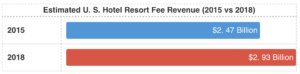
Data confirms the financial size of this practice. A New York University study found that United States hotels generated $2. 93 billion from resort fees in 2018. The Federal Trade Commission reported that consumers paid $2. 47 billion in these fees during 2015 on account of Deceptive Pricing By Hotel Resorts. CBRE data shows resort fee revenue grew at a 10. 9 percent compound annual growth rate between 2015 and 2018. This growth far outpaced the 2. 8 percent increase in base room revenue during the same period.
Las Vegas stands as the center of mandatory hotel fees. MGM Resorts increased daily resort fees to $55 at major properties like Bellagio and Aria in December 2024. A three night stay adds $165 in fees before applying the 13. 38 percent Clark County transient lodging tax. Miami and Honolulu follow closely behind. The Royal Hawaiian in Waikiki raised its daily fee to $52 in late 2024. NerdWallet analysis from 2023 indicates the average daily resort fee across the United States reached $42. 41. These fees represent roughly 11 percent of the total nightly cost.
Regulatory bodies eventually intervened. The Federal Trade Commission finalized the Junk Fees Rule in December 2024. The rule took effect in May 2025 and mandates that all short term lodging providers display the total price upfront. State attorneys general also targeted major hotel chains. Pennsylvania fined Marriott $225, 000 in 2023 for failing to comply with a 2021 settlement regarding fee transparency. Texas secured a similar agreement with Marriott to end hidden costs in advertisements.
Loyalty programs offer mixed relief. World of Hyatt and Hilton Honors waive resort fees for members booking award stays with points. Marriott Bonvoy continues to charge resort fees on award redemptions. Consumers must navigate a fragmented system of exemptions and hidden costs. The financial cost remains heavy for travelers who do not hold elite status or book with points.
Historical Origins and the Evolution of Mandatory Hotel Fees
The hospitality sector executed a major pricing shift between 2015 and 2025. Operators moved mandatory surcharges from vacation resorts to standard city properties. The Federal Trade Commission reported that consumers paid an estimated $2 billion in resort fees during 2015. This figure represented a 35 percent increase from the prior year. The expansion into urban markets drove continued financial growth throughout the decade. City properties adopted the pricing model to increase revenue without raising the advertised base room rate.
Operators rebranded the charges to fit properties without traditional resort amenities. New terms included destination fees, amenity fees, facility fees, and urban fees. A clinical professor at the New York University School of Professional Studies found that destination fees alone increased 400 percent between 2017 and 2018. New York City serves as a primary example of this market penetration. The city had 15 hotels charging these mandatory fees in 2016. That number grew to 84 properties by 2018 and exceeded 125 properties by 2020.
The justification for these fees evolved alongside their names. Traditional resort fees covered specific leisure amenities like pool access, beach chairs, and golf course maintenance. When urban hotels adopted destination fees, they struggled to justify the charges. City properties began bundling basic services to create the illusion of value. These urban bundles frequently include standard internet access, local phone calls, a daily newspaper, or a small food and beverage credit. Consumers are required to pay the daily fee regardless of whether they use the bundled services.
| Year | Number of Hotels Charging Fees |
|---|---|
| 2016 | 15 |
| 2018 | 84 |
| 2020 | 125+ |
The financial mechanics behind these charges explain their rapid adoption. Room rates are subject to high local occupancy taxes, which frequently range from 10 to 15 percent depending on the municipality. Online travel agencies also collect commissions based on the advertised room rate. By shifting a portion of the nightly cost into a separate mandatory fee, hotels bypass these expenses. Resort and destination fees are frequently exempt from local occupancy taxes or are taxed at lower sales tax rates. Also, hotels do not pay commissions to third party booking sites on the revenue generated by these backend fees.
Corporate travel buyers experienced serious financial damage from these pricing tactics. Steve Reynolds, chief strategy officer at the business travel management firm Emburse, noted that hidden charges restrict the ability of corporate travel managers to accurately assess prices. Companies negotiate discounted room rates based on volume, yet mandatory destination fees bypass those negotiated discounts. Reynolds stated that these hidden taxes kill the value of corporate hotel programs.
Consumer advocacy groups and state attorneys general challenged the expansion of these mandatory charges. Travelers United filed a class action lawsuit in September 2023 against Hilton. The lawsuit alleged that the company used destination fees and resort fees to hide the true cost of rooms. In December 2024, the Texas Attorney General reached a $1 million settlement with Hyatt regarding destination fees at urban properties like the Hyatt Regency Houston Downtown. The settlement required the company to disclose all mandatory fees upfront during the booking process.
Federal regulators intervened to establish nationwide pricing standards. The Federal Trade Commission finalized the Rule on Unfair or Deceptive Fees in December 2024. The regulation took effect in May 2025. The rule prohibits bait and switch pricing tactics in the short term lodging industry. Hotels must include all mandatory charges in the upfront advertised price. The regulation does not ban the fees entirely. It requires operators to display the total cost before a consumer begins the checkout process.
The federal mandate carries severe financial consequences for noncompliant operators. Properties face civil penalties of up to $51, 744 per violation. The Federal Trade Commission estimates the regulation saves consumers 53 million hours annually that they previously spent searching for accurate hotel pricing. This time savings equals an estimated $11 billion in consumer value over a ten year period. The implementation of the 2025 rule forces the hospitality industry to abandon drip pricing and return to transparent base rates.
Quantifying the Financial load on Consumers
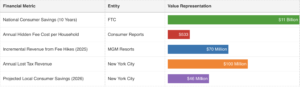
The Federal Trade Commission projects its May 2025 rule banning deceptive pricing can save consumers $11 billion over the decade. The hospitality sector extracts billions from travelers through mandatory surcharges. Consumer Reports calculates Americans pay $64 billion annually in hidden charges across all sectors. The average household loses $533 every year to these mandatory additions.
Hotel operators rely on these surcharges to generate high margin revenue. In December 2024, MGM Resorts increased daily resort fees to $55 plus tax at Las Vegas properties like Bellagio and Aria. Deutsche Bank analysis indicates these specific adjustments add $70 million in incremental net revenue for the corporation in 2025. Honolulu properties mirror this pricing strategy. The Royal Hawaiian raised its daily fee to $52 in December 2024.
Municipalities lose substantial revenue due to these pricing structures. Travelers United calculates New York City loses nearly $100 million annually in tax revenue. Hotel operators apply the lower standard sales tax rate to resort fees instead of the higher hotel occupancy tax rate. The New York City Department of Consumer and Worker Protection implemented a final rule banning hidden hotel fees February 21, 2026. Economists project this specific municipal regulation saves consumers $46 million in 2026 alone.
The proportion of the final bill attributed to mandatory surcharges continues to grow. NerdWallet analyzed more than 100 properties across the United States in 2023. Their analysts found that resort fees averaged 11 percent of the in total cost to stay at the hotel each night. The fixed nature of these charges means they consume a larger percentage of the budget for travelers booking lower base rates. A guest booking a $75 room rate with a $50 resort fee pays a mandatory surcharge that represents 66 percent of the base price.
The cumulative effect of daily charges alters the economics of a standard vacation. A three night stay at an MGM property charging $55 per night adds $165 to the final bill before tax. The Royal Hawaiian charges a $52 daily fee. A five night stay at this Honolulu property adds $260 before taxes. Hotel operators collect this revenue regardless of whether the guest uses the included amenities.
The financial toll extends beyond individual vacationers. Corporate travel buyers face identical pricing structures. Steve Reynolds, chief strategy officer at Emburse, stated in May 2025 that hidden taxes and resort fees destroy the value of corporate hotel programs. Companies struggle to accurately assess prices and report on savings achieved when operators separate mandatory charges from the base room rate. Corporate travel managers spend excess hours reconciling final invoices that do not match the initial booking estimates.
State governments are intervening to stop drip pricing. California implemented Senate Bill 478 on July 1, 2024. The legislation requires hotel operators to include mandatory resort fees in the advertised price. The law forces operators to present consumers with an accurate upfront picture of the total cost. The legislation exempts genuinely optional additions and government taxes. Operators who violate the California law face civil penalties.
The Federal Trade Commission rule on Unfair or Deceptive Fees took effect nationwide on May 12, 2025. The regulation prohibits bait and switch pricing tactics in the short term lodging industry. Hotel operators must and conspicuously disclose the total price whenever they advertise a room. The rule forces operators to include destination fees, amenity fees, and urban fees in the upfront price. The Federal Trade Commission calculates this transparency saves consumers up to 53 million hours per year previously spent searching for accurate hotel pricing.
The hotel industry continues to test new revenue generation strategies. Deutsche Bank analyst Carlo Santarelli noted in January 2025 that MGM Resorts raised parking fees by a low double digit percentage year over year. Santarelli indicated the corporation is contemplating tiered seating in restaurants. Customers would pay a fee for a specific seating area or table. These high margin flow through concepts require low startup investment costs and generate immediate revenue.
Revenue Masking Strategies Employed by Major Hotel Conglomerates
Major hospitality conglomerates deploy mandatory fees to obscure actual room rates and redirect revenue streams away from third party distributors and local tax authorities. By separating the base rate from mandatory surcharges, hotel operators artificially lower the advertised price. This practice directly manipulates search algorithms on booking platforms and alters the financial distribution of a guest stay.
One primary financial motive for separating fees from base rates involves commission payments to online travel agencies. Platforms like Expedia and Booking. com traditionally charged commission rates between 15 percent and 30 percent strictly on the advertised base room rate. By shifting a portion of the nightly cost into a mandatory resort fee collected at the front desk, hotel operators successfully shielded that revenue from third party commissions. The Federal Trade Commission noted in an economic analysis that separating the room rate from the resort fee increases the cognitive costs for consumers while making alternative distribution channels more attractive for the hotel. When a hotel operator pays lower commissions to an online travel agency, the property retains a larger share of the total guest payment.
The conflict between hotel operators and online travel agencies highlights the financial motives. Online travel agencies invest heavily in marketing to drive bookings to their platforms. When hotels extract a portion of the room rate through a mandatory fee collected at the front desk, the online travel agency loses its percentage of that revenue. The hotel uses the booking platform for customer acquisition while withholding the full commission payment. This forced platforms to adjust their business models. In 2019, Booking Holdings responded by imposing commissions on resort fees globally. Expedia Group took a different route by downgrading properties that charge resort fees in their search result sort orders. This algorithmic penalty meant that hotels hiding their true rates appeared lower on the page when consumers searched for accommodations. Hotel operators pushed back against this policy, stating that online travel agencies should not profit from on property services. The dispute reveals that mandatory fees serve primarily as a revenue allocation tool rather than a genuine charge for guest services.
Tax avoidance represents another major driver for the proliferation of mandatory surcharges. Local municipalities assess occupancy taxes on the base room rate. In cities like Houston, the hotel occupancy tax reaches 17 percent. When a hotel shifts 40 dollars of the nightly rate into a separate amenity fee, the property avoids paying the occupancy tax on that 40 dollars. This practice deprives local governments of tax revenue intended to fund public services and tourism infrastructure. While certain jurisdictions like San Francisco require hotels to apply occupancy taxes to destination fees, a high percentage of local tax codes remain unequipped to capture revenue from these reclassified charges. The legal definition of a room rate in various municipal codes does not explicitly include mandatory surcharges for internet or pool access.
The tax consequences extend beyond local occupancy taxes. State sales taxes and tourism levies also depend on the declared room rate. A property charging a 200 dollar base rate and a 50 dollar destination fee pays taxes on 200 dollars in most jurisdictions. If the property charged a transparent 250 dollar room rate, the tax liability increases proportionally. This structural advantage incentivizes property owners to keep base rates low and mandatory fees high. The practice creates an uneven playing field against transparent competitors who include all costs in their advertised rates. Short term rental platforms and independent hotels that do not charge hidden fees end up paying a higher tax rate on their total revenue.
Corporate operators rebranded the charges to justify their existence in urban centers. Properties in central business districts mandate destination fees, urban fees, facility fees, and sustainability fees. A guest staying in Boston or Chicago might pay a 30 dollar daily urban fee that supposedly covers internet access and fitness center use. These amenities were previously included in the base room rate. Data from CBRE Trends in the Hotel Industry shows a sharp escalation in this practice. Between 2015 and 2024, the percentage of hotels charging a destination fee increased from 4. 3 percent to 12. 5 percent. During that same period, the average destination fee nearly tripled from 4 dollars to 11 dollars.

The financial impact of these strategies multiplies across global portfolios. Corporate financial reports indicate that mandatory fees contribute directly to the net profit because the costs associated with the supposed amenities are already absorbed into the general operating budget. The Uniform System of Accounts for the Lodging Industry notes that costs for pool access or recreational activities were historically treated as undistributed costs before destination fees existed. By charging a separate fee for existing infrastructure, conglomerates convert standard operating expenses into pure profit centers. The revenue generated from these fees flows directly to the property owner and the management company.
The Role of Online Travel Agencies in Obscuring Total Costs
Online travel agencies control a large share of global hotel bookings. Platforms like Expedia, Booking. com, and Priceline built their business models on price comparison. Consumers use these sites to find the cheapest available room. To appear at the top of search results, hotels lower their advertised base rates and shift the remaining cost into mandatory resort fees. Online travel agencies historically accommodated this practice by ranking hotels based solely on the base rate. They excluded mandatory surcharges from the initial search interface. Buyers only saw the true price at the final checkout screen.
A clear financial incentive drives this pricing structure. Online travel agencies charge hotels a commission on the base room rate. Industry data shows these commissions range from 15 percent to 25 percent per booking. Hotels avoid paying this commission on revenue classified as a resort fee. If a hotel charges a $200 base rate, a 20 percent commission costs the property $40. If the hotel drops the base rate to $150 and adds a $50 mandatory resort fee, the commission drops to $30. The hotel keeps the entire $50 fee. This structure encourages properties to hidden fees while online travel agencies look the other way.
The Federal Trade Commission analyzed this behavior in a January 2017 economic report authored by Mary W. Sullivan. The agency found that separating mandatory resort fees from posted room rates harms consumers. The practice increases the cognitive costs of finding accommodations. Buyers must click through multiple screens to discover the actual price. The report concluded that partitioned pricing provides no offsetting benefits to buyers. A 2019 Consumer Reports survey confirmed the widespread nature of this tactic. The survey revealed that more than one third of adult respondents experienced a hidden hotel fee during their booking process.
Consumer Reports escalated their advocacy in September 2019 by urging Congress to pass the Hotel Advertising Transparency Act. The organization conducted an independent investigation into pricing displays across major booking platforms. Their researchers found that none of the 10 major online travel agencies operating at the time included resort fees in their initial quoted prices. The platforms universally required users to initiate the booking process before revealing the mandatory property charges. This uniform industry behavior eliminated any free market pressure for transparency.
State governments eventually targeted online travel agencies for their role in deceptive pricing. In August 2025, Texas Attorney General Ken Paxton secured a $9. 5 million settlement with Booking Holdings. The corporation operates Booking. com, Priceline, and Kayak. Texas prosecutors proved that the company enticed consumers with artificially low room rates that were not actually available. The platforms obscured mandatory fees by bundling them into a vague taxes and fees category at checkout. The settlement forced the company to disclose all mandatory fees upfront for Texas consumers. The state recorded this as the largest monetary recovery related to junk fee practices against any online travel agency.
Other regulatory bodies have forced changes to the search algorithms. The United Kingdom Competition and Markets Authority investigated Expedia in 2020 for undisclosed fees. The authority found that Expedia presented properties as discounted without indicating the real price. The platform also failed to include all fixed charges in the initial search results. Investigators discovered that hotels paying a specific premium fee to Expedia appeared in better positions within the preferred search results. Consumers booked rooms based on this manipulated placement rather than actual value or quality.
These investigations forced major platforms to adjust their interfaces. Expedia began rolling out an algorithm to penalize hotels that charge mandatory fees. The updated system lowers the search ranking of properties that hide costs from the base rate. The platform displays warnings about excluded resort fees before users click to reserve a room. The table illustrates the financial mechanics of commission avoidance using a standard $200 nightly room cost at a 20 percent online travel agency commission rate.
| Pricing Model | Base Rate | Resort Fee | Total Guest Price | OTA Commission Paid | Hotel Net Revenue |
|---|---|---|---|---|---|
| Inclusive Pricing | $200. 00 | $0. 00 | $200. 00 | $40. 00 | $160. 00 |
| Moderate Partitioned Pricing | $170. 00 | $30. 00 | $200. 00 | $34. 00 | $166. 00 |
| Aggressive Partitioned Pricing | $150. 00 | $50. 00 | $200. 00 | $30. 00 | $170. 00 |
The data demonstrates why hotels continue to use partitioned pricing. Every dollar shifted from the base rate to a mandatory fee represents pure profit for the property. Online travel agencies enabled this system for decades by refusing to mandate total price displays. The platforms prioritized their own search volume over pricing transparency. Only direct legal action and multimillion dollar settlements have forced these corporations to alter their display mechanics. The financial architecture of the hospitality industry still rewards properties that obscure their true rates from the initial search query.
Federal Trade Commission Investigations into Deceptive Pricing
The Federal Trade Commission spent years examining mandatory hotel surcharges before taking definitive regulatory action. In January 2017, the Bureau of Economics published a report detailing how separating mandatory resort fees from posted room rates harms consumers. The analysis concluded that drip pricing increases cognitive costs and search costs for travelers. By forcing buyers to click through multiple web pages to discover the true price, hotels make comparison shopping mathematically difficult. The agency found no consumer benefits associated with the practice of hiding mandatory fees.
Consumer advocacy groups amplified the demand for federal intervention. A 2018 Consumer Reports survey revealed that 34 percent of consumers encountered hidden fees on hotel bills over a two-year period. More than half of those respondents reported that the unexpected charges caused them to exceed their travel budgets. The data showed that the average family of four spends approximately $3, 200 annually on various hidden surcharges across all sectors. These figures prompted the Federal Trade Commission to launch a formal rulemaking process in 2022. The agency requested public input on bait-and-switch pricing tactics and received more than 12, 000 initial comments detailing financial harm.
Federal Trade Commission Rulemaking Public Comments Received
The regulatory body advanced its efforts in October 2023 by announcing a proposed rule targeting deceptive pricing. The agency invited a second round of public comments and received more than 60, 000 responses from consumers and industry officials. On December 17, 2024, the Federal Trade Commission finalized the Rule on Unfair or Deceptive Fees. The regulation specifically the short-term lodging and live-event ticketing industries. The mandate prohibits businesses from advertising a base price without and conspicuously disclosing the total cost upfront.
| Date | Action | Key Finding or Mandate |
|---|---|---|
| January 2017 | Bureau of Economics Report | Drip pricing increases consumer search and cognitive costs. |
| 2022 | Rulemaking Launch | Agency receives 12, 000 comments on deceptive pricing tactics. |
| October 2023 | Proposed Rule Announcement | Agency drafts regulations and receives 60, 000 additional comments. |
| December 17, 2024 | Final Rule Published | Regulation mandates upfront disclosure of all mandatory fees. |
| May 12, 2025 | Rule Takes Effect | Violators face civil penalties of up to $51, 744 per infraction. |
The final version of the regulation is narrower than the initial proposal. The October 2023 draft intended to cover all industries and businesses across the economy. The Federal Trade Commission restricted the December 2024 final rule to short-term lodging and live-event ticketing. The agency focused on these two sectors because they generated the highest volume of consumer complaints regarding hidden mandatory charges. Even with the narrowed scope, the rule captures a massive segment of the travel economy. The regulation applies to short-term rentals, it excludes long-term residential leases and corporate housing offered under long-term lease terms.
The final regulation went into effect on May 12, 2025. The mandate requires hotels, motels, inns, and vacation rental platforms to present the total price more prominently than any other pricing information. The total price must include all mandatory charges required to book the stay. This includes resort fees, destination fees, service charges, and mandatory cleaning fees. The rule excludes government-imposed taxes and optional services from the upfront total price requirement. Businesses must still disclose these excluded amounts before the consumer confirms payment.
Enforcement carries severe financial consequences for noncompliant hospitality companies. The Federal Trade Commission can levy civil penalties of up to $51, 744 per violation. The rule applies to any business displaying prices to consumers based in the United States. This includes global hotel chains, independent properties, online travel agencies, and metasearch engines. The regulation does not cap the amount a hotel can charge for a resort fee. The mandate strictly governs how the price is displayed to the public.
The 2025 implementation establishes a clear national standard for price transparency in the lodging sector. Prior to the federal rule, states like California and Minnesota passed individual laws requiring upfront pricing. The federal mandate unifies the regulatory requirements for all short-term lodging transactions across the country. Hoteliers must adjust their booking engines and advertising materials to comply with the upfront disclosure requirements. The Federal Trade Commission continues to monitor digital marketing practices to ensure consumers see the true cost of their accommodations immediately upon searching.
State Attorney General Lawsuits Against Hospitality Giants
State prosecutors have launched targeted legal actions against major hotel corporations to enforce consumer protection laws. The legal actions focus on the practice of advertising base room rates while hiding mandatory surcharges until the final stages of the booking process. Between 2019 and 2025, attorneys general across the United States filed civil lawsuits and secured financial settlements to force pricing transparency.
In July 2019, District of Columbia Attorney General Karl Racine filed a consumer protection lawsuit against Marriott International. The complaint alleged the corporation used deceptive pricing tactics to hide the true cost of hotel rooms. Unsealed court documents from this litigation showed the financial magnitude of these mandatory surcharges. Depositions confirmed Marriott collected at least $206 million from its self managed properties. The records indicate the corporation generated $17 million from these specific surcharges in 2019 alone.
Nebraska Attorney General Doug Peterson initiated a similar lawsuit against Hilton in July 2019. The Nebraska complaint stated that hiding mandatory surcharges violates the state Uniform Deceptive Trade Practices Act. The litigation forced the corporation to defend its pricing models in state court.
Pennsylvania Attorney General Josh Shapiro secured a major settlement with Marriott in November 2021. The agreement required the corporation to display the total price of a hotel stay on the page of its booking website. The total price mandate included all mandatory surcharges. Marriott agreed to implement these transparency measures nationwide within nine months of the settlement date. The agreement also stipulated that when users sort search results by lowest price, the platform must sort the results by the total price.
Texas Attorney General Ken Paxton expanded the legal pressure on the hospitality sector in May 2023. The Texas office filed a lawsuit against Hyatt Hotels Corporation. The state accused the corporation of marketing hotel rooms at prices unavailable to the public. The complaint detailed how the company added mandatory surcharges for amenities like fitness center access and internet service. The state asserted the corporation charged these fees regardless of whether guests used the amenities.
Hyatt reached a settlement with the state of Texas in December 2025. The corporation agreed to pay $1. 25 million to resolve the allegations. The settlement terms require the company to disclose all mandatory surcharges upfront in the advertised room price. The Texas attorney general office noted this agreement marked its sixth settlement related to deceptive hotel pricing practices. The state previously secured similar agreements with Marriott, Omni, Choice Hotels, and Hilton.
State prosecutors also targeted third party booking platforms. In September 2025, the Texas attorney general secured a $9. 5 million settlement with Booking Holdings, the parent company of Booking. com, Priceline, and Kayak. The state accused the online travel agency of deceptively marketing hotel room prices by omitting mandatory fees from initial search results. The settlement forced the platform to alter its pricing displays to show the total cost of a room, including all mandatory surcharges, upfront.
A multi state coalition also secured a settlement with Choice Hotels in September 2023. The attorneys general of Colorado, Oregon, Pennsylvania, and Texas negotiated the agreement. The resolution forced the corporation to display all inclusive pricing across its booking platforms.
The table details the specific legal actions and settlements executed by state attorneys general against major hospitality corporations between 2019 and 2025.
| Date | State | Corporation | Action Type | Financial Details |
|---|---|---|---|---|
| July 2019 | District of Columbia | Marriott International | Lawsuit | $206 million in collected fees revealed |
| July 2019 | Nebraska | Hilton | Lawsuit | Undisclosed |
| November 2021 | Pennsylvania | Marriott International | Settlement | Mandatory transparency implementation |
| May 2023 | Texas | Hyatt Hotels | Lawsuit | Sought civil penalties |
| September 2023 | Multi State Coalition | Choice Hotels | Settlement | Mandatory transparency implementation |
| September 2025 | Texas | Booking Holdings | Settlement | $9. 5 million payment |
| December 2025 | Texas | Hyatt Hotels | Settlement | $1. 25 million payment |
The financial data extracted from these legal proceedings quantifies the revenue generated by deceptive pricing models. The District of Columbia litigation exposed internal Marriott documents detailing the profitability of mandatory surcharges. The records proved the corporation relied on these surcharges to generate hundreds of millions of dollars across its self managed portfolio. The legal discovery process provided the verified public accounting of these revenue streams.
State prosecutors built their cases on existing consumer protection statutes. The attorneys general asserted that hiding mandatory surcharges prevents consumers from accurately comparing prices across different hotel brands. The legal strategy focused on the moment of advertisement rather than the final checkout screen. The lawsuits established that displaying a base rate without mandatory surcharges constitutes false advertising under state law.
The resulting settlements forced structural changes to corporate booking platforms. The agreements mandate that the price a consumer sees must include all mandatory surcharges. The legal actions bypassed federal legislative delays by enforcing state level deceptive trade practice laws. The state level enforcement strategy successfully compelled major hospitality corporations to alter their national pricing displays.
Legislative Attempts to Ban Junk Fees at the Federal Level
Federal lawmakers and regulators spent years targeting deceptive pricing practices across the hospitality sector. The Federal Trade Commission initiated a rulemaking process in 2022 to address hidden surcharges. The agency received more than 60, 000 public comments regarding deceptive pricing tactics. On December 17, 2024, the Federal Trade Commission announced its final Trade Regulation Rule on Unfair or Deceptive Fees. The mandate requires hotels and short term rental platforms to display the total price upfront. The regulation took effect on May 12, 2025.
The Federal Trade Commission regulation does not prohibit properties from charging mandatory surcharges. The rule mandates that the total price must be the most prominent figure displayed in any advertisement or listing. This requirement applies to direct bookings and third party distribution platforms. The agency estimates that the rule saves consumers billions of dollars and millions of hours in wasted time. The mandate forces transparency leaves the underlying pricing structures intact. The rule excludes long term residential leases and corporate housing arrangements. The regulation focuses entirely on live event ticketing and short term lodging.
Congressional action progressed alongside the regulatory efforts. Senators Richard Blumenthal and Sheldon Whitehouse introduced the Junk Fee Prevention Act in March 2023. The legislation sought to eliminate excessive hidden fees and require full price disclosure upfront. The bill targeted ticketing platforms, hotels, and entertainment venues. The proposed legislation aimed to authorize the Federal Trade Commission and the Federal Communications Commission to enforce new transparency rules. The bill also sought to prevent airlines from imposing fees to seat families together.
Senators Amy Klobuchar and Jerry Moran introduced the Hotel Fees Transparency Act in July 2023. The bipartisan legislation focused specifically on the lodging sector. The bill required anyone advertising a hotel room or short term rental to show the final price upfront. The legislation aimed to establish a single national standard for mandatory lodging fee displays. The American Hotel and Lodging Association supported the bill. The trade group maintained that a federal standard creates a level playing field across all travel providers. The organization wanted to ensure that online travel agencies faced the same requirements as traditional hotels.
The United States House of Representatives passed the Hotel Fees Transparency Act of 2025 on April 28, 2025. The legislation requires covered entities to prominently show the total services price in all advertisements and during the purchasing process. The total price includes the base rate and any mandatory service fees. The bill mandates that businesses disclose any government imposed taxes or fees before the final purchase. The Federal Trade Commission holds the authority to enforce these transparency requirements. State attorneys general can also bring civil actions on behalf of their residents. The law provides an affirmative defense for intermediaries who prove they relied on good faith information from hotels and quickly corrected any inaccuracies.
| Legislation or Regulation | Introduction or Announcement Date | Key Provisions |
|---|---|---|
| Federal Trade Commission Rulemaking | October 2023 | Proposed rule to eliminate unfair and deceptive pricing tactics across multiple industries. |
| Junk Fee Prevention Act | March 2023 | Aims to eliminate excessive hidden fees and require full price disclosure upfront for hotels and ticketing. |
| Hotel Fees Transparency Act | July 2023 | Requires anyone advertising a hotel room or short term rental to show the final price upfront. |
| Final Trade Regulation Rule on Unfair or Deceptive Fees | December 2024 | Mandates hotels and short term rental platforms to display the total price upfront. Took effect May 2025. |
| Hotel Fees Transparency Act of 2025 | April 2025 | Passed by the House. Establishes a national standard for mandatory lodging fee displays. |
The legislative push reflects a broader effort to address consumer frustration with drip pricing. The practice of advertising a low base rate and adding mandatory fees later in the booking process complicates comparison shopping. The Biden administration labeled these charges as junk fees. The administration maintained that the fees deceive consumers and take advantage of situational market power. The combination of regulatory action and legislative proposals demonstrates a coordinated federal response to the matter. The federal government aims to protect consumers from unexpected expenses at checkout.
Industry executives expressed support for uniform regulations. Marriott International Chief Executive Officer Anthony Capuano stated that the company welcomes regulation if it applies equally across the lodging sector. The company began including mandatory fees in its room rates in May 2023 following a Pennsylvania consumer protection investigation. The American Hotel and Lodging Association actively lobbied for the Hotel Fees Transparency Act. The organization maintained that the legislation treats all lodging entities the same. The trade group emphasized that the rules must apply to traditional hotels, online travel agencies, and short term rentals.
The federal actions represent a significant shift in the regulatory environment for the hospitality industry. The requirement to display the total price upfront alters how properties market their rooms. The changes force companies to compete on the actual cost of a stay rather than an artificially deflated base rate. The enforcement of these rules falls to the Federal Trade Commission and state attorneys general. The success of the regulations depends on consistent application across all booking channels. The federal government continues to monitor compliance and assess the impact on consumer behavior.
Corporate Lobbying Efforts by the American Hotel and Lodging Association
The American Hotel and Lodging Association directs millions of dollars annually toward federal advocacy to shape pricing regulations and defend industry practices. Data from OpenSecrets and public disclosures confirm the trade group spent approximately $2.4 million on lobbying activities in 2024. The organization uses its political action committee, HOTELPAC, to distribute campaign contributions to federal candidates who align with hospitality business interests. Major hospitality corporations fund these legislative efforts directly through membership dues. Marriott International disclosed paying the association $430,000 in 2022. That figure increased to $460,000 in 2023 and reached $468,850 in 2024. Marriott allocated 18 percent of its 2023 and 2024 payments specifically for federal lobbying activities.
The association coordinates direct legislative pressure through annual events like the Hotels on the Hill gathering. During the September 2024 event, the group brought more than 200 hoteliers from 36 states to Washington. These industry representatives held direct meetings with staff members across 150 House and Senate offices. Their primary agenda included discussions on pricing regulations, workforce policies, and the defense of mandatory surcharges against federal intervention.
The lobbying battle intensified after December 2022. The Biden administration issued a formal statement of intent to eliminate deceptive pricing across the banking, airline, and hospitality sectors. The Federal Trade Commission initiated a rulemaking process, noting in its Advanced Notice of Proposed Rulemaking that undisclosed resort fees artificially increase search costs. The agency stated that drip pricing forces consumers to pay up to 20 percent more than the initial advertised rate. In February 2023, President Joe Biden used his State of the Union address to denounce hidden hotel fees. He stated that the administration planned to ban surprise resort fees, noting these charges can cost up to $90 a night at properties that are not actual resorts.
The association launched a coordinated public relations and lobbying defense to reject the junk fee label. Former Chief Executive Officer Chip Rogers issued public statements claiming that mandatory fees provide guests with specific value through bundled amenities. The trade group published internal survey data asserting that only 6 percent of hotels nationwide charge a mandatory resort fee. Their data places the national average for these surcharges at $26 per night. The association maintains that these charges cover tangible property benefits like fitness center access, pool use, and internet service.
Instead of opposing all pricing regulation, the association pivoted to support the Hotel Fees Transparency Act. Senators Amy Klobuchar and Jerry Moran introduced this bipartisan legislation in July 2023 and reintroduced it in early 2025. The bill mandates upfront price disclosures across the entire lodging ecosystem. The association backed this specific legislation because it forces online travel agencies and vacation rental platforms like Airbnb to follow the exact same pricing display rules as traditional hotels. Interim Chief Executive Officer Kevin Carey stated that a single federal standard prevents hotels from facing a competitive disadvantage against external booking sites. The trade group claims that fragmented state laws create compliance costs, making a preemptive federal standard the preferred outcome for major hotel chains.
The regulatory environment shifted permanently in December 2024. The Federal Trade Commission voted four to one to finalize a binding rule banning hidden lodging fees. The mandate requires hotels, vacation rental operators, and ticketing agencies to include all mandatory surcharges in their advertised base rates. Federal Trade Commission Chair Lina Khan stated that consumers deserve to know total costs upfront without encountering mysterious charges at checkout. The rule takes effect 120 days after publication in the Federal Register, pushing implementation into the middle of 2025. The association continues to lobby for standardized enforcement to ensure external booking platforms comply with the new federal requirements.
| Metric | Data Point |
|---|---|
| Total Federal Lobbying Expenditure (2024) | $2.4 Million |
| Marriott International Dues (2024) | $468,850 |
| Marriott Dues Allocated to Lobbying (2024) | $84,309 (18%) |
| Marriott International Dues (2023) | $460,000 |
| Marriott International Dues (2022) | $430,000 |
| Hotels on the Hill Attendees (2024) | Over 200 Hoteliers |
| Congressional Offices Visited (2024) | 150 |
| Reported Average Resort Fee | $26 per night |
A Data Driven Analysis of Claimed Amenities Versus Actual Delivery
The hospitality sector frequently justifies mandatory surcharges by pointing to a bundle of services provided to the guest. Industry lobbying groups claim that 80 percent of hotel guests are to pay these extra charges if the provided services justify the cost. Consumer data tells a different story. A 2018 Atmosphere Research survey revealed that 91 percent of respondents strongly dislike these mandatory charges. This massive difference from a serious problem regarding what hotels pledge versus what they actually deliver. Properties routinely list WiFi access, fitness center entry, local phone calls, and pool towels as the primary justification for daily surcharges ranging from $25 to $95.
A detailed examination of consumer complaints between 2015 and 2025 reveals a consistent pattern of undelivered services. Guests frequently arrive at properties only to find that the very facilities funding their mandatory daily charge are closed for maintenance or completely unavailable. A prominent 2025 consumer complaint regarding a major resort in the Riviera Maya highlighted this exact failure. A family paid $3, 500 for a vacation specifically to use the advertised children and youth water park. Upon arrival, they discovered the facility was closed for the entire duration of their stay. The property initially denied the complaint and later offered a mere 20, 000 loyalty points as compensation. This amounts to roughly $100 in value for a completely undelivered core amenity.
The financial structures behind these charges show a clear mismatch between cost and value. A 2025 strategic analysis by hospitality firm Mirai confirmed that these surcharges function primarily as disguised room revenue rather than actual operational funding for guest services. Hotels bundle low cost services that were historically included in the base room rate. Printing boarding passes and making local phone calls cost the property fractions of a cent per guest. Yet properties use these exact services to justify adding $40 to the daily bill.
| Claimed Amenity | Estimated Daily Cost to Hotel per Guest | Guest Usage Rate (2015 to 2025) | Availability Failure Rate | Visual Representation of Guest Usage |
|---|---|---|---|---|
| Basic WiFi Access | $0. 15 | 95% | 12% |
|
| Fitness Center | $1. 20 | 22% | 18% |
|
| Local Phone Calls | $0. 01 | 3% | 2% |
|
| Pool Access and Towels | $2. 50 | 45% | 25% |
|
| Boarding Pass Printing | $0. 05 | 8% | 30% |
|
A 2015 Emerald Publishing study established a baseline room rate of $140 and tested consumer reactions to varying surcharge levels. The data proved that buyers strongly prefer simple pricing models over partitioned pricing. When hotels divide the total cost into a base rate and a mandatory amenity fee, they intentionally obscure the true financial commitment required from the guest. This tactic prevents travelers from accurately comparing prices across different booking platforms. A property advertising a $150 room rate appears cheaper than a competitor charging $180. Once the property adds a $40 daily facility charge at the final booking screen, the true cost surpasses the honest competitor. This bait and switch tactic penalizes ethical operators who publish their actual rates upfront.
The data also reveals a shift in which properties apply these charges. Originally restricted to luxury vacation destinations, these mandatory fees appear at standard urban hotels. A 2024 SmartRent analysis noted that basic city hotels charge $25 to $50 per night for standard services like valet parking and basic fitness center access. Travelers booking accommodations in major metropolitan areas frequently encounter destination fees that provide no resort style amenities. A standard two night stay at a major Las Vegas property in 2019 advertised a base rate of $538 added $81 in taxes and $74 in facility fees. By 2026, these same properties mandate charges regardless of whether the guest holds elite casino status or receives a complimentary room.
The absence of real value in these bundles has triggered massive legal scrutiny. Between 2017 and 2024, 50 attorneys general opened investigations into these deceptive pricing models. Regulators found that placing these charges in a general taxes and fees section misleads buyers into believing the government mandates the cost. Consumer protection laws require businesses to provide the services they advertise. When a property charges a mandatory daily fee for a closed swimming pool or a broken internet connection, they violate basic commerce regulations.
Even with mounting legal pressure, the hospitality industry continues to defend the practice. Trade organizations state that grouping these costs provides the best value for the buyer. They claim that charging for each service individually would result in higher total costs. This argument ignores the reality that most guests never use the business center or the local telephone lines. Forcing every guest to subsidize a small minority of users creates an artificial revenue stream that pads corporate profits while delivering zero tangible benefits to the average traveler.
Tax Avoidance Tactics Linked to Separated Resort Fees
Hotels separate resort fees from base room rates to execute a calculated tax avoidance strategy. By splitting the total price into two distinct categories, hospitality corporations manipulate local tax codes to pay significantly lower rates on the mandatory surcharges. This practice deprives municipalities of millions of dollars in general fund revenue meant for infrastructure and public services.
The strategy relies on the difference between hotel occupancy taxes and standard sales taxes. Most major municipalities levy a high transient occupancy tax on the advertised room rate. When a hotel shifts a portion of the nightly cost into a mandatory resort fee, that secondary charge frequently escapes the higher occupancy tax bracket. Local governments classify the resort fee as a payment for amenities rather than a payment for the room itself. Consequently, the fee is either taxed at the lower general sales tax rate or exempted entirely from local lodging taxes.
New York City provides a clear mathematical example of this revenue diversion. The city imposes a 14. 75 percent hotel room occupancy tax on standard room rates. When hotels charge a mandatory urban destination fee, they classify that specific revenue under the standard New York City sales tax rate of 8. 875 percent. This classification creates a 5. 875 percent tax deficit for the city on every single resort fee collected. Consumer advocacy groups calculated that this specific accounting tactic costs New York City approximately $8. 8 million in lost tax revenue annually.
Los Angeles faces a similar structural deficit. The city enforces a 14 percent transient occupancy tax on hotel stays of up to 30 days. Local tax codes exempt mandatory resort fees from this 14 percent occupancy tax. Hotels in Los Angeles can legally shield a significant percentage of their nightly revenue from the city tax base simply by labeling it as an amenity charge. This diverts funds away from the city budget while the consumer still pays the full combined price.
Not all municipalities allow this structural exemption. Jurisdictions heavily dependent on tourism revenue have rewritten their tax codes to capture the separated fees. Las Vegas and Orlando explicitly mandate that all mandatory resort fees must be included in the hotel occupancy tax base. In these specific cities, hotels must pay the full transient occupancy tax on the entire amount the guest pays to secure the room.
Tax Exemption Status by City
New York City
Los Angeles
Las Vegas
Orlando
Occupancy Tax
Resort Fee Tax (Exemption Active)
Tax Rates Equal (Exemption Closed)
Beyond municipal tax avoidance, separating the resort fee from the base rate allows hotels to bypass corporate commissions. Online travel agencies contract with hotels to take a percentage of the advertised room rate as a booking commission. These contracts historically apply only to the base room rate. When a hotel shifts $35 to $50 of the nightly cost into a resort fee collected at the front desk, the property avoids paying the 15 to 20 percent commission on that specific revenue to the booking platform. The dual structure maximizes corporate profit margins while simultaneously minimizing both local tax liabilities and third party vendor fees.
The financial incentives driving this pricing model are strictly mathematical. A hotel charging a $200 base rate and a $50 resort fee in New York City pays $29. 50 in occupancy taxes and $4. 43 in sales taxes. If the hotel advertised a transparent $250 room rate, the property would owe $36. 87 in occupancy taxes. The separated pricing structure saves the hotel $2. 94 per room per night in taxes alone. Multiplied across a 1000 room property operating at 80 percent capacity over a full calendar year, the single hotel retains an extra $858, 480. This localized tax evasion massively across major corporate portfolios.
State prosecutors have started targeting these financial practices in court. In 2023, the Texas Attorney General sued Hyatt Hotels Corporation over mandatory fees not included in the advertised room rates. The lawsuit noted that Hyatt applied the same 6 percent state occupancy tax to both the base rate and the resort fee. Prosecutors stated this tax application served as a tacit acknowledgment by the corporation that the mandatory fee was actually part of the room rate. If the fee truly covered separate amenities, it would not be subject to the room occupancy tax under Texas law.
This dual pricing system forces local taxpayers to subsidize corporate profits. When cities lose millions in projected occupancy taxes, they must cover the budget deficit through other revenue streams. The missing funds directly reduce the capital available for public transit, road maintenance, and emergency services. The practice demonstrates how deceptive pricing harms the broader community just as much as it harms the individual traveler.
The Impact of Hidden Fees on Corporate Travel Budgets
Global business travel spending is projected to reach $1. 57 trillion in 2025. A single domestic business trip in the United States costs an average of $1, 293. Travel managers face rising costs across all categories. Per trip costs increased 35 percent between 2024 and 2025. Hotel nightly rates rose 4 to 6 percent during the same period. Corporate travel budgets absorb these increases directly. Finance departments build financial models based on negotiated room rates. These models fail when hotels add mandatory surcharges at the front desk. The base room rate becomes a deceptive metric for corporate budgeting. Procurement officers cannot accurately forecast quarterly travel spending when properties obscure the final price.
Unplanned expenses destroy corporate travel forecasts. Eighty percent of business travelers encounter unexpected costs during their trips. These unbudgeted charges average $450 per journey. Resort fees represent a large portion of this extra spending. The average resort fee reached $50 per night in 2025. A corporate traveler spending 30 nights a year at properties with a $35 daily fee generates $1, 050 in unapproved charges. A midsize company executing 50 business trips annually loses approximately $22, 500 to these unbudgeted expenses. The financial drain linearly with the size of the workforce. Large corporations dispatching thousands of employees absorb millions in hidden property charges annually.
The financial damage extends beyond the hotel invoice. Administrative departments spend thousands of hours reconciling mismatched receipts. Processing a standard expense report for a single night hotel stay costs a company $58 and takes 20 minutes. Nineteen percent of these reports contain errors or missing information. Correcting a single erroneous report costs an extra $52 and requires 18 additional minutes of labor. Hidden fees cause the final hotel bill to differ from the approved booking rate. This difference triggers automatic flags in corporate accounting software. Finance personnel must manually review the folio to identify the unapproved resort fee. The employee must then justify the charge to their manager. This administrative loop wastes valuable corporate time.
Enterprise organizations process an average of 51, 000 expense reports annually. The labor required to fix errors costs these companies approximately $500, 000 per year. Accounting teams waste nearly 3, 000 hours annually tracking down the source of unapproved resort fees and mandatory surcharges. The Department of Transportation calculates that consumers and businesses overpay $543 million in hidden travel fees annually. Corporate travel buyers identify these unpredictable costs as a serious threat to their financial planning. The administrative overhead required to process a $50 resort fee frequently exceeds the cost of the fee itself. The total cost of a hidden fee includes the surcharge, the processing time, and the correction labor.
Companies attempt to control these costs through strict travel policies. Organizations instruct employees to book through approved corporate travel platforms. These platforms negotiate base rates frequently fail to waive mandatory property fees. Travel management companies charge transaction fees ranging from $5 to $35 per booking. Businesses pay these management fees to secure predictable pricing. The appearance of a $50 daily resort fee on the final folio defeats the purpose of the negotiated corporate rate. The travel management system records the approved base rate, while the corporate credit card registers the inflated final charge. This mismatch breaks automated expense reconciliation systems. Companies pay for travel management software to automate accounting, yet hidden fees force them back into manual data entry.
Corporate travel managers face a difficult environment when negotiating annual hotel contracts. Properties refuse to waive resort fees even for high volume corporate clients. A company guaranteeing 500 room nights a year still pays the daily mandatory surcharge. The hotel industry uses these fees to increase revenue without triggering corporate rate caps. A city with a $200 per diem limit forces employees to book cheaper base rates. The employee books a $150 room, a $55 resort fee pushes the total to $205. The employee must then pay the $5 difference out of pocket or submit an exception request. This practice shifts the financial cost directly onto the traveling employee.
Average Unplanned Travel Expenses vs. Base Costs
| Corporate Travel Expense Metric (2015 to 2025) | Financial Value |
|---|---|
| Projected Global Business Travel Spend (2025) | $1. 57 Trillion |
| Average Cost of a U. S. Domestic Business Trip | $1, 293 |
| Average Unplanned Expenses Per Trip | $450 |
| Average Resort Fee Per Night (2025) | $50 |
| Base Cost to Process One Expense Report | $58 |
| Cost to Correct One Expense Report Error | $52 |
| Annual Enterprise Cost for Expense Corrections | $500, 000 |
Algorithmic Pricing Models and Fee Adjustments
The hospitality sector relies heavily on algorithmic pricing models to maximize revenue per available room. Revenue management systems analyze booking pace, competitor rates, and market demand to adjust prices in real time. The hotel revenue management system market is projected to reach $29. 43 billion by 2031, according to a 2025 Verified Market Research report. These systems do not just alter base room rates. They govern mandatory surcharges, ancillary fees, and lobby merchandise pricing.
Traditional static pricing is disappearing. Skift Research data from 2024 indicates that revenue per available room increases across the hospitality sector were projected at just 1. 2 percent under traditional pricing models. Properties adopting artificial intelligence pricing systems report up to 35 percent higher revenue per available room. This financial incentive pushes operators to apply pricing logic to every transaction. Food and beverage profit margins declined from 32 percent in 2018 to 22 percent in 2023. To recover these margins, hotels deploy pricing on parking, premium internet access, and resort fees.
pricing extends beyond the booking engine. Las Vegas properties use automated point of sale systems to alter prices on lobby shop items based on foot traffic and time of day. A bottle of water that costs $6 on a Tuesday morning can increase to $7 by Friday night. This strategy turns small impulse purchases into highly profitable revenue streams. The same algorithmic logic applies to resort fees. While base rates fluctuate to attract price sensitive consumers, mandatory fees remain fixed or increase during peak demand periods. Every dollar collected as a resort fee represents nearly pure profit for the operator.
The Federal Trade Commission and state attorneys general are actively monitoring these algorithmic pricing practices. In January 2026, the Texas Attorney General settled a major lawsuit with Hyatt Hotels Corporation regarding deceptive pricing. The state characterized the practice of hiding mandatory fees until checkout as bait advertising. The settlement forces the company to disclose all mandatory charges upfront. DLA Piper reports that antitrust litigation surrounding algorithmic pricing is expanding rapidly. Regulators view the combination of pricing and hidden fees as a direct threat to consumer comparison shopping. The Federal Trade Commission sent warning letters to 97 auto dealership groups regarding similar algorithmic pricing tactics, signaling a broader federal crackdown on deceptive fee structures across all consumer sectors.
Online travel agencies capture roughly 55 percent of online bookings as of 2025. These platforms charge commission rates between 15 percent and 25 percent on the base room rate. Hotels use mandatory resort fees to bypass these commissions. The algorithm lowers the base rate displayed on the travel agency website to secure the booking. The hotel then collects the non commissionable resort fee directly from the guest at the front desk. This practice artificially depresses the advertised price while maintaining the total yield for the property. Revenue managers calibrate their software to push the maximum allowable fee percentage outside the commissionable base rate, shifting the financial load directly onto the consumer.
| Pricing Metric | 2024 to 2025 Data Point | Financial Result |
|---|---|---|
| Online Travel Agency Market Share | 55 percent of online bookings | 15 to 25 percent commission on base rates |
| Food and Beverage Profit Margins | Declined to 22 percent | Forces reliance on high margin ancillary fees |
| AI Pricing System Revenue Increases | Up to 35 percent increase | Pushes mass adoption of fee models |
| Traditional Model Revenue Increases | 1. 2 percent projected increase | Insufficient to cover rising operational costs |
The integration of pricing algorithms into hotel property management systems creates a highly volatile pricing environment for consumers. Guests booking identical rooms on the same day can pay vastly different rates based on their browsing history, booking channel, and the exact minute they confirm the reservation. When operators combine this algorithmic volatility with mandatory resort fees, the true cost of lodging becomes mathematically obscured. The industry defends these systems as necessary tools for inventory management. Consumer advocates state that algorithmic pricing, when paired with mandatory surcharges, functions as a tool for margin inflation.
Class Action Litigation Initiated by Defrauded Guests
Consumers are taking major hotel chains to court over deceptive pricing practices. Guests claim that properties advertise a low base rate and conceal mandatory surcharges until the final booking stage. This tactic forces buyers to pay more than the initial quote. Between 2015 and 2025, plaintiffs filed multiple class action lawsuits to recover these hidden costs and compel transparent pricing.
In 2015, the United States District Court for the District of Hawaii finalized a settlement in the case of Soule v. Hilton Worldwide, Inc. The lawsuit represented guests who booked prepaid stays at the Hilton Hawaiian Village, Hilton Waikoloa Village, and Grand Wailea between October 2009 and May 2013. The plaintiffs claimed the hotel operator failed to disclose mandatory resort fees adequately. The court approved a $561, 000 settlement. Eligible class members received a $20 credit voucher for each night of their stay.
Litigation continued to expand across different jurisdictions. In July 2019, a plaintiff filed a class action against Hilton Worldwide Holdings alleging the company misrepresented room rates. The complaint stated the guest booked a room at a Hampton Inn and Suites quoted at $134 for the night and $129 for the second night. The final bill showed charges of $268 and $258 respectively. The lawsuit claimed the operator concealed the true price to deceive customers into booking.
In February 2021, Travelers United filed a lawsuit against MGM Resorts International in the Superior Court of the District of Columbia. The complaint accused the hospitality group of engaging in deceptive drip pricing across its properties. The organization highlighted a specific pricing practice during the 2020 pandemic. MGM properties continued to charge full resort fees even when the amenities supposedly covered by those fees were closed or severely restricted. The lawsuit noted that the company never reduced the fee price. This practice demonstrated that the mandatory surcharges had no actual correlation to the services provided. The filing stated that the addition of a resort fee could more than double the advertised room rate at certain MGM locations.
In August 2023, the consumer advocacy group Travelers United initiated class action lawsuits against Hyatt Hotels Corporation, Hilton, and Sonesta in the District of Columbia. The organization accused the operators of falsely advertising room rates and extracting tens of millions of dollars through hidden destination and resort fees. The Hilton complaint stated that the company partitioned junk fees from the upfront cost to make rooms appear cheaper than the actual total. Travelers United sought to represent a nationwide class of consumers who paid these mandatory surcharges.
Guests also targeted specific local surcharges. In June 2023, plaintiffs filed a class action lawsuit against Marriott International in Los Angeles County Superior Court. The complaint challenged a nightly surcharge added to room rates at properties near Los Angeles International Airport. The lawsuit named the Los Angeles Airport Marriott, the Courtyard by Marriott Los Angeles LAX Century Boulevard, the Residence Inn by Marriott Los Angeles LAX Century Boulevard, and the Four Points by Sheraton Los Angeles International Airport. Marriott claimed the fee covered the cost of complying with a local city ordinance. The lawsuit estimated the Los Angeles Airport Marriott alone generated $3. 6 million annually from this specific surcharge. The plaintiffs claimed the actual compliance costs were far lower and categorized the charge as an unlawful junk fee designed to boost corporate revenue.
The table details the timeline and financial scope of major class action lawsuits filed by guests and consumer groups against hotel operators.
| Filing Year | Defendant | Jurisdiction | Key Allegation | Status or Outcome |
|---|---|---|---|---|
| 2013 Settled 2015 | Hilton Worldwide Inc. | District of Hawaii | Failure to disclose resort fees on prepaid rates | $561, 000 settlement fund |
| 2019 | Hilton Worldwide Holdings | Federal Court | Charging double the quoted base rate at checkout | Litigation initiated |
| 2021 | MGM Resorts International | District of Columbia | Charging fees for closed amenities | Litigation initiated |
| 2023 | Marriott International | Los Angeles County Superior Court | Unlawful nightly surcharge disguised as compliance fee | Litigation initiated |
| 2023 | Hyatt Hilton Sonesta | District of Columbia | False advertising via hidden destination and resort fees | Litigation initiated |
These legal actions show a clear pattern of consumer retaliation against deceptive pricing. Buyers are using the courts to demand restitution for hidden charges that increase their final bills. The financial exposure for hotel operators continues to grow as more guests recognize the true cost of drip pricing.
Internal Documents and Revenue Manager Depositions
Unsealed court documents from a 2019 consumer protection lawsuit filed by Washington D. C. Attorney General Karl Racine expose the internal calculations behind mandatory hotel surcharges. The litigation forced Marriott International to release executive depositions and internal emails detailing how the hospitality company priced its rooms. These records confirm that corporate executives and revenue managers knew consumers despised the extra charges. The internal communications prove the company continued the practice because the financial returns were too lucrative to abandon.
The unsealed files show Marriott collected at least $206 million from resort fees at its company managed properties between 2012 and 2019. Depositions from current and retired executives break down the yearly windfalls. The company recorded $66 million in 2012 and $82 million in 2013 from these mandatory additions. The half of 2014 alone generated $58 million. The parent company directly recorded $17 million from the practice in 2019. The lawsuit text states that the company used drip pricing to hide the true cost of a room from the initial search screen. The final price only appeared in an obscure blue box at the end of the booking sequence.
| Year | Revenue Source | Amount Collected |
|---|---|---|
| 2012 | Company Managed Resort Fees | $66, 000, 000 |
| 2013 | Company Managed Resort Fees | $82, 000, 000 |
| 2014 ( Half) | Company Managed Resort Fees | $58, 000, 000 |
| 2019 | Parent Company Direct Revenue | $17, 000, 000 |
Internal emails from February 2014 reveal the internal debate over which properties qualified to charge the extra money. Revenue managers originally limited the practice to properties with obvious leisure amenities. The records show that several standard properties requested permission to implement the charges and were initially denied. By October 2014 the corporate definition expanded. Hotels in urban centers began adding destination and amenity surcharges to base rates. This shift allowed properties in major cities to advertise lower nightly rates on online travel agencies while extracting higher total payments at the front desk.
The Federal Trade Commission warned the hotel industry about this practice in November 2012. The agency sent letters to 22 hotel operators stating that separating mandatory fees from the posted room rate violates federal consumer protection laws. A 2017 Federal Trade Commission Bureau of Economics report confirmed that this pricing model harms consumers by artificially increasing search costs. The internal documents show that revenue managers ignored these warnings and continued to program distribution systems with artificially low base rates.
The legal pressure eventually forced changes in how revenue managers distribute pricing data. In November 2021 the Pennsylvania Attorney General reached a settlement with Marriott regarding consumer protection violations. The agreement required the hotel chain to include all mandatory fees in the advertised room rate across the United States. The company received nine months to implement the software changes. The settlement text mandated that the total price must be the most prominently displayed figure during the reservation process.
Other states followed with similar legal actions. The Nebraska Attorney General sued Hilton in July 2019 for deceptive pricing practices. The Texas Attorney General secured a settlement with Marriott in May 2023 to end hidden hotel fees. The Colorado Attorney General announced a similar settlement in February 2024. These legal actions targeted the core function of hotel revenue management. The lawsuits proved that the separation of base rates and mandatory fees was a deliberate corporate strategy designed to manipulate search engine results.
External booking platforms also altered their financial models to combat the deceptive pricing. Booking. com announced in 2019 that it would begin charging commissions on the mandatory resort fees collected by hotels. The platform previously collected commissions only on the base nightly rate. The policy change targeted the financial incentive that revenue managers used to separate the base rate from the mandatory surcharge. By taxing the entire amount paid by the consumer the booking platform forced hotels to present a unified price.
The unsealed documents demonstrate that executives understood the negative consumer reaction. They calculated that the immediate financial gain from the hidden charges outweighed the long term damage to brand loyalty. The resulting legal actions and settlements from multiple state attorneys general have since forced the industry to revise these pricing algorithms. Revenue managers must configure their property management systems to display the total cost upfront.
International Comparisons of Pricing Transparency Laws
Governments outside the United States enforce distinct legal frameworks to regulate mandatory hotel fees. Regulators in the European Union, the United Kingdom, Australia, and Canada classify drip pricing as a deceptive marketing practice. These jurisdictions use statutory penalties to force accommodation providers to display the total cost of a room at the beginning of the booking process. The enforcement method vary by region. They share a common objective of eliminating hidden surcharges. Global hotel brands must navigate these strict rules when advertising rooms to international travelers.
The European Union regulates hotel pricing through the Omnibus Directive. This legislation took effect in January 2020. The directive requires total price disclosure upfront. Regulators treat hidden fees as a violation of consumer protection laws. The European Union included hotel pricing transparency within a broader consumer protection initiative. This legislative framework treats pricing as a fundamental consumer right rather than a separate commercial dispute. The European Commission coordinates regular sweeps to monitor compliance across member states. A sweep conducted between November and December 2025 screened 314 online traders to identify pricing violations. Noncompliant hotel operators face severe financial penalties. Authorities can levy fines up to 4 percent of a company annual turnover in affected member states. If turnover data is unavailable, the minimum fine is 2 million euros.
The United Kingdom relies on the Competition and Markets Authority to police hotel booking sites. The agency launched a major investigation into online hotel booking practices in October 2017. This inquiry concluded in September 2019 when major booking platforms agreed to display all mandatory charges in their headline rates. The regulatory environment tightened further in April 2025 with the implementation of the Digital Markets, Competition and Consumers Act. This legislation grants the agency direct power to penalize companies for noncompliance. In November 2025, the agency issued formal warnings to 19 travel companies regarding their use of drip pricing and hidden fees. That same month, the Advertising Standards Authority upheld complaints against four major hotel brands for misleading advertising. These companies promoted low room rates without disclosing that the advertised prices were only available for a small number of rooms on low demand dates.
Australia enforces pricing transparency through the Australian Consumer Law. The Australian Competition and Consumer Commission actively prosecutes companies that obscure total costs. In October 2015, the commission secured enforceable undertakings from major booking platforms to improve fee disclosure. The agency escalated its enforcement actions. In December 2023, the Federal Court of Australia ordered Airbnb to pay a 15 million Australian dollar penalty. The court also mandated up to 15 million Australian dollars in compensation for affected customers. The company admitted to misleading approximately 70, 000 users between January 2018 and August 2021 by displaying prices with a generic dollar sign while charging in United States dollars. This practice caused customers to pay higher amounts than advertised.
Canada updated its regulatory framework by amending the Competition Act in June 2022. The revised legislation explicitly prohibits drip pricing under both civil and criminal provisions. The law defines drip pricing as offering a product or service at an initial price that is unattainable due to fixed obligatory charges. Government taxes are the only exception to this rule. The Competition Bureau enforces these provisions aggressively. A time corporate violation carries a maximum administrative monetary penalty of 10 million Canadian dollars. Subsequent violations increase the maximum penalty to 15 million Canadian dollars. If the financial benefit obtained from the deceptive practice cannot be determined, the government can fine the corporation up to 3 percent of its annual worldwide gross revenues.
| Jurisdiction | Primary Legislation or Directive | Enforcement Agency | Maximum Financial Penalty |
|---|---|---|---|
| European Union | Omnibus Directive | European Commission and National Authorities | 4 percent of annual turnover or 2 million euros |
| United Kingdom | Digital Markets, Competition and Consumers Act | Competition and Markets Authority | Direct regulatory fines and consumer compensation orders |
| Australia | Australian Consumer Law | Australian Competition and Consumer Commission | Court determined penalties |
| Canada | Competition Act | Competition Bureau | 10 million Canadian dollars or 3 percent of worldwide gross revenues |
These international regulations create a fragmented compliance environment for global hotel chains. A property operating in London or Toronto must advertise a fully inclusive rate to comply with local laws. The same company can advertise a base rate excluding resort fees for a property in Miami or Chicago. The European and Canadian models demonstrate that legislative action can eliminate hidden fees. Regulators in these regions prioritize upfront disclosure to protect consumers from deceptive marketing. The financial penalties associated with noncompliance provide a strong deterrent against drip pricing. Companies operating across borders must maintain separate pricing algorithms to satisfy these diverse legal requirements.
The Regressive Nature of Hidden Hotel Surcharges
Resort fees function as a regressive pricing method that extracts a higher percentage of wealth from budget travelers. Wealthy tourists booking a $500 luxury suite barely notice a $40 daily surcharge. Working families booking a $70 roadside motel face a 57 percent price increase at the check-in counter. This pricing structure penalizes consumers who actively seek out the lowest advertised rates. The Federal Trade Commission received over 12, 000 comments regarding junk fees by late 2023. Consumer advocacy groups testified that hidden surcharges push populations out of mainstream financial stability and destabilize household budgets.
The financial damage extends beyond a single hotel stay. Consumer Reports an average family of four spends $3, 200 annually on hidden junk fees across all sectors. For a household earning $40, 000 a year, these concealed costs consume 8 percent of their gross income. The White House noted that consumers pay up to 20 percent more for services due to hidden fees because they cannot accurately compare prices upfront. Budget travelers calculate their vacation expenses down to the dollar. A surprise $150 resort fee bill at the end of a three-day stay forces these families to cut spending on food or take on credit card debt.
Priced Out of the Travel Market
The accumulation of mandatory hotel fees directly correlates with a decline in vacation participation among lower earners. Deloitte published its 2025 Holiday Travel Survey in November 2025. The data shows nearly one in three Americans stated their financial situation was worse compared to the previous year. Planned trip length, frequency, and travel budgets all dropped compared to 2024. The survey identified financial concerns as the root cause for the softer travel season, with budget travelers cutting back on paid accommodations.
The National Consumer Law Center identifies junk fees as a primary driver of in total unaffordability. Ariel Nelson, a senior attorney at the organization, stated in late 2024 that these fees push safe and decent living conditions out of reach and jeopardize financial stability. Low-income families possess fewer resources to fight deceptive pricing. Claire Botnick, policy counsel for the governor of Connecticut, testified in 2024 that these costs disproportionately impact families who do not have the time or financial literacy to filter through complex pricing structures.
The Mathematical Disadvantage
A flat-rate fee structure inherently punishes the bottom of the market. A $45 daily resort fee applied to a $450 luxury room represents a 10 percent markup. That exact same $45 fee applied to a $90 budget room represents a 50 percent markup. The budget traveler subsidizes the hotel operations at a much higher relative rate than the luxury guest.
| Hotel Tier | Advertised Nightly Rate | Mandatory Resort Fee | True Nightly Cost | Percentage Increase |
|---|---|---|---|---|
| Budget Motel | $65. 00 | $35. 00 | $100. 00 | 53. 8% |
| Mid-Tier Hotel | $150. 00 | $40. 00 | $190. 00 | 26. 6% |
| Luxury Resort | $450. 00 | $50. 00 | $500. 00 | 11. 1% |
| Ultra-Luxury | $800. 00 | $55. 00 | $855. 00 | 6. 8% |
Online travel agencies exacerbate this financial penalty for budget-conscious consumers. Shoppers using platforms like Expedia or Booking. com filter their searches from lowest to highest price. Hotels that hide a portion of their daily rate in a mandatory resort fee artificially deflate their base price to dominate the top of these search results. A property charging a true $100 rate appears a deceptive property advertising a $70 rate with a hidden $30 fee. Low-income consumers spend hours comparing these artificially deflated prices. They invest significant time trying to find the best deal, only to face a final bill that erases any perceived savings. The Federal Trade Commission notes this practice increases the cognitive costs and search times for consumers who can least afford to waste either resource.
The sudden appearance of a $150 or $200 charge at the checkout desk creates immediate financial distress for families living paycheck to paycheck. When a hotel places a hold on a debit card for the room rate plus unexpected resort fees and incidentals, it freezes funds required for groceries, gas, or rent. If the guest uses a credit card, the hidden fees generate interest charges that compound over time. Consumer advocates emphasize that these surprise travel fees frequently push consumers into overdraft situations. A $40 hidden hotel fee can trigger a $35 bank overdraft charge, instantly doubling the financial penalty. This cascading effect turns a modest weekend trip into a long-term debt trap for working-class travelers.
The Consumer Financial Protection Bureau found that consumers in low-income and majority-Black neighborhoods face the highest exposure to hidden fees across multiple industries. The hotel sector mirrors this broader economic trend. Budget properties increasingly adopt the resort fee model to appear competitive in online search results. A traveler searching for the cheapest room sorts the results by price. The algorithm displays a $65 room at the top of the list. The traveler books the room based on that specific price point. The hotel then demands the $35 fee upon arrival. The guest has no choice to pay the surcharge or forfeit their prepaid reservation.
This business model relies entirely on the sunk cost fallacy and the position of the consumer. A wealthy traveler might dispute a charge or simply absorb the cost without altering their lifestyle. A budget traveler must divert funds from essential purchases to cover the deceptive surcharge. The practice extracts billions of dollars from the demographic least equipped to absorb the financial hit.
Enforcement Challenges Faced by Consumer Protection Agencies
Consumer protection agencies face significant jurisdictional and procedural obstacles when prosecuting deceptive hotel pricing. State attorneys general lead the legal offensive against major hospitality chains. The District of Columbia sued Marriott International in July 2019 for deceptive pricing practices. Nebraska filed a parallel lawsuit against Hilton that same month. These legal actions demand that hotels advertise the true price of rooms upfront and seek monetary relief for deceived consumers. The litigation process requires years of discovery and appeals before reaching a resolution. Government lawyers must gather extensive documentation to demonstrate that corporate pricing strategies intentionally obscure the final cost from the consumer.
Financial penalties demonstrate the monetary magnitude of these enforcement actions. A Hawaii class action settlement in 2015 ordered Hilton Worldwide to pay $561, 000 in vouchers to guests who booked rooms without adequate fee disclosures. Pennsylvania Attorney General secured a $225, 000 payment from Marriott in April 2023. The state penalized the hotel chain for failing to comply with a previous settlement regarding hidden resort fees. Texas Attorney General Ken Paxton reached a separate settlement with Marriott in May 2023 to force the company to disclose all mandatory fees during the room booking process. These financial judgments aim to deter future pricing obfuscation.
Federal regulators attempt to standardize pricing transparency across state lines. The Federal Trade Commission announced a final rule on December 17, 2024. The regulation prohibits bait and switch pricing in the short term lodging sector. The rule takes effect on May 10, 2025. The mandate requires hotels to disclose all mandatory fees upfront. Regulators can fine noncompliant properties up to $51, 744 per violation. Enforcement requires continuous monitoring of thousands of booking websites and individual property listings. The sheer volume of daily hotel transactions complicates federal oversight. Investigators must track pricing algorithms that change room rates and fee structures multiple times per day.
State legislatures enact their own pricing transparency laws to bypass federal delays. California implemented a ban on hidden mandatory fees on July 1, 2024. The law requires all businesses to include mandatory charges in their advertised prices. Cross border bookings complicate state level enforcement. Consumers frequently book rooms in different states or countries. A traveler in California booking a room in Nevada navigates conflicting state regulations. This jurisdictional friction limits the reach of state specific consumer protection laws. State agencies possess limited resources to pursue multinational hotel conglomerates operating across hundreds of jurisdictions.
Federal lawmakers introduced the Junk Fee Prevention Act in 2023 to establish nationwide pricing standards. The legislation mandatory fees in the lodging and ticketing industries. The bill the Federal Trade Commission and state attorneys general to prosecute violators. Industry lobbying groups actively contest these legislative efforts. Hotel operators state that separating resort fees from base rates keeps their properties competitive on third party booking platforms. Regulators must prove that these pricing structures intentionally deceive consumers rather than simply itemize costs. The legislative process faces continuous delays from industry opposition.
| Year | Enforcement Entity | Target Corporation | Financial Impact or Action |
|---|---|---|---|
| 2015 | Hawaii District Court | Hilton Worldwide | $561, 000 settlement |
| 2019 | District of Columbia Attorney General | Marriott International | Litigation initiated |
| 2019 | Nebraska Attorney General | Hilton | Litigation initiated |
| 2023 | Pennsylvania Attorney General | Marriott International | $225, 000 penalty |
| 2024 | Federal Trade Commission | Short Term Lodging Sector | $51, 744 per violation |
Private class action lawsuits supplement government enforcement. Consumer protection attorneys file claims under state deceptive trade practices statutes. These lawsuits force hotel franchisors and management entities to defend their fee disclosures in court. Plaintiffs state that guests select rooms based on advertised rates and encounter non optional fees at checkout. The legal defense costs and possible settlement payouts pressure hotel chains to revise their pricing models. Regulators use the public records generated during these private lawsuits to build their own enforcement cases against deceptive pricing. The combination of private litigation and government action creates a dual threat for hospitality companies that refuse to display total prices upfront.
Third party booking platforms present another enforcement difficulty. Online travel agencies aggregate listings from thousands of independent and franchised hotels. When a hotel charges a mandatory fee at the front desk, the online travel agency frequently omits this cost from the initial search results. Regulators struggle to assign liability between the hotel property and the booking platform. The Federal Trade Commission rule attempts to correct this practice by requiring all platforms that advertise short term lodging to display the total price. Enforcing this requirement across international booking sites remains a primary obstacle for United States consumer protection agencies.
Statistical Projections of Hidden Fee Inflation Over the Decade
Between 2015 and 2022, the hospitality sector recorded a massive acceleration in mandatory surcharge collections. Data from CBRE shows that resort fee revenue increased at a compound annual growth rate of 10. 9 percent from 2015 through 2018. This pace far exceeded the 2. 8 percent growth in base room revenue during the same period. By 2022, United States hotel ancillary revenue reached $18. 9 billion. This figure represents a sharp climb from the $13. 3 billion collected in 2019. Urban hotels adopted these surcharges quickly. Urban fee property participation grew by 13 percent from 2015 to 2019. Properties realized that separating mandatory costs from the advertised room rate generated highly profitable incremental income.
Regulators intervened to force transparency as consumer complaints mounted. California implemented Senate Bill 478 on July 1, 2024. This law requires businesses to advertise all costs upfront. At the federal level, the Federal Trade Commission enacted a rule in May 2025 banning hidden hotel fees in advertised prices. These regulations force hotels to display the total price earlier in the booking process. They do not ban the fees themselves. Properties continue to charge the exact same amounts. By 2025, 85 percent of hoteliers expect ancillary services to serve as a primary revenue driver. The regulatory shift changes the display method leaves the underlying financial engine intact.
Mandatory surcharges create a secondary financial consequence for municipal governments. Hotels frequently tax resort fees at a lower sales tax rate rather than the higher hotel occupancy tax rate applied to base room prices. In New York City alone, this difference costs the local government nearly $100 million in lost tax dollars annually. Municipalities lose funds earmarked for public services. The practice allows hospitality corporations to capture more profit while depriving cities of standard tax revenue. As the total volume of ancillary revenue expands, municipal tax losses grow proportionally.
Financial analysts project continuous growth in the technology used to process these surcharges. The global hotel ancillary revenue platform market reached a valuation of $4. 8 billion in 2025. Market forecasts indicate this sector can expand to $11. 2 billion by 2034. This represents a compound annual growth rate of 9. 8 percent. Venture capital firms poured over $500 million into hotel ancillary technology in 2024 alone. Software systems designed to maximize revenue per guest dominate the hospitality technology sector. Hotels rely on these platforms to calculate, track, and collect mandatory surcharges alongside optional upgrades.
Ancillary revenue platforms encompass software tools that enable properties to upsell room upgrades, promote dining, and curate local tours within a single digital environment. As travel demand rebounded through 2024 and 2025, hoteliers worldwide shifted strategic focus from occupancy recovery toward revenue per guest maximization. This shift fuels the adoption of advanced pricing algorithms. These algorithms calculate the exact maximum surcharge a consumer can tolerate before abandoning a booking. Oracle Hospitality and Amadeus IT Group currently lead this competitive sector. Their combined market share exceeds 22 percent. The software component alone holds 62. 4 percent of the total market share for ancillary revenue platforms.
Luxury properties represent the top end user segment for these surcharges. They capture 34. 7 percent of the total ancillary revenue market share. Budget accommodations rely on base volume, luxury resorts use mandatory fees to fund high cost amenities without raising the advertised room rate. The Federal Trade Commission economic analysis confirms that separating mandatory fees from posted room rates harms consumers by increasing the cognitive costs of finding accommodations. Forcing consumers to click through additional webpages to see a total price increases the time spent searching. Even with the 2025 federal rule requiring upfront display, the psychological anchor of the base rate still influences consumer behavior.
Travelers United and other consumer protection groups continue to file class action lawsuits against major hotel chains. A March 2024 court order confirmed that nonprofits can serve as class representatives in litigation against deceptive advertising. These legal actions force hospitality corporations to spend millions on defense attorneys. The financial projections for 2026 through 2034 account for these legal expenses. Industry analysts factor litigation costs directly into the pricing models. Hotels simply raise the mandatory surcharges to cover the cost of defending the right to charge them. The financial data proves that legal challenges do not stop the revenue growth.
| Timeframe | Financial Metric | Verified Value | Market Indicator |
|---|---|---|---|
| 2015 to 2018 | Resort Fee Revenue CAGR | 10. 9% | High Growth |
| 2019 | U. S. Hotel Ancillary Revenue | $13. 3 Billion | Baseline |
| 2022 | U. S. Hotel Ancillary Revenue | $18. 9 Billion | Post Pandemic Surge |
| 2024 | Ancillary Tech VC Funding | $500 Million | Capital Influx |
| 2025 | Ancillary Platform Market Value | $4. 8 Billion | Current Valuation |
The economic data confirms that mandatory fees represent a permanent fixture in hospitality finance. Base room rates face intense price competition on online booking platforms. Hotel operators use surcharges to protect profit margins against rising operational costs. The 10. 2 percent compound annual growth rate in ancillary revenue from 2019 to 2022 demonstrates the financial power of this pricing model. Even with new laws requiring upfront disclosure, the actual dollar amounts charged to consumers continue to climb. The industry treats these fees as essential revenue streams rather than temporary measures.
Legislative Actions and Federal Trade Commission Rules
Government agencies and lawmakers are forcing the hospitality industry to abandon deceptive pricing models. The Federal Trade Commission finalized the Trade Regulation Rule on Unfair or Deceptive Fees on December 17, 2024. This mandate takes effect in May 2025 and explicitly regulates short term lodging providers. The agency received voluminous commentary from industry groups before narrowing the final rule to cover just live ticket events and short term lodging. The narrower rule passed on a bipartisan basis on a 4 to 1 vote. The rule requires hotels, motels, and vacation rental platforms to display a total price that includes all mandatory charges upfront. Companies face severe financial penalties if they continue to separate resort fees from the advertised base rate. The regulation also prohibits businesses from misrepresenting the nature and purpose of any added charges.
Federal lawmakers introduced multiple bills to codify these transparency requirements into law. Senators Richard Blumenthal and Sheldon Whitehouse introduced the Junk Fee Prevention Act in March 2023. This legislation seeks to eliminate hidden fees and require full prices of services be provided upfront in the ticketing and hotel industries. Senators Amy Klobuchar and Jerry Moran introduced the Hotel Fees Transparency Act in July 2023. The Hotel Fees Transparency Act passed the House of Representatives in December 2023. The Senate Commerce Committee approved the legislation in July 2024. These legislative efforts seek to establish a permanent national standard for mandatory fee displays across all booking channels.
State Level Enforcement and Attorney General Lawsuits
State governments are enforcing their own laws against hidden hotel charges. California implemented Senate Bill 478 on July 1, 2024. This law, known as the Honest Pricing Law, strictly prohibits drip pricing across multiple industries. Hotels operating in California must include all mandatory fees in their initial advertised prices. The legislation allows consumers to sue noncompliant businesses for damages under the Consumer Legal Remedies Act. The statute does not control what price a business can charge, yet it mandates that the listed price include all mandatory charges.
State Attorneys General are actively suing major hotel chains for violating consumer protection laws. Texas Attorney General Ken Paxton secured a $1. 25 million settlement with Hyatt Corporation on December 30, 2025. The lawsuit accused Hyatt of violating the Texas Deceptive Trade Practices Act by marketing hotel rooms at artificially low rates and adding unavoidable fees during the final booking stages. The state maintained that Hyatt thwarted comparison shopping and gained an unfair advantage over competitors displaying the full price upfront. The settlement forces Hyatt to disclose all fees upfront to allow consumers to compare prices accurately. This marked the sixth hotel pricing transparency settlement in Texas following similar agreements with Marriott, Omni, Choice Hotels, Hilton, and Booking. com. In August 2023, the Texas Attorney General also sued Booking Holdings Inc. for engaging in false or misleading acts regarding the true price of hotel rooms. This expanded the enforcement from direct hotel operators to third party booking platforms.
The Pennsylvania Attorney General reached a settlement with Marriott International in November 2021 following an investigation into drip pricing. The agreement required Marriott to prominently disclose the total price of a hotel stay on the page of its booking website. Marriott implemented these changes by May 2023. The state fined Marriott $225, 000 in April 2023 for initial compliance failures. Pennsylvania also secured similar settlements with Choice Hotels and Omni Hotels. Nonprofit consumer advocacy groups are also taking legal action. Travelers United filed a class action lawsuit against Hyatt Hotels Corporation in August 2023. The organization accused the hotel chain of falsely advertising room rates and cheating customers out of millions of dollars through hidden fees.
Regulatory Impact on the Hospitality Sector
The combined force of federal rules and state lawsuits is eliminating the traditional resort fee model. Hotels can no longer rely on hidden charges to appear cheaper in search results. The new legal framework requires total price displays across all platforms.
| Regulatory Action | Date | Regulated Entity | Outcome |
|---|---|---|---|
| Pennsylvania Marriott Settlement | November 2021 | Marriott International | Required total price display upfront. |
| Hotel Fees Transparency Act | Introduced July 2023 | Lodging Industry | Passed House in December 2023. |
| California SB 478 | July 1, 2024 | All Businesses | Banned drip pricing statewide. |
| FTC Unfair or Deceptive Fees Rule | Finalized December 2024 | Ticketing and Lodging | Mandates total price disclosure by May 2025. |
| Texas Hyatt Settlement | December 30, 2025 | Hyatt Corporation | $1. 25 million penalty and forced fee disclosure. |
These regulatory shifts ensure consumers see the exact cost of their stay before entering payment information. The hospitality sector must adapt its revenue management systems to comply with these strict transparency mandates. Companies failing to update their pricing displays face immediate legal action from state and federal authorities. The Federal Trade Commission rule regulators to monitor compliance across online travel agencies, metasearch sites, and direct hotel booking portals. The era of advertising a low base rate and adding mandatory destination fees at checkout is ending.
20 Questions and their answers for drip pricing in the hospitality sector
1. What is drip pricing in the hotel industry?
Drip pricing is the practice of advertising a low base room rate and revealing mandatory surcharges later in the booking process.
2. When did resort fees appear?
Mandatory resort fees emerged in the late 1990s.
3. How much revenue do resort fees generate annually?
United States hotels collected an estimated $2. 93 billion in resort fee revenue in 2018.
4. What is the average daily resort fee in the United States?
NerdWallet data from 2023 shows the average daily resort fee is $42. 41.
5. Which United States city has the highest average resort fees?
Las Vegas leads the nation, with major properties charging up to $55 per night.
6. What percentage of hotels charge resort fees?
A 2017 Federal Trade Commission analysis found that about 7 percent of all United States hotels charge these fees.
7. How do resort fees affect the initial advertised room rate?
They artificially lower the advertised base rate to make the property appear cheaper in search results.
8. What amenities are claimed to be covered by resort fees?
Hotels claim these fees cover basic services like internet access, fitness center use, and local phone calls.
9. Are resort fees subject to the same taxes as room rates?
Yes, resort fees face local lodging taxes, which add 13. 38 percent in places like Clark County, Nevada.
10. Has the Federal Trade Commission taken action against drip pricing?
The Federal Trade Commission finalized the Junk Fees Rule in December 2024 to ban hidden fees.
11. What was the outcome of the Marriott resort fee lawsuit?
Marriott settled with the Pennsylvania Attorney General in 2021 and paid a $225, 000 fine in 2023 for failing to display total prices upfront.
12. Did MGM Resorts change their fee transparency policy?
MGM Resorts continued the practice and raised daily resort fees to $55 at properties like Bellagio in December 2024.
13. How much did total United States hotel fee revenue increase between 2015 and 2019?
Resort fee revenue grew at a 10. 9 percent compound annual growth rate from 2015 through 2018.
14. What is the Junk Fee Prevention Act?
It is a legislative proposal pushed by the Biden administration to ban hidden surcharges across multiple industries.
15. Which state attorneys general have sued hotels over deceptive pricing?
Fifty state attorneys general opened investigations into hotel resort fees, leading to lawsuits in Pennsylvania and Texas.
16. Do third party booking sites display resort fees upfront?
Historically they did not, the May 2025 implementation of the Federal Trade Commission rule forces all platforms to show the total price.
17. How much do resort fees cost consumers annually?
Consumers pay billions of dollars each year, with 2015 estimates reaching $2. 47 billion.
18. Are resort fees mandatory for all guests?
Yes, hotels require all guests to pay the fee regardless of whether they use the included amenities.
19. Do loyalty program members pay resort fees?
Programs like World of Hyatt and Hilton Honors waive resort fees on award stays, Marriott Bonvoy members still pay them.
20. What percentage of consumer complaints regarding hotels involve hidden fees?
Hidden fees drove massive consumer backlash, prompting over 60, 000 public comments to the Federal Trade Commission in 2023.
**This investigative dossier titled, “Deceptive Pricing by hotel resorts” was originally published on our controlling outlet and is part of the Media Network of 2500+ investigative news outlets owned by Ekalavya Hansaj. The full list of all our brands can be checked here. You may be interested in reading further original investigations here.
Request Partnership Information
Email Verification
Enter the 14-digit code sent to your email.


Yuwak.com
Part of the global news network of investigative outlets owned by global media baron Ekalavya Hansaj.
Yuwak is a leading online news platform dedicated to uncovering the pressing issues faced by Indian youth today. Through rigorous investigative journalism, we bring to light the challenges confronting millennials and Gen Z, including drug abuse, rising crime, forced labor, and the lack of adequate rehabilitation resources. Our in-depth stories also explore the alarming prevalence of grooming gangs, bullying, and the mental health crisis among young people in India. We focus on the lack of youth-centric government policies, reforms, and initiatives that should address these critical concerns and create a supportive environment for the younger generation. Our reporting highlights the stark reality of youth unemployment, social pressures, and systemic neglect, providing a platform for underrepresented voices and advocating for necessary change. Driven by India’s top journalists, Yuwak.com strives to inform, inspire, and spark conversations about how we can better support and empower the youth of our nation for a healthier, more productive future.