
The Smart City Failures: Abandoned Tech Projects And The Trillion Dollar Deficit Investigation Till December 2025 (Part 2 Of Multiple)
Why it matters:
- Municipal governments and sovereign wealth funds invested heavily in smart city infrastructure, but many projects failed to deliver on their promises, leading to wasted funds and abandoned plans.
- Examples include Alphabet's Sidewalk Labs' abandoned Quayside project in Toronto, Cisco Systems' discontinued Kinetic for Cities platform, and the massive budget overruns in Saudi Arabia's NEOM megaproject.
Municipal governments and sovereign wealth funds poured hundreds of billions of dollars into connected urban infrastructure between 2015 and 2025. The pledge of automated trash collection, sensor laden sidewalks, and algorithmic traffic management convinced public officials to sign massive contracts with technology conglomerates. The financial reality proved disastrous. Internal audits and public disclosures reveal a trail of abandoned software platforms and empty construction sites. This investigative dossier about smart city failures highlight that cities which bought into a vision of total efficiency received broken hardware and depleted budgets.
Alphabet subsidiary Sidewalk Labs spent over two years and hundreds of millions of dollars planning a 12 acre connected neighborhood in Toronto. The company promised 44, 000 jobs and a 89 percent reduction in greenhouse gas emissions. By May 2020 Alphabet abandoned the Quayside project entirely. Executives blamed economic uncertainty. Public records show the company faced intense opposition over data privacy and infrastructure costs. Waterfront Toronto was left with no development and a massive sunk cost in planning. The failure demonstrated that municipal governance cannot be easily outsourced to advertising companies.
Corporate giants supplying the underlying software also retreated. Cisco Systems launched its Kinetic for Cities platform in 2017 to integrate data from streetlights and traffic sensors. By December 2020 Cisco announced the termination of the product line. The company stopped sales in April 2021. Local governments could not afford the hardware upgrades required to make the software function. Pittsburgh attempted to install networked LED streetlights abandoned the effort upon realizing the city did not have the necessary fiber optic cables. In May 2021 Pittsburgh reverted to standard LED fixtures. The hardware requirements simply exceeded municipal budgets.
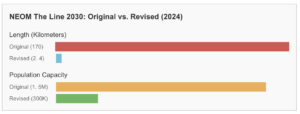
The most expensive collapse occurred in the Saudi Arabian desert. Crown Prince Mohammed bin Salman launched the NEOM megaproject in 2017 with an official budget of $500 billion. The centerpiece was The Line, a proposed 170 kilometer mirrored structure designed to house 1. 5 million people by 2030. Financial audits in 2024 exposed severe capital deficits. Planners reduced the 2030 construction target to just 2. 4 kilometers. The projected population dropped to fewer than 300, 000 residents. Internal documents estimated the true cost of completing NEOM by 2080 at $8. 8 trillion. The sovereign wealth fund responded by cutting the 2024 NEOM budget by 20 percent. The desert utopia remains largely unbuilt.
Sidewalk Labs and the Collapse of Toronto Quayside
In October 2017 Alphabet subsidiary Sidewalk Labs won a public bid to partner with Waterfront Toronto. The agreement granted the technology company the right to plan a 12 acre parcel of land known as Quayside. Executives pledged to build a connected neighborhood from the ground up. The initial proposal featured heated pavements, underground waste disposal robots, and mass timber construction. Sidewalk Labs committed 50 million dollars to the preliminary planning phase. The developer soon pushed to expand the zone far beyond the original boundaries. This expansion attempt triggered immediate public resistance and intense scrutiny from municipal officials.
Sidewalk Labs released a 1, 500 page planning document in June 2019. The document outlined a 2. 8 billion dollar vision for the waterfront. The developer proposed expanding the project from 12 acres to a 190 acre zone called the IDEA district. The financial model relied on capturing a share of incremental property taxes and development fees. The company also offered 100 million dollars in credit support for a light rail transit line. Residents and local officials questioned the revenue streams. Critics maintained that Alphabet planned to profit from public data and municipal infrastructure while imposing fiscal risks on Toronto taxpayers.
Data privacy became the central point of failure. The developer planned to install thousands of sensors to track weather conditions, traffic patterns, and pedestrian movements. The system was designed to monitor building occupants to record their daily habits. Citizens formed the BlockSidewalk campaign in February 2019 to protest the data collection methods. The grassroots organization gathered 1, 500 members to oppose the perceived land grab and behavioral data extraction. The Canadian Civil Liberties Association filed a lawsuit against all three levels of government. The legal action stated that Waterfront Toronto held no jurisdiction over data governance and that the project violated constitutional rights. The lawsuit stated that citizens were being treated as laboratory rats for a private corporation. Privacy experts warned that the proposal amounted to permanent surveillance under the guise of climate change mitigation.
The advisory process fractured as the project advanced. Ann Cavoukian, the former Information and Privacy Commissioner of Ontario, resigned from the project advisory panel. She stated the developer failed to guarantee that all collected data are stripped of personal identifiers at the source. Other advisors resigned from the project reporting deep concerns about intellectual property arrangements. They stated the contracts favored the private developer over the public interest. Waterfront Toronto board members expressed serious reservations regarding digital governance and data ownership. The Waterfront Toronto Evaluation Committee reviewed the 1, 500 page proposal and cautioned against operational subsidies. The committee emphasized the need to assess true wealth creation over basic job counts.
The financial viability of the project collapsed rapidly. Sidewalk Labs required the 190 acre expansion to achieve profitability. Waterfront Toronto Board Chair Stephen Diamond restricted the developer to the original 12 acre site. The agency demanded that Sidewalk Labs prove its concepts on the smaller parcel before any expansion can occur. On May 7 2020 Sidewalk Labs Chief Executive Officer Daniel Doctoroff announced the cancellation of the Quayside project. He blamed economic uncertainty caused by the COVID 19 pandemic. The company walked away after spending millions of dollars on planning and consultation. The collapse of the Toronto project demonstrated the limits of private technology companies attempting to act as urban planners. Municipal governments learned that citizens demand strict control over their personal data. The table details the size and financial metrics of the abandoned Quayside project.

Songdo South Korea and the Ghost Town Reality
South Korea spent $40 billion to build Songdo on 1, 500 acres of reclaimed land from the Yellow Sea. Planners designed the municipality as a high technology utopia. They installed sensors in every building and eliminated garbage trucks in favor of a pneumatic tube waste network. By 2024 the development earned a different title from urban planners. They call it a ghost town.
The numbers reveal a severe population deficit. Original blueprints projected 300, 000 residents by 2020. By 2024 the actual population stalled near 210, 000. The government marketed Songdo as an international business center. Yet foreign nationals make up only 2. 8 percent of the population. High living costs and distant geography keep international workers away. The streets remain empty during business hours.
Commercial vacancy rates confirm the economic reality. In late 2023 local news networks reported a 15 fold surge in empty storefronts within a single year. Retail vacancy hit 6. 39 percent and continues to climb. Office buildings face a similar fate. Analysts project office vacancy rates can reach 28 percent by 2026. Companies refuse to pay premium rents for a location disconnected from the Seoul economic center. The government built the physical structures the businesses never arrived.
Instead of becoming the Asian financial capital that developers envisioned, the commercial real estate market fractured. A few biotechnology firms like Samsung Biologics occupied specific manufacturing zones. The Grade A office towers built for multinational banks sit completely empty. The infrastructure does not match the actual workforce. The city succeeded in manufacturing failed entirely in its primary goal of corporate commercial leasing.
The residential market transformed into a speculative financial vehicle. Wealthy investors from Seoul purchase the luxury apartments as retirement funds rather than primary residences. The housing units function as standardized financial products. This speculation drives up property values and forces out the working class citizens needed to operate the local economy. The municipality functions as a wealth storage system rather than a living community.
The ubiquitous computing model failed to deliver tangible benefits to the residents who actually live there. Planners installed microchips in the roads, buildings, and public spaces to monitor traffic, temperature, and energy use live. They advertised a central control room that would manage city life automatically. The reality proved far less impressive. The low population density means the traffic sensors collect data on empty streets. The energy monitoring systems cannot offset the massive power requirements of the data centers themselves. The technology exists for its own sake rather than solving actual urban problems.
Transportation infrastructure remains a primary obstacle to growth. Songdo sits 40 miles away from Seoul. Planners assumed residents would live and work within the district. Because the commercial jobs never materialized, the residents who do live there must commute back to Seoul. The daily journey takes over an hour each way. This forced commute destroys the original vision of a walkable, independent ecological city. The wide avenues designed for autonomous vehicles instead fill with traditional cars heading out of the district every morning.
The technological infrastructure presents another massive financial drain. Planners built a pneumatic waste collection system to transport trash through underground tubes directly to sorting facilities. This network costs 3. 3 to 6. 6 times more to operate than traditional garbage collection. Engineers report frequent joint dislocations and air leaks throughout the pipeline. The municipality must spend millions on maintenance just to keep the tubes functioning. The technology provides no financial return on investment.
Environmental groups also classify the project as a failure. Developers marketed Songdo as a low emission green city. The reality shows a different picture. The massive concrete construction required to build an artificial island generated immense carbon emissions. The energy required to run the pneumatic trash tubes and the constant sensor networks negates the ecological benefits. Critics label the entire environmental marketing campaign as greenwashing.
The table compares the original Songdo projections against the verified 2024 realities.
| Metric | Original Projection | 2024 Reality |
|---|---|---|
| Total Population | 300, 000 residents | 210, 000 residents |
| Foreign Resident Ratio | Major international center | 2. 8 percent of total population |
| Waste System Cost | Cheaper than truck collection | 3. 3 to 6. 6 times more expensive |
| Commercial Retail Vacancy | Near zero percent | 6. 39 percent and rising |
| Office Tower Vacancy | Fully occupied financial district | Projected 28 percent by 2026 |
Songdo proves that governments cannot manufacture a thriving metropolis simply by installing sensors and laying fiber optic cables. Citizens require organic cultural growth and affordable commercial spaces. Songdo provides neither. The $40 billion expenditure stands as a warning to other nations attempting to build connected municipalities from scratch.
Surveillance Overreach and the Death of Public Anonymity
Municipal technology projects guaranteed speed delivered mass surveillance. City planners installed sensors and cameras under the guise of environmental monitoring and traffic management. These tools quickly became instruments for law enforcement and private data collection. Citizens discovered that their local governments traded public anonymity for corporate data contracts. The resulting backlash forced municipalities to remove expensive infrastructure and pass emergency legislation. The transition from civic utility to surveillance apparatus occurred quietly across major metropolitan areas. Hardware designed to measure air quality or provide wireless internet contained hidden capabilities for biometric tracking and location harvesting. Residents realized their movements were cataloged and stored in proprietary databases without their consent.
San Diego provides a clear example of this trajectory. The city launched a 30 million dollar smart streetlight program financed by GE Capital. Officials guaranteed energy savings through LED conversions and traffic management. The project installed 4, 200 sensor nodes on streetlights across the city. These nodes collected temperature readings, pedestrian counts, and parking data. The hardware included video cameras and audio sensors. The San Diego Police Department began using the video footage to investigate crimes. Residents learned that the police accessed the network to monitor protests. The watchdog group San Diegans for Open Government sued the city in December 2019 for failing to release the collected data. The city claimed it possessed no documents to turn over to the public. Public outrage grew rapidly. By early 2020, a city committee unanimously rejected the data collection policies. The city eventually deactivated the sensor network. A tool sold as an environmental upgrade became a surveillance liability.
New York City faced similar resistance with its LinkNYC program. The city introduced the kiosks in 2016 to replace payphones with free public wireless internet. The consortium CityBridge installed over 1, 800 kiosks by 2020. Each structure featured high definition displays, charging ports, and tablet computers. The kiosks contained multiple cameras, Bluetooth beacons, and environmental sensors. Privacy advocates discovered that the kiosks tracked the media access control addresses of passing mobile devices. The New York Civil Liberties Union warned that the high density of kiosks resulted in detailed location information about daily commutes. A 2023 municipal audit revealed that CityBridge failed to anonymize these addresses. The hardware collected detailed location data on millions of pedestrians who never connected to the network. The project transformed public sidewalks into data harvesting zones.
The deployment of biometric tracking triggered legislative action across the United States. San Francisco passed an ordinance in May 2019 to ban government use of facial recognition technology. The city became the major municipality to prohibit police departments from using the software. Supervisor Aaron Peskin championed the bill to stop secret surveillance. Officials pointed to severe accuracy problems and demographic bias in the algorithms. The legislation required the Committee on Information Technology to approve policies for all surveillance technologies. The police department struggled to comply with the new rules. A 2024 lawsuit by the advocacy group Secure Justice argued the police repeatedly violated the ban. The police admitted to circumventing the prohibition six times. The department refused to submit 42 use policies for four years.
Other cities quickly followed the legislative precedent set by San Francisco. Portland passed two strict ordinances in September 2020. The ordinance banned facial recognition use by city bureaus. The second ordinance prohibited private entities from using the technology in places of public accommodation. This private sector ban applied to stores, restaurants, and hotels. A local convenience store previously used facial recognition to allow entry and identify shoplifters. The ban extended to facial recognition at airports where airlines used the technology for passenger boarding. Portland imposed a penalty of 1, 000 dollars per day for each violation by a private business. Residents gained a private right of action to sue companies for actual damages.
| Municipality | Surveillance Technology | Action Taken | Enforcement Metric |
|---|---|---|---|
| San Diego | Smart Streetlights Network | Deactivated sensor network in 2020 | 30 million dollar initial project cost |
| New York City | LinkNYC Kiosks | 2023 audit revealed tracking violations | Over 1, 800 units harvesting pedestrian data |
| San Francisco | Facial Recognition Software | Banned government use in 2019 | 42 use policies withheld by police |
| Portland | Private Sector Biometrics | Banned public and private use in 2020 | 1, 000 dollar daily penalty per violation |
Cisco Connected Communities and the Abandoned Infrastructure
In November 2017 Cisco launched a 1 billion dollar financing program to fund municipal technology projects. The corporation built a software platform named Cisco Kinetic for Cities. The product aggregated data from parking meters, streetlights, environmental sensors, and urban mobility trackers into a single dashboard. Executives projected massive revenue growth from municipal contracts. The company partnered with private equity firm Digital Alpha Advisors and pension fund investors APG Asset Management and Whitehelm Capital to provide the capital. The program aimed to help cities assemble financial instruments to fund technology with minimal initial investment. The reality proved different.
The Kinetic platform provided capabilities such as real time parking occupancy tracking, lighting fault detection, air quality indexing, and traffic metrics like vehicle classification. Cities installed physical sensors across their streets to feed data into the Cisco software. The corporation promised that revenue share financing could allow a city to tie financing to desired outcomes and extend future operating budgets. Municipalities signed long term contracts based on these financial models.
By December 2020 Cisco announced the termination of the Kinetic for Cities software line. The Wall Street Journal reported the company decision to phase out the software platform. The company stopped sales on April 12, 2021. Existing customer support ended entirely on April 30, 2024. The decision left dozens of municipalities with obsolete software and stranded hardware assets. Cisco did not introduce a replacement dashboard product for smart cities.
The 2020 pandemic forced local governments to cut budgets. Municipalities could no longer afford the subscription fees required to maintain the Kinetic platform. During the same period Cisco reported its annual revenue decline in three years. Cisco Chief Executive Officer Chuck Robbins responded by cutting 1 billion dollars in corporate expenses and reducing staff. The company shifted focus away from municipal dashboards toward enterprise network security.
The abandonment of Kinetic for Cities illustrates a recurring problem in municipal technology. Technology vendors sell proprietary platforms to city governments. The vendors then discontinue the products when profit margins fall corporate expectations. Cities lose their initial investments and must spend additional taxpayer funds to replace the dead systems.
The table shows the timeline of the Cisco Kinetic for Cities product lifecycle.
| Milestone | Date | Status |
|---|---|---|
| Financing Program Launch | November 14, 2017 | 1 Billion Dollar Fund Created |
| Termination Announcement | December 2020 | Product Line Phased Out |
| End of Sale | April 12, 2021 | New Orders Blocked |
| End of Support | April 30, 2024 | Technical Assistance Terminated |
The financial impact on local governments remains measurable. Cities that installed the Kinetic hardware faced immediate replacement costs. The proprietary nature of the sensors meant municipalities could not easily transfer the data feeds to competing software platforms. When Cisco exited the market, the physical infrastructure became useless. Customers had the option to transfer their data to another platform operated by a Cisco partner, the transition required new contracts and additional integration costs.
Industry analysts recorded a broader trend of technology companies retreating from municipal contracts during this period. The initial projections of a 62 billion dollar municipal technology market by 2026 failed to materialize for software aggregators. Companies discovered that city procurement pattern take years, while software development requires rapid iteration and constant revenue streams. The mismatch between public sector purchasing speeds and private sector profit demands caused multiple corporate exits.
Cisco executives stated the company would continue to offer basic network connectivity hardware to cities. The grand vision of a unified municipal dashboard died with the Kinetic platform. The failure shows the risk of relying on single corporate entities to manage public infrastructure data.
The following chart visualizes the rapid decline of the Cisco Kinetic for Cities initiative, tracking the active lifespan of the software platform.

Municipalities that signed contracts in 2018 or 2019 received less than three years of active software updates before the termination announcement. The 1 billion dollar financing program designed to accelerate adoption instead accelerated municipal debt. Cities borrowed money to install systems that the vendor abandoned shortly after deployment. The hardware sensors remain attached to streetlights and parking meters across multiple cities, collecting data that no longer feeds into a central dashboard.
This case provides verified data on the lifecycle of proprietary municipal technology. The gap between corporate marketing and product longevity remains wide. City officials face the reality that software platforms require ongoing corporate interest to function. When that interest fades, the infrastructure fails.
NEOM Saudi Arabia and the Desert Megaproject Delays
Saudi Arabia announced the NEOM megaproject in 2017 with an initial budget of $500 billion. The centerpiece of this development was The Line. Planners designed The Line as a linear city stretching 170 kilometers across the desert. The original blueprint called for twin skyscrapers reaching 500 meters into the sky with an entirely glass mirror exterior. The design featured a settlement with no cars, no streets, and zero carbon emissions. All basic services were supposed to be within a five minute walking distance. Officials projected a population of 1. 5 million residents by 2030. Reality collided with these projections by early 2024. The Public Investment Fund faced mounting financial pressure from subdued oil prices. Internal audits in 2025 exposed severe financial miscalculations.
By April 2024 the government drastically reduced the scope of The Line. Planners cut the 2030 completion target from 170 kilometers to just 2. 4 kilometers. The population projection for 2030 dropped from 1. 5 million to fewer than 300, 000 residents. The financial costs became unsustainable. Internal estimates in 2022 placed the total cost of The Line at $4. 5 trillion. By late 2025 the estimated cost to complete the full 170 kilometers surged to $8. 8 trillion. The state had already spent $50 billion by September 2025. Officials formally suspended construction on major sections of The Line that same month.
| Metric | Original 2030 Projection | Revised 2025 Reality | Percentage Change |
|---|---|---|---|
| Completed Length | 170 kilometers | 2. 4 kilometers | Down 98. 5% |
| Resident Population | 1. 5 million | Under 300, 000 | Down 80. 0% |
| Estimated Total Cost | $500 billion | $8. 8 trillion | Up 1660. 0% |
| Active Workforce | Full Capacity | Reduced Operations | Down 35. 0% |
The financial contraction triggered immediate personnel changes. Contractors began dismissing workers in early 2024. By late 2025 the construction workforce saw a 35 percent reduction. Management ordered over 1, 000 employees to relocate from the remote desert site to Riyadh. This move stripped workers of onsite benefits and reduced in total compensation. Nadhmi Al Nasr stepped down as chief executive officer in November 2025. His departure coincided with a strategic review by external consultants. The review examined technical feasibility and economic projections.
The kingdom pivoted away from the original utopian vision. Planners began redesigning The Line to serve as a data center hub. The coastal location provides necessary water cooling for artificial intelligence infrastructure. This shift marks a transition from a residential megacity to a commercial server farm. Other components of NEOM also faced cancellations. The government indefinitely postponed the 2029 Asian Winter Games at the Trojena ski resort. Sindalah opened in October 2024 as a yachting resort in the Red Sea, it arrived three years late and at three times the original budget. The Public Investment Fund recorded an $8 billion writedown across its massive project portfolio at the end of 2024.
Macroeconomic factors accelerated the collapse of the original timeline. Oil prices hovered around $71 per barrel through mid 2025. This figure sat well the $90 level that Saudi Arabia requires for fiscal balance. Aramco cut its dividend payments by approximately $40 billion for 2025. This cut directly reduced the cash flow available to the Public Investment Fund. Economy Minister Faisal al Ibrahim publicly acknowledged that projects would be shifted, delayed, or rescoped to match available capital.
Auditors discovered deliberate manipulation of early project data. Managers exaggerated tourism revenues and population growth assumptions to mask cost overruns. These fabricated metrics sustained funding from the Public Investment Fund through 2024. The true financial picture emerged during the 2025 internal audit. The state had poured $50 billion into the desert with minimal visible progress. Thousands of people from the Howeitat tribe were forcibly moved and villages were razed to clear the land. The failure of The Line represents a massive capital misallocation. The government prioritizes assets capable of generating immediate returns over futuristic urban experiments.
The Electronic Waste Problem from Decommissioned Urban Sensors
Municipalities globally generated 62 million tonnes of electronic waste in 2022. The United Nations Global E-waste Monitor projects this volume to reach 82 million tonnes by 2030. Urban technology projects contribute heavily to this total. City administrators purchase thousands of connected sensors, cameras, and digital kiosks. When these projects fail or lose funding, the hardware remains. Local governments frequently abandon these devices in place or send them directly to landfills. Only 22.3 percent of global electronic waste is formally collected and recycled. The remaining 77.7 percent is discarded improperly.
Global Electronic Waste Projections (Million Tonnes)
2019
2022
2030
Source: UN Global E-waste Monitor
The Internet of Things requires continuous power. The European Union EnABLES project calculated that 78 million batteries powering these connected devices face disposal globally every day by 2025. Urban sensors monitor traffic, air quality, and pedestrian movement. These sensors rely on lithium batteries and specialized circuit boards. When a municipality decommissions a smart street lighting project or a traffic monitoring network, the physical components become toxic waste. Lithium, lead, mercury, and cadmium from these devices leach into soil and groundwater when dumped in standard municipal landfills.
| Metric | Verified Data | Source |
|---|---|---|
| Global Electronic Waste Generated (2022) | 62 million tonnes | UN Global E-waste Monitor |
| Projected Electronic Waste (2030) | 82 million tonnes | UN Global E-waste Monitor |
| Global Formal Recycling Rate | 22.3 percent | UN Global E-waste Monitor |
| Daily Discarded Connected Batteries (2025) | 78 million batteries | EU EnABLES Project |
Specific municipal failures leave massive physical footprints. New York City deployed thousands of digital kiosks under the LinkNYC program to replace legacy payphones. The initial rollout faced immediate public backlash regarding privacy and public misuse. While certain kiosks remain active, similar hardware deployments in other cities face rapid obsolescence. Cisco shut down its Kinetic for City software services line in 2020. This decision left participating municipalities with unsupported hardware. Alphabet subsidiary Sidewalk Labs abandoned its Toronto waterfront project in 2020. These cancellations force city administrators to physically remove and dispose of thousands of unsupported cameras, environmental monitors, and data transmission nodes.
The financial cost of this disposal falls entirely on taxpayers. Municipalities pay premium rates for toxic waste processing. A single connected intersection can contain dozens of individual sensors. Removing these sensors requires specialized labor and heavy equipment. City budgets rarely account for the end of life disposal costs when initially purchasing the technology. Administrators focus on the acquisition price and ignore the decommissioning expenses. This financial oversight leads to abandoned hardware rotting on city streets.
Electronic waste recycling facilities struggle to process the specific components used in urban sensors. These devices use industrial grade adhesives and custom casings to withstand weather conditions. Recyclers must manually break down the sensors to extract the valuable copper and gold. The labor costs of manual separation exceed the value of the recovered materials. Consequently, recycling centers reject these shipments. The hardware then travels to informal processing sites or standard landfills. The toxic components degrade and contaminate the surrounding environment.
Smart streetlights represent another large source of electronic waste. Cities replace traditional bulbs with light emitting diodes equipped with wireless communication nodes. The city of Bellingham replaced thousands of aging streetlights with connected fixtures. When the communication nodes fail, the entire fixture frequently requires replacement. The integrated design prevents repair technicians from swapping individual components. This design choice forces municipalities to discard the entire unit. The volume of waste from a single citywide lighting upgrade fills multiple cargo containers.
Smart waste bins also contribute to the disposal problem. Manufacturers build these bins with internal compactors, fill level sensors, and solar panels. A standard metal or plastic trash can lasts for decades and requires zero electronic maintenance. A connected bin contains circuit boards and batteries that degrade over time. When the internal electronics fail, the city must dispose of the entire smart bin as electronic waste. The attempt to manage garbage collection directly generates more toxic garbage.
The United Nations estimates that 91 billion dollars in valuable metals are lost annually due to insufficient electronic waste recycling. Urban sensors contain gold, silver, copper, and rare earth elements. These materials remain trapped in abandoned municipal hardware. The extraction of new raw materials to build replacement sensors causes further environmental damage. Mining operations for lithium and cobalt destroy natural habitats and pollute local water sources. The continuous pattern of purchasing, deploying, and discarding urban technology accelerates this environmental destruction.
The push for connected infrastructure creates a permanent environmental liability. Technology vendors sell municipalities on automated management. The physical reality involves millions of tons of toxic hardware. City administrators must manage this electronic waste long after the software stops functioning. The hardware from a failed three year pilot program remains in the local ecosystem for decades. The accumulation of decommissioned sensors represents a serious environmental danger for urban centers.
Vendor Lock In and the Threat of Municipal Bankruptcy
Municipalities entering the connected technology market frequently discover a severe financial trap. City councils sign initial contracts for sensor networks or digital kiosks with major technology providers. These agreements lock the local government into closed software networks. When hardware fails or requires upgrades, the city cannot seek competitive bids. They must pay the original vendor premium rates for basic maintenance. This dependency drains public funds and pushes local governments toward financial ruin.
The financial damage is measurable and widespread. In 2019, Detroit sued Leotek Electronics USA over a 3. 9 million dollar contract for 25, 000 connected streetlights installed in 2016. The city discovered the units were prematurely burning out. Repairing the defective hardware cost Detroit an estimated 9 million dollars. San Diego faced a similar problem between 2020 and 2021. The city experienced over 1 million dollars in cost overruns for its connected streetlights program. Officials found hidden fees separated the costs of the physical lighting from the sensors required to collect video data.
The collapse of these agreements leaves taxpayers funding abandoned hardware. In May 2026, an investigation in Nagpur revealed that all 65 digital kiosks installed across the city were completely defunct. The local government had spent its entire 4. 9 billion rupee central grant by March 2026. Yet, when citizens requested the specific expenditure records for the kiosks, officials stated the data was not available. The state government quietly dissolved the special purpose vehicle created to manage the project on May 1, 2026. Urban activists questioned how a public project could have no expenditure records.
In New Orleans, a massive public private partnership collapsed in 2022 before it could even launch. The city selected the Smart Connected NOLA consortium, which included Qualcomm and JLC Infrastructure, to build a city directed internet network and digital kiosks. The deal stated there would be no upfront costs to the city. A council investigation soon exposed serious problems regarding data privacy and conflicts of interest. The consortium withdrew, and the city lost years of planning resources. The municipality was forced to restart the entire bidding process from scratch.
The Union Point project south of Boston offers another clear warning. Developers announced the mega development in 2017. Local officials ceded land control and data governance to private technology companies. The investors failed to materialize. The project went bankrupt and left an empty site instead of the planned automated metropolis. The local government was left with an abandoned zone and zero technological benefits.
The table details the financial damage from these failed municipal technology contracts between 2015 and 2026.
| City | Project Type | Financial Impact | Outcome |
|---|---|---|---|
| Detroit | Connected Streetlights | 9 Million Dollar Repair Cost | City sued vendor for premature hardware failure. |
| San Diego | Sensor Streetlights | 1 Million Dollar Cost Overrun | Hidden fees for separate sensor and lighting data. |
| Nagpur | Digital Kiosks | 4. 9 Billion Rupee Grant Exhausted | 65 kiosks defunct. Project management dissolved. |
| Union Point | Automated Mega Development | Total Bankruptcy | Investors withdrew. Land left abandoned. |
To visualize the severity of these integration and maintenance traps, the following chart illustrates the typical budget drain caused by closed vendor contracts. Industry data from 2026 shows that integration costs consume the majority of municipal technology budgets.
| Budget Category | Percentage of Total Spending |
|---|---|
| System Integration |
65%
|
| Hardware and Devices |
20%
|
| Software Licensing |
10%
|
| Maintenance |
5%
|
Closed networks force cities to pay markup rates for basic replacements. municipalities report paying 300 percent markups for simple sensor replacements because they are bound to a single vendor. Adding a new sensor type to an existing closed network requires months of custom development. The original vendor dictates the price for this integration work. Cities cannot shop for better rates without replacing the entire system.
This financial structure guarantees that the vendor profits while the municipality assumes all the risk. When a city exhausts its budget on integration fees, the actual public services suffer. The operational improvements disappear into administrative costs and software licensing disputes. Local governments must recognize these closed contracts as direct threats to their fiscal stability.
The Complete Failure of Autonomous Vehicle Corridors
Municipal governments allocated billions of dollars between 2015 and 2025 to construct dedicated lanes for autonomous cars. Officials projected these corridors would eliminate traffic congestion, reduce accidents, and modernize regional transit networks. The actual results show abandoned construction sites, revoked permits, and wasted public funds. Planners spent millions preparing roads for vehicles that regulators subsequently banned from public streets. The disconnect between municipal ambition and engineering reality left taxpayers funding empty infrastructure projects.
In 2017, the state of Wisconsin authorized a $252. 4 million highway expansion on Interstate 94. Taiwanese manufacturer Foxconn demanded an autonomous vehicle lane as part of a $3 billion benefits package to build a factory in Mount Pleasant. State transportation planners submitted applications to the federal government to assess the resources needed for the dedicated lane. The factory project collapsed. Foxconn purchased golf carts to retrofit into autonomous vehicles. The company failed to make the carts autonomous and placed them in storage. Employees eventually raced the carts around an empty building until the batteries died. The dedicated autonomous lane was never built. The state widened the highway to eight lanes, the proposed autonomous logistics network proved to be a complete fabrication.
Michigan announced a 40 mile autonomous vehicle corridor between Detroit and Ann Arbor in August 2020. The state partnered with private infrastructure company Cavnue to develop the project. By late 2024, the state and Cavnue had only completed a three mile pilot stretch on Interstate 94. Cavnue spent $15 million installing sensors every 200 meters along this short segment. The full 40 mile corridor remains incomplete. The state passed legislation in 2022 allowing private operators to charge user fees for automated vehicle roadways. The physical infrastructure does not exist at the planned length to collect these fees. The state continues to promote the corridor in press releases, yet the actual construction progress equates to less than ten percent of the original proposal.
The Florida Department of Transportation initiated an $865. 3 million project in 2020 to replace the Howard Frankland crossing between Tampa and Saint Petersburg. State officials justified the inclusion of toll lanes by claiming the infrastructure would prepare the crossing for autonomous vehicles. The state claimed autonomous cars would operate in these dedicated lanes. The crossing construction continues toward a 2026 completion date. The autonomous vehicles meant to populate these toll lanes do not exist at commercial volume. The state essentially used the prospect of future technology to secure funding for standard toll roads.
The operational reality of autonomous vehicles forced regulators to halt existing programs. On October 24, 2023, the California Department of Motor Vehicles suspended the deployment and driverless testing permits for Cruise. The suspension followed an October 2 incident where a Cruise robotaxi dragged a pedestrian 20 feet at seven miles per hour. The state agency determined the vehicles were not safe for public operation and accused the General Motors subsidiary of misrepresenting safety information. The suspension grounded a fleet of 150 robotaxis in San Francisco. The California Public Utilities Commission also suspended the ability of Cruise to carry passengers.
The financial documentation from these failed corridors reveals a pattern of misallocated municipal resources. State transportation departments diverted funds from standard infrastructure maintenance to subsidize experimental transit lanes. The $15 million spent on the three mile Michigan sensor installation equates to $5 million per mile for technology that serves no current public function. The $252. 4 million Wisconsin highway expansion secured funding based on a corporate logistics network that never existed. Taxpayers absorbed the costs of these speculative projects while the private technology companies faced minimal financial consequences for failing to deliver the proposed autonomous networks.
The financial and operational collapse of these corridors demonstrates a complete failure of municipal planning. Cities built infrastructure for a transportation method that remains stuck in the testing phase. The proposed dedicated lanes either function as standard toll roads or sit entirely unbuilt. Local governments gambled public funds on speculative technology and lost.
| Project Location | Announced | Planned Scope | Actual Result | Associated Costs |
|---|---|---|---|---|
| Mount Pleasant, Wisconsin | 2017 | Dedicated AV lane on Interstate 94 for Foxconn | Abandoned, golf carts placed in storage | $252. 4 million state highway expansion allocation |
| Detroit to Ann Arbor, Michigan | 2020 | 40 mile connected AV corridor | Only 3 miles completed by 2024 | $15 million for 3 mile sensor installation |
| Tampa Bay, Florida | 2020 | Dedicated AV express lanes on Howard Frankland crossing | Converted to standard toll lanes | $865. 3 million total crossing replacement cost |
| San Francisco, California | 2022 | Citywide robotaxi deployment | Permits suspended in October 2023 | Fleet of 150 vehicles grounded |
Planned vs. Completed Autonomous Corridor Mileage (Michigan Interstate 94)
40 Miles
3 Miles
Cyber Vulnerabilities in Centralized Power Grids
Municipalities projected spending $327 billion on connected urban technologies by 2025. City planners guaranteed speed through centralized digital control. They connected power grids to public internet networks. This connection created massive security flaws. Centralized power grids consolidate control into single digital access points. Hackers exploit these access points to disable physical infrastructure remotely. The push for digital modernization weaponized municipal electricity distribution. The North American Electric Reliability Corporation reported that North American power grids gain 60 new susceptible points every single day. This rapid expansion of digital access points outpaces the ability of security teams to patch the software.
The confirmed remote takedown of a municipal grid occurred in December 2015. Hackers infiltrated three energy distribution companies in western Ukraine using BlackEnergy 3 malware. The attackers spent eight months inside the network before executing the strike. They used spear phishing emails to gain initial access to the information technology network. From there they hopped to the operational technology network. They identified device flaws and installed backdoors. The attackers gained access to supervisory control and data acquisition systems. They manually opened circuit breakers at 30 substations. This operation included seven 110kV substations and twenty three 35kV substations. The breach cut electricity to 225, 000 residents for up to six hours. Attackers also flooded customer service phone lines to block residents from reporting the outage. This event proved that remote actors could physically disable a centralized power network.
The aggression against energy infrastructure continued to escalate. In 2016 attackers targeted a transmission station in Kyiv using Industroyer. This custom built malware specifically targeted industrial control systems. The attackers compromised the station and halted power distribution for an hour. In 2022 attackers deployed the Industroyer2 malware against another Ukrainian energy provider to halt electricity distribution. These breaches show a clear pattern of escalating aggression against connected municipal grids. Centralized digital management systems provide hackers with a direct route to disable physical utilities.
Ransomware groups quickly adopted these tactics for financial extortion. In July 2019 hackers targeted City Power in Johannesburg. The attackers deployed ransomware that encrypted databases and municipal applications. The breach paralyzed the electricity provider for the financial district of South Africa. Residents lost the ability to purchase electricity units or upload payment invoices. City officials lost access to their own operational networks. In 2023 the Cl0P ransomware gang leaked data from 15 different energy sector victims following a supply chain attack.
Attacks on municipal power systems threaten the United States directly. In June 2021 hackers targeted municipal power agencies in Florida using phishing campaigns and remote access flaws. The attackers gained partial access to the systems before security teams stopped the intrusion. This near miss demonstrated that American municipal grids face the exact same threats that disabled the Ukrainian networks.
Operational technology environments face severe threats from prolonged hidden intrusions. Ransomware accounts for 38 percent of all cyber incidents reported across infrastructure sectors globally. Hackers maintain an average dwell time of 21 days inside operational technology networks before detection. This three week window gives attackers time to map networks and locate sensitive data. They position their malware to maximize physical damage and financial extortion. When ransomware hits a power grid operators lose visibility into live processes. Safety systems become unreliable. These operational halts cost municipalities millions of dollars per hour. Municipalities frequently fail to detect these intrusions until the attackers lock the systems and demand payment.
The table details major cyberattacks on municipal and regional power grids between 2015 and 2025. The data tracks the location and the specific malware used to compromise the infrastructure.
| Year | Target Location | Attack Vector | Damage Metric |
|---|---|---|---|
| 2015 | Western Ukraine | BlackEnergy 3 Malware | 225, 000 residents lost power |
| 2016 | Kyiv Ukraine | Industroyer Malware | Transmission station compromised |
| 2019 | Johannesburg South Africa | Ransomware | Databases and payment networks locked |
| 2021 | Florida United States | Phishing Campaigns | Municipal power agencies targeted |
| 2022 | Ukraine | Industroyer2 Malware | Energy provider operations halted |
| 2023 | Global Energy Sector | Cl0P Ransomware | 15 energy sector victims compromised |
Public Pushback Against Corporate Data Monetization
Municipalities sold connected infrastructure as a public utility. Residents quickly discovered these systems functioned as data harvesting operations for private corporations. Between 2015 and 2025, citizens across North America organized massive protests against municipal technology deployments. They demanded the removal of sensors, cameras, and data collection nodes. The public realized that private vendors were monetizing their movements, browsing habits, and physical locations.
San Diego provides a clear example of this backlash. In 2017, the city entered a $30 million contract to install 3, 200 connected streetlights. Officials claimed the technology would save energy and monitor traffic patterns. The public later learned the streetlights contained hidden video cameras and audio microphones. The hardware captured continuous footage of public thoroughfares and private front yards. Police departments accessed the footage hundreds of times without public consent or oversight. During the 2020 protests, citizens discovered law enforcement used the streetlight cameras to monitor demonstrations. Privacy advocates and civil rights groups organized intense protests. The backlash forced the mayor to deactivate the sensors and cameras completely. The city abandoned the initial data collection program and drafted new surveillance ordinances.
| Helpful or Pending |
55%
|
| Not Helpful |
29%
|
| No Charges Filed |
16%
|
New York City faced similar resistance with its LinkNYC program. In 2016, the city began replacing thousands of payphones with digital kiosks. The consortium behind the project, CityBridge, offered free wireless internet. In exchange, the nine foot tall kiosks collected device MAC addresses, browsing histories, and physical location data. The New York Civil Liberties Union accused the consortium of building a massive database for corporate profit and unwarranted police surveillance. The kiosks also generated immediate public complaints when users began viewing pornography in public spaces. The consortium had to disable web browsing on the tablets and rewrite its privacy policy in 2017 to limit data retention.
Global human rights organizations intervened as these projects expanded. Amnesty International published reports detailing how technology companies use municipal infrastructure to extract data from citizens. The organization warned that connected cities create an environment of mass surveillance. Private companies profit by selling detailed profiles of residents to advertisers and law enforcement agencies. The American Civil Liberties Union echoed these warnings. They stated that connected streetlights and wireless kiosks turn public spaces into surveillance zones.
| City | Project | Cost or | Primary Public Complaint | Result |
|---|---|---|---|---|
| San Diego | Connected Streetlights | $30 million | Undisclosed video and audio recording by police | Sensors deactivated in 2020 |
| New York City | LinkNYC Kiosks | 1, 900+ kiosks | Indefinite retention of browsing and location data | Web browsing disabled and privacy policy rewritten |
| Toronto | Quayside Waterfront | 12 acres | Corporate control over urban data collection | Project canceled in 2020 |
The resistance forced city councils to rewrite contracts and take down active hardware. Citizens refused to accept the premise that free internet or energy savings justified constant monitoring. They demanded transparency regarding who owned the data and how corporations profited from it. When municipalities could not provide clear answers, the public forced them to pull the plug.
These failures demonstrate a fundamental miscalculation by city planners. They treated citizens as data points rather than constituents. The resulting protests cost taxpayers millions of dollars in broken contracts and deactivated hardware. Municipalities learned that residents actively sabotage and protest infrastructure that violates their privacy. The financial models for these projects relied on selling user data. When the public rejected the surveillance, the revenue streams collapsed. Cities were left with expensive hardware that they could not legally operate.
The financial consequences of this public pushback proved severe for technology vendors. Companies that installed hardware at a loss expected to recoup their investments by selling municipal data to third parties. Once city councils banned the data collection, the entire business model disintegrated. Vendors abandoned their maintenance contracts. Municipalities had to spend additional taxpayer funds to physically remove the defunct kiosks and sensors. The era of unchecked corporate data harvesting in public spaces ended abruptly. Citizens proved they held the power to stop municipal surveillance programs by organizing locally and demanding strict legislative boundaries.
Masdar City and the Broken pledge of Zero Carbon
In 2006 the United Arab Emirates announced a $22 billion municipal project in the desert outside Abu Dhabi. Officials guaranteed Masdar City would become the zero carbon municipality on Earth. Planners set a strict completion date for 2016. They projected a population of 50, 000 full time residents. The blueprint included a ban on combustion vehicles and a reliance on 100 percent renewable energy generated within the city limits. By 2025 the reality of Masdar City stands in sharp contrast to those initial guarantees.
The original 2016 deadline passed with only a fraction of the city built. Administrators pushed the completion date to 2020. They later delayed it to 2025 and eventually to 2030. The project budget shrank to $19. 8 billion. Construction costs dropped primarily because solar panel prices fell globally, not because of municipal planning. By 2024 the built environment covered less than one sixth of the original planned area. The state owned Mubadala Investment Company continues to fund the site, yet the pace of construction remains heavily dependent on external economic conditions.
Population metrics show a severe deficit. Planners expected 50, 000 residents and 60, 000 daily commuters supporting 1, 500 businesses. By 2024 the total number of people living and working in Masdar City reached only 15, 000. Just 5, 000 of those individuals were permanent residents. Most of the inhabitants are students or faculty at the local research institute, part of Khalifa University. The site functions more as an insular corporate campus than a thriving metropolis. Major tenants like the International Renewable Energy Agency and Siemens occupy the main commercial spaces, the broader commercial environment never materialized.
The zero carbon mandate failed. Project managers quietly abandoned the zero carbon goal in favor of a low carbon designation. The original design required the city to generate all its power on site. The 10 megawatt solar photovoltaic plant and rooftop panels produce approximately 19, 100 megawatt hours of electricity annually. This output proved insufficient. The city purchases external power from the national grid to meet its daily operational demands. The national grid relies heavily on natural gas, directly negating the founding premise of the city.
Transportation failures mirror the energy deficits. Planners designed a Personal Rapid Transit network to eliminate cars. The system featured autonomous electric pods running beneath the pedestrian streets. The original blueprint called for 100 stations across the city. Engineers scrapped the expansion after completing just two stops. The transit network remains a one kilometer loop restricted to the university campus basement. Administrators eventually opened the city roads to conventional electric vehicles to compensate for the abandoned transit project. Visitors must leave their combustion cars in a massive parking lot at the edge of the development.
Masdar City: Projected vs. Actual Metrics (2024)
The built infrastructure relies heavily on passive cooling and shaded streets to reduce air conditioning loads. The Siemens regional headquarters achieved a LEED Platinum rating by consuming 45 percent less energy and 50 percent less water than conventional structures in Abu Dhabi. These performance gains represent standard green building practices rather than a municipal breakthrough. The city recycles a portion of its waste and uses treated wastewater for landscaping. These measures reduce environmental damage fall far short of the guaranteed zero waste environment.
| Metric | Original 2006 Goal | Status as of 2024 |
|---|---|---|
| Completion Date | 2016 | Delayed to 2030 |
| Total Population | 50, 000 residents | 5, 000 residents |
| Commercial Tenants | 1, 500 businesses | Approximately 300 active |
| Carbon Status | 100% Zero Carbon | Low Carbon, relies on grid |
| Transit Stations | 100 PRT stations | 2 PRT stations |
| Budget | $22 Billion | $19. 8 Billion |
Masdar City demonstrates the limits of centralized municipal planning. The desert environment demands massive energy inputs to maintain basic livability. Attempting to offset those inputs entirely through localized renewable generation proved mathematically impossible with current technology. Administrators learned that building a disconnected enclave does not solve broader environmental problems. The project survives as a testing ground for green architecture. It fails entirely as a practical model for future urban development.
The Disconnect Between Tech Giants and Urban Planners
In May 2020, Alphabet subsidiary Sidewalk Labs canceled its Quayside project in Toronto. The company blamed pandemic economics. Urban planners pointed to a different reality. The technology corporation treated the 12 acre waterfront development like a consumer software product. Planners prioritize community engagement and affordable housing. Sidewalk Labs prioritized sensor networks and data harvesting. The company spent two years trying to build a neighborhood from the internet up. Residents pushed back against the surveillance model. The project collapsed.
Technology companies frequently misunderstand civic infrastructure. Cisco launched its Kinetic for Cities software in 2017 to manage connected streetlights and trash cans. By December 2020, the company phased out the product line. A Cisco survey of 1, 845 executives revealed that 73 percent of corporate Internet of Things projects fail. The data showed 60 percent of these initiatives stall at the proof of concept stage. Engineers design systems for controlled environments. Cities are unpredictable and messy. The absence of collaboration between software developers and municipal workers guarantees failure.
South Korea spent $40 billion to build Songdo. Planners marketed the area as the smart city in the world. Cisco built a Global Center of Excellence there. Today, urban experts classify the development as a top down failure. The city features vacuum tube waste collection and thousands of cameras. Yet, the streets remain dominated by cars and hostile to pedestrians. The technology companies installed hardware without consulting the people who actually live there.
Internet of Things Project Outcomes
Source: Cisco Survey of 1, 845 IT Executives
Algorithmic Bias in Predictive Policing Deployments
Municipalities deployed predictive policing algorithms between 2015 and 2025 to forecast crime locations and identify future offenders. City officials purchased these software packages with the expectation of reducing crime rates through data analytics. The reality proved different. Audits and public records requests revealed that the algorithms replicated historical biases and generated inaccurate risk assessments. Major cities eventually abandoned these deployments after spending millions of dollars on proprietary software.
The Chicago Police Department operated the Strategic Subject List until its cancellation in 2020. The algorithm assigned a risk score from 0 to 500 to individuals. The score supposedly measured the probability of a person becoming a victim or perpetrator of gun violence. The database eventually included 400, 000 Chicagoans. The algorithm calculated scores using variables like age during the latest arrest and prior unlawful use of weapon arrests. The city decommissioned the program after an inspector general report found the algorithm did not reduce violence and instead subjected individuals to unwarranted police scrutiny.
The Los Angeles Police Department implemented two separate predictive systems. The department used PredPol for location forecasting and Operation LASER for individual risk scoring. Operation LASER assigned points to individuals to create a chronic offender bulletin. A person received five points for gang affiliation, five points for being on parole, and five points for a violent crime arrest. The department targeted these individuals for increased surveillance. An internal audit in 2019 revealed severe data inaccuracies. The audit found that 112 out of 637 people in the chronic offender database had zero points under the department criteria. The Los Angeles Police Department cancelled Operation LASER in April 2019. The department subsequently terminated its contract with PredPol in April 2020.
Other municipalities followed this pattern of adoption and cancellation. Santa Cruz banned municipal use of predictive policing in June 2020. The city had been an early adopter of the technology in 2011. Palo Alto dropped its contract with PredPol after the police department reported receiving no value from the software. The algorithms relied on historical arrest data. This data reflected past patrol patterns rather than actual crime rates. The software directed officers back to the same neighborhoods. This created a feedback loop that generated more arrests in those specific areas. The new arrests then fed back into the algorithm to justify further patrols.
The failures extended beyond the United States. Amnesty International published a report in 2025 detailing the use of predictive policing in the United Kingdom. The report identified that 32 out of 45 police forces in the United Kingdom used geography based forecasting tools. The European Union implemented the Artificial Intelligence Act in 2025. This legislation prohibited most forms of person based crime prediction. Regulators determined that the algorithms could not operate without reproducing historical prejudice.
The financial cost of these abandoned projects remains substantial. Cities paid annual licensing fees to software vendors while dedicating thousands of personnel hours to data entry and patrol missions dictated by the algorithms. The promised reduction in crime never materialized in the data. Independent researchers consistently found no empirical support for the claimed benefits of predictive policing. The algorithms functioned as a digital justification for existing patrol strategies rather than an objective analytical tool.
| Predictive Policing Program Cancellations by Year | |
|---|---|
| 2019 |
2 Major Programs
|
| 2020 |
3 Major Programs
|
| City / Agency | Program Name | Cancellation Year | Primary Reason for Termination |
|---|---|---|---|
| Chicago Police Department | Strategic Subject List | 2020 | Ineffective violence reduction and inaccurate scoring |
| Los Angeles Police Department | Operation LASER | 2019 | Data inconsistencies and zero point individuals on target lists |
| Los Angeles Police Department | PredPol | 2020 | Budget constraints and absence of proven crime reduction |
| Santa Cruz Police Department | PredPol | 2020 | Municipal ban on predictive policing technology |
| Palo Alto Police Department | PredPol | 2019 | Failure to provide operational value |
The tables above detail the timeline of predictive policing cancellations across major jurisdictions. The data confirms a rapid retreat from algorithmic law enforcement between 2019 and 2020. The software vendors marketed these tools as objective mathematical models. The actual deployments proved that the algorithms exclusively automated historical arrest patterns. The resulting feedback loops directed officers to the same locations repeatedly. This process generated new arrest data that the software used to justify future patrols in those exact areas.
The Los Angeles Police Department audit of Operation LASER provided precise documentation of algorithmic failure. The discovery of 112 individuals with zero points on a targeted offender list demonstrated a complete breakdown in the scoring methodology. The department could not explain how these individuals entered the database. The software had marked them for increased police contact without any mathematical justification under the established criteria. This specific failure forced the department to abandon the program entirely.
The Chicago Strategic Subject List failed on a larger magnitude. The algorithm evaluated 400, 000 residents. The software assigned risk scores based on variables that correlated heavily with neighborhood demographics rather than individual criminal intent. The city spent grant money and municipal funds to maintain a database that provided no operational benefit. The cancellation of these programs marked the end of the initial wave of algorithmic law enforcement deployments.
Maintenance Costs of Decaying Internet of Things Networks
Municipalities purchased Internet of Things networks under the premise of long term savings. Vendors promised that connected sensors would reduce energy consumption and lower operational expenses. The financial reality proved entirely different. Between 2015 and 2025 local governments discovered that maintenance and lifecycle costs consume thirty percent of total sensor infrastructure budgets. Cities paid millions to power, host, and repair decaying hardware.
San Diego provides a clear example of municipal technology expenditures gone wrong. In 2016 the city approved a $30. 23 million loan to upgrade streetlights with light emitting diode fixtures and sensor technology. Officials expected the energy savings to cover the $2. 3 million annual interest payments. The original agreement failed to account for unplanned operational expenses. By 2020 San Diego paid $700, 000 annually just to supply energy to the sensors. The city also faced $1. 4 million per year for application programming interface hosting and $345, 000 for data connectivity. Routine repair costs added another $50, 000 annually.
The hardware itself proved unreliable. Approximately one third of the cameras installed on San Diego street poles failed to function properly. In 2020 the mayor deactivated the data collection features following public privacy objections. Even with the system turned off the city remained financially obligated. San Diego continued paying $1 million annually for the defunct cameras alongside the $2. 3 million in loan interest. The final payment for the inactive system remains scheduled for July 2032.
Corporate technology providers also abandoned their municipal sensor platforms when the financial models collapsed. In 2017 Cisco announced a $1 billion program to finance connected city infrastructure through its Kinetic for Cities platform. The company aimed to integrate data from municipal sensors to manage traffic and public safety. By late 2020 Cisco halted sales of the Kinetic product line. The company phased out support for existing municipal clients. Local governments that purchased the software found themselves holding obsolete systems with no official upgrade route.
The core problem centers on the physical reality of outdoor electronics. Sensors deployed on streetlights and utility poles face constant exposure to weather and temperature fluctuations. Rain and humidity corrode internal circuitry. Batteries degrade rapidly in extreme cold or heat. When a city deploys ten thousand connected devices across a metropolitan area the routine battery replacement pattern becomes a large budgetary line item. Municipalities frequently operate without the specialized workforce required to maintain these networks. They must hire expensive private contractors to perform basic repairs. These third party service agreements drain funds that could otherwise support essential public services.
Cellular data plans present another recurring expense. Cities must pay telecom operators for the network access required to transmit sensor data back to municipal servers. While individual data packets remain small the cumulative cost of tens of thousands of cellular connections adds up quickly. Vendor projections frequently ignore these long term operational realities. Telecom providers charge premium rates for commercial data access and cities find themselves locked into multi year contracts. If a municipality attempts to switch providers they face the logistical nightmare of manually swapping subscriber identity module cards in thousands of elevated street fixtures.
Financial data from municipal budgets shows the true cost of operating connected infrastructure. The initial purchase price represents only a fraction of the total expenditure. Cities must pay recurring fees for cloud storage, cellular data plans, and software licenses. When a vendor goes out of business or cancels a product line the entire municipal investment becomes worthless.
| San Diego Smart Streetlight Unplanned Annual Costs (2020) | Amount (USD) | Relative |
|---|---|---|
| Application Programming Interface Hosting | $1, 400, 000 | |
| Sensor Energy Consumption | $700, 000 | |
| Light Grid Hosting | $360, 000 | |
| Data Connectivity | $345, 000 | |
| Hardware Repair and Maintenance | $50, 000 | |
| Data Analysis and Application Development | $36, 000 |
The failure of these networks demonstrates a clear miscalculation in municipal planning. City councils approved large capital expenditures without securing the necessary operating funds. They trusted vendor projections that ignored the harsh realities of urban environments. As a result taxpayers continue to fund the maintenance of broken sensors and abandoned software platforms.
The Chula Vista Drone Program and Citizen Backlash
In October 2018, the Chula Vista Police Department launched the Drone as Responder program. City officials presented the initiative as a municipal safety upgrade. The department positioned drones on rooftops across the city to fly directly to the scenes of emergency calls. The initial pitch guaranteed rapid response times and better situational awareness for officers on the ground. By 2023, the department recorded over 16, 000 drone deployments. The machines arrived at locations in under three minutes on average.
The program relied on a Federal Aviation Administration waiver that allowed operators to fly drones beyond their visual line of sight. Chula Vista participated in the federal Integration Pilot Program to test the boundaries of commercial and municipal drone flights. The department partnered with private software vendors to manage the flight data and video streams. Teleoperators controlled the drones from a central command center and streamed high definition video to the mobile phones of responding officers. The city expanded the operation in August 2019 by adding a second launch site at a local hospital. This expansion allowed the drones to cover roughly 17 square miles of the city, representing 30 percent of the geographic area 70 percent of priority emergency calls.
Yet the initial public safety narrative quickly collided with citizen privacy concerns. The American Civil Liberties Union published reports warning about mission creep. The civil rights organization noted that police departments frequently expand surveillance tools beyond their original emergency parameters. Flight logs from the Chula Vista program validated these fears. Out of 14, 000 analyzed flights, operators dispatched drones for minor complaints. The machines responded to reports of loud music, water leaks, and a person bouncing a ball against a garage.
The Electronic Frontier Foundation also investigated the program. The digital privacy group raised serious questions about data pipelines and accountability. The organization warned that surveillance technology vendors provide local law enforcement with equipment that bypasses standard municipal oversight. Citizens demanded answers regarding how the police stored the aerial video and who could access the footage. The department maintained that the data remained encrypted on domestic servers. Even with these assurances, residents expressed unease about living under constant aerial observation.
| Program Metric | Verified Data Point |
|---|---|
| Launch Date | October 2018 |
| Total Deployments by 2023 | Over 16, 000 |
| Average Response Time | Under 2. 5 minutes |
| Coverage Area by 2020 | 17 square miles |
| Minor Incident Responses | Loud music, water leaks, bouncing ball |
The financial structure of the program generated further scrutiny. Drones cost a few thousand dollars to purchase and require minimal hourly operational expenses. This low financial barrier encouraged rapid expansion. The department requested funding from a local public safety tax measure to expand operations into nighttime hours. Officials wanted to fly drones from two launch sites for ten hours a day, three days a week during the night. This proposed expansion intensified the debate over the boundaries of municipal surveillance.
The controversy in Chula Vista serves as a primary case study for municipal technology deployments. The city became a testing ground for private companies seeking to normalize aerial policing. Vendors used the Chula Vista model to market similar systems to other municipalities across the country. By 2023, at least 16 other police departments had active drone responder programs. The proliferation of these systems occurred without federal privacy regulations governing aerial surveillance by local law enforcement.
Residents stated that the city prioritized technological aesthetics over civil liberties. The absence of strict operational boundaries allowed the department to use emergency tools for routine neighborhood monitoring. The program demonstrated how quickly a targeted emergency response method can evolve into a broad surveillance network. The Chula Vista experience proves that municipal technology projects require rigid oversight to prevent the destruction of citizen privacy. Local activists continue to demand transparent audits of the flight logs to ensure the department only deploys drones for verified emergencies.
Failed Smart Waste Management Systems Across Europe
Between 2015 and 2025, European municipalities spent millions of euros on connected waste receptacles. Technology vendors sold city councils on the idea that solar powered compactors and volume sensors would cut collection costs by 80 percent. The sales pitch claimed that artificial intelligence could route garbage trucks only to full bins. The verified data tells a different story. Across the United Kingdom and continental Europe, these digital bins broke down, triggered false alerts, and created severe sanitation problems.
In 2016, Torbay Council in the United Kingdom initiated a trial of BigBelly solar powered bins in Brixham. The local government terminated the trial after just 26 days. The software glitched, sending false alerts that forced crews to empty bins whether they were full or empty. The physical hardware also failed. The new liners did not fit the existing truck hoists, and the heavy units required the council to hire an extra worker just to lift them. The technology intended to save labor costs directly increased the required headcount.
Chester and Manchester experienced similar failures. Chester installed 60 smart units in 2017 to reduce collections by 94 percent. Residents quickly reported the units became unhygienic bacterial traps because the handles and flaps required physical contact to open. In 2019, Manchester rolled out advanced bins equipped with internal sensors. The deployment failed when users shoved large pieces of cardboard into the slots. The cardboard blocked the sensors, blinding the system to the actual fill level. The bins overflowed onto Market Street while the software falsely reported them as empty.
The City of Edinburgh Council provides the most documented case of sensor failure at a massive level. In 2016, the city recorded 53, 862 complaints regarding missed or overflowing bins. To solve this ongoing matter, the council deployed 11, 000 smart bin sensors between 2022 and 2025. The sensors used ultrasonic technology to measure the distance to the trash. If a single piece of debris stuck to the top, the sensor reported a full bin. If a flat object covered the lens, the sensor failed to read the volume.
Even with the massive sensor network, complaints about missed collections and overflowing communal bin hubs soared. By 2025, residents reported that the communal hubs attracted illegal dumping and generated severe noise pollution. The sensors could not physically stop residents from dumping trash to the bins when the lids were locked or full. The digital tracking did not fix the physical logistics of moving trash. The city had to establish dedicated online portals just to handle the volume of reports regarding broken and overflowing smart bins.
The financial math behind these projects rarely verified the initial claims. A standard municipal trash bin costs a fraction of a smart bin. Smart bins require solar panels, batteries, cellular data subscriptions, and proprietary software licenses. When a standard bin breaks, a worker replaces a plastic lid. When a smart bin breaks, the city must dispatch a specialized technician to repair circuit boards covered in municipal waste.
Battery degradation caused further hardware failures. The solar panels mounted on top of the bins required direct sunlight to keep the internal batteries charged. In cities with heavy cloud cover or narrow streets, the batteries drained quickly. Once a battery died, the compactor stopped working, the sensor went offline, and the bin functioned exactly like a standard trash can. City workers then had to manually check the bins, completely defeating the purpose of the digital routing software.
| City | Year | Technology Deployed | Primary Cause of Failure |
|---|---|---|---|
| Brixham, UK | 2016 | BigBelly Solar Bins | Software glitches, incompatible liners, excessive weight. |
| Chester, UK | 2017 | Smart Compacting Bins | Unhygienic physical interfaces, bacterial buildup. |
| Manchester, UK | 2019 | Sensor Equipped Bins | Cardboard blocked sensors, causing false empty reports. |
| Edinburgh, UK | 2022 to 2025 | 11, 000 IoT Bin Sensors | Did not stop illegal dumping, hardware could not process excess waste. |
The data proves that digitizing a trash can does not alter human behavior or fix broken municipal collection logistics. When the mechanical parts fail or the cellular networks disconnect, cities are left with expensive metal boxes. The addition of internet connectivity to waste management frequently results in higher maintenance costs and identical sanitation problems. Municipalities learned that residents leave garbage on the street regardless of what the internal computer chip reports to the central server.
Legislative Crackdowns on Municipal Technology Procurement
Between 2019 and 2025, city councils and state legislatures consistently blocked municipal technology procurement pipelines. Lawmakers passed binding ordinances to halt the acquisition of facial recognition software, predictive policing algorithms, and foreign manufactured drones. These legislative actions ended hundreds of active contracts and forced police departments to abandon millions of dollars in hardware. Municipalities consistently rejected vendor appeals to reinstate the canceled programs. City auditors found that the software produced inaccurate results and targeted minority neighborhoods.
San Francisco initiated the municipal ban on facial recognition technology in May 2019. Somerville, Massachusetts followed in June 2019. Oakland, California passed its own facial recognition ban in July 2019. By December 2020, the New Orleans City Council passed an ordinance that placed an outright ban on specific pieces of surveillance technology. This included facial recognition software and predictive policing tools. Bellingham, Washington voters passed a ballot initiative in November 2021 that banned city officials from obtaining or using facial recognition technology and predictive policing systems. Portland, Oregon passed two ordinances in September 2020. The ordinance banned the use and acquisition of face recognition technologies by city bureaus. The second ordinance banned private entities from using facial recognition technology in places of public accommodation starting January 1, 2021.
Predictive policing algorithms faced similar legislative blockades. The Santa Cruz Police Department placed a moratorium on predictive policing in 2017. The city implemented a permanent ban via ordinance in 2020. In June 2020, the City of Pittsburgh suspended its predictive policing program. The Oakland City Council voted unanimously to ban the use of biometric technology and predictive policing technology in January 2021. The Milpitas Police Department terminated its contract with the predictive policing program Geolitica one year into a 36 month, $37, 000 agreement. The Rio Rancho Police Department also terminated its Geolitica contract. The Hagerstown Police Department canceled its $15, 000 annual software service in 2018 after an internal review found the data skewed predictions. The department concluded that crimes reported directly at the police station altered the algorithm and rendered the predictions useless. The Mountain View Police Department discontinued its predictive policing program after determining the software provided no operational value. The Los Angeles Police Department discontinued its PredPol and LASER predictive policing programs following audits. Chicago ended its Strategic Subject List after independent evaluations found limited evidence that the tool reduced crime.
State legislatures intervened to restrict municipal drone purchases. Florida banned foreign drone purchases by government agencies starting January 1, 2022. The state issued an approved manufacturer list that permitted drone sales from only five companies. Arkansas passed a law in 2023 prohibiting the purchase of drones from covered foreign entities. The Arkansas legislation directed state law enforcement agencies to stop using foreign manufactured drones within four years.
Statewide facial recognition restrictions expanded across the country. Vermont passed a moratorium on facial recognition technology in October 2020. The Vermont law prohibited law enforcement from using facial recognition and expanded the definition to include the recognition of sentiment. Virginia enacted legislation in 2021 that prohibited local law enforcement and campus police from purchasing or deploying facial recognition. By the end of 2024, fifteen states enacted laws limiting police use of facial recognition. Colorado, Maryland, Maine, Montana, Utah, Virginia, and Washington implemented multiple limits on police use of facial recognition.
The New York City Council passed the Public Oversight of Surveillance Technology Act in 2020. The law requires the New York Police Department to publicly disclose a list of all technologies it uses to surveil people. In December 2023, city council members questioned the department regarding its use of boilerplate language in impact and use plans for deploying surveillance technology. The department filed a single impact and use plan to deploy 70 pound robotic dogs and autonomous security robots. The city comptroller testified that the department failed to provide sufficient transparency regarding its hardware acquisitions. In Boston, city councilors voted in August 2025 to block the police department from using three specific social media surveillance tools. The Boston Police Department gained access to the Chorus Intelligence Suite in February 2025 the city council denied permanent approval.
The table presents the timeline of major municipal and state technology bans enacted between 2019 and 2024.
| Year | Jurisdiction | Banned Technology |
|---|---|---|
| 2019 | San Francisco, CA |
Facial Recognition |
| 2020 | Santa Cruz, CA |
Predictive Policing |
| 2020 | New Orleans, LA |
Facial Recognition, Predictive Policing |
| 2021 | Oakland, CA |
Predictive Policing |
| 2022 | Florida (Statewide) |
Foreign Manufactured Drones |
| 2023 | Arkansas (Statewide) |
Foreign Manufactured Drones |
| 2024 | 15 U. S. States |
Facial Recognition Limits |
The True Environmental Cost of Always On Infrastructure
Municipalities purchased millions of sensors, cameras, and data center racks under the banner of green efficiency. The reality proved entirely different. Between 2015 and 2025, the physical hardware required to run connected cities generated massive environmental liabilities. When pilot programs ran out of funding, the hardware did not disappear. It became toxic refuse.
Global electronic waste reached 53. 6 million metric tons in 2019. By 2022, that number climbed to 62 million tons. Connected city hardware contributed heavily to this surge. Municipalities deployed millions of battery powered Internet of Things devices. Analysts projected the total number of connected devices globally could reach 21. 1 billion by 2025. When municipal technology vendors went bankrupt or cities abandoned their digital dashboards, the installed sensors remained bolted to streetlights and buried under asphalt. These devices contain lead, mercury, and cadmium. In the United States alone, electronic waste accounts for 70 percent of the mercury and cadmium found in municipal landfills.
Recycling programs failed to capture the discarded hardware. Globally, facilities properly collected and recycled only 17. 4 percent of electronic waste. The rest ended up in landfills or informal processing sites. Extracting a defunct traffic sensor from a busy intersection costs more than the device itself. City managers simply left the dead hardware in place. As lithium batteries degraded, toxic chemicals leached into the surrounding soil and municipal water systems. The hardware churn created a permanent stream of industrial waste. Cities traded durable physical infrastructure for disposable electronics.
The energy required to process municipal data created a second environmental deficit. To analyze video feeds and sensor telemetry, cities relied on massive data centers. In 2022, global data centers consumed 460 terawatt hours of electricity. The International Energy Agency projected this consumption could double by 2026. Artificial intelligence and continuous municipal surveillance require constant power. While vendors marketed connected streetlights as a way to reduce the 20 to 40 percent of municipal electricity budgets spent on illumination, the backend data processing erased those gains. The servers running the predictive algorithms consumed more power than the LED bulbs saved.
| Environmental Metric | Verified Data Point |
|---|---|
| Global Electronic Waste Generation (2022) | 62 million metric tons |
| Global Electronic Waste Recycling Rate | 17. 4 percent |
| US Landfill Toxicity | 70 percent of mercury and cadmium comes from electronic waste |
| Global Data Center Power Use (2022) | 460 terawatt hours |
| Projected Connected Devices (2025) | 21. 1 billion globally |
Data storage requires physical space and intense cooling. Municipalities that mandated local data storage forced the construction of new server farms. These facilities draw millions of gallons of water for cooling systems. The environmental footprint of a connected city extends far beyond its geographic borders. The carbon emitted to manufacture, ship, power, and bury a single traffic camera negates the fractional emission reductions achieved by optimizing a local traffic light.
The telecommunications networks required to transmit this data further increased the energy draw. Fifth generation cellular networks demand dense infrastructure. Telecommunications companies installed millions of new antennas to support the required by municipal cameras and autonomous vehicle pilots. Each new antenna requires its own power supply and cooling unit. The continuous transmission of high definition video feeds from street corners to central servers requires an uninterrupted flow of electricity. When cities ran out of money to pay the cellular data subscription fees, the cameras went dark. The physical antennas and copper wiring remained attached to public buildings.
Municipal leaders ignored the lifecycle costs of their digital purchases. A concrete sidewalk lasts fifty years. A connected environmental sensor fails in three. Replacing these devices requires continuous manufacturing and shipping. The resulting ecological damage remains the most closely guarded secret of the municipal technology sector. Instead of building sustainable urban environments, city planners constructed a disposable digital overlay that poisons the ground for generations. The true cost of the connected city is measured in tons of toxic metals and terawatt hours of wasted electricity.
A New Framework for Citizen Centric Urban Design
Municipal governments reject the sensor heavy surveillance grids that defined early smart city projects. Between 2015 and 2025, city planners observed high failure rates in top down technology deployments. Planners prioritize direct democratic participation and localized physical infrastructure over proprietary software systems. This shift replaces corporate data collection with verifiable public investments. Cities like Barcelona, Paris, and Vienna provide documented examples of this new method.
Barcelona introduced the Decidim digital democracy platform in 2016 to manage municipal budgeting. The city allocated €30 million for participatory budgeting between 2020 and 2023. Residents submitted 1, 982 proposals through the open source system. The city technically validated 823 submissions and selected 76 for implementation. The process recorded 64, 571 total participants. Online voting accounted for 52, 601 users, and 11, 970 residents participated in person. The funded projects focused on physical improvements. Residents voted to calm streets, build pedestrian green spaces, and renovate the Campany sports field. The Decidim source code operates in 30 countries across 450 organizations.
Paris restructured its urban planning around the 15 Minute City concept. The municipality redesigned neighborhoods to ensure residents can reach essential services within a 15 minute walk or bicycle ride. The city government converted the right bank of the Seine River from an urban highway carrying 40, 000 vehicles daily into a car free linear park. The Paris Climate Action Plan 2024 to 2030 mandates the creation of 70 hectares of new green spaces. The administration also funds the conversion of all bus centers to electric and bio natural gas vehicles by 2025. These investments reduce reliance on private automobiles and lower local greenhouse gas emissions.
Vienna implemented the Smart City Wien Framework Strategy to manage urban growth through social inclusion. The city government maintains an annual public transit pass priced at €1 per day. This pricing structure encourages high public transportation use and reduces private vehicle traffic. The 2019 framework update established strict environmental. Vienna plans to reduce local per capita greenhouse gas emissions by 50 percent by 2030. The municipality also a 30 percent reduction in per capita final energy consumption by the same year. The strategy relies on public funding and civic engagement rather than privatized technology contracts.
The data shows a clear departure from the corporate technology models of the previous decade. Municipalities achieve measurable improvements in urban living by funding public transit, green spaces, and direct democratic platforms. The table details the verified metrics from these three European cities.
Verified Municipal Framework Metrics (2015 to 2025)
| City | Framework Focus | Key Investment or Metric | Verified Outcome |
|---|---|---|---|
| Barcelona | Participatory Budgeting | €30 million allocated | 64, 571 participants, 76 projects funded |
| Paris | 15 Minute City | 70 hectares of green space | 100 percent bus center conversion by 2025 |
| Vienna | Smart City Wien | €1 per day transit pass | 50 percent emissions reduction target by 2030 |
The chart visualizes the distribution of participation in Barcelona’s Decidim platform during the 2020 to 2023 budget period. The data confirms that digital tools can support civic engagement when deployed as open source public utilities rather than proprietary data extraction method.
Barcelona Participatory Budgeting: Voter Distribution (2020 to 2023)
Online Voters52, 601
In Person Voters11, 970
Total Participants: 64, 571
These European models demonstrate that successful urban development requires public ownership of digital infrastructure. Barcelona maintains strict control over the Decidim source code through a community association. This structure prevents private corporations from monetizing resident data. Paris uses its municipal authority to reclaim physical space from private vehicles. The city reallocates that space for public use and active transportation. Vienna integrates its technology goals directly into its social housing and public transit budgets. The Austrian capital treats digital tools as secondary support systems for physical public services.
The failure of corporate smart city projects between 2015 and 2025 forced municipal leaders to reevaluate their priorities. Mayors and city councils demand verifiable metrics before approving technology contracts. Planners require proof that new systems can lower emissions, increase public participation, or reduce living costs. The era of purchasing speculative software suites to solve physical urban problems has ended. Cities build citizen centric frameworks based on open source code, localized services, and affordable public transit.
20 Questions and Answers About Smart City Failures
| Question | Verified Answer |
|---|---|
| 1. What was the projected global spending on municipal technology by 2025? | In 2015 global governments projected spending $100 billion on municipal technology initiatives by 2025. |
| 2. How much did South Korea spend on its initial municipal technology project? | South Korea spent $35 billion on a single connected city project in Songdo. |
| 3. What was the estimated cost of the Sidewalk Labs project in Toronto? | The Sidewalk Labs project in Toronto cost Alphabet hundreds of millions of dollars before cancellation. |
| 4. When did Sidewalk Labs abandon the Toronto waterfront project? | Sidewalk Labs abandoned the Quayside project in May 2020. |
| 5. Why did Sidewalk Labs cancel the Toronto project? | The company economic uncertainty from the COVID 19 pandemic and real estate market changes. |
| 6. What was the original planned length of Saudi Arabia’s The Line? | The Line in NEOM was originally designed to be 170 kilometers long. |
| 7. How much was The Line scaled back by 2024? | Planners scaled back the initial phase of The Line to just 2. 4 kilometers by 2030. |
| 8. What was the initial budget for the NEOM megaproject? | The official initial budget for NEOM was $500 billion. |
| 9. What was the estimated total capital expenditure for NEOM by 2080? | Internal audits estimated the total capital expenditure for NEOM to reach $8. 8 trillion by 2080. |
| 10. When did Cisco cancel its Kinetic for Cities product? | Cisco announced the cancellation of its Kinetic for Cities software in December 2020. |
| 11. Why did Cisco abandon its municipal software? | Cisco abandoned the software due to pandemic budget cuts by local governments and a shift toward security services. |
| 12. When did Cisco stop sales of the Kinetic platform? | Cisco stopped sales of the Kinetic for Cities platform in April 2021. |
| 13. What technology did Cisco abandon in 2024? | Cisco announced it was exiting the LoRaWAN market for device connectivity in 2024. |
| 14. How local jobs did Sidewalk Labs pledge to create in Toronto? | Sidewalk Labs promised to create 44, 000 local jobs by 2040. |
| 15. What percentage of affordable housing did Sidewalk Labs propose? | The Toronto proposal included 40 percent market rate housing units. |
| 16. How residents was The Line supposed to house by 2030? | The Line was originally planned to host 1. 5 million people by 2030. |
| 17. What is the revised population estimate for The Line by 2030? | Saudi officials revised the population estimate to fewer than 300, 000 residents by 2030. |
| 18. What percentage of the NEOM target budget was cut for 2024? | NEOM received a 20 percent reduction from its target budget for 2024. |
| 19. What specific infrastructure did Pittsburgh abandon in its municipal technology push? | Pittsburgh abandoned a project for networked LED streetlights because the city did not have the necessary communication infrastructure. |
| 20. When did Pittsburgh publish a request to replace networked lights with standard fixtures? | Pittsburgh published a request for non networked LED fixtures in May 2021. |
**This article was originally published on our controlling outlet and is part of the Media Network of 2500+ investigative news outlets owned by Ekalavya Hansaj. The full list of all our brands can be checked here. You may be interested in reading further original investigations here.
This investigative dossier about Smart City Failures and Abandoned Tech Projects is a multi-series investigation from across the globe. Part 1 of this series can be read here.
Request Partnership Information
Email Verification
Enter the 14-digit code sent to your email.


Desh Sewa
Part of the global news network of investigative outlets owned by global media baron Ekalavya Hansaj.
Desh Sewa believes that by giving a voice to the voiceless, we can contribute to a more just and equitable society. Our team comprises passionate journalists, researchers, and activists who are committed to uncovering and reporting on the systemic issues that continue to plague hinder the growth of India.